4 Modern Landscape Design Ideas for Mesquite, TX | Zone 8a
Native plants from the Texas blackland prairies (Zone 8a) — Humid subtropical climate
Why Modern/Minimalist Gardens in Mesquite?
Modern landscape design suits Mesquite better than almost any other North Texas suburb, for a reason that has nothing to do with fashion. The city's housing stock is dominated by low, wide, single-storey brick and stucco ranches from the 1950s through the 1970s around Galloway Avenue, Town East and Casa View, plus the flat-roofed and low-slope contemporary builds now going up in Heartland and along the Kaufman County edge — long horizontal buildings that a clean-line landscape amplifies instantly. A ranch house wants a horizontal groundplane: a single wide concrete walk, a couple of gravel planes, one repeated planting texture. It does not want the fussy foundation shrub ring that most Mesquite front yards inherited. Removing that ring and replacing it with two or three sculptural species is often the cheapest transformation available to a homeowner here.
Zone 8a is the quiet advantage. Mesquite's winter lows of 10–15°F are cold enough to kill the tender agaves that define Phoenix design, but warm enough to keep a genuinely architectural evergreen palette alive year-round — which is exactly the temperature band where modern planting gets interesting. Agave ovatifolia 'Frosty Blue', Agave parryi var. truncata, Yucca rostrata 'Sapphire Skies', Yucca filamentosa 'Color Guard', Hesperaloe parviflora 'Brakelights' and Dasylirion wheeleri all hold their form through a Mesquite January, and Muhlenbergia capillaris 'Regal Mist', Muhlenbergia lindheimeri 'Autumn Glow', Nassella tenuissima and Bouteloua gracilis 'Blonde Ambition' give the soft counter-texture that keeps a hard-edged design from looking like a car park. Leucophyllum frutescens 'Green Cloud' and Ilex vomitoria 'Will Fleming' supply the mid-height mass and the vertical accent respectively.
The complication is that Mesquite is not a desert. Roughly 37 inches of rain a year falls in a Cfa humid subtropical pattern with heavy spring and autumn peaks, onto Houston Black clay — the Texas Blackland Prairie soil that runs pH 7.8–8.2, swells shut when wet and cracks open in August. Set an agave at grade in that clay and it will rot in its second wet spring; the plant is not failing the cold test, it is failing the drainage test. Every succulent and every silver-leaved specimen in a Mesquite modern garden belongs in a bed raised four to ten inches on a 50/50 mix of native soil and expanded shale, topped with a gravel mulch rather than bark. That is also why steel-edged raised gravel planes read so well here — the aesthetic and the horticultural fix are the same detail. The same shrink-swell is why every concrete slab, walk and paver terrace needs a compacted crushed-limestone base of six to eight inches; poured straight onto black clay it will crack within three summers.
Water rules and heat then set the maintenance ceiling. Mesquite draws from the North Texas Municipal Water District, and the city's conservation schedule limits irrigation to twice a week and prohibits sprinklers between 10 a.m. and 6 p.m. from 1 April to 31 October — check the current stage with the City of Mesquite before sizing a system. With more than twenty days above 100°F in a normal summer, a modern design that trades most of its Cynodon dactylon lawn for gravel planes and drip-irrigated specimen beds is not just a look; it removes the single largest water and labour demand on the property. Keep the shade, though. An existing Quercus virginiana or Ulmus crassifolia canopy is the difference between a back terrace you use in July and one you photograph in April and then abandon.
4 Modern/Minimalist Design Ideas for Mesquite

The Low-Slope Ranch Entry
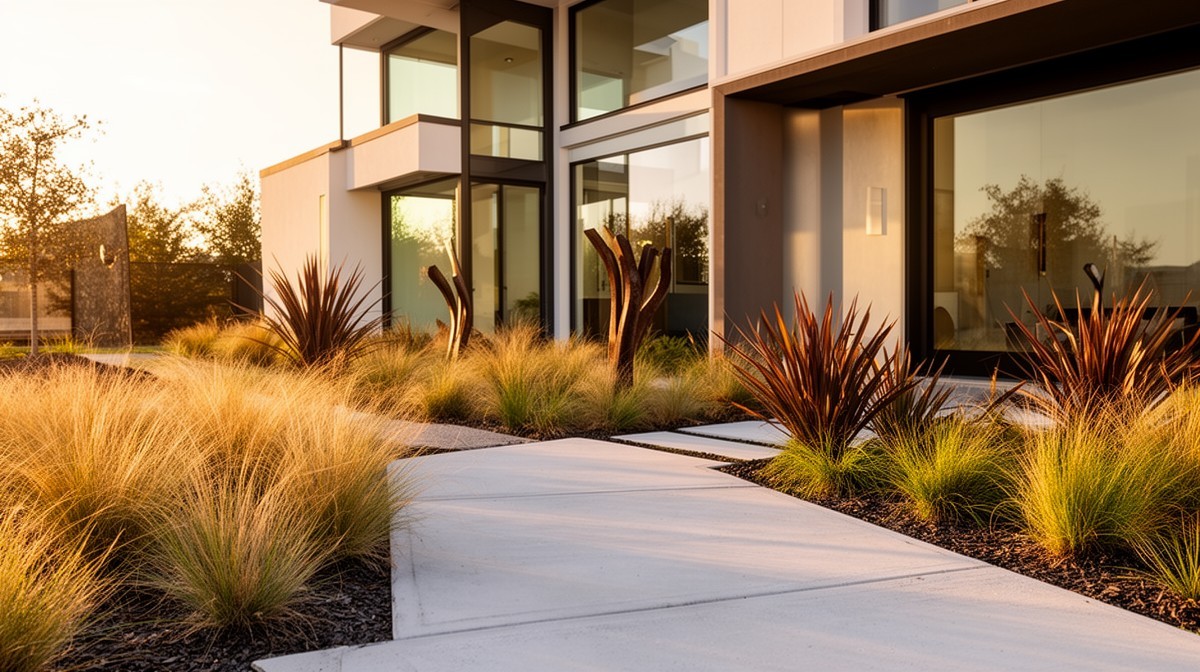
$9–18/sqftA single-storey stucco house with a low-slope roof, a tall glass entry slot and dark-framed picture windows, fronted by a wide unadorned concrete walk that runs straight from the drive to the door. The planting does all the work in two crescent beds edged with a smooth concrete mow strip: upright variegated yucca rosettes and blue agave punctuating drifts of purple salvia, with fine clumping grasses spilling over the walk edge and a young multi-trunk shade tree lifting the right-hand bed. Two crisp lawn panels stay in place — this is a design for a homeowner who wants a modern front without giving up the grass entirely.

The Steel-Edged Gravel Front
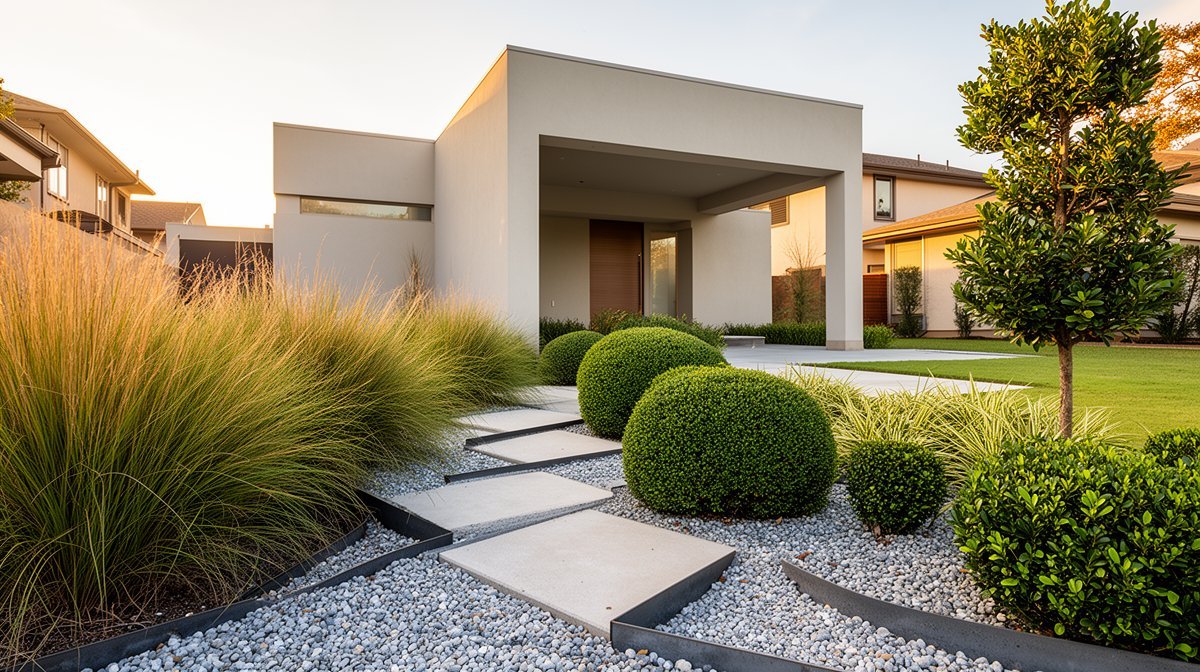
$8–16/sqftThe front lawn is gone completely. In its place a plane of warm tan pea gravel runs kerb to house, split by a single straight concrete walk and terraced in shallow steps by weathering steel edge bands that follow the fall of the lot. Large blue agaves anchor the composition at intervals, low grey-green rosettes repeat at ground level, and bunchgrasses soften the gaps — all set in raised gravel beds, which is the detail that lets desert plants survive 37 inches of Mesquite rain. A mature live oak on the left keeps the whole thing from feeling arid.

The Fire Bowl Terrace
$18–34/sqftA generous large-format concrete terrace runs the full width of a stucco ranch's sliding glass rear wall, with four low steel-framed lounge chairs drawn around a round white concrete gas fire bowl at its centre. Café string lights sweep from the roofline to a mature shade tree, and the terrace edge dissolves into continuous drifts of feathery bronze-tipped grasses instead of a hard border, with a clipped lawn strip and low mounded shrubs running to a dark horizontal fence. One material for the floor, one focal element, one planting texture — the discipline is what makes it read as designed rather than decorated.

The Reflecting Pool Deck
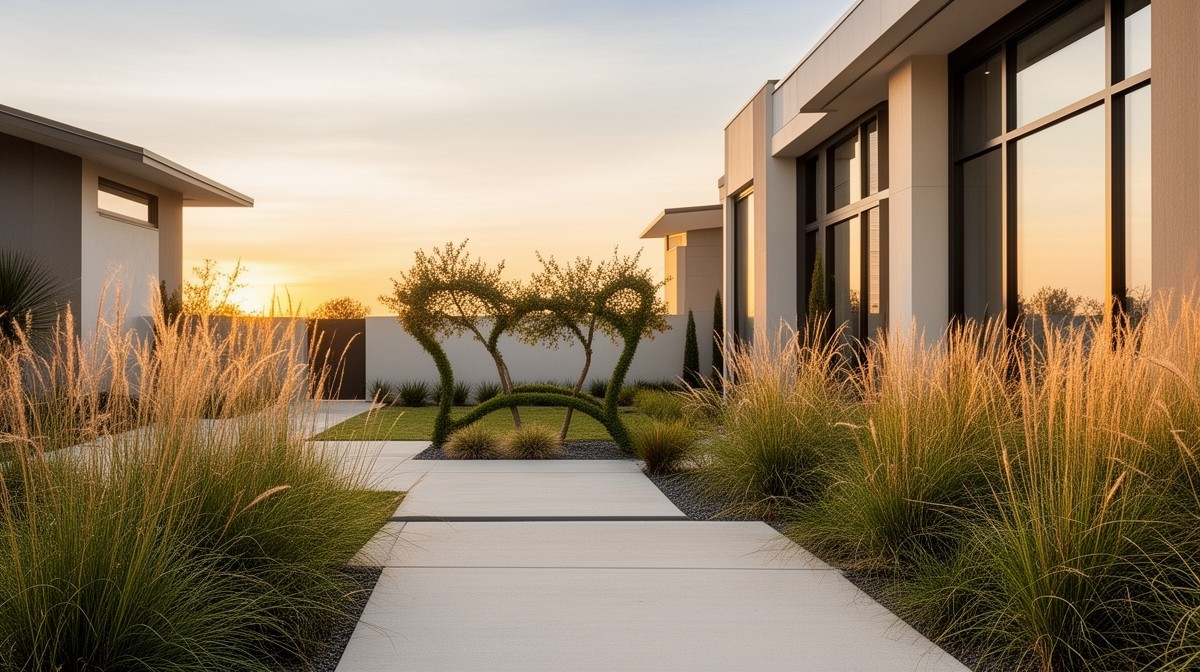
$40–85/sqft (pool area inclusive)Photographed at dusk: a flat-roofed glass-walled house glows from inside while a rectangular pool mirrors it across a broad, softly scalloped concrete deck. Chaise loungers sit beside a linear fire feature at the deck's outer edge, in-ground uplights wash the paving, and the whole deck is fringed with clumped grasses in dark mulch that catch the low light. The planting budget is deliberately tiny relative to the hardscape — repeated grass clumps and a few young upright trees along the dark fence do everything, because at this scale restraint is what buys the resort effect.
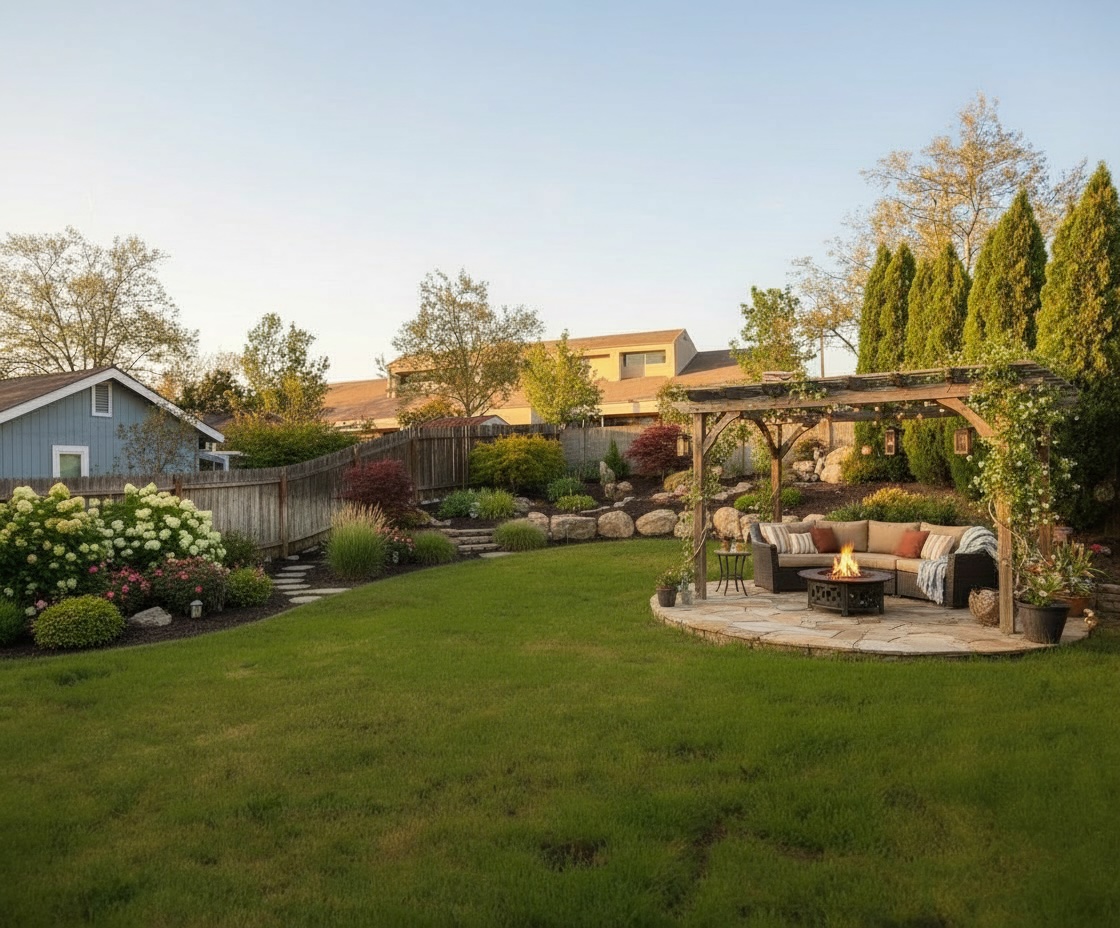
See how a modern/minimalist garden looks on YOUR property
Upload a photo of your Mesquite yard and visualize your dream garden in seconds.
Try ProScapeAI Free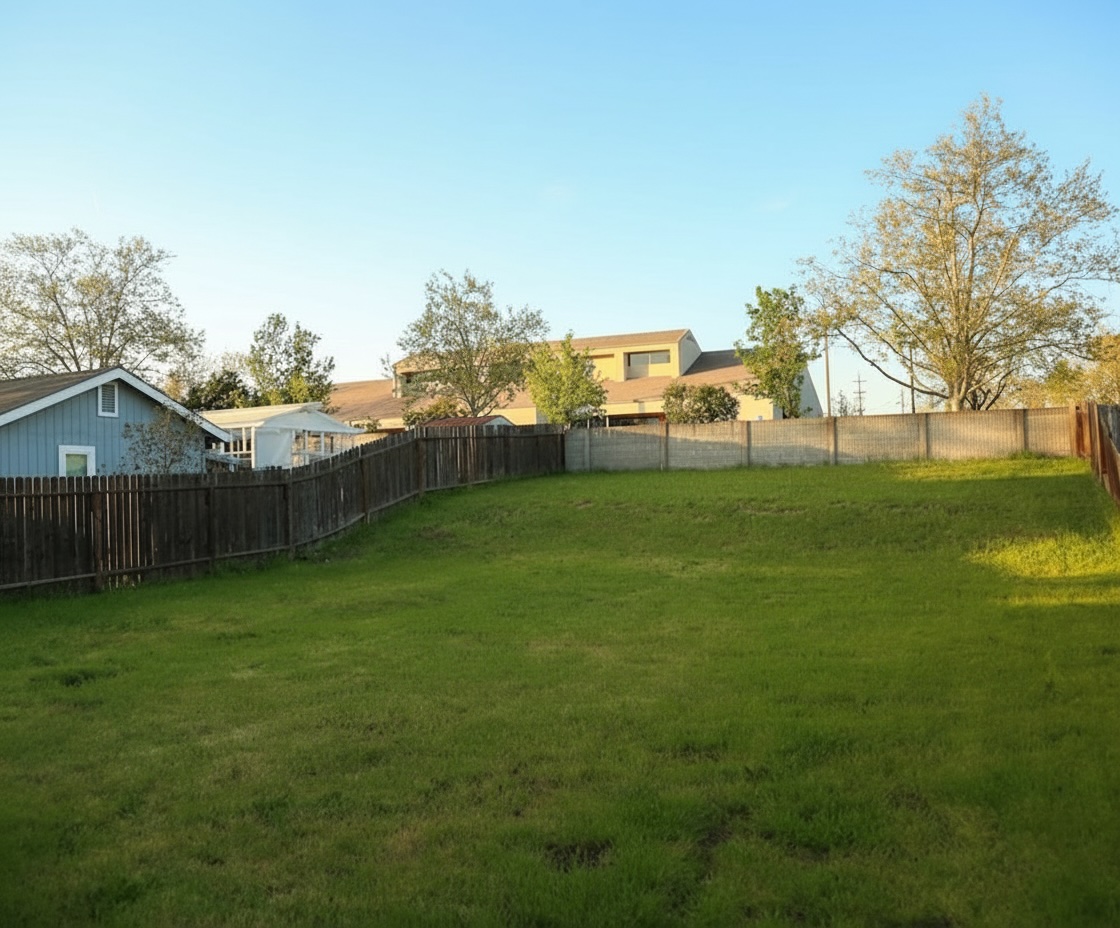
Featured Trees & Shrubs for Modern/Minimalist Gardens
Browse all 156 plants for Mesquite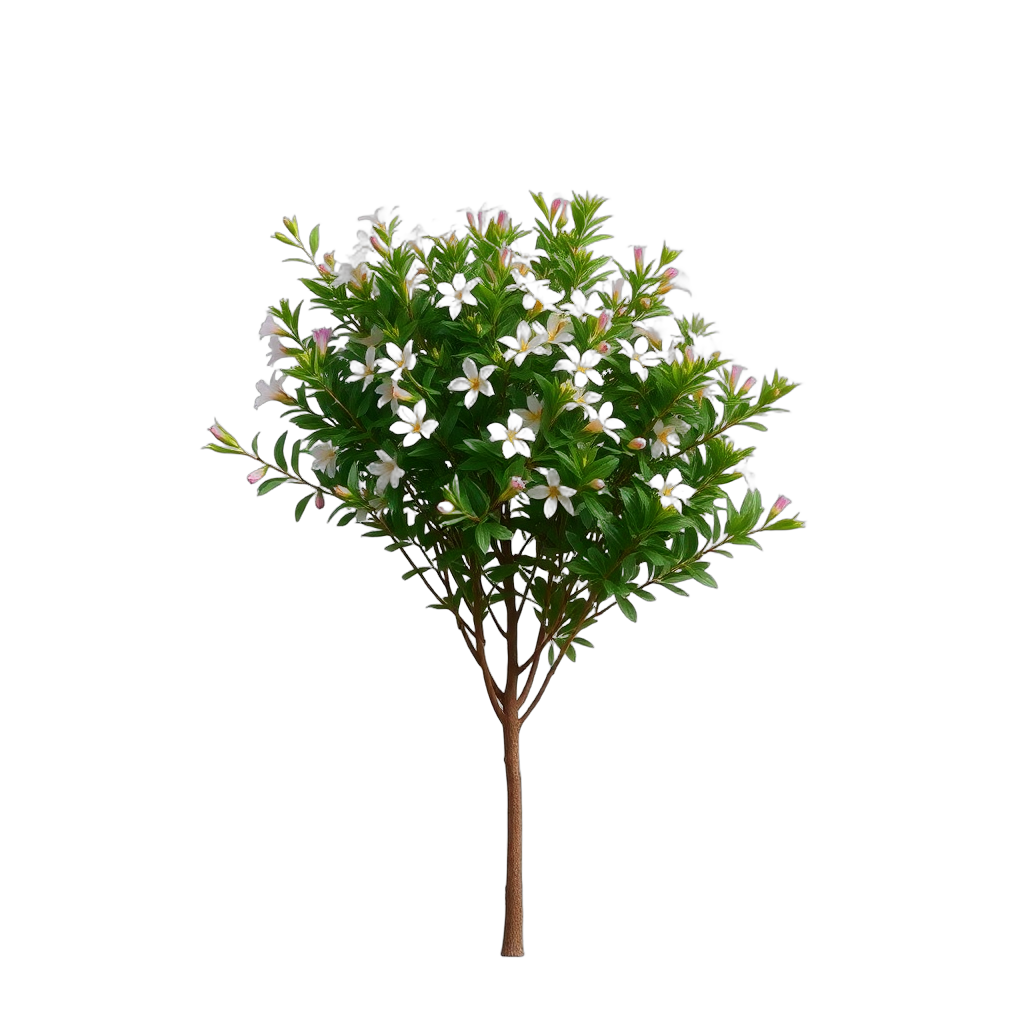
Texas Mountain Laurel
Sophora secundiflora
medium-sized at 12 feet, purple blooms in spring. Evergreen year-round.
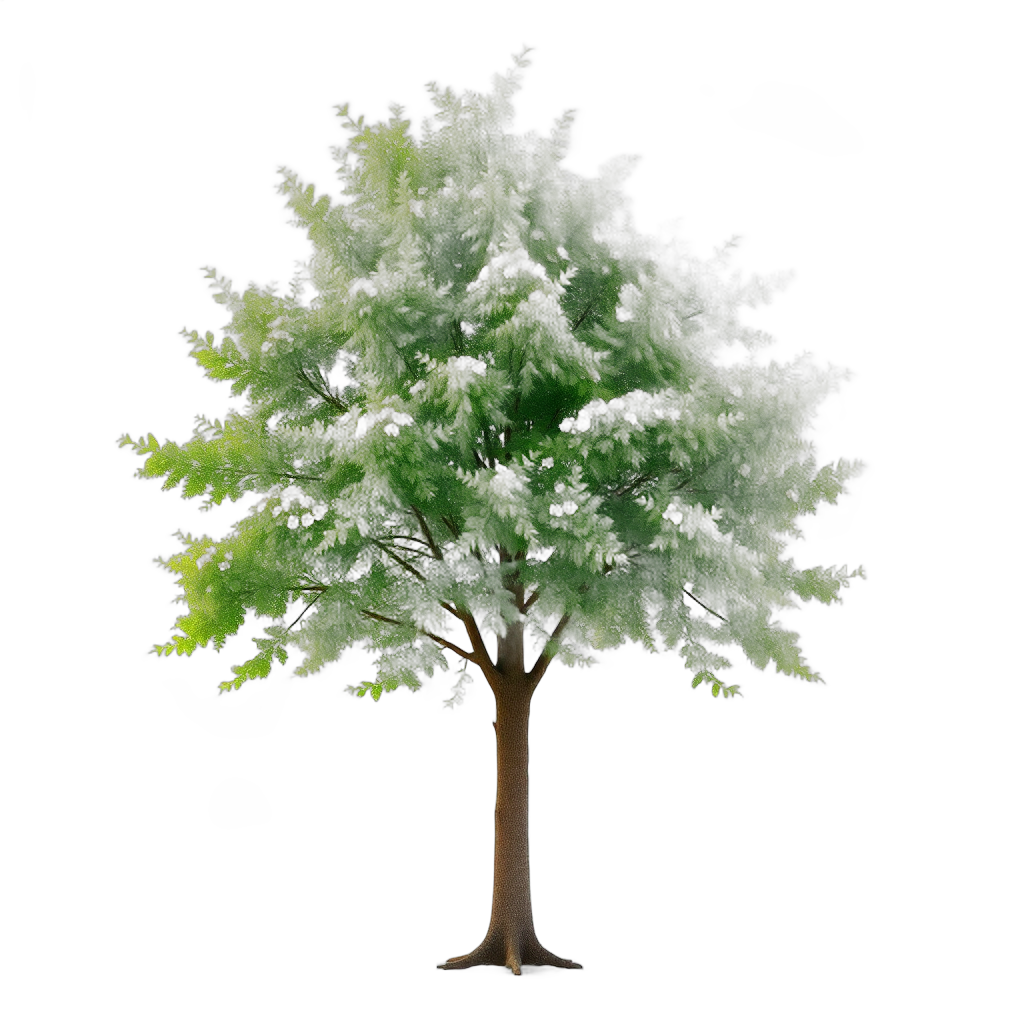
Cedar Elm
Ulmus crassifolia
large shade tree reaching 60+ feet, blooms in fall. Yellow fall color.
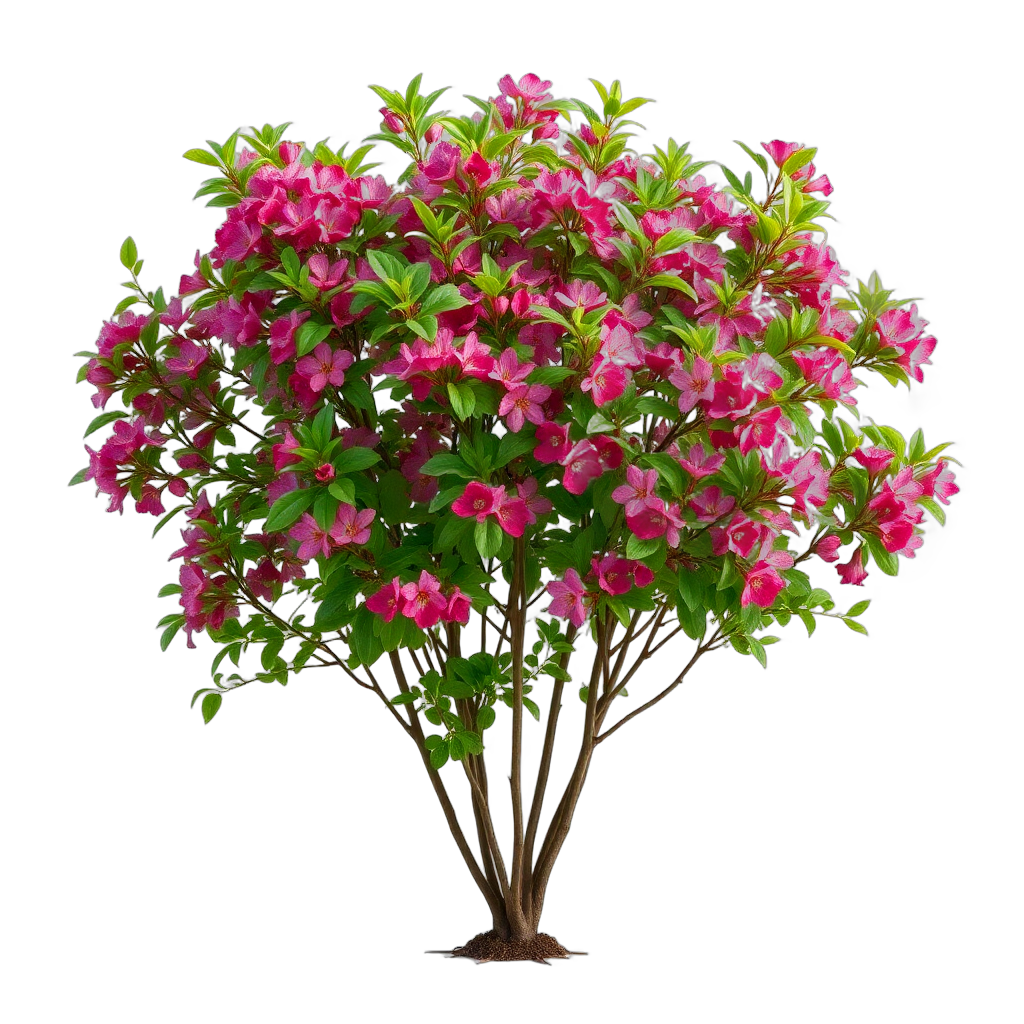
Oklahoma Redbud
Cercis reniformis
reaches 20 feet tall, purple blooms in spring. Attracts hummingbirds.
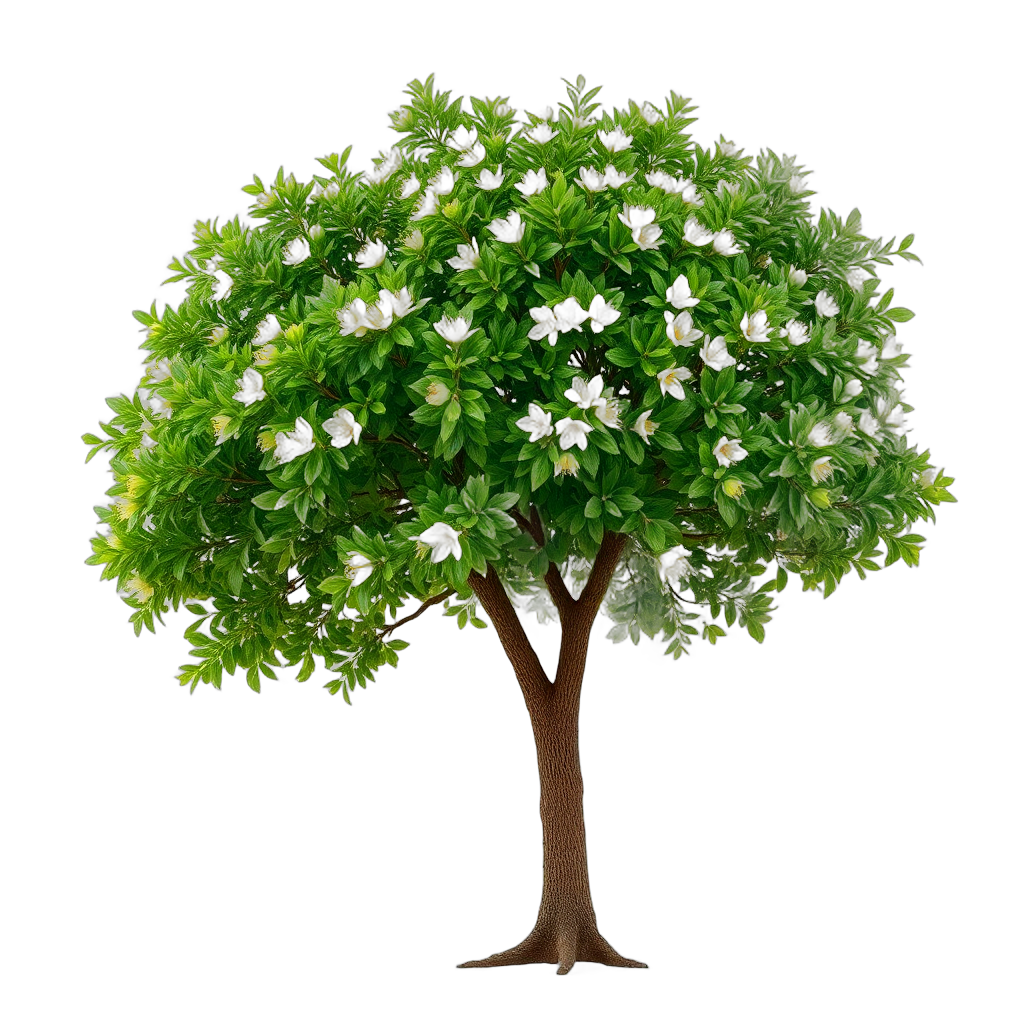
Osage Orange
Maclura pomifera
large shade tree reaching 50+ feet, blooms in spring. Yellow fall color.
Featured Grasses & Groundcovers for Modern/Minimalist Gardens
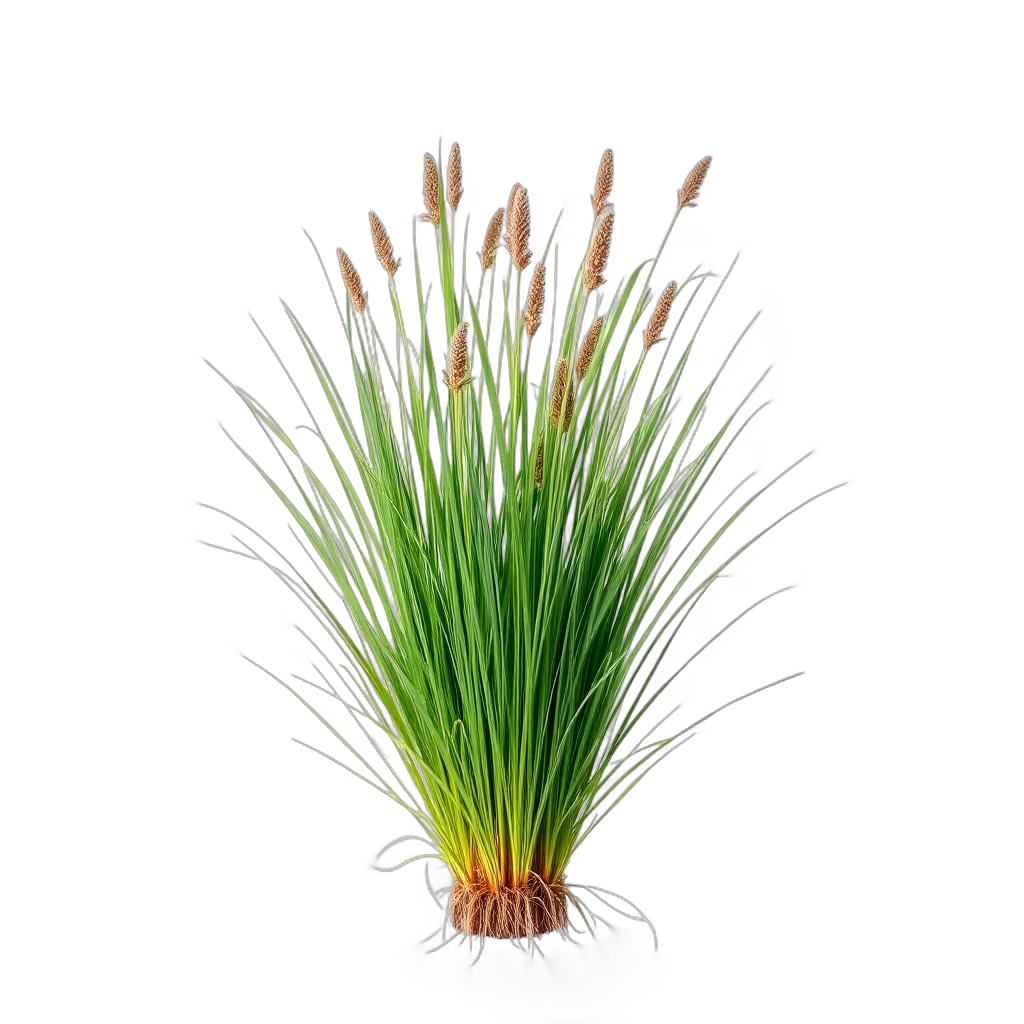
Lindheimer's Muhly
Muhlenbergia lindheimeri
grows to 4 feet, white blooms in fall.
Featured Flowers & Perennials for Modern/Minimalist Gardens
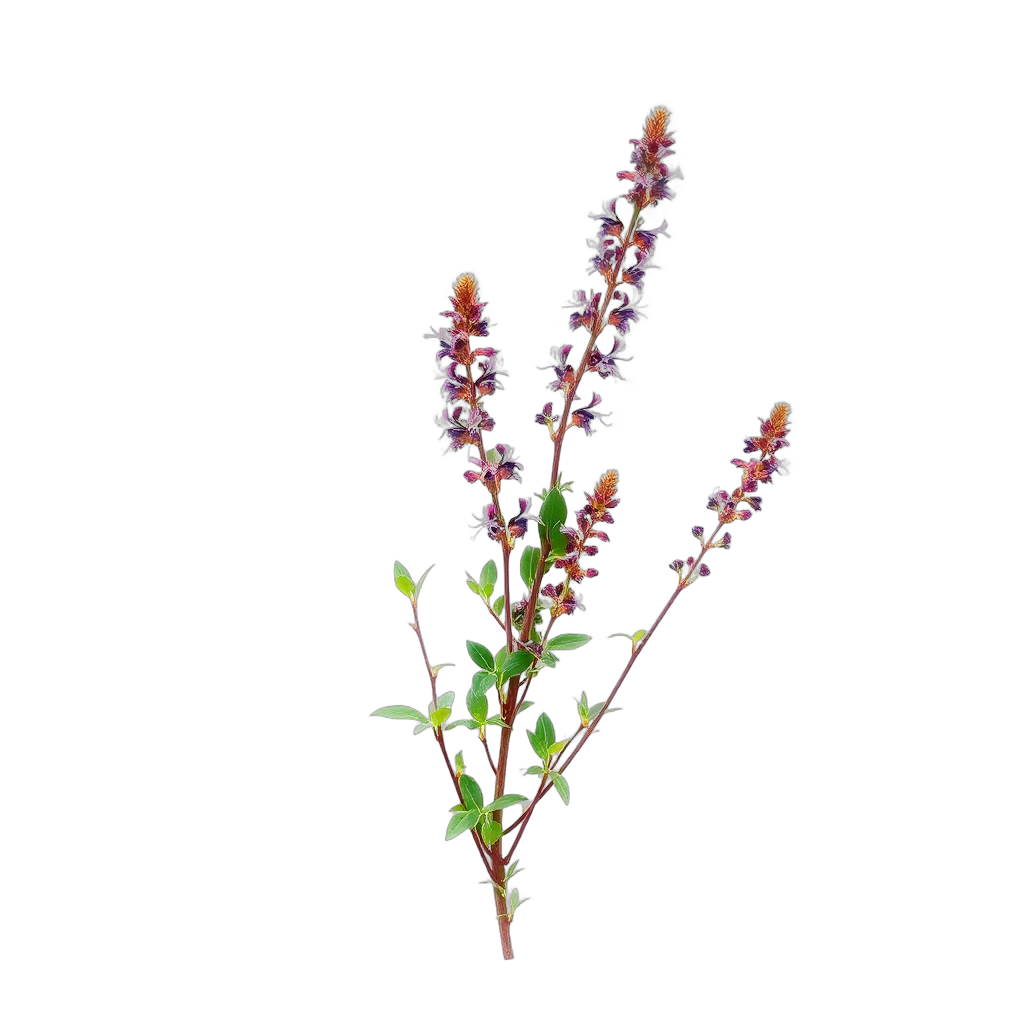
Mealy Cup Sage
Salvia farinacea
low-growing ground cover, blue blooms in summer. Attracts butterflies.
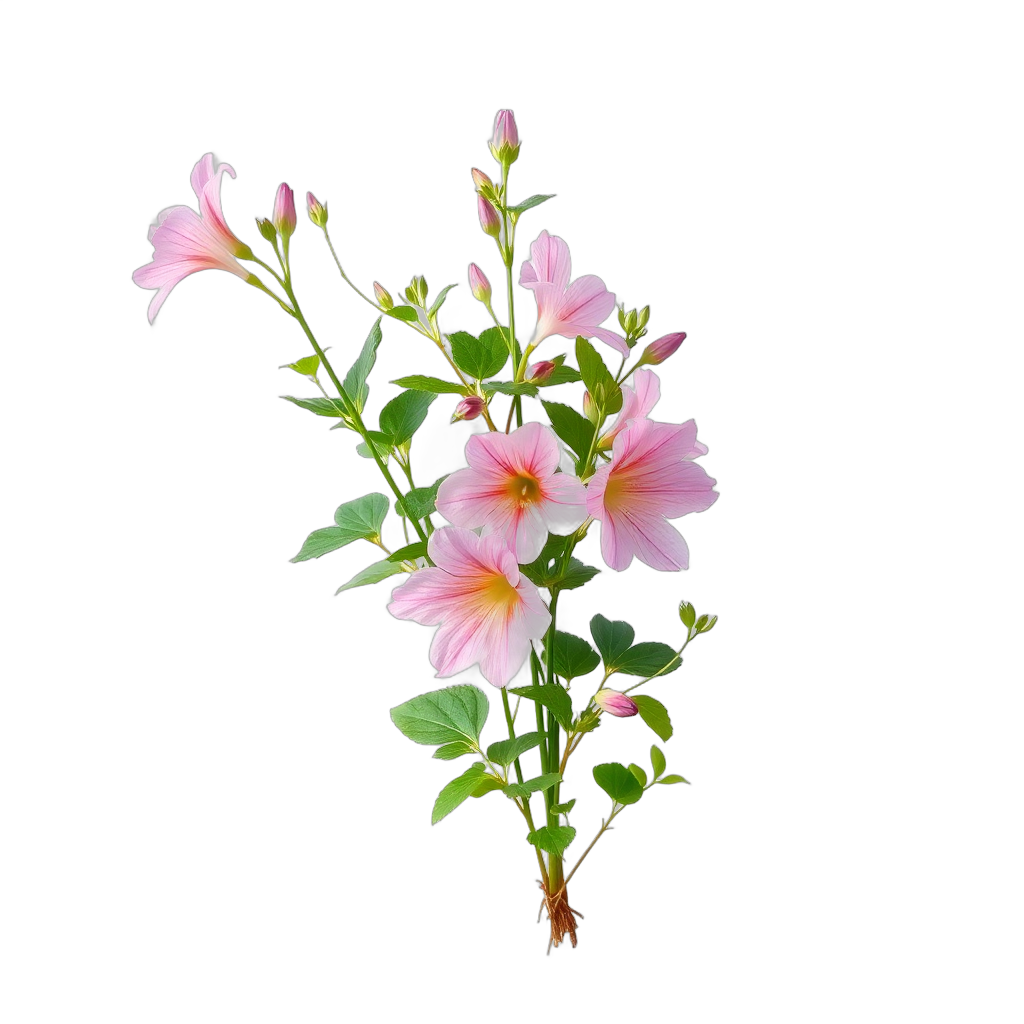
Pink Evening Primrose
Oenothera speciosa
low-growing ground cover, pink blooms in summer. Attracts butterflies.

Water Lettuce
Pistia stratiotes
low-growing ground cover, white blooms in summer. Evergreen year-round.

Tussock Sedge
Carex stricta
low-growing ground cover, blooms in spring. Brown fall color.
Zone and sun checks come from our database — confirm with your local nursery before you buy.
Bloom Calendar for Mesquite
spring
Texas Mountain Laurel, Oklahoma Redbud, Osage Orangesummer
Mealy Cup Sage, Pink Evening Primrose, Water Lettucefall
Mealy Cup Sage, Lindheimer's Muhly, Cedar Elmwinter
Limited bloomsDesign Tips for Mesquite (Zone 8a)
- Raise every succulent bed four to ten inches on a 50/50 native-soil and expanded-shale mix and mulch it with gravel, not bark — in Mesquite's 37 inches of annual rain on Houston Black clay, drainage rather than cold decides whether Agave ovatifolia 'Frosty Blue' lives
- Compact six to eight inches of crushed limestone under every slab and paver field; black clay's shrink-swell will crack concrete poured on bare ground within three summers, and no amount of rebar fixes a bad base
- Use Muhlenbergia capillaris 'Regal Mist' where a Phoenix designer would mass agave — it delivers the same soft-architectural drama, tolerates humidity and alkaline soil, and its October bloom against pale concrete is the best free show in a North Texas modern garden
- Keep two crisp lawn panels rather than a whole lawn: with irrigation capped at twice a week and banned from 10 a.m. to 6 p.m. between April and October, a full Cynodon dactylon front yard cannot legally get the water it wants in a 100-degree August
- Choose plants that want lime — Leucophyllum frutescens 'Green Cloud', Hesperaloe parviflora 'Brakelights' and Bouteloua gracilis 'Blonde Ambition' thrive at pH 7.8–8.2, while acid-lovers yellow into chlorosis by their second summer here
- Protect and limb up the existing canopy: a mature Quercus virginiana or Ulmus crassifolia over a Mesquite terrace is worth more than any built shade structure, and lifting its crown high turns the trunk into sculpture above a clean groundplane
- Light the grasses and the walls, never the lawn — in-ground uplights behind Muhlenbergia clumps and grazing a stucco face give the evening depth that makes a modern garden usable through Mesquite's long warm autumn evenings
Where to Source Plants in Mesquite
Skip the big-box stores. These independent Mesquite nurseries specialize in the plants that make modern/minimalist gardens thrive in Zone 8a.
Covington's Nursery & Landscape
Rowlett (12 minutes north of Mesquite via Lake Ray Hubbard)
Large independent yard with the area's best run of architectural Agave, Yucca and Hesperaloe specimens plus bulk gravel and boulders
North Haven Gardens
North Dallas (Northaven Road)
Trading since 1951; strong on sculptural succulents, clumping grasses and the expanded shale and decomposed granite that make raised gravel beds work
Bruce Miller Nursery
Richardson (E. Belt Line Road)
Direct grower since 1969 with its own East Texas farm — the place to buy multi-trunk Chilopsis, Ulmus parvifolia and larger specimen trees at grower pricing
Redenta's Garden
Lower Greenville / Skillman, Dallas
Organic-focused independent shop with a deep Salvia and Muhlenbergia bench and staff who know which succulents survive an alkaline North Texas winter
Ruibal's Plants of Texas (White Rock)
East Dallas, White Rock — the closest full plant yard to west Mesquite
Family-run Texas grower, open seven days a week; good for repeat-quantity grasses and container specimens for modern planters
Modern/Minimalist Landscaping Costs in Mesquite
| Project Scope | Estimated Cost |
|---|---|
| Front-yard modern conversion (shrub removal, gravel planes, steel edging, specimen planting — 600 sqft) | $6,000 – $14,000 |
| Poured concrete entry walk and mow-strip edging | $12 – $20/sqft |
| Large-format concrete terrace (300–500 sqft) on compacted limestone base | $9,000 – $24,000 |
| Concrete gas fire bowl, set and plumbed | $3,500 – $9,000 |
| Weathering steel edging and raised gravel beds, per linear foot | $55 – $110/lf |
| Pool deck plus full backyard landscape | $65,000 – $160,000 |
| Low-voltage LED uplighting (8–12 fixtures, installed) | $2,500 – $6,000 |
| AI visualization with ProScapeAI | Free to start |
Estimates based on Mesquite, TX-area contractor rates as of 2026. Actual costs vary by site conditions, materials, and contractor.
Mesquite Climate & Growing Zone
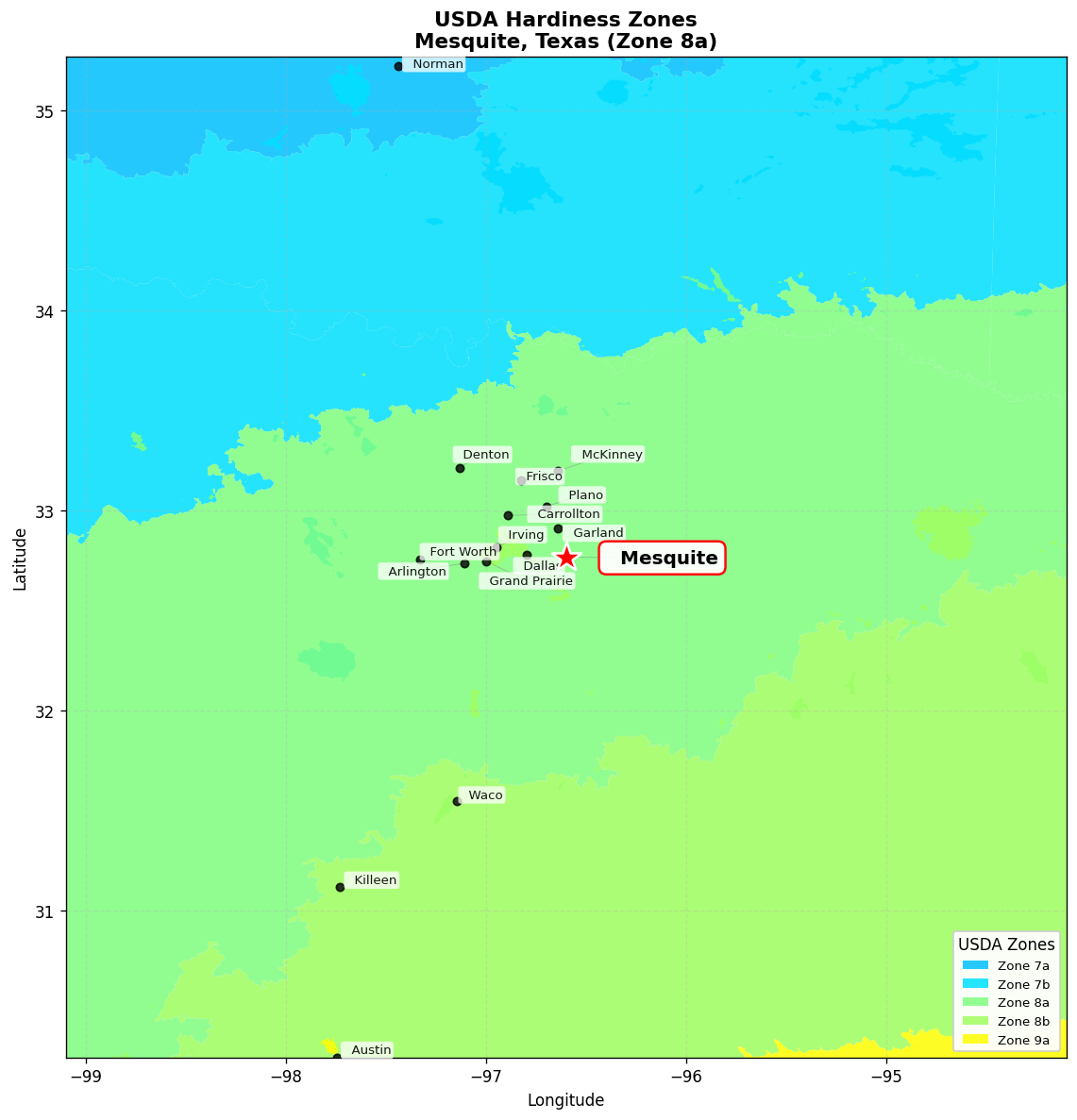
USDA Zone 8a
Hardiness zone for Mesquite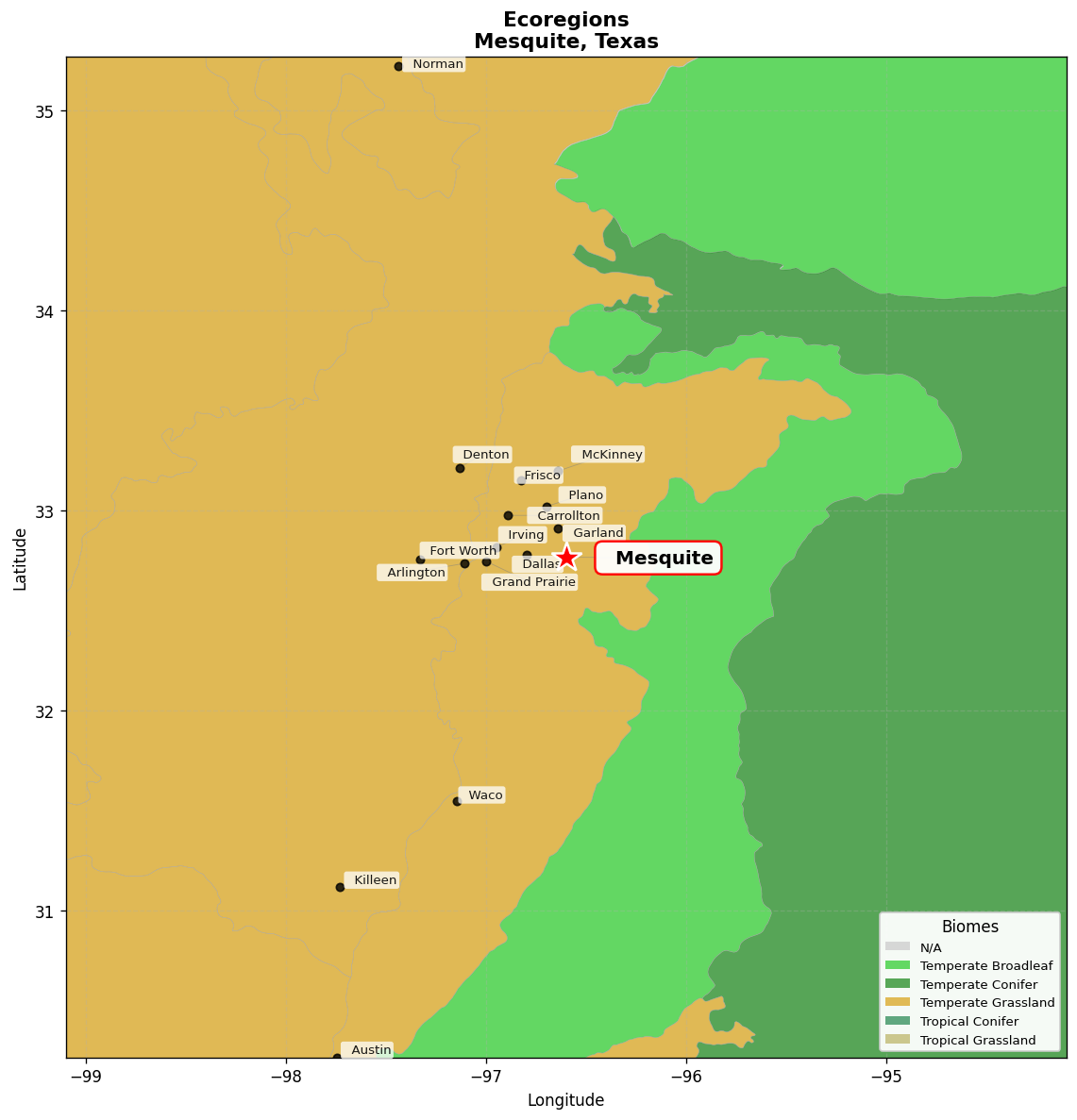
Texas blackland prairies
Native ecoregionFrequently Asked Questions
How much does modern landscaping cost in Mesquite?
Dallas County pricing sits close to the national average and below Austin. A front-yard modern conversion — foundation shrub removal, gravel planes, steel edging and specimen planting on a typical 600 sqft Mesquite front yard — runs $6,000–$14,000 installed, or roughly $8–$16 per square foot. A large-format concrete back terrace with a fire bowl and seating is $15,000–$38,000. A full pool deck and landscape lands between $65,000 and $160,000. A DIY gravel-and-Agave conversion, buying bulk gravel and expanded shale by the yard, can come in under $5 per square foot.
Will agaves and yuccas survive a Mesquite winter?
Cold is not the problem — drainage is. Mesquite's Zone 8a lows of 10–15°F are comfortably within range for Agave ovatifolia 'Frosty Blue', Agave parryi var. truncata, Yucca rostrata 'Sapphire Skies', Hesperaloe parviflora 'Brakelights' and Dasylirion wheeleri. What kills them is 37 inches of rain sitting in Houston Black clay. Plant every one of them in a bed raised four to ten inches on a 50/50 mix of native soil and expanded shale, mulch with gravel rather than bark, and keep the crown proud of grade. At grade in unamended clay, expect rot by the second wet spring.
What has to happen to the clay before I pour concrete?
Budget for base preparation rather than treating it as an extra. Houston Black clay has a very high shrink-swell rating: it cracks open in an August drought and swells shut after October rain, and that movement destroys slabs poured on bare ground. Excavate six to eight inches and compact a crushed-limestone base under every walk, terrace and paver field, and keep hardscape drainage falling away from the house at about a quarter-inch per foot. For planting, build up rather than digging down — a hole dug into clay and backfilled with soft mix becomes a bathtub for the roots.
Which grasses give the modern look and actually thrive here?
Muhlenbergia capillaris 'Regal Mist' is the local star; its October pink haze against pale concrete is the single best value in a Mesquite modern garden. Muhlenbergia lindheimeri 'Autumn Glow' gives a larger evergreen clump, Bouteloua gracilis 'Blonde Ambition' is a tough Blackland Prairie native with eyelash seed heads, and Nassella tenuissima delivers the fine wheat-coloured texture provided it sits in sharp drainage. Panicum virgatum 'Northwind' works for a stiff vertical. All get one cut-back in late February and need essentially no attention for the other eleven months.
How much lawn should I actually keep?
Keep only what you walk on. With irrigation limited to twice a week and no sprinklers between 10 a.m. and 6 p.m. from 1 April to 31 October, plus twenty-plus days over 100°F, Cynodon dactylon 'Tifway 419' in a Mesquite front yard consumes more water and labour than the rest of the landscape combined. Two crisp lawn panels either side of a wide walk read as intentional and modern; a full-lot lawn just reads as unfinished. Where you want green without the demand, Buchloe dactyloides 'Prestige' buffalograss or Zoysia japonica 'Palisades' cut summer irrigation substantially.
When is the best time to install a modern landscape in Mesquite?
October to early December is the strongest planting window — warm soil, winter rain doing the irrigating, and five months of root growth before the first 100°F day. Autumn-planted Agave, Hesperaloe and Muhlenbergia need roughly half the establishment water of the same plants set out in April. Mid-February to mid-March is the second window, after an average last frost around 12 March. Hardscape can be built year-round; Mesquite's shallow frost depth means concrete pours are rarely weather-blocked in winter, though heavy spring rain routinely delays base work in May.
Do I need a permit for a patio, pool or retaining wall in Mesquite?
Planting, gravel conversions, steel edging and at-grade patios generally do not require a permit. Pools, roofed structures, and retaining walls above four feet generally do, and any work that changes how stormwater leaves your lot is worth raising early — drainage is the most commonly tripped-over requirement on flat Blackland lots. Requirements also differ once you cross into Sunnyvale, Garland, Balch Springs or the Kaufman County side of the city. Confirm your specific scope with the City of Mesquite Building Inspections Division before ordering materials.