4 Tropical Landscape Ideas for Miami, FL | Lush Garden Design in Zone 11a
Native plants from the Everglades flooded grasslands (Zone 11a) — Tropical monsoon climate
Why Tropical/Lush Gardens in Miami?
Miami is one of only a handful of American cities where true tropical gardening — not just subtropical approximation — is possible year-round. Zone 11a means average winter lows of 45–50°F, virtually eliminating hard frost events and allowing frost-sensitive tropical plants that die in Zone 9 or 10 to live and thrive permanently in the ground. Miami sits within the Everglades flooded grasslands ecoregion, and the city’s unique landscape is shaped by the Biscayne Aquifer beneath it, the Atlantic to the east, and the vast saw grass prairie of Everglades National Park to the west. This ecological context gives Miami tropical gardens a specificity that no other American city can replicate.
Miami receives 61 inches of annual rainfall, overwhelmingly concentrated in the wet season from May through October when daily afternoon thunderstorms deliver intense downpours. November through April is the dry season — warm, sunny, and genuinely pleasant, with daytime temperatures ranging from 70–80°F through what passes for Miami’s winter. This dry-season perfection is when tropical gardens are at their showiest: plumeria in full bloom, bird of paradise pointing its orange and blue flowers at the winter sun, and massive Bismarck palms casting dramatic shadows on white coral rock walls. The design challenge is the wet season, when drainage management becomes essential and plant selection must account for Miami’s occasional hurricane-force winds.
Miami’s design neighborhoods define contemporary tropical garden aesthetics. Coconut Grove, Coral Gables, and Miami Beach are where the city’s most ambitious tropical gardens live, many maintained by residents with deep knowledge of the regional plant palette. Coral Gables’ historic homes sit under massive banyan trees and royal palms that have been growing since the 1920s, creating the lush tropical canopy structure that makes the neighborhood feel like a garden city. Miami’s oolitic limestone bedrock — called Miami Rock — presents a planting challenge (excavation is required for new planting areas) but is also the raw material for the coral rock walls and terraces that are the most authentic hardscape expression of Miami’s place.
4 Tropical/Lush Design Ideas for Miami
AI-generated image
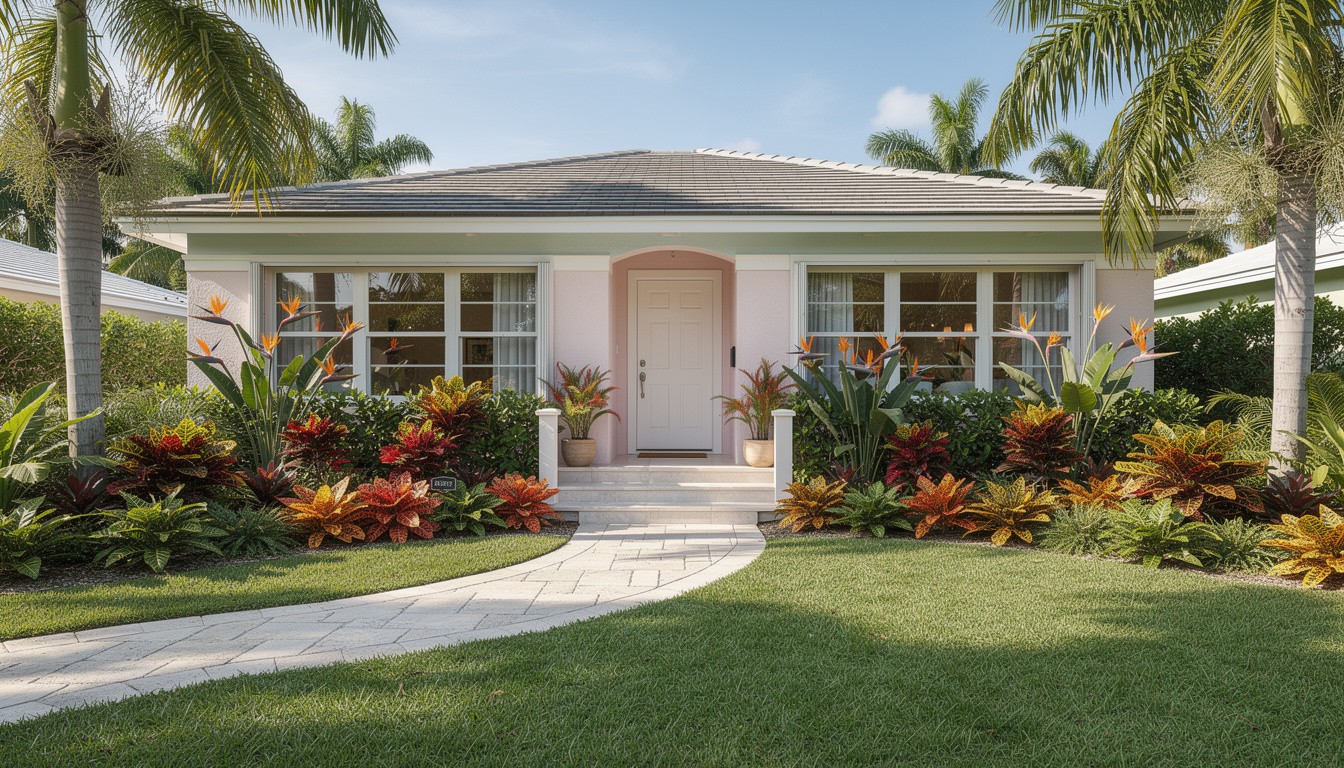
Colorful Tropical Front Yard with Palms and Bold Borders
$15–30/sqftA symmetrical pink stucco Miami ranch home is framed by a lush tropical front yard: coconut and queen palms provide dramatic canopy height, while borders of bird of paradise, crotons, bromeliads, and firebush in vivid orange, red, and chartreuse create a bold color display. A wide paver path leads to the front entry. This is Miami residential landscaping at its most confidently tropical — the plants aren’t trying to be temperate; they’re celebrating what Zone 11a makes possible. The combination of palms, bold foliage color, and a well-kept lawn is the standard for Miami’s best residential streetscapes in Coral Gables and Coconut Grove.
AI-generated image
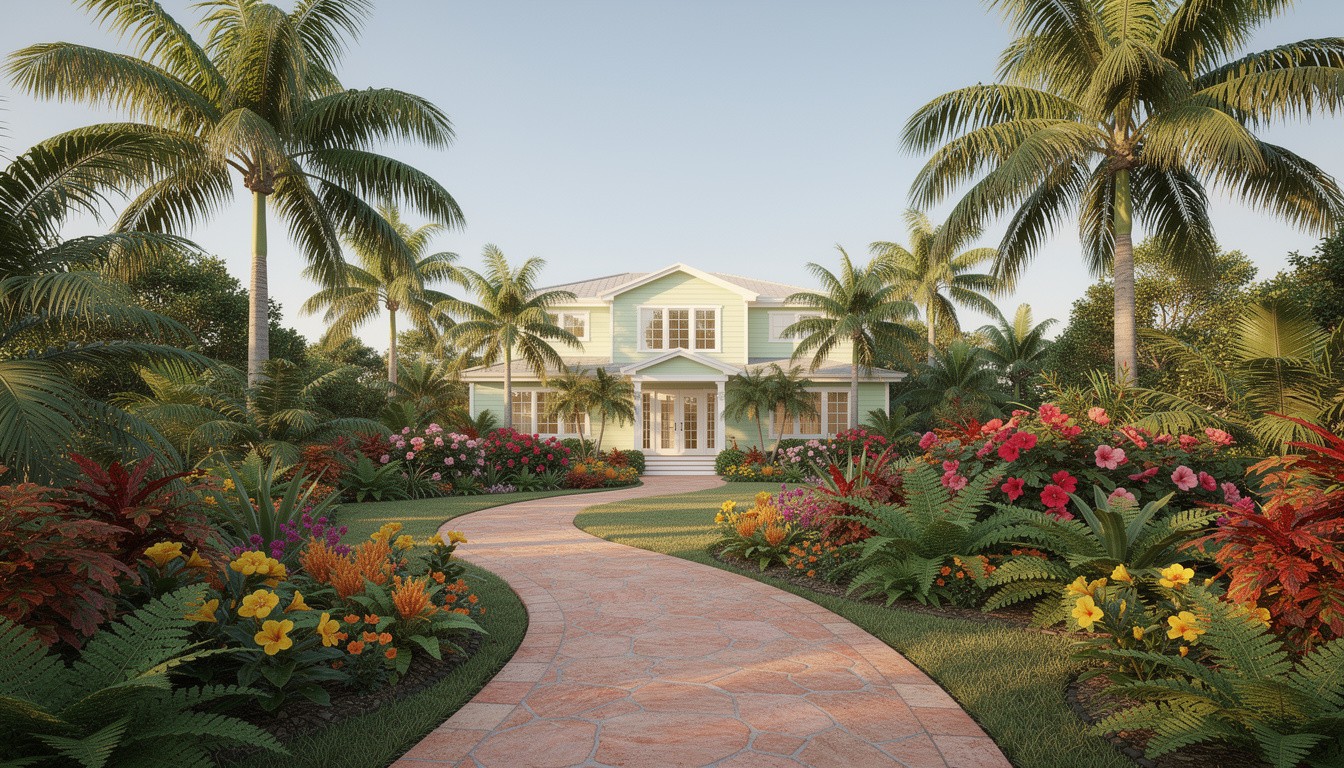
Grand Palm Entry with Tropical Color Borders
$30–65/sqftA grand paver entry drive leads through a landscape of mature coconut palms, royal palms, and lush tropical borders of hibiscus, bougainvillea, heliconia, and gingers in vivid reds, pinks, and greens. The approach to a large two-story home is framed entirely by palm trunks and tropical foliage, creating the resort-level arrival experience that defines Miami’s finest estate properties. At golden hour, the light filters through the palm canopy and the bougainvillea blooms glow — this is the quintessential Miami luxury landscape moment.
AI-generated image
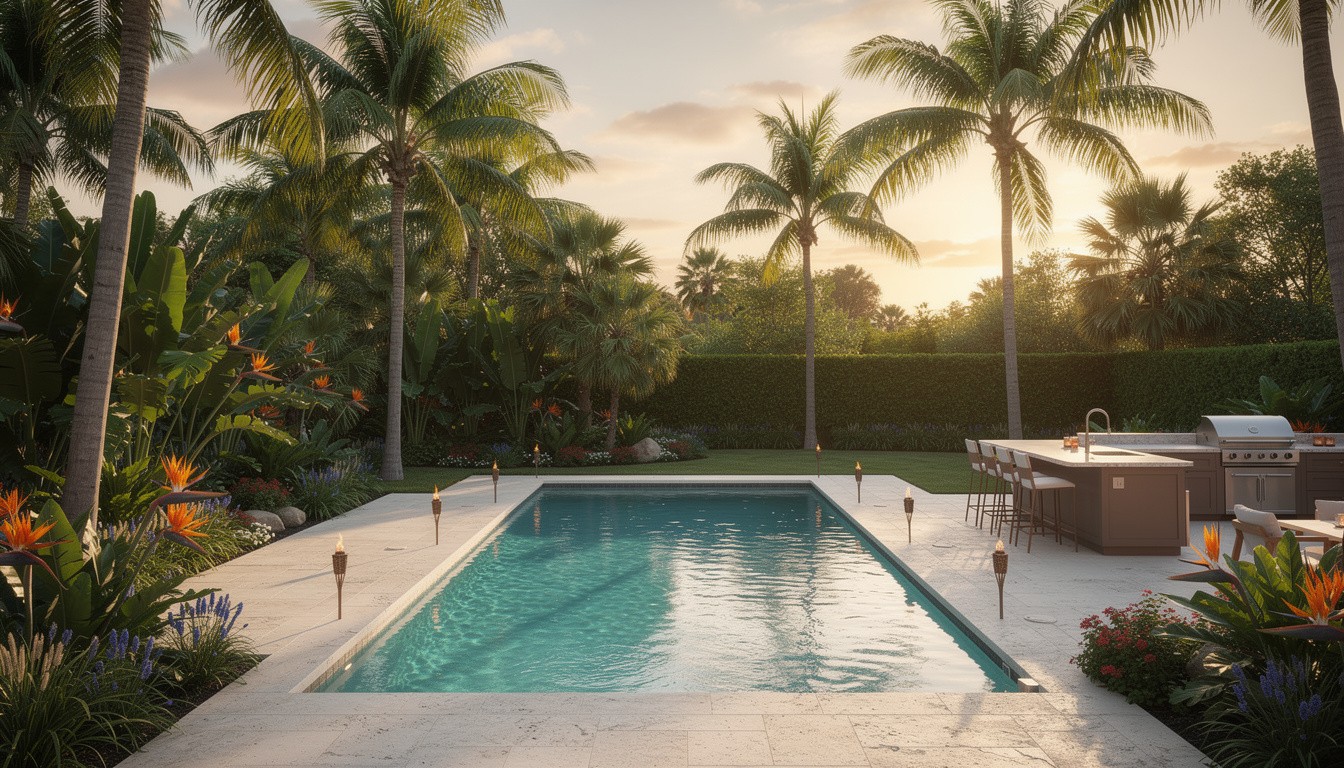
Tropical Pool with Palm Garden and Outdoor Kitchen
$45–90/sqftA rectangular pool sits at the center of a lush tropical backyard, surrounded by coconut palms, bird of paradise, and tropical plantings. An outdoor kitchen and covered barbecue area adjoin the pool deck, and decorative pathway lights illuminate the palms at night. This is Miami outdoor living at its most practical — the pool, kitchen, and tropical garden create a complete resort lifestyle within the property boundary. Year-round warmth means the pool is used twelve months a year, and the palms provide sound dampening and privacy without blocking the sun.
AI-generated image
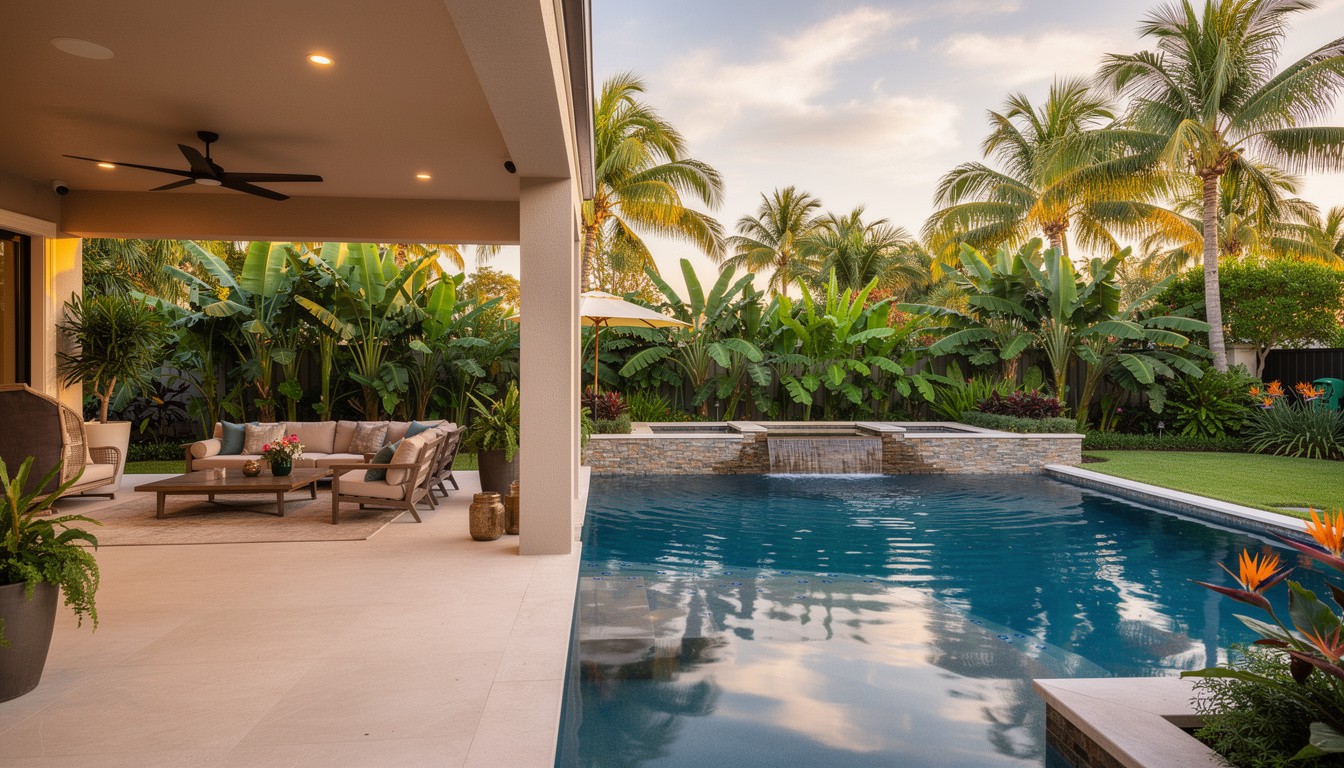
Covered Lanai with Pool and Tropical Garden Room
$55–100/sqftA covered lanai with ceiling fan and lounge seating opens directly to a pool and lush tropical garden. Coconut palms, giant bird of paradise, and dense tropical planting create total enclosure and privacy, making the lanai-and-pool combination feel like a private resort. String lights add evening ambiance. The lanai’s coverage makes Miami’s tropical garden usable even during afternoon rain — the covered outdoor room with pool access is the standard for high-end Miami residential design, maximizing the value of Zone 11a’s 365-day outdoor season.
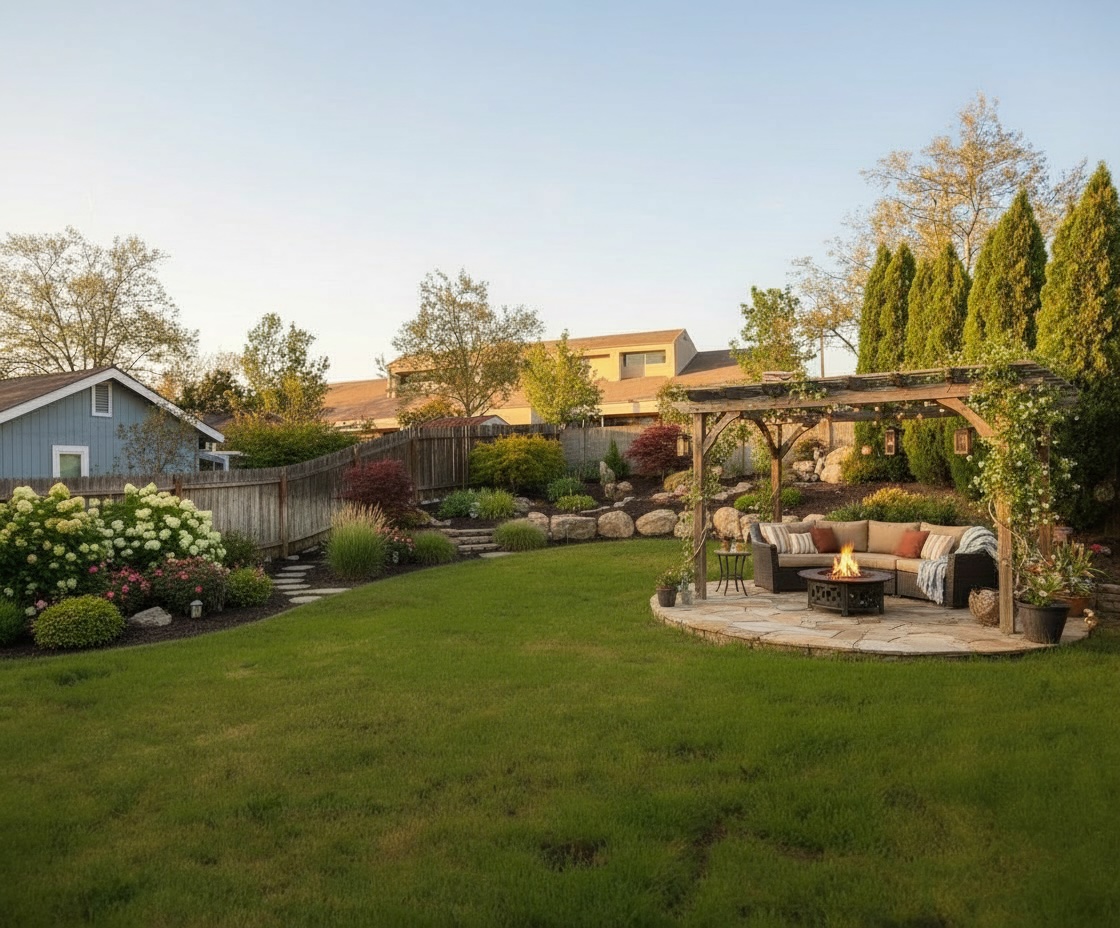
See how a tropical/lush garden looks on YOUR property
Upload a photo of your Miami yard and visualize your dream garden in seconds.
Try ProScapeAI Free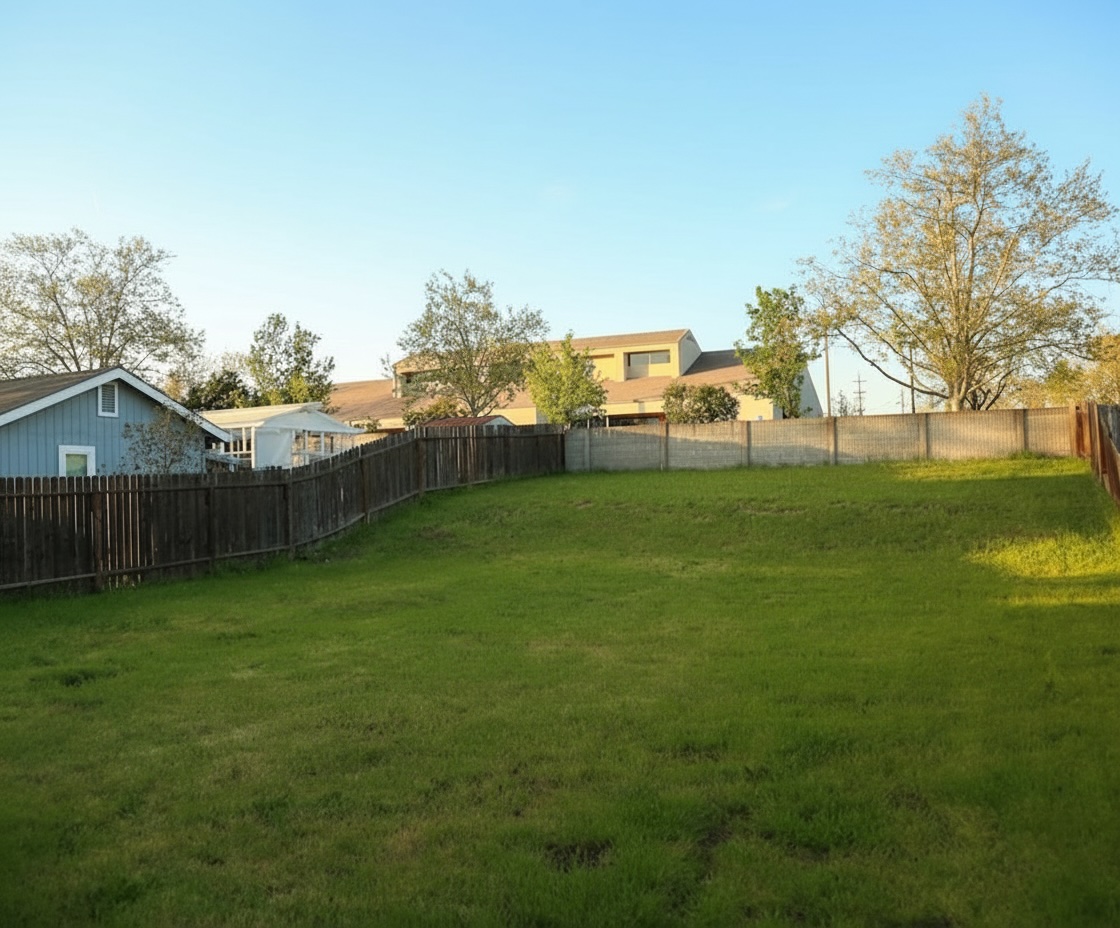
AI-generated image
Featured Trees & Shrubs for Tropical/Lush Gardens
Browse all 150 plants for Miami
Cabbage Palm
Sabal palmetto
reaches 40 feet tall, white,yellow blooms in spring. Pollinator-friendly.

California Fan Palm
Washingtonia filifera
reaches 40 feet tall, white blooms in spring. Pollinator-friendly.

Canary Island Date Palm
Phoenix canariensis
reaches 40 feet tall, yellow blooms in spring. Pollinator-friendly.

Chilean Wine Palm
Jubaea chilensis
large shade tree reaching 60+ feet, purple,yellow blooms in summer. Pollinator-friendly.
Featured Grasses & Groundcovers for Tropical/Lush Gardens
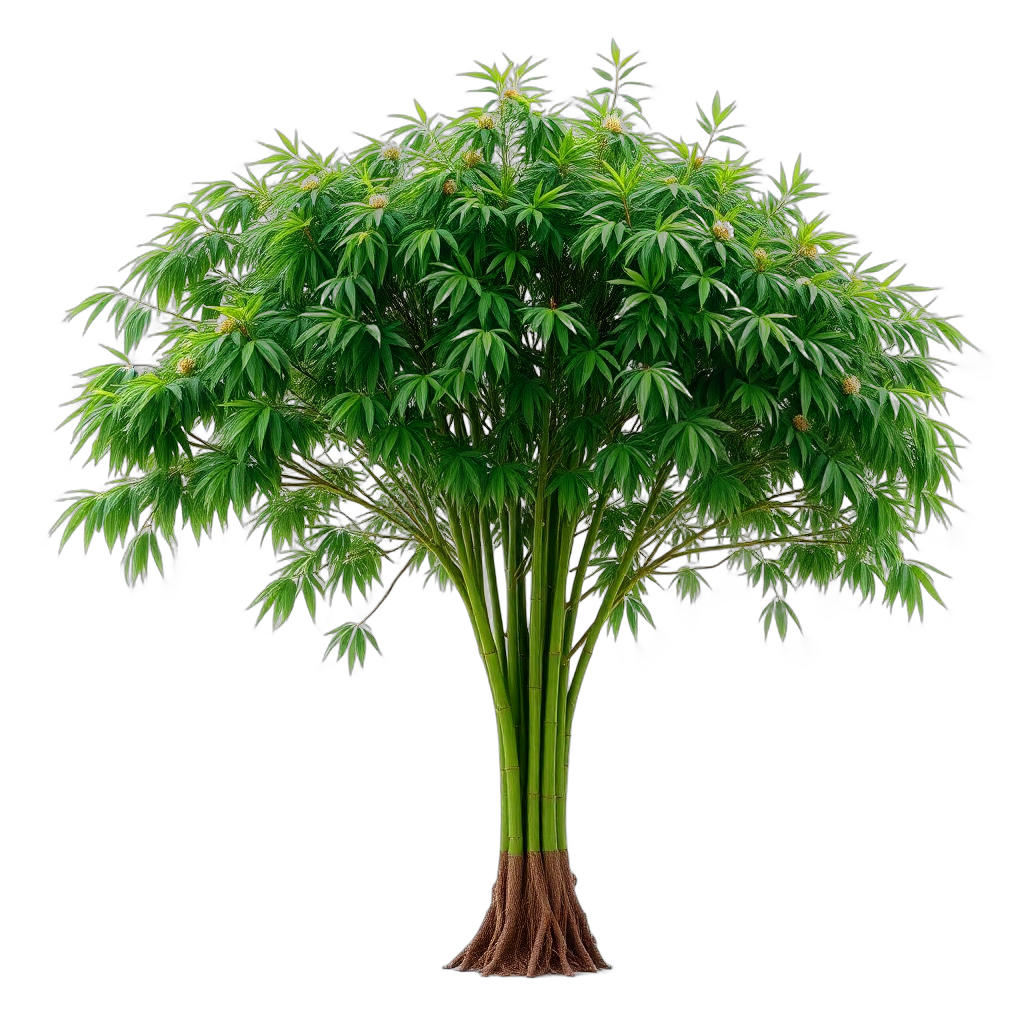
Giant Bamboo
Dendrocalamus giganteus
large shade tree reaching 90+ feet, blooms in none. Evergreen year-round.
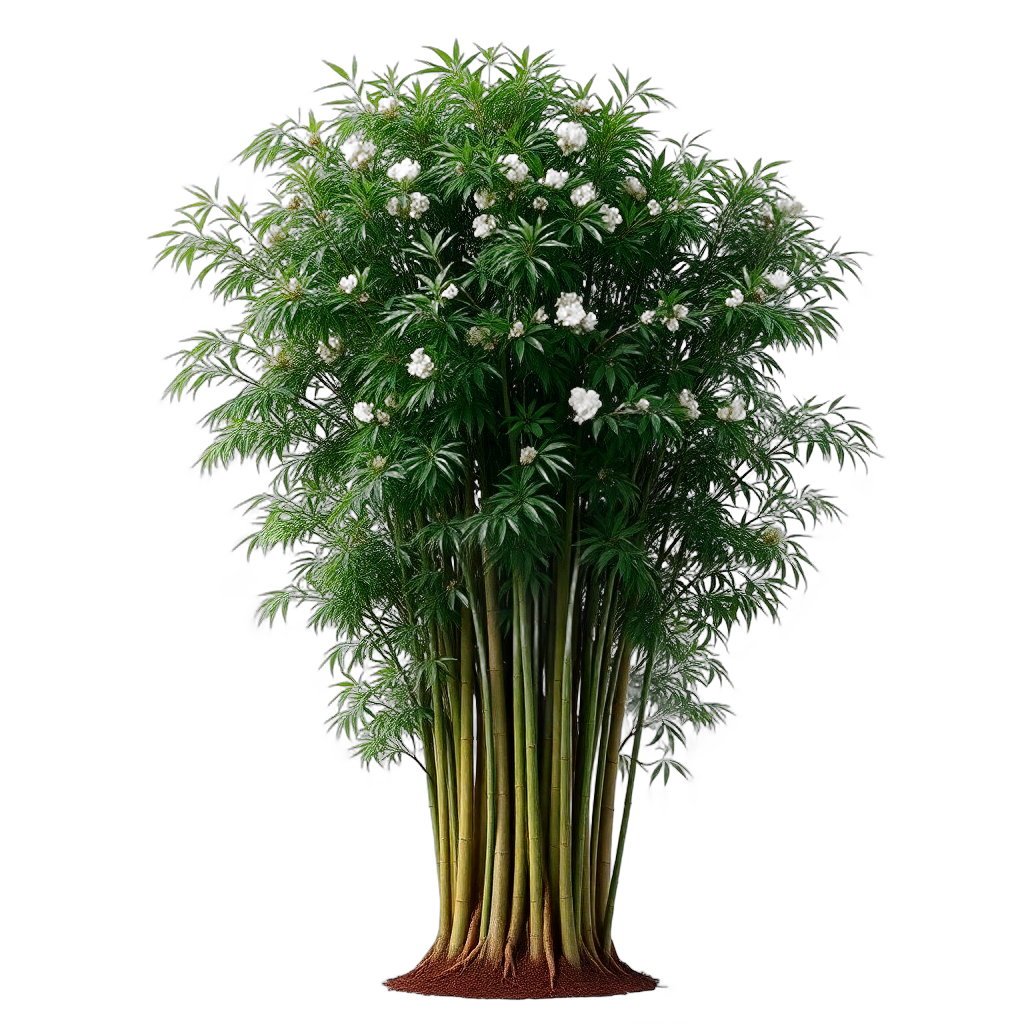
Giant Timber Bamboo
Bambusa oldhamii
large shade tree reaching 50+ feet, blooms in none. Evergreen year-round.
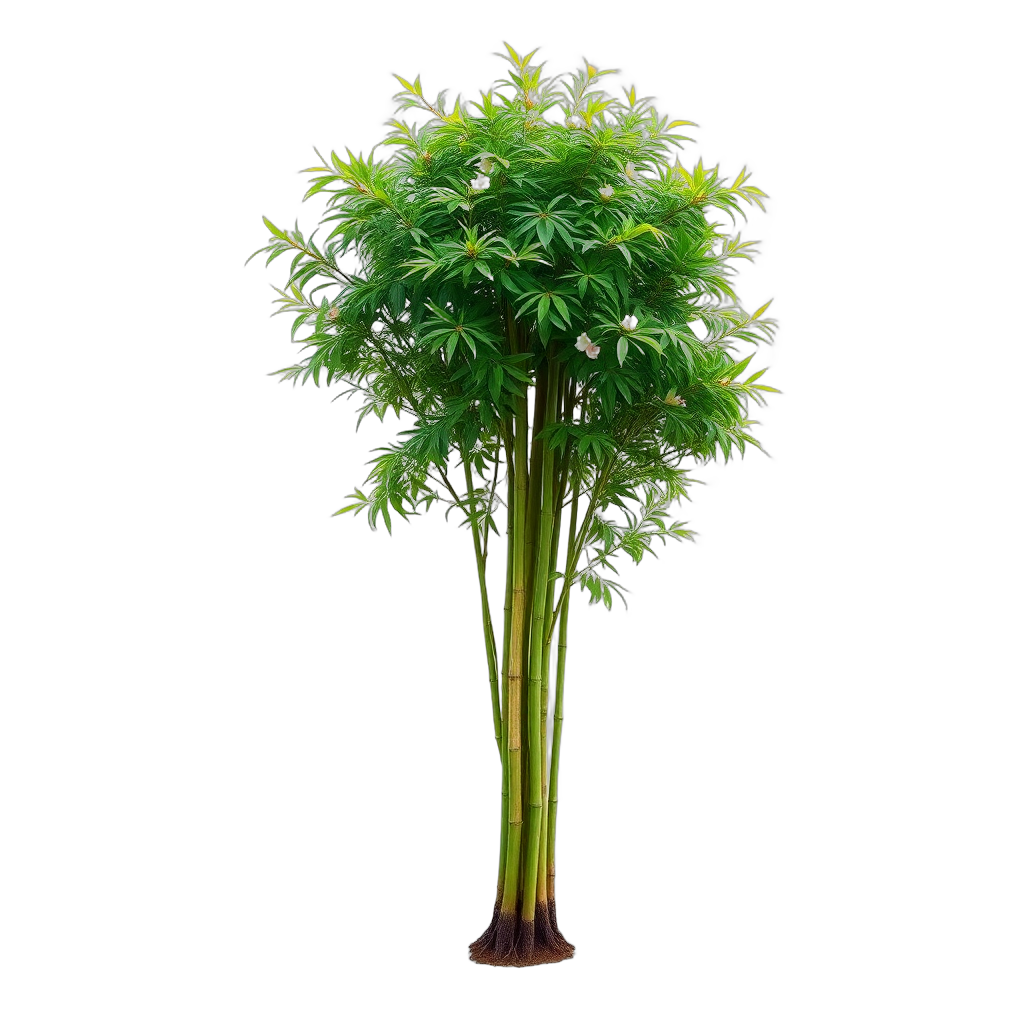
Hedge Bamboo
Bambusa multiplex
reaches 20 feet tall, blooms in none. Evergreen year-round.
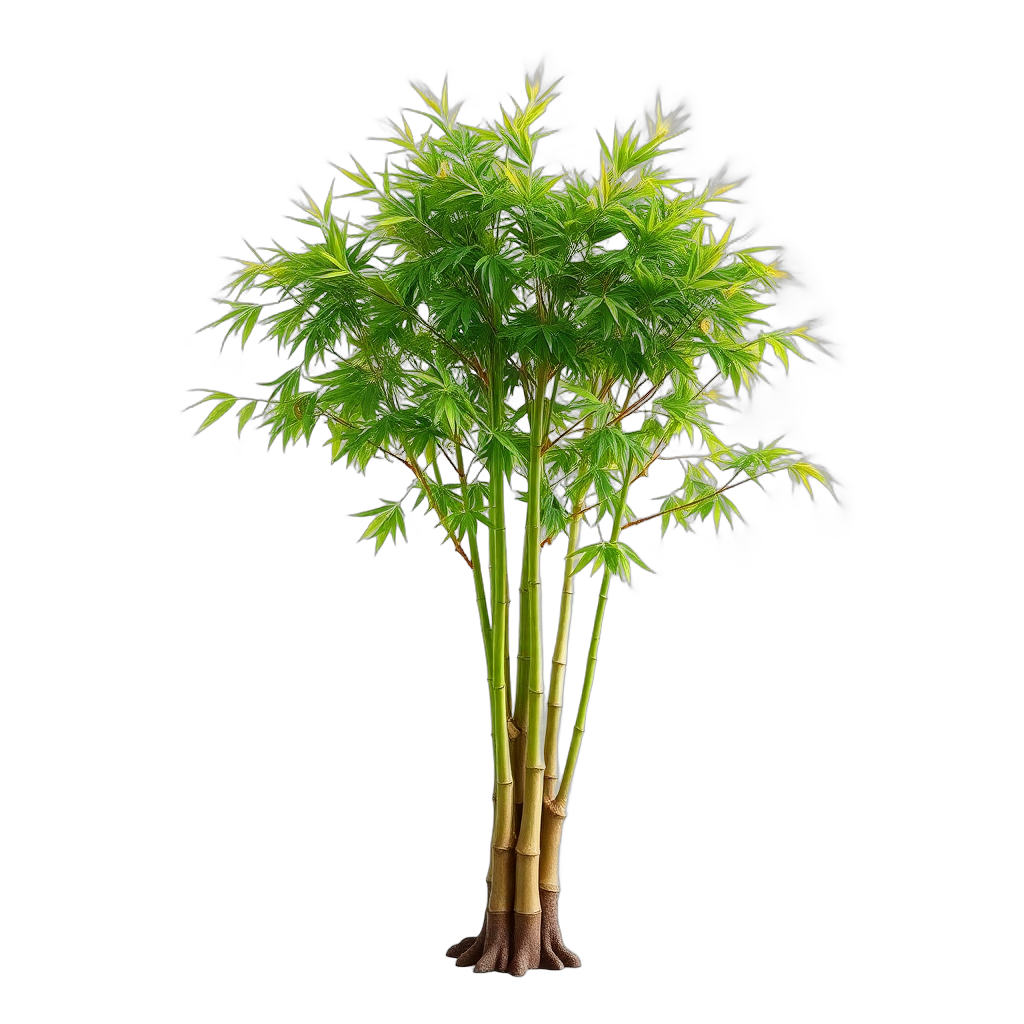
Yellow Groove Bamboo
Phyllostachys aureosulcata
reaches 30 feet tall, blooms in none. Evergreen year-round.
Featured Flowers & Perennials for Tropical/Lush Gardens

American White Water Lily
Nymphaea odorata
low-growing ground cover, white,pink blooms in summer. Attracts butterflies.

Broadleaf Arrowhead
Sagittaria latifolia
low-growing ground cover, white blooms in summer. Attracts butterflies.

European White Water Lily
Nymphaea alba
low-growing ground cover, white blooms in summer. Attracts butterflies.

Water Fern
Azolla filiculoides
low-growing ground cover, blooms in none. Red fall color.
Zone and sun checks come from our database — confirm with your local nursery before you buy.
Bloom Calendar for Miami
spring
Wild Celery, African Daisy, African Daisy Hybridsummer
American White Water Lily, Broadleaf Arrowhead, European White Water Lilyfall
American White Water Lily, Broadleaf Arrowhead, African Daisywinter
Limited bloomsDesign Tips for Miami (Zone 11a)
- Design for the dry season (November–April) as your showcase period — Miami’s tropical garden is at its most spectacular when winter temperatures are 70–80°F, plumeria is in bloom, and bird of paradise flowers coincide with the dry-season sun
- Use coral rock as your primary hardscape material — oolitic limestone is Miami’s geological identity, historically used in Coral Gables’ most important architecture, and coral rock walls age beautifully in the subtropical climate
- Plant bold foliage in layers — tall palms at the top layer, medium giant bird of paradise and traveler’s palm in the middle, and low bromeliads and crotons at the ground; this three-layer tropical structure creates depth that flat single-species planting never achieves
- Choose hurricane-resistant palms for exposed positions — Florida native Sabal palms and properly established Royal Palms flex rather than snap in hurricane-force winds; Queen palms and tall single-trunk exotics are high-risk in exposed Miami locations
- Add plumeria for year-round Miami fragrance — it blooms continuously from May through November in Zone 11a, the frangipani scent is one of the defining sensory experiences of a Miami garden, and it grows easily from cuttings
- Excavate Miami’s limestone bedrock for significant planting areas before installing — punching individual holes for specimens plants works, but large tropical plants establish far better in properly prepared beds than in hand-drilled limestone pockets
Where to Source Plants in Miami
Skip the big-box stores. These independent Miami nurseries specialize in the plants that make tropical/lush gardens thrive in Zone 11a.
Palmco
Pine Island, FL (largest palm grower in Southeast, supplies Miami landscapers)
Largest palm nursery in the Southeast — specimen Royal Palms, Bismarck palms, and hundreds of tropical palm species at wholesale and retail
Rockledge Gardens
Rockledge (Space Coast; ships to Miami)
Specialty tropical plants, rare bromeliad collections, and unusual Florida-native specimens for Miami tropical gardens
Plant Creations
Homestead
Specialty tropical plant nursery in Miami-Dade’s agricultural district — bromeliads, unusual tropical foliage, and rare specimens for Zone 11a landscapes
Subtropical Thatch & Tropical Plants
Homestead
Tropical landscape plants, palms, and specimen plants at grower pricing in Miami-Dade’s agricultural district
TreeMart
Doral
Large specimen trees and palms serving Miami landscape contractors — mature Royal Palms, Bismarck palms, and tropical specimen trees
Tropical/Lush Landscaping Costs in Miami
| Project Scope | Estimated Cost |
|---|---|
| Tropical front yard with palms and bold color border planting | $8,000 – $22,000 |
| Grand palm entry with tropical allee border planting | $25,000 – $75,000 |
| Tropical pool with outdoor kitchen and landscape lighting | $70,000 – $180,000 |
| Covered lanai with pool and tropical garden room | $90,000 – $220,000 |
| Limestone rock excavation for planting beds | $1,500 – $4,500 |
| AI visualization with ProScapeAI | Free to start |
Estimates based on Miami, FL-area contractor rates as of 2026. Actual costs vary by site conditions, materials, and contractor.
Miami Climate & Growing Zone
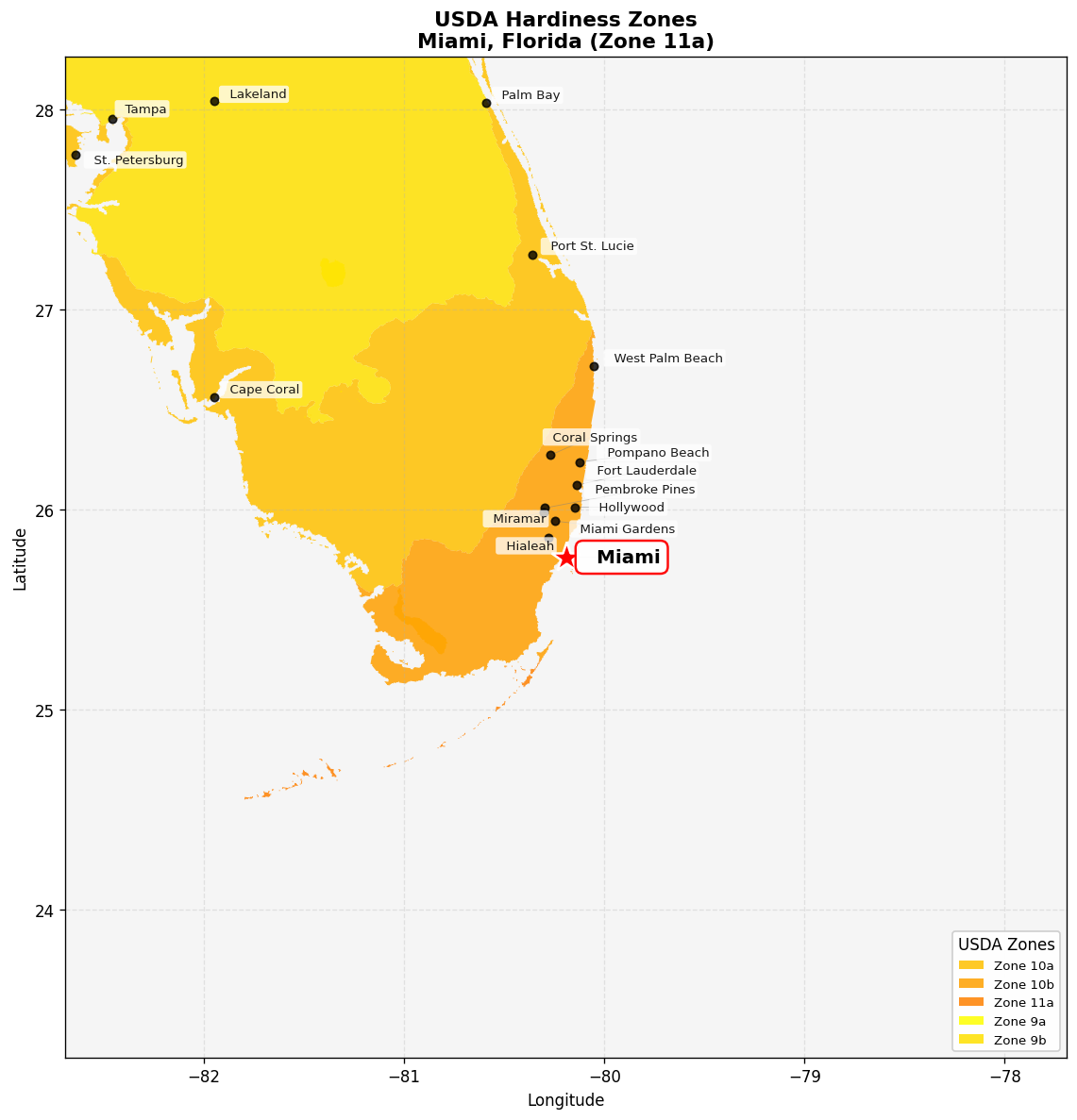
USDA Zone 11a
Hardiness zone for Miami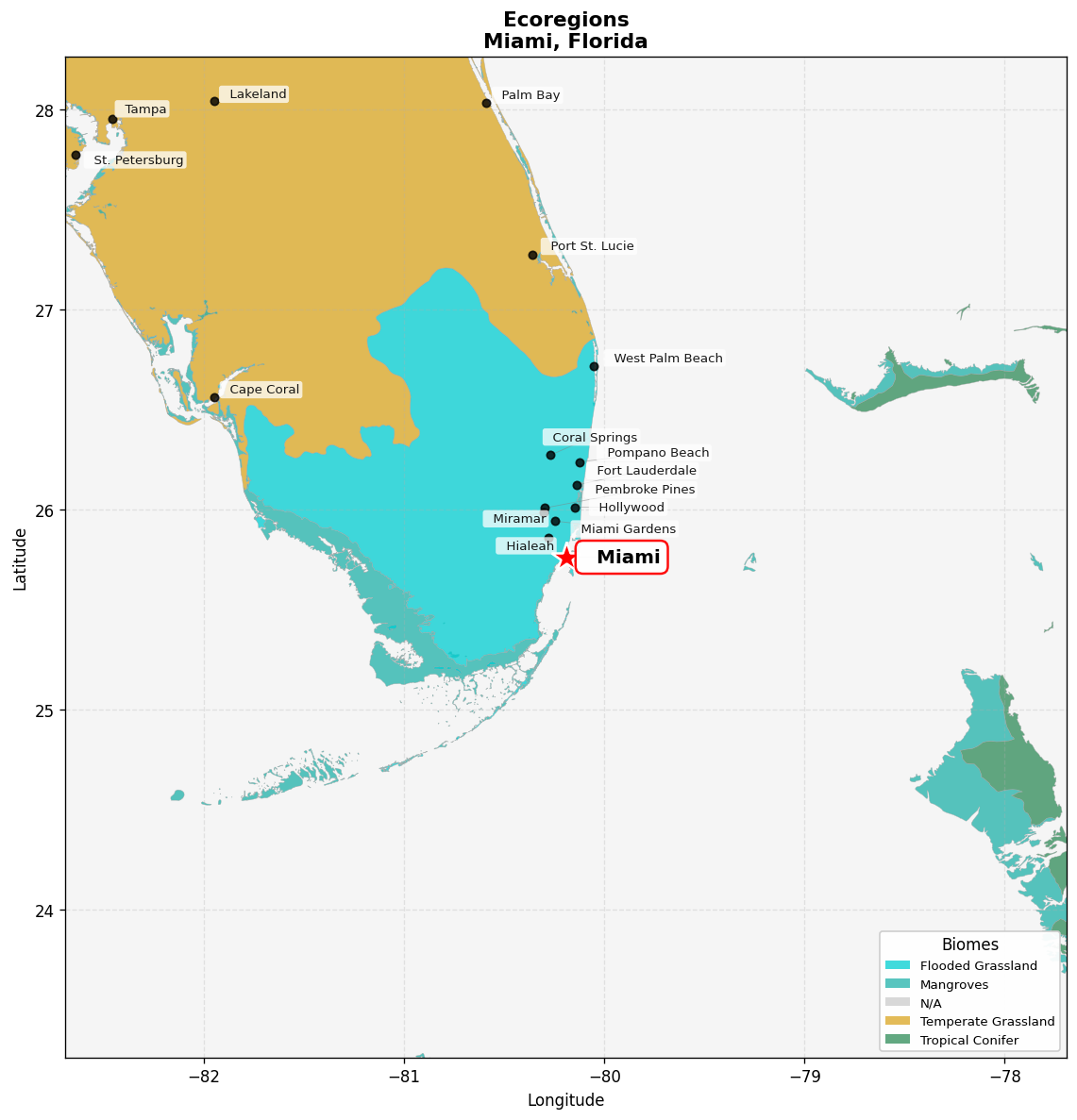
Everglades flooded grasslands
Native ecoregionFrequently Asked Questions
What makes Miami’s Zone 11a so unique for tropical landscaping?
Zone 11a means average minimum winter temperatures of 45–50°F — effectively frost-free in most years. This allows plants that die in Zone 9 (Orlando, Tampa) or struggle in Zone 10 (Fort Lauderdale) to grow permanently and vigorously in Miami’s ground. True tropicals like plumeria, Royal Palm, Bismarck palm, traveler’s palm, and many heliconia species require Zone 10b+ minimum temperatures. In Zone 11a, these plants don’t just survive — they thrive year-round with the vigor their tropical origins produce. Miami gardeners have access to a plant palette unavailable in any other major US city except parts of Hawaii.
How do I handle Miami’s wet season and drainage for tropical gardens?
Miami’s wet season (May–October) delivers intense daily thunderstorms that can deposit 3–4 inches in an afternoon. Miami’s oolitic limestone bedrock drains quickly once you get through the surface layer — called Miami Rock. For new planting beds, excavate the limestone to 18–24 inches, line the excavation with filter fabric, and fill with quality tropical planting mix. In low spots that collect standing water, raise planting beds above grade. Most tropical plants are not flood-tolerant during extended periods — even in the tropics, native plants are adapted to fast-draining laterite soils, not permanent waterlogging.
Which palms perform best in Miami’s Zone 11a landscape?
Miami has an exceptional palm palette. Royal Palm (Roystonea regia) is Florida’s native and most architecturally impressive — the signature of great Miami estates. Bismarck palm (Bismarckia nobilis) for dramatic silver-blue architectural impact. Sabal palm (Florida’s state tree) for hurricane-resistance and native authenticity. Coconut palm for coastal properties. Foxtail palm (Wodyetia bifurcata) for smaller spaces. Queen palm (Syagrus romanzoffiana) for affordable fast establishment. Montgomery palm for formal entry planting. Avoid tall single-trunk palms in areas prone to hurricane-force winds — multi-trunk species and lower-profile varieties handle storm exposure better.
How do I make a Miami tropical garden hurricane-resistant?
Hurricane-resistance starts with plant selection. Florida-native palms (Royal, Sabal, Coconut) have evolved for storm conditions and flex rather than snap. Avoid species with brittle wood (queen palms in high-wind zones, tall single-trunk palms in exposed positions). Keep trees properly maintained — remove dead fronds (they become projectiles), avoid over-trimming (weakens trunks), and have palms inspected after severe storms for internal damage. For shrubs and borders, low-growing species resist wind better than tall ones. Coral rock walls are dramatically more hurricane-resistant than wood fences. After any major hurricane, inspect root stability before assuming wind-shifted plants are permanently unsalvageable — staking and re-planting often saves specimens that appear to have fallen.
What are the best tropical plants for Miami shade gardens?
Under Miami’s mature canopy trees (banyan, live oak, gumbo limbo), shade-tolerant tropical plants create lush understorey gardens. Best performers: bromeliads (thousands of species, many are deep-shade tolerant), caladiums (spectacular foliage from spring through fall), peace lily (Spathiphyllum — blooms in shade), bird’s nest fern, anthurium (glossy tropical foliage), philodendron (many species), and tropical gingers. For accent color in shade: impatiens (seasonal), begonias (wax and rex types), and torenia. Shade-garden bromeliads in particular are a Miami specialty — local bromeliad societies hold remarkable shows and sales.
How much does a tropical landscape installation cost in Miami?
Miami tropical landscaping runs $18–85/sqft depending on plant maturity and project scope. A tropical border with bird of paradise, plumeria, and bougainvillea runs $6,000―16,000 for a typical front yard. A tropical pool garden with Bismarck palms and stucco walls: $40,000–120,000. A Royal Palm allee with mature specimens: $50,000–150,000+ (mature Royal Palms cost $500–3,000+ per specimen). Annual maintenance for tropical landscapes: $2,000–7,000/year (year-round growing season means year-round maintenance). Miami oolitic limestone bedrock excavation for planting beds adds $1,500–4,000 if extensive.