4 Desert Garden Ideas for Modesto, CA | Xeriscape Landscape Design in Zone 9b
Native plants from the California Central Valley grasslands (Zone 9b) — Cold semi-arid climate
Why Desert/Xeriscape Gardens in Modesto?
Few California cities have less business growing lawns than Modesto. The city sits in a true semi-arid (BSk) steppe climate — roughly 13 inches of rain a year, essentially all of it falling between November and March — which means every green lawn from May through October is running entirely on irrigation water, in a region where the City of Modesto assigns watering days and bans midday sprinkling in the warm season. A conventional lawn here drinks 40+ inches of applied water a year; a xeriscape front yard runs on a fraction of that through drip emitters. Desert-style landscaping in Modesto isn't a borrowed Arizona aesthetic — it's the logical endpoint of the local climate, and it's spreading fast through the stucco-and-tile subdivisions of Village One, the Dry Creek corridor, and Salida, whose builder architecture already looks the part.
Zone 9b winters open nearly the full desert palette to Modesto gardeners: Agave americana and Agave parryi, soft-leaf yucca, hesperaloe, beargrass and dasylirion, prickly pear, and golden barrel cactus all handle the typical winter lows of 25–30°F without protection. The two local caveats are worth knowing. First, the rare hard freeze and the damp December–January tule fog can spot-damage tender columnar cacti and aeoniums, so the fussiest specimens belong in pots or under frost cloth a few nights a year. Second, Modesto's rain arrives concentrated in winter, so cactus and agave beds should be bermed or mounded 6–12 inches above grade with gravel mulch — desert plants here die of wet winter feet far more often than of cold.
The practical economics seal the case. Modesto's deep sandy-loam river alluvium drains well and digs easily (watch for cemented hardpan lenses 18–36 inches down on some east-side lots — break through them before planting trees), and decomposed granite and gravel come cheap from Sierra foothill quarries, with Central Valley installation rates running 20–40% below the Bay Area. Once established, a xeriscape yard needs no mowing through 100°F summers, cuts outdoor water use by 50–70%, and shrugs off the drought-year restrictions that turn lawns brown across Stanislaus County. Check current City of Modesto and Modesto Irrigation District programs for turf-replacement incentives before you start — the payback math is already good, and rebates make it better.
4 Desert/Xeriscape Design Ideas for Modesto
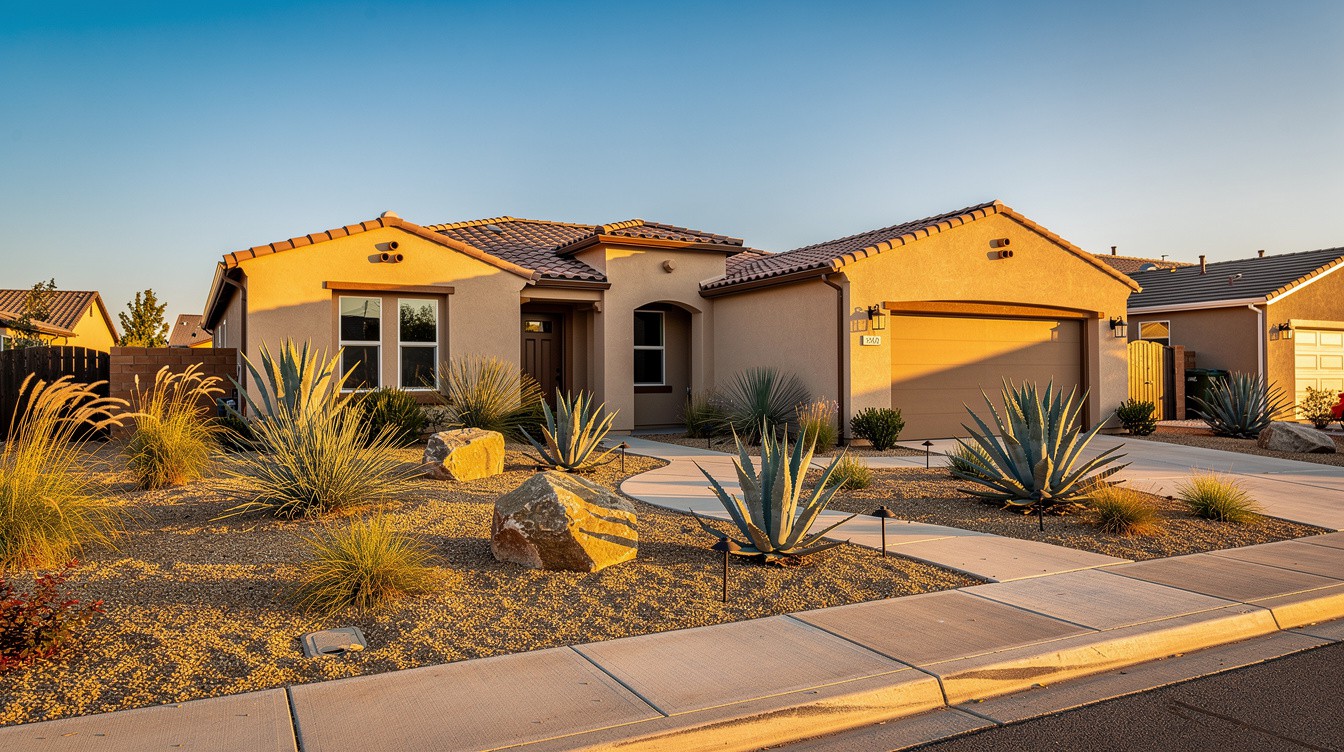
The Boulder & Blue Agave Welcome
$8–16/sqftA tile-roofed tan stucco home with an attached two-car garage, its entire front yard converted to a field of gold decomposed granite anchored by massive granite boulders. Blue Agave americana specimens hold the center of each planting group, backed by fine-textured beargrass and flax-like tufts that catch the low evening sun, with ornamental grasses feathering the corners. A pale concrete walkway curves from the driveway to the covered entry past low path lights, and a rustic block wall closes off the side yard. Zero turf, zero mowing — the whole composition runs on a drip line and looks better in August than any lawn on the street.
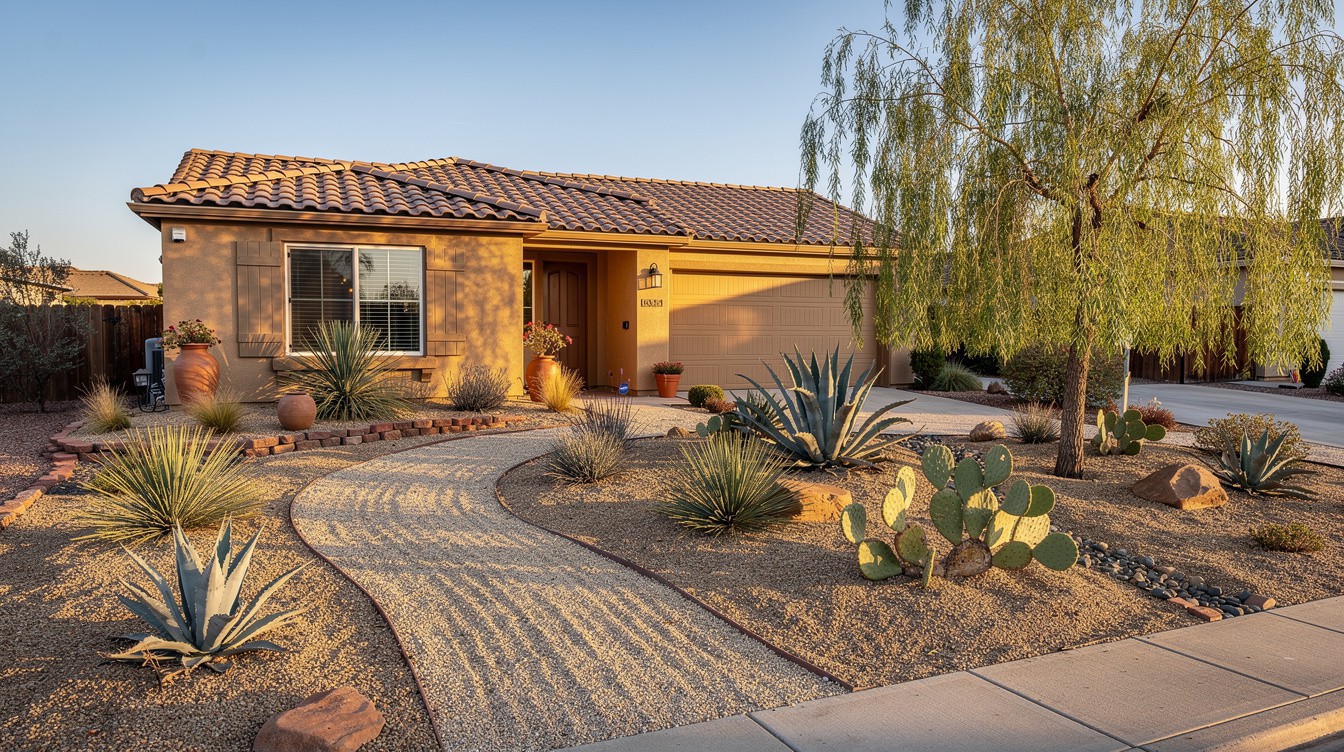
The Raked-Gravel Ribbon
$7–14/sqftA golden stucco cottage with a terracotta tile roof and wood shutters, fronted by a wide ribbon of raked pale gravel that sweeps in a curve toward the entry, held on both sides by rusted steel edging and bands of brick-toned cobble. Terracotta urns and pots flank the door and porch, planting groups alternate down the yard — a sculptural prickly pear cluster, blue agaves, silvery beargrass and yucca rosettes — and a willowy, fine-leafed shade tree (Australian willow or desert willow) softens the driveway edge with movement the stiff succulents can't provide. The raked gravel is the showpiece: a Zen gesture that costs almost nothing and reads custom from the curb.
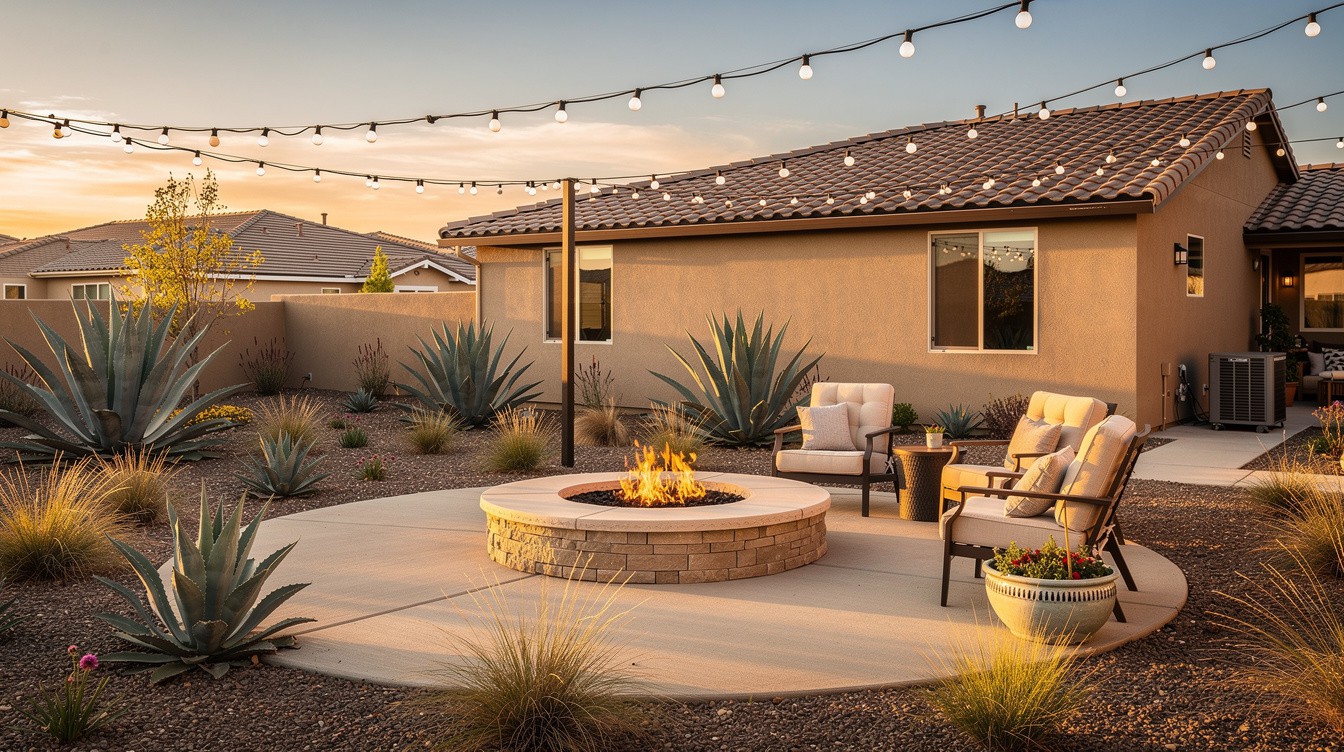
The Stacked-Stone Fire Circle
$14–28/sqftA circular poured-concrete patio floats in a sea of dark pea gravel behind a tan stucco privacy wall, centered on a round stacked-stone gas fire pit ringed by four deep-cushioned lounge chairs. Two long runs of string lights sweep overhead from the house eave to a single steel pole, agaves line the wall in a rhythmic row with clumping grasses between, and a potted flower bowl adds one hit of color. The geometry does all the work — circle patio, circle fire pit, straight wall of agaves — and every surface is heat-proof and waterless. On a 105°F Modesto July day this yard asks for nothing; at 8 pm it becomes the best room in the house.
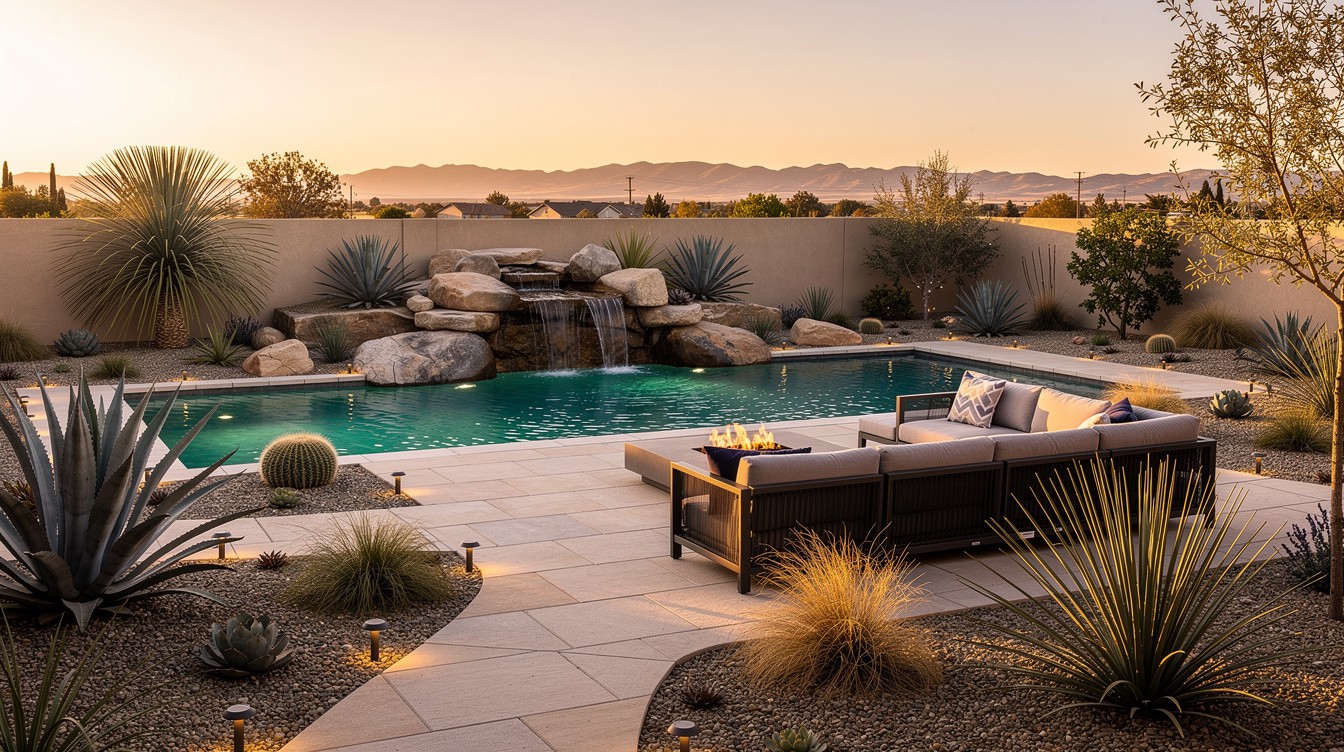
The Valley-View Waterfall Pool
$50–100/sqft (pool area inclusive)A geometric pool wrapped in travertine-look pavers laid in a diamond pattern, fed by a boulder waterfall stacked from massive natural stones at the far corner. A deep outdoor sectional faces a low fire bowl at the water's edge, and the planting is pure high-desert theater: a giant blue agave colony, golden barrel cactus, yucca rosettes, and backlit grasses threaded with low path lights throughout the gravel. A low stucco wall keeps the long Central Valley horizon in view — on clear days the Sierra foothills line the distance. This is Modesto's version of a Palm Springs resort yard, and the dry summer heat is exactly the climate it was invented for.
See how a desert/xeriscape garden looks on YOUR property
Upload a photo of your Modesto yard and visualize your dream garden in seconds.
Try ProScapeAI Free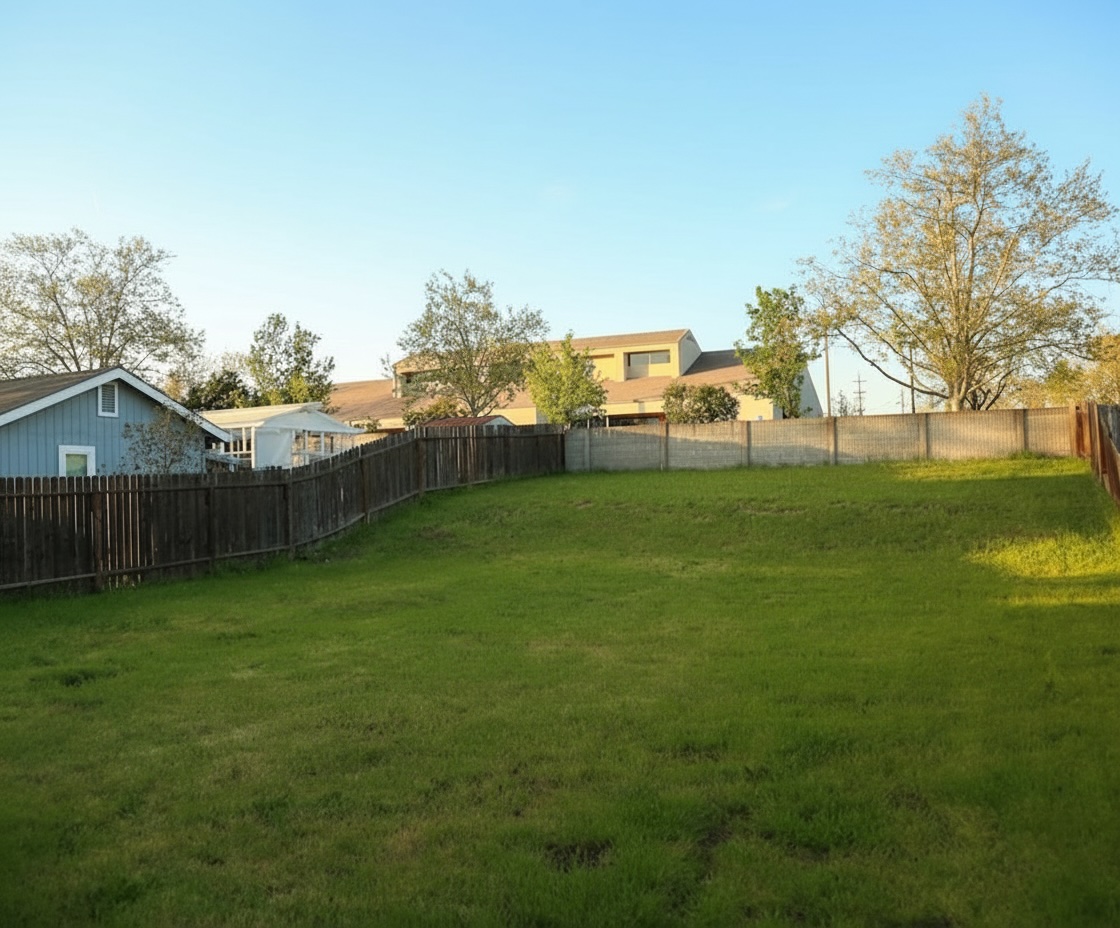
Featured Trees & Shrubs for Desert/Xeriscape Gardens
Browse all 161 plants for Modesto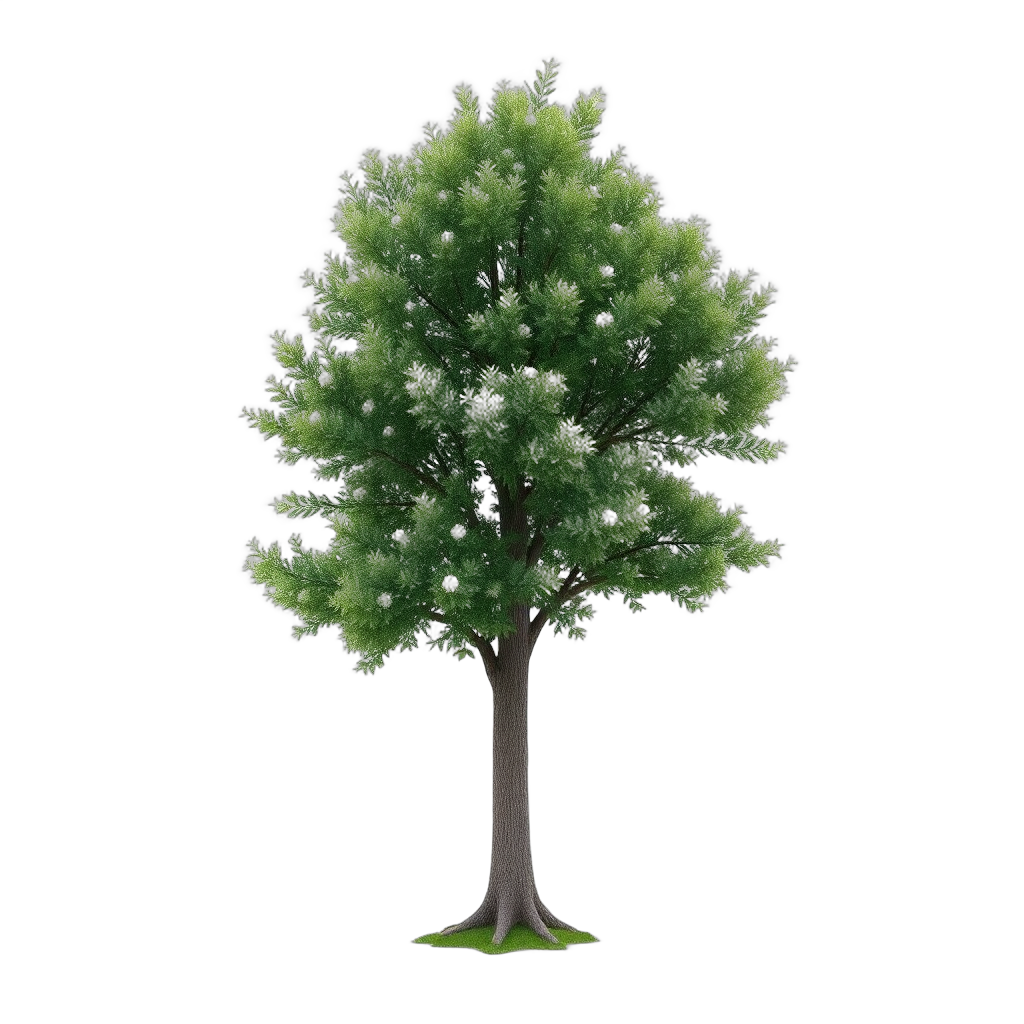
Blue Oak
Quercus douglasii
large shade tree reaching 50+ feet, blooms in spring. Yellow fall color.
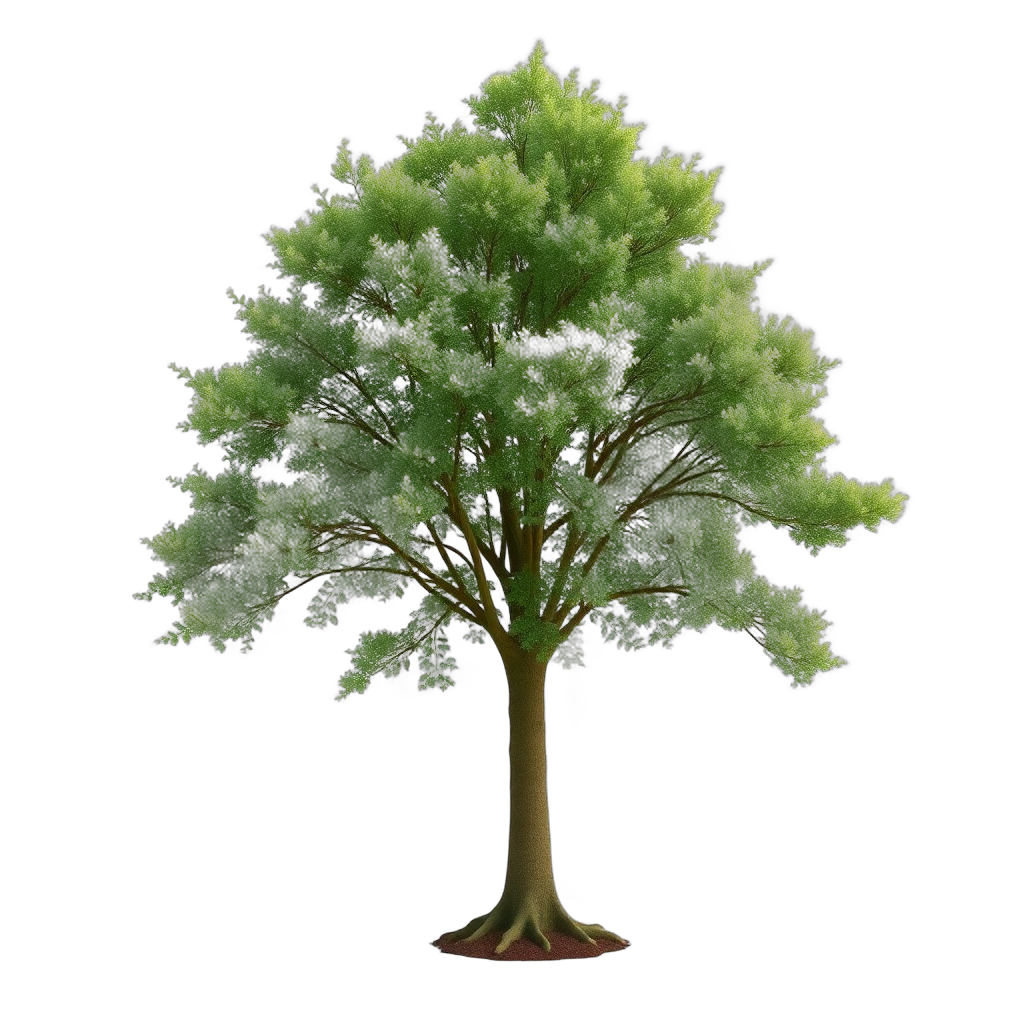
Fremont Cottonwood
Populus fremontii
large shade tree reaching 50+ feet, yellow blooms in spring. Yellow fall color.
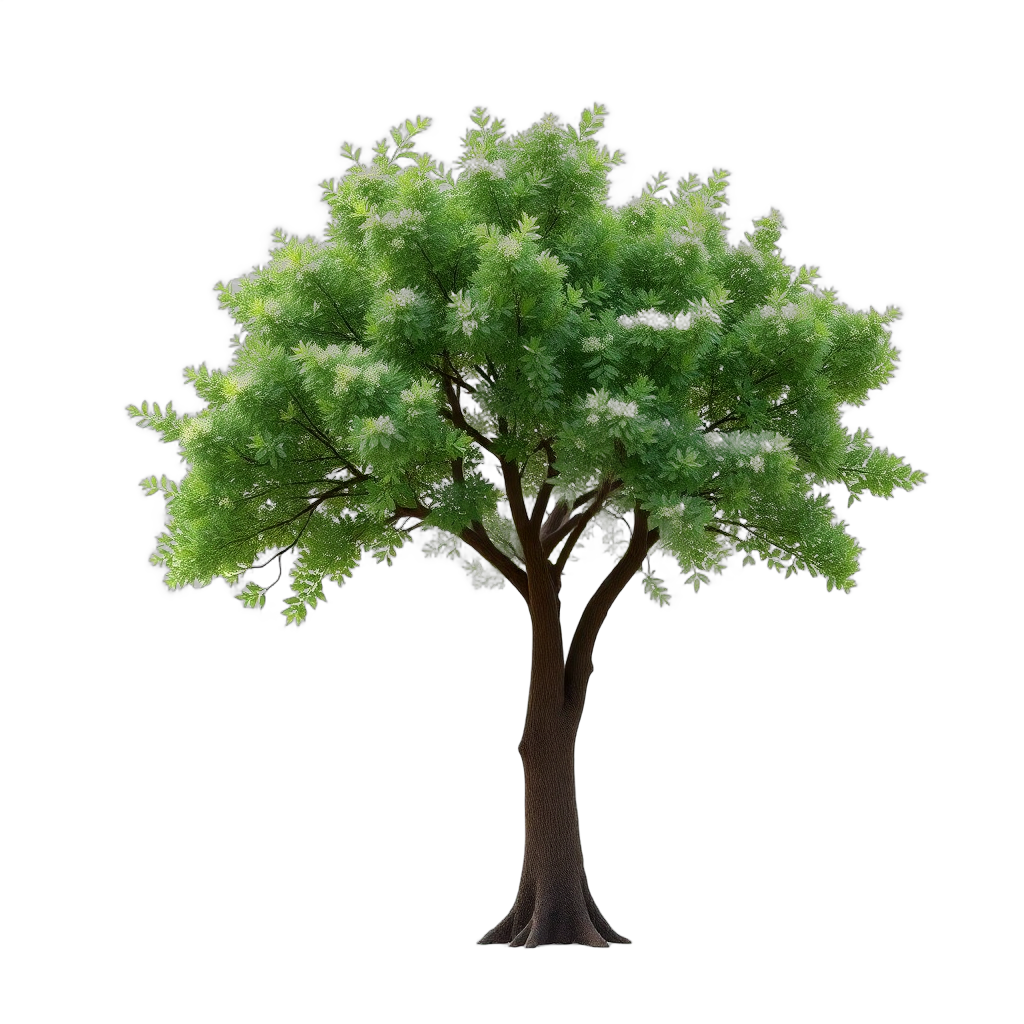
Valley Oak
Quercus lobata
large shade tree reaching 80+ feet, blooms in spring. Yellow fall color.
Featured Grasses & Groundcovers for Desert/Xeriscape Gardens
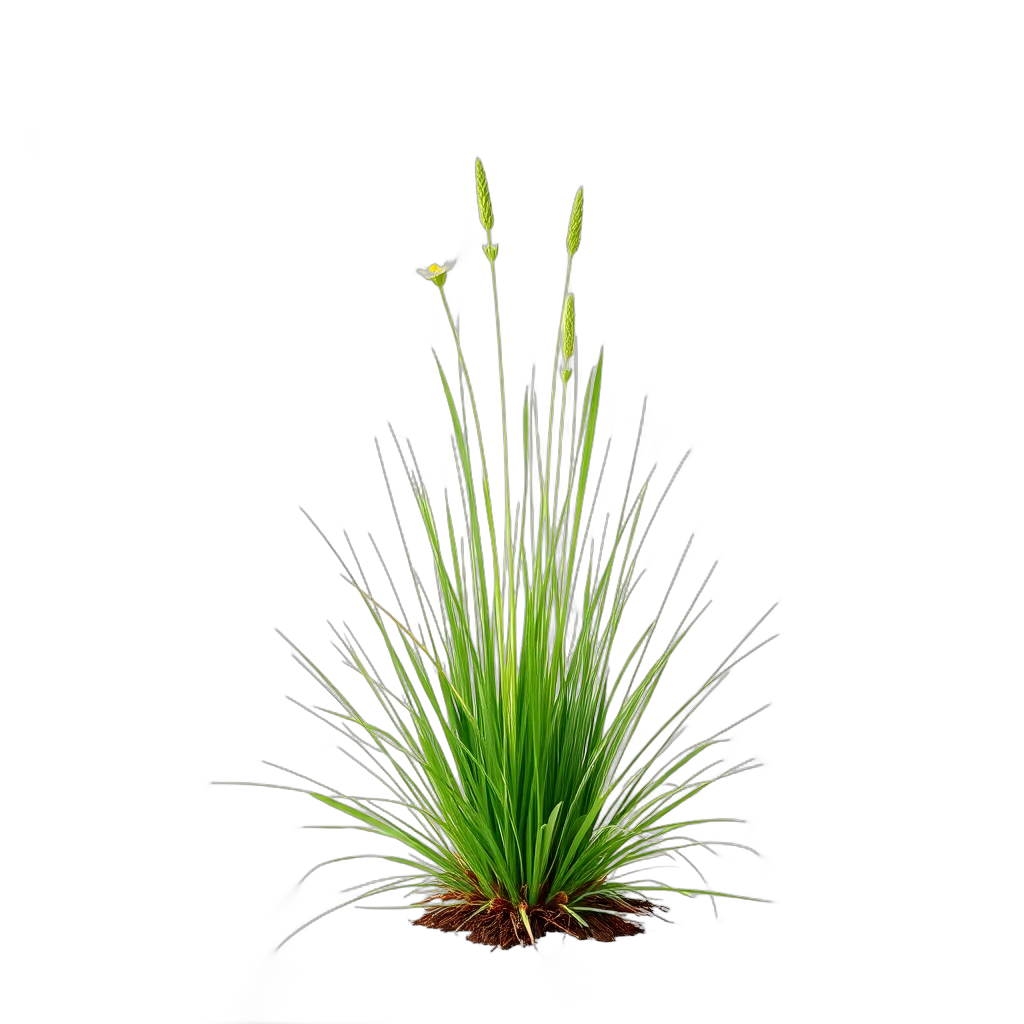
California Brome
Bromus carinatus
low-growing ground cover, blooms in spring. Yellow fall color.
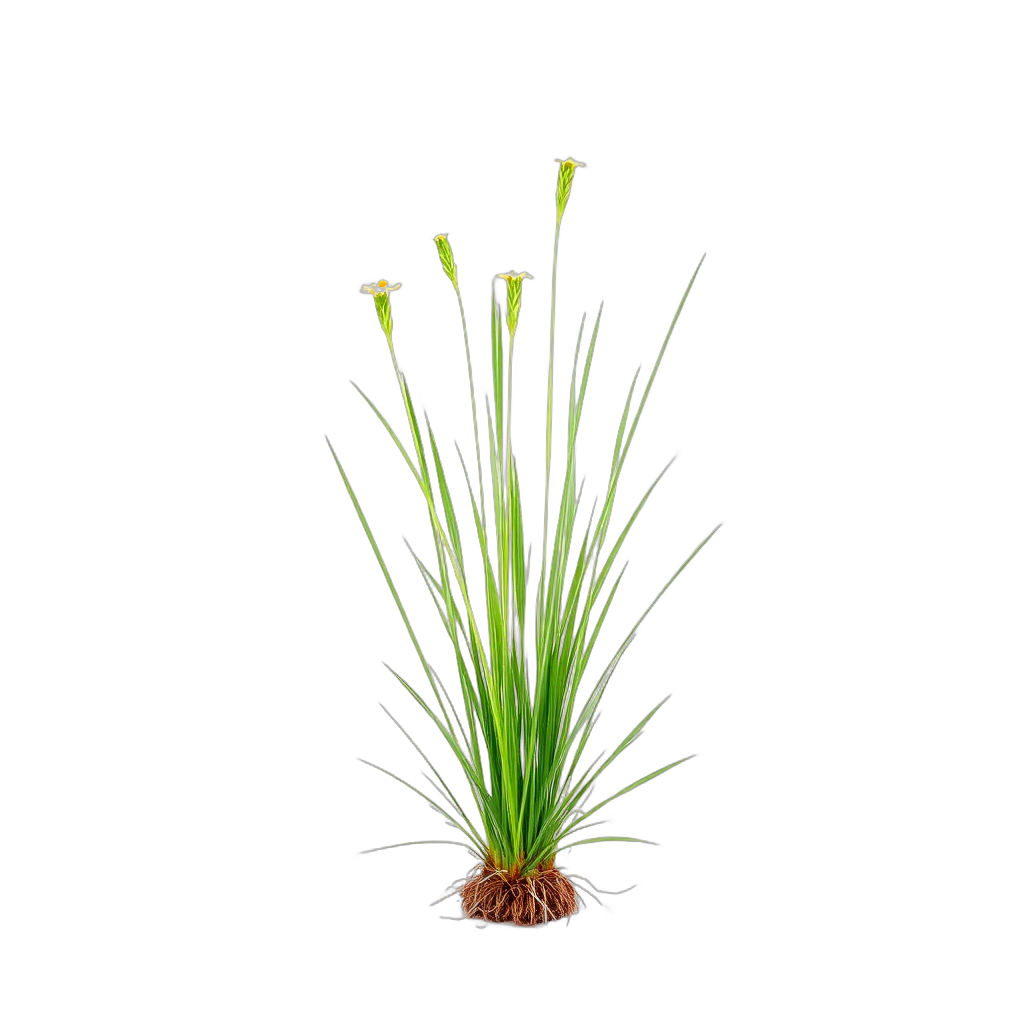
California Melic
Melica californica
low-growing ground cover, blooms in spring.
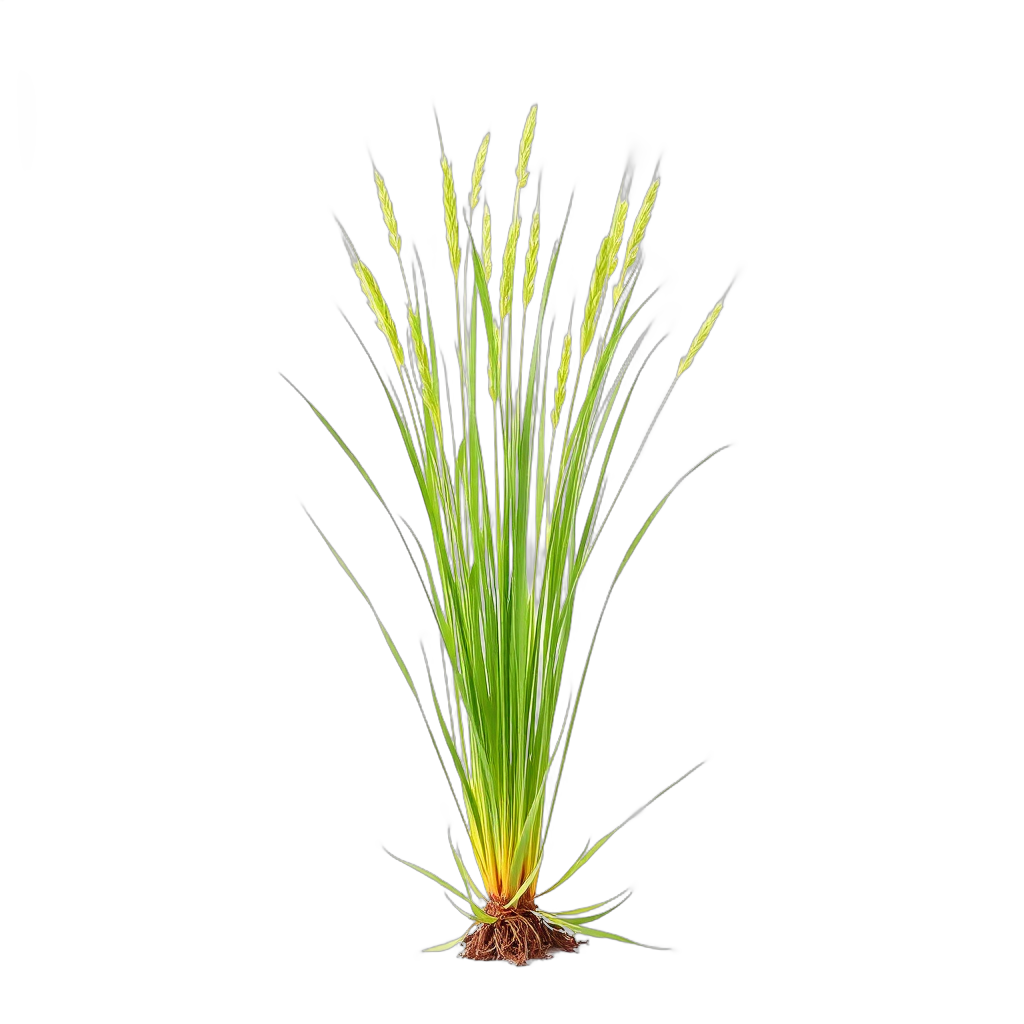
California Oatgrass
Danthonia californica
low-growing ground cover, blooms in spring. Yellow fall color.
Featured Flowers & Perennials for Desert/Xeriscape Gardens
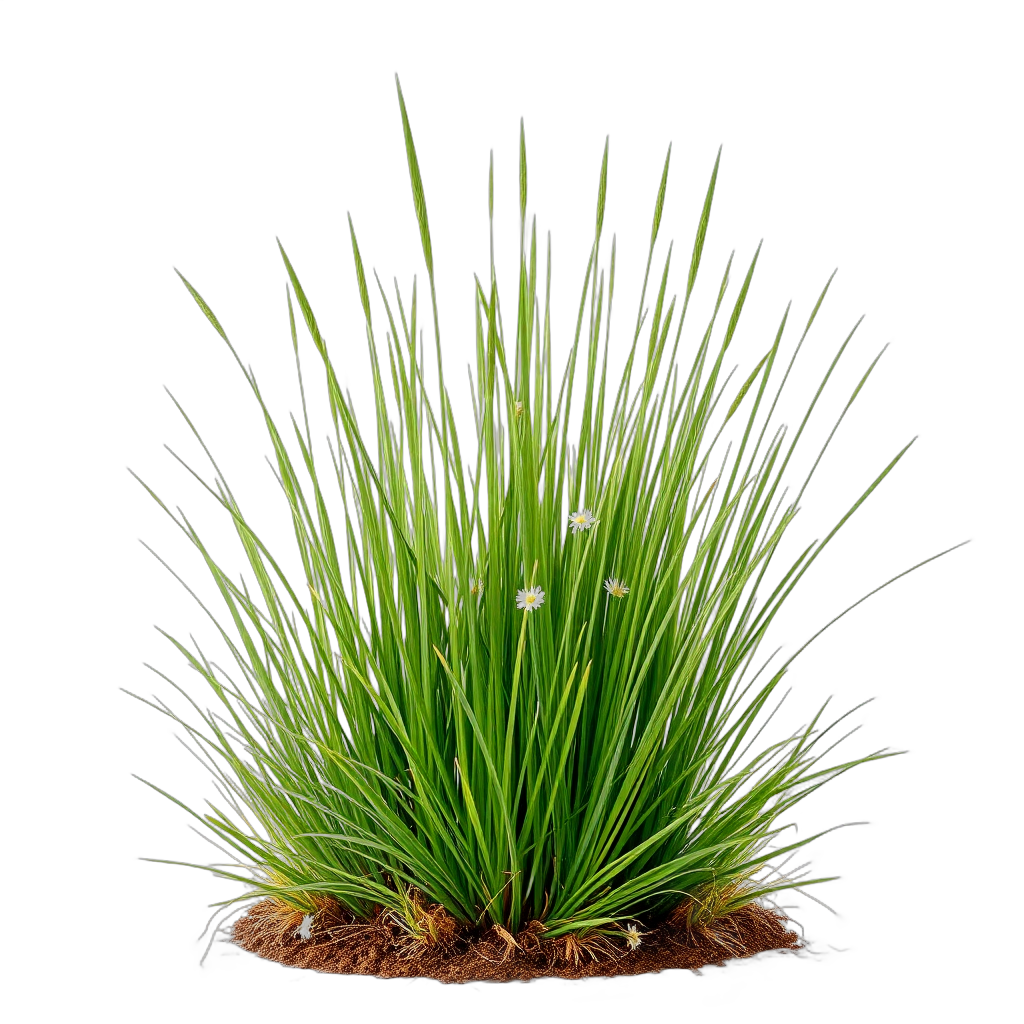
Baltic Rush
Juncus balticus
low-growing ground cover, blooms in summer. Evergreen year-round.
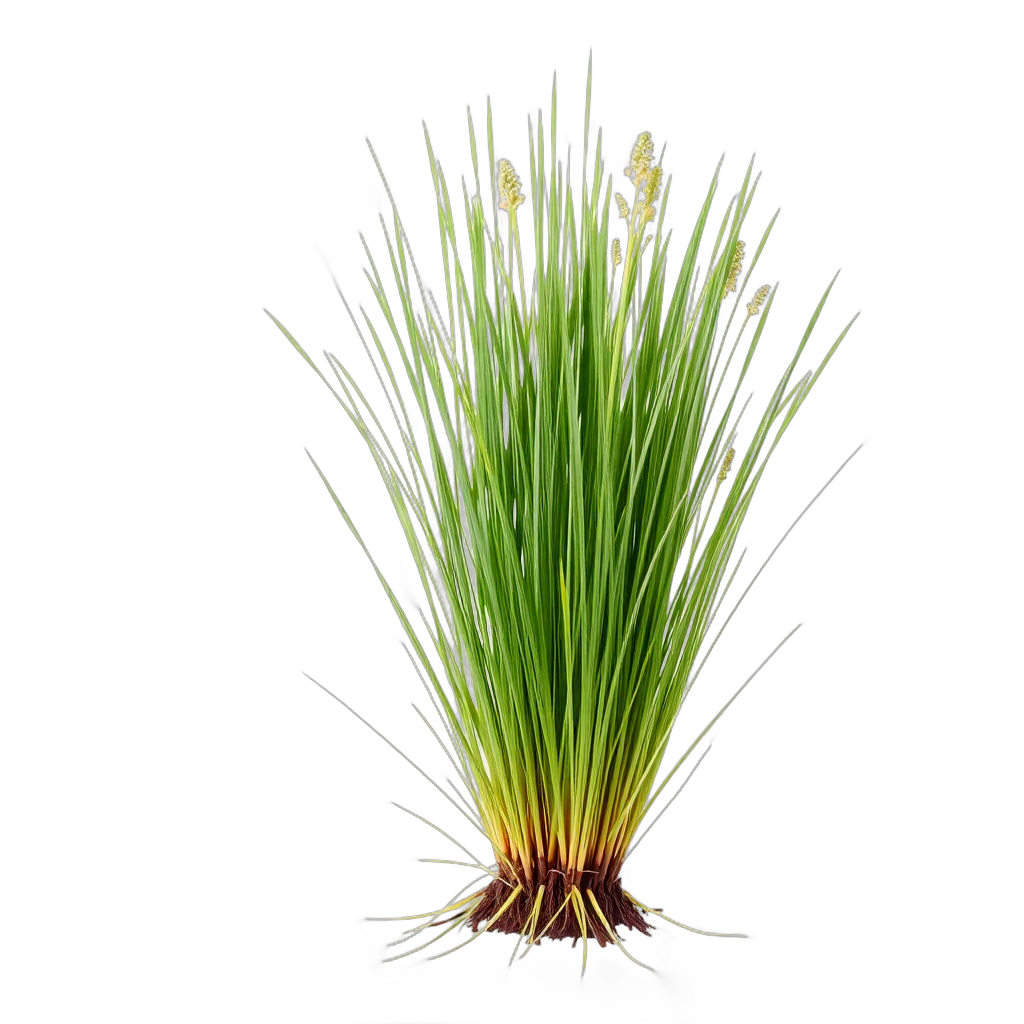
California Gray Rush
Juncus patens
low-growing ground cover, blooms in summer. Evergreen year-round.
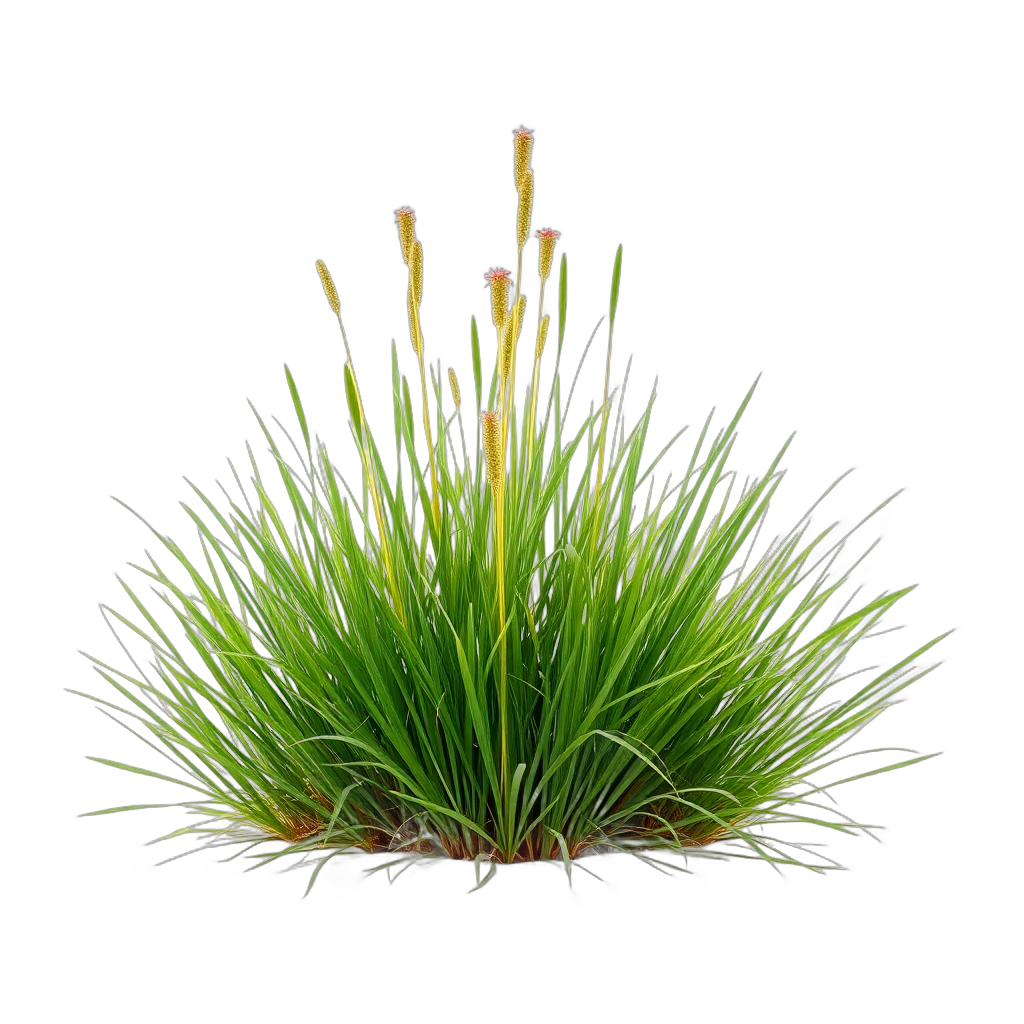
Clustered Field Sedge
Carex praegracilis
low-growing ground cover, blooms in spring.
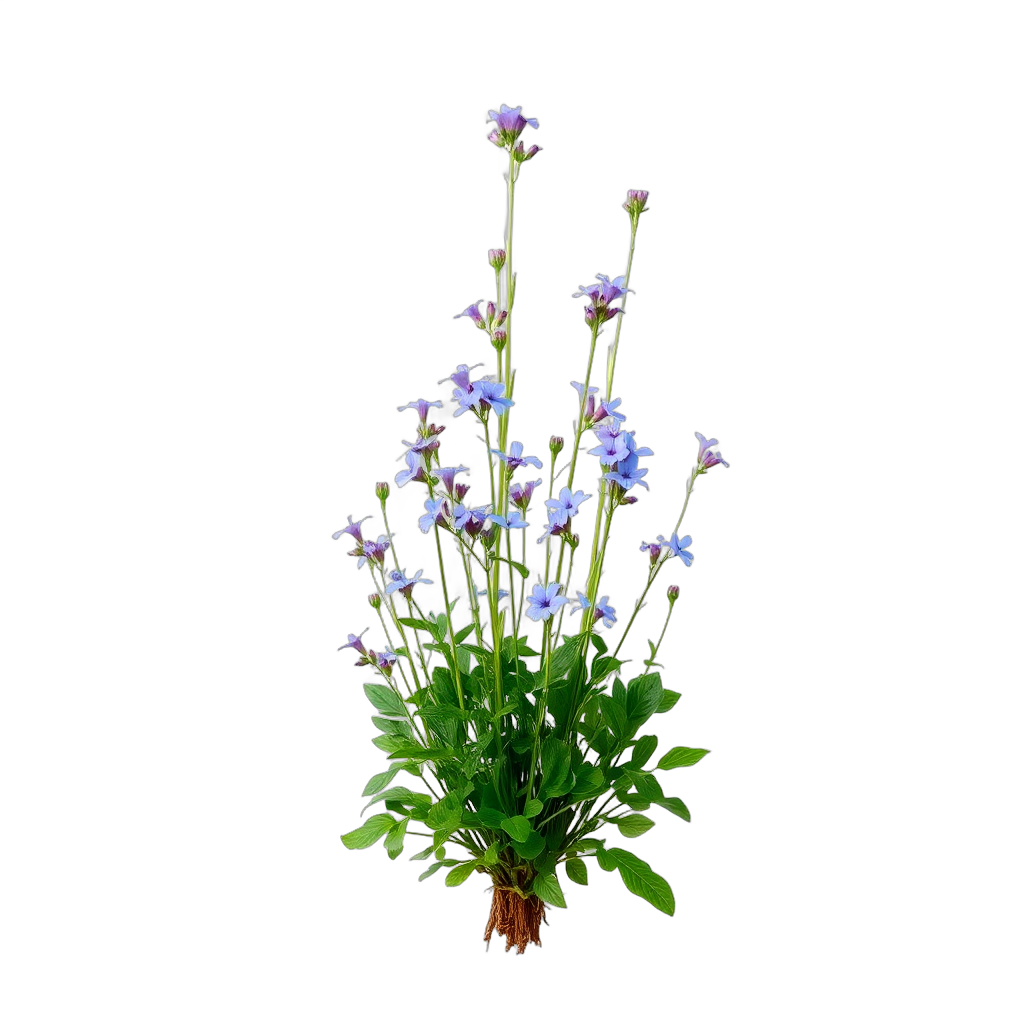
Blue Dicks
Dichelostemma capitatum
low-growing ground cover, blue blooms in spring. Pollinator-friendly.
Bloom Calendar for Modesto
spring
Clustered Field Sedge, Blue Dicks, Blue-Eyed Grasssummer
Baltic Rush, California Gray Rush, Papyrusfall
Limited bloomswinter
Limited bloomsDesign Tips for Modesto (Zone 9b)
- Berm every cactus and agave bed 6–12 inches above grade with gravel mulch — Modesto's 13 inches of rain lands almost entirely in winter, and wet feet kill more desert plants here than frost ever does
- Buy decomposed granite and boulders locally; Sierra foothill quarries make DG one of the cheapest materials in the Central Valley, so spend the savings on a few oversized specimen agaves that anchor the design
- Set boulders in odd-numbered groups and bury each by a third — a half-buried 800-pound boulder reads as geology, while a rock sitting on the surface reads as decoration
- Keep frost cloth on hand for December and January: two or three tule-fog freezes a year are all that separates Modesto from a true desert climate, and ten minutes of covering saves your tender specimens
- Design with negative space — desert style dies when it's crowded; give each agave and boulder group breathing room of open DG so shadows and silhouettes do the work, especially under low evening sun
- Run everything on inline drip with a smart controller: it's exempt from most watering-day restrictions, invisible under the gravel, and lets you taper established desert plants to a handful of deep soaks per summer
Where to Source Plants in Modesto
Skip the big-box stores. These independent Modesto nurseries specialize in the plants that make desert/xeriscape gardens thrive in Zone 9b.
Westurf Nursery
East Modesto
Locally-owned nursery offering plants, trees, soil, fertilizers, garden decorations, and equipment repair.
Grover Nursery
Kiernan
Landscaping company since 1970 offering trees, shrubs, flowers, and mulch with 50 years of experience.
Desert/Xeriscape Landscaping Costs in Modesto
| Project Scope | Estimated Cost |
|---|---|
| Front yard xeriscape conversion (turf removal + DG + boulders + plants + drip) | $4,500 – $11,000 |
| Decomposed granite paths + steel edging (installed) | $1,500 – $4,000 |
| Gas fire pit patio with seating area | $8,000 – $20,000 |
| Pool with boulder waterfall + desert landscape | $90,000 – $180,000 |
| Drip irrigation system (front + back) | $800 – $2,500 |
| AI visualization with ProScapeAI | Free to start |
Estimates based on Modesto, CA-area contractor rates as of 2026. Actual costs vary by site conditions, materials, and contractor.
Modesto Climate & Growing Zone
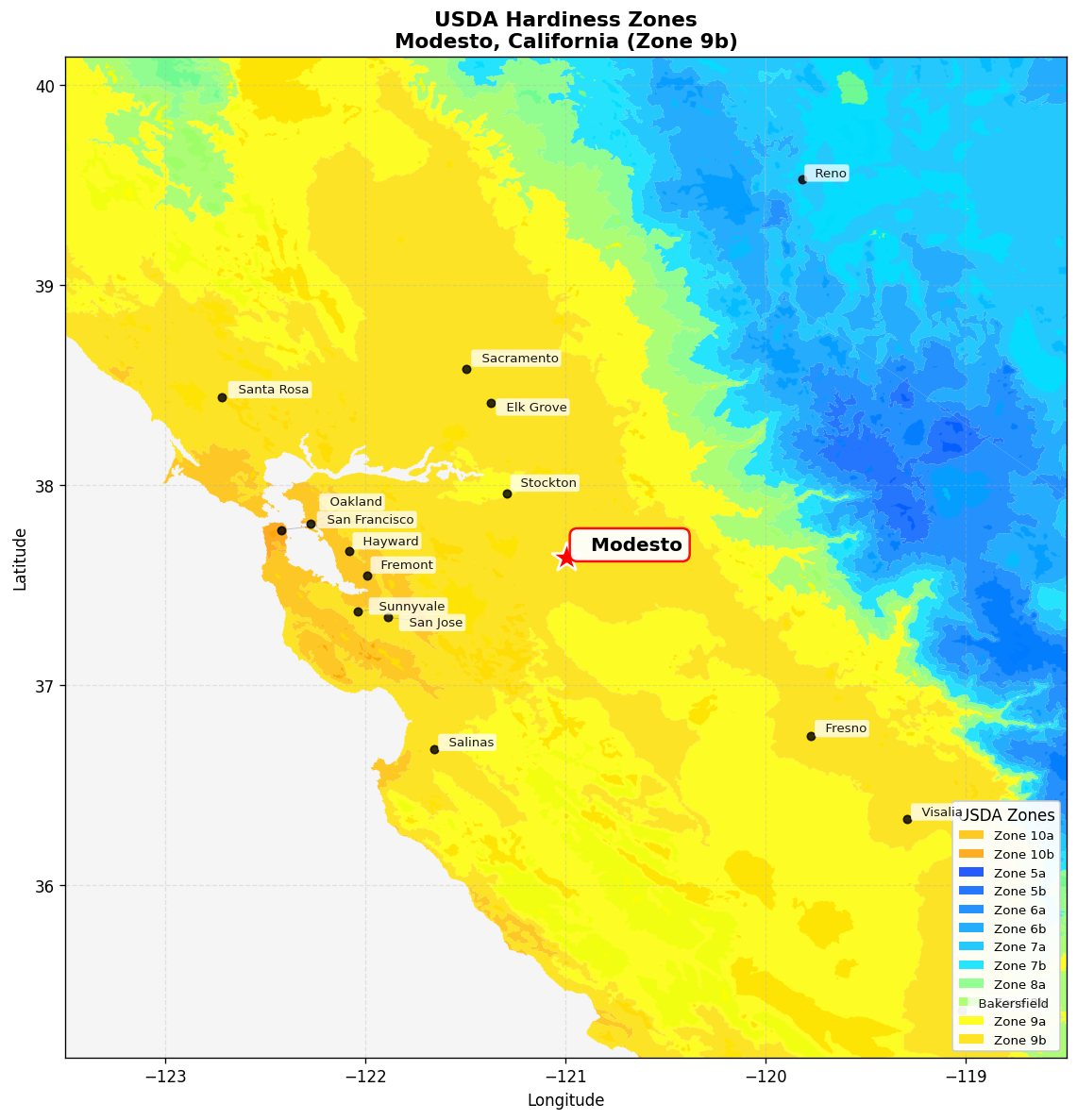
USDA Zone 9b
Hardiness zone for Modesto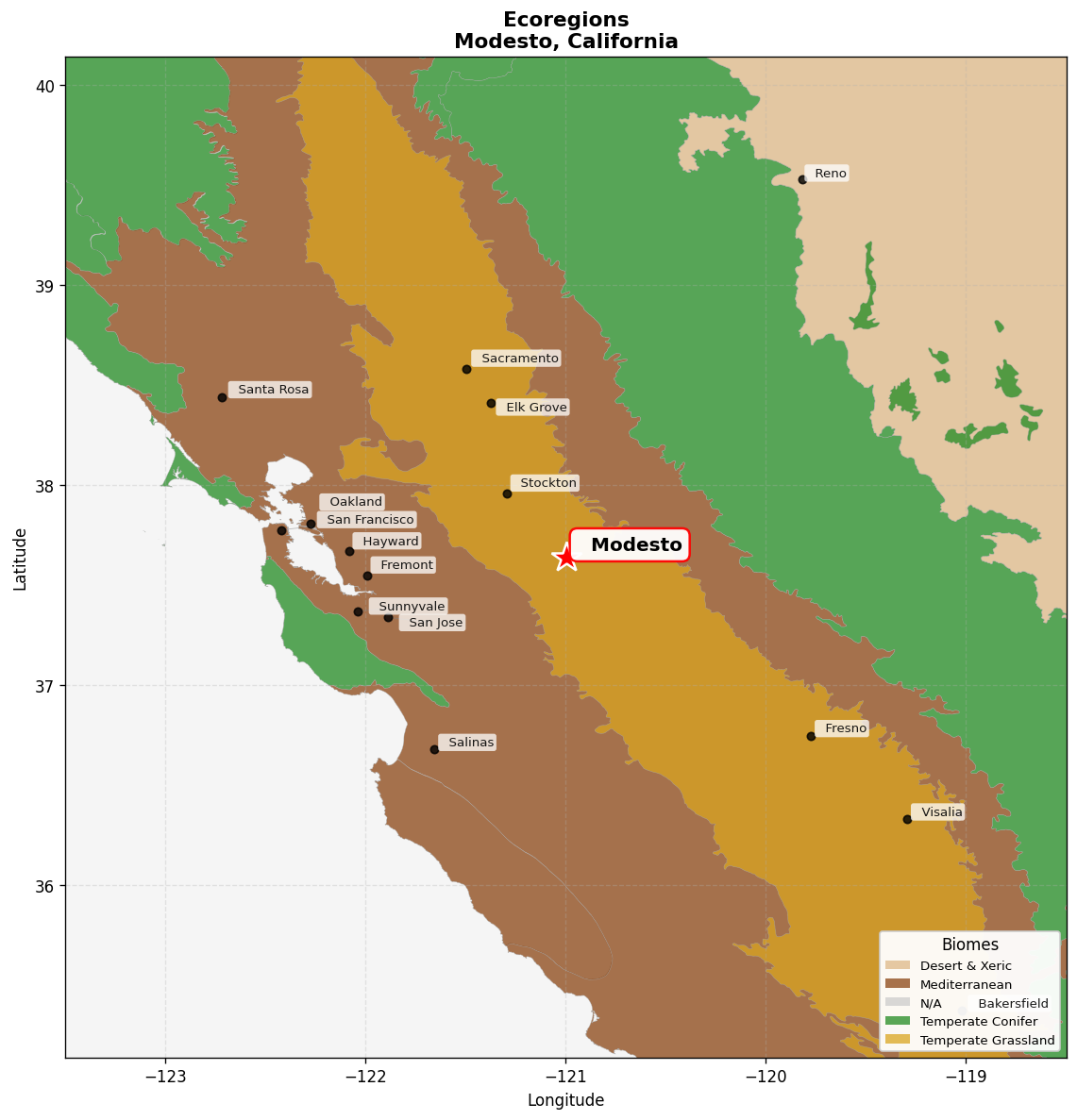
California Central Valley grasslands
Native ecoregionFrequently Asked Questions
How much does xeriscaping cost in Modesto, and does it pay for itself?
A full front-yard conversion — turf removal, decomposed granite, boulders, desert plants, and drip — runs $4,500–11,000 for a typical 500 sqft yard at Central Valley rates, which sit 20–40% below Bay Area pricing. DIY versions come in under $3/sqft since DG and gravel are quarried nearby. Payback is real: cutting 40+ inches of annual lawn irrigation typically drops outdoor water use 50–70%, plus you eliminate mowing, fertilizer, and summer reseeding. Check the City of Modesto and MID for current turf-replacement rebates — in drought years, incentive programs can cover a meaningful slice of the conversion.
Can true desert plants survive Modesto's winters?
Almost all of them. Zone 9b lows of 25–30°F are no problem for Agave americana, Agave parryi, soft-leaf yucca, hesperaloe, dasylirion, prickly pear, or golden barrel cactus. The two things that kill desert plants in Modesto are wet winter feet — 13 inches of rain arriving all at once between November and March — and the damp cold of tule fog season. Plant everything on berms or mounds 6–12 inches above grade with gravel mulch, never in a low spot. Keep truly tender species (columnar cacti like saguaro-style specimens, aeoniums) in pots you can shelter, or throw frost cloth over them the few nights a year that dip below 28°F.
How much water does a desert landscape save under Modesto's watering rules?
A conventional Modesto lawn needs roughly 40+ inches of applied water per year to survive the six-month rainless season; an established xeriscape needs a small fraction of that, delivered by drip. In practice, homeowners who convert see outdoor water use fall 50–70%. Just as valuable: drip irrigation is generally exempt from the assigned-day, no-midday-spray schedules the City of Modesto enforces on sprinklers, so your landscape stops caring which drought stage the region is in. During the deepest restriction years, xeriscaped yards are the only ones on the block that still look intentional.
Decomposed granite, pea gravel, or rock — what works best in the Central Valley?
Use them in layers. Compacted decomposed granite (gold or buff, quarried cheaply from the Sierra foothills) is the best walking surface and the classic xeriscape groundcover — install it 2–3 inches deep over compacted native soil. Pea gravel and crushed rock work for non-traffic areas and around plants, ideally 3/8 to 3/4 inch so it locks together. Skip plastic weed fabric under planted areas — it blocks water and eventually surfaces; a thick gravel layer plus pre-emergent and spot-pulling controls Modesto's winter weed flush better. Half-bury boulders by a third so they read as geology, not lawn ornaments.
When should I plant a desert garden in Modesto?
October through November is ideal for the shrubs, grasses, and perennials — they root through the mild wet winter and hit their first rainless summer established. Cacti and agaves are the exception to the fall rule: they prefer going in as the soil warms, so March through May is their window, giving them a full dry season to root before the winter rains. Avoid planting anything in July–August; even cactus transplants sunburn and stall at 105°F. Water new desert plants deeply but infrequently on drip for the first two summers, then taper — overwatering kills more Modesto agaves than drought ever will.
Do I need a permit or approval to xeriscape in Modesto?
Replacing a lawn with gravel and plants needs no city permit. Permits enter the picture for retaining walls over 4 feet, pools, and gas lines to fire features. Two approvals worth checking: California's MWELO water-efficiency ordinance applies to landscapes installed as part of permitted projects above the state size thresholds (a xeriscape passes its water budget effortlessly), and newer master-planned communities like Village One may have HOA design review over front-yard changes — get your plant and material palette approved before demo day. State law prevents HOAs from banning low-water landscaping outright, but they can still weigh in on the design.