4 Modern Landscape Ideas for Alexandria, VA | Zone 7b Design
Native plants from the Southeast US conifer savannas (Zone 7b) — Humid subtropical climate
Why Modern/Minimalist Gardens in Alexandria?
Alexandria reads as a Federal-brick city, but it has one of the strongest modern landscape traditions in the Washington region hiding in plain sight. Hollin Hills, Charles Goodman's 1949 glass-and-post-and-beam neighbourhood just south of the city line, was laid out with landscapes by Dan Kiley and Lou Bernard Voigt and is still the local reference for what a modern garden here should look like — no foundation shrubs, no clipped meatballs, just topography, canopy and a clean groundplane. Add the mid-century ranch stock along Fort Hunt Road and in Alexandria West, the contemporary infill now replacing tear-downs in Beverley Hills and Del Ray, and the new-build townhouses of Potomac Yard, and there is more good raw material for clean-line design here than in most East Coast cities of 148,000 people.
Zone 7b winters bottom out around 5–10°F, which is generous enough for a properly architectural plant list — the constraint is the other half of the year. Alexandria takes about 40 inches of rain, July highs average near 89°F, and the growing season runs roughly 200 days from an early-April last frost to a first frost in early November. That combination rules out the desert palette a Phoenix modern garden leans on and rewards the grasses that are actually native to this longitude: Panicum virgatum 'Northwind' and 'Shenandoah', Schizachyrium scoparium 'Standing Ovation', Sporobolus heterolepis, Sesleria autumnalis and Calamagrostis × acutiflora 'Karl Foerster'. Skip Miscanthus sinensis, which sits on Virginia's invasive watch list and seeds into the stream corridors. Sculptural rosettes are still possible — Agave ovatifolia, Agave parryi var. truncata and Yucca rostrata 'Sapphire Skies' all take 7b cold — but only in raised, gritty beds, because 40 inches of rain in clay is what kills them, not January.
The soil under a modern Alexandria landscape is the part that decides whether the hardscape still looks sharp in five years. The city straddles the Fall Line: Old Town, Potomac Yard and the eastern neighbourhoods sit on Coastal Plain sandy loam over decades of urban fill, while the West End, Seminary Hill and the Fairfax County lots south of the city sit on Piedmont clay and Potomac Formation marine clay — a dense, slow-draining material that shrinks in a dry August and swells in a wet February. Large-format pavers and floating concrete pads laid straight onto that subgrade rock and lip within two winters. The fix is unglamorous and non-negotiable: excavate deep, separate the clay with woven geotextile, compact open-graded stone in thin lifts, and let your installer set the base and footing depths for the specific site conditions.
Finally, a modern design is a hard-surface design, and Alexandria prices hard surfaces in stormwater. The city bills a stormwater utility fee based on the impervious area a property carries and runs a credit programme for permeable paving, rain gardens and cisterns, while its Chesapeake Bay Preservation Ordinance sets 100-foot Resource Protection Area buffers along Four Mile Run, Cameron Run, Holmes Run and Hooffs Run. Permeable pavers over an open-graded base and a planted infiltration strip on the low edge of a terrace give exactly the crisp geometry the style wants while keeping water on site. One last local choice: Alexandria sits in the turf transition zone, so the green panel in a modern plan is either turf-type tall fescue, green from October to June and thirsty in July, or 'Zenith' zoysia, a tight modern carpet that needs almost no summer water but goes tan from November to April.
4 Modern/Minimalist Design Ideas for Alexandria

The Floating Pad Entry
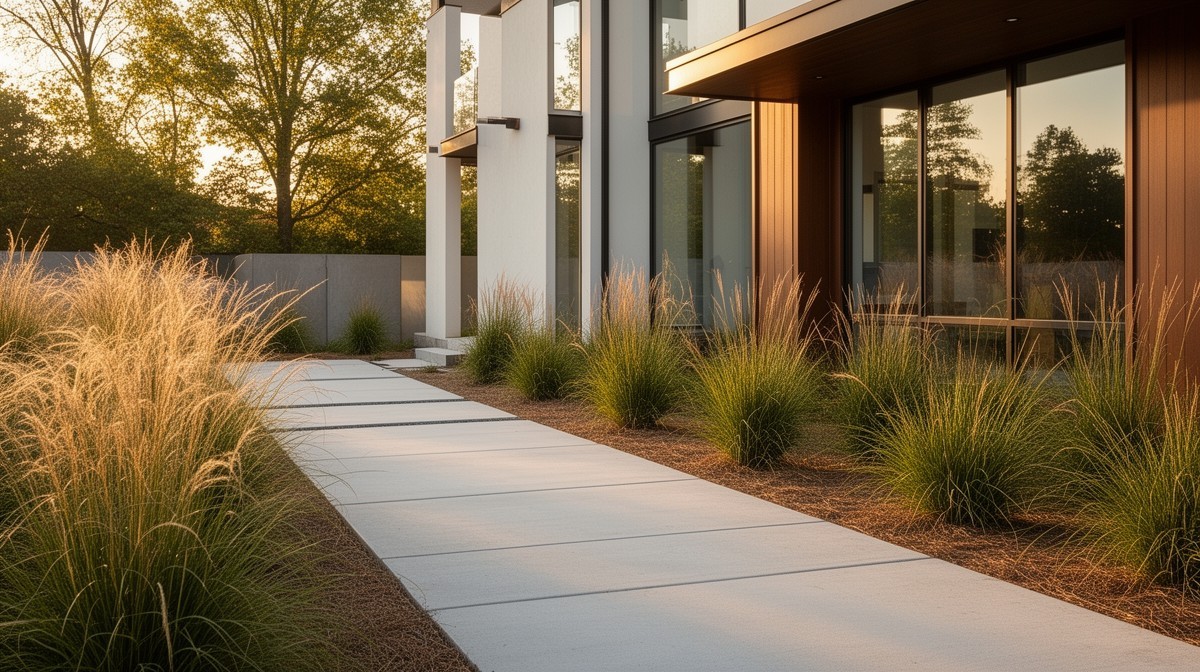
$18–34/sqftA two-storey stucco-and-glass contemporary sits behind the simplest possible front-yard move: a run of large square concrete pads set flush with grade, marching straight from the public sidewalk to a dark pivot entry door. Either side of the walk, symmetrical masses of soft blue-green fountain-form grass are punctuated at regular intervals by clumps of lavender, so the whole frontage works on repetition rather than variety. Crisp lawn panels sit outside the beds, a clipped hedge runs both property lines for privacy, and a single multi-stem canopy tree throws late-afternoon shade across the right-hand mass — which is what keeps a west-facing glass wall livable in an Alexandria August.

The Gravel and Steel Ranch Court
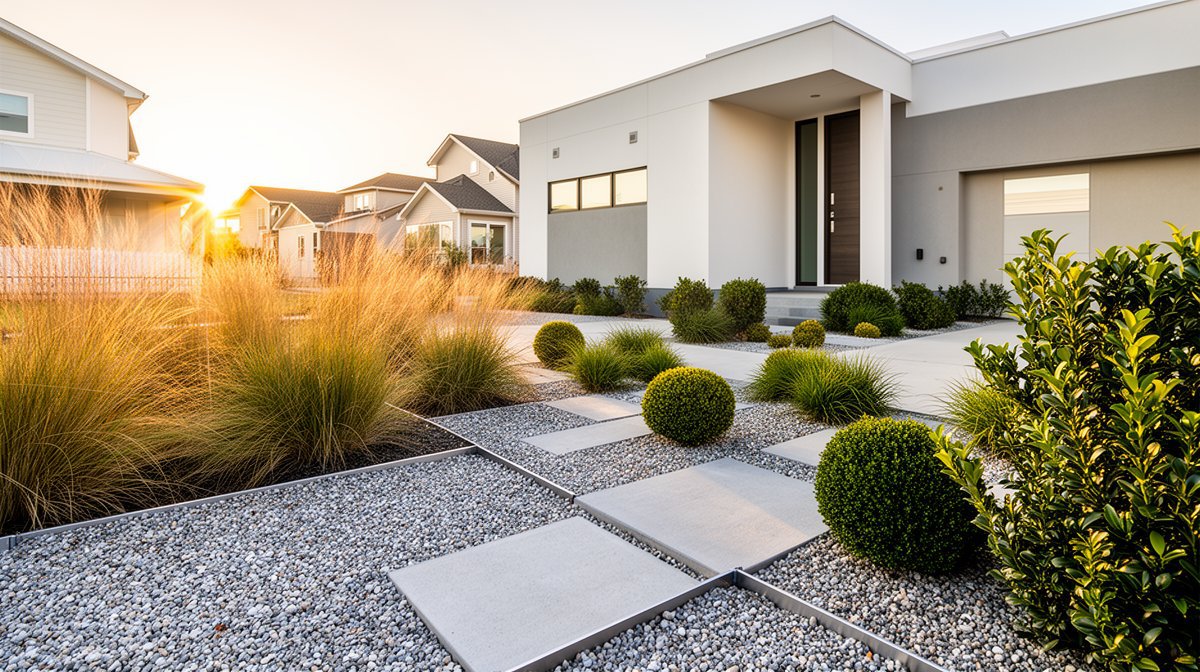
$14–26/sqftThe entire front lawn of a low mid-century ranch has been retired and replaced with a field of tan pea gravel, organised by three angular islands of blackened steel edging holding rosette plants and small grass tufts in dark mulch. A wide broom-finished concrete drive and walk cut through it to a recessed entry, and one very large mature tree has been kept exactly where it stood, its trunk now reading as sculpture over the gravel plane. It is the cheapest square-foot rate of the four ideas, eliminates mowing and irrigation entirely, and is the single best answer for the 1950s ranches Alexandria has by the hundred.

The Fire Bowl Terrace
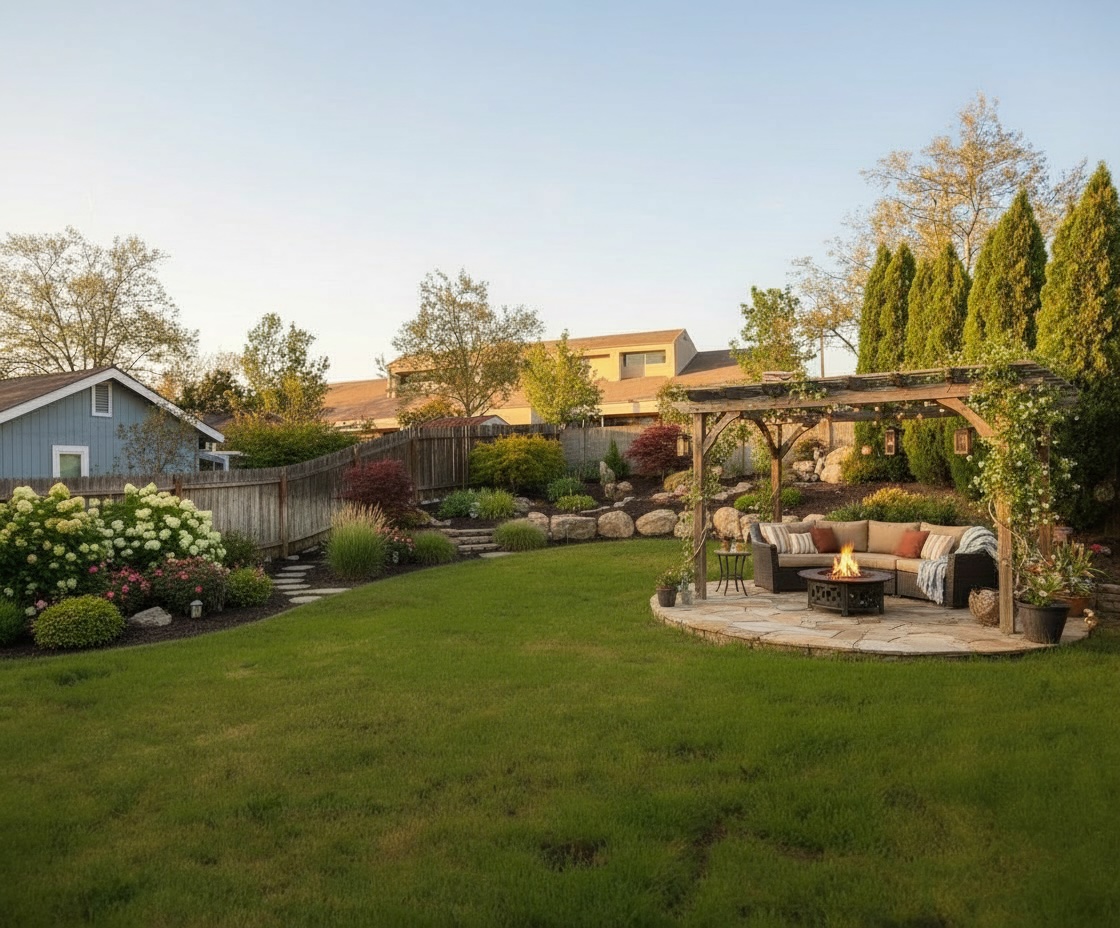
$26–48/sqftLarge-format pale concrete pavers form a broad terrace off a flat-roofed single-storey rear addition with full-height sliders, and the furniture does the composing: a low sectional and two lounge chairs pulled around a round cast-concrete gas fire bowl at the centre. Catenary string lights on slim posts throw a ceiling over the whole space, and the terrace edge dissolves into a continuous ribbon of green fountain-form grasses in dark mulch rather than stopping at a hard line. Beyond it a clean lawn panel, a young canopy tree and a soft shrub screen at the fence — a design with one floor material, one focal object and one planting texture, which is why it reads as calm.

The Dark Metal Pool Garden
$60–120/sqft (pool area inclusive)A two-storey house clad in dark standing-seam metal and full-height glass looks out over a rectangular pool with flush concrete coping, set in a wide pale deck that also carries chaises and a linear gas fire table with a sectional. The planting is deliberately confined to the deck perimeter, where uplit silver-plumed grasses catch the last of the dusk light against a dark-stained horizontal fence, and low path lights run the length of the pool. The restraint is the design: two colours, one plant texture, warm light, and a fence line resolved with planting instead of trellis.
See how a modern/minimalist garden looks on YOUR property
Upload a photo of your Alexandria yard and visualize your dream garden in seconds.
Try ProScapeAI Free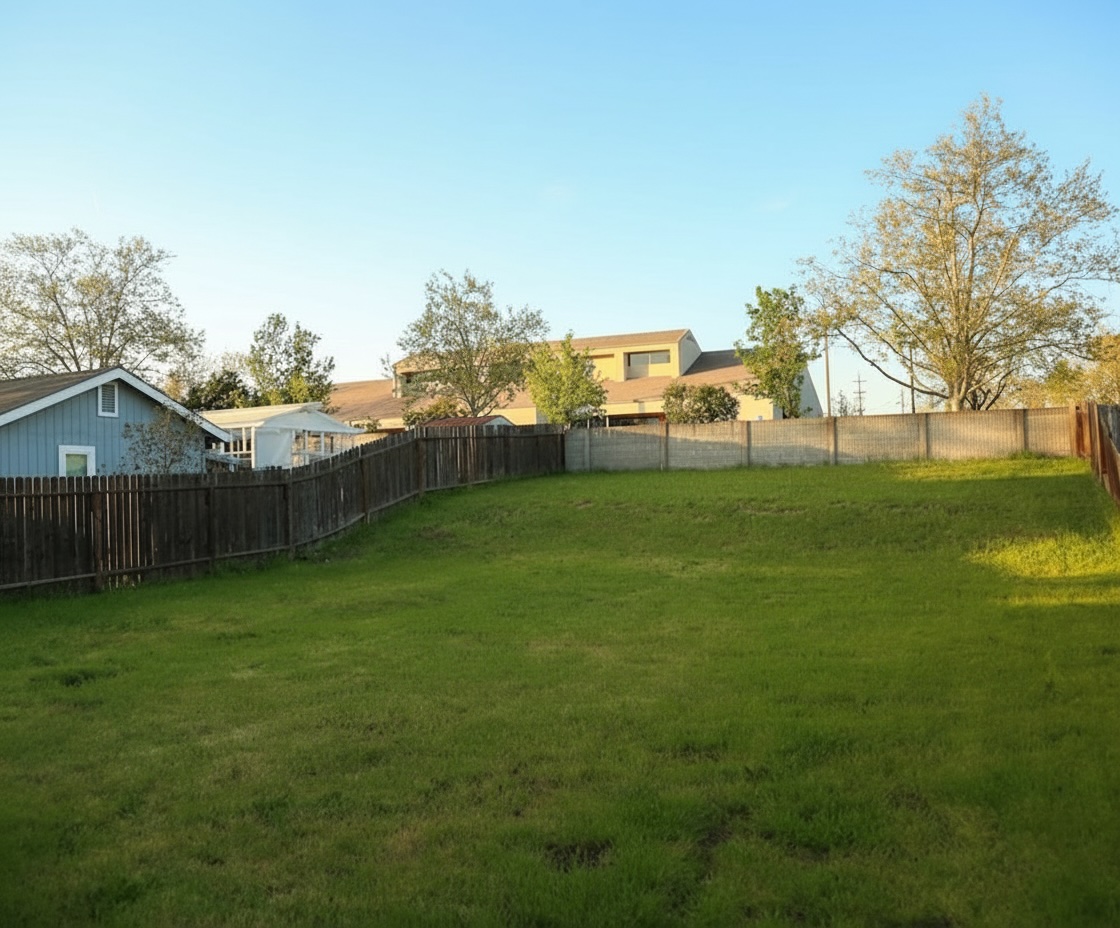
Featured Trees & Shrubs for Modern/Minimalist Gardens
Browse all 178 plants for Alexandria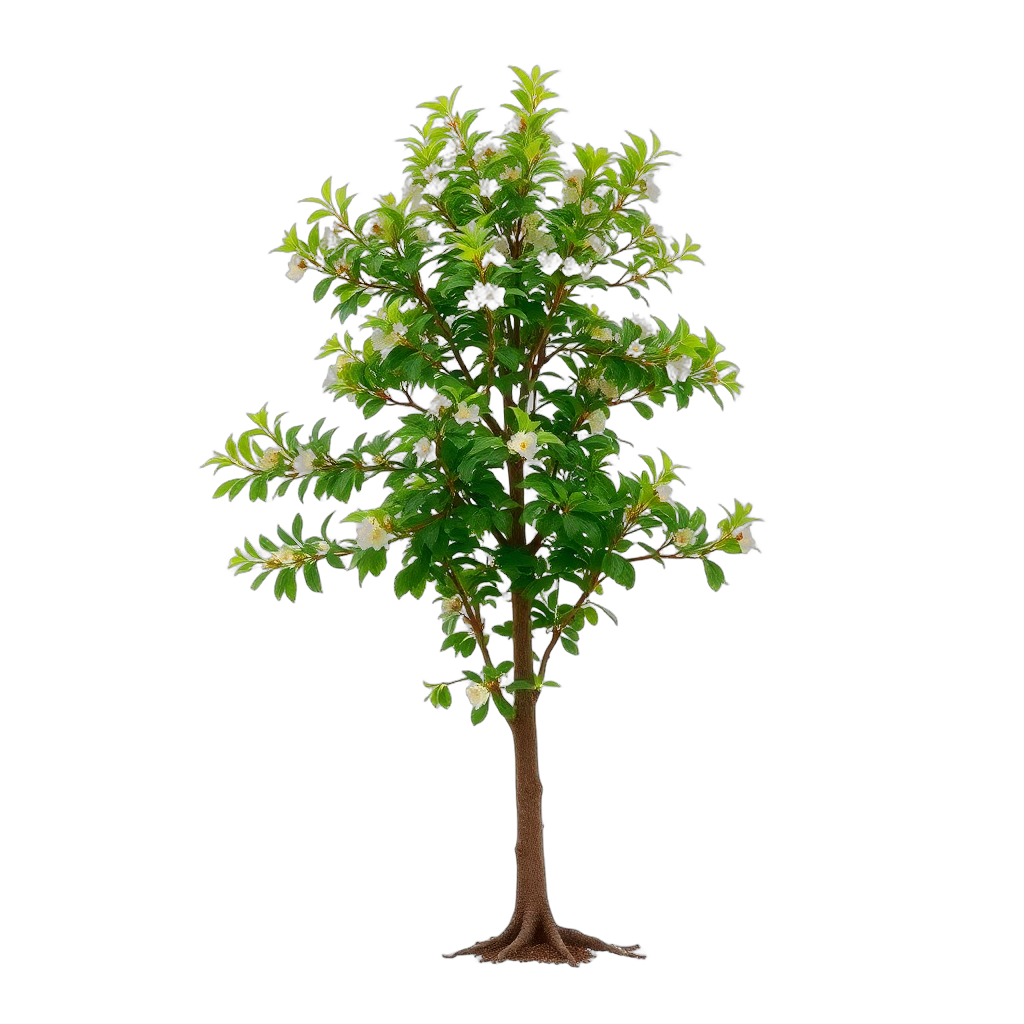
Buckwheat Tree
Cliftonia monophylla
medium-sized at 15 feet, white blooms in spring. Attracts butterflies.
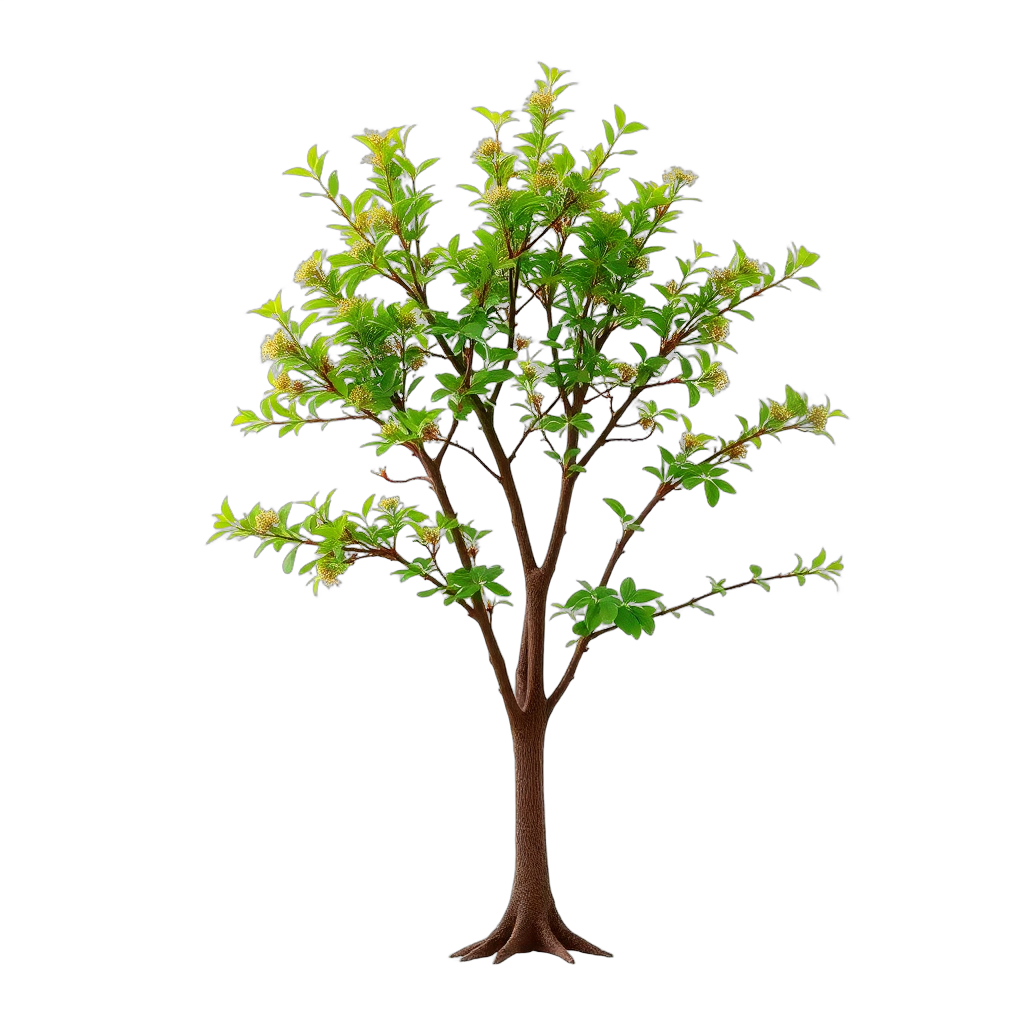
Fetterbush
Lyonia lucida
grows to 6 feet, white blooms in spring. Evergreen year-round.
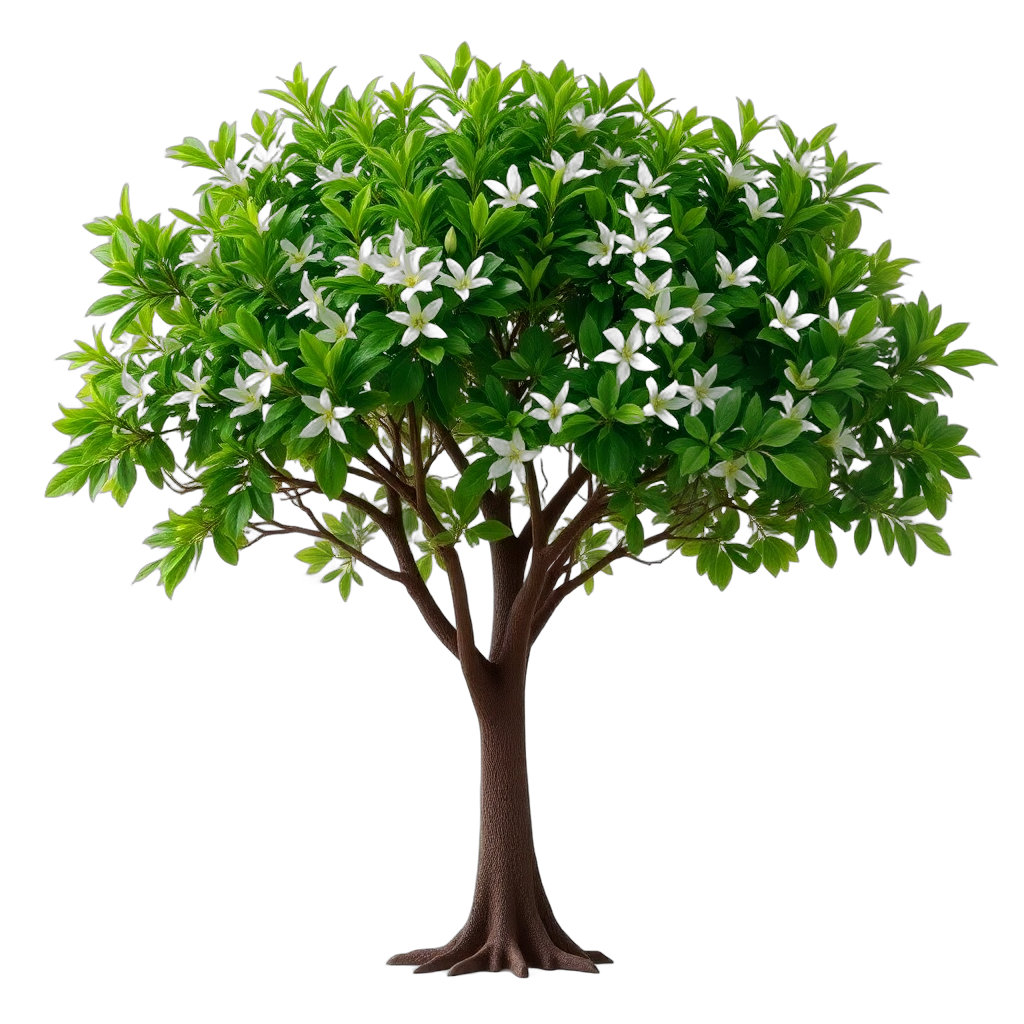
Florida Anise
Illicium floridanum
medium-sized at 8 feet, red blooms in spring. Evergreen year-round.

Inkberry
Ilex glabra
medium-sized at 8 feet, white blooms in spring. Pollinator-friendly.
Featured Grasses & Groundcovers for Modern/Minimalist Gardens

Pink Muhly Grass
Muhlenbergia capillaris
grows to 3 feet, pink blooms in fall.
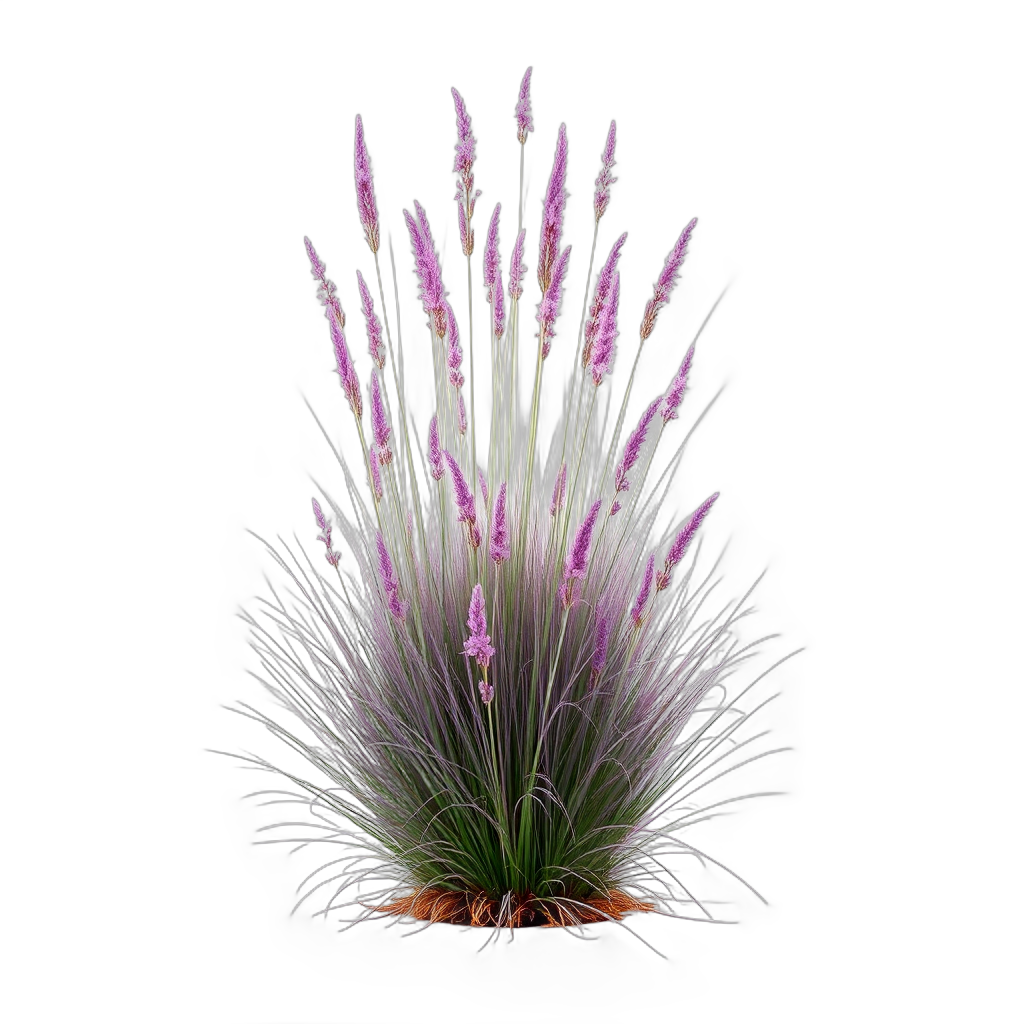
Purple Love Grass
Eragrostis spectabilis
low-growing ground cover, purple blooms in fall. Orange fall color.
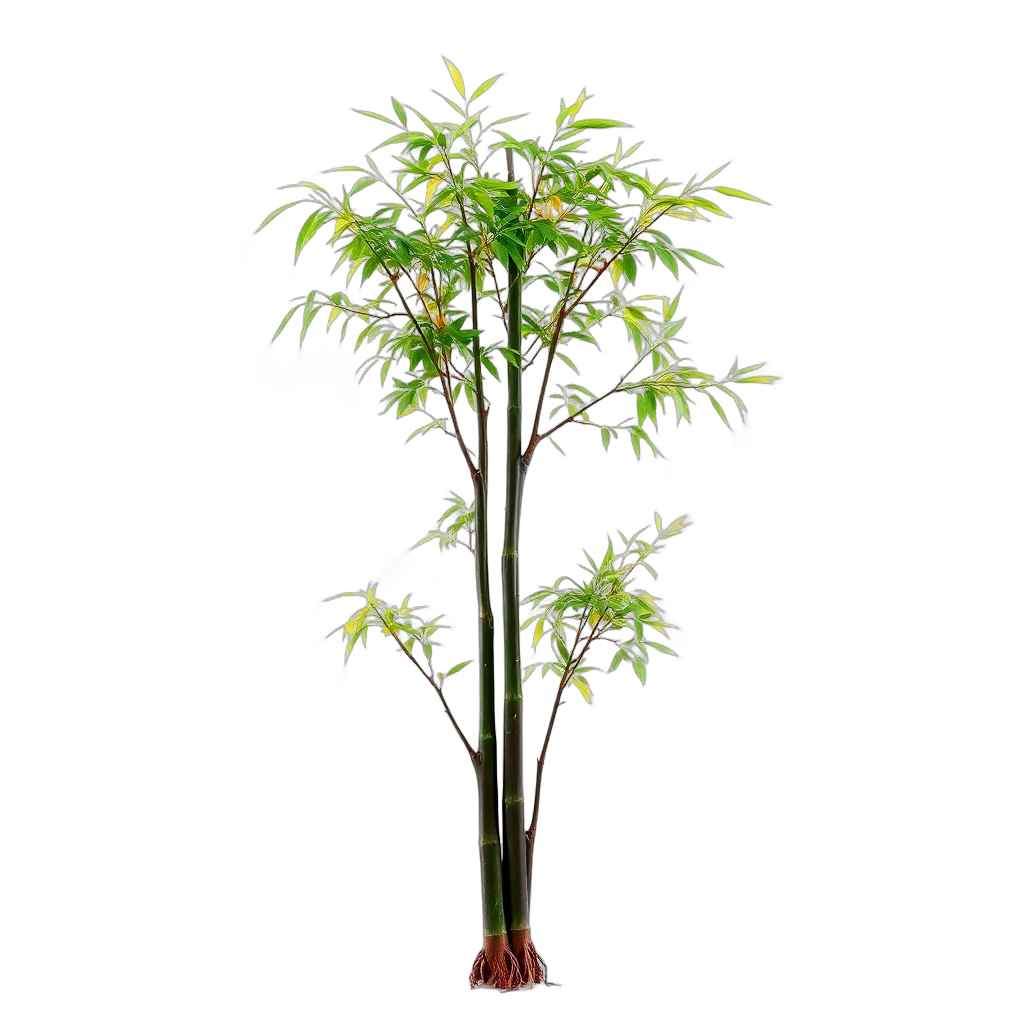
Black Bamboo
Phyllostachys nigra
reaches 25 feet tall, blooms in none. Evergreen year-round.
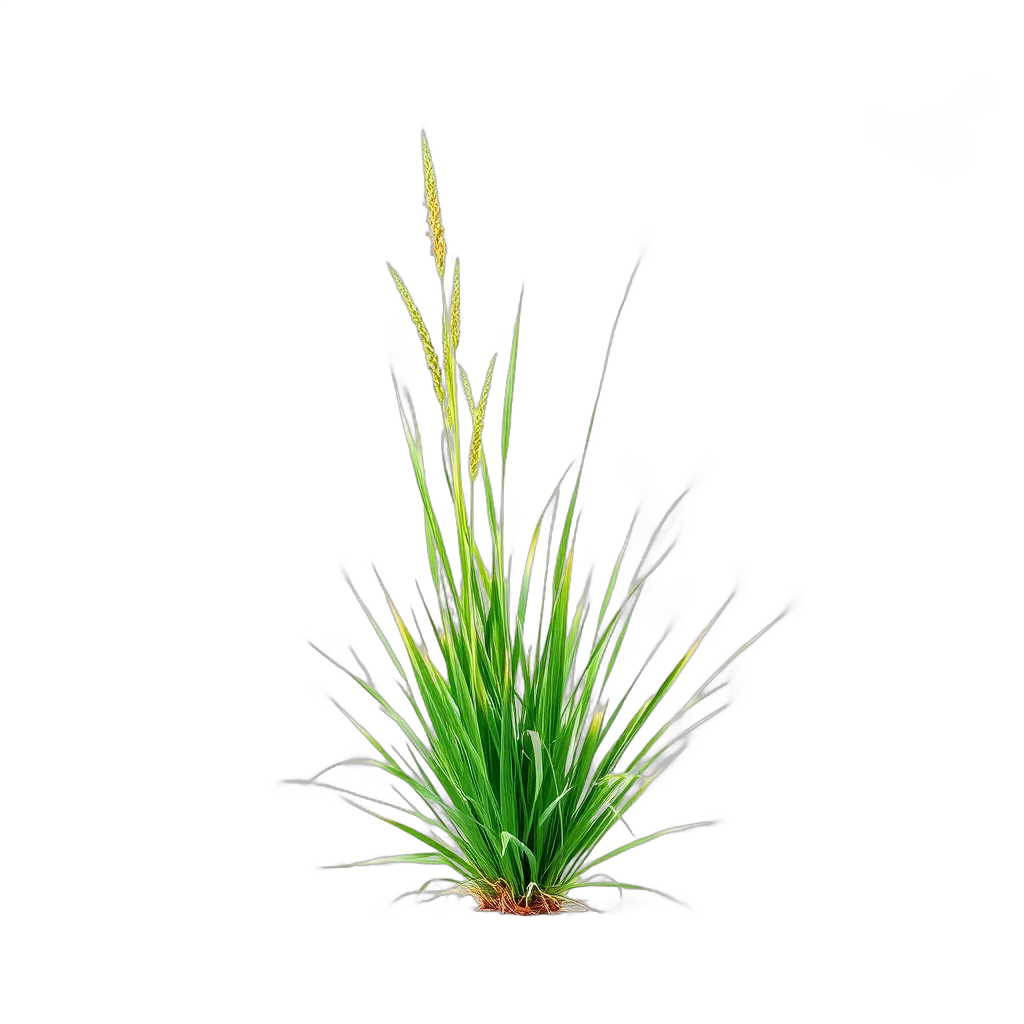
Bull Grass
Muhlenbergia emersleyi
grows to 4 feet, purple blooms in fall. Yellow fall color.
Featured Flowers & Perennials for Modern/Minimalist Gardens
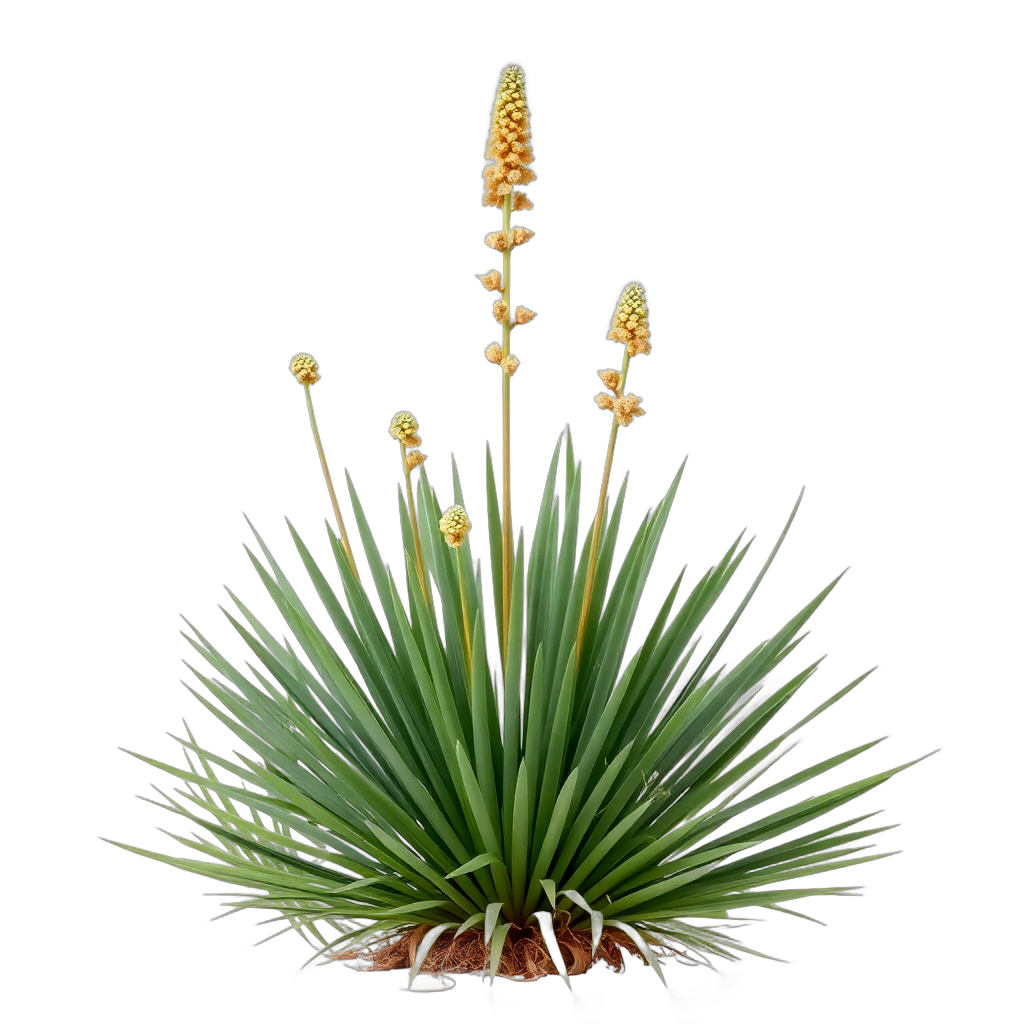
Adam's Needle
Yucca filamentosa
low-growing ground cover, white blooms in summer. Attracts hummingbirds.

Water Fern
Azolla filiculoides
low-growing ground cover, blooms in none. Red fall color.
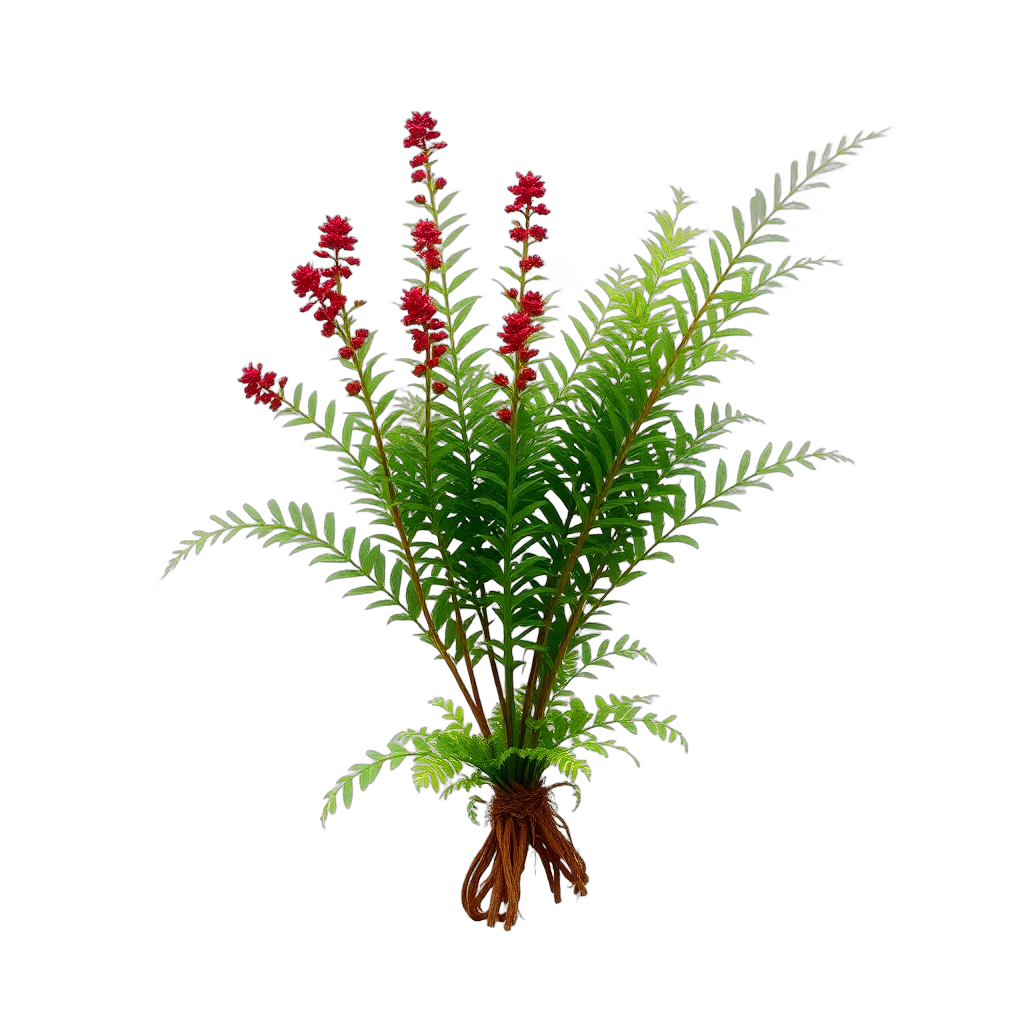
Holly Fern
Cyrtomium falcatum
low-growing ground cover, blooms in none. Evergreen year-round.
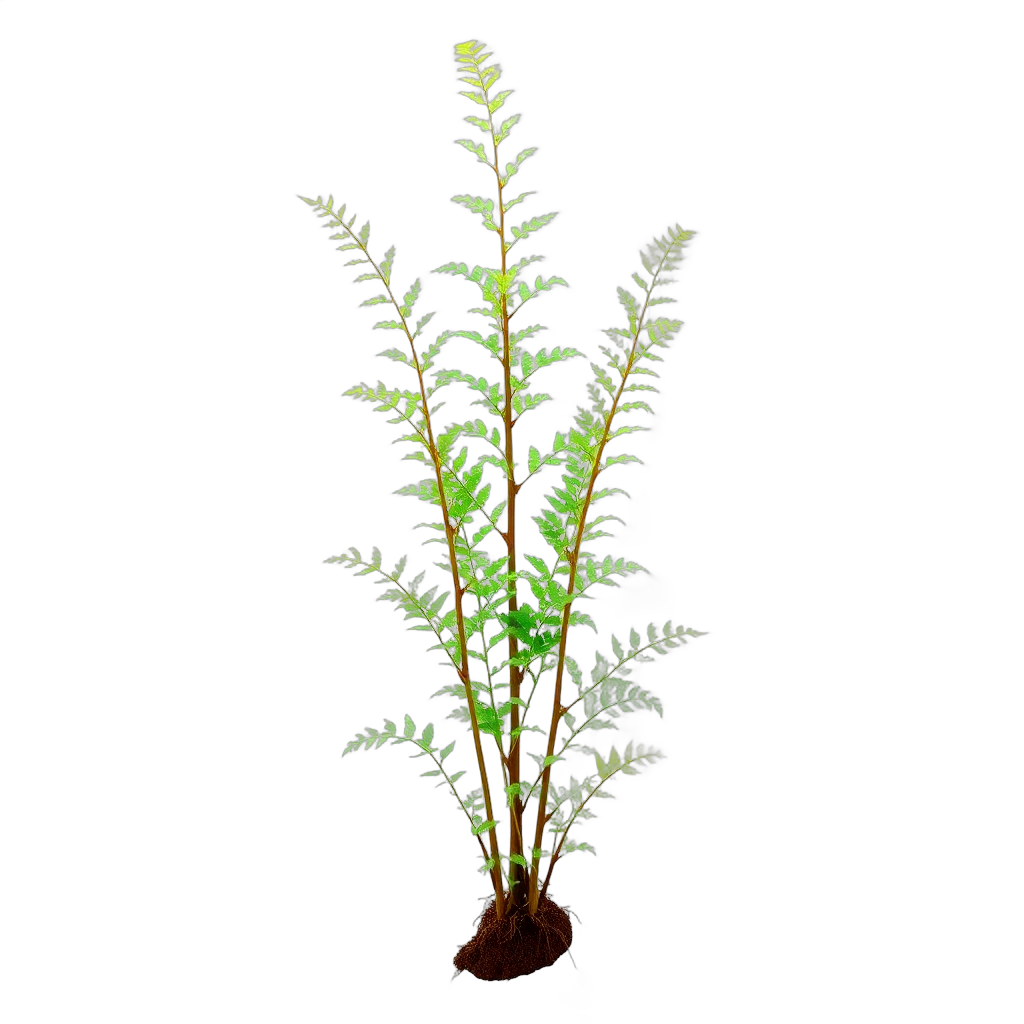
Lady Fern
Athyrium filix-femina
low-growing ground cover, blooms in none.
Zone and sun checks come from our database — confirm with your local nursery before you buy.
Bloom Calendar for Alexandria
spring
Buckwheat Tree, Fetterbush, Florida Anisesummer
Adam's Needle, Swamp Cyrilla, Loblolly Bayfall
Pink Muhly Grass, Purple Love Grasswinter
Limited bloomsDesign Tips for Alexandria (Zone 7b)
- Plan for 40 inches of rain before you plan the geometry — every square foot of gravel or paver needs somewhere for water to go, and permeable pavers over an open-graded base with a planted infiltration strip on the low edge can qualify the property for an Alexandria stormwater utility fee credit
- Mass one grass, do not mix six: twenty-five Sporobolus heterolepis in a single drift reads as modern design, while five each of five species reads as a plant collection and loses the geometry by the second summer
- Raise every rosette plant 8–12 inches in a gritty bed with gravel mulch — Agave ovatifolia and Yucca rostrata 'Sapphire Skies' die of February water in Alexandria clay, never of January cold
- Choose pale sawn concrete over bluestone and dark porcelain for terraces: Alexandria heat indices regularly clear 100°F in July, and a light grey surface runs 15–20°F cooler underfoot, which is the difference between a terrace used in August and one photographed in May
- Leave Miscanthus sinensis out of the plan — it is on Virginia's invasive watch list and seeds into the Four Mile Run and Cameron Run corridors; Panicum virgatum 'Heavy Metal' gives the same silver vertical plume and belongs to this region
- Separate clay from stone with woven geotextile under every paved surface; on Potomac Formation marine clay it is the single cheapest insurance against rocking pavers and lipped joints after two wet Alexandria winters
- Uplight the grass masses and graze the trunks of the mature oaks and tulip poplars rather than lighting the lawn — warm 2700K low-voltage fixtures buy roughly eight months of evening use, and nothing in a lawn survives the mower
- Keep the existing canopy and design around it: Alexandria's mature street and yard trees are why a west-facing glass facade is bearable in August, so limb them high, let the trunks read as sculpture over the clean groundplane, and keep paver excavation outside the critical root zone
Where to Source Plants in Alexandria
Skip the big-box stores. These independent Alexandria nurseries specialize in the plants that make modern/minimalist gardens thrive in Zone 7b.
Greenstreet Gardens
Alexandria (West Braddock Road)
Independent garden center growing much of its own stock on the family farm; the closest in-city source for grasses, lavender, hardy rosette plants and container specimens
Merrifield Garden Center
Merrifield / Falls Church
Nine-acre independent center serving Northern Virginia since 1971, with the region's deepest tree and shrub yard, bulk stone and soil, and a plant-diagnostic desk
Betty's Azalea Ranch
Fairfax (Route 29)
Established local garden center strong on woody plants, trees and clipped evergreen material for architectural hedging, with delivery and installation
Burke Nursery & Garden Centre
Burke
Family-run nursery since the 1970s with greenhouses, a large shrub and grass yard, bulk mulch, compost and stone, plus an on-site plant diagnostic clinic
Modern/Minimalist Landscaping Costs in Alexandria
| Project Scope | Estimated Cost |
|---|---|
| Front-yard conversion to gravel, steel-edged beds and grass masses (600–900 sqft) | $12,000 – $28,000 |
| Large-format concrete paver terrace (350–500 sqft) | $18,000 – $40,000 |
| Floating concrete pad entry walk with planted flanking beds | $6,000 – $15,000 |
| Gas fire bowl or linear fire table, including gas run | $4,500 – $12,000 |
| Low-voltage lighting scheme, 12–20 fixtures | $3,500 – $9,000 |
| Pool, concrete deck and perimeter planting | $110,000 – $250,000 |
| AI visualization with ProScapeAI | Free to start |
Estimates based on Alexandria, VA-area contractor rates as of 2026. Actual costs vary by site conditions, materials, and contractor.
Alexandria Climate & Growing Zone
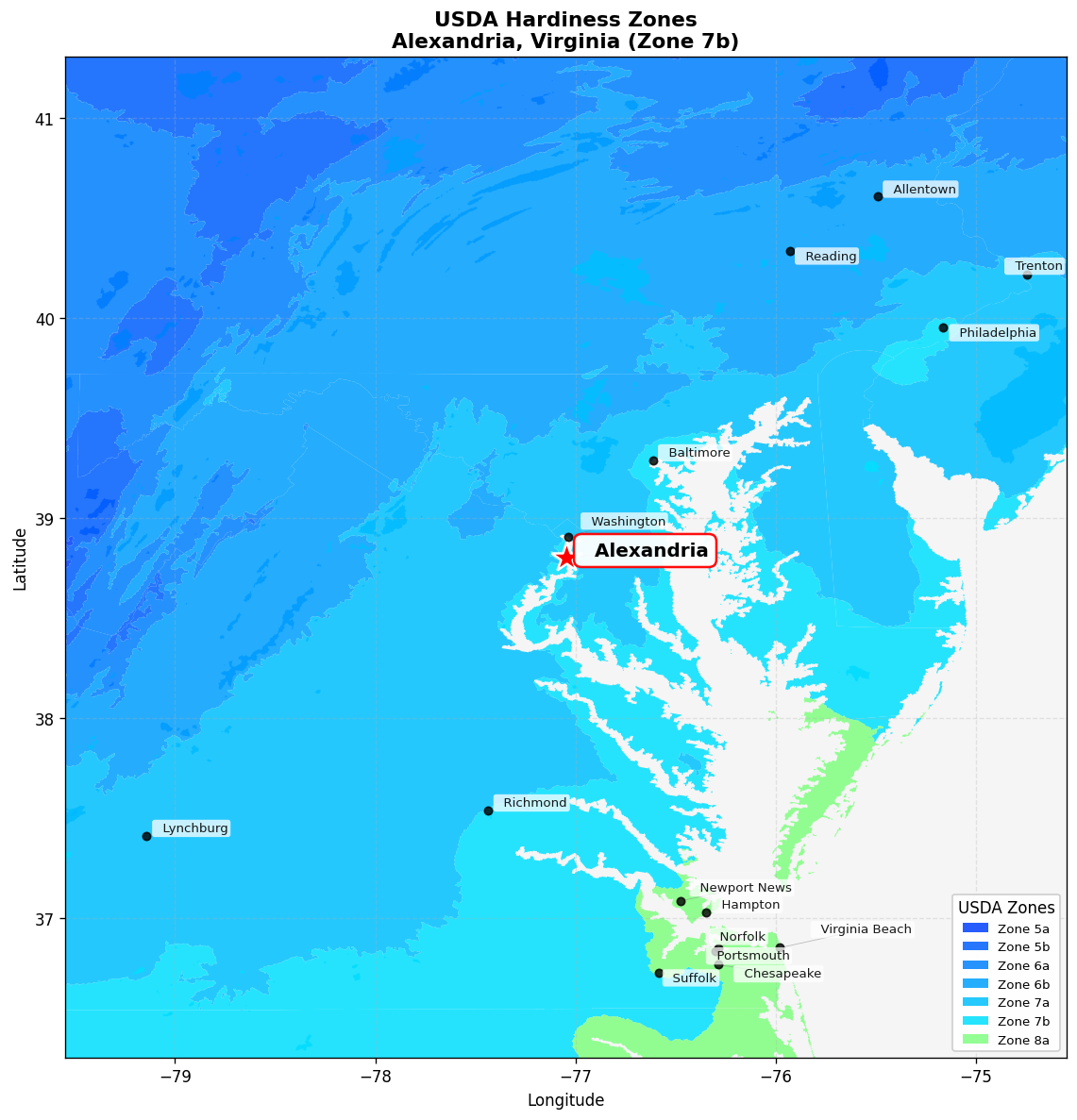
USDA Zone 7b
Hardiness zone for Alexandria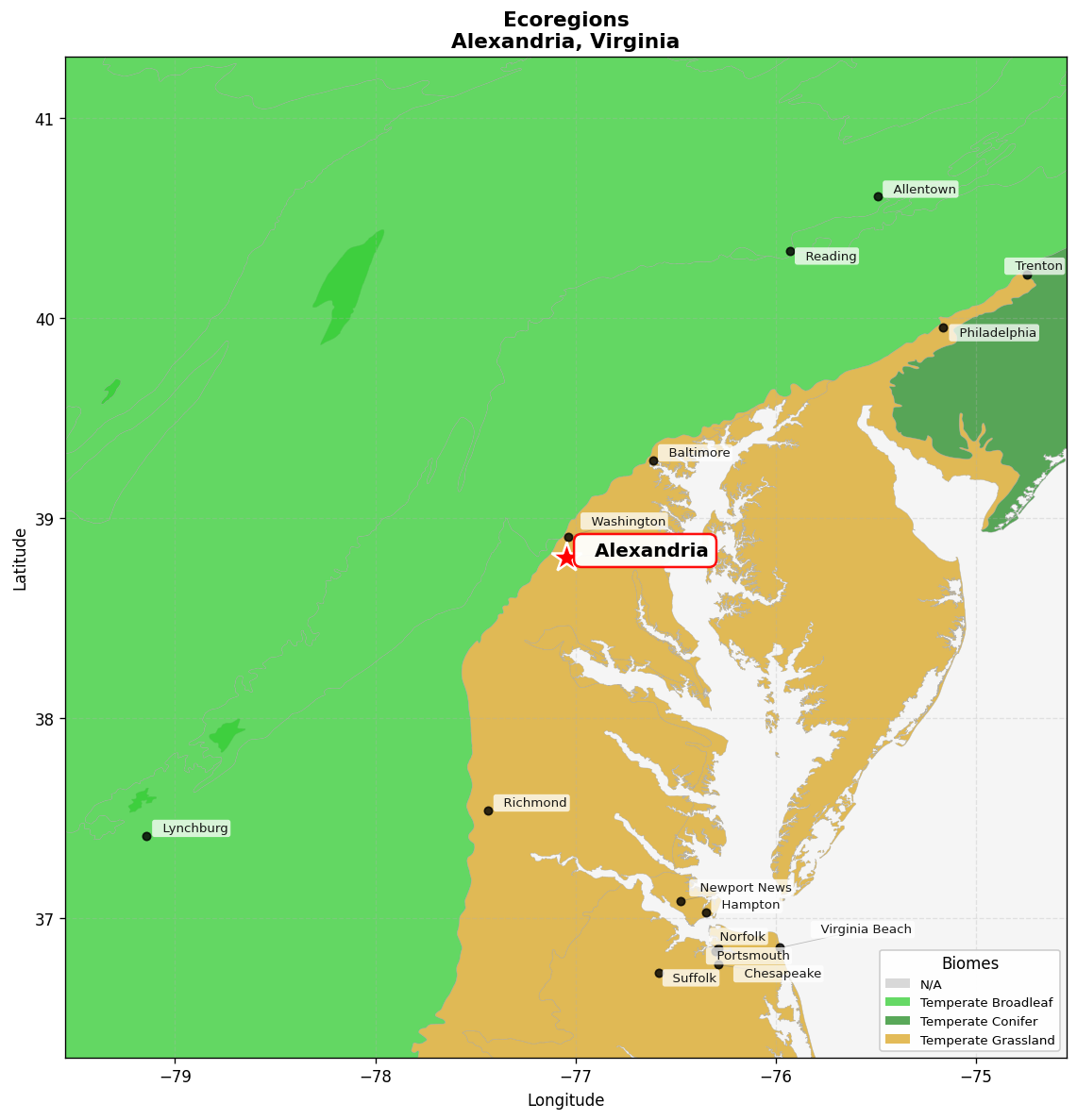
Southeast US conifer savannas
Native ecoregionFrequently Asked Questions
How much does modern landscaping cost in Alexandria, VA?
Northern Virginia installation labour runs roughly 20–35% above the national average, and modern design front-loads the budget into hardscape. A front-yard conversion of 600–900 sqft to gravel, steel-edged beds and grass masses runs $12,000–28,000 installed. A large-format concrete paver terrace of 350–500 sqft lands at $18,000–40,000. A gas fire bowl or linear fire table, including the run from the meter, is $4,500–12,000, and a 12–20 fixture low-voltage lighting scheme $3,500–9,000. A full rear-yard pool with deck and perimeter planting is a $110,000–250,000 project in this market. A do-it-yourself gravel and grass conversion, planting Sporobolus heterolepis and Schizachyrium scoparium 'Standing Ovation' from one-gallon pots, can come in near $6 per square foot.
Will agaves and other rosette plants survive an Alexandria winter?
Cold is not the problem. Agave ovatifolia, Agave parryi var. truncata and Yucca rostrata 'Sapphire Skies' are all hardy through Zone 7b lows of 5–10°F. What kills them is 40 inches of annual rain sitting in clay around the crown in February. Build the bed up 8–12 inches, mix roughly half coarse grit or crushed stone into the soil, mulch with gravel rather than bark, and pitch the surface so water runs off rather than pooling. Tender rosettes such as Echeveria and Aeonium — the plants most people picture — will not overwinter in the ground here at all and belong in containers that come inside. Sempervivum 'Royal Ruby' and Delosperma cooperi give the same low rosette texture and are fully hardy.
Which grasses work for the modern look here, and which should I avoid?
The reliable list for Alexandria is Panicum virgatum 'Northwind', 'Shenandoah' and 'Heavy Metal', Schizachyrium scoparium 'Standing Ovation', Sporobolus heterolepis, Sesleria autumnalis, Calamagrostis × acutiflora 'Karl Foerster' and Pennisetum alopecuroides 'Hameln' — all of which take clay, humidity and 89°F July highs without flopping. Avoid Miscanthus sinensis: it is on Virginia's invasive watch list and seeds readily into the Four Mile Run and Cameron Run corridors. Nassella tenuissima needs sharper drainage than most Alexandria soil provides, and Pennisetum setaceum 'Rubrum' is an annual here. Cut the warm-season grasses back hard in late February before new growth starts; Sesleria and Carex pensylvanica only need a comb-through.
How do I stop hardscape from heaving on Northern Virginia clay?
Potomac Formation marine clay underlies much of Alexandria's West End and the Fairfax County lots to the south, and it shrinks and swells noticeably between a dry August and a wet February. For pavers and floating pads, excavate 8–10 inches, lay woven geotextile directly on the clay subgrade to stop the stone migrating into it, compact open-graded stone in three-inch lifts, then bed and set. Grade the finished surface at about 2% away from the house. Poured slabs placed straight on unamended clay commonly lift and crack within three winters. Frost depth in Northern Virginia is typically taken as 18–24 inches for footings, but have your installer confirm base and footing depths for your specific site rather than assuming.
Should a modern Alexandria yard keep any lawn?
Usually one panel, used as negative space rather than as the whole yard. Alexandria sits in the turf transition zone, which means neither cool-season nor warm-season grass is perfect. Turf-type tall fescue such as 'Titan RX' or 'Rebel' holds green from October through June, needs September overseeding every year and about an inch of water a week through July and August. 'Zenith' zoysia gives the tight, even carpet a modern plan wants, shrugs off summer heat with almost no irrigation, and goes dormant tan from November to April, which some owners love and others cannot live with. Whichever you pick, keeping one clean rectangle and gravelling or planting the rest is what makes the geometry read.
When should I build and plant a modern landscape in Alexandria?
Hardscape can be built almost year round; the only real interruptions are hard freezes during a concrete pour and the saturated stretches after heavy rain, when compacting a clay subgrade is pointless. Planting is different: mid-September to mid-November is the best window by far, because roots run through a mild wet winter and grasses arrive at spring already anchored. Mid-March through April is the second window. Avoid establishing grass masses in July, when highs average near 89°F — newly planted Panicum and Schizachyrium will need daily water and still sulk. Last frost is around April 5–10, first frost in early November.
Do I need approvals for a terrace, fence, wall or pool in Alexandria?
Very likely for the structural items. Pools, decks, retaining walls above a threshold height and fences over the allowed height all fall under City of Alexandria zoning and building review, and in the Old and Historic Alexandria District and the Parker-Gray District the Board of Architectural Review additionally considers fences, walls, gates and site features visible from the public way. Adding impervious surface affects the stormwater utility fee and can trigger stormwater review, and work near Four Mile Run, Cameron Run, Holmes Run or Hooffs Run may sit inside a Resource Protection Area buffer. Settle the design first, then confirm the review path and permit requirements with the City before construction.