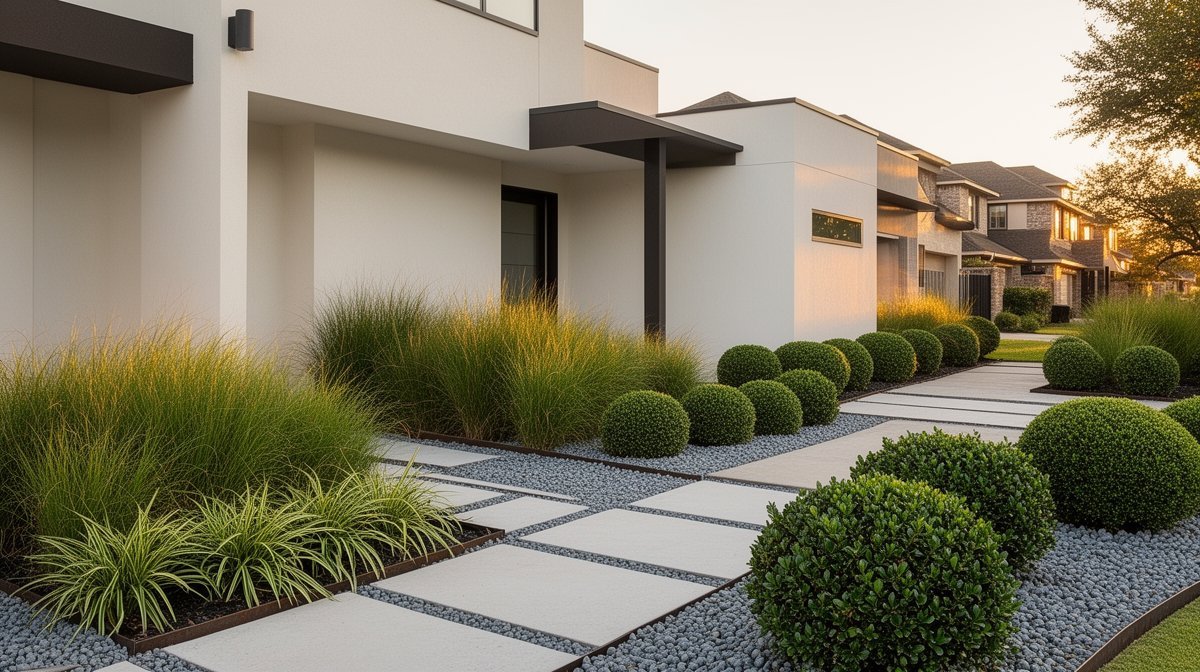
4 Modern Garden Ideas for Amarillo, TX | Wind-Tough Clean-Line Landscape Design in Zone 7a
Native plants from the Western shortgrass prairie (Zone 7a) — Cold semi-arid climate
Why Modern/Minimalist Gardens in Amarillo?
Amarillo has better bones for modern landscape design than most people give it credit for. The postwar boom left Wolflin, Puckett, San Jacinto and Olsen Park full of genuine mid-century houses — low-pitched and butterfly roofs, deep eaves, ribbon windows, carports — and the newer contemporary builds in The Colonies, Greenways, Vineyards and out toward Bushland pick up the same flat planes. Then there is the thing no other Texas metro can offer a modern designer: the Llano Estacado horizon. At 3,676 feet on a tableland with almost no relief, a backyard that ends in a wire-mesh view fence gets a 180-degree straight line as its back wall, which is exactly the geometry a modern garden is trying to manufacture everywhere else with walls and hedges.
The plant palette is where generic modern design falls apart up here. Modern gardens lean on ornamental grasses and clipped evergreen forms, and Amarillo's 13.5 mph average wind — with 50–60 mph gusts routine from March through May — flattens anything that flops. Cultivar choice does all the work: Panicum virgatum 'Northwind' and Schizachyrium scoparium 'Standing Ovation' hold vertical where the species forms splay open, Calamagrostis x acutiflora 'Karl Foerster' is the most wind-rigid grass you can buy, and Sporobolus wrightii 'Windbreaker' giant sacaton is literally selected for this. For fall color, use Muhlenbergia reverchonii 'Undaunted' ruby muhly rather than pink muhly (Muhlenbergia capillaris), which is marginal at Zone 7a and sulks in alkaline soil. Same logic on evergreens: Korean and hybrid boxwoods like Buxus 'Wintergreen' and 'Green Velvet' take the winter wind that scorches English boxwood brown, and Juniperus scopulorum 'Blue Arrow' replaces Italian cypress, which simply will not clear a Panhandle norther.
Hardscape needs local specs, not catalog defaults. Amarillo's typical Zone 7a lows of 0 to 5°F combine with sunny 55°F afternoons to produce well over a hundred freeze-thaw cycles a year — far more punishing than Houston or Dallas — so poured concrete should be 4,000 psi with 5–7% entrained air, tooled or sawn control joints every 10–12 feet, on 6 inches of compacted caliche base, with no deicing salt in the first winter. Footings for pergolas and light poles go below the roughly 18-inch frost line. Corten steel is a bargain here: the dry, alkaline air weathers it to a stable patina fast, and 20 inches of annual rain means far less rust bleed onto pale concrete than in a wet climate. Budget-wise, Amarillo installers run 20–30% below the big Texas metros, so a serious modern build costs less here than the same drawing does in Austin.
4 Modern/Minimalist Design Ideas for Amarillo
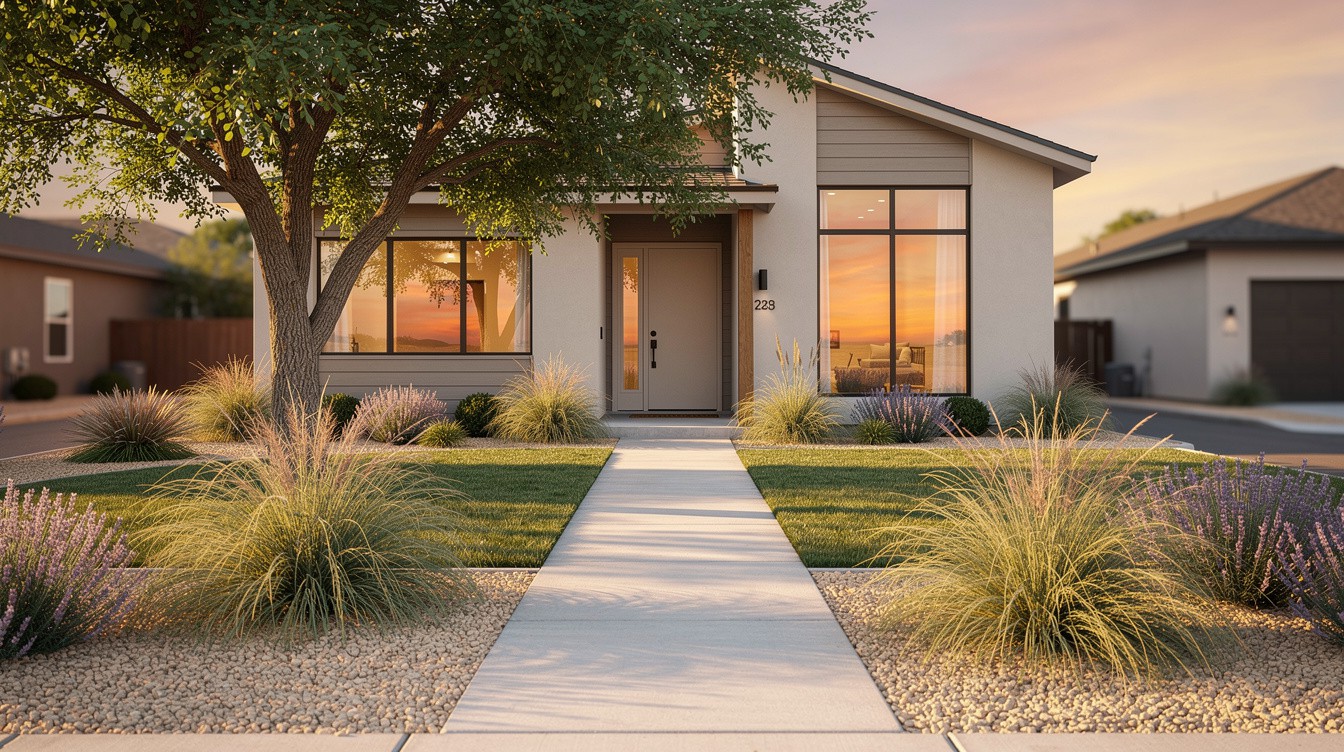
The Lawn Ribbon Entry
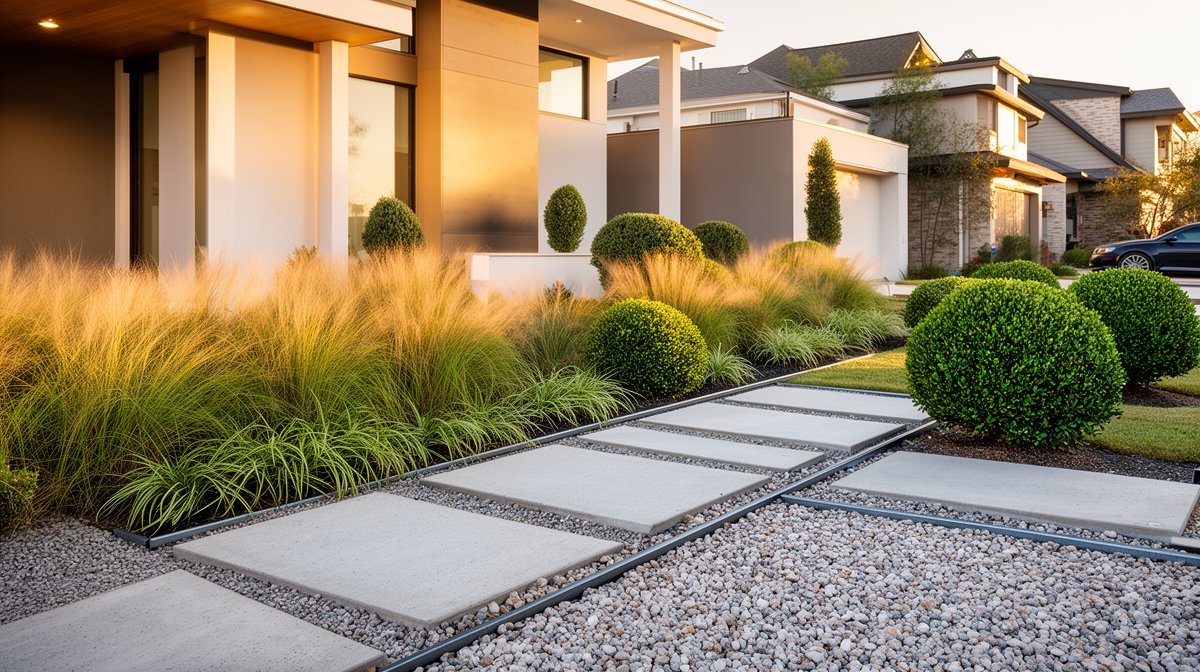
$9–18/sqftA straight, wide concrete walk splits two clean rectangles of turf, and gravel margin bands run the outer edges where mowing is awkward anyway. The planting is all rhythm: big tawny clumps of Calamagrostis x acutiflora 'Karl Foerster' and Muhlenbergia reverchonii 'Undaunted' repeat at intervals against the facade and along the street, with masses of Lavandula x intermedia 'Phenomenal' and Perovskia 'Denim 'n Lace' carrying purple from June to September, and tight Buxus 'Wintergreen' spheres holding the corners in winter. Making the turf panels buffalograss 'Prestige' instead of fescue is what lets this design keep a lawn look on a fifth of the water — and the mature lacebark elm overhead is the reason the west-facing glass is survivable in July.
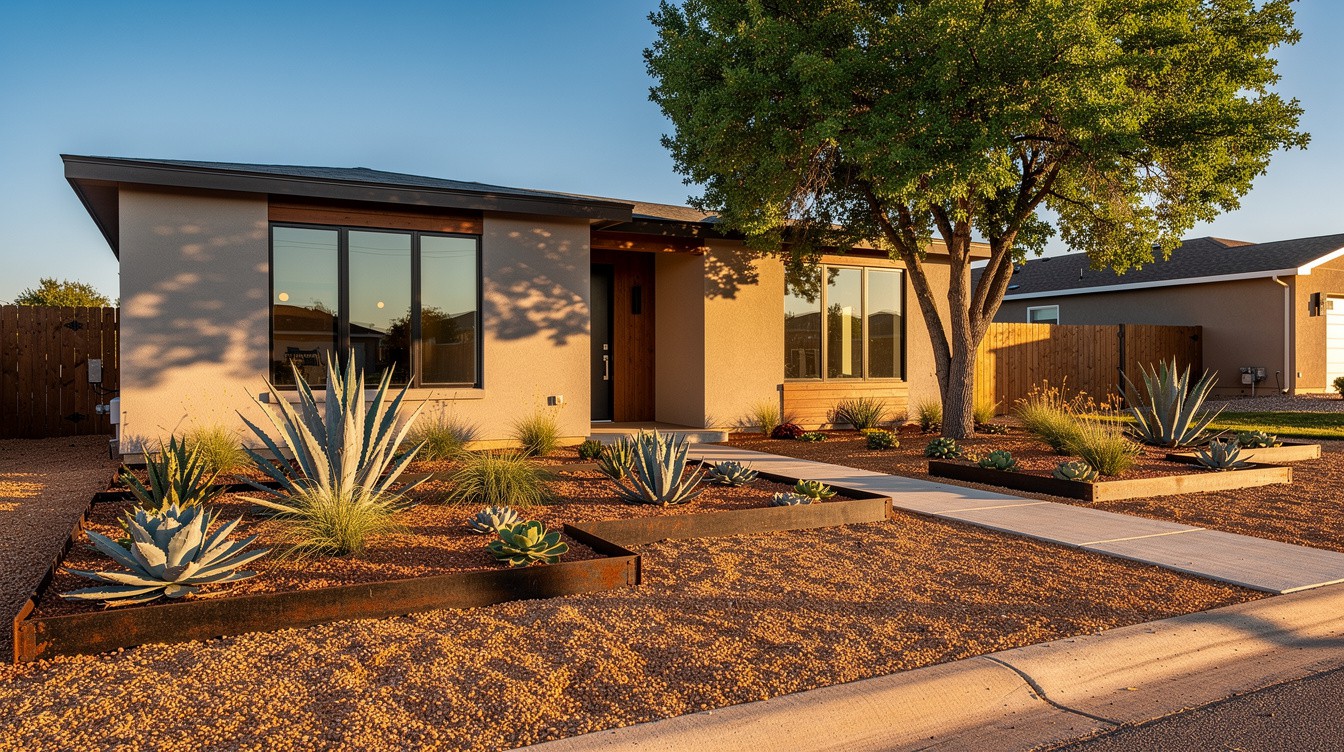
The Corten Grid
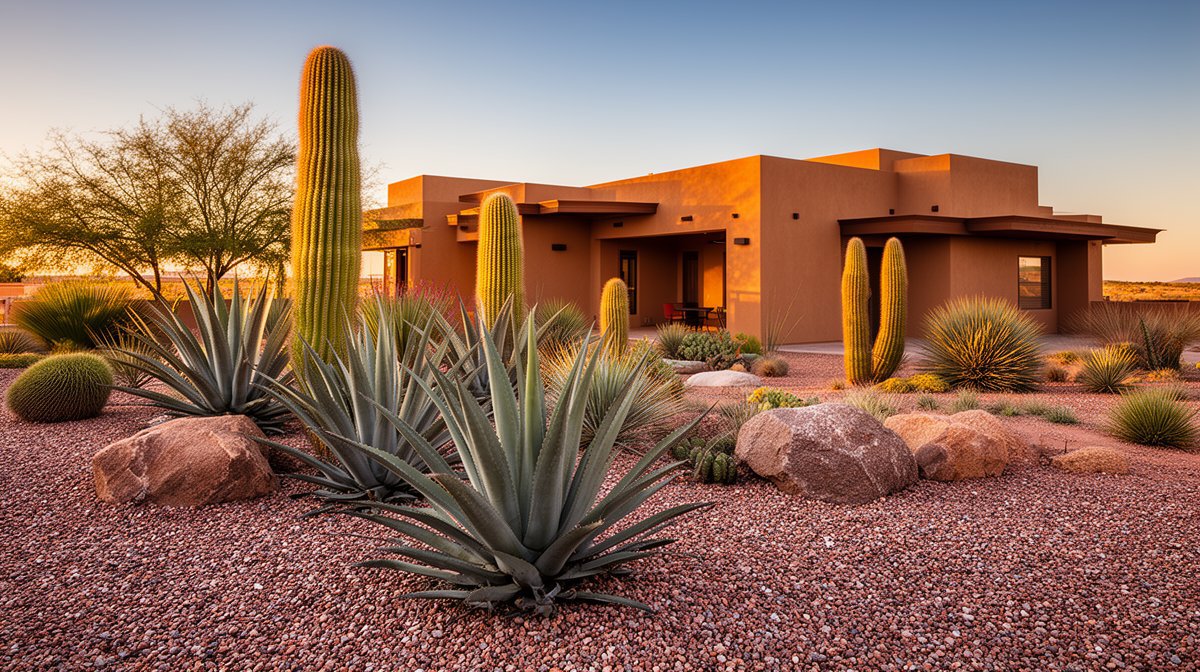
$11–22/sqftA butterfly-roofed mid-century house gets a front yard composed entirely of rectangles: 1/4-inch Corten steel frames set as low raised beds on a field of crushed red rock, with cast concrete plank panels floating as the walk. Inside each frame the planting is deliberately sparse and graphic — solitary blue Agave havardiana and Agave neomexicana rosettes, one or two tufts of Bouteloua gracilis 'Blonde Ambition' with its horizontal seedheads, Sedum rupestre 'Angelina' spilling chartreuse over a steel edge, and Delosperma 'Fire Spinner' as a hardy flowering groundcover. This is the front yard that makes the case for cold-desert substitution loudest: the same photo shot in Scottsdale would be Agave americana, which is a Zone 8b plant and will not survive an Amarillo February.
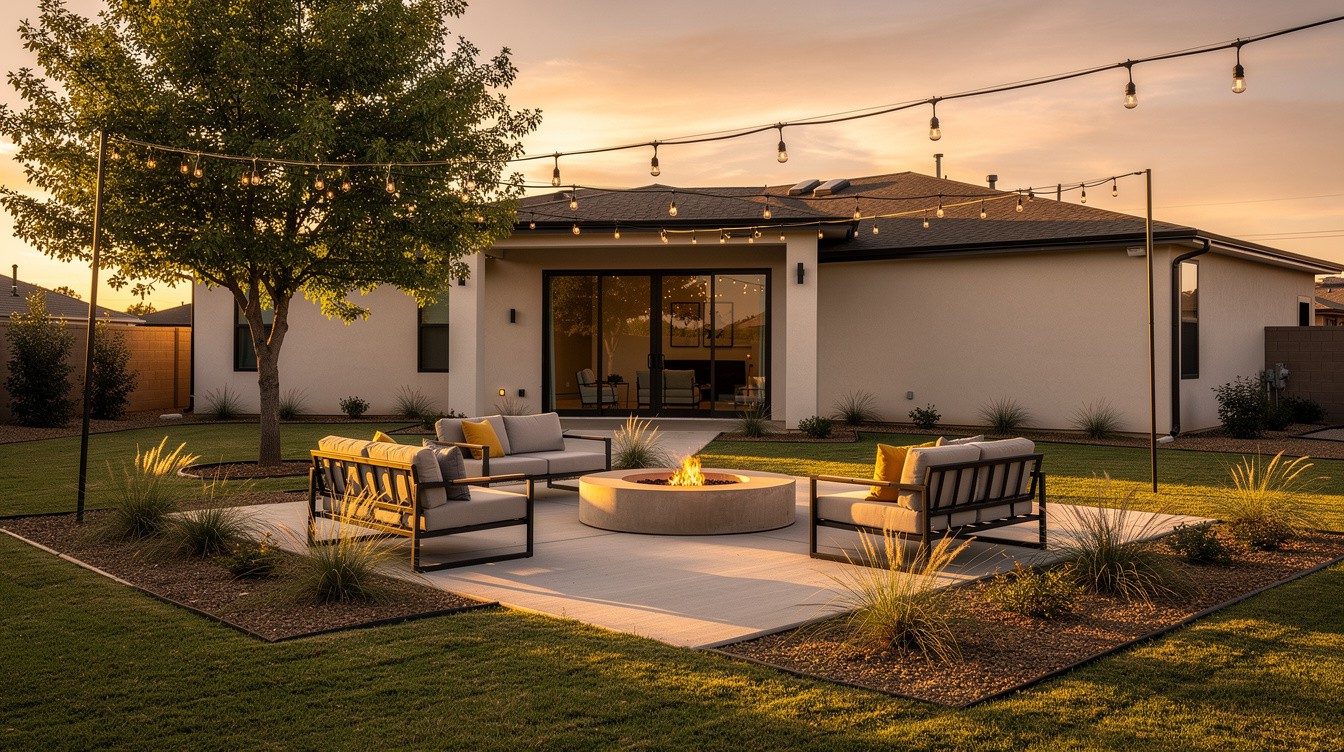
The Floating Concrete Room
$16–30/sqftA rectangular poured-concrete pad sits inset into the lawn with steel edging holding a razor line between grass and slab, and a low round gas fire table anchors the middle with modern sofas squared around it. String lights run on slim steel poles at the corners — the correct detail for Amarillo, where a tree-strung catenary loses its fight with the first 55 mph April gust. The planting is restrained on purpose: bands of Schizachyrium scoparium 'Standing Ovation' and Panicum virgatum 'Northwind' in dark mulch frame three sides, with Nepeta 'Cat's Pajamas' at the front edge and low Juniperus sabina 'Buffalo' anchoring the fence corners for winter structure.
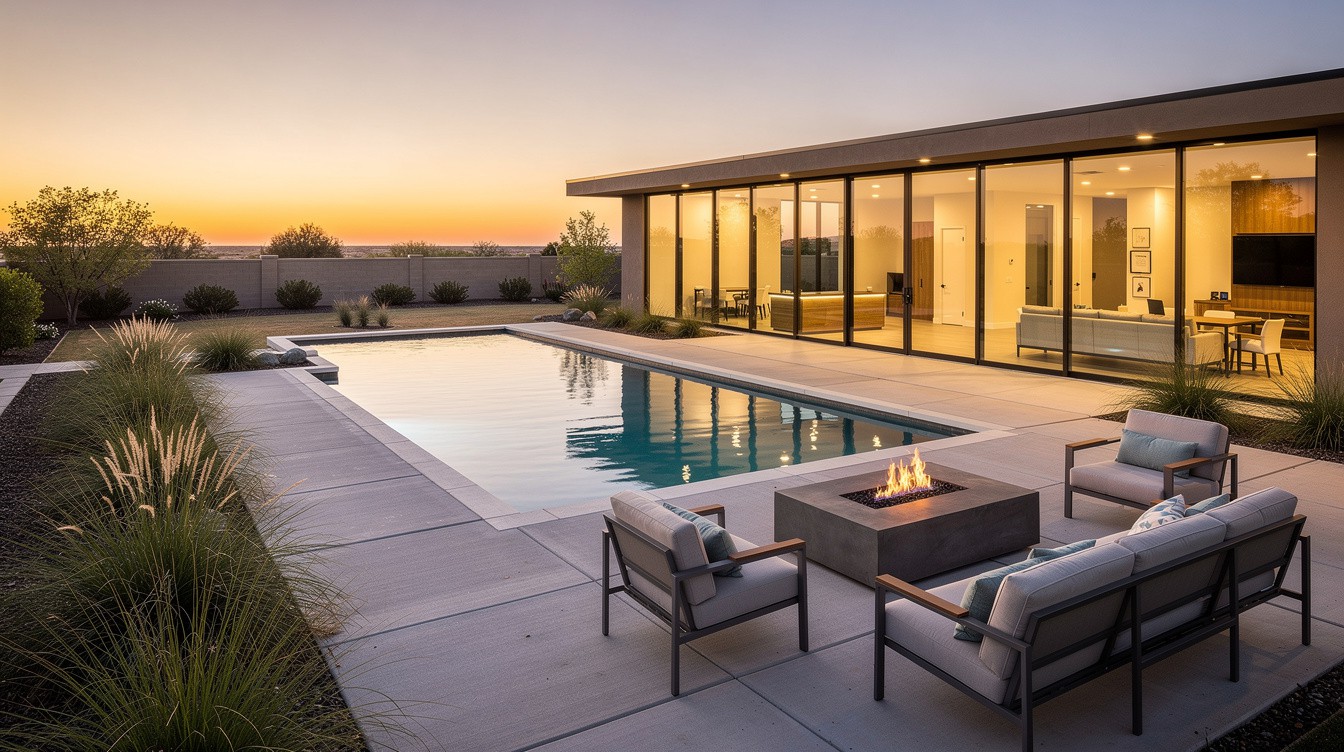
The Prairie Horizon Pool
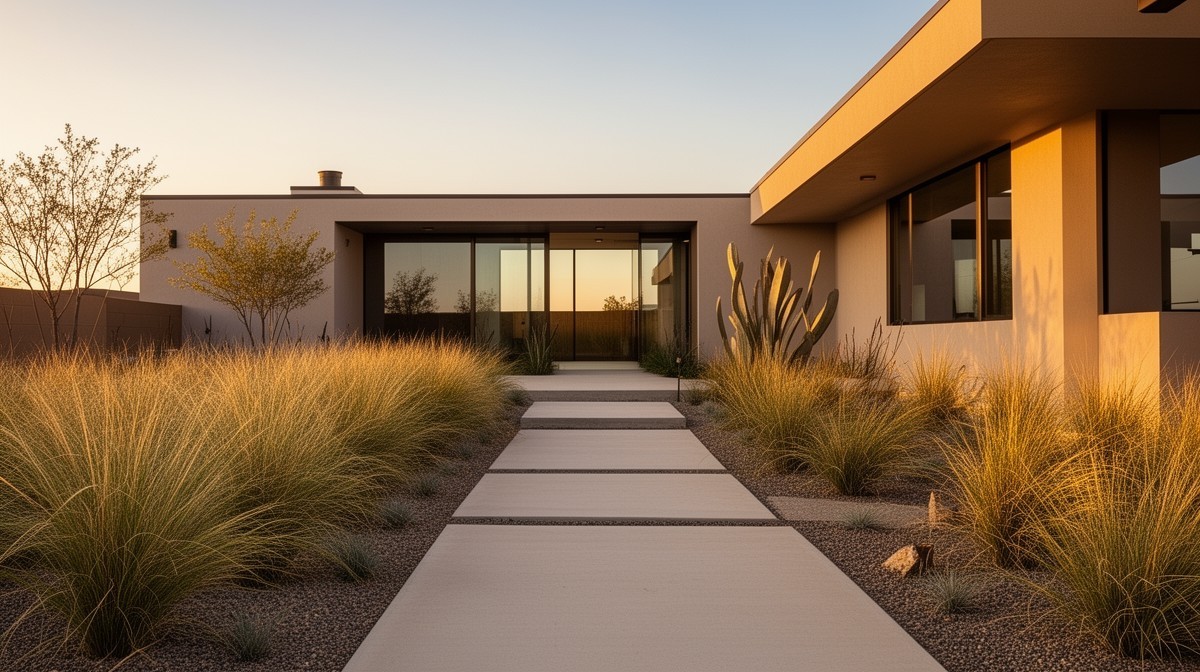
$50–110/sqft (pool area inclusive)A glass-walled pavilion opens onto a rectangular pool and a wide sandblasted concrete deck, with a square gas fire table and low-slung seating at the near end. The landscape does almost nothing except two things well: a board-formed concrete low wall holds the far edge so the prairie horizon reads as an unbroken line, and one raised bed carries a single mass of Pennisetum alopecuroides 'Hameln' and Panicum virgatum 'Heavy Metal' that catches every bit of backlight at sunset. Two practical calls make it work here — an automatic pool cover, because 13.5 mph wind plus 65 inches of annual evaporation can pull well over an inch a week off an open pool, and Juniperus scopulorum 'Blue Arrow' rather than Italian cypress for the vertical accents.
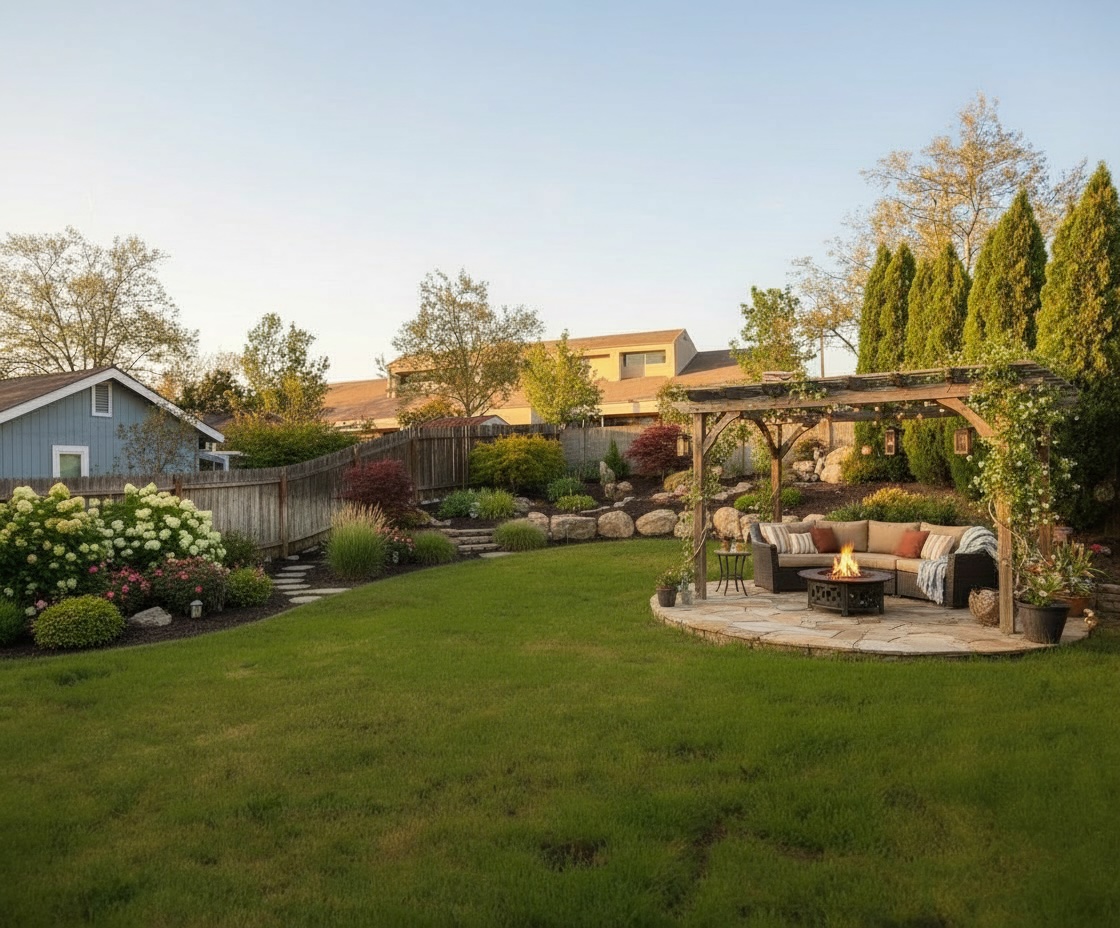
See how a modern/minimalist garden looks on YOUR property
Upload a photo of your Amarillo yard and visualize your dream garden in seconds.
Try ProScapeAI Free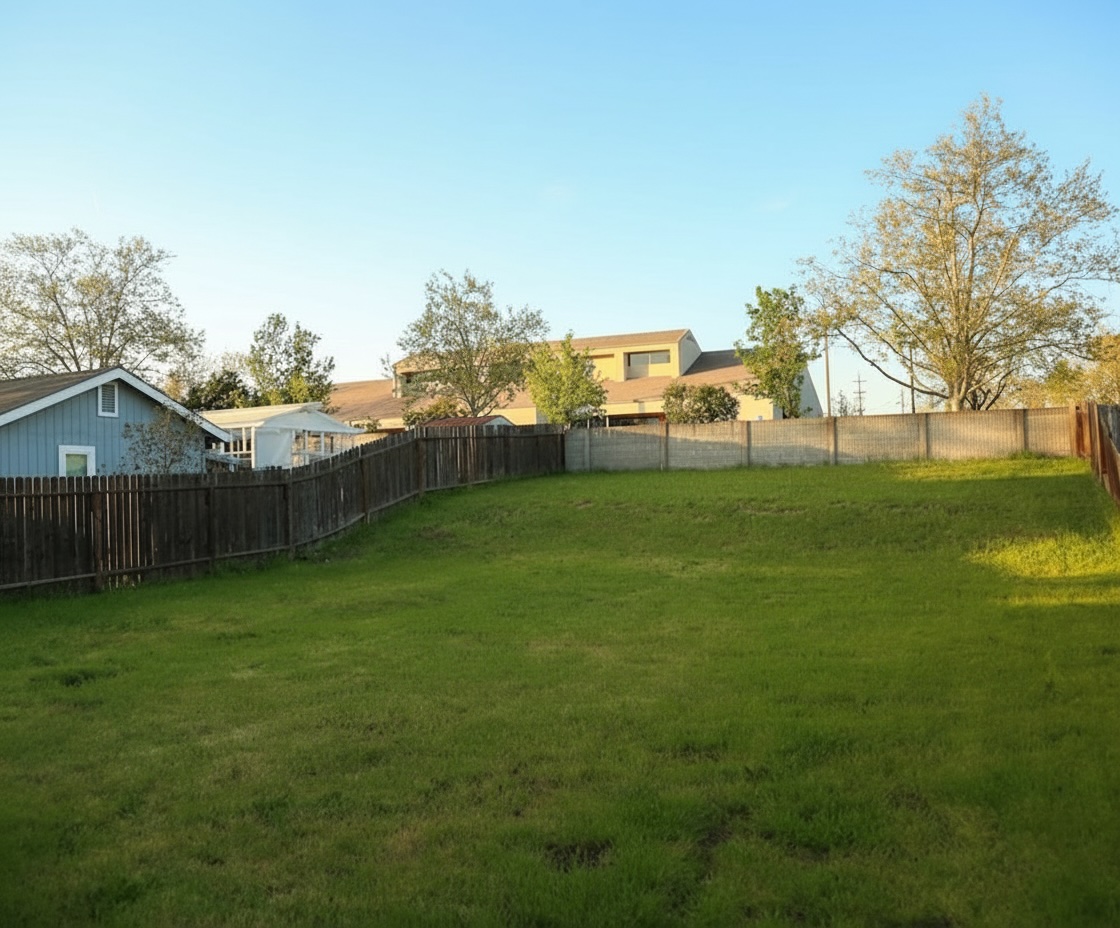
Featured Trees & Shrubs for Modern/Minimalist Gardens
Browse all 24 plants for Amarillo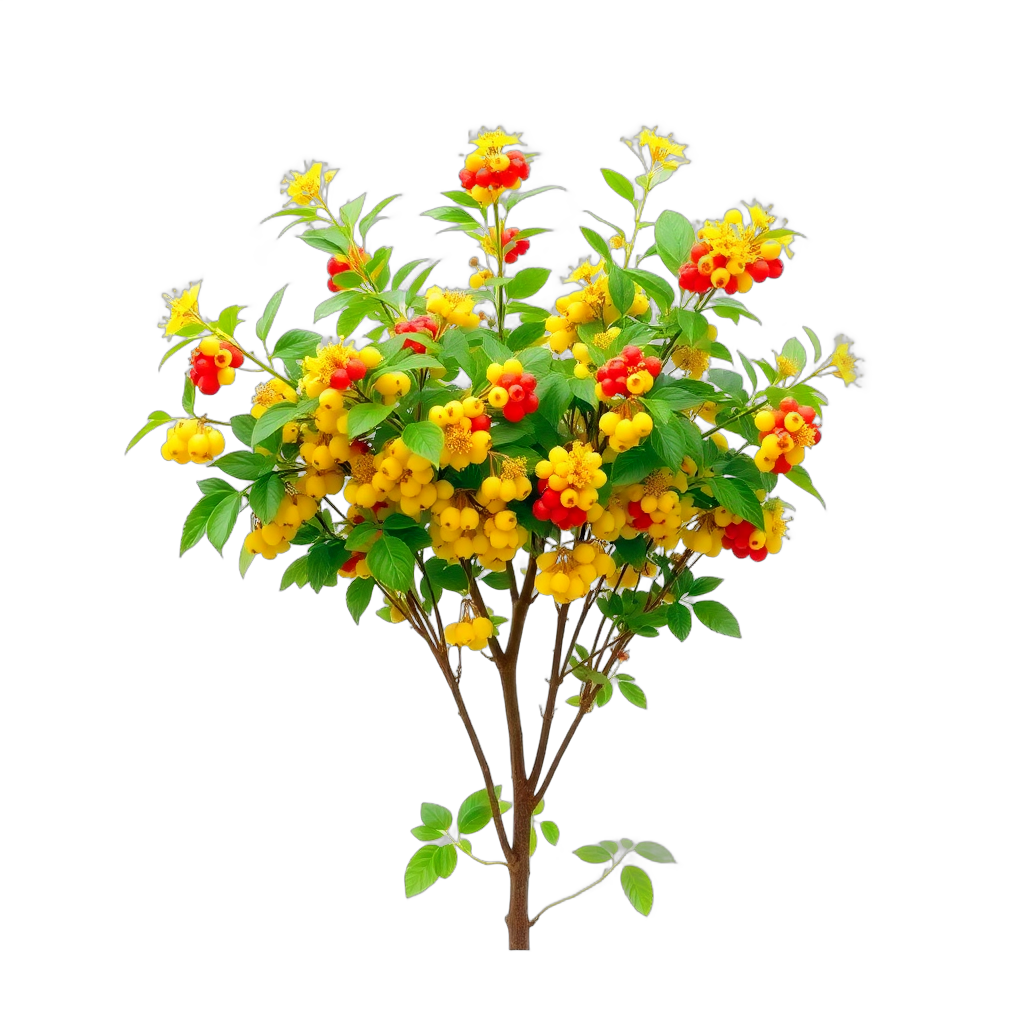
Golden Currant
Ribes aureum
grows to 6 feet, yellow blooms in spring. Attracts hummingbirds.

Windmill Palm
Trachycarpus fortunei
reaches 20 feet tall, yellow blooms in spring. Pollinator-friendly.

Almond
Prunus dulcis
medium-sized at 10 feet, pink,white blooms in spring. Attracts butterflies.

Banana
Musa acuminata
medium-sized at 12 feet, purple,yellow blooms in spring. Attracts hummingbirds.
Featured Grasses & Groundcovers for Modern/Minimalist Gardens
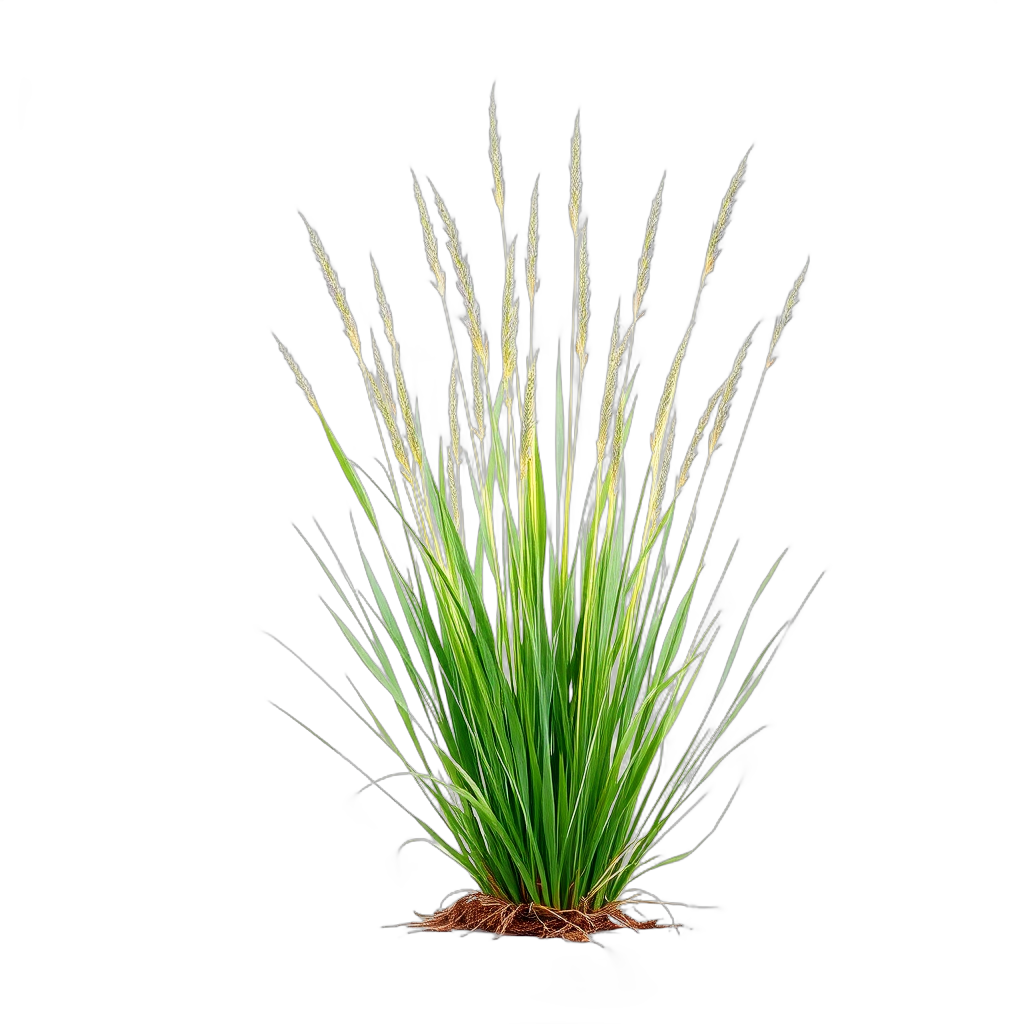
Blue Grama Grass
Bouteloua gracilis
low-growing ground cover, purple blooms in summer. Yellow fall color.
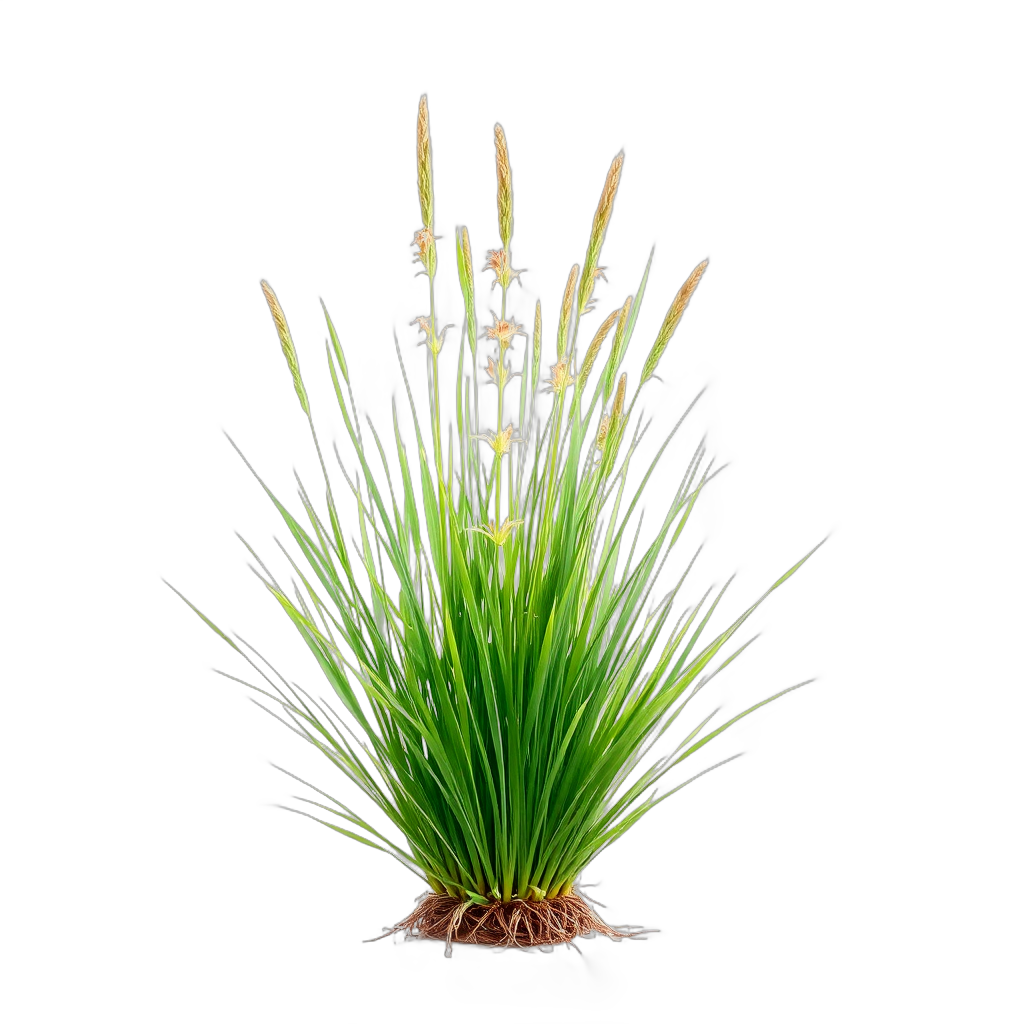
Buffalo Grass
Buchloe dactyloides
low-growing ground cover, blooms in summer. Yellow fall color.
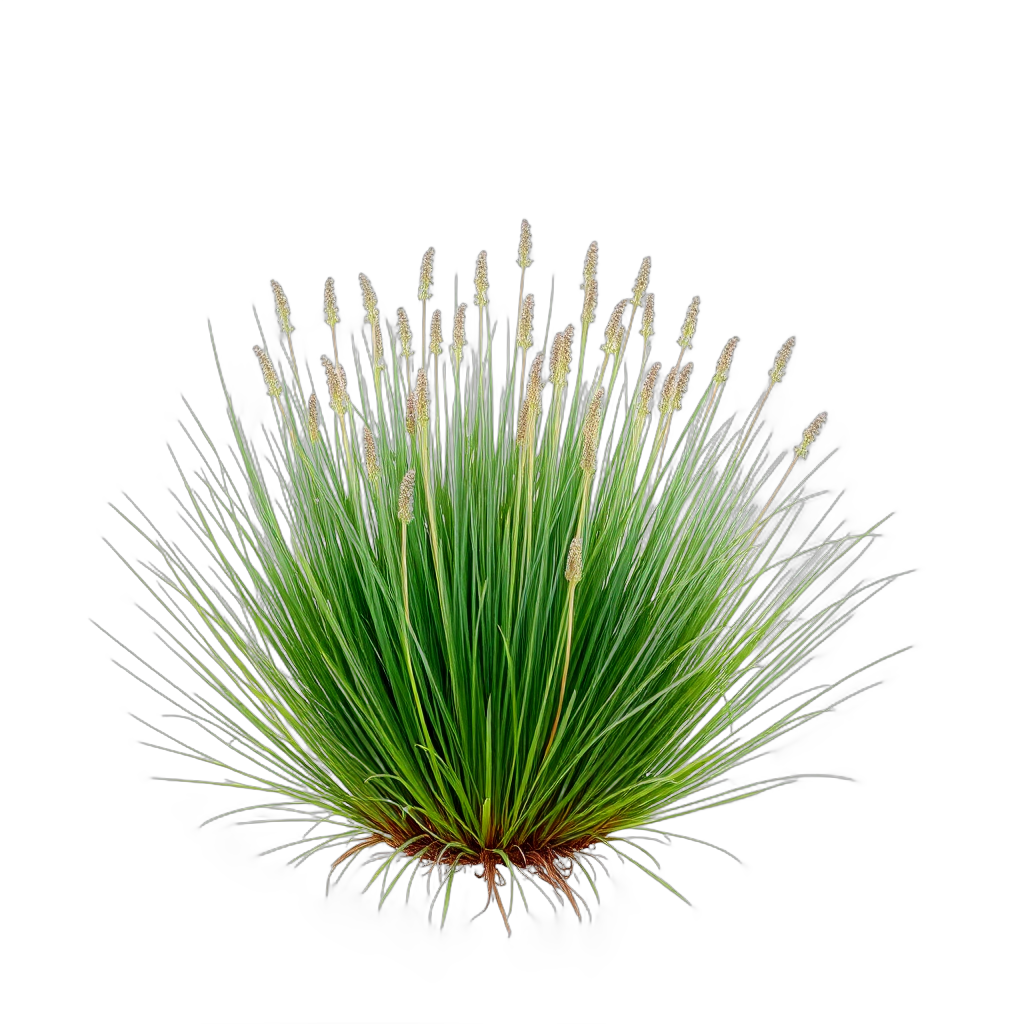
Little Bluestem
Schizachyrium scoparium
grows to 3 feet, blooms in summer. Red,burgundy fall color.
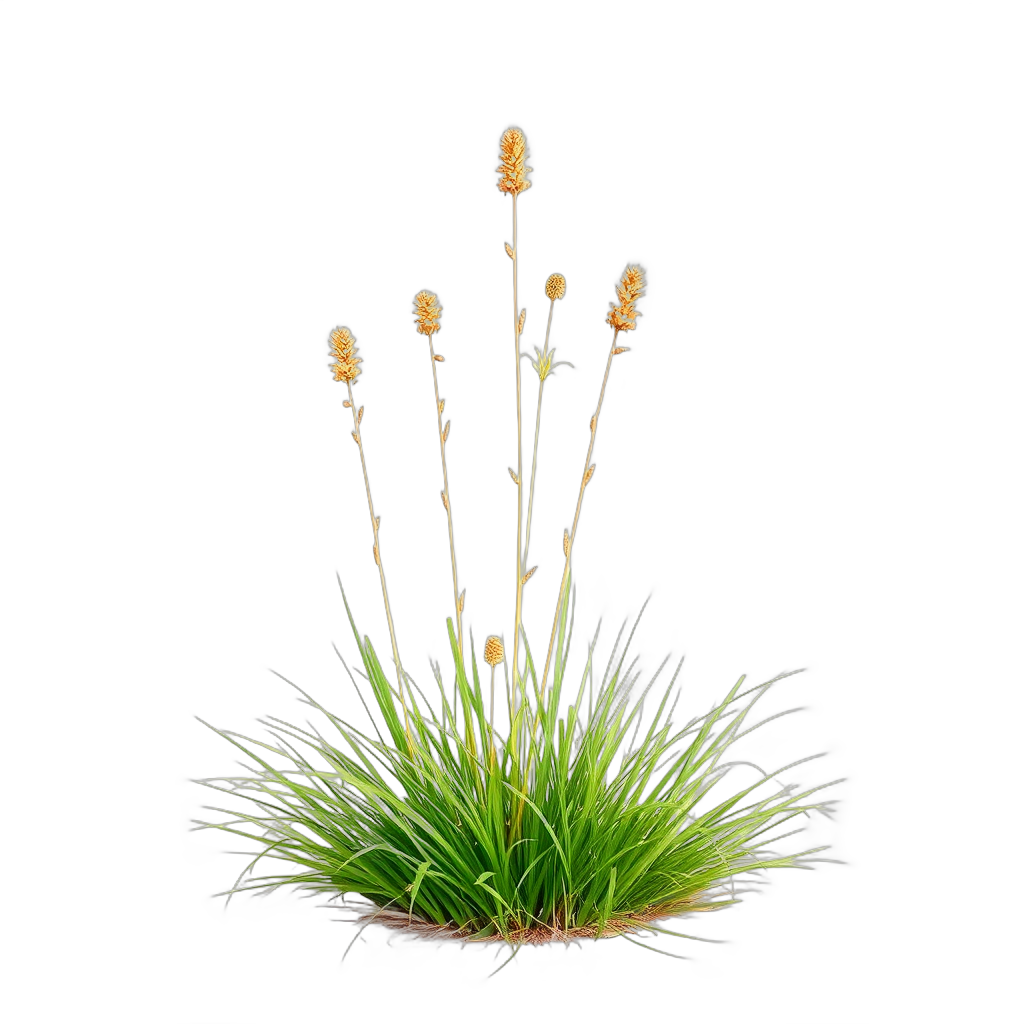
Sand Dropseed
Sporobolus cryptandrus
low-growing ground cover, blooms in summer. Orange fall color.
Featured Flowers & Perennials for Modern/Minimalist Gardens
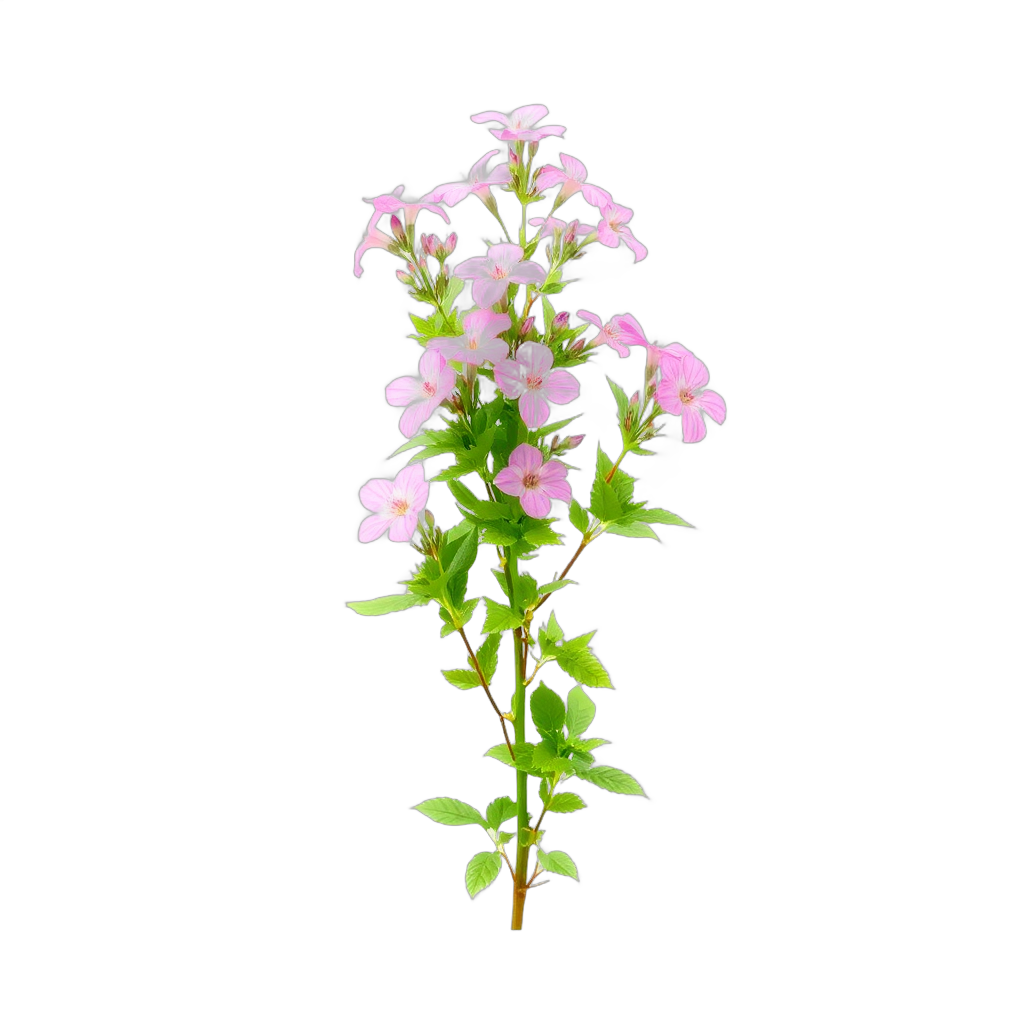
Hood's Phlox
Phlox hoodii
low-growing ground cover, white blooms in spring. Attracts butterflies.
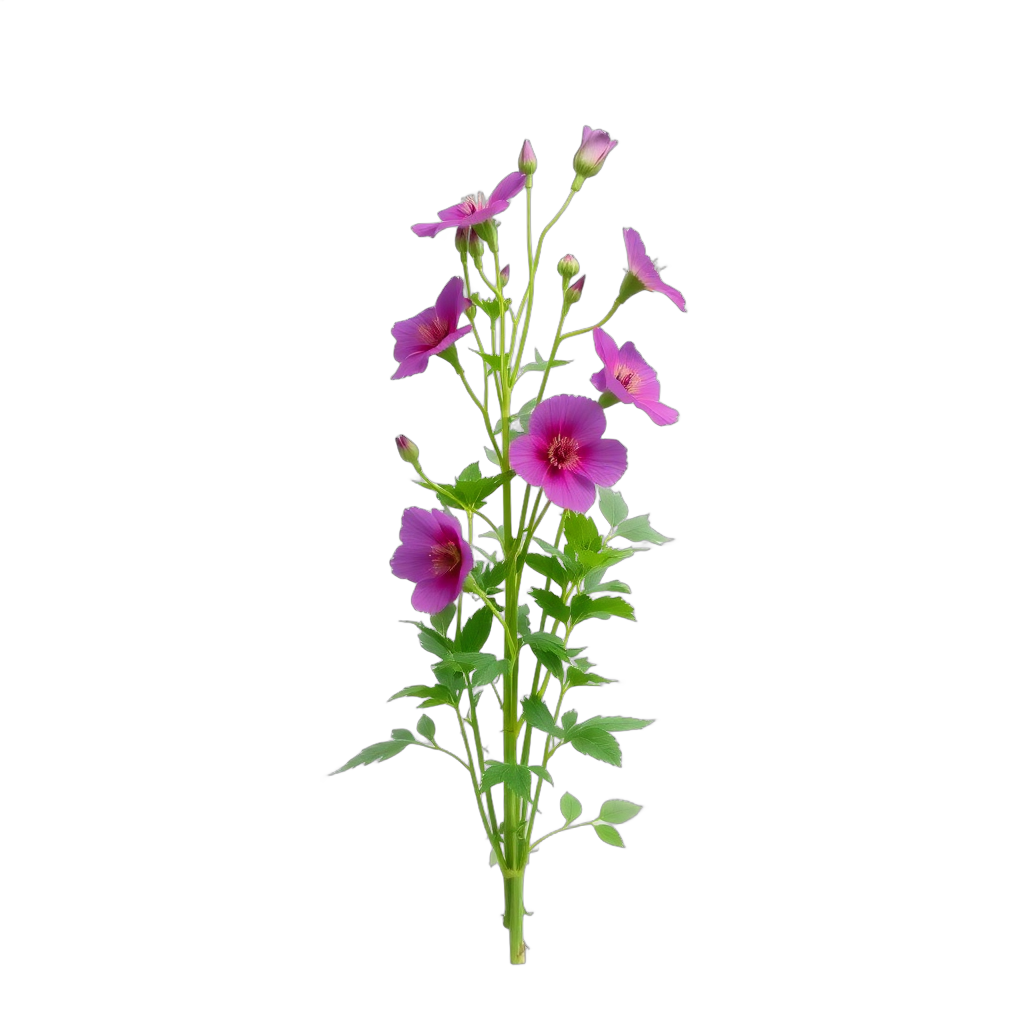
Purple Poppy Mallow
Callirhoe involucrata
low-growing ground cover, purple blooms in summer. Attracts butterflies.
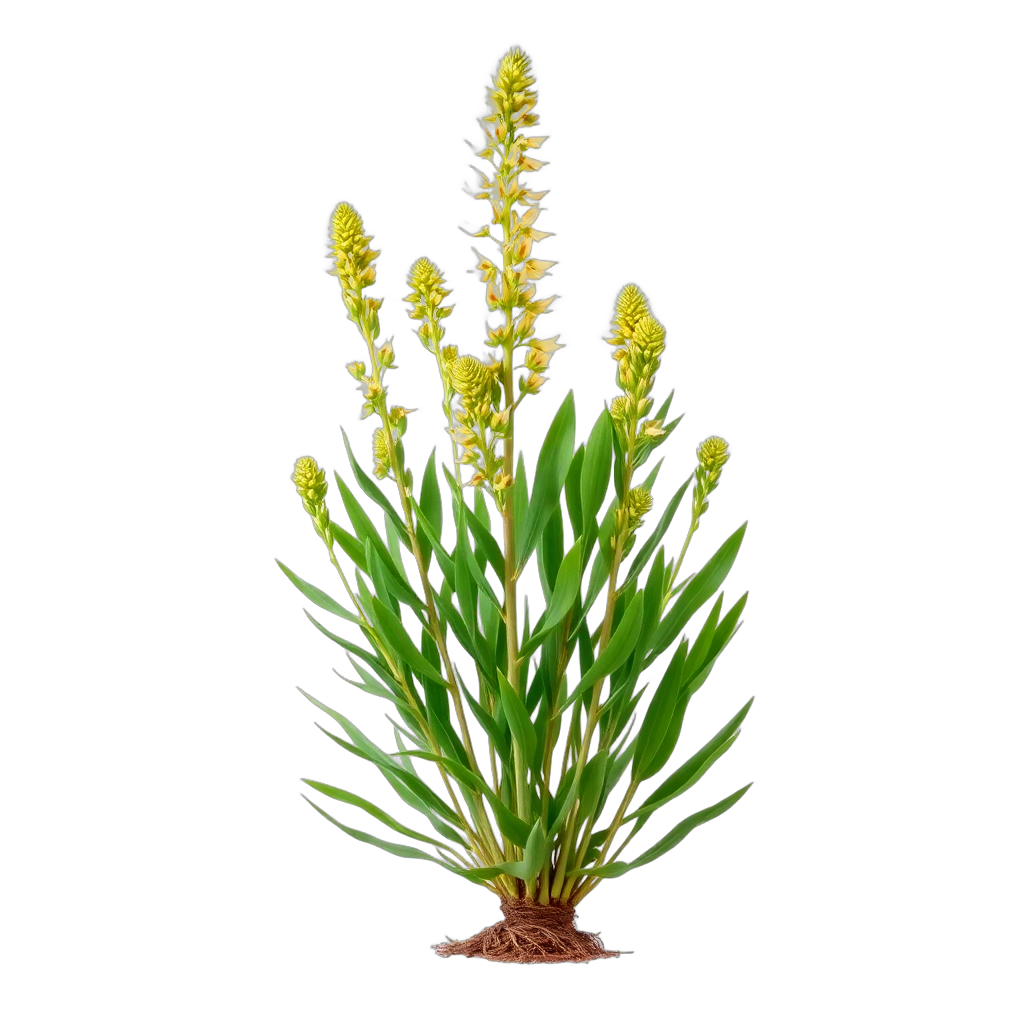
Soapweed Yucca
Yucca glauca
low-growing ground cover, white blooms in spring. Pollinator-friendly.
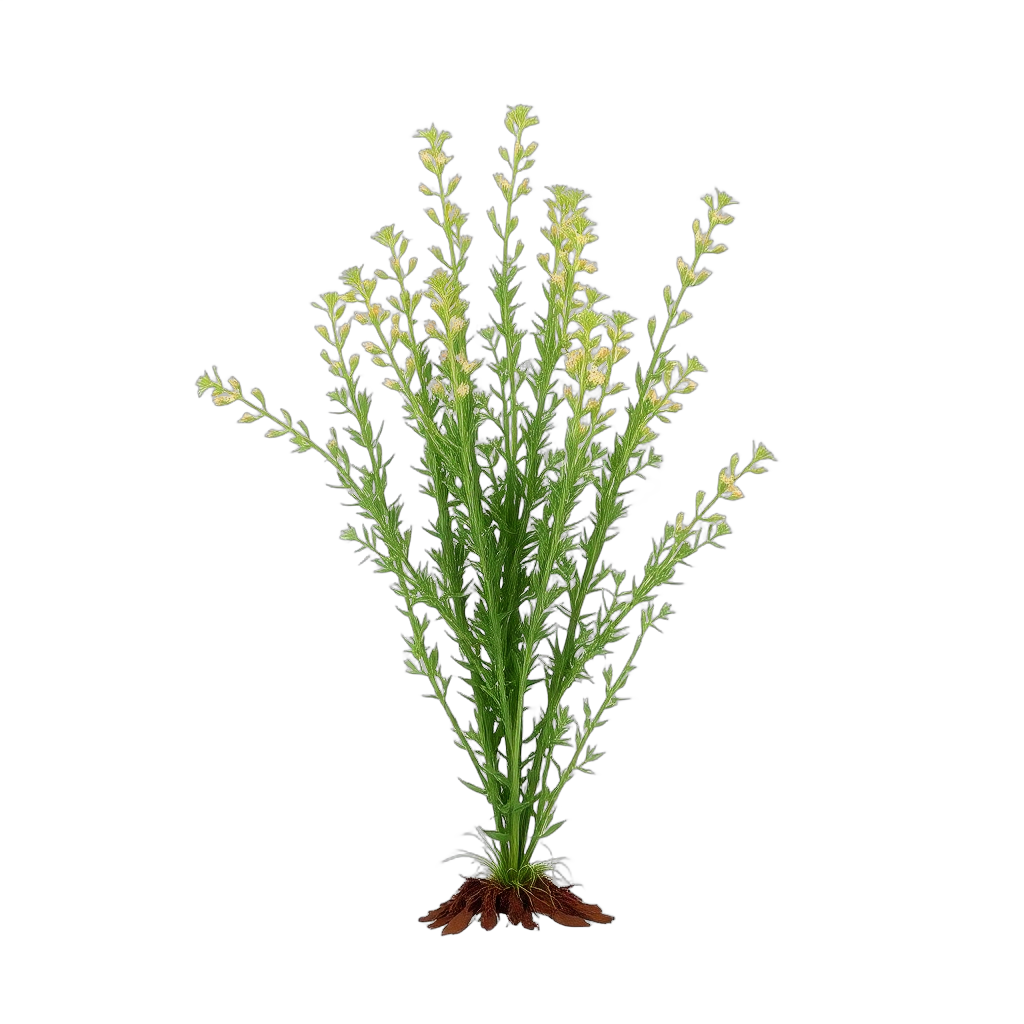
White Sage
Artemisia ludoviciana
low-growing ground cover, white blooms in summer. Fragrant.
Bloom Calendar for Amarillo
spring
Hood's Phlox, Soapweed Yucca, Golden Currantsummer
Purple Poppy Mallow, White Sage, Blue Grama Grassfall
Limited bloomswinter
Limited bloomsDesign Tips for Amarillo (Zone 7a)
- Pick grasses by cultivar, not species — Panicum virgatum 'Northwind', Schizachyrium scoparium 'Standing Ovation' and Calamagrostis x acutiflora 'Karl Foerster' stay vertical in a 50 mph April gust where the straight species splay open and ruin the geometry
- Spec the concrete for the Panhandle: 4,000 psi, 5–7% entrained air, 6-inch compacted caliche base, joints every 10–12 feet, and absolutely no deicing salt the first winter — Amarillo runs 100+ freeze-thaw cycles a year
- Replace the two classic modern plants that will not live here — Agave americana becomes Agave havardiana or Agave neomexicana, and Italian cypress becomes Juniperus scopulorum 'Blue Arrow' — both swaps keep the silhouette and add 15°F of margin
- Use gravel mulch, not bark, in any bed with street or fence exposure; Amarillo's 13.5 mph average wind relocates shredded hardwood into the gutter within one spring, while 3/8-inch angular crushed rock locks in place
- Shrink the lawn to two or three steel-edged buffalograss panels ('Prestige' sod or 'Cody' seed) — you get the geometric green plane modern design wants at roughly a third of the water a fescue lawn drinks
- Let the horizon be the back wall on any lot west of Soncy or out toward Bushland and Canyon: a low board-formed concrete wall or wire-mesh view fence plus one backlit mass of Muhlenbergia reverchonii 'Undaunted' beats a 6-foot privacy fence and a hedge
Where to Source Plants in Amarillo
Skip the big-box stores. These independent Amarillo nurseries specialize in the plants that make modern/minimalist gardens thrive in Zone 7a.
Coulter Gardens & Nursery
South Amarillo
Local nursery and landscaping business since 1979 with trees, shrubs, flowers, and garden supplies.
Double D Nursery
South Georgia Street
Amarillo's largest retail and wholesale nursery with trees, shrubs, perennials, flagstone, and boulders.
Nettie's Greenhouse
Washington Street
Greenhouse shop with tropical plants, terrariums, and pottery, staffed by certified horticulturists.
Modern/Minimalist Landscaping Costs in Amarillo
| Project Scope | Estimated Cost |
|---|---|
| Front-yard modern conversion (gravel fields + steel beds + architectural plants, 600–1,000 sqft) | $6,000 – $15,000 |
| Poured air-entrained concrete patio on caliche base (250–450 sqft) | $6,500 – $16,000 |
| Corten steel raised bed, fabricated, set and filled (8–12 ft run) | $900 – $2,400 each |
| Backyard modern room: concrete pad, gas fire table, pole lighting | $14,000 – $35,000 |
| Pool deck + full modern backyard landscape | $70,000 – $180,000 |
| AI visualization with ProScapeAI | Free to start |
Estimates based on Amarillo, TX-area contractor rates as of 2026. Actual costs vary by site conditions, materials, and contractor.
Amarillo Climate & Growing Zone
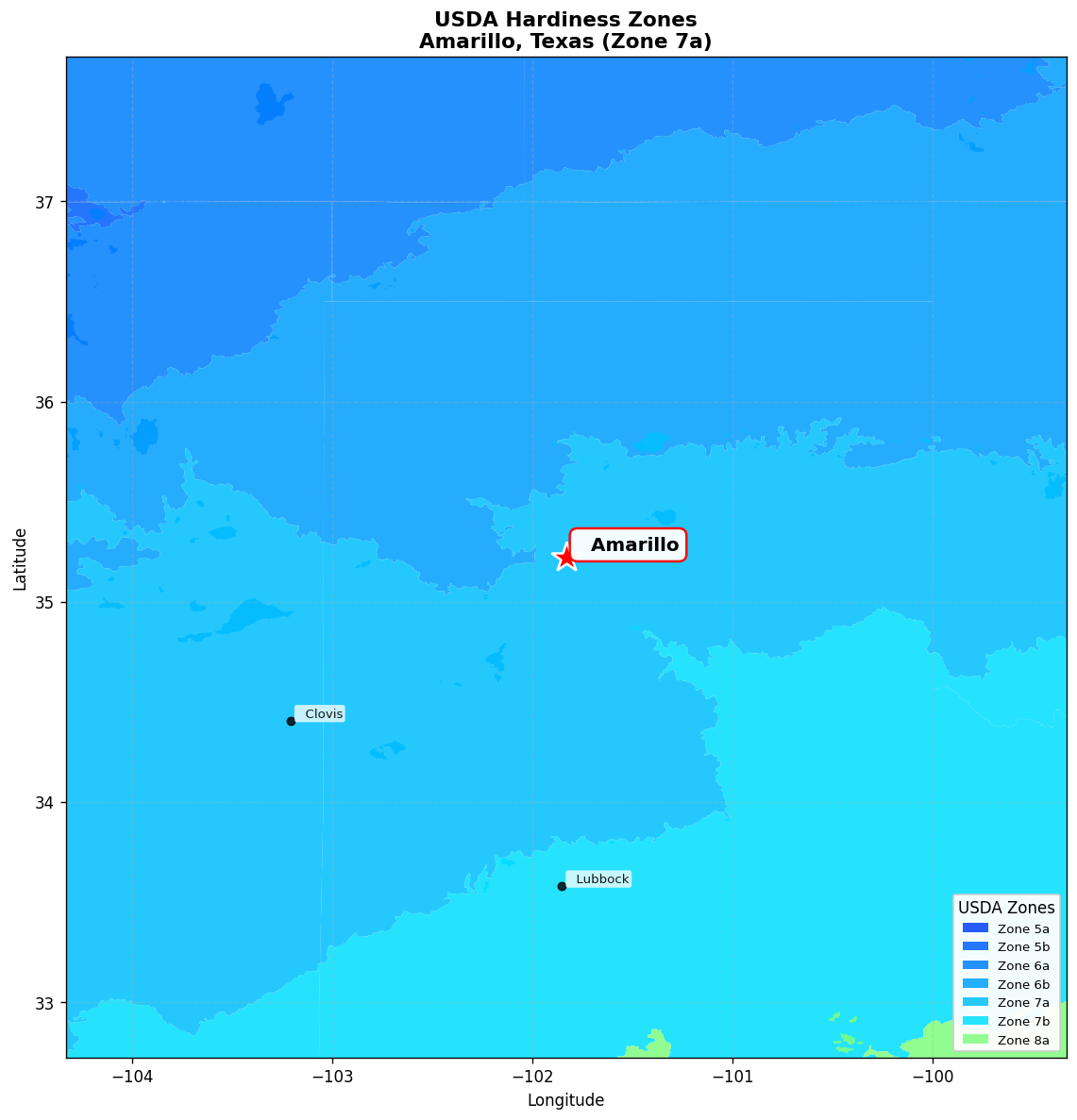
USDA Zone 7a
Hardiness zone for Amarillo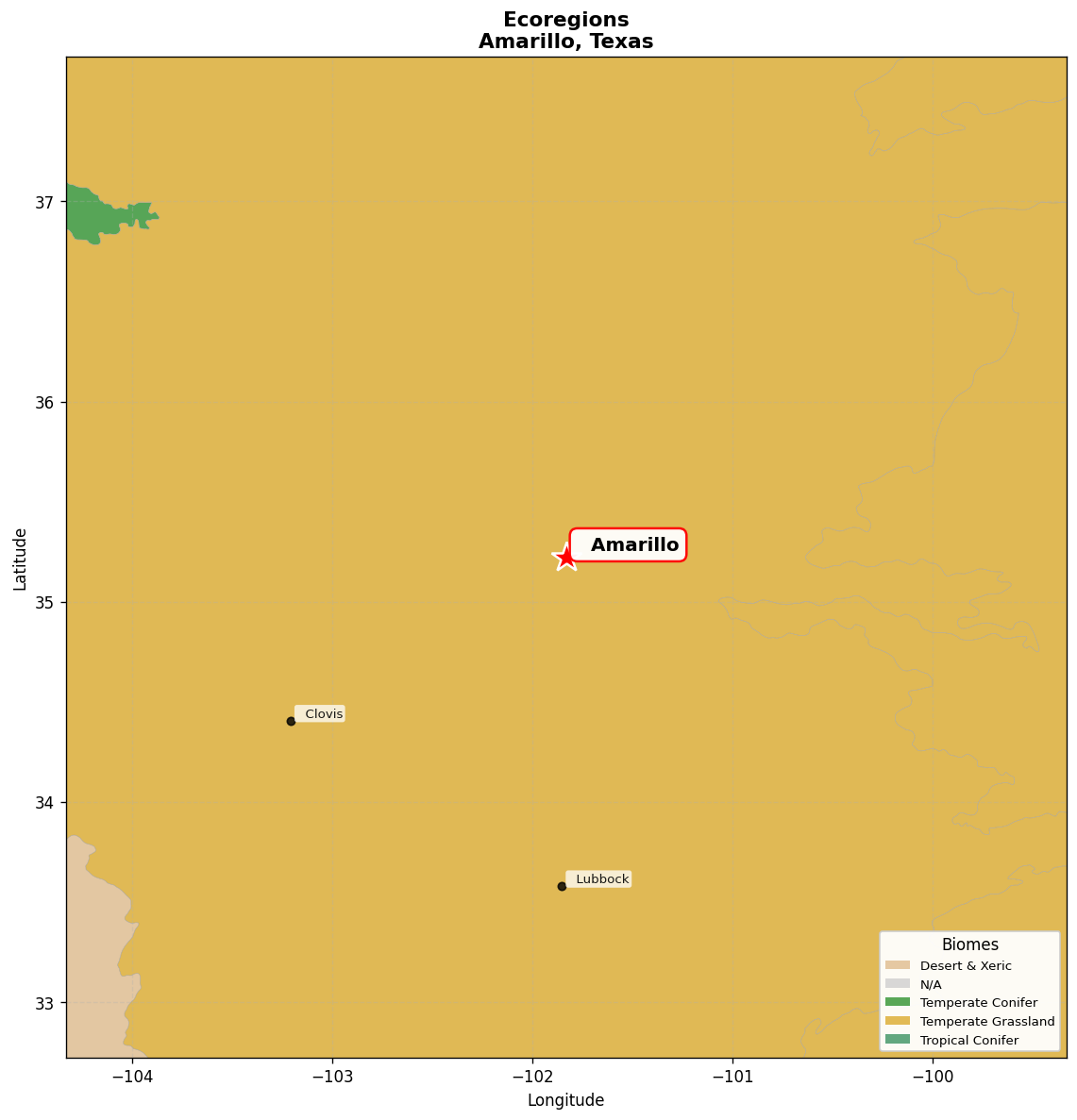
Western shortgrass prairie
Native ecoregionFrequently Asked Questions
How much does modern landscaping cost in Amarillo?
Amarillo crews bill around $45–70/hour and installed costs run 20–30% under Austin, Dallas or Denver, which is why serious modern hardscape is achievable here. A full front-yard modern conversion for a typical 800 sqft yard — turf removal, gravel fields, steel or Corten edging, 20–30 architectural plants — comes in at $6,000–15,000. A poured concrete patio with proper base and joint work runs about $22–38/sqft finished, so a 300 sqft slab is roughly $6,500–11,500 before furniture or a fire feature. A backyard modern room with a gas fire table and pole lighting typically lands $14,000–35,000, and a pool-and-deck project on an acreage lot in Bushland or Canyon runs $70,000–180,000.
Which ornamental grasses stay upright in Amarillo wind?
Cultivar, not species, decides this. The reliable verticals are Panicum virgatum 'Northwind' (the most rigid switchgrass sold), Schizachyrium scoparium 'Standing Ovation' and 'Twilight Zone', Calamagrostis x acutiflora 'Karl Foerster', and Sporobolus wrightii 'Windbreaker' giant sacaton for a large-scale statement. Bouteloua gracilis 'Blonde Ambition' stays tight and low with those horizontal eyebrow seedheads. Avoid straight-species little bluestem and 'Heavy Metal' switchgrass in fully exposed street-side beds — both open up and splay after a wet spring followed by gusts. Mexican feather grass looks the part but reseeds aggressively and is restricted in several states, so skip it. Cut everything back in late February, before new growth pushes.
Will a concrete patio crack in Amarillo's freeze-thaw cycles?
It will if it is poured to Gulf Coast specs. Amarillo's combination of Zone 7a nights near 0–5°F and sunny 50–60°F afternoons produces well over a hundred freeze-thaw cycles a year — a much harsher regime than Houston, despite Houston getting more rain. Specify 4,000 psi mix with 5–7% entrained air, 6 inches of compacted caliche or crushed base, control joints cut or tooled every 10–12 feet at a depth of one quarter the slab thickness, and a cure that keeps the surface damp for seven days. Never use deicing salt on concrete in its first winter, and avoid it entirely on decorative or sandblasted finishes. Set pergola posts and light-pole footings below the roughly 18-inch frost line.
Can I keep a lawn in a modern Amarillo design?
Yes, and modern design is actually the best excuse to shrink it correctly. Instead of wall-to-wall turf, cut two or three crisp geometric panels of buffalograss — 'Prestige' or '609' as vegetative sod, 'Cody' or 'Bowie' from seed — held by steel edging so the shape stays sharp. Buffalograss lives on roughly 12–18 inches of water a year in Amarillo versus 40–50 for tall fescue, mows every two or three weeks at 3 inches, and its soft blue-green reads beautifully against gray concrete. Blend blue grama 'Hachita' in for texture. The trade-off is honest: buffalograss goes dormant tan in a hard July drought and greens up after rain.
Do Corten steel and modern materials survive Panhandle hail and wind?
Corten is one of the best material choices available here. The dry alkaline air and 20 inches of annual rain let it patina evenly in one to two seasons, and low rainfall means far less rust bleed staining pale concrete than in a wet climate — just set frames about 2 inches proud of paving and put a gravel collar at the base. Hail is the real material test: Randall and Potter counties see three to five severe hail days a year, so choose powder-coated aluminum or steel furniture over resin wicker, tempered glass table tops over ceramic, and metal or fiber-cement over vinyl trim. Fabric shade sails should be removable, and pergola rafters do better than stretched canopies.
When should I install, and do I need permits in Amarillo?
September 15 through November 1 is the best planting window — grasses and woody plants root through the cool months before the March wind arrives — with a second window in April after the average last freeze around April 19. Succulents are the exception and prefer late spring planting. Hardscape can be built most of the year; pour outside the deepest freeze weeks. On permits, planting and gravel work need none. The City of Amarillo does require permits for retaining walls over 4 feet, pools and their barriers, and structures with a roof. Statewide, installing or substantially modifying an in-ground irrigation system requires a TCEQ-licensed irrigator, and Texas Property Code §202.007 protects your right to install water-conserving landscaping even in an HOA — though you may still owe them a plan for approval.