4 Mediterranean Garden Ideas for Anaheim, CA | Olive, Lavender & Terracotta in Zone 10b
Native plants from the California coastal sage and chaparral (Zone 10b) — Mediterranean (hot summer) climate
Why Mediterranean Gardens in Anaheim?
Anaheim’s Zone 10b climate is climatically almost identical to the Mediterranean Basin—warm dry summers, mild rainy winters, and 13–15 inches of annual rainfall—which is precisely why the Mediterranean garden style feels so natural and effortless here. Plants that struggle with drought in Atlanta or Cincinnati grow as lush, fragrant, self-sufficient specimens in Anaheim’s climate: lavender blooms for six months without irrigation; olive trees grow as magnificent canopy trees without a single supplemental watering after the first year; Italian cypress columns to 40 feet in a decade without attention. The California Coastal Sage and Chaparral ecoregion that Anaheim occupies is essentially Southern California’s native Mediterranean ecosystem, making the design style an expression of the place rather than an import.
The Mediterranean garden vocabulary—terracotta, whitewashed stucco, wrought iron, fragrant herbs, and silver-leaved drought-adapted plants—translates perfectly onto Anaheim’s Spanish Revival and Mission-style homes, where the architecture is already drawing from the same Mediterranean source material. In newer neighborhoods like Anaheim Hills and the master-planned communities of east Orange County, Mediterranean landscape design provides a sense of regional rootedness that generic suburban landscaping lacks. The warm terracotta tones, silver lavender foliage, and structured cypress columns create an immediately legible sense of place.
The practical advantages of Mediterranean landscaping in Anaheim are substantial. Plants adapted to the Mediterranean Basin are directly adapted to Southern California’s climate pattern—they are drought-dormant in summer when Anaheim doesn’t rain, and growth-active in winter when the rains come. This means established Mediterranean gardens need essentially no summer irrigation, no fungicide programs, and minimal maintenance compared to traditional planted gardens. In a water-restricted region with rising utility costs, this translates to meaningful long-term savings alongside beautiful landscape results.
4 Mediterranean Design Ideas for Anaheim
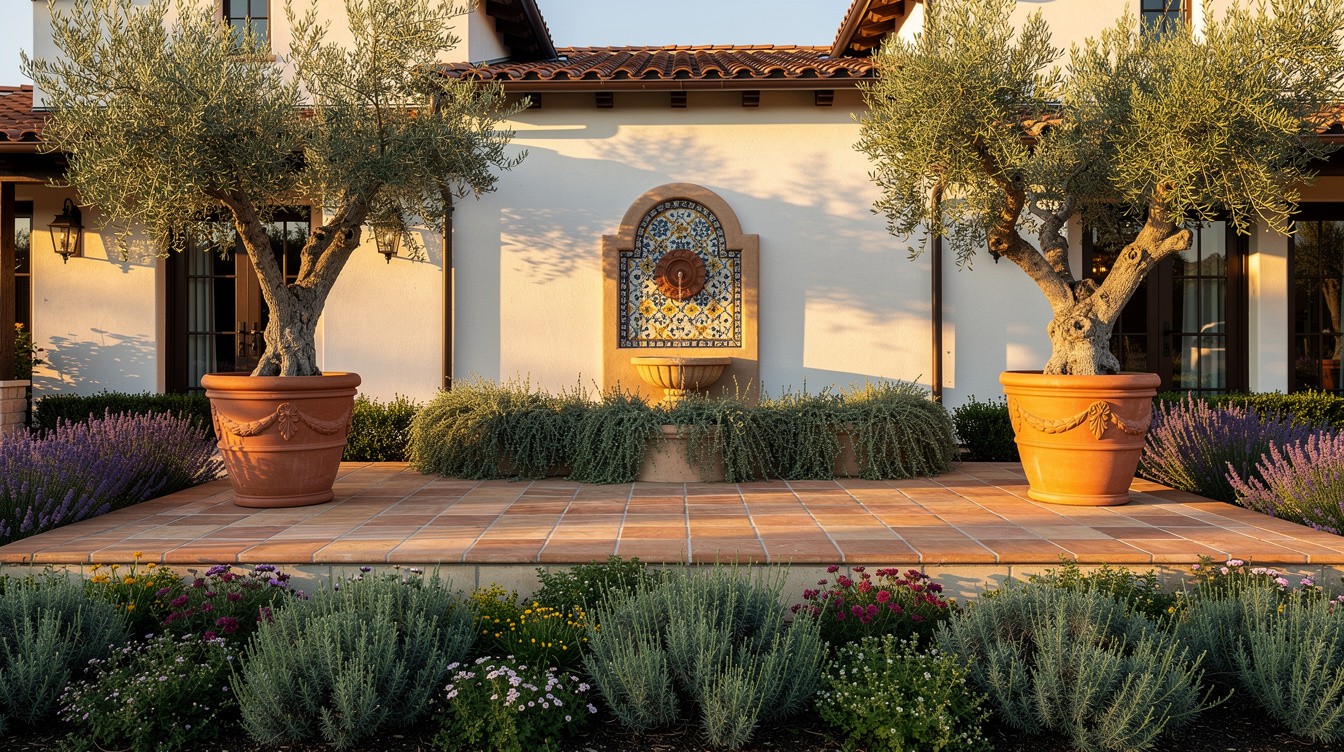
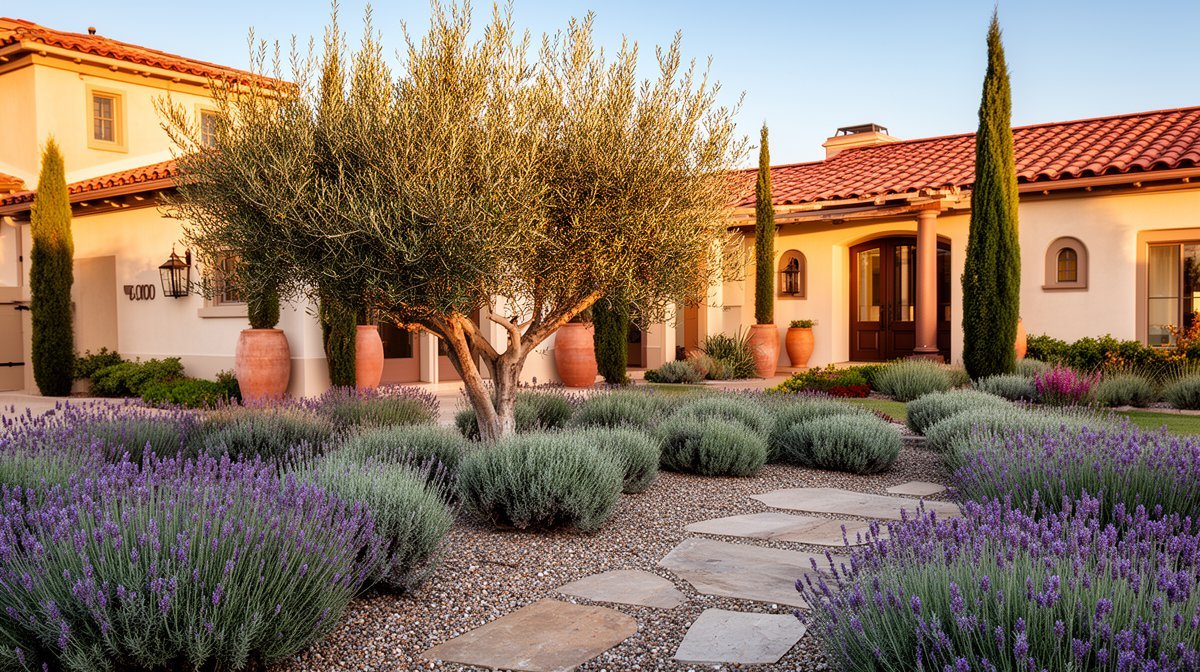
Olive Tree Terrace with Lavender and Terracotta
$14–28/sqftThree multi-trunk olive trees in terracotta-toned decorative pots anchor a front terrace paved in warm ochre terracotta tiles, with a formal lavender border along the property line and a small wall fountain with Talavera tile inlay as the focal feature. Rosemary cascades over the terrace edge in a low hedge, and fragrant Mediterranean herbs—thyme, oregano, and sage—fill the border ground level. The design channels a Spanish Colonial hacienda entrance: fragrant, formal, and effortlessly drought-tolerant for Anaheim’s dry summer months.
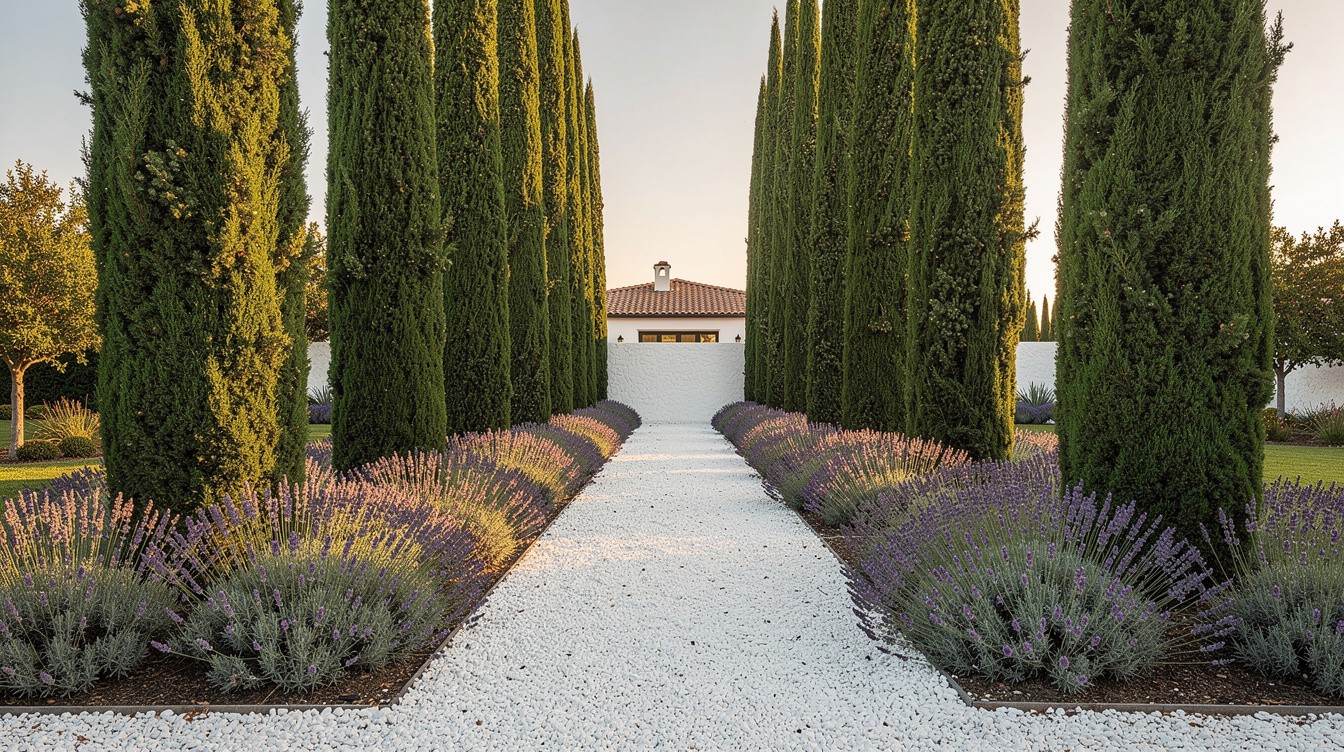
Cypress Allee Entry with Gravel and Lavender
$12–26/sqftTwin rows of Italian cypress (Cupressus sempervirens) create a dramatic allee entrance leading to a whitewashed front wall, with crushed white limestone gravel between the cypress columns and lavender borders edging each side of the path. The towering vertical cypress columns—reaching 20–30 feet within 10 years in Zone 10b—create an architectural drama that no other plant can achieve, and the combination of white gravel, silver-green cypress, and purple lavender is the defining palette of Provence-style Mediterranean gardens. The design requires almost no irrigation once established.
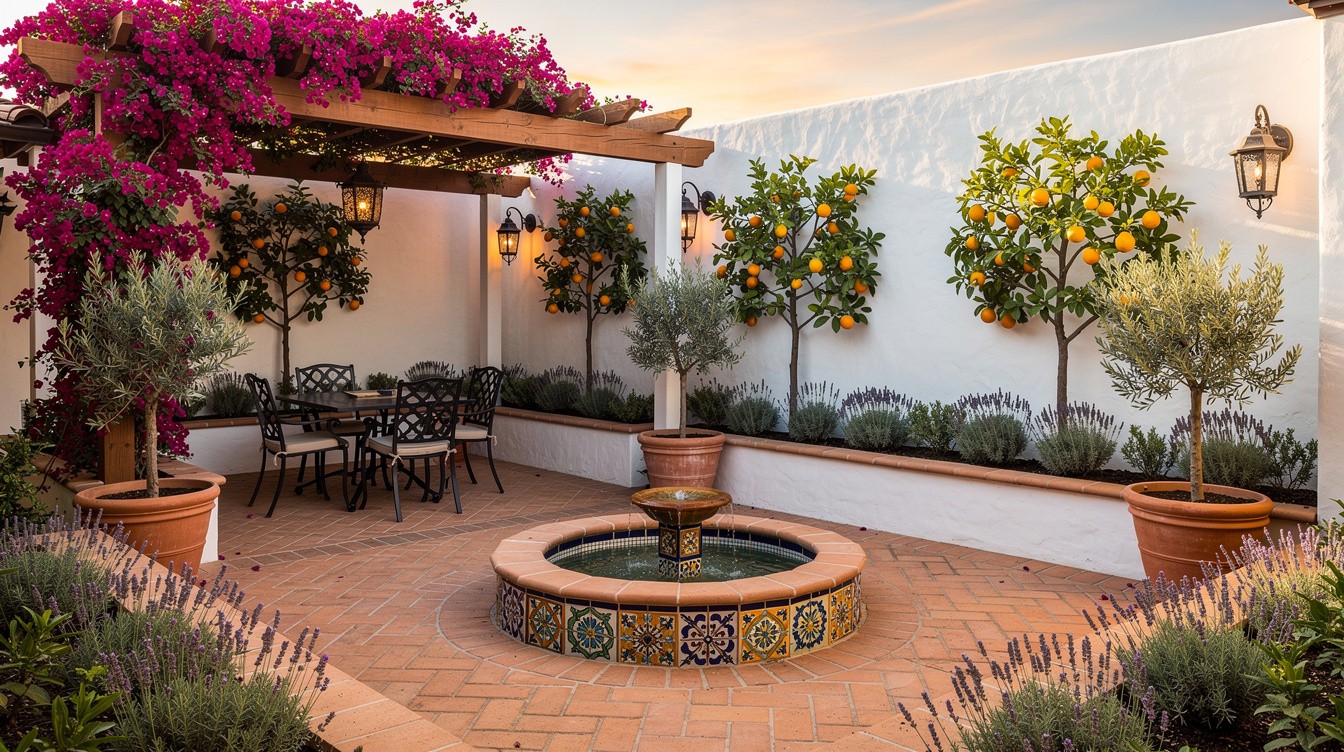
Walled Courtyard with Fountain and Citrus Garden
$20–45/sqftA whitewashed masonry courtyard wall encloses a Mediterranean garden room with terracotta paved ground, a central tiled fountain, and raised planting beds of lavender, rosemary, and espalliered citrus trees along the walls. A bougainvillea-draped pergola creates shade over a wrought iron dining table and chairs. Potted olive trees at the courtyard corners and hanging lanterns create the Moorish-Spanish atmosphere of an Andalusian patio—intimate, fragrant, and perfectly adapted to Anaheim’s climate for year-round outdoor use.
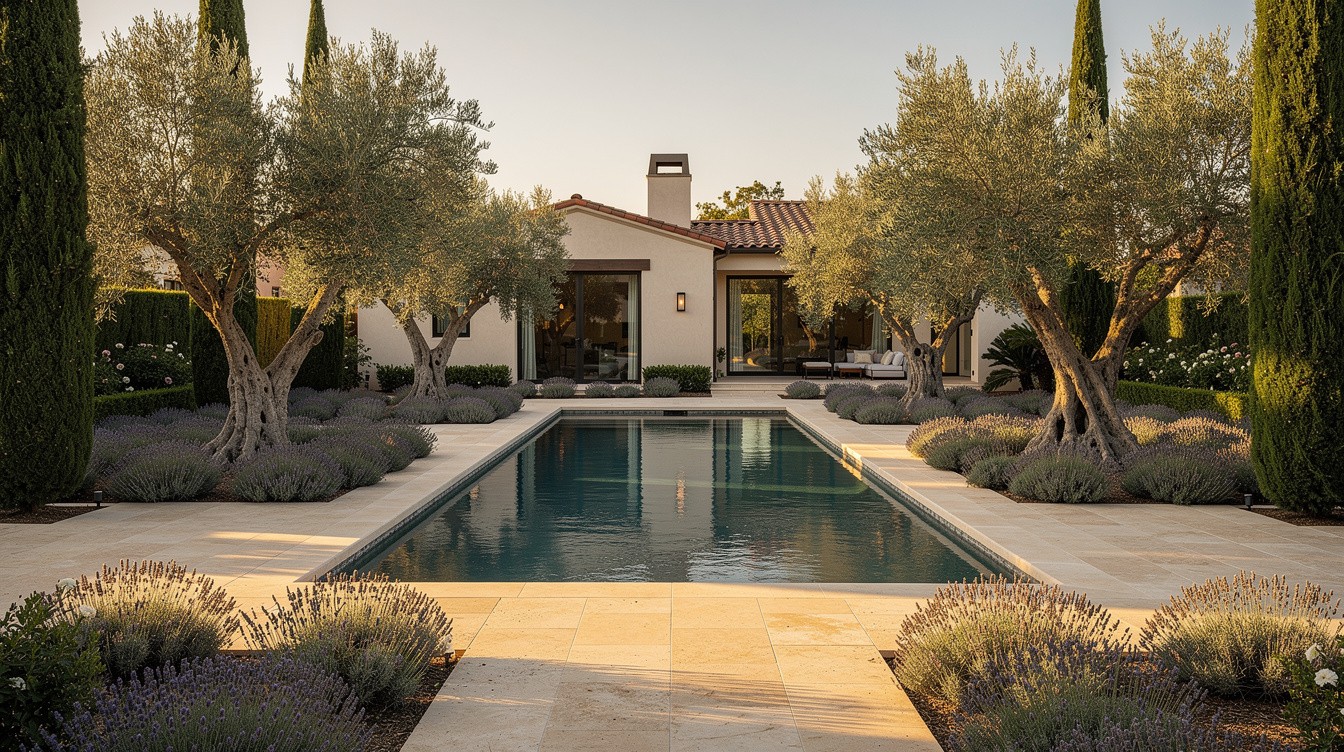
Pool Garden with Olive Grove and Limestone Terrace
$32–70/sqftA pool with limestone coping is flanked by a wide limestone pool terrace and surrounded by an olive grove—five or seven multi-trunk olive trees placed in the naturalistic spacing of an actual grove—with lavender ground cover beneath them and Italian cypress columns at the property corners. The Mediterranean pool garden is a distinctly Southern California luxury: the poolscape feels ancient and rooted in place, the plants require minimal irrigation, and the overall effect—silvery olive canopy, fragrant lavender, and warm limestone—is one of the most beautiful in residential landscape design.
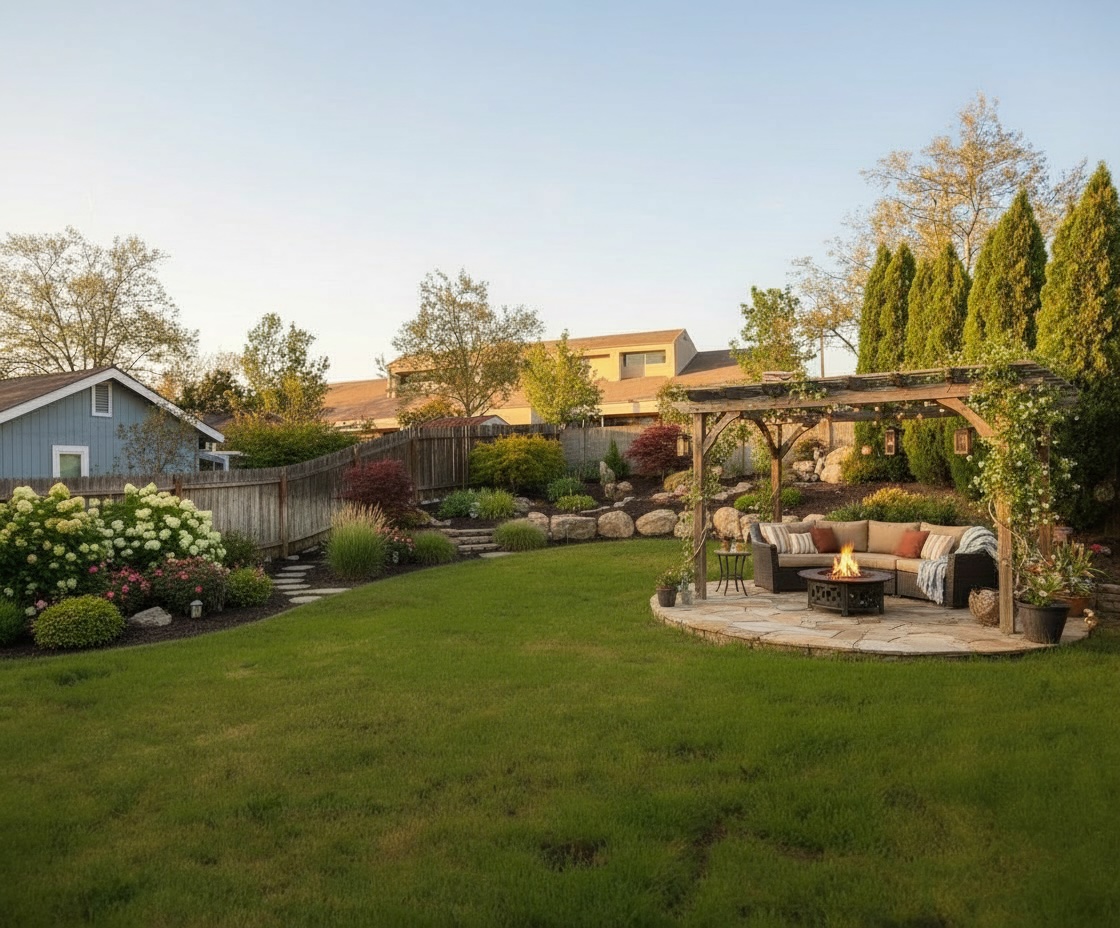
See how a mediterranean garden looks on YOUR property
Upload a photo of your Anaheim yard and visualize your dream garden in seconds.
Try ProScapeAI Free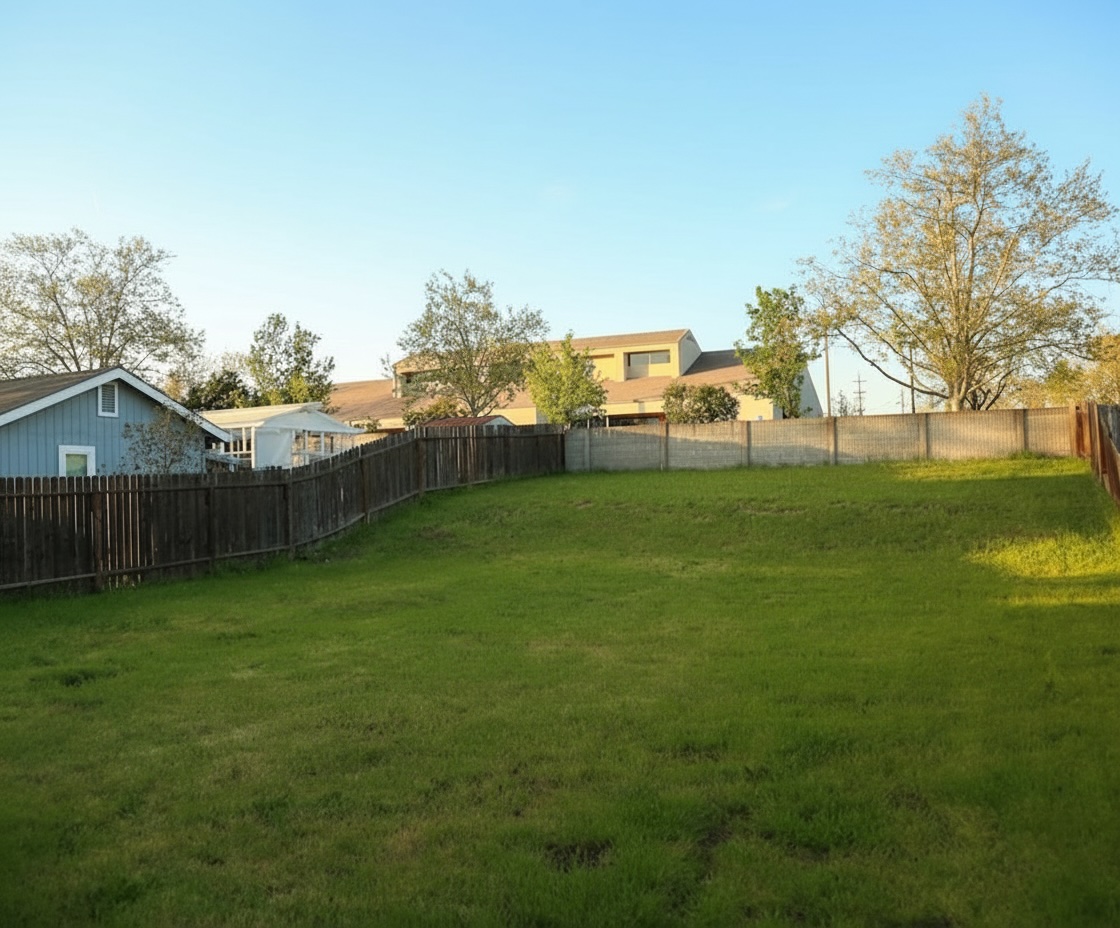
Featured Trees & Shrubs for Mediterranean Gardens
Browse all 219 plants for Anaheim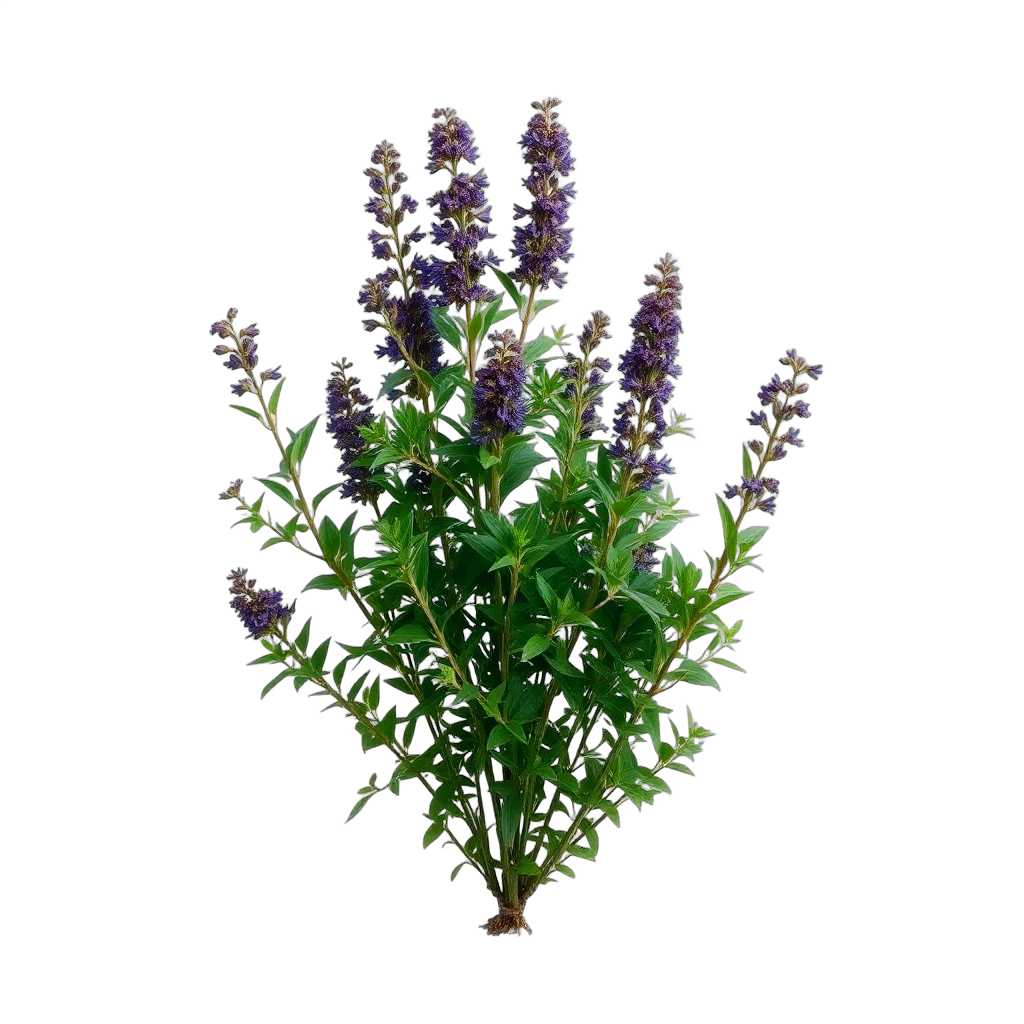
Black Sage
Salvia mellifera
grows to 4 feet, white blooms in spring. Attracts butterflies.
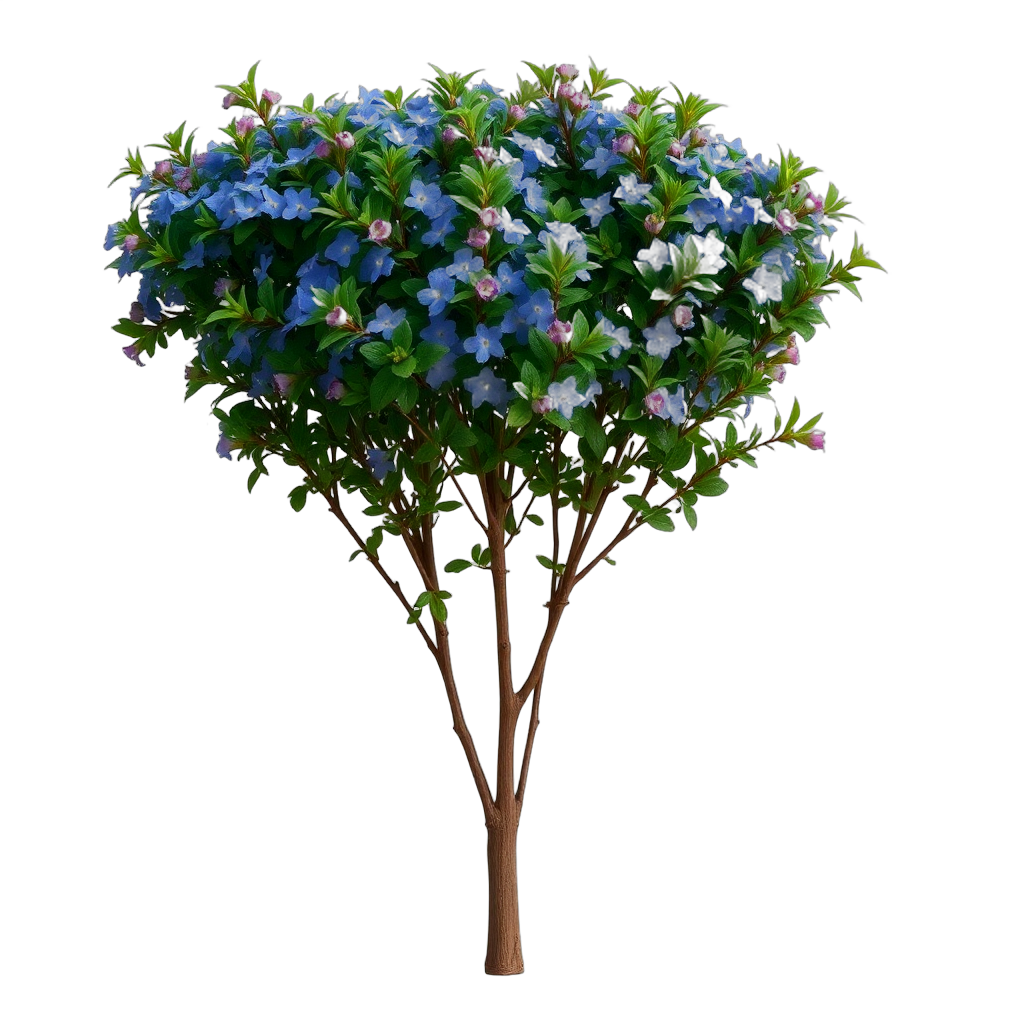
Blue Blossom
Ceanothus thyrsiflorus
medium-sized at 12 feet, blue blooms in spring. Attracts butterflies.

Blue Elderberry
Sambucus cerulea
medium-sized at 15 feet, white blooms in spring. Attracts butterflies.
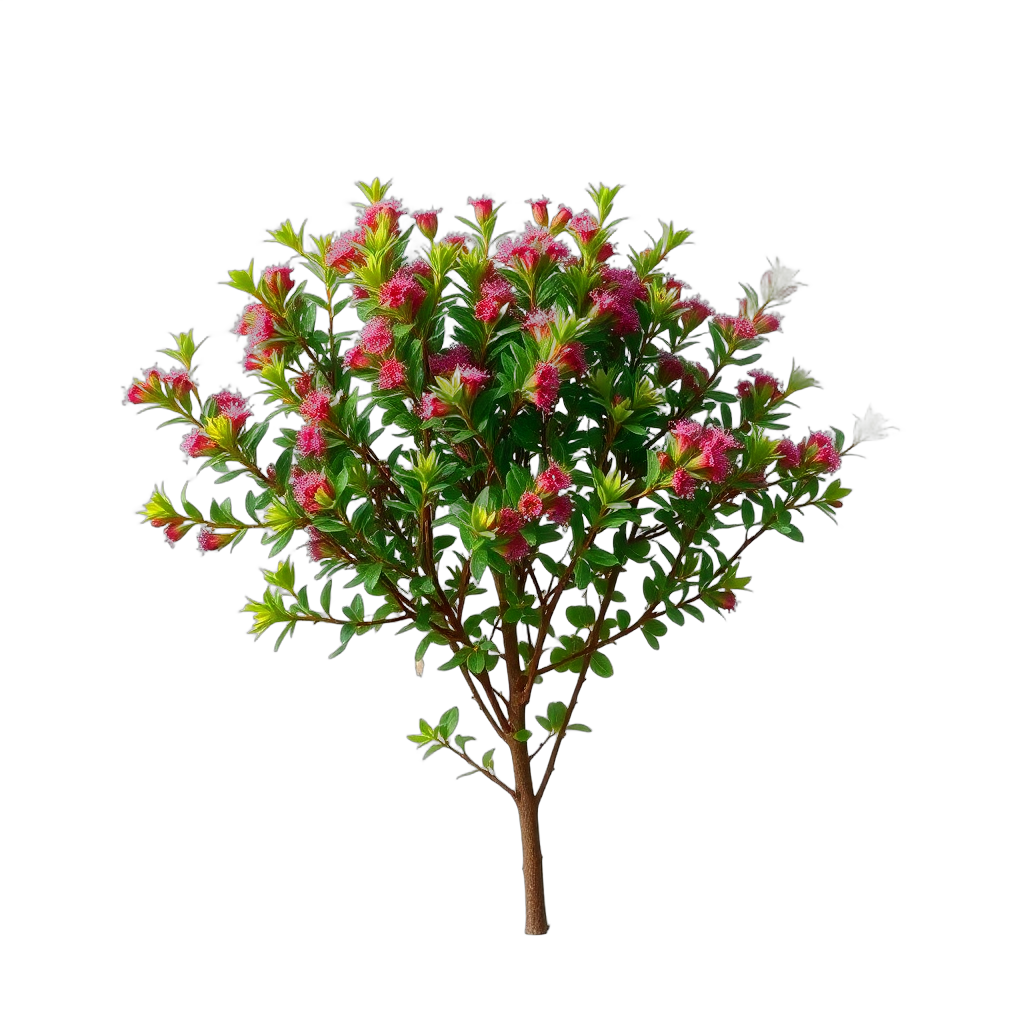
Buckbrush
Ceanothus cuneatus
medium-sized at 7 feet, white blooms in spring. Attracts butterflies.
Featured Grasses & Groundcovers for Mediterranean Gardens
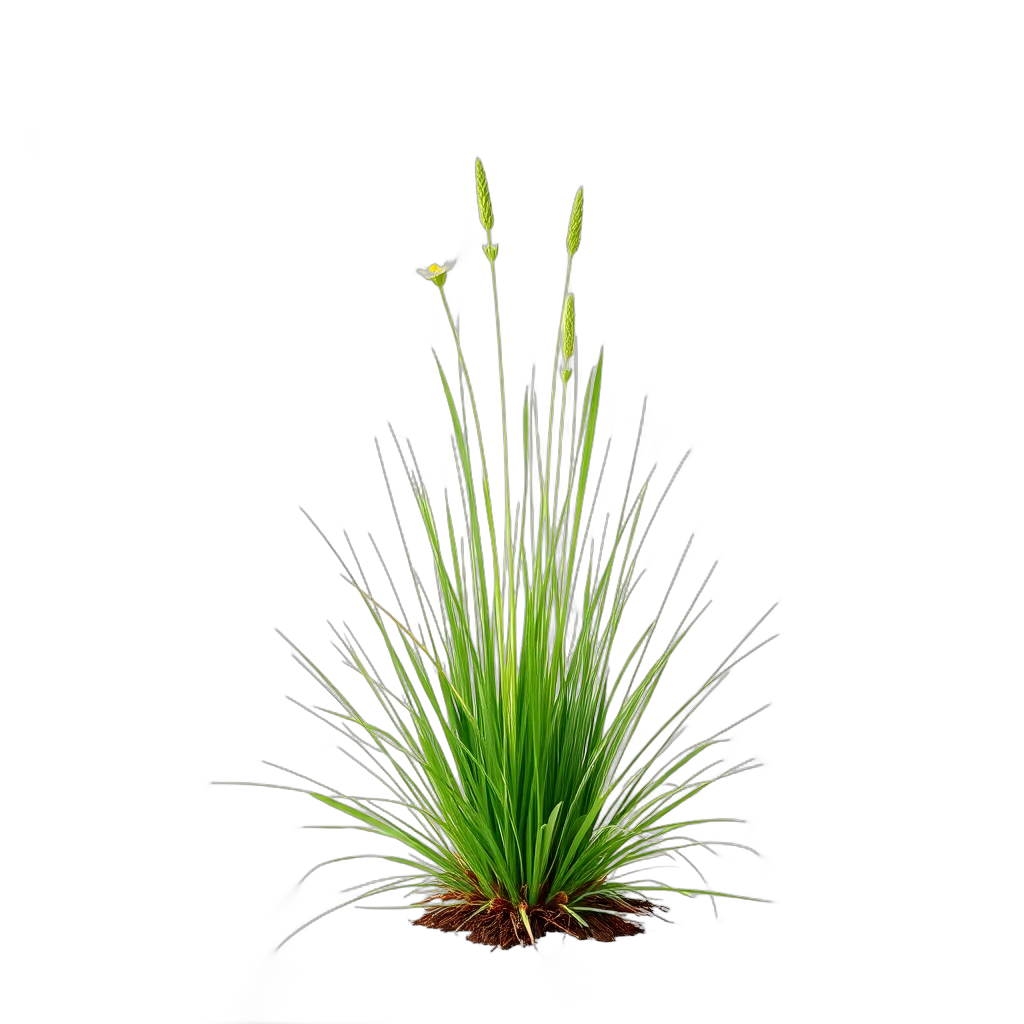
California Brome
Bromus carinatus
low-growing ground cover, blooms in spring. Yellow fall color.
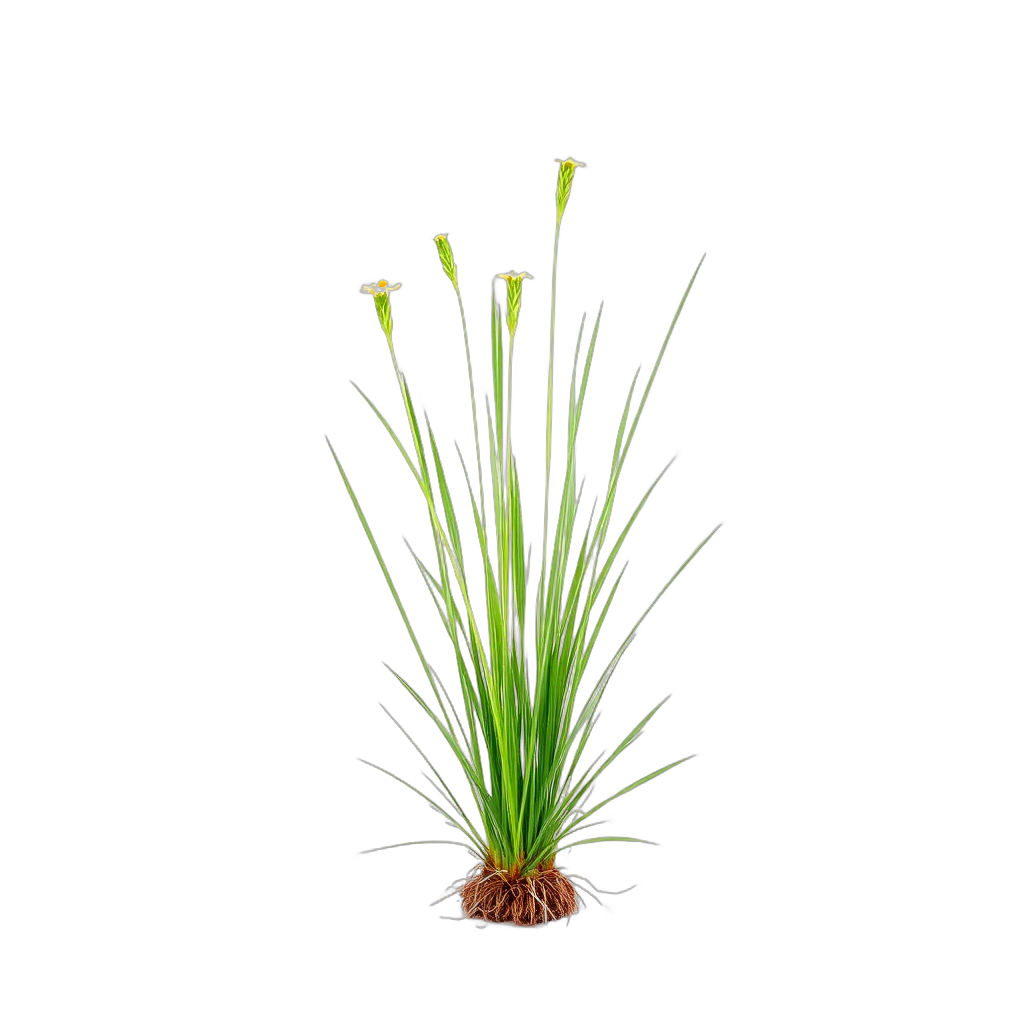
California Melic
Melica californica
low-growing ground cover, blooms in spring.
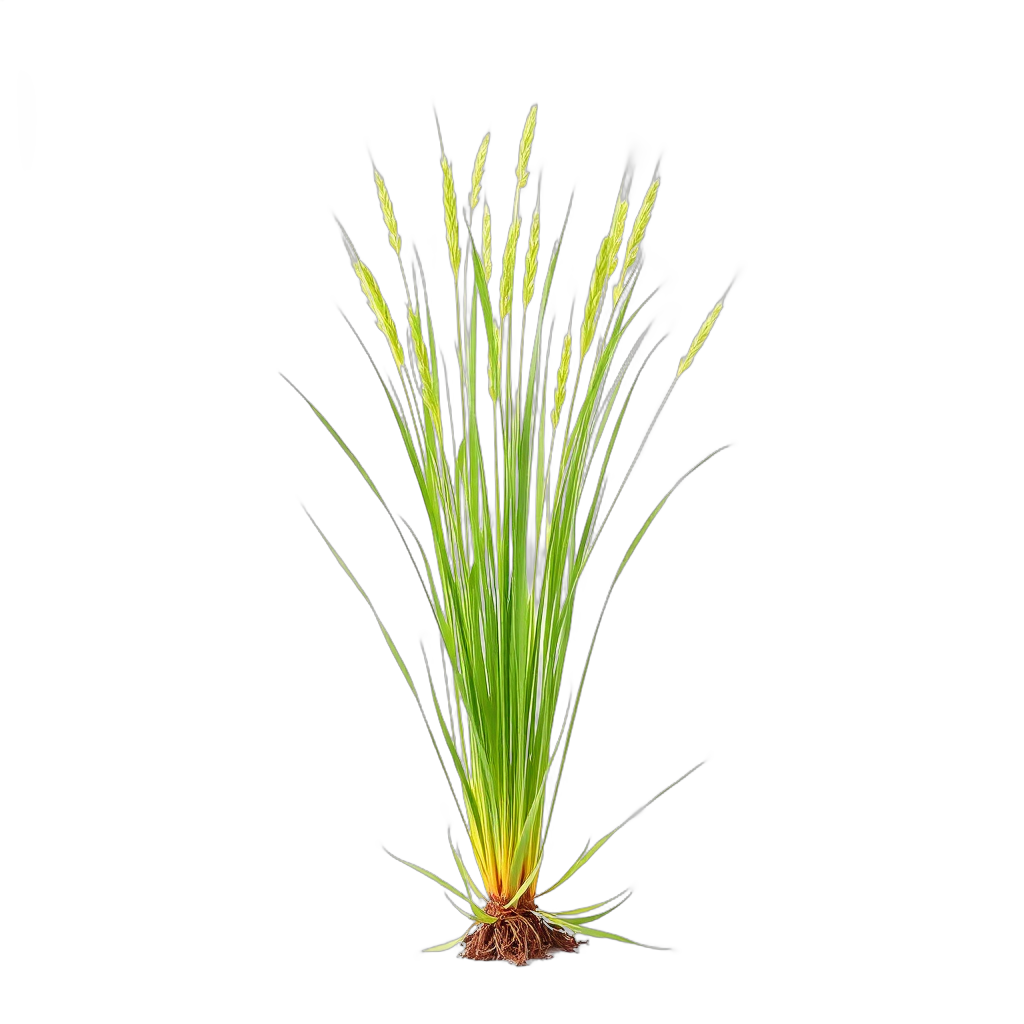
California Oatgrass
Danthonia californica
low-growing ground cover, blooms in spring. Yellow fall color.
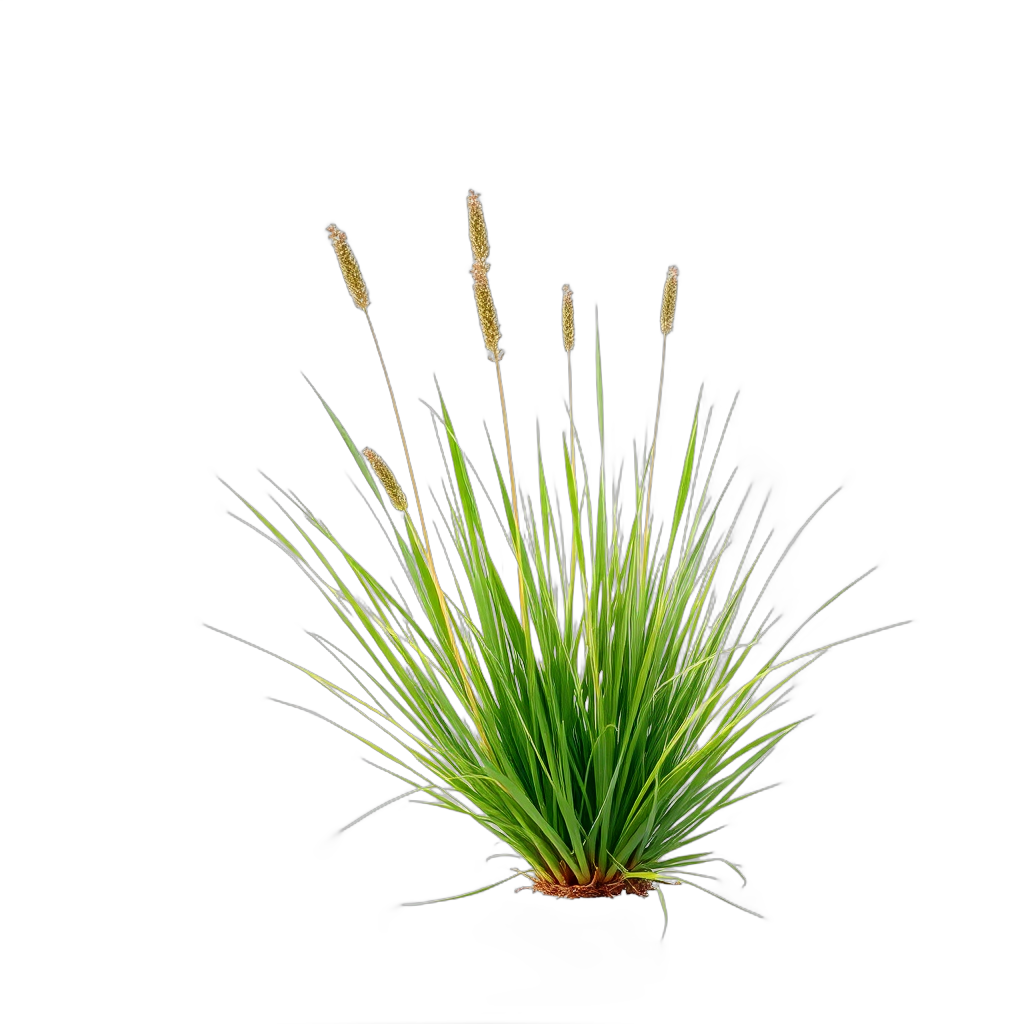
Deer Grass
Muhlenbergia rigens
grows to 3 feet, yellow blooms in fall. Evergreen year-round.
Featured Flowers & Perennials for Mediterranean Gardens
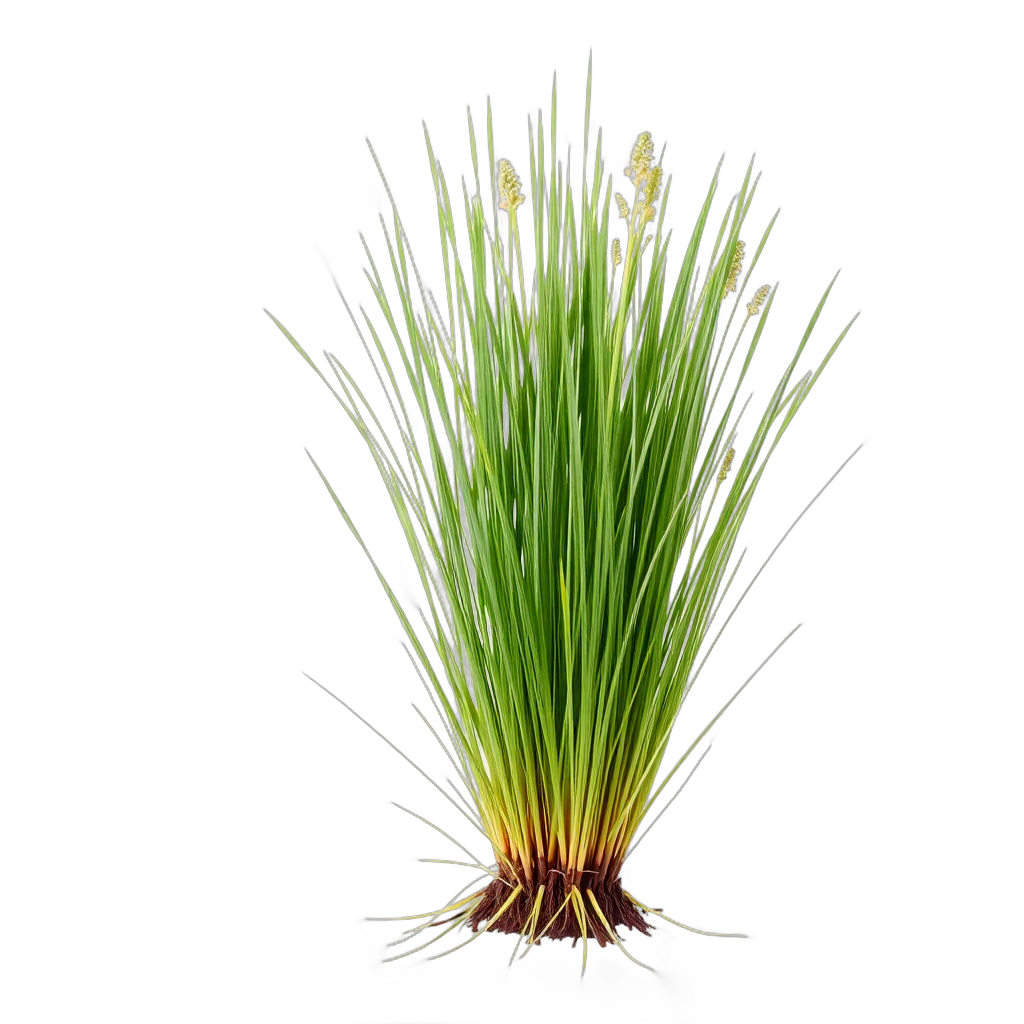
California Gray Rush
Juncus patens
low-growing ground cover, blooms in summer. Evergreen year-round.
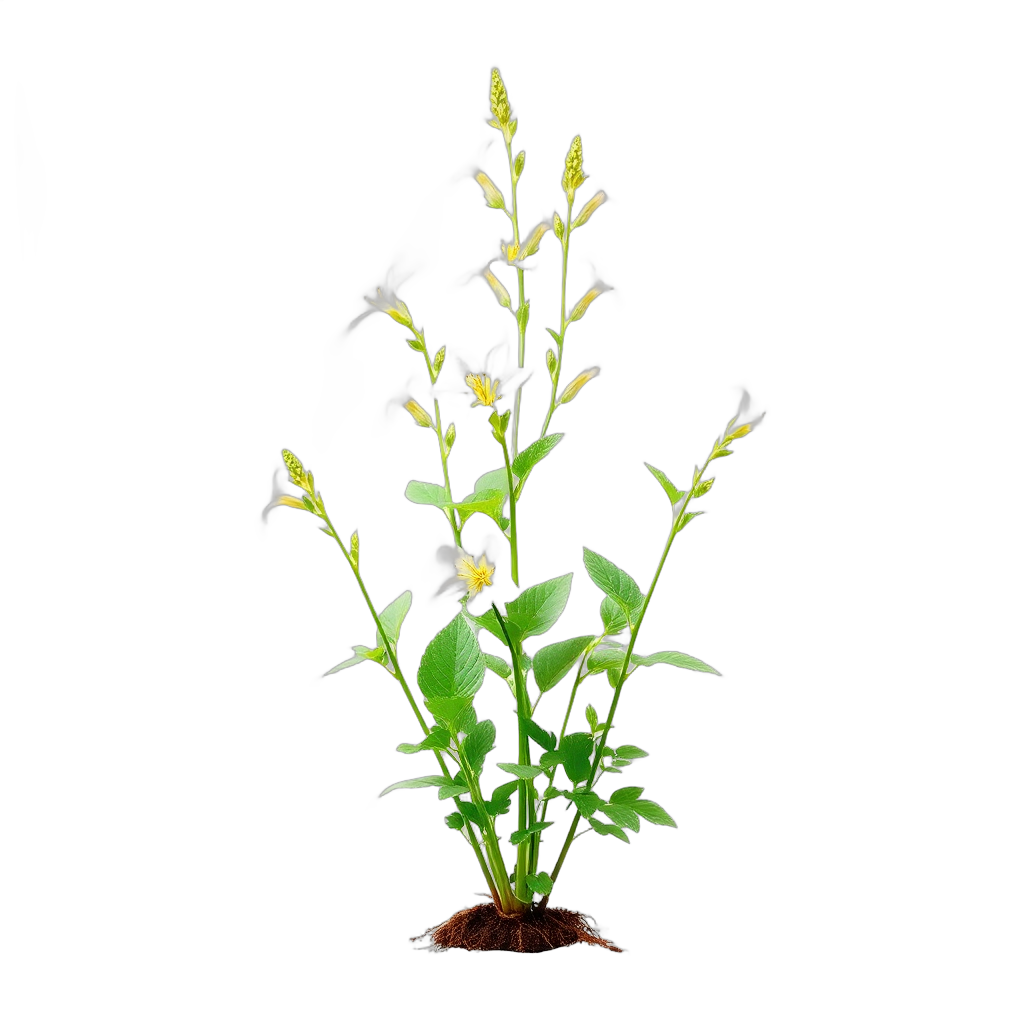
Beach Evening Primrose
Camissonia cheiranthifolia
low-growing ground cover, yellow blooms in spring. Attracts butterflies.
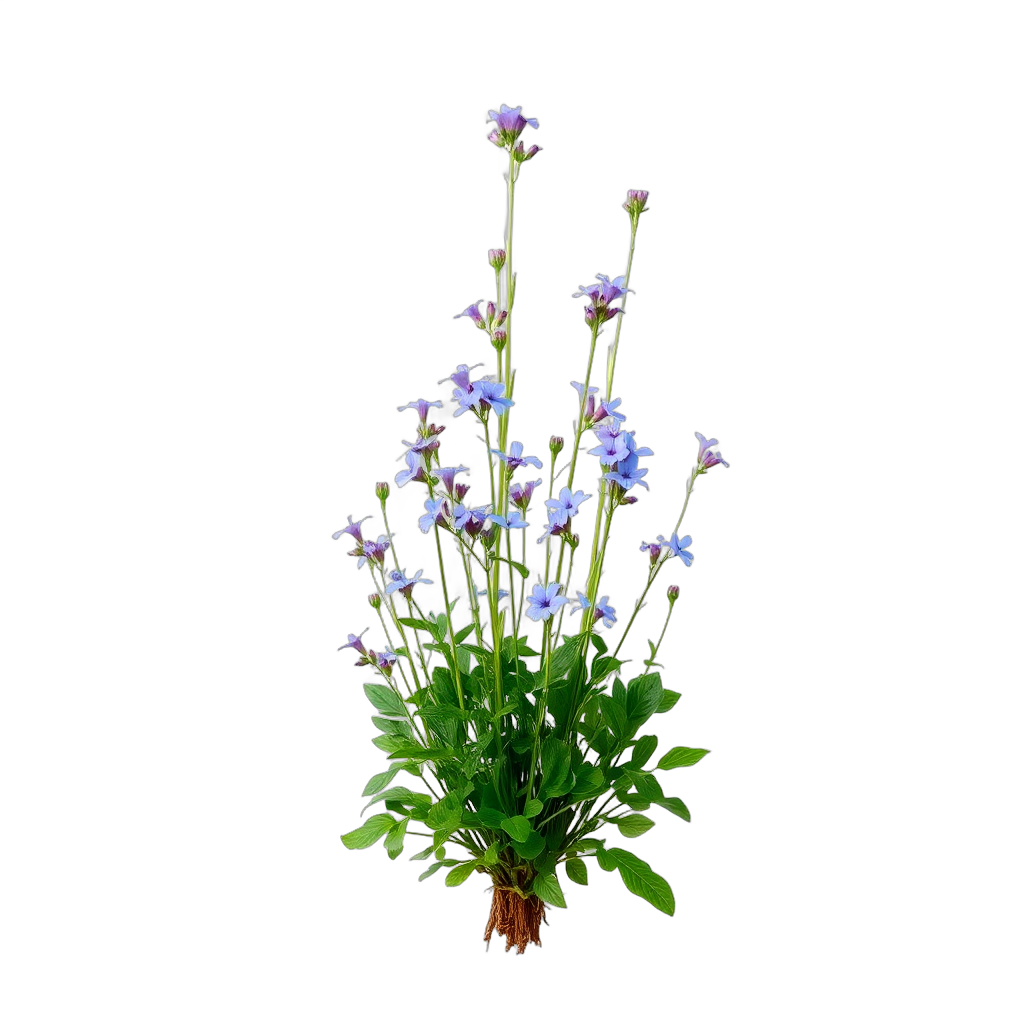
Blue Dicks
Dichelostemma capitatum
low-growing ground cover, blue blooms in spring. Pollinator-friendly.
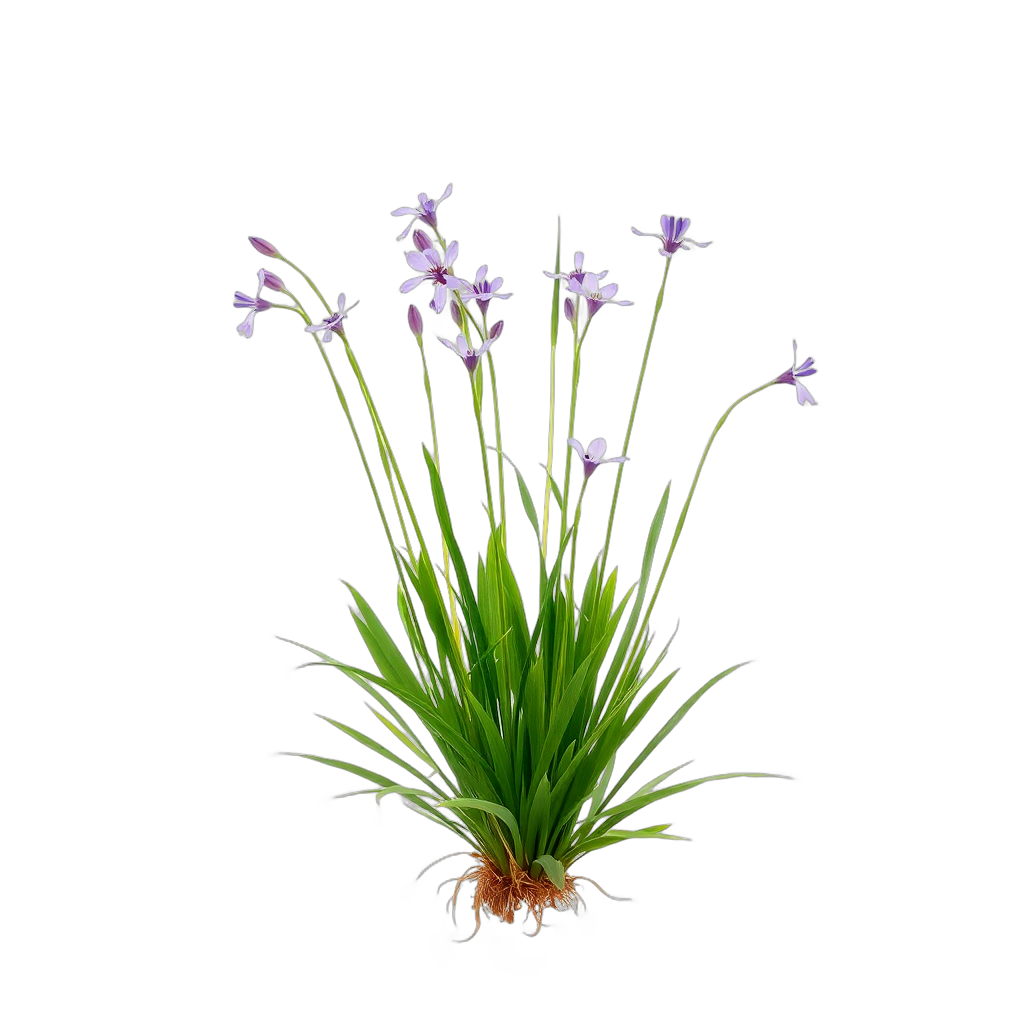
Blue-Eyed Grass
Sisyrinchium bellum
low-growing ground cover, blue blooms in spring. Attracts butterflies.
Zone and sun checks come from our database — confirm with your local nursery before you buy.
Bloom Calendar for Anaheim
spring
Beach Evening Primrose, Blue Dicks, Blue-Eyed Grasssummer
California Gray Rush, Hooker's Evening Primrose, Hummingbird Mintfall
California Fuchsiawinter
Limited bloomsDesign Tips for Anaheim (Zone 10b)
- Specify ‘Swan Hill’ or ‘Wilsonii’ fruitless olive varieties for residential Mediterranean gardens—identical ornamental character to fruiting olives, zero fruit-drop mess on paving, and widely available at Orange County nurseries
- Use crushed white limestone or decomposed granite in the warm buff tone for Mediterranean garden paths and courtyards—the warm-toned ground plane is essential to the Mediterranean palette and allows drainage far better than solid paving
- Plant lavender on slight berms or in raised beds—even 3–4 inches of raised grade dramatically improves drainage and extends lavender life in Anaheim’s occasional wet winters; lavender in low spots often fails after a wet winter even in perfect Zone 10b conditions
- Incorporate a small wall fountain with Talavera or hand-painted tile as a courtyard focal point—the sound of water is quintessentially Moorish-Mediterranean, creates a humidity microclimate beneficial to nearby citrus and herbs, and adds sensory richness that photographs are worth far more than their cost
- Use Italian cypress sparingly as vertical exclamation points rather than mass planting—two or four strategic cypresses create dramatic architecture; a whole row creates a cemetery aesthetic that overwhelms residential scale
- Add fragrant herbs—thyme, oregano, and Mediterranean sage—as ground covers beneath olive trees and between lavender plants; they are completely drought-tolerant in Zone 10b, release fragrance when brushed against, and fill the ground plane inexpensively
Where to Source Plants in Anaheim
Skip the big-box stores. These independent Anaheim nurseries specialize in the plants that make mediterranean gardens thrive in Zone 10b.
Armstrong Garden Centers
Anaheim / Multiple Orange County locations
Best retail source for Mediterranean landscape plants in OC—olive trees, lavender, Italian cypress, bougainvillea, and Mediterranean herbs
Roger’s Gardens
Corona del Mar
Premier Mediterranean garden destination—exceptional selection of container olive trees, Talavera pottery, and landscape design services
Green Thumb Nursery
Fullerton / Santa Ana
Good regional chain source for lavender, rosemary, citrus, and standard Mediterranean landscape plants at competitive prices
Corona del Mar Nursery
Corona del Mar
Specialty Mediterranean and tropical plants with particularly strong selection of Italian cypress, olive trees, and lavender varieties
Mockingbird Nursery
Riverside
California native and Mediterranean plants with expert knowledge on drought adaptation in the Inland Empire and Orange County climates
Mediterranean Landscaping Costs in Anaheim
| Project Scope | Estimated Cost |
|---|---|
| Terracotta entry with olive trees, lavender borders, and wall fountain | $12,000 – $28,000 |
| Italian cypress allee with white limestone gravel and lavender walk | $10,000 – $24,000 |
| Walled courtyard with tiled fountain, bougainvillea pergola, and citrus | $22,000 – $52,000 |
| Pool with olive grove, lavender ground cover, and limestone terrace | $62,000 – $132,000 |
| Drip irrigation for Mediterranean garden establishment phase | $1,200 – $3,500 |
| Annual Mediterranean garden maintenance (pruning, mulching, drip check) | $800 – $2,000/year |
| AI visualization with ProScapeAI | Free to start |
Estimates based on Anaheim, CA-area contractor rates as of 2026. Actual costs vary by site conditions, materials, and contractor.
Anaheim Climate & Growing Zone
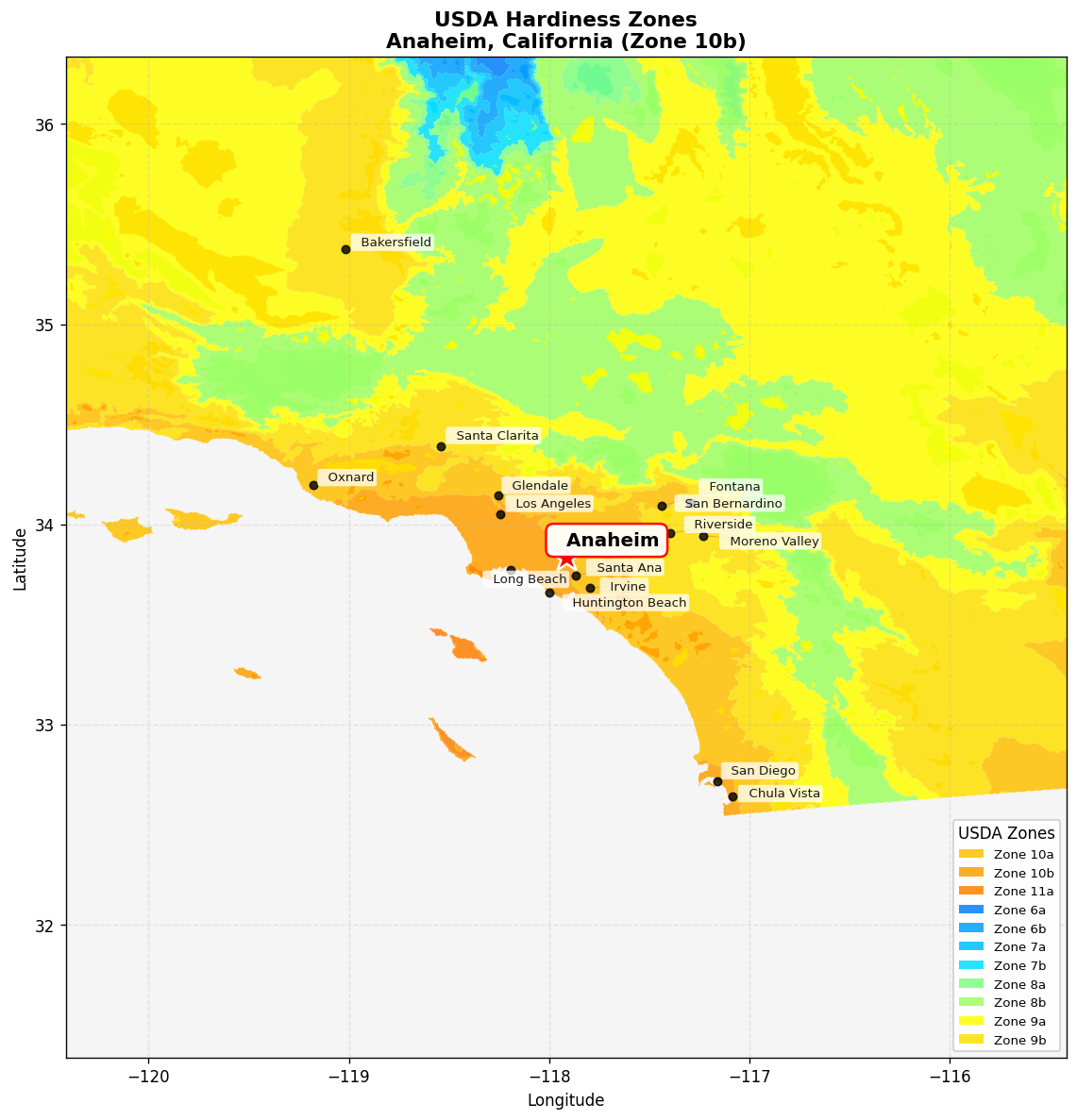
USDA Zone 10b
Hardiness zone for Anaheim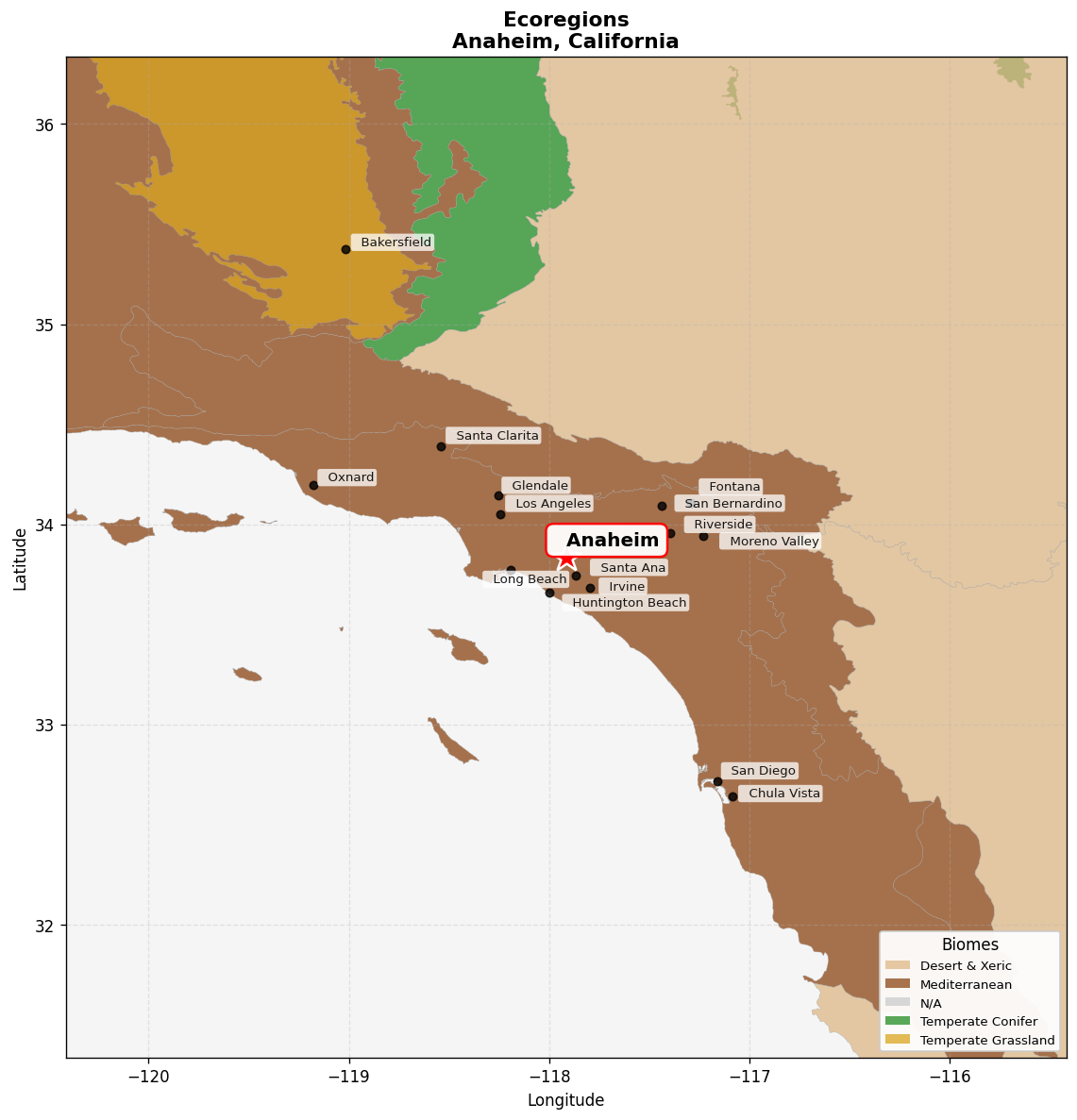
California coastal sage and chaparral
Native ecoregionFrequently Asked Questions
What are the best Mediterranean plants for Anaheim’s Zone 10b?
Anaheim’s climate is essentially Mediterranean—plants from the Mediterranean Basin grow here without adaptation. Top choices: multi-trunk olive trees (Olea europaea, multiple varieties available; extremely drought-tolerant; iconic), Italian cypress (Cupressus sempervirens, the defining columnar accent), lavender (all varieties thrive—Spanish, French, and English lavender all bloom abundantly), rosemary (fragrant hedge or cascading accent), bougainvillea (drought-tolerant once established, vivid spring and fall color), Agapanthus (reliable summer blue), rock rose (Cistus, naturalizes in Orange County scrub conditions), and fragrant herbs (thyme, oregano, sage) that double as ground covers.
How drought-tolerant are Mediterranean gardens in Southern California?
Properly designed Mediterranean gardens in Anaheim can achieve near-zero summer irrigation after the first 2–3 years of establishment. Olive trees, Italian cypress, lavender, rosemary, and rock rose are all summer-dormant in their natural habitat and essentially stop growing during Anaheim’s dry summer months. The establishment phase (first 2–3 summers after planting) requires 1–2 deep irrigations per week to build root systems, but mature specimens function entirely on winter rainfall with only occasional supplemental watering during extended drought. This is one of the most water-efficient garden styles available for the Southern California climate.
Can I grow citrus in an Anaheim Mediterranean garden?
Absolutely—citrus is a Mediterranean-origin plant that thrives in Anaheim’s Zone 10b climate. Navel oranges, Meyer lemons, Eureka lemons, tangerines, and kumquats all fruit reliably in Orange County. In Mediterranean garden design, citrus serves as both an ornamental and productive element: espalliered on courtyard walls, planted in terracotta pots, or grown as canopy trees. The fragrant spring blossom is one of Mediterranean gardening’s greatest pleasures. Citrus needs more water than olives or lavender—deep irrigation every 1–2 weeks in summer—but is far less demanding than most landscape plants.
How do I grow lavender successfully in Anaheim?
Anaheim is one of the best places in North America to grow lavender. Key requirements: full sun (minimum 6–8 hours), excellent drainage (lavender dies in wet soil—amend clay soil or plant on slight slopes), and heat reflected from paving or walls actually improves bloom quality. In Anaheim’s clay soils, plant lavender in raised beds or on berms 4–6 inches above grade. Spanish lavender (Lavandula stoechas) handles heat and humidity best in Orange County; English lavender (L. angustifolia) is more fragrant but less heat-tolerant. Prune after each bloom flush to maintain compact form and maximize the flowering season from April through October.
Do olive trees fruit messy in residential landscapes?
Standard fruiting olive trees (Olea europaea) drop olives that stain paving and require cleanup—this is the main maintenance concern in residential use. The solution: specify ‘Swan Hill’ or ‘Wilsonii’ fruitless olive varieties, which are widely available in California and deliver identical ornamental character—silvery foliage, gnarled multi-trunk form, dramatic canopy—without fruit drop. Many Orange County landscapes use fruitless olives exclusively for this reason. They are slightly less cold-hardy than fruiting varieties but perform perfectly in Zone 10b without any concern.
How much does a Mediterranean landscape installation cost in Anaheim?
Mediterranean landscaping in Anaheim is moderately priced compared to other Southern California styles—the plant material is widely available and installation is relatively straightforward. A terracotta tile entry with olive trees and lavender borders typically costs $12,000–$28,000. A walled courtyard with tiled fountain and citrus runs $22,000–$50,000. A full Mediterranean pool garden with olive grove and limestone terrace ranges $60,000–$130,000. Annual maintenance for an established Mediterranean garden is the lowest of any Anaheim landscape style—$800–$2,000/year—because the plants are inherently drought-tolerant and require minimal intervention.