4 Modern Garden Ideas for Augusta, GA | Clean-Line Landscape Design in Zone 8a
Native plants from the Southeast US conifer savannas (Zone 8a) — Humid subtropical climate
Why Modern/Minimalist Gardens in Augusta-Richmond County?
Augusta, GA has one of the deepest inventories of mid-century ranch housing in Georgia, and that is exactly the architecture modern landscaping was invented for. The low horizontal rooflines and picture windows of the 1950s and 60s ranches in National Hills and Forest Hills, the brick-and-stucco splits of West Lake, and the contemporary infill going up around Summerville all want geometry at the ground plane, not sheared shrub meatballs. A modern landscape here is mostly an editing job: pull the overgrown foundation hollies, cut one clean concrete line to the front door, and let three or four sculptural plants do the talking. Because Augusta lots from that era are wide and shallow, the whole front yard reads as a single composition from the street — which is why the gravel-court and grass-mass approaches photograph so well in this city.
Zone 8a is the real gift. Winter lows of 10–15°F let Augusta grow architectural evergreens that Atlanta and Charlotte gardeners have to gamble on: Agave ovatifolia 'Frosty Blue' and Agave havardiana are dependable here, as are Yucca rostrata, Yucca filamentosa 'Color Guard', Hesperaloe parviflora, dwarf palmetto (Sabal minor), and needle palm (Rhapidophyllum hystrix). Better still, Augusta's sandy Fall Line soil is exactly the drainage a modern planting palette depends on — the same Sandhills sand that frustrates vegetable growers is what keeps agaves from rotting through a wet winter, an advantage no Piedmont clay city has. For the soft counterweight, nothing beats Muhlenbergia capillaris pink muhly, whose October haze against pale concrete is the best free effect in a Southern modern garden; back it with Panicum virgatum 'Northwind' and Schizachyrium scoparium 'Standing Ovation' for winter structure that still stands in February.
The constraints are heat and water movement. Augusta logs roughly 60 days a year at or above 90°F and regularly touches 100°F in July, so a modern yard stripped of canopy is unusable from June through September — keep the willow oaks and loblolly pines, limb them to eight or ten feet, and let their trunks read as sculpture over a clean ground plane. On hardscape, sand cuts both ways: it compacts into an excellent, stable base for poured concrete and pavers, but roughly 45 inches of annual rain will wash a loose gravel field down into that sand within two seasons unless you lay woven geotextile underneath and hold every bed with steel or Corten edging. Budget for it, but not fearfully — CSRA installation labor runs meaningfully below national metro rates, which is why a full front-yard modern conversion in Augusta costs roughly what a single patio costs in Atlanta.
4 Modern/Minimalist Design Ideas for Augusta-Richmond County
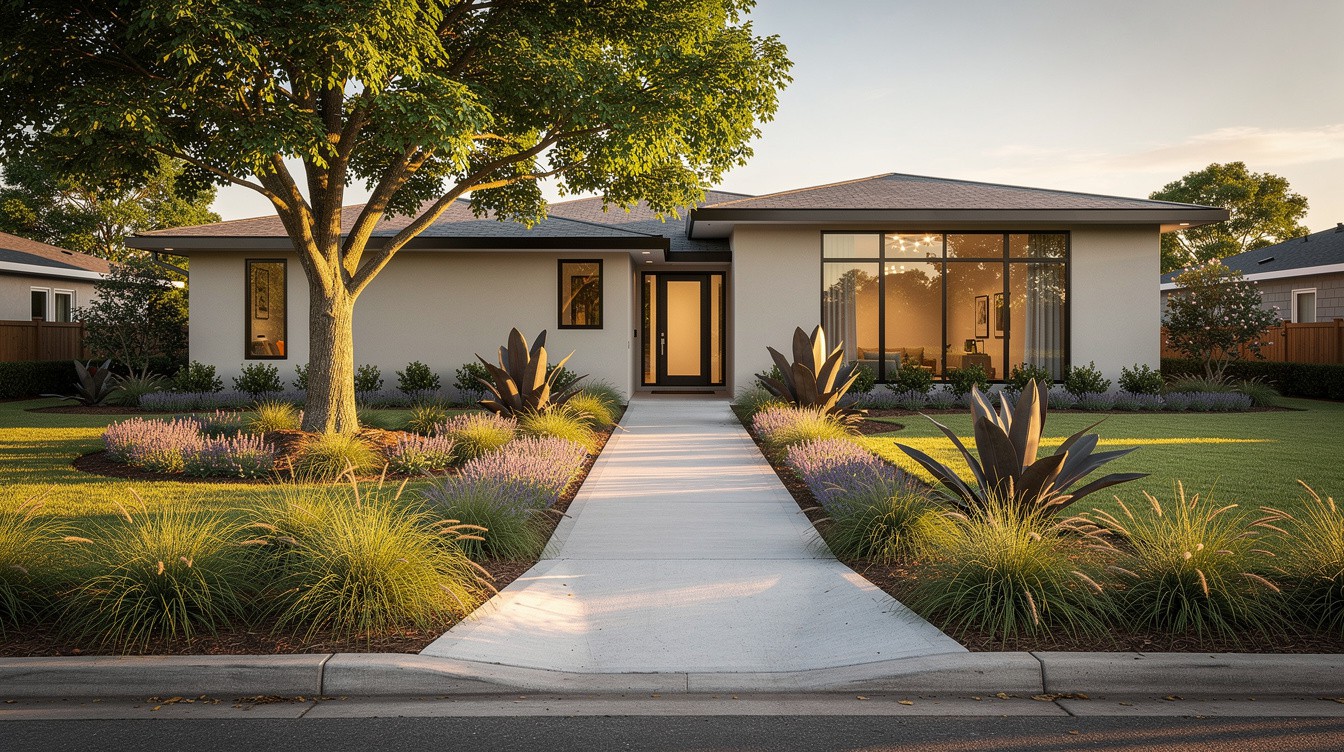
The National Hills Ranch Reset
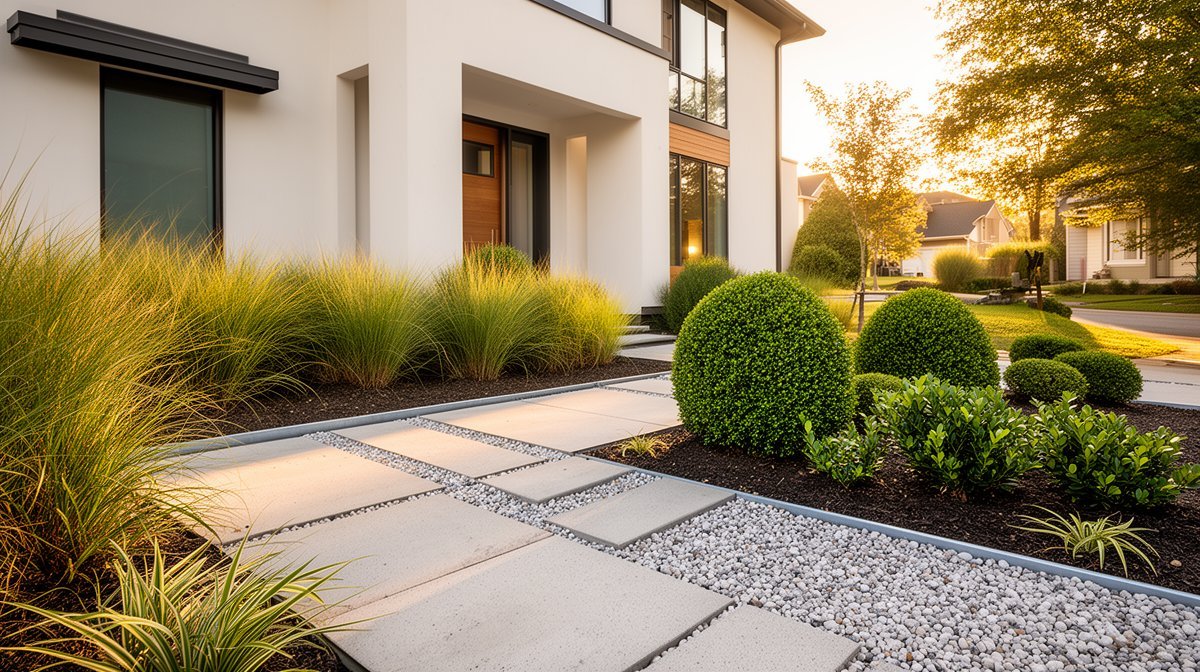
$10–18/sqftA low stucco ranch with a black-framed picture window and a dark front door, fronted by a single wide broom-finished concrete walk that runs dead straight from the street to the entry. The planting is disciplined and symmetrical: bronze-toned architectural agaves used as exclamation points, long drifts of purple salvia hugging the walk, and big sweeps of fountain grass replacing what used to be a turf strip at the curb. A mature shade tree sits in a clean mulch ring to the left, its canopy shading the west-facing glass — the single most valuable thing in the yard once July arrives.
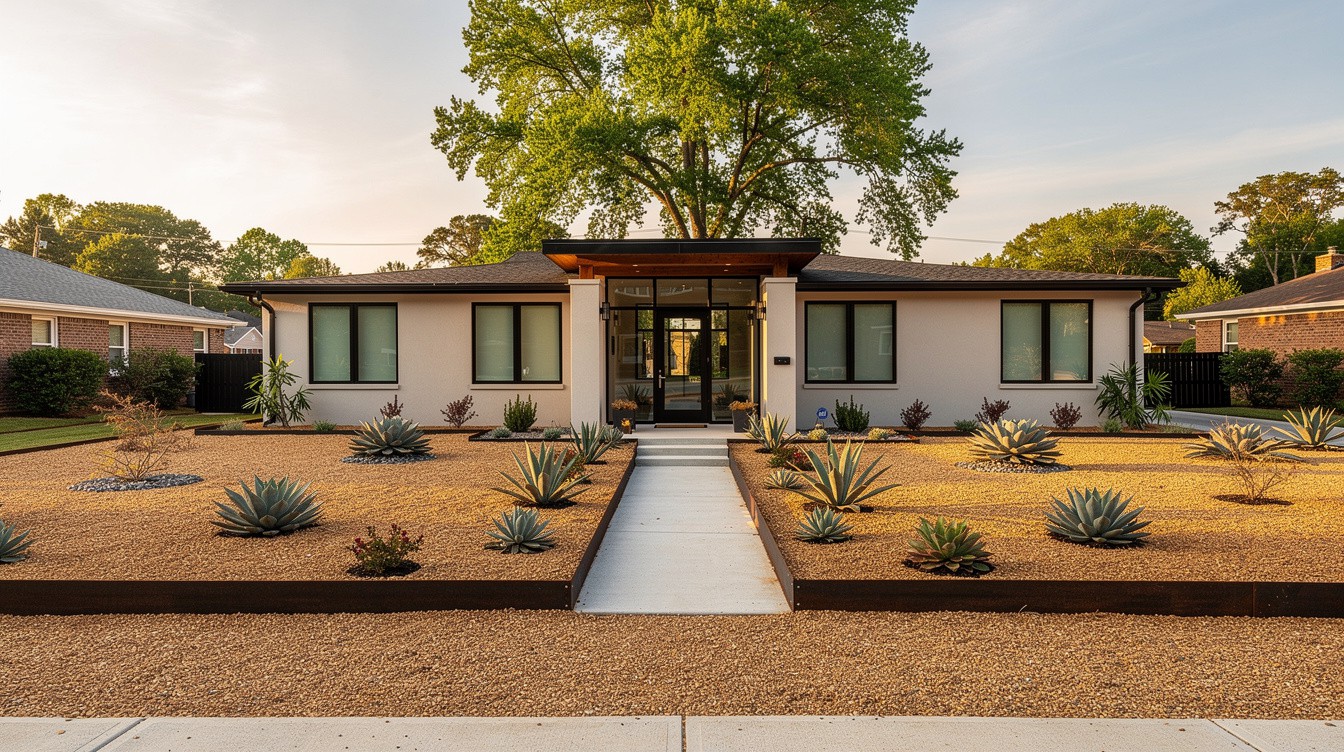
The Zero-Lawn Gravel Court
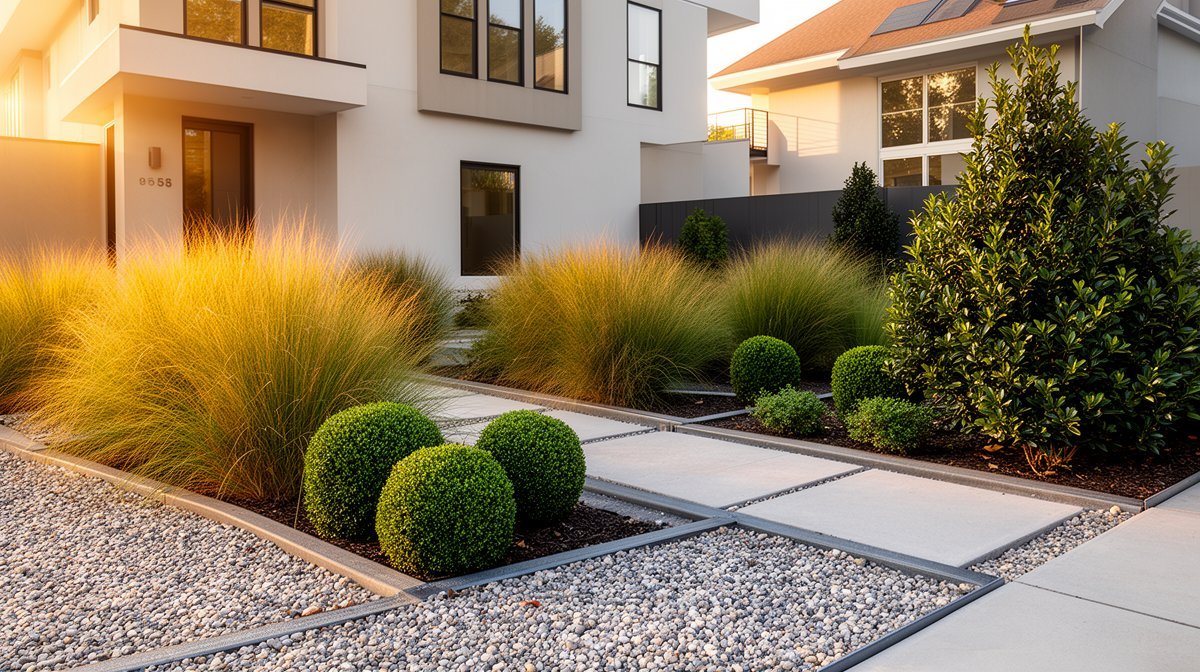
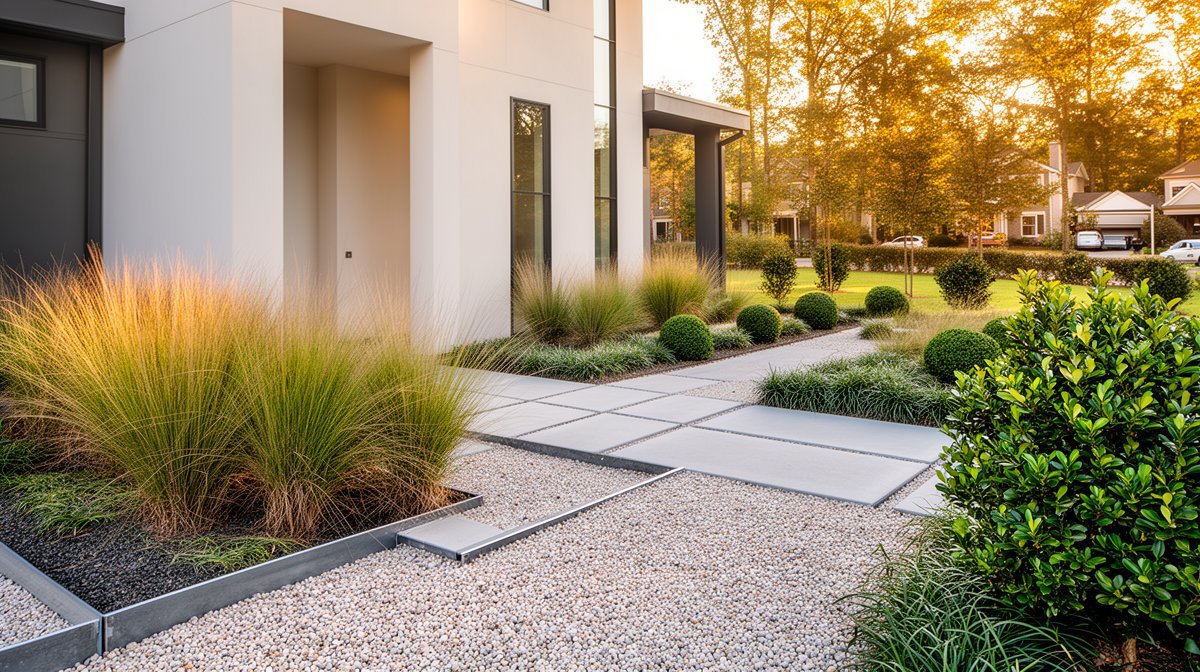
$8–16/sqftThe lawn is gone entirely, replaced by a field of warm tan crushed granite held in place by low Corten steel walls that step down toward the sidewalk. Blue agaves are set out in a loose grid across the gravel, each in its own pale pea-gravel collar, with wine-red foliage accents and slim yuccas breaking the rhythm near the house. A narrow concrete walk splits the composition to a flat-roofed ranch with a warm wood entry canopy. The reason this works in Augusta and fails in Birmingham is underfoot: Sandhills sand drains hard, so the agaves never sit wet through a rainy January.
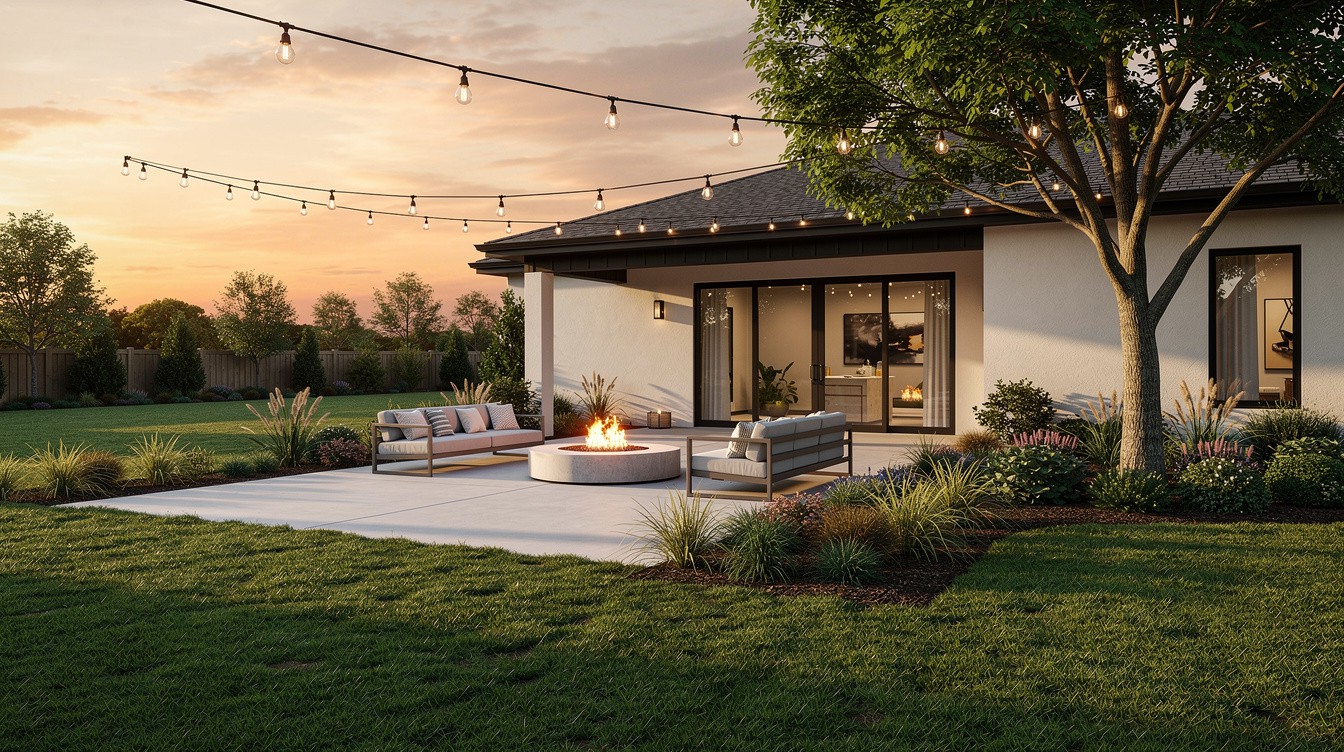
The Fire Bowl Slab
$14–28/sqftA covered rear porch spills onto a poured concrete patio scored with saw-cut control joints, with a round precast concrete fire bowl at the center and two low sofas facing each other across it. Café lights swing overhead on a catenary from the roofline out to the tree, and the hard edge of the slab is dissolved on two sides by loose beds of ornamental grasses and low evergreens rather than a planter wall. It is a genuinely buildable design — one floor material, one focal element, one planting texture — and it pushes the Augusta outdoor season out to Thanksgiving.
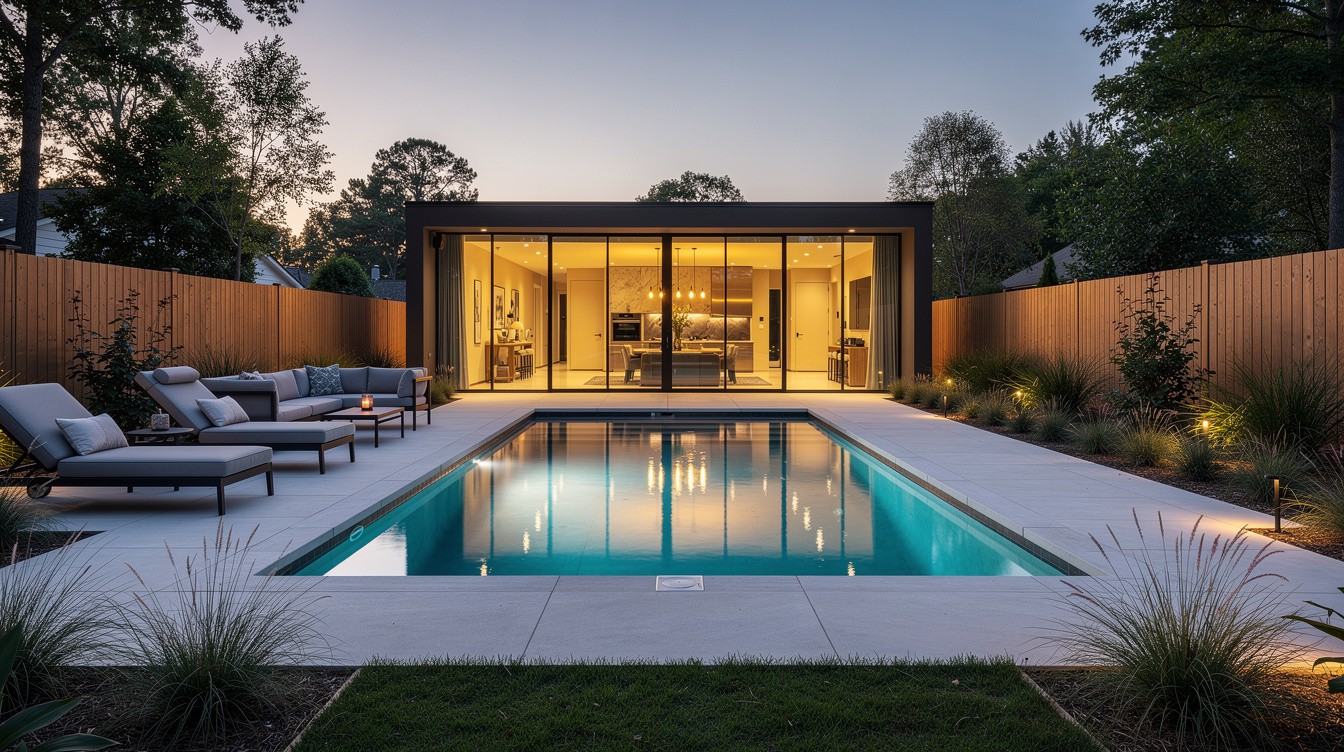
The Pool House Glass Box
$45–90/sqft (pool area inclusive)A rectangular pool sits in a wide deck of pale large-format pavers, aimed straight at a flat-roofed glass pool house that glows warm at dusk. Horizontal wood privacy fencing wraps three sides, and the landscape does its work entirely at the edges: uplit ornamental grasses running the full length of both fence lines, throwing tall shadows on the boards after dark, with loblolly pines rising beyond as the borrowed backdrop. The restraint is the point — pale stone, dark window frames, warm timber, and one plant texture repeated — and grass borders soften two long fence runs for a fraction of what an evergreen hedge would cost.
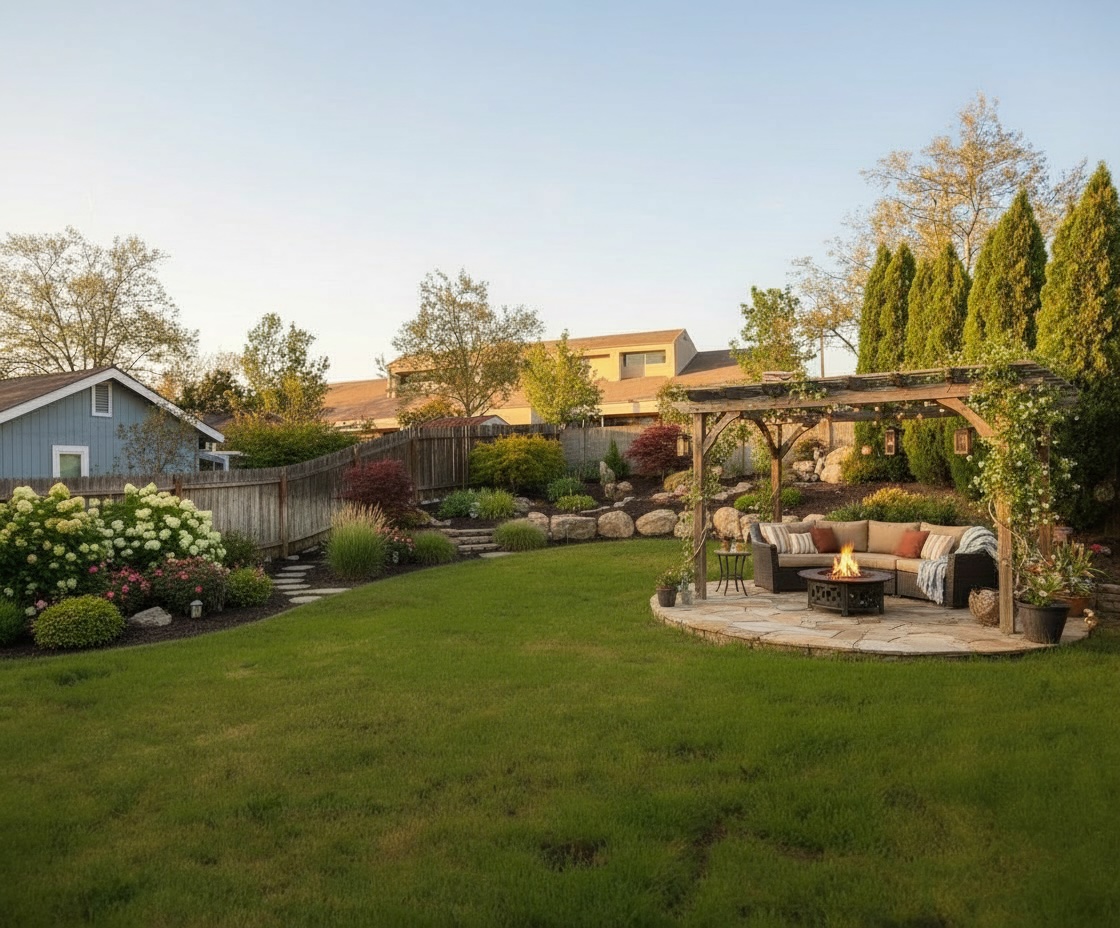
See how a modern/minimalist garden looks on YOUR property
Upload a photo of your Augusta-Richmond County yard and visualize your dream garden in seconds.
Try ProScapeAI Free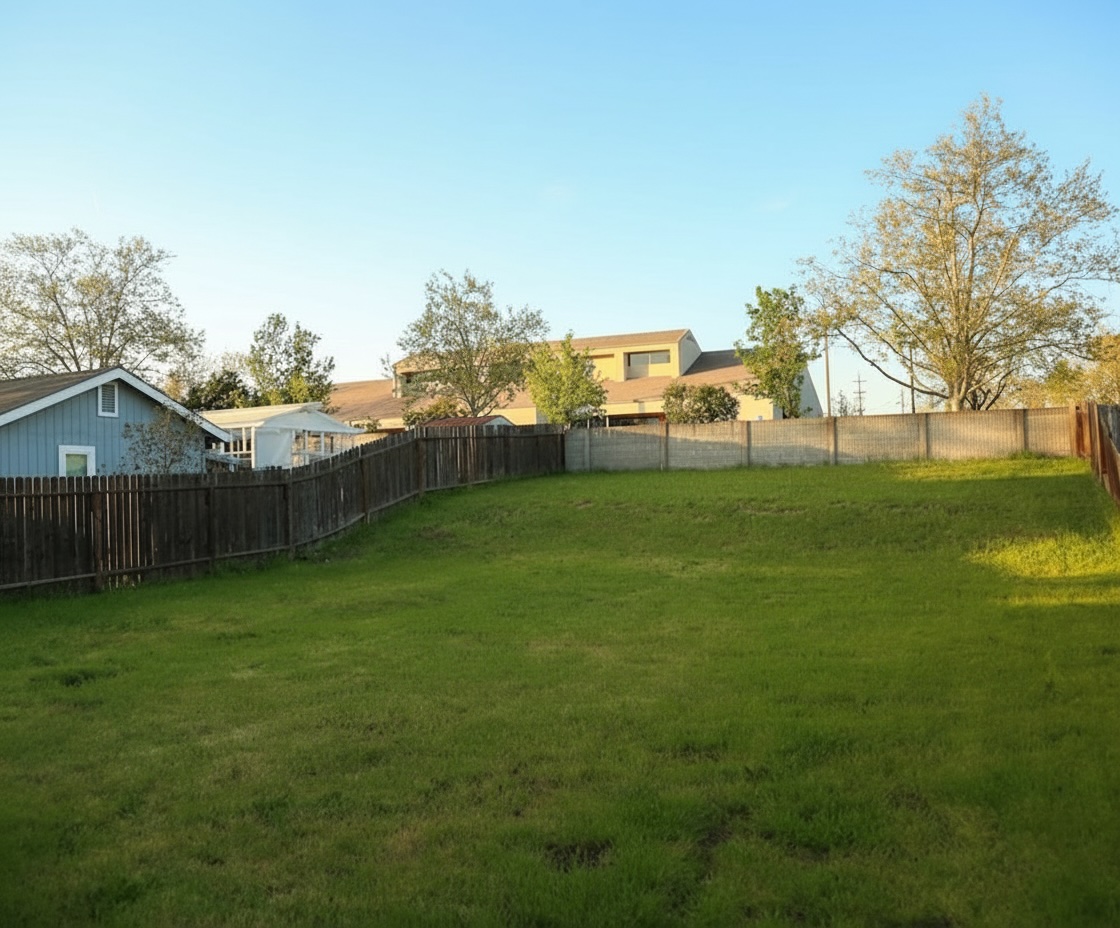
Featured Trees & Shrubs for Modern/Minimalist Gardens
Browse all 175 plants for Augusta-Richmond County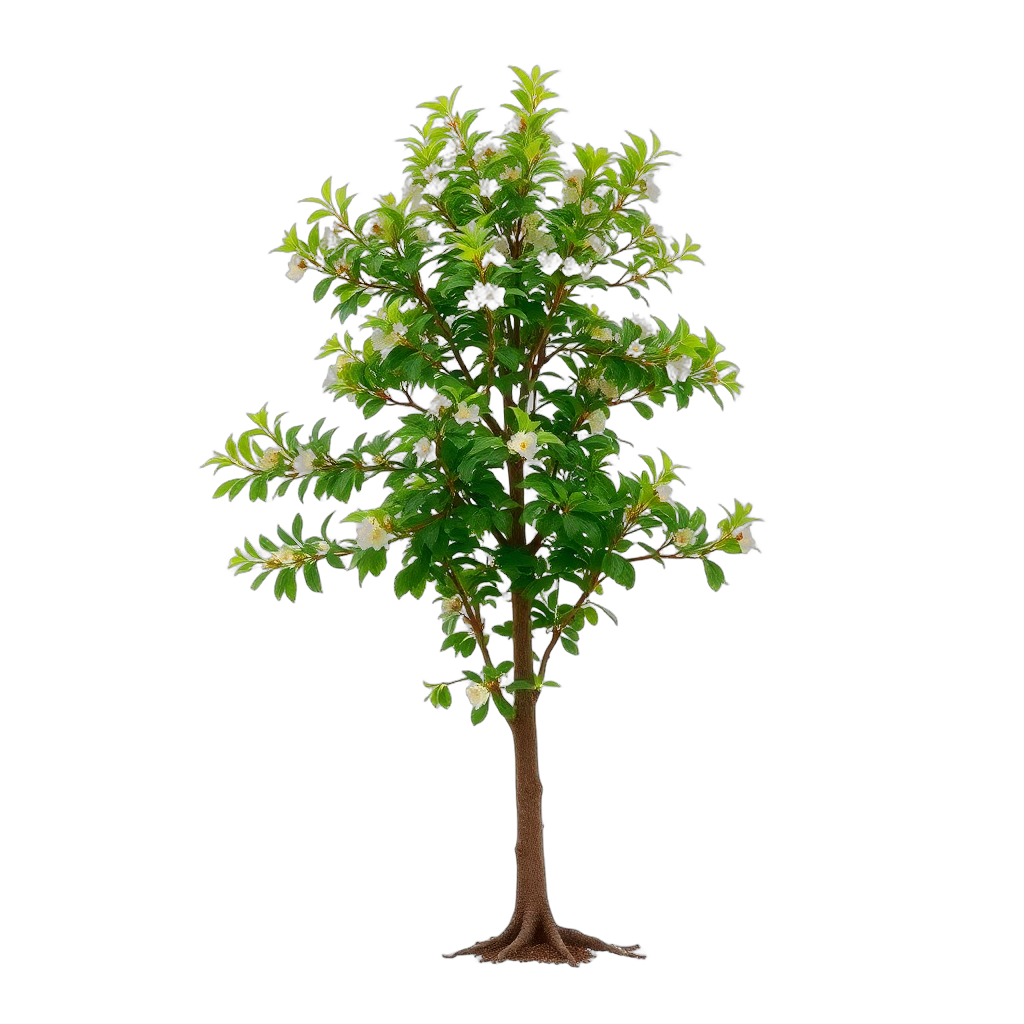
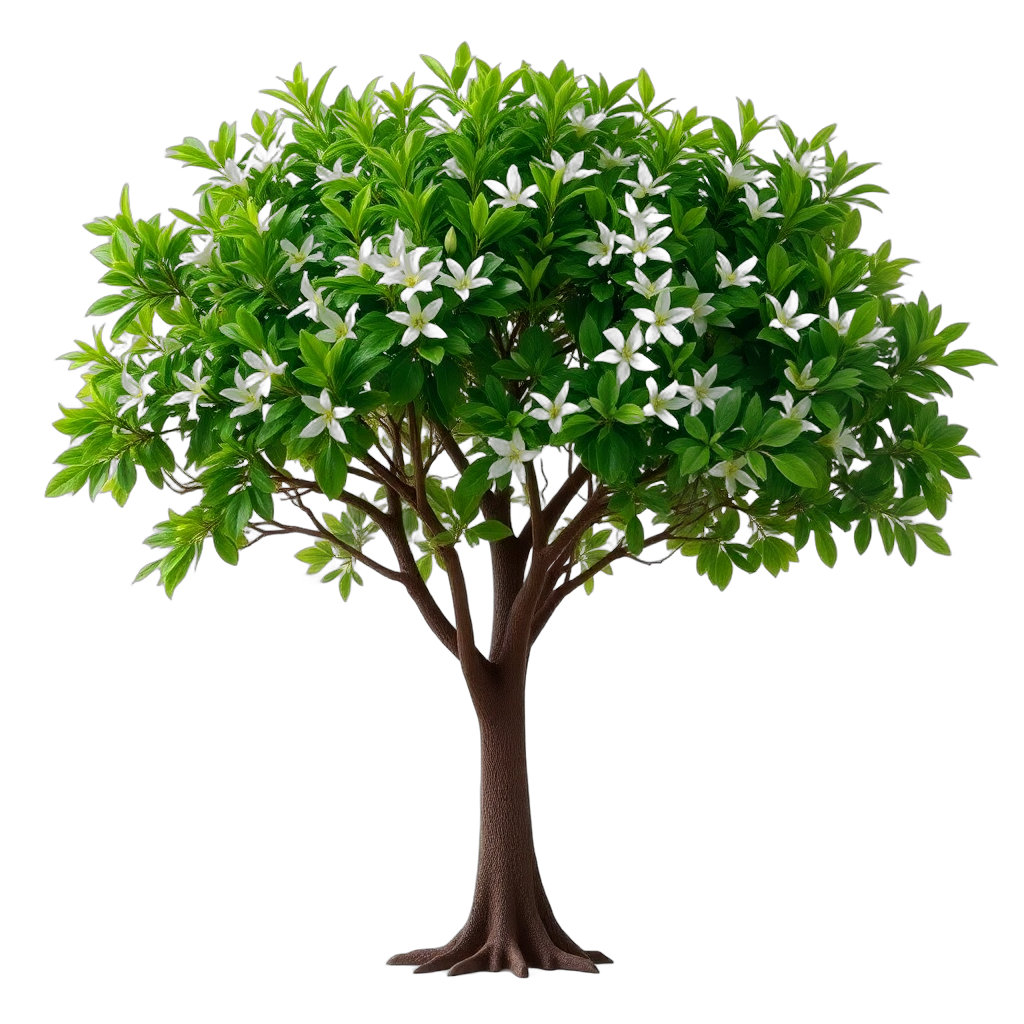
Buckwheat Tree
Cliftonia monophylla
medium-sized at 15 feet, white blooms in spring. Attracts butterflies.
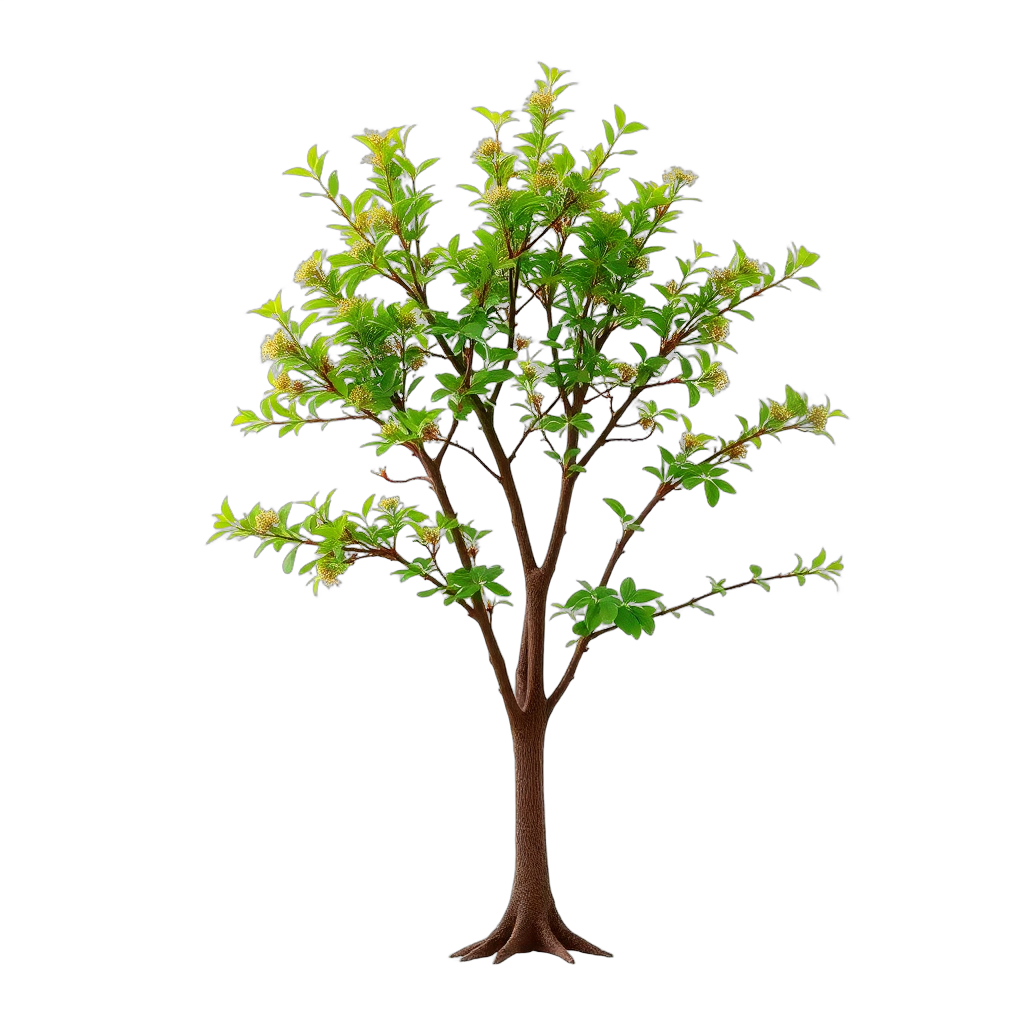
Fetterbush
Lyonia lucida
grows to 6 feet, white blooms in spring. Evergreen year-round.
Florida Anise
Illicium floridanum
medium-sized at 8 feet, red blooms in spring. Evergreen year-round.

Inkberry
Ilex glabra
medium-sized at 8 feet, white blooms in spring. Pollinator-friendly.
Featured Grasses & Groundcovers for Modern/Minimalist Gardens

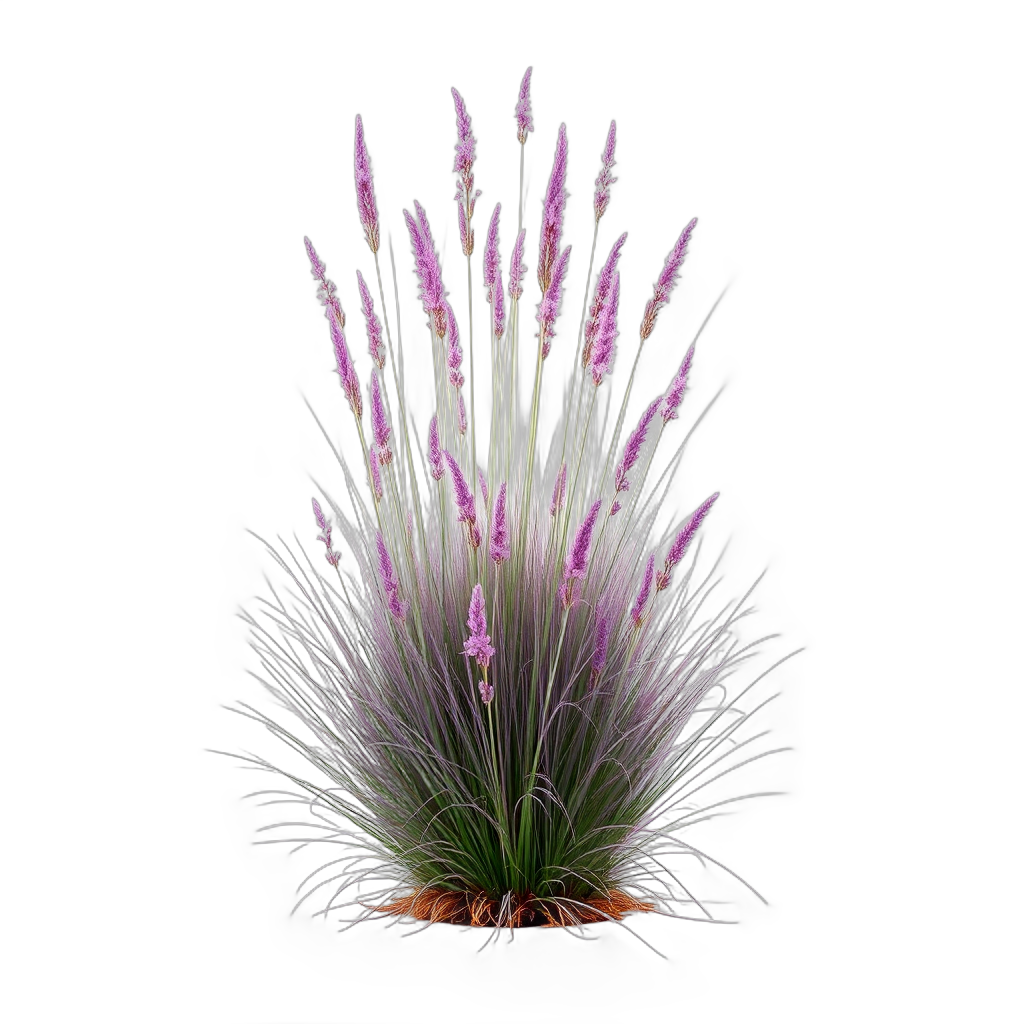
Pink Muhly Grass
Muhlenbergia capillaris
grows to 3 feet, pink blooms in fall.
Purple Love Grass
Eragrostis spectabilis
low-growing ground cover, purple blooms in fall. Orange fall color.

Anceps Bamboo
Yushania anceps
medium-sized at 12 feet, blooms in none. Evergreen year-round.
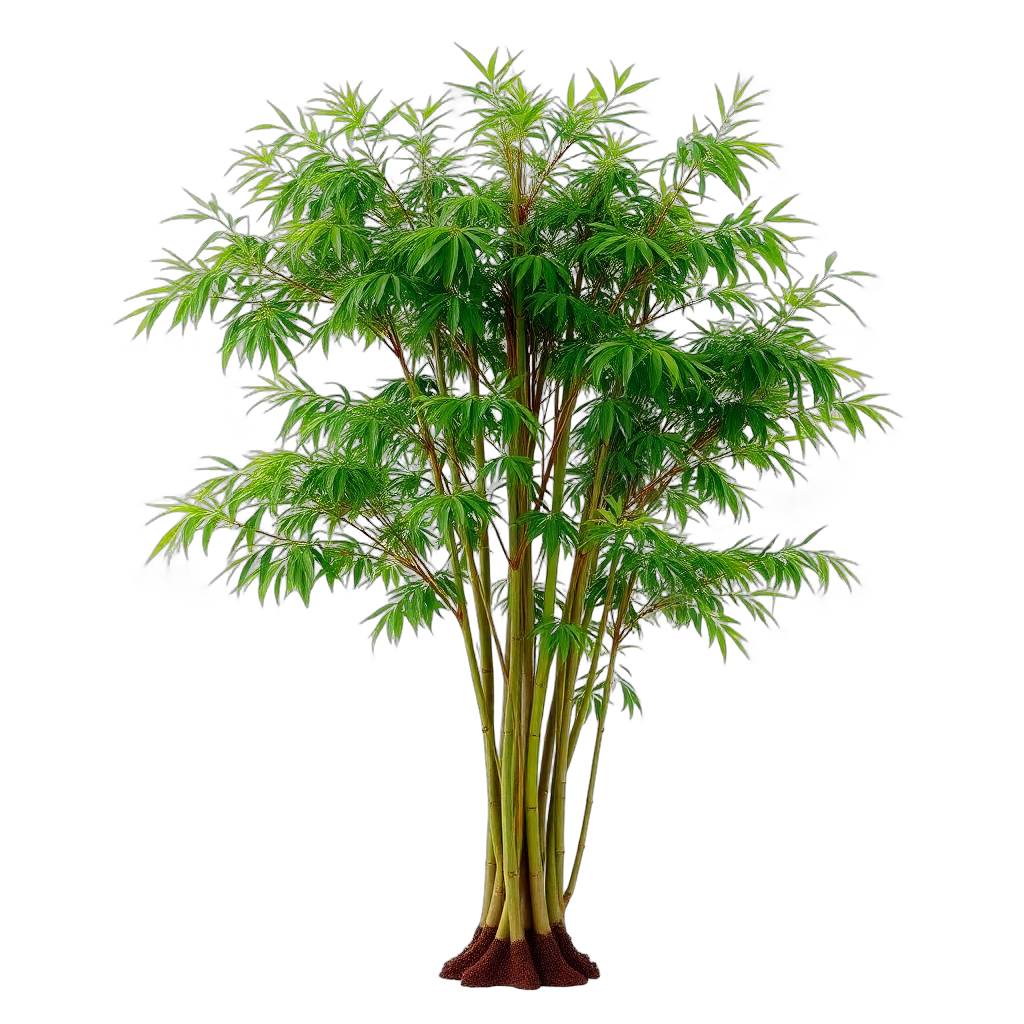
Arrow Bamboo
Pseudosasa japonica
medium-sized at 15 feet, blooms in none. Evergreen year-round.
Featured Flowers & Perennials for Modern/Minimalist Gardens
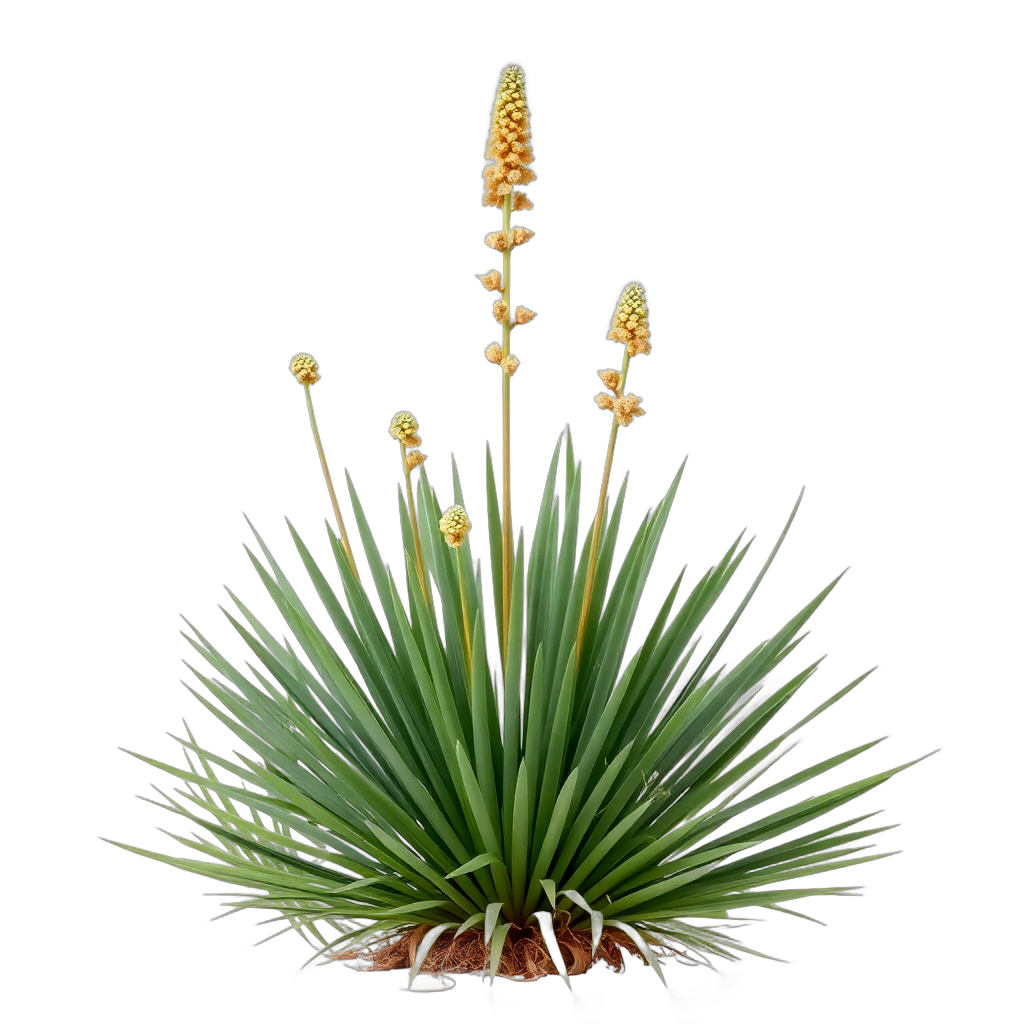
Adam's Needle
Yucca filamentosa
low-growing ground cover, white blooms in summer. Attracts hummingbirds.

Tussock Sedge
Carex stricta
low-growing ground cover, blooms in spring. Brown fall color.

Umbrella Sedge
Cyperus alternifolius
grows to 4 feet, blooms in summer. Evergreen year-round.
Bloom Calendar for Augusta-Richmond County
spring
Buckwheat Tree, Fetterbush, Florida Anisesummer
Adam's Needle, Swamp Cyrilla, Loblolly Bayfall
Pink Muhly Grass, Purple Love Grasswinter
Limited bloomsDesign Tips for Augusta-Richmond County (Zone 8a)
- Never lay gravel straight onto Fall Line sand — woven geotextile plus 3 inches of angular 3/8-inch crushed Georgia granite and steel or Corten edging is the difference between a gravel court that lasts fifteen years and one that vanishes into the subgrade by year two
- Use Muhlenbergia capillaris where a Phoenix designer would use a mass of agave: it delivers the same soft-architectural drama, ignores 45 inches of rain and low-70s dew points, and its October pink haze against pale concrete is the best free show in an Augusta modern garden
- Substitute Ilex vomitoria 'Will Fleming' or Podocarpus 'Pringles Dwarf' for Italian cypress — seiridium canker and bagworms take a real toll on cypress in Augusta humidity, and both substitutes give the same narrow vertical without the five-year decline
- Keep the canopy. With 60-plus days a year at or above 90°F, a treeless modern yard in Augusta is a photograph, not a place — limb existing willow oaks and loblolly pines up to eight or ten feet so the trunks become sculpture above the clean ground plane
- Edge the lawn panel in steel and plant centipedegrass or Zoysia 'Zeon' rather than fescue: both suit Augusta's pH 5.0–5.5 sand, and the crisp metal line between turf and concrete carries more modern intent than any amount of extra planting
- Uplight the grasses, not the house — 12V brass fixtures set behind muhly and 'Northwind' switchgrass throw six-foot shadows onto fence boards after dark, and Augusta's long warm evenings mean you get that payoff eight months of the year
Where to Source Plants in Augusta-Richmond County
Skip the big-box stores. These independent Augusta-Richmond County nurseries specialize in the plants that make modern/minimalist gardens thrive in Zone 8a.
Bedford Greenhouses
Summerville, Augusta
Family-owned since 1945, growing over 80% of its plants on-site — trees, shrubs, perennials, and houseplants.
Modern/Minimalist Landscaping Costs in Augusta-Richmond County
| Project Scope | Estimated Cost |
|---|---|
| Front-yard modern conversion (turf removal + gravel field + architectural plants) | $7,000 – $18,000 |
| Poured concrete patio with saw-cut joints (300–500 sqft) | $6,000 – $15,000 |
| Backyard modern room with gas fire bowl, seating and café lighting | $14,000 – $35,000 |
| Horizontal cedar privacy fence, per linear foot installed | $45 – $85 |
| Pool, large-format paver deck and landscape lighting | $65,000 – $140,000 |
| AI visualization with ProScapeAI | Free to start |
Estimates based on Augusta-Richmond County, GA-area contractor rates as of 2026. Actual costs vary by site conditions, materials, and contractor.
Augusta-Richmond County Climate & Growing Zone
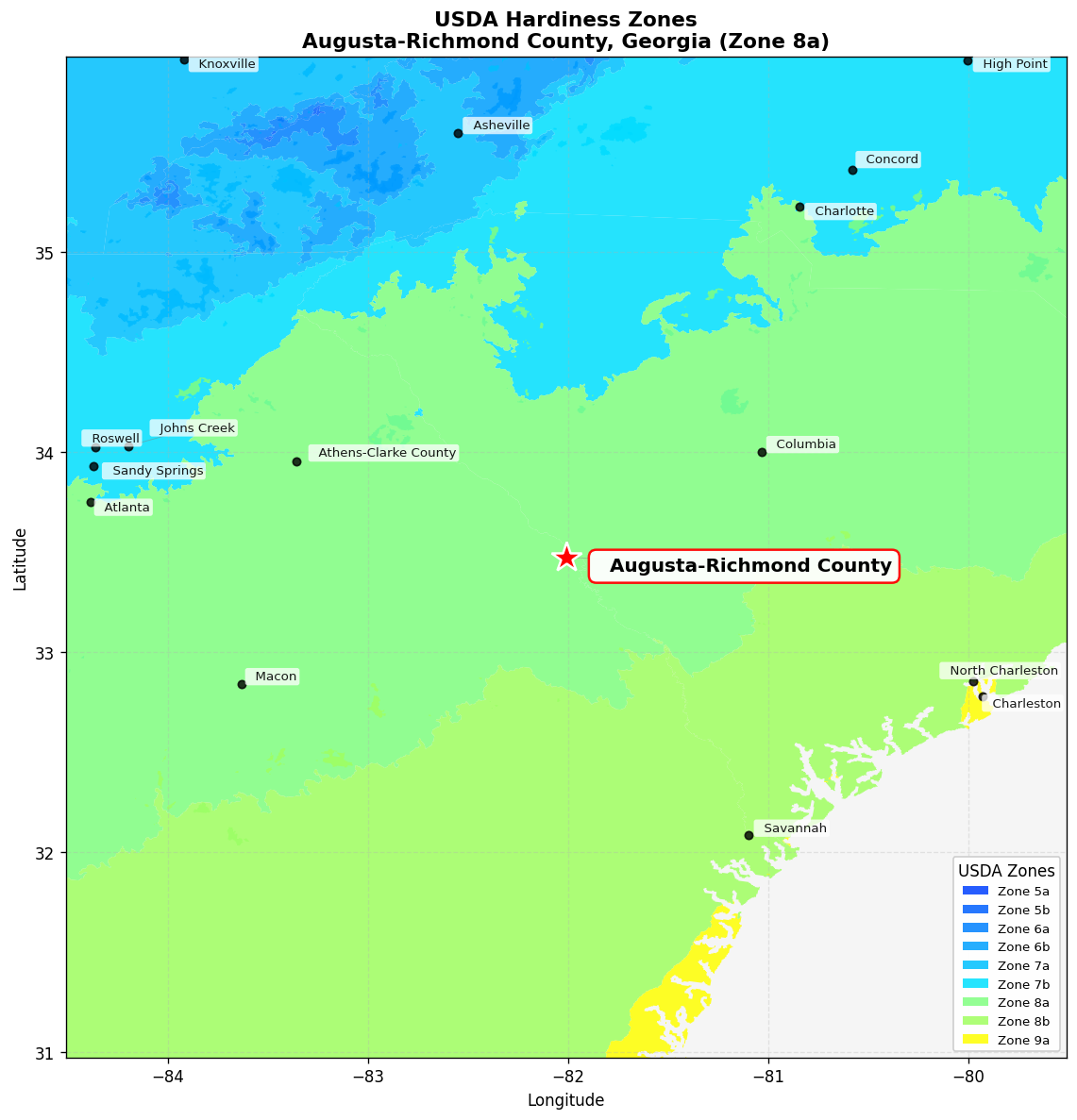
USDA Zone 8a
Hardiness zone for Augusta-Richmond County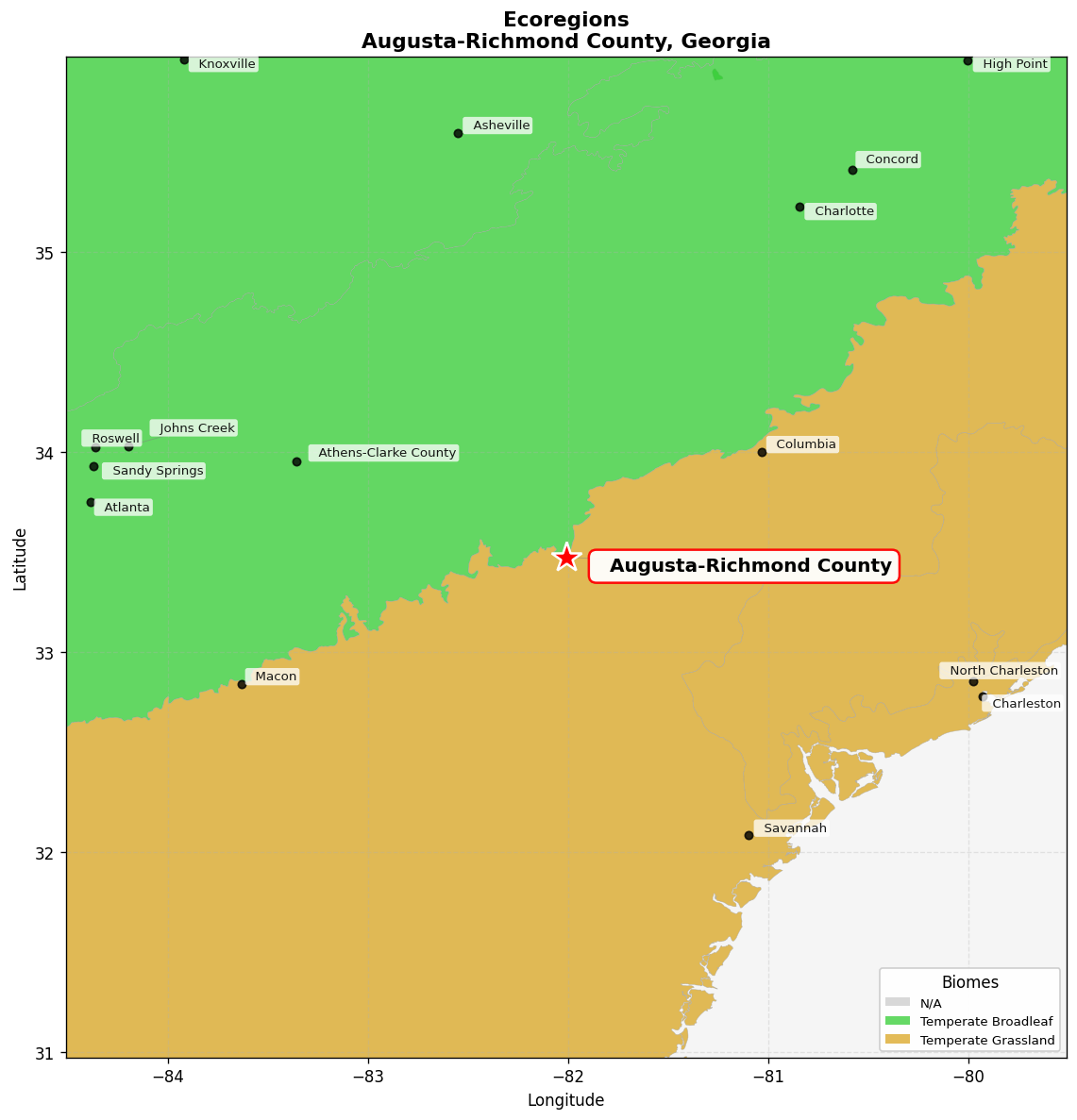
Southeast US conifer savannas
Native ecoregionFrequently Asked Questions
How much does modern landscaping cost in Augusta, GA?
Augusta installation costs run roughly 15–25% below national metro averages, with skilled landscape labor at about $45–65 an hour, which makes modern design unusually attainable in the CSRA. A complete front-yard conversion — turf removal, geotextile, crushed granite field, steel edging, and 15–25 architectural plants — runs $7,000–18,000 for a typical 1,200–2,000 sqft front yard. A poured concrete patio with saw-cut joints is $6,000–15,000 for 300–500 sqft. A full backyard modern room with a gas fire bowl, seating slab, and café lighting lands at $14,000–35,000, and a pool with a large-format deck and lighting generally runs $65,000–140,000. A DIY gravel-and-agave front yard can come in under $5/sqft in materials.
Will agaves and succulents actually survive in Augusta?
Yes, and Augusta is better suited to them than most Southeastern cities. Succulents die of wet feet, not cold, and the Sandhills sand under most of Augusta drains fast enough that agaves come through a 45-inch rain year intact — the same planting in Atlanta or Birmingham clay would rot. Stick to species hardy through Zone 8a lows of 10–15°F: Agave ovatifolia, Agave havardiana, Agave parryi var. truncata, Yucca rostrata, Yucca filamentosa 'Color Guard', and Hesperaloe parviflora. Plant them slightly proud of grade, mulch with gravel rather than pine straw or bark (organic mulch holds moisture against the crown), and keep irrigation heads pointed away. Avoid tender Agave americana in an exposed spot after a hard January.
Does a gravel yard hold up in Augusta's 45 inches of rain?
It does, but only if it is built rather than dumped. Loose gravel spread straight onto Fall Line sand will disappear into it within two seasons, and heavy summer thunderstorms will braid channels through the field. The correct build: strip the turf, grade to a consistent fall away from the foundation, lay woven geotextile (not the flimsy spun landscape fabric sold in big-box rolls), then 3 inches of 3/8-inch crushed Georgia granite, which locks together far better than rounded pea gravel. Contain every edge with steel or Corten — no exceptions at driveways and sidewalks. Add a river-rock swale wherever downspouts or driveway runoff cross the field. Done this way a gravel court needs a rake-out once a year and nothing else.
What can I use instead of Italian cypress and boxwood in Augusta's humidity?
Both of the usual modern-garden staples struggle here. Italian cypress is prone to seiridium canker and bagworms in Southeastern humidity and often browns out in patches by its fifth summer — use Ilex vomitoria 'Will Fleming' columnar yaupon or Podocarpus macrophyllus 'Pringles Dwarf' for the same narrow vertical, both fully happy in Zone 8a heat. English boxwood is vulnerable to boxwood blight and Volutella in Augusta's dew-point range; for clipped geometric masses use Ilex vomitoria 'Schillings Dwarf', Ilex crenata 'Soft Touch', or Distylium 'Vintage Jade', which holds a crisp modern form, tolerates both wet and dry spells, and has essentially no disease problems in the CSRA.
What lawn grass should I use for a modern lawn panel in Augusta?
Modern designs here usually keep one crisp rectangle of turf rather than a whole yard of it, so pick a grass that suits Augusta's acidic sand. Centipedegrass is the regional default — it actually prefers pH 5.0–6.0, needs very little nitrogen, and is the cheapest lawn to maintain in the CSRA, though it browns after a hard freeze. For a tighter, more manicured panel, Zoysia 'Zeon' or 'Emerald' gives a dense carpet that takes edging beautifully against concrete, and Bermuda 'TifTuf' handles full sun and drought if you have no canopy. Whichever you pick, use steel edging between turf and hardscape — the crisp line between green and concrete is doing as much design work as the plants.
When is the best time to install, and do I need a permit in Augusta?
October through early December is the ideal install window: plants root through a mild, wet winter and are established before the first 95°F day, and crews have open schedules. February and March are the second window. Avoid major planting June through September. Hardscape can go in year-round — Augusta's frost depth is shallow enough that concrete pours are rarely weather-blocked in winter. On permits, planting, gravel conversions, and beds need none. Augusta's Planning and Development Department requires permits for retaining walls above 4 feet, swimming pools, roofed structures, and any work affecting stormwater or drainage; the county tree ordinance also protects specimen trees, so check before removing a large oak or pine. HOA-governed subdivisions may separately restrict turf removal in front yards.