4 Modern Garden Ideas for Boston, MA | Clean-Line Design in Zone 6b
Native plants from the Northeast US Coastal forests (Zone 6b) — Humid continental (hot summer) climate
Why Modern/Minimalist Gardens in Boston?
Modern garden design is arguably the best fit for Boston’s urban residential fabric — and the city’s notoriously small yards make the case even stronger. Boston’s average lot size in dense neighborhoods like the South End, Beacon Hill, and East Cambridge runs 1,000–2,500 square feet total, with front yards often measuring just 8–18 feet of depth. In spaces this tight, modern design’s commitment to structure, restraint, and high-impact hardscape delivers far more than an overplanted cottage approach could. A single bold move — a geometric bluestone path, a row of ornamental grasses against a painted fence, a concrete planter with architectural clipped boxwood — transforms a narrow Boston front yard completely.
The climate challenge is real but manageable. Zone 6b means minimum winter temperatures of −10°F, with Boston’s freeze–thaw cycles being the primary design constraint for hardscape. Natural bluestone, granite, and freeze-thaw-rated porcelain are the right paving choices; avoid unsealed sandstone and soft brick in unprotected areas. Boston averages 43 inches of snowfall annually, which means hardscape drainage must be planned carefully — snowmelt in March and April generates significant water volume in a short time, and poorly graded yards will saturate and kill plant roots. For plants, the Zone 6b palette is broader than most people assume: ornamental grasses (Karl Foerster is nearly indestructible here), Japanese maples (in protected spots), boxwood, inkberry holly, and architectural native shrubs all perform reliably through Boston winters.
Boston’s triple-decker neighborhoods — Dorchester, Jamaica Plain, Somerville, East Boston — present a modern garden opportunity that is largely untapped. A well-designed shared front yard for a triple-decker, with low-maintenance gravel beds, structural grasses, and modern fencing, dramatically improves curb appeal on entire blocks without the maintenance burden that cottage plantings demand from landlords or shared-occupancy buildings. In Back Bay and the South End, modern design in the front yard strip — just 12–18 feet wide between stoop and sidewalk — can hold its own against the Victorian architecture by leaning into geometric precision and a disciplined plant palette.
4 Modern/Minimalist Design Ideas for Boston
AI-generated image
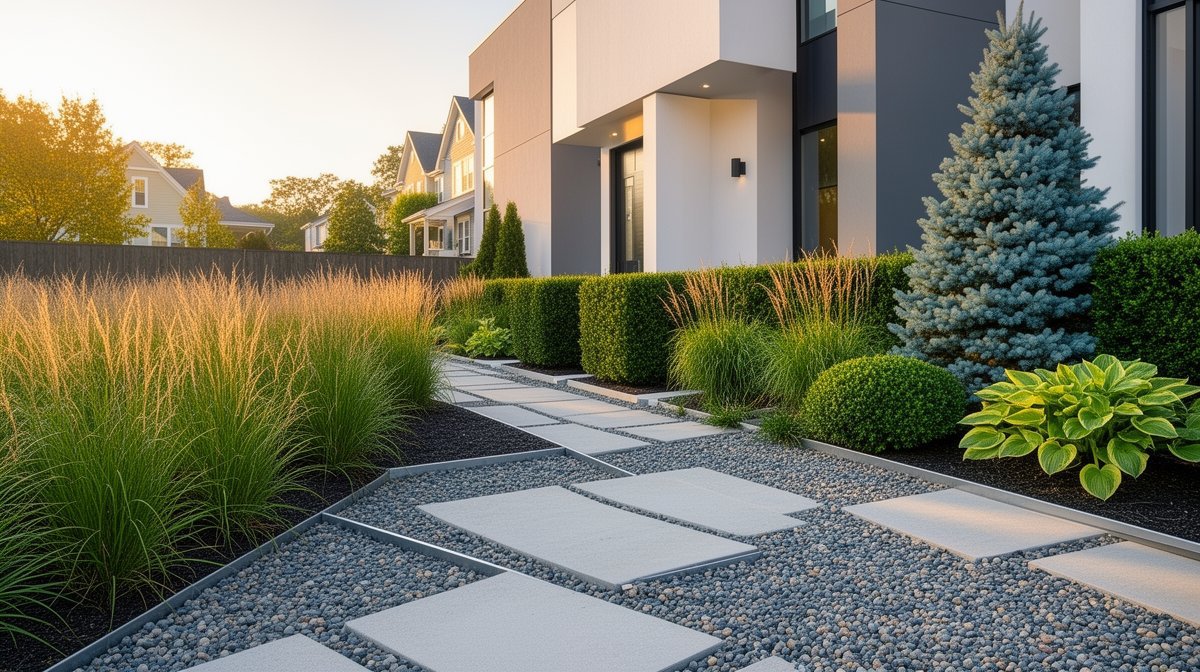
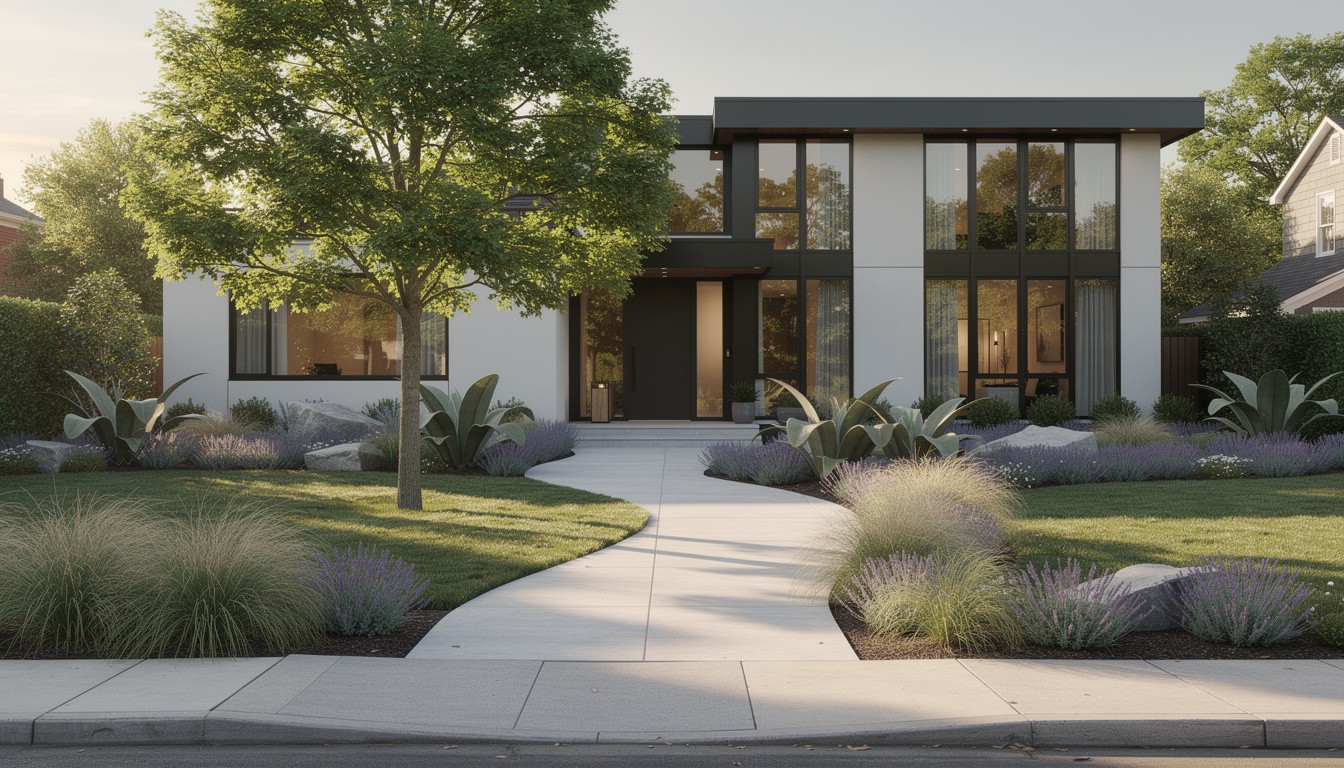
The Modern Boston Front Yard
$18–34/sqftA flat-roof modern home gains dramatic curb appeal with a wide concrete walkway flanked by sweeping masses of ornamental grasses — Karl Foerster and blue oat grass — planted in clean steel-edged gravel beds. A mature shade tree anchors the left corner while low agave-like yucca accents punctuate the beds at ground level. The white-and-dark-trim facade lets the plantings carry the composition: the grasses catch the late-afternoon light and move in the wind, creating motion and warmth against the home’s geometry. This design delivers high curb impact with minimal long-term maintenance, suited to Boston’s busy homeowners.
AI-generated image
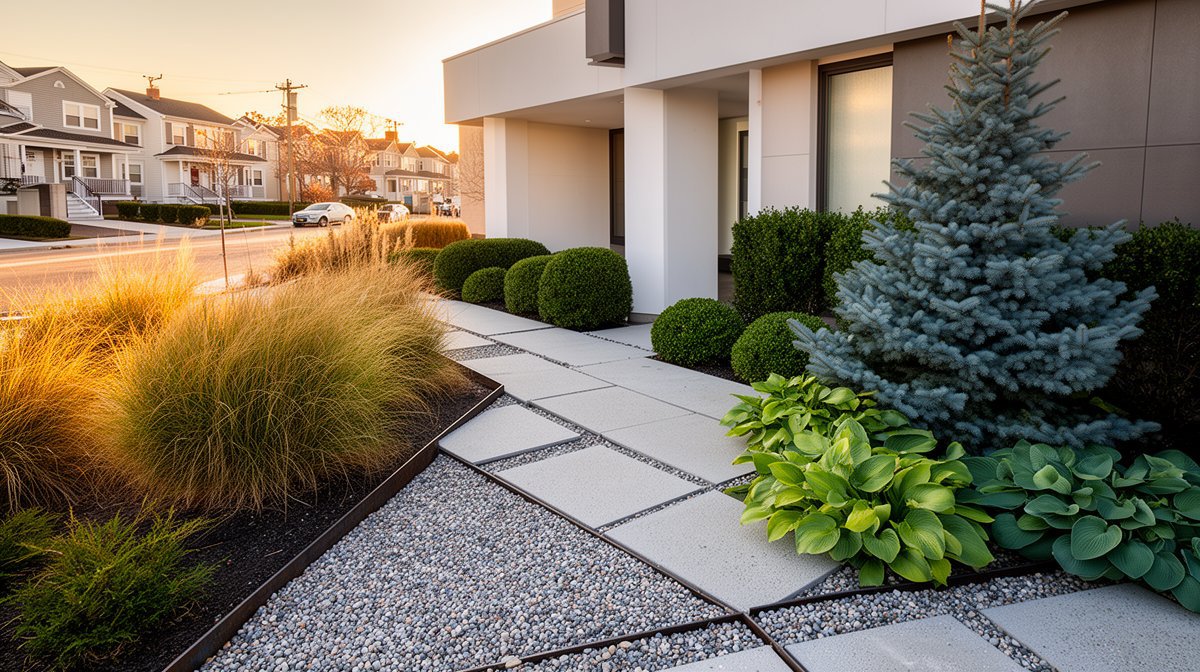
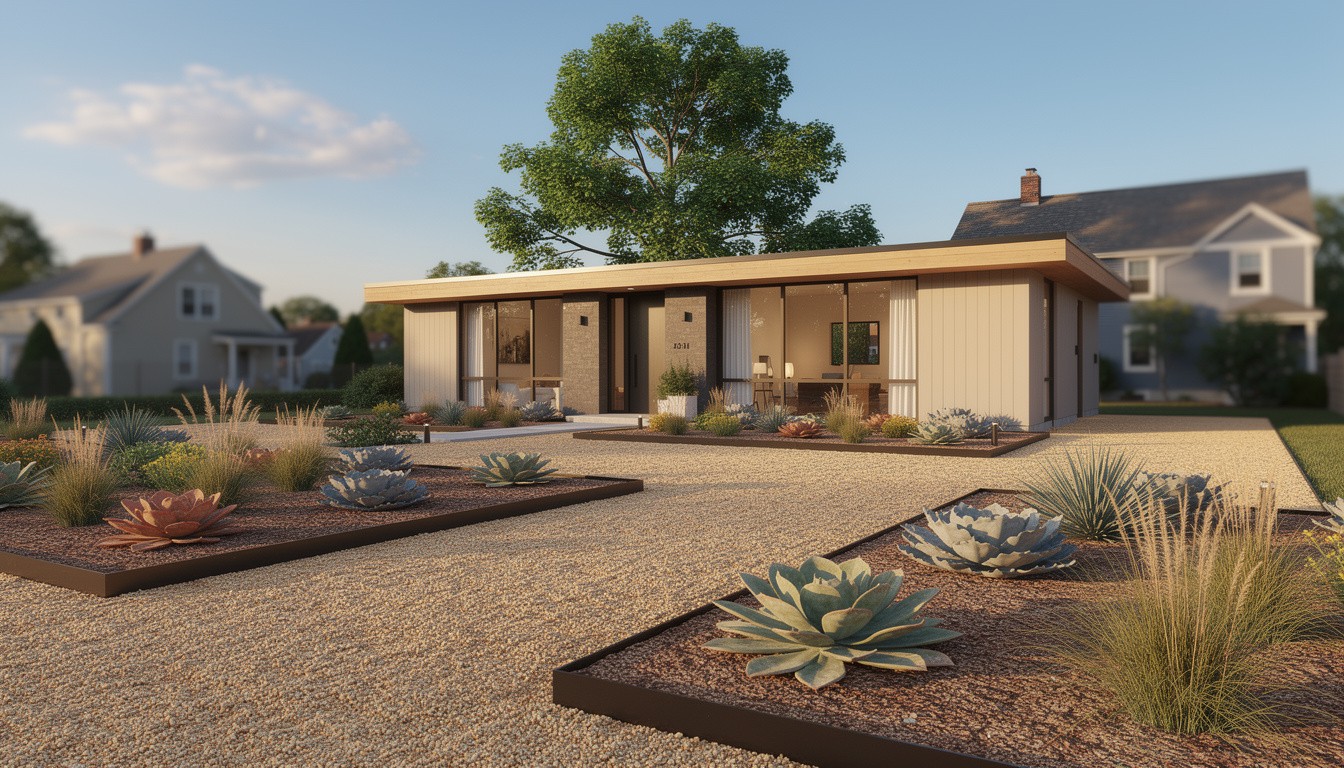
The Gravel-and-Agave Modern Front
$12–24/sqftA ranch-style modern home in a neighborhood context gets a striking front yard makeover: the entire lawn replaced with a raked decomposed granite ground plane, dark raised steel planting beds holding large agave rosettes and mixed succulents, and a mature tree providing canopy and scale. The minimal palette — gray gravel, dark steel, silvery-green agave — is as low-maintenance as a Boston front yard gets while reading as genuinely contemporary from the street. Boston’s Zone 6b winters require cold-hardy agave substitutes: yucca filamentosa delivers the same sculptural silhouette and is fully hardy through Massachusetts winters.
AI-generated image
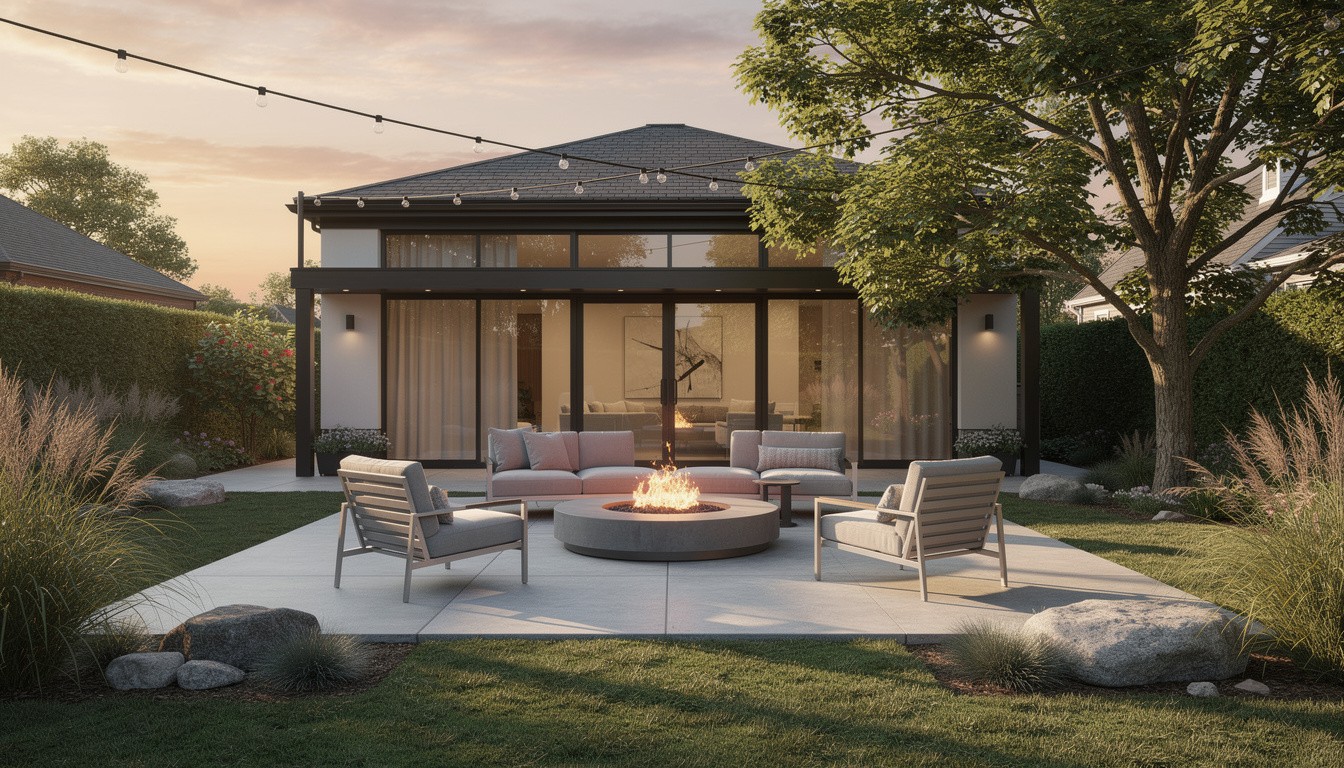
The Boston Backyard Fire Pit Patio
$32–58/sqftA modern glass-walled Boston rowhouse backyard transformed into a year-round outdoor living room: a clean concrete patio covering the full footprint, a round concrete fire pit at center surrounded by modern lounge chairs, ornamental grasses in the perimeter beds catching string light glow overhead, and a dark steel pergola framing the space. The design addresses the Boston backyard’s primary challenge — enclosed on three sides by fence or neighboring walls — by using the enclosure as an asset for intimacy and warmth. Boston’s outdoor season runs May through October and the fire pit extends that through November on mild evenings.

AI-generated image
The Boston Urban Pool Garden
$55–110/sqft (pool deck and landscaping, excl. pool construction)A two-story modern Boston home with floor-to-ceiling glass commands a rear yard that rises to meet it: a rectangular pool framed by wide white concrete decking, a fire seating group at one end, ornamental grasses in the perimeter beds, and neighboring brick buildings visible above the fence line — the urban context acknowledged and embraced. Pool gardens in Boston are achievable on the wider lots of Cambridge, Brookline, and Newton, and Zone 6b’s warm summers make a pool usable from late May through September. The combination of pool, fire pit, and architectural grasses creates a resort-quality outdoor space that fully justifies the investment in Boston’s strong real estate market.
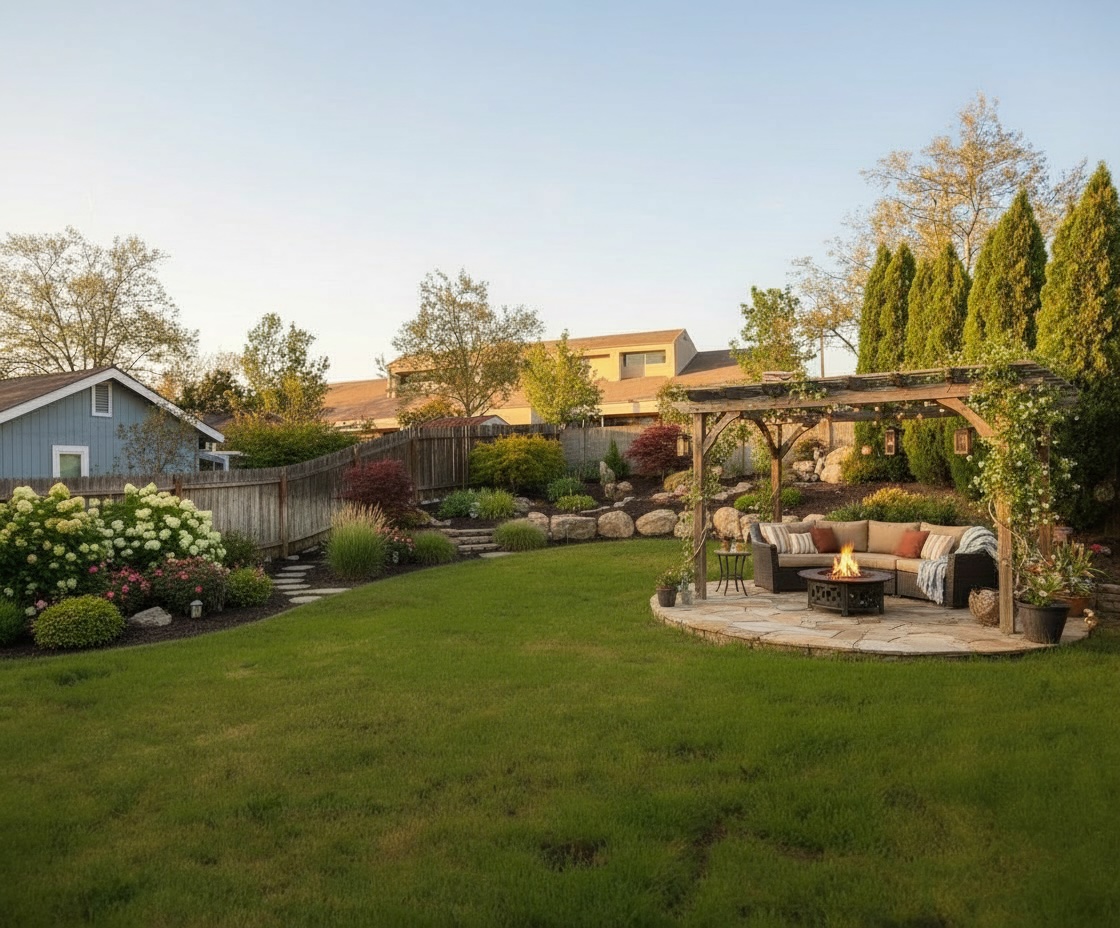
See how a modern/minimalist garden looks on YOUR property
Upload a photo of your Boston yard and visualize your dream garden in seconds.
Try ProScapeAI Free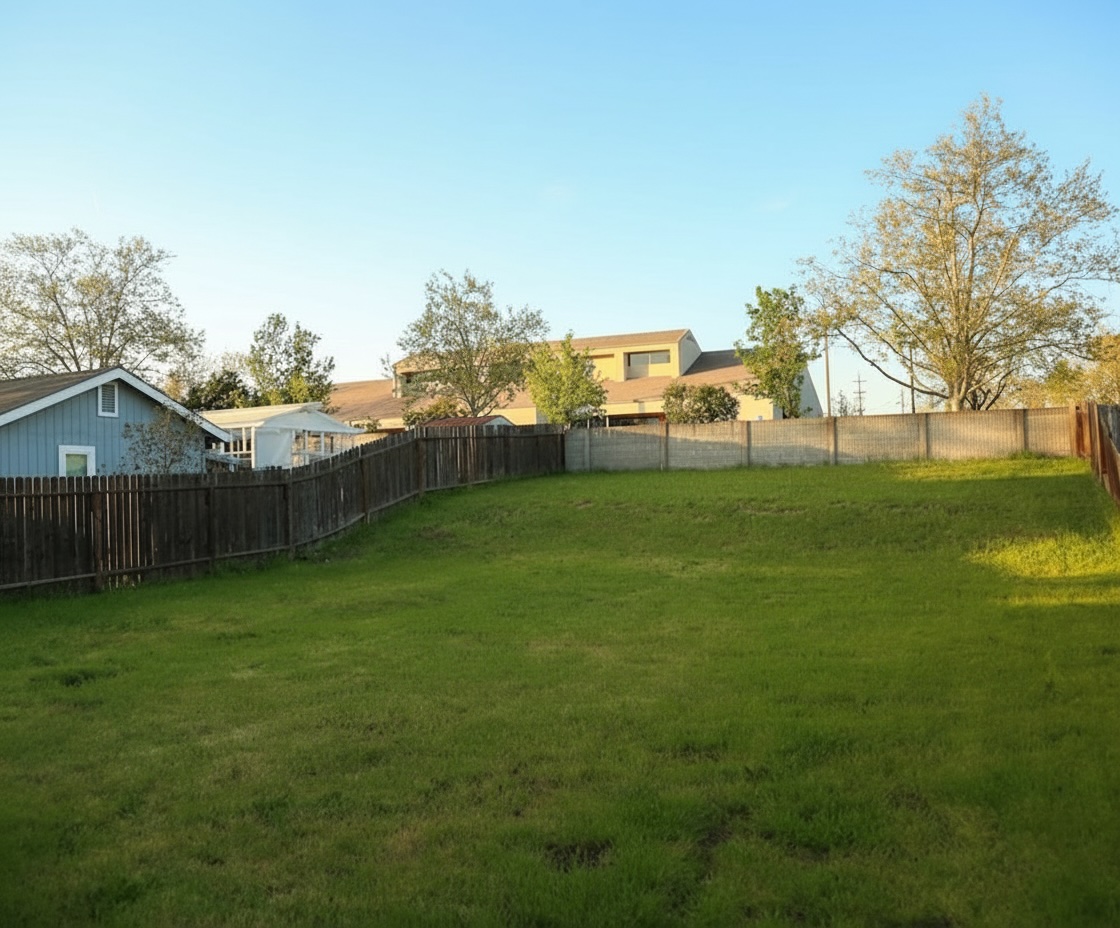
AI-generated image
Featured Trees & Shrubs for Modern/Minimalist Gardens
Browse all 181 plants for Boston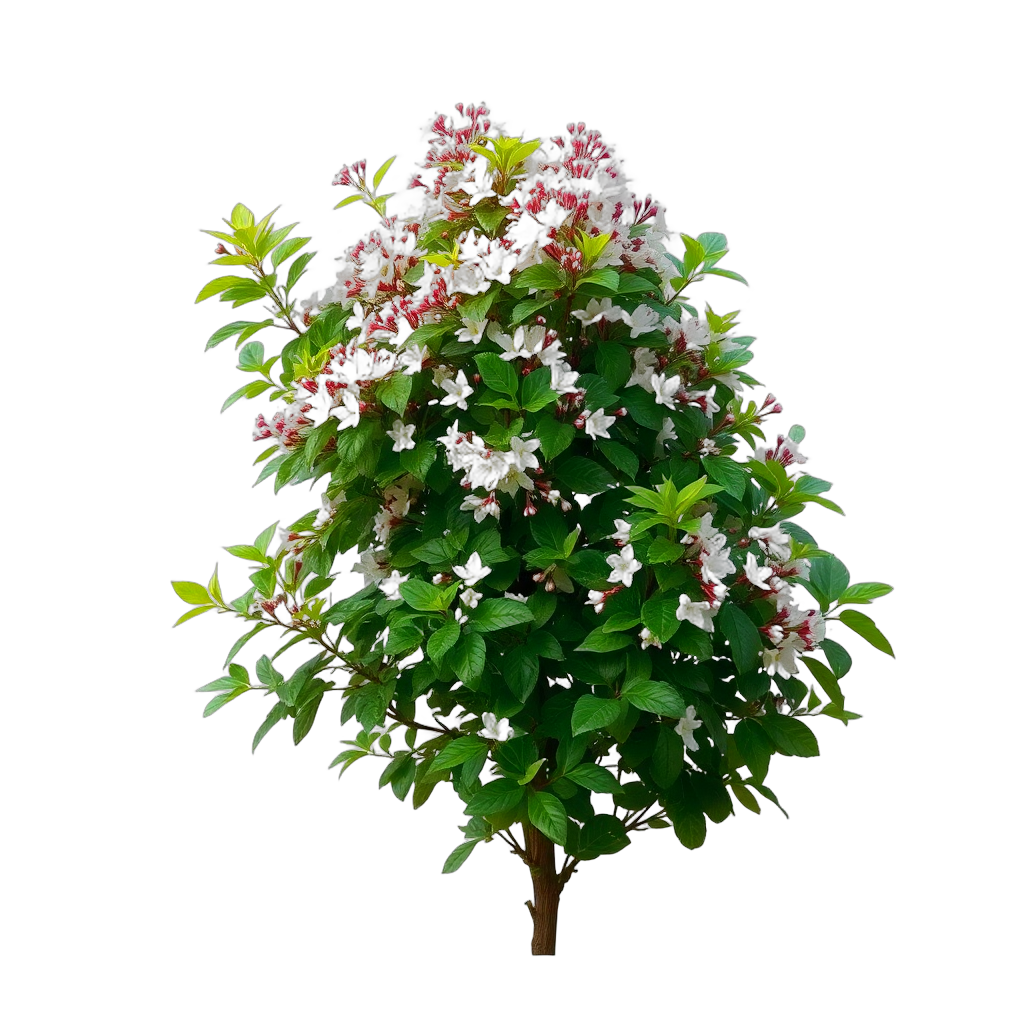
Arrowwood Viburnum
Viburnum dentatum
medium-sized at 10 feet, white blooms in spring. Pollinator-friendly.
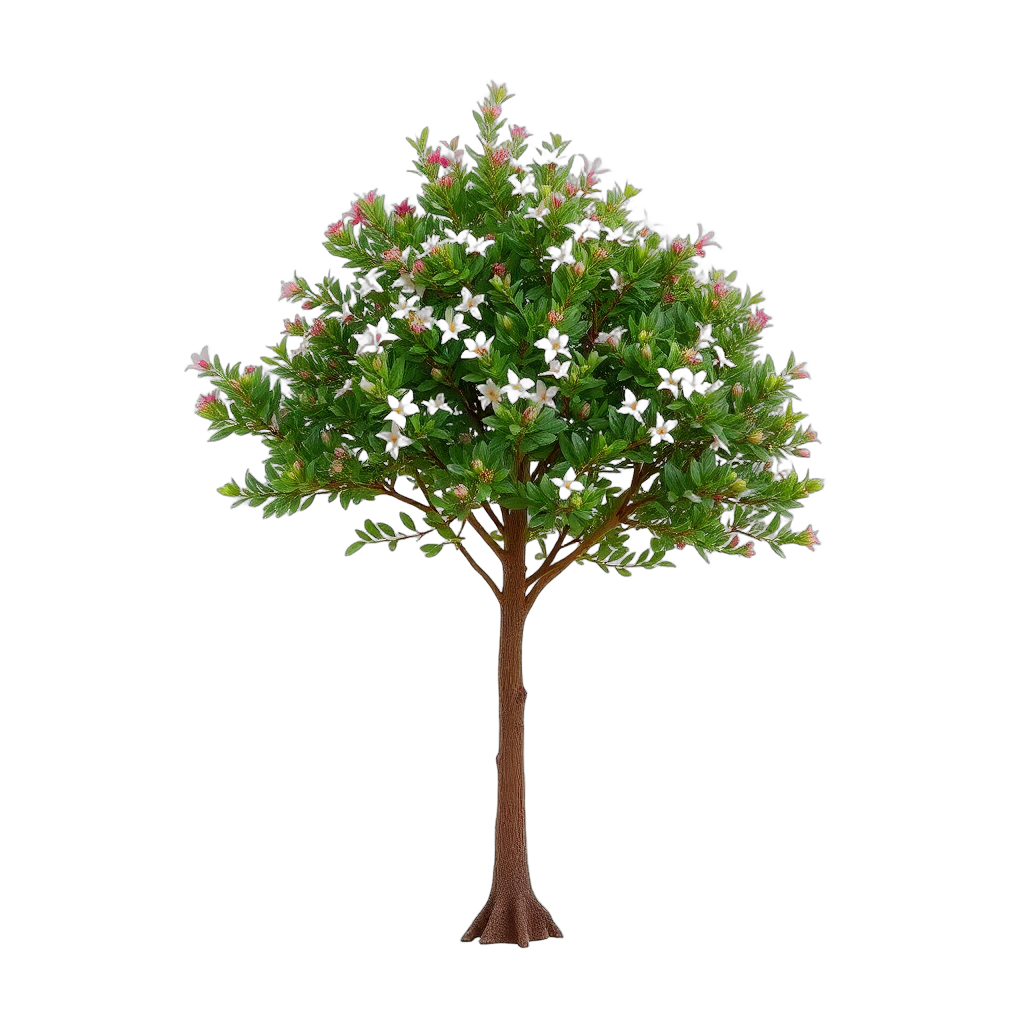
Coastal Leucothoe
Leucothoe axillaris
grows to 3 feet, white blooms in spring. Evergreen year-round.
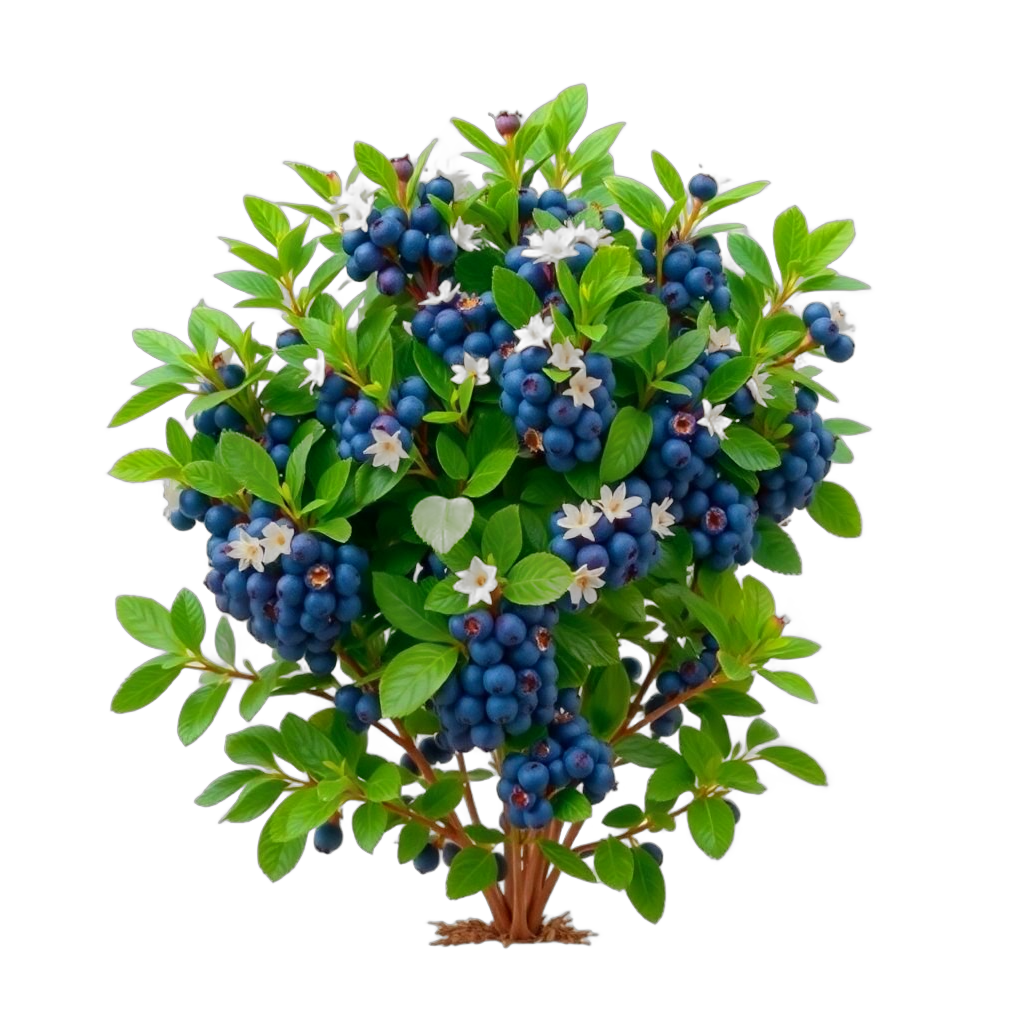
Highbush Blueberry
Vaccinium corymbosum
medium-sized at 7 feet, white blooms in spring. Attracts butterflies.

Inkberry
Ilex glabra
medium-sized at 8 feet, white blooms in spring. Pollinator-friendly.
Featured Grasses & Groundcovers for Modern/Minimalist Gardens
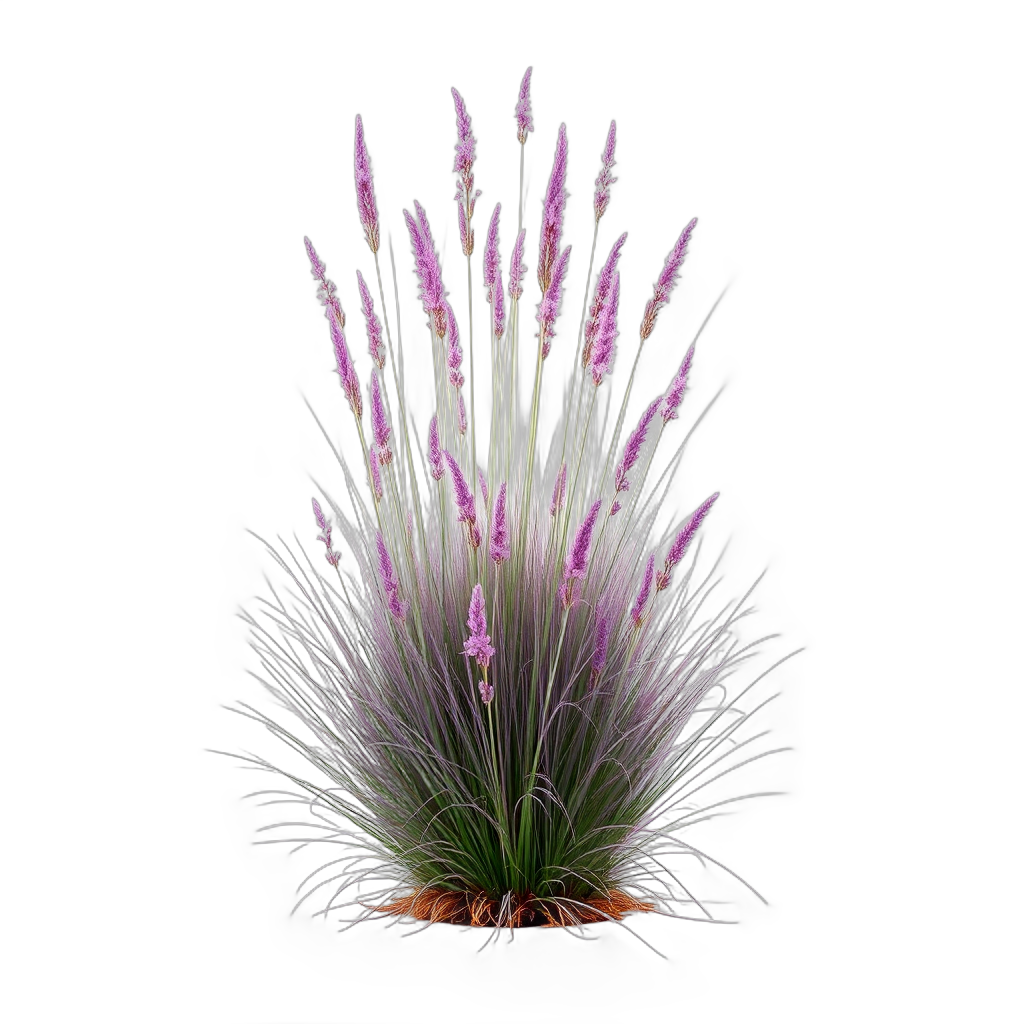
Purple Love Grass
Eragrostis spectabilis
low-growing ground cover, purple blooms in fall. Orange fall color.
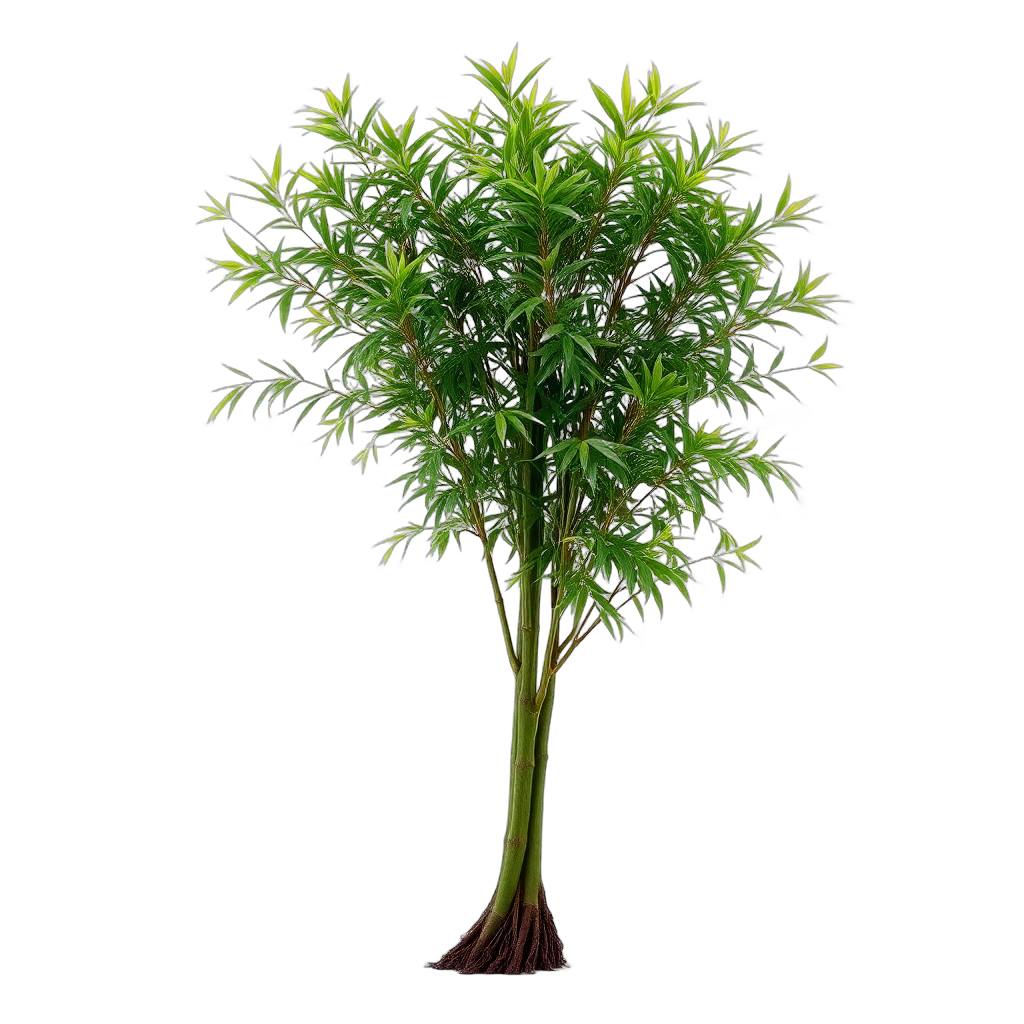
Broad-leaf Bamboo
Sasa palmata
medium-sized at 7 feet, blooms in none. Evergreen year-round.
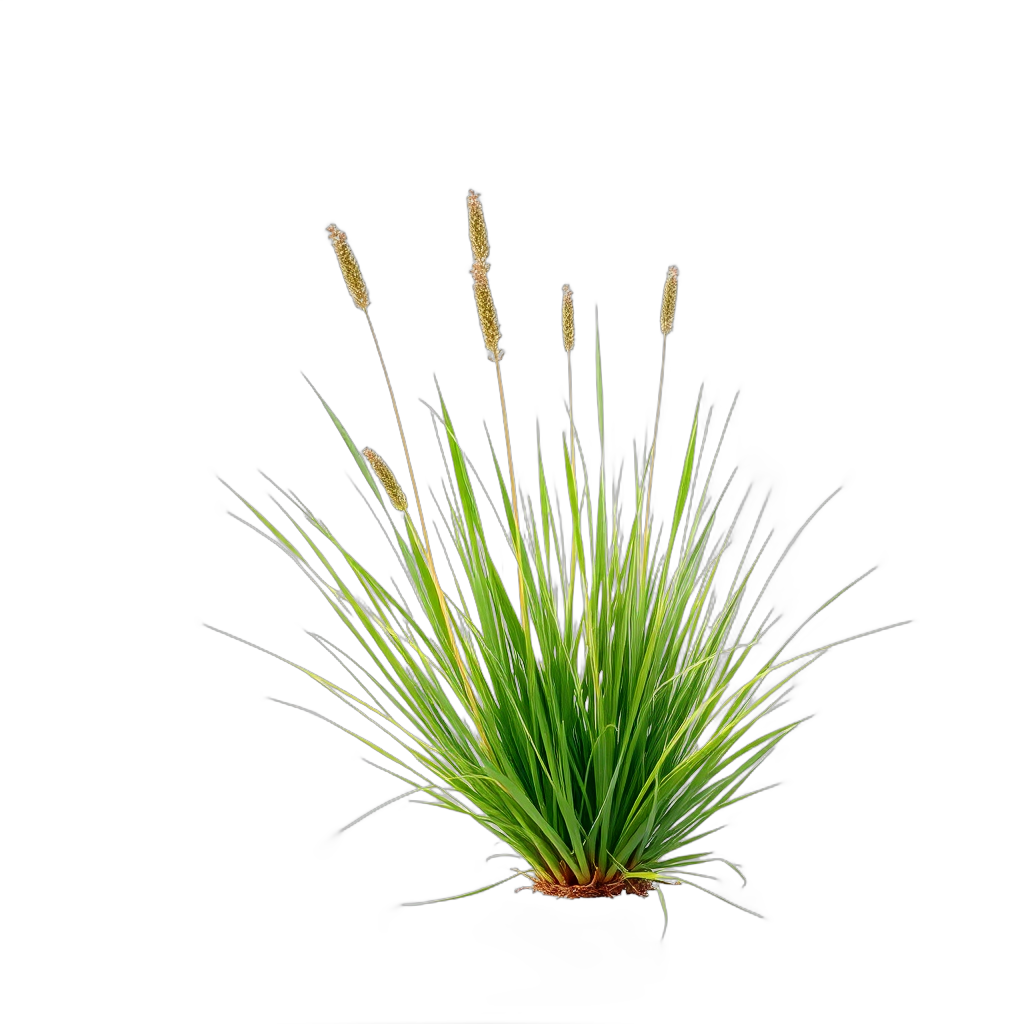
Deer Grass
Muhlenbergia rigens
grows to 3 feet, yellow blooms in fall. Evergreen year-round.
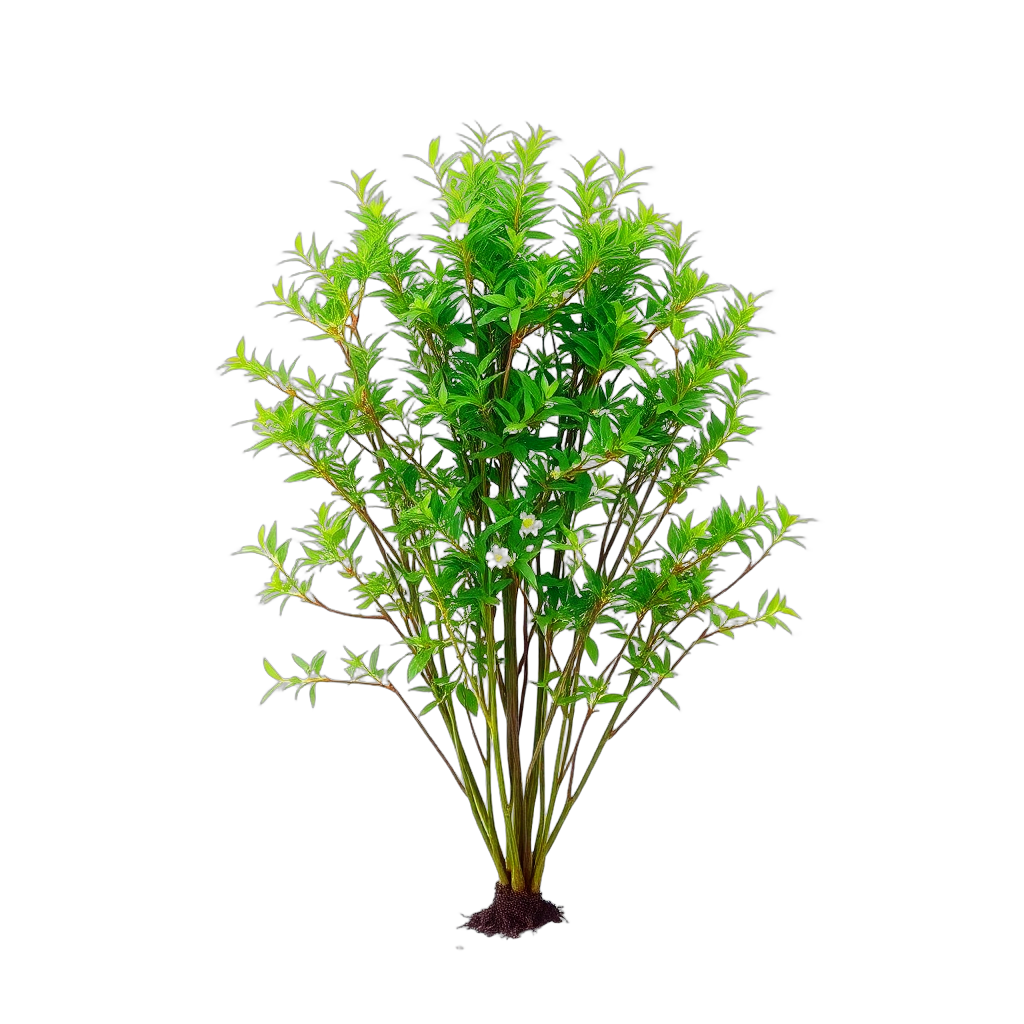
Dwarf Fernleaf Bamboo
Pleioblastus distichus
low-growing ground cover, blooms in none. Evergreen year-round.
Featured Flowers & Perennials for Modern/Minimalist Gardens
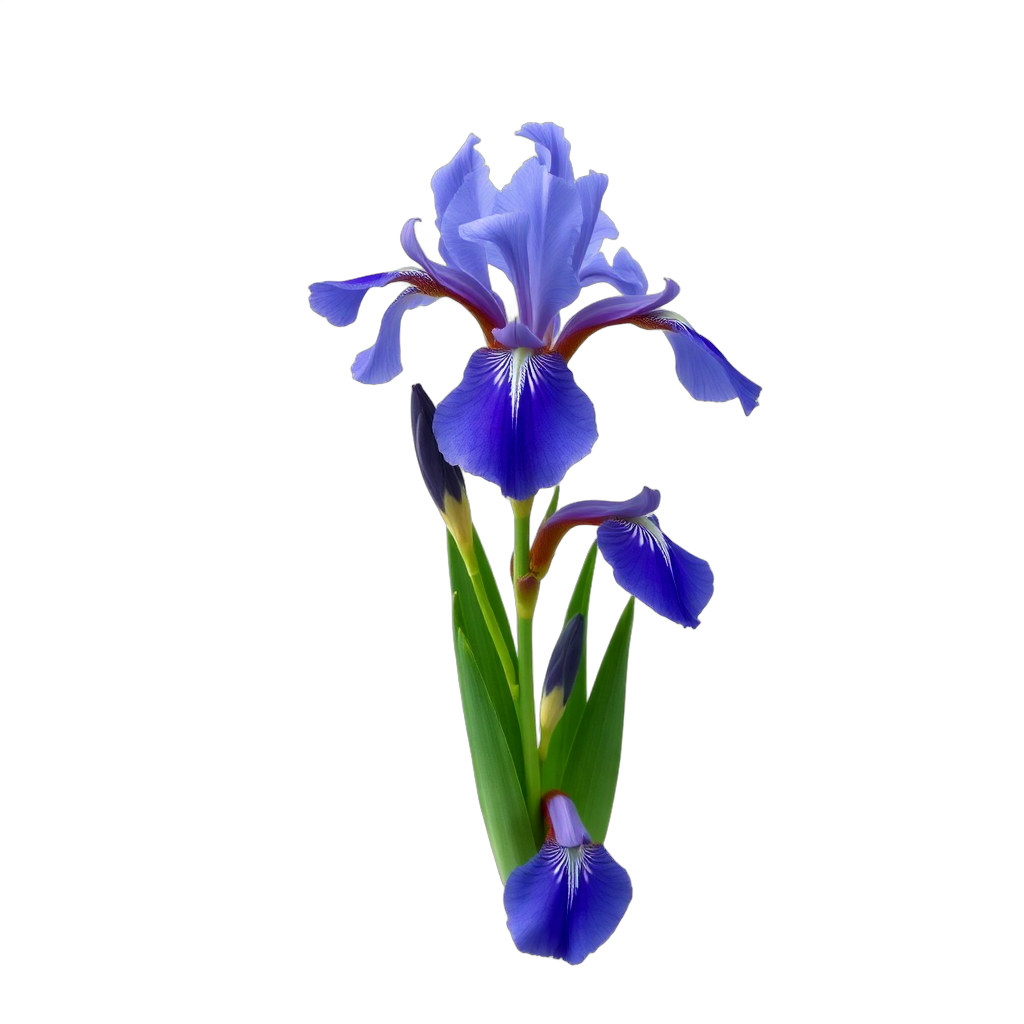
Blue Flag Iris
Iris versicolor
low-growing ground cover, purple blooms in spring. Attracts butterflies.

New York Ironweed
Vernonia noveboracensis
grows to 6 feet, purple blooms in fall. Attracts butterflies.
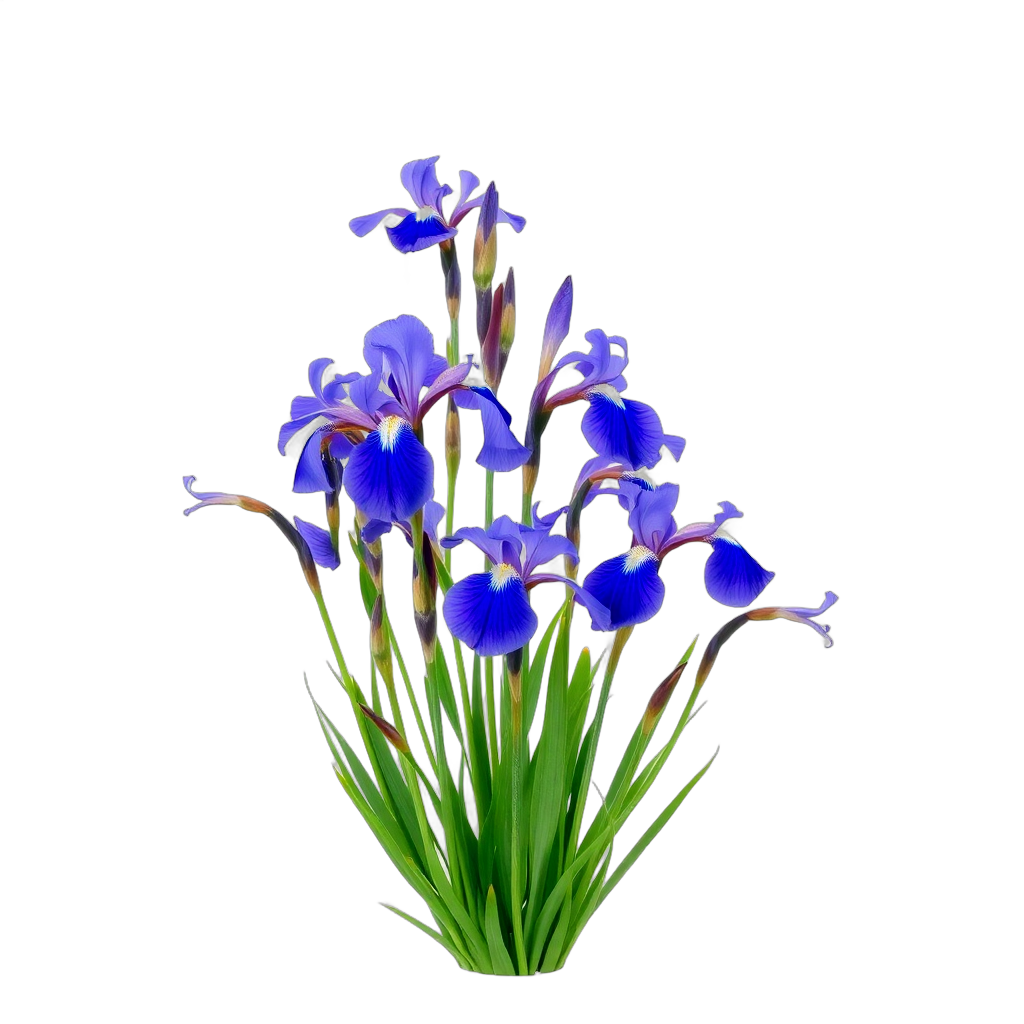
Southern Blue Flag
Iris virginica
low-growing ground cover, blue blooms in spring. Attracts butterflies.

Eastern Prickly Pear
Opuntia humifusa
low-growing ground cover, yellow blooms in summer. Attracts butterflies.
Zone and sun checks come from our database — confirm with your local nursery before you buy.
Bloom Calendar for Boston
spring
Blue Flag Iris, Southern Blue Flag, Arrowwood Viburnumsummer
Ruby Spice Summersweet, Summersweet, Eastern Prickly Pearfall
New York Ironweed, Purple Love Grasswinter
Limited bloomsDesign Tips for Boston (Zone 6b)
- Use freeze-thaw-rated porcelain (20mm+ thickness) or natural granite for all Boston paving — Boston’s 43 annual inches of snowfall and repeated freeze–thaw cycles will destroy softer or unsealed materials within a few winters
- Leave Karl Foerster and little bluestem grasses uncut through winter — their winter silhouettes against snow are genuinely beautiful and the structure extends your garden’s visual interest through Boston’s long cold season
- Grade all hardscape surfaces at least 1.5% away from the foundation before paving — Boston’s snowmelt surges in March and April generate water volumes that improperly graded yards cannot handle
- In the South End and Back Bay, a single bold front strip design — geometric gravel bed with three clipped boxwood spheres — can hold its own against Victorian brownstone architecture by contrast rather than competition
- Avoid Miscanthus (maiden grass) in Boston area gardens — it is on Massachusetts’ invasive species watch list and can spread aggressively into natural areas; use native switchgrass or Karl Foerster instead
- A gas fire pit extends Boston backyard usability from May through October (and into November on mild years) — in a climate where summer is short and precious, extending the outdoor season by six weeks is among the highest-value landscape investments you can make
Where to Source Plants in Boston
Skip the big-box stores. These independent Boston nurseries specialize in the plants that make modern/minimalist gardens thrive in Zone 6b.
Mahoney’s Garden Center
Winchester (metro Boston)
Large independent garden center with excellent ornamental grass, shrub, and architectural plant selection for modern gardens; multiple locations
Pemberton Farms & Garden Center
Cambridge (Alewife)
Independent nursery trusted by Cambridge gardeners; strong native and ornamental selection, knowledgeable staff
Allandale Farm
Jamaica Plain / Brookline border
Working farm and nursery with New England-adapted natives and ornamentals; staff with deep regional plant knowledge
New England Wild Flower Society — Garden in the Woods
Framingham
Authoritative source for New England native plants including ornamental grasses, sedges, and architectural native shrubs for modern landscapes
Sylvan Nursery
Westport
Specialty trees, ornamental grasses, and architectural shrubs; strong Japanese maple and structural plant selection for modern design
Modern/Minimalist Landscaping Costs in Boston
| Project Scope | Estimated Cost |
|---|---|
| Modern front yard redesign with gravel + grasses (200–400 sqft) | $9,000 – $24,000 |
| Full backyard patio transformation with concrete or porcelain pavers | $30,000 – $75,000 |
| Poured concrete patio installation (Boston labor rates) | $22 – $45/sqft installed |
| Raised Corten or dark steel planting beds (set of 2–3) | $3,500 – $9,000 |
| Round concrete fire pit with lounge seating area | $4,000 – $11,000 |
| AI visualization with ProScapeAI | Free to start |
Estimates based on Boston, MA-area contractor rates as of 2026. Actual costs vary by site conditions, materials, and contractor.
Boston Climate & Growing Zone
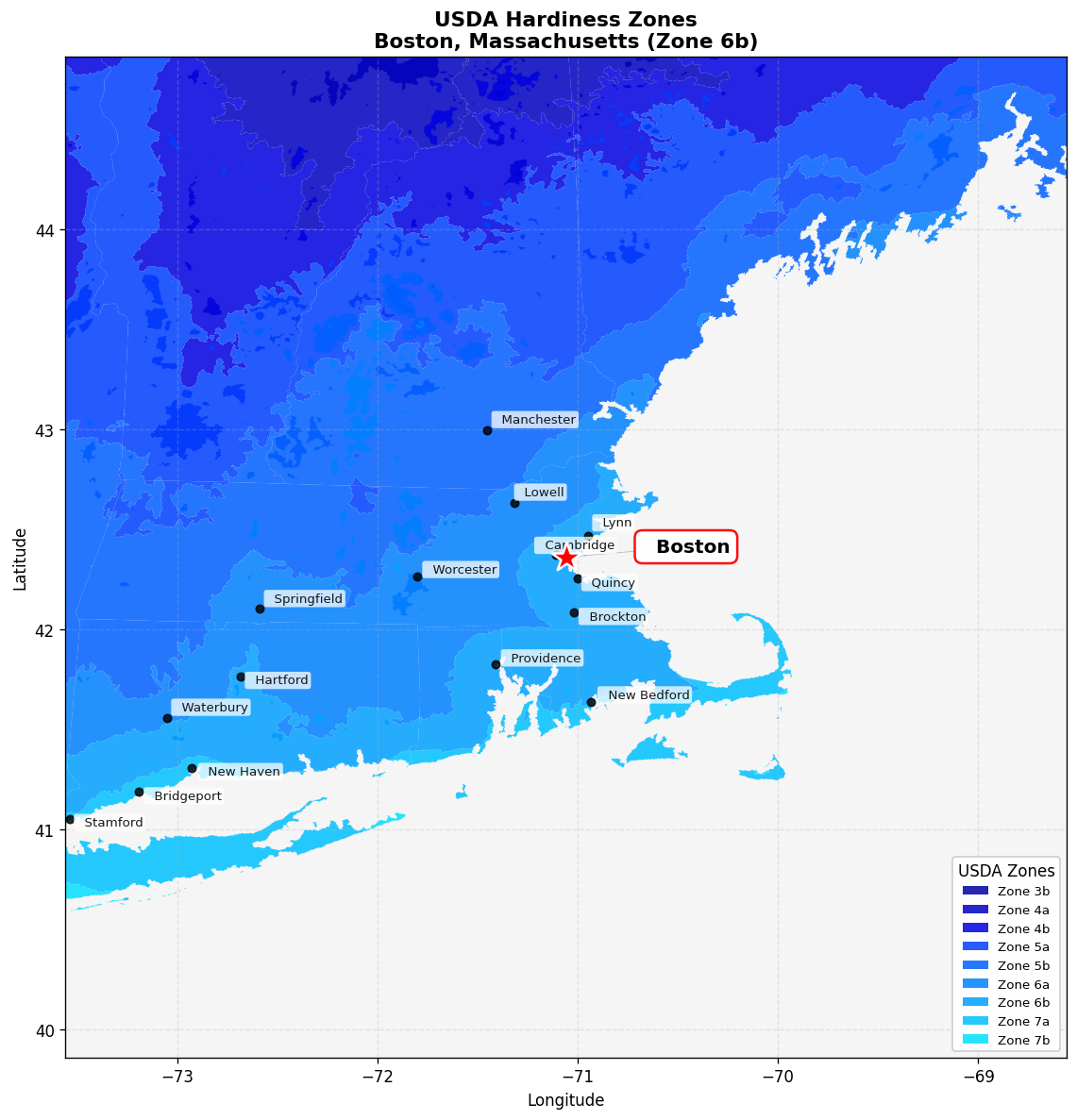
USDA Zone 6b
Hardiness zone for Boston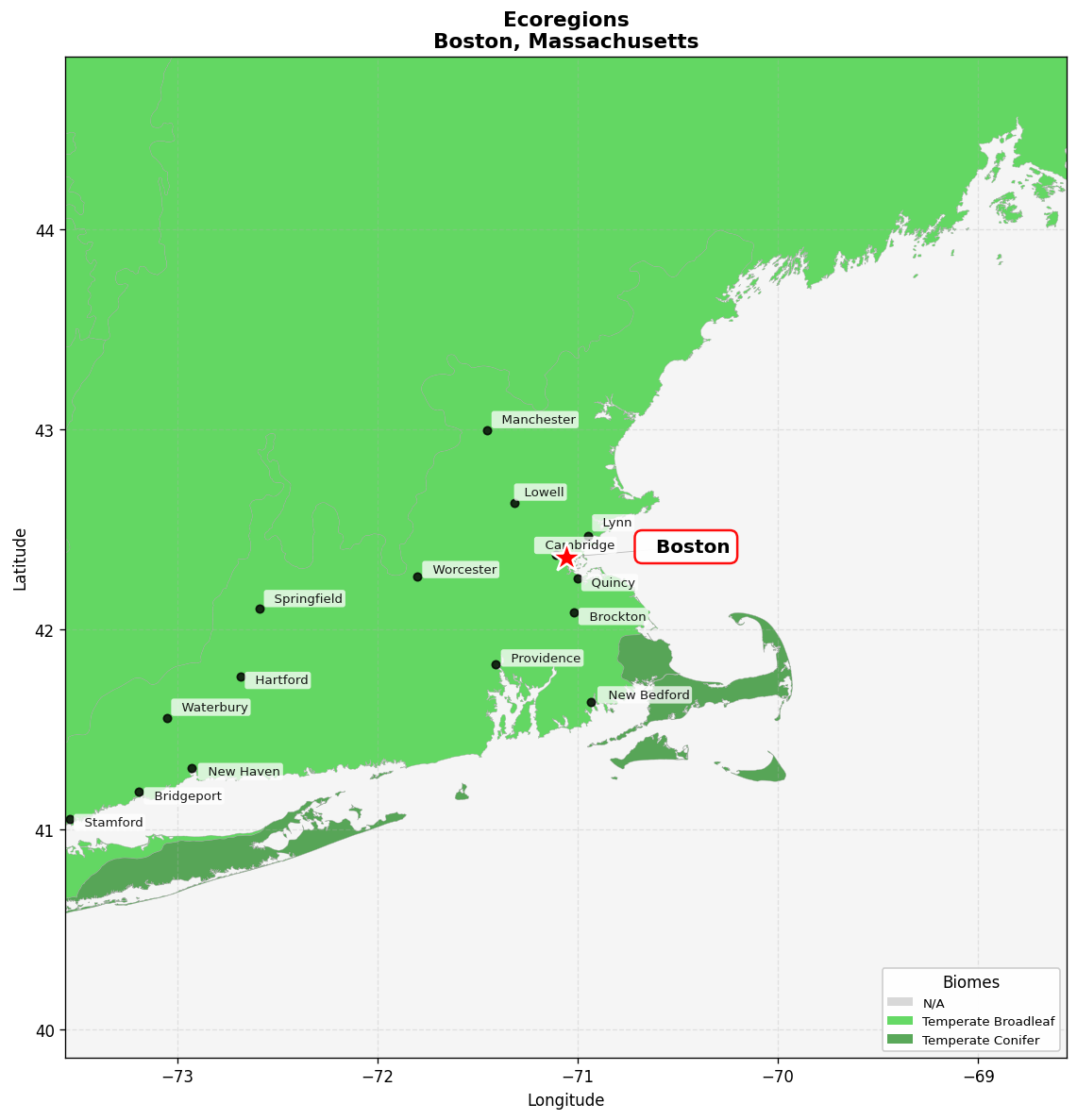
Northeast US Coastal forests
Native ecoregionFrequently Asked Questions
What pavers hold up best through Boston’s winters?
Boston’s freeze–thaw cycles are the primary hardscape enemy — water infiltrates paver joints, freezes, expands, and cracks or heaves the surface within 2–3 seasons if you use the wrong material. Best performers: natural granite (extremely durable, classic Boston material, expensive), large-format freeze-thaw-rated porcelain (20mm+ thickness, extremely hard, contemporary look), and properly sealed bluestone (seal annually). Avoid: unsealed sandstone, soft brick without proper base and sealing, concrete pavers in heavy foot traffic areas without a 6-inch compacted base. For base preparation, use 6 inches of compacted crushed stone with proper drainage slope — Boston’s snowmelt volumes in March demand it.
What ornamental grasses survive Zone 6b Boston winters?
Boston’s Zone 6b is ideal for most ornamental grasses. Top performers: Karl Foerster feather reed grass (Zone 4, upright, 5–6 ft, the single best choice for modern Boston gardens), little bluestem (native, Zone 3, 2–3 ft, brilliant orange-red fall and winter color), switchgrass — Panicum virgatum varieties (native, Zone 4, 3–5 ft, excellent fall color), blue oat grass (Helictotrichon, Zone 4, 2–3 ft, steel-blue all season), and prairie dropseed (native, Zone 3, 2 ft, fine texture). Avoid: maiden grass (Miscanthus) spreads invasively in New England — check invasive species lists before planting. Cut all grasses back to 4–6 inches in early March.
How much does modern landscaping cost in Boston?
Boston is among the highest-cost markets in the US for landscaping, with labor and material costs comparable to New York. A modern front yard redesign (200–400 sqft) with hardscape and planting typically runs $10,000–$25,000. A full backyard transformation with patio, pergola, planting, and lighting ranges from $30,000–$80,000+. Simpler gravel and grass conversions (no major hardscape) can run $6,000–$15,000 for a standard front yard. Budget 20–35% more than comparable projects in mid-Atlantic or Midwest markets. Get at least three contractor bids and verify references in your specific neighborhood.
Do Boston’s historic districts restrict modern garden design?
Boston’s Landmarks Commission (BLC) oversees Beacon Hill, Back Bay, South End, and other historic districts. The BLC primarily regulates changes visible from the street, including fencing materials, masonry work, retaining walls, and front yard structures. Modern design elements like steel fencing, contemporary planters, and gravel groundcover may require review in designated districts — some historic districts have specific material and style guidelines. Plant choices are generally unrestricted. Consult the BLC before starting any front yard hardscape project in a designated historic neighborhood. In Cambridge, the Cambridge Historical Commission has jurisdiction over Cambridge Historic District properties.
What’s the best low-maintenance modern plant for a Boston yard?
Karl Foerster feather reed grass is the single best choice: Zone 4 hardy (laughs at Boston winters), upright architectural form that stays neat without cutting, four-season interest from spring green through winter tan plumes, drought-tolerant after establishment, and thrives in the partial shade that Boston’s dense building stock creates. For a second choice: native little bluestem, which turns brilliant orange-red in fall and maintains its structure through Boston’s winter. Pair these grasses with creeping sedum groundcover and clipped inkberry holly for a three-element modern palette that needs essentially nothing after the first season.
How should I handle drainage in a Boston backyard?
Boston’s 47 annual inches of rainfall, combined with late winter snowmelt surges, make drainage planning essential. Common issues in Boston rowhouse backyards: saturated soil from impermeable surfaces, foundation moisture from poor grading, and spring flooding from combined impermeable yard + snowmelt volumes. Solutions: grade all paved surfaces 1.5–2% away from the foundation; install French drains at low points; replace impermeable surfaces with permeable pavers or gravel beds; create a rain garden at the lowest point of the yard to capture and infiltrate peak flow. The Boston Water and Sewer Commission offers rebates for residential green infrastructure that manages stormwater on-site.