4 Modern Landscape Ideas for Elk Grove, CA | Zone 9b Design
Native plants from the California Central Valley grasslands (Zone 9b) — Mediterranean (hot summer) climate
Why Modern/Minimalist Gardens in Elk Grove?
Modern landscape design has an unusual advantage in Elk Grove: the housing stock is young, and young houses have clean lines to work with. The contemporary and transitional builds filling Laguna Ridge, Madeira, District56, Sterling Meadows and Poppy Ridge arrive with low-slope hip roofs, black-framed picture windows, stacked-stone wainscots and vertical cedar accent panels — geometry that a modern landscape amplifies instead of fighting. The older stock is just as workable from the other direction: the 1960s–80s ranches around Elk Grove Village, Camden and Franklin are flat-fronted, wide and low, and a gravel-and-steel front yard is the single cheapest way to make one look deliberate rather than dated. Either way the design problem is the same — the builder handed over a rectangle of thirsty fescue, a straight concrete path, and a six-foot fence, and modern design is the style that solves all three with the fewest moving parts.
The climate here is a modern designer's dream and a modern designer's trap in equal measure. Elk Grove is Zone 9b with a hot-summer Mediterranean (Csa) pattern: about 18 inches of annual rain, essentially all of it November through April, and a completely rainless June to September with routine 95–100°F afternoons and heat-wave spikes past 105°F. That is the exact climate the gravel-and-architectural-plant look was invented for, so Agave parryi var. truncata, Agave ovatifolia 'Frosty Blue', Hesperaloe parviflora 'Brakelights' and Yucca rostrata 'Sapphire Skies' all live here permanently rather than as summer props. The trap is winter. Those same 18 inches arrive as sustained saturation between December and February, and modern gardens die in that window far more often than in August. Elk Grove's soils are largely San Joaquin loam with a cemented hardpan 20 to 40 inches down, which perches water in the root zone for days after a storm. An agave planted at grade in unamended clay is on a two-winter clock. The same agave in a bed raised eight inches, blended with 3/8-inch crushed rock and top-dressed in gravel will outlive the fence.
Grasses are what keep a modern Elk Grove garden from reading as a parking lot, and the local list is better than the generic one. Muhlenbergia rigens — deergrass, native to the California Central Valley grasslands ecoregion this city sits in — is the workhorse: three feet of fine tawny texture, zero summer water once established, one cut-back in late winter. Muhlenbergia capillaris 'Regal Mist' gives the pink October haze, Nassella pulchra (purple needlegrass, the state grass) suits informal masses, and Calamagrostis × acutiflora 'Karl Foerster' delivers the strict vertical for formal repeats. Skip Nassella tenuissima, however tempting the texture — it self-sows aggressively and is flagged as invasive in California. Between the grasses, Salvia clevelandii 'Winnifred Gilman', Westringia fruticosa 'Grey Box', Dianella revoluta 'Little Rev' and massed Lavandula × intermedia 'Provence' carry colour and evergreen structure through the whole year.
Water rules and shade are the two design constraints that decide whether the finished garden is actually livable. Elk Grove is served by both the Elk Grove Water District and the Sacramento County Water Agency, and both assign irrigation days by house number — odd-numbered addresses Tuesday, Thursday and Saturday, even-numbered Wednesday, Friday and Sunday, with lawn watering further limited and daytime irrigation prohibited during peak hours; confirm your current schedule with your provider. Statewide, the Model Water Efficient Landscape Ordinance applies to permitted landscape work over 500 square feet, so a large modern rebuild will be sized against a water budget on paper before it is built. Shade is the other one. A large-format concrete terrace facing west without a canopy is unusable from June to September, and pale paving in full sun radiates heat into the house. The fix is not a pergola in every case — a single well-placed Pistacia chinensis 'Keith Davey', Lagerstroemia 'Muskogee' or existing mature canopy on the hot exposure does more for comfort and cooling load than any amount of hardscape detailing, and the Delta breeze that pulls up from the Sacramento–San Joaquin Delta after sunset does the rest, dropping summer evenings into the high 50s and making a fire table genuinely worth building.
4 Modern/Minimalist Design Ideas for Elk Grove

The Split Concrete Walk
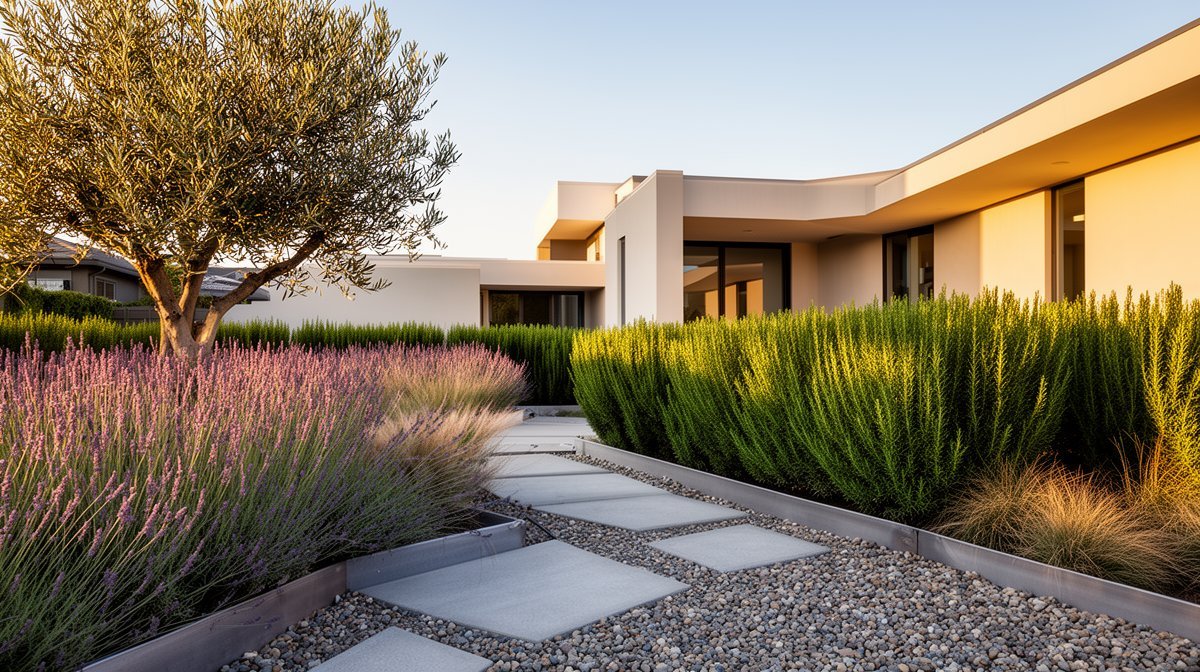
$14–26/sqftA low contemporary ranch with cream stucco, a vertical cedar panel, a stacked-stone entry column and full-height black-framed glazing — and a front landscape built on one clean gesture. A wide broom-finished concrete walk sweeps from the street and forks at the entry, with the resulting curve mirrored on both sides by shaped lawn panels. Between path and lawn runs a soft, deep planting band: tawny deergrass clumps, blue-green fine-textured tufts, and solid blocks of lavender in flower over dark bark mulch. A mature multi-trunk canopy tree sits dead center, throwing the west facade into shade, and a low stacked-stone seat wall on the right ties the planting back to the house material.

The Zero-Lawn Gravel Grid
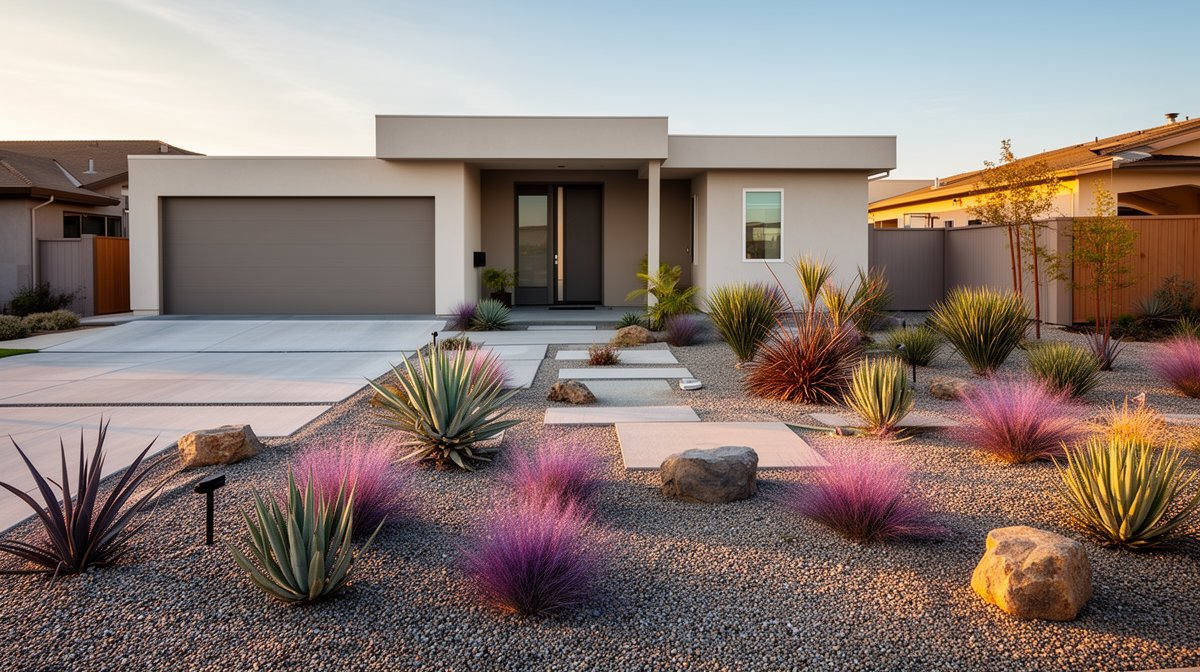
$8–18/sqftThe most water-honest design of the four, and the cheapest per square foot. Every blade of grass is gone from a 1970s-era ranch frontage, replaced by a field of gold pea gravel raked into a fine texture. Set into it at deliberate angles are three large steel-edged rectangles filled with dark crushed rock, each planted with a rhythm of big blue-grey agave rosettes and tawny grass clumps — the geometry doing all the work, the plants used as sculpture rather than mass. A few plum-leaved accent shrubs and a clipped green ball near the front door keep it from feeling austere. The concrete driveway and stacked-stone wainscot are untouched, which is a large part of why the budget stays low.

The Cafe-Light Fire Table Patio
$16–32/sqftA standard two-story tract backyard turned into an evening room without moving a single wall. A large-format broom-finished concrete slab with wide sawn joints holds a low modern sofa, two lounge chairs and a round gas fire table at its center, and commercial-grade cafe bulbs are strung overhead on a diagonal to give the space a ceiling. A strip of lawn survives between patio and fence for the dog and the kids, and the dark horizontal fence is softened by a narrow, disciplined border of grasses and low flowering shrubs rather than a full bed. One young canopy tree on the west side and an existing overhanging tree on the east do the shading. Everything here is repeatable and buildable in a single phase.

The Glass Wall Pool Deck
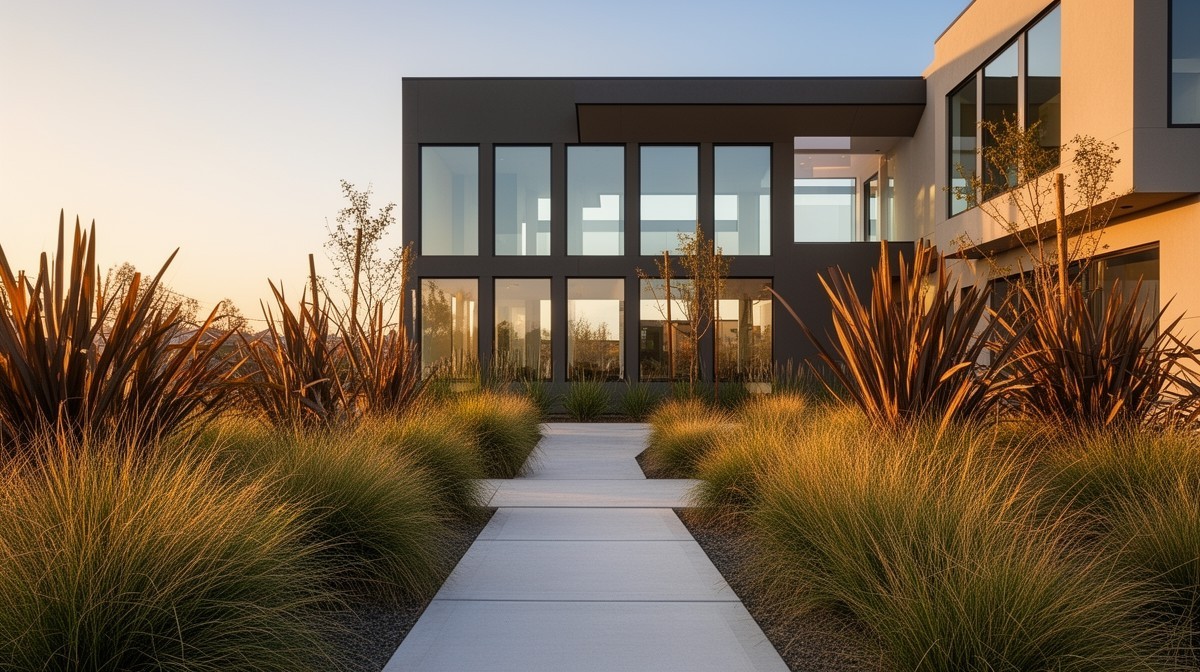
$45–85/sqft (pool area inclusive)The full modern build, photographed at dusk when it is at its best. A flat-roofed single-story house with a dark fascia and floor-to-ceiling sliders opens onto a pale concrete deck laid in big square panels with crisp sawn joints. A rectangular pool with dark plaster sits in the middle of it, reflecting the lit interior, and a floating cast-concrete gas fire table anchors the lounge zone with LED strip lighting tucked under the furniture frames. The planting is deliberately restricted to two things — masses of tall tawny plume grass and blue-toned rosettes in dark crushed rock at the deck edges — because at this scale the restraint is the design. Ideal for a lot with the depth to let the deck breathe.
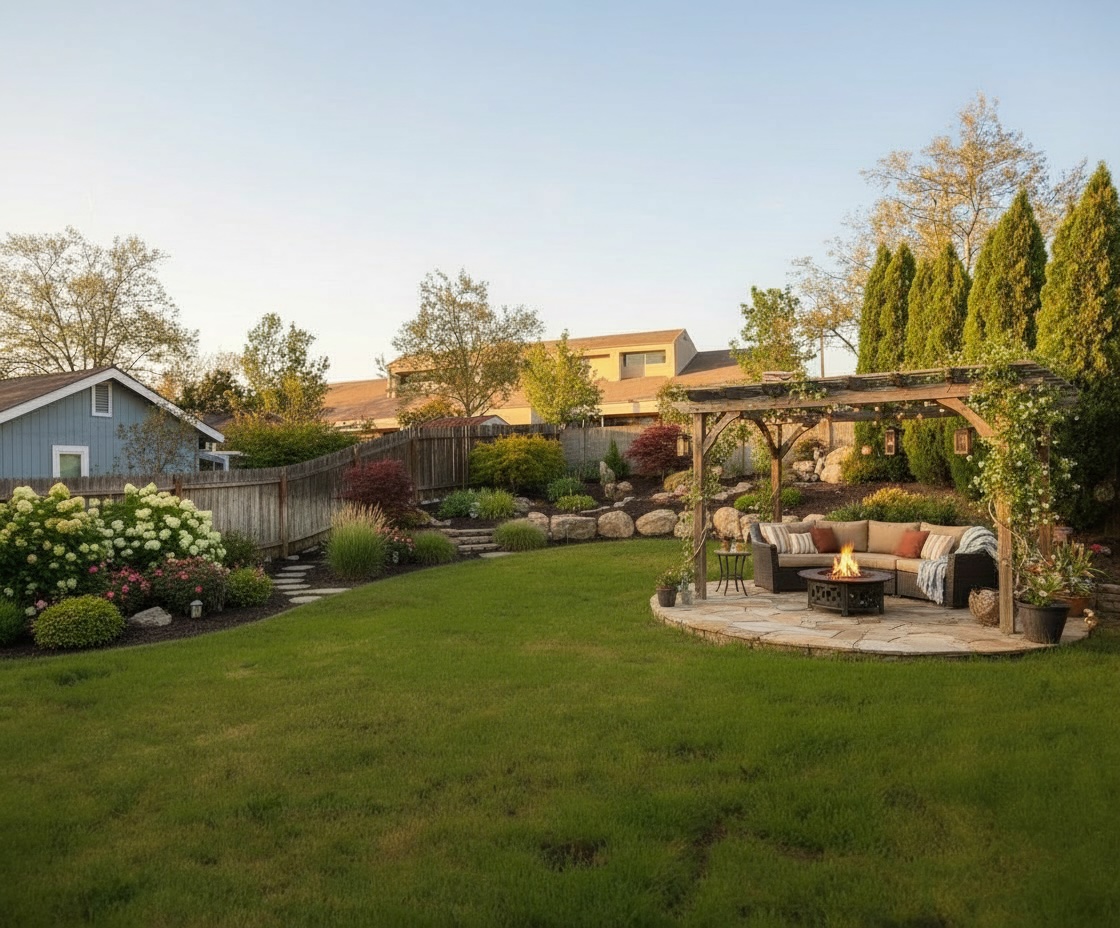
See how a modern/minimalist garden looks on YOUR property
Upload a photo of your Elk Grove yard and visualize your dream garden in seconds.
Try ProScapeAI Free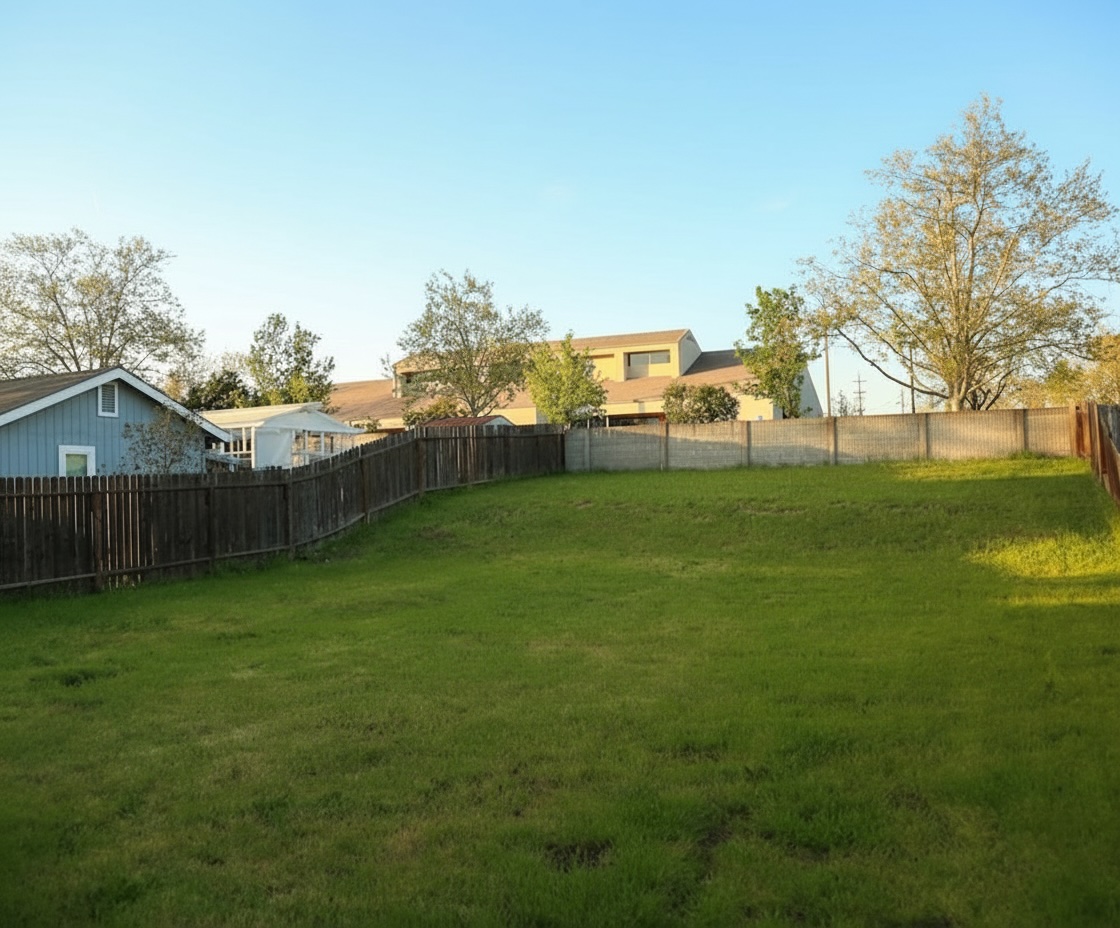
Featured Trees & Shrubs for Modern/Minimalist Gardens
Browse all 161 plants for Elk Grove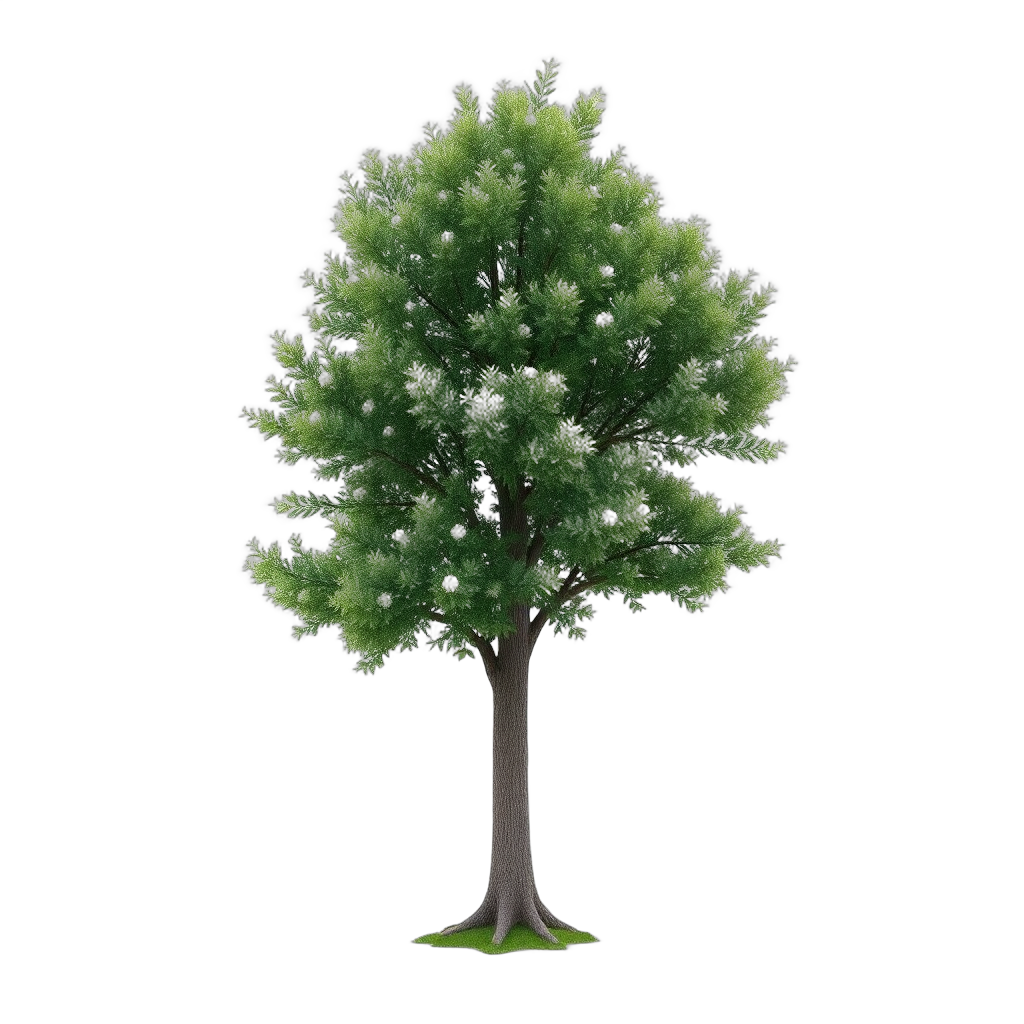
Blue Oak
Quercus douglasii
large shade tree reaching 50+ feet, blooms in spring. Yellow fall color.
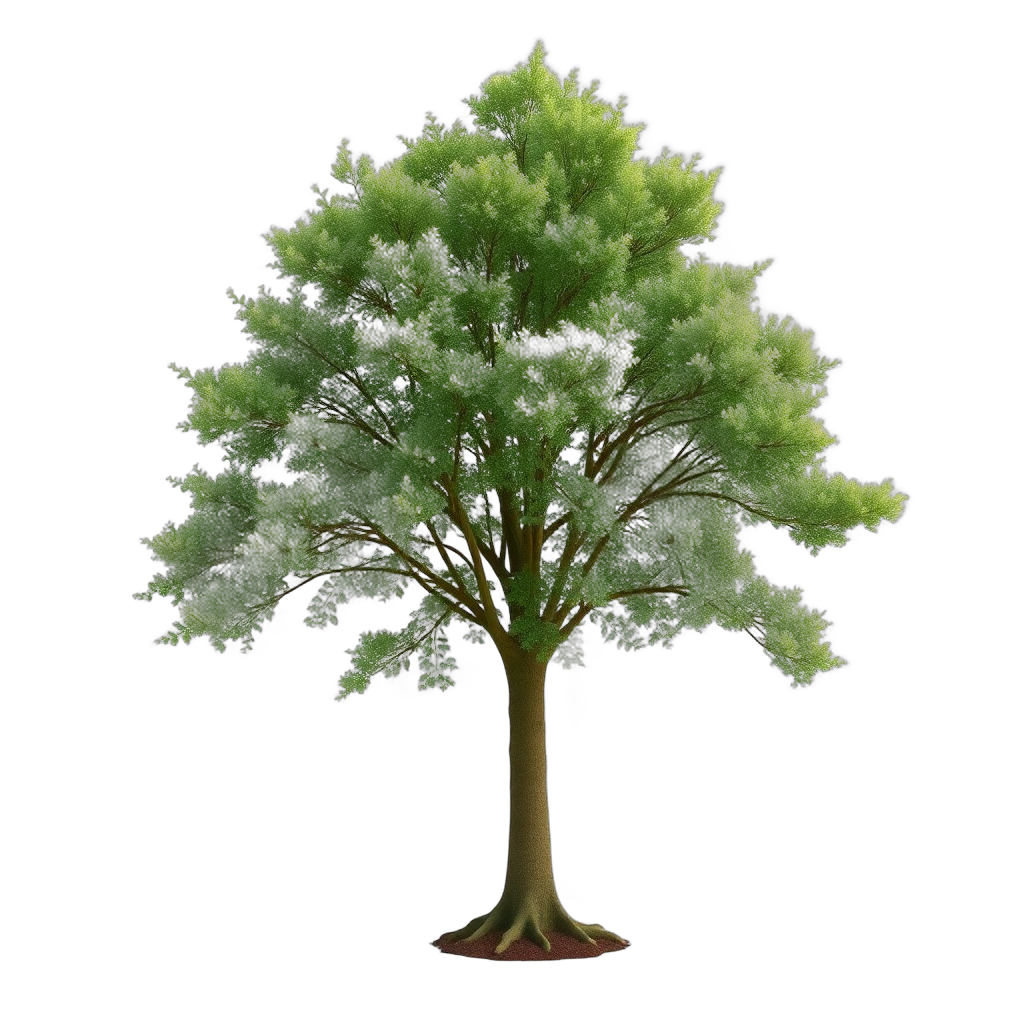
Fremont Cottonwood
Populus fremontii
large shade tree reaching 50+ feet, yellow blooms in spring. Yellow fall color.
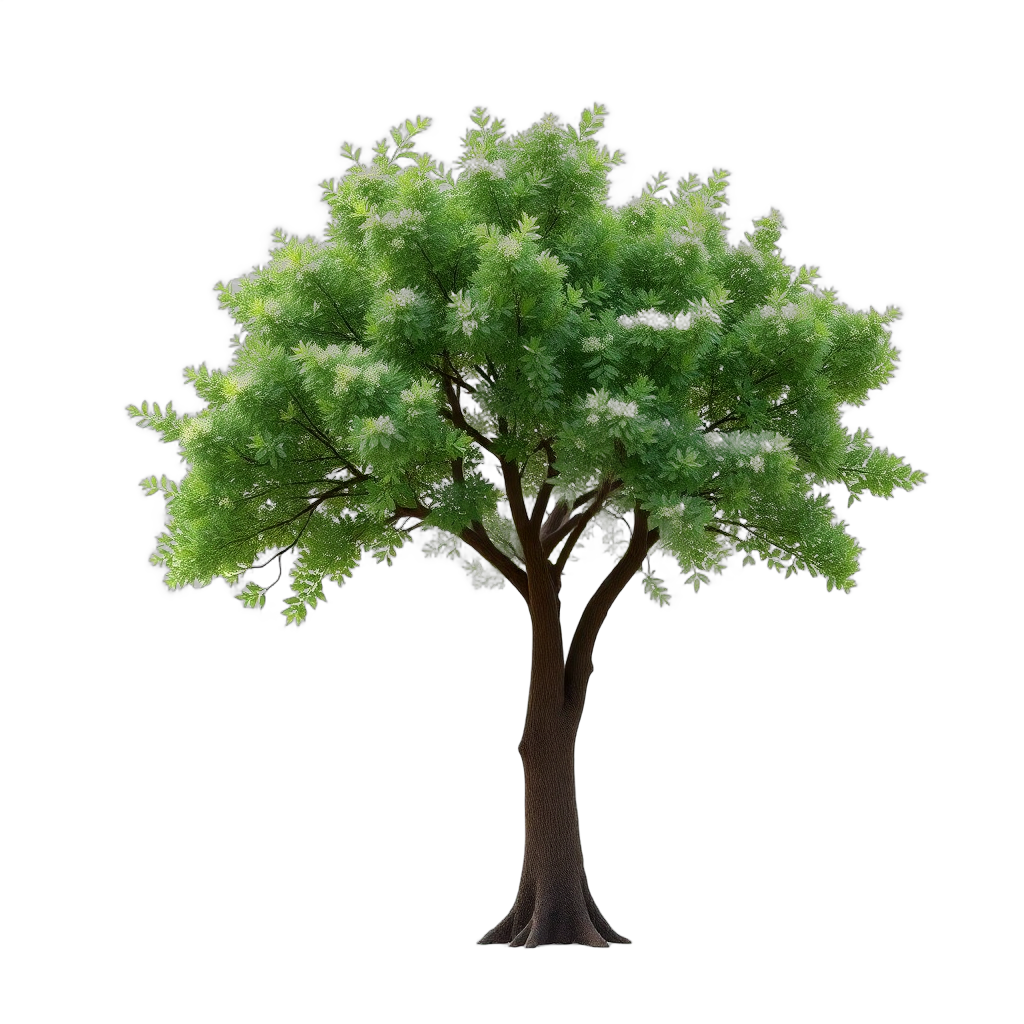
Valley Oak
Quercus lobata
large shade tree reaching 80+ feet, blooms in spring. Yellow fall color.
Featured Grasses & Groundcovers for Modern/Minimalist Gardens
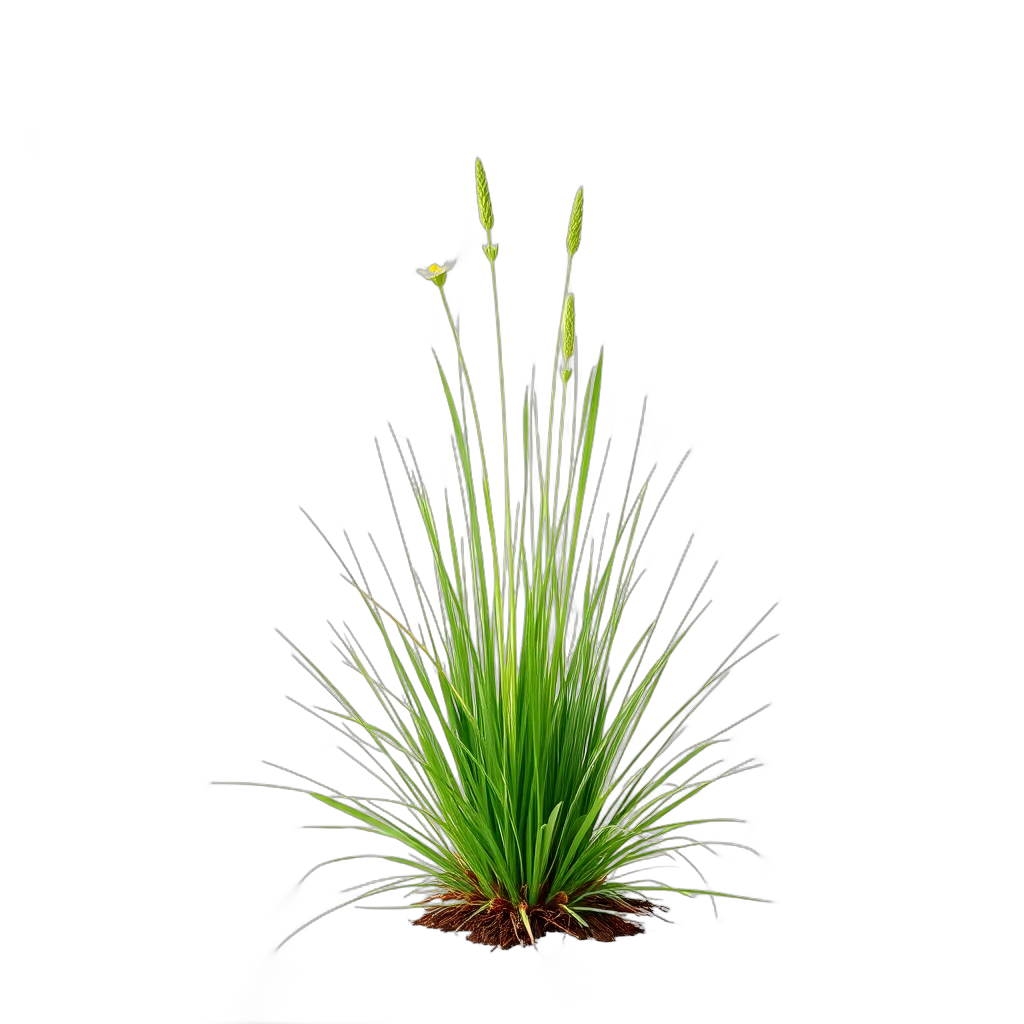
California Brome
Bromus carinatus
low-growing ground cover, blooms in spring. Yellow fall color.
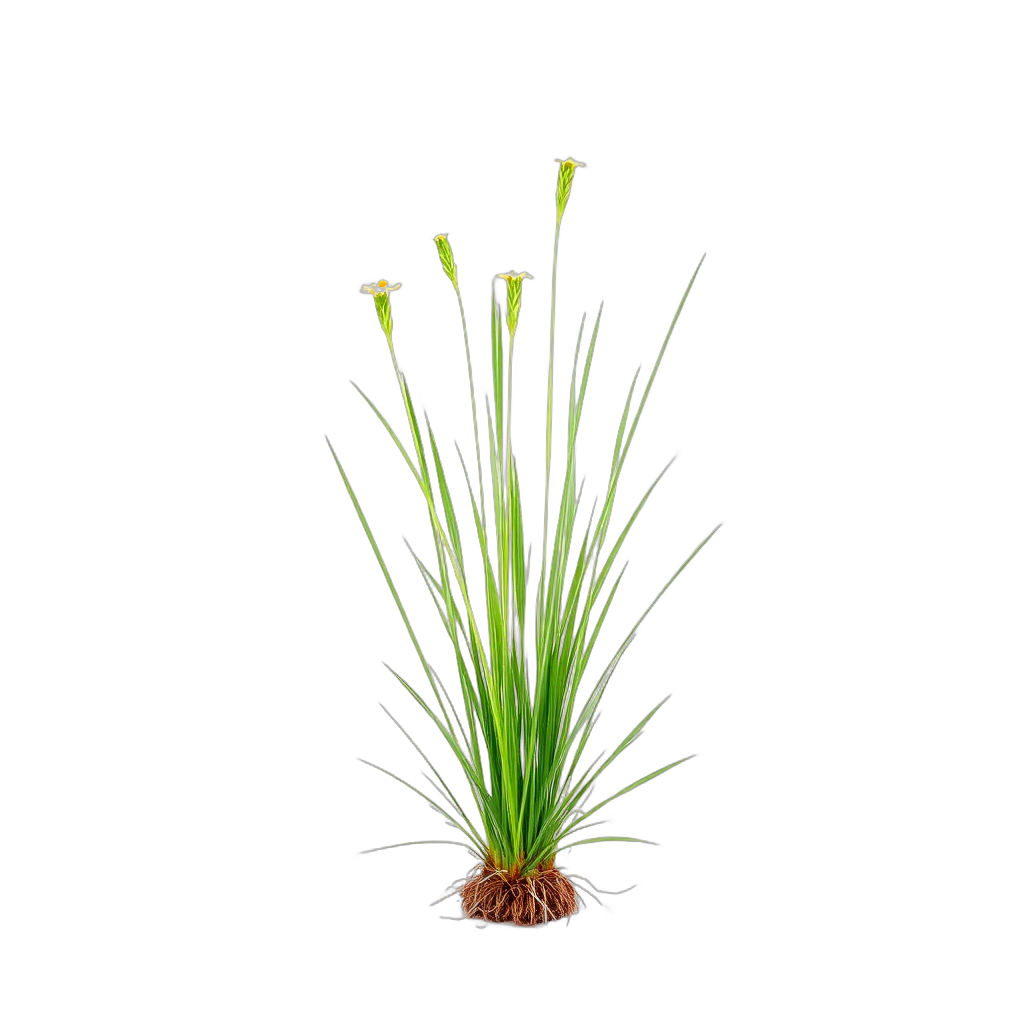
California Melic
Melica californica
low-growing ground cover, blooms in spring.
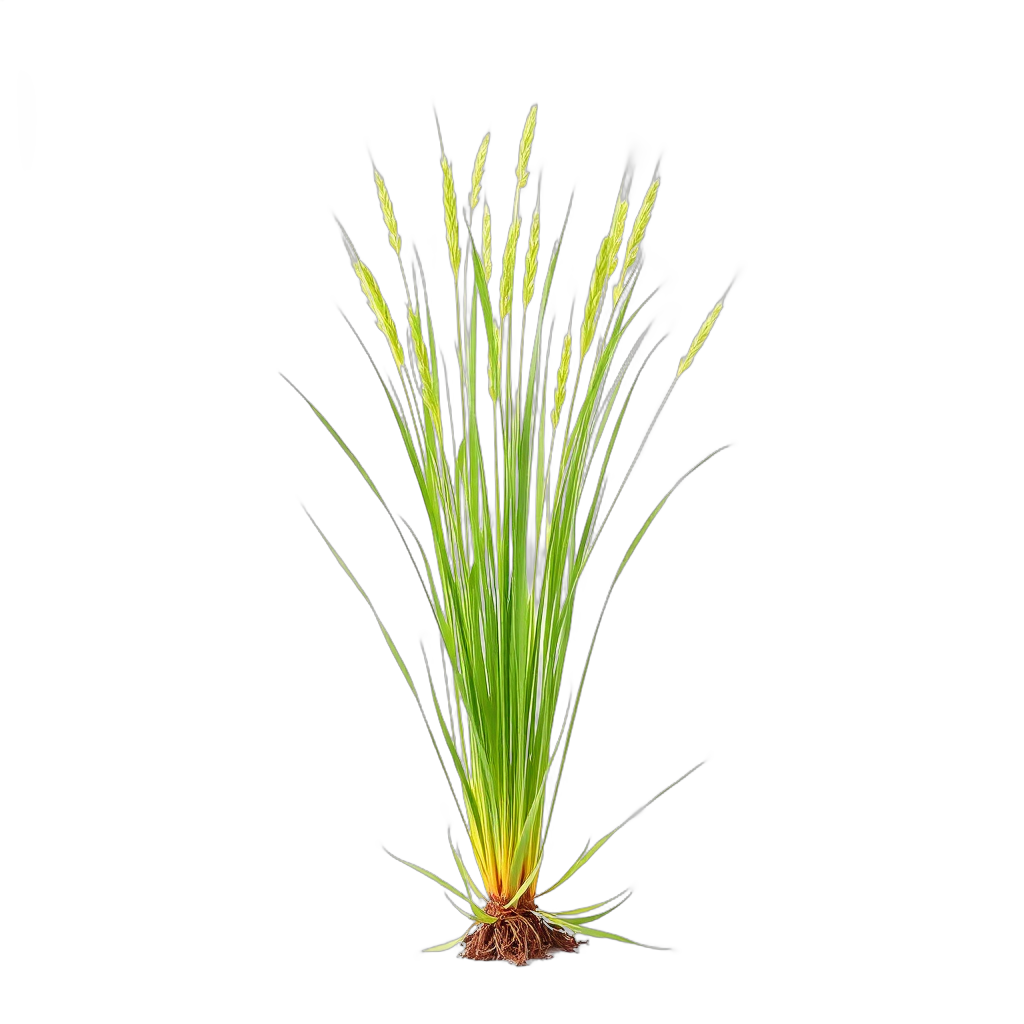
California Oatgrass
Danthonia californica
low-growing ground cover, blooms in spring. Yellow fall color.
Featured Flowers & Perennials for Modern/Minimalist Gardens
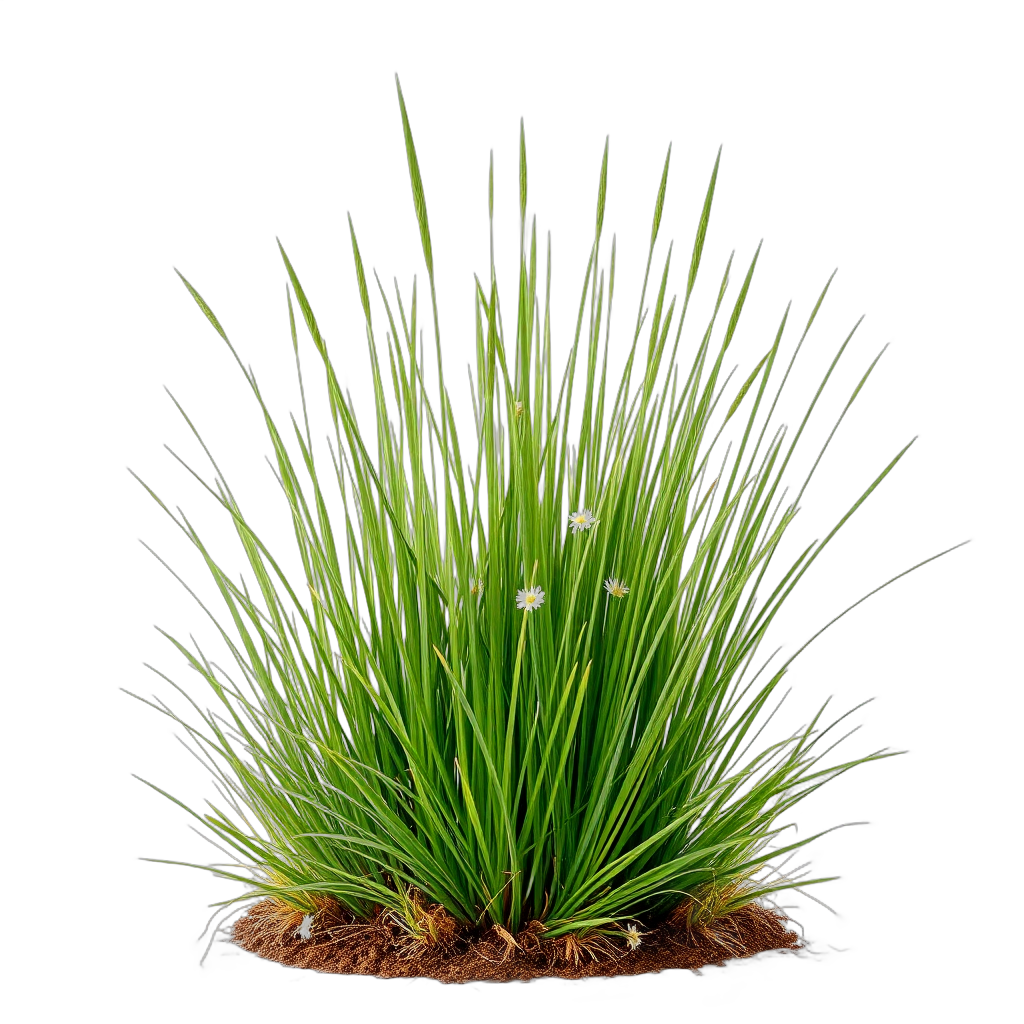
Baltic Rush
Juncus balticus
low-growing ground cover, blooms in summer. Evergreen year-round.
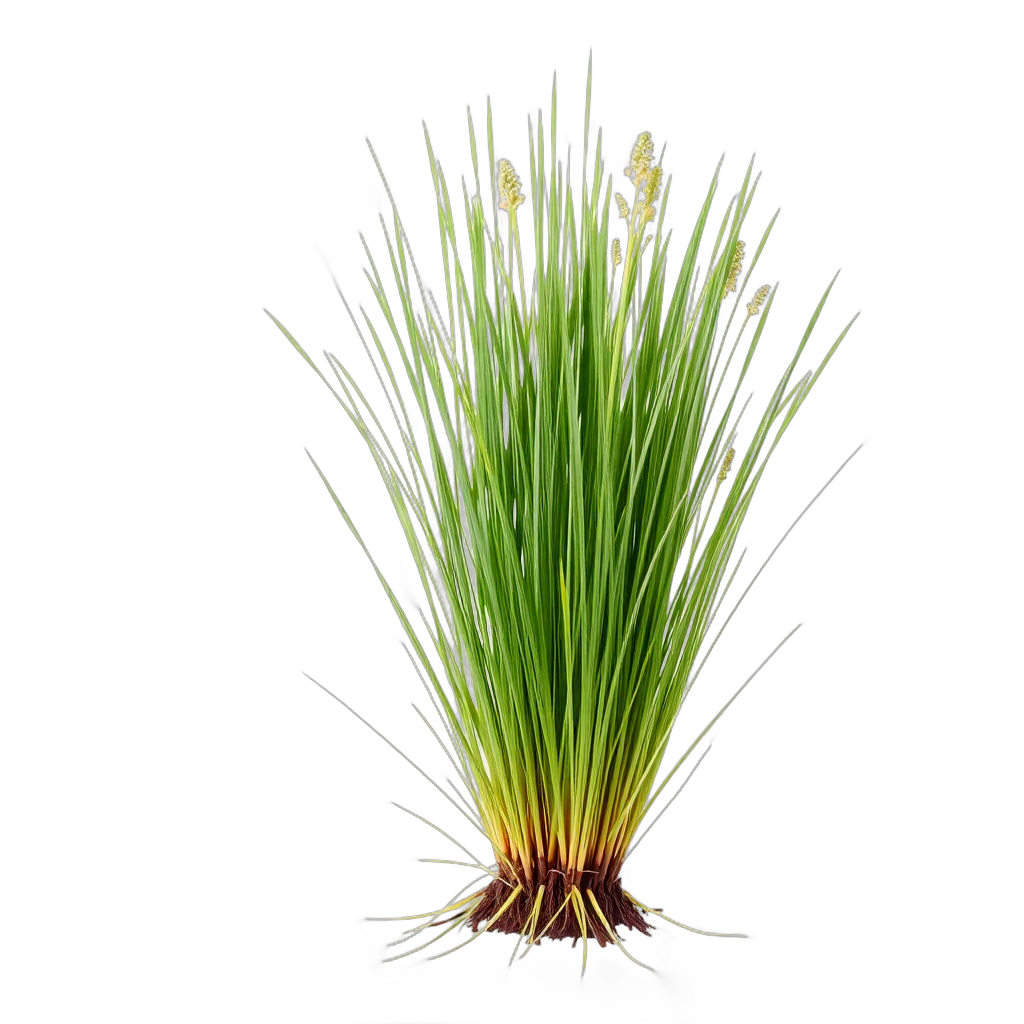
California Gray Rush
Juncus patens
low-growing ground cover, blooms in summer. Evergreen year-round.
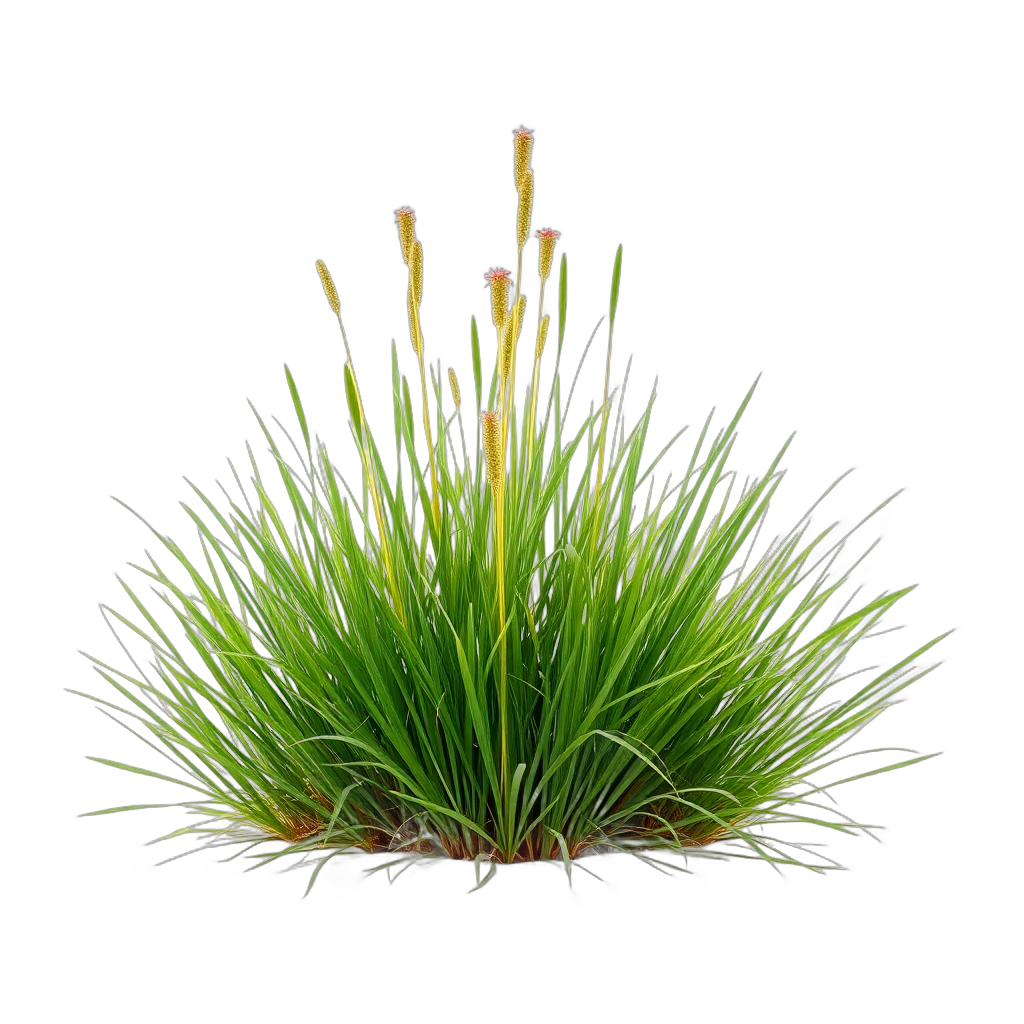
Clustered Field Sedge
Carex praegracilis
low-growing ground cover, blooms in spring.
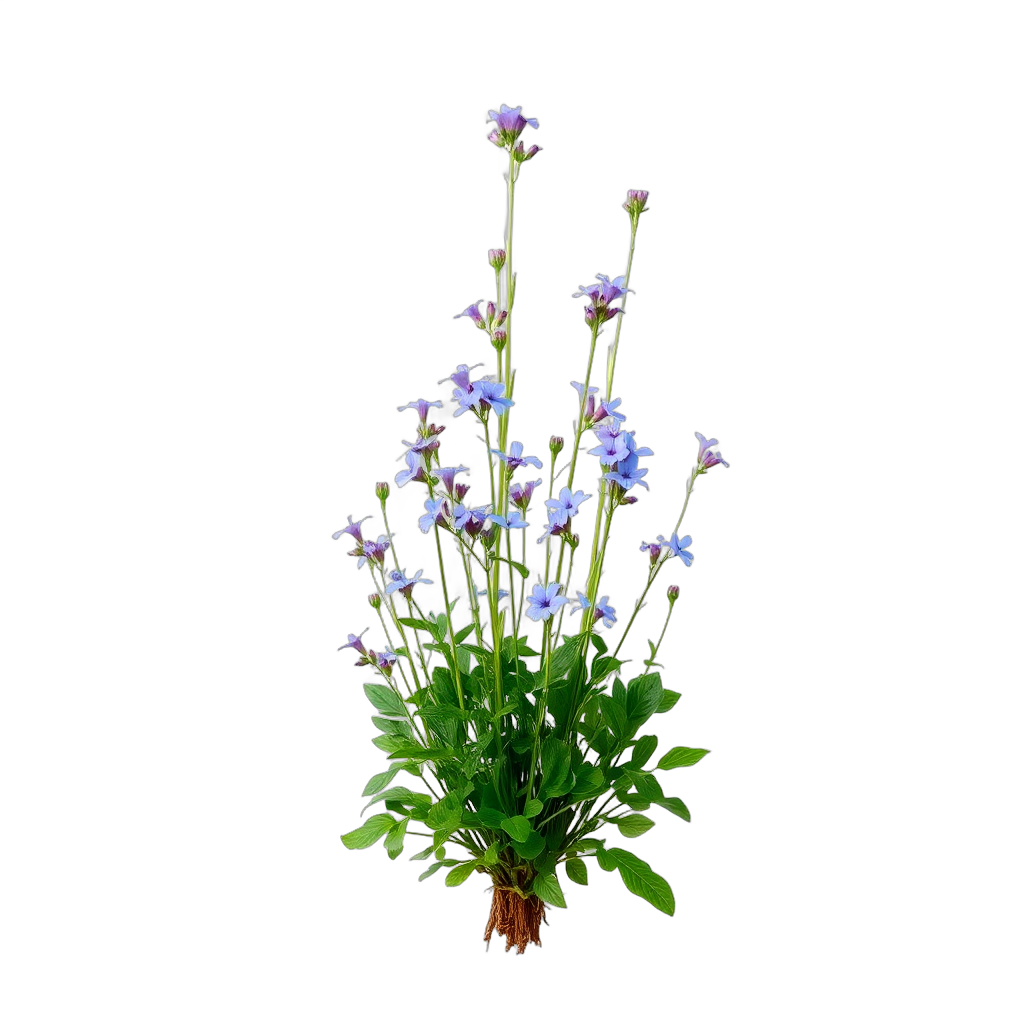
Blue Dicks
Dichelostemma capitatum
low-growing ground cover, blue blooms in spring. Pollinator-friendly.
Zone and sun checks come from our database — confirm with your local nursery before you buy.
Bloom Calendar for Elk Grove
spring
Clustered Field Sedge, Blue Dicks, Blue-Eyed Grasssummer
Baltic Rush, California Gray Rush, Papyrusfall
Limited bloomswinter
Limited bloomsDesign Tips for Elk Grove (Zone 9b)
- Raise every planting bed six to twelve inches and top-dress with 3/8-inch crushed rock instead of bark — the San Joaquin hardpan under most of Elk Grove perches winter rain, and wet feet in February kills Agave parryi and Yucca rostrata far more reliably than any cold snap does
- Choose Muhlenbergia rigens over Nassella tenuissima every time; deergrass is native to the Central Valley grasslands, needs no summer irrigation once established, and will not seed itself across the neighbourhood the way Mexican feather grass does
- Compact four to six inches of Class 2 aggregate base under every slab and saw the control joints on a deliberate grid — local clay swells and shrinks enough between February and August to crack any concrete poured straight onto subgrade, and on a modern design the cracks are the whole failure
- Put a canopy tree on the west exposure before you spend a dollar on furniture; a Pistacia chinensis 'Keith Davey' or Lagerstroemia 'Muskogee' turns a 105°F concrete terrace into a usable room and cuts the heat radiating back at the glazing
- Design for the Delta breeze — Elk Grove evenings drop into the high 50s after sunset even in July, so a gas fire table, string lighting and low-voltage uplights buy you eight or nine months of real outdoor use rather than a summer-only patio
- Use gravel size to separate zones instead of adding materials: a walk-on 3/8-inch tan gravel field with 3/4-inch dark crushed basalt inside the planting rectangles reads as two deliberate surfaces, costs a fraction of paving, and drains straight into the beds
- Water the modern garden in hydrozones and shut it off entirely from November to March — established Muhlenbergia, Westringia fruticosa 'Grey Box' and Agave want a deep soak every 14 to 21 days in July, and running them on the lawn schedule is the fastest way to lose them
Where to Source Plants in Elk Grove
Skip the big-box stores. These independent Elk Grove nurseries specialize in the plants that make modern/minimalist gardens thrive in Zone 9b.
Big Oak Nursery
East Elk Grove / Sheldon (Grant Line Road)
Locally grown trees, shrubs and container stock in multiple sizes, useful for sourcing larger specimen material without a Sacramento drive
Green Acres Nursery & Supply
Elk Grove (East Stockton Boulevard)
Family-owned full-service garden center carrying agave, yucca, Muhlenbergia and other architectural stock alongside gravel-garden soil amendments
The Plant Foundry Nursery & Store
Oak Park / Broadway Triangle, Sacramento
Woman-owned urban nursery focused on California natives and water-wise plants — the best local source for deergrass, Salvia clevelandii and low-water sculptural material
Fair Oaks Boulevard Nursery
Arden-Arcade, Sacramento
Established 1949 — Arboretum All-Star selections, drought-adapted shrubs, agave and cacti, and specimen canopy trees for hot west exposures
Talini's Nursery & Garden Center
East Sacramento (Folsom Boulevard)
Second-generation neighborhood nursery since 1976 with hands-on plant diagnosis and a broad ornamental range for filling out modern borders
Modern/Minimalist Landscaping Costs in Elk Grove
| Project Scope | Estimated Cost |
|---|---|
| Front-yard gravel conversion (turf removal, steel-edged beds, architectural planting) | $5,000 – $12,000 |
| Broom-finished concrete walk or patio (200–400 sqft) | $2,500 – $9,500 |
| Backyard modern room with slab, gas fire table and cafe lighting | $16,000 – $40,000 |
| Gunite pool with modern concrete deck and perimeter planting | $70,000 – $135,000 |
| Corten or powder-coated steel raised planter, fabricated and filled | $600 – $1,600 each |
| Low-voltage landscape lighting package (10–16 fixtures, installed) | $2,200 – $6,000 |
| AI visualization with ProScapeAI | Free to start |
Estimates based on Elk Grove, CA-area contractor rates as of 2026. Actual costs vary by site conditions, materials, and contractor.
Elk Grove Climate & Growing Zone
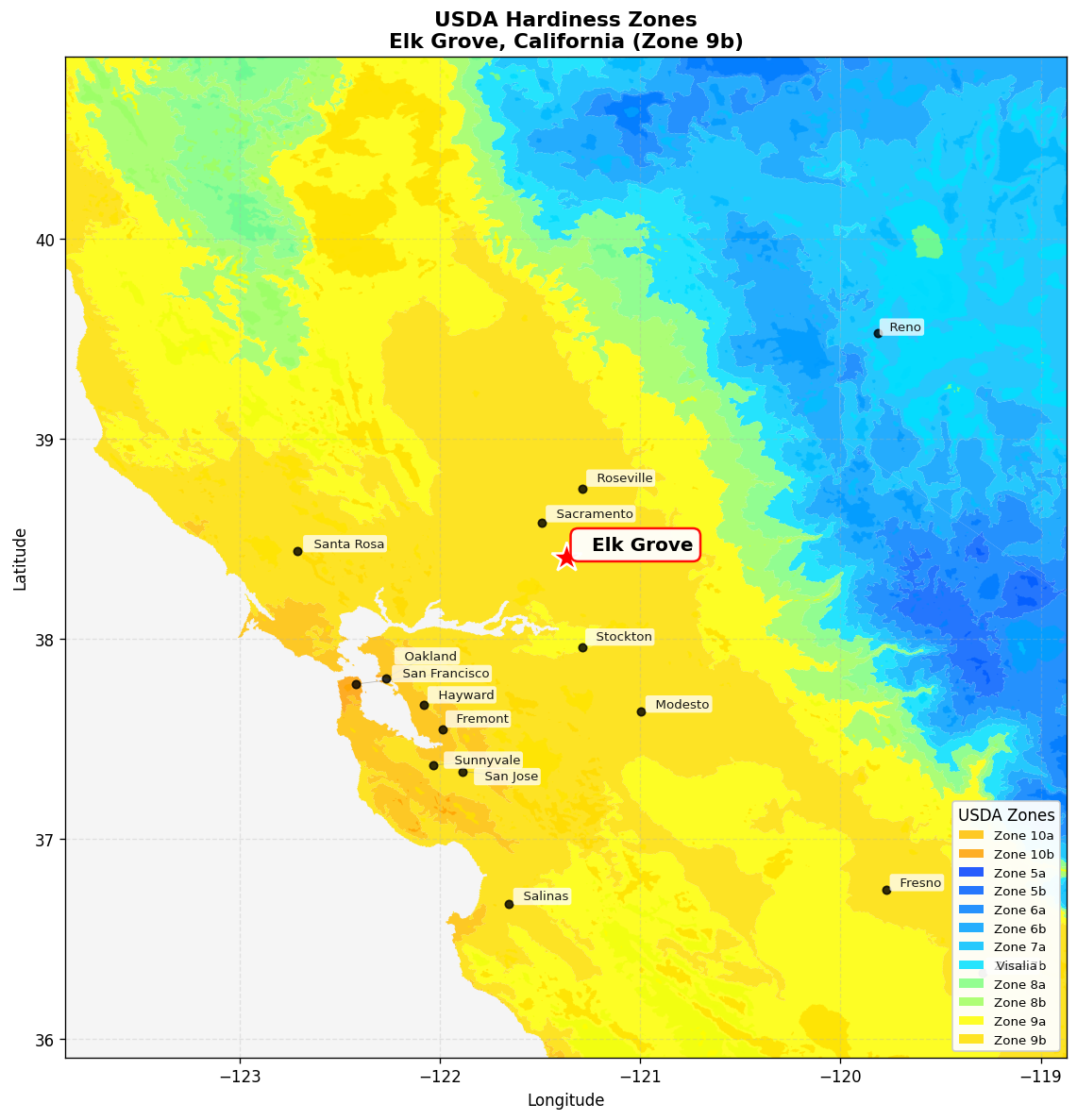
USDA Zone 9b
Hardiness zone for Elk Grove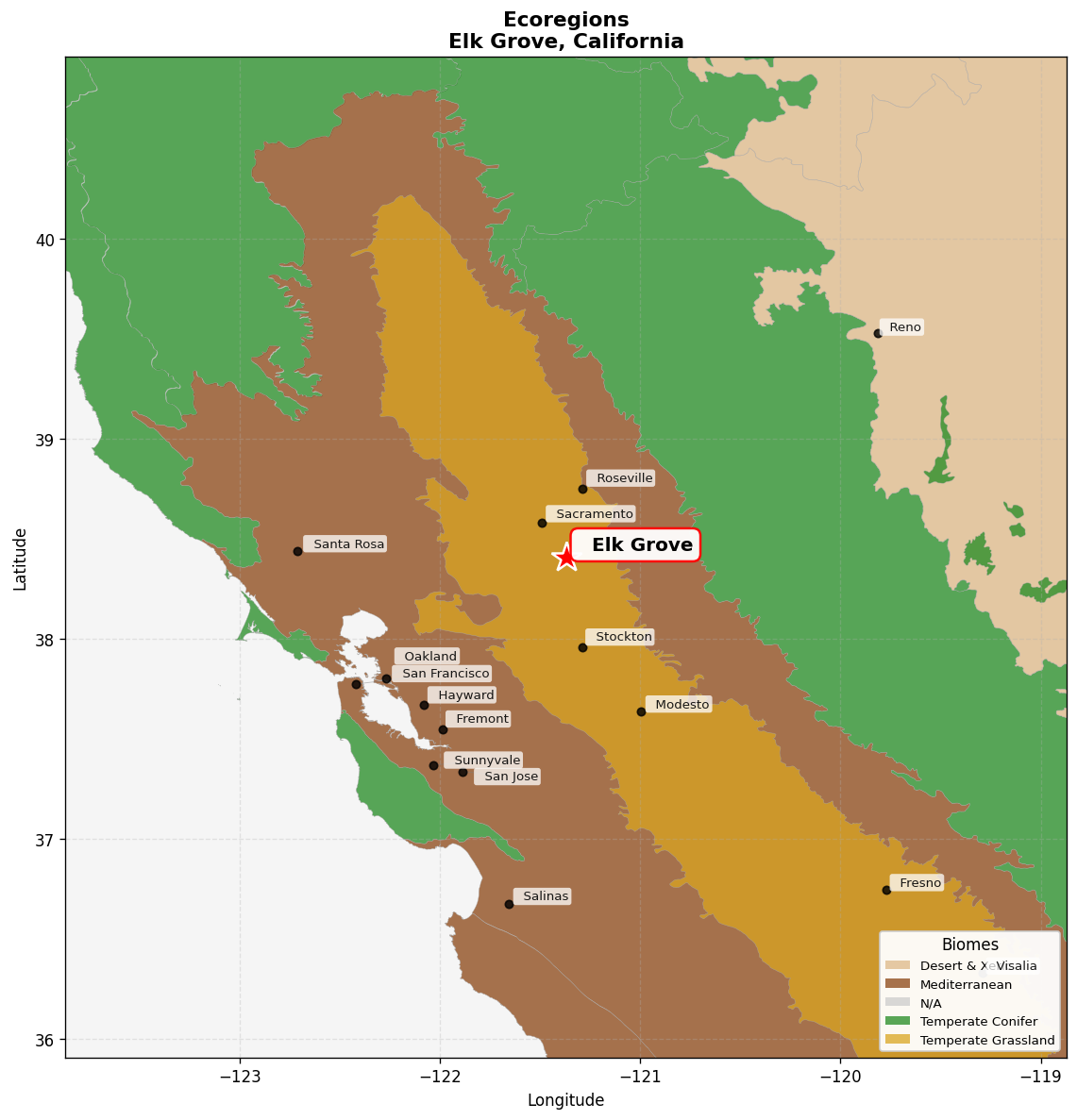
California Central Valley grasslands
Native ecoregionFrequently Asked Questions
How much does a modern landscape cost in Elk Grove?
Sacramento-area installation pricing sits near the national metro average — meaningfully below Bay Area rates and above rural Central Valley rates. A full front-yard gravel conversion with steel-edged beds and architectural planting runs about $8 to $18 per square foot, or roughly $5,000 to $12,000 for a typical 600 square foot frontage. A broom-finished concrete patio is $10 to $18 per square foot installed, and large-format sawn-jointed work $14 to $24. A backyard modern room with a slab, a gas fire table and cafe lighting typically lands between $16,000 and $40,000. A gunite pool with a modern concrete deck in this market generally starts around $70,000 and runs past $130,000 with landscape and lighting included.
Which agaves and architectural plants survive an Elk Grove winter?
Cold is not the problem in Zone 9b — winter water is. Agave parryi var. truncata, Agave ovatifolia 'Frosty Blue', Agave 'Blue Glow', Yucca rostrata 'Sapphire Skies' and Hesperaloe parviflora 'Brakelights' all take local frost without damage, but every one of them will rot if it sits in saturated San Joaquin clay through a wet February. Plant them in beds raised six to twelve inches, blend the top 12 inches at roughly 50/50 native soil and 3/8-inch crushed rock, set the crown slightly proud of finished grade, and top-dress with gravel rather than bark. Then turn the drip off completely from November through March. Done that way an agave here is a 15-year plant; done at grade in unamended clay it is a two-winter plant.
Which grasses should I use, and which should I avoid?
Muhlenbergia rigens is the local backbone — deergrass is native to the Central Valley grasslands, needs no summer water once established, and gives three feet of fine tawny texture. Muhlenbergia capillaris 'Regal Mist' adds the pink October bloom, Muhlenbergia dubia gives a tighter version of the same look, Calamagrostis × acutiflora 'Karl Foerster' provides the strict vertical for formal repeats, and Nassella pulchra suits informal drifts. For a mowable meadow alternative use Carex pansa or Carex divulsa. Avoid Nassella tenuissima (Mexican feather grass): it looks perfect for about three years, then self-sows across the whole garden and into open land, and it is flagged as an invasive concern in California. Cut everything back once in late February; that is the entire annual maintenance program.
Do I have to give up the lawn entirely?
No, but it should become a shape rather than a surface. Elk Grove Water District and Sacramento County Water Agency both assign irrigation days by house number — odd addresses Tuesday, Thursday and Saturday, even addresses Wednesday, Friday and Sunday — with lawn watering restricted further than shrub watering and daytime irrigation banned in peak hours, so a large fescue field is both expensive and awkward to schedule. Check the current rules with your provider. A shaped 200 to 400 square foot panel on rotary nozzles reads as a design element, waters on one zone within the allowed day, and still gives you somewhere to put a paddling pool. If you want the green without the demand, UC Verde buffalograss was bred for Central Valley conditions and uses roughly half the water of tall fescue once it is in.
What has to happen to the soil before the concrete goes in?
Take the base seriously — Elk Grove clay shrinks and swells dramatically between a saturated February and a bone-dry August, and slabs poured on unprepared subgrade crack and tilt within a few seasons. For patios and walks, excavate and compact four to six inches of Class 2 aggregate base, keep the slab reinforced, and place sawn control joints on a grid rather than hoping for the best. For any bed adjoining paving, build up rather than digging down; a hole cut into hardpan and backfilled with soft mix collects water and undermines the slab edge. Expect real base preparation and drainage to add roughly $2 to $5 per square foot to a hardscape budget in this market. It is the least visible money you will spend and the most consequential.
When is the best time to build in Elk Grove?
October through early December is the strongest planting window: warm soil, free establishment water from winter rain, and root growth all winter so plants meet their first 105°F afternoon already anchored. February and March are the good second window. Avoid planting from mid-June through mid-September — agaves and grasses will survive it, but everything else struggles to establish against the evaporation rate. Hardscape is a different calendar: concrete can be poured almost year-round here, with delays of a few days at a time between winter storms, and building the slab, fire feature and lighting in autumn so the planting goes in immediately afterwards is the sequence that gets you a finished garden by spring.