4 Modern Garden Ideas for Fontana, CA | Clean-Line Landscape Design in Zone 10a
Native plants from the California coastal sage and chaparral (Zone 10a) — Mediterranean (hot summer) climate
Why Modern/Minimalist Gardens in Fontana?
Modern landscaping and Fontana are a natural match, and the reason is written into the housing stock. The newer builds across Sierra Lakes, Shady Trails, and Hunter's Ridge already have the clean stucco planes, flat parapets, and black-framed windows that modern landscape design is meant to amplify — and the older ranch homes of Southridge and central Fontana convert beautifully, because a low-slung 1960s ranch behind a gravel garden and steel-edged beds reads instantly contemporary. Where Midwest homeowners have to fight their climate to get this look, Fontana's is the native habitat: agaves, yuccas, and sculptural desert plants that Chicago grows in pots live outdoors here year-round in Zone 10a.
The climate does the maintenance math for you. Fontana averages roughly 16 inches of rain a year, almost all of it November through March, with summer highs regularly pushing past 95°F — which makes thirsty lawn the most expensive thing in the yard and gravel-and-succulent design the cheapest to own. The city's soil seals the deal: sitting on the Lytle Creek alluvial fan below Cajon Pass, Fontana yards drain through deep sandy, granitic soil that lets agaves, barrel cactus, and Mediterranean plants grow at grade with none of the rot problems clay-soil cities battle. A turf-to-gravel conversion here isn't just style — Fontana Water Company customers can claim regional SoCal WaterSmart turf-replacement rebates that offset a meaningful slice of the install.
Two local forces deserve respect in the design. First, Santa Ana winds funnel straight down Cajon Pass into Fontana, so pergolas, umbrellas, and string-light spans need real anchoring, and fine gravel should be crushed and compacted (angular DG locks together; rounded pea gravel migrates in wind and underfoot). Second, summer sun is relentless — a modern yard with zero canopy is a heat mirror by 2 p.m. The best Fontana modern designs keep or plant one good shade tree, then let clean hardscape, sculptural plants, and evening lighting do the rest. Done right, the result is a landscape that looks sharpest in exactly the months a lawn looks worst.
4 Modern/Minimalist Design Ideas for Fontana
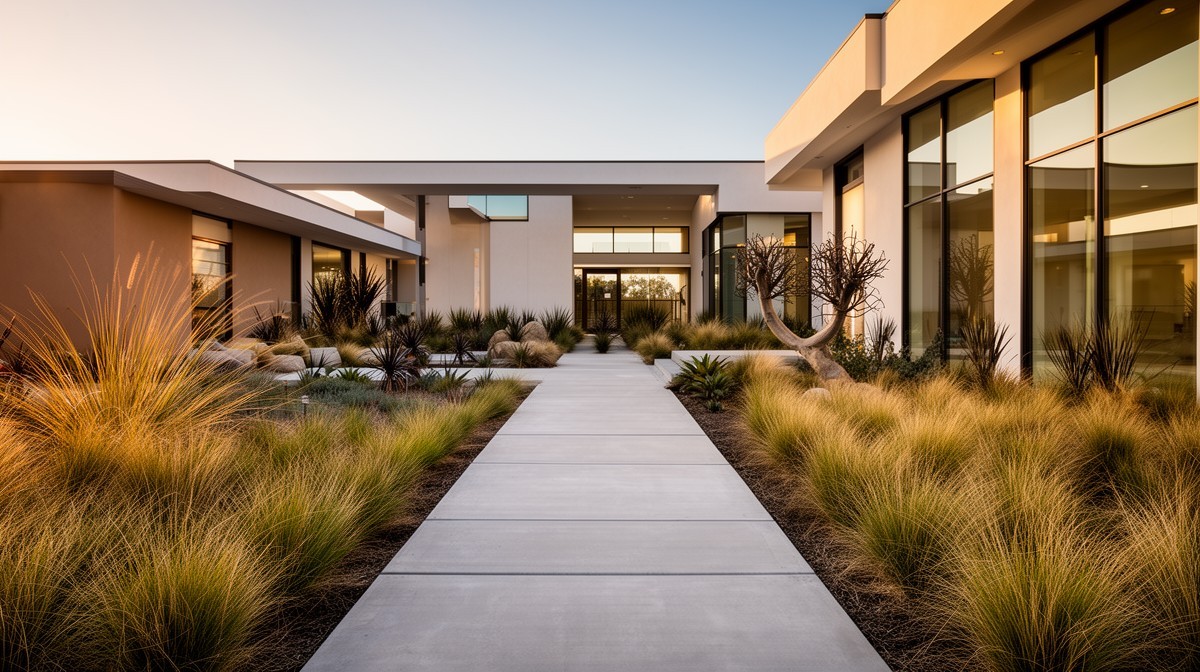
The Flat-Roof Foundation Remix
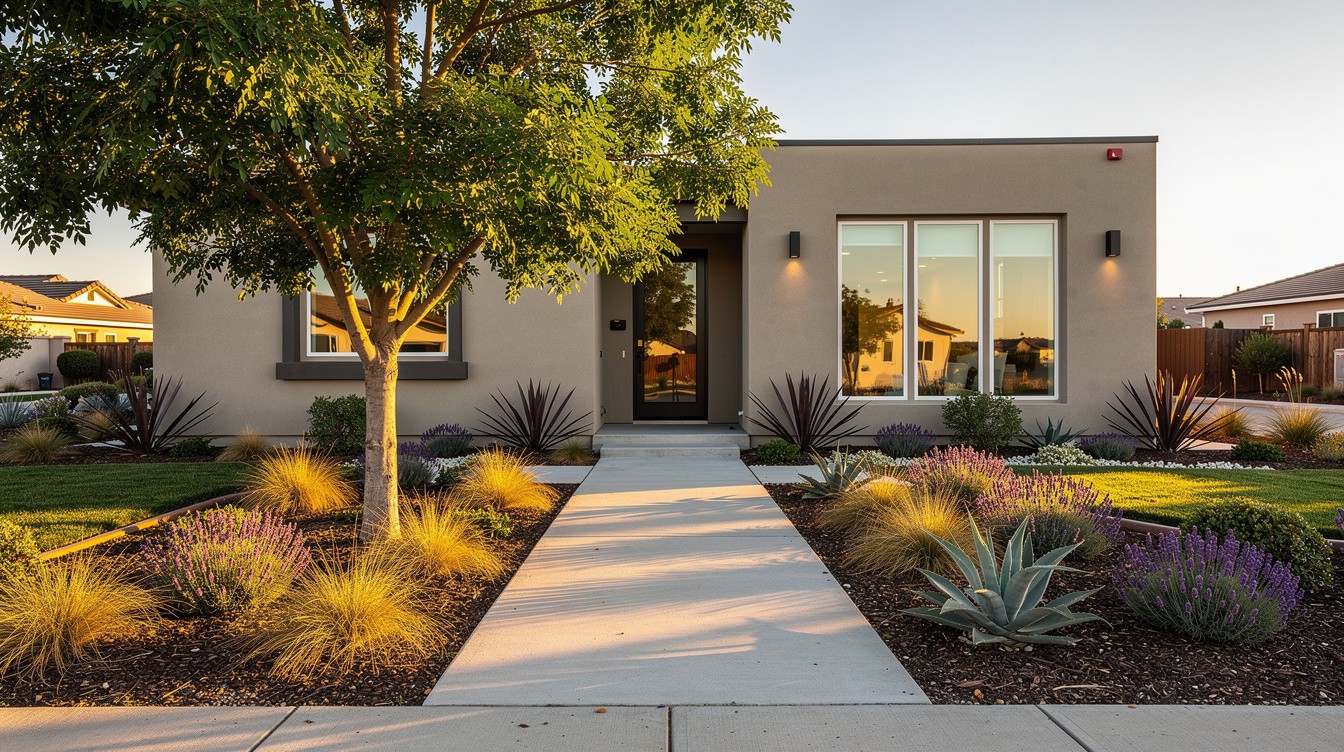
$10–18/sqftA taupe flat-roofed contemporary with black-framed windows and a recessed dark entry, fronted by a dead-straight poured concrete walkway that splits the yard into two disciplined halves. The planting is a textbook Inland Empire water-wise mix: blue agaves and burgundy New Zealand flax as sculptural anchors, drifts of golden Mexican feather grass catching the low sun, and Spanish lavender adding purple against dark bark mulch. Slim panels of lawn survive as green accents behind steel edging rather than covering the yard, and a mature shade tree on the corner keeps the west-facing facade livable in August.
The Corten Terrace Desert Yard
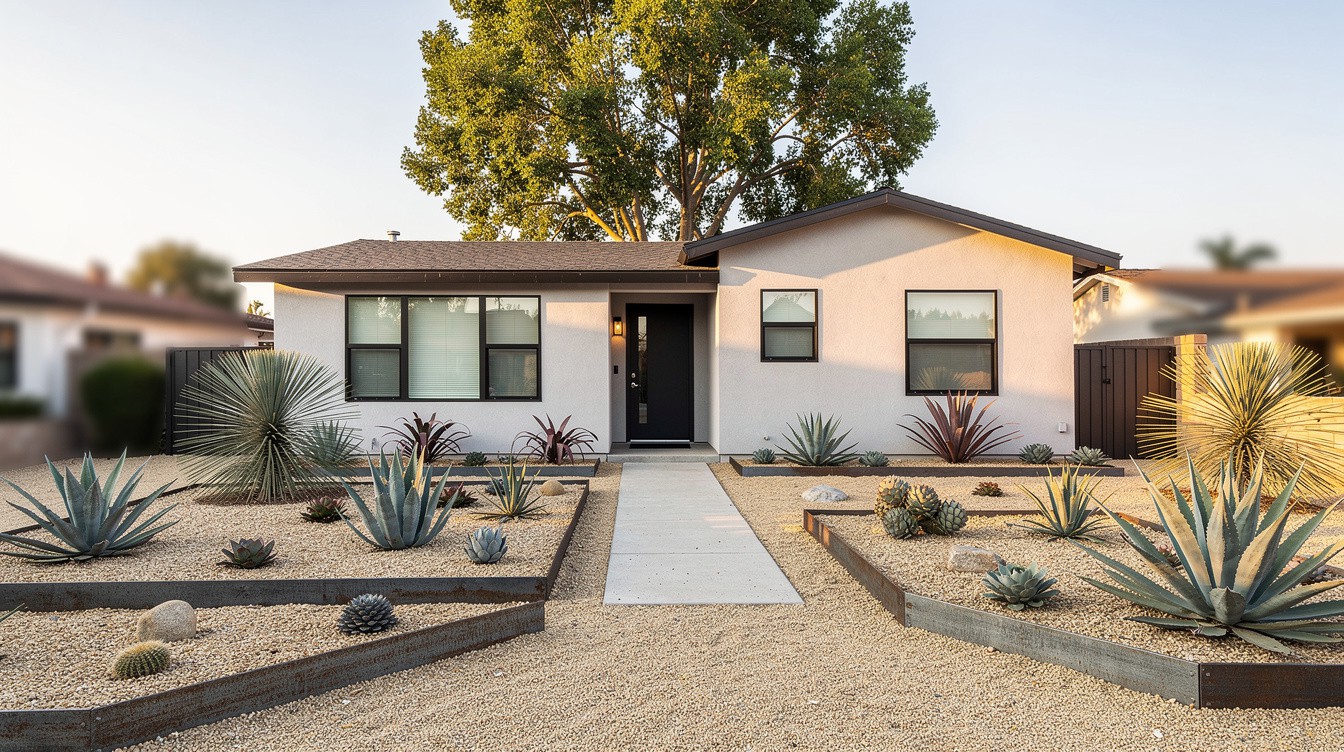
$9–16/sqftA white ranch home with dark trim where the lawn is completely gone, replaced by a field of compacted gold decomposed granite organized by low weathering-steel retaining edges into stepped, geometric terraces. Each terrace is its own composition — whale's tongue and artichoke agaves, golden barrel cactus, blue-gray century plants, spiky yuccas — punctuated by rounded granite boulders that echo the Lytle Creek wash this soil came from. A plain concrete walk runs to the door, and one towering existing tree shades the roofline, proving full desert conversion doesn't mean losing the canopy.
The Sunset Fire Pit Lounge
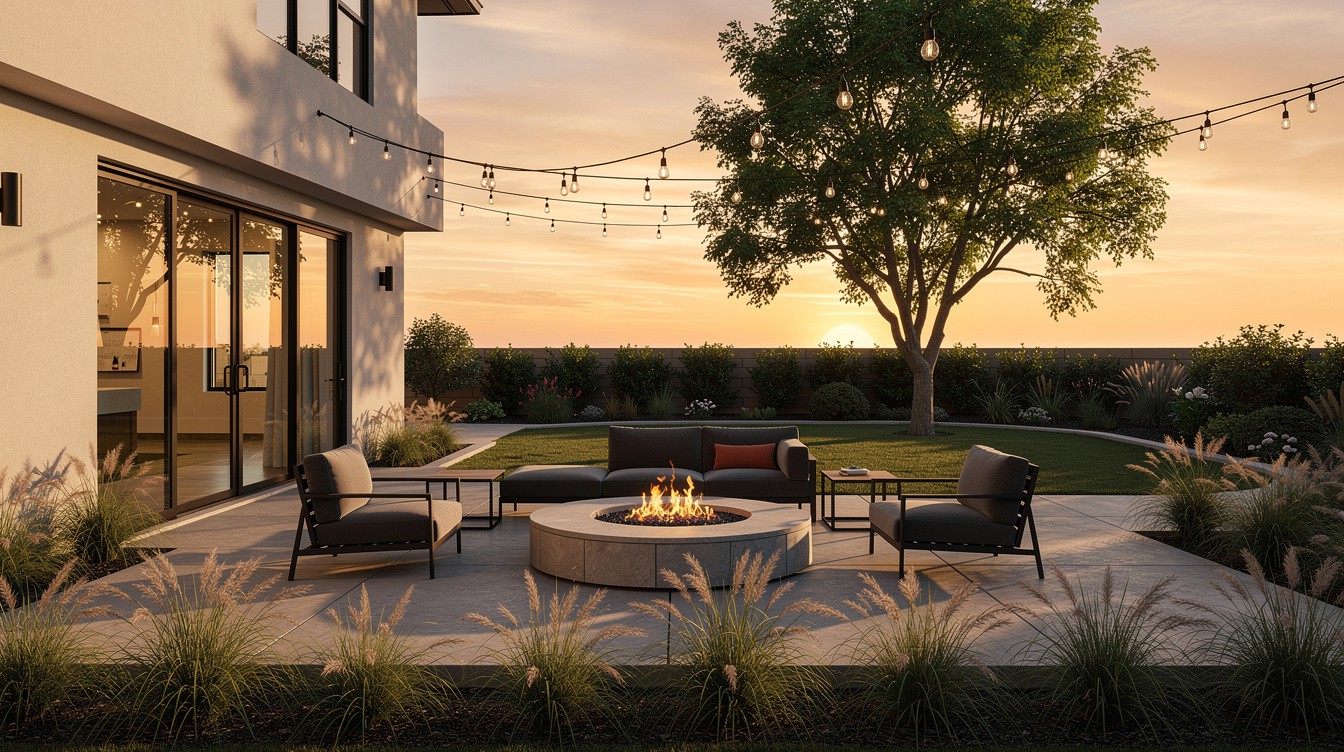
$18–35/sqftOff the back of a two-story white modern home, large-format concrete panels form a sunken-feel lounge terrace wrapped on every side by drifts of feathery ornamental grasses that blur the hard edges and glow amber at golden hour. A round board-formed concrete gas fire pit sits at the center of a black-framed sofa and lounge-chair grouping, string lights criss-cross overhead from the house to a single specimen tree, and a tidy lawn panel beyond keeps the middle ground green. With Fontana's open west horizon toward the valley, the whole layout is aimed at the sunset — this is a yard designed for 7 p.m.
The Glass-Wall Pool Courtyard
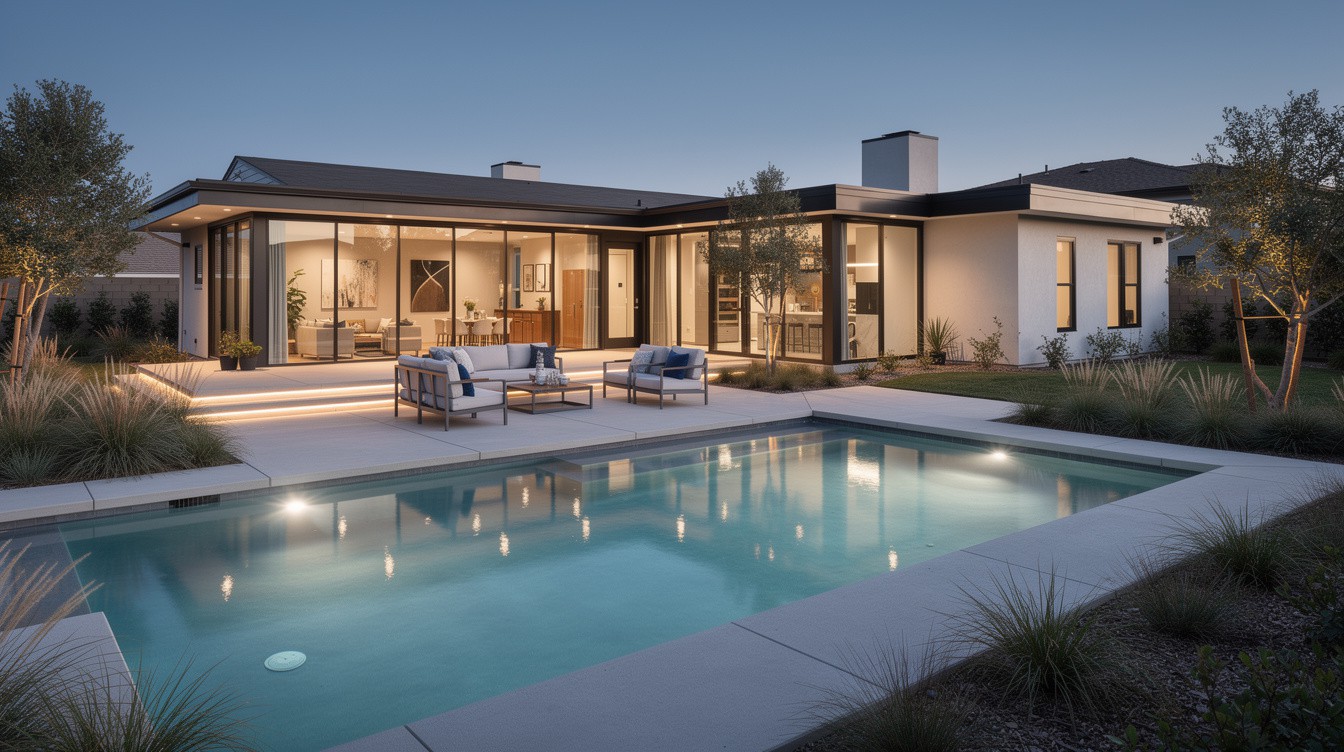
$45–85/sqft (pool area inclusive)An L-shaped single-story modern home wraps two sides of a rectangular pool, its floor-to-ceiling glass walls turning the lit interior into part of the landscape after dark. The pool sits in a crisp light-gray concrete deck with a floating step pad, furnished with a pair of low white-cushioned seating groups, while the planting stays silvery and Mediterranean-modern: young olive trees underlit from below, fountains of ornamental grasses along the fence lines, and gravel mulch beds instead of thirsty foundation shrubs. Warm LED strips under the entry steps and in-pool lighting carry the design through Fontana's nine months of outdoor-weather evenings.
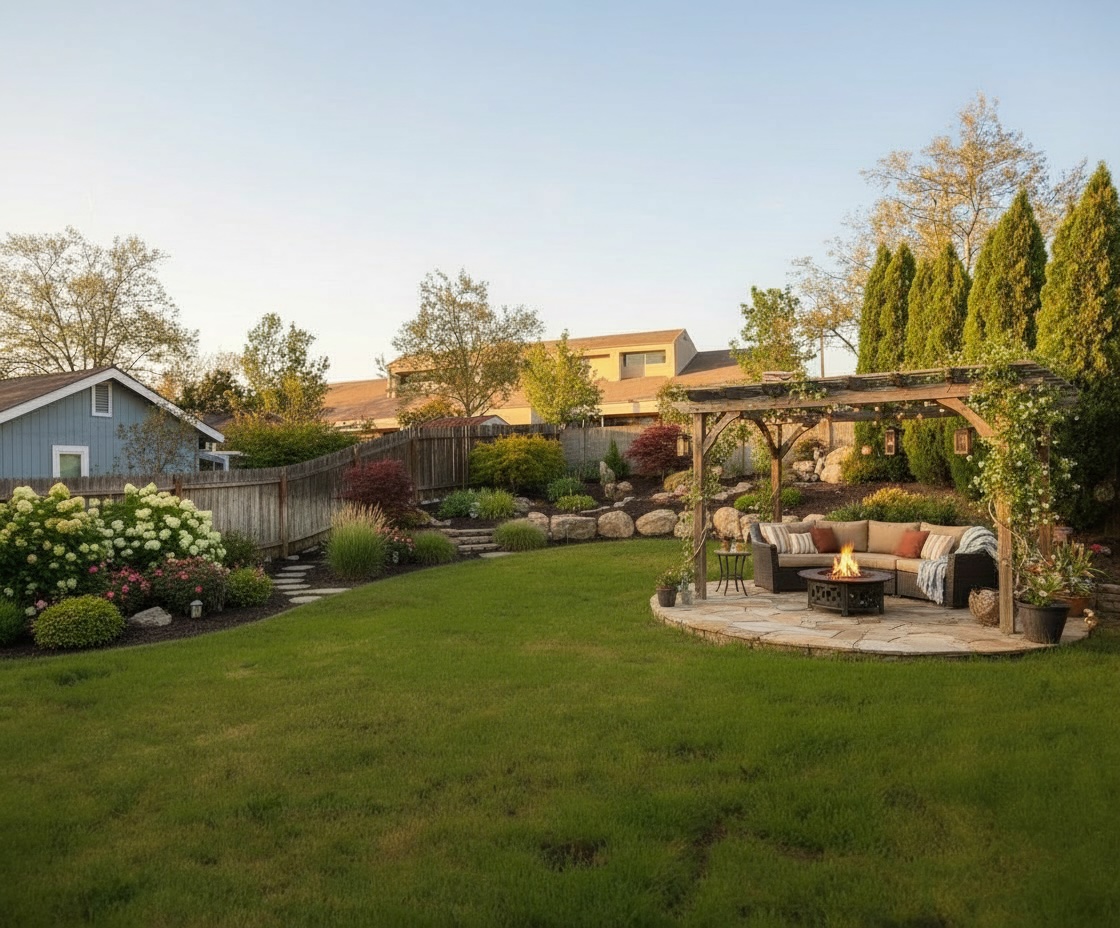
See how a modern/minimalist garden looks on YOUR property
Upload a photo of your Fontana yard and visualize your dream garden in seconds.
Try ProScapeAI Free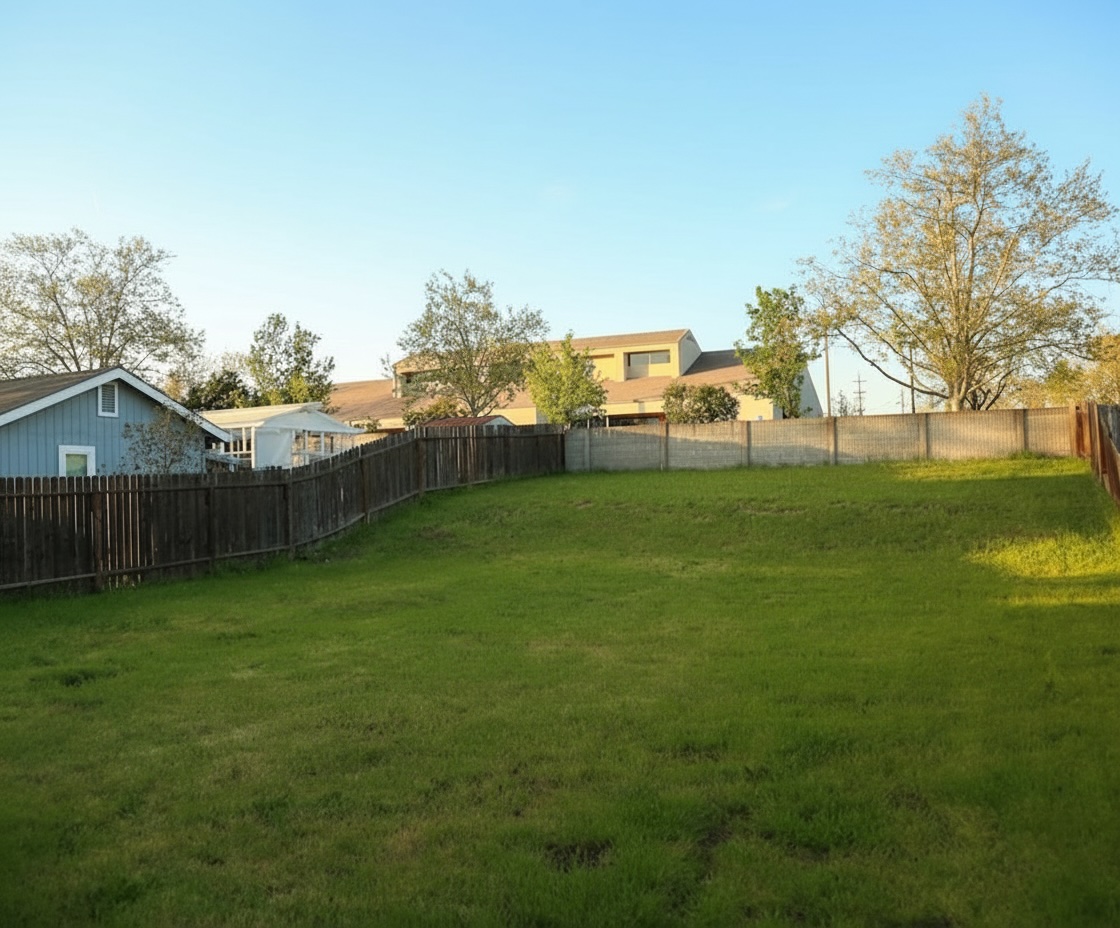
Featured Trees & Shrubs for Modern/Minimalist Gardens
Browse all 115 plants for Fontana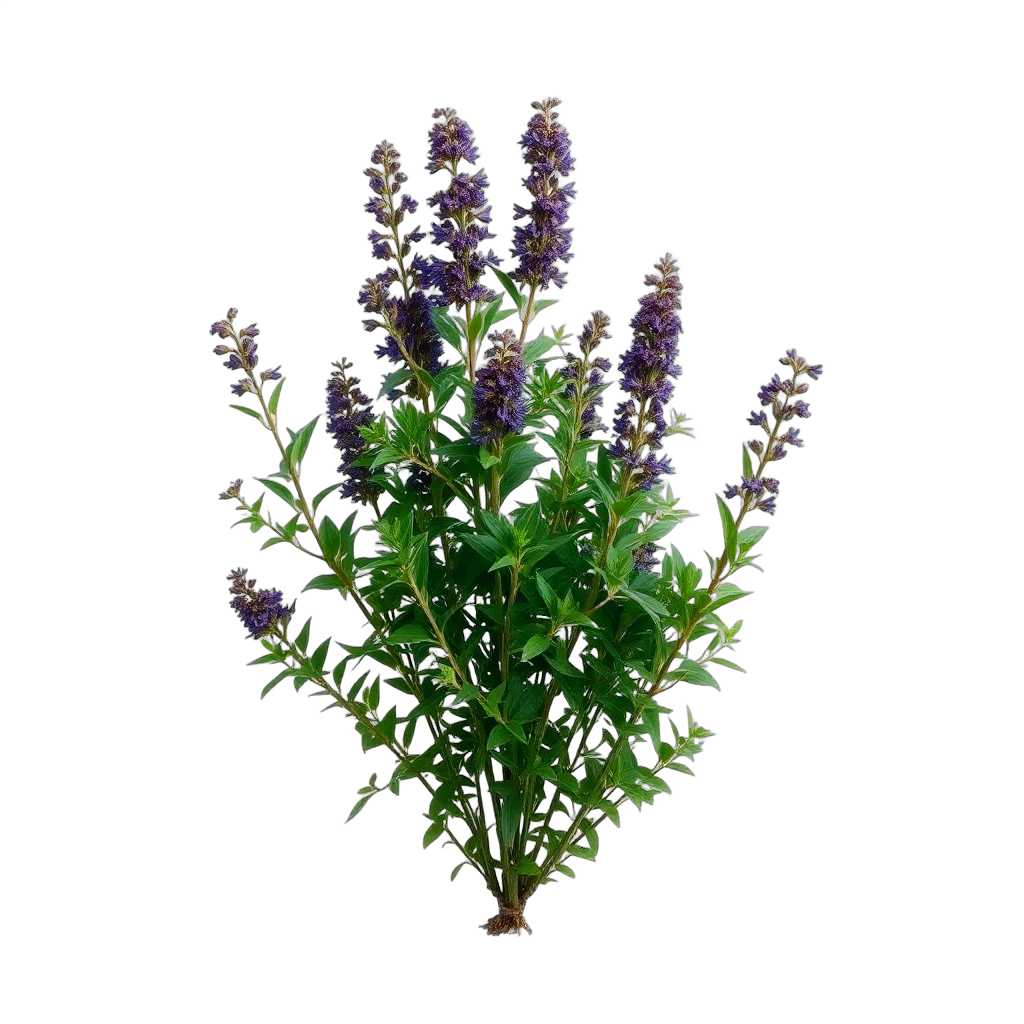
Black Sage
Salvia mellifera
grows to 4 feet, white blooms in spring. Attracts butterflies.
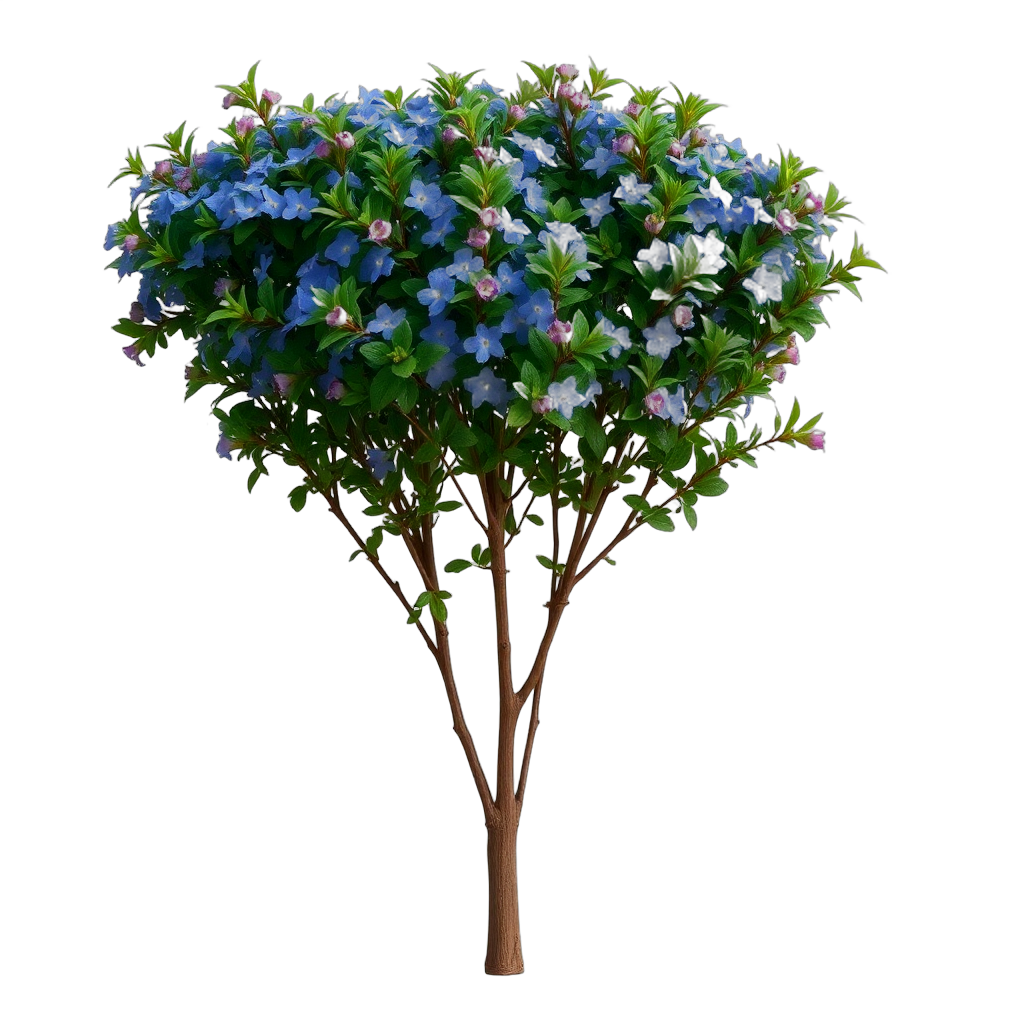
Blue Blossom
Ceanothus thyrsiflorus
medium-sized at 12 feet, blue blooms in spring. Attracts butterflies.
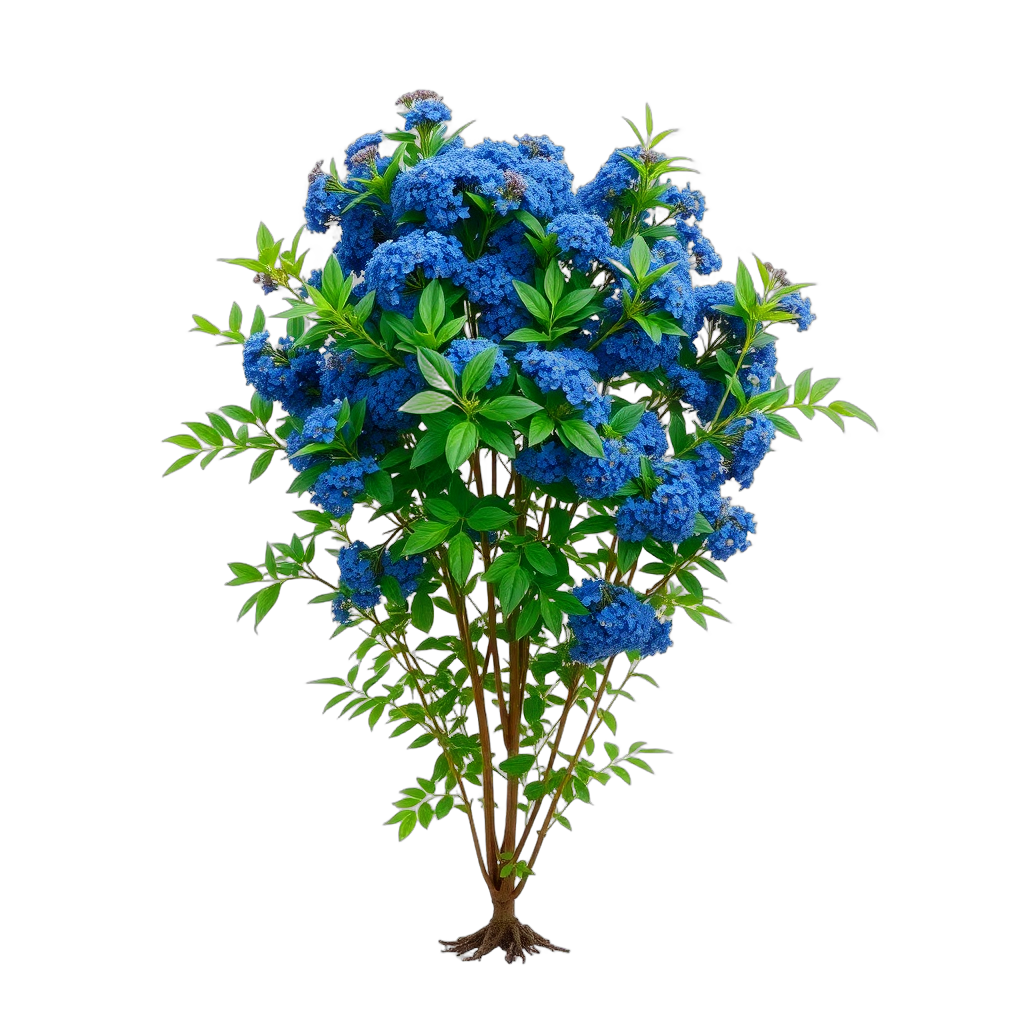
Blue Elderberry
Sambucus cerulea
medium-sized at 15 feet, white blooms in spring. Attracts butterflies.
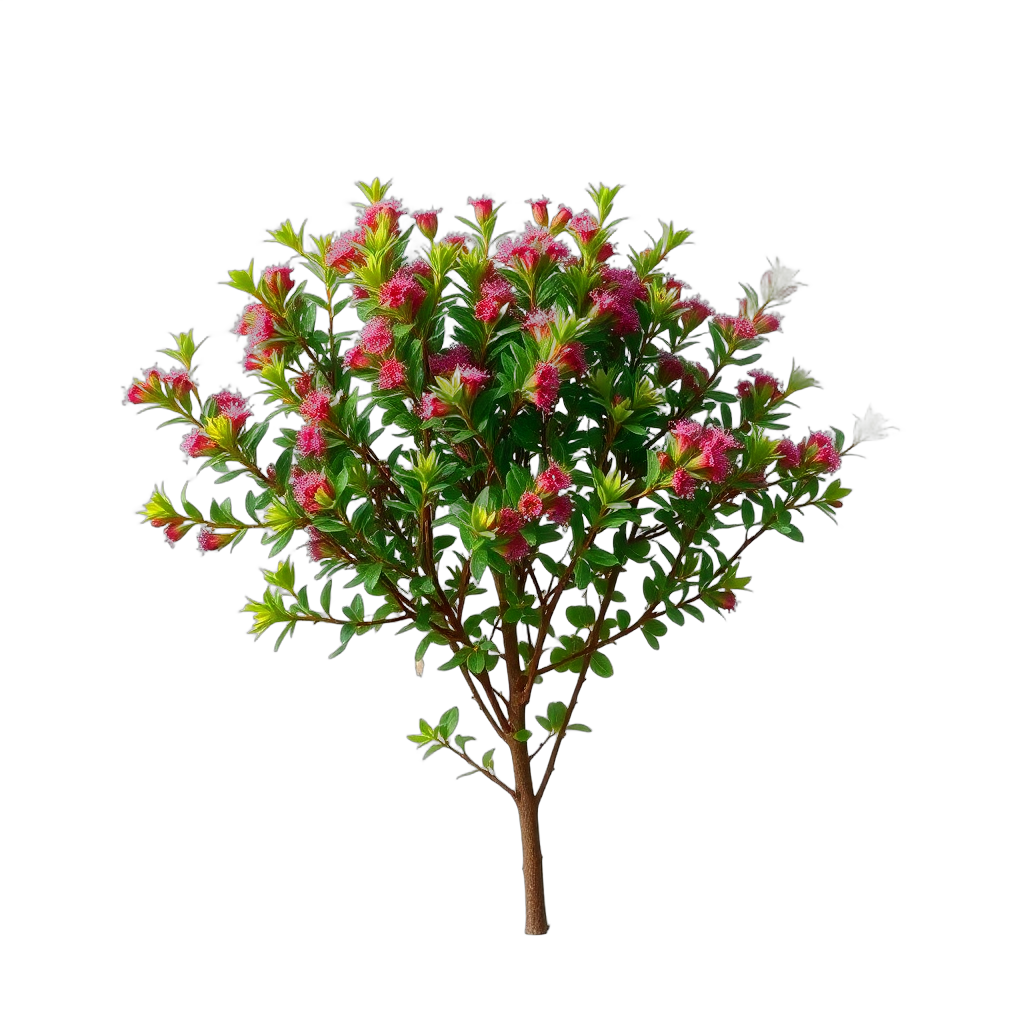
Buckbrush
Ceanothus cuneatus
medium-sized at 7 feet, white blooms in spring. Attracts butterflies.
Featured Grasses & Groundcovers for Modern/Minimalist Gardens
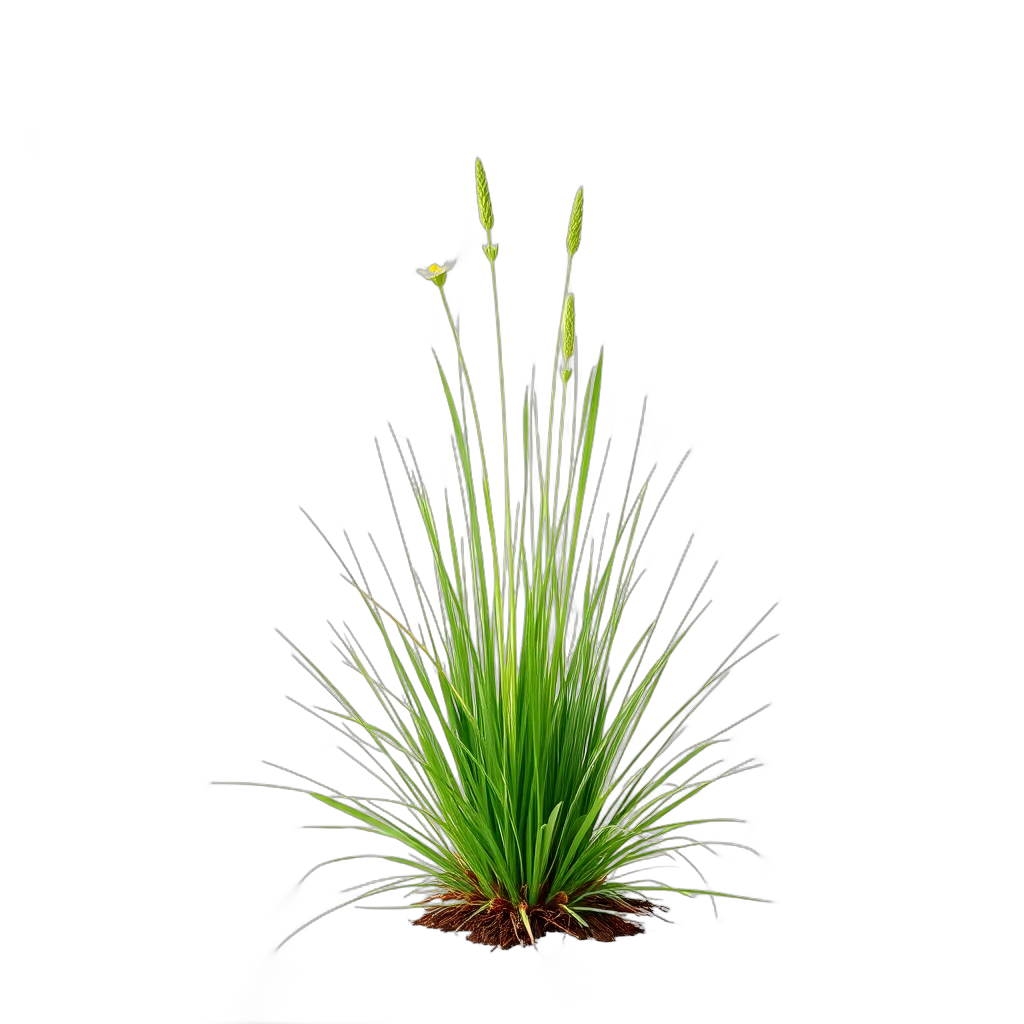
California Brome
Bromus carinatus
low-growing ground cover, blooms in spring. Yellow fall color.
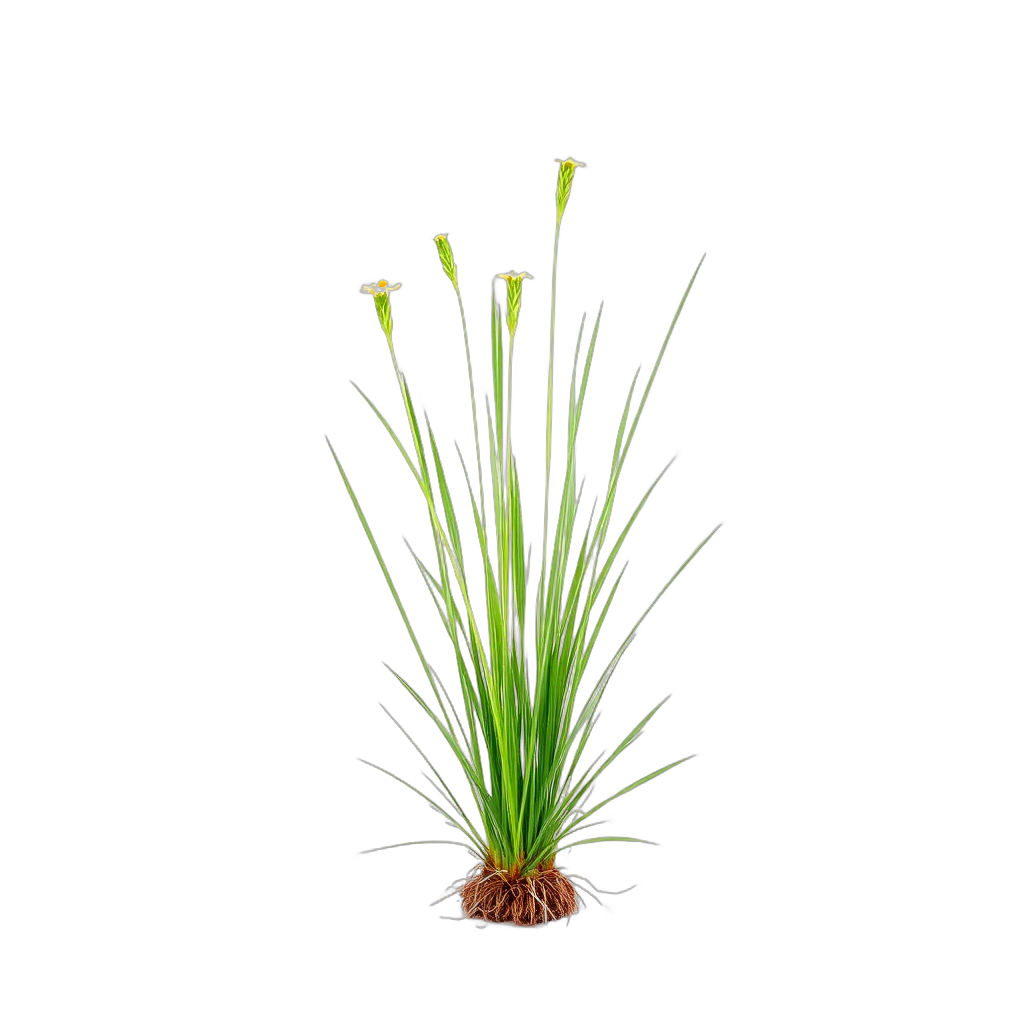
California Melic
Melica californica
low-growing ground cover, blooms in spring.
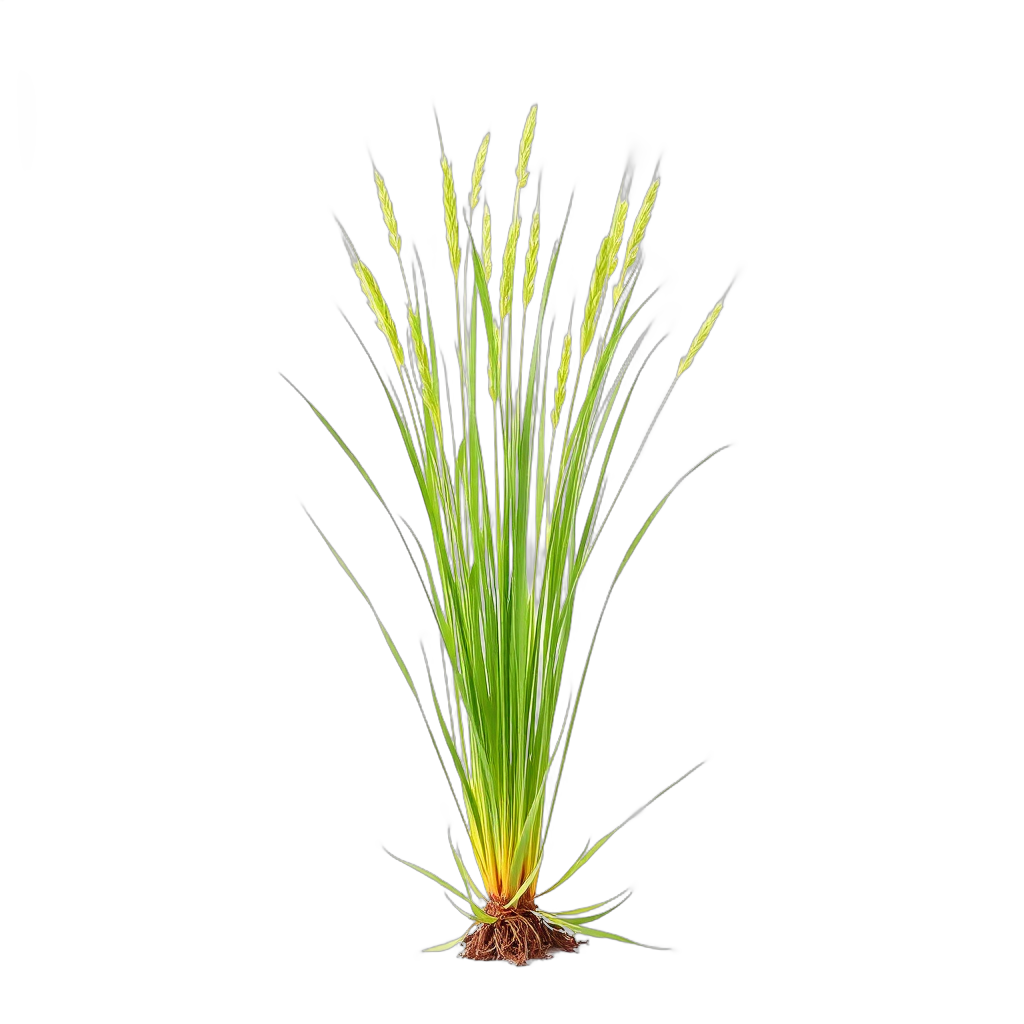
California Oatgrass
Danthonia californica
low-growing ground cover, blooms in spring. Yellow fall color.
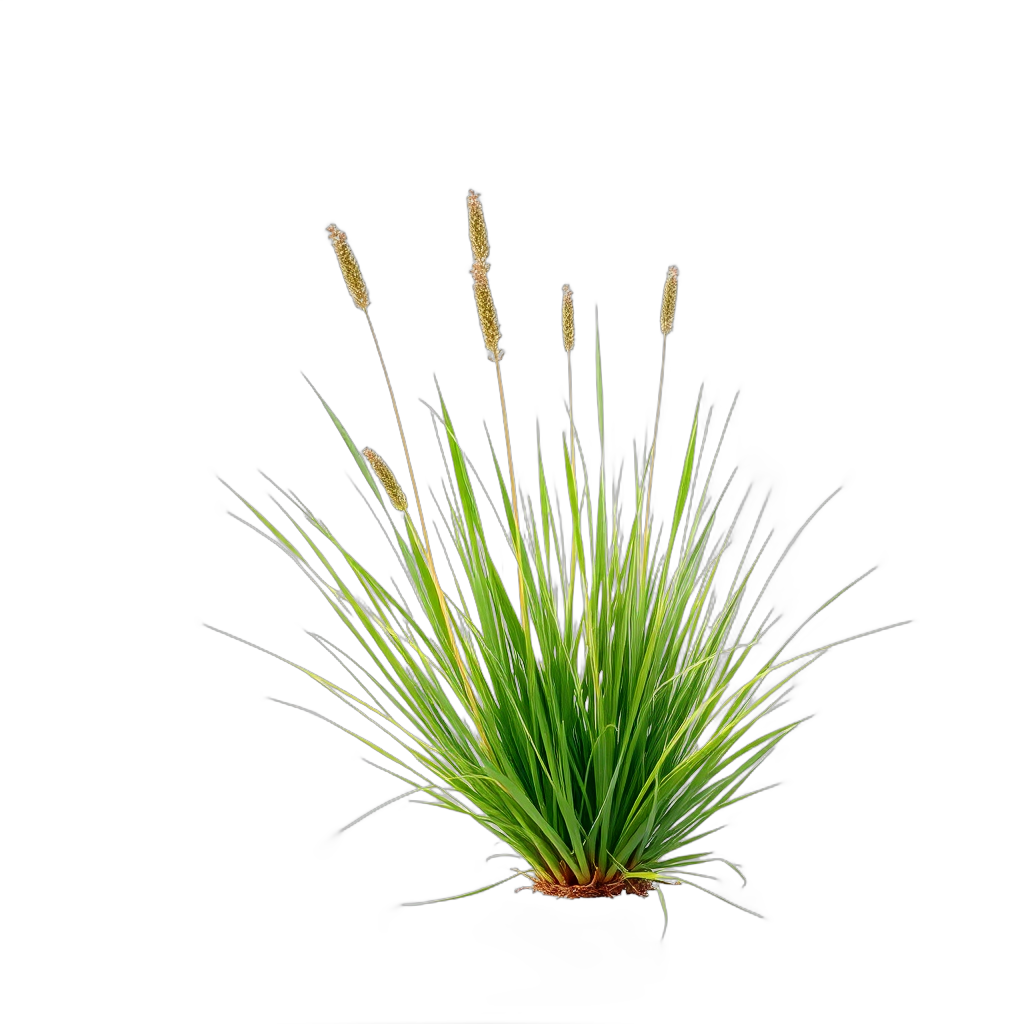
Deer Grass
Muhlenbergia rigens
grows to 3 feet, yellow blooms in fall. Evergreen year-round.
Featured Flowers & Perennials for Modern/Minimalist Gardens
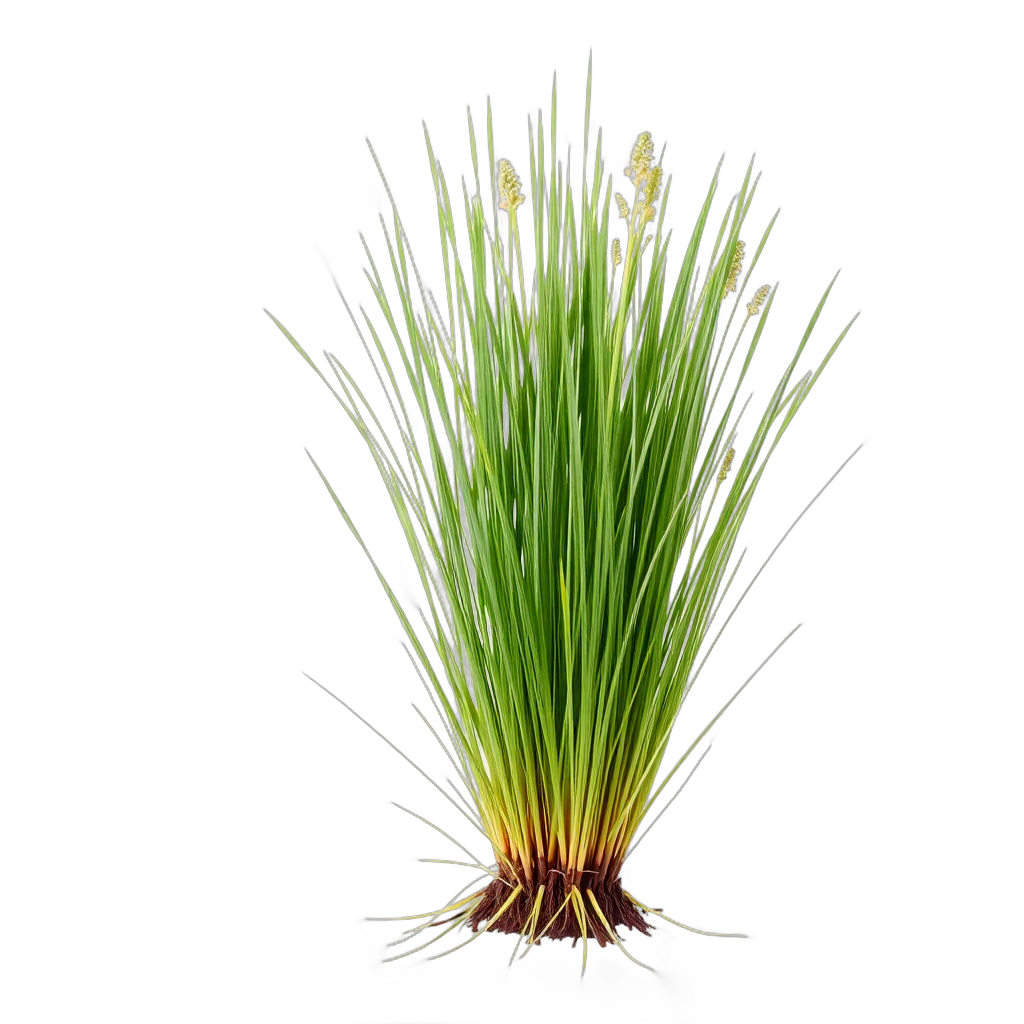
California Gray Rush
Juncus patens
low-growing ground cover, blooms in summer. Evergreen year-round.
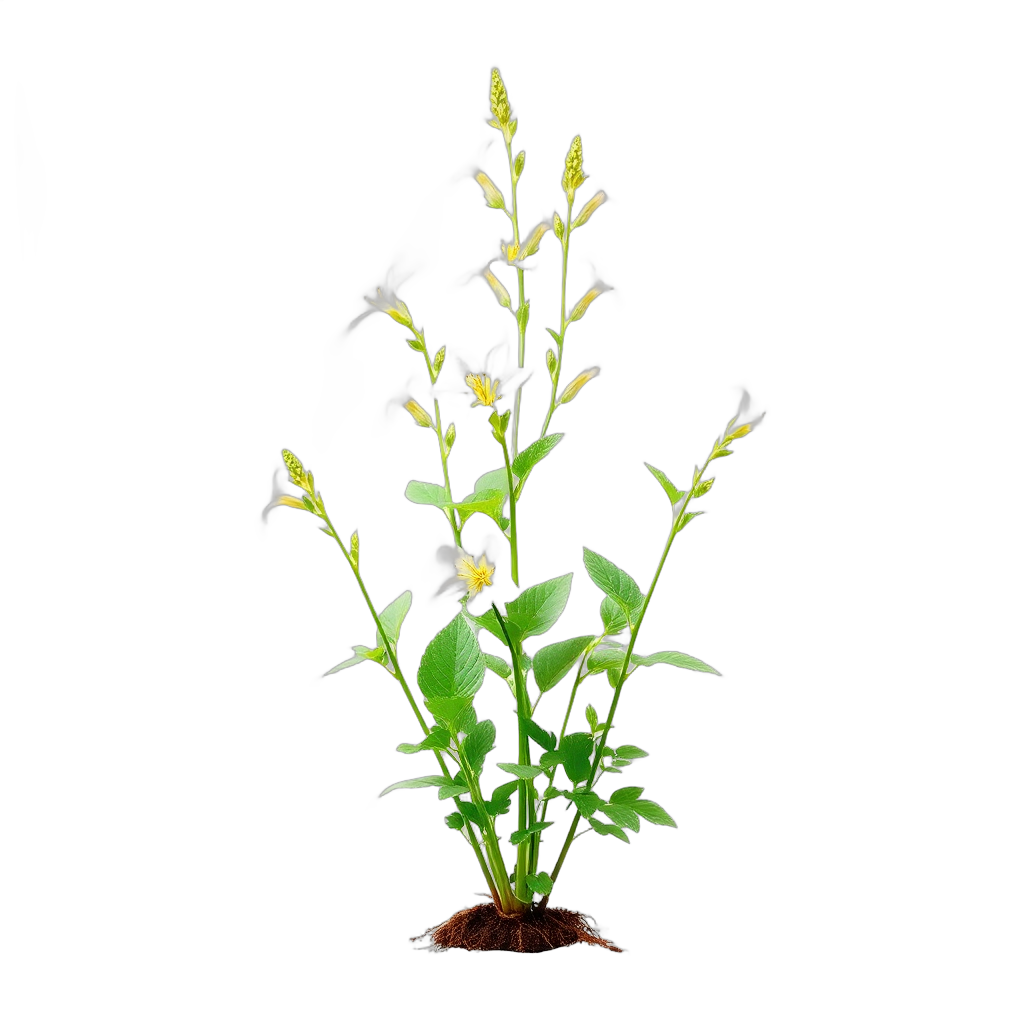
Beach Evening Primrose
Camissonia cheiranthifolia
low-growing ground cover, yellow blooms in spring. Attracts butterflies.
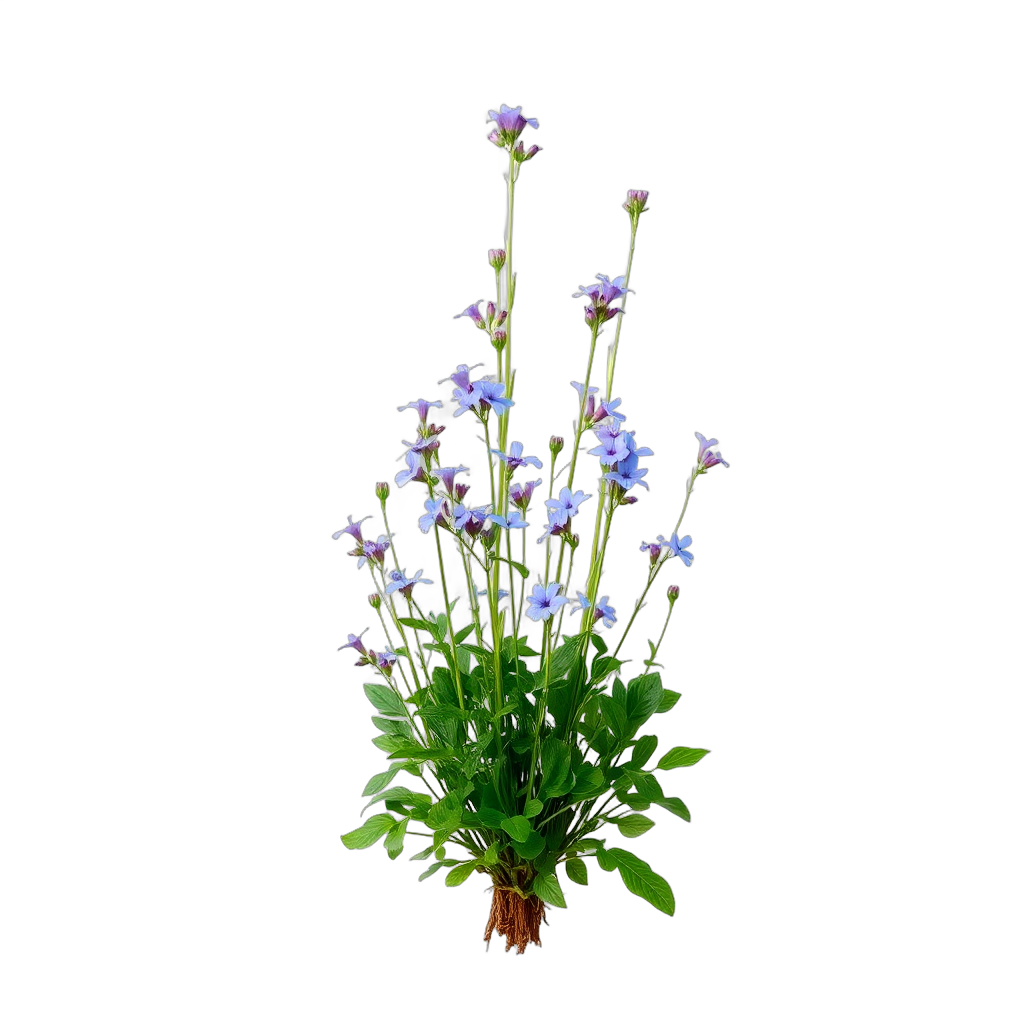
Blue Dicks
Dichelostemma capitatum
low-growing ground cover, blue blooms in spring. Pollinator-friendly.
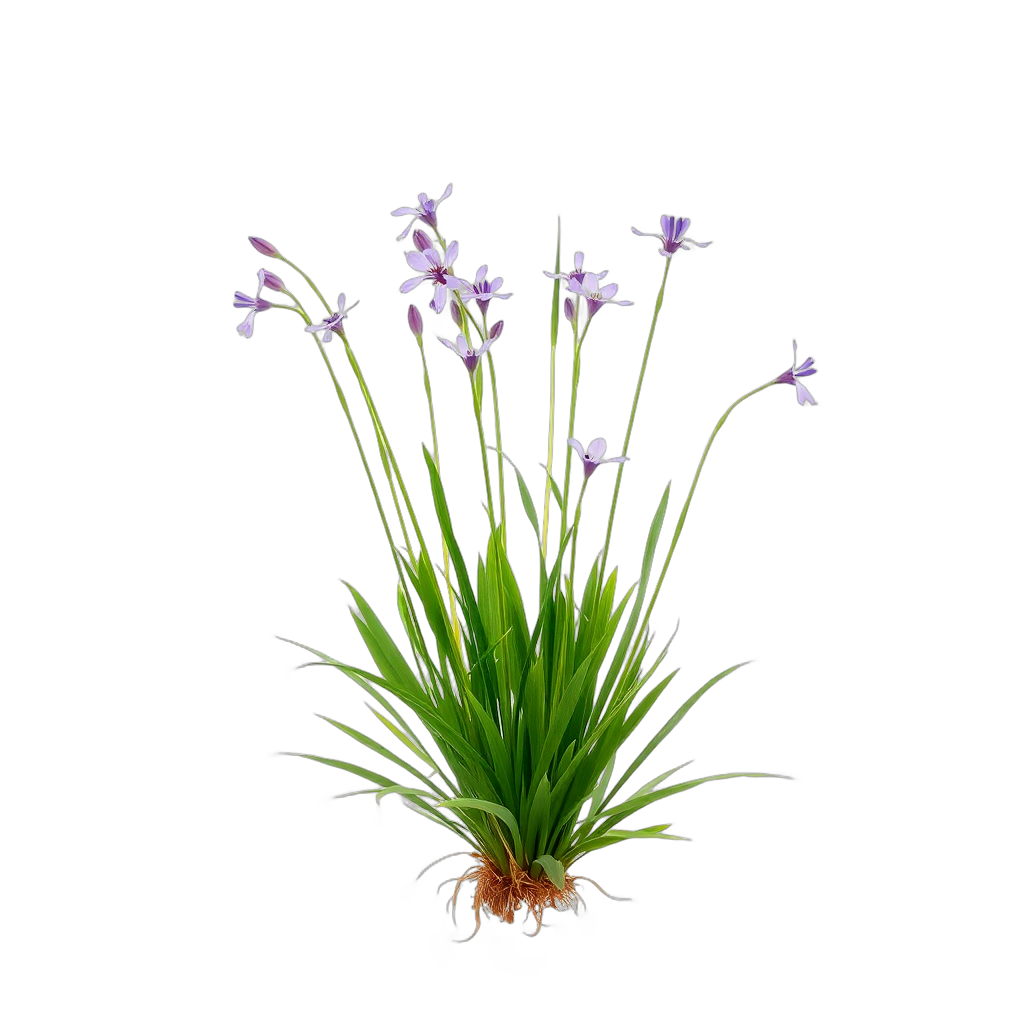
Blue-Eyed Grass
Sisyrinchium bellum
low-growing ground cover, blue blooms in spring. Attracts butterflies.
Bloom Calendar for Fontana
spring
Beach Evening Primrose, Blue Dicks, Blue-Eyed Grasssummer
California Gray Rush, Hooker's Evening Primrose, Hummingbird Mintfall
California Fuchsiawinter
Limited bloomsDesign Tips for Fontana (Zone 10a)
- Get SoCal WaterSmart rebate approval BEFORE removing a blade of grass — Fontana Water Company customers qualify through the regional MWD program, and pre-approval is mandatory; the rebate can fund your entire plant budget
- Choose compacted decomposed granite over pea gravel everywhere that matters — Cajon Pass Santa Anas scatter loose rounded gravel across your walks every October, while angular DG locks in place
- Keep one real shade tree in the design; a gravel-and-agave yard with no canopy becomes a heat mirror in Fontana's 95°F+ summers, and an existing mature tree is worth more than any hardscape feature you could buy
- Plant succulents at grade with confidence — Fontana's sandy Lytle Creek alluvial soil drains so fast that the raised beds required in clay cities are optional here; just skip the winter irrigation entirely
- Anchor everything overhead into concrete footings: pergolas, shade sails, and string-light poles all take a beating from fall wind events, and spike-anchored posts are the most common first-year failure in Inland Empire yards
- Light the silhouettes, not the surfaces — uplights behind agaves, yuccas, and olive trunks throw dramatic shadows on white stucco and give you nine months of warm-evening payoff for a few hundred dollars of LED fixtures
Where to Source Plants in Fontana
Skip the big-box stores. These independent Fontana nurseries specialize in the plants that make modern/minimalist gardens thrive in Zone 10a.
Mercado's Nursery
Southwest Fontana
Long-established family nursery offering a wide variety of plants, trees, and garden supplies.
Castle Nursery
Central Fontana
Retail nursery providing plants, shrubs, trees, and gardening supplies to local residents.
Sunshine Growers Nursery
Ontario
Large wholesale and retail nursery covering everything from bedding plants to large trees.
Parkview Nursery
Riverside
Full-service garden center with a large stock of quality plants including California natives.
Modern/Minimalist Landscaping Costs in Fontana
| Project Scope | Estimated Cost |
|---|---|
| Front yard modern conversion (turf removal + DG + agaves/grasses) | $6,000 – $14,000 |
| Concrete or paver terrace (200–400 sqft) | $9,000 – $24,000 |
| Backyard lounge with gas fire pit + seating + lighting | $18,000 – $45,000 |
| Pool deck + full backyard landscape | $80,000 – $180,000 |
| Corten steel terrace edging (fabricated + installed, per 50 ft) | $1,500 – $3,500 |
| AI visualization with ProScapeAI | Free to start |
Estimates based on Fontana, CA-area contractor rates as of 2026. Actual costs vary by site conditions, materials, and contractor.
Fontana Climate & Growing Zone
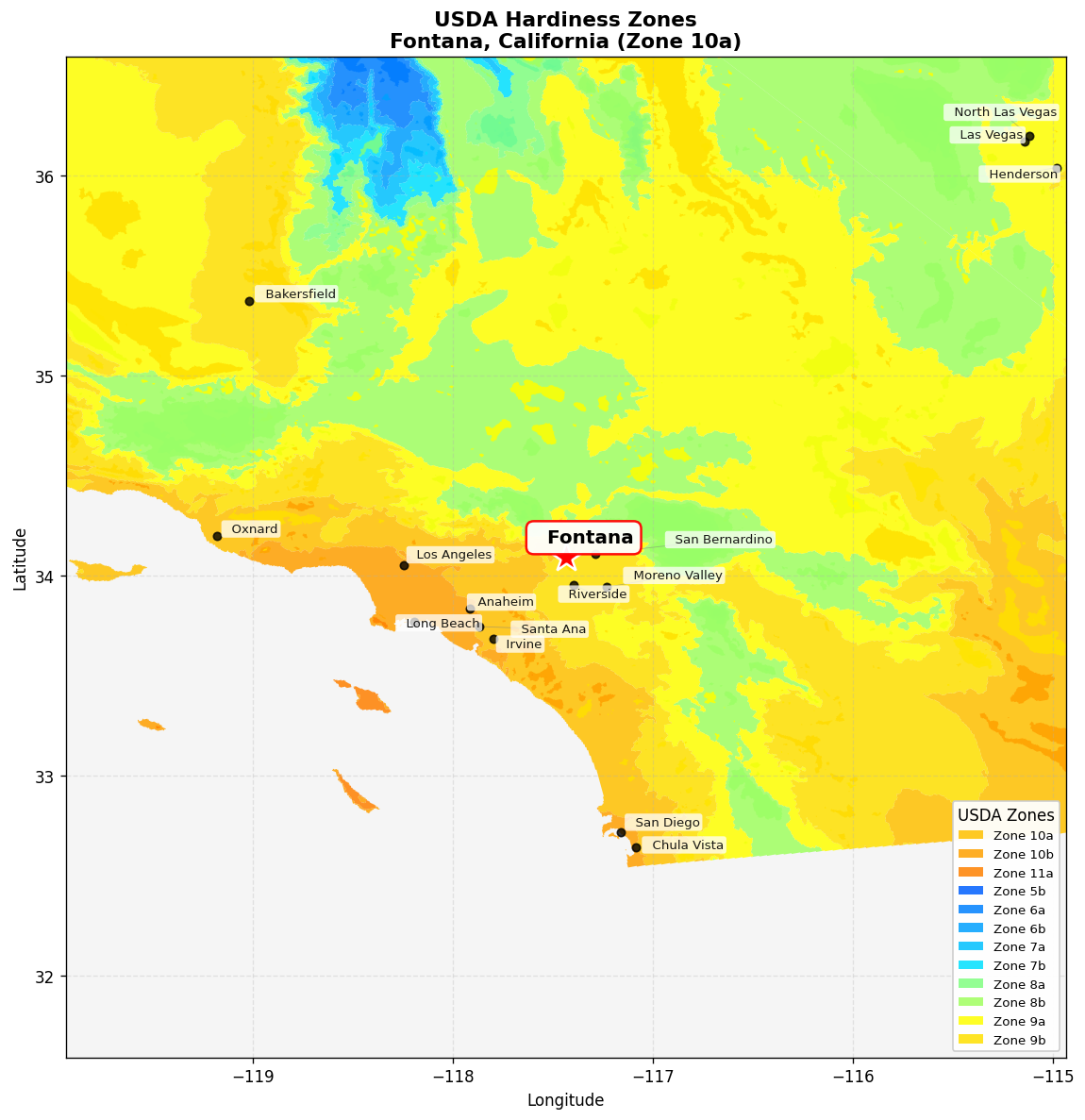
USDA Zone 10a
Hardiness zone for Fontana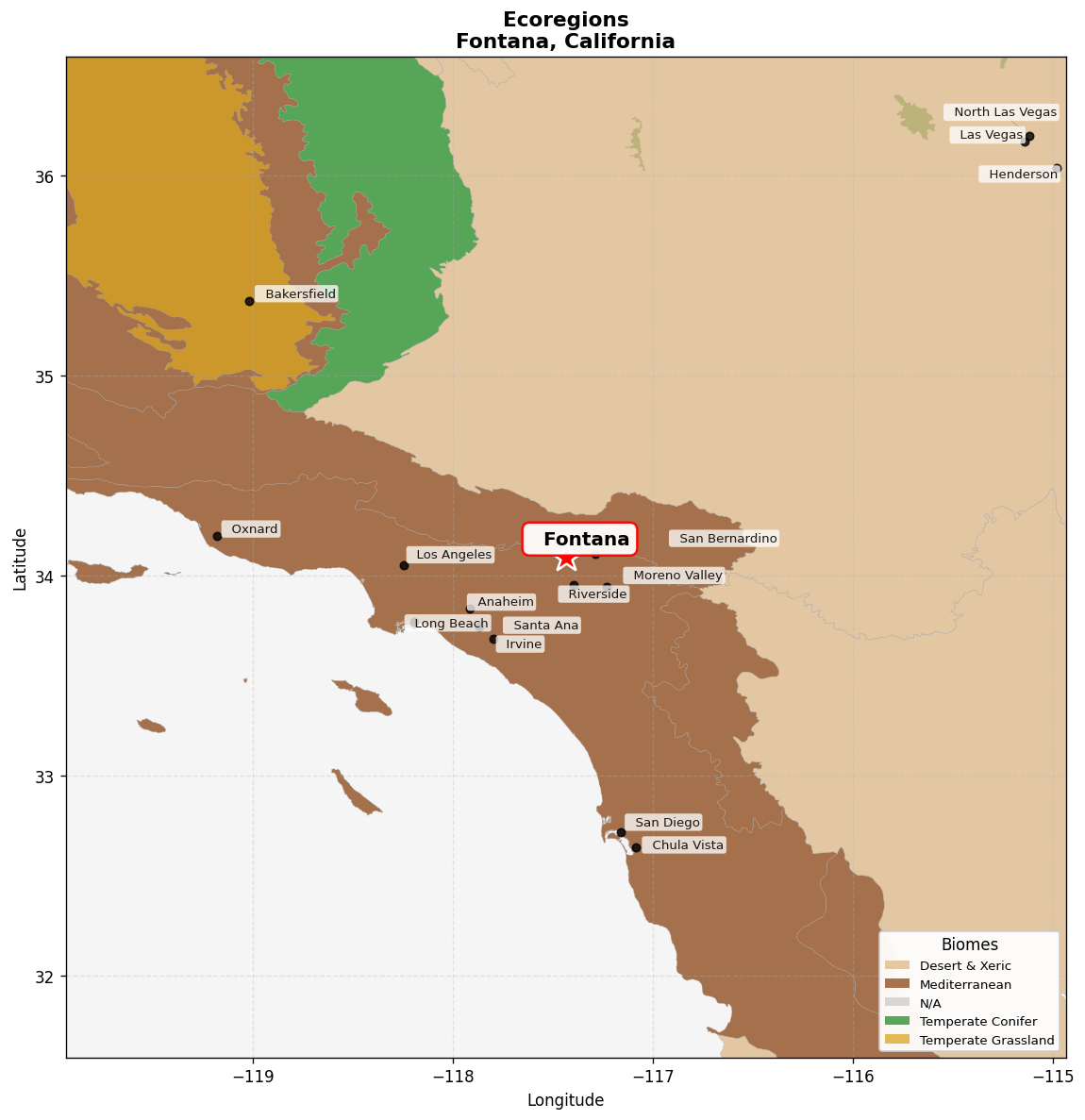
California coastal sage and chaparral
Native ecoregionFrequently Asked Questions
How much does modern landscaping cost in Fontana?
Inland Empire pricing runs below coastal LA and Orange County but above national averages — California labor and materials are simply expensive. A full front-yard modern conversion (turf removal, DG or gravel field, steel edging, agaves and grasses) on a typical 600 sqft Fontana front yard runs $6,000–14,000 installed, before rebates. A concrete back terrace with a gas fire pit lands between $18,000 and $45,000. Pool-and-landscape backyards in Sierra Lakes or Shady Trails commonly total $80,000–180,000. DIY gravel conversions can come in under $4/sqft, and turf-replacement rebates claw back a real portion of professional installs.
What turf-replacement rebates can Fontana homeowners get?
Fontana Water Company customers are eligible for the Metropolitan Water District's regional SoCal WaterSmart turf-replacement program, which pays a per-square-foot rebate for lawn converted to water-wise landscape meeting program rules (plant coverage minimums, no artificial turf in the converted area, rain-capture feature in some tiers). Rebate amounts change with funding cycles, so check socalwatersmart.com before you start — approval must come BEFORE you remove any grass. A gravel-and-agave modern design satisfies the requirements easily, and on a big Fontana lawn the rebate can cover a four-figure chunk of the project.
Do agaves and cactus really survive Fontana winters?
Yes — this is one of the easiest places in America to grow them. Zone 10a winter lows rarely dip below 35–40°F, far above the damage threshold for common landscape agaves, golden barrels, and yuccas. Fontana's advantage over clay-soil cities is drainage: the deep sandy granite soil of the Lytle Creek fan sheds winter rain fast, so you can plant succulents at grade without the raised beds wetter climates require. The two real risks are overwatering (irrigate established agaves at most monthly in summer, never in winter) and frost pockets on the coldest January nights in low-lying yards — minor, and solved by siting tender species near walls.
Decomposed granite or pea gravel for a Fontana modern yard?
Decomposed granite, almost every time. DG is angular, compacts into a firm walkable surface, and — critically for Fontana — stays put when Santa Ana winds funnel down Cajon Pass in fall. Rounded pea gravel migrates underfoot, scatters onto walks, and traps windblown debris. Use stabilized DG (with binder) for paths and high-traffic zones, loose DG or 3/8-inch crushed rock as bed mulch, and reserve pea gravel for contained accent panels. Buff-gold DG suits Fontana's granite-boulder palette; gray crushed rock reads cooler and more architectural against white stucco.
When is the best time to install a landscape in Fontana?
October through December is ideal: plants establish through the mild, rainy winter and are rooted before their first triple-digit summer, and contractors' calendars are more open than in spring. February–March is the second-best window. Avoid planting June through September — even drought plants establish poorly when set out in 100°F heat, and irrigation demands on new transplants triple. Hardscape is a year-round game in Fontana; there's no frost season to stop concrete work, though pours are best scheduled for cool mornings in summer and paused during high-wind Santa Ana days.
Do I need a permit for modern landscape features in Fontana?
Planting, gravel conversion, drip irrigation, and beds need no permit from the City of Fontana. Permits are required for retaining walls over 3–4 feet, patio covers and attached pergolas, swimming pools and spas, and gas or electrical runs to fire pits and outdoor kitchens — a plumbed gas fire pit needs a permitted gas line even though the pit itself is simple. Front-yard fence heights are restricted citywide. In HOA communities like Sierra Lakes, Shady Trails, Hunter's Ridge, and the Village of Heritage, architectural review of visible changes is usually the slower approval — submit your plan to the HOA before scheduling a contractor.