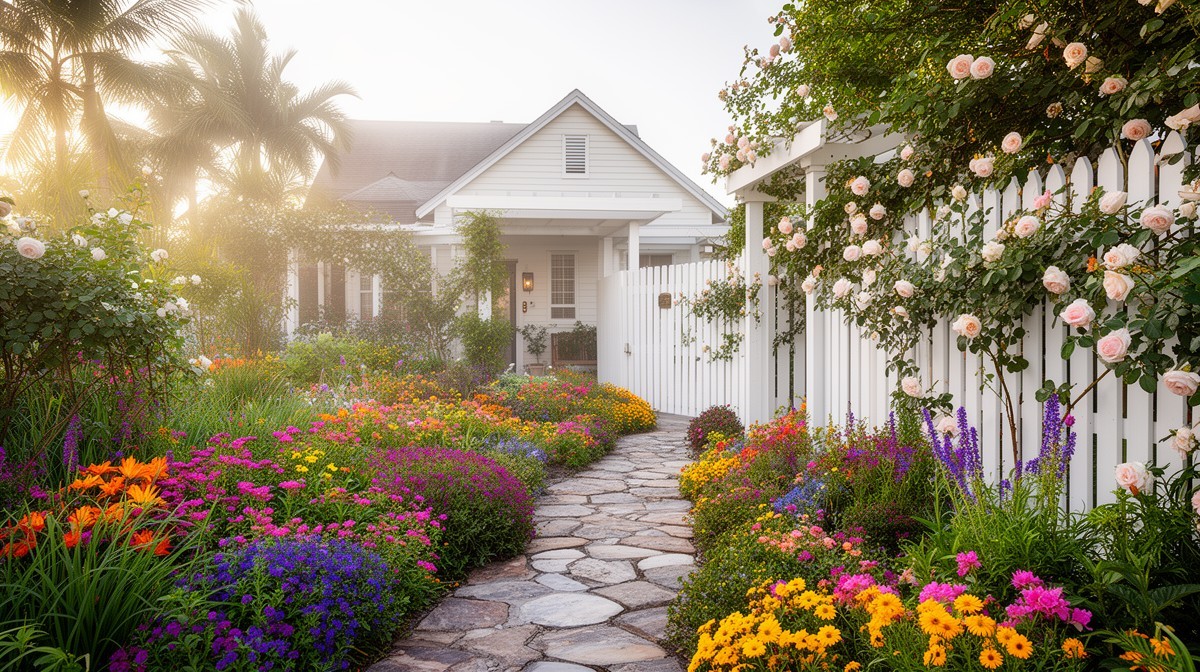
4 Cottage Garden Ideas for Fort Lauderdale, FL | Soft Layered Planting for Zone 10b
Native plants from the Everglades flooded grasslands (Zone 10b) — Tropical rainforest climate
Why Cottage/English Gardens in Fort Lauderdale?
Cottage is the hardest style to pull off in Fort Lauderdale, and the honest reason is that most of the English canon simply cannot live here. Delphinium, foxglove, peony, lupine, bearded iris and English lavender all fail in USDA Zone 10b, and each for a different reason. Peony needs several hundred winter chill hours and Broward delivers essentially none. Digitalis and delphinium are cool-season biennials that collapse in 90% August humidity. Lavandula angustifolia rots at the crown once the rainy season starts. Bigleaf hydrangea goes chlorotic and stubbornly pink in soil running pH 7.5-8.3. Garden centers will happily sell you every one of them in February, and they will perform beautifully for ten weeks before dying - which is fine if you treat them as annual color, and heartbreaking if you thought you were planting a border.
The good news is that every element of the cottage look has a Zone 10b analogue that performs better than the original. For the vertical spires that delphinium and foxglove provide, use Angelonia angustifolia 'Angelface Blue', Salvia 'Mystic Spires Blue', Salvia leucantha and Rotheca myricoides - all of which bloom for months instead of weeks. For hydrangea's blue mophead mass, Plumbago auriculata 'Imperial Blue' is the local answer, backed by Evolvulus glomeratus 'Blue Daze' at the front edge and Duranta erecta 'Sapphire Showers' behind. Pink froth comes from Pentas lanceolata, Dombeya wallichii and Brunfelsia grandiflora. And roses genuinely do work here, with one non-negotiable rule: Broward's sandy soil is loaded with root-knot and sting nematodes, so buy roses grafted onto Fortuniana rootstock or grow own-root antiques like 'Louis Philippe', 'Mrs. B.R. Cant', 'Old Blush' and 'Duchesse de Brabant', which have been thriving in Florida dooryards since the 1800s. A big-box rose on Dr. Huey rootstock will be dead in two seasons.
The last adjustment is the calendar, which runs inverted. A Fort Lauderdale cottage garden peaks from November through May and goes quiet in August, the opposite of an English one, so the design needs a permanent evergreen tropical skeleton carrying a rotating cool-season annual layer of snapdragon, dianthus, petunia and larkspur on top. Practical details matter too: build beds up 6-10 inches over the sand, use cellular PVC rather than wood for a picket fence unless you enjoy termites and rot, and remember that Broward's year-round two-day-per-week irrigation rule with a 10 a.m. to 4 p.m. ban makes drip irrigation mandatory for dense mixed borders. Any arbor or pergola needs engineered footings and a permit in the High-Velocity Hurricane Zone, and South Florida labor rates mean the soft, casual look is not the cheap one.
4 Cottage/English Design Ideas for Fort Lauderdale
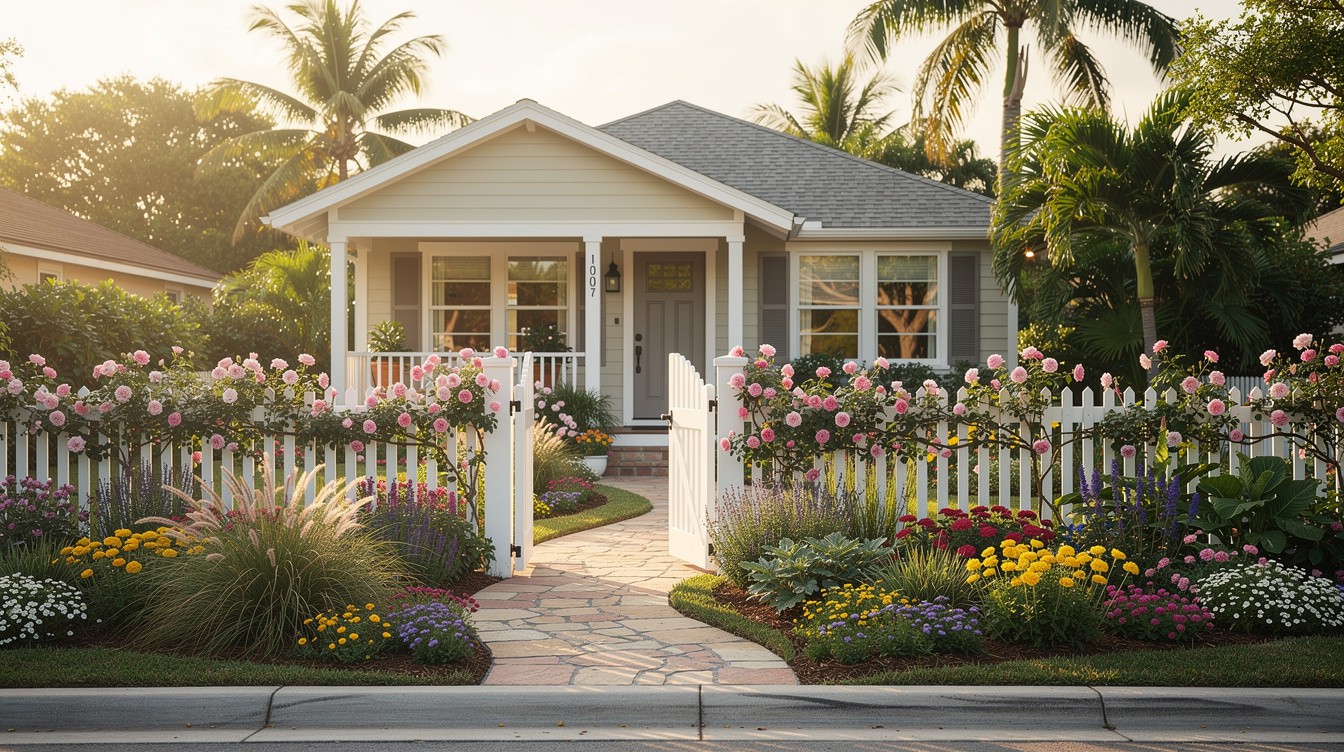
The Picket Fence Rose Frontage
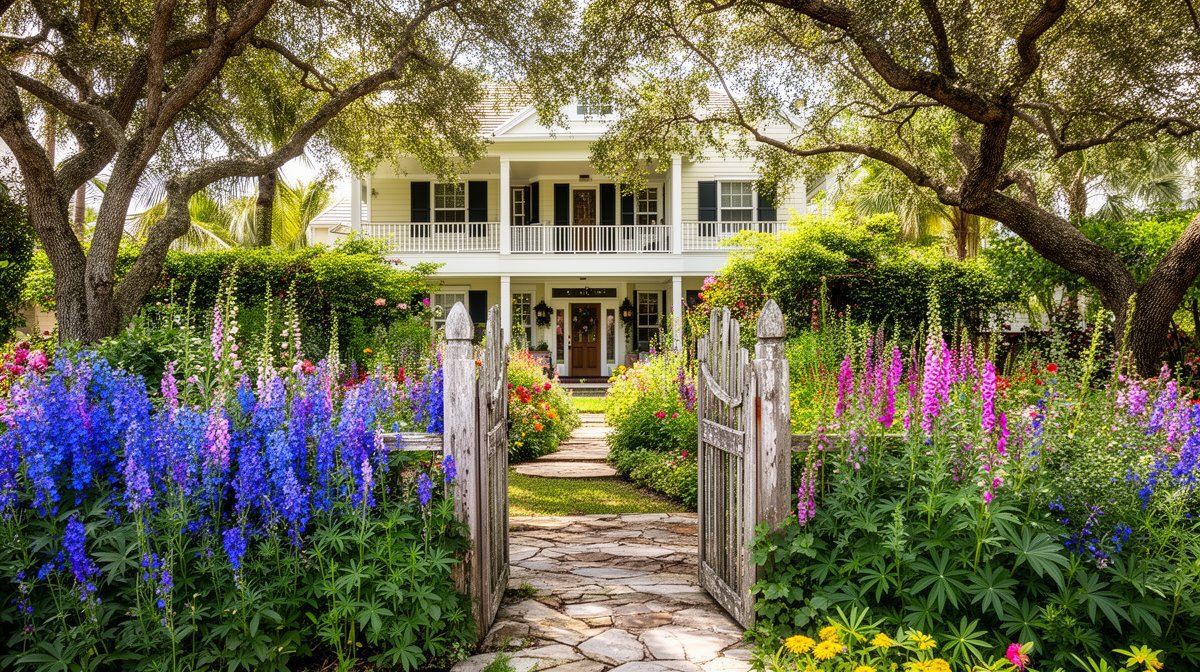
$18-34/sqftA low white picket fence runs the full street frontage with a matching gate at the walk, and the whole line disappears under climbing and shrub roses in pink and blush. Inside the fence the border is layered three deep: soft plumes of purple fountain grass and blue-violet flower spikes at the back, golden mounds and white daisy-form flowers spilling to the front, and a flagstone path threading between the two beds to the porch. It is the most romantic street presence in the neighborhood, and every plant in it has been swapped for a Zone 10b performer that will not fold in July.
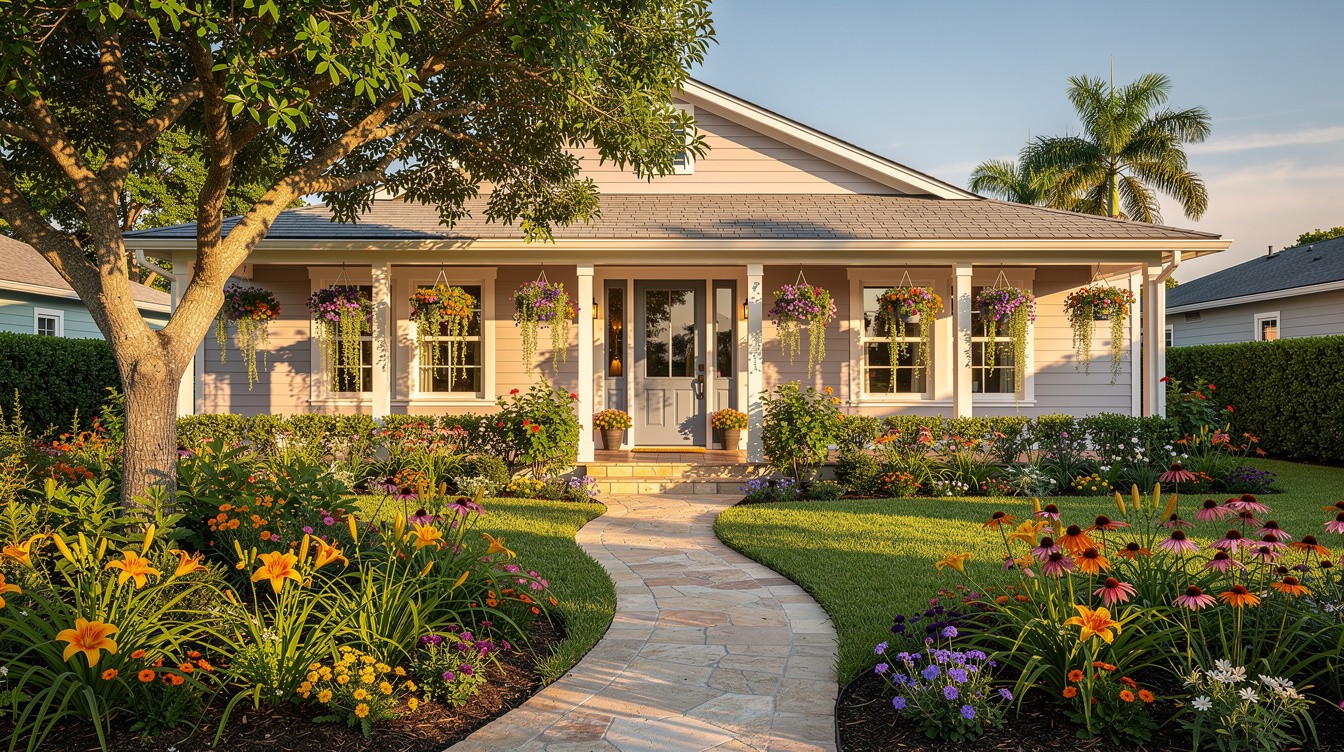
The Hanging Basket Porch Garden
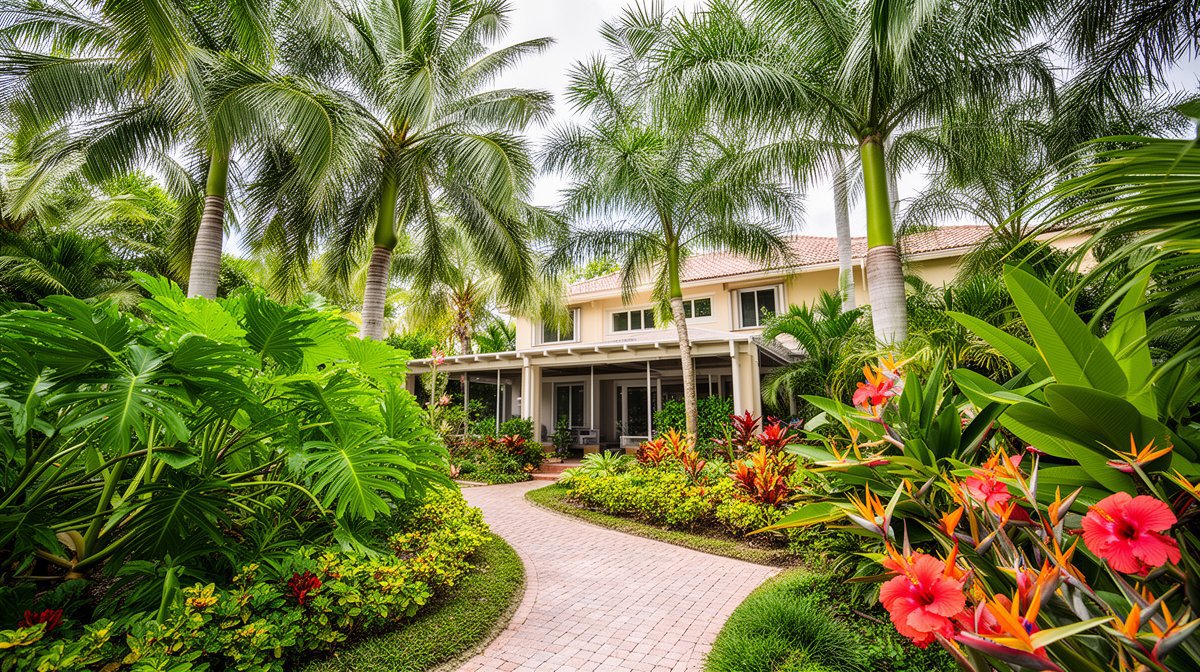
$14-26/sqftA deep covered porch carries a full row of trailing hanging baskets across its span, and a curving coquina walk swings out through the lawn rather than running straight to the steps. Wide drifts flank both sides - orange and gold daylilies on the left under a mature shade tree, pink and purple daisy-form flowers on the right - with a clipped evergreen hedge holding both property lines so the loose planting has a firm frame. The trick is that the drifts are built from evergreen tropical perennials and refreshed with a cool-season annual layer each October, not from northern perennials bought once and mourned.
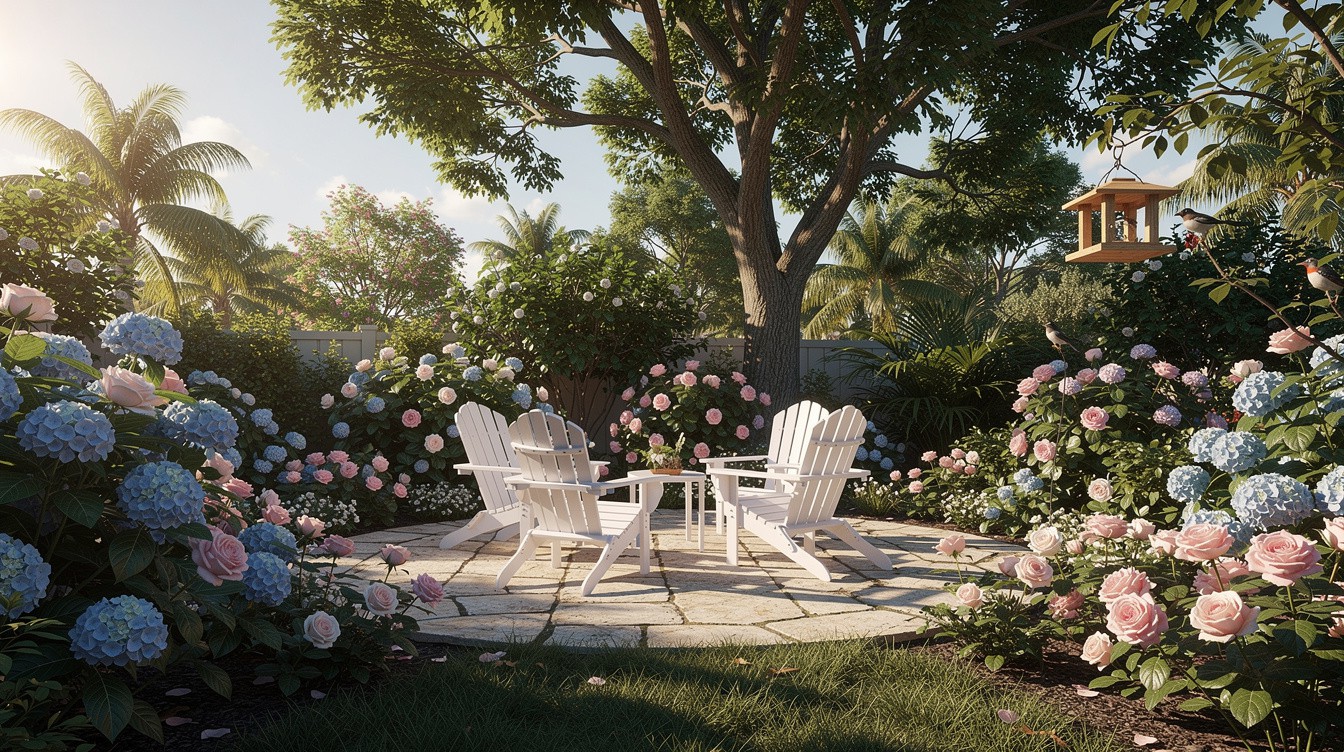
The Blue Mophead Shade Circle
$16-30/sqftA dry-laid flagstone circle sits under a broad shade tree with two white Adirondack chairs, a small table and a bird feeder hung from a low limb. Around it, blue and pink mophead masses ring the seating at chest height with pale roses layered through them - the effect that sells this design and the one that requires the most honest substitution in Broward, since bigleaf hydrangea will not hold blue in limestone soil. Plumbago carries the blue, Dombeya and pentas carry the pink mass, and antique roses supply the blush.
The Vine-Draped Pergola Room
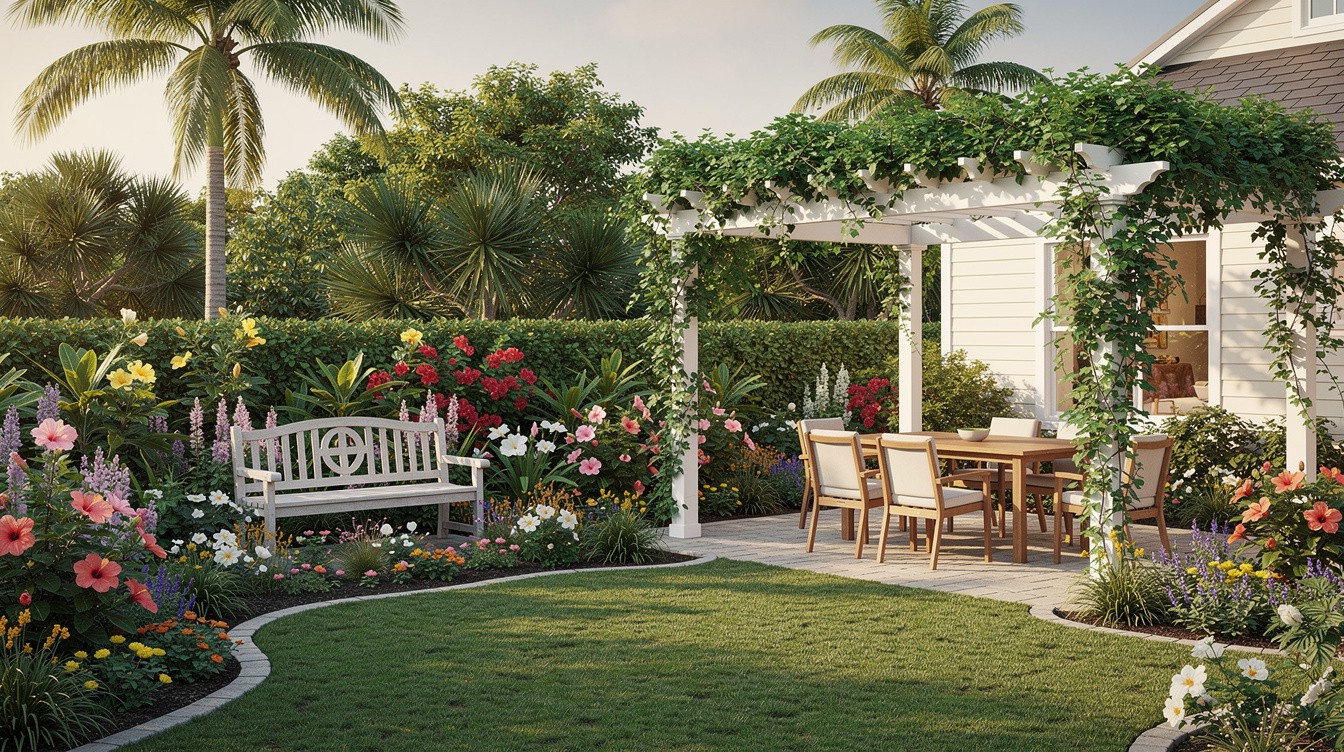
$24-48/sqftA white pergola attached at the house corner is smothered in a flowering vine, sheltering a teak dining table for six on a paver terrace. A curved lawn panel with a crisp concrete curb sweeps away from it toward a painted garden bench set into the far border, and the border itself is a full cottage mix - pink and coral hibiscus, white single flowers, purple spikes, red accents - held together by a clipped hedge and a screen of clumping palms behind. Two seating destinations in one small yard is what makes it feel like a garden rather than a patio.
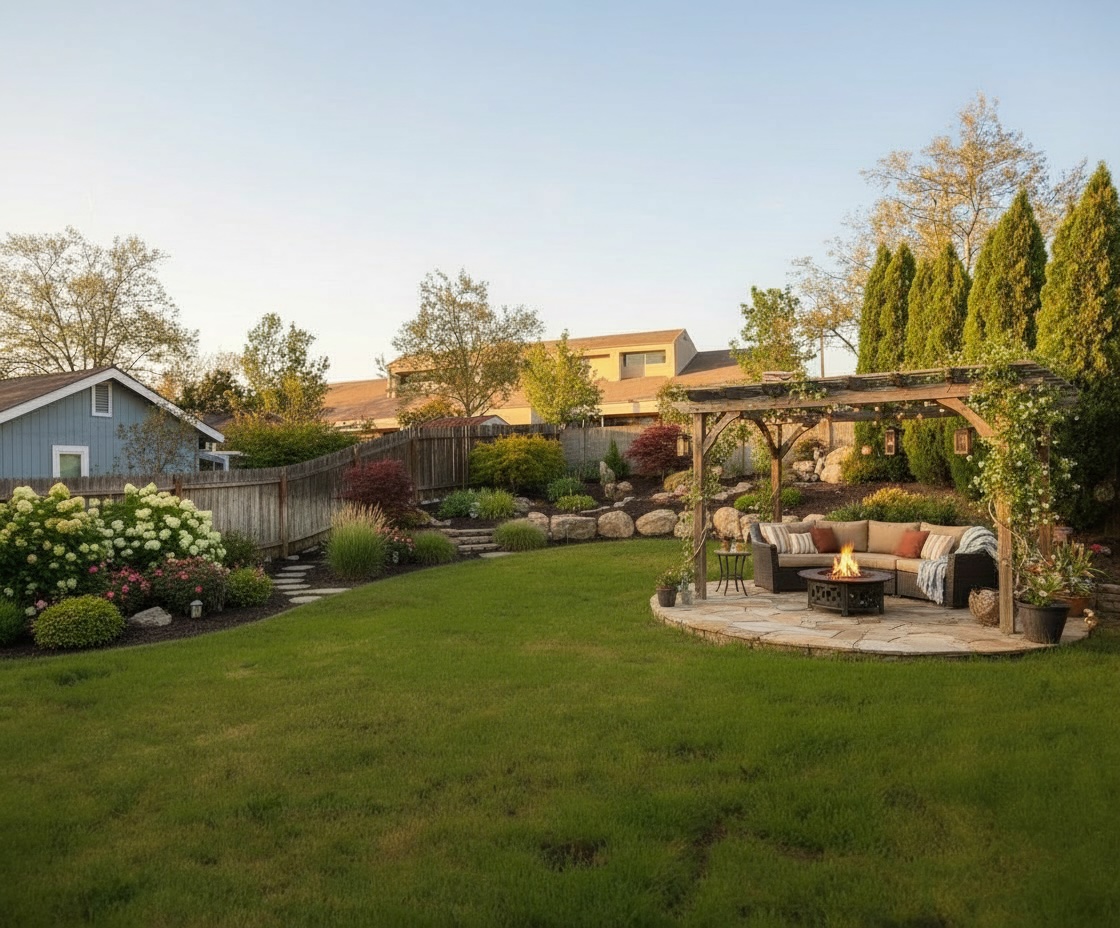
See how a cottage/english garden looks on YOUR property
Upload a photo of your Fort Lauderdale yard and visualize your dream garden in seconds.
Try ProScapeAI Free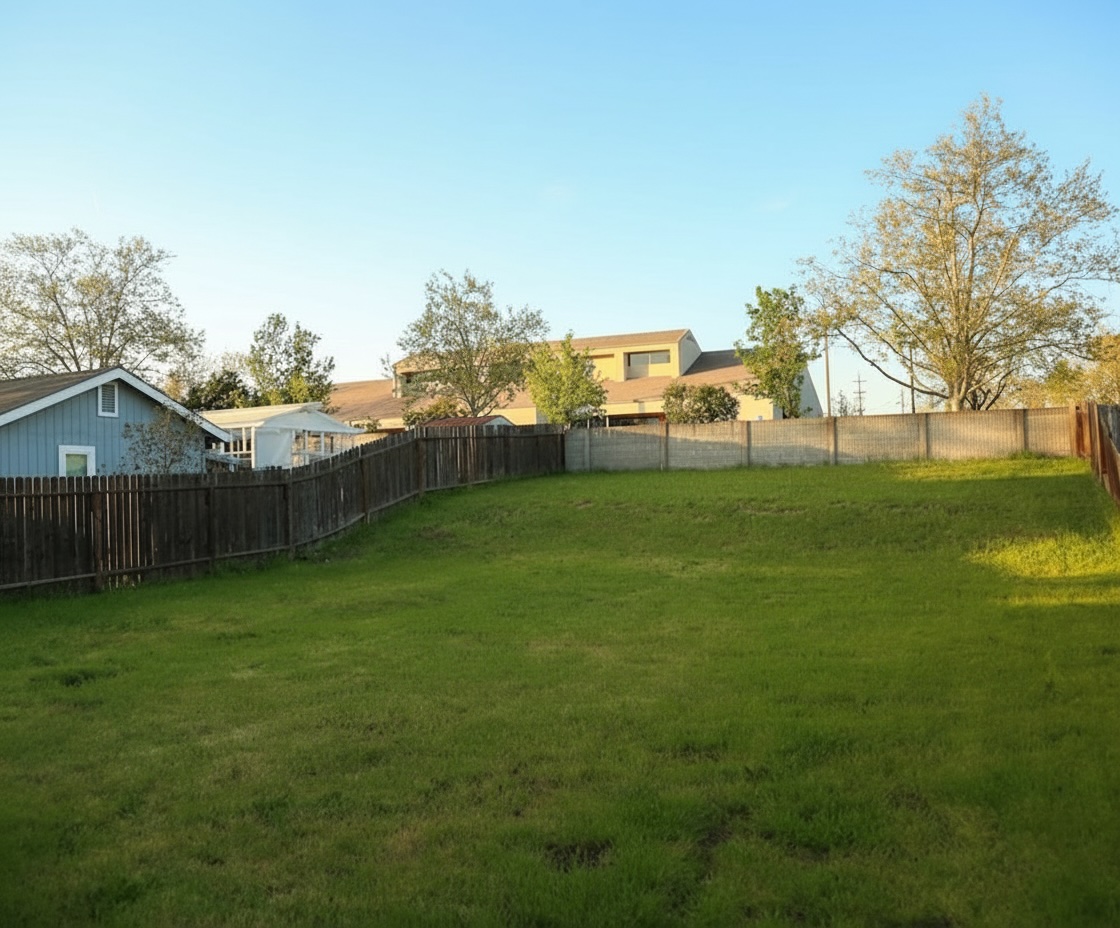
Featured Trees & Shrubs for Cottage/English Gardens
Browse all 34 plants for Fort Lauderdale
Pygmy Date Palm
Phoenix roebelenii
grows to 6 feet, yellow blooms in spring. Pollinator-friendly.

Royal Palm
Roystonea regia
large shade tree reaching 50+ feet, white blooms in spring. Pollinator-friendly.

Buddha's Hand Citron
Citrus medica
medium-sized at 10 feet, white,purple blooms in winter. Attracts butterflies.

Common Fig
Ficus carica
medium-sized at 15 feet, blooms in spring. Attracts butterflies.
Featured Grasses & Groundcovers for Cottage/English Gardens

Bermuda Grass
Cynodon dactylon
low-growing ground cover, blooms in summer. Brown fall color.
Featured Flowers & Perennials for Cottage/English Gardens

Broadleaf Arrowhead
Sagittaria latifolia
low-growing ground cover, white blooms in summer. Attracts butterflies.

Canadian Waterweed
Elodea canadensis
grows to 3 feet, white blooms in spring. Evergreen year-round.

Common Cattail
Typha latifolia
grows to 5 feet, blooms in summer. Pollinator-friendly.

European Frogbit
Hydrocharis morsus-ranae
low-growing ground cover, white blooms in summer. Pollinator-friendly.
Bloom Calendar for Fort Lauderdale
spring
Canadian Waterweed, Arrow Arum, Pygmy Date Palmsummer
Broadleaf Arrowhead, Canadian Waterweed, Common Cattailfall
Broadleaf Arrowhead, Canadian Waterweed, Pickerelweedwinter
Jade Plant, Silver Jade, Buddha's Hand CitronDesign Tips for Fort Lauderdale (Zone 10b)
- Stop trying to grow delphinium and foxglove and plant their Zone 10b stand-ins instead - Angelonia 'Angelface Blue', Salvia 'Mystic Spires Blue' and Rotheca myricoides give you the same vertical spires for eight months rather than eight weeks
- Buy roses only on Fortuniana rootstock or as own-root antiques like 'Louis Philippe' and 'Mrs. B.R. Cant'; Broward's sting and root-knot nematodes will kill anything on standard rootstock within two seasons
- Substitute Plumbago auriculata 'Imperial Blue' anywhere a design calls for blue hydrangea - limestone sand at pH 7.5-8.3 will never let a macrophylla hold its color, and plumbago blooms three seasons longer
- Build beds up 6-10 inches with pine bark and compost over the native sand, then mulch 3 inches deep; dense cottage planting needs the moisture and organic matter that Broward's fast-draining soil cannot hold on its own
- Design for a November-to-May peak and plan a mid-October cool-season annual changeout - snapdragon, dianthus, larkspur and petunia give the froth that carries the border while the permanent tropical skeleton rests through August
- Use cellular PVC for pickets, arbors and trellises and painted aluminum for furniture; termites, 62 inches of rain and salt air will take apart untreated wood far faster than the romantic look suggests
Where to Source Plants in Fort Lauderdale
Skip the big-box stores. These independent Fort Lauderdale nurseries specialize in the plants that make cottage/english gardens thrive in Zone 10b.
Living Color Garden Center
Griffin Road
Five acres of plants with about 80% of inventory grown at their own sister nursery.
Flamingo Road Nursery
Davie
10-acre garden center with plants, hardscape, a farmers market, and a cafe.
Nu Turf of Pompano Beach
Pompano Beach
Family-owned full-service landscape nursery offering sod, trees, plants, and pottery.
Spykes Grove Nursery
Davie
Tropical fruit trees, citrus, and exotic plants, with a history dating to 1946.
Cottage/English Landscaping Costs in Fort Lauderdale
| Project Scope | Estimated Cost |
|---|---|
| Front cottage border conversion (400-600 sqft, soil build + layered planting) | $7,000 - $18,000 |
| Cellular PVC picket fence with gate, installed | $45 - $95 per linear ft |
| Coquina or flagstone path / seating circle (150-300 sqft) | $4,500 - $14,000 |
| HVHZ-engineered and permitted 12x16 pergola | $14,000 - $38,000 |
| Cool-season annual changeout, twice yearly (500 sqft of beds) | $1,200 - $3,000 per year |
| AI visualization with ProScapeAI | Free to start |
Estimates based on Fort Lauderdale, FL-area contractor rates as of 2026. Actual costs vary by site conditions, materials, and contractor.
Fort Lauderdale Climate & Growing Zone
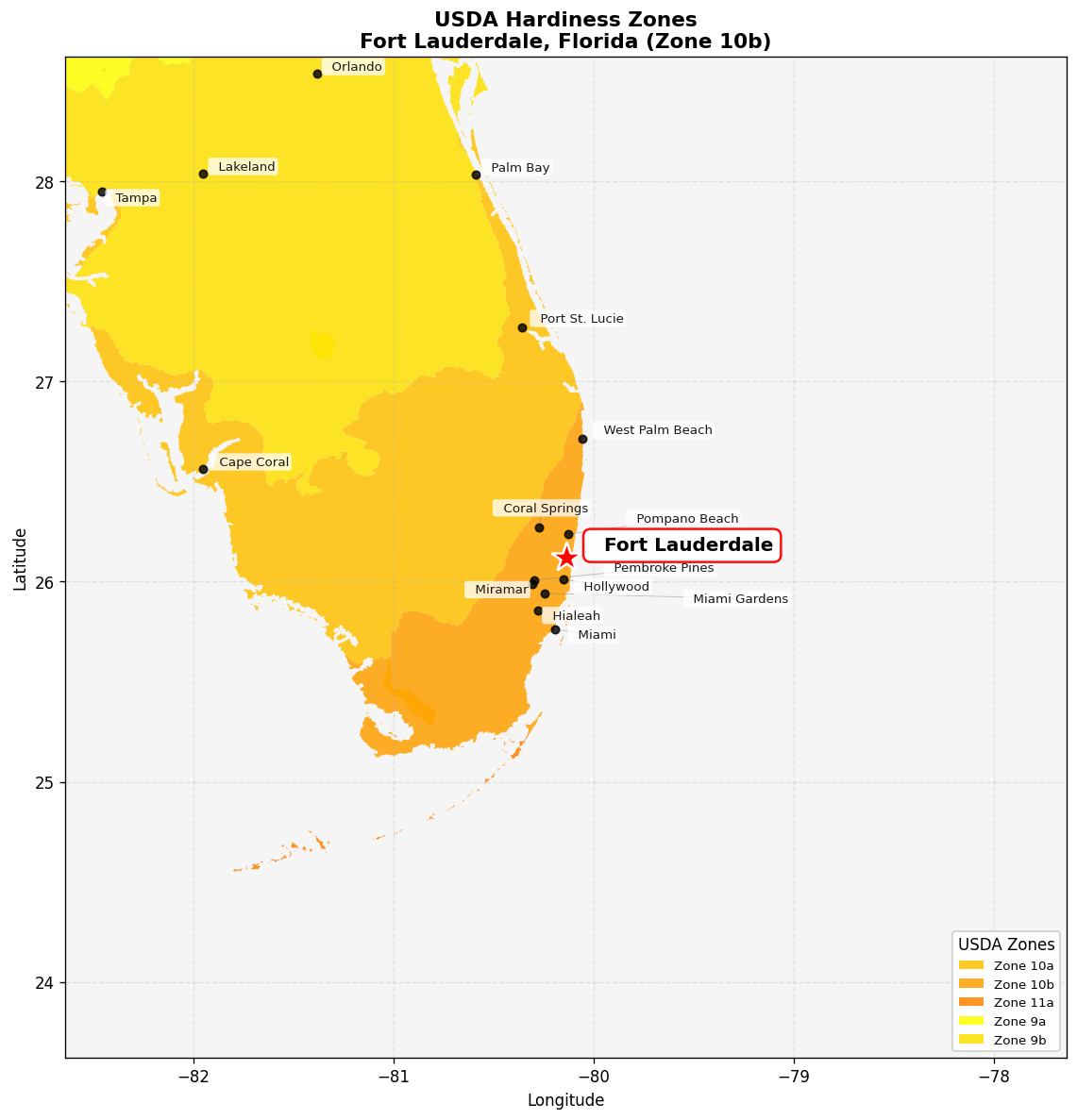
USDA Zone 10b
Hardiness zone for Fort Lauderdale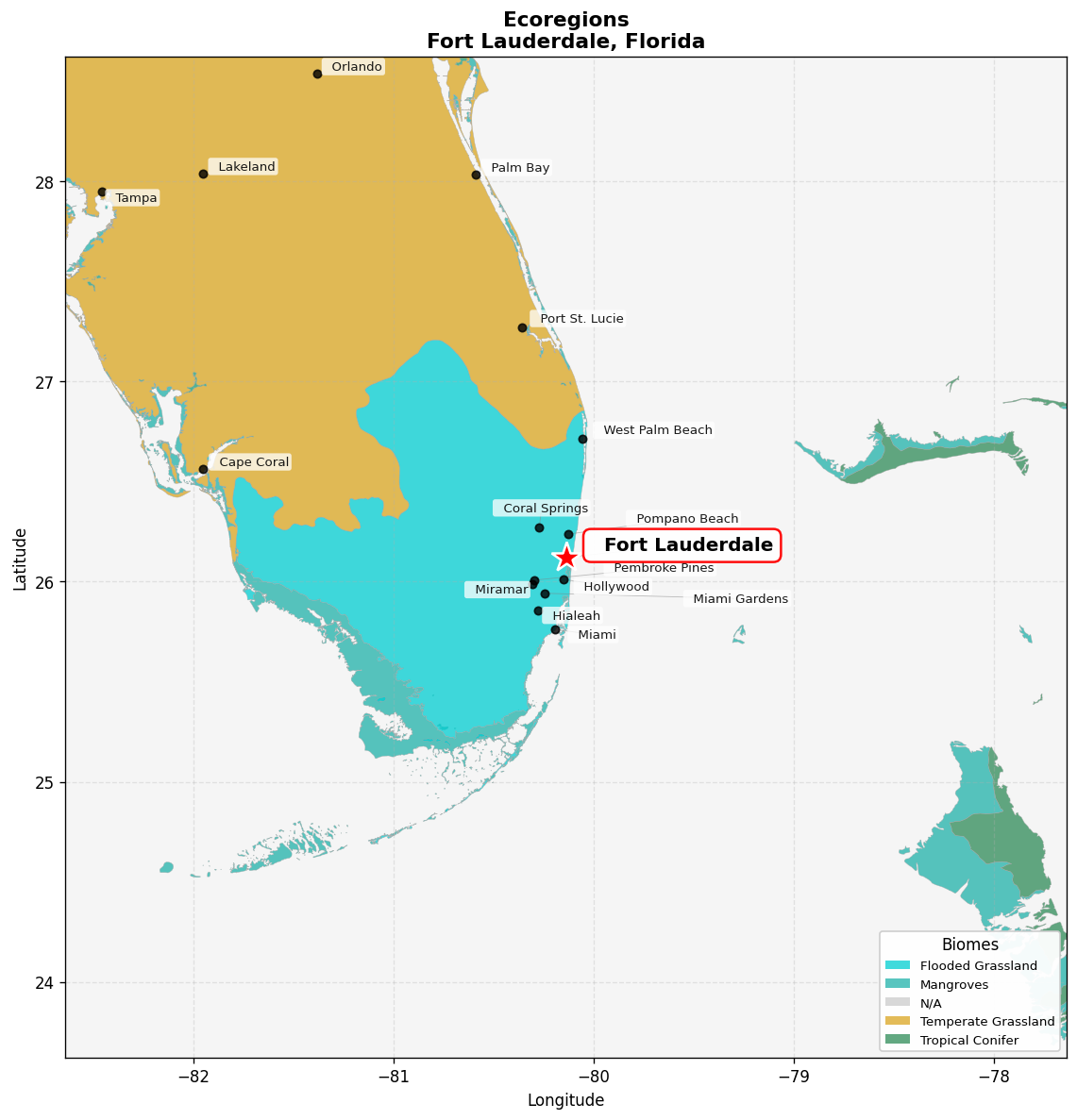
Everglades flooded grasslands
Native ecoregionFrequently Asked Questions
Why won't classic English cottage plants grow in Fort Lauderdale, and what replaces them?
Zone 10b defeats them in four different ways. Peony and lupine need winter chill Broward never delivers. Delphinium and foxglove are cool-season biennials that rot in 62 inches of rain and August humidity. English lavender collapses at the crown in the wet season. Bigleaf hydrangea goes chlorotic in pH 7.5-8.3 limestone sand. The substitutions are direct: Angelonia 'Angelface Blue' and Salvia 'Mystic Spires Blue' for delphinium spires, Rotheca myricoides for foxglove's airy height, Plectranthus 'Mona Lavender' for lavender's soft grey-purple haze, and Plumbago auriculata 'Imperial Blue' for hydrangea blue. All four bloom for months here rather than weeks.
Can you actually grow roses in Fort Lauderdale?
Yes, and beautifully, if you buy the right plant. Broward's sandy soil carries heavy populations of root-knot and sting nematodes that destroy the fine feeder roots of standard rose rootstock. The local rule is simple: buy roses grafted onto Fortuniana rootstock, which is nematode-tolerant and vigorous in Florida sand, or grow own-root antiques bred for the Deep South. 'Louis Philippe', 'Old Blush', 'Mrs. B.R. Cant', 'Duchesse de Brabant' and 'Belinda's Dream' all perform. Avoid big-box roses on Dr. Huey rootstock. Expect blackspot pressure in the rainy season, keep foliage dry with drip rather than overhead spray, and prune hard in late January rather than in fall.
How much does a cottage garden cost in Fort Lauderdale?
Cottage looks casual but is the most plant-dense style there is, and South Florida labor rates apply. A front border conversion of 400-600 sqft including soil build, layered planting and drip typically runs $7,000-18,000. A cellular PVC picket fence with a gate runs $45-95 per linear foot installed. A coquina or flagstone path and seating circle of 150-300 sqft lands at $4,500-14,000. An engineered, permitted 12x16 pergola in the High-Velocity Hurricane Zone runs $14,000-38,000. Budget an ongoing $1,200-3,000 a year for two cool-season annual changeouts if you want that full flower look from November through May.
What gives me hydrangea blue in Broward's alkaline soil?
Hydrangea macrophylla turns blue only in acidic soil where aluminum is available, and Fort Lauderdale's limestone-derived sand at pH 7.5-8.3 does the exact opposite - you get chlorotic foliage and washed-out pink. You can fake it in a container with acidified mix and aluminum sulfate, but it is a permanent chore. The durable answer is Plumbago auriculata 'Imperial Blue', which produces the same soft sky-blue clusters nine months of the year and thrives in alkaline sand. Layer Evolvulus glomeratus 'Blue Daze' at the front edge, Duranta erecta 'Sapphire Showers' behind for height, and Rotheca myricoides for the delicate blue-and-violet detail up close.
How do I keep a cottage garden blooming through a Fort Lauderdale summer?
Accept the inverted calendar and design for it. Your peak season is November through May; August is the local equivalent of a northern January. Build a permanent heat-proof skeleton from Pentas lanceolata, Angelonia, Plumbago, Lantana 'New Gold', Salvia leucantha, Hibiscus rosa-sinensis and Tabernaemontana divaricata, all of which flower straight through summer. Then layer a cool-season annual changeout in mid-October - snapdragon, dianthus, petunia, larkspur, alyssum - and pull it in May when it declines. Feed lightly and often on sandy soil, mulch 3 inches deep to hold moisture, and check whether your municipality restricts nitrogen and phosphorus fertilizer during the summer rainy season.
Do I need a permit for a picket fence, pergola or arbor in Fort Lauderdale?
Fences require a permit in Fort Lauderdale, with height limits that are stricter in front-yard setbacks than in rear yards and corner-lot visibility triangles that must stay clear - check the Unified Land Development Regulations for your zoning district before ordering material. Pergolas, arbors and any roofed structure need engineered, signed and sealed drawings plus permitted footings because Broward sits in the High-Velocity Hurricane Zone with ultimate design wind speeds near 170 mph. Beds, paths, planting and dry-laid flagstone generally do not need permits, but removing a protected tree does. Use cellular PVC or a rot- and termite-resistant material for anything wooden-looking; untreated pine pickets fail fast here.