4 Modern Garden Ideas for Grand Prairie, TX | Clean-Line Landscape Design for Zone 8b Blackland Clay
Native plants from the Texas blackland prairies (Zone 8b) — Humid subtropical climate
Why Modern/Minimalist Gardens in Grand Prairie?
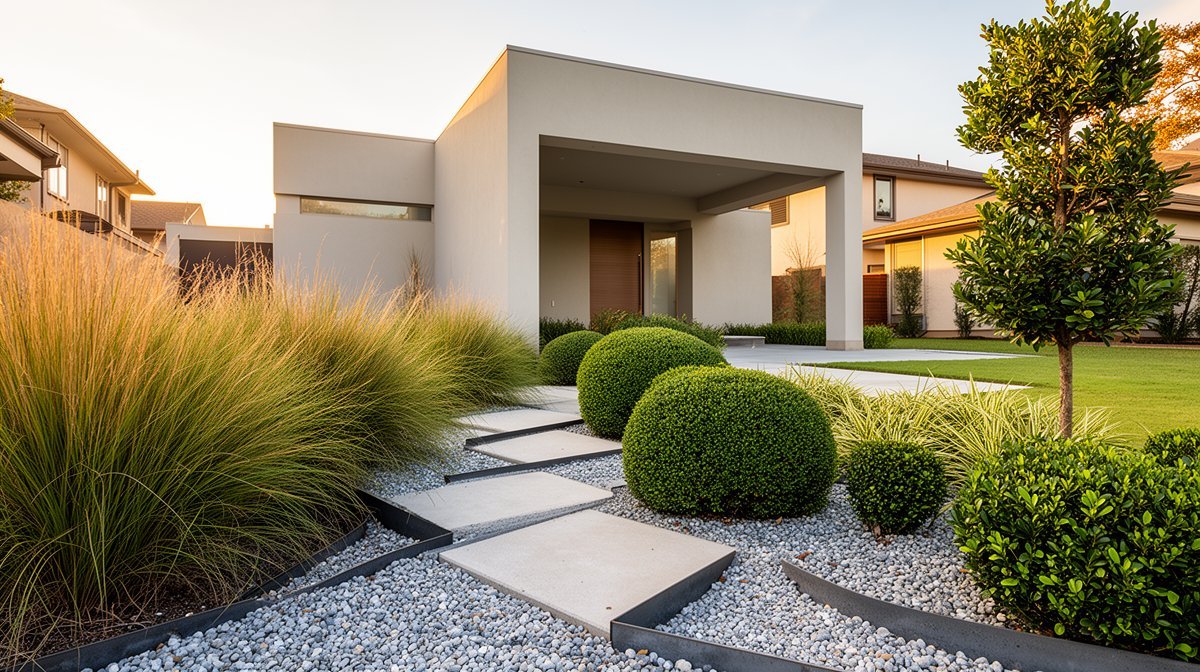
Modern landscape design needs two things Grand Prairie has in abundance: strong horizontal architecture and open sky. The prairie-modern and contemporary builds going up in Mira Lagos, Grand Peninsula, and the Estates of Rocky Creek — low-pitched roofs, black-framed windows, stucco-and-limestone facades — are already doing half the work, and the 1950s and '60s brick ranches in Westchester, Sheffield Village, and Dalworth Park have exactly the long, low rooflines that clean-line planting flatters. The flatness of the blackland prairie, which frustrates designers who want terracing, is an asset here: modern design is a groundplane art, and a level lot lets a poured concrete walk, a steel-edged gravel field, and a mowed lawn read as three crisp planes instead of a hillside.
Climate-wise, Grand Prairie sits in the narrow band where the desert-modern palette genuinely works. Zone 8b lows of 15–20°F are cold enough to kill the tender agaves used in Phoenix but mild enough for the hardy ones — Agave ovatifolia (whale's tongue) and Agave parryi var. truncata both came through the February 2021 freeze in DFW gardens where drainage was right. That caveat matters, because the city averages roughly 37 inches of rain a year and it does not arrive gently: May and October regularly dump 3–5 inches in a sitting onto soil that does not drain. Wet feet in winter, not cold, is what kills succulents here. The fix is the same detail that produces the look — beds mounded 10–12 inches above grade, backfilled 50/50 with expanded shale or crushed granite, and topped with gravel mulch inside Corten or steel edging. For soft mass, skip the fescues and use Lindheimer muhly (Muhlenbergia lindheimeri 'Autumn Glow') and 'Regal Mist' pink muhly, both Texas Superstars, plus 'Brakelights' red yucca for a sculptural evergreen that blooms nine months.
The hard surfaces are where budgets get made or wrecked. Grand Prairie sits on Houston Black clay — the Texas state soil — which swells shut in spring and opens two-inch cracks in a 100°F-plus August. That annual movement heaves anything laid on bare soil, so pavers and stone need 6 inches of compacted crushed limestone base over geotextile fabric, and poured slabs need 4 inches with #3 rebar on 18-inch centers plus control joints every 8–10 feet. Keep new canopy trees 15–20 feet off the foundation. DFW labor still runs slightly under coastal-metro rates, which is why a full modern conversion here costs meaningfully less than the same design in Austin or Denver.
4 Modern/Minimalist Design Ideas for Grand Prairie
The Prairie Modern Grass Court
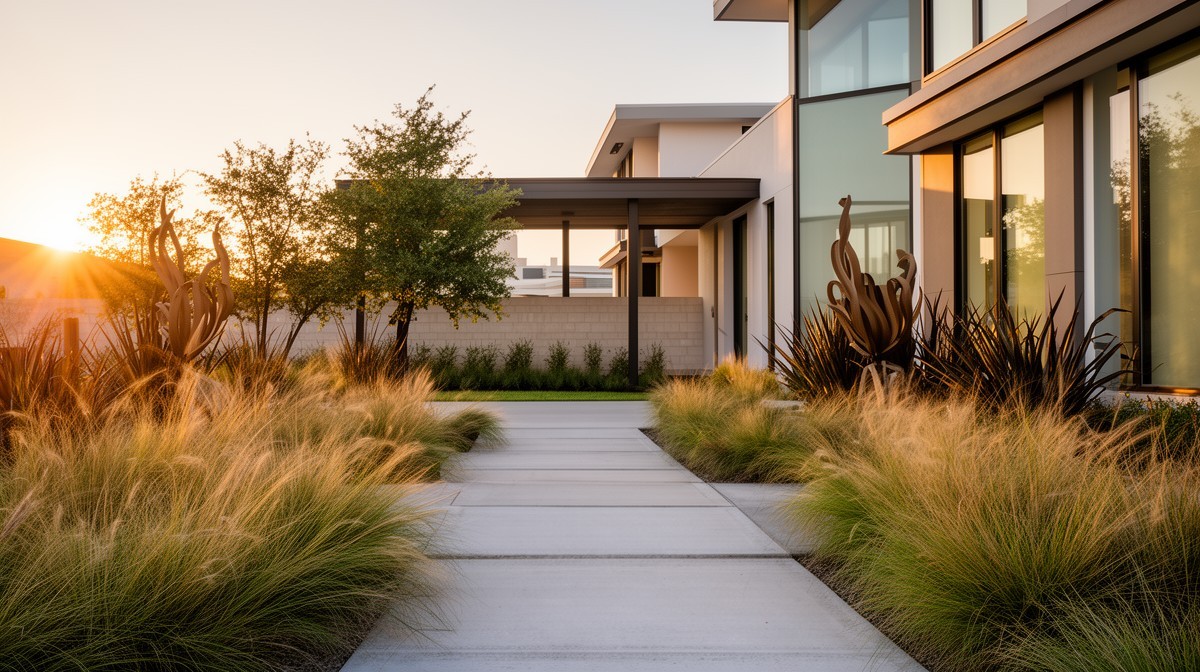
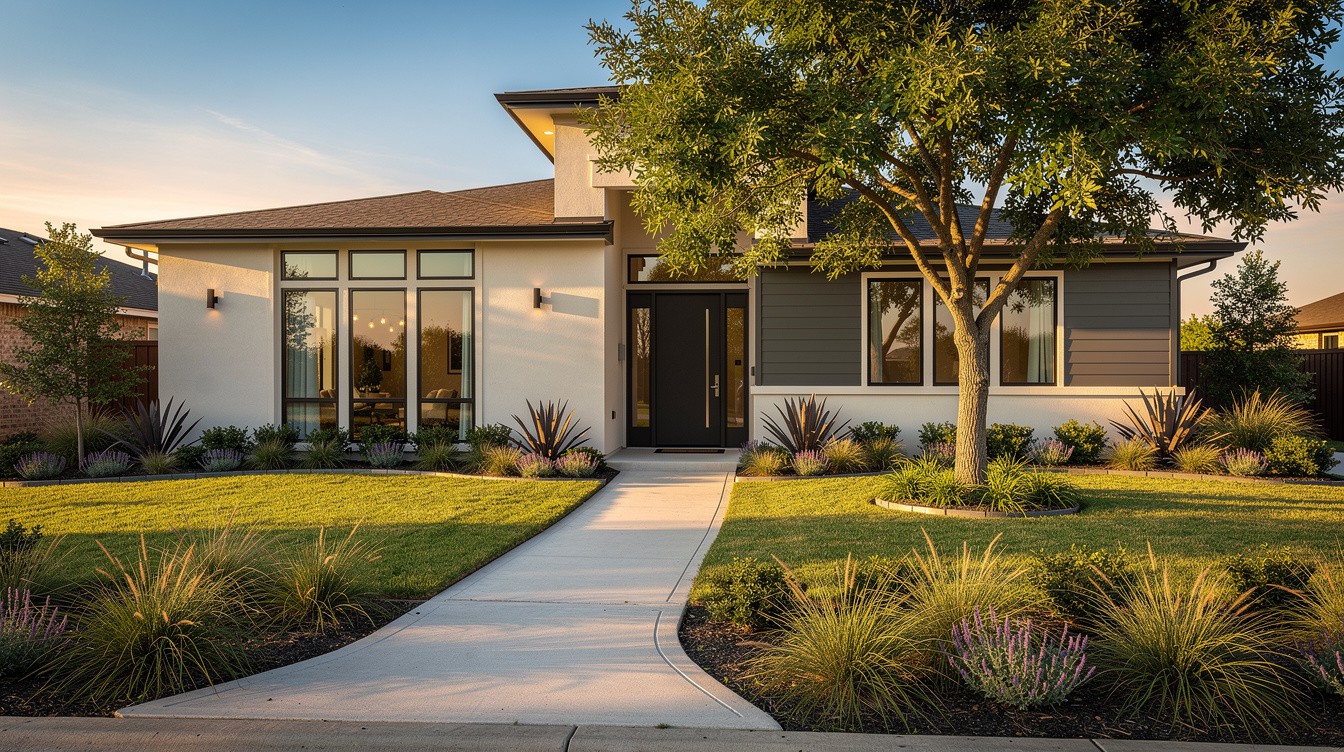
$11–20/sqftA single-story prairie-modern house in white stucco and charcoal lap siding sits behind a wide, curving broom-finished concrete walk that slices the front lawn into two clean panels. The foundation planting is a tight, repeating rhythm — low mounding grasses, blue-violet salvia spikes, and burgundy sword-form accents in a strip of black mulch with steel edging — while two large island beds of taller grasses float in the Bermuda lawn under a mature live oak. The trick is restraint: three plants repeated forty times, not forty plants, so the beds read as a single textured band against the architecture.
The Corten Grid Xeriscape
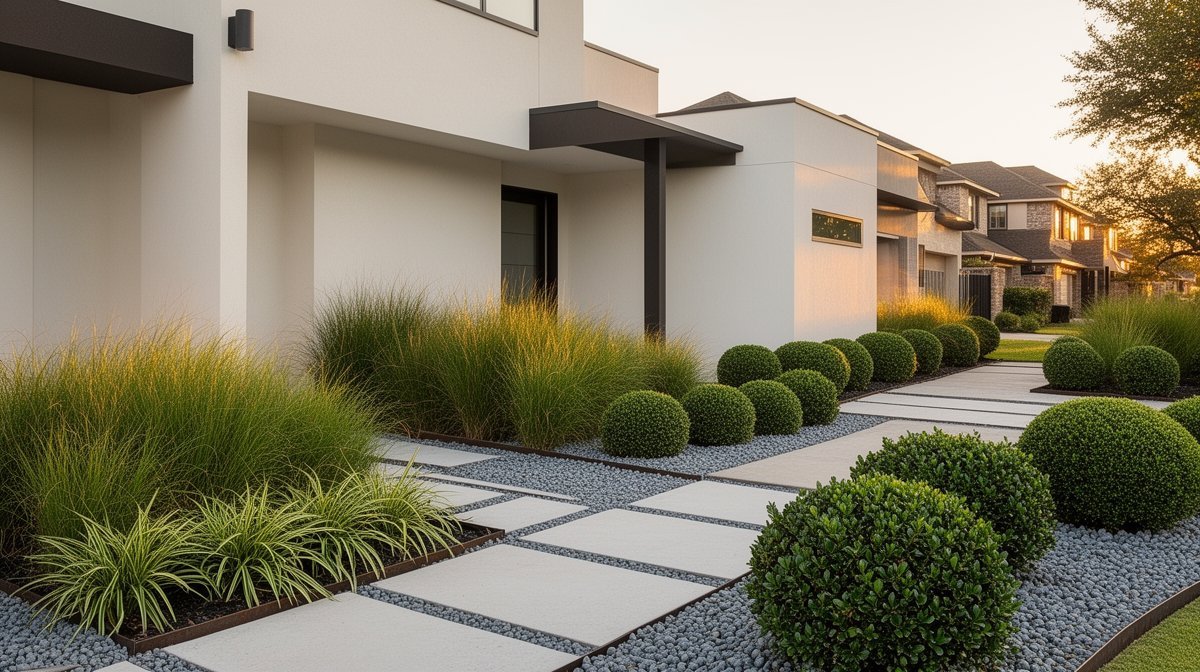
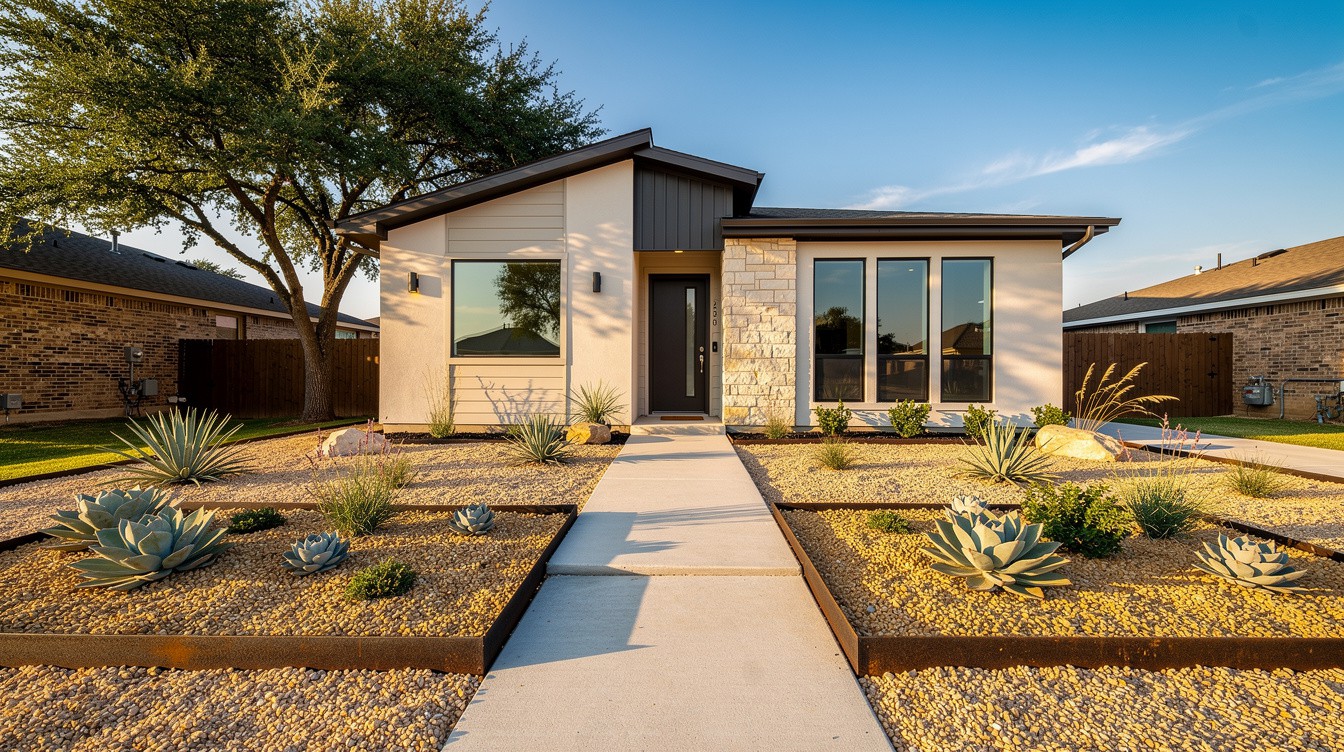
$12–22/sqftThe front lawn is gone entirely, replaced by a grid of raised planting fields divided by weathered Corten steel edging and surfaced in two contrasting gravels — a warm river rock on one side, pale crushed limestone on the other — with a single concrete walk running dead center to the door. Each field holds a spaced, deliberate arrangement of agave rosettes, spiky yuccas, and small boulders, so the negative space between plants does as much design work as the plants themselves. This is the design that eliminates mowing and summer irrigation completely, and the raised fields are the reason the agaves survive a wet October.
The Round Fire Court
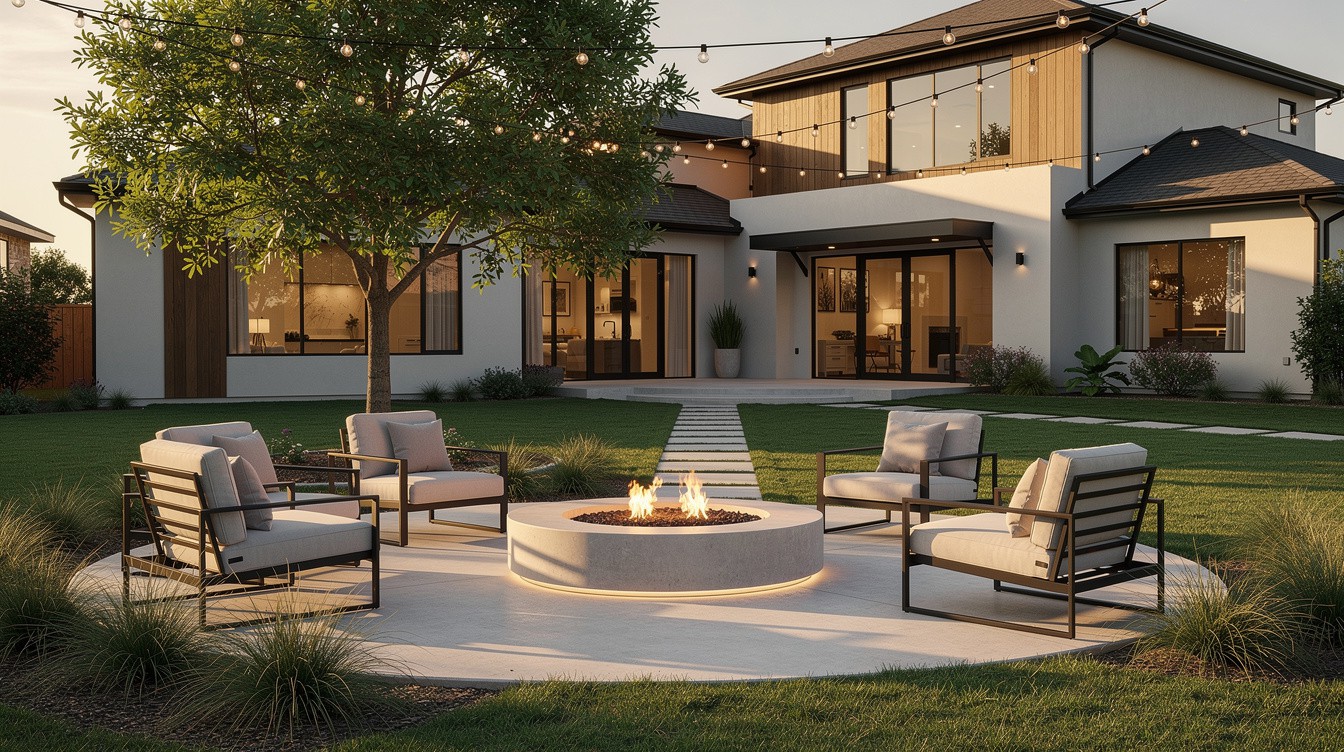
$16–30/sqftA circular poured-concrete pad set into an open lawn holds a round cast-concrete gas fire table and four low steel-frame lounge chairs, connected to the back of a two-story modern house by a run of floating concrete stepping pads set flush in the turf. Bistro string lights sweep overhead from the roofline to a single canopy tree, and the pad's edge dissolves into loose clumps of ornamental grass rather than a planting bed with a hard border. It is one of the cheapest ways to make a big flat Grand Prairie backyard feel designed — one circle, one focal element, one grass texture repeated around the perimeter.
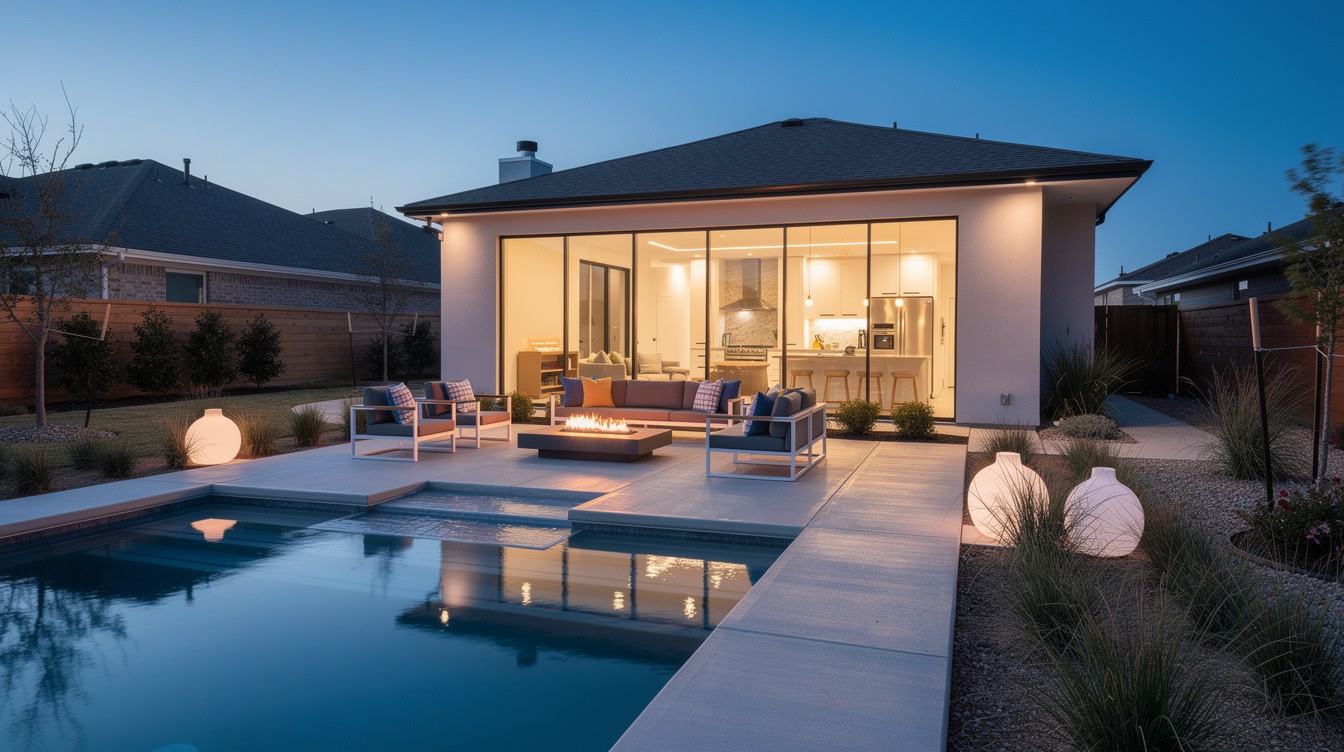
The Twilight Pool Deck
$45–90/sqft (pool area inclusive)A rectangular pool with a shallow sun shelf runs the width of a single-story modern home whose entire rear wall is glass, so the lit kitchen becomes the backdrop at dusk. The deck is broad, pale poured concrete in large panels; a low linear steel fire table sits between two facing sofas, and glowing spherical orb lights are tucked into a gravel-and-grass border along the fence line instead of landscape uplights. The planting is deliberately thin — grasses, a gravel strip, and young trees against a cedar privacy fence — which keeps leaf litter out of the pool and puts the whole visual budget into water, light, and one clean plane of concrete.
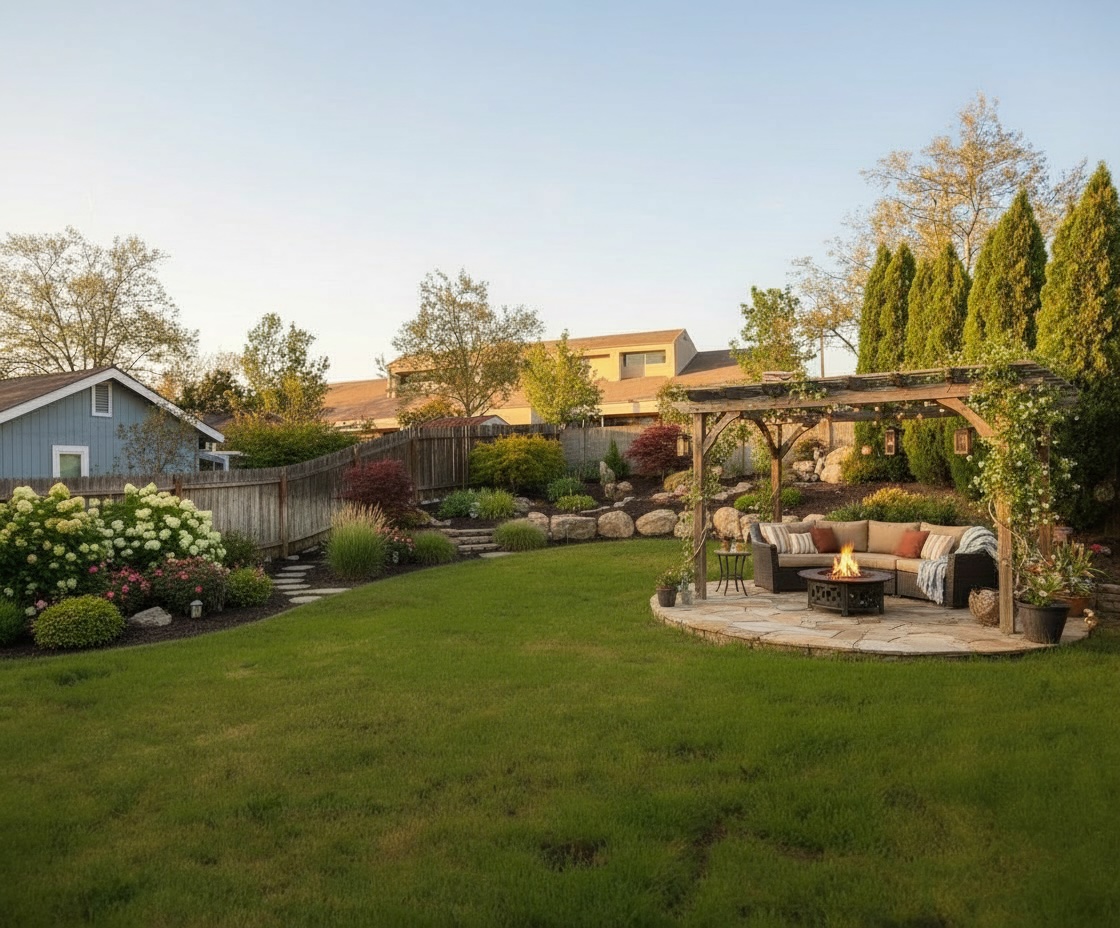
See how a modern/minimalist garden looks on YOUR property
Upload a photo of your Grand Prairie yard and visualize your dream garden in seconds.
Try ProScapeAI Free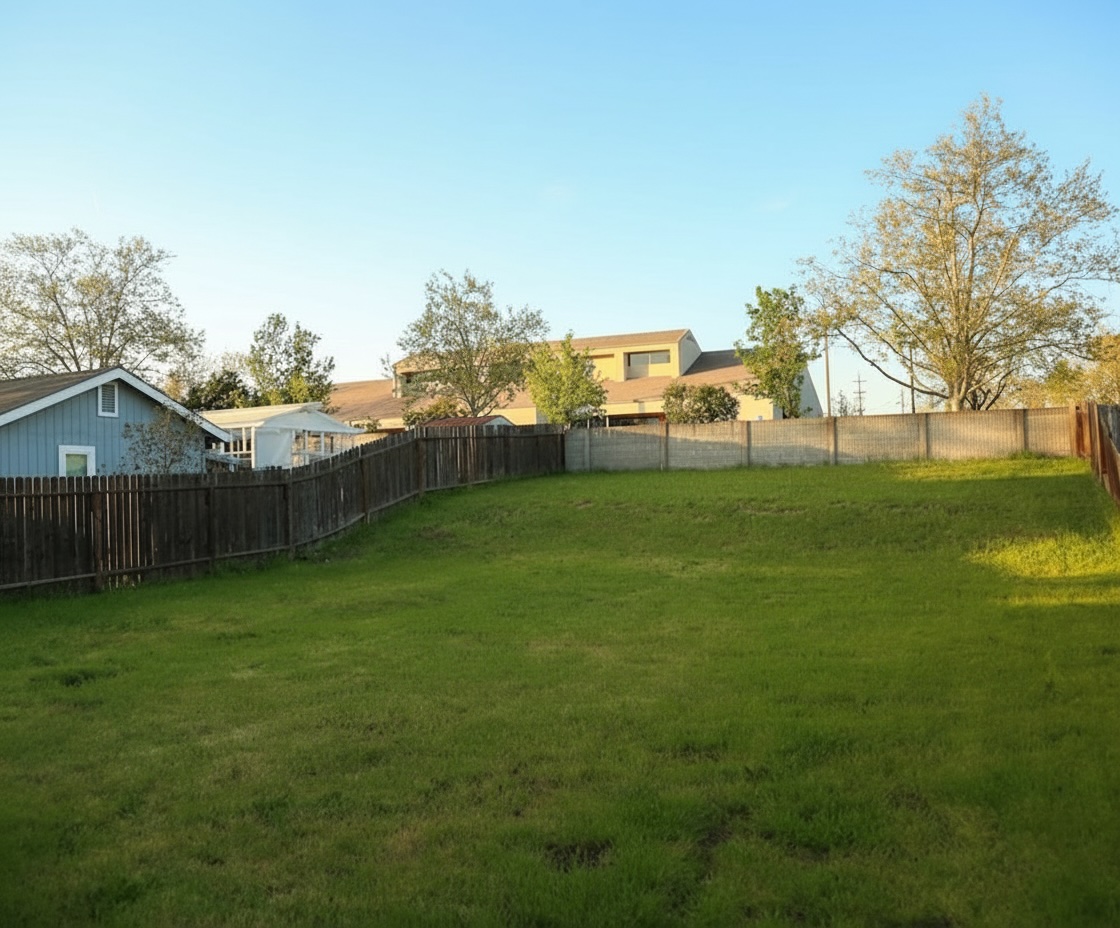
Featured Trees & Shrubs for Modern/Minimalist Gardens
Browse all 158 plants for Grand Prairie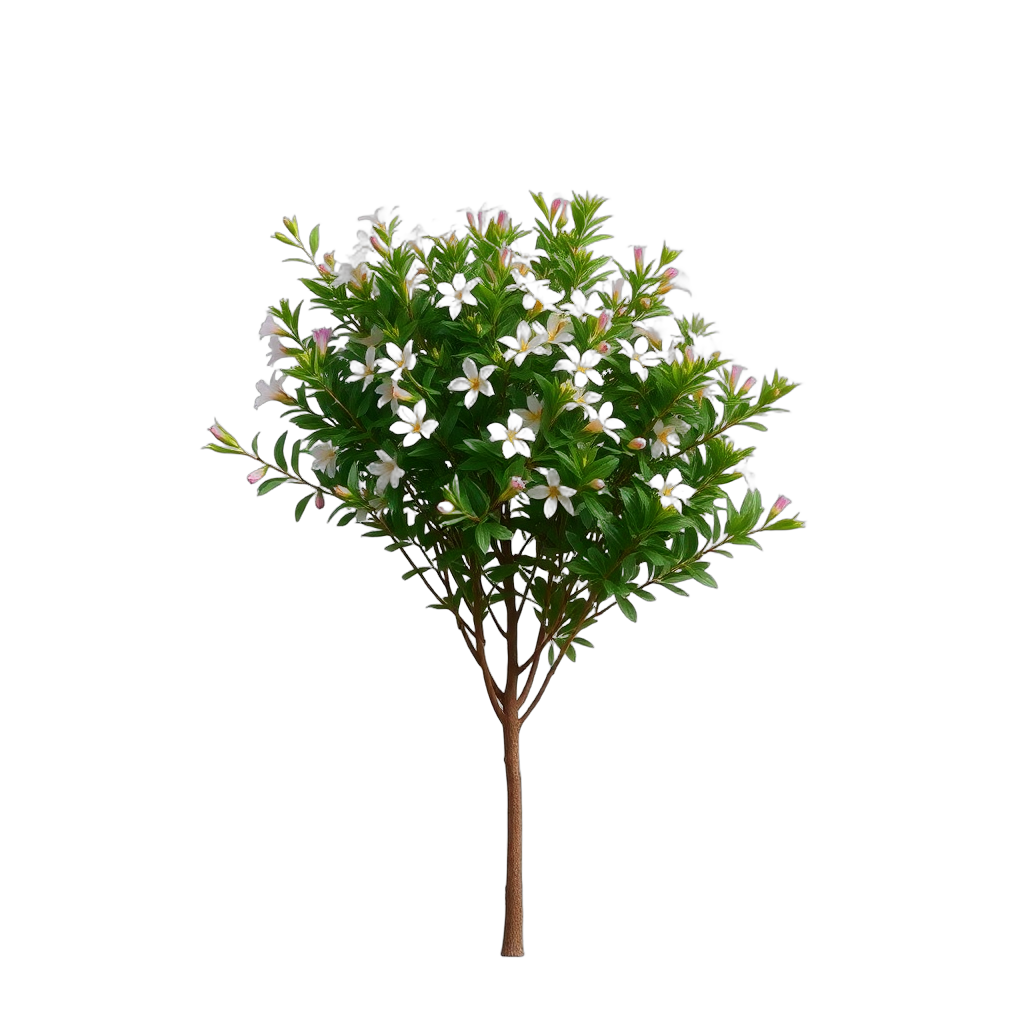
Texas Mountain Laurel
Sophora secundiflora
medium-sized at 12 feet, purple blooms in spring. Evergreen year-round.
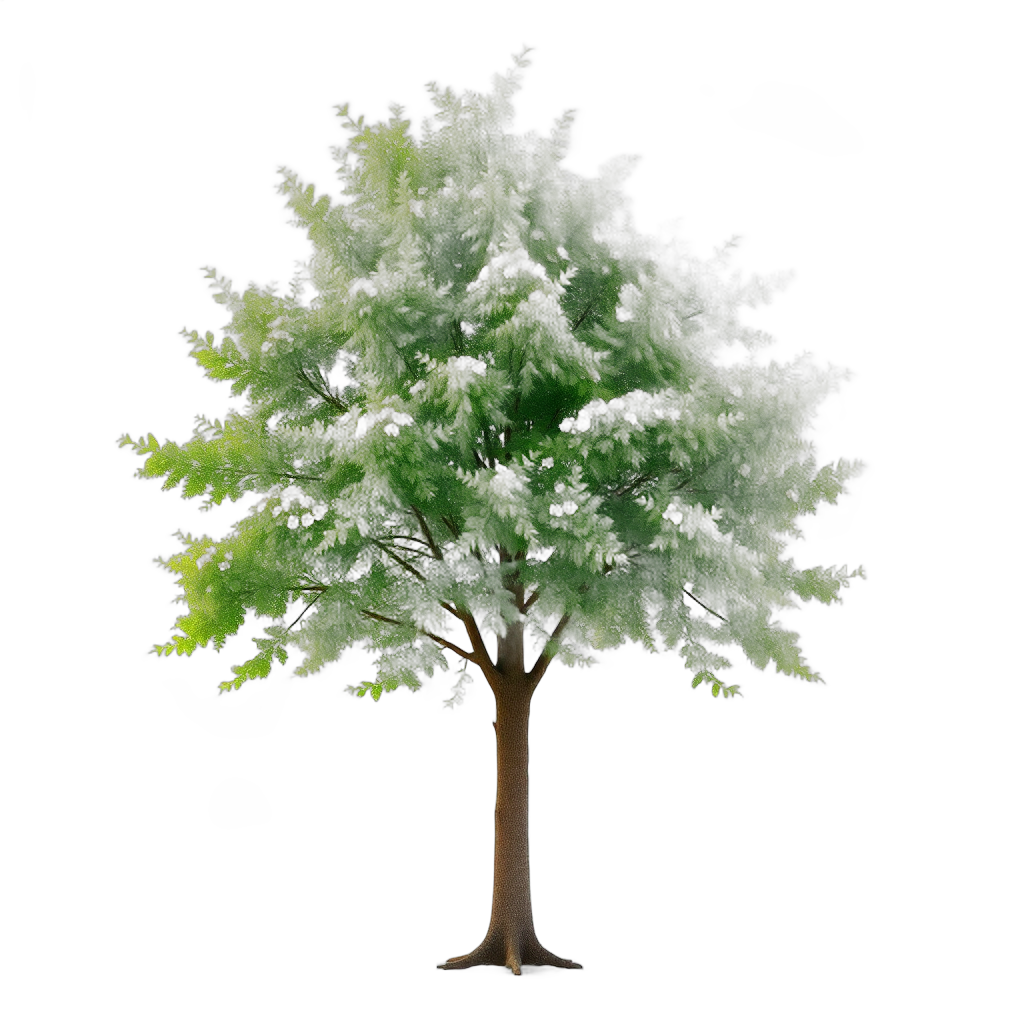
Cedar Elm
Ulmus crassifolia
large shade tree reaching 60+ feet, blooms in fall. Yellow fall color.
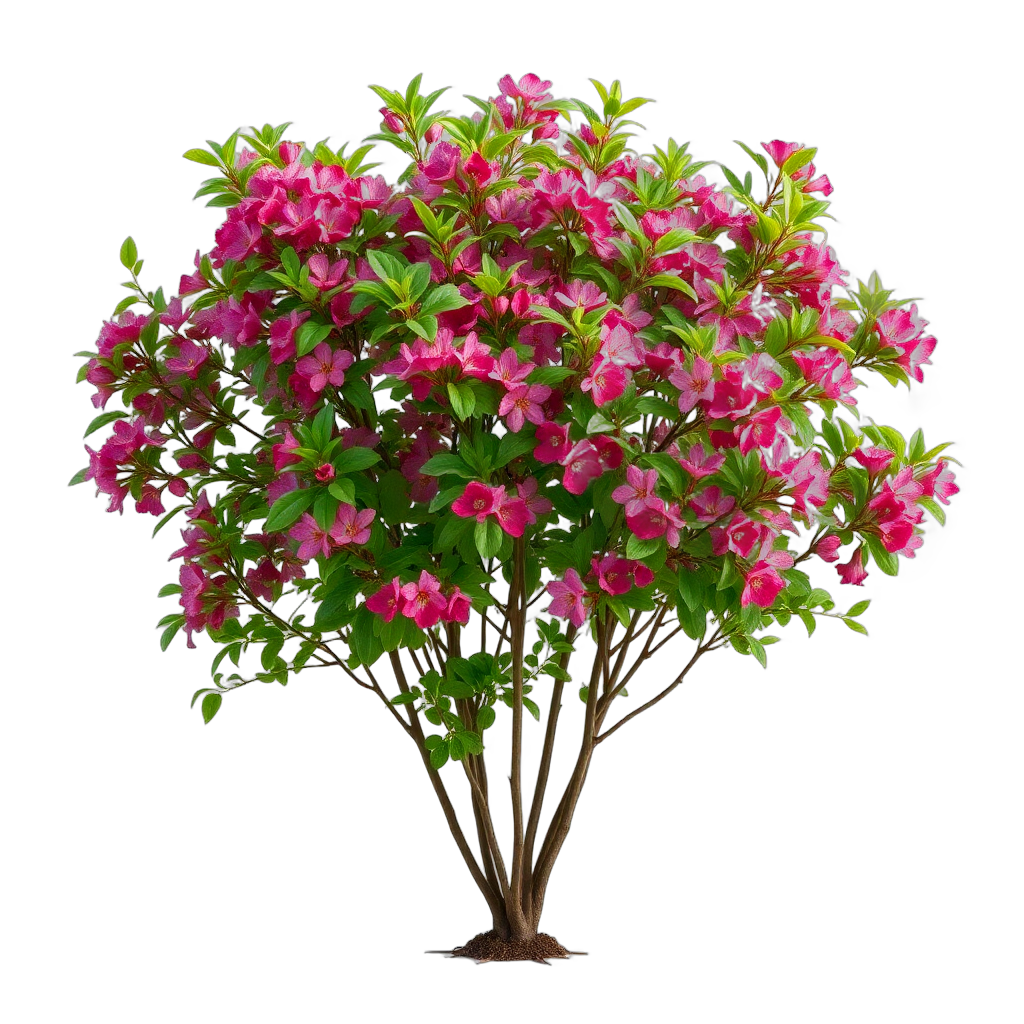
Oklahoma Redbud
Cercis reniformis
reaches 20 feet tall, purple blooms in spring. Attracts hummingbirds.
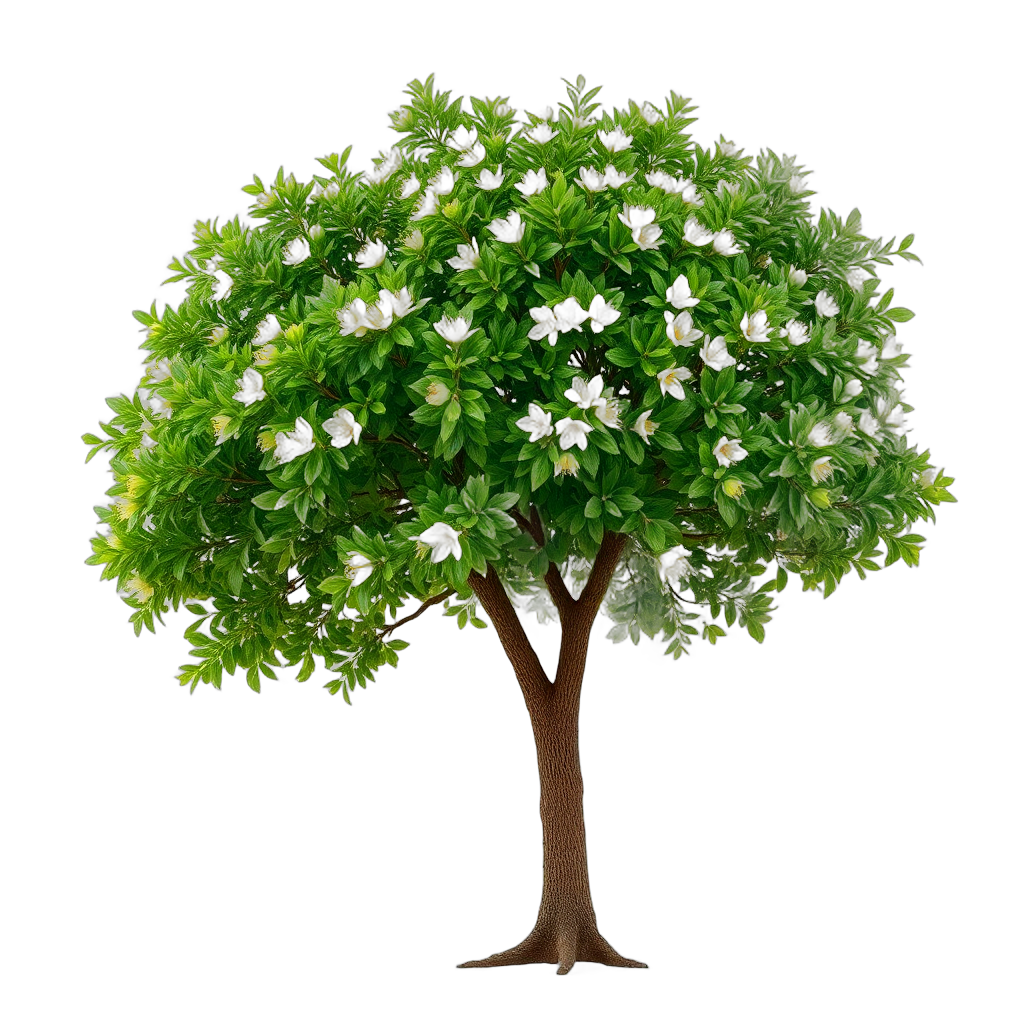
Osage Orange
Maclura pomifera
large shade tree reaching 50+ feet, blooms in spring. Yellow fall color.
Featured Grasses & Groundcovers for Modern/Minimalist Gardens
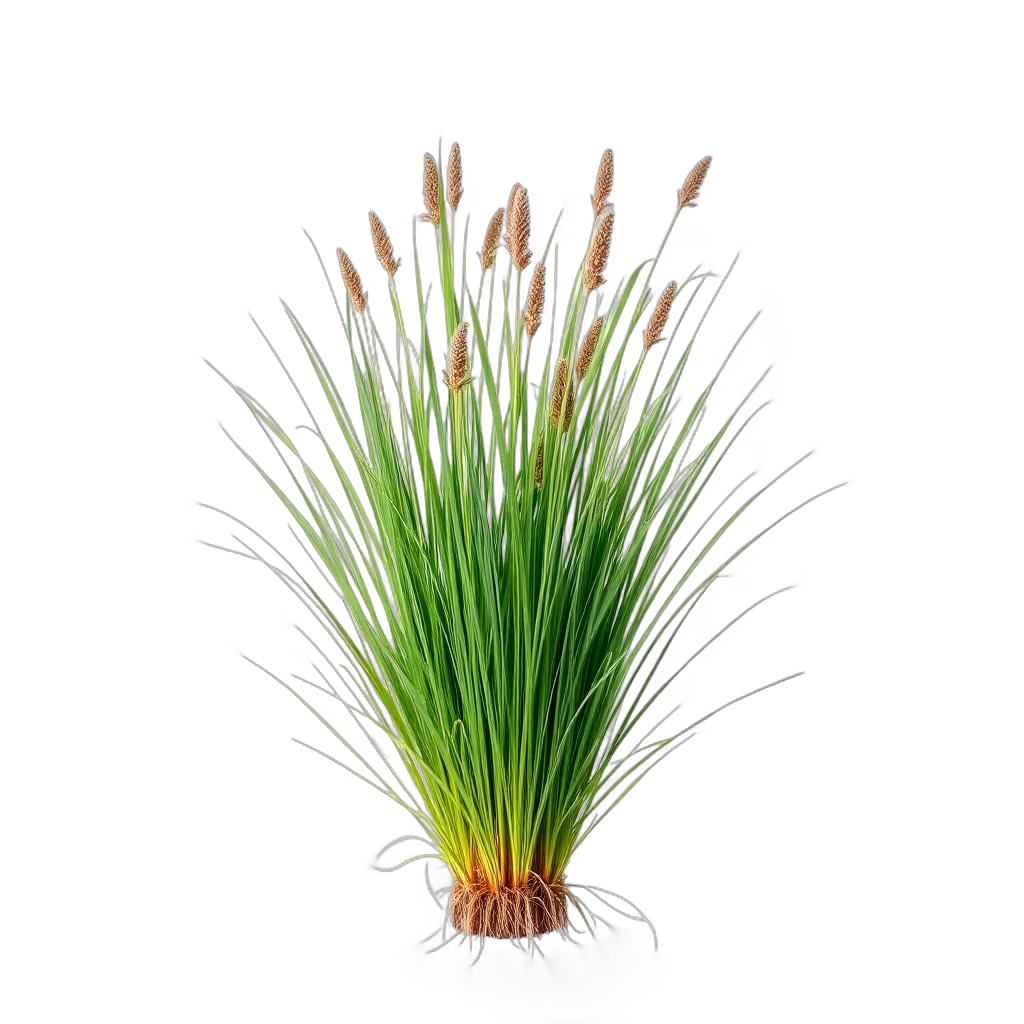
Lindheimer's Muhly
Muhlenbergia lindheimeri
grows to 4 feet, white blooms in fall.
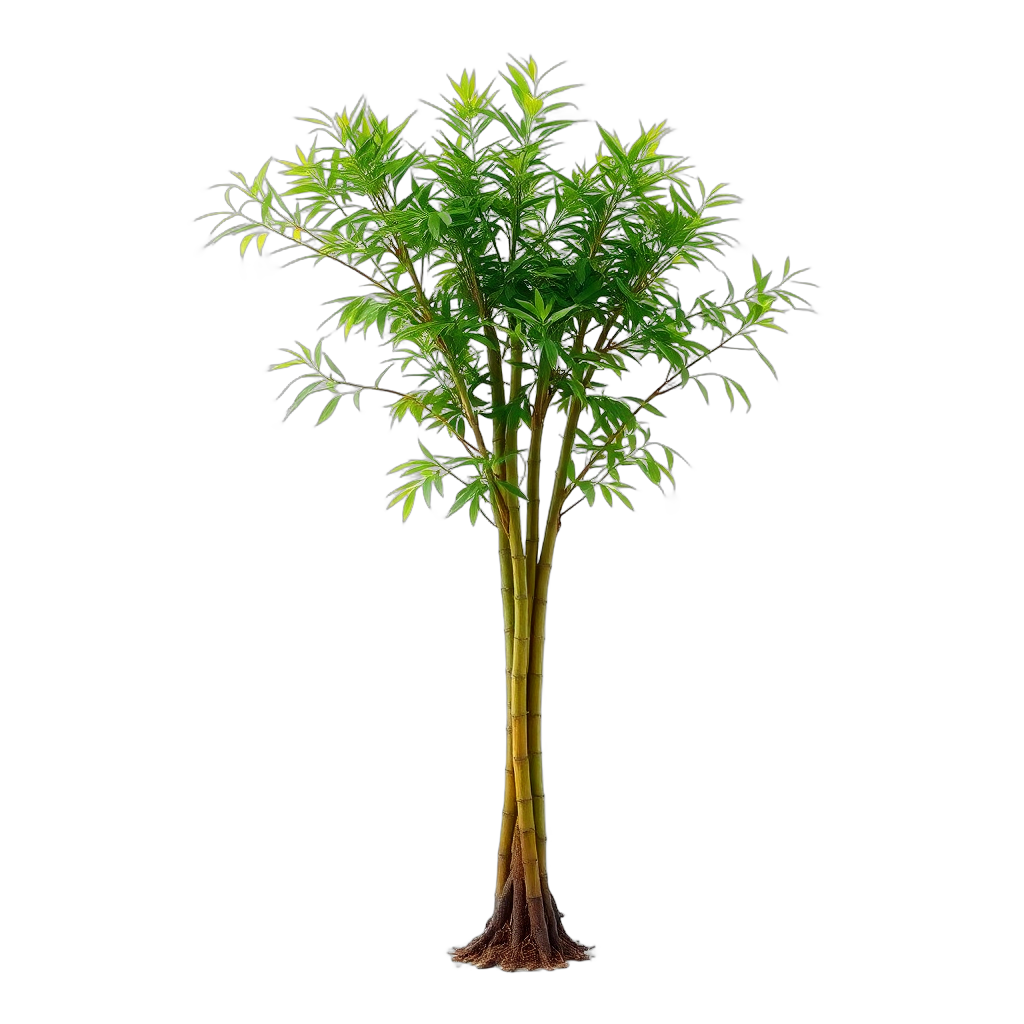
Anceps Bamboo
Yushania anceps
medium-sized at 12 feet, blooms in none. Evergreen year-round.
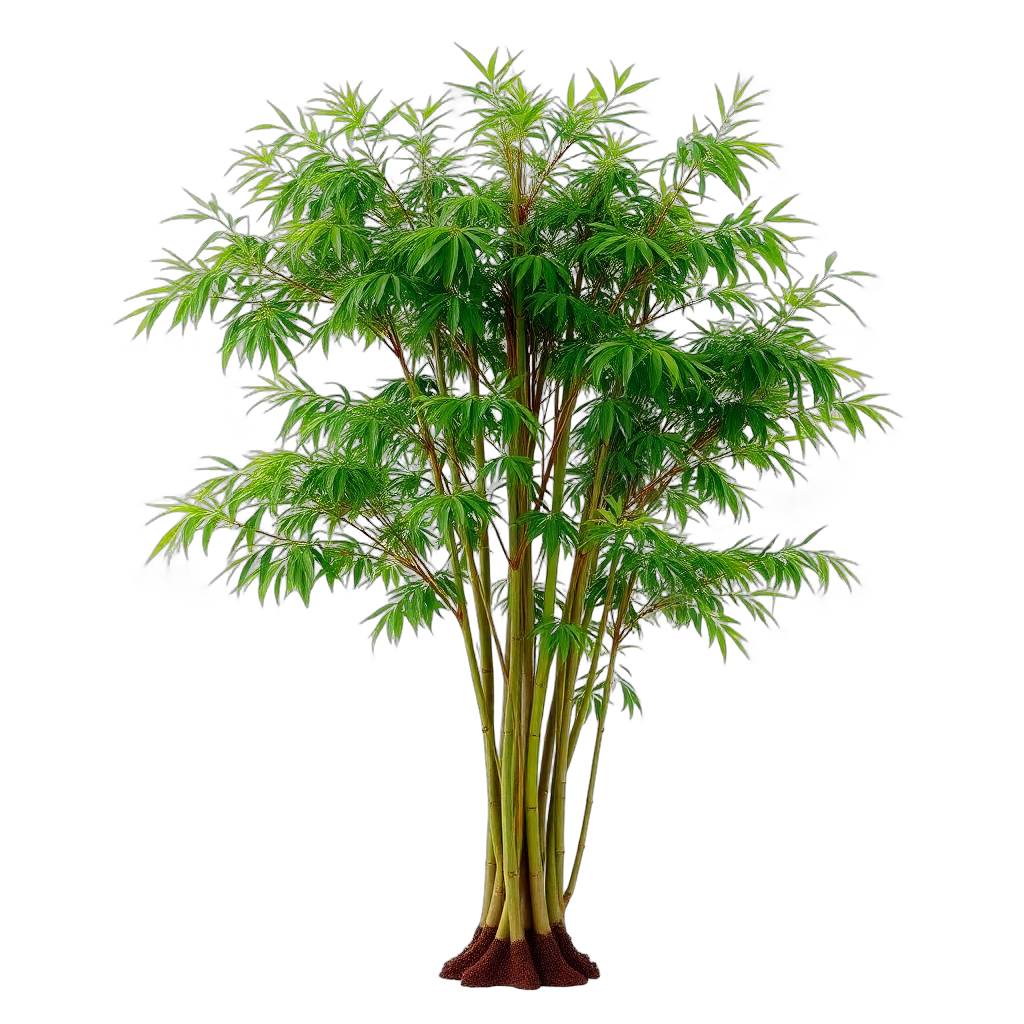
Arrow Bamboo
Pseudosasa japonica
medium-sized at 15 feet, blooms in none. Evergreen year-round.
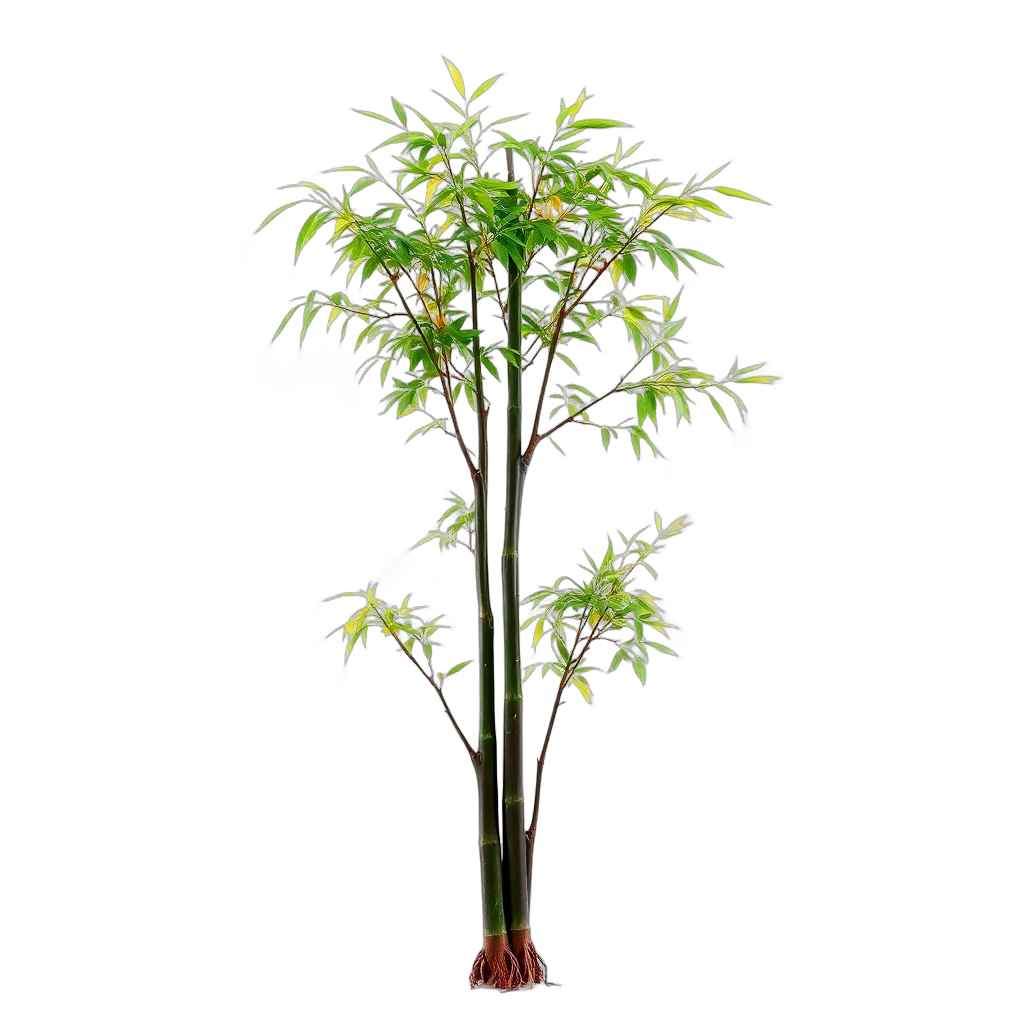
Black Bamboo
Phyllostachys nigra
reaches 25 feet tall, blooms in none. Evergreen year-round.
Featured Flowers & Perennials for Modern/Minimalist Gardens
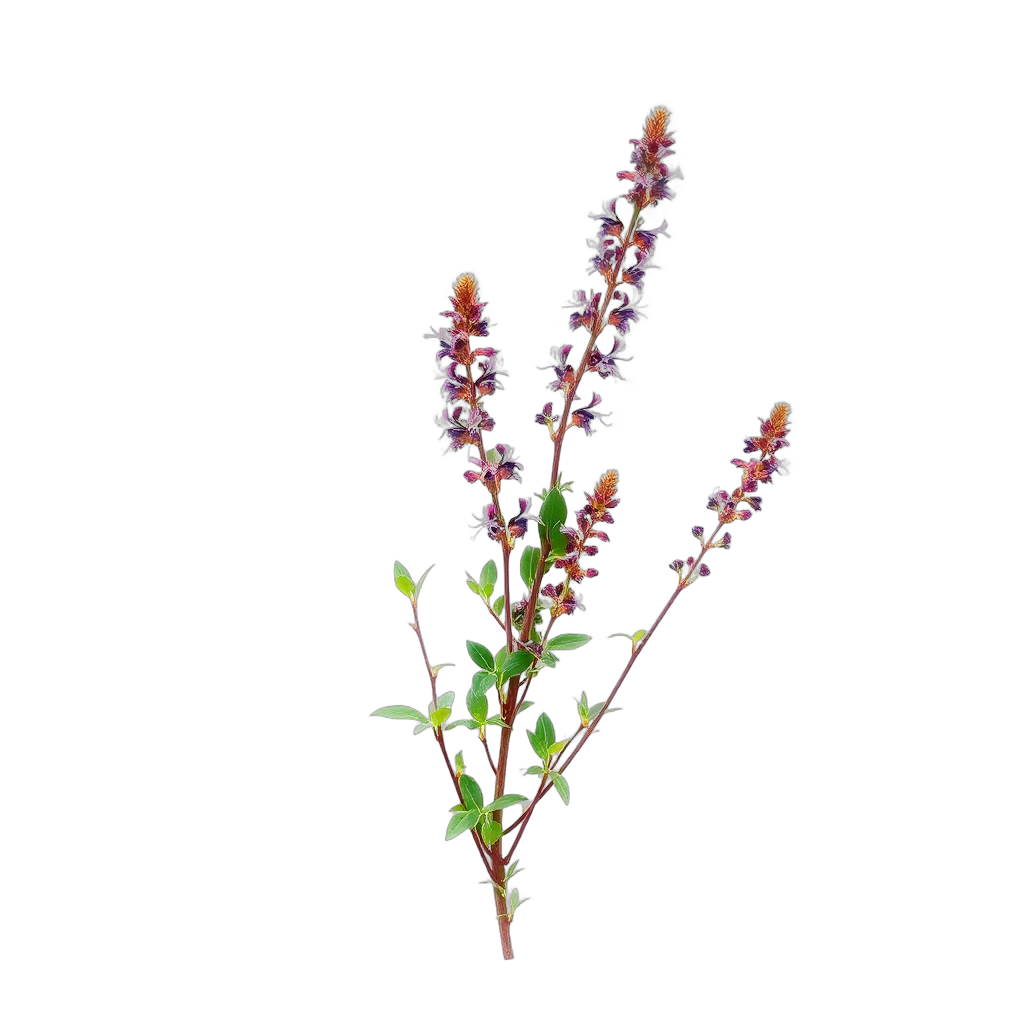
Mealy Cup Sage
Salvia farinacea
low-growing ground cover, blue blooms in summer. Attracts butterflies.
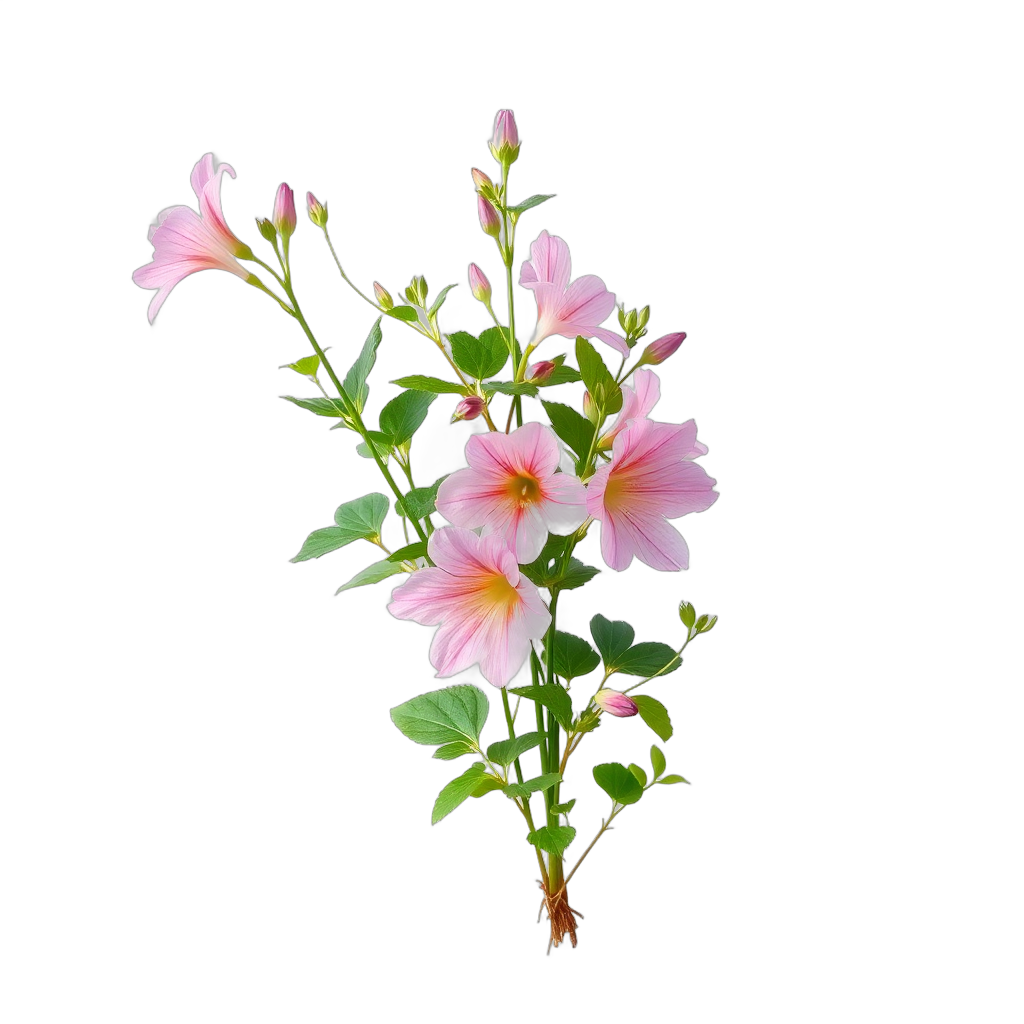
Pink Evening Primrose
Oenothera speciosa
low-growing ground cover, pink blooms in summer. Attracts butterflies.

Tussock Sedge
Carex stricta
low-growing ground cover, blooms in spring. Brown fall color.

Umbrella Sedge
Cyperus alternifolius
grows to 4 feet, blooms in summer. Evergreen year-round.
Bloom Calendar for Grand Prairie
spring
Texas Mountain Laurel, Oklahoma Redbud, Osage Orangesummer
Mealy Cup Sage, Pink Evening Primrose, Umbrella Sedgefall
Mealy Cup Sage, Lindheimer's Muhly, Cedar Elmwinter
Limited bloomsDesign Tips for Grand Prairie (Zone 8b)
- Mound every succulent bed 10–12 inches above grade with 50/50 expanded shale and gravel mulch — in Houston Black clay, drainage is the entire difference between an Agave ovatifolia that lives 20 years and one that turns to mush after a 4-inch October rain
- Use Lindheimer muhly 'Autumn Glow' where a Phoenix designer would use more agave: it is a Texas Superstar, gives you the same sculptural mass at a tenth the cost per square foot, and needs no irrigation after its first summer
- Repeat three plants forty times rather than planting forty species — the modern look here comes from rhythm, and Salvia farinacea 'Henry Duelberg', Hesperaloe 'Brakelights', and Bouteloua 'Blonde Ambition' cover the blue, red, and gold notes with three SKUs
- Spend the money underground: 6 inches of compacted crushed limestone base over geotextile is 25–35% of hardscape cost and the one thing you cannot retrofit once blackland clay starts heaving your pavers
- Substitute 'Will Fleming' yaupon holly or 'Taylor' juniper for Italian cypress — same tight vertical column, but they are proven in alkaline North Texas clay and do not brown out from the inside the way cypress does in a wet Zone 8b winter
- Plan for west sun: gravel fields on an unshaded west exposure radiate serious heat in a 100°F August, so keep at least one canopy tree (Shumard oak, cedar elm, or chinquapin oak — all alkaline-tolerant) in the composition and let its trunk read as sculpture above the clean groundplane
Where to Source Plants in Grand Prairie
Skip the big-box stores. These independent Grand Prairie nurseries specialize in the plants that make modern/minimalist gardens thrive in Zone 8b.
Pat's Plants and Gifts
Downtown Grand Prairie
Wide selection of indoor and outdoor plants with personalized customer service.
Grand Prairie Feed & Garden
East Grand Prairie
Garden supplies and plants alongside a long-running feed store, a local institution.
Chambers Nursery Garden Center
Irving (DFW metro)
Family-owned nursery specializing in native and ornamental plants.
Modern/Minimalist Landscaping Costs in Grand Prairie
| Project Scope | Estimated Cost |
|---|---|
| Front yard xeriscape conversion (turf removal, Corten edging, gravel, specimen plants) | $6,000 – $15,000 |
| Broom-finished concrete patio or walk (200–400 sqft, proper base and rebar) | $3,000 – $9,000 |
| Round concrete fire court with gas fire table and string lighting | $9,000 – $20,000 |
| Gunite pool with sun shelf, concrete deck and perimeter planting | $75,000 – $140,000 |
| Specimen Agave ovatifolia or Yucca rostrata (installed on raised, amended mound) | $250 – $900 each |
| AI visualization with ProScapeAI | Free to start |
Estimates based on Grand Prairie, TX-area contractor rates as of 2026. Actual costs vary by site conditions, materials, and contractor.
Grand Prairie Climate & Growing Zone
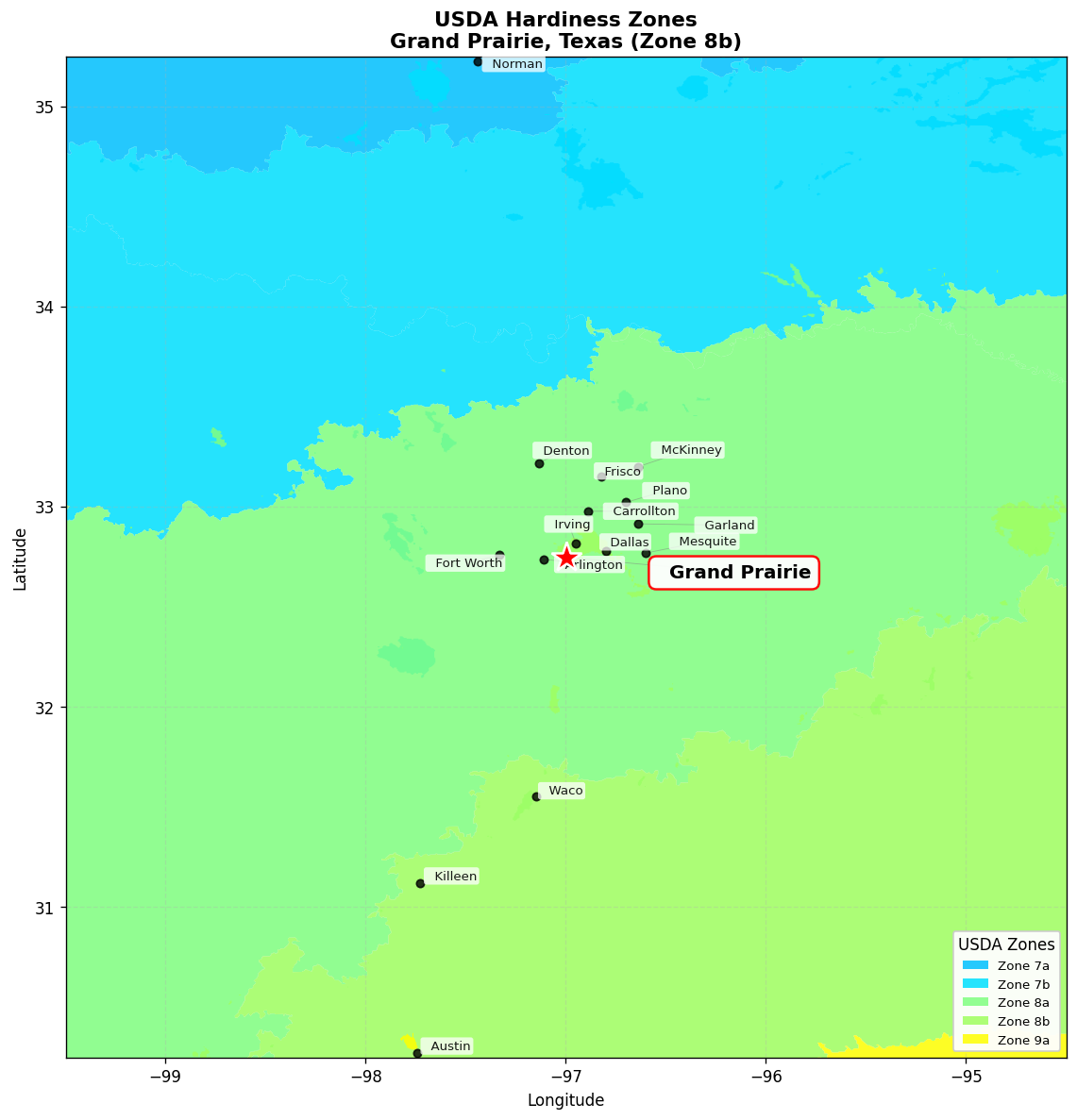
USDA Zone 8b
Hardiness zone for Grand Prairie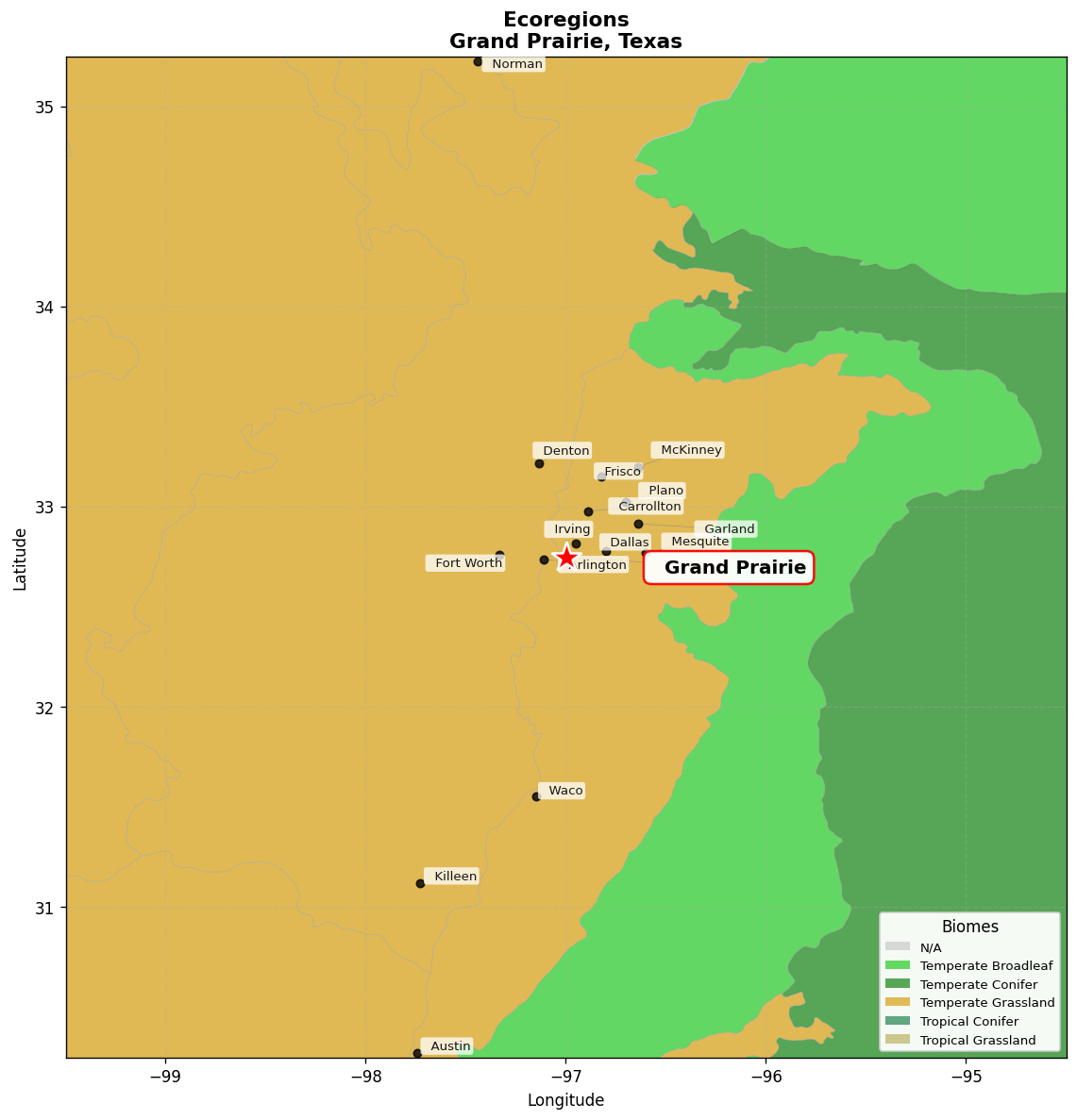
Texas blackland prairies
Native ecoregionFrequently Asked Questions
How much does modern landscaping cost in Grand Prairie?
DFW installation labor runs modestly below coastal-metro rates, which makes clean-line design attainable here. A full front-yard xeriscape conversion — turf removal, Corten edging, raised gravel fields, specimen agaves — runs $12–22/sqft, or roughly $6,000–15,000 for a typical 500–700 sqft front yard. A round concrete fire court with a gas fire table lands at $9,000–20,000. Broom-finished concrete patios run $12–20/sqft, stamped $18–28. A gunite pool with a sun shelf plus surrounding deck and landscape is typically $75,000–140,000 in Grand Prairie. Doing gravel-and-plants yourself, with rented plate compactor and delivered bulk gravel, can come in under $5/sqft.
Will agaves actually survive a Grand Prairie winter?
The hardy ones will, and the February 2021 freeze proved which. Agave ovatifolia (whale's tongue) and Agave parryi var. truncata are reliably hardy well past Zone 8b's 15–20°F lows; Agave havardiana and Yucca rostrata 'Sapphire Skies' are equally tough. What kills them here is not cold but cold plus water — a saturated Houston Black clay bed at 20°F is a death sentence. Plant on mounds raised 10–12 inches, backfilled 50/50 with expanded shale or crushed granite, and gravel-mulched so no organic material touches the crown. Skip Agave americana (too large, monocarpic, and prone to snout weevil) and anything sold as a tender blue succulent.
What do I need to know about blackland clay before pouring concrete?
Houston Black clay is a vertisol with extreme shrink-swell: it swells shut after a 4-inch May rain and cracks two inches wide in a 100°F August, and that annual cycle is what heaves hardscape. For pavers and stone, excavate 8–10 inches, lay geotextile fabric, and compact 6 inches of crushed limestone flex base in two lifts. For poured concrete, use a 4-inch slab reinforced with #3 rebar on 18-inch centers — not fiber mesh alone — with control joints every 8–10 feet. Slope everything at least 1/4 inch per foot away from the house, and keep new canopy trees 15–20 feet off the slab, since roots drawing moisture from clay cause the differential settlement that cracks post-tension foundations.
Which ornamental grasses work best for modern design in Grand Prairie?
Lindheimer muhly (Muhlenbergia lindheimeri 'Autumn Glow') is the local star and a Texas Superstar — a 4-foot blue-gray fountain that holds shape through August and throws silver plumes in fall. 'Regal Mist' pink muhly (also Texas Superstar) gives the October pink cloud. Blue grama 'Blonde Ambition' is the low, fine-textured choice for walk edges, and little bluestem 'The Blues' brings copper winter color. Avoid pampas grass (oversized, seeds around) and treat purple fountain grass as a summer annual. All get one hard cut-back in late February; otherwise they are unirrigated after year one.
Can I remove my front lawn entirely in Grand Prairie?
Usually yes, but check two authorities first. Grand Prairie's development code sets minimum landscaping and living-groundcover standards for front yards, so confirm with the city's Planning Department before you strip turf — a design that keeps 30–50% living plant coverage inside gravel fields almost always satisfies it and looks better than pure rock anyway. If you are in an HOA neighborhood like Mira Lagos or Grand Peninsula, submit a plan for approval, but know that Texas Property Code §202.007 bars an HOA from outright prohibiting drought-resistant landscaping. Also skip solid black plastic and pure rock over an unshaded area — gravel radiates heat and can push adjacent slab and window temperatures uncomfortably high on a west exposure.
When is the best time to install a modern landscape here?
Hardscape can go in almost any month — Grand Prairie's frost depth is negligible and concrete pours fine through winter, with the main risk being spring storm delays. Planting is a different story: October through early December is the ideal window, letting grasses and agaves root through a mild winter before their first summer, with late February through March as the backup. Avoid planting June through early September entirely. Plan hardscape around DFW's hail season too: March through May storms are severe enough to scar agave leaves permanently and dent thin metal, so install specimen succulents in fall rather than heading into spring.