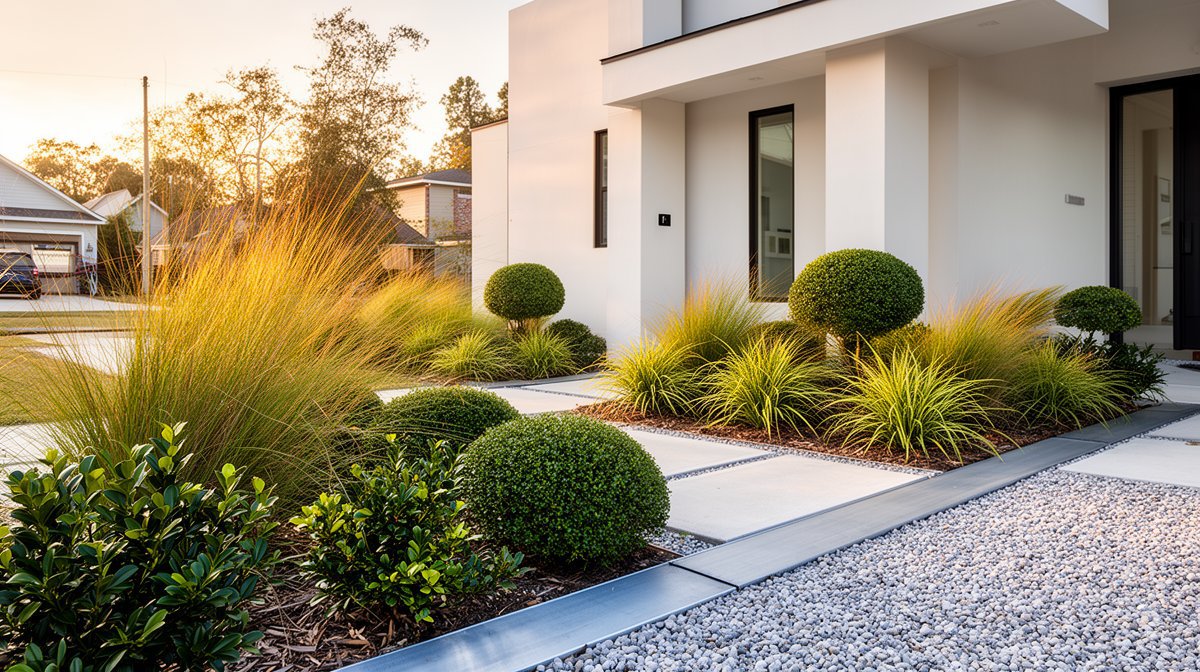
4 Modern Garden Ideas for Huntsville, AL | Clean-Line Landscape Design in Zone 7b
Native plants from the Interior Plateau US Hardwood Forests (Zone 7b) — Humid subtropical climate
Why Modern/Minimalist Gardens in Huntsville?
Huntsville has more appetite for modern landscape design than any other city its size in Alabama, and the housing stock explains why. The 1950s and 60s ranches in Blossomwood and Jones Valley were built with the low horizontal rooflines that clean-line planting was invented to flatter, the hillside houses on Monte Sano turn every slope into a terracing opportunity, and the flat-roof new builds filling in around Hampton Cove and Madison arrive already wanting a gravel court instead of a lawn. A city of engineers from Cummings Research Park and Redstone Arsenal also tends to like a landscape with a legible logic to it — repeated modules, one material, restrained plant counts.
Zone 7b sets the ceiling: winter lows of 5–10°F rule out the plants that define modern gardens in Austin or Los Angeles. Agave americana, Phormium tenax, and most Echeveria will not return here, and Italian cypress sulks and browns in Tennessee Valley humidity. The substitutions are straightforward once you know them: Agave ovatifolia 'Frosty Blue' and Agave parryi var. truncata for the big rosettes, Yucca rostrata 'Sapphire Skies' and Yucca filamentosa 'Color Guard' for spiky verticals, Hesperaloe parviflora 'Brakelights' for red bloom spikes, and columnar Juniperus virginiana 'Taylor' anywhere a designer elsewhere would specify cypress. Then comes the real constraint: Huntsville gets roughly 55 inches of rain a year, so succulents die of wet crowns in February, never of cold.
That sounds like an argument against the gravel-garden look. It is actually the argument for it — because the model already exists here. The limestone cedar glades scattered across the Interior Plateau within a half hour of downtown grow Bouteloua curtipendula, Sporobolus heterolepis, Muhlenbergia capillaris and Echinacea tennesseensis in a few inches of thin alkaline soil over solid Mississippian bedrock, flooded every February and baked bone dry by August. A raised, sharply drained gravel bed in a Madison front yard is a fair imitation of a local plant community, not an imported desert. Build the beds up 8–12 inches in a 50/50 blend of native Decatur silty clay loam and crushed granite or expanded shale, gravel-mulch the crowns, and the same rain that would rot a bed at grade simply drains away. Underneath every patio, compact 6–8 inches of #57 stone: Huntsville's freeze depth is shallow, but clay that swells all winter and shrinks all August will crack concrete poured on bare ground within a few seasons.
4 Modern/Minimalist Design Ideas for Huntsville
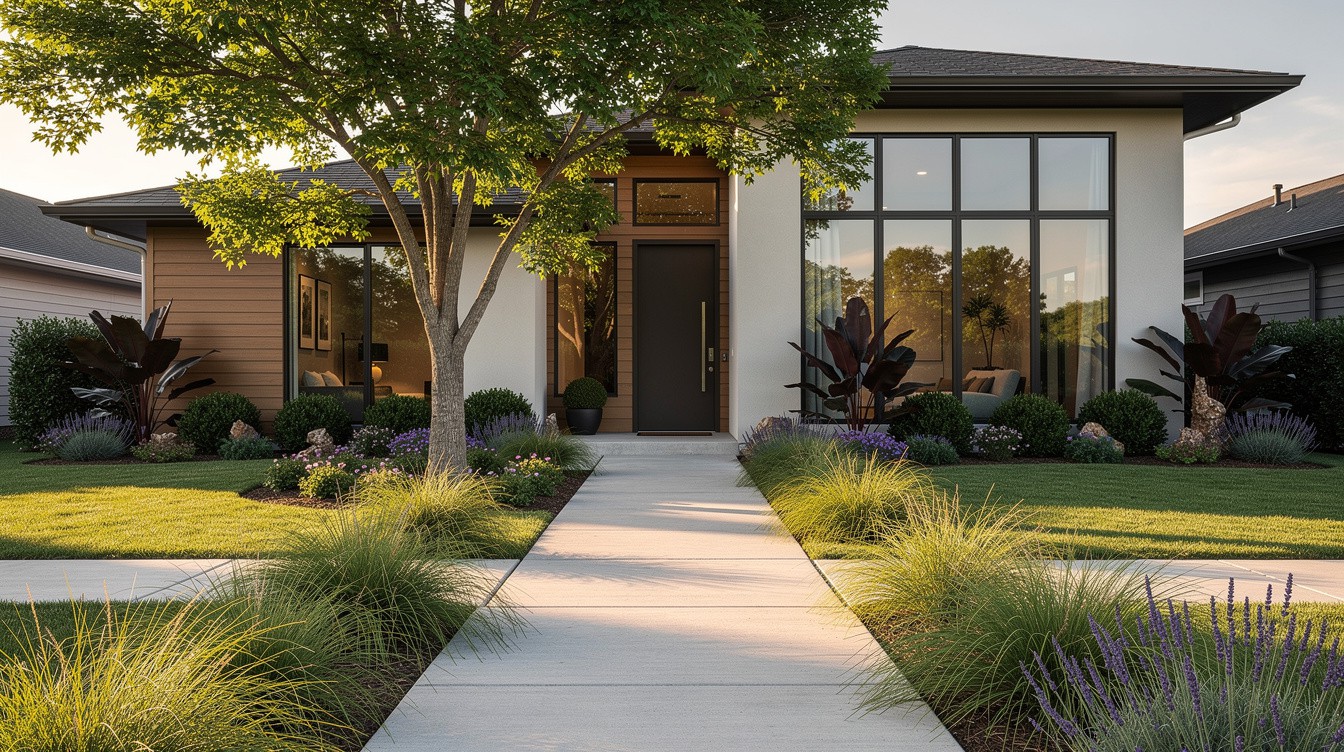
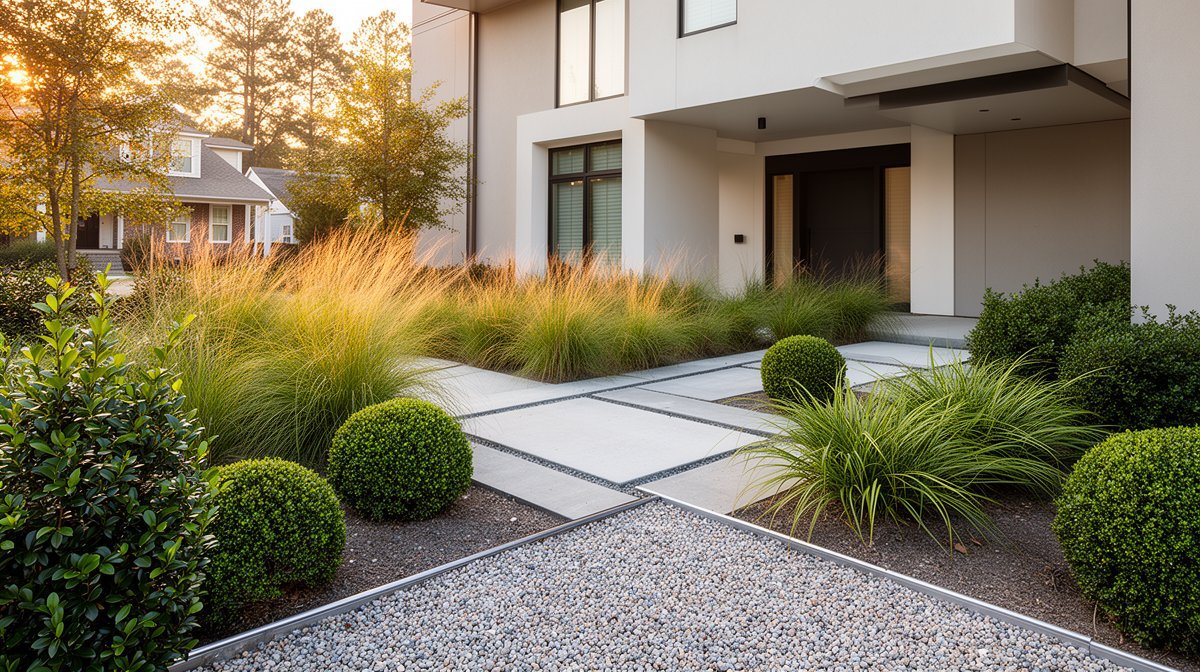
The Split-Walk Entry Court
$14–26/sqftA single-story contemporary in warm wood siding and white stucco, with black-framed glass running floor to ceiling, is approached by a wide poured-concrete walk that splits the front yard into two clean lawn panels. The planting is a study in three textures repeated: tight dark green spheres against the foundation, upright burgundy-black foliage as vertical punctuation at the corners, and loose fountains of ornamental grass breaking the hard walk edge where it meets the lawn. A multi-trunk specimen tree leans over the entry and does the heavy lifting, shading the west-facing glass through Huntsville's brutal late afternoons.
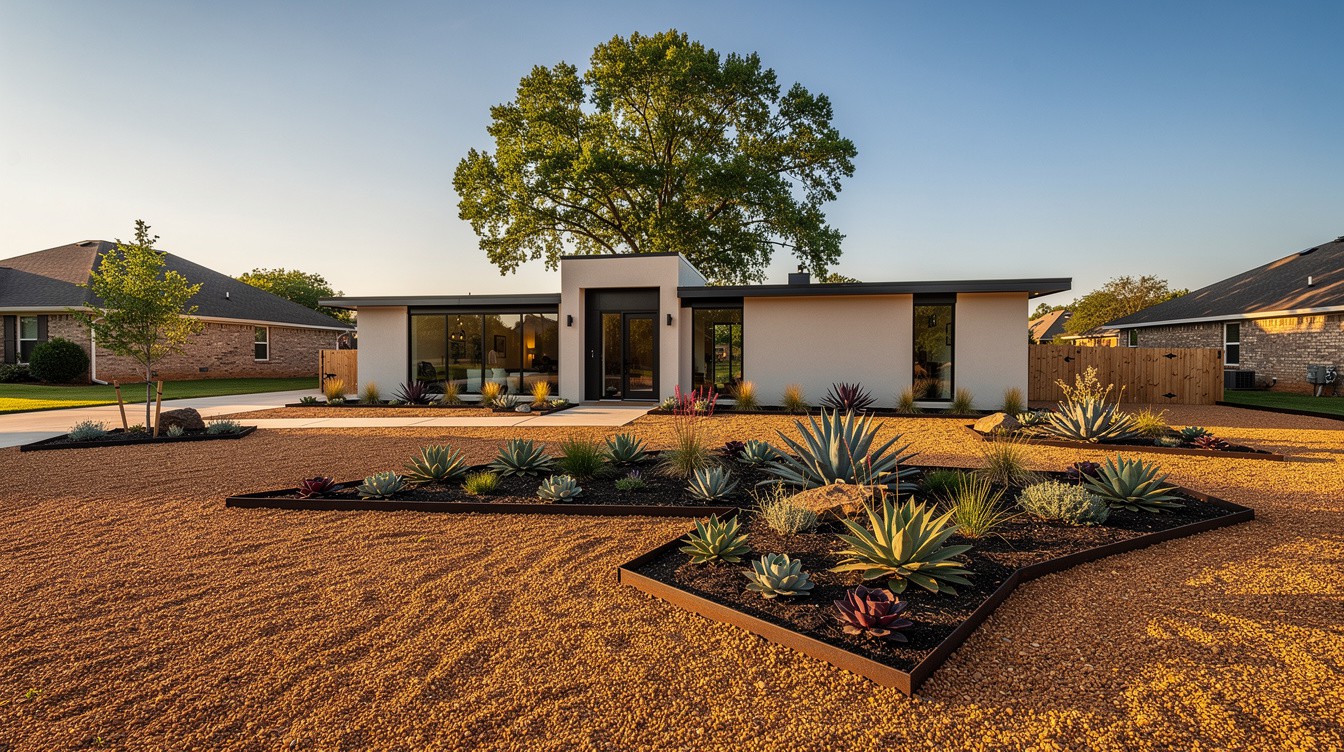
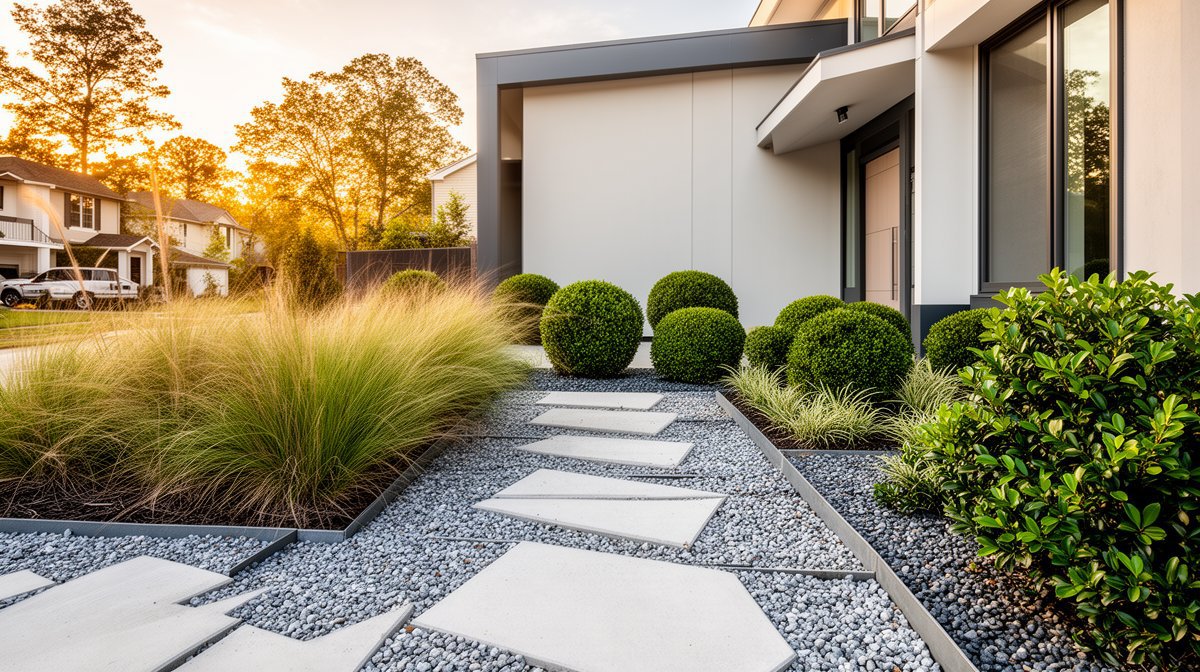
The Cedar Glade Gravel Court
$10–20/sqftThe lawn is gone entirely, replaced by a field of warm crushed gravel raked smooth and organized by angular Corten steel-edged islands that read almost like a site plan drawn on the ground. Each island is a raised composition of blue-grey agave rosettes, low succulent groundcover, and small tufts of native grass, backed by a low-slung white flat-roof house and a single enormous shade oak. The whole thing works in Huntsville only because the beds are built up above grade — that raised, sharply drained profile is what turns 55 inches of annual rain from a death sentence into an irrigation system.
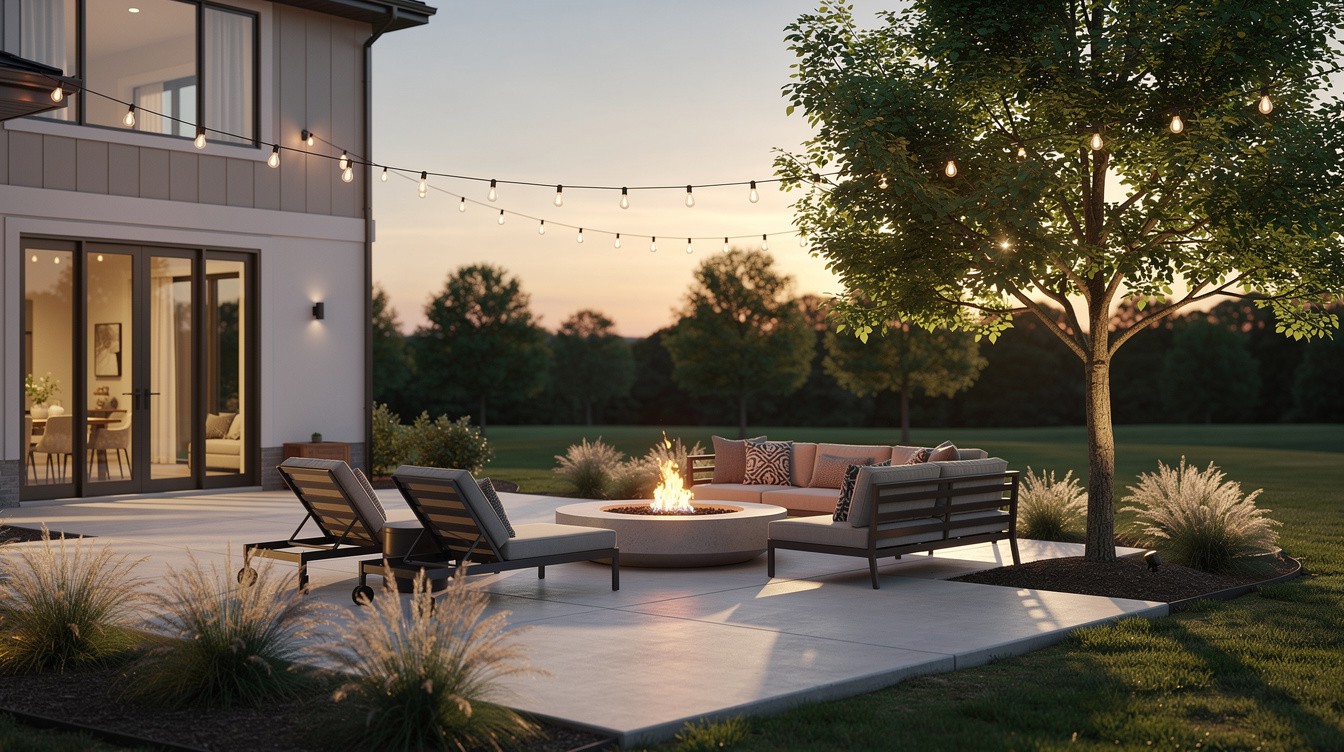
The Twilight Fire Bowl Terrace
$18–35/sqftLarge-format concrete slabs form a generous terrace stepping off the back of a two-story contemporary, arranged around a round precast gas fire bowl with a low sectional on one side and two loungers on the other. String lights sweep overhead from the house wall to a post at the far corner, a young shade tree sits in its own mulch island at the terrace edge, and drifts of white-plumed ornamental grass dissolve the hard concrete line into the lawn. One floor material, one focal element, one planting texture — and it pushes Huntsville's usable outdoor evenings well into November.
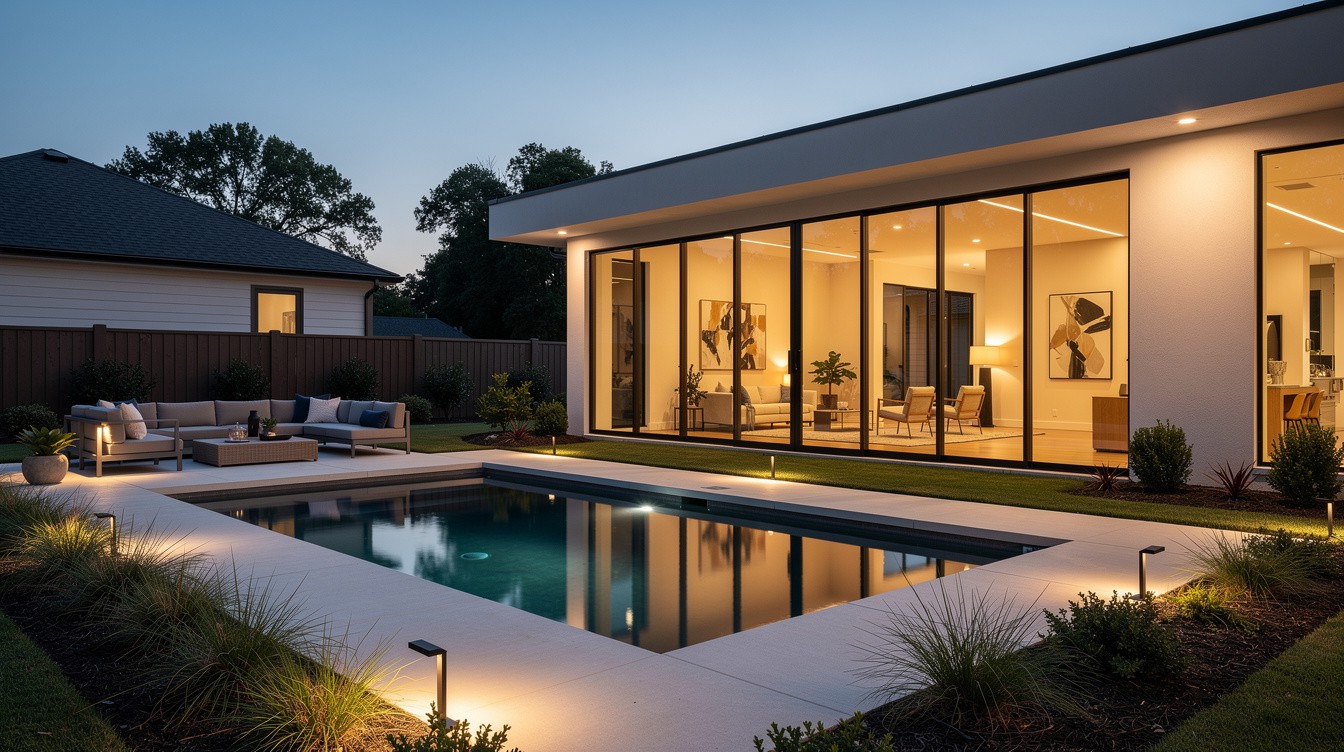
The Reflecting Pool Glass Wing
$40–80/sqft (pool area inclusive)A rectangular pool sits tight against a broad pale concrete deck, mirroring a flat-roof glass wing that glows amber at dusk. The planting does its work entirely at the perimeter: a dark stained horizontal fence as backdrop, low evergreen mounds holding the bed lines, spiky architectural accents at the corners, and grasses catching the light from low LED bollards set into the beds. The restraint is the point — pale deck, dark fence, green-and-wheat plant palette, warm light — and the grass borders soften two full fence runs for a fraction of what a clipped evergreen hedge would cost to install and maintain.
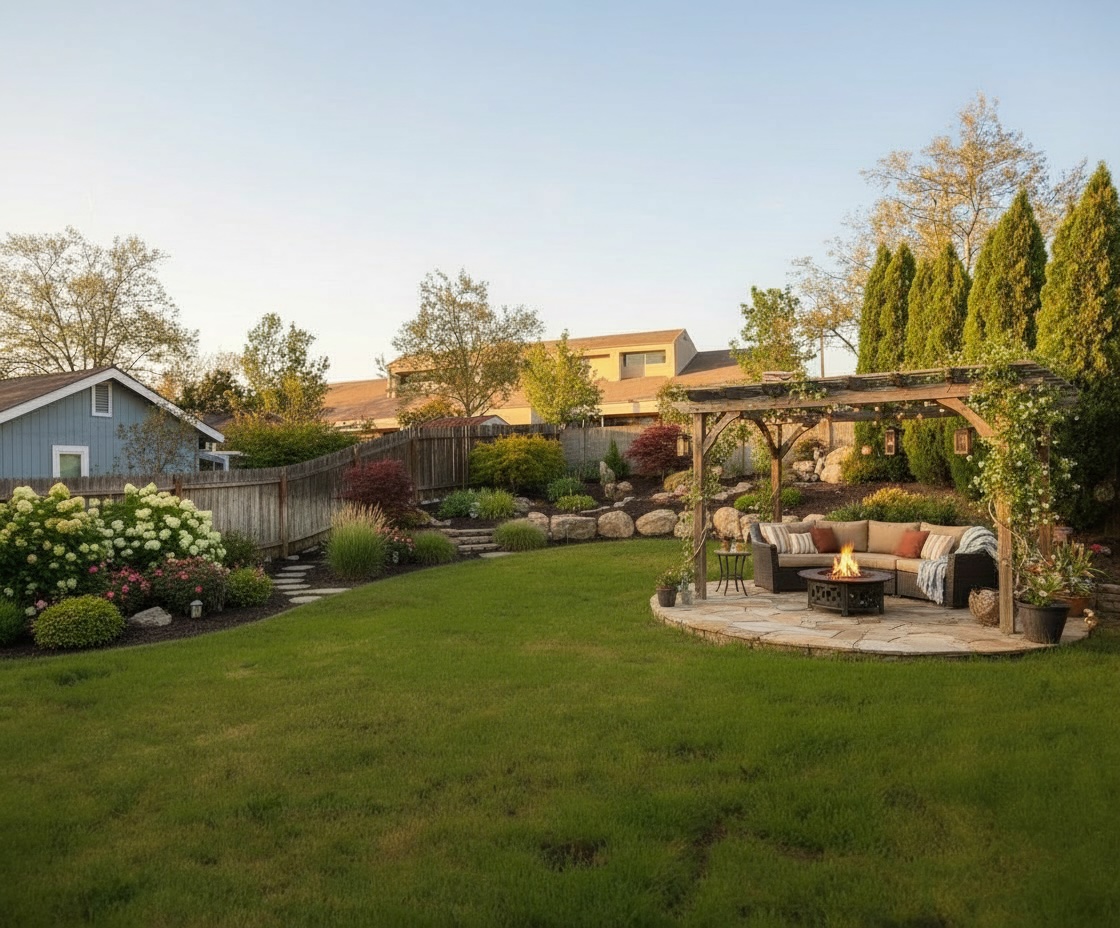
See how a modern/minimalist garden looks on YOUR property
Upload a photo of your Huntsville yard and visualize your dream garden in seconds.
Try ProScapeAI Free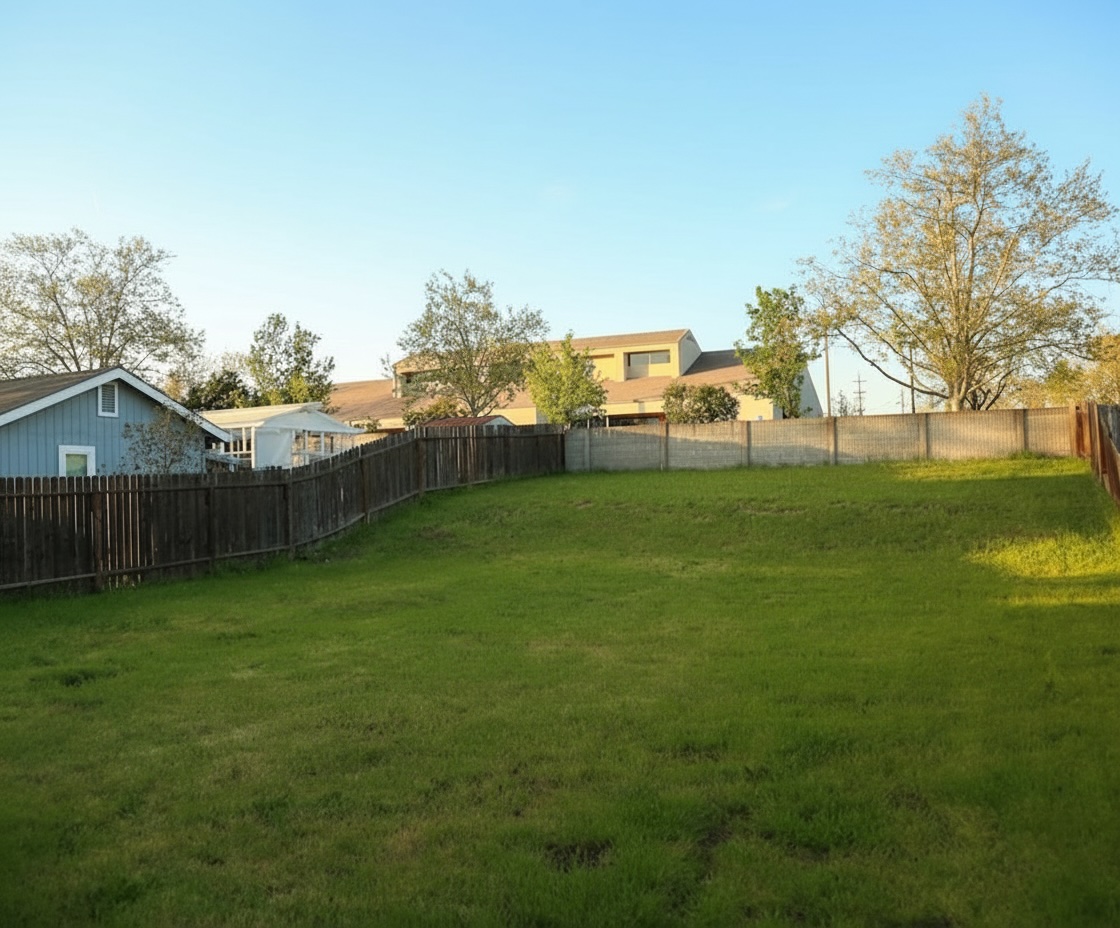
Featured Trees & Shrubs for Modern/Minimalist Gardens
Browse all 38 plants for Huntsville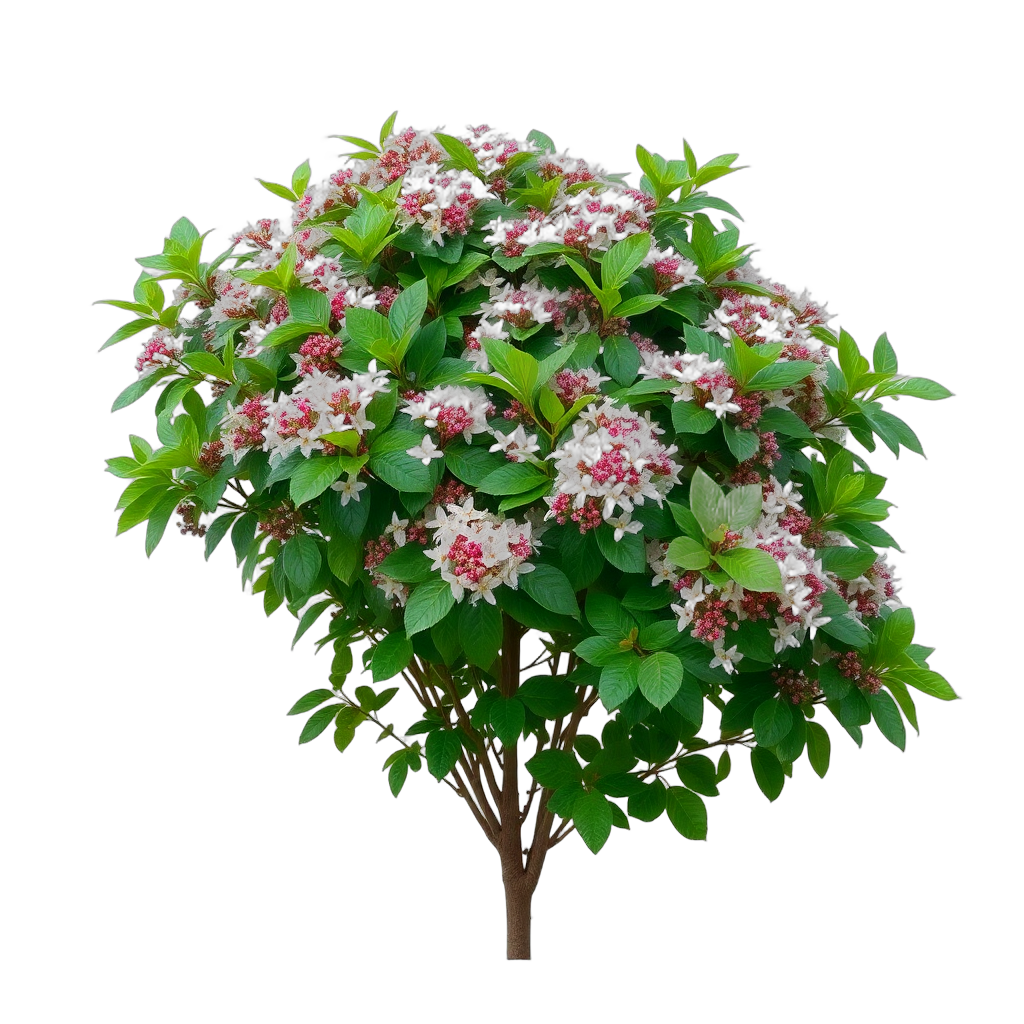
Blackhaw Viburnum
Viburnum prunifolium
medium-sized at 12 feet, white blooms in spring. Pollinator-friendly.
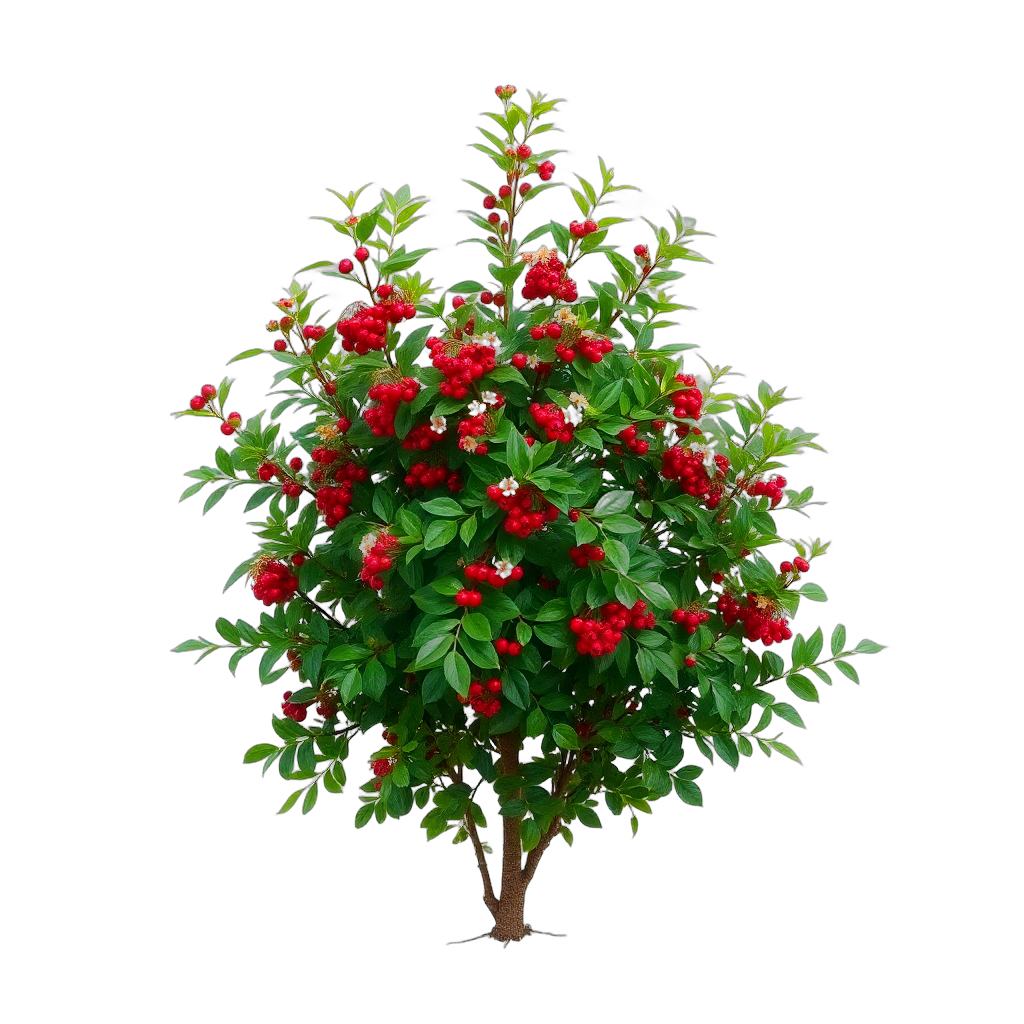
Coralberry
Symphoricarpos orbiculatus
grows to 6 feet, pink blooms in summer. Pollinator-friendly.
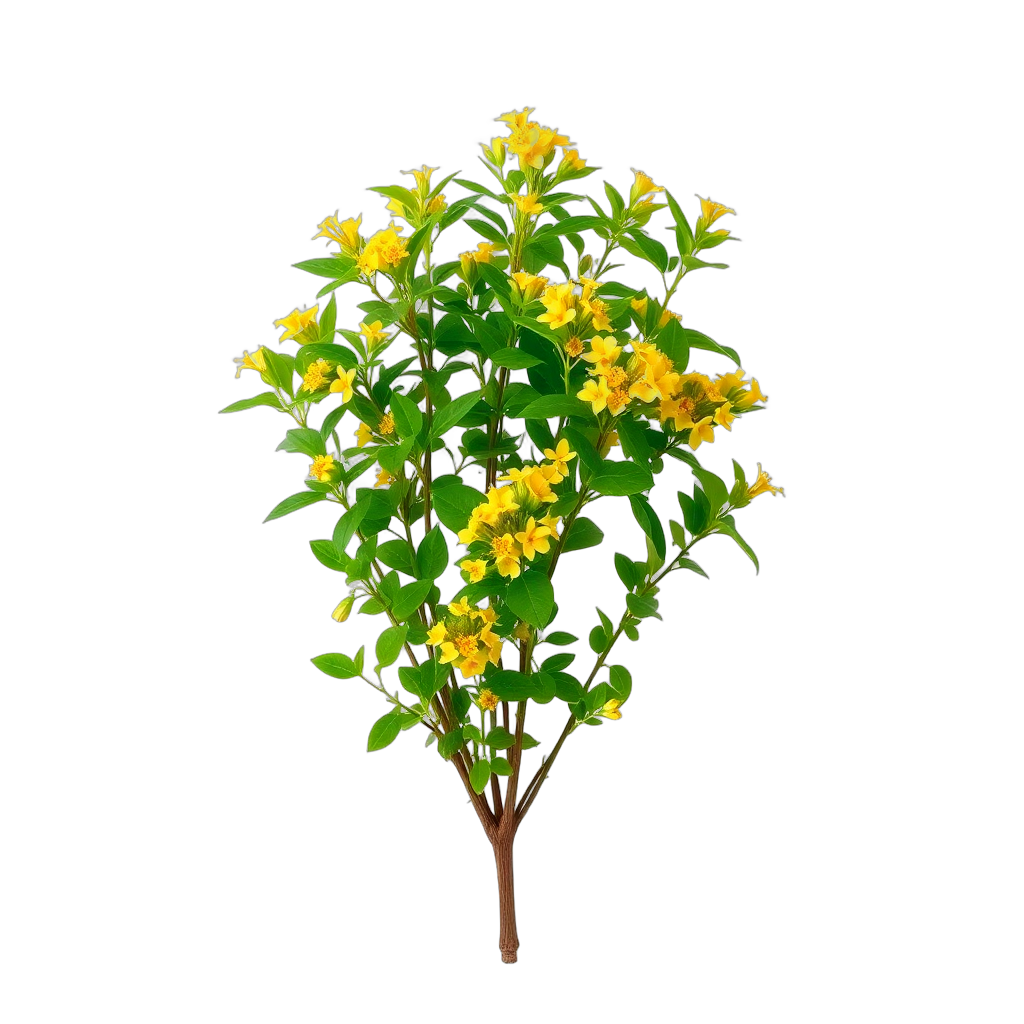
Shrubby St. John's Wort
Hypericum prolificum
grows to 4 feet, yellow blooms in summer. Pollinator-friendly.
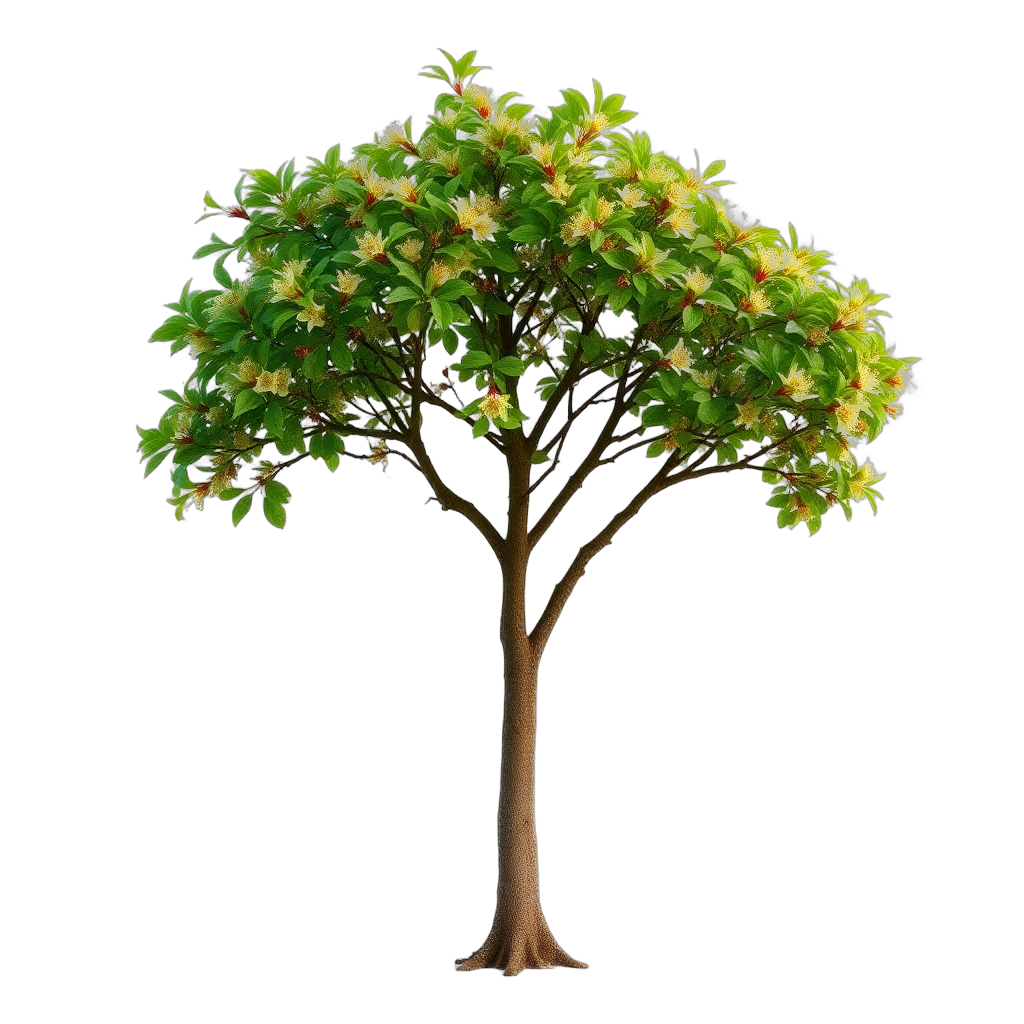
Vernal Witch Hazel
Hamamelis vernalis
medium-sized at 8 feet, yellow blooms in spring. Pollinator-friendly.
Featured Grasses & Groundcovers for Modern/Minimalist Gardens
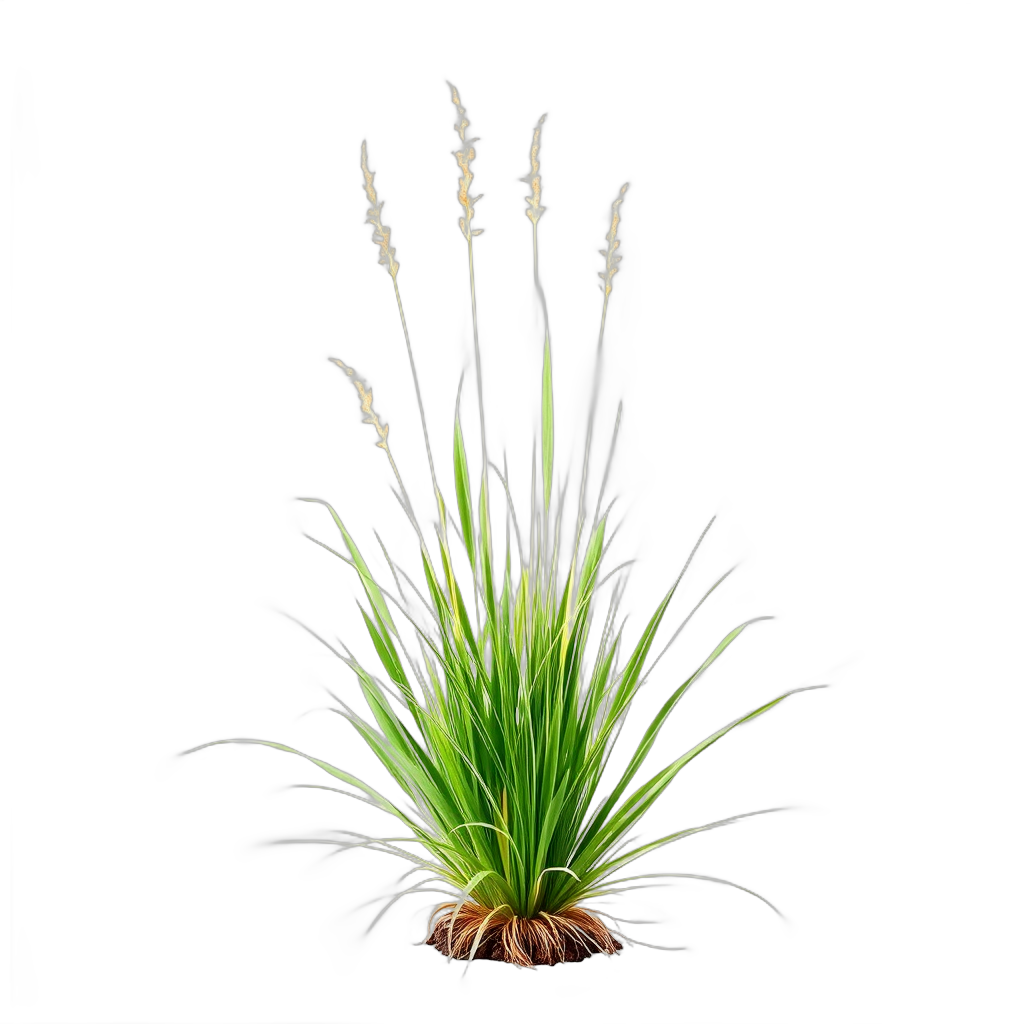
Northern Sea Oats
Chasmanthium latifolium
grows to 4 feet, blooms in fall. Bronze fall color.

Bermuda Grass
Cynodon dactylon
low-growing ground cover, blooms in summer. Brown fall color.

St. Augustine Grass
Stenotaphrum secundatum
low-growing ground cover, blooms in summer. Brown fall color.
Featured Flowers & Perennials for Modern/Minimalist Gardens
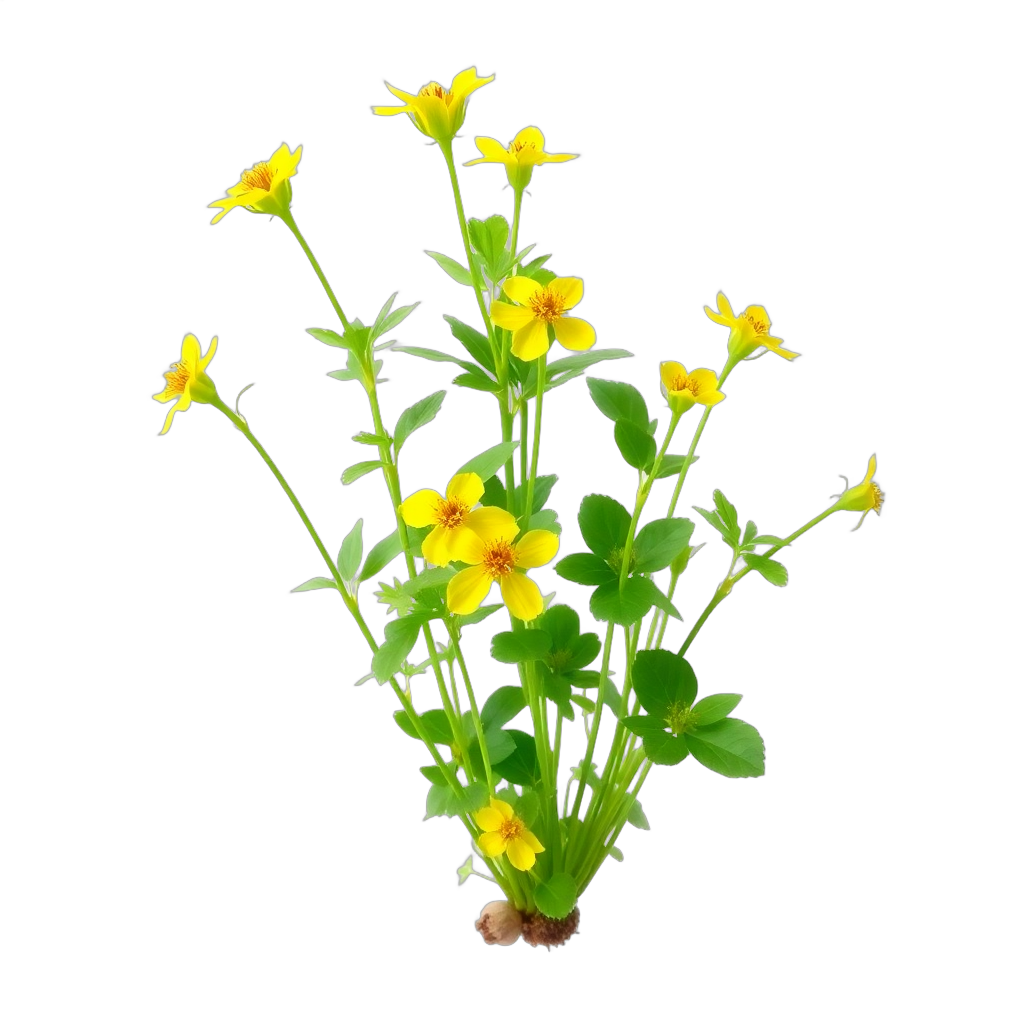
Celandine Poppy
Stylophorum diphyllum
low-growing ground cover, yellow blooms in spring.
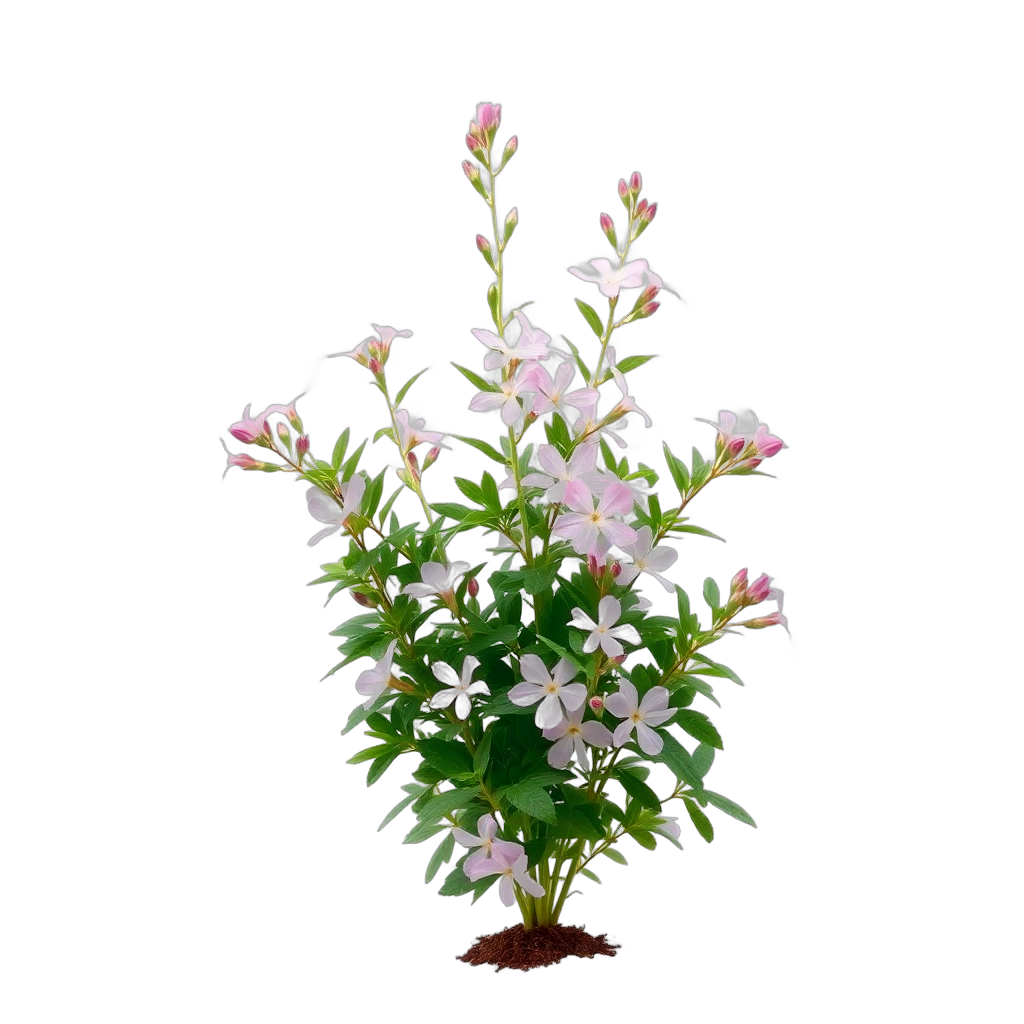
Garden Phlox
Phlox paniculata
grows to 3 feet, multi blooms in summer. Attracts hummingbirds.
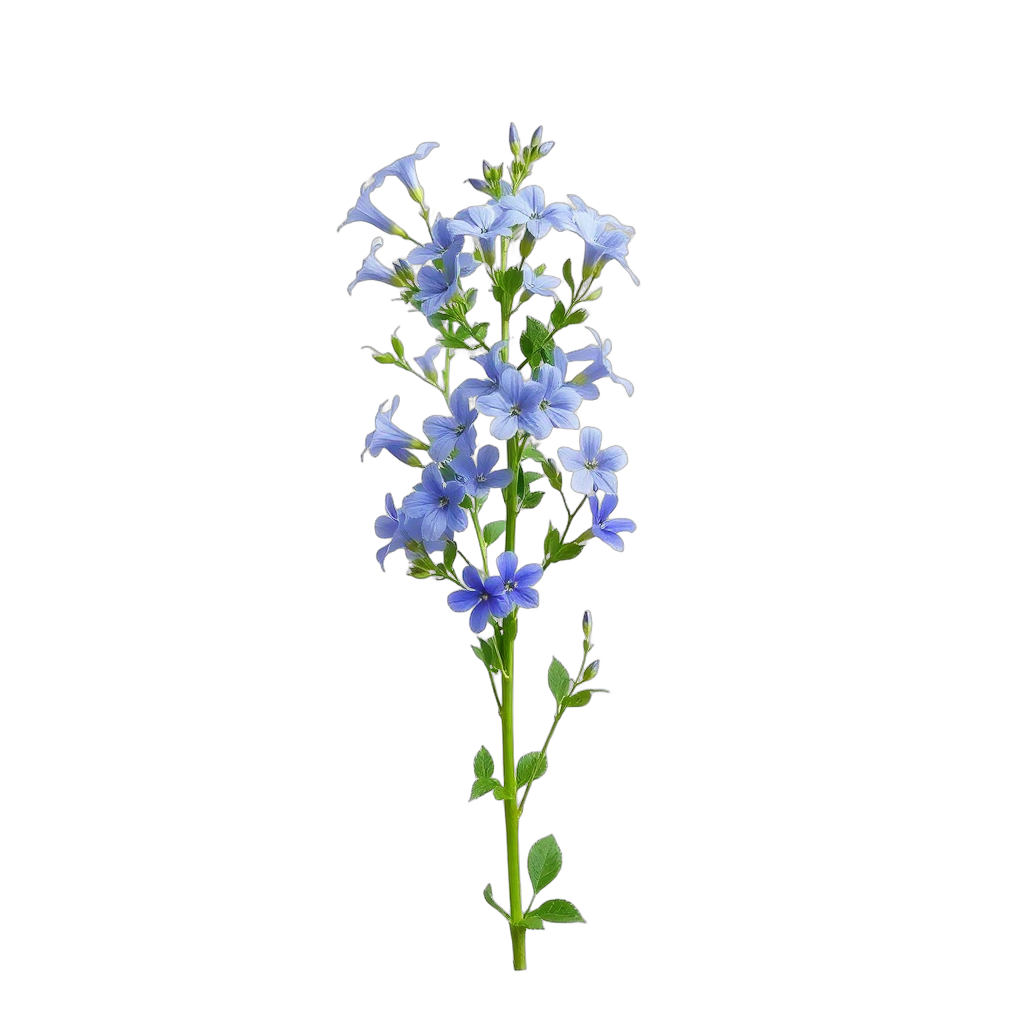
Wild Blue Phlox
Phlox divaricata
low-growing ground cover, blue blooms in spring. Attracts butterflies.

Water Fern
Azolla filiculoides
low-growing ground cover, blooms in none. Red fall color.
Bloom Calendar for Huntsville
spring
Celandine Poppy, Wild Blue Phlox, Blackhaw Viburnumsummer
Garden Phlox, Coralberry, Shrubby St. John's Wortfall
Northern Sea Oatswinter
Limited bloomsDesign Tips for Huntsville (Zone 7b)
- Raise every succulent bed 8–12 inches above grade in 50/50 native soil and expanded shale, then gravel-mulch the crowns — Huntsville's 55 inches of rain kills Agave ovatifolia through a wet February crown, never through a 7b cold snap
- Copy the cedar glades rather than the desert: Muhlenbergia capillaris, Sporobolus heterolepis and Bouteloua curtipendula already grow on thin alkaline limestone soil 20 minutes from downtown, so they deliver the modern gravel-garden look with zero establishment risk
- Specify Juniperus virginiana 'Taylor' wherever a design calls for Italian cypress, and never Leyland cypress — seiridium canker has killed Leyland screens all over North Alabama and one dead column ruins a symmetrical composition permanently
- Compact 6–8 inches of #57 stone under every square foot of concrete; it is clay shrink-swell between a 55-inch wet winter and a bone-dry August, not frost, that cracks Huntsville hardscape, and no amount of rebar substitutes for a real base
- Keep the canopy — a modern Huntsville garden with no shade tree is unusable from June through September; limb up existing oaks and hickories high so the trunks read as sculpture above a clean groundplane and the west glass stays out of the afternoon sun
- Uplight the grasses, not the lawn: LED bollards and in-grade fixtures set behind muhly and switchgrass borders create the evening depth that makes modern landscapes photograph well, and Huntsville's long warm evenings return that investment eight months a year
Where to Source Plants in Huntsville
Skip the big-box stores. These independent Huntsville nurseries specialize in the plants that make modern/minimalist gardens thrive in Zone 7b.
Bennett Nurseries
North Huntsville
Family-owned nursery since 1967 offering a 6-acre selection of annuals, perennials, roses, trees, and shrubs.
Earth Touch
Southeast Huntsville
Well-organized independent nursery with multiple greenhouses and diverse plant selection.
The Catbird Seat Garden Center
Madison
Independent garden center offering quality plants and gardening products for the Huntsville metro.
Huntsville Nursery & Garden Center
Owens Cross Roads
Wholesale and retail nursery known for a large tree inventory and comprehensive plant offerings.
Modern/Minimalist Landscaping Costs in Huntsville
| Project Scope | Estimated Cost |
|---|---|
| Front yard gravel conversion (turf removal, Corten edging, raised beds, plants) | $5,000 – $11,000 |
| Concrete or large-format paver terrace (200–400 sqft) | $7,500 – $20,000 |
| Backyard terrace with gas fire bowl, seating, and string lighting | $12,000 – $32,000 |
| Pool deck plus full modern backyard landscape | $70,000 – $160,000 |
| Specimen agave or Yucca rostrata (installed, in raised gravel bed) | $250 – $900 each |
| AI visualization with ProScapeAI | Free to start |
Estimates based on Huntsville, AL-area contractor rates as of 2026. Actual costs vary by site conditions, materials, and contractor.
Huntsville Climate & Growing Zone
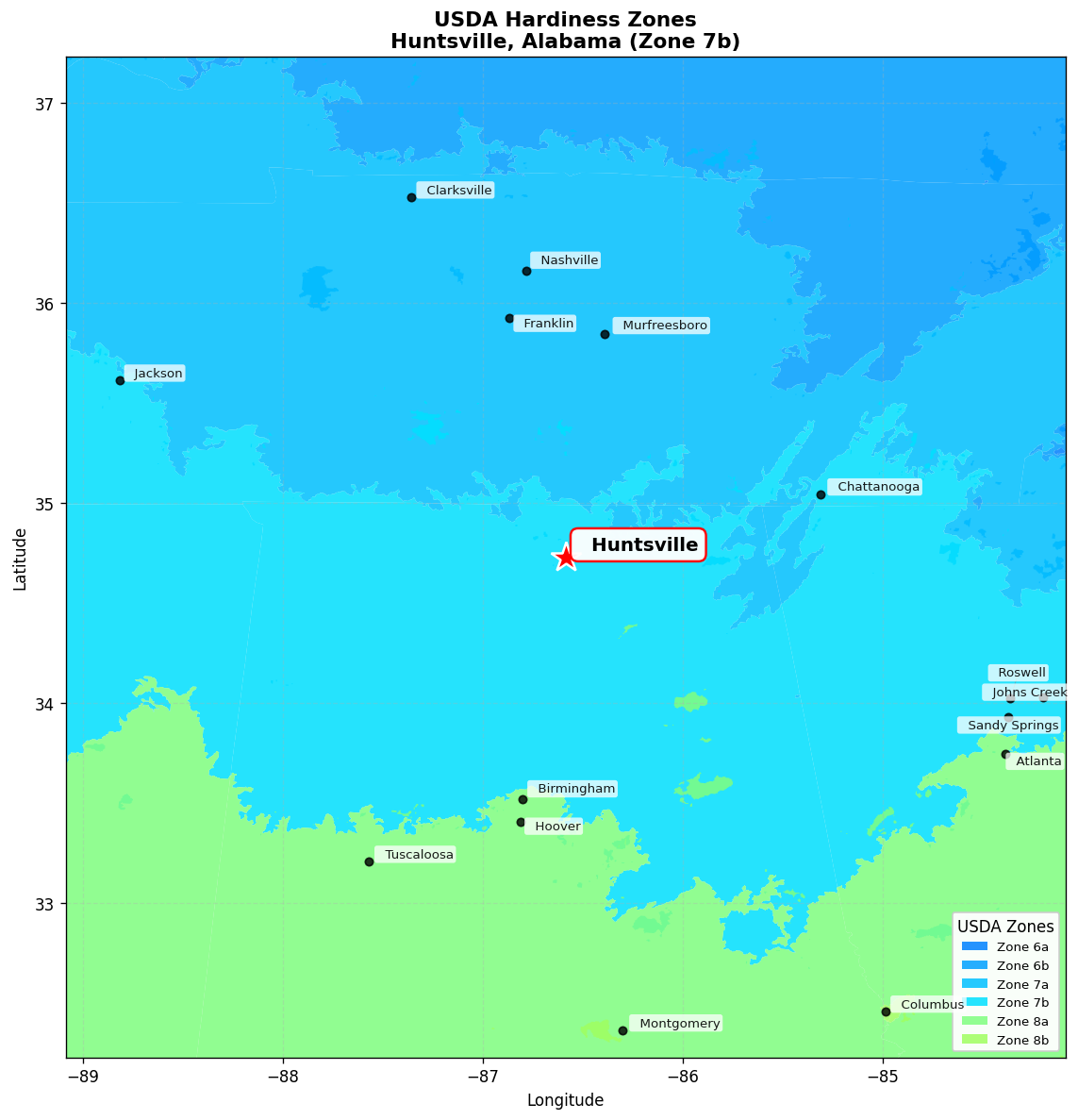
USDA Zone 7b
Hardiness zone for Huntsville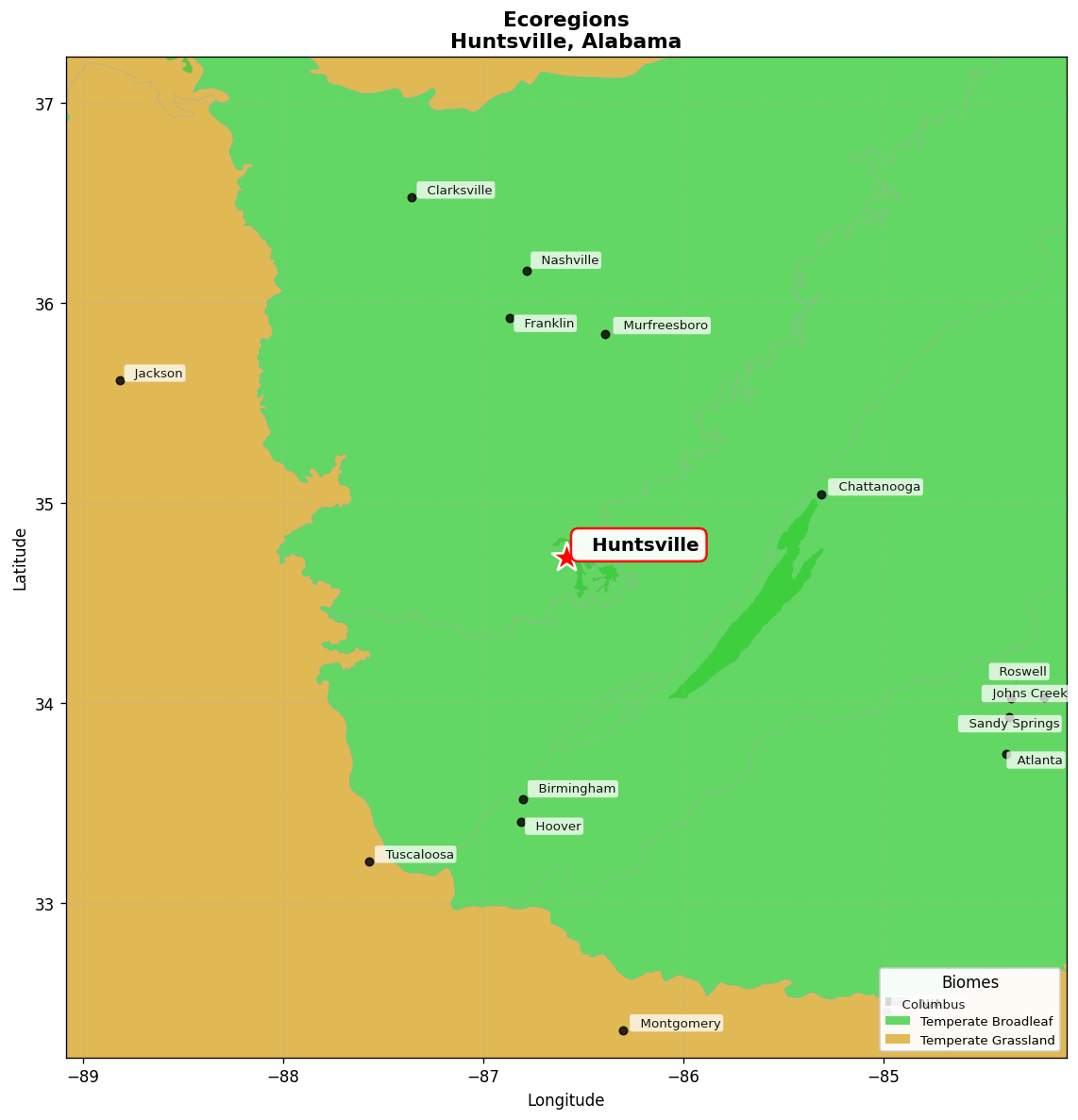
Interior Plateau US Hardwood Forests
Native ecoregionFrequently Asked Questions
How much does modern landscaping cost in Huntsville?
Installation costs in the Huntsville metro run roughly 10–20% below national metro averages, which makes clean-line design unusually attainable here. A complete front-yard conversion — turf removal, gravel field, Corten edging, raised beds, and architectural plants — runs $5,000–11,000 installed for a typical 500 sqft front yard. A concrete terrace of 200–400 sqft with a gas fire bowl and lighting lands at $12,000–32,000. Full pool-and-landscape backyards on Monte Sano or in Hampton Cove commonly run $70,000–160,000. A DIY gravel conversion where you handle demolition and planting yourself can come in under $5/sqft, and specimen agaves and yuccas are the line item worth paying up for — a mature Agave ovatifolia is the whole design.
Can agaves and succulents survive Huntsville winters?
Yes, if you solve drainage rather than cold. Zone 7b lows of 5–10°F are survivable for Agave ovatifolia 'Frosty Blue', Agave parryi var. truncata, Agave havardiana, Yucca rostrata 'Sapphire Skies', and Hesperaloe parviflora — every one of those is hardy well below Huntsville's typical January minimum. What kills them is 55 inches of rain sitting in silty clay loam around a dormant crown in February. Build beds 8–12 inches above grade in 50/50 native soil and crushed granite or expanded shale, mulch with pea gravel rather than bark so the crown stays dry, and angle each rosette slightly so water sheds out of the center. Never plant a succulent at grade in unamended Decatur clay; winter rot is close to guaranteed. Skip Agave americana, Echeveria, and Phormium — those are annuals here.
What replaces Italian cypress and phormium in North Alabama?
For narrow evergreen verticals, use Juniperus virginiana 'Taylor' — a columnar selection of our own native eastern red cedar that holds a 3-foot width at 20 feet tall and shrugs off Tennessee Valley humidity, which Italian cypress does not. Thuja 'Emerald Green' works in part shade but browns in reflected heat. Avoid Leyland cypress entirely: seiridium canker has been wiping out Leyland screens across North Alabama for two decades. For the spiky burgundy or bronze mass that phormium provides elsewhere, use Yucca filamentosa 'Color Guard', Hesperaloe parviflora 'Brakelights', Loropetalum chinense 'Ever Red', or Canna 'Australia', which returns reliably in Zone 7b under a few inches of mulch.
Which ornamental grasses work best in Huntsville — and which should I avoid?
Muhlenbergia capillaris is the local star and, better still, a genuine limestone glade native of the Interior Plateau — it thrives in heat and humidity, tolerates alkaline clay, and its October pink haze against pale concrete is the single best free effect in a modern Alabama garden. Sporobolus heterolepis, Bouteloua curtipendula, Schizachyrium scoparium 'Standing Ovation', and Panicum virgatum 'Northwind' or 'Shenandoah' are all reliable and all regionally native. Avoid Miscanthus sinensis and Cortaderia selloana — Miscanthus in particular seeds aggressively into Southeastern roadsides and old fields and is treated as invasive here; 'Northwind' gives the same upright form without the problem. Cut everything back once in late February and you are done for the year.
How should I prepare Huntsville's clay before pouring concrete or setting pavers?
Budget for base prep as part of the job, not as an extra. Excavate 8–10 inches and compact 6–8 inches of #57 crushed stone with fines under any patio, walk, or paver field. Huntsville's Decatur and Dewey silty clay loams swell through a 55-inch wet winter and shrink hard through August, and hardscape laid on bare clay will settle, crack, and open joints within three or four seasons — freeze depth here is shallow, so it is soil movement, not frost heave, that does the damage. For planting beds, never excavate a hole in clay and backfill with soft mix; you have built a bathtub. Build up instead. On the sloped lots common on Monte Sano and around Blossomwood, a French drain along the uphill bed edge is cheap insurance.
Do I need permits for modern landscaping in Huntsville?
Planting, gravel conversions, bed construction, and walks need no permit. The City of Huntsville does require permits for pools, roofed structures, and retaining walls over 4 feet, and taller walls need engineered drawings. Land disturbance above the city threshold triggers stormwater review, which matters most on Monte Sano's slopes and anywhere your grading changes where water leaves your lot. Two local specifics worth checking early: parts of Hampton Cove sit within the Flint River floodplain, so fill, grading, and pool work there can require floodplain review, and most Madison and Hampton Cove subdivisions run architectural review committees whose front-yard rules — especially about removing turf entirely — are stricter than anything the city enforces.