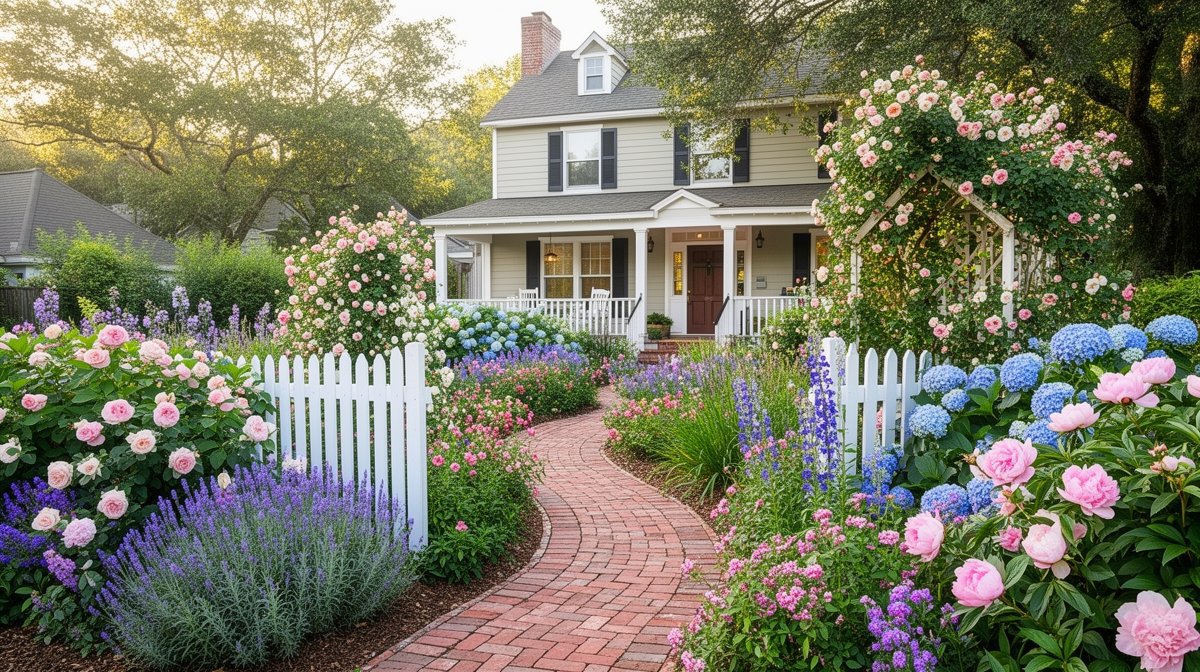
4 Cottage Garden Ideas for Huntsville, AL | English-Style Landscape Design in Zone 7b
Native plants from the Interior Plateau US Hardwood Forests (Zone 7b) — Humid subtropical climate
Why Cottage/English Gardens in Huntsville?
Huntsville is one of the few Southern cities where a genuine English cottage garden reads as native rather than imported. The Federal and Greek Revival houses of Twickenham, the 1920s bungalows around Five Points, and the low brick ranches of Blossomwood all come with the two things cottage planting needs most: a front porch to frame and a fence line to fill. Add the Tennessee Valley's long season — last frost around April 5, first frost near October 30, giving roughly 210 frost-free days — and a Huntsville border stays in flower from the first Narcissus 'Ice Follies' in February to the last Salvia 'Amistad' spike in November.
The catch is that the classic English plant list fails here in specific, predictable ways, and swapping in the right cultivar is the whole game. Huntsville averages roughly 55 inches of rain a year with July dew points in the low 70s, and that combination of warm nights and wet leaves is a fungal engine. Delphinium elatum melts by mid-June — grow Salvia 'Mystic Spires Blue' and fall-sown larkspur (Consolida ajacis) for the same blue verticals. Lavandula angustifolia 'Hidcote' and 'Munstead' rot at the crown in their second summer; Lavandula x intermedia 'Phenomenal' and 'Provence' were selected for exactly this humidity and sail through. Hybrid tea roses defoliate to black spot by August, so build the rose backbone from Rosa 'Julia Child', 'Belinda's Dream', Kordes 'Beverly', and the near-indestructible climber Rosa 'Peggy Martin'. Expect Japanese beetles from late May through July regardless of cultivar.
The soil is Huntsville's quiet advantage. The city sits on Mississippian limestone at the southern edge of the Interior Plateau, and the Decatur and Dewey silty clay loams derived from that limestone residuum typically run pH 6.2 to 7.2 — near neutral, which is precisely what roses, peonies, clematis, dianthus and Nepeta want. Gardeners on the acid Coastal Plain two hours south fight to reach that number. The trade-off is that acid-lovers sulk: Hydrangea macrophylla will bloom pink here no matter what the tag promised unless you work aluminum sulfate in each spring, and azaleas and blueberries go interveinally chlorotic. Plant Hydrangea quercifolia 'Alice' and Hydrangea paniculata 'Limelight' instead, both indifferent to pH. Above all, plant high — that silty clay holds winter water, and crown rot, not cold, is what kills cottage perennials in North Alabama.
4 Cottage/English Design Ideas for Huntsville
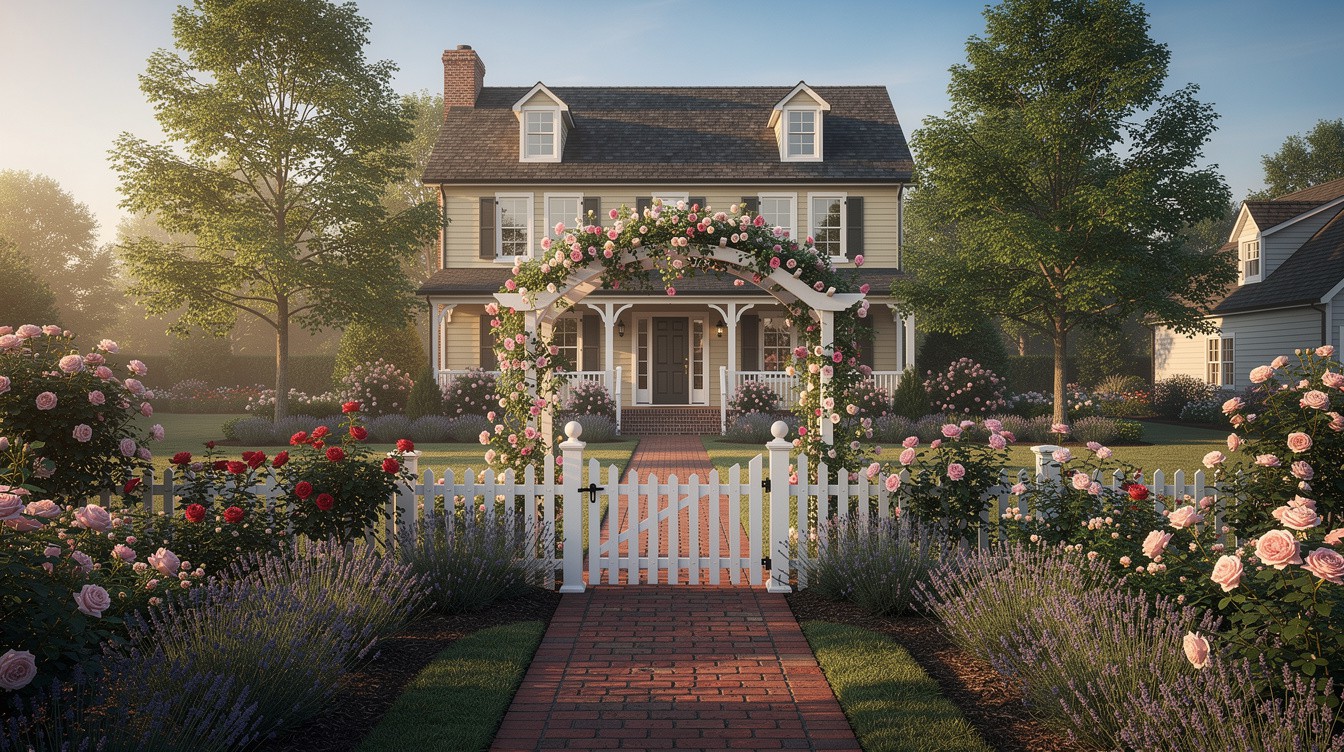
The Picket Gate Rose Arbor
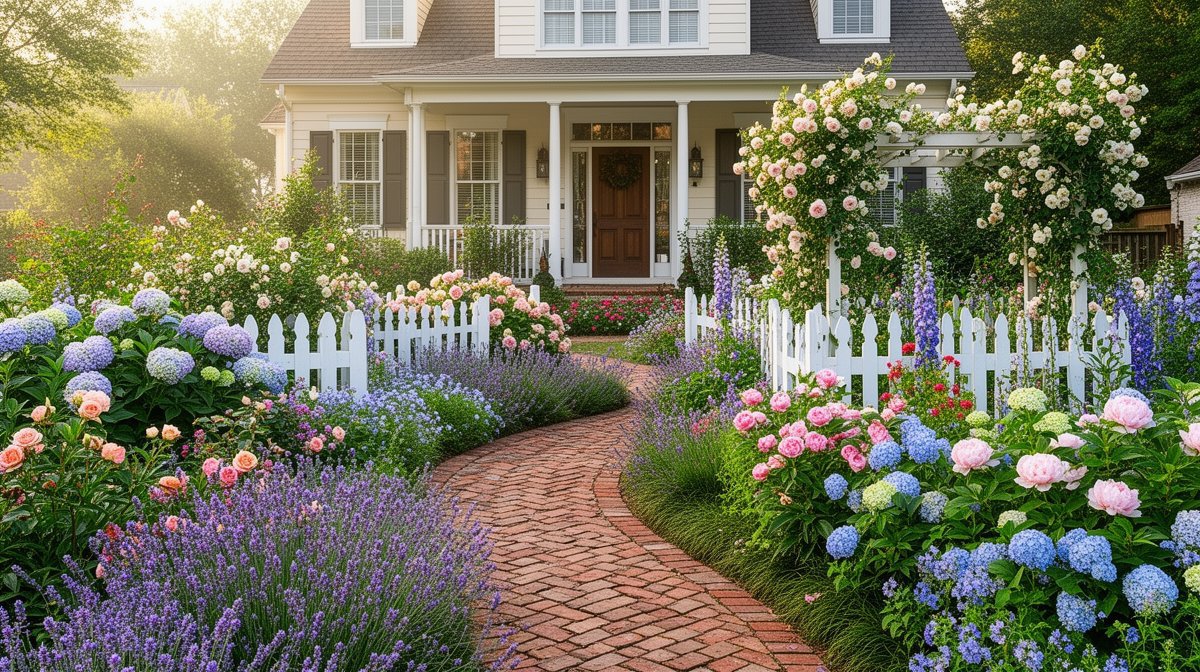
$14–26/sqftA two-story cream clapboard house with dormers and a brick chimney sits behind a white picket fence, and the entire composition pivots on one gesture: a white cedar arbor smothered in pink and cream climbing roses arching over the gate, with a herringbone brick walk running straight from the sidewalk to the porch steps. Lavender is massed in long unbroken ribbons on both sides of the brick, roses fill the beds behind the pickets, and the foundation planting stays deliberately quiet so the arbor keeps the attention. The straight axis is what makes it feel English rather than merely floral — everything else is allowed to be loose.
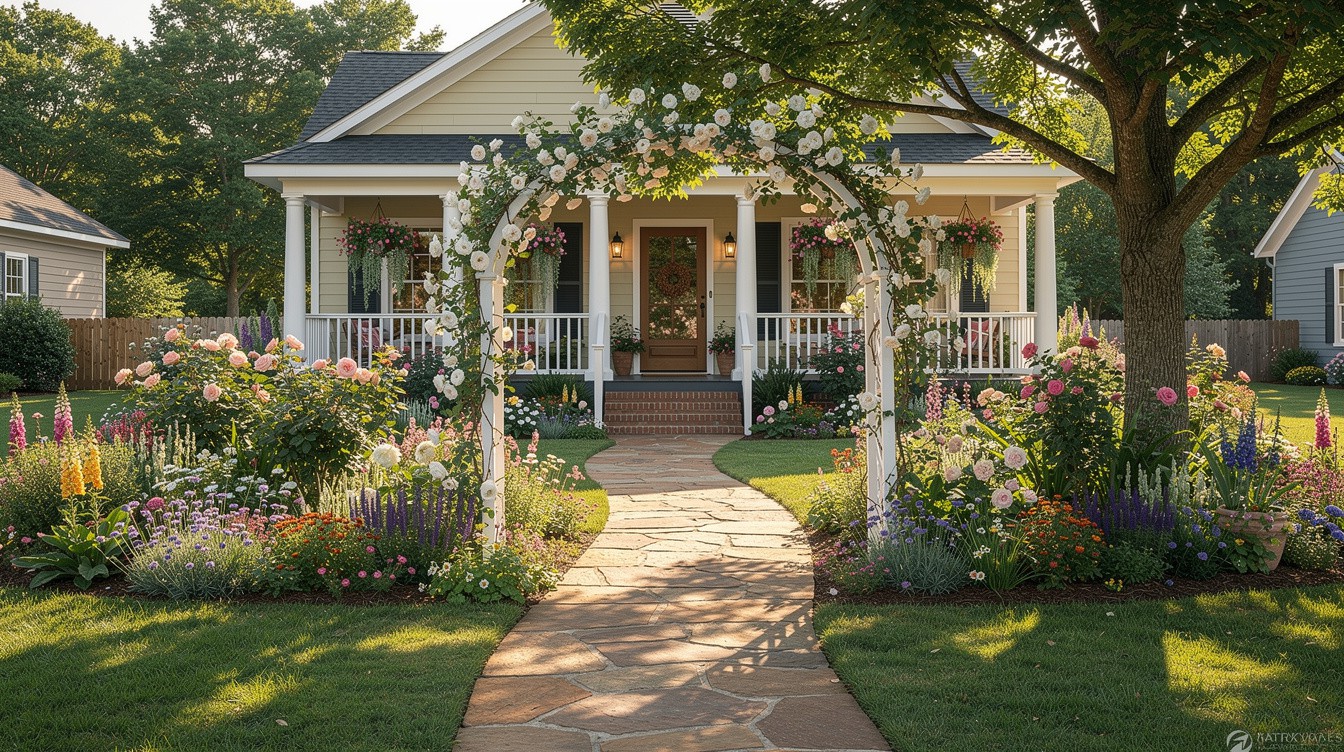
The Curved Flagstone Porch Border
$12–22/sqftA cream bungalow with a deep columned porch, hanging baskets, and a wood-and-glass front door, approached by a curved irregular flagstone path that swings between two white arbors carrying white climbing roses. The borders on either side are packed three deep and deliberately unedited — roses at the back, blue and purple salvia spikes through the middle, yellow snapdragons and orange zinnias punching through the front — and a mature shade tree on the right throws the whole west-facing porch into afternoon shadow, which in a Huntsville July is not decoration but survival.
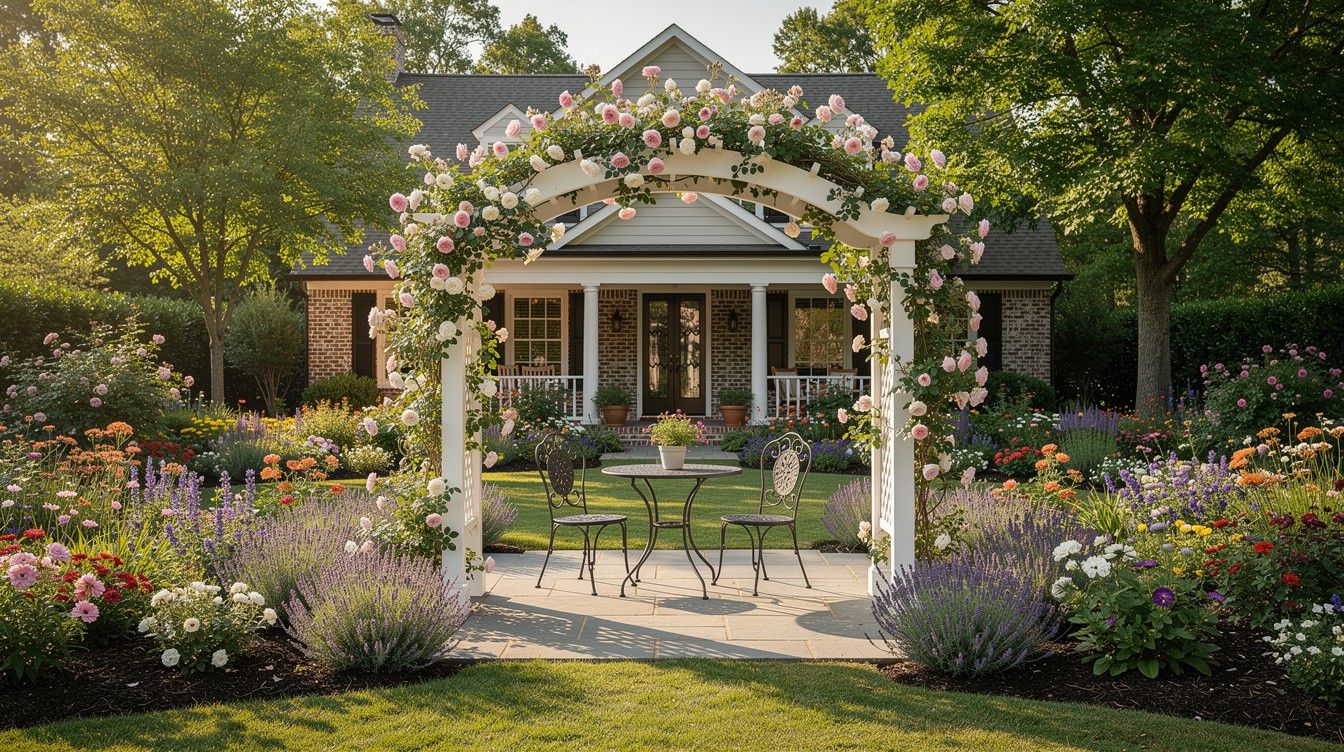
The Bistro Arbor Cutting Garden
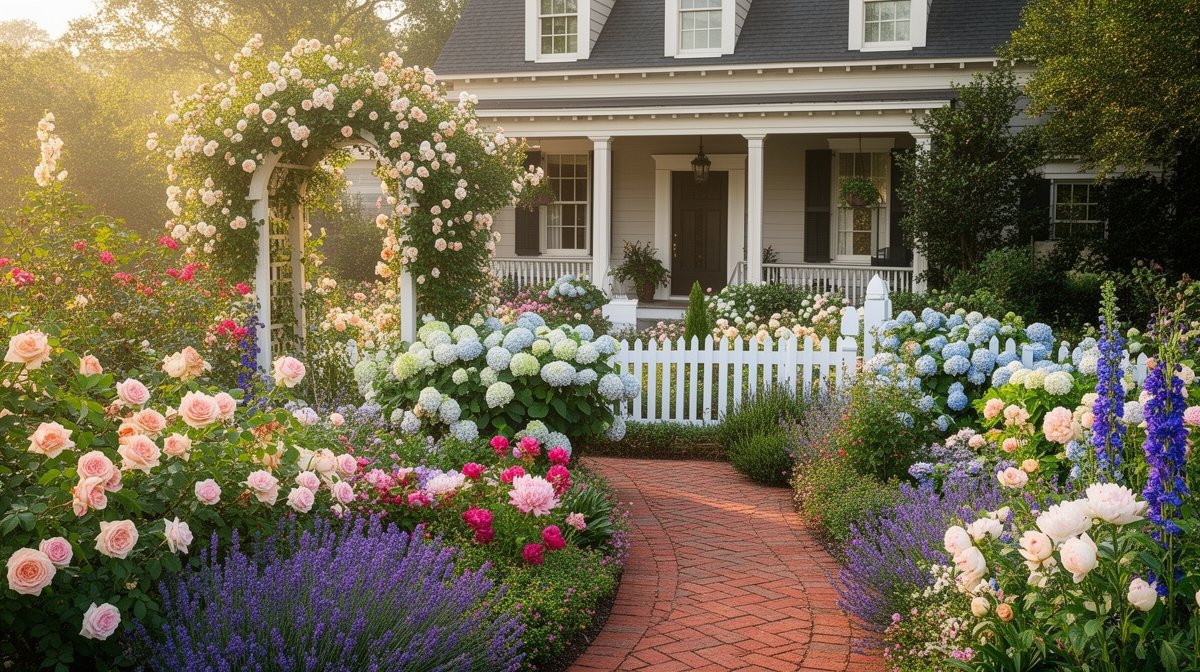
$9–18/sqftBehind a brick ranch with a white columned porch, a broad white arbor drenched in pink and blush roses stands free in the lawn, sheltering a limestone paver pad just big enough for a wrought-iron bistro table and two chairs. Deep double borders run away on both sides in full cottage riot — lavender, coneflower, zinnias, dahlias, cosmos — so the seat sits inside the garden rather than looking at it. It is the cheapest high-impact move in this whole set: one arbor, roughly 60 square feet of paving, and two beds you can plant in stages over three seasons.
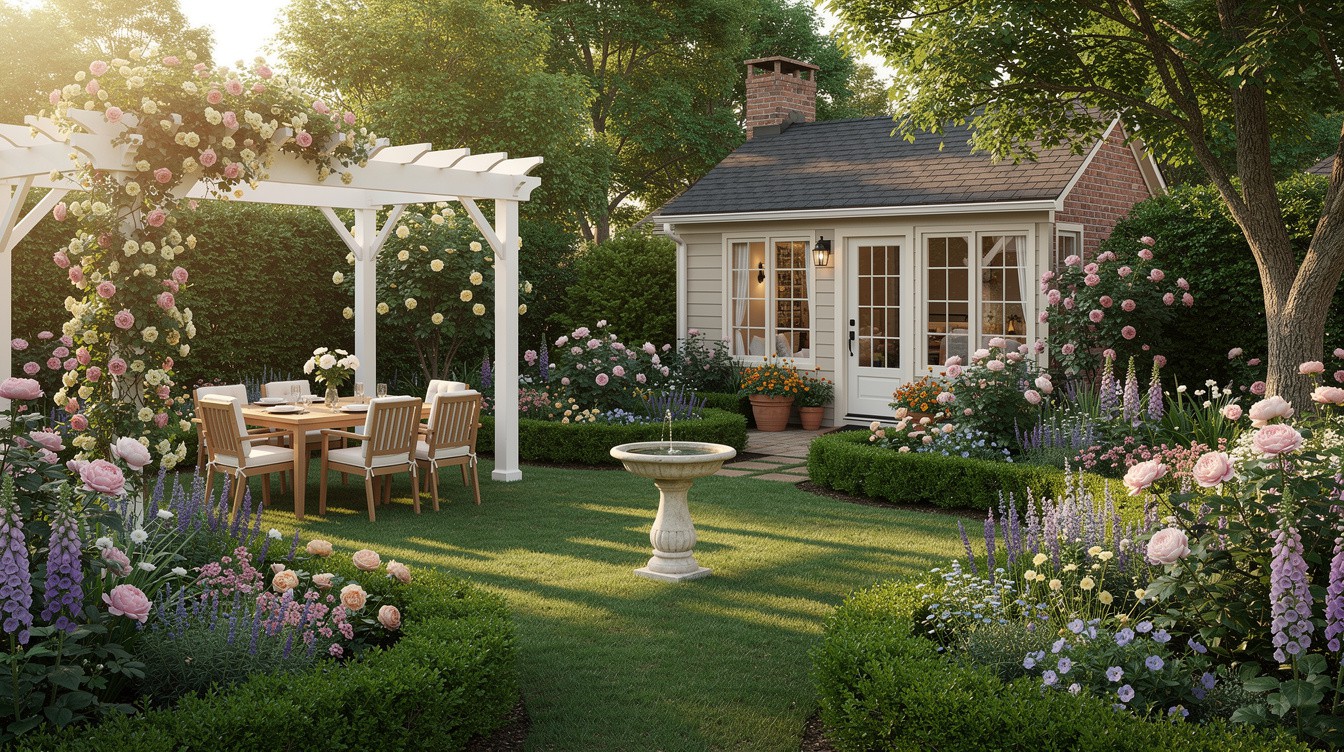
The Garden Room and Fountain Lawn
$22–45/sqft (studio excluded)A brick garden studio with French doors anchors the far corner of the yard, a white pergola hung with climbing roses covers a teak dining table at the opposite end, and a cast-stone fountain sits on a small panel of lawn holding the two together. Clipped low hedges give the borders their edges so that foxgloves, roses, catmint and campanula can spill without the beds ever looking untended. This is the most structured design here and the most maintainable — the hedge lines and the hard geometry do the work that constant deadheading would otherwise have to.
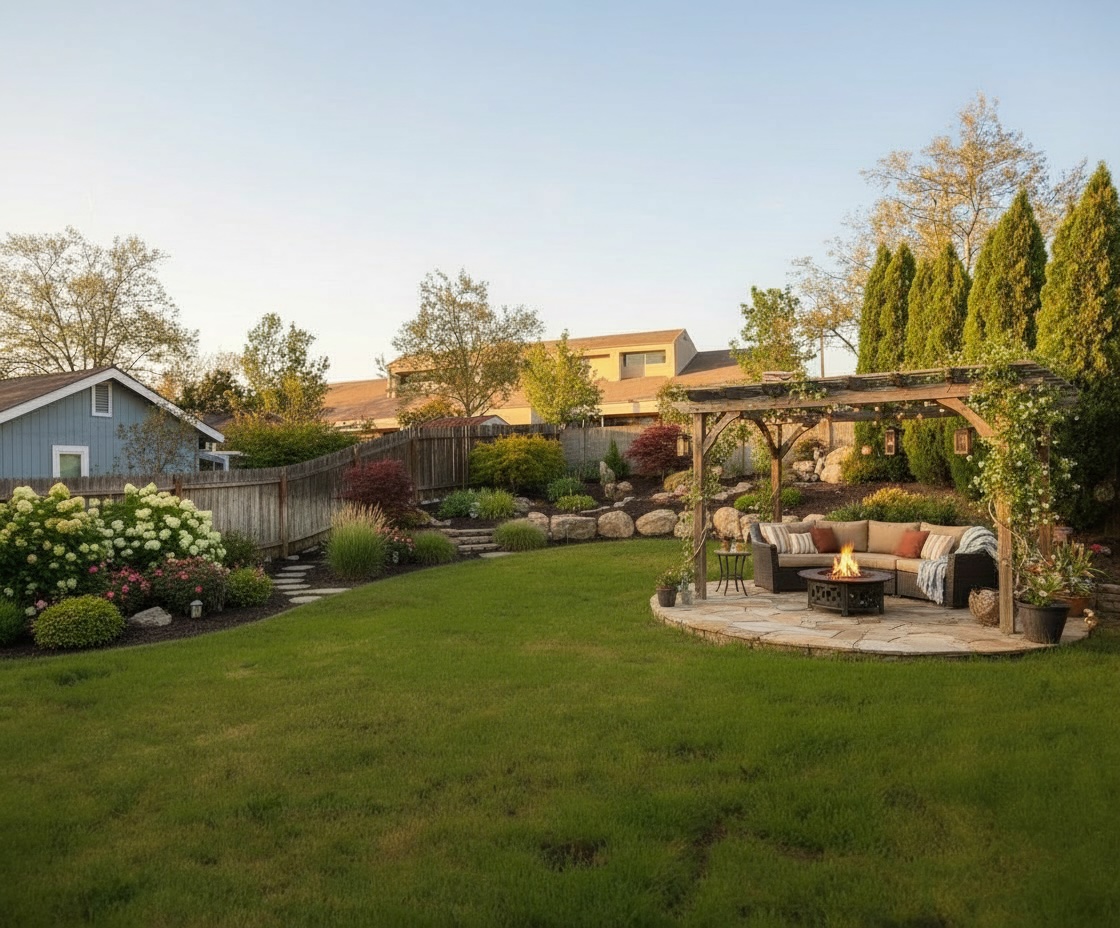
See how a cottage/english garden looks on YOUR property
Upload a photo of your Huntsville yard and visualize your dream garden in seconds.
Try ProScapeAI Free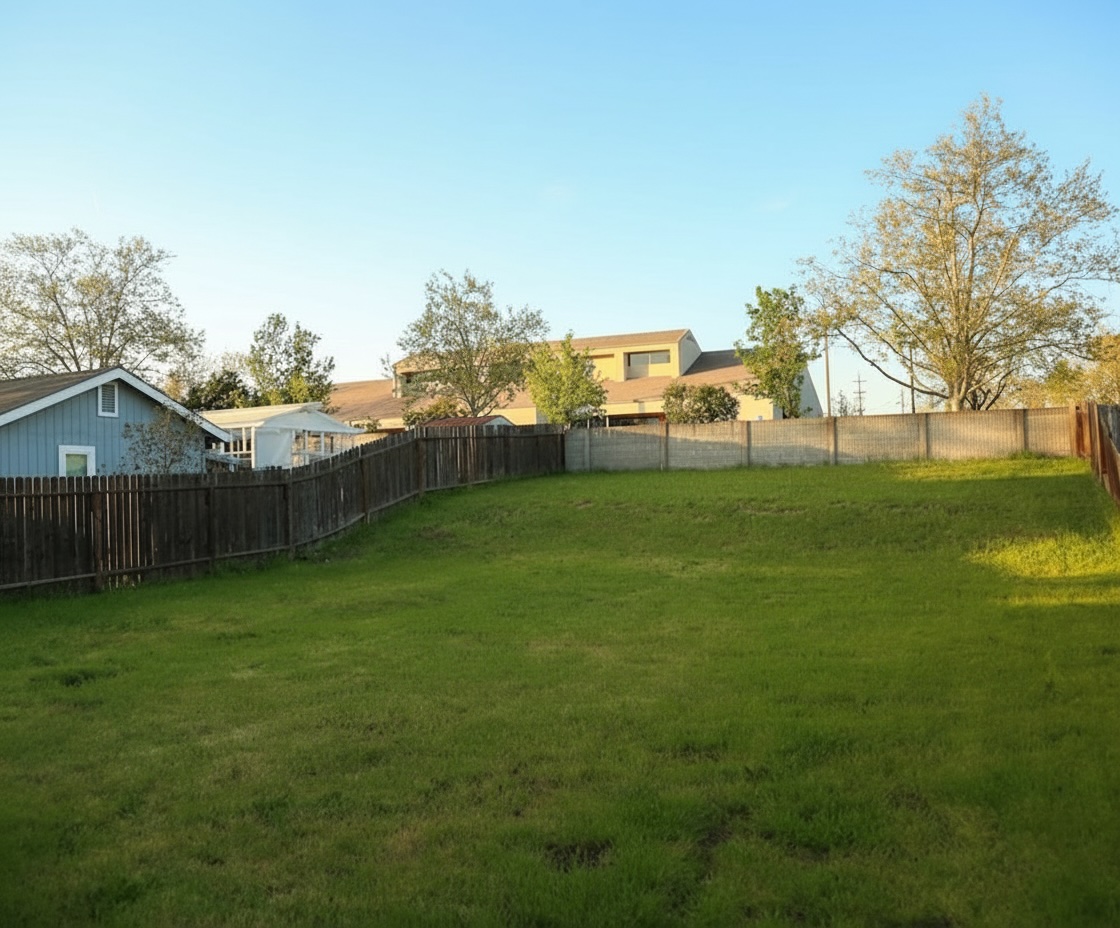
Featured Trees & Shrubs for Cottage/English Gardens
Browse all 38 plants for Huntsville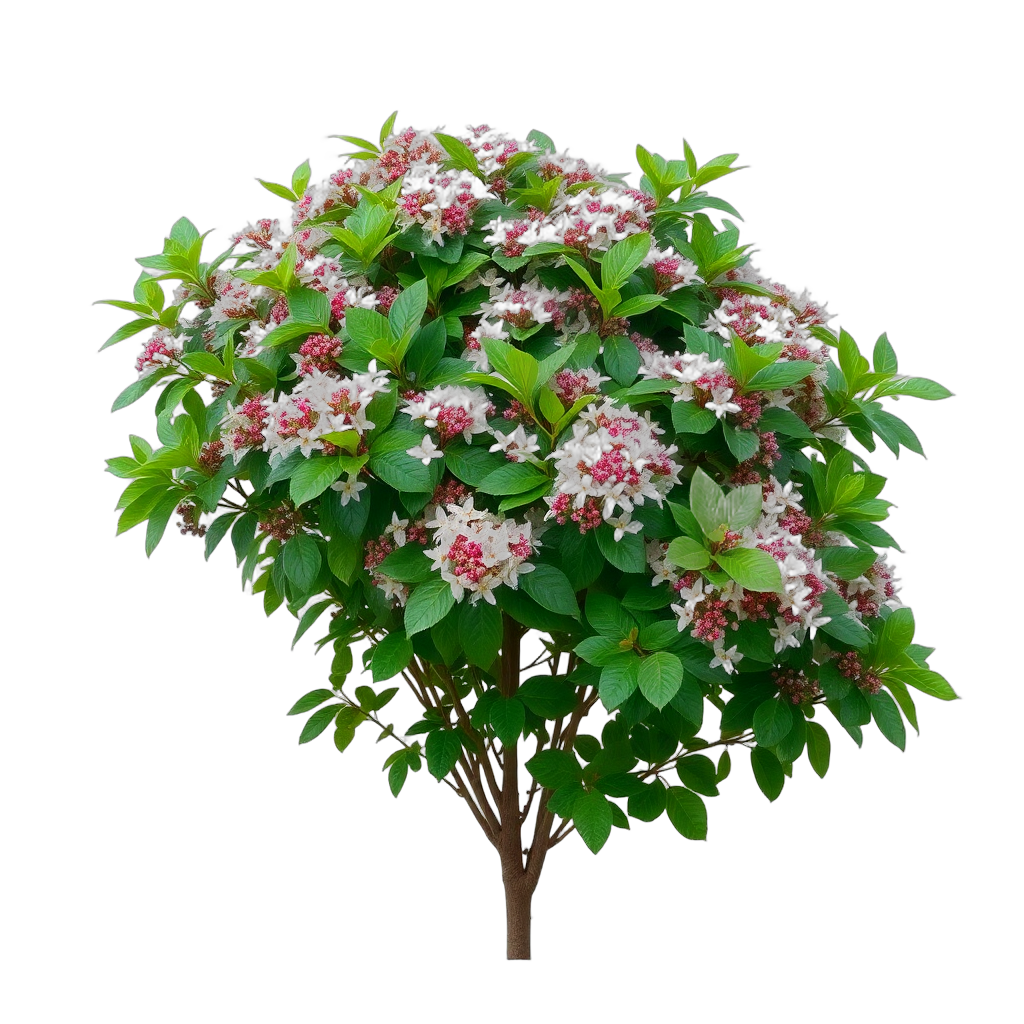
Blackhaw Viburnum
Viburnum prunifolium
medium-sized at 12 feet, white blooms in spring. Pollinator-friendly.
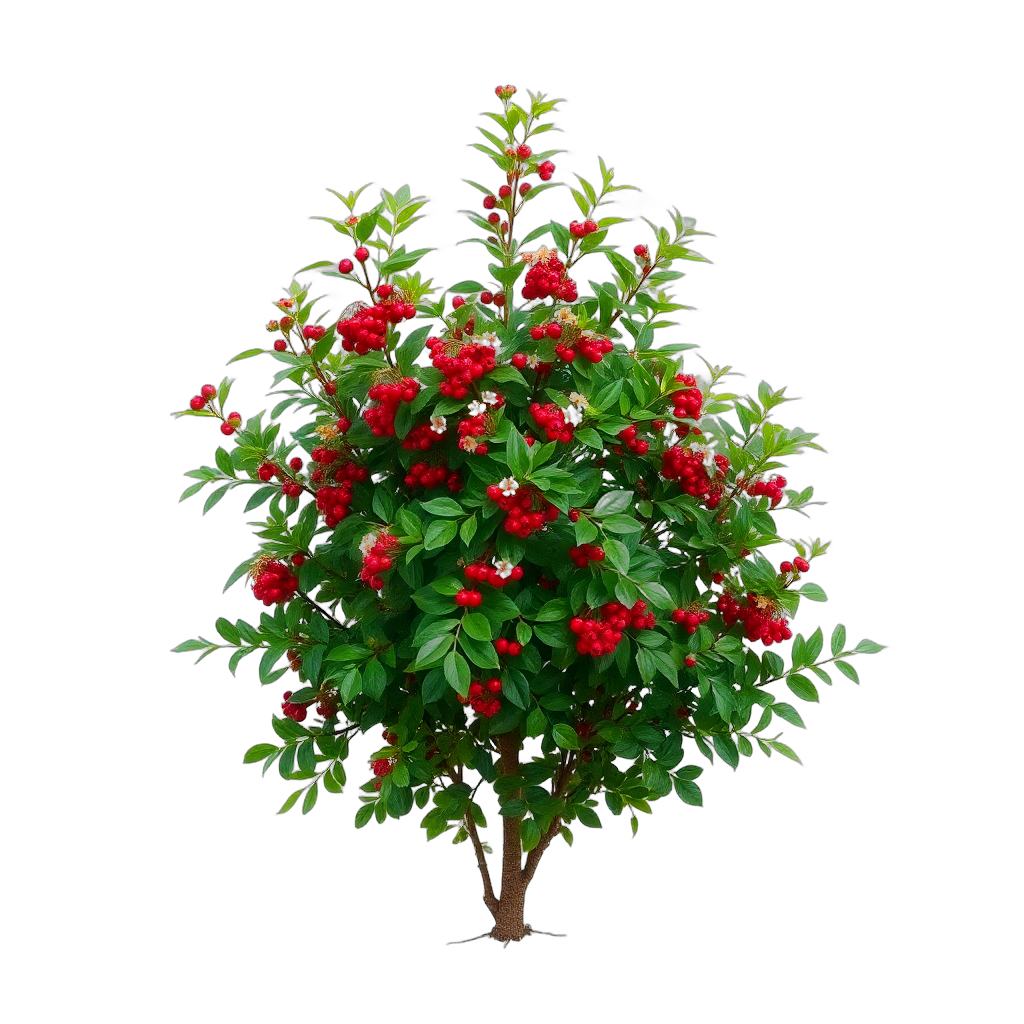
Coralberry
Symphoricarpos orbiculatus
grows to 6 feet, pink blooms in summer. Pollinator-friendly.
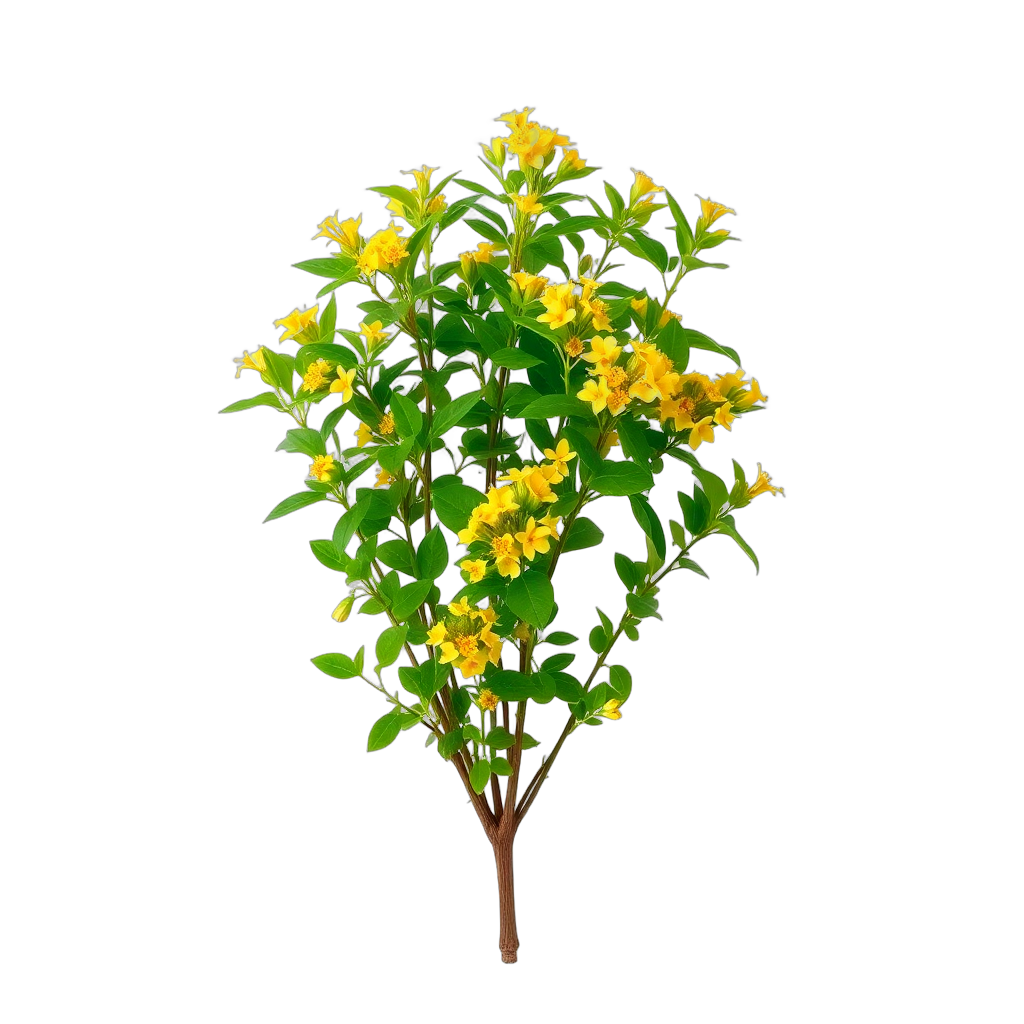
Shrubby St. John's Wort
Hypericum prolificum
grows to 4 feet, yellow blooms in summer. Pollinator-friendly.
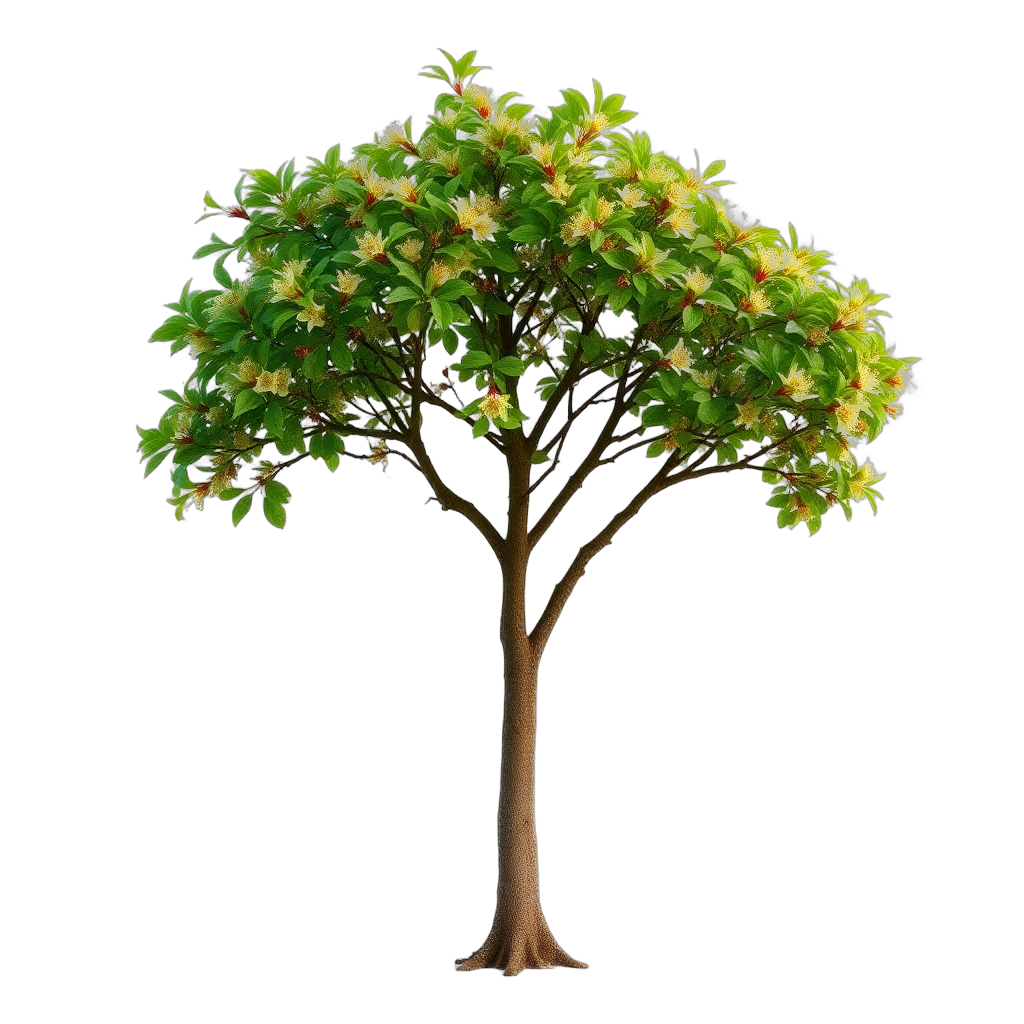
Vernal Witch Hazel
Hamamelis vernalis
medium-sized at 8 feet, yellow blooms in spring. Pollinator-friendly.
Featured Grasses & Groundcovers for Cottage/English Gardens
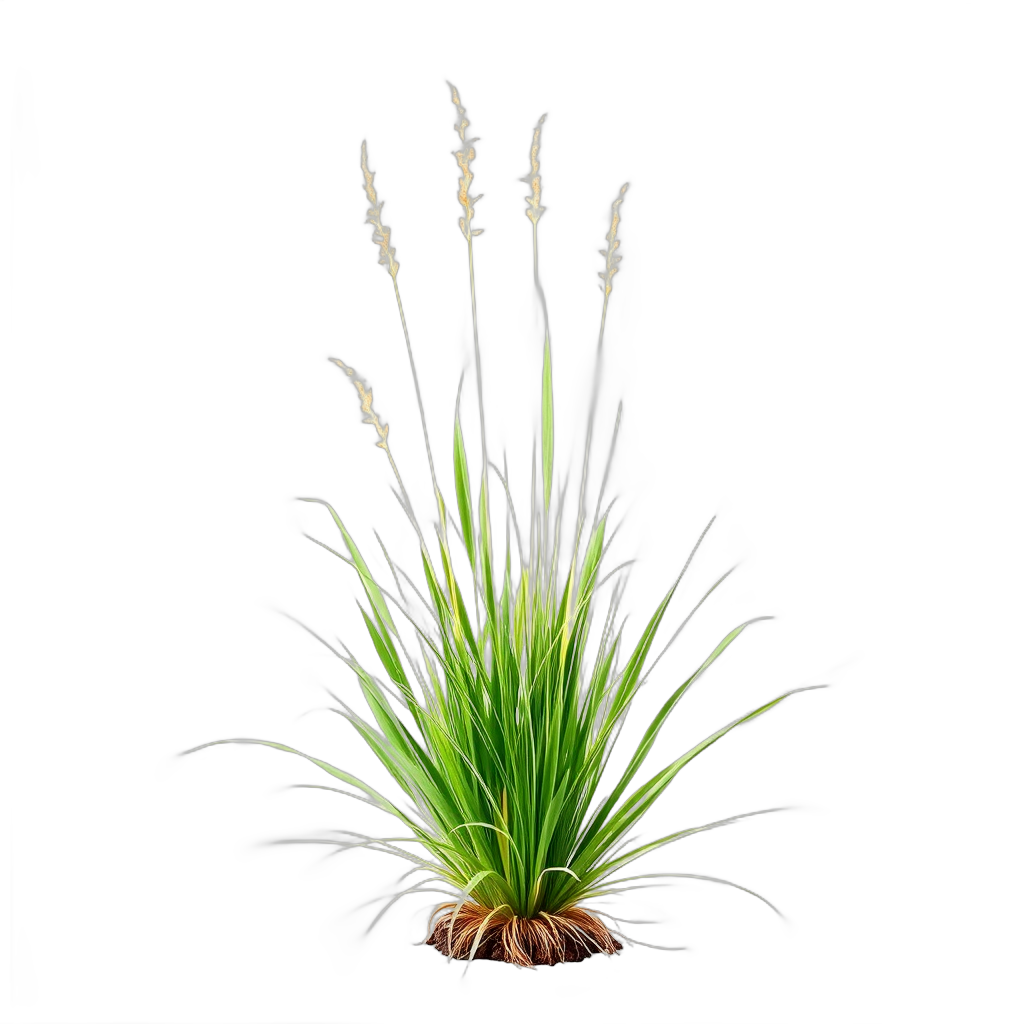
Northern Sea Oats
Chasmanthium latifolium
grows to 4 feet, blooms in fall. Bronze fall color.

Bermuda Grass
Cynodon dactylon
low-growing ground cover, blooms in summer. Brown fall color.

St. Augustine Grass
Stenotaphrum secundatum
low-growing ground cover, blooms in summer. Brown fall color.
Featured Flowers & Perennials for Cottage/English Gardens
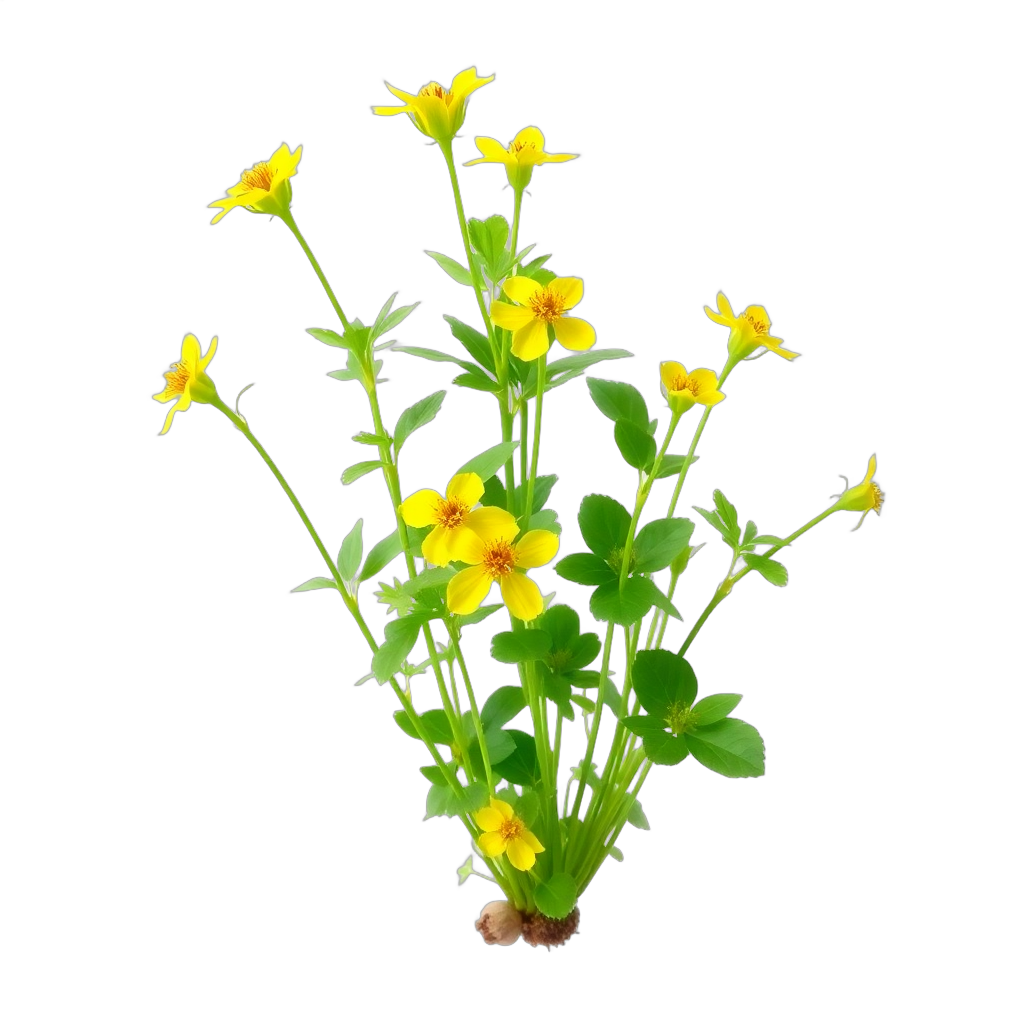
Celandine Poppy
Stylophorum diphyllum
low-growing ground cover, yellow blooms in spring.
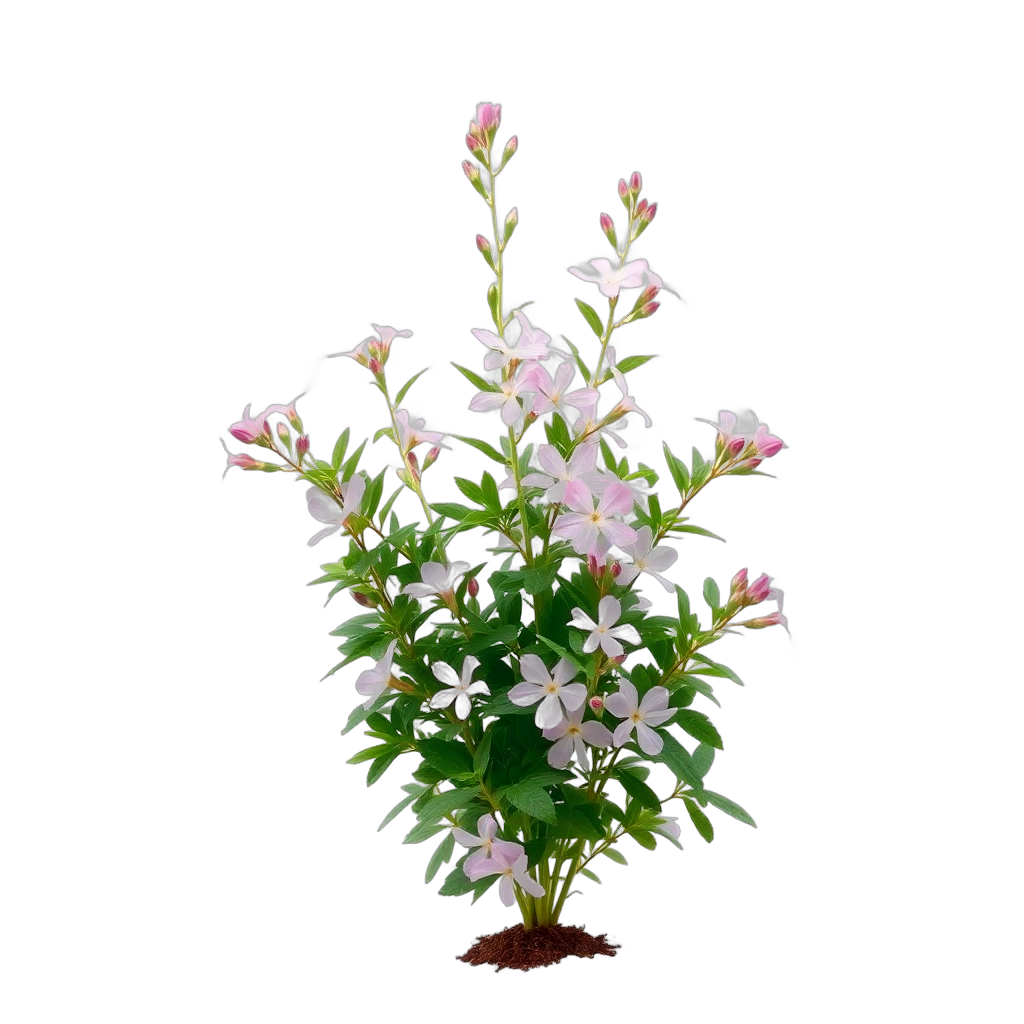
Garden Phlox
Phlox paniculata
grows to 3 feet, multi blooms in summer. Attracts hummingbirds.
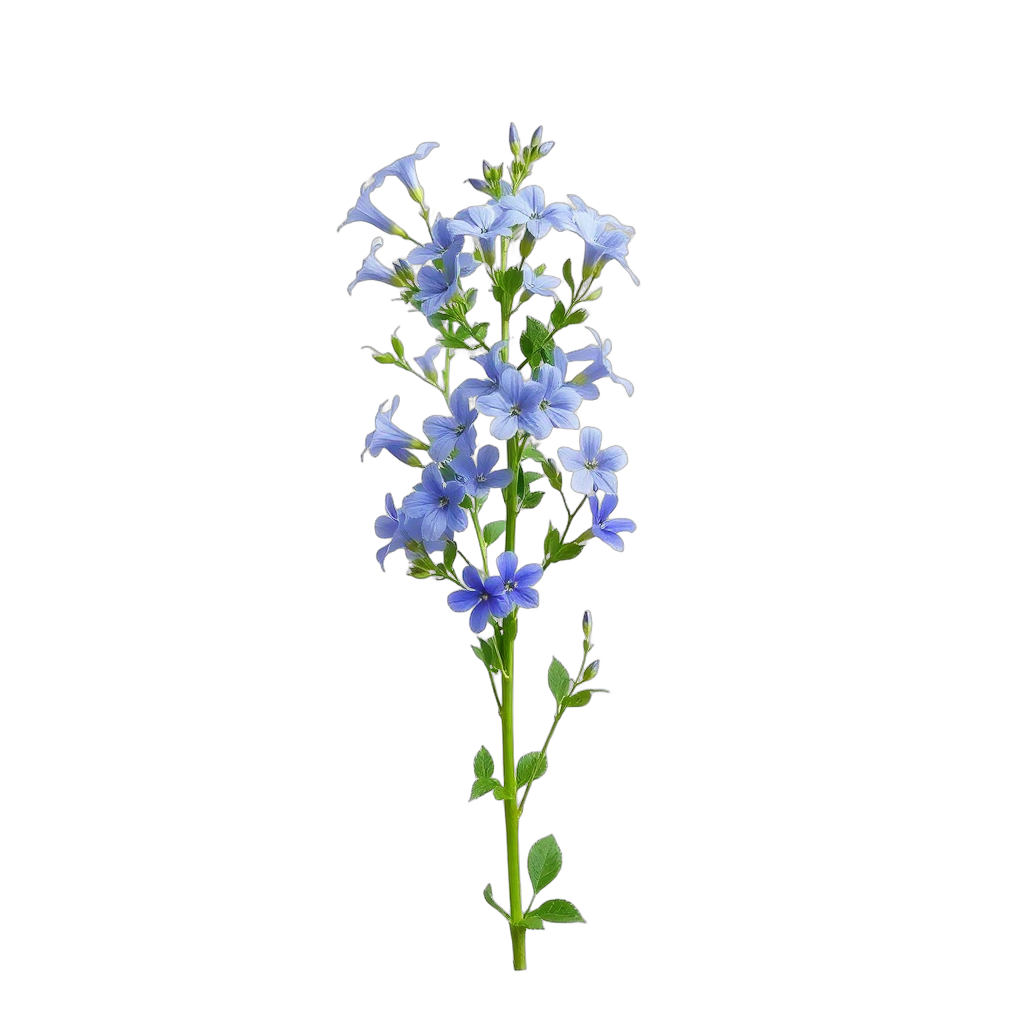
Wild Blue Phlox
Phlox divaricata
low-growing ground cover, blue blooms in spring. Attracts butterflies.

Water Fern
Azolla filiculoides
low-growing ground cover, blooms in none. Red fall color.
Bloom Calendar for Huntsville
spring
Celandine Poppy, Wild Blue Phlox, Blackhaw Viburnumsummer
Garden Phlox, Coralberry, Shrubby St. John's Wortfall
Northern Sea Oatswinter
Limited bloomsDesign Tips for Huntsville (Zone 7b)
- Build every bed 6–8 inches above grade — Huntsville's silty clay loam holds winter water, and crown rot in February kills far more cottage perennials here than any January cold snap in Zone 7b ever does
- Buy the cultivar, not the plant: 'Phenomenal' lavandin instead of 'Munstead' lavender, Rosa 'Julia Child' instead of a hybrid tea, Phlox 'Jeana' instead of an unnamed phlox, Rudbeckia 'American Gold Rush' instead of 'Goldsturm' — the disease-resistant selection is the entire difference between a garden and a spray schedule
- Give roses four feet of air on every side and water only at the roots; black spot needs six hours of wet leaf to infect, and Tennessee Valley overnight humidity supplies that free every single night from May to September
- Lean into the limestone rather than fighting it — plant Hydrangea quercifolia 'Alice', Hydrangea paniculata 'Limelight', clematis, peonies and dianthus, which all prefer Huntsville's pH 6.2–7.2, and stop buying blue macrophylla hydrangeas that will bloom pink anyway
- Choose Zeon or Meyer zoysia for the lawn panels between your borders; Huntsville sits in the transition zone, and tall fescue goes brown and thin every August while zoysia holds its color through the heat with a fraction of the water
- Plant in October, not April — a fall-planted Huntsville border spends the mild wet winter building roots and comes through its first summer intact, while the same plants set out in spring hit 90°F humidity with nothing established underneath them
Where to Source Plants in Huntsville
Skip the big-box stores. These independent Huntsville nurseries specialize in the plants that make cottage/english gardens thrive in Zone 7b.
Bennett Nurseries
North Huntsville
Family-owned nursery since 1967 offering a 6-acre selection of annuals, perennials, roses, trees, and shrubs.
Earth Touch
Southeast Huntsville
Well-organized independent nursery with multiple greenhouses and diverse plant selection.
The Catbird Seat Garden Center
Madison
Independent garden center offering quality plants and gardening products for the Huntsville metro.
Huntsville Nursery & Garden Center
Owens Cross Roads
Wholesale and retail nursery known for a large tree inventory and comprehensive plant offerings.
Cottage/English Landscaping Costs in Huntsville
| Project Scope | Estimated Cost |
|---|---|
| Front cottage border with brick or flagstone walk (400–600 sqft) | $8,000 – $18,000 |
| Cedar rose arbor with small paver seating pad | $2,500 – $5,000 |
| Painted cedar picket fence with gate (100 linear ft) | $3,500 – $7,000 |
| Backyard garden room: pergola, fountain, hedging, double borders | $25,000 – $60,000 |
| Disease-resistant rose collection (12 shrubs, planted and mulched) | $700 – $1,400 |
| AI visualization with ProScapeAI | Free to start |
Estimates based on Huntsville, AL-area contractor rates as of 2026. Actual costs vary by site conditions, materials, and contractor.
Huntsville Climate & Growing Zone
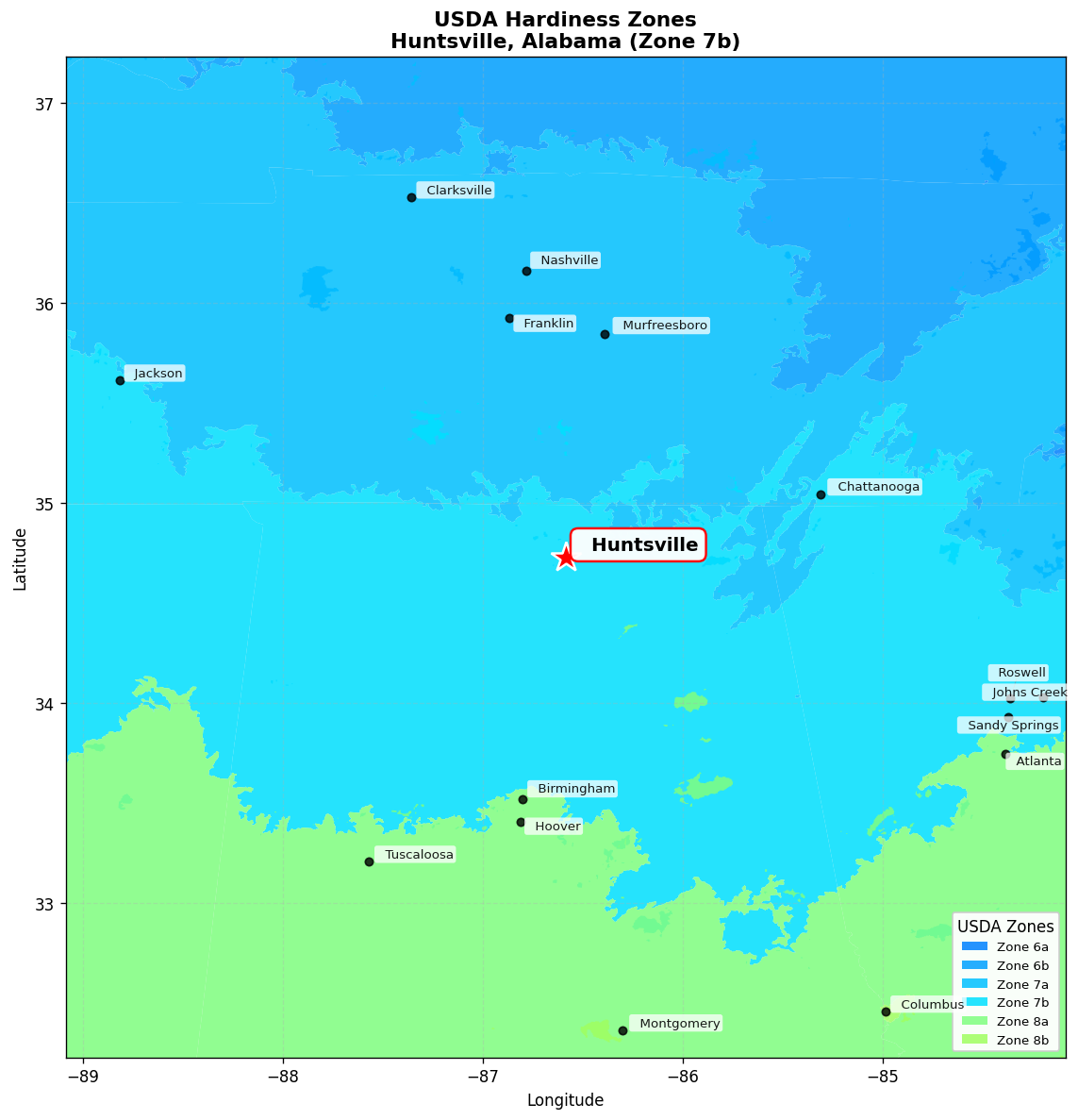
USDA Zone 7b
Hardiness zone for Huntsville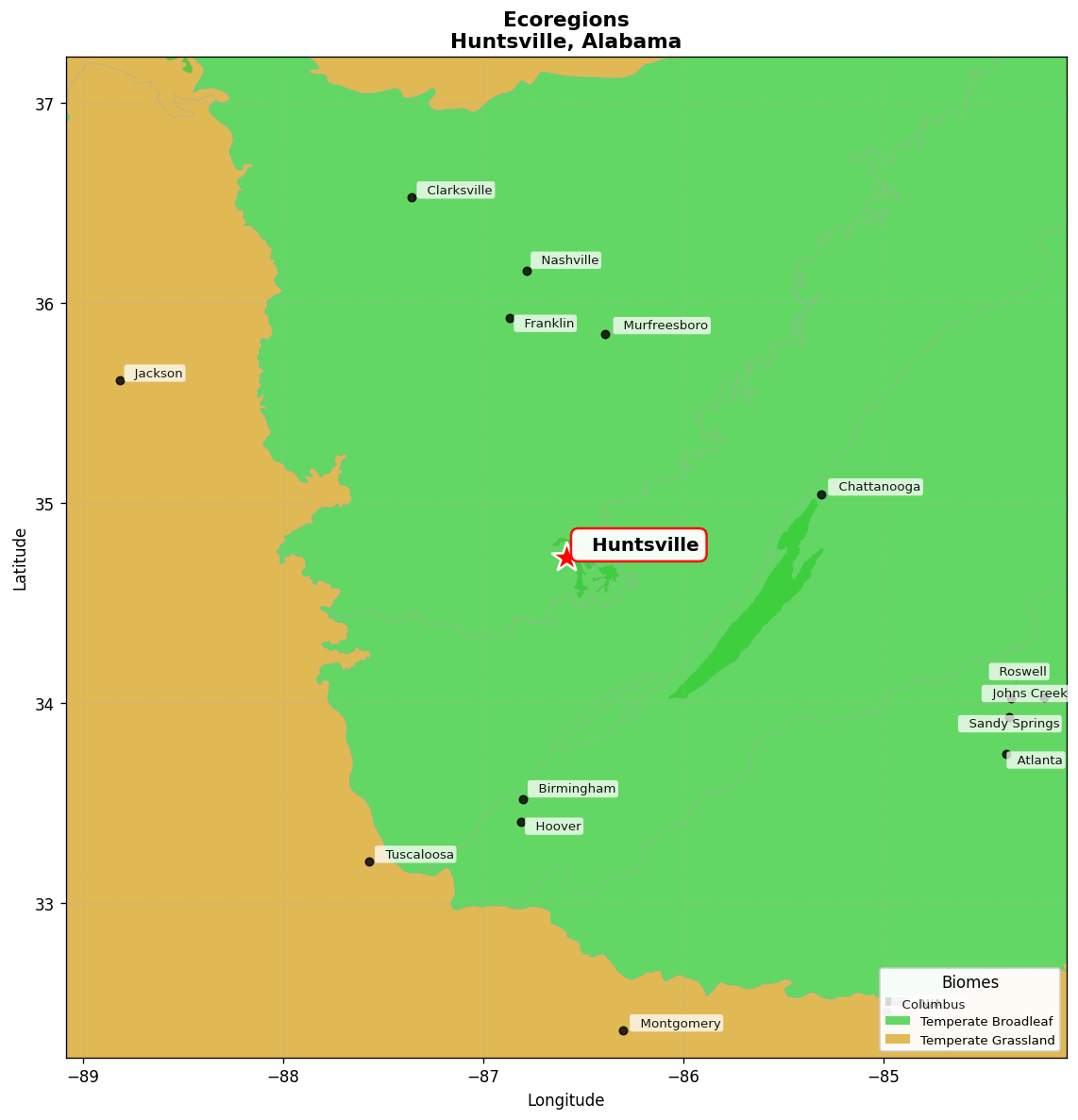
Interior Plateau US Hardwood Forests
Native ecoregionFrequently Asked Questions
How much does a cottage garden cost in Huntsville?
North Alabama labor runs roughly 10–20% under national metro averages, so Huntsville cottage gardens land at the friendly end of the range. A full front-yard border with a brick or flagstone walk, an arbor, and 40–60 perennials and shrubs typically runs $8,000–18,000 installed for a standard 500 sqft front yard. A single rose arbor over a small paver seating pad, borders planted in phases, is $2,500–5,000. Backyard garden rooms with pergola, fountain, hedging, and full double borders run $25,000–60,000. Doing your own planting and paying a contractor only for the hardscape typically cuts 35–40% off, and Bennett Nurseries or Earth Touch will size the plant list to what you can actually install in a weekend.
Which roses actually survive Huntsville's black spot and humidity?
Skip hybrid teas unless you enjoy a spray schedule — 55 inches of rain and 70-degree dew points will defoliate 'Mister Lincoln' by August. The reliable Huntsville list is Rosa 'Julia Child' (butter yellow floribunda, exceptional disease resistance), 'Belinda's Dream' (an Earth-Kind pink), Kordes varieties 'Beverly' and 'Brothers Grimm' (bred in Germany without fungicides), 'Ducher' and 'Mutabilis' among the china roses, and for climbers Rosa 'Peggy Martin' and 'New Dawn'. Plant with 4 feet of air on every side, water at the roots only, and clear fallen leaves in November — black spot overwinters in that litter. Japanese beetles arrive around Memorial Day and are a separate problem no cultivar solves; hand-pick at dawn and skip the pheromone traps, which attract more than they catch.
Can I grow English lavender in Huntsville?
Not for long. Lavandula angustifolia cultivars such as 'Hidcote' and 'Munstead' usually look excellent for one season, then rot at the crown during their second wet Tennessee Valley summer — it is humidity and heavy soil, not cold, that kills them in Zone 7b. Grow Lavandula x intermedia 'Phenomenal' or 'Provence' instead; both were selected for humid-climate survival and hold up for years here. Plant them on a 6–8 inch raised berm of native soil cut 50/50 with crushed granite or expanded shale, mulch with pea gravel rather than bark, and never let irrigation hit the foliage. If a spot still stays wet, substitute Perovskia atriplicifolia 'Denim 'n Lace' or Nepeta 'Walker's Low' for the same silver-and-blue effect.
What replaces the English perennials that die in Alabama heat?
Substitute for effect, not for species. For delphinium blue, use Salvia 'Mystic Spires Blue', Salvia farinacea 'Henry Duelberg', or larkspur (Consolida ajacis) direct-sown in October to bloom before the heat. For lupine spires, use Baptisia australis or Penstemon digitalis 'Husker Red'. For astilbe in shade, use Heuchera villosa 'Autumn Bride' and Hakonechloa. For hardy geranium, use Geranium 'Rozanne', which does hold on here. Foxgloves work if you treat them as fall-planted annuals set out in October rather than perennials. Phlox paniculata is fine so long as you choose mildew-resistant 'Jeana' or 'David', and Rudbeckia 'American Gold Rush' has replaced 'Goldsturm' locally because it resists the septoria leaf spot our humidity guarantees.
How does Huntsville's limestone soil change what I plant?
Huntsville's Decatur and Dewey silty clay loams weather out of Mississippian limestone and generally test pH 6.2–7.2, with higher readings near old foundations, driveways, and the cherty Bodine soils on Monte Sano. Near-neutral soil is excellent news for roses, peonies, clematis, dianthus, Nepeta and most of the cottage canon. It is bad news for acid-lovers: Hydrangea macrophylla will bloom pink regardless of the tag unless you apply aluminum sulfate each spring, and azaleas, blueberries and pin oaks yellow between the veins. Use Hydrangea quercifolia 'Alice' and Hydrangea paniculata 'Limelight' instead — both are pH-indifferent and better suited to the heat. Get a $10 soil test through the Madison County Extension office before you amend anything; guessing wastes more money than the test costs.
When should I plant, and do I need a permit in Huntsville?
October through early December is the best planting window by a wide margin — roots establish through a mild wet winter and the plant meets its first Huntsville August already anchored. February to mid-March is the fallback. Avoid June through September planting entirely. Permits are not required for beds, planting, fences under most height limits, or walks, but retaining walls over 4 feet, pools, and roofed structures do require City of Huntsville permits, and land disturbance triggers stormwater review. The big local caveat: Twickenham and Old Town are locally designated historic districts, and exterior changes visible from the street — fences, walls, arbors, and some hardscape — need a Certificate of Appropriateness from the Huntsville Historic Preservation Commission before work starts.