4 Cottage Garden Ideas for Long Beach, CA | Coastal Blooms & English Borders for Zone 10b
Native plants from the California coastal sage and chaparral (Zone 10b) — Mediterranean (warm summer) climate
Why Cottage/English Gardens in Long Beach?
Long Beach sits at the intersection of two garden-making gifts: a Zone 10b coastal climate where frost is essentially unknown, and an ocean influence that keeps summer temperatures gentler than inland Southern California. Average high temperatures hover around 75°F in summer and 65°F in winter, and rainfall averages a modest 12 inches per year, concentrated between November and March. The California coastal sage and chaparral ecoregion means the native plant community leans toward soft, fragrant, and drought-adapted species that integrate beautifully into cottage-style plantings.
The cottage garden style is a surprisingly natural fit for Long Beach's older residential neighborhoods. Craftsman bungalows in Belmont Heights, Spanish Colonial Revival homes in Bixby Knolls, and the Victorian-era architecture near 4th Street all benefit from the softening effect of abundant flower borders, picket fences draped in climbing roses, and the layered, slightly wild charm that cottage gardens project. These neighborhoods were built in the early 20th century when cottage gardening was the American residential ideal, and restoring that aesthetic today creates a genuine sense of historical continuity.
Long Beach's coastal proximity means salt-tolerant plant choices matter more than in inland cities. The marine layer keeps humidity slightly higher, which roses and many cottage perennials actually prefer. Gardeners here enjoy an unusually long blooming season — with the right plant selection, you can have flowers in every month of the year, something almost no other climate in America offers. The combination of mild winters, reliable spring blooms, and summer flowers with proper irrigation creates a cottage garden that never truly goes dormant.
4 Cottage/English Design Ideas for Long Beach
AI-generated image
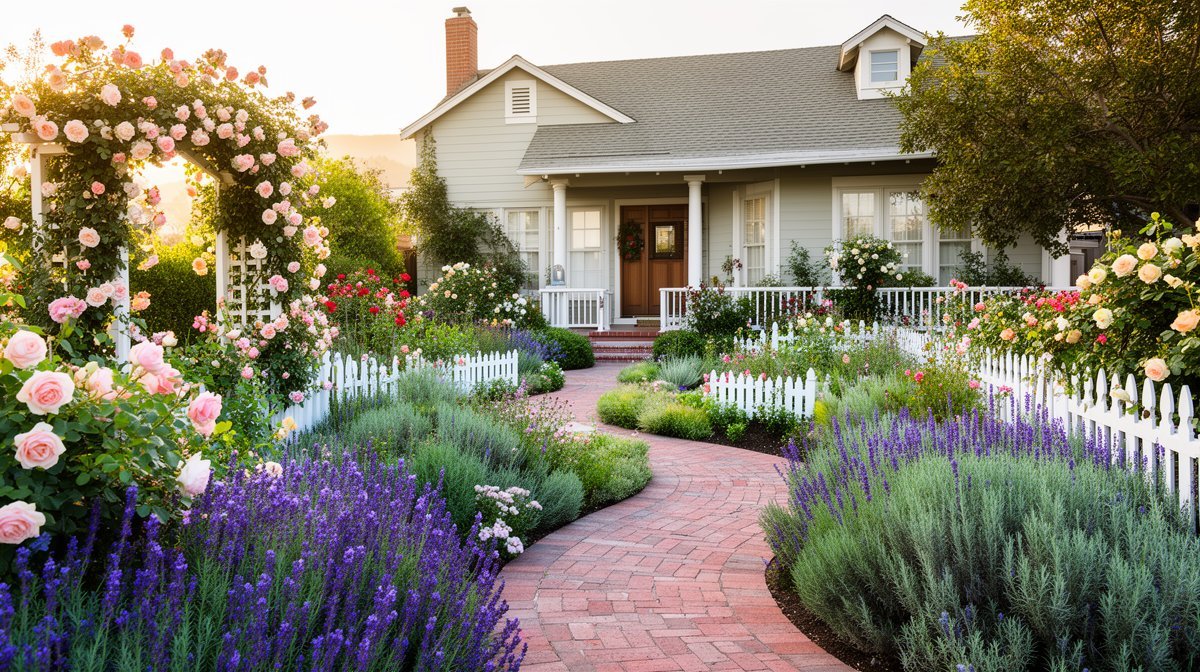
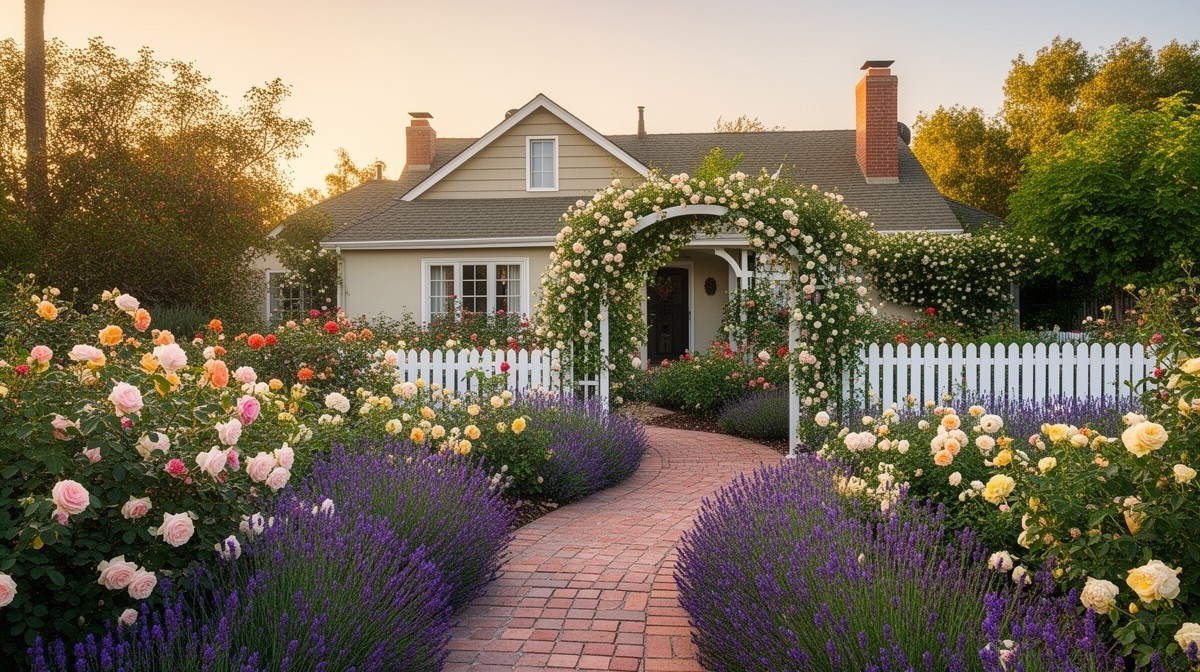
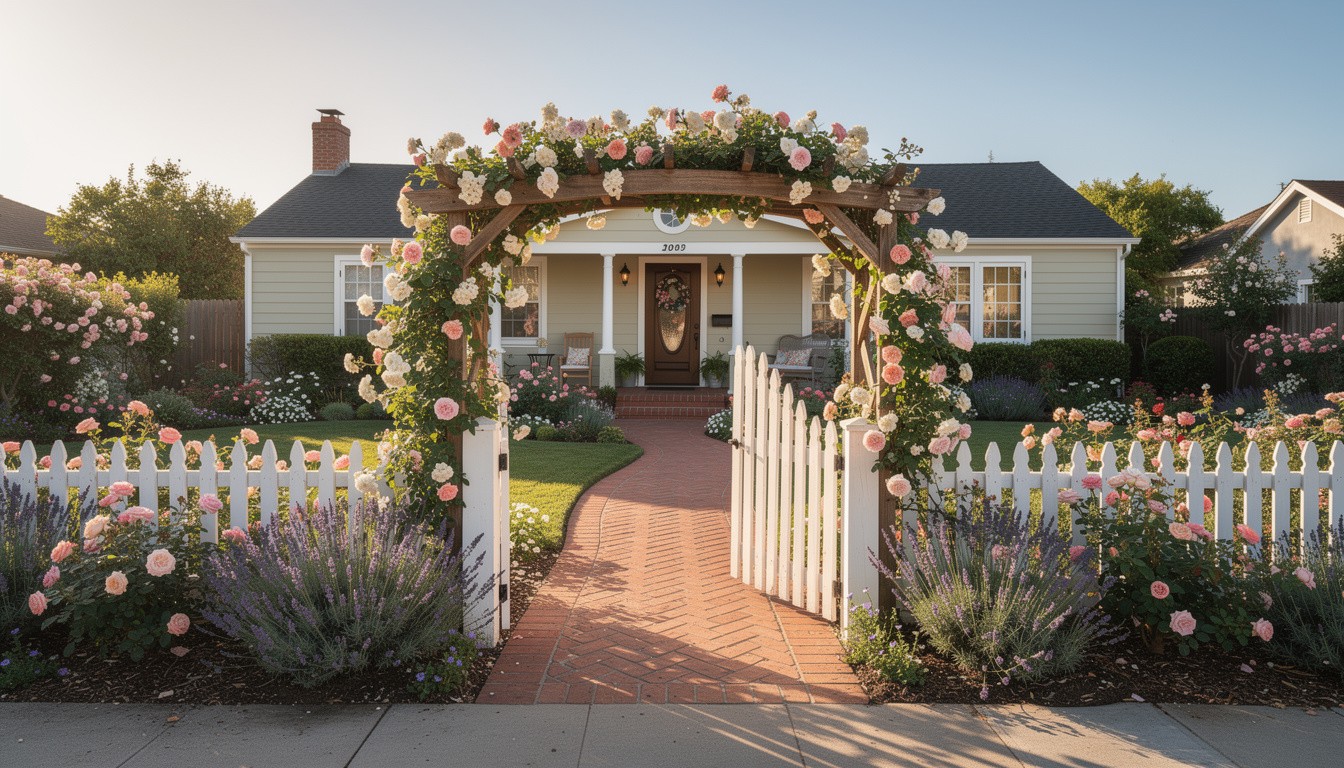
The Rose-Arch Entry Cottage
$15–28/sqftA white picket fence frames the front yard of a pale sage Craftsman bungalow, with a wide rose-covered arch over the gate entrance dripping in soft pink blooms. A brick pathway cuts through beds of lavender and grey-green foliage on both sides, leading straight to the front door. The climbing roses form a full canopy over the arch, creating a storybook entrance that stops traffic in late spring.
AI-generated image
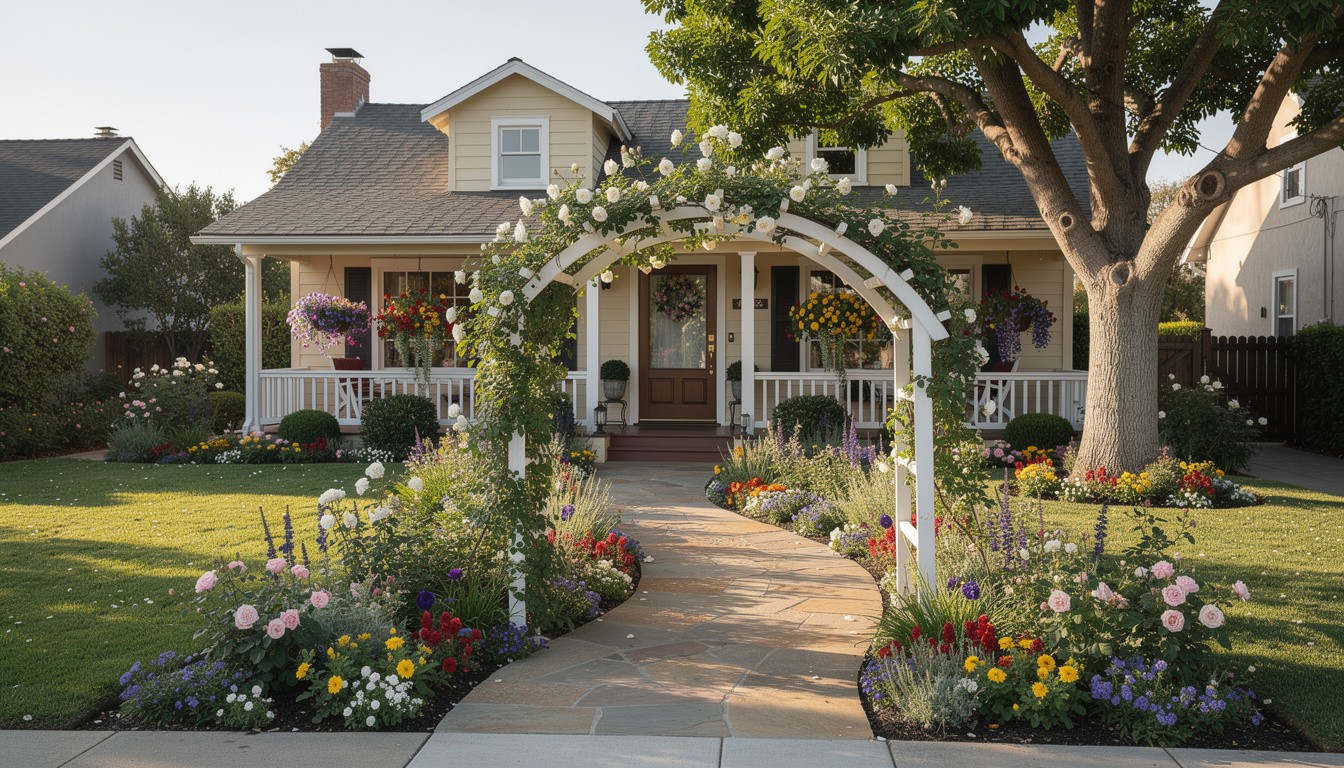
The Overflowing Cottage Border
$12–22/sqftA Craftsman home with a wide covered porch is fronted by a generous cottage border bursting with mixed color — foxglove spires, blue delphiniums, yellow rudbeckia, pink cosmos, and climbing roses on the porch columns. A stone pathway meanders through the lush plantings to a white arbor draped in white roses at the side yard. The planting is deliberately exuberant, every inch filled with overlapping blooms in a cheerful cottage mix.
AI-generated image
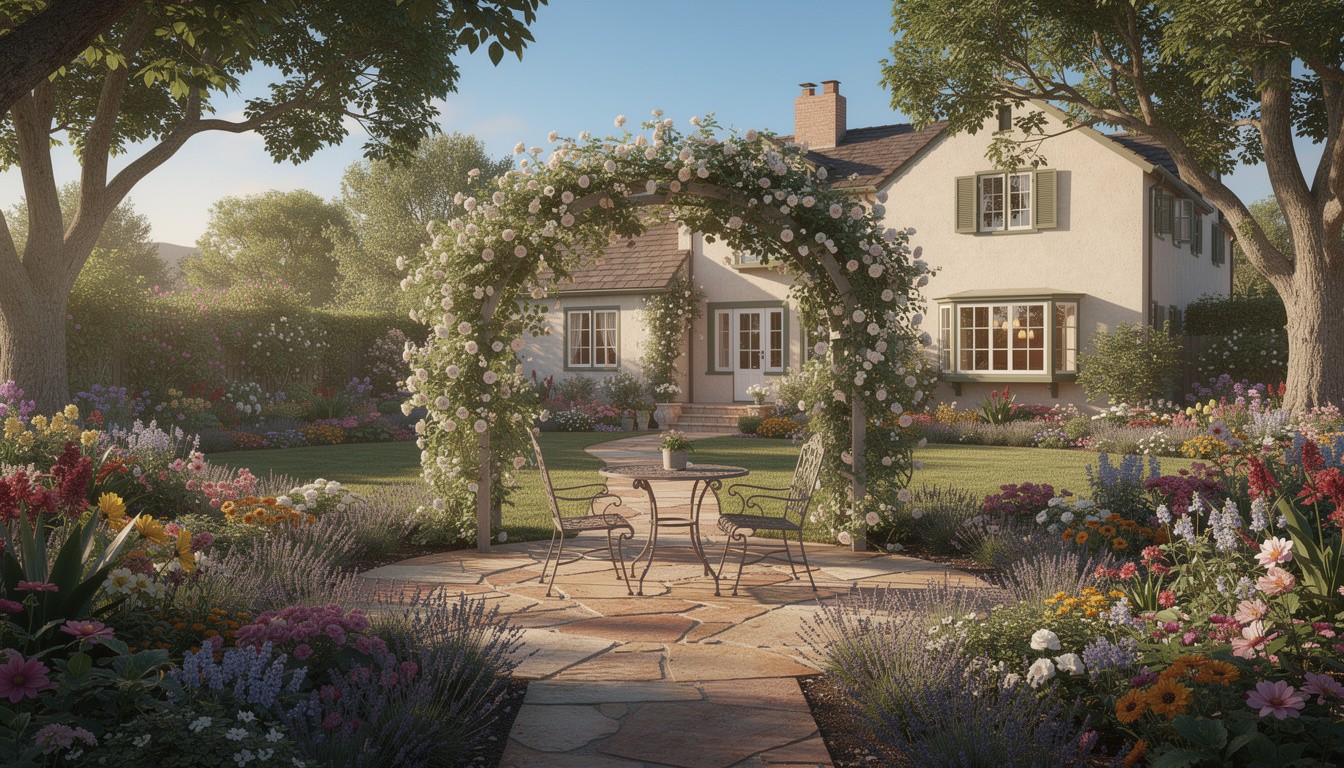
The Jasmine Arbor Garden Room
$22–40/sqftA white timber arbor smothered in white-flowering jasmine or climbing rose anchors the center of a sunny backyard, framing a small round bistro table and chairs on a stone patio beneath. Mature cottage beds ring the space — lavender, purple salvia, pink roses, and spring bulbs — with two established shade trees providing dappled light in the background. The effect is a private outdoor room wrapped in fragrance and soft color.
AI-generated image
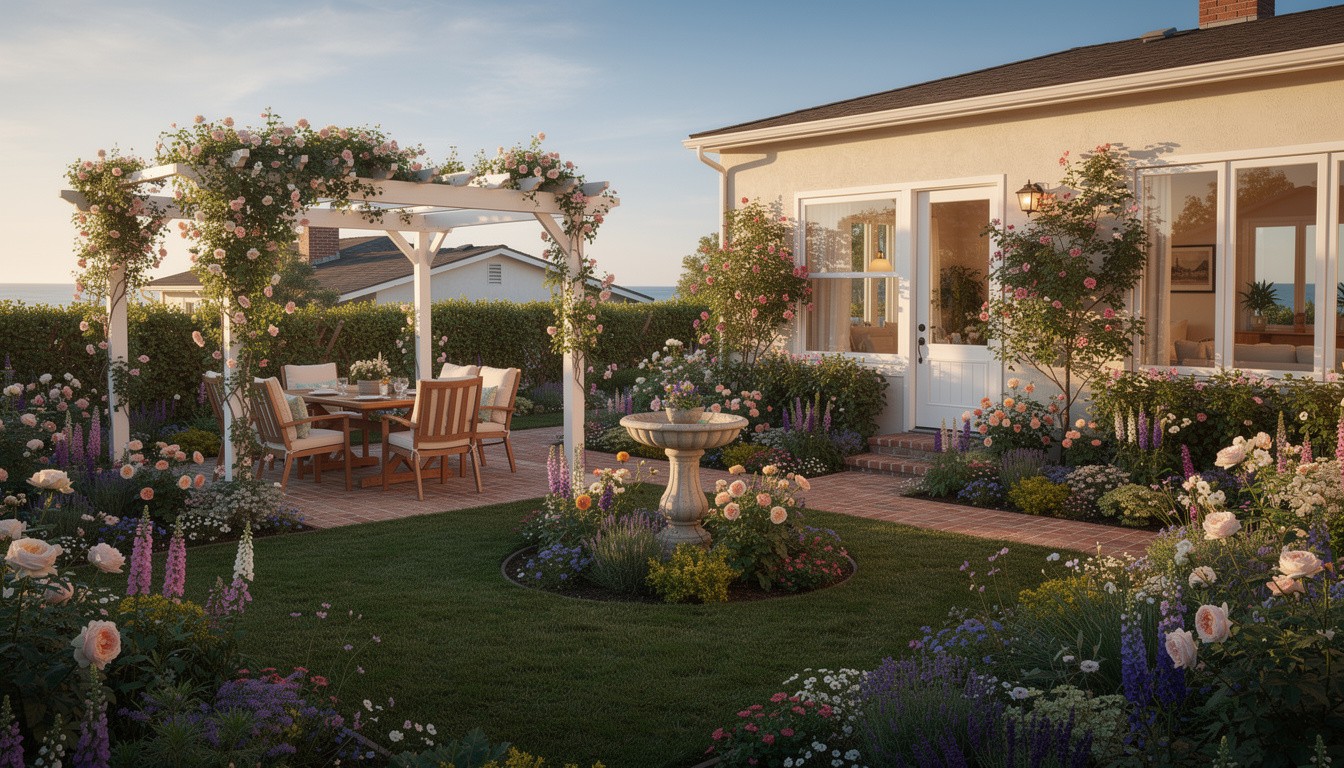
The Coastal Cottage Patio Garden
$20–38/sqftA relaxed backyard patio with wood pergola, comfortable lounge seating, and a classic birdbath as focal point, surrounded by lush cottage beds featuring roses, foxglove, lavender, and nepeta in soft pink-purple-blue tones. A small lawn panel in the center gives open space while perennial borders provide structure and seasonal color. String lights over the pergola extend the use of this space into Long Beach's warm coastal evenings.
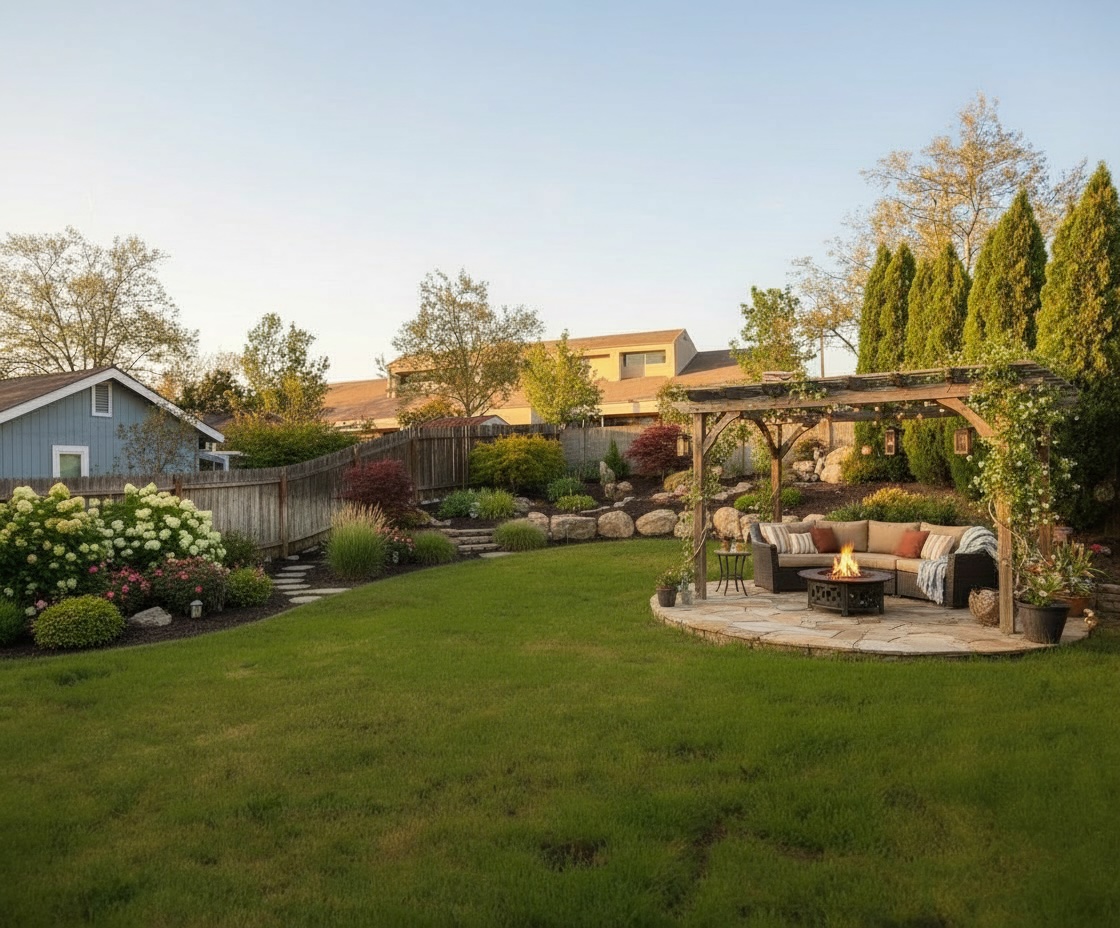
See how a cottage/english garden looks on YOUR property
Upload a photo of your Long Beach yard and visualize your dream garden in seconds.
Try ProScapeAI Free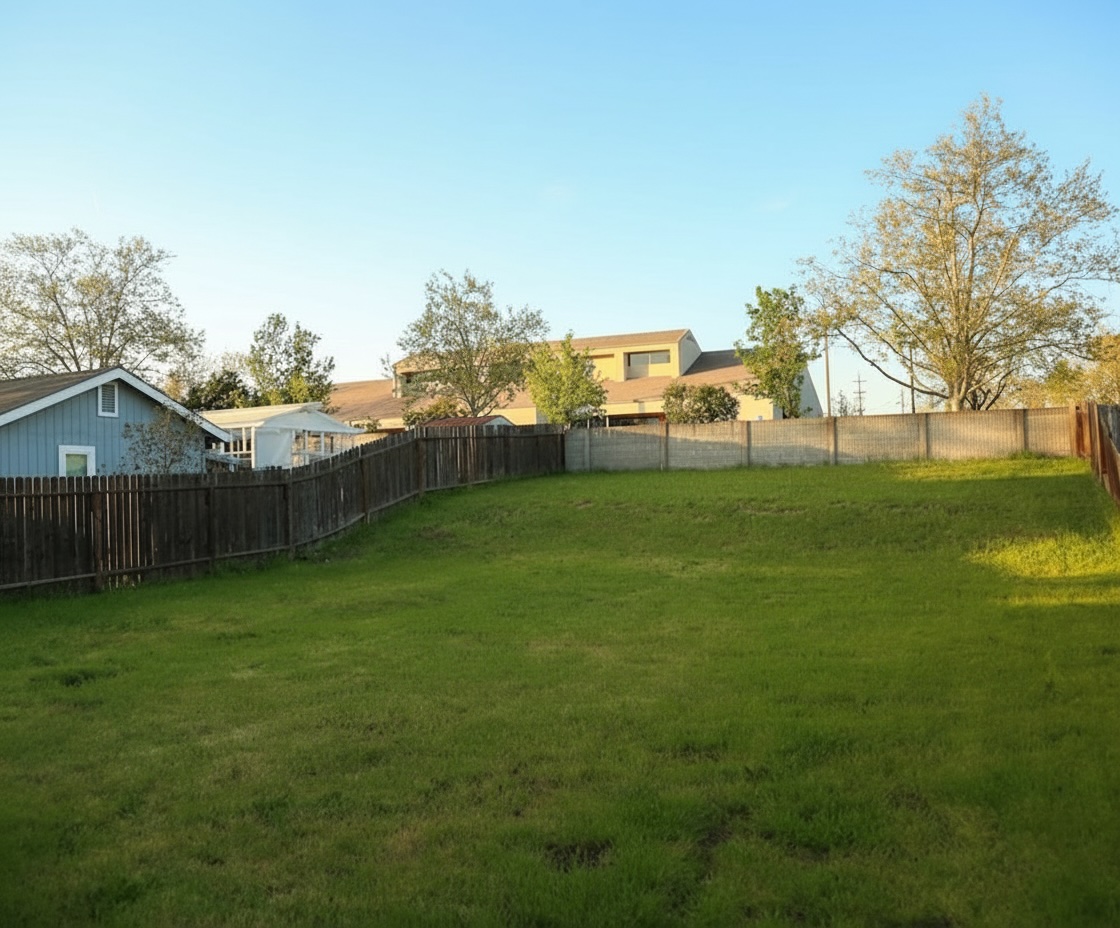
AI-generated image
Featured Trees & Shrubs for Cottage/English Gardens
Browse all 212 plants for Long Beach
Black Sage
Salvia mellifera
grows to 4 feet, white blooms in spring. Attracts butterflies.
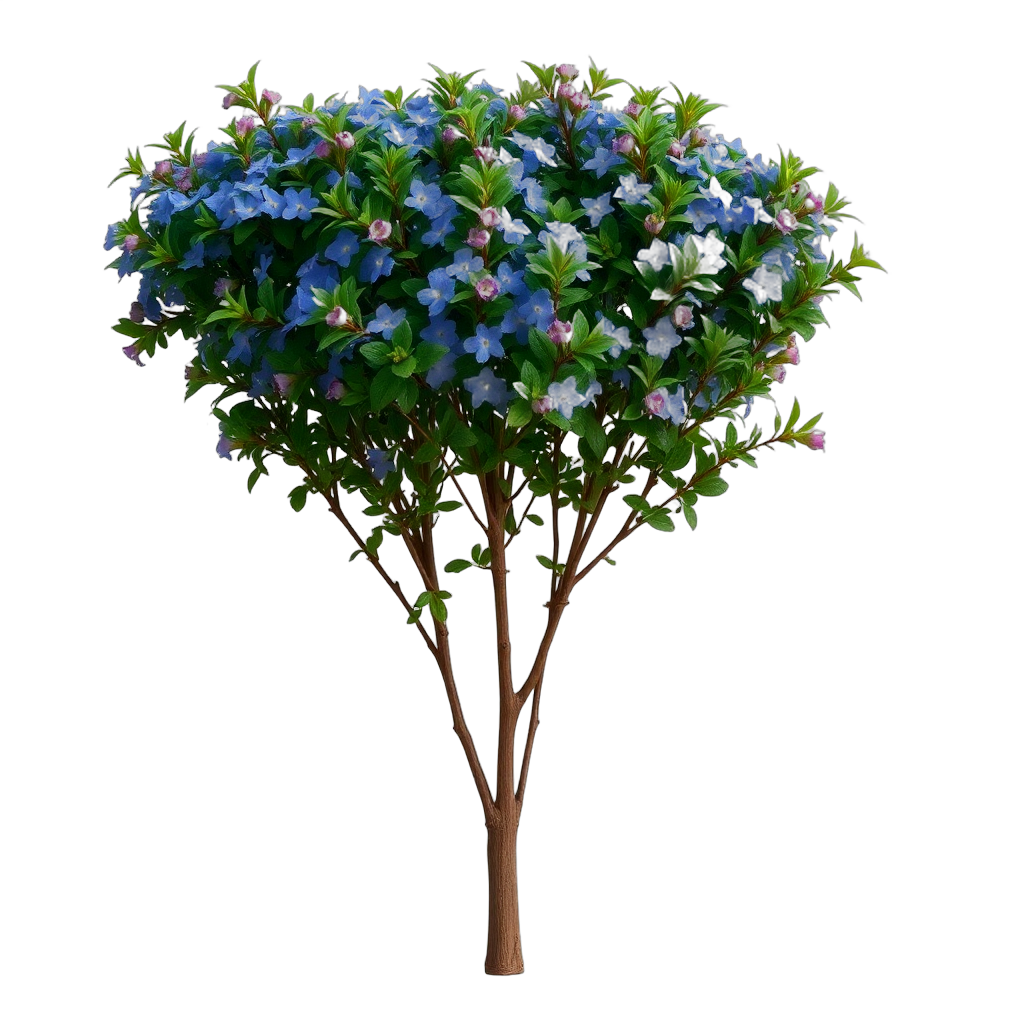
Blue Blossom
Ceanothus thyrsiflorus
medium-sized at 12 feet, blue blooms in spring. Attracts butterflies.
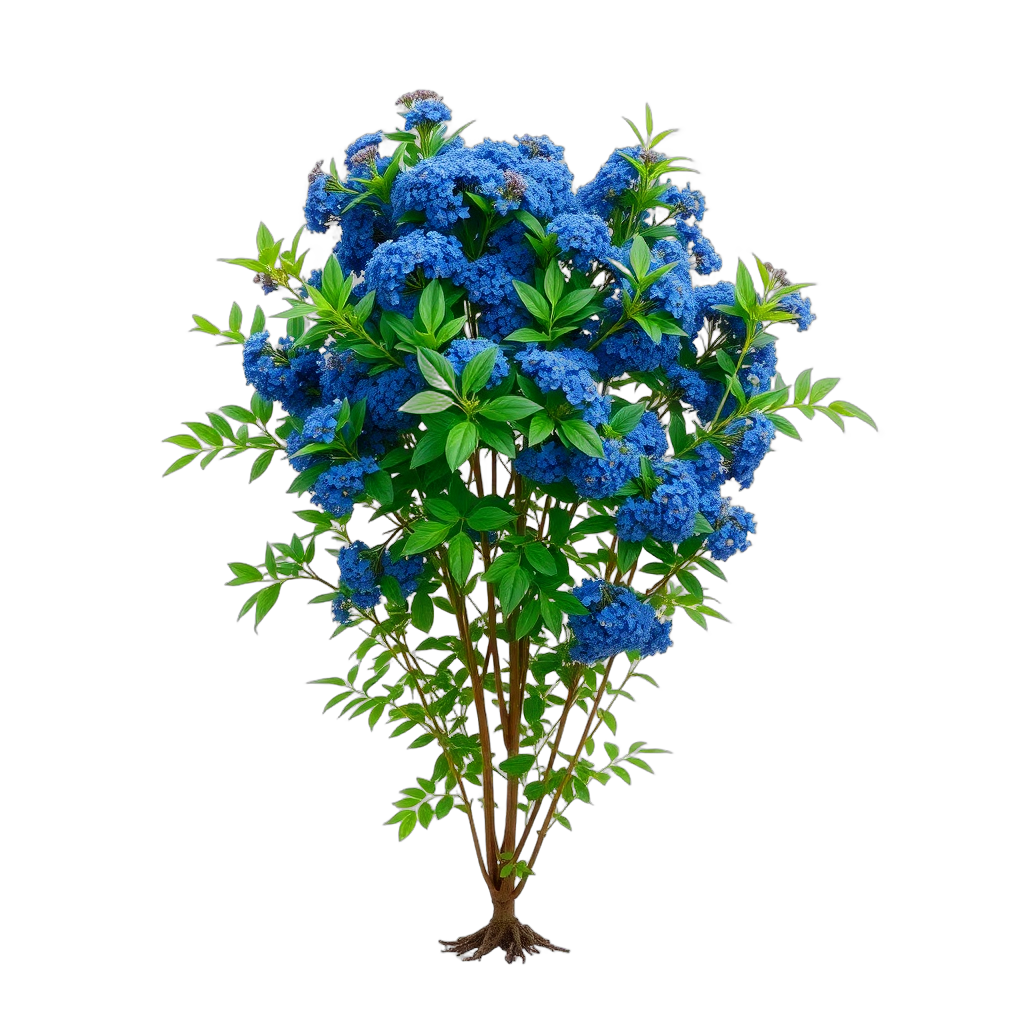
Blue Elderberry
Sambucus cerulea
medium-sized at 15 feet, white blooms in spring. Attracts butterflies.
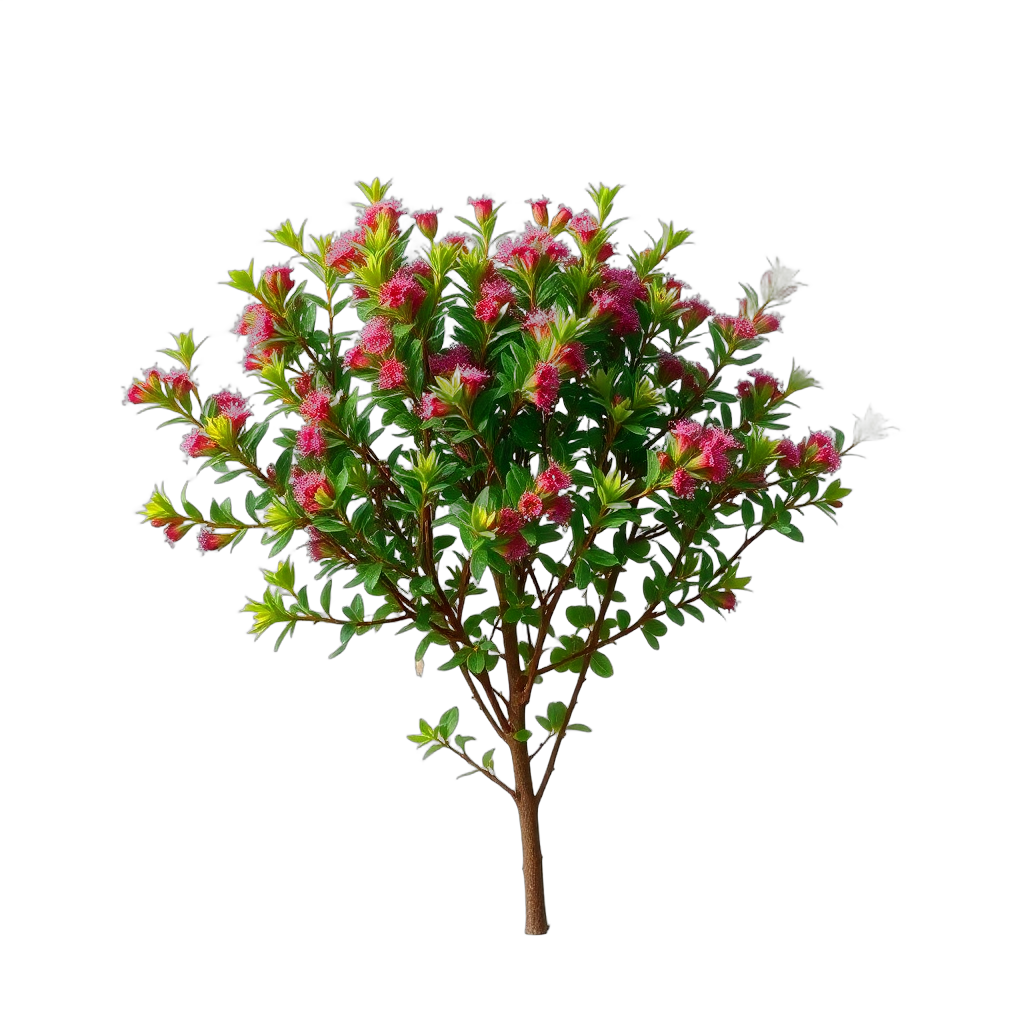
Buckbrush
Ceanothus cuneatus
medium-sized at 7 feet, white blooms in spring. Attracts butterflies.
Featured Grasses & Groundcovers for Cottage/English Gardens
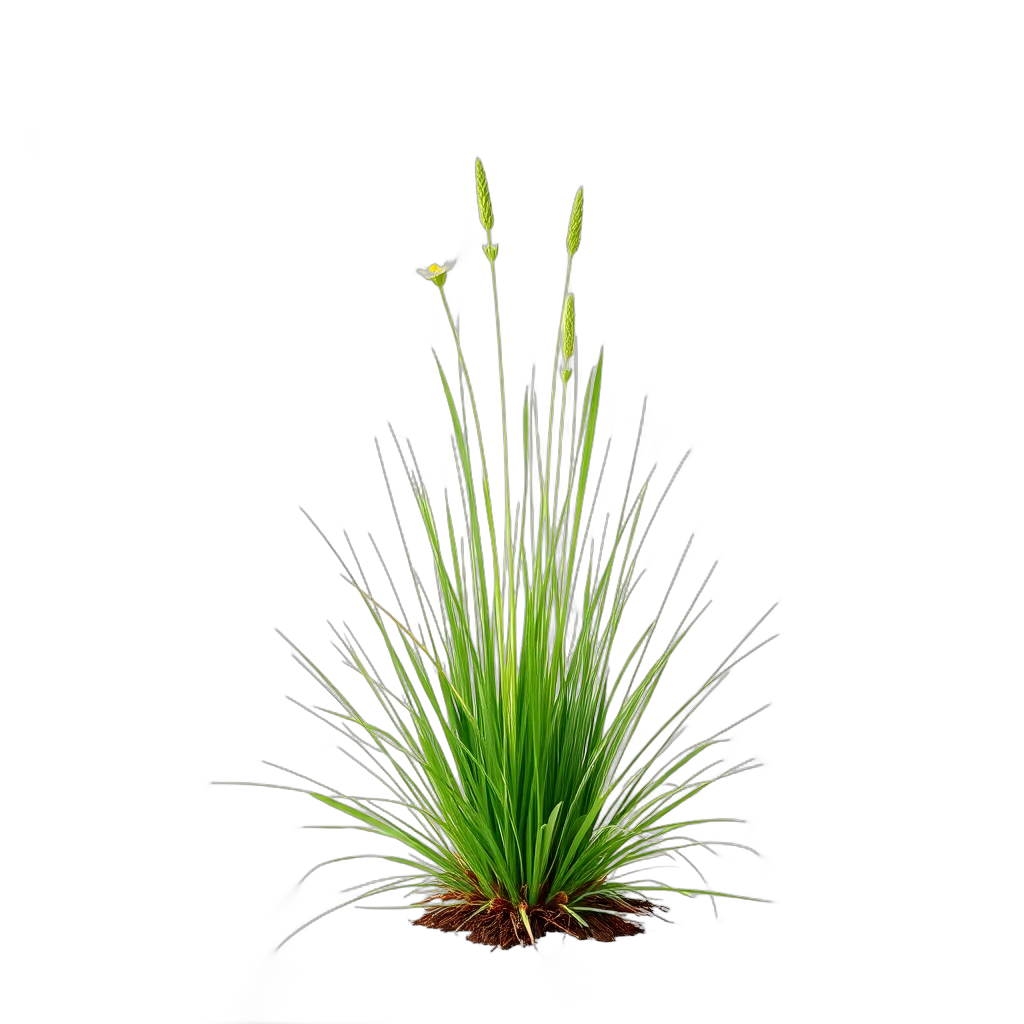
California Brome
Bromus carinatus
low-growing ground cover, blooms in spring. Yellow fall color.
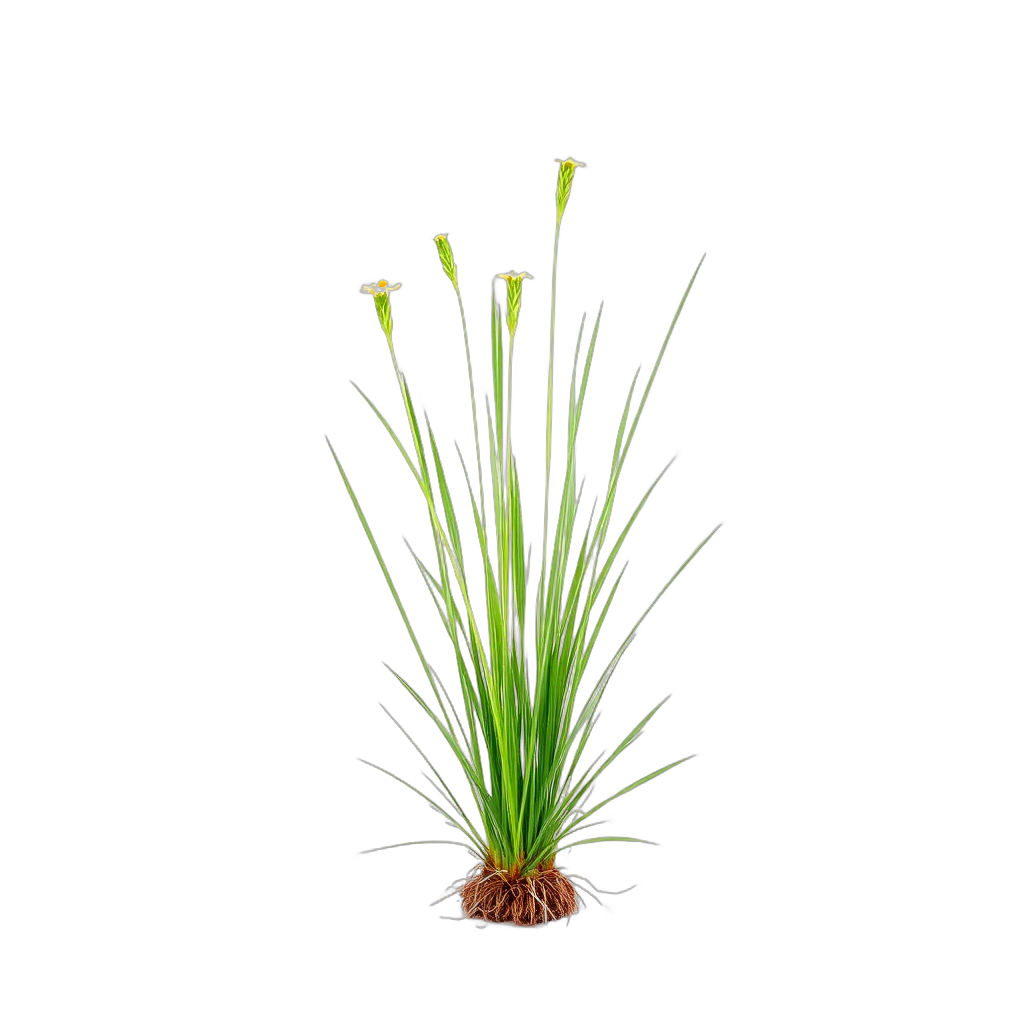
California Melic
Melica californica
low-growing ground cover, blooms in spring.
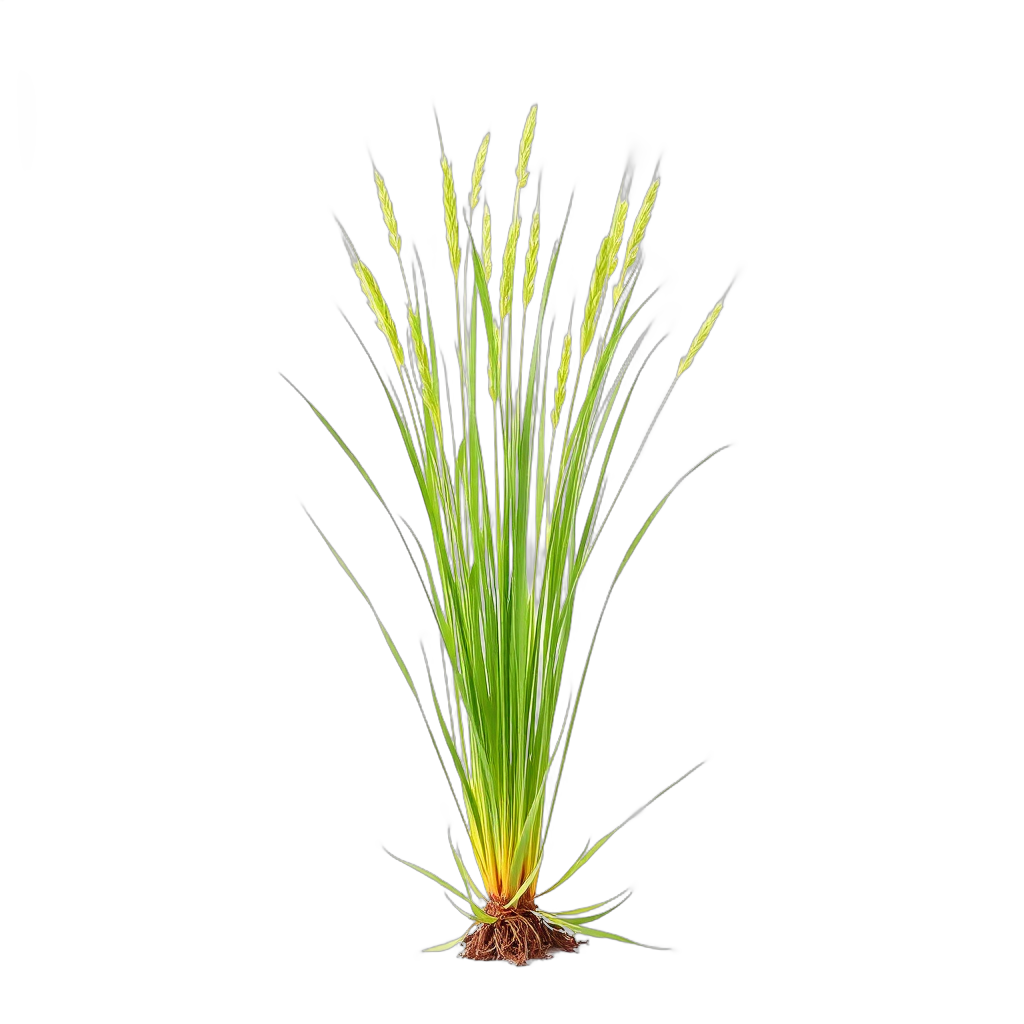
California Oatgrass
Danthonia californica
low-growing ground cover, blooms in spring. Yellow fall color.
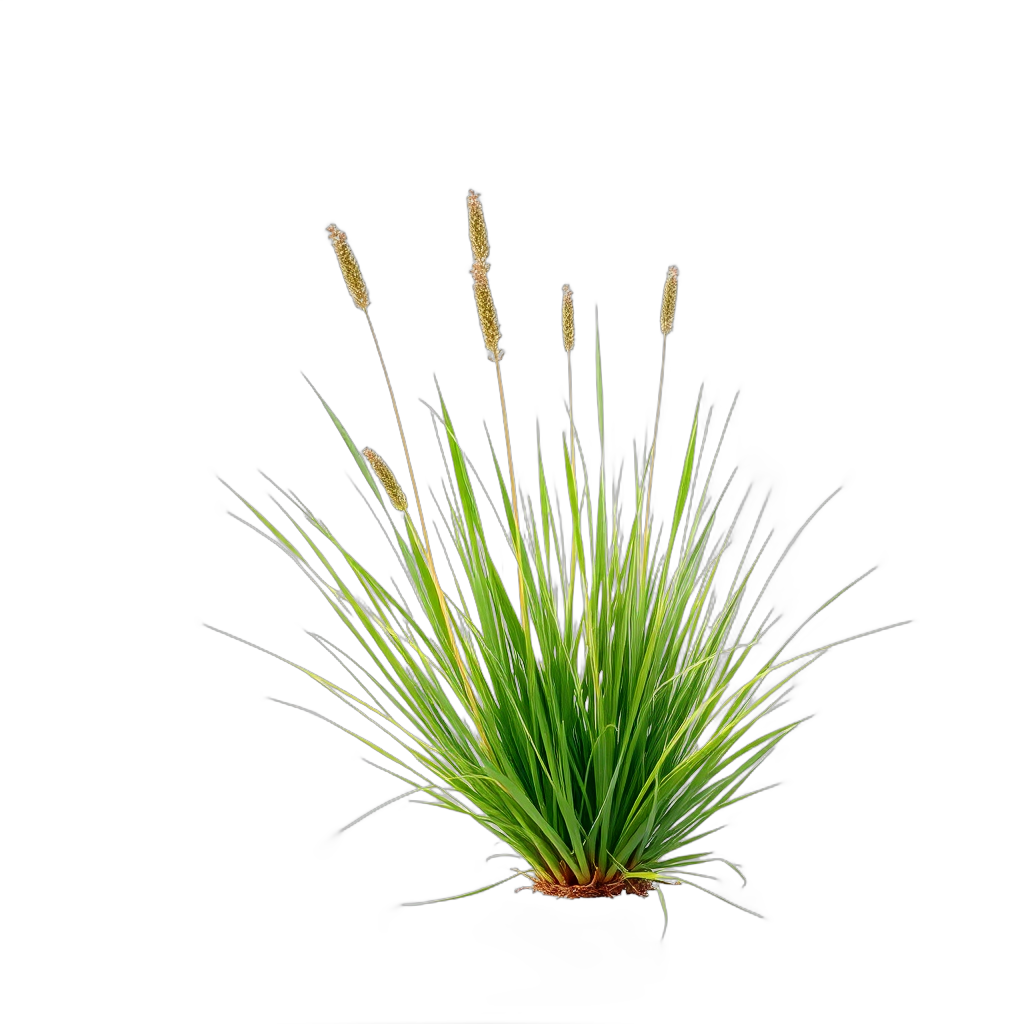
Deer Grass
Muhlenbergia rigens
grows to 3 feet, yellow blooms in fall. Evergreen year-round.
Featured Flowers & Perennials for Cottage/English Gardens
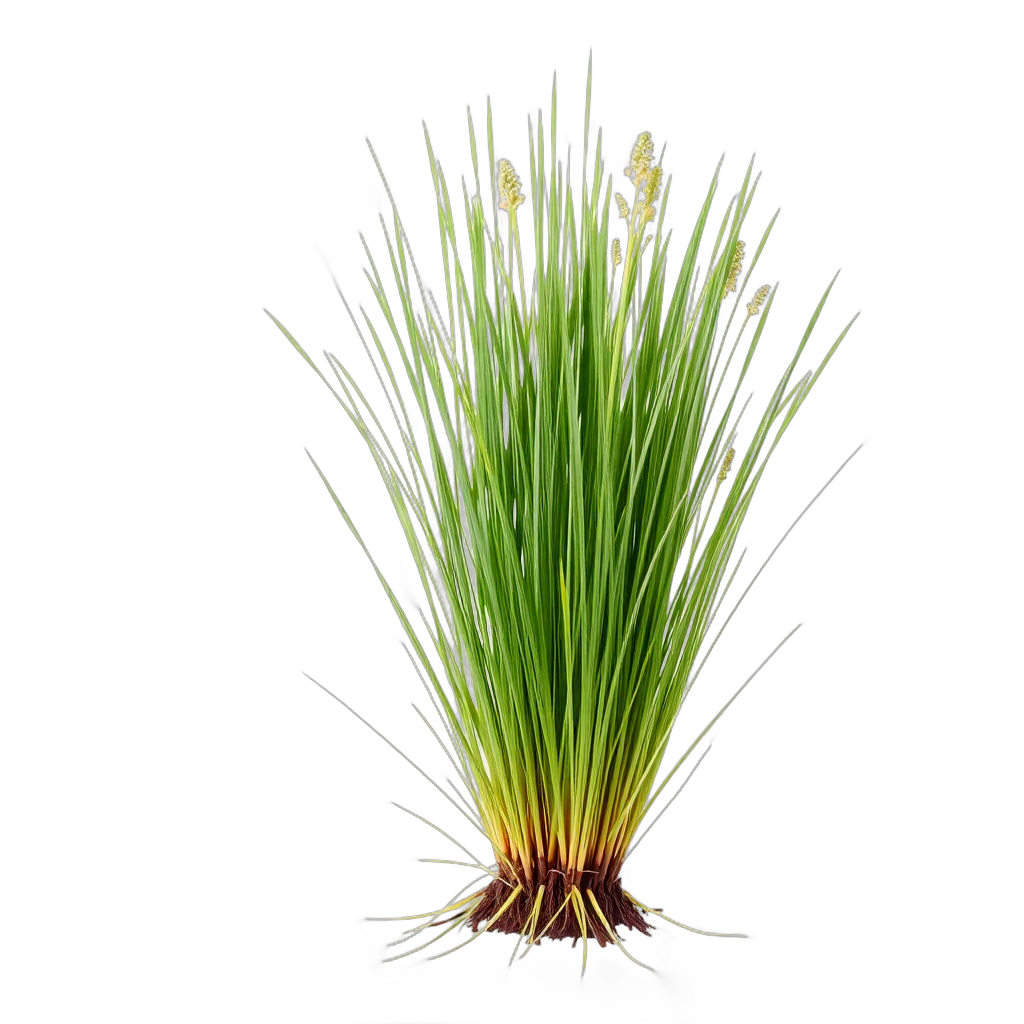
California Gray Rush
Juncus patens
low-growing ground cover, blooms in summer. Evergreen year-round.
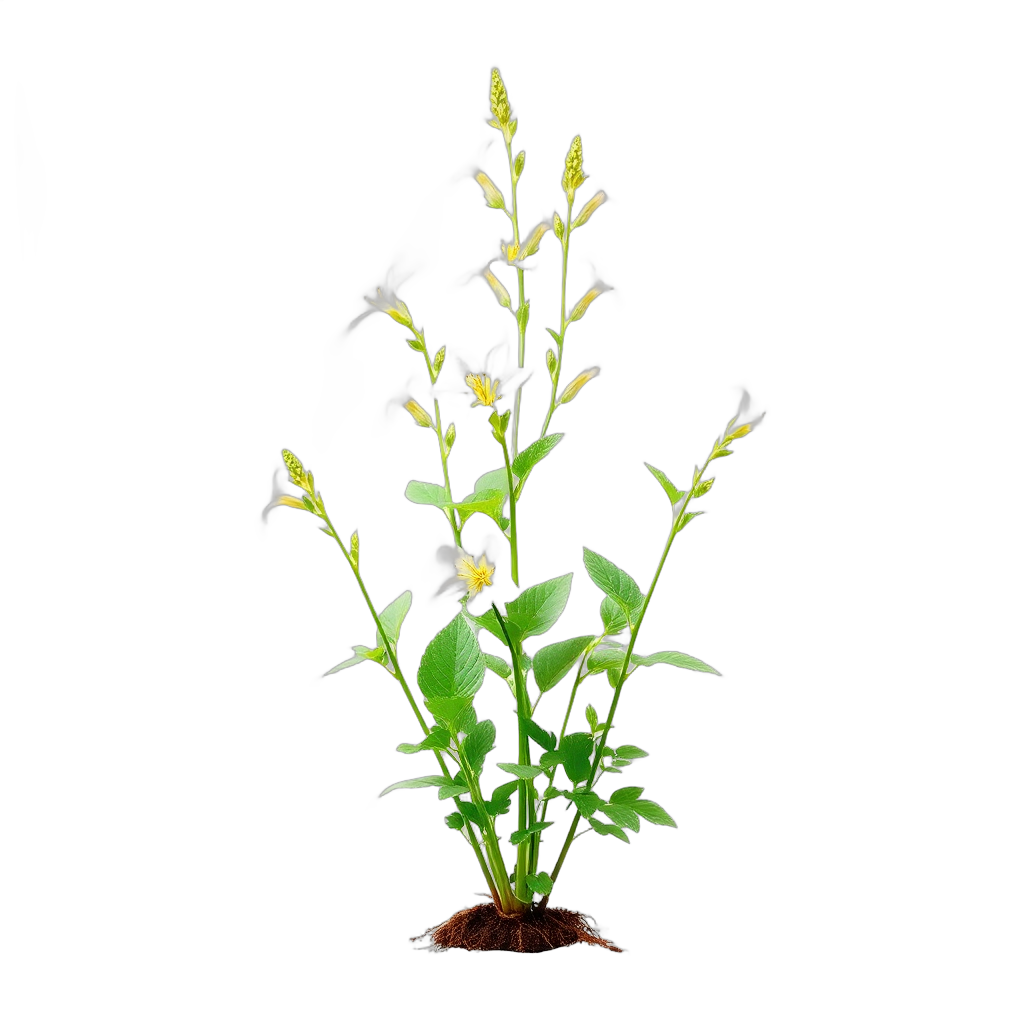
Beach Evening Primrose
Camissonia cheiranthifolia
low-growing ground cover, yellow blooms in spring. Attracts butterflies.
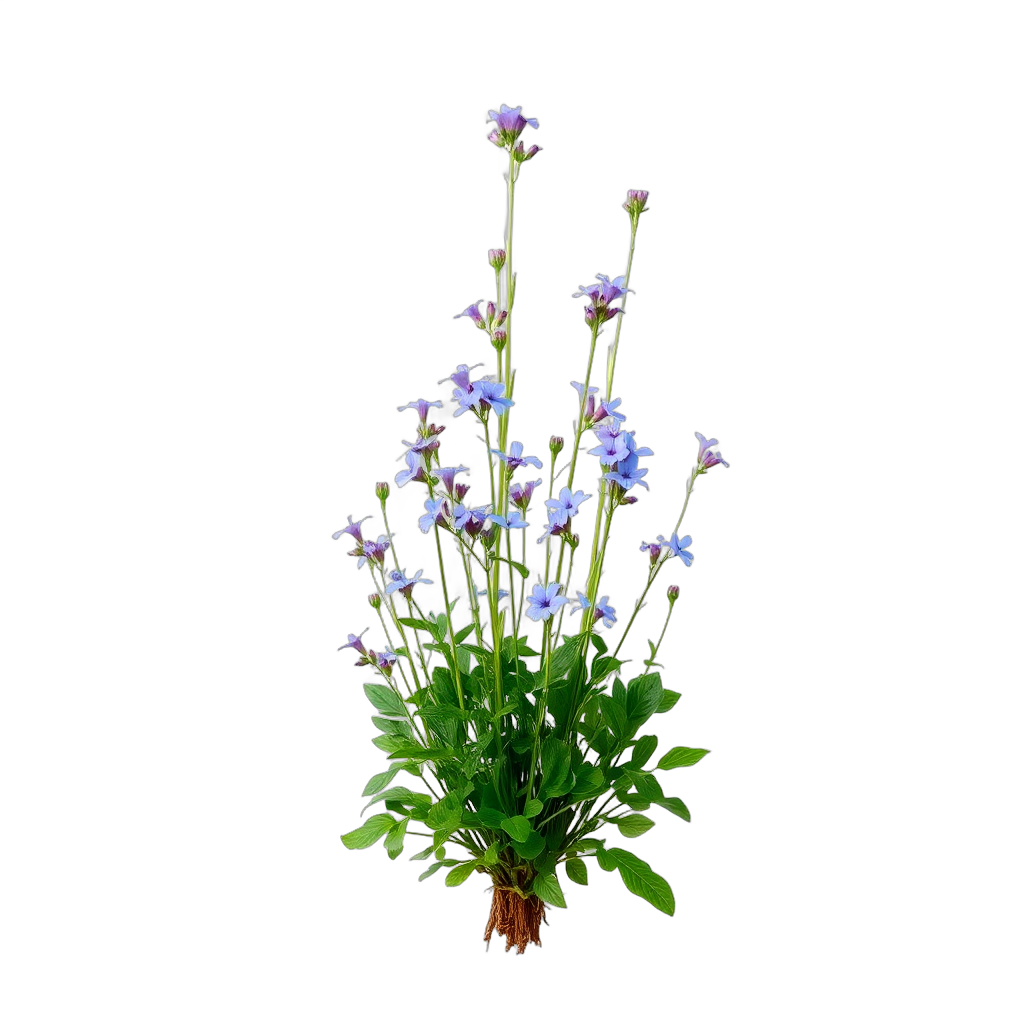
Blue Dicks
Dichelostemma capitatum
low-growing ground cover, blue blooms in spring. Pollinator-friendly.
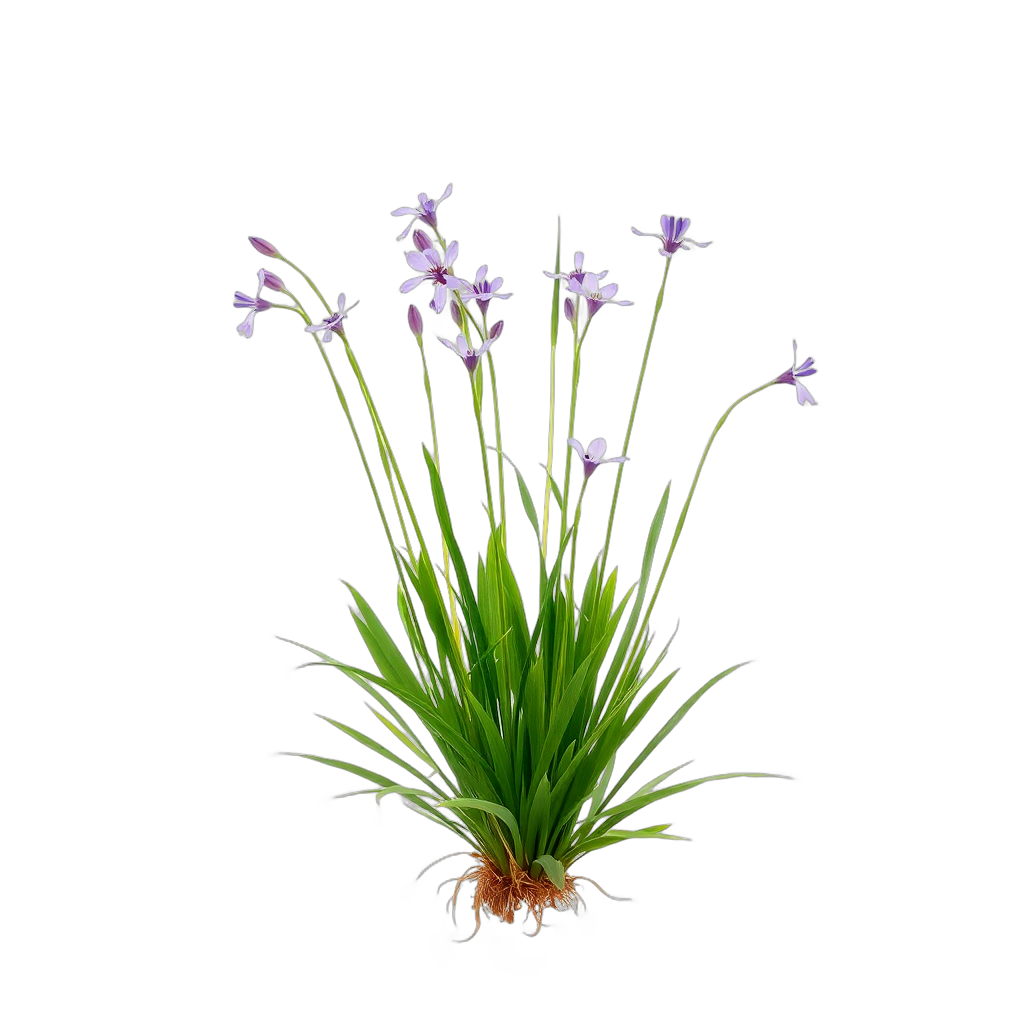
Blue-Eyed Grass
Sisyrinchium bellum
low-growing ground cover, blue blooms in spring. Attracts butterflies.
Zone and sun checks come from our database — confirm with your local nursery before you buy.
Bloom Calendar for Long Beach
spring
Beach Evening Primrose, Blue Dicks, Blue-Eyed Grasssummer
California Gray Rush, Hooker's Evening Primrose, Hummingbird Mintfall
California Fuchsiawinter
Limited bloomsDesign Tips for Long Beach (Zone 10b)
- Train climbing roses over your front gate or porch arbor in year one — Long Beach's mild winters mean roses never fully go dormant, so you'll see bloom within 12–18 months of planting a bare-root or 5-gallon start
- Use agapanthus as your low-maintenance cottage border workhorse — it thrives in Long Beach's salt air, blooms reliably in June–August, needs almost no supplemental water once established, and the blue-purple flower color complements roses and lavender beautifully
- Plant society garlic (Tulbaghia violacea) as an edging plant along cottage paths — it tolerates Long Beach's coastal conditions, blooms nearly year-round in Zone 10b, and the garlic scent deters deer and rabbits from adjacent rose beds
- For a true English cottage feel, layer plant heights: low catmint or creeping thyme at border edges, mid-height salvia and lavender in the middle, and tall hollyhock or rose standards at the back — this depth creates the lush, overflowing look even in small front yard spaces
- Take advantage of Long Beach's nearly frost-free winters by planting sweet peas in October for March–April bloom — this cool-season annual puts on its best show during the city's mild winters and is nearly impossible to grow as well anywhere inland
- Apply a 3-inch layer of shredded wood mulch to all cottage borders — Long Beach soils tend to be sandy and drain fast; mulch retains moisture, suppresses weeds between perennials, and gives the garden that rich, established look immediately after planting
Where to Source Plants in Long Beach
Skip the big-box stores. These independent Long Beach nurseries specialize in the plants that make cottage/english gardens thrive in Zone 10b.
Lakewood Garden Center
Lakewood (adjacent to Long Beach)
Large selection of roses, perennials, and cottage garden plants — family-owned neighborhood nursery
Green Thumb Nursery – San Pedro
San Pedro (south Long Beach)
Full-service nursery with strong cottage perennial selection, hedging, and California natives
Roger's Gardens
Corona del Mar (near Long Beach)
Premium cottage garden plants, roses, and seasonal color — one of Southern California's best-curated nurseries
Seaside Garden Center
Seal Beach (near Long Beach border)
Coastal-tolerant plants, natives, and cottage perennials for beach-adjacent yards
Armstrong Garden Centers – Long Beach
Long Beach (Bellflower Blvd location)
Broad nursery selection with reliable rose inventory and knowledgeable staff
Cottage/English Landscaping Costs in Long Beach
| Project Scope | Estimated Cost |
|---|---|
| Front yard cottage border with picket fence and rose arch (300–500 sqft) | $6,000 – $16,000 |
| Full backyard cottage garden with arbor, patio, and rose beds | $18,000 – $45,000 |
| Lawn-to-cottage border conversion with DG paths | $4,500 – $11,000 |
| Cedar or timber arbor/pergola installation | $4,500 – $13,000 |
| Drip irrigation system with smart controller | $1,200 – $3,500 |
| Raised herb and cutting garden beds (cedar) | $2,500 – $7,000 |
| AI visualization with ProScapeAI | Free to start |
Estimates based on Long Beach, CA-area contractor rates as of 2026. Actual costs vary by site conditions, materials, and contractor.
Long Beach Climate & Growing Zone
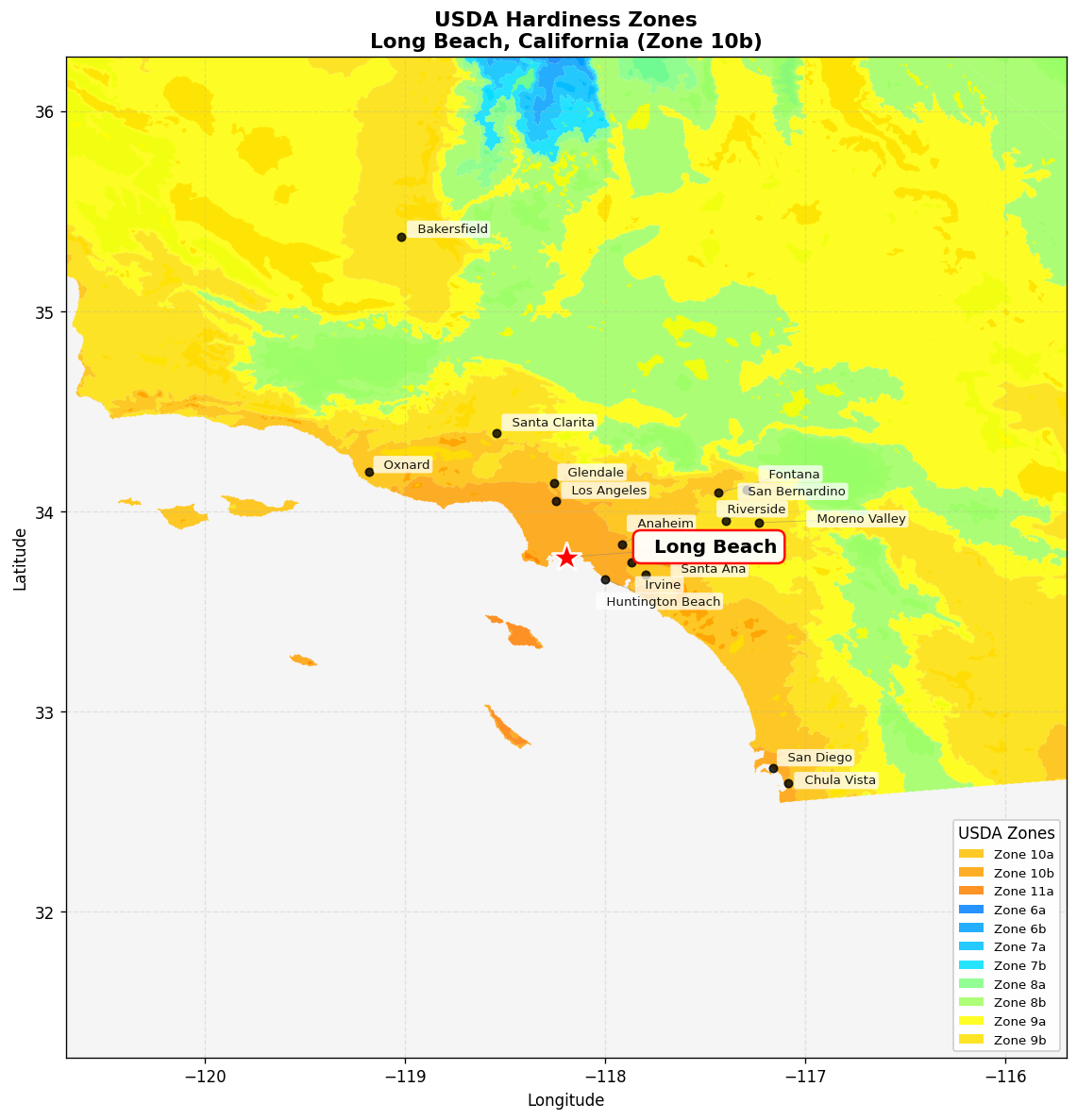
USDA Zone 10b
Hardiness zone for Long Beach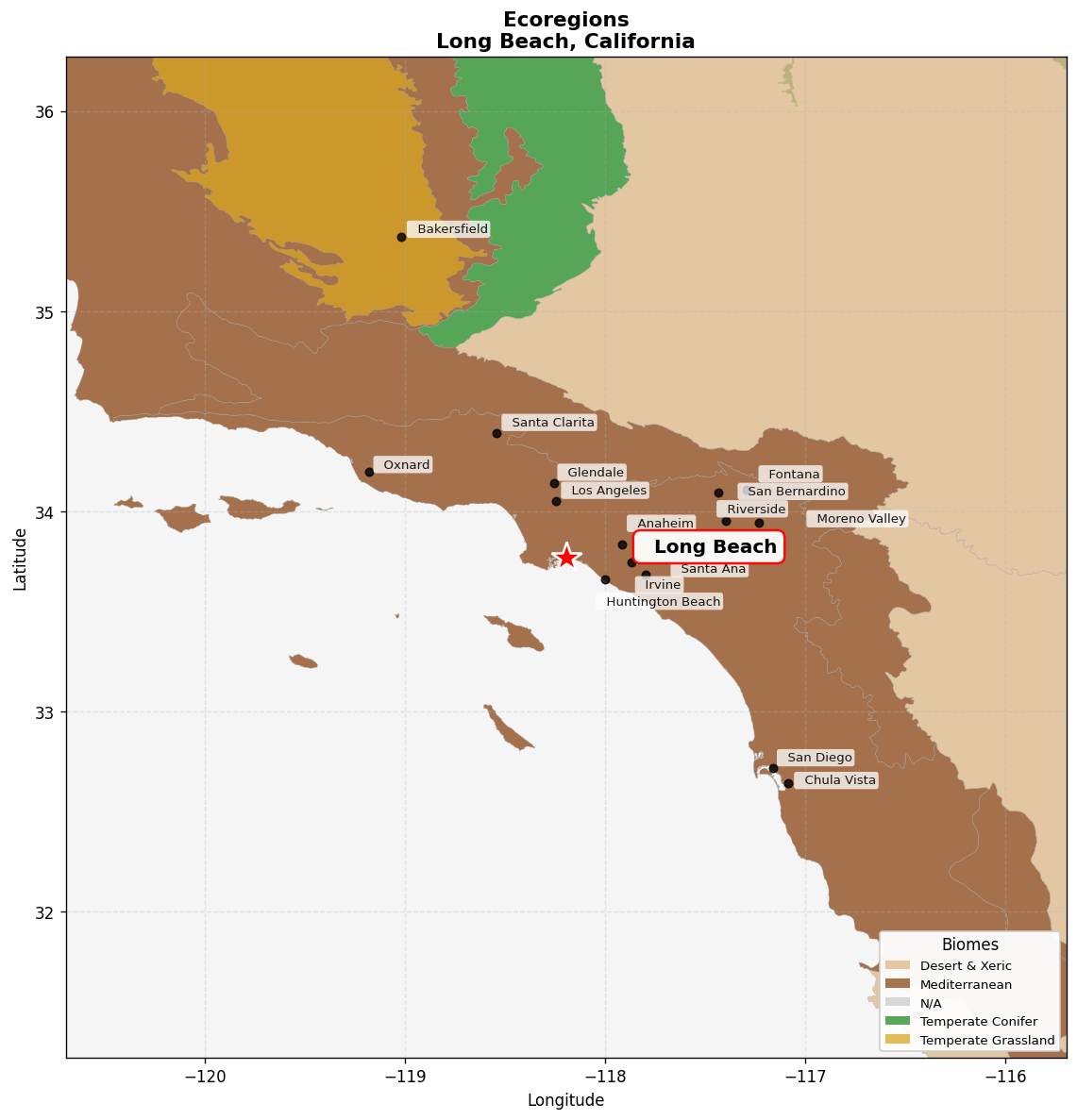
California coastal sage and chaparral
Native ecoregionFrequently Asked Questions
Can I grow English cottage garden plants in Long Beach's warm climate?
Yes, with smart plant selection. Long Beach's Zone 10b climate lacks the cold winters that some traditional English cottage plants (like lupins and true delphiniums) need for dormancy. However, a wide range of cottage-style plants thrive here: David Austin roses, lavender, salvia, agapanthus, foxglove (as an annual), sweet William, hollyhock, yarrow, and catmint all perform beautifully in Zone 10b. The key is choosing varieties bred for warm climates and accepting that some cool-season favorites may behave as annuals rather than perennials.
How much does a cottage garden installation cost in Long Beach?
Long Beach landscaping costs are moderate by LA County standards. A front yard cottage garden redesign (300–500 sqft) typically runs $5,000–$14,000, including fence, arbor, border plantings, and path. Full backyard transformations with arbor, raised beds, and mature rose plantings range $15,000–$40,000. DIY plant-and-mulch projects can run $800–2,500 if you're doing the labor yourself and starting with 1-gallon plants.
What roses grow best in Long Beach's coastal climate?
Long Beach's mild, humid coastal air suits roses exceptionally well, though you'll want varieties with good disease resistance since the marine layer can encourage mildew. Top performers include David Austin's Lady of Shalott, Olivia Rose, and The Generous Gardener; classic climbers Don Juan and New Dawn for fences and arbors; and shrub roses like Knock Out series for lower-maintenance beds. Avoid highly susceptible hybrid tea roses near the coast unless you're willing to spray regularly.
How do I deal with salt air in my Long Beach cottage garden?
Salt-tolerant plants are key within 1–2 miles of the water. Lavender, rosemary, agapanthus, society garlic, salvia, bougainvillea, and most native California plants handle salt air well. More sensitive plants like azaleas and hydrangeas may struggle closest to the coast. Rinse foliage occasionally during dry periods if you notice leaf tip burn, and build organic matter into your soil to help buffer salt accumulation. Most established cottage perennials adapt after 1–2 seasons.
When is the best time to plant a cottage garden in Long Beach?
Fall (October through December) is ideal. Long Beach's mild rainy season (November–March) does the irrigation work for you during the establishment period, dramatically reducing watering needs and plant stress. Roses, lavender, salvia, and perennials all establish roots over winter and burst into growth in spring. You'll have a mature, blooming garden by April–May if you plant in October. Spring planting (February–March) is the second-best window before summer heat arrives.
Do cottage gardens work without a lawn in Long Beach?
Absolutely, and the lawn-free cottage garden is one of the fastest-growing design trends in Long Beach since LADWP's turf replacement rebates make it financially smart. A meadow-style cottage planting of coneflowers, yarrow, salvia, and native grasses uses 60–80% less water than lawn while looking fuller and more intentional. The city's turf replacement rebate program offers $2/sqft for approved turf removal, which offsets a significant portion of new planting costs.