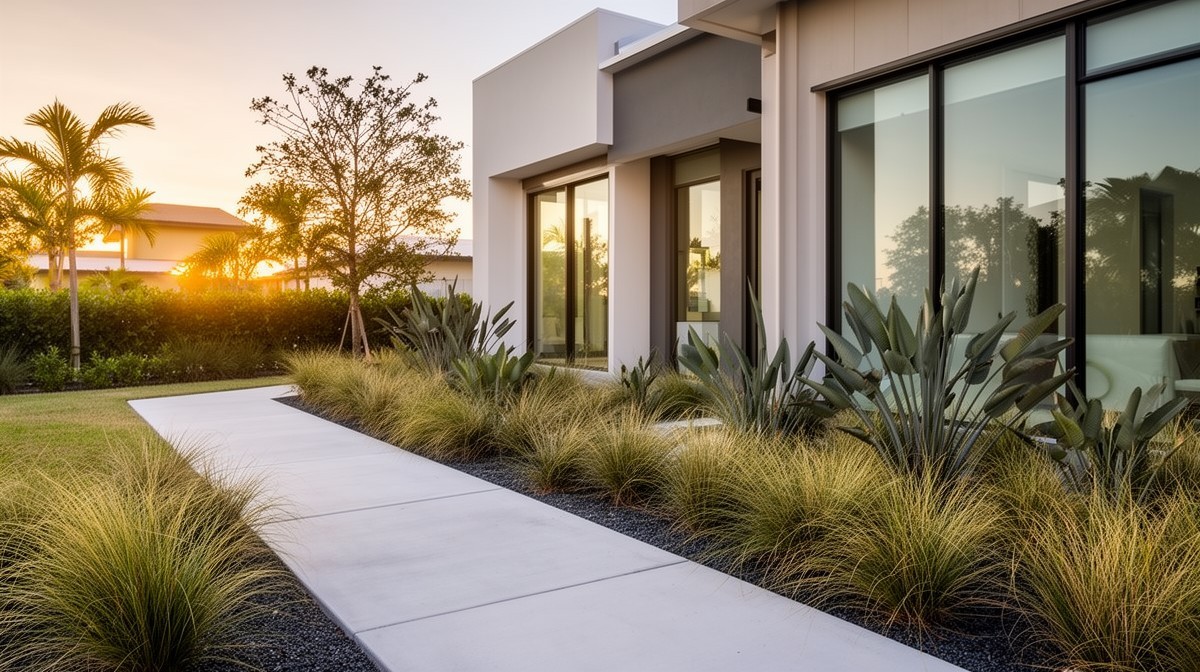
4 Modern Garden Ideas for Port St. Lucie, FL | Clean-Line Tropical Landscaping for Zone 10a
Native plants from the Southeast US conifer savannas (Zone 10a) — Humid subtropical climate
Why Modern/Minimalist Gardens in Port St. Lucie?
Modern landscape design fits Port St. Lucie better than almost any other style, largely because of what the city is built from. Roughly two-thirds of the housing stock is post-2000 stucco-and-tile construction on flat quarter-acre pads — the low hipped roofs of St. Lucie West, the transitional-contemporary elevations filling in around Tradition and Riverland, and the black-window new builds in Veranda Gardens all give you the horizontal lines and blank stucco planes that modern planting is designed to play against. There is no grade change to fight and no frost line to dig below, so a large-format concrete or porcelain terrace here is a compacted lime rock base and a pour, not an earthworks project. Treasure Coast installation labor also runs meaningfully below Palm Beach County rates just forty minutes south, which is why the same slab-and-fire-bowl backyard costs noticeably less in Torino than in Jupiter.
Zone 10a hands you a plant palette that reads architectural year-round. The evergreen bones are Clusia guttifera for clipped green walls, Podocarpus macrophyllus 'Maki' for vertical columns, and Zamia integrifolia — Florida coontie, a native cycad, hurricane-proof, drought-proof and the atala butterfly's host plant — as the best modern groundcover in the state. For soft mass, Muhlenbergia capillaris throws a pink haze every October and Spartina bakeri and Eragrostis elliottii hold their form through tropical storms. For sculpture, Bismarckia nobilis, Strelitzia nicolai, Beaucarnea recurvata and Chrysobalanus icaco 'Red Tip' do the heavy lifting. Note what is missing: skip Agave americana, which the agave snout weevil kills outright in Florida, and use Agave desmettiana 'Variegata', Furcraea foetida 'Mediopicta' or Yucca aloifolia instead.
The local constraints are wind, water and sand. St. Lucie County builds to roughly a 150 mph ultimate design wind speed, so pergolas, screen enclosures and anything with a roof need engineered uplift anchors and a permit. Port St. Lucie's flatwoods spodosols — St. Lucie and Myakka fine sands at pH 4.5 to 6.0 — are acidic, unlike South Florida's alkaline limestone sand, and hold almost no nutrients; they also sit above a wet-season water table often within a foot of grade, which is why gravel courts need a geotextile separator and beds should be bermed. Add roughly 55 inches of annual rain, a two-day-per-week SFWMD irrigation limit and HOA architectural review in every master-planned village, and the disciplined, low-plant-count modern approach turns out to be the practical one as well as the good-looking one.
4 Modern/Minimalist Design Ideas for Port St. Lucie
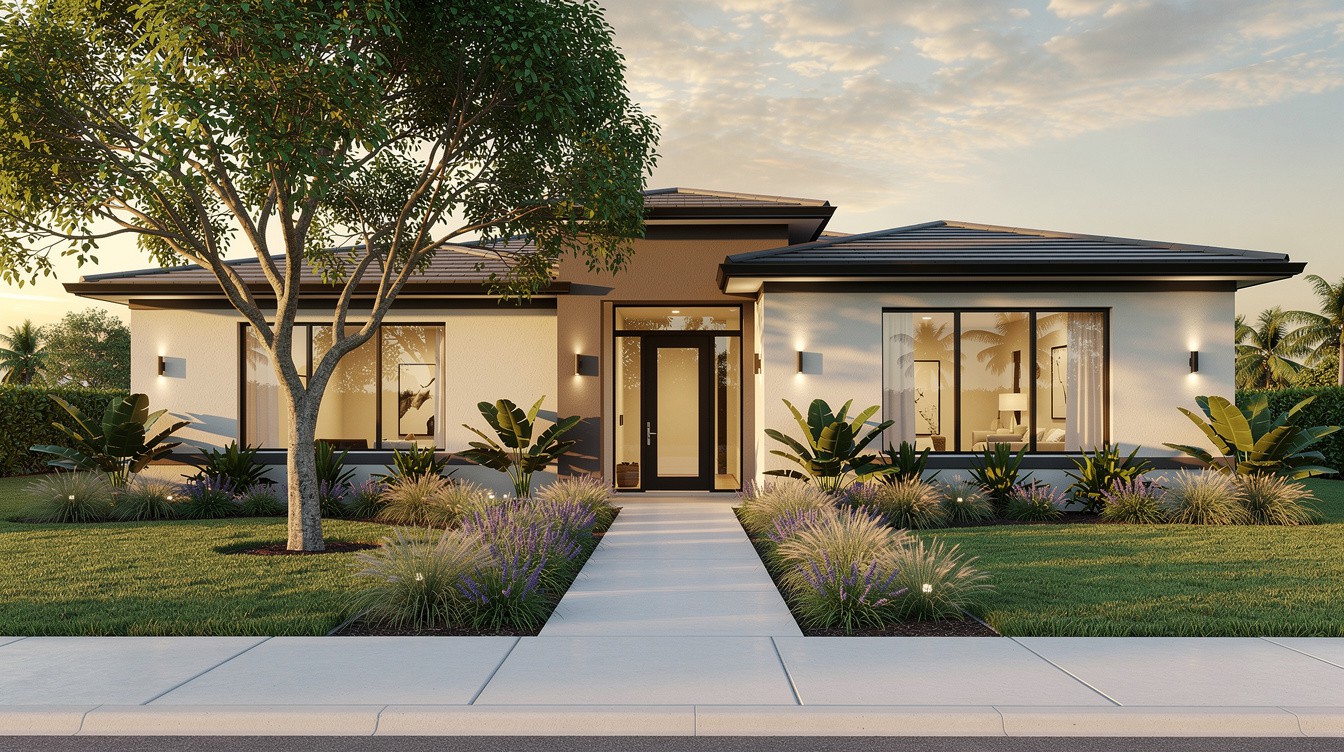
The Lit Entry Court
$10-20/sqftA low, wide contemporary with a dark hipped tile roof, a full-height glass entry and downlight sconces washing the stucco. The planting is deliberately three-note: bold paddle-leaf clumps of Strelitzia nicolai punched in at the corners and either side of the door, drifts of fine ornamental grass across the whole foundation line, and a low ribbon of purple-flowering Liriope threading between them, with a crisp broom-finished concrete walk splitting two clean panels of lawn. A single multi-trunk specimen tree breaks the horizontal. Everything works because it is repeated — in modern design the mistake in Port St. Lucie is buying one of everything at the box store. Uplight the Strelitzia trunks and grade-light the walk edges and the whole facade reads at dusk, which is when most people see it.
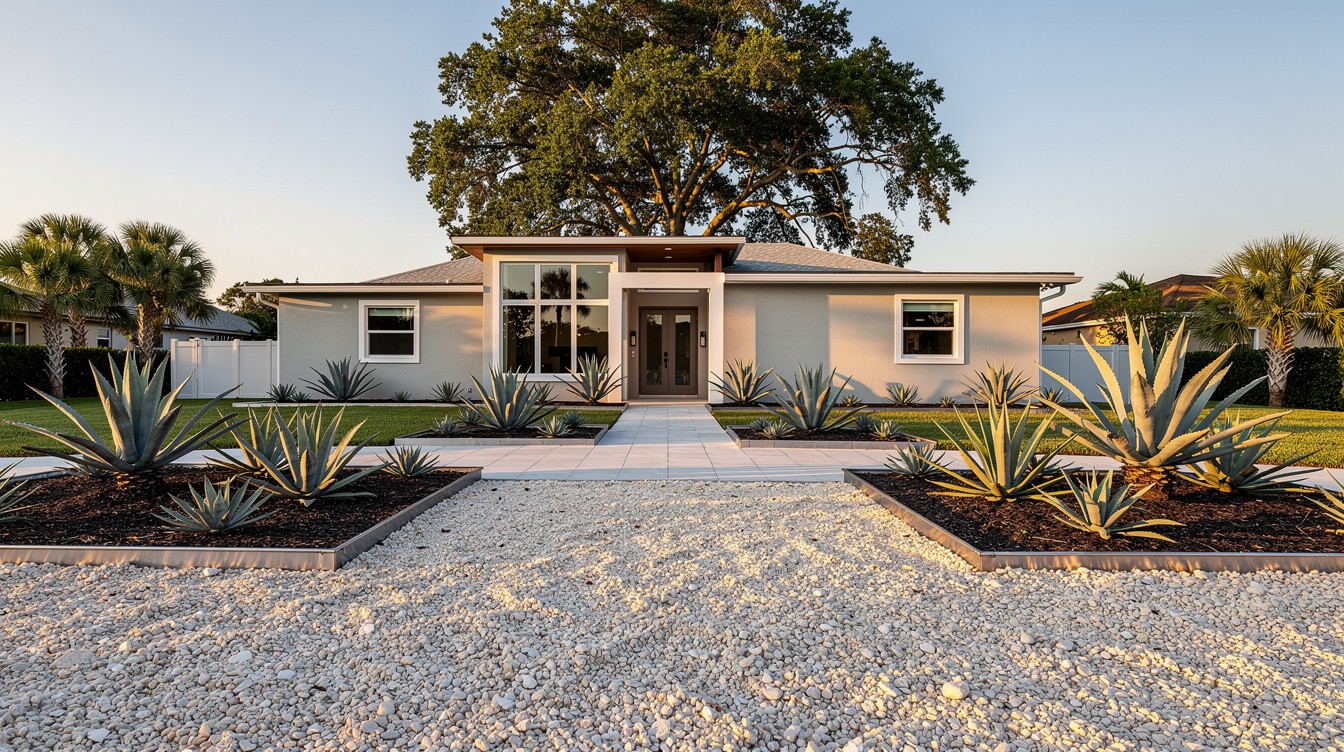
The Gravel Forecourt
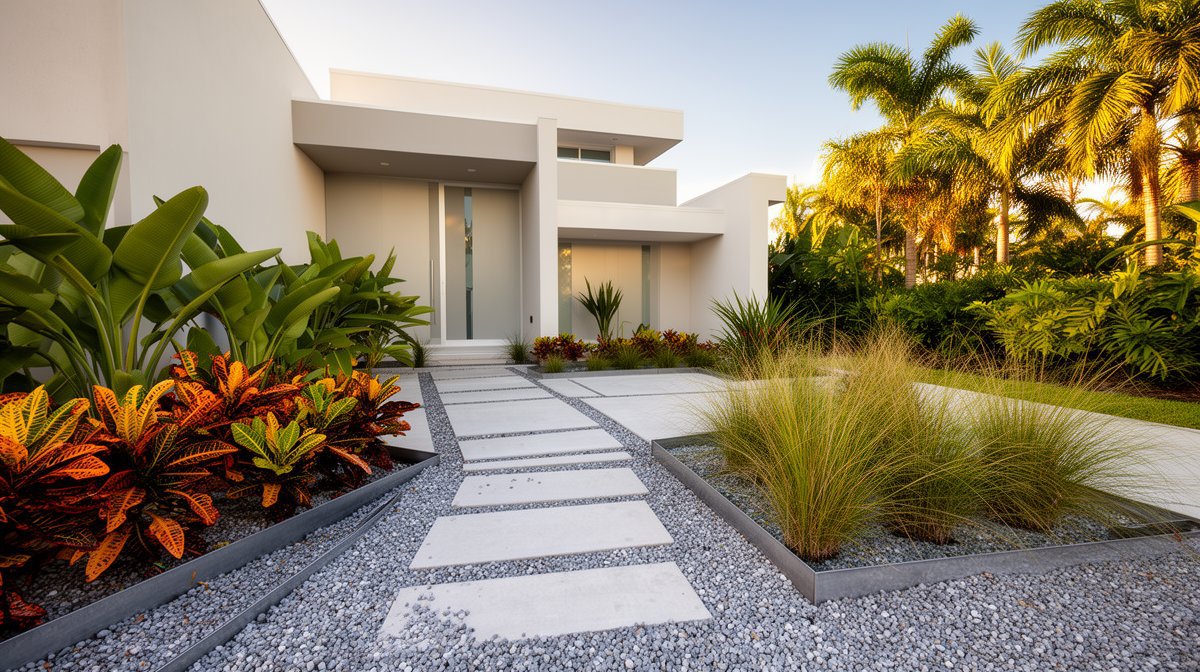
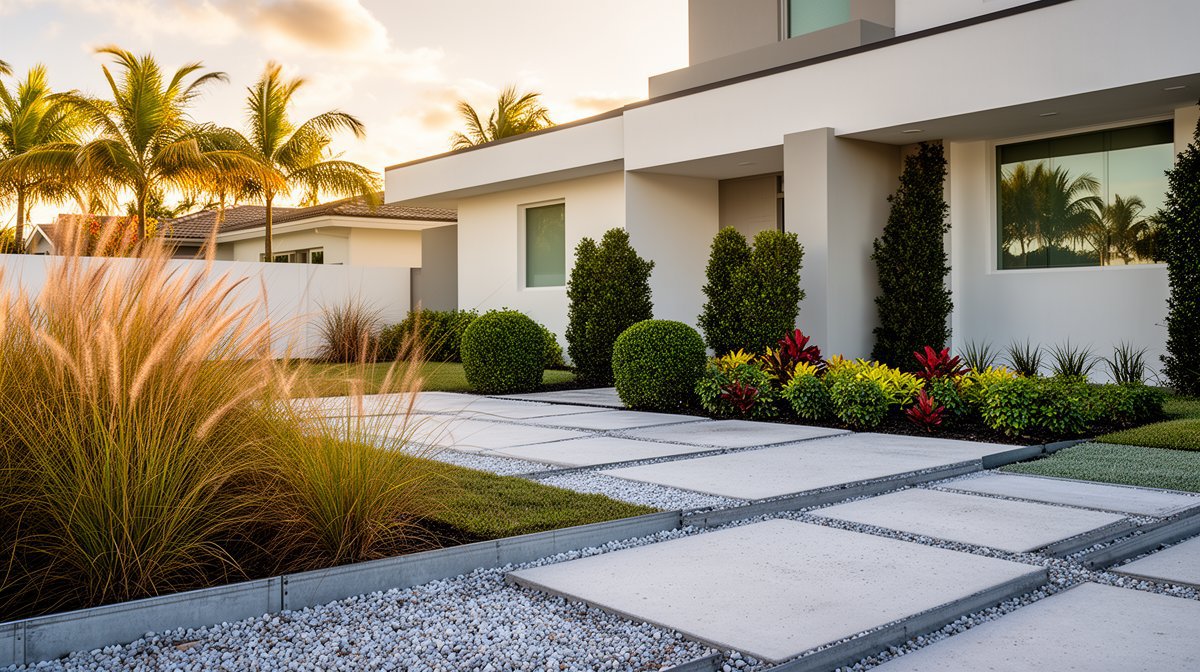
$12-24/sqftThe lawn between sidewalk and driveway is gone entirely, replaced by a field of white river rock organized by steel-edged raised beds, each planted with a rhythm of large blue rosette succulents in dark mulch. Large-format pale porcelain pavers form the walk and entry apron, sabal palms flank the property line, and a mature live oak canopies the roof. This is the lowest-water, lowest-maintenance front yard available in Port St. Lucie, but two details make or break it: lay a heavy woven geotextile under the rock or the wet-season water table will pump sand up into it within three years, and do not plant Agave americana — the agave snout weevil is endemic to Florida and will hollow out a mature rosette in a single season. Agave desmettiana 'Variegata', Furcraea foetida 'Mediopicta' and Yucca aloifolia give the identical silhouette and survive.
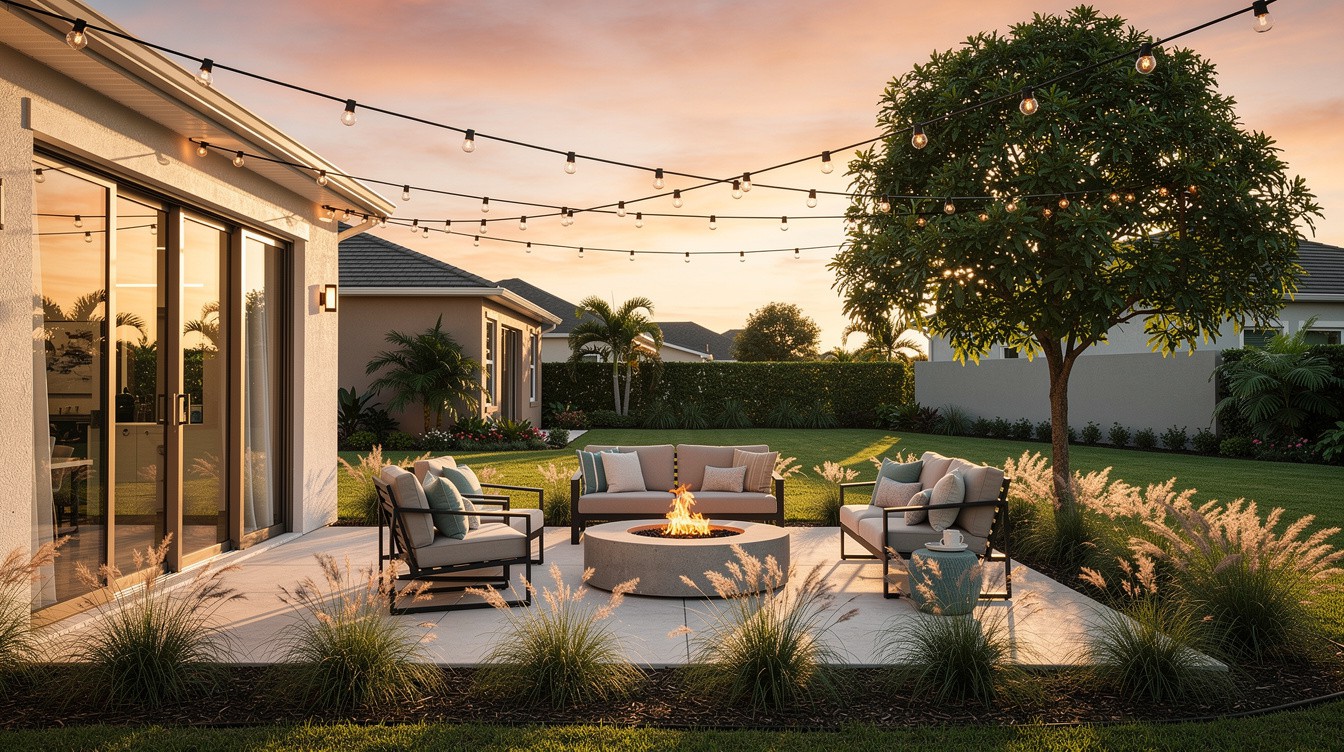
The Fire Bowl Slab
$18-34/sqftA single large-format pale concrete terrace floats off the rear sliders, holding a round cast-concrete gas fire bowl and four black-framed lounge pieces, with catenary string lights running from the roofline to a round-headed specimen tree. The slab's entire perimeter dissolves into a continuous drift of feathery ornamental grass — one species, repeated, which is what gives the edge its softness without any fussiness. This is the most cost-effective modern move available in a Port St. Lucie backyard: it needs no permit as an at-grade slab under most St. Lucie County thresholds, no roof structure to engineer at 150 mph, and Muhlenbergia capillaris and Spartina bakeri around the edge cost a fraction of a hedge while shrugging off tropical storms. A clipped Clusia guttifera or Podocarpus hedge along the rear line closes the room.
The Poolside Room
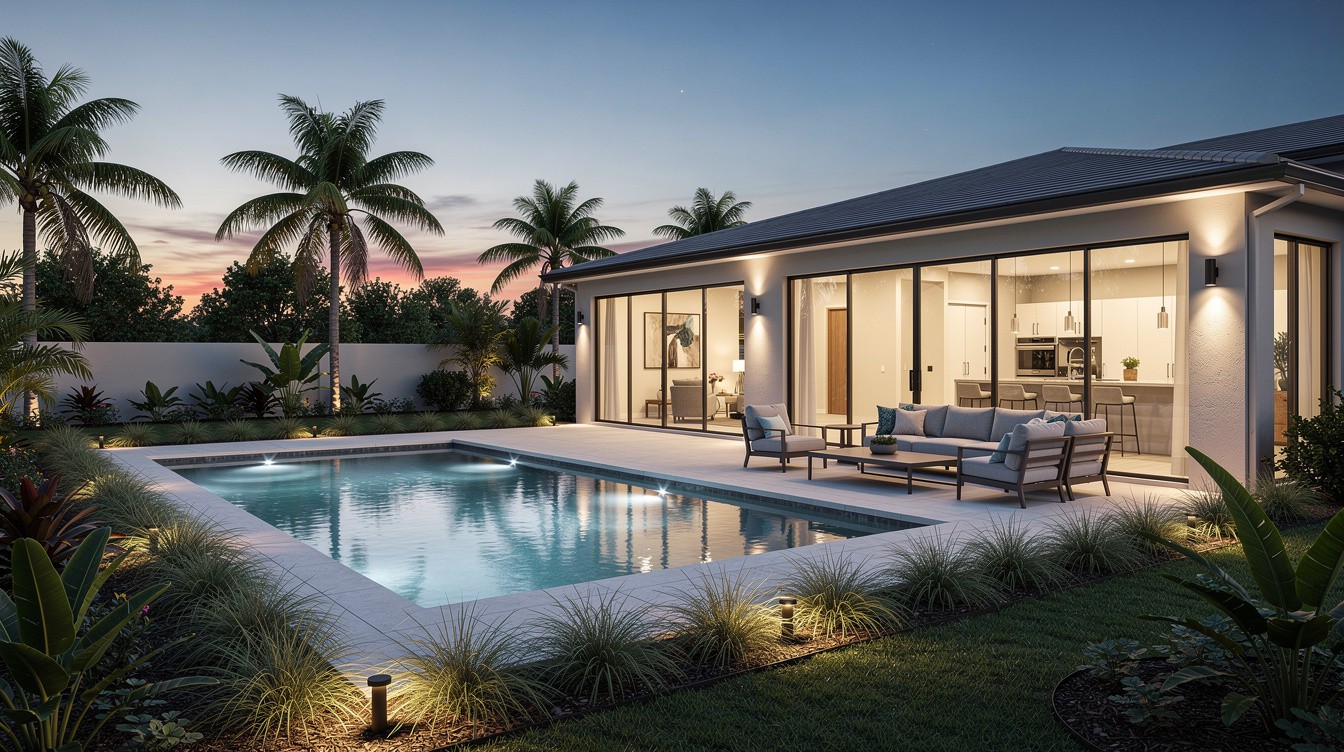
$45-90/sqft (pool area inclusive)A rectangular pool in pale wide-format decking runs the length of a glass-walled rear elevation, with a low sectional under the eave and a bright white perimeter wall doing the privacy work. Coconut palms lean over the far corner and the beds are handled with restraint — uplit grass mounds along the deck edge, glossy broadleaf tropicals massed against the white wall, nothing fighting the water for attention. Two Treasure Coast realities to plan around: Port St. Lucie is right at the northern edge of reliable Cocos nucifera culture, and inland villages west of I-95 like Tradition run a few degrees colder on clear radiational nights, so a 'Maypan' coconut is a genuine gamble there while Bismarckia nobilis and Wodyetia bifurcata are not. Second, keep salt-tolerant Chrysobalanus icaco and Conocarpus close to the pool coping — chlorine splash-out kills Ixora and Gardenia fast.
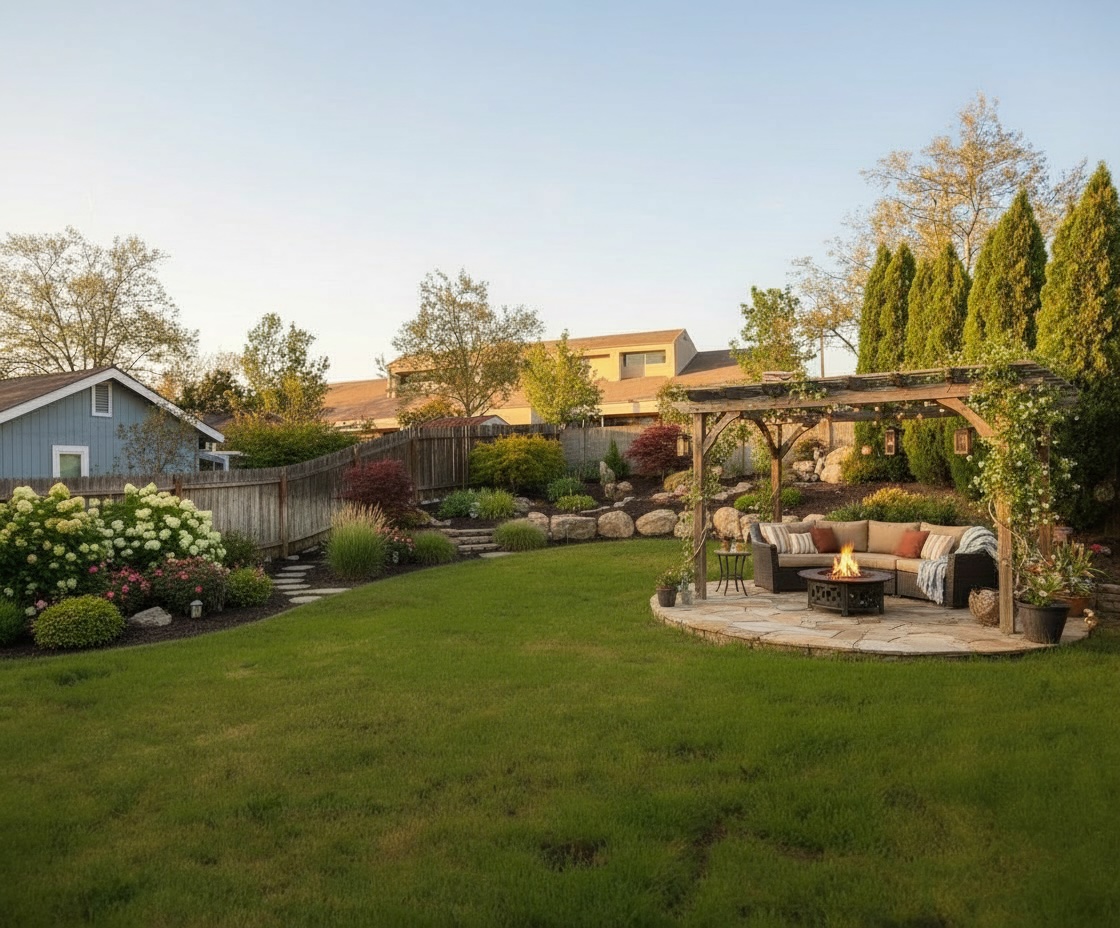
See how a modern/minimalist garden looks on YOUR property
Upload a photo of your Port St. Lucie yard and visualize your dream garden in seconds.
Try ProScapeAI Free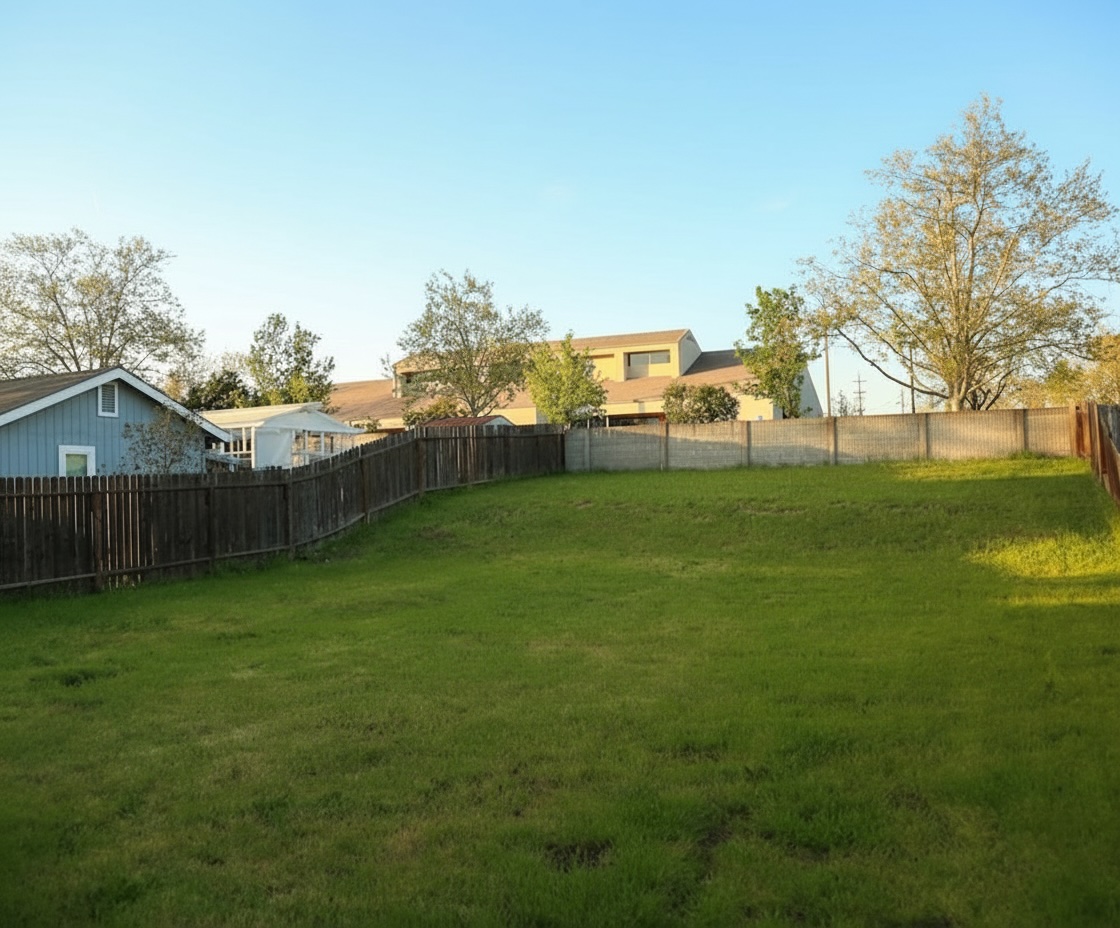
Featured Trees & Shrubs for Modern/Minimalist Gardens
Browse all 65 plants for Port St. Lucie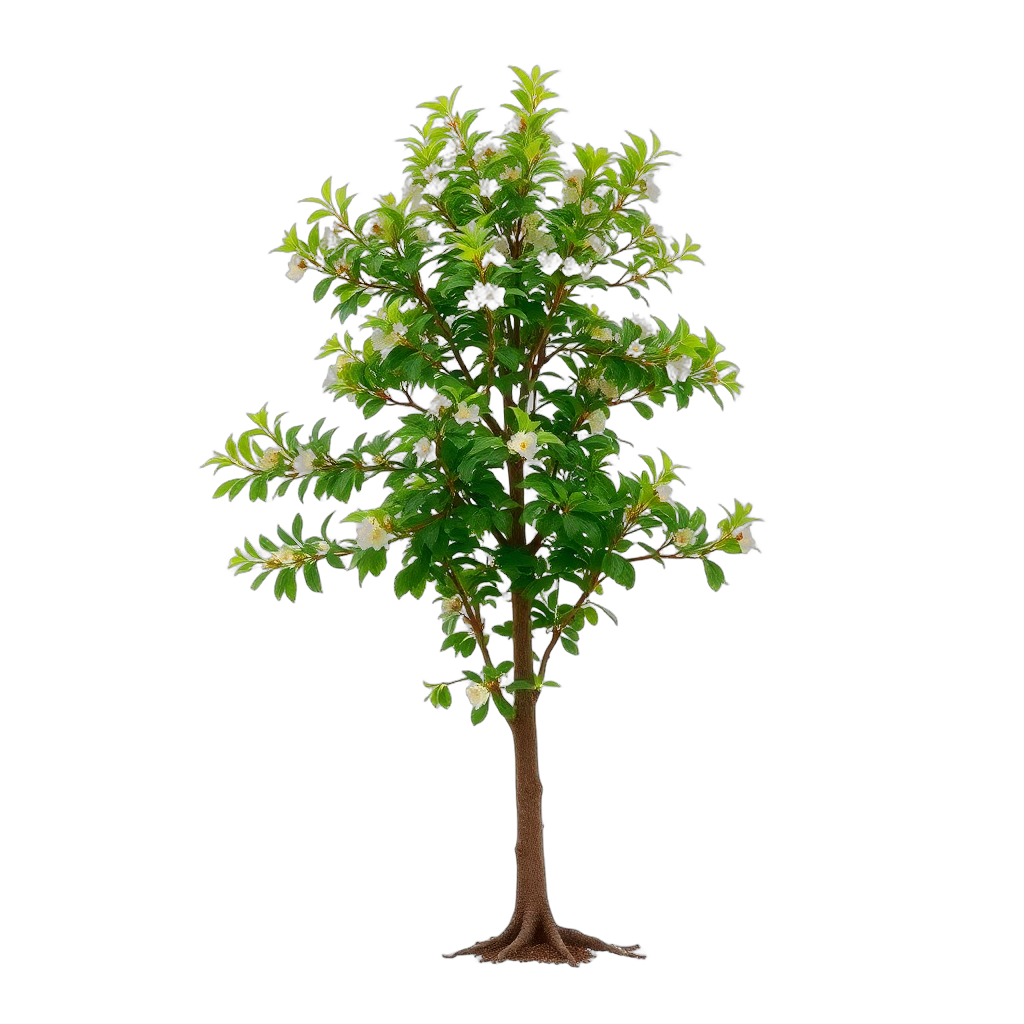
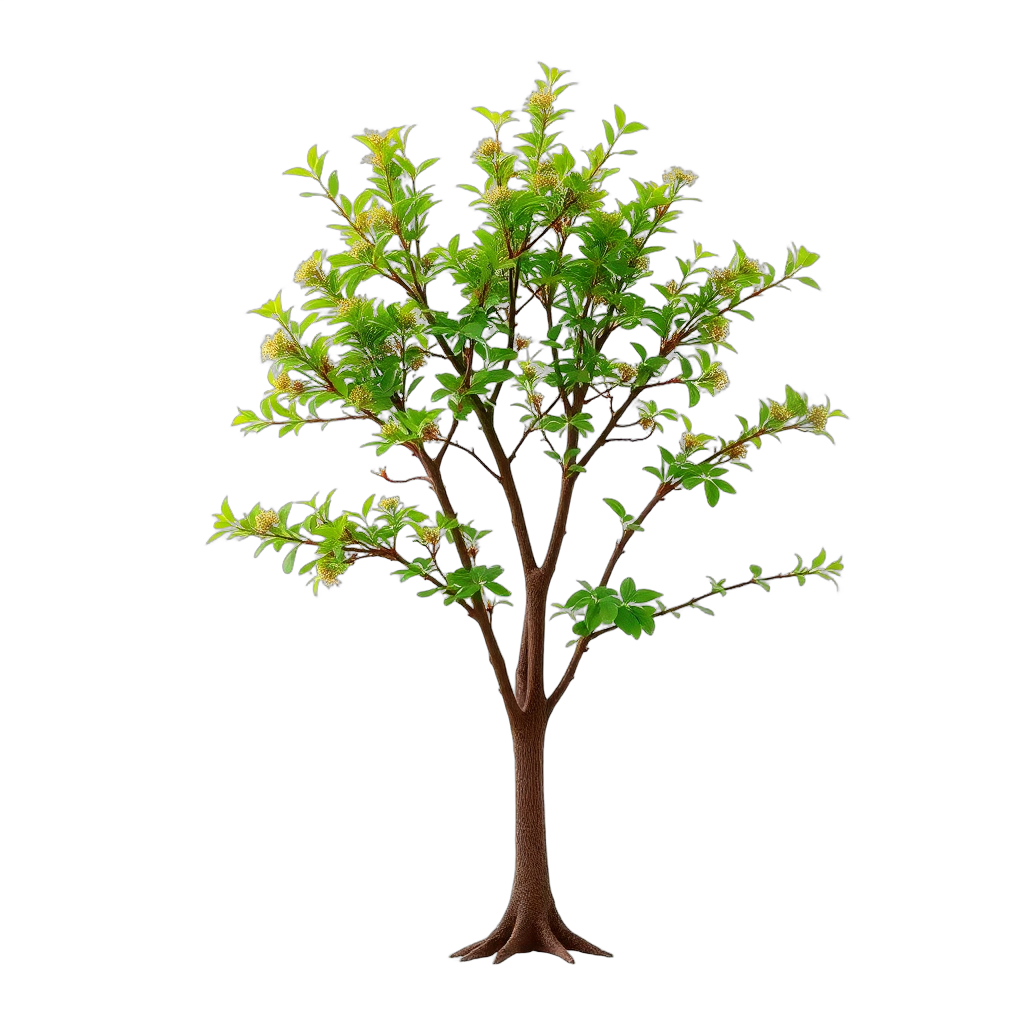
Buckwheat Tree
Cliftonia monophylla
medium-sized at 15 feet, white blooms in spring. Attracts butterflies.
Fetterbush
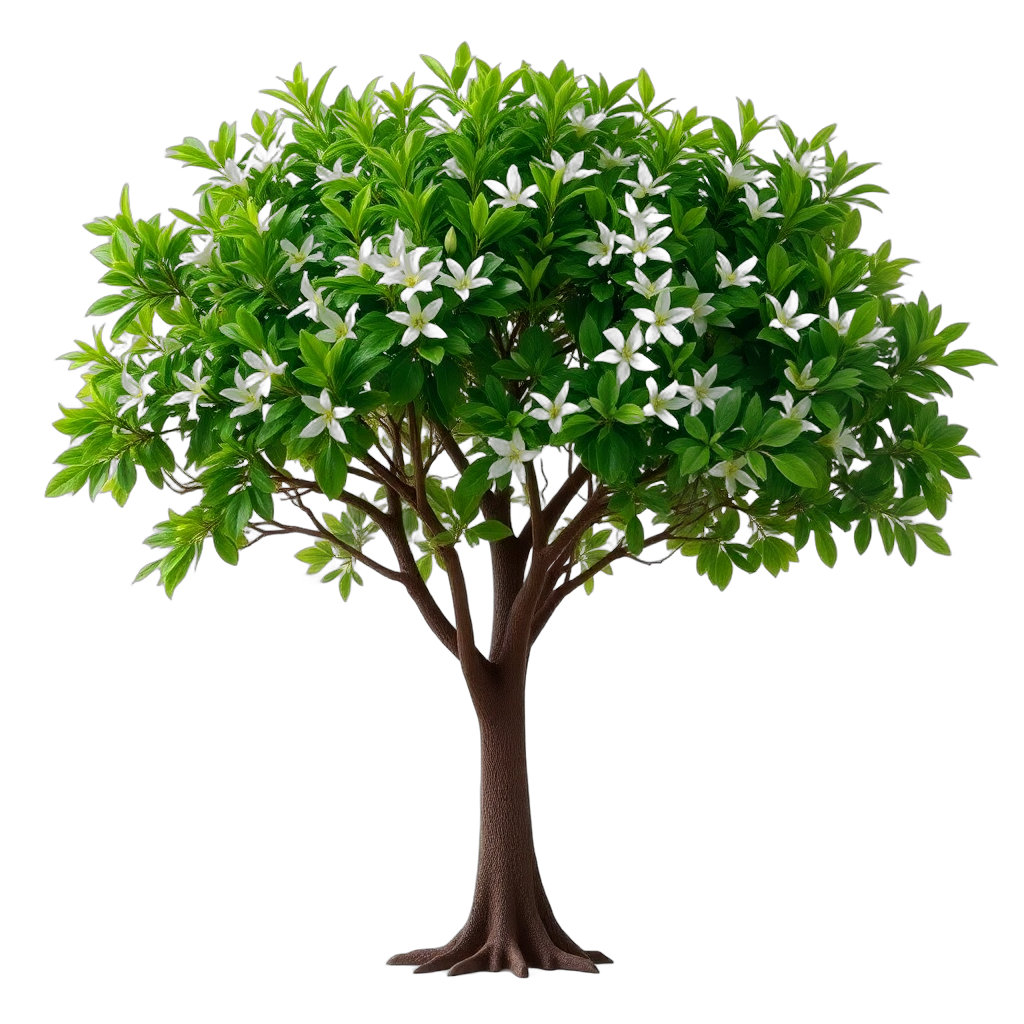
Lyonia lucida
grows to 6 feet, white blooms in spring. Evergreen year-round.
Florida Anise
Illicium floridanum
medium-sized at 8 feet, red blooms in spring. Evergreen year-round.

Inkberry
Ilex glabra
medium-sized at 8 feet, white blooms in spring. Pollinator-friendly.
Featured Grasses & Groundcovers for Modern/Minimalist Gardens

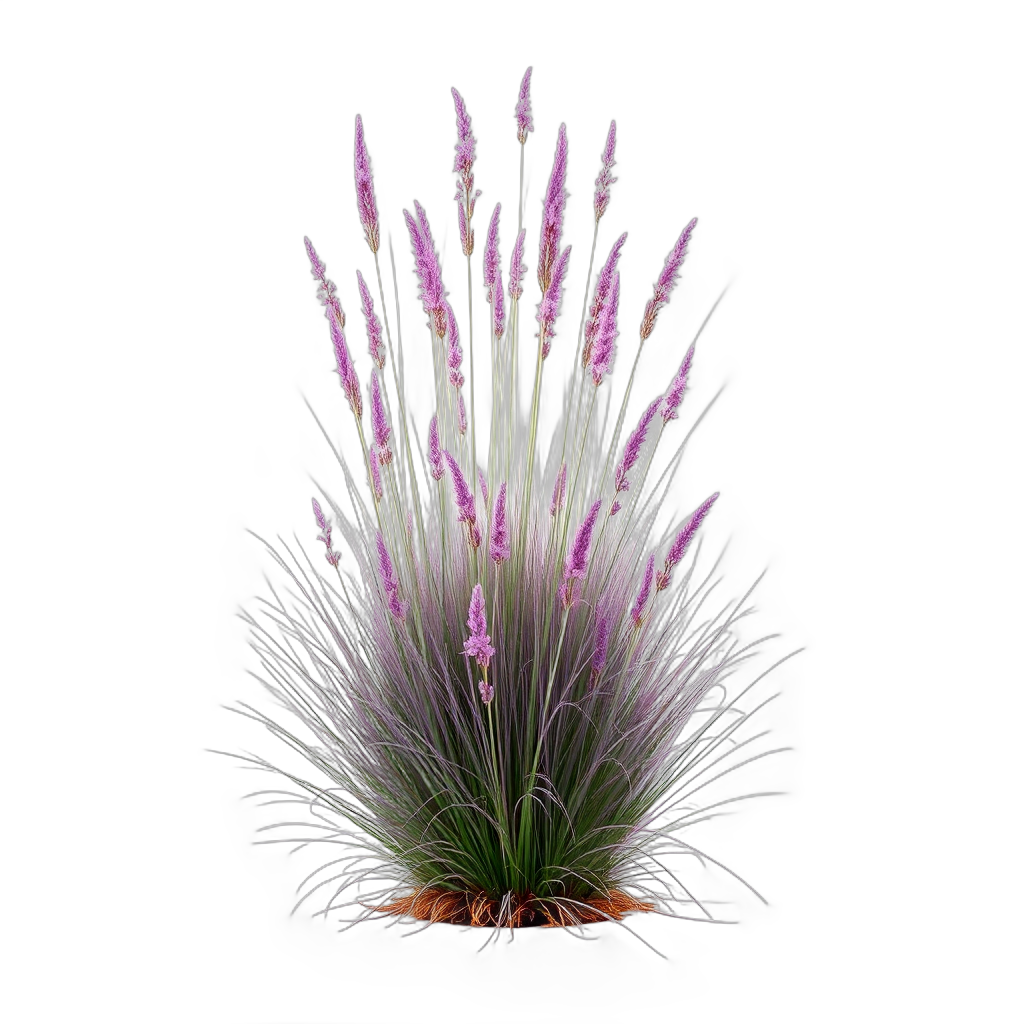
Pink Muhly Grass
Muhlenbergia capillaris
grows to 3 feet, pink blooms in fall.
Purple Love Grass
Eragrostis spectabilis
low-growing ground cover, purple blooms in fall. Orange fall color.

Bermuda Grass
Cynodon dactylon
low-growing ground cover, blooms in summer. Brown fall color.
Featured Flowers & Perennials for Modern/Minimalist Gardens
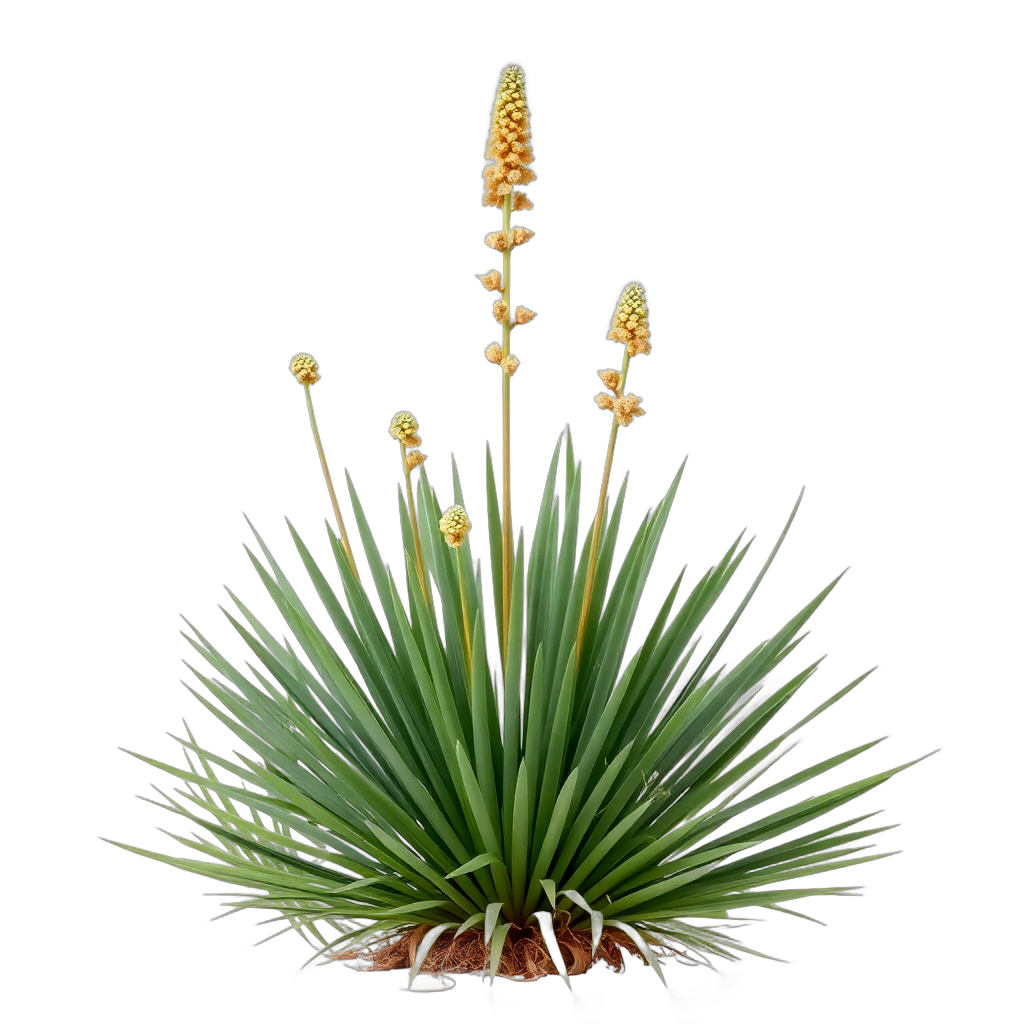
Adam's Needle
Yucca filamentosa
low-growing ground cover, white blooms in summer. Attracts hummingbirds.

Broadleaf Arrowhead
Sagittaria latifolia
low-growing ground cover, white blooms in summer. Attracts butterflies.

Canadian Waterweed
Elodea canadensis
grows to 3 feet, white blooms in spring. Evergreen year-round.

Common Cattail
Typha latifolia
grows to 5 feet, blooms in summer. Pollinator-friendly.
Bloom Calendar for Port St. Lucie
spring
Buckwheat Tree, Fetterbush, Florida Anisesummer
Adam's Needle, Swamp Cyrilla, Loblolly Bayfall
Pink Muhly Grass, Purple Love Grasswinter
Limited bloomsDesign Tips for Port St. Lucie (Zone 10a)
- Repeat three plants, not thirty — Clusia guttifera for the clipped green plane, Muhlenbergia capillaris for the soft drift and Zamia integrifolia for the low groundplane will carry an entire Port St. Lucie modern yard, and repetition is what separates modern from cluttered
- Never plant Agave americana here; the agave snout weevil is endemic in Florida and will hollow out a mature rosette in one season. Agave desmettiana 'Variegata', Furcraea foetida 'Mediopicta' and Yucca aloifolia give the same blue architectural silhouette and actually survive
- Lay a heavy woven geotextile under every gravel field — Port St. Lucie's wet-season water table sits within a foot of grade in much of the city and will pump fine sand up through unseparated rock within two or three rainy seasons
- Berm succulent and grass beds 8-12 inches above grade and cut the acidic St. Lucie fine sand with coarse sand or crushed shell; in 55 inches of annual rain, wet feet kills far more architectural plants here than cold ever will
- Respect the drainage swale at your front property line — the city's entire stormwater system runs through them, filling or regrading one is a code violation, and the smart modern move is to plant it with Spartina bakeri or Tripsacum floridanum so it reads as a designed rain garden
- Light the vertical elements, not the lawn: uplights on Strelitzia nicolai trunks, Bismarckia nobilis crowns and Podocarpus 'Maki' columns give you eight months of usable warm evenings, which is the real return on a modern landscape in Zone 10a
Where to Source Plants in Port St. Lucie
Skip the big-box stores. These independent Port St. Lucie nurseries specialize in the plants that make modern/minimalist gardens thrive in Zone 10a.
Seacoast Tropical Palm & Nursery
Southeast Port St. Lucie
Tropical palm trees, field-grown trees, sod, and palms for retail and wholesale.
Port St. Lucie Botanical Gardens Garden Center
Central Port St. Lucie
Botanical garden gift shop featuring copperleaf plants, coleus, succulents, and unusual native species.
Weatherbee Nursery
Fort Pierce (Treasure Coast metro)
General nursery with trees, shrubs, perennials, and ornamental plants.
Modern/Minimalist Landscaping Costs in Port St. Lucie
| Project Scope | Estimated Cost |
|---|---|
| Front-yard turf-to-gravel conversion with steel edging and architectural plants (500 sqft) | $6,000 - $14,000 |
| Large-format concrete or porcelain terrace (300-500 sqft) | $9,000 - $26,000 |
| Clusia guttifera or Podocarpus privacy hedge (100 linear ft, 7-gallon stock) | $3,500 - $9,000 |
| Backyard modern room: slab, gas fire bowl, string lighting, grass drifts | $18,000 - $48,000 |
| Pool deck resurface plus poolside planting and LED uplighting | $12,000 - $35,000 |
| AI visualization with ProScapeAI | Free to start |
Estimates based on Port St. Lucie, FL-area contractor rates as of 2026. Actual costs vary by site conditions, materials, and contractor.
Port St. Lucie Climate & Growing Zone
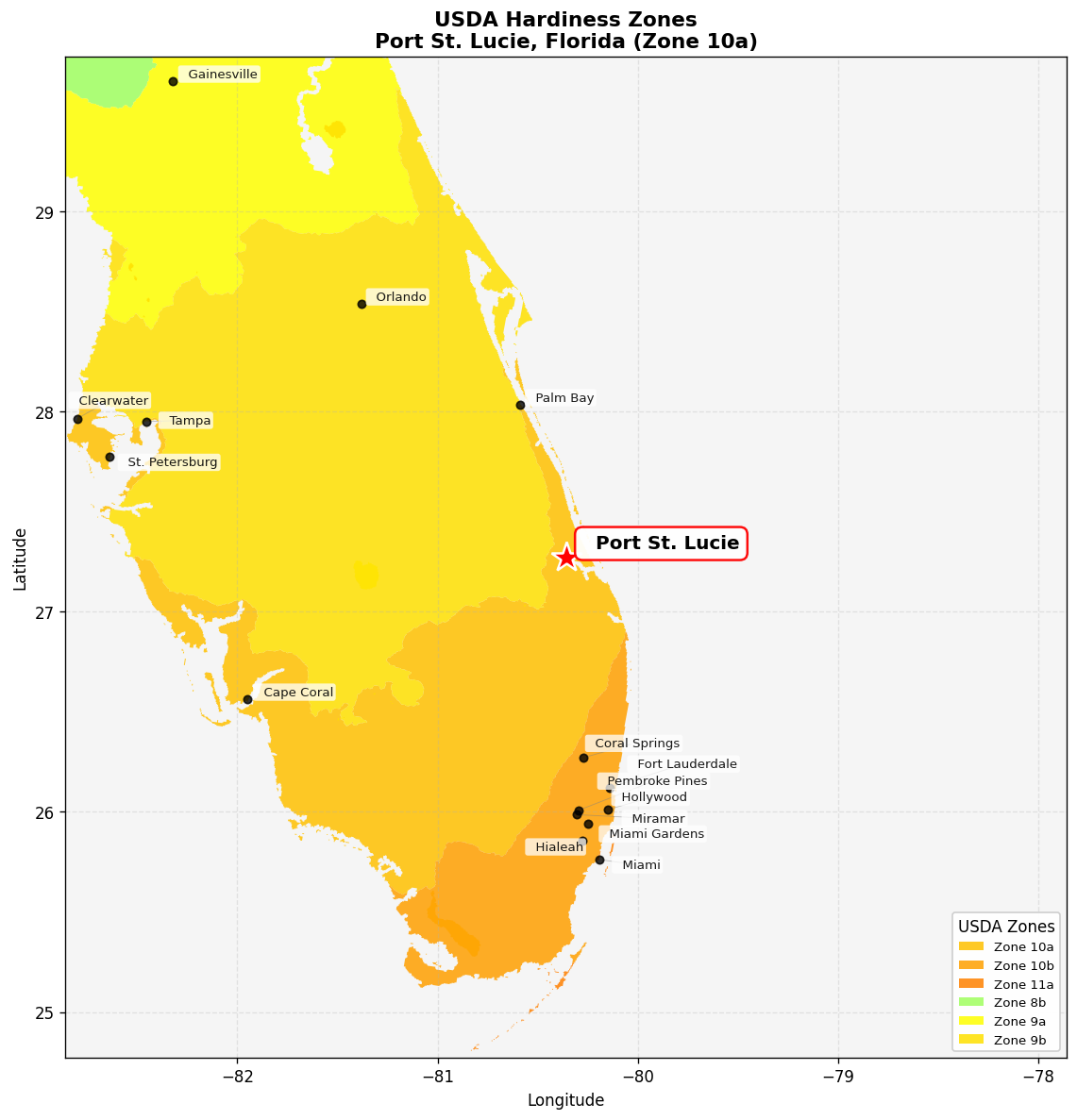
USDA Zone 10a
Hardiness zone for Port St. Lucie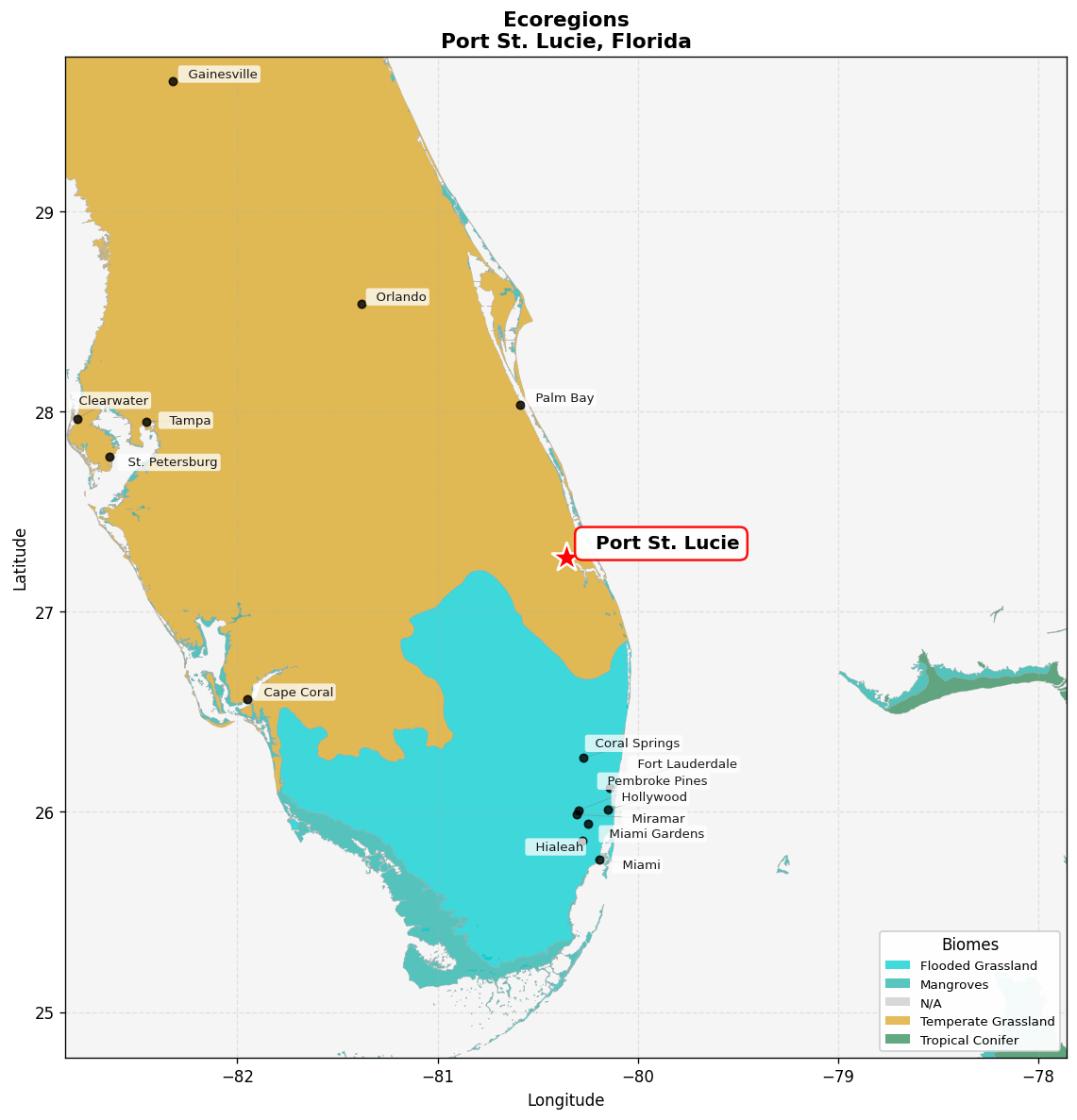
Southeast US conifer savannas
Native ecoregionFrequently Asked Questions
How much does a modern landscape cost in Port St. Lucie?
Treasure Coast labor runs roughly 10 to 20 percent below Palm Beach and Martin County rates, which is the main reason modern hardscape is attainable here. A full front-yard turf-to-gravel conversion with steel edging and architectural plants on a typical 500 sqft front runs $6,000 to $14,000 installed. A 300 to 500 sqft large-format concrete or porcelain terrace runs $9,000 to $26,000 depending on material — broom-finished concrete lands near $10 to $14 per square foot, 24x24 porcelain pavers closer to $22 to $30. A complete backyard modern room with slab, gas fire bowl, lighting and grass drifts is $18,000 to $48,000. A new gunite pool with deck and planting is $85,000 to $160,000 in the current market. DIY gravel-and-succulent front conversions can come in under $6 per square foot if you rent the compactor.
Can I grow agaves and succulents in Port St. Lucie's rain?
Yes, with two adjustments that most out-of-state designs miss. The first is drainage: 55 inches of annual rain plus a wet-season water table often within 12 inches of grade means every succulent must sit in a bed bermed 8 to 12 inches above grade, cut 50/50 with coarse sand or crushed shell, and mulched with rock rather than bark. The second is the agave snout weevil (Scyphophorus acupunctatus), which is endemic in Florida and will hollow out a mature Agave americana from the crown down, usually right after it flowers. Plant Agave desmettiana 'Variegata', Agave angustifolia 'Marginata', Furcraea foetida 'Mediopicta', Yucca aloifolia or Hesperaloe parviflora instead — they read identically in a modern composition and are far less weevil-prone. Beaucarnea recurvata is the bulletproof sculptural choice if you want zero risk.
Which plants give modern structure without constant maintenance here?
Clusia guttifera is the workhorse — a glossy, salt-tolerant, wind-tough hedge that takes a hard geometric shear and holds it, and it is what almost every contemporary South Florida hedge line is now built from. Podocarpus macrophyllus 'Maki' gives you fine-textured vertical columns and clips into architectural blocks. Zamia integrifolia, the native Florida coontie, is the best low modern groundcover in the state: no irrigation once established, no pests, no cutting back, and it survives hurricanes untouched. Chrysobalanus icaco 'Horizontal' gives a low sculptural mass with red new growth. For grasses, Muhlenbergia capillaris needs one cutback in late February and nothing else, and Spartina bakeri needs even less. Avoid Ficus benjamina hedges (whitefly), Syzygium hedges (psyllid) and queen palms (Syagrus romanzoffiana) — all three become maintenance liabilities within a few years.
Do I need a permit, and what about the 150 mph wind rating?
At-grade slabs, pavers, gravel and planting generally need no building permit in Port St. Lucie, though impervious-area limits and drainage-swale rules still apply — the city's entire stormwater system depends on those front swales, so never fill or regrade one. Permits are required for pools, screen enclosures, pergolas and any roofed structure, retaining walls over about four feet, and most electrical work including hardwired landscape lighting transformers. St. Lucie County sits in a roughly 150 mph ultimate design wind speed zone under the Florida Building Code, so pergolas and shade structures need engineered footings and uplift connectors, not surface-mounted post bases. Master-planned villages in Tradition, St. Lucie West, Riverland and PGA Village Verano add their own ARC review on top — budget 30 to 45 days for approval before ordering material.
What is the best lawn to keep in a modern design, and how much can I water it?
Modern designs usually keep small, crisp lawn panels rather than eliminating turf, and the choice of grass matters. 'Floratam' St. Augustine is the Port St. Lucie default but it is a water hog and southern chinch bug will find it eventually. 'Empire' zoysia takes a sharper edge, needs about a third less water, resists chinch bug and looks far better as a geometric panel. 'Argentine' bahiagrass is the tough, low-input option if appearance matters less. Whichever you choose, the South Florida Water Management District's year-round rule limits St. Lucie County landscape irrigation to two days per week with no watering between 10am and 4pm. Put lawn on rotors and beds on drip as separate zones — a Clusia hedge and Muhlenbergia drift irrigated on a St. Augustine schedule will develop root rot within two wet seasons.
When is the best time to install, and what should I plant for hurricane resilience?
October through March is the install window: dry season means hardscape pours are not rained out, and new plants establish roots before the June heat and the wet-season water table arrive. Avoid June through September for planting entirely. For wind resilience, UF/IFAS rates Quercus virginiana, Bursera simaruba, Sabal palmetto, Podocarpus and Coccoloba uvifera among the strongest performers on Florida's east coast, while Syagrus romanzoffiana, Quercus laurifolia and Delonix regia are the worst. Be aware of lethal bronzing disease, a phytoplasma now widespread on the Treasure Coast that kills Phoenix sylvestris, Phoenix canariensis and Sabal palmetto — Bismarckia nobilis and Beaucarnea recurvata are safer sculptural anchors if you want a single specimen you cannot afford to lose.