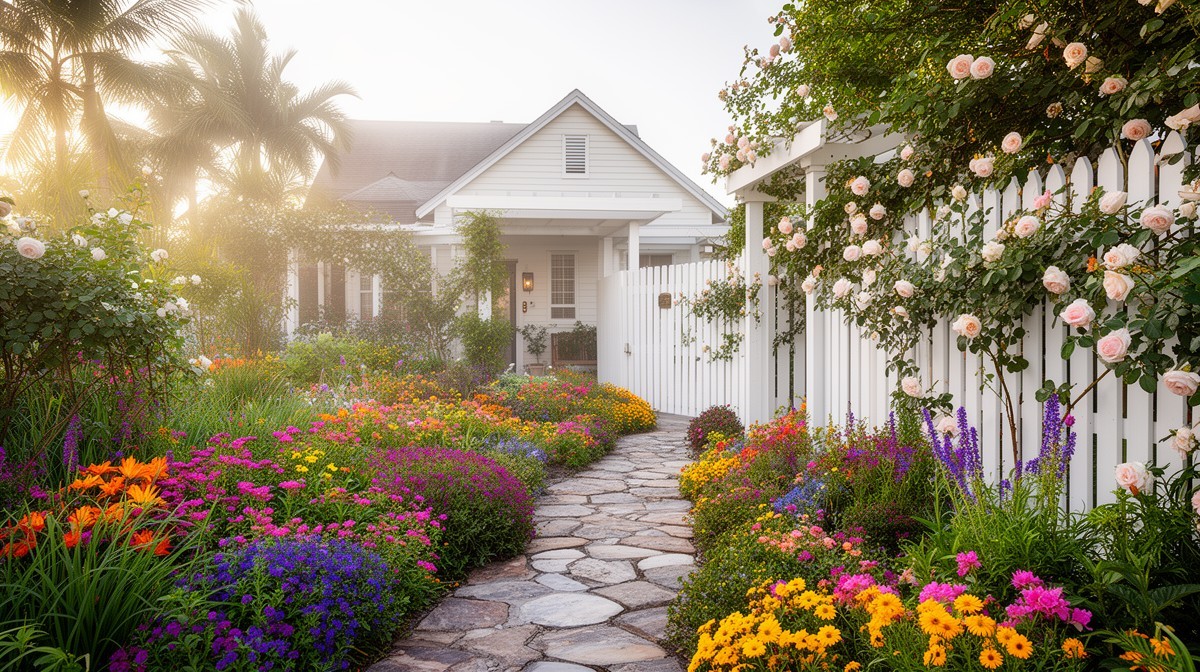
4 Cottage Garden Ideas for Port St. Lucie, FL | Subtropical English Borders for Zone 10a
Native plants from the Southeast US conifer savannas (Zone 10a) — Humid subtropical climate
Why Cottage/English Gardens in Port St. Lucie?
Port St. Lucie is an unlikely cottage-garden town, which is exactly why the style lands so hard here. General Development Corporation platted most of the city in the 1960s as quarter-acre lots on a grid of drainage swales and canals, leaving older sections like Torino, Southbend and Sandpiper Bay with generous front yards and almost no design rules — room for the deep, layered borders a cottage garden actually needs. The newer master-planned villages push the same direction from the opposite end: Tradition was laid out on New Urbanist bones, with shallow setbacks, front porches and picket-scale fencing, so a rose arbor over the gate reads as intentional there rather than eccentric. And unlike a Zone 6 cottage garden that sleeps five months of the year, a Port St. Lucie border is in full bloom in January.
The catch is that almost nothing on a classic English plant list survives Zone 10a. Lavandula angustifolia rots out in the wet season, Delphinium and Paeonia never accumulate chill hours, and Digitalis purpurea is a November-planted cool-season annual here, not a perennial. The look is completely reproducible with substitutes: Conradina grandiflora, a silvery Florida scrub native, delivers the lavender mound without the rot; Salvia 'Mystic Spires Blue', Angelonia angustifolia 'Archangel Purple' and Ruellia simplex 'Purple Showers' (the sterile cultivar — never the invasive straight species) supply the vertical spires; Plumbago auriculata 'Imperial Blue' covers hydrangea's soft blue mass. For roses, skip the David Austins and plant Treasure Coast survivors — Rosa 'Louis Philippe', Rosa 'Old Blush' and Rosa 'Mrs. B.R. Cant' bloom close to year-round in this climate.
Two soil facts drive every other decision. First, Port St. Lucie sits on acidic spodosols — St. Lucie, Ankona and Myakka fine sands running pH 4.5 to 6.0, the opposite of South Florida's alkaline limestone sand — so the iron chlorosis that plagues Boca gardeners is rare here, but nutrients leach straight through; feed lightly and often, and plan around St. Lucie County's June 1 to September 30 blackout on nitrogen and phosphorus fertilizer. Second, that sand carries sting and root-knot nematodes, which is why every rose should be grafted on Rosa x fortuniana rootstock and every gardenia on Gardenia thunbergia. Add a wet-season water table often within 12 inches of grade, roughly 55 inches of annual rain, and a 150 mph design wind zone, and the recipe writes itself: raised or bermed beds, tough evergreen bones, and arbors anchored like they mean it.
4 Cottage/English Design Ideas for Port St. Lucie
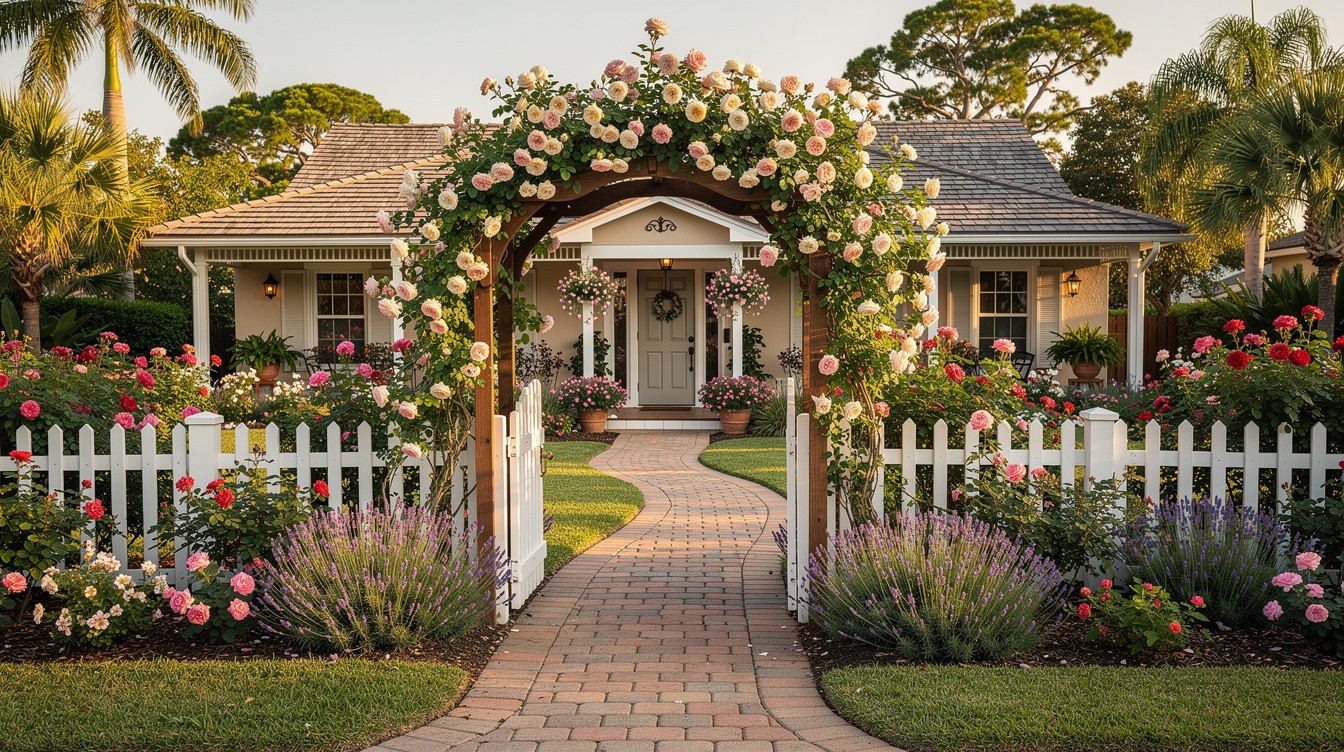
The Rose Arbor Picket Gate
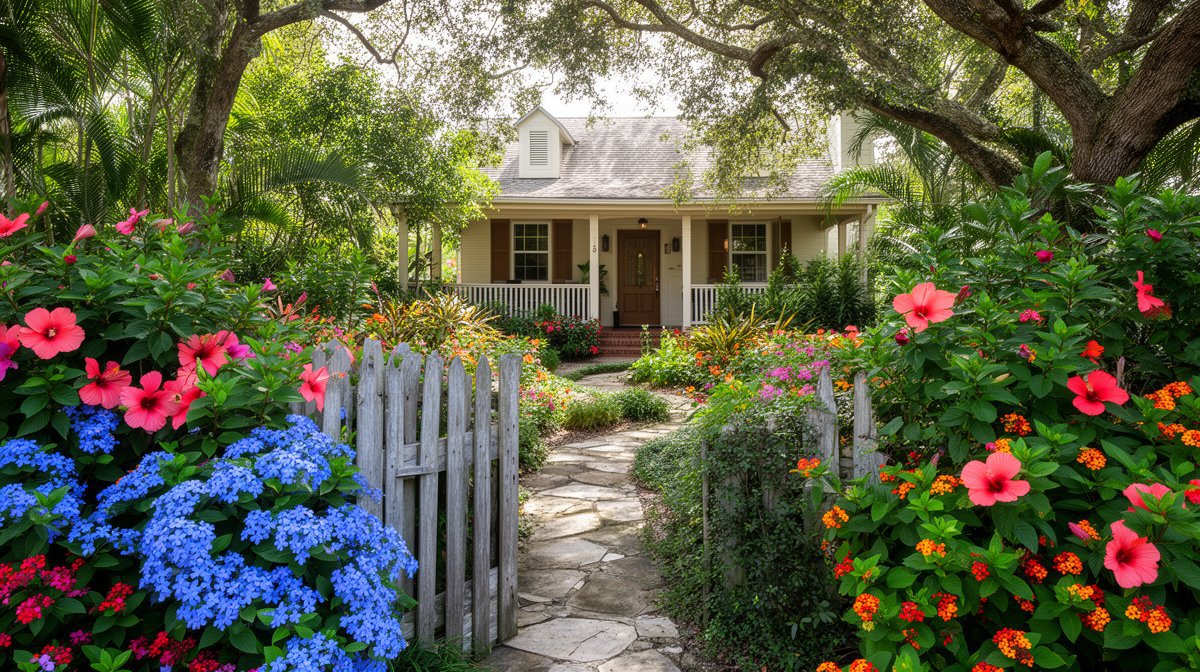
$16-30/sqftA low cream cottage sits behind a white picket fence, with a timber arbor smothered in blush and butter-cream roses framing the gate and a curving clay-paver walk running to the front door. Silver-grey mounds flank the path and rose beds press right up against the pickets on both sides. The detail that makes it Port St. Lucie rather than the Cotswolds is the palm canopy behind the roofline — and the design leans into it instead of hiding it. Every rose here should arrive grafted on Rosa x fortuniana rootstock; own-root English roses are dead within two seasons in St. Lucie fine sand. The lavender edging is Conradina grandiflora and Plectranthus 'Mona Lavender' rather than true Lavandula, which will not survive a Treasure Coast August.
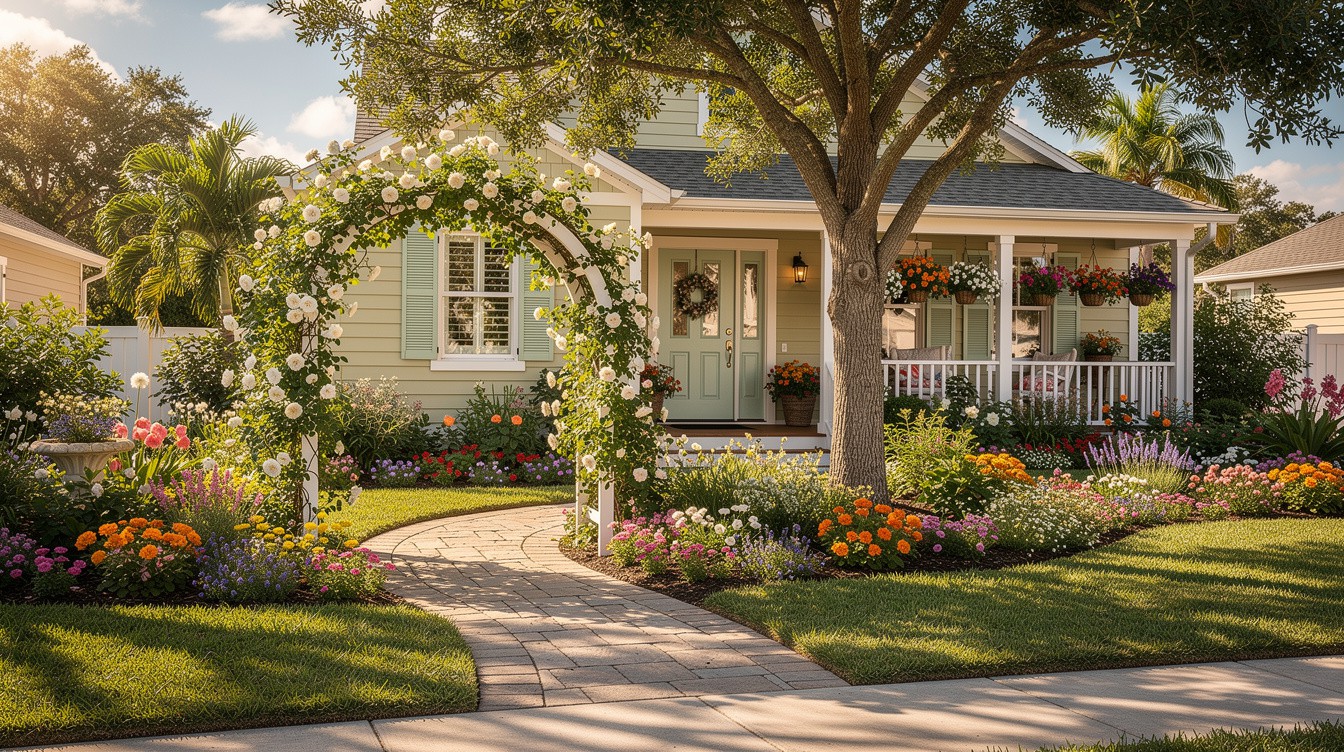
The Live Oak Dooryard Garden
$12-24/sqftA sage-green clapboard cottage with a deep front porch, a white-painted arbor carrying a cloud of white climbing roses, and a mature live oak throwing shade across half the lawn. The beds are a true dooryard mix — hot orange and gold annuals pushed against soft pink, white and lilac — flowing around the oak's root plate and out to the driveway edge. That oak is the whole trick: Quercus virginiana is the single most hurricane-resistant shade tree UF/IFAS rates for the Treasure Coast, and its high canopy takes the 95-degree edge off a west-facing porch while still letting enough light through for Pentas and Salvia coccinea underneath. Beds under an established oak must be built up with a shallow 3-4 inch layer, never tilled, or you sever the surface roots that make the tree wind-stable.
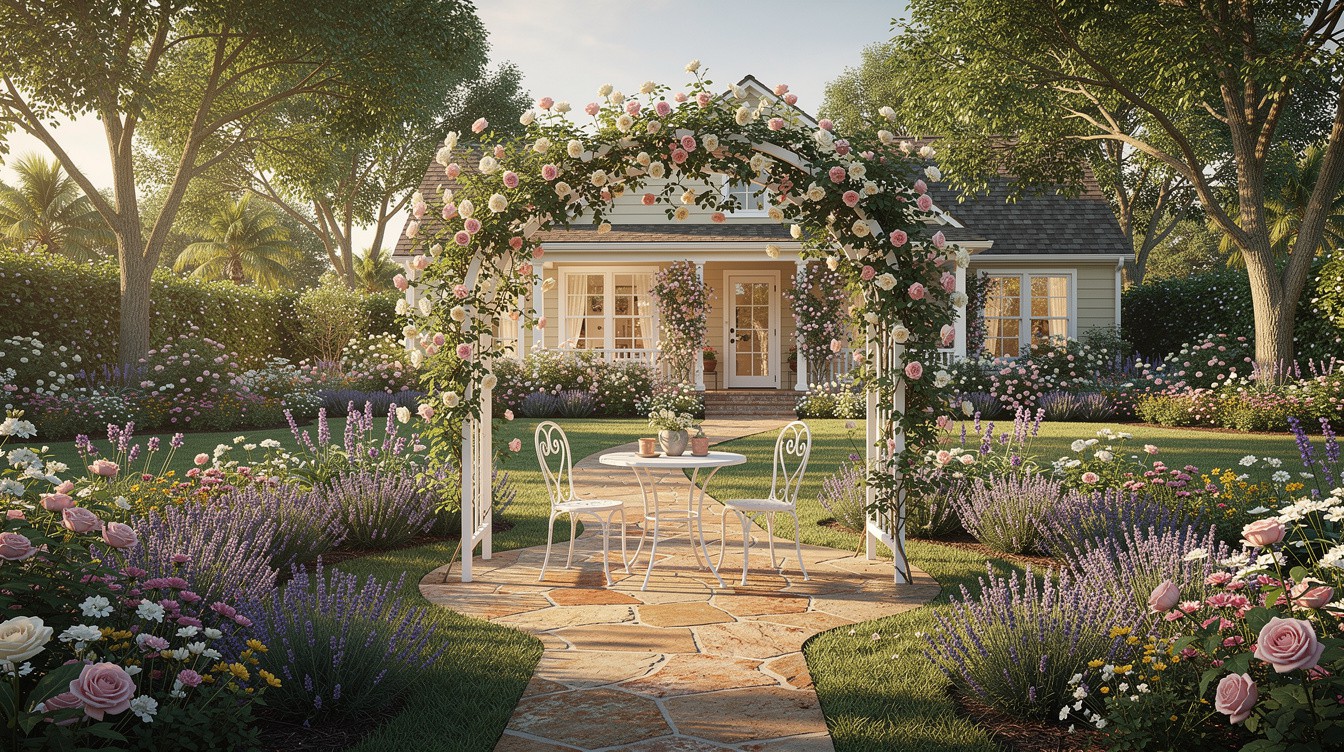
The Symmetrical Rose Walk
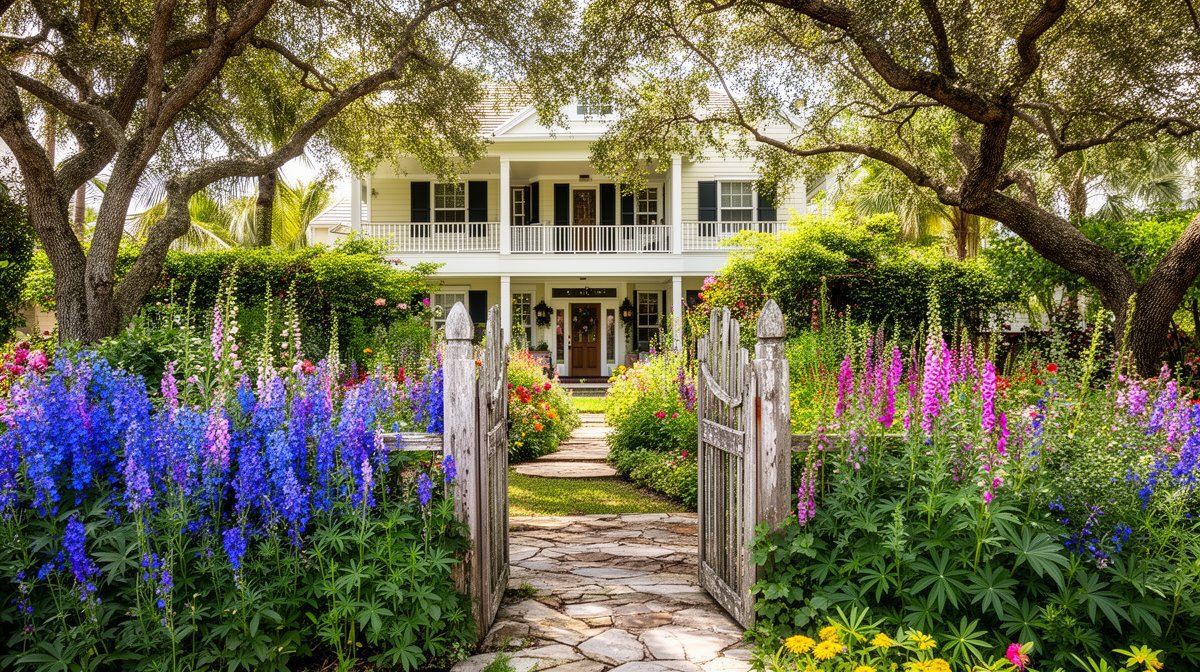
$20-38/sqftA formal-cottage backyard: two white arbors set on axis, a flagstone terrace with a white bistro table between them, and mirrored double borders of roses and lavender-toned spires running the length of the lawn on both sides. Symmetry is what keeps a Florida cottage garden from reading as overgrown — the growth rate here is roughly triple a Northern garden's, so the structure has to be strong enough to survive it. Substitute Salvia 'Mystic Spires Blue' and Angelonia 'Archangel Purple' for the lavender ribbons and they will hold that colour from March to December. The lawn panel should be 'Empire' zoysia rather than 'Floratam' St. Augustine: it takes foot traffic to the bistro set, needs about a third less water, and southern chinch bug does not touch it.
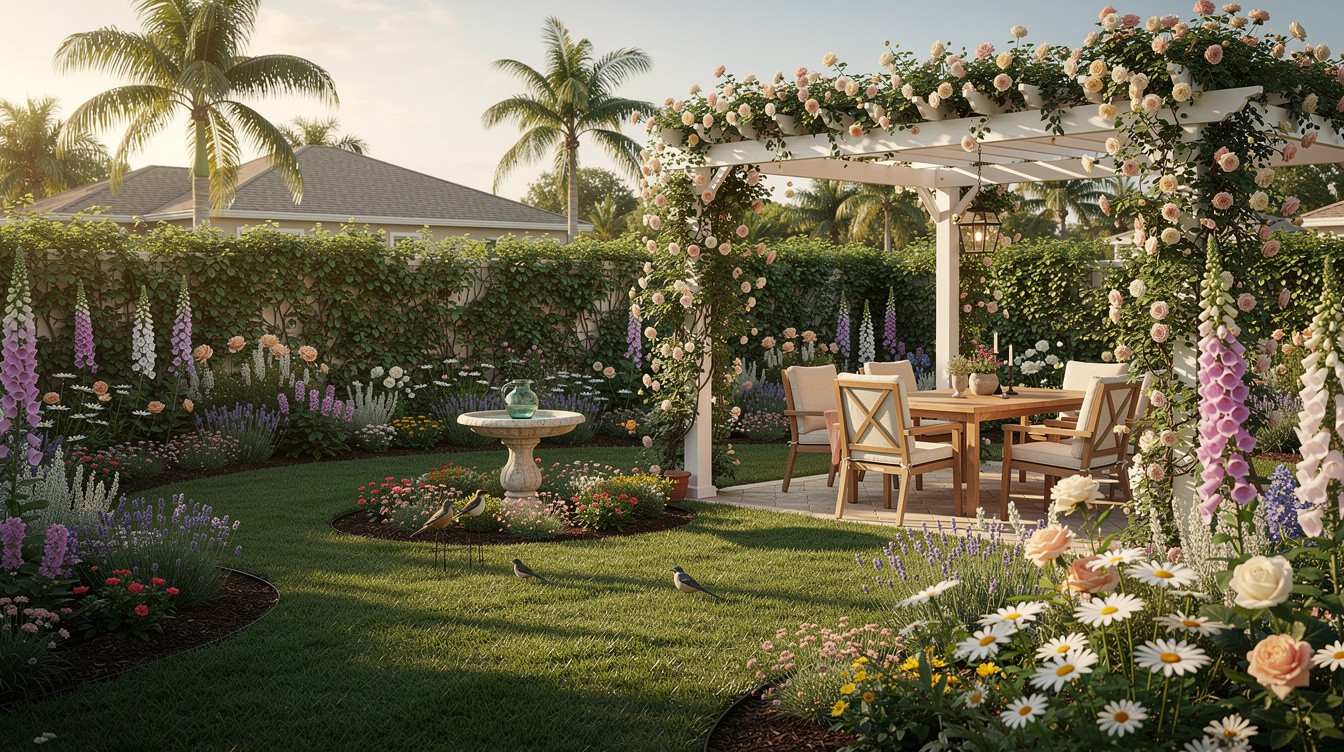
The Pergola and Birdbath Court
$22-45/sqftA white pergola draped in climbing roses shelters a teak dining table, a carved stone birdbath anchors a planted circle in the middle of the lawn, and a vine-clad wall wraps the whole yard in green. Tall pink and white spires run the shaded wall foot and daisies and roses spill over the bed edges in the foreground. The wall is the smartest move for a Port St. Lucie HOA lot: most villages cap fence height at six feet, but Ficus pumila or Trachelospermum jasminoides on that six-foot CBS wall buys you a twelve-foot green plane at no extra height. Skip Digitalis for the spires — Ruellia simplex 'Purple Showers' and Stachytarpheta jamaicensis give the same vertical rhythm and pull in zebra longwings and hummingbirds. Any pergola over 100 sqft needs an engineered permit and uplift anchors at 150 mph in St. Lucie County.
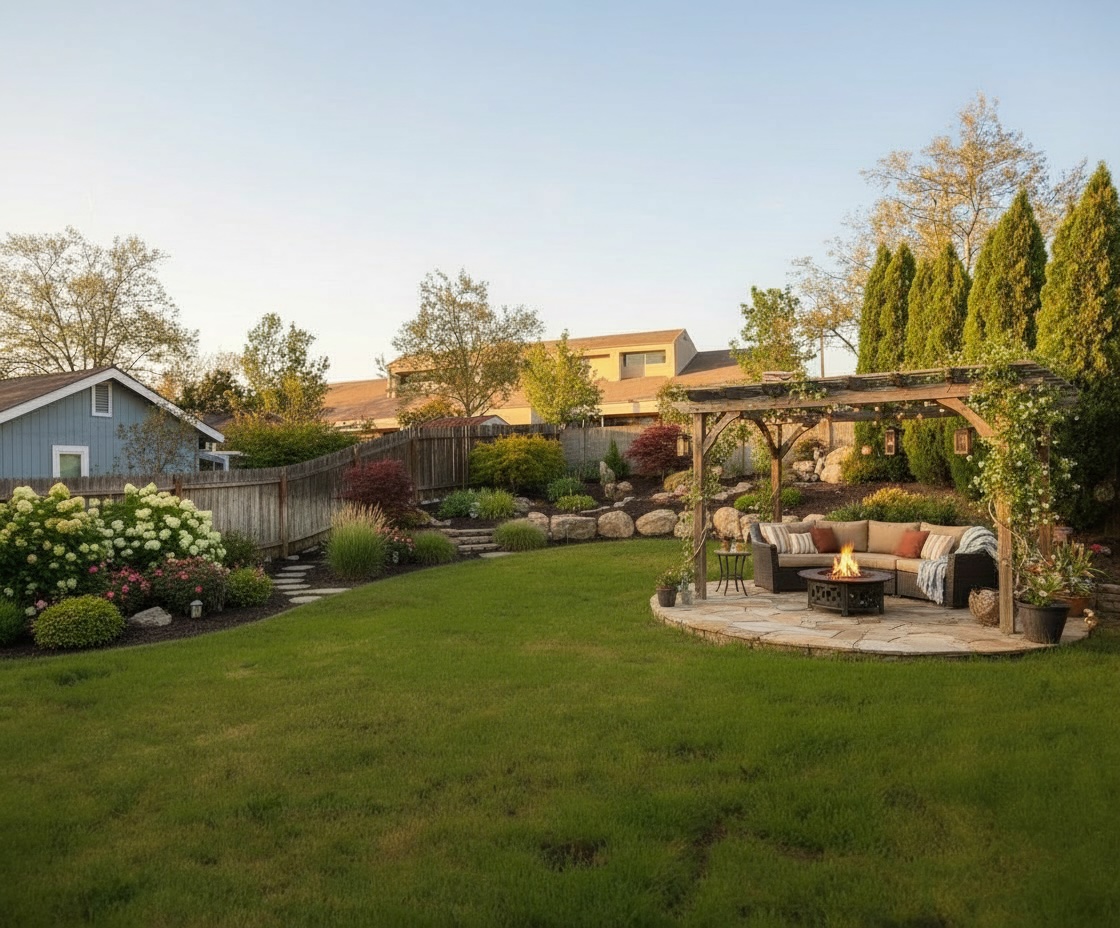
See how a cottage/english garden looks on YOUR property
Upload a photo of your Port St. Lucie yard and visualize your dream garden in seconds.
Try ProScapeAI Free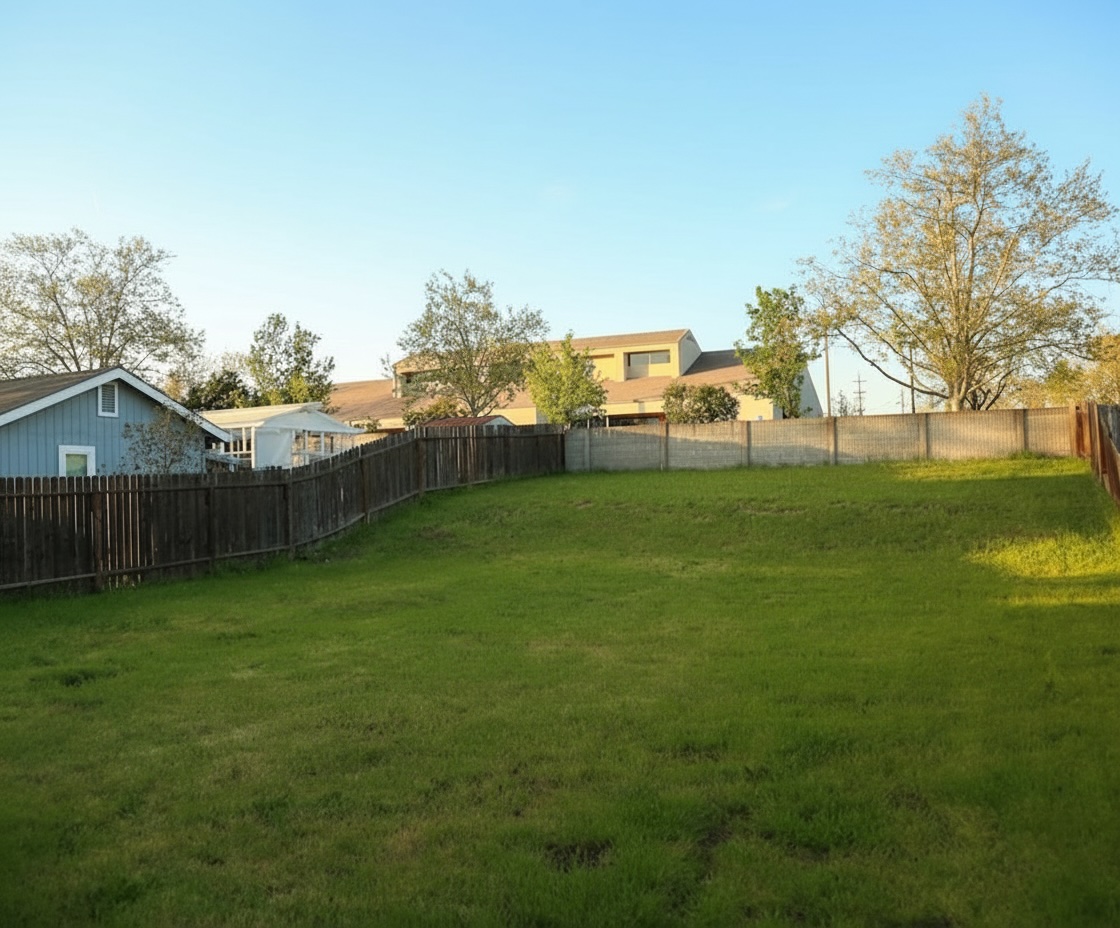
Featured Trees & Shrubs for Cottage/English Gardens
Browse all 65 plants for Port St. Lucie
Buckwheat Tree
Cliftonia monophylla
medium-sized at 15 feet, white blooms in spring. Attracts butterflies.
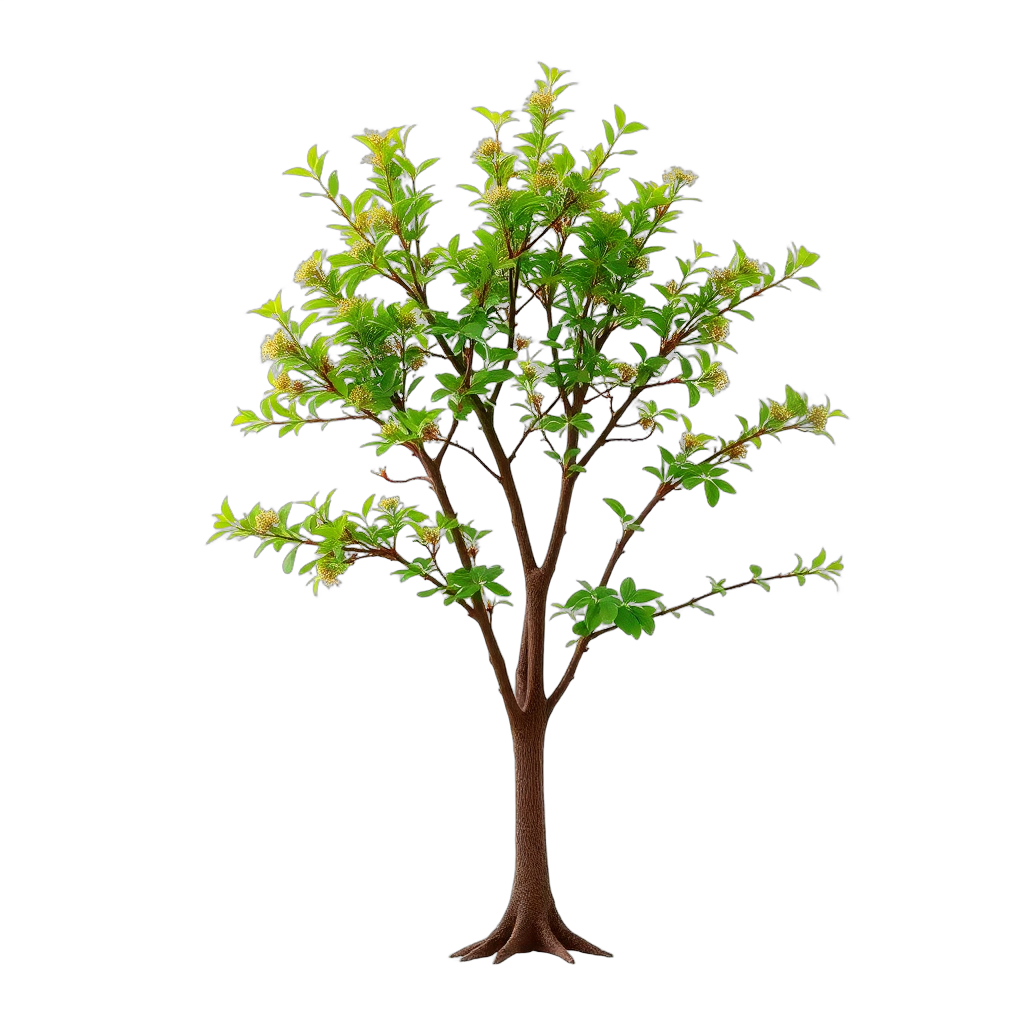
Fetterbush
Lyonia lucida
grows to 6 feet, white blooms in spring. Evergreen year-round.
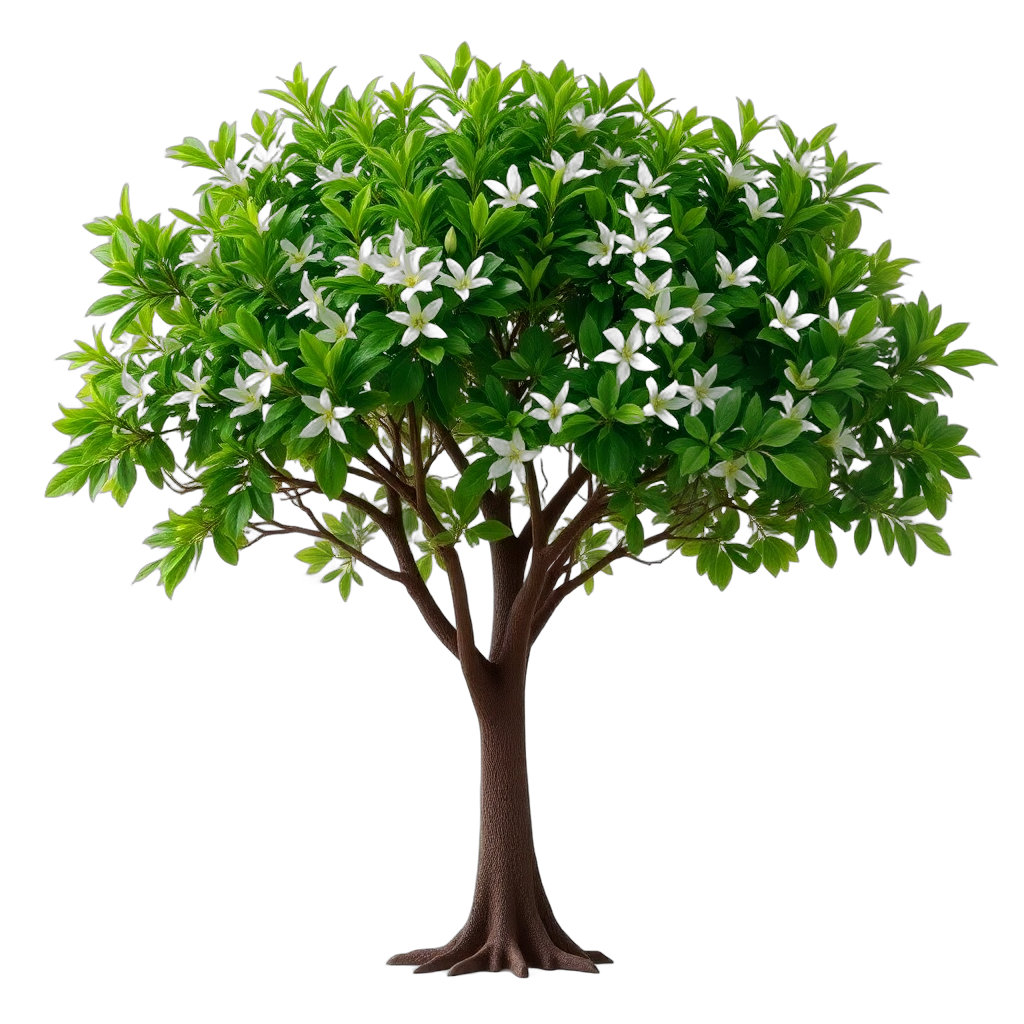
Florida Anise
Illicium floridanum
medium-sized at 8 feet, red blooms in spring. Evergreen year-round.

Inkberry
Ilex glabra
medium-sized at 8 feet, white blooms in spring. Pollinator-friendly.
Featured Grasses & Groundcovers for Cottage/English Gardens

Pink Muhly Grass
Muhlenbergia capillaris
grows to 3 feet, pink blooms in fall.
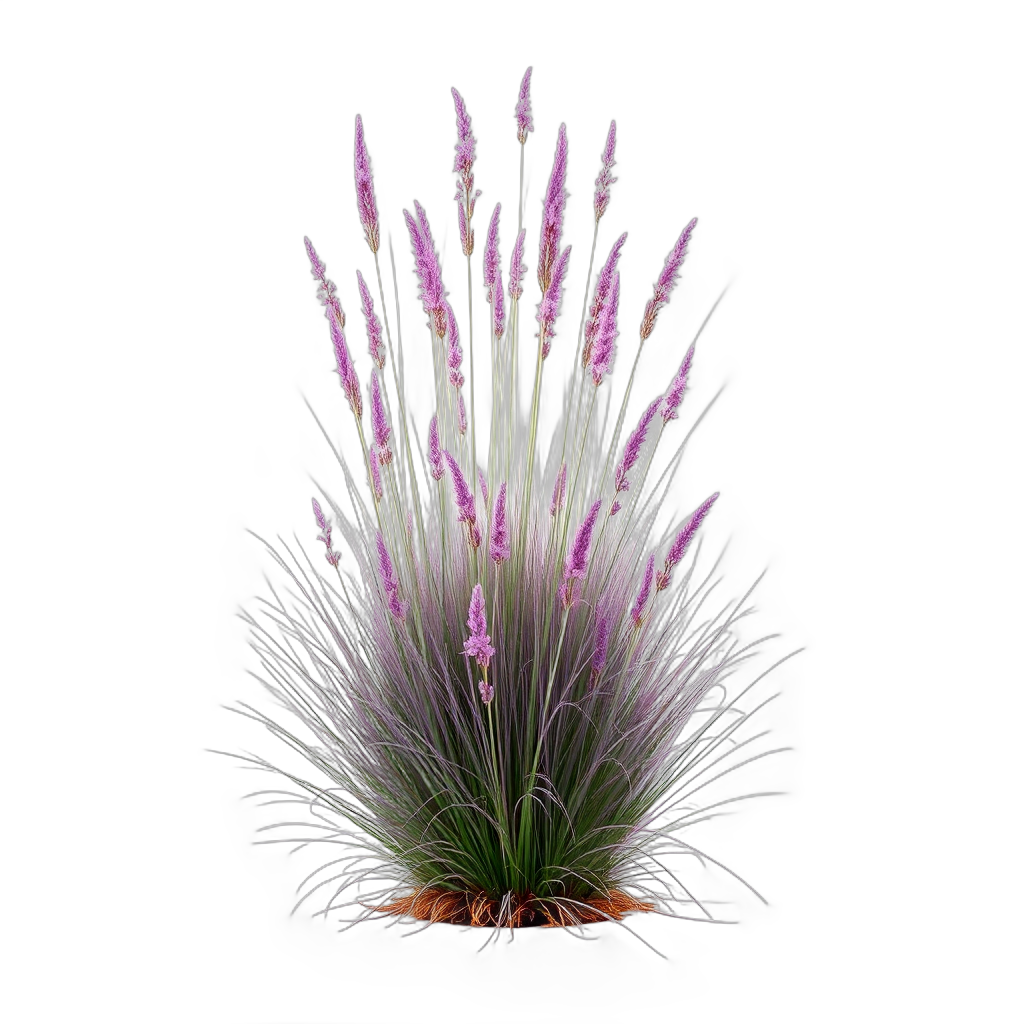
Purple Love Grass
Eragrostis spectabilis
low-growing ground cover, purple blooms in fall. Orange fall color.

Bermuda Grass
Cynodon dactylon
low-growing ground cover, blooms in summer. Brown fall color.
Featured Flowers & Perennials for Cottage/English Gardens
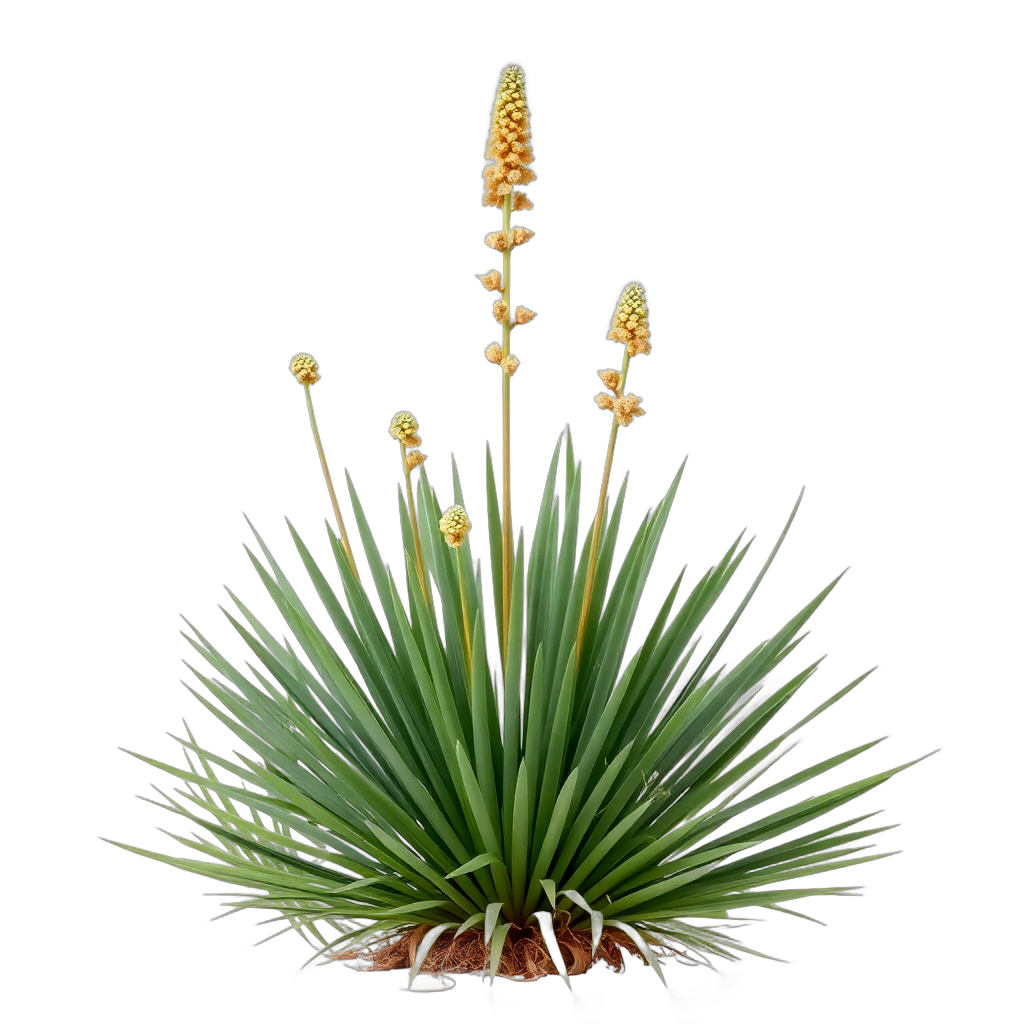
Adam's Needle
Yucca filamentosa
low-growing ground cover, white blooms in summer. Attracts hummingbirds.

Broadleaf Arrowhead
Sagittaria latifolia
low-growing ground cover, white blooms in summer. Attracts butterflies.

Canadian Waterweed
Elodea canadensis
grows to 3 feet, white blooms in spring. Evergreen year-round.

Common Cattail
Typha latifolia
grows to 5 feet, blooms in summer. Pollinator-friendly.
Bloom Calendar for Port St. Lucie
spring
Buckwheat Tree, Fetterbush, Florida Anisesummer
Adam's Needle, Swamp Cyrilla, Loblolly Bayfall
Pink Muhly Grass, Purple Love Grasswinter
Limited bloomsDesign Tips for Port St. Lucie (Zone 10a)
- Buy roses grafted on Rosa x fortuniana and gardenias grafted on Gardenia thunbergia — nematode-resistant rootstock is the single decision that separates a Port St. Lucie cottage garden that thrives from one that dies in eighteen months
- Berm every border 6-10 inches above grade; Port St. Lucie's wet-season water table sits within a foot of the surface in much of the city and cottage perennials will not tolerate saturated roots for three straight months
- Reverse the Northern calendar — plant Lobularia maritima, Digitalis purpurea, Antirrhinum and Viola in November for a spectacular January to April show, and let Pentas lanceolata 'Lucky Star', Salvia coccinea and Angelonia carry the summer when the cool-season annuals melt
- Use Conradina grandiflora wherever an English plan calls for lavender — it is a Florida scrub native, wants exactly the sharp acidic sand your yard already has, and gives the same silver mound and lavender-blue haze
- Build the bones from evergreen shrubs that read as boxwood but survive Zone 10a: Podocarpus macrophyllus 'Pringles Dwarf', Eugenia foetida, Ilex vomitoria 'Schillings' or Clusia guttifera — a cottage garden without clipped structure looks like neglect by August at Florida growth rates
- Time your feeding around the county ordinance: St. Lucie County bans nitrogen and phosphorus fertilizer June 1 through September 30, so front-load a slow-release in late May and resume in October rather than fighting the wet-season flush
Where to Source Plants in Port St. Lucie
Skip the big-box stores. These independent Port St. Lucie nurseries specialize in the plants that make cottage/english gardens thrive in Zone 10a.
Seacoast Tropical Palm & Nursery
Southeast Port St. Lucie
Tropical palm trees, field-grown trees, sod, and palms for retail and wholesale.
Port St. Lucie Botanical Gardens Garden Center
Central Port St. Lucie
Botanical garden gift shop featuring copperleaf plants, coleus, succulents, and unusual native species.
Weatherbee Nursery
Fort Pierce (Treasure Coast metro)
General nursery with trees, shrubs, perennials, and ornamental plants.
Cottage/English Landscaping Costs in Port St. Lucie
| Project Scope | Estimated Cost |
|---|---|
| Front-yard cottage border conversion (300-500 sqft of beds, soil build, 60-90 plants) | $4,500 - $11,000 |
| Clay paver walkway plus picket fence front (Treasure Coast labor rates) | $6,000 - $16,000 |
| Rose arbor or wind-anchored pergola, permitted and engineered | $2,500 - $9,000 |
| Full backyard cottage garden (double borders, flagstone terrace, dedicated drip zone) | $18,000 - $45,000 |
| Fortuniana-grafted rose collection (12-20 plants, amended and planted) | $900 - $2,400 |
| AI visualization with ProScapeAI | Free to start |
Estimates based on Port St. Lucie, FL-area contractor rates as of 2026. Actual costs vary by site conditions, materials, and contractor.
Port St. Lucie Climate & Growing Zone
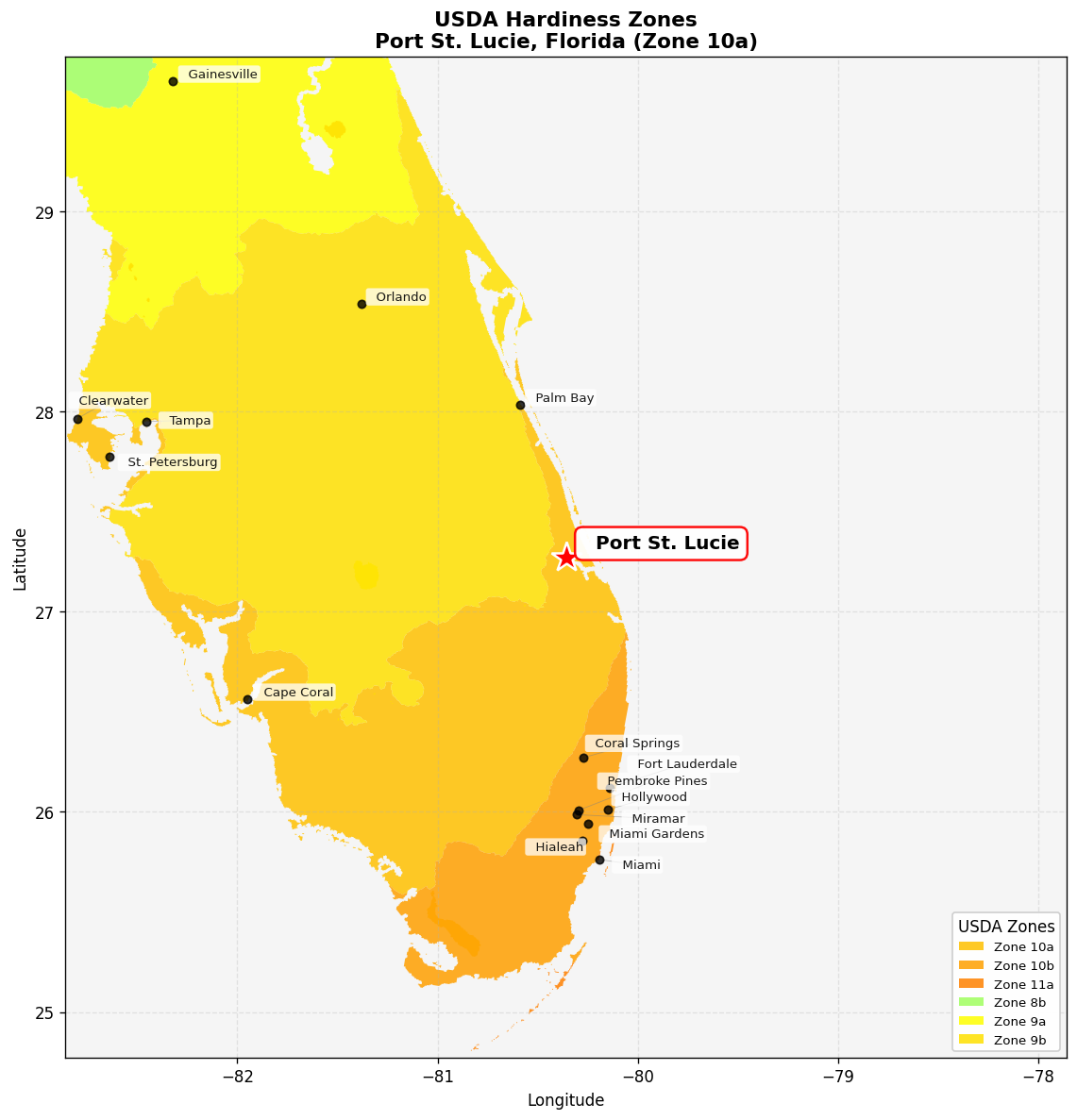
USDA Zone 10a
Hardiness zone for Port St. Lucie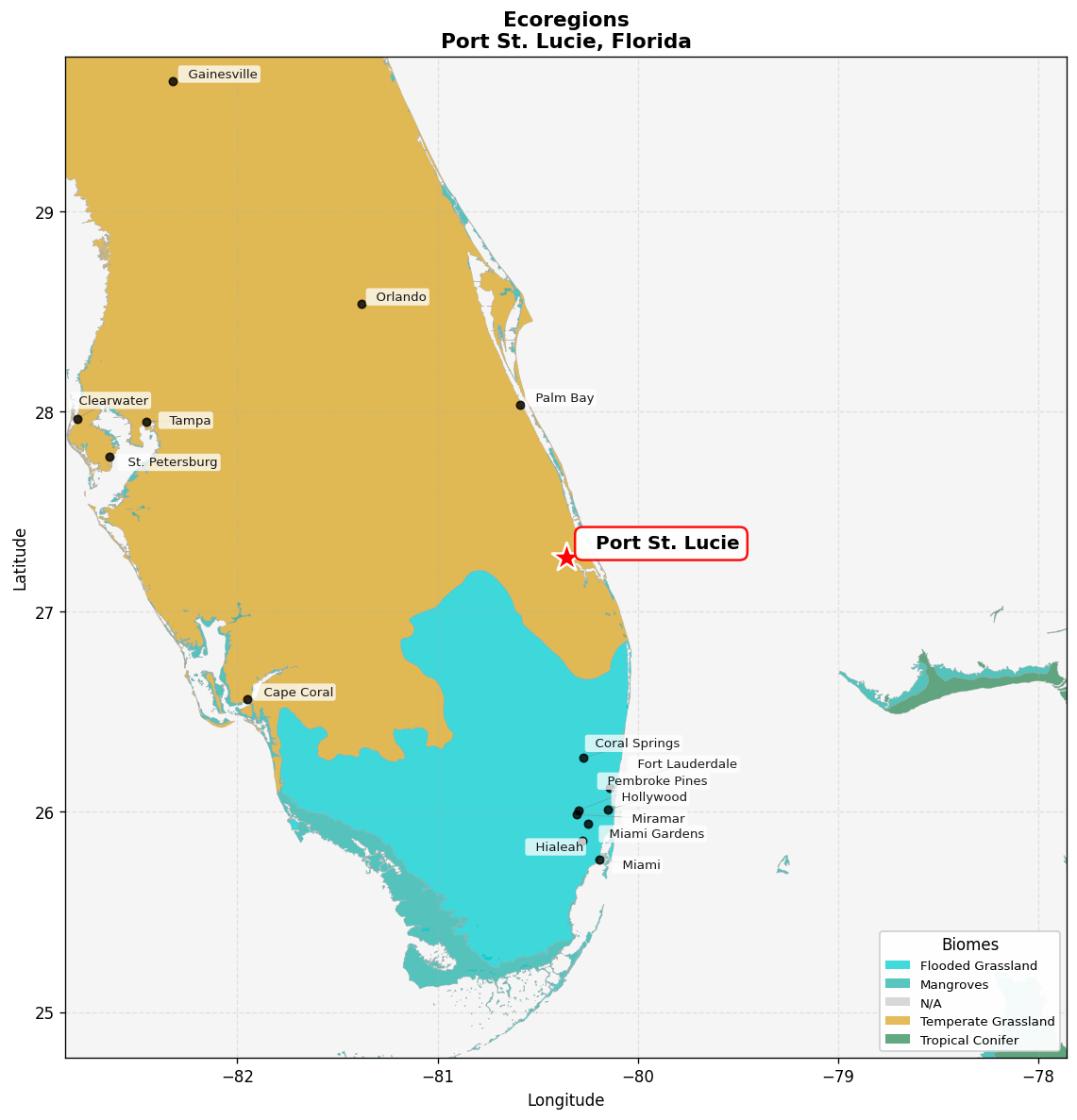
Southeast US conifer savannas
Native ecoregionFrequently Asked Questions
Can you actually grow roses in Port St. Lucie?
Yes, but only the right roses on the right rootstock. Florida's sandy soil is loaded with sting nematodes (Belonolaimus longicaudatus) and root-knot nematodes, which destroy the roots of own-root and Dr. Huey-grafted roses within a couple of seasons. Buy roses grafted on Rosa x fortuniana rootstock — Nelson's and other Florida growers specialise in it — and choose old garden roses and tough hybrids: Rosa 'Louis Philippe', Rosa 'Old Blush', Rosa 'Mrs. B.R. Cant', Rosa 'Belinda's Dream', Rosa 'Mermaid' for arbors. On Fortuniana roots these bloom nine to eleven months a year in Zone 10a. English David Austin roses and most modern hybrid teas will disappoint here regardless of rootstock; blackspot pressure in 55 inches of rain is relentless.
What do I plant instead of lavender, delphinium and foxglove?
Every classic cottage spire and silver mound has a subtropical stand-in. For the lavender mound, use Conradina grandiflora (a silvery, lavender-flowered Florida scrub native that loves St. Lucie sand) or Plectranthus 'Mona Lavender' in part shade; if you insist on real lavender, Lavandula dentata is the only species with a fighting chance and it is still a two-year plant. For delphinium and foxglove spires, use Angelonia angustifolia 'Archangel Purple', Salvia 'Mystic Spires Blue', Ruellia simplex 'Purple Showers' (sterile cultivar only) or Stachytarpheta jamaicensis. For hydrangea's blue mass, Plumbago auriculata 'Imperial Blue'. For Shasta daisies, Gaillardia pulchella and Melampodium paludosum. Digitalis purpurea and Lobularia maritima do work here — just plant them in November as cool-season annuals and pull them in May.
How is Port St. Lucie soil different from South Florida soil?
It matters more than most homeowners realise. Miami-Dade and Broward sit on alkaline oolitic limestone and marl at pH 7.6 to 8.4, which locks up iron and manganese and turns everything chlorotic. Port St. Lucie sits on acidic flatwoods spodosols — St. Lucie, Ankona, Waveland and Myakka fine sands — typically pH 4.5 to 6.0, with a spodic hardpan a foot or two down and a wet-season water table often within 12 inches of grade. Practical consequences: you can grow acid-lovers like Gardenia and Ixora far more easily than a Boca gardener can, but your sand holds almost no nutrients or water, so amend beds with compost at planting, mulch 3 inches deep, and feed with slow-release rather than heavy single doses. Test pH before liming anything — most Port St. Lucie yards need nothing.
Will a cottage garden survive a hurricane here?
The plants will; the structures are the risk. Port St. Lucie took direct hits from Frances and Jeanne within three weeks in 2004 and brushes with Nicole and Ian more recently, and St. Lucie County builds to roughly a 150 mph ultimate design wind speed. Herbaceous cottage plantings shred and regrow in six weeks — Pentas, Salvia, Plumbago and Angelonia are effectively disposable and cheap to replace. Arbors, pergolas and trellises are what become projectiles: any structure over about 100 square feet needs a permit and engineered uplift anchors, and even a small rose arbor should be set in concrete footings, not driven stakes. For trees, plant Quercus virginiana, Bursera simaruba and Sabal palmetto; avoid Syagrus romanzoffiana (queen palm) and Quercus laurifolia, both of which UF/IFAS rates as poor wind performers.
Will my HOA in Tradition or St. Lucie West let me do this?
Mostly yes, and Florida law is on your side. Statute 373.185 prohibits an HOA from banning Florida-Friendly Landscaping outright, and statute 720.3075 voids covenants that forbid drought-tolerant plantings. What HOAs can and do regulate is the visible hardware: fence type and height (typically 4 to 6 feet, aluminum picket in much of Tradition), arbor and pergola design, bed edging materials, and how much of the front lawn you may convert. Submit an ARC application with a plan drawing and a plant list before you buy anything — approval in St. Lucie West and Tradition typically runs 30 to 45 days. Older GDC sections like Torino and Southbend generally have no active association at all, which is why the most exuberant cottage gardens in the city are found there.
When should I plant, and how often can I water?
October through March is the planting window. Roots establish through the dry, mild season and plants are settled before the June heat, and this is also when the cool-season annuals that make a cottage garden sing — Lobularia, Digitalis, Antirrhinum, Viola — actually work. Avoid installing in June through September: 90-degree days, daily thunderstorms and a high water table drown new root balls. On water, the South Florida Water Management District's year-round rule limits landscape irrigation in St. Lucie County to two days per week with no watering between 10am and 4pm, though newly installed plants get a 30 to 60 day establishment exemption — keep the receipt. Put beds on drip and lawn on rotors as separate zones; a cottage border on the same schedule as St. Augustine turf will rot.