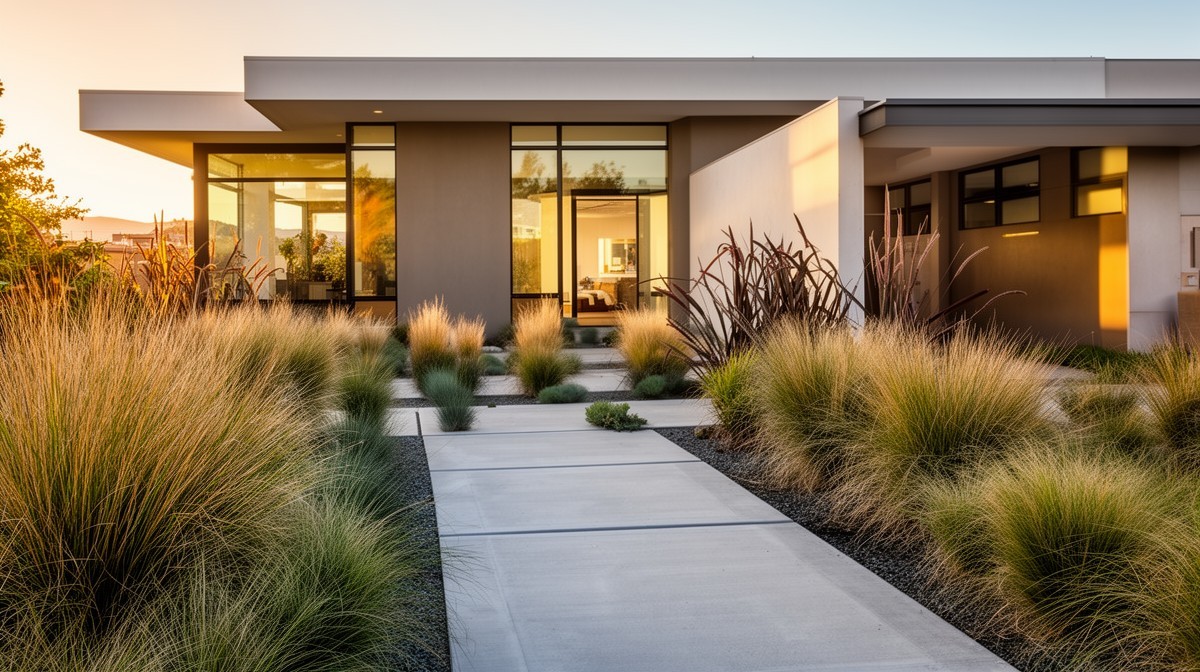
4 Modern Garden Ideas for San Francisco, CA | Architectural Minimalism & Urban Designs for Zone 10b
Native plants from the California interior chaparral and woodlands (Zone 10b) — Mediterranean (warm summer) climate
Why Modern/Minimalist Gardens in San Francisco?
San Francisco's urban density, small lot sizes, and dramatic topography make modern landscape design not just aesthetically appealing but practically necessary. The average SF front yard is under 200 square feet, and many backyards are essentially enclosed rooms accessed via steep staircases. In these constraints, the principles of modern design — ruthless editing, every element earning its place, clean lines doing more with less — produce better results than any other landscape style. The city's design culture, shaped by decades of tech industry influence and proximity to world-class architecture, strongly aligns with contemporary aesthetic sensibilities.
San Francisco's Zone 10b maritime climate provides a distinctive plant palette for modern design that differs significantly from Southern California. The notorious summer fog (which can keep temperatures in the low 60s°F in the Sunset and Richmond Districts through July) means the desert-modern succulents and agaves of LA-style contemporary gardens don't always perform well in SF's fog belt. Instead, SF modern gardens excel with bold-leafed shade and fog-tolerant plants: New Zealand flax (Phormium), architectural ferns, ornamental grasses, and Agave attenuata (which tolerates more humidity than most agaves). The sunnier neighborhoods — Mission, Potrero Hill, Noe Valley — can use a broader warm-climate modern palette.
The city's rooftop, deck, and courtyard garden typologies are uniquely prevalent in SF — Edwardian buildings often have flat-roof decks accessible from upper floors, row house courtyards are tight but private, and the city's terraced topography creates retaining walls that frame raised garden terraces naturally. Modern design principles of clean material language, restrained plant palette, and integrated lighting produce exceptional results in all these SF-specific garden scenarios.
4 Modern/Minimalist Design Ideas for San Francisco
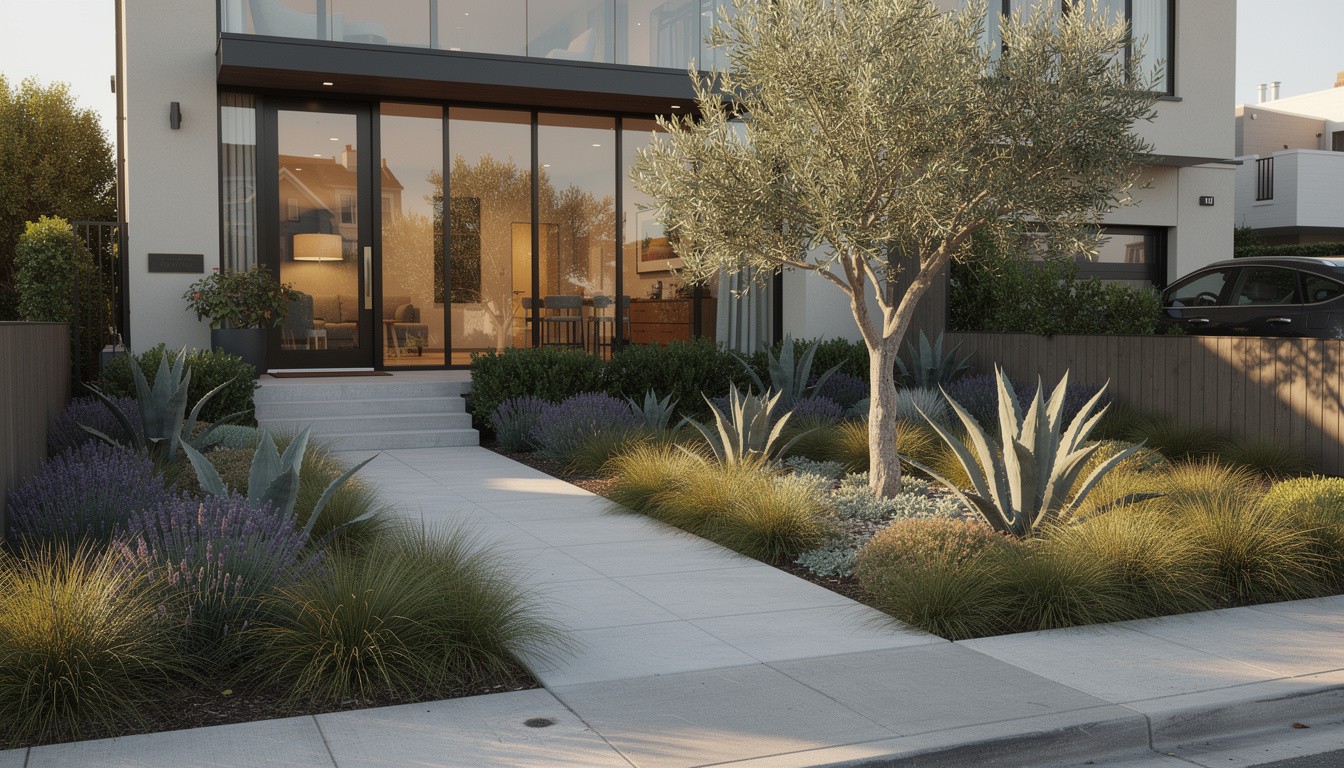
AI-generated image
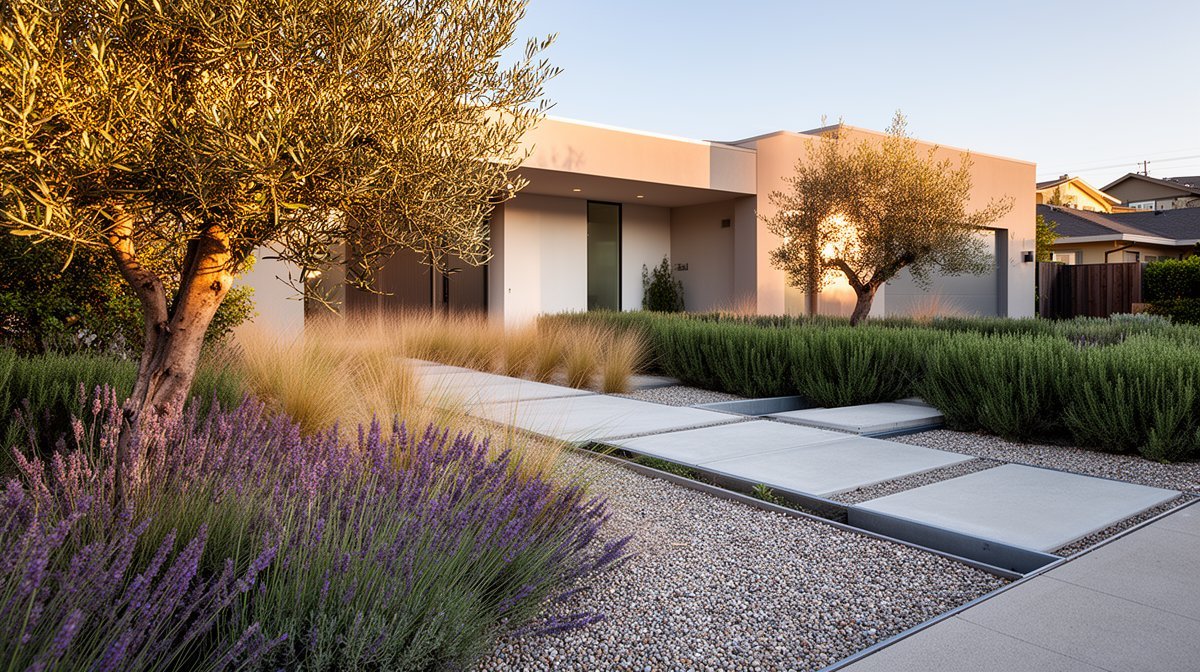
The Olive & Grass Minimalist Entry
$20–36/sqftA contemporary glass-and-concrete townhome in San Francisco gets a sharp landscape update: a wide light concrete pathway bisects a front yard planted with a graceful multi-trunk olive tree, sweeping drifts of blue-grey fescue and feather grass, and low purple-toned salvias. The ground plane is cool grey decomposed granite, and steel edging defines every bed with precision. This is modern Bay Area residential landscaping at its most refined — restrained palette, strong structure, zero lawn.
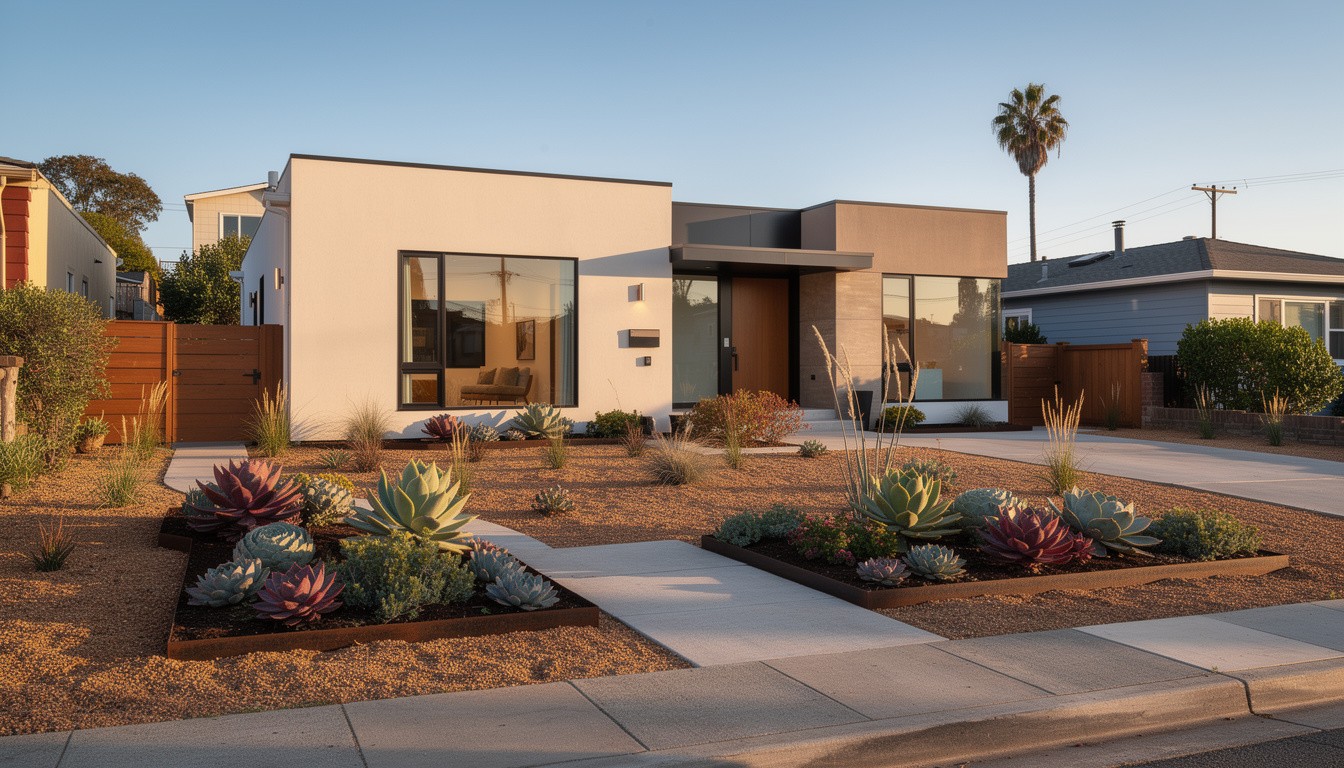
AI-generated image
The Xeric Agave & Succulent Front Yard
$14–26/sqftA white flat-roof modern home sits behind a boldly xeric front landscape: raised rectangular decomposed granite beds hold clusters of blue-grey agave and colorful succulents in red, burgundy, and green, punctuated by rounded boulders. A single accent tree anchors one side. There is no lawn, no irrigation waste — just the powerful geometry of gravel and drought-adapted plants that look as good in San Francisco's summer fog as they do on sunny days.
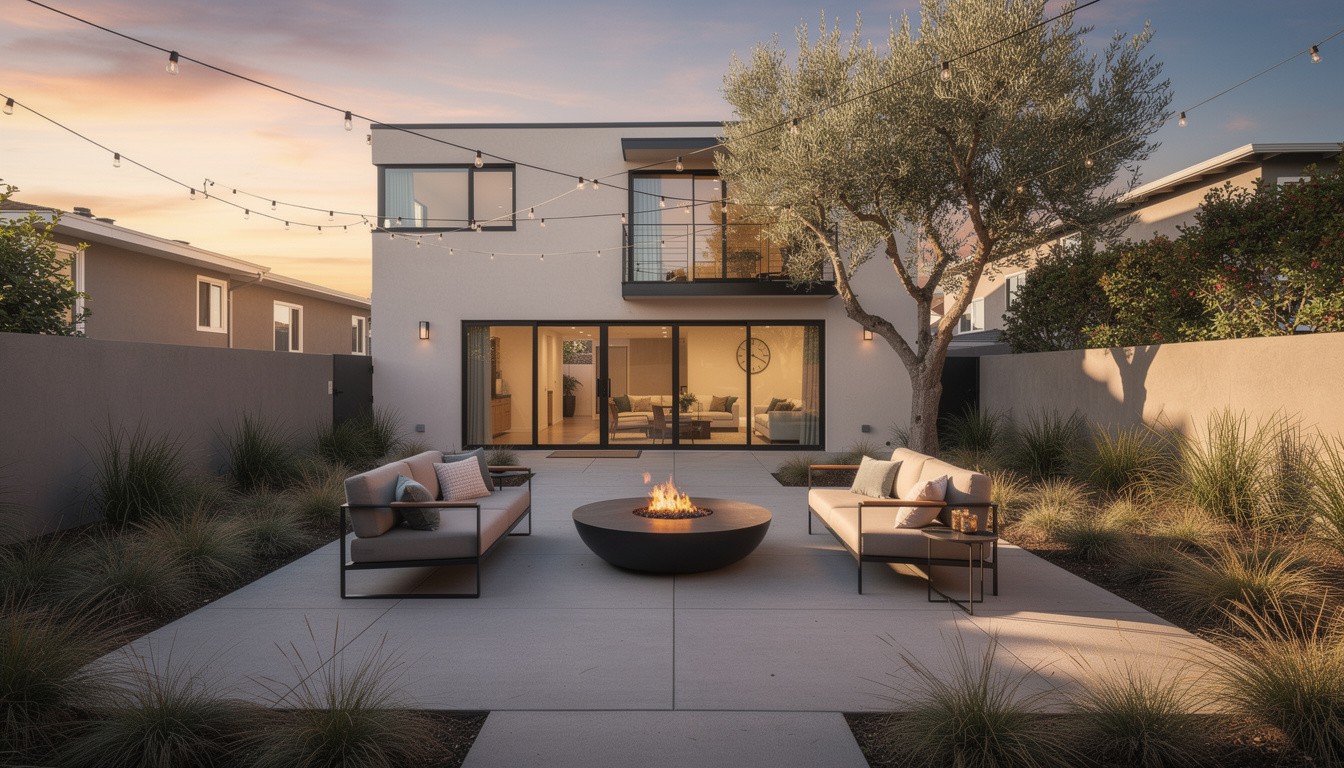
AI-generated image
The Modern Fire Pit Courtyard
$30–55/sqftA contemporary San Francisco home with rooftop deck and large glass sliding doors opens onto a minimal concrete courtyard at dusk. A round bowl fire pit anchors the center, surrounded by a modern two-sofa lounge arrangement. A mature olive tree grows from a square cutout in the concrete, providing organic contrast to the clean hardscape. Ornamental grasses soften the perimeter walls, and string lights cross overhead — the perfect SF outdoor room for cool summer evenings.
AI-generated image
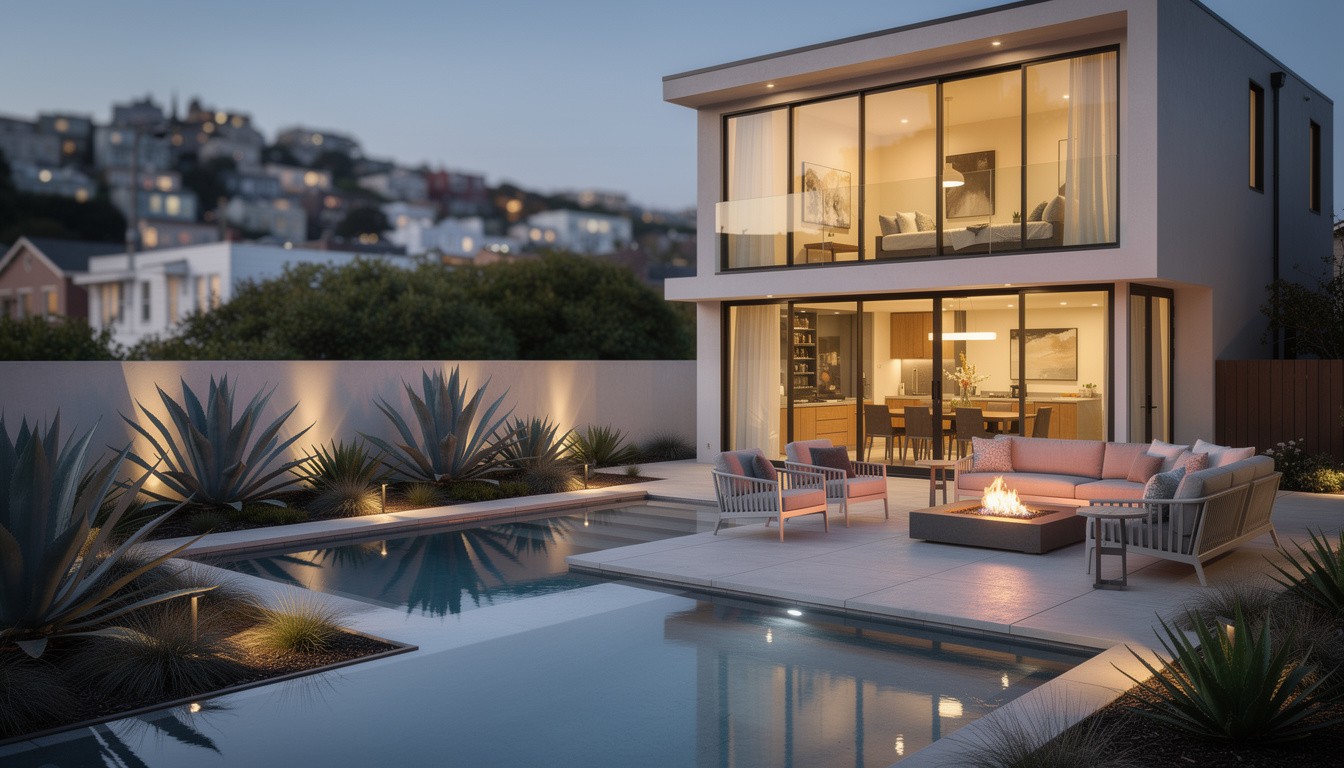
The Hillside Pool & Fire Terrace
$70–130/sqftA premium San Francisco hillside home at dusk: a rectangular pool with white concrete coping and integrated lighting reflects the illuminated interior of a contemporary glass pavilion with city-view backdrop. A square fire table anchors the lounge area beside the pool, with a modern sectional sofa. Bold agave specimens punctuate the decomposed granite beds, and low-profile LED path lighting frames the pool edge. The SF skyline glitters in the distance.
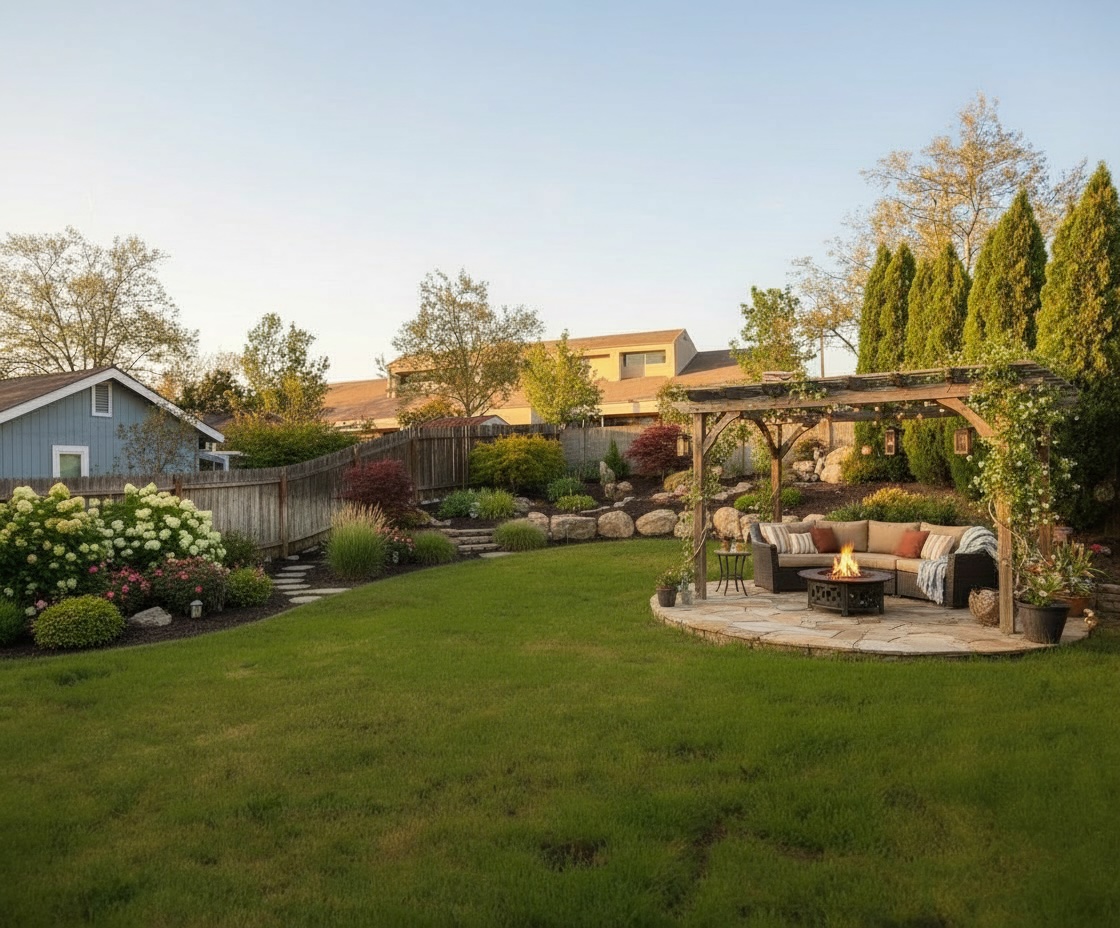
See how a modern/minimalist garden looks on YOUR property
Upload a photo of your San Francisco yard and visualize your dream garden in seconds.
Try ProScapeAI Free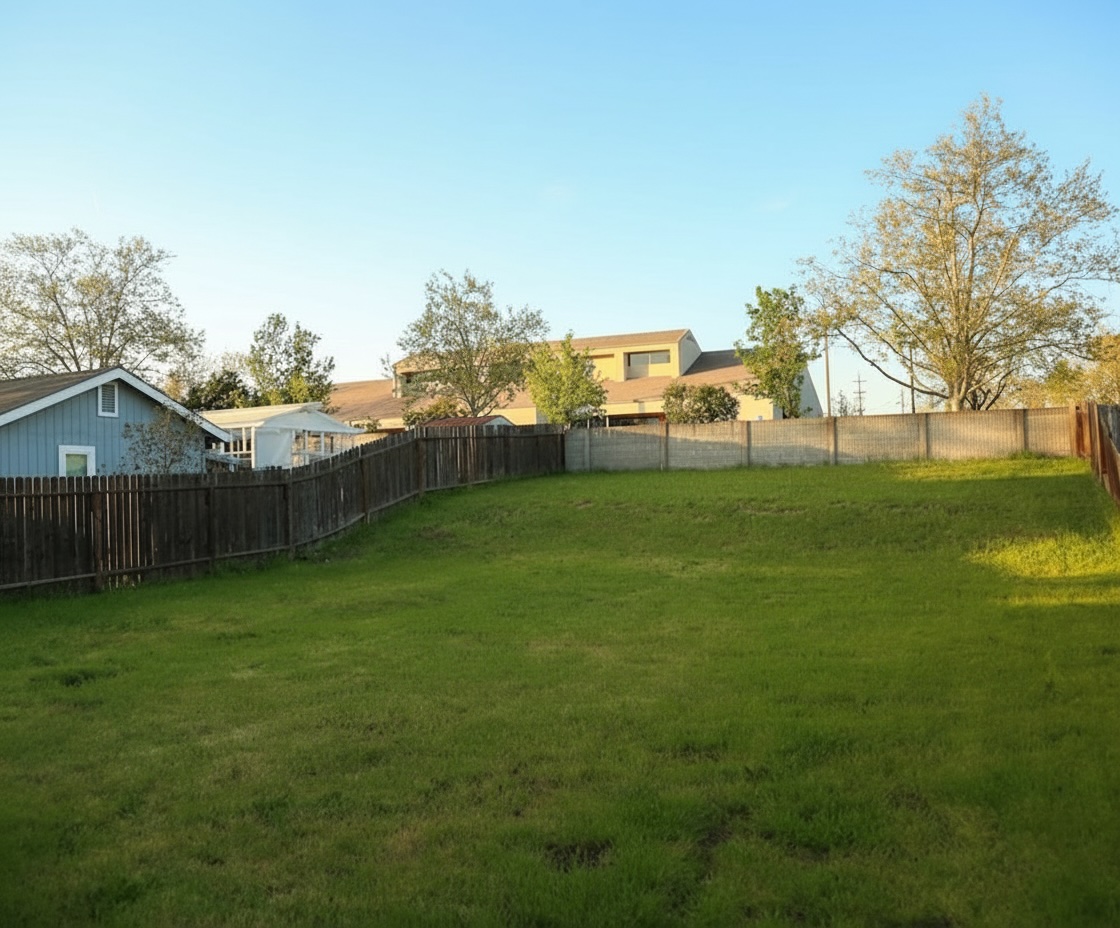
AI-generated image
Featured Trees & Shrubs for Modern/Minimalist Gardens
Browse all 187 plants for San Francisco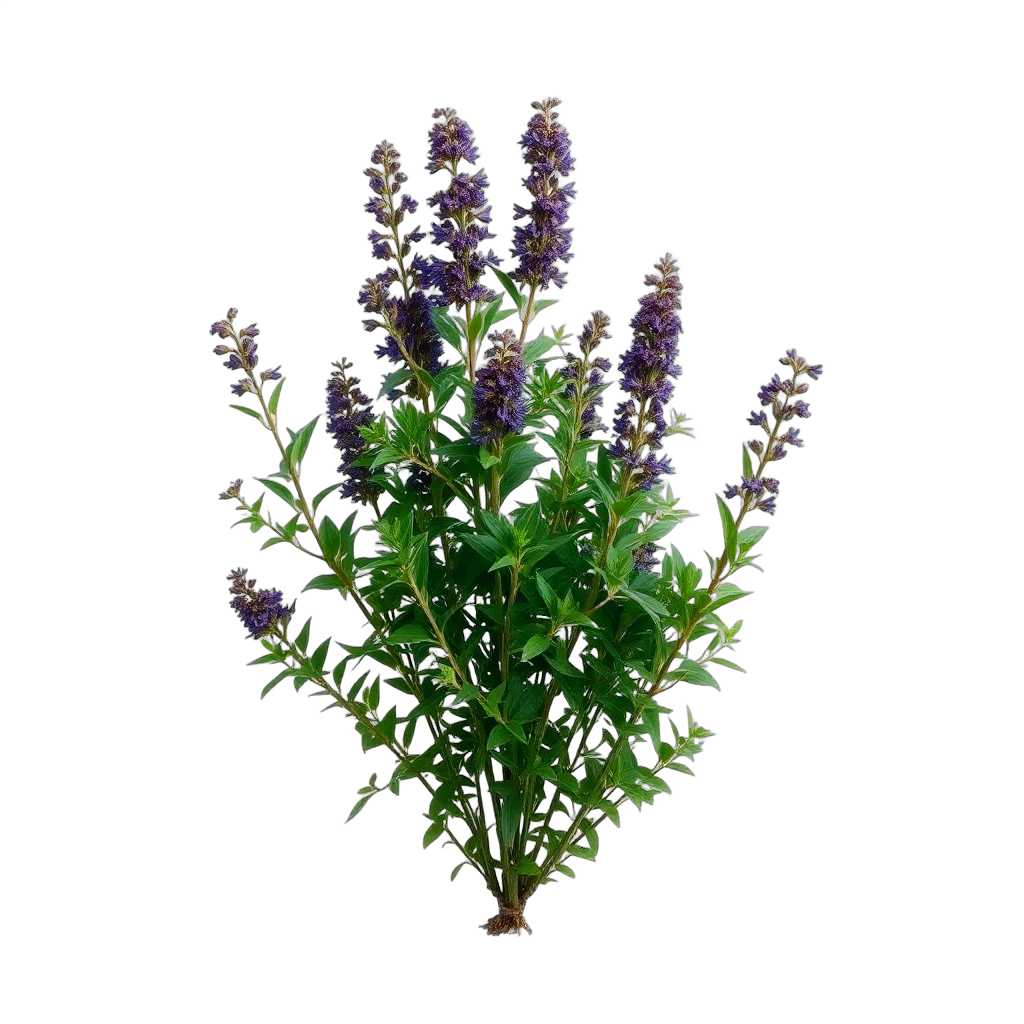
Black Sage
Salvia mellifera
grows to 4 feet, white blooms in spring. Attracts butterflies.
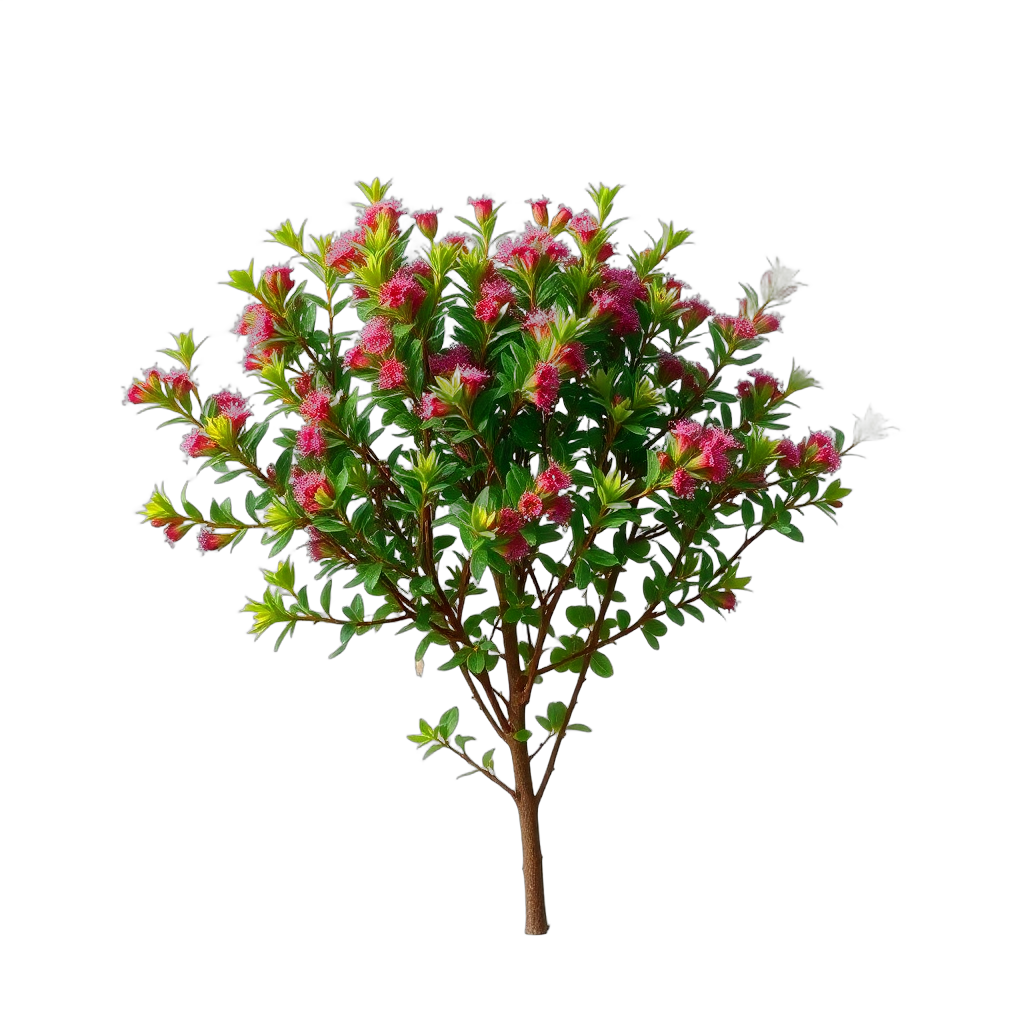
Buckbrush
Ceanothus cuneatus
medium-sized at 7 feet, white blooms in spring. Attracts butterflies.
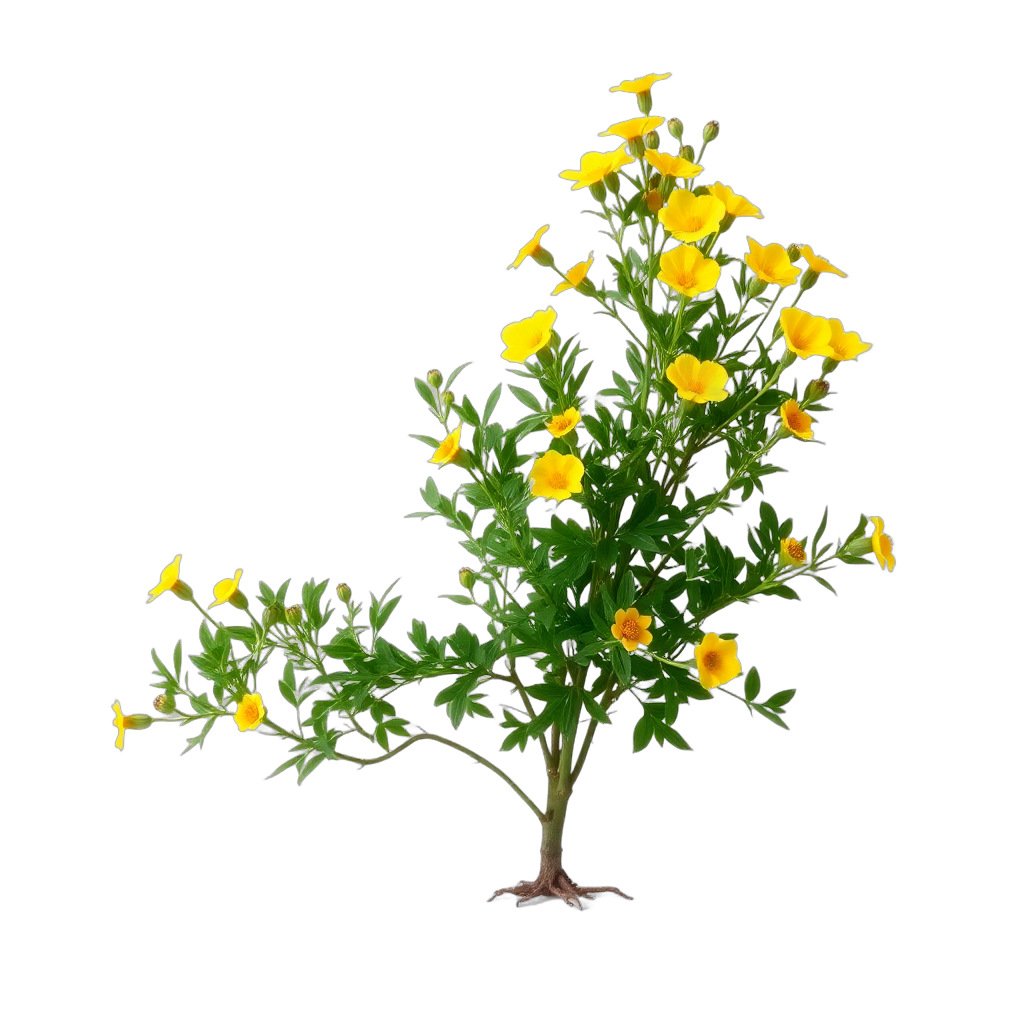
Bush Poppy
Dendromecon rigida
grows to 6 feet, yellow blooms in spring. Pollinator-friendly.
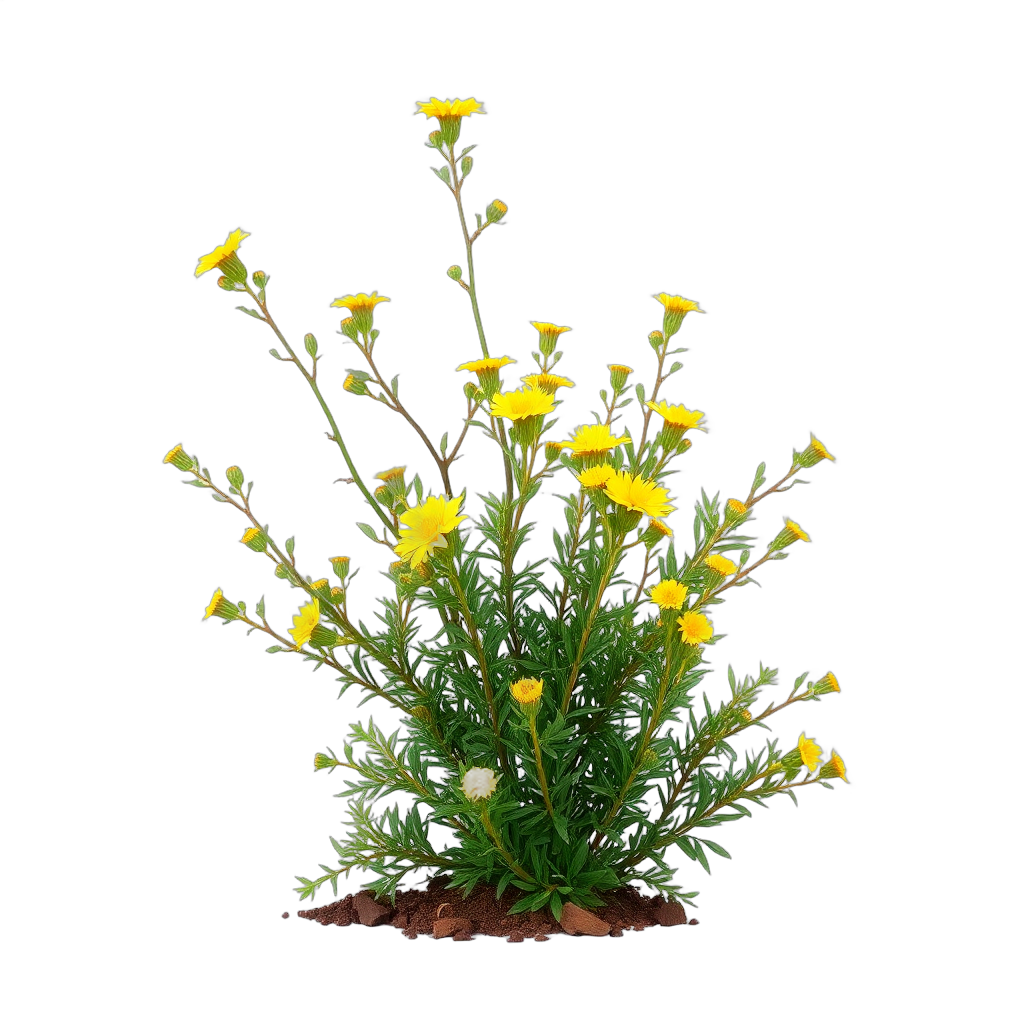
California Brittlebush
Encelia californica
grows to 4 feet, yellow blooms in spring. Attracts butterflies.
Featured Grasses & Groundcovers for Modern/Minimalist Gardens
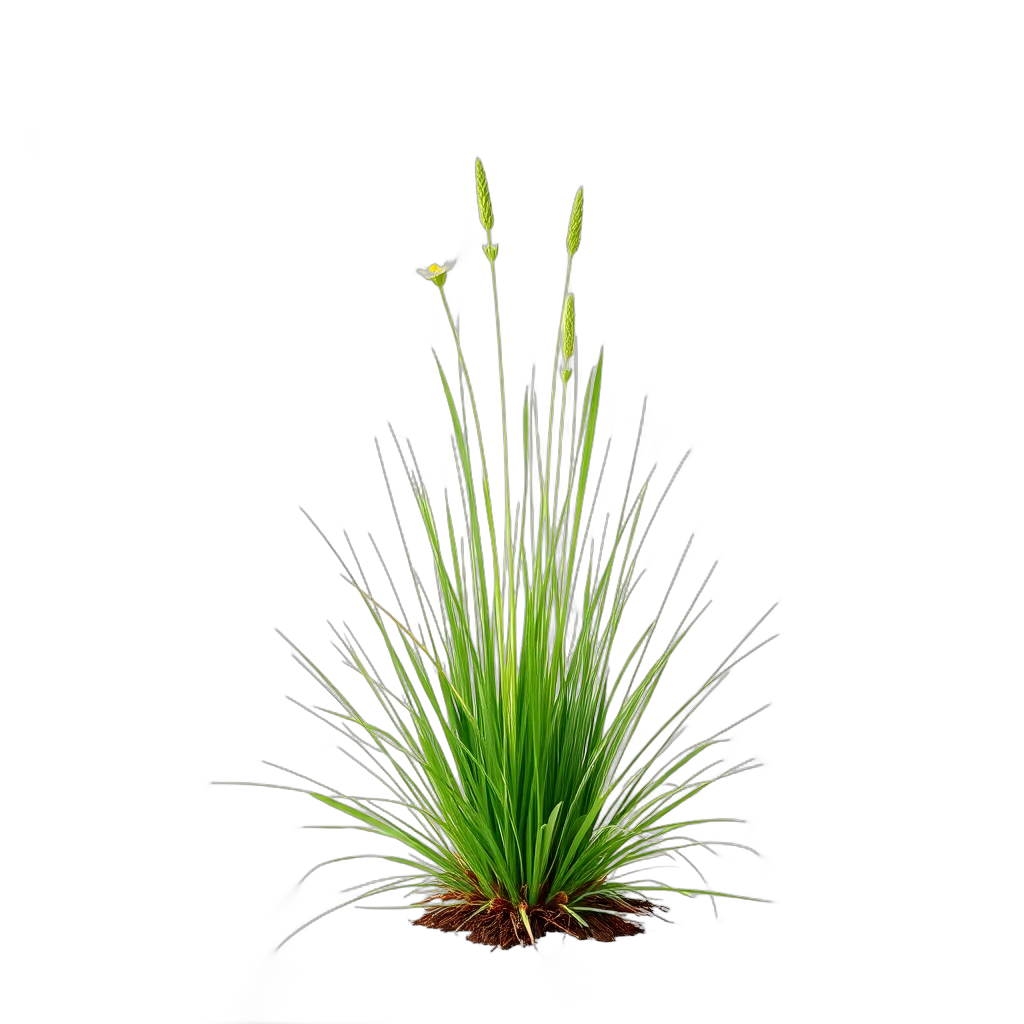
California Brome
Bromus carinatus
low-growing ground cover, blooms in spring. Yellow fall color.
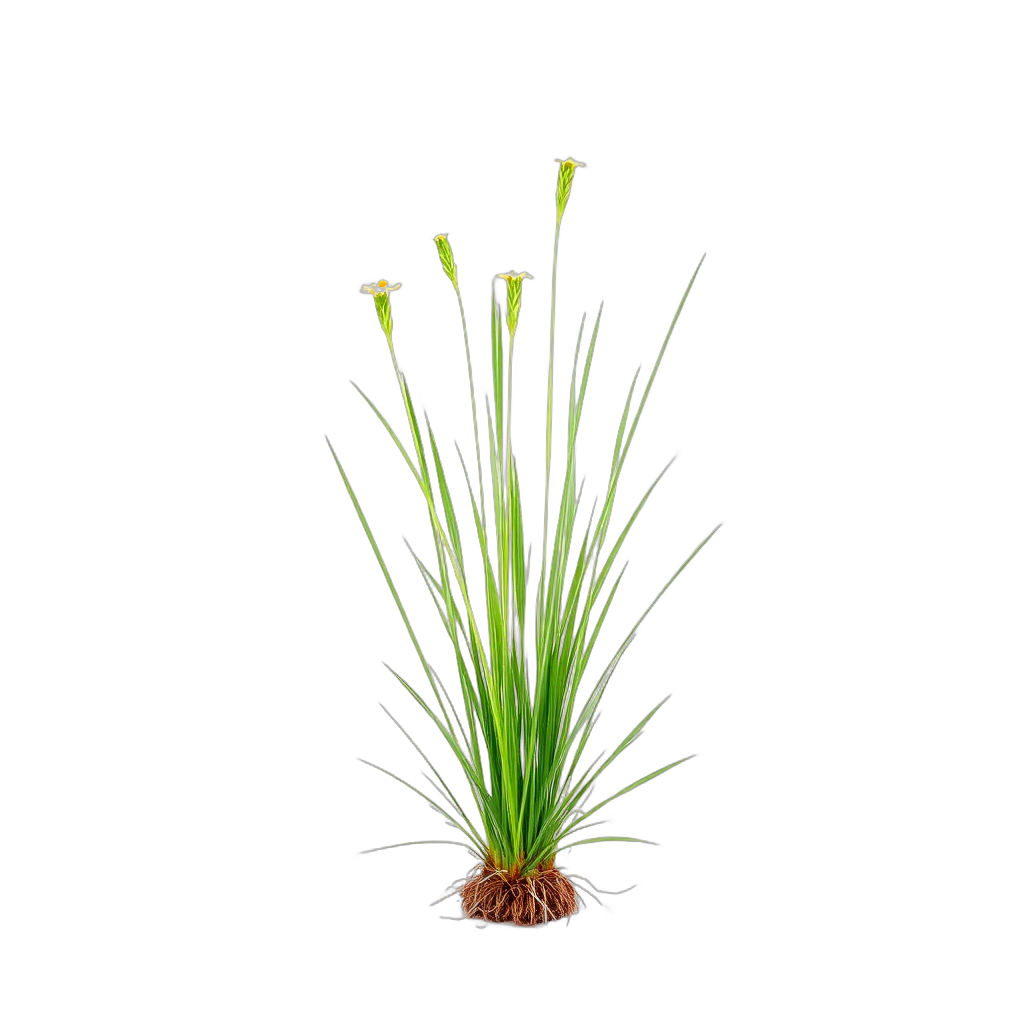
California Melic
Melica californica
low-growing ground cover, blooms in spring.
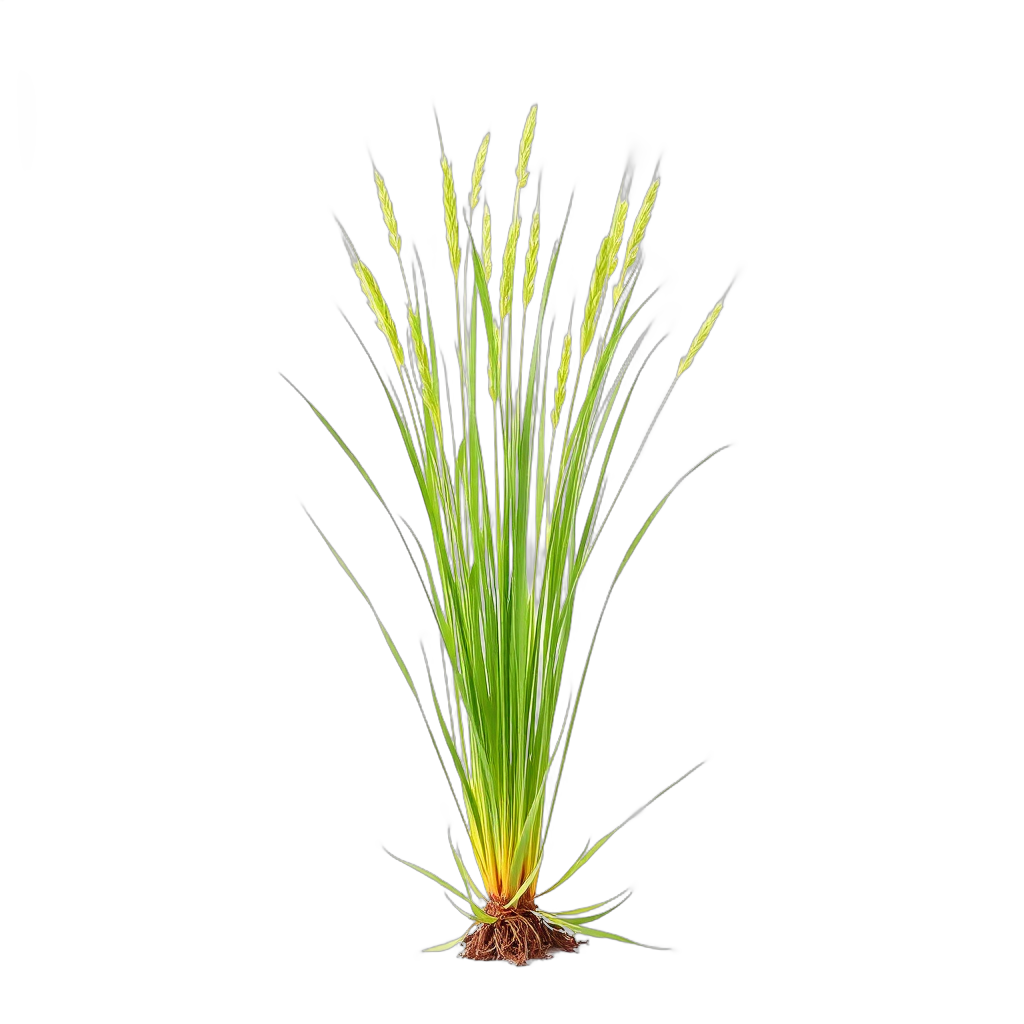
California Oatgrass
Danthonia californica
low-growing ground cover, blooms in spring. Yellow fall color.
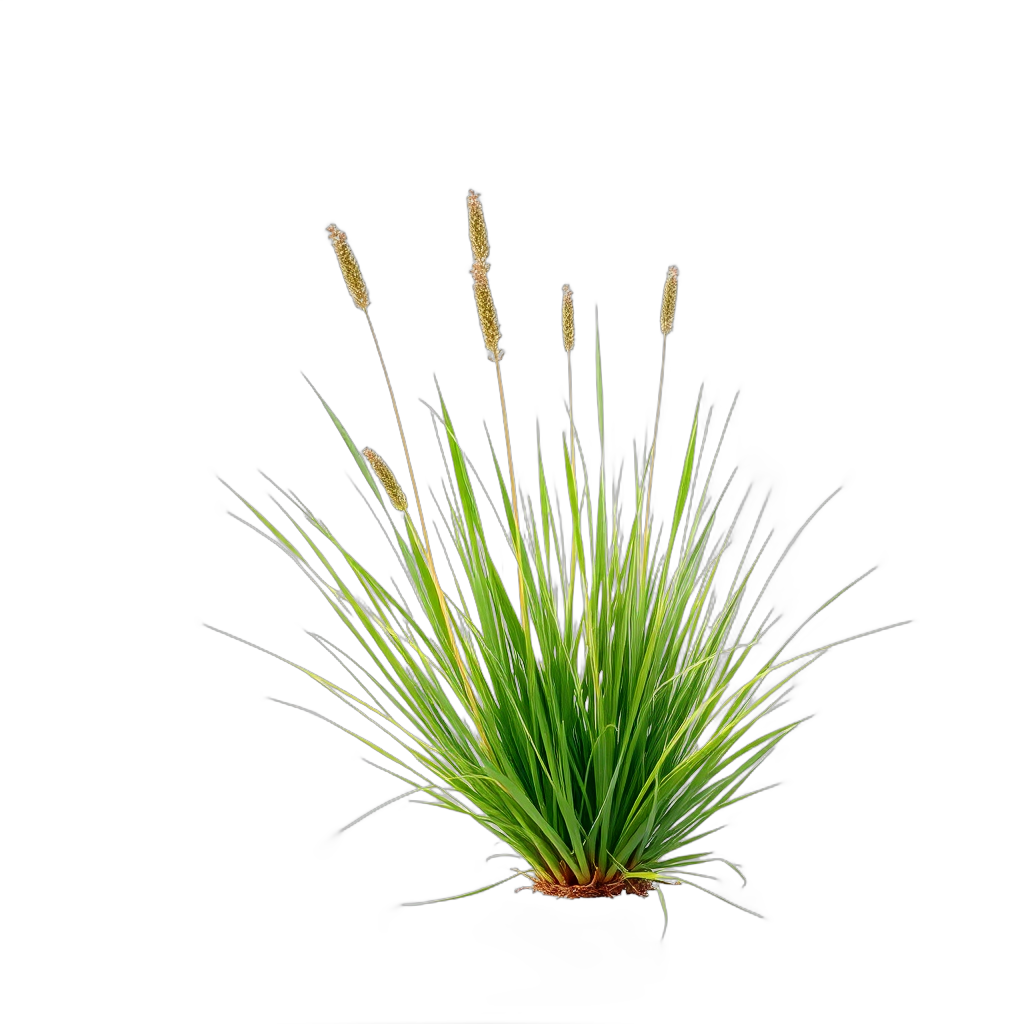
Deer Grass
Muhlenbergia rigens
grows to 3 feet, yellow blooms in fall. Evergreen year-round.
Featured Flowers & Perennials for Modern/Minimalist Gardens
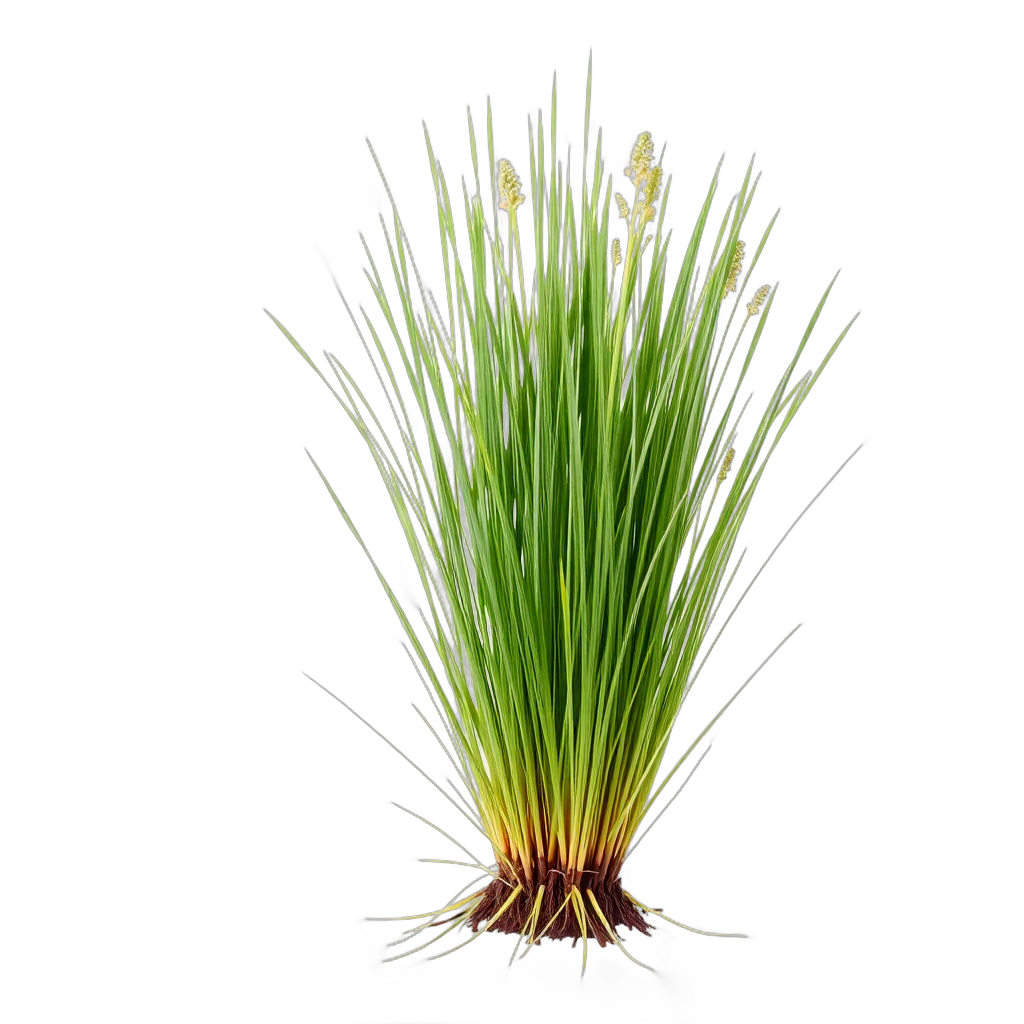
California Gray Rush
Juncus patens
low-growing ground cover, blooms in summer. Evergreen year-round.
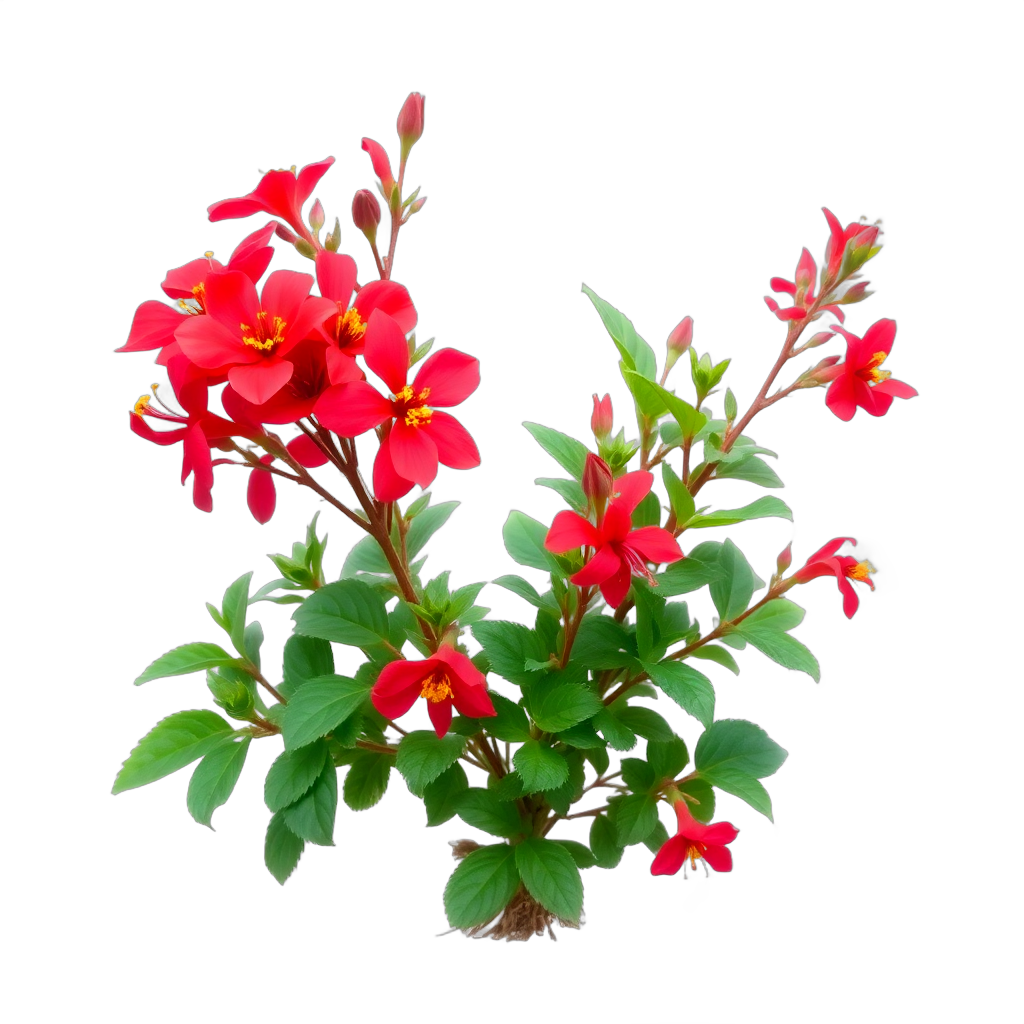
California Fuchsia
Zauschneria californica
low-growing ground cover, red blooms in fall. Attracts hummingbirds.
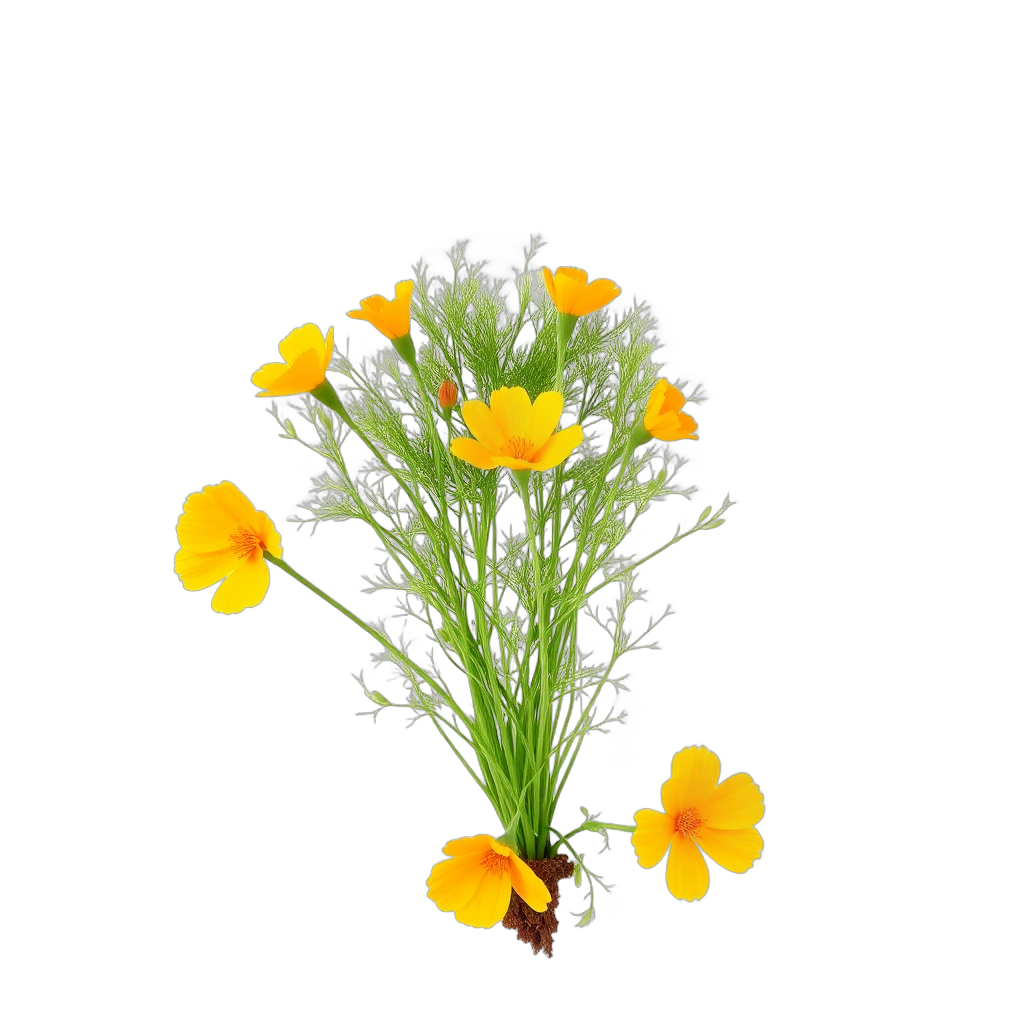
California Poppy
Eschscholzia californica
low-growing ground cover, orange blooms in spring.
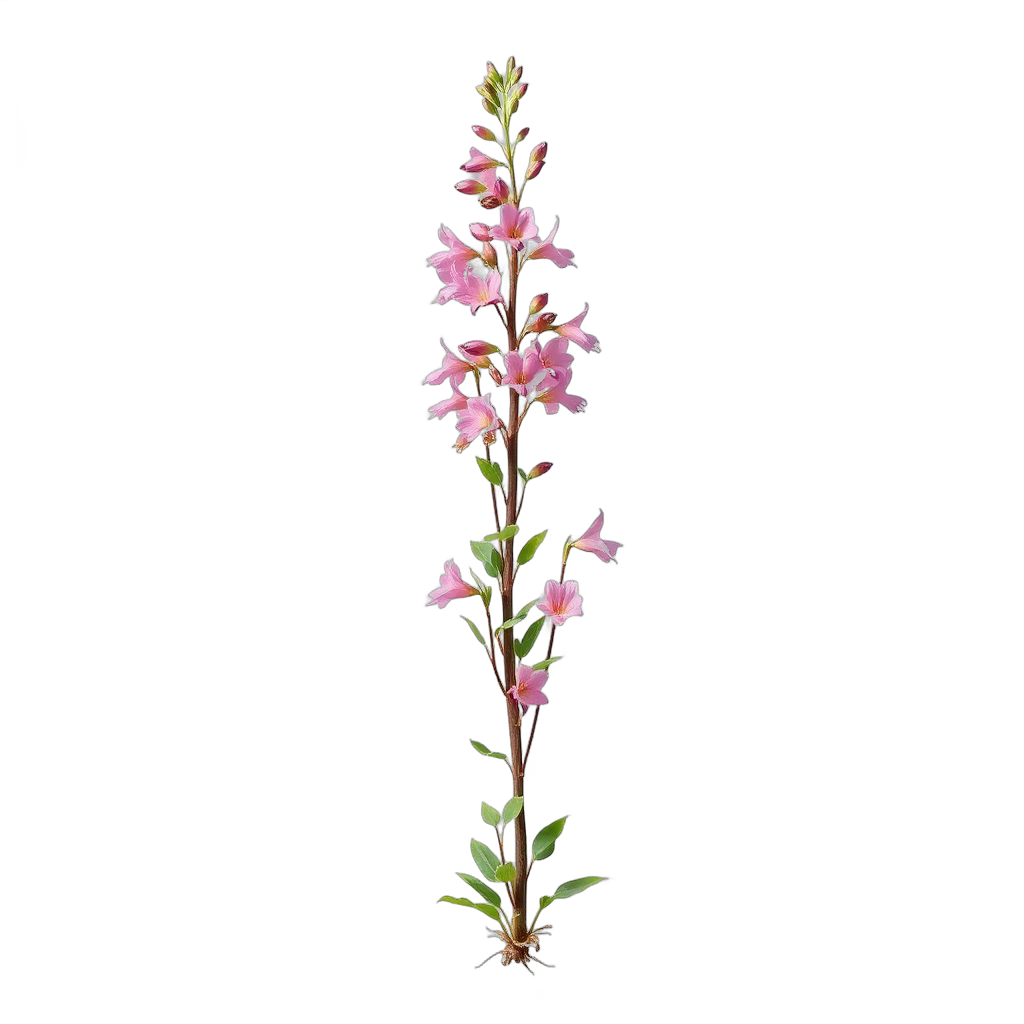
Foothill Penstemon
Penstemon heterophyllus
low-growing ground cover, blue blooms in spring. Attracts hummingbirds.
Zone and sun checks come from our database — confirm with your local nursery before you buy.
Bloom Calendar for San Francisco
spring
California Poppy, Foothill Penstemon, Foothill Sedgesummer
California Gray Rush, Black Sage, California Buckwheatfall
California Fuchsia, Deer Grasswinter
Limited bloomsDesign Tips for San Francisco (Zone 10b)
- Design for SF's two seasons, not four — the wet season (October–April) and dry season (May–September) are the meaningful divisions; choose evergreen structural plants that look intentional year-round, since SF has no autumn color change or winter dormancy spectacle to design around
- Lean into SF's coastal humidity for living plant walls — the city's foggy air makes fern and moss walls far more self-sustaining than in drier climates; a north or east-facing courtyard wall in the Sunset or Richmond can support a living fern installation with minimal supplemental irrigation
- Use Phormium (New Zealand flax) as your fog-belt modern design workhorse — it handles both SF's foggy summers and its occasional cold winter snaps, comes in dramatic colors from chartreuse to near-black burgundy, reaches 4–6 feet in 2–3 years, and provides year-round bold architectural impact that requires no deadheading or seasonal replanting
- Specify aluminum or powder-coated steel for planters and structures rather than bare COR-TEN in the foggiest SF neighborhoods — the persistent humidity of the fog belt can prevent COR-TEN from stabilizing its patina as reliably as it does in drier climates, and ongoing rust runoff on light-colored concrete is hard to remove
- Hire a structural engineer for any rooftop garden project before finalizing your design — SF's building stock ranges from modern engineered structures that handle significant load to century-old wood-frame buildings with minimal load capacity; understanding the actual structural limits before specifying heavy concrete planters or decking materials is essential and legally required for permit applications
- Consider baby tears (Soleirolia soleirolii) as a paving joint filler throughout courtyards and path joints — it thrives in SF's humid coastal air, stays a vivid soft green year-round, self-repairs when foot traffic damages it, and creates the 'living floor' effect that makes a minimal modern courtyard look organic rather than sterile
Where to Source Plants in San Francisco
Skip the big-box stores. These independent San Francisco nurseries specialize in the plants that make modern/minimalist gardens thrive in Zone 10b.
Flora Grubb Gardens
Bayview, San Francisco
SF's most design-forward nursery — architectural plants, Phormium, succulents, and unusual selections with excellent staff knowledge
Sloat Garden Center – West Portal
West Portal, SF
Full-service nursery with strong structural plant and fog-tolerant selection for SF gardens
Sloat Garden Center – Outer Sunset
Outer Sunset, SF
Fog-belt optimized plant selection with reliable Phormium, fern, and shade plant inventory
Annie's Annuals & Perennials
Richmond, CA (near SF)
Unusual architectural and structural plants for Bay Area modern gardens
Yerba Buena Nursery
Woodside (Peninsula, near SF)
California native plants and Pacific NW-adapted structural plants for Bay Area landscapes
Modern/Minimalist Landscaping Costs in San Francisco
| Project Scope | Estimated Cost |
|---|---|
| Front yard modern renovation with DG, steel edging, olive and grasses (400 sqft) | $7,000 – $18,000 |
| Full backyard modern patio with concrete and fire pit | $28,000 – $68,000 |
| Pool and fire feature modern backyard (full build) | $65,000 – $150,000 |
| Round bowl or square fire pit/table (gas) | $3,000 – $9,000 |
| Smart drip irrigation system | $1,500 – $4,200 |
| LED landscape uplighting | $900 – $3,000 |
| AI visualization with ProScapeAI | Free to start |
Estimates based on San Francisco, CA-area contractor rates as of 2026. Actual costs vary by site conditions, materials, and contractor.
San Francisco Climate & Growing Zone
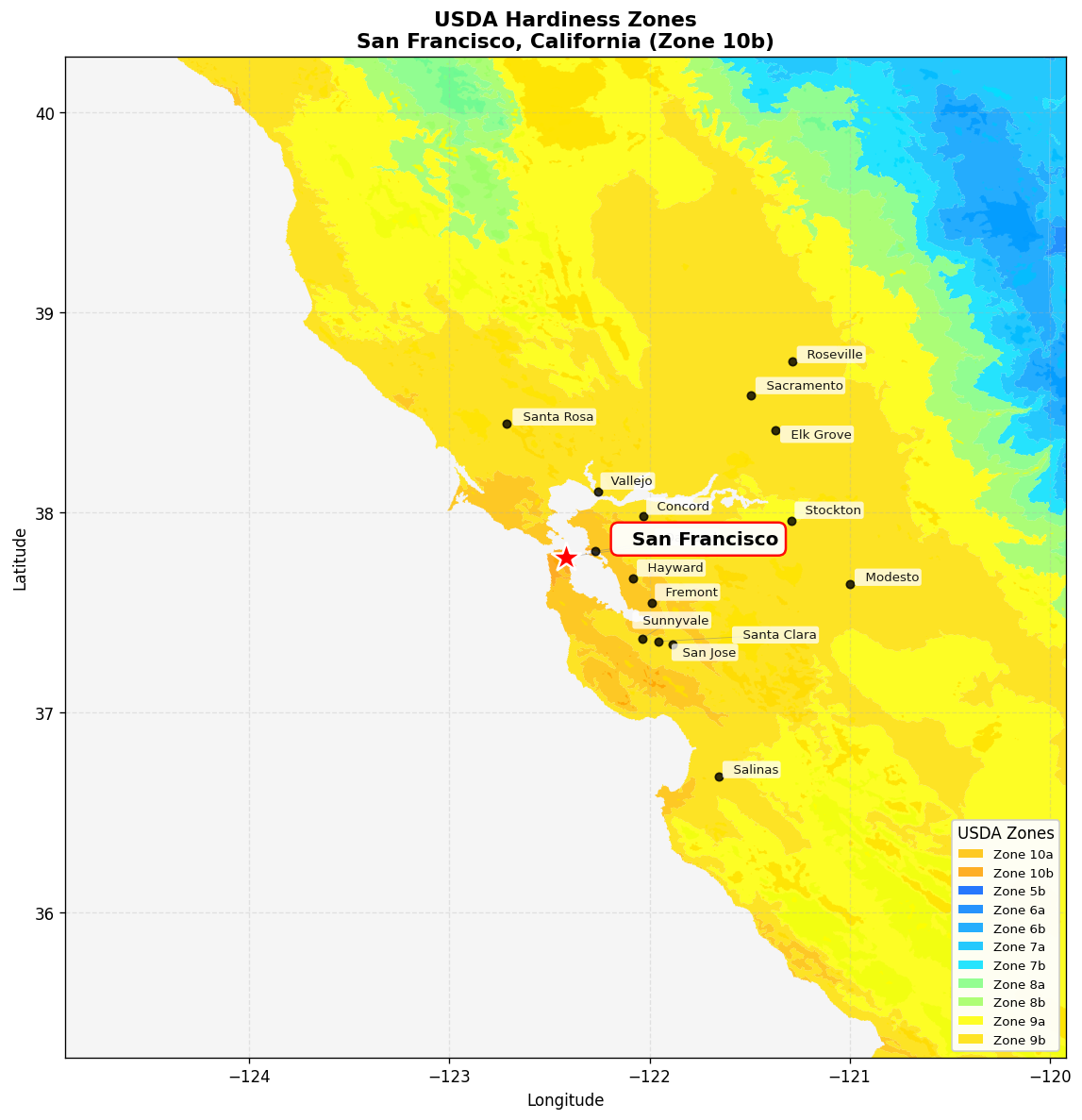
USDA Zone 10b
Hardiness zone for San Francisco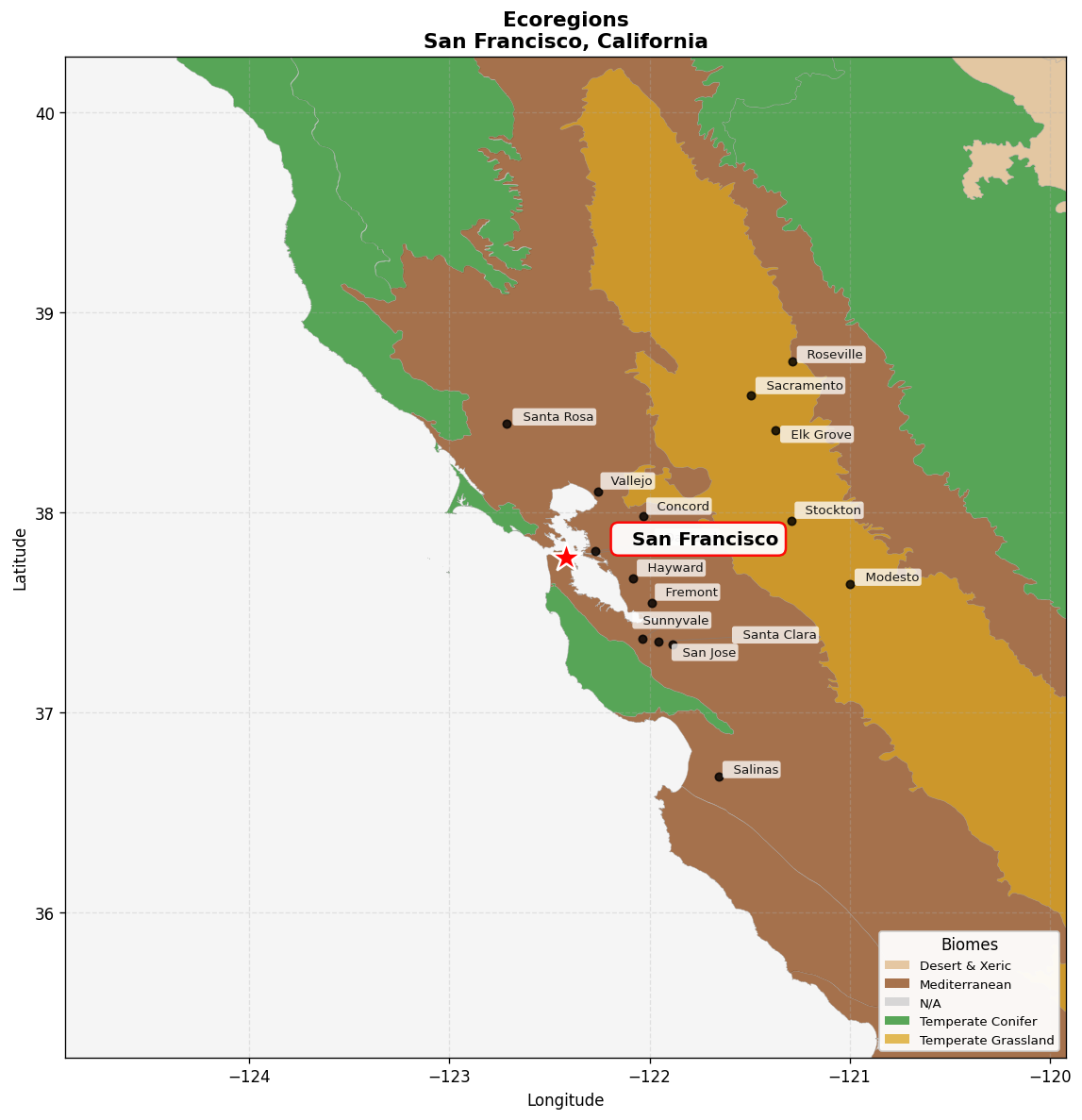
California interior chaparral and woodlands
Native ecoregionFrequently Asked Questions
What plants work best in a modern San Francisco garden?
SF's dual personality (foggy west, sunnier east) requires climate-specific plant selection. For fog-belt neighborhoods (Sunset, Richmond): Phormium (handles humidity), Berkeley sedge (native, fog-tolerant), Japanese maples (love cool moist conditions), Agave attenuata (tolerates more humidity than most agaves), ferns, and Heuchera. For sunnier neighborhoods (Mission, Potrero, Noe Valley): broader modern palette including Agave, Leucadendron, ornamental grasses, and drought-tolerant structural shrubs. Phormium and Berkeley sedge are reliable across essentially all SF microclimates.
How much does modern landscaping cost in San Francisco?
San Francisco has the highest landscaping labor costs in the country. Small front yard modern renovations (100–200 sqft) run $6,000–$18,000. Backyard courtyard projects with concrete, planters, and architectural plants (200–400 sqft) range $20,000–$60,000. Roof deck projects add structural engineering and waterproofing requirements, typically starting at $30,000 and ranging to $120,000+ for complex installations. SF's premium labor market means DIY has exceptional value for plant installation and container gardening.
Can I use succulents and agaves in San Francisco's foggy climate?
It depends on your neighborhood and exposure. In the fog-belt neighborhoods (Outer Sunset, Richmond, Parkside), most agaves and succulents struggle with persistent moisture and limited sun hours. The exception is Agave attenuata — the foxtail agave is notably more humidity-tolerant than other agaves and grows well across SF. In sunnier neighborhoods (Mission, Potrero, Noe Valley), the full agave and succulent palette thrives. Echeveria and Aeonium are generally more SF-tolerant than Aloe or most Agave species in fog-prone areas.
How do I deal with SF's wind on a rooftop garden?
Wind is the primary design challenge for SF roof gardens — buildings channel and accelerate wind dramatically, and many roof surfaces experience sustained winds that would damage most plants. Solutions: Use wind-resistant plants (Mexican feather grass actually looks beautiful in wind; Phormium, Festuca, and dwarf conifers are also wind-tolerant). Install wind screens (cable tensioned glass panels or perforated steel panels are popular on SF roof decks). Keep plants in heavy containers that won't tip. Choose compact, low-growing plant forms over tall narrow ones in exposed situations.
What permits do I need for landscaping in San Francisco?
Permits vary by project scope. Basic planting and standard paving typically don't require permits. You'll need permits for: retaining walls over 3 feet; any drainage modification or connection to city stormwater system; electrical work for landscape lighting; structural changes to decks or roof terraces; tree removal (SF has strict tree removal permit requirements — any tree over 3 inches diameter trunk may require a DPW permit); and front yard paving that exceeds 50% of lot area (which triggers San Francisco's front yard greening requirements). Check SF Planning for current requirements.
How do I create privacy in a San Francisco backyard without a tall fence?
SF's standard fence height limit of 8 feet (in many zones) helps, but vertical privacy planting is equally important. Fast-growing options: Italian cypress creates a slim vertical screen with minimal footprint; Bamboo (contained in root barrier) grows quickly to 12–15 feet; Pittosporum eugenioides provides a dense evergreen hedge. For modern design contexts, Phormium in mass planting creates a bold visual screen at 4–6 feet without the maintenance of a hedge. Overhead elements (pergolas, shade sails) add privacy from upper-floor neighbors. Consult a landscape architect if stacked planting boxes on fences are planned — load calculations may be required.