4 Modern Landscape Ideas for Torrance, CA | Zone 10b Clean Lines
Native plants from the California coastal sage and chaparral (Zone 10b) — Mediterranean (warm summer) climate
Why Modern/Minimalist Gardens in Torrance?
Modern landscape design has an unusually easy job in Torrance, because the housing stock was already halfway there. The city built out through the 1950s and 1960s to house the aerospace workforce at Northrop, TRW and Hughes, and the result is mile after mile of single-storey post-war ranches with long horizontal rooflines, deep eaves and wide, flat 6,000 sq ft lots — Seaside Ranchos, Southwood Riviera, Victoria Knolls, North Torrance. Those are mid-century houses whether or not they were ever called that, and a gravel plane with steel-edged planting bands reads on them as a restoration rather than an imposition. Layer on the flat-roofed contemporary rebuilds now appearing across West Torrance and the Riviera slopes, and modern is arguably the most native style in the city. The flat terrain helps too: unlike hillside LA, a Torrance lot needs almost no grading before you can pour a large-format concrete terrace, which takes a five-figure line item off the front of the budget.
The climate is the reason a Torrance modern garden can look like a desert garden without being one. USDA Zone 10b puts average winter lows at 35–40°F with functionally no frost, so Agave ovatifolia 'Frosty Blue', Agave 'Blue Glow', Agave attenuata and Aeonium arboreum 'Zwartkop' hold their form outdoors year-round — sculptural plants that are annuals or greenhouse subjects in most of the country. Rainfall is roughly 12–13 inches a year, essentially all of it between November and March, which is exactly the dry-summer pattern these plants evolved with. What is different from Palm Springs is heat: the marine layer sits two miles offshore and July highs stay near 79°F, with grey mornings from May into July. That means the hard-desert species that need baking sun — the small, tightly-cupped Agave victoriae-reginae types — collect water in their rosettes and rot, while the open, fast-draining forms thrive. Choose Agave ovatifolia, Agave attenuata and Agave desmettiana 'Variegata' and the look holds without the losses.
Two plant choices separate a Torrance modern garden that ages well from one that becomes a problem. The first is the grass. The golden, wind-catching bunchgrass in most modern renderings is Mexican feather grass, Nassella tenuissima, which the California Invasive Plant Council rates invasive and which seeds itself across the coastal sage and chaparral hills of the Palos Verdes Peninsula next door. The local substitutes are better plants anyway: Muhlenbergia rigens for the big architectural mounds, Muhlenbergia capillaris 'Regal Mist' for the pink autumn haze, Muhlenbergia dubia where you want a fine golden texture, and Leymus condensatus 'Canyon Prince' — a steel-blue Channel Islands native — where you want colour. The second is the soil. Most of the Torrance plain is sandy loam over old marine-terrace sand at around pH 7.0–8.0, which drains beautifully and suits this palette with no amendment at all; lots climbing toward Walteria and the Riviera hit heavy clay, where every agave should sit on a bed mounded 8–12 inches with crushed rock worked in, or it will rot in a wet February. Two miles of salt wind off Torrance Beach also argues for Westringia fruticosa 'Grey Box', Dianella caerulea 'Cassa Blue' and Rhus integrifolia on the exposed west edge.
Water rules shape the design before a single plant goes in. California's Model Water Efficient Landscape Ordinance (MWELO) applies to permitted landscape work at 500 square feet, which pushes hydrozoning, inline drip and a WaterSense-rated controller into any serious front-yard rebuild. Torrance is unusual in being served by three separate retailers — the City of Torrance Municipal Water Department, California Water Service and Golden State Water — so your rate tiers and rebate paperwork depend on which side of the street you live on. Turf-replacement rebates through SoCal Water$mart (Metropolitan Water District, with a West Basin Municipal Water District adder) have run roughly $2–$5 per square foot, but funding windows open and close, so get pre-approval photos taken before anyone swings a sod cutter. And under California Civil Code §4735 an HOA cannot stop you from swapping lawn for low-water planting — a useful sentence to have ready in the Hollywood Riviera and the newer Del Amo-area associations.
4 Modern/Minimalist Design Ideas for Torrance

The Gravel and Agave Entry
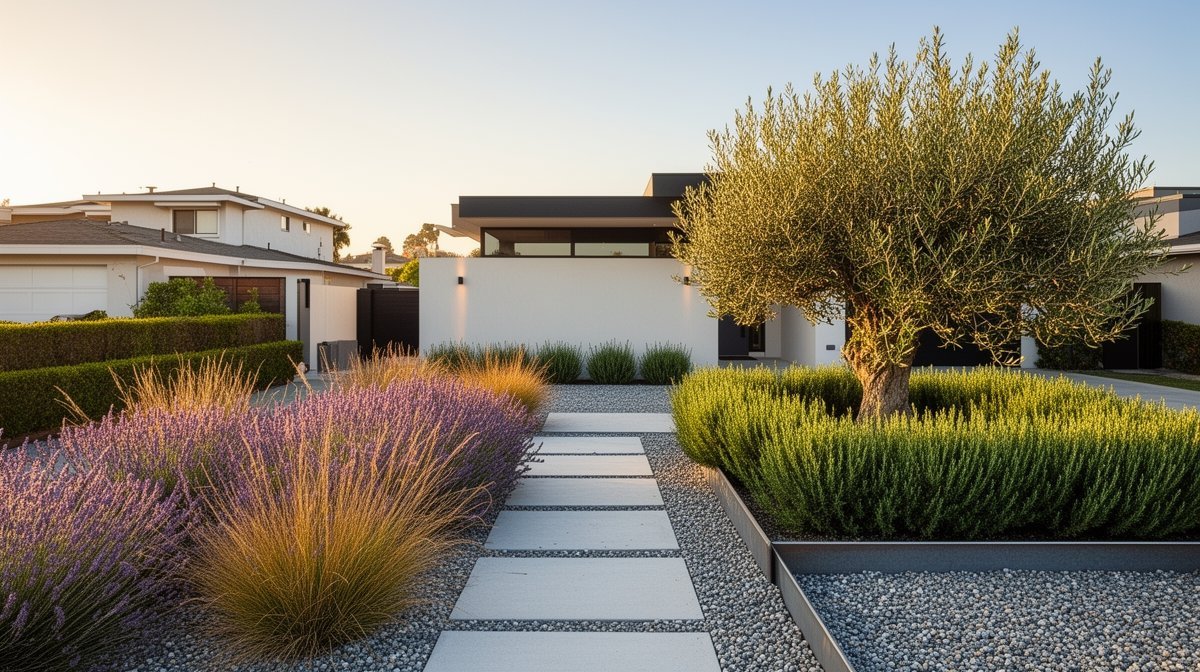
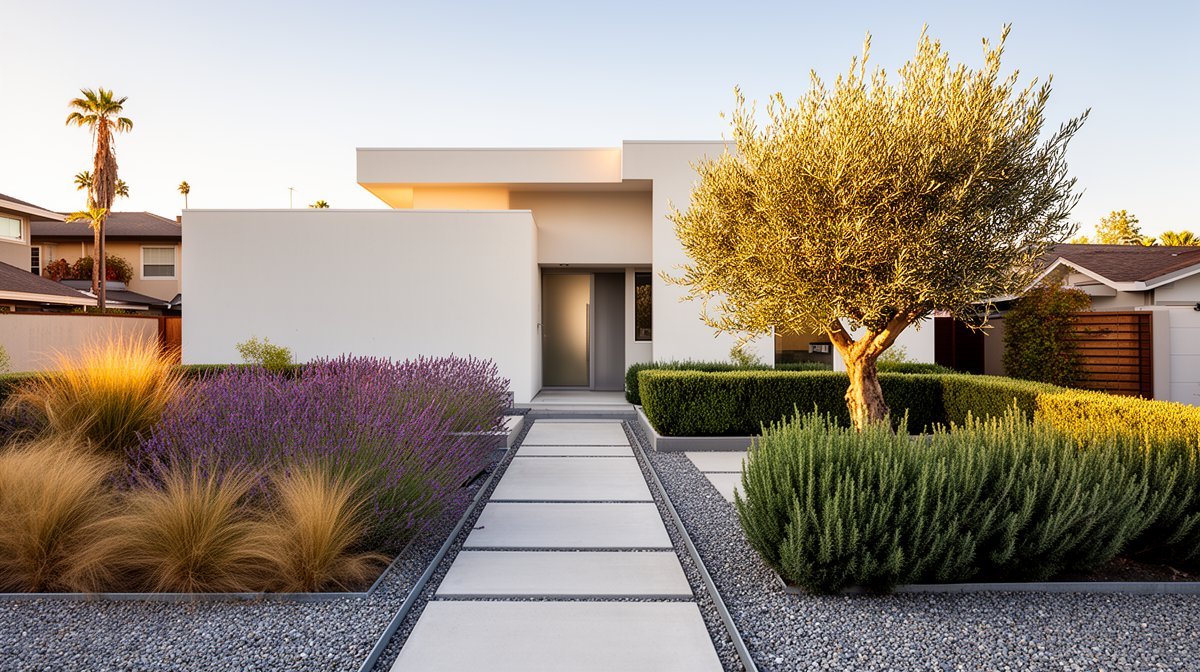
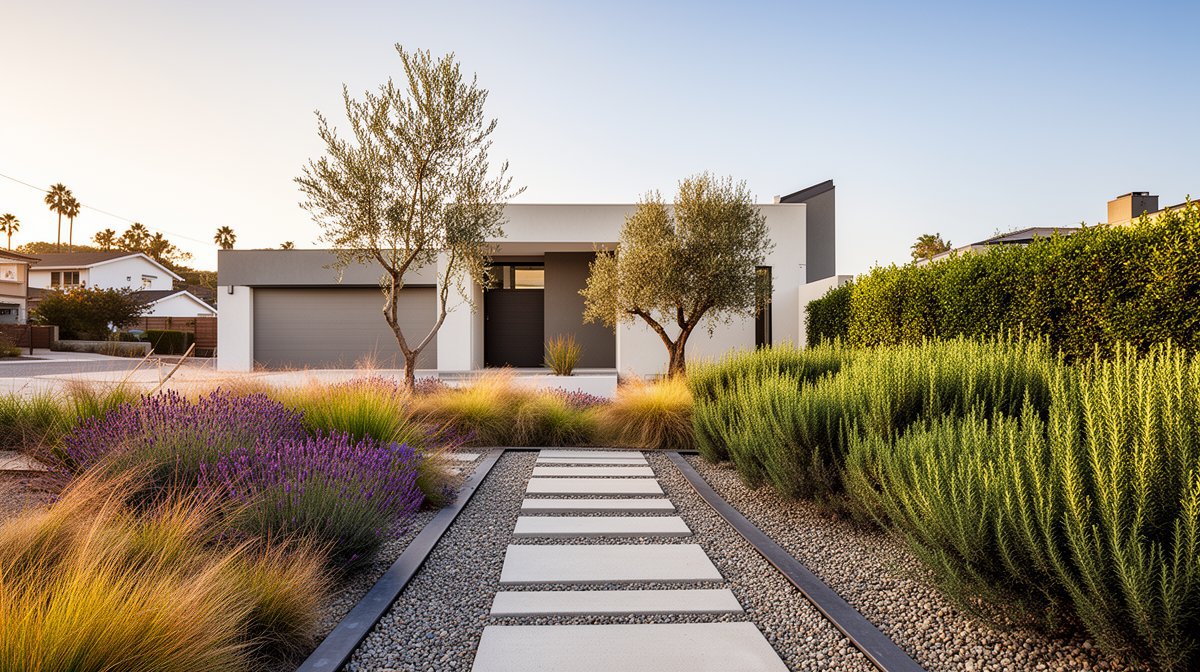
$14–28/sqftA flat-roofed stucco house with black-framed glazing gets a front yard with no lawn whatsoever: a pale gravel plane, split by a wide plain concrete walk running dead straight from the sidewalk to a glass entry door. The planting is arranged in bands rather than dotted about — a run of blue agave rosettes at rosette height, drifts of golden bunchgrass behind them catching the low sun, and a continuous ribbon of purple-flowering lavender along the front edge where it meets the walk. A mature multi-trunk broadleaf tree on the right side throws real shade over a group of granite boulders, keeping the composition from reading as a parking lot.

The Raked Gravel Sculpture Bed
$12–26/sqftA low mid-century ranch with big black-framed picture windows sits behind a front yard treated as a single graphic composition: a decomposed granite field raked into long parallel waves, cut through by angular planting beds held in weathering-steel edging. Inside those beds, big blue-grey agave rosettes are spaced as individual specimens against dark bark mulch, punctuated by near-black rosette clusters and tufts of fine golden grass. Nothing touches anything else, which is the point — every plant reads as an object. A mature oak behind the roofline supplies the only softness in the frame.

The String-Light Fire Bowl Court
$20–40/sqftThe back garden is compressed into one clean poured-concrete terrace of large sawcut panels, wrapped by a smooth cream stucco perimeter wall that turns a standard Torrance side yard into a private room. A round black gas fire bowl sits at the centre, ringed by a cream sofa and two lounge chairs; catenary-wired bistro lights sweep overhead from the wall to the roofline and do all the evening work. A young broadleaf tree in the corner and a narrow planting strip of strappy blue-green foliage along the wall base are the only greenery inside, while soft grass tufts break the hard outer edge of the slab where it meets the beds.

The Lap Pool Pavilion
$55–110/sqft (pool inclusive)At dusk, a flat-roofed glass pavilion with a clerestory band glows from inside, and the garden is built to reflect it: a long rectangular pool with in-water lighting sits directly on axis with the living room, mirroring the ceiling line the length of the water. A wide pale concrete deck runs unbroken around it, holding a linear gas fire table flanked by two facing sofas so the seating reads as one continuous plane with the house. Planting is deliberately thin and used as punctuation only — grasses catching the deck lights at the corners, slim upright evergreens softening the fence, containers at the door.
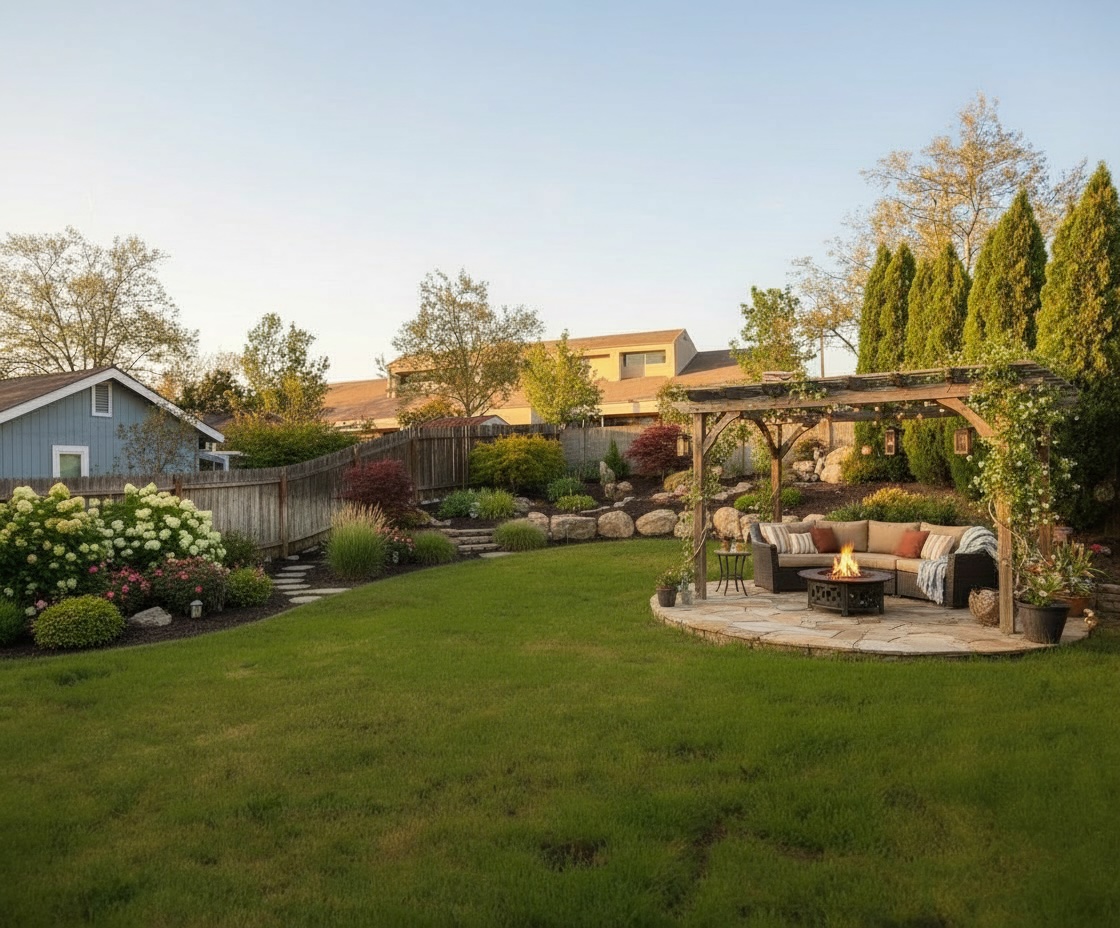
See how a modern/minimalist garden looks on YOUR property
Upload a photo of your Torrance yard and visualize your dream garden in seconds.
Try ProScapeAI Free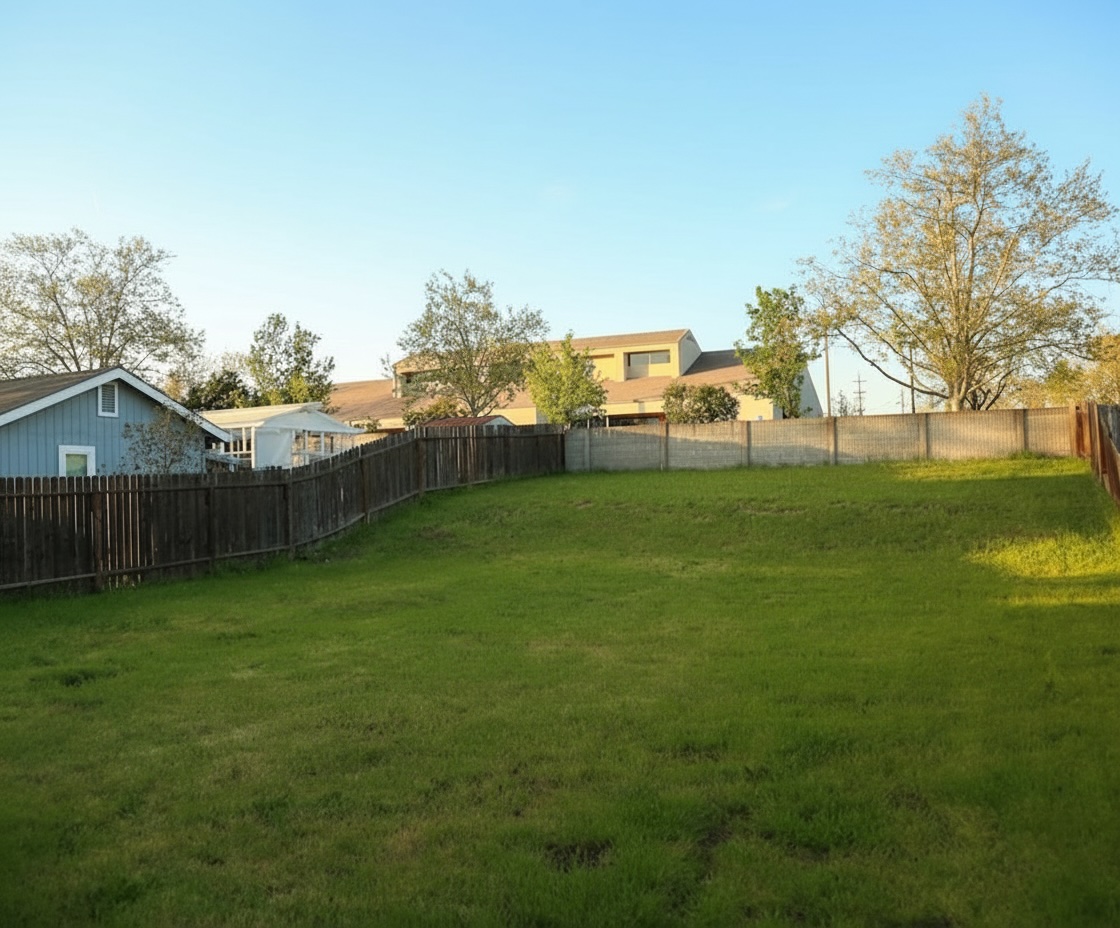
Featured Trees & Shrubs for Modern/Minimalist Gardens
Browse all 219 plants for Torrance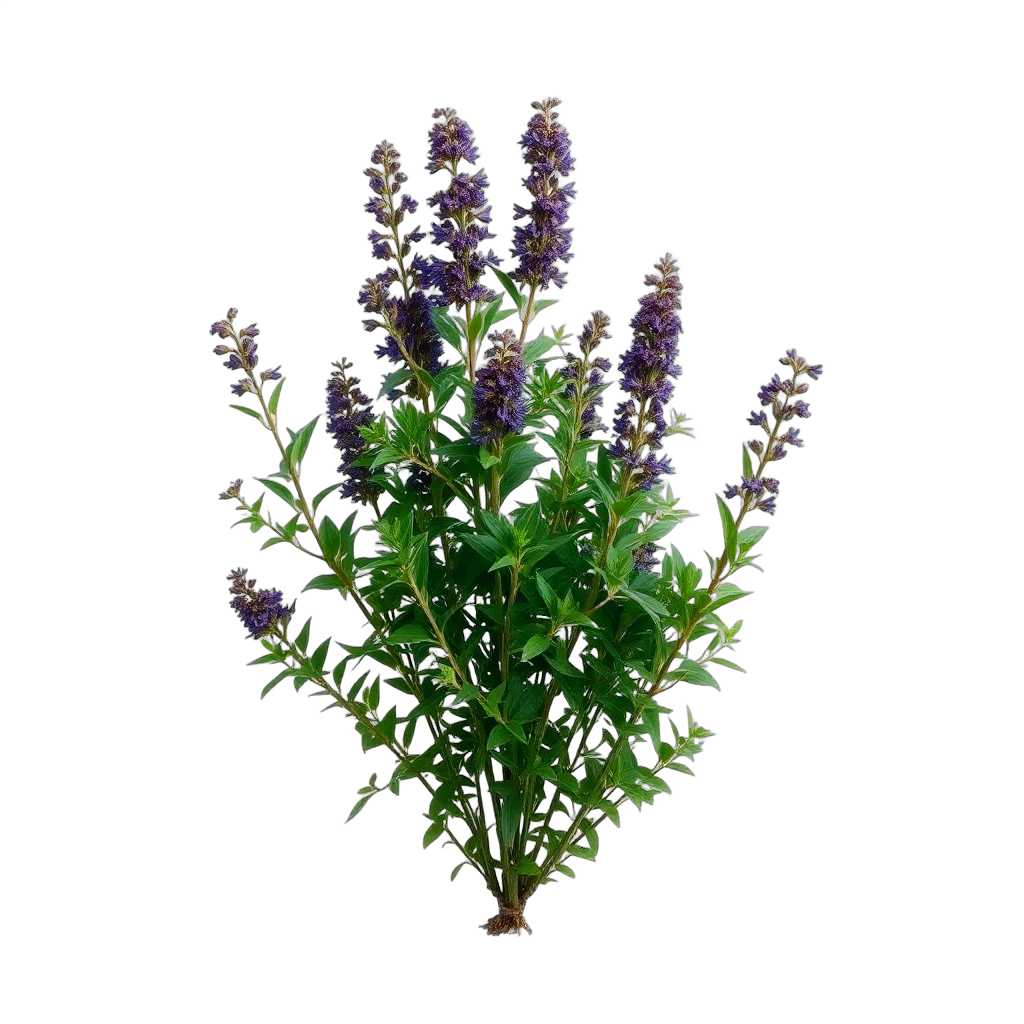
Black Sage
Salvia mellifera
grows to 4 feet, white blooms in spring. Attracts butterflies.
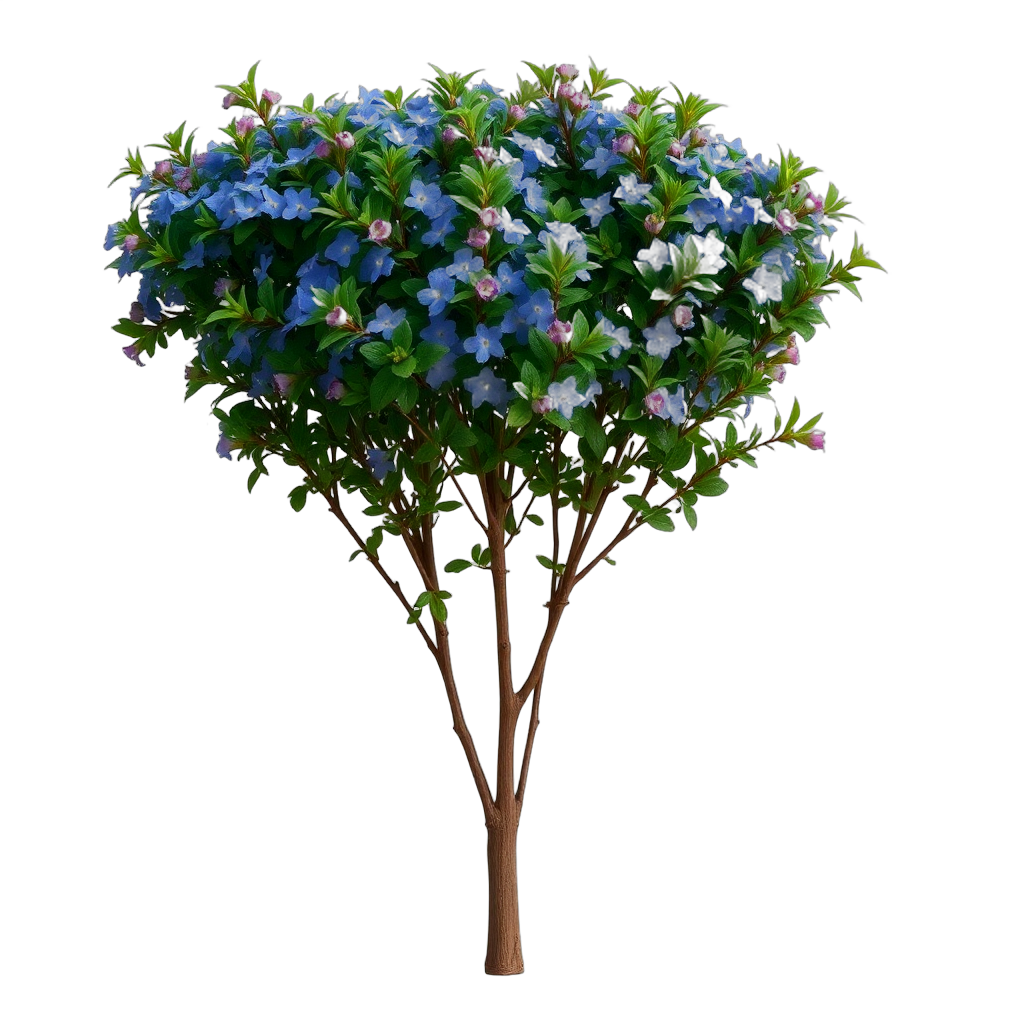
Blue Blossom
Ceanothus thyrsiflorus
medium-sized at 12 feet, blue blooms in spring. Attracts butterflies.
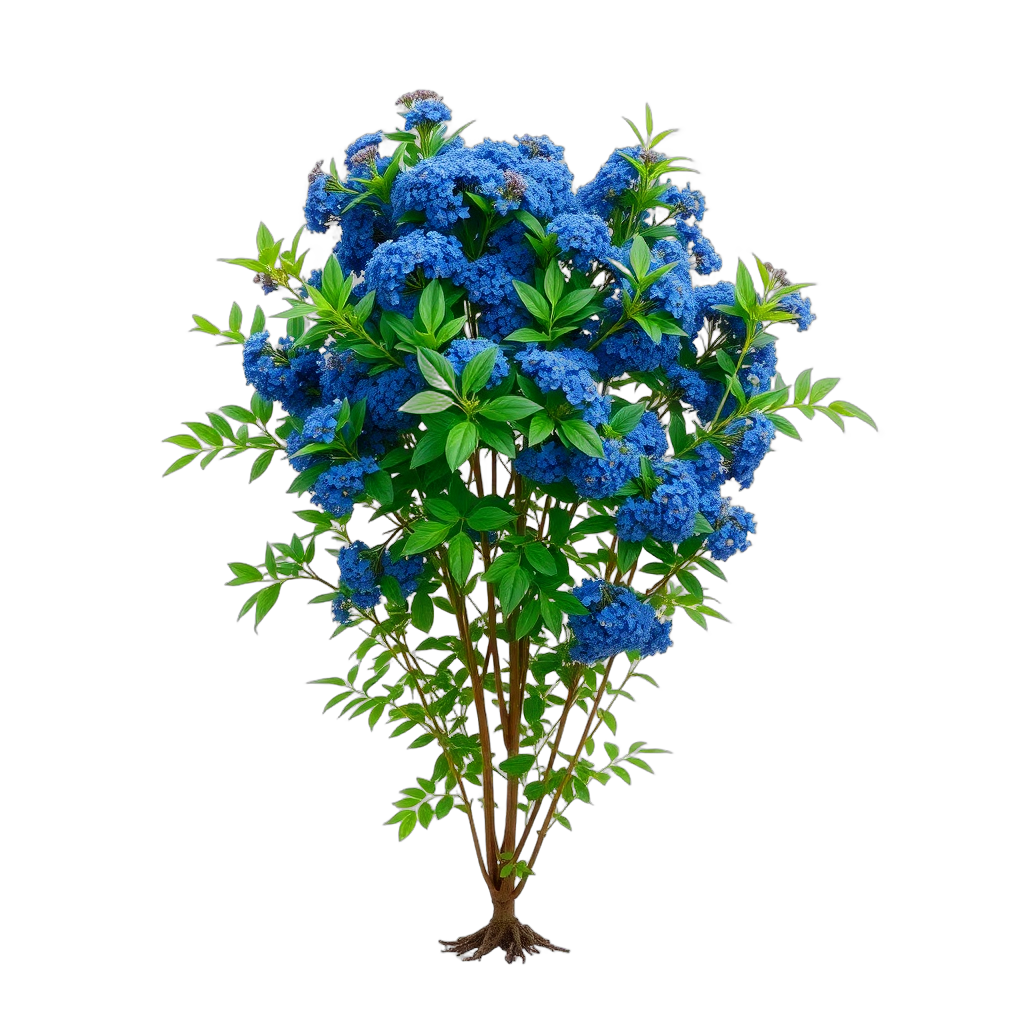
Blue Elderberry
Sambucus cerulea
medium-sized at 15 feet, white blooms in spring. Attracts butterflies.
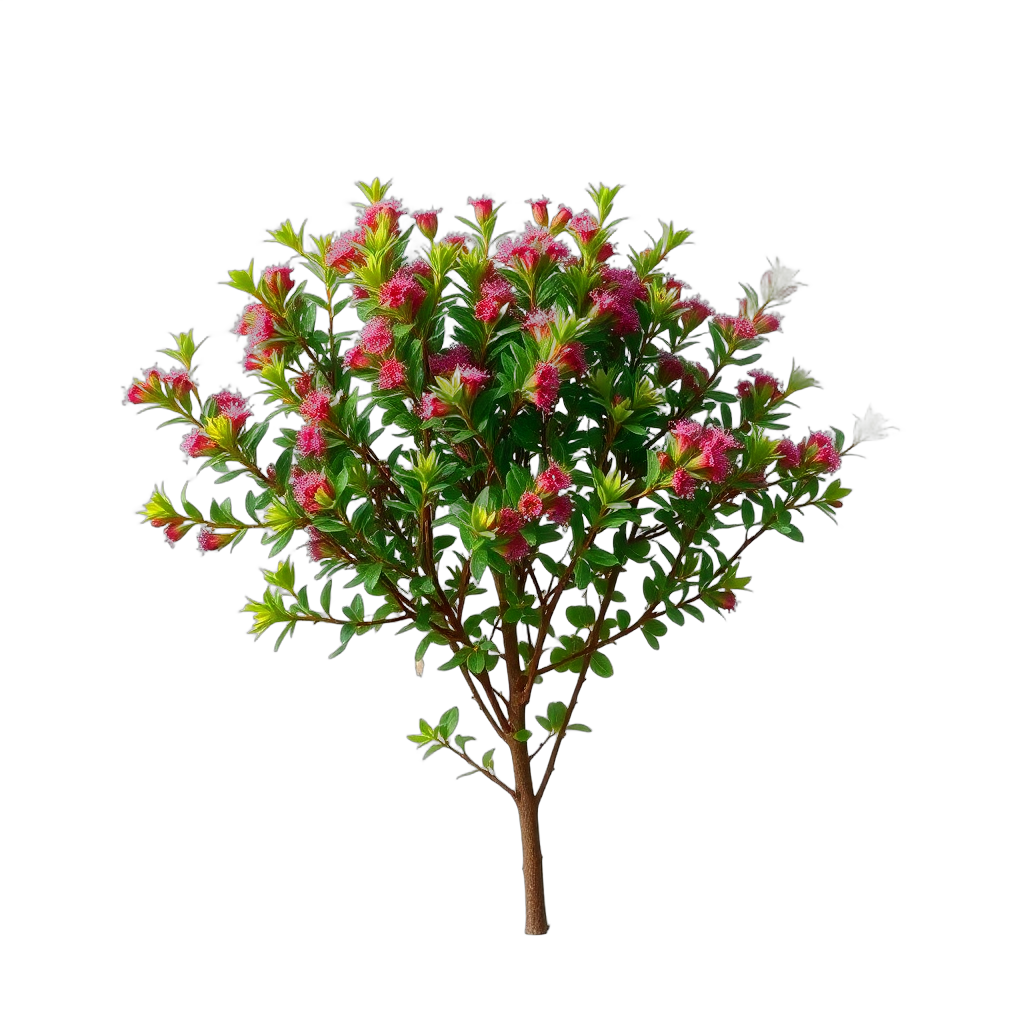
Buckbrush
Ceanothus cuneatus
medium-sized at 7 feet, white blooms in spring. Attracts butterflies.
Featured Grasses & Groundcovers for Modern/Minimalist Gardens
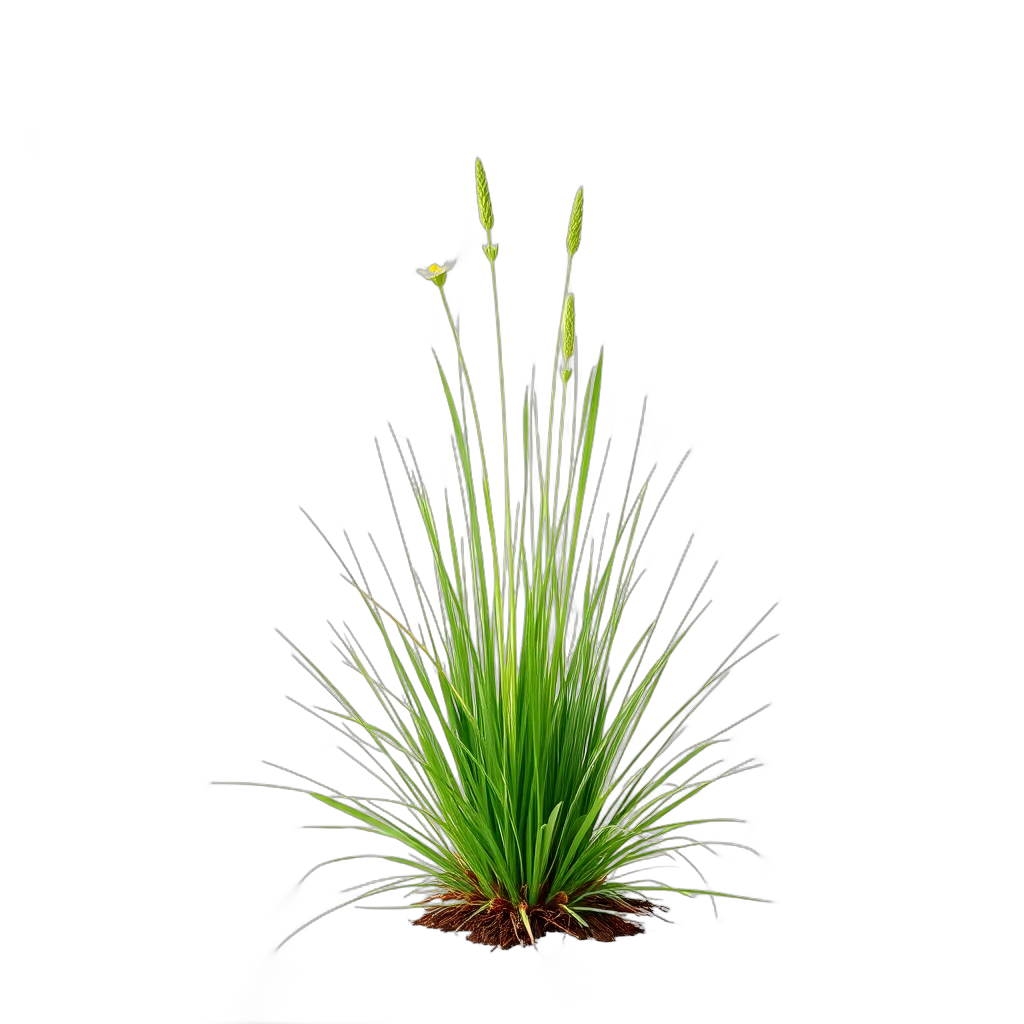
California Brome
Bromus carinatus
low-growing ground cover, blooms in spring. Yellow fall color.
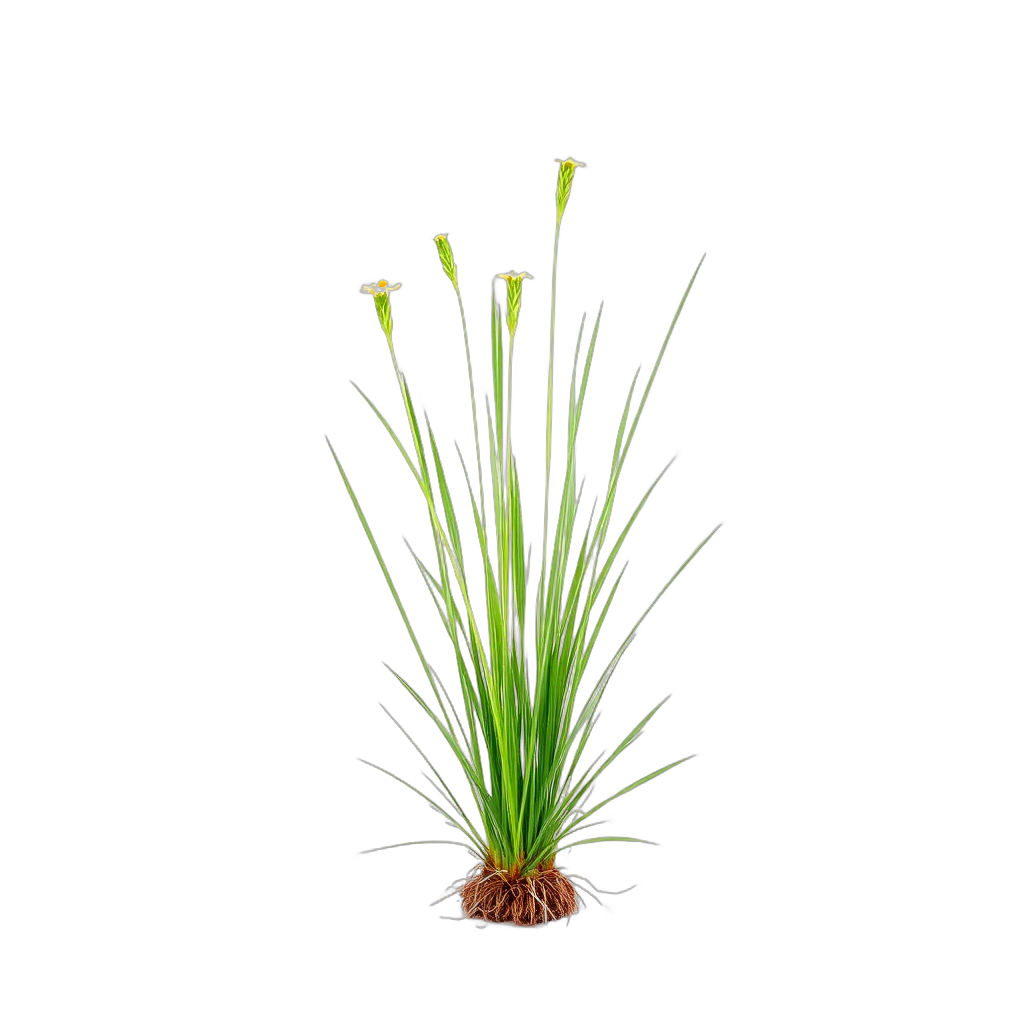
California Melic
Melica californica
low-growing ground cover, blooms in spring.
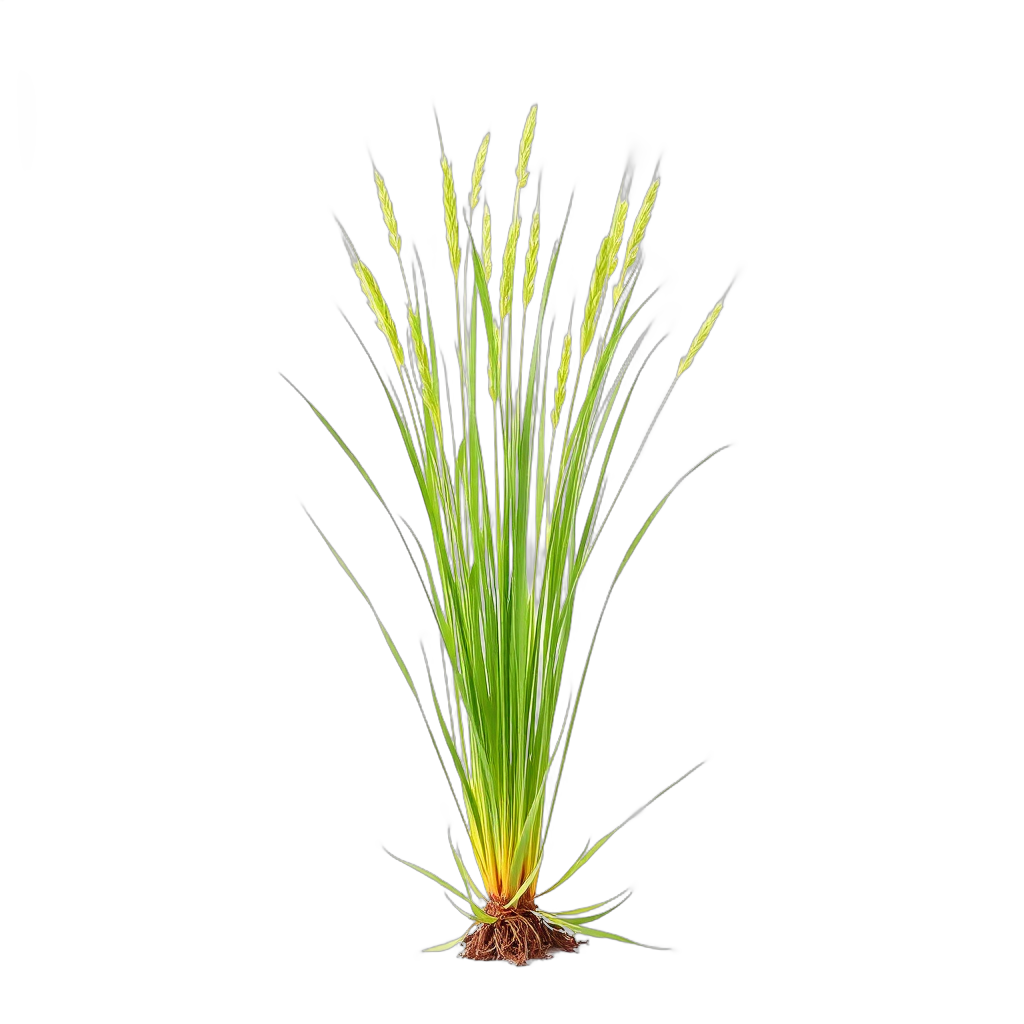
California Oatgrass
Danthonia californica
low-growing ground cover, blooms in spring. Yellow fall color.
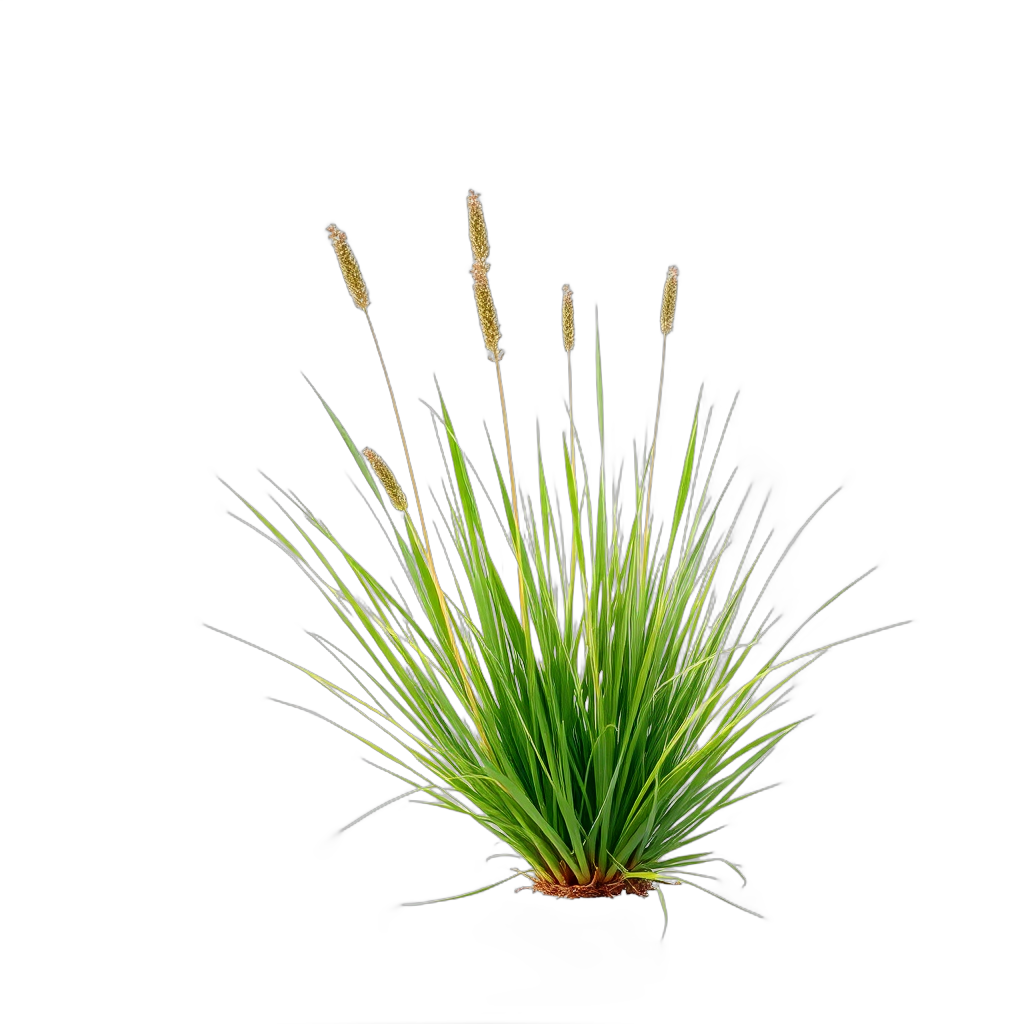
Deer Grass
Muhlenbergia rigens
grows to 3 feet, yellow blooms in fall. Evergreen year-round.
Featured Flowers & Perennials for Modern/Minimalist Gardens
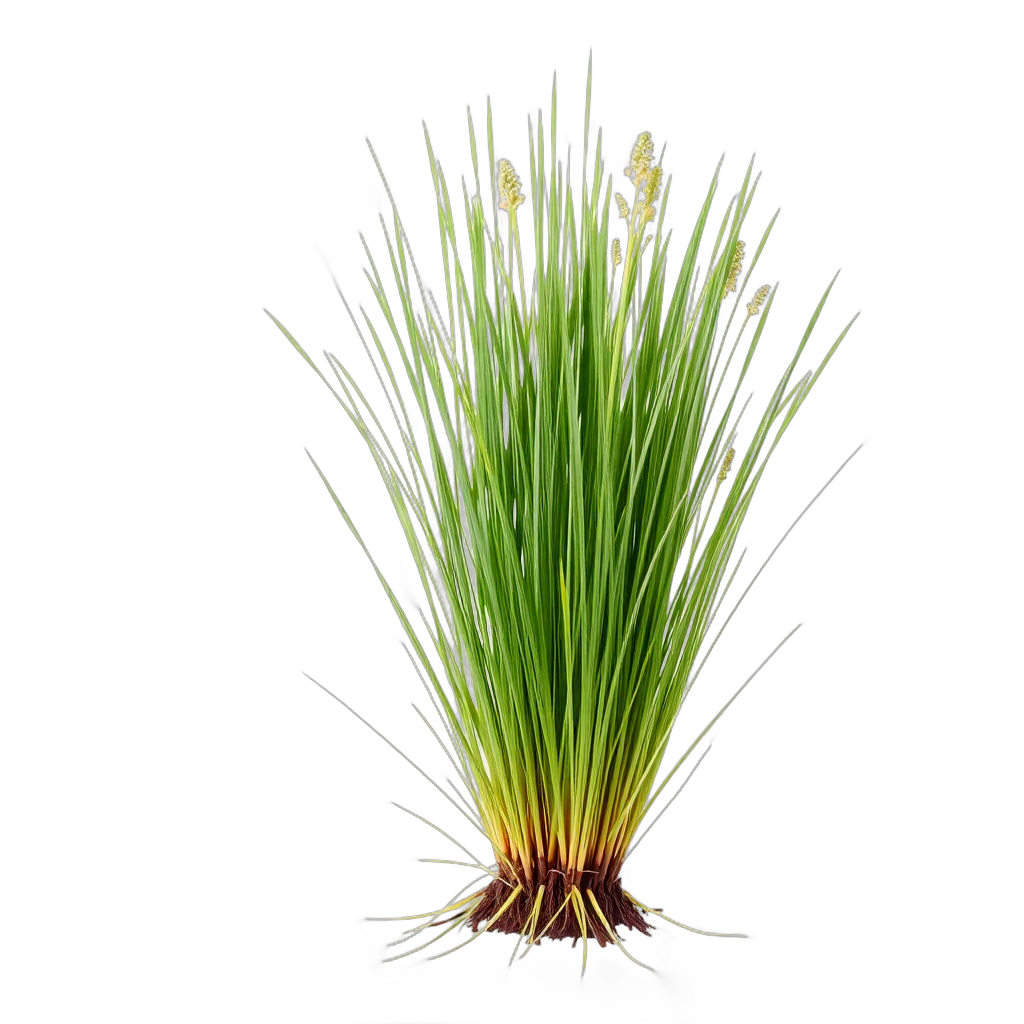
California Gray Rush
Juncus patens
low-growing ground cover, blooms in summer. Evergreen year-round.
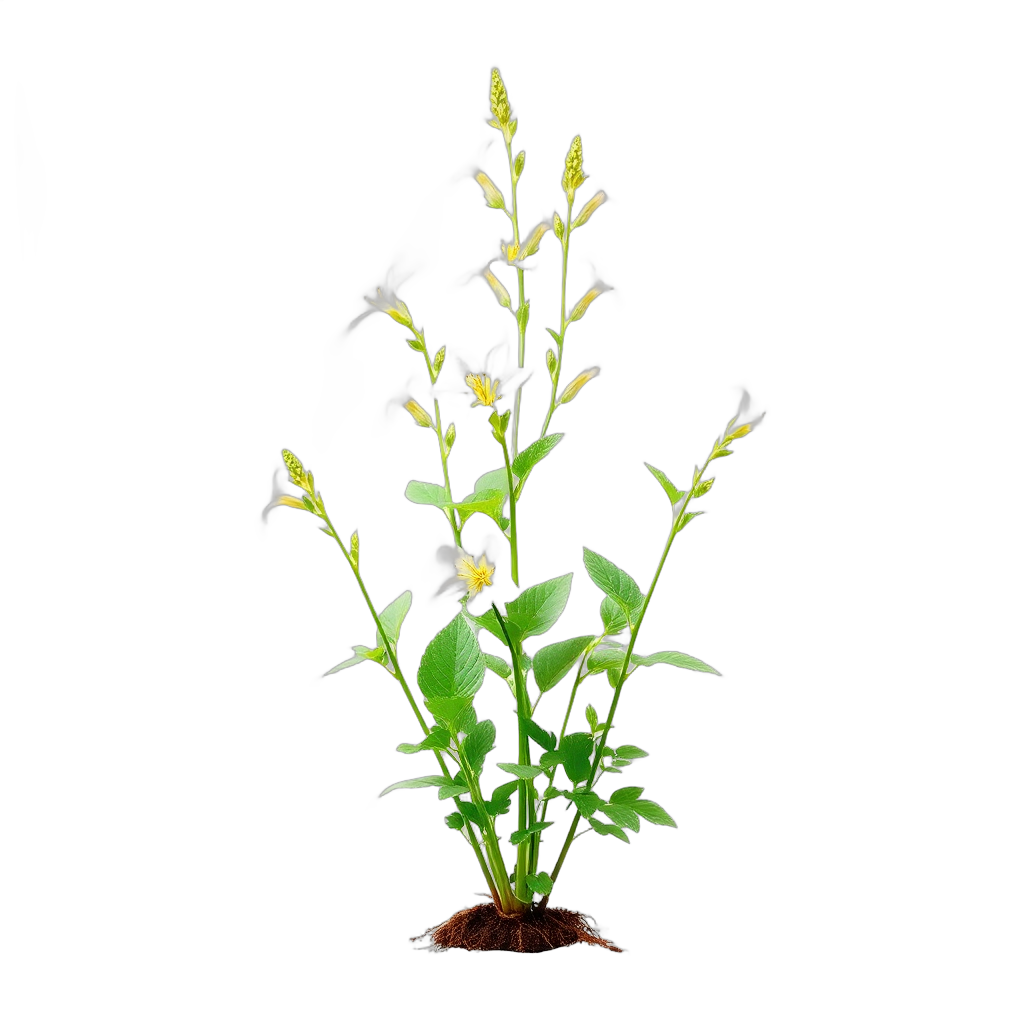
Beach Evening Primrose
Camissonia cheiranthifolia
low-growing ground cover, yellow blooms in spring. Attracts butterflies.
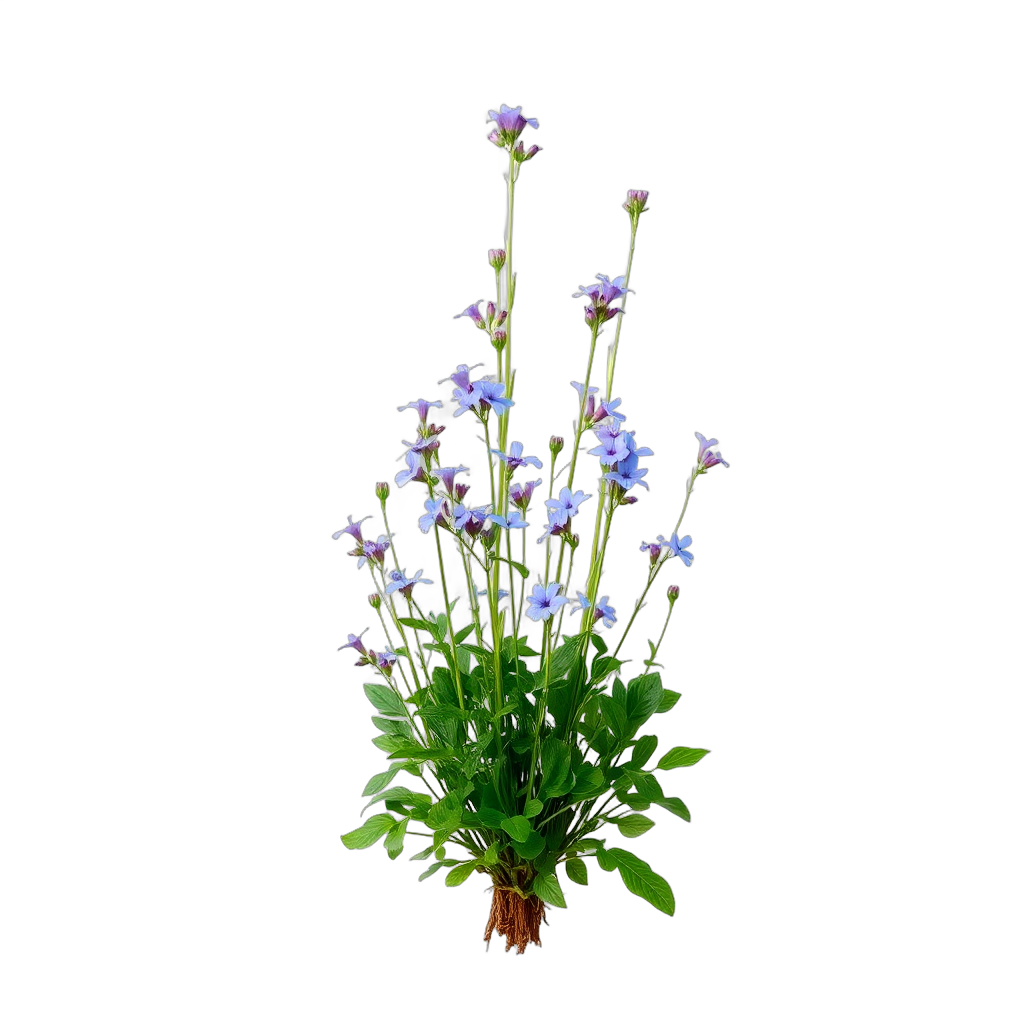
Blue Dicks
Dichelostemma capitatum
low-growing ground cover, blue blooms in spring. Pollinator-friendly.
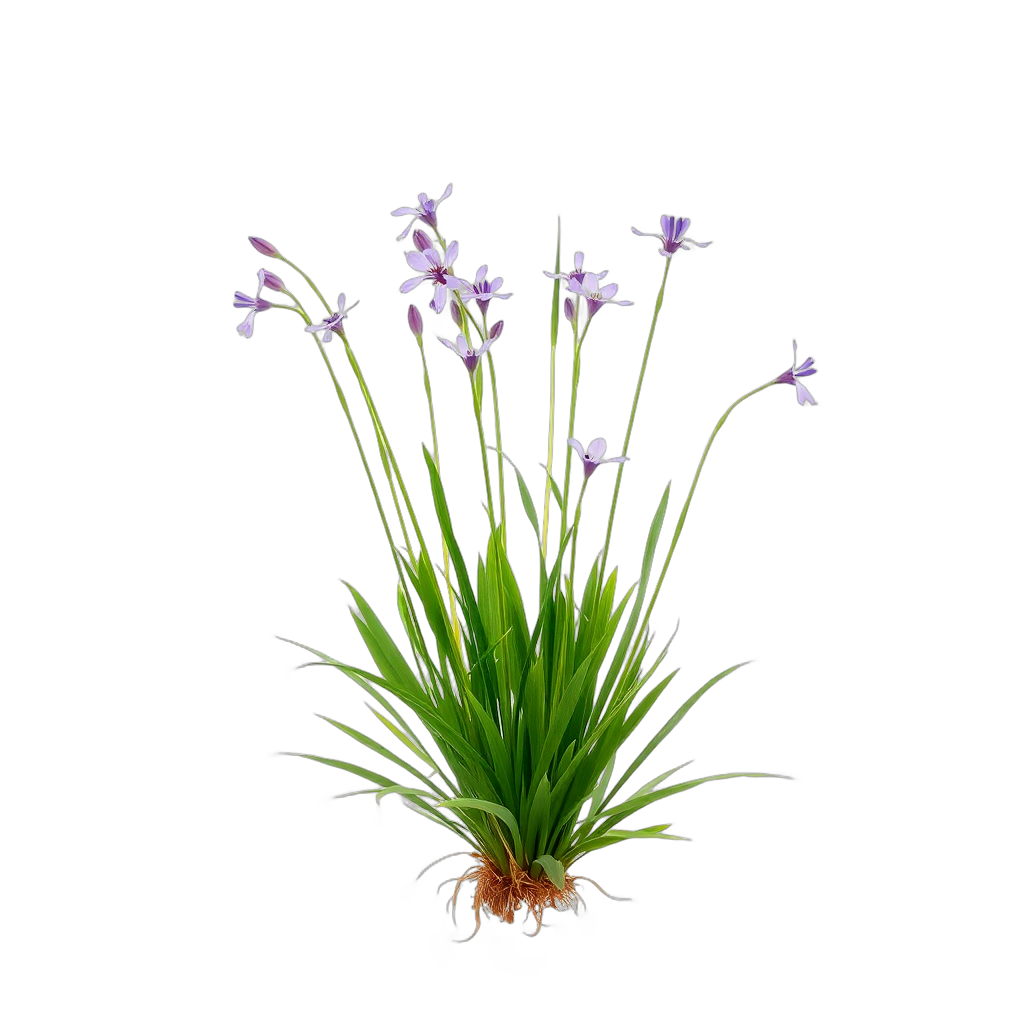
Blue-Eyed Grass
Sisyrinchium bellum
low-growing ground cover, blue blooms in spring. Attracts butterflies.
Zone and sun checks come from our database — confirm with your local nursery before you buy.
Bloom Calendar for Torrance
spring
Beach Evening Primrose, Blue Dicks, Blue-Eyed Grasssummer
California Gray Rush, Hooker's Evening Primrose, Hummingbird Mintfall
California Fuchsiawinter
Limited bloomsDesign Tips for Torrance (Zone 10b)
- Skip Nassella tenuissima entirely and plant Muhlenbergia rigens, Muhlenbergia dubia or Leymus condensatus 'Canyon Prince' instead — you get the same wind-catching texture without seeding an invasive grass into the Palos Verdes chaparral two miles away
- Pick open-form agaves over tight-cupped ones: Torrance's May and June marine layer sits water in the crown of an Agave victoriae-reginae for weeks, while Agave ovatifolia 'Frosty Blue' and Agave attenuata shed it and keep their shape
- Mound beds 8–12 inches with crushed rock worked in on the clay soils toward Walteria and the Riviera; on the sandy loam of the Torrance flats you can plant at grade and put the money into plant size instead
- Space specimens far enough apart that each one reads as an object — a modern planting fails when it fills in, so plan the mature footprint of every Agave 'Blue Glow' and Muhlenbergia rigens and then add a foot
- Use the flat terrain: Torrance lots need almost no grading, so a large-format sawcut concrete terrace here costs a fraction of the same slab on a hillside LA lot — spend the saving on lighting, which is what makes these gardens work after 7pm
- Light the plants, not the paving — in-grade uplights under Agave ovatifolia rosettes and behind Muhlenbergia capillaris 'Regal Mist' throw the shadows that give a hard-surfaced garden depth, and Torrance's mild evenings mean you use them ten months a year
- Put a WaterSense-rated controller and separate drip valves in on day one; agaves on monthly water and Lavandula × intermedia 'Provence' on fortnightly cannot share a station without one of them suffering
Where to Source Plants in Torrance
Skip the big-box stores. These independent Torrance nurseries specialize in the plants that make modern/minimalist gardens thrive in Zone 10b.
Sunflower Farms
North Torrance (S. Western Ave)
Family-run since 1975 on a certified wildlife-habitat property — roses, perennials, shrubs, fruit trees, herbs and vegetable starts, plus design consults and weekend classes
Deep Roots Garden Center
Torrance (Hawthorne Blvd)
Voted best nursery in the South Bay since 2011; the area's largest indoor plant selection plus pottery, containers and on-site potting service
Azul & Verde Nursery
Torrance (Ermanita Ave)
Retail and wholesale yard stocked with low-water Mediterranean shrubs, agaves, aloes and mat-forming spreaders, sod and plant delivery
Rainforest Flora
Torrance (Hawthorne Blvd, near Del Amo)
Showroom specialising in Tillandsia air plants, Neoregelia bromeliads and Platycerium staghorn ferns bred in Southern California — the go-to for sheltered courtyard accents
Modern/Minimalist Landscaping Costs in Torrance
| Project Scope | Estimated Cost |
|---|---|
| Front-yard turf-to-gravel conversion with steel edging (500–800 sqft) | $10,000 – $26,000 |
| Poured concrete patio with sawcut joints (300–500 sqft) | $11,000 – $28,000 |
| Gas fire bowl or linear fire table, plumbed on a dedicated line | $4,500 – $16,000 |
| Weathering-steel raised beds, fabricated, set and filled | $120 – $260 per linear foot |
| Rectangular pool with concrete deck and LED lighting | $110,000 – $250,000 |
| Low-voltage LED uplighting, 10–14 fixtures with transformer | $3,000 – $8,000 |
| AI visualization with ProScapeAI | Free to start |
Estimates based on Torrance, CA-area contractor rates as of 2026. Actual costs vary by site conditions, materials, and contractor.
Torrance Climate & Growing Zone
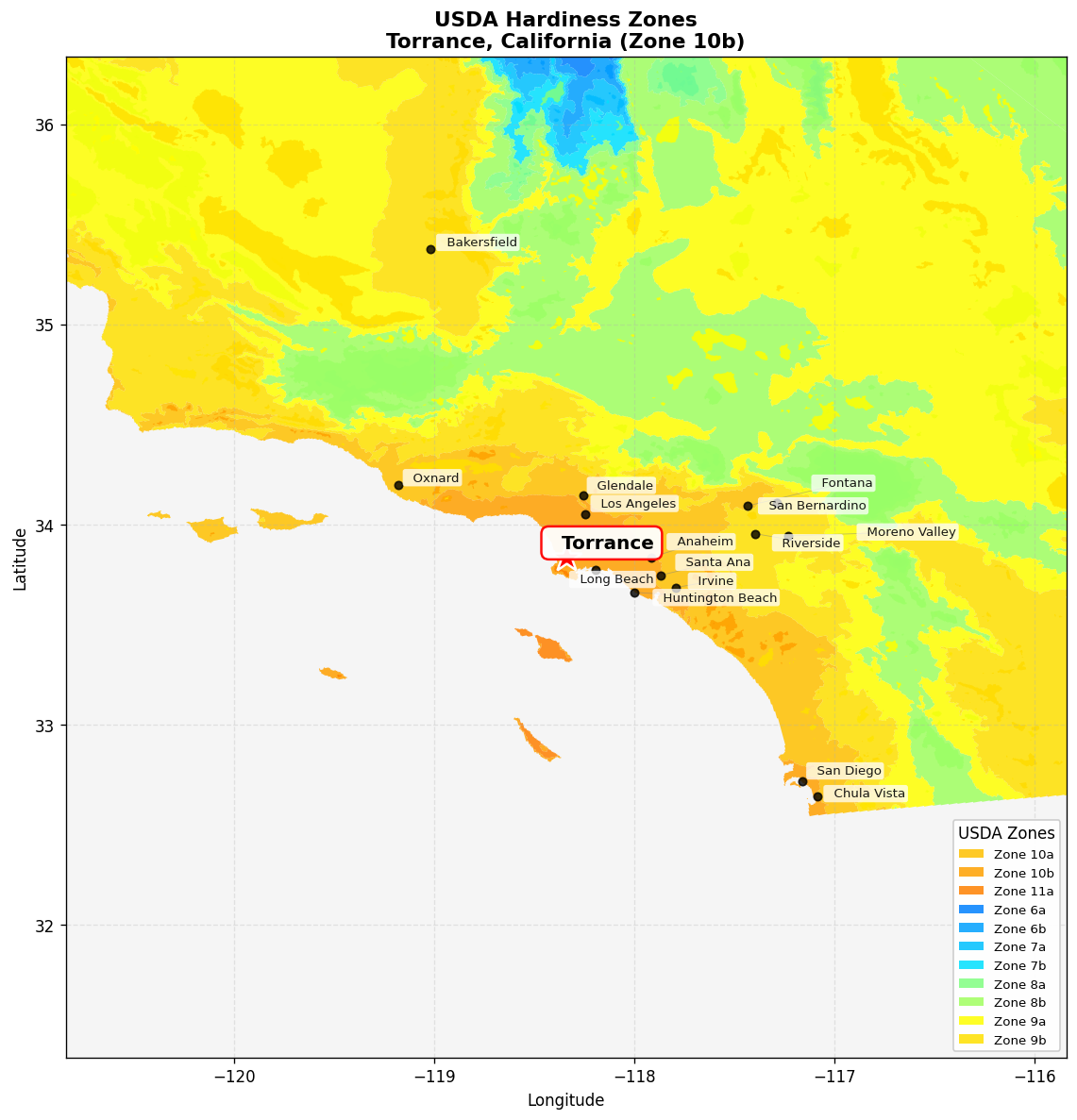
USDA Zone 10b
Hardiness zone for Torrance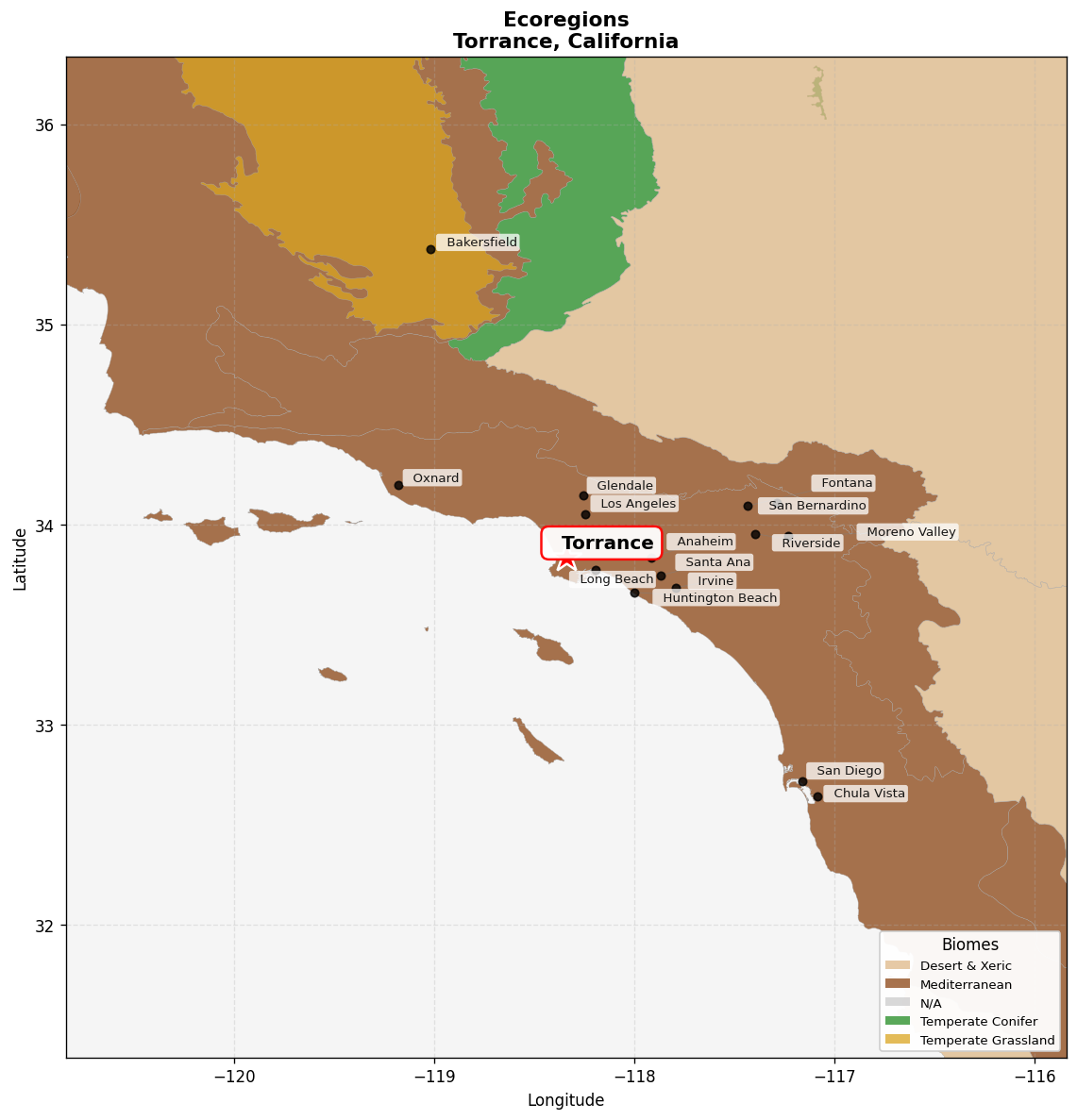
California coastal sage and chaparral
Native ecoregionFrequently Asked Questions
How much does a modern landscape cost in Torrance?
South Bay labour is expensive, so plan on figures above the national average. A front-yard turf-to-gravel conversion with steel edging and specimen agaves over 500–800 sq ft runs $10,000–$26,000 installed. A poured concrete patio with sawcut joints, 300–500 sq ft, is $11,000–$28,000. A gas fire bowl or linear fire table plumbed on a dedicated line adds $4,500–$16,000, and low-voltage LED uplighting with 10–14 fixtures and a transformer is $3,000–$8,000. A rectangular pool with a concrete deck and lighting is the big number at $110,000–$250,000. Turf-replacement rebates of roughly $2–$5 per square foot through SoCal Water$mart can take a meaningful bite out of the front-yard figure if you apply before demolition.
Which agaves and rosette plants survive Torrance's marine layer?
Choose open, fast-draining forms over tightly-cupped ones. Agave ovatifolia 'Frosty Blue', Agave 'Blue Glow', Agave attenuata, Agave desmettiana 'Variegata' and Agave americana 'Mediopicta Alba' all hold their shape through grey May mornings and a wet February. The species that struggle are the small, tight-cupped ones like Agave victoriae-reginae, which collect water in the crown and rot in coastal humidity. Aeonium arboreum 'Zwartkop' and Aeonium 'Sunburst' are ideal here — they are winter-growers from the Canary Islands and Torrance's mild, damp winters are precisely their season, though they go semi-dormant and look tired by September.
Should I use Mexican feather grass in a modern Torrance garden?
No. Nassella tenuissima is rated invasive by the California Invasive Plant Council and it seeds prolifically into the coastal sage and chaparral of the Palos Verdes Peninsula immediately south of the city. The substitutes are better plants regardless: Muhlenbergia rigens for large architectural mounds that hold shape for a decade, Muhlenbergia capillaris 'Regal Mist' for the pink October haze, Muhlenbergia dubia for a fine golden texture at knee height, and Leymus condensatus 'Canyon Prince' for steel-blue foliage that also takes salt wind. All four get a single cut-back in late winter and nothing else.
Do I need special base prep for concrete in Torrance?
Less than most of the country, but do not skip it. Torrance sits on a flat marine terrace with no meaningful frost depth, so a four-inch slab over four inches of compacted crushed rock is standard for patios and walks on the sandy loam that covers most of the city. Where lots climb toward Walteria and the Hollywood Riviera the soil turns to expansive clay, and that swing between a soaked February and a bone-dry September will crack a slab poured on bare ground — there you want a thicker compacted base and generous sawcut control joints. The flat terrain is a genuine budget advantage: a large-format terrace in Torrance rarely needs the retaining and grading work an equivalent hillside LA project would.
How much water does a gravel-and-agave front yard use?
After establishment, very little. In the first year, run inline drip with 0.5–0.9 gph emitters every 10–14 days through the dry season so roots chase down into the marine-terrace sand. By year two, Agave ovatifolia 'Frosty Blue', Senecio mandraliscae and Muhlenbergia rigens are comfortable on monthly summer water and nothing at all from November to March. Lavandula × intermedia 'Provence' and Dianella caerulea 'Cassa Blue' want slightly more — put them on their own valve. Against a spray-irrigated lawn on the same footprint, expect to cut outdoor use by well over half, which matters when the two-day-a-week restrictions return.
What needs a permit for a modern backyard build?
Gravel, planting, drip and mulch need nothing. A pool or spa, a retaining wall above four feet, new line-voltage electrical, and a gas line to a fire bowl or fire table generally do, and a solid perimeter wall has its own height limits within the setbacks. Thresholds and plan-check requirements are set by the City of Torrance Community Development Department, so confirm your specific scope with them before pouring anything. Permitted landscape work over 500 sq ft also triggers MWELO documentation — a planting plan, hydrozones and a WaterSense-rated controller — which is worth designing in from the start rather than retrofitting at plan check.