4 Modern Garden Ideas for Cape Coral, FL | Clean-Line Landscape Design in Zone 10a
Native plants from the Southeast US conifer savannas (Zone 10a) — Tropical savanna climate
Why Modern/Minimalist Gardens in Cape Coral?
Modern landscape design fits Cape Coral almost too well. The city was platted from scratch by Gulf American in 1957 on a rigid grid of 80-by-125-foot lots and more than 400 miles of dredged canals — it is a geometric city by construction, and the low-slung stucco ranches and flat-roofed contemporary builds filling in Sandoval, Entrada, Coral Lakes and the northwest Cape give clean-line planting exactly the architecture it needs. Zone 10a also removes the biggest limitation modern gardens face elsewhere: nothing goes dormant. A Clusia guttifera privacy wall, a Podocarpus 'Maki' green screen, a mass of Zamia integrifolia and a drift of Muhlenbergia capillaris all hold structure and color in February, so the composition photographs the same in January as it does in July.
The local engineering problem is what sits under the design. Cape Coral yards are built on crushed limestone marl pumped out of the canals — fast-draining, structurally loose, and alkaline at roughly pH 7.6–8.4. That matters twice. For hardscape, large-format concrete panels and travertine need a properly compacted crushed-limerock base with control joints every eight to ten feet, because the failure mode here is differential settlement over uncompacted spoil, not frost heave — Cape Coral has no frost depth to design for at all. For planting, the high pH locks up iron and manganese, which is why the crisp modern staples that work in California — Ixora, Dypsis lutescens, blue fescue — go chlorotic and ragged within two seasons. Swap them for Ficus microcarpa 'Green Island', Dianella tasmanica 'Variegata', Tripsacum floridanum and Bismarckia nobilis, all of which stay sharp in alkaline sand. Feed palms three times a year with controlled-release 8-2-12 plus 4% magnesium, and schedule around Lee County's June 1 – September 30 nitrogen and phosphorus fertilizer ban.
Water and wind write the rest of the brief. Cape Coral takes roughly 54 inches of rain a year with more than 30 of it between June and September, then goes weeks dry from November onward; city ordinance limits irrigation to two days a week and bans it from 9 a.m. to 5 p.m. Minimalist gardens with big paved planes need somewhere for a three-inch afternoon downpour to go, so pitch every slab and keep the lot's drainage swale intact. And Lee County builds to roughly a 150 mph ultimate design wind speed — a fact Hurricane Ian confirmed in 2022. Modern's low, horizontal plant palette is a genuine advantage here: there is very little for a storm to break.
4 Modern/Minimalist Design Ideas for Cape Coral
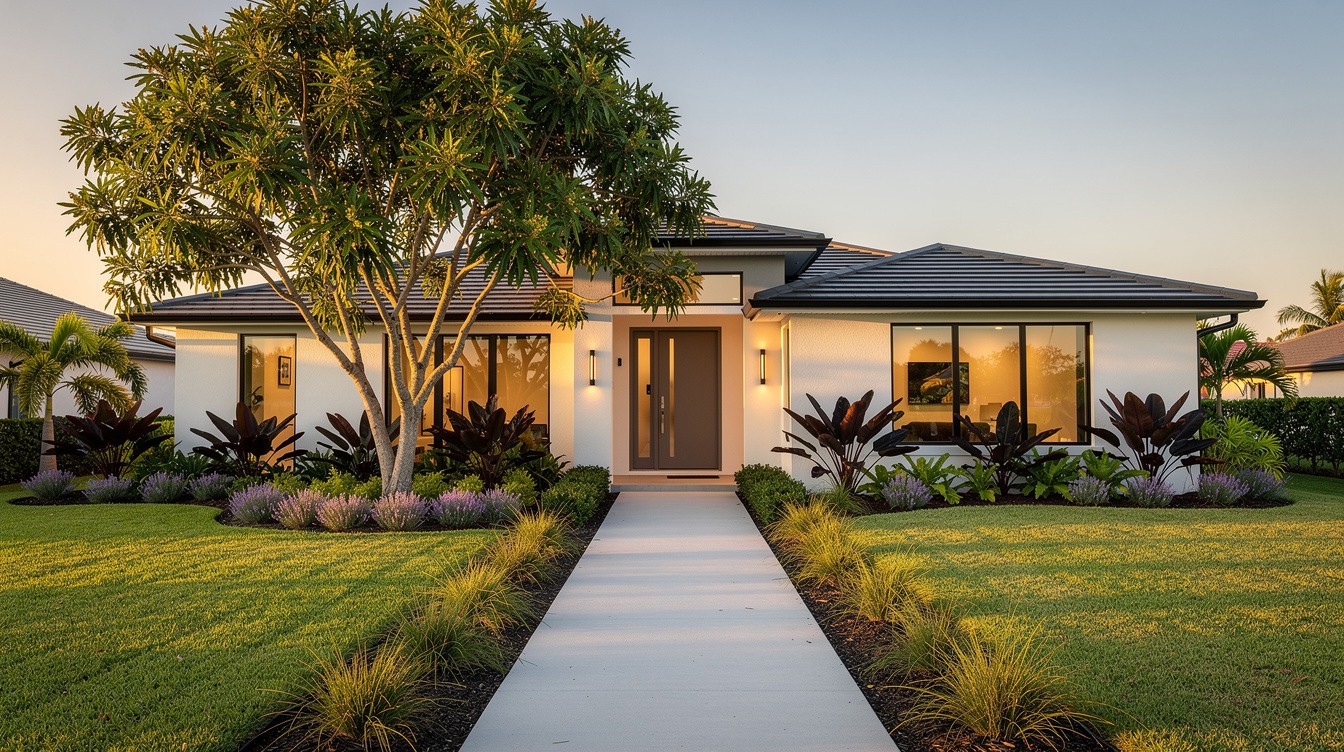
The Frangipani & Black Ti Entry
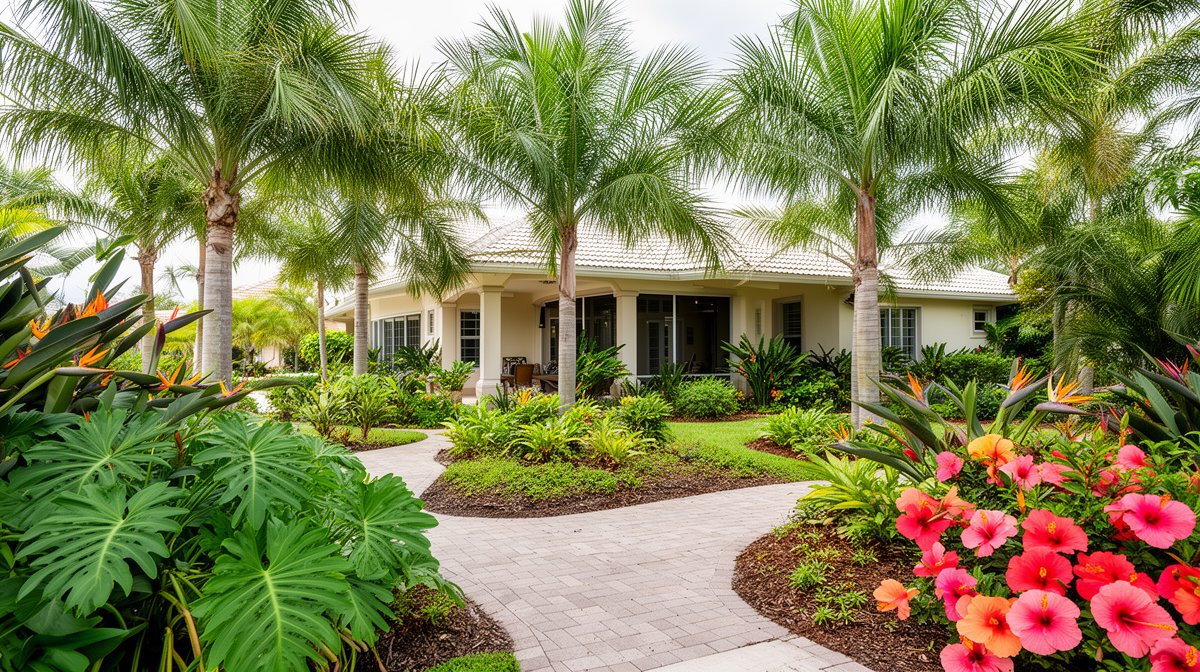
$11–20/sqftA white stucco contemporary with a dark tile roof, black-framed glazing and a bronze pivot door, shot at the moment the interior lights come on. The landscape is deliberately three colors and nothing more: a multi-trunk frangipani with pale sculptural bark set off-center in the left bed, broad fans of near-black ti plant repeated in a strict rhythm across both foundation beds, and a low lavender haze of Mexican heather running the length of the wall as a unifying baseline. A perfectly straight poured-concrete walk cuts the lawn in half, flanked by evenly spaced tufts of Fakahatchee grass that break the hard edge without ever softening the line. Two wall sconces and a pair of ground-level uplights on the frangipani do all the drama.
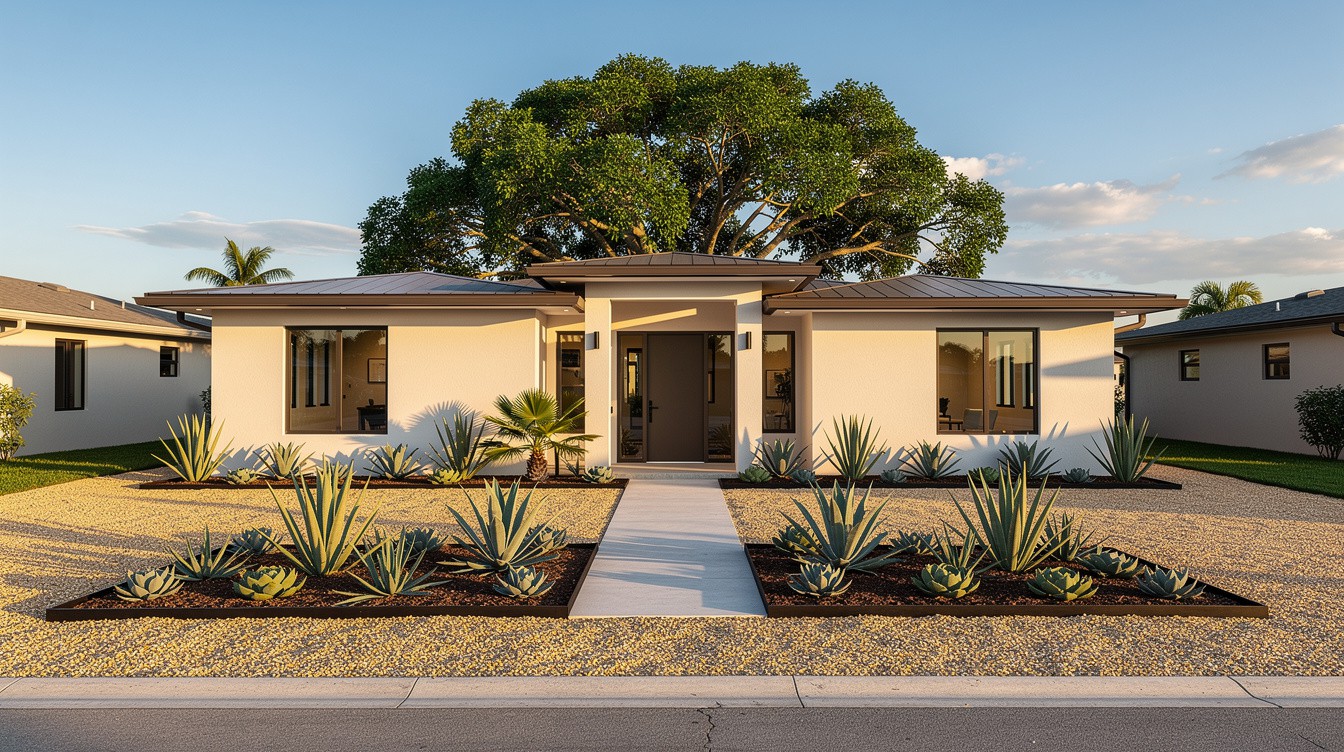
The Steel-Edged Gravel Grid
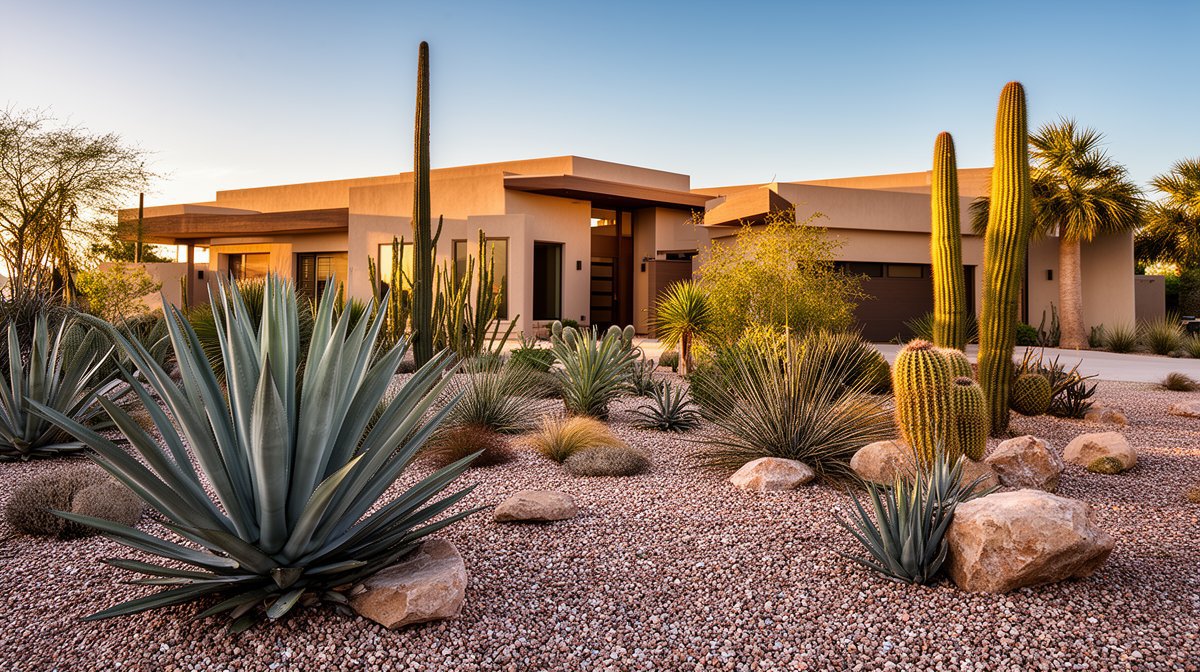
$10–19/sqftTurf eliminated entirely and replaced with a field of warm gold pea gravel, organized by four rectangular planting beds set out in a strict grid on either side of a narrow concrete entry walk. Each bed is edged in weathering steel, filled with dark mineral mulch, and planted with a repeating alternation of upright variegated agave and low blue-green rosettes — a single plant vocabulary, repeated exactly, which is what makes the geometry read from the street. A young silver fan palm sits directly beside the entry as the only asymmetry, and an enormous existing live oak canopy behind the roofline gives the composition the shade and scale a new build cannot supply.
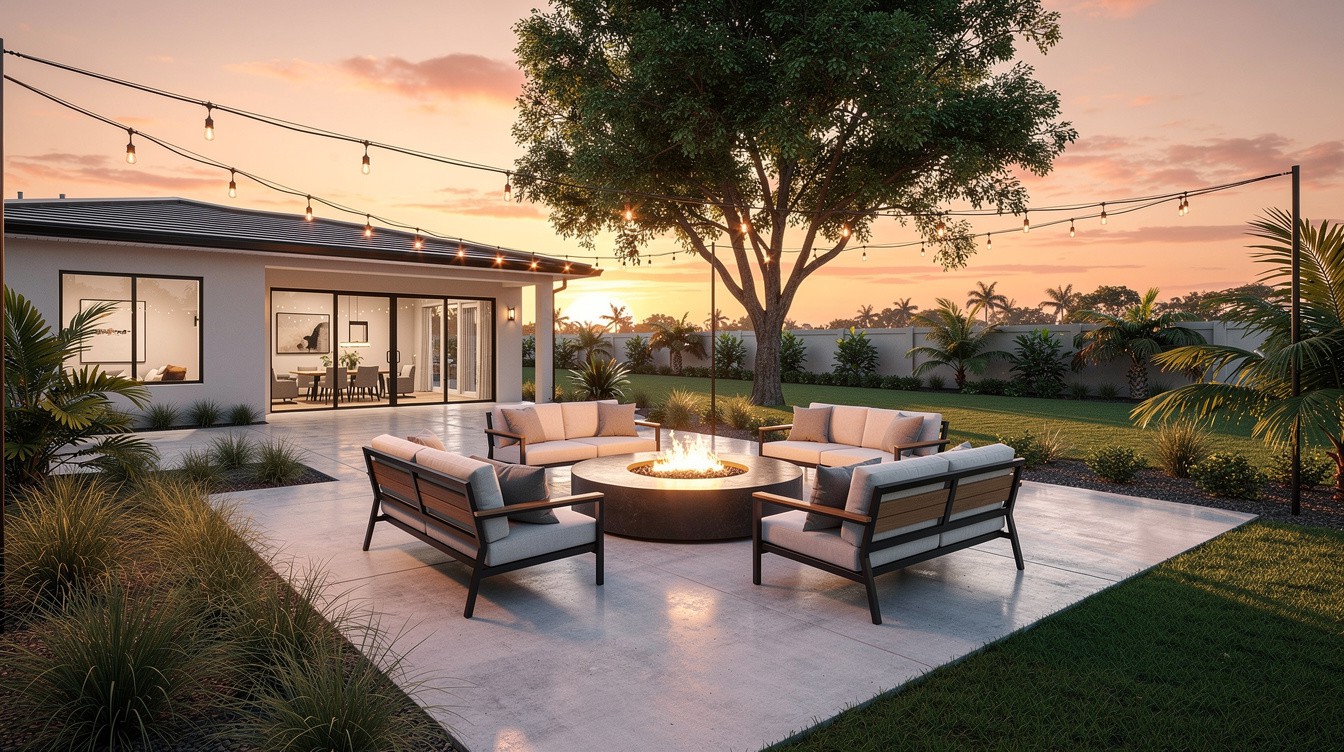
The String-Light Fire Circle
$18–35/sqftA large poured-concrete terrace laid in oversized panels, holding a low round concrete fire bowl surrounded by four matching charcoal-and-teak sofas — a complete outdoor room with exactly one focal element. Café string lights sweep across the whole space on catenary wires from two black steel poles, and a mature spreading shade tree grows straight up through the seating arrangement, which is the detail that keeps the terrace usable in a Cape Coral July. The terrace edges dissolve into loose drifts of pink muhly and sand cordgrass rather than stopping at a hard border, and a white masonry privacy wall closes the far side with palms visible over the top.
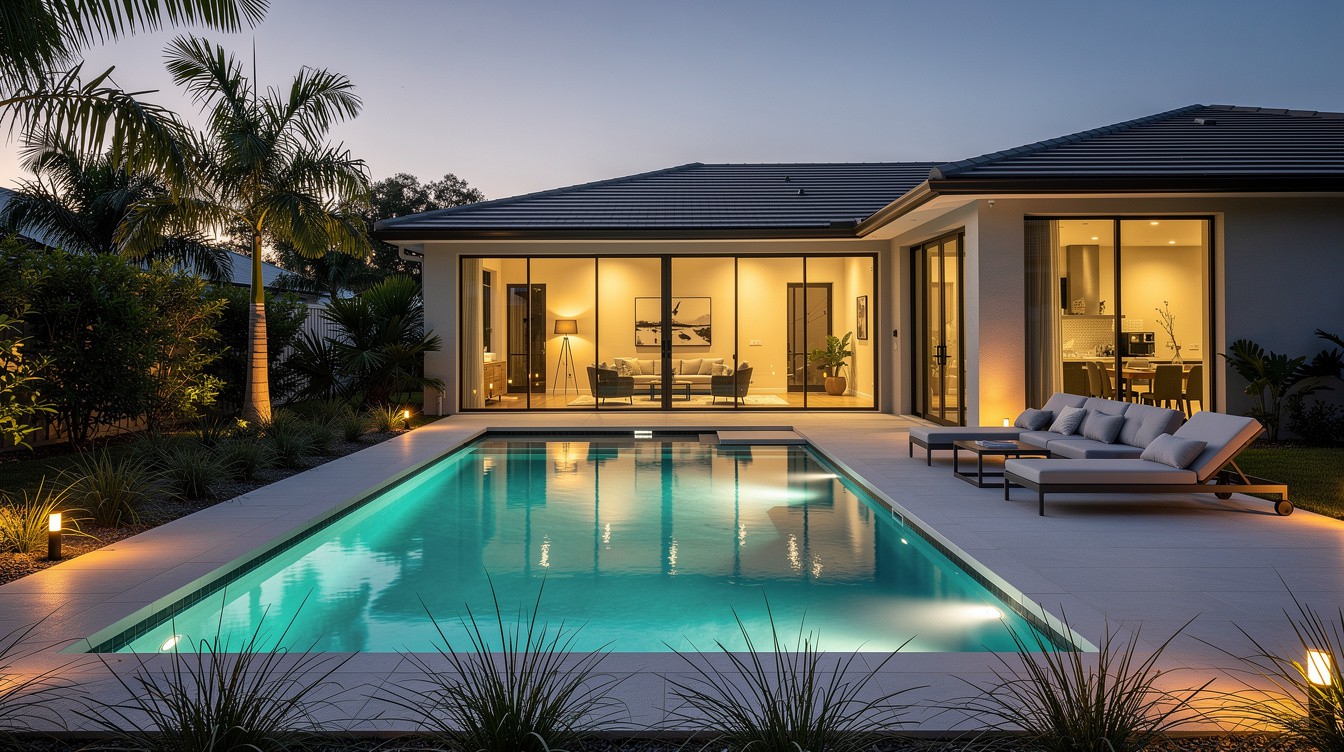
The Twilight Lap Pool
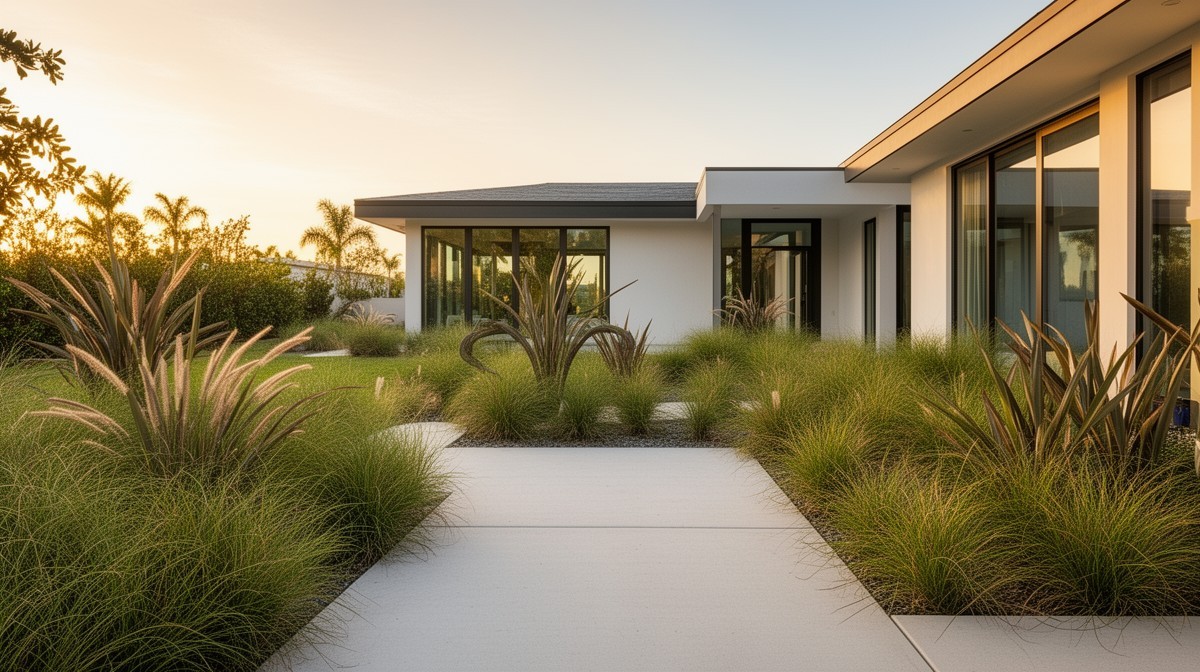
$45–95/sqft (pool inclusive)A rectangular pool with no curves anywhere, set flush in a wide pale porcelain deck that meets a fully glazed rear elevation — the whole design is one long horizontal reflected in one sheet of water. At blue hour the interior spills warm light across the deck while submerged LEDs turn the pool turquoise, and low bollard fixtures mark the deck edge at even intervals. The planting is restrained to two textures: fine upright grasses in the foreground and along the pool's far side, and a dark mass of broadleaf evergreen and palm silhouettes at the property line. Nothing flowers; the entire effect is line, light and reflection.
See how a modern/minimalist garden looks on YOUR property
Upload a photo of your Cape Coral yard and visualize your dream garden in seconds.
Try ProScapeAI Free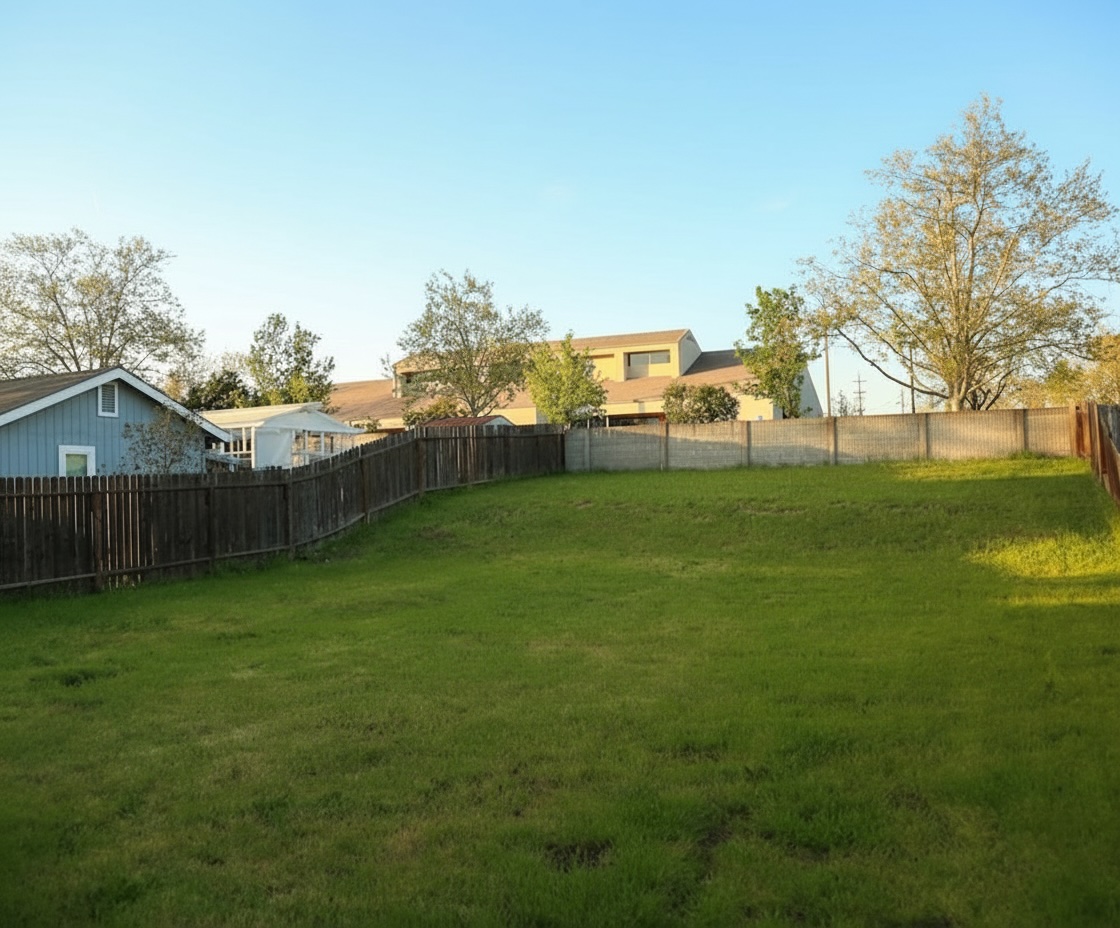
Featured Trees & Shrubs for Modern/Minimalist Gardens
Browse all 65 plants for Cape Coral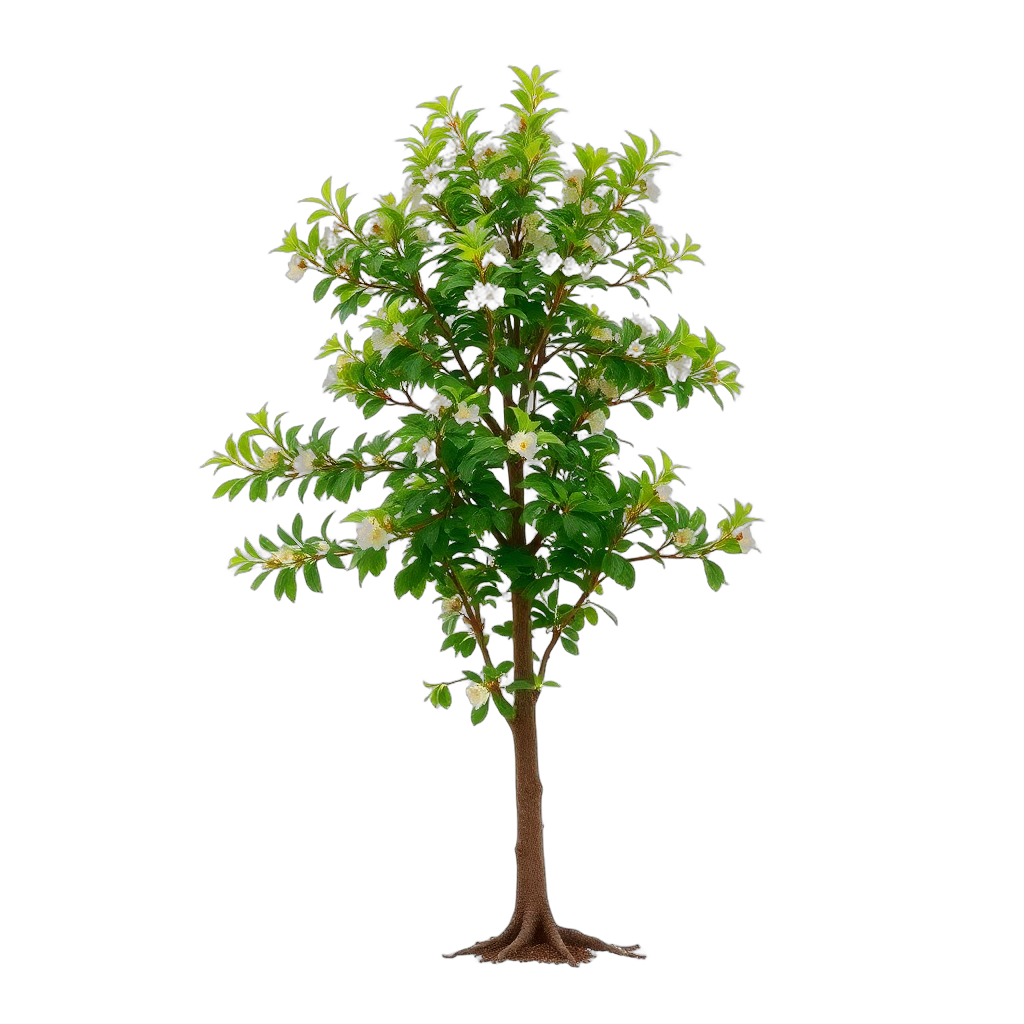
Buckwheat Tree
Cliftonia monophylla
medium-sized at 15 feet, white blooms in spring. Attracts butterflies.
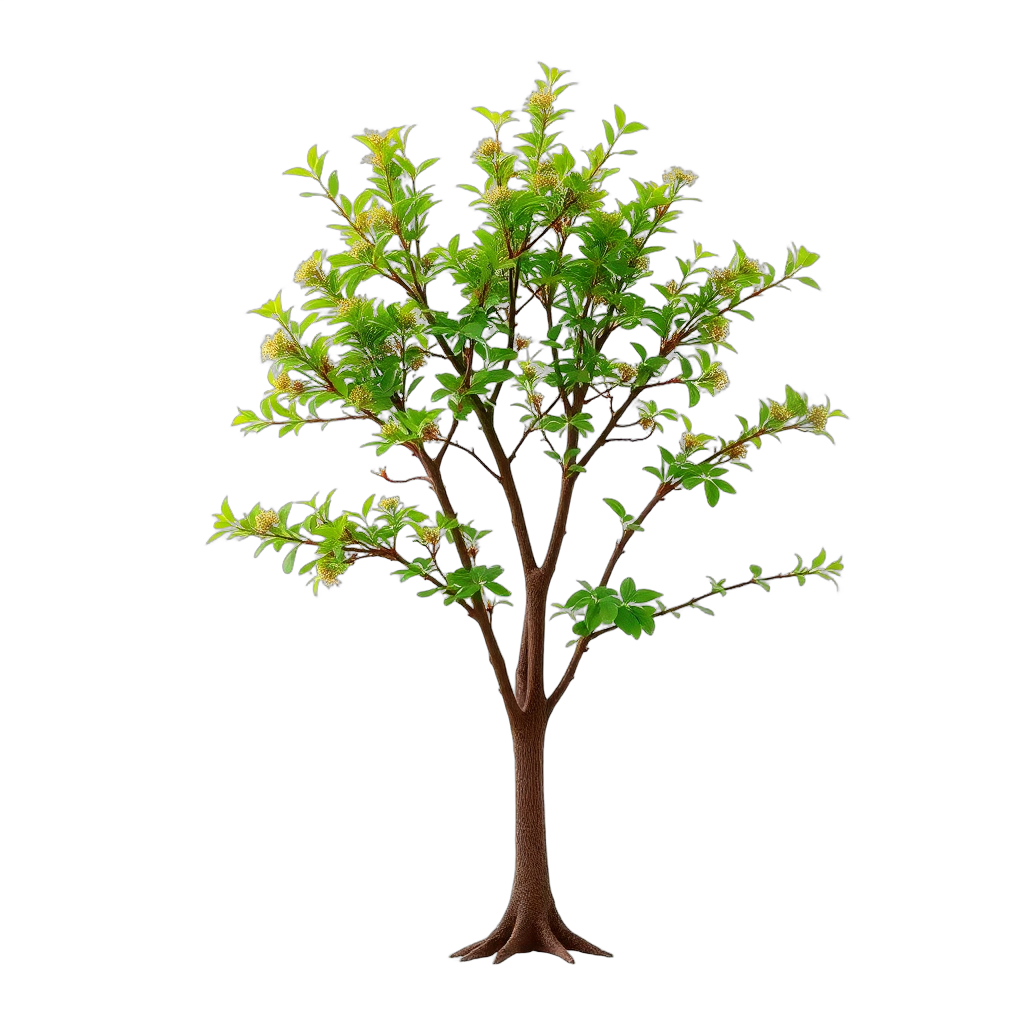
Fetterbush
Lyonia lucida
grows to 6 feet, white blooms in spring. Evergreen year-round.
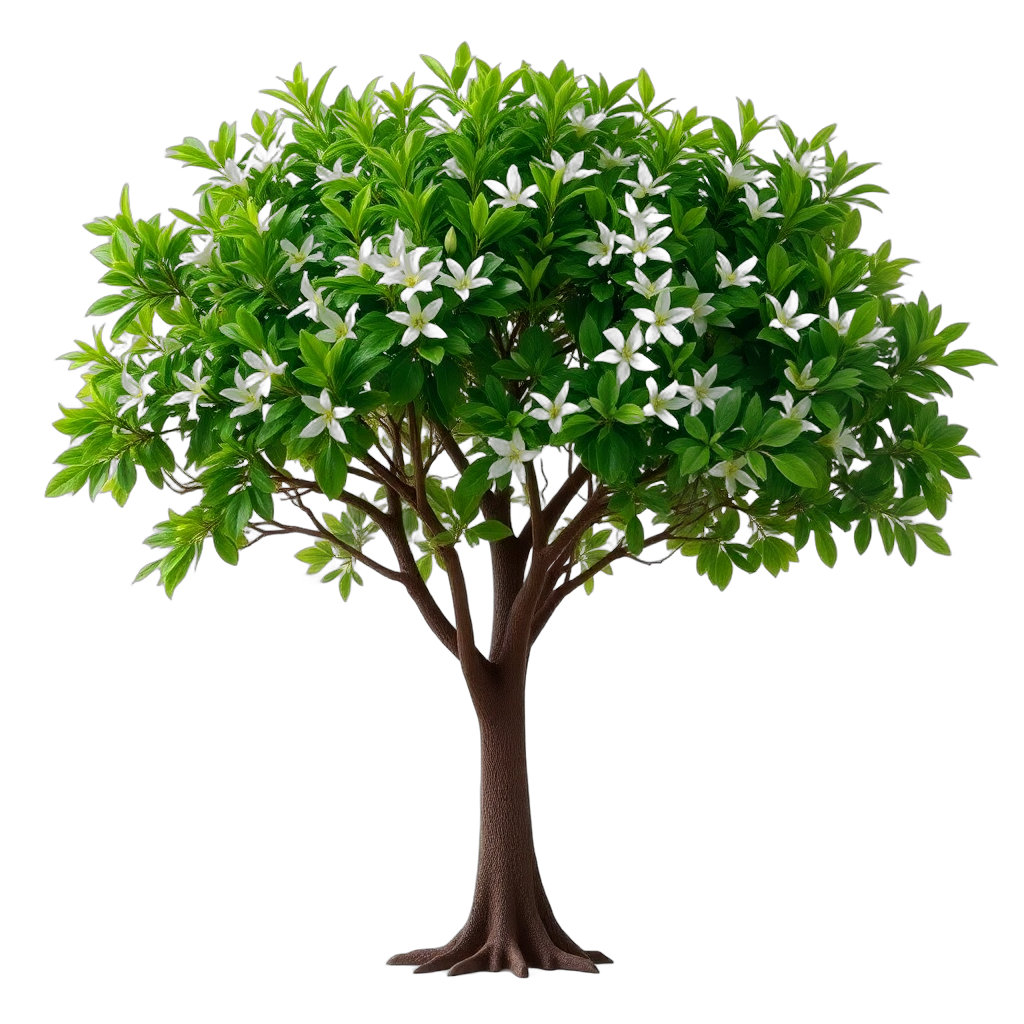
Florida Anise
Illicium floridanum
medium-sized at 8 feet, red blooms in spring. Evergreen year-round.

Inkberry
Ilex glabra
medium-sized at 8 feet, white blooms in spring. Pollinator-friendly.
Featured Grasses & Groundcovers for Modern/Minimalist Gardens

Pink Muhly Grass
Muhlenbergia capillaris
grows to 3 feet, pink blooms in fall.
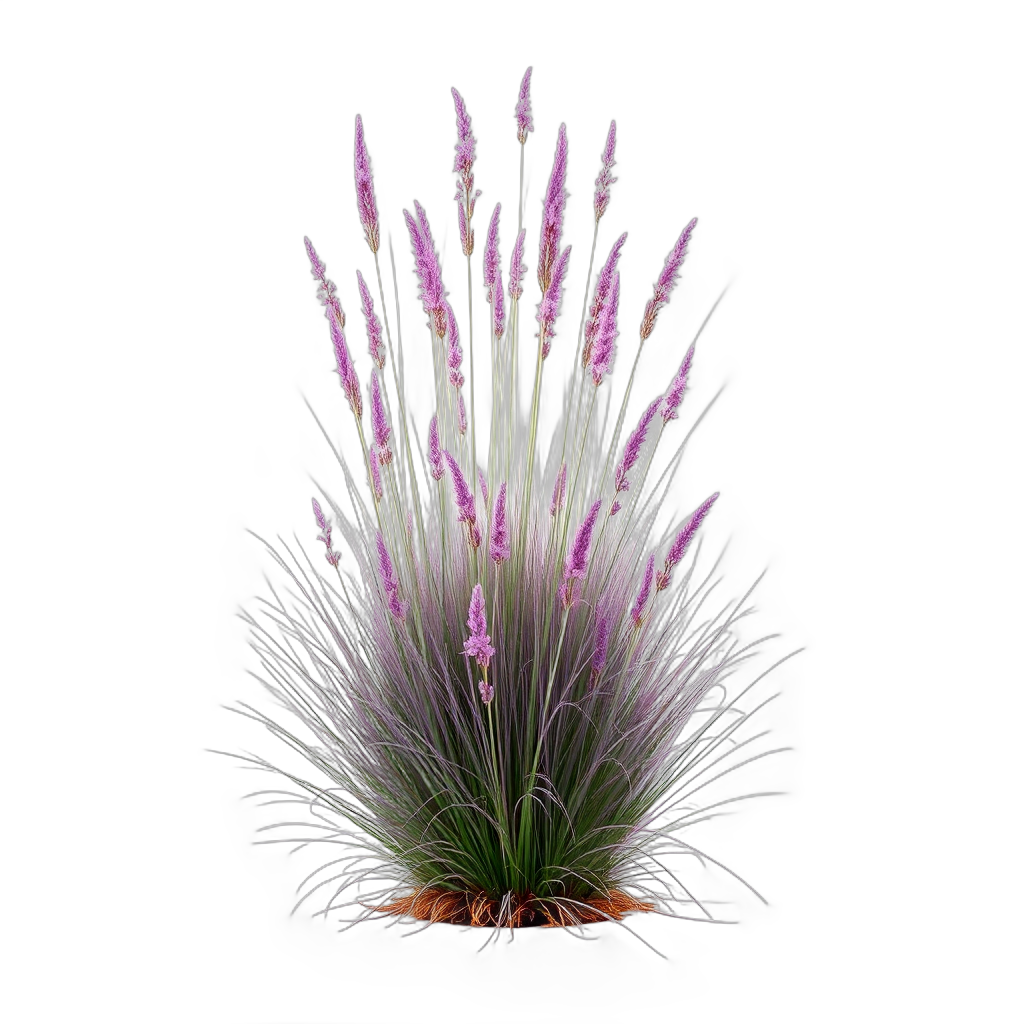
Purple Love Grass
Eragrostis spectabilis
low-growing ground cover, purple blooms in fall. Orange fall color.

Bermuda Grass
Cynodon dactylon
low-growing ground cover, blooms in summer. Brown fall color.
Featured Flowers & Perennials for Modern/Minimalist Gardens
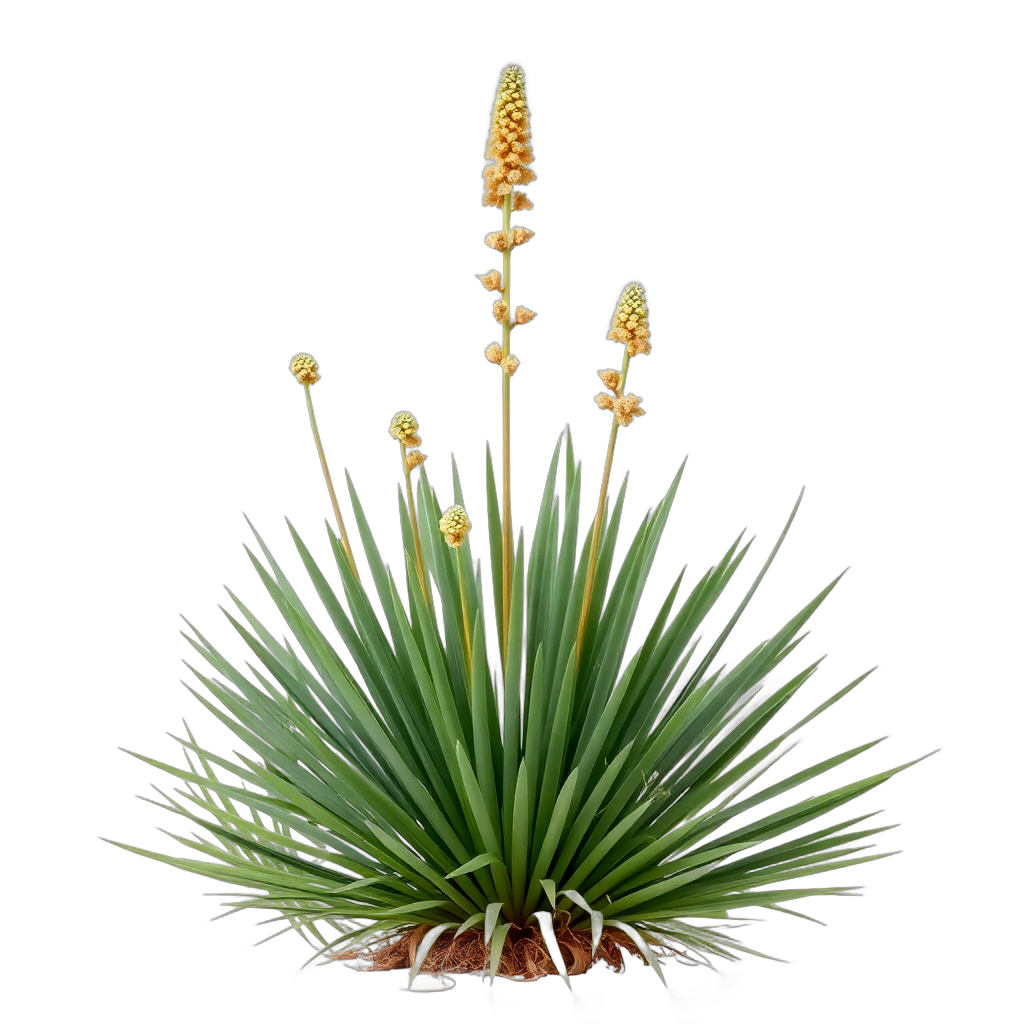
Adam's Needle
Yucca filamentosa
low-growing ground cover, white blooms in summer. Attracts hummingbirds.

Broadleaf Arrowhead
Sagittaria latifolia
low-growing ground cover, white blooms in summer. Attracts butterflies.

Canadian Waterweed
Elodea canadensis
grows to 3 feet, white blooms in spring. Evergreen year-round.

Common Cattail
Typha latifolia
grows to 5 feet, blooms in summer. Pollinator-friendly.
Bloom Calendar for Cape Coral
spring
Buckwheat Tree, Fetterbush, Florida Anisesummer
Adam's Needle, Swamp Cyrilla, Loblolly Bayfall
Pink Muhly Grass, Purple Love Grasswinter
Limited bloomsDesign Tips for Cape Coral (Zone 10a)
- Repeat one plant enough times that it reads as a material, not a specimen — a single row of nine Zamia integrifolia or a continuous band of Ficus microcarpa 'Green Island' does more for a modern facade than a dozen different species, and in Zone 10a it stays identical twelve months a year
- Compact the limerock base and saw your control joints within 24 hours; Cape Coral has zero frost depth, so every cracked slab in this city failed from settlement over uncompacted canal-spoil fill, which is a base-prep problem you pay for once or forever
- Use Muhlenbergia capillaris and Tripsacum floridanum where a Phoenix designer would use blue fescue or Mexican feather grass — both are Florida natives that take a three-inch August downpour and a five-week February drought with equal indifference, and muhly's October pink haze is the best free effect in a Southwest Florida modern garden
- Point every irrigation head away from white surfaces and put a sequestering injector on the main — Cape Coral's canal-sourced irrigation water is iron-rich enough to turn a new travertine deck orange in one wet season, and no amount of pressure washing undoes it
- Design the drainage before the geometry: a modern yard is mostly impermeable plane, and Cape Coral's platted lots depend on intact street-side swales, so pitch slabs at 1–2% away from the house, keep the swale open, and never push sheet flow onto a neighbor's lot
- Light horizontally, not from above — grazing in-grade uplights along a Clusia hedge face and low bollards on the deck edge create the layered evening depth modern design depends on, and with mild evenings from October through May you get roughly eight months of return on the fixtures
Where to Source Plants in Cape Coral
Skip the big-box stores. These independent Cape Coral nurseries specialize in the plants that make modern/minimalist gardens thrive in Zone 10a.
Danny Yates Landscape Nursery
Southwest Cape Coral
Retail and wholesale nursery specializing in palms, hibiscus, bougainvillea, citrus, and Florida natives since 1986.
Roots and Blooms Nursery
Southeast Cape Coral
Boutique nursery featuring rare succulents, tropical plants, and unique specimens.
Depot Nursery
Northwest Cape Coral
Garden center offering a diverse plant selection with design consultation and delivery.
Modern/Minimalist Landscaping Costs in Cape Coral
| Project Scope | Estimated Cost |
|---|---|
| Front yard modern conversion (turf removal, gravel, steel edging, plants) | $8,000 – $18,000 |
| Poured concrete or paver terrace, 300–500 sqft | $9,000 – $24,000 |
| Backyard modern room with gas fire bowl, seating, and string lighting | $18,000 – $45,000 |
| Gunite lap pool with porcelain or travertine deck | $70,000 – $140,000 |
| Clusia or Podocarpus privacy hedge, installed per linear foot | $45 – $140 per ft |
| AI visualization with ProScapeAI | Free to start |
Estimates based on Cape Coral, FL-area contractor rates as of 2026. Actual costs vary by site conditions, materials, and contractor.
Cape Coral Climate & Growing Zone
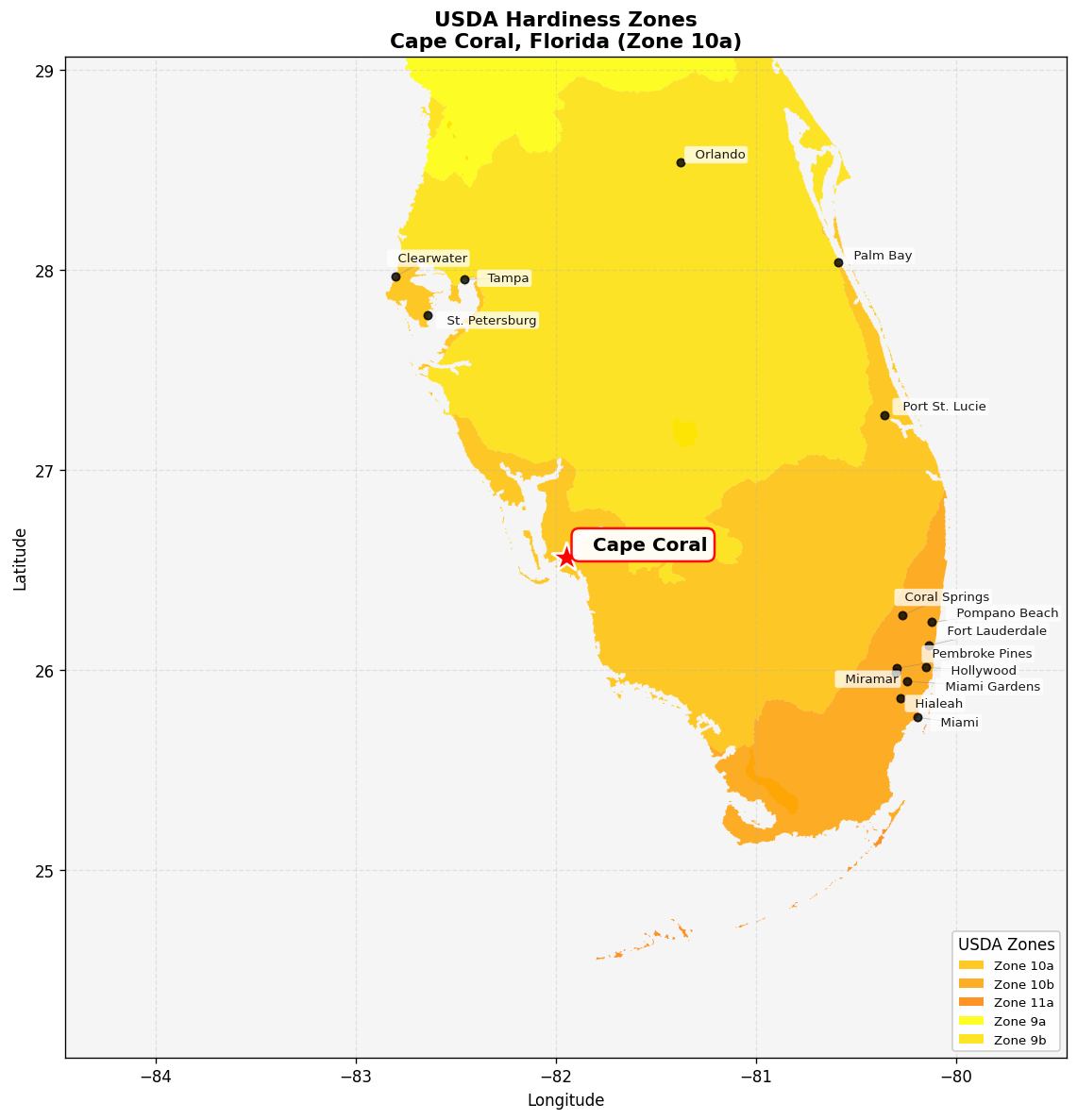
USDA Zone 10a
Hardiness zone for Cape Coral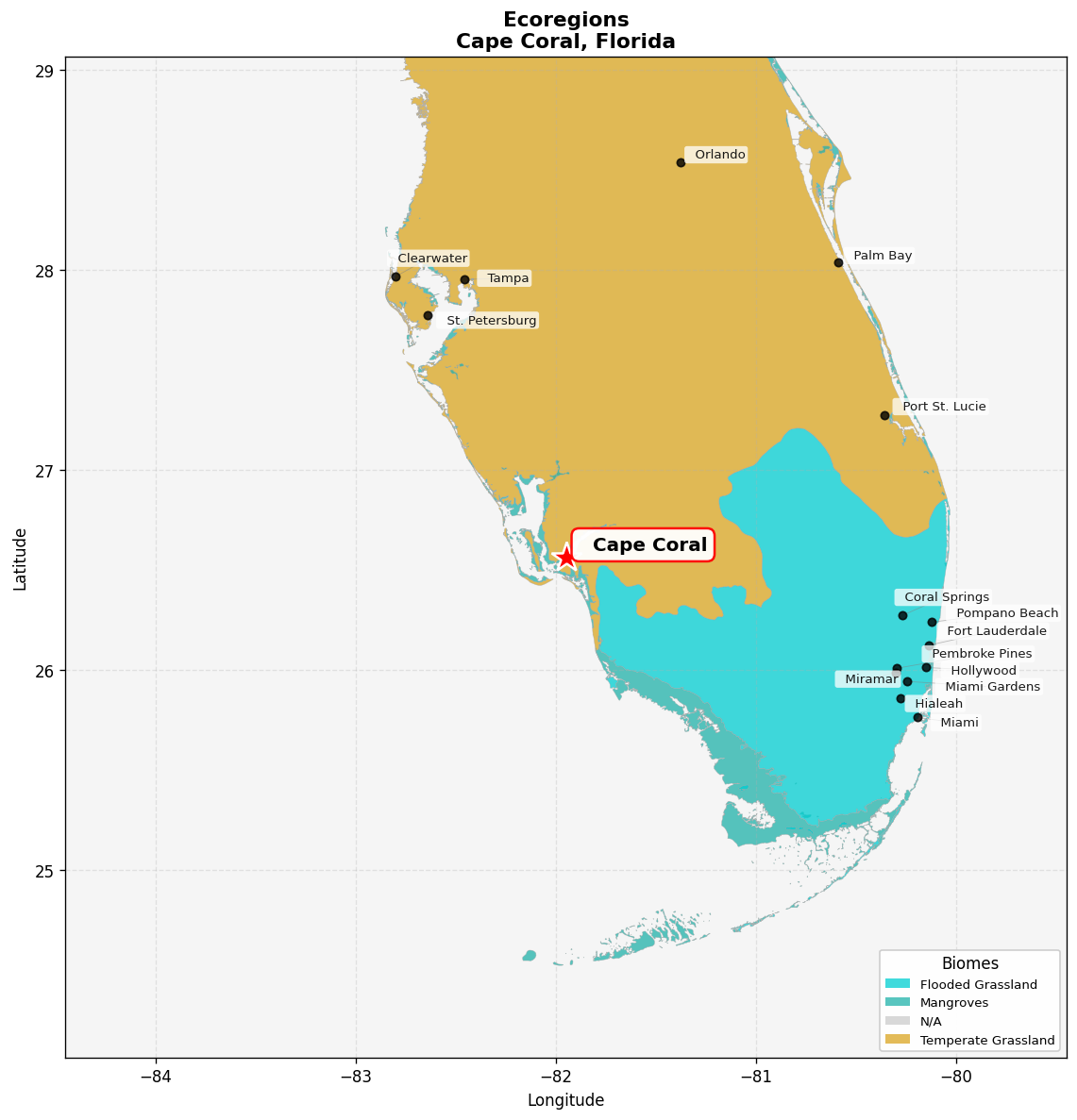
Southeast US conifer savannas
Native ecoregionFrequently Asked Questions
How much does a modern landscape cost in Cape Coral?
A full front-yard modern conversion on a standard 80x125 Cape Coral lot — turf removal, geotextile, gravel field, steel edging and architectural plants — runs $8,000–18,000 installed, or roughly $10–19 per square foot. A poured-concrete or paver terrace with a fire feature and seating lands at $18,000–45,000. Pool projects are the big line item: a new gunite lap pool with a porcelain or travertine deck in Cape Coral currently runs $70,000–140,000, and a 150 mph-rated aluminum pool cage adds $14,000–32,000 on top. Southwest Florida labor rates rose sharply after Hurricane Ian and have only partly settled, so confirm whether base preparation, irrigation modification, and a one-year plant warranty are in the quoted number.
What is the best privacy hedge for a modern look in Cape Coral?
Clusia guttifera 'Small Leaf' is the default answer and deserves to be — it takes alkaline marl without complaint, holds a flat sheared face, tolerates salt spray and wind, and reaches a usable eight to twelve feet fast. Podocarpus macrophyllus 'Maki' is the finer-textured alternative when you want a tighter, darker green plane, though it grows more slowly and costs more per linear foot. Avoid Ficus benjamina and Ficus microcarpa hedges entirely: the ficus whitefly (Singhiella simplex) has been defoliating Southwest Florida ficus since 2007 and keeping a hedge clean means a systemic imidacloprid drench two or three times a year forever, and Ficus roots will find your seawall, pool shell and lateral lines. For a lower modern band under windows, Ficus microcarpa 'Green Island' behaves completely differently and is excellent.
Will poured concrete crack in Cape Coral's soil?
Cape Coral has no frost depth to design around, so the enemy is settlement, not heave. Most lots are fill — crushed limestone marl and shell dredged out of the canals — and if that fill was never properly compacted, a large-format slab will crack diagonally within two or three years. Excavate six to eight inches, place and compact a limerock base in lifts, use fiber-reinforced mix or welded wire, and saw control joints every eight to ten feet within 24 hours of the pour. On canal-front lots also account for the seasonal water table, which sits within one to three feet of the surface during the June–September wet season; a slab poured over saturated fill will not cure to strength. Pour in the morning — afternoon thunderstorms are near-daily from June onward.
How do I stop rust stains on white concrete and travertine?
This is the most common complaint about modern hardscape in Cape Coral, and it has nothing to do with the stone. The city's dual-water system draws landscape irrigation from the freshwater canal network, and that water carries dissolved iron that oxidizes into orange staining on white stucco, pale travertine, porcelain and concrete within a single season. Fix it at the source: aim rotors and spray heads away from all walls and paving, switch perimeter zones to drip or low-angle nozzles, and install an inline iron sequestering injector on the irrigation main. For existing stains, an oxalic acid rust remover works far better than pressure washing, which just drives the iron deeper into porous travertine. Sealing pale hardscape before the first irrigation cycle is cheap insurance.
Do I need a pool cage, and what does it do to a modern design?
It is the real design decision in Cape Coral. An aluminum screen enclosure keeps out mosquitoes and no-see-ums, keeps leaf litter out of the pool, and cuts UV exposure — but it also puts a visible frame across every sightline, which is exactly what a minimalist pool composition is trying to avoid. The compromise most modern homeowners here land on is a picture-window cage with an oversized clear panel facing the canal, or no cage at all with a heavy investment in landscape-integrated mosquito misting and in-ground fans on the lanai. Post-Ian, new cages are typically engineered to 150 mph and cost $14,000–32,000 depending on span and screen type; note that a cage over a large span may require its own footings and a permit through Cape Coral's building department.
Which plants keep a modern Cape Coral garden looking sharp with the least work?
Pick things that hold a defined form in alkaline sand and never need protection. The reliable core: Clusia guttifera and Podocarpus 'Maki' for sheared planes; Ficus microcarpa 'Green Island' for low mounding bands; Zamia integrifolia (coontie), the Florida native cycad that is essentially indestructible and hosts the atala butterfly; Tripsacum floridanum and Muhlenbergia capillaris for fine texture that only needs one late-February cutback; Dianella tasmanica 'Variegata' for silver-striped strap foliage; and Bismarckia nobilis as the single sculptural specimen. Skip Ixora, Dypsis lutescens (areca) and blue fescue — the first two go chlorotic in pH 8 marl and the third rots in a Cape Coral summer.