4 Cottage Garden Ideas for Columbus, GA | English Garden Design in Zone 8b
Native plants from the Southeast US conifer savannas (Zone 8b) — Humid subtropical climate
Why Cottage/English Gardens in Columbus?
Columbus was practically built for cottage gardens. The Victorian and Craftsman stock of the Columbus Historic District, the 1920s bungalows ringing Lakebottom Park in Weracoba Heights, and the gracious older homes of Wynnton and Overlook give this city the storybook architecture that English-style borders are meant to frame. A picket fence and rose arbor that might look costumey in front of a new build feels inevitable in front of a Wynnton four-square — and Columbus's compact, walkable older neighborhoods mean a front-yard cottage garden gets seen, which is half the pleasure of planting one.
Zone 8b gives Columbus gardeners a nine-month growing season, but the Chattahoochee Valley summer is the real design constraint: July highs average around 92–93°F with heavy humidity, and the city collects roughly 47 inches of rain a year. That combination rules out some English classics — delphiniums melt, lupines sulk, and traditional English lavender rots at the crown in wet clay. The Columbus solution is substitution, not surrender: 'Phenomenal' lavender and rosemary handle humidity where Hidcote fails, larkspur stands in for delphinium as a cool-season annual, foxgloves thrive as fall-planted biennials, and heat-proof David Austin roses like 'Olivia Rose Austin' and old Southern noisette roses give you the full romantic effect without weekly fungicide. Salvias, catmint, phlox, and hydrangeas — cottage staples all — genuinely love it here.
The other local reality is soil. Columbus sits on the fall line, so lots in North Columbus and Green Island Hills tend toward red Piedmont clay while South Columbus and areas near the river run sandier — two soils with opposite problems. Clay lots need raised or bermed beds so rose and lavender crowns sit above winter wet; sandy lots need generous compost so summer beds don't flash-dry in a 95°F week. Either way, the fix is the same cottage-garden virtue: deep, compost-rich borders built once and mulched forever. Plant in October or November, let the mild Columbus winter establish roots, and your borders will hit their first May in full stride — with labor and material costs in Muscogee County running comfortably below national metro averages.
4 Cottage/English Design Ideas for Columbus
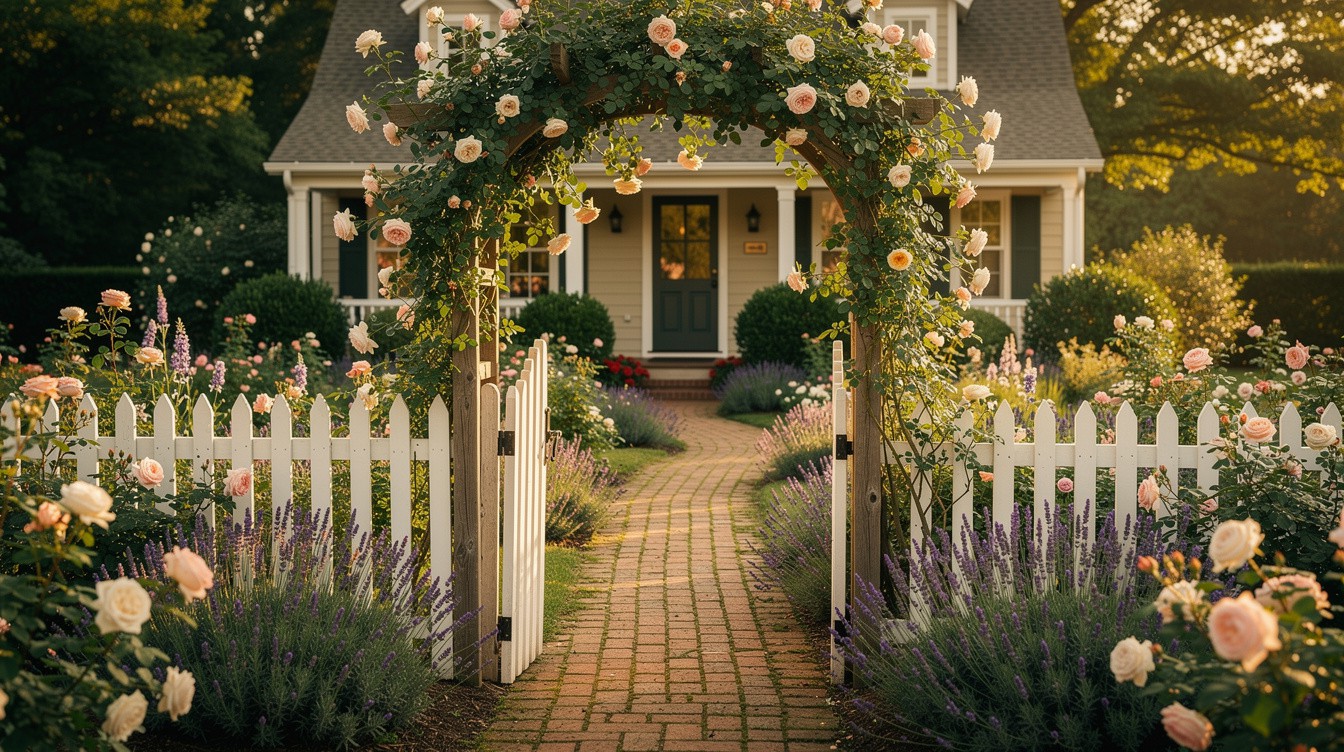
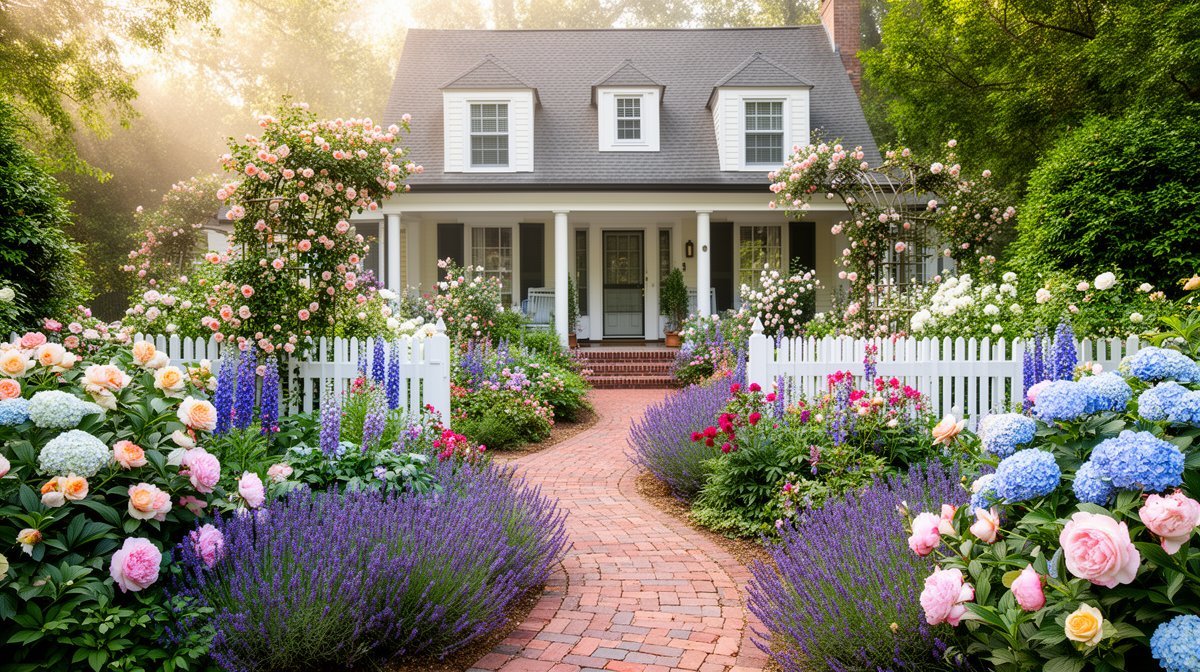
The Picket-Fence Rose Walk
$14–24/sqftA cream story-and-a-half cottage with a gray gabled roof sits behind a classic white picket fence, and the whole entry sequence is one romantic corridor: a weathered wooden arbor arched over the gate, smothered in blush and apricot climbing roses, opening onto a straight red-brick path to the front porch. Lavender-style purple spikes line both sides of the walk while shrub roses in pinks and creams billow against the fence pickets from inside and out. Clipped evergreen mounds by the porch keep the composition from tipping into chaos. In Columbus, run this exact scheme with 'Phenomenal' lavender or 'Walker's Low' catmint along the brick — both hold the silver-and-purple look through Chattahoochee Valley humidity that kills English lavender.
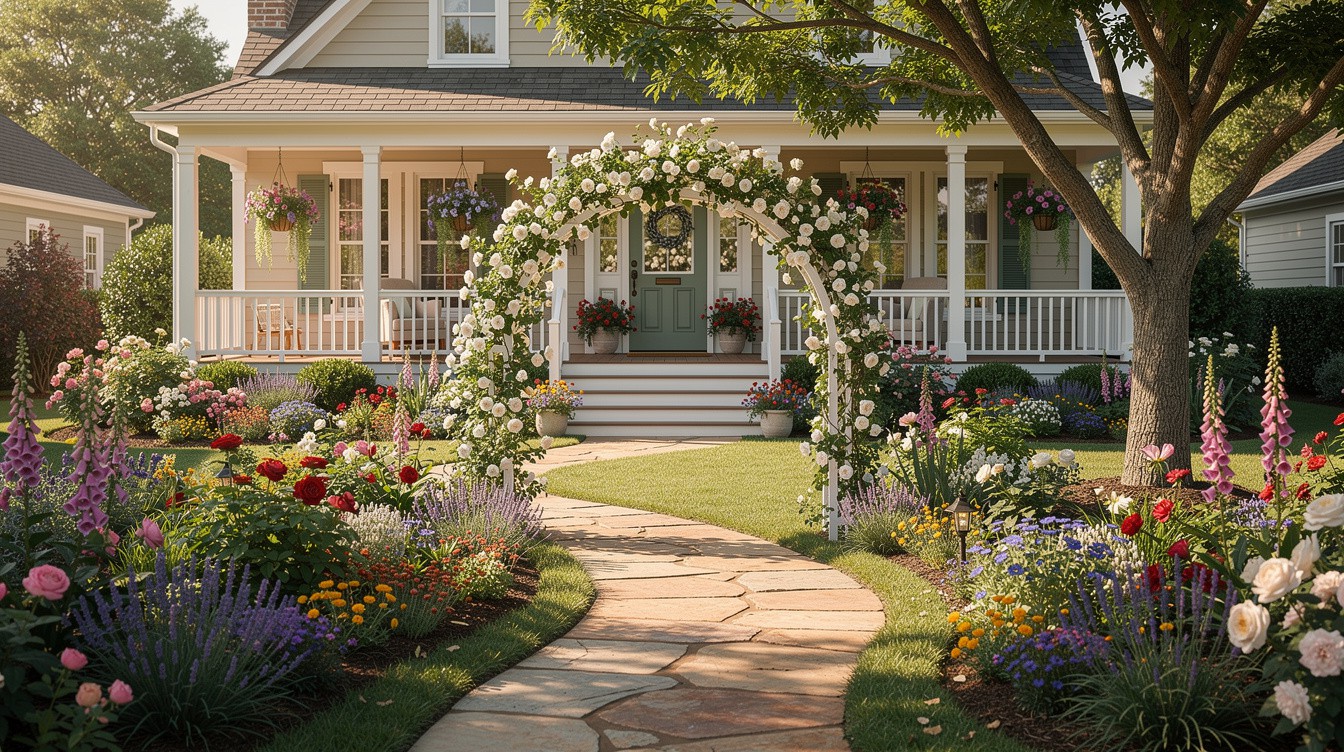
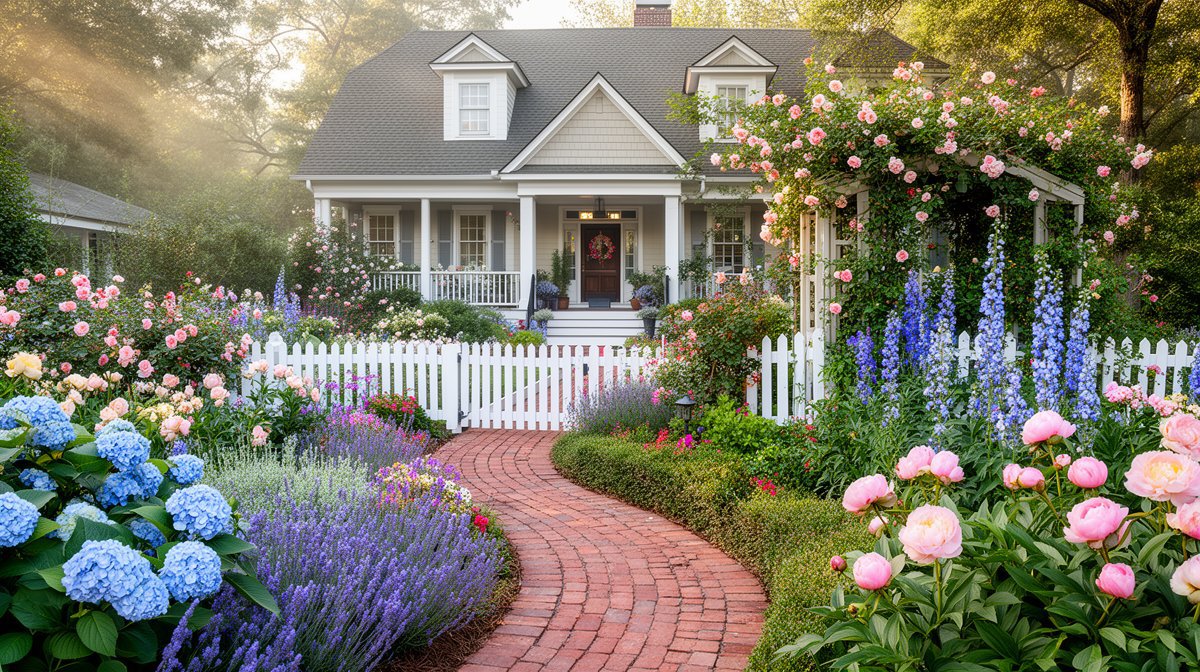
The Porch-and-Arch Farmhouse Border
$12–22/sqftA two-story cream farmhouse with a deep wraparound porch, sage-green shutters and door, and hanging baskets dripping from every bay — fronted by a white rose arch that frames the porch steps and a curved flagstone path winding through deep, exuberant mixed borders. The planting is maximum-cottage: spires of pink and white foxglove, red and pink roses, purple salvia and catmint drifts, gold marigolds, and low white alyssum spilling onto the stone, all wrapped around a healthy lawn shaded by a mature hardwood. This is the design for Columbus lots with real frontage — the curved path makes even a 40-foot walk feel like a garden tour, and the porch baskets carry color up to the second story.
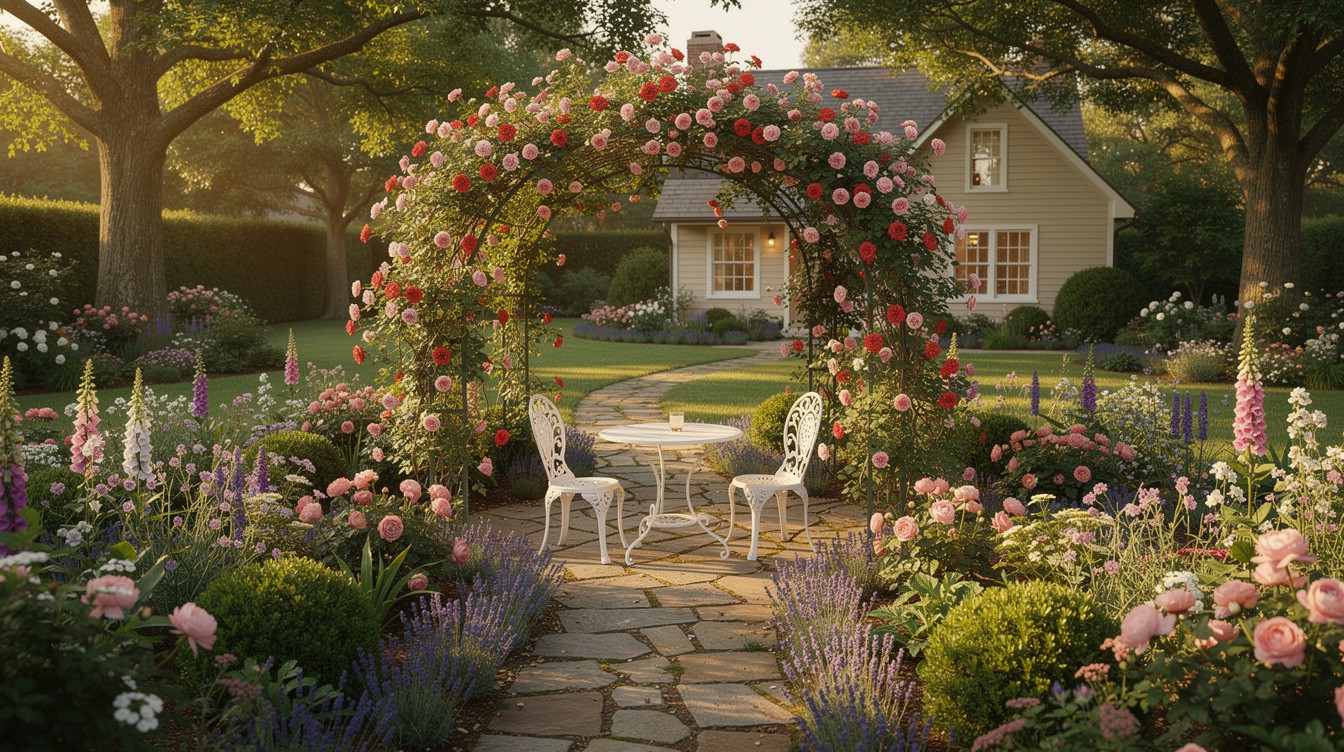
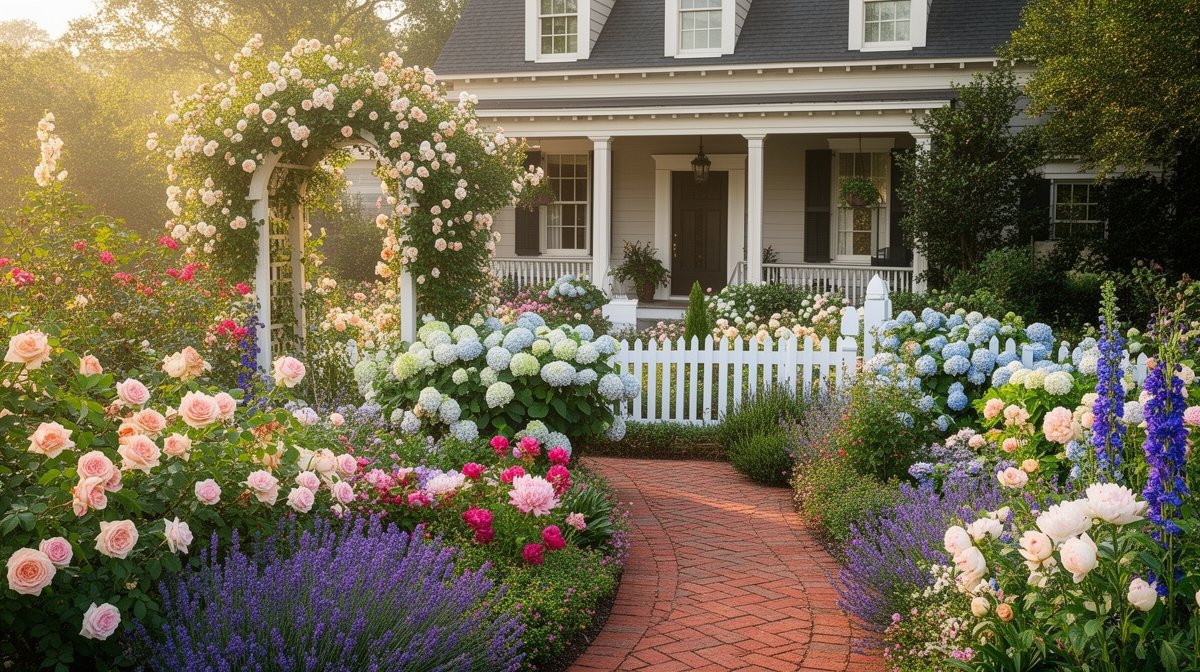
The Rose Arch Tea Garden
$15–28/sqft for the garden room zoneThe backyard showpiece: a deep iron arch tunnel loaded with red and pink climbing roses spans an irregular flagstone path, and tucked beneath it sits a white wrought-iron bistro table and chairs — a genuine destination in the garden rather than furniture parked on a patio. Boxwood spheres anchor the path edges, lavender-toned drifts and pink foxgloves fill the mid-border, and the beds dissolve into lawn under mature shade trees with the cottage's gables behind. In Columbus this works best on the east or north side of the yard, where the rose tunnel gets morning sun but the tea table stays sittable past 10 a.m. in July; disease-resistant climbers like 'Peggy Martin' and 'Zephirine Drouhin' keep the tunnel lush without spraying.
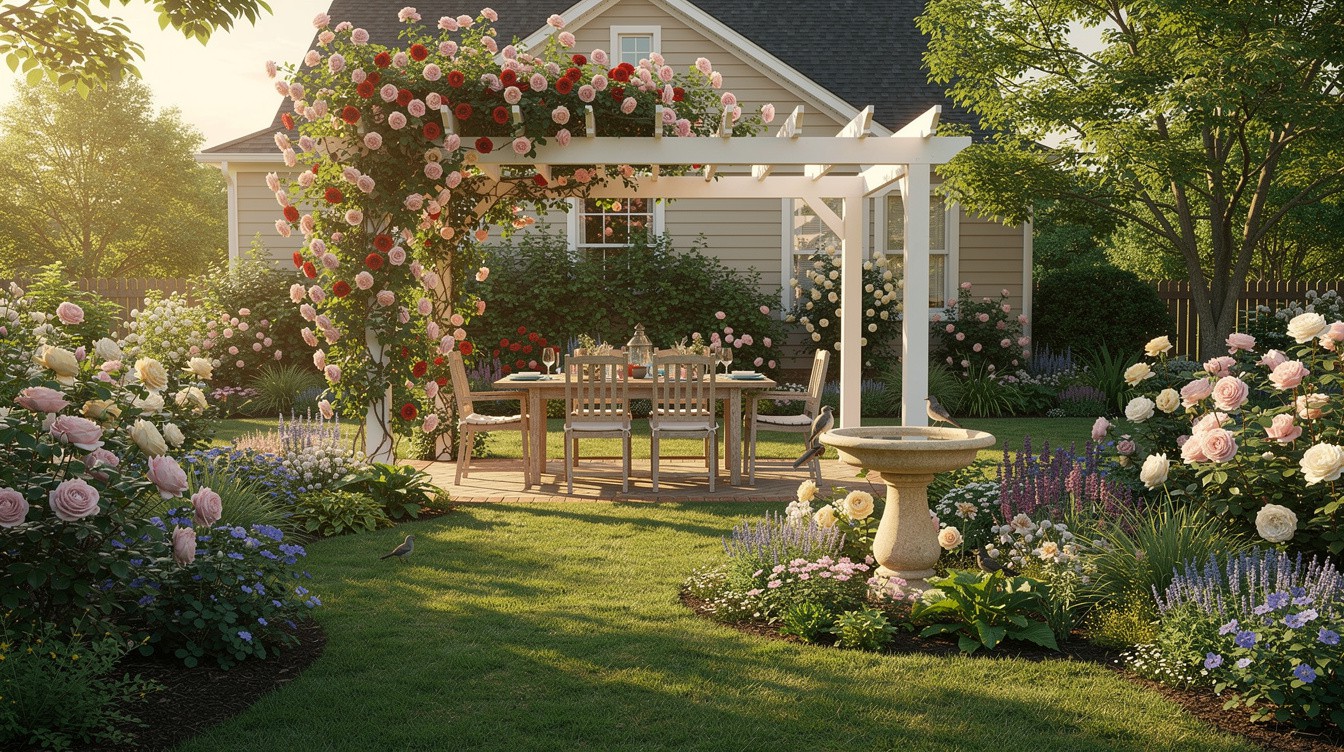
The Pergola Dining Garden
$18–32/sqft for pergola and dining zoneA white timber pergola stands off the back of a taupe lap-sided house, its beams and the adjoining trellis completely draped in deep-red and pink climbing roses, sheltering a full wooden dining table set for six. A carved stone birdbath rises from its own island bed of pale roses, pink dianthus, blue veronica and hostas, and the borders around the lawn run thick with pink and cream shrub roses, blue asters and lavender spikes against a wooden privacy fence. It is the most livable cottage design of the four — dinner happens under roses, birds work the bath at dusk, and the lawn stays generous enough for kids and dogs. Under Columbus sun, give the pergola roses drip irrigation their first two summers and they will own the structure by year three.
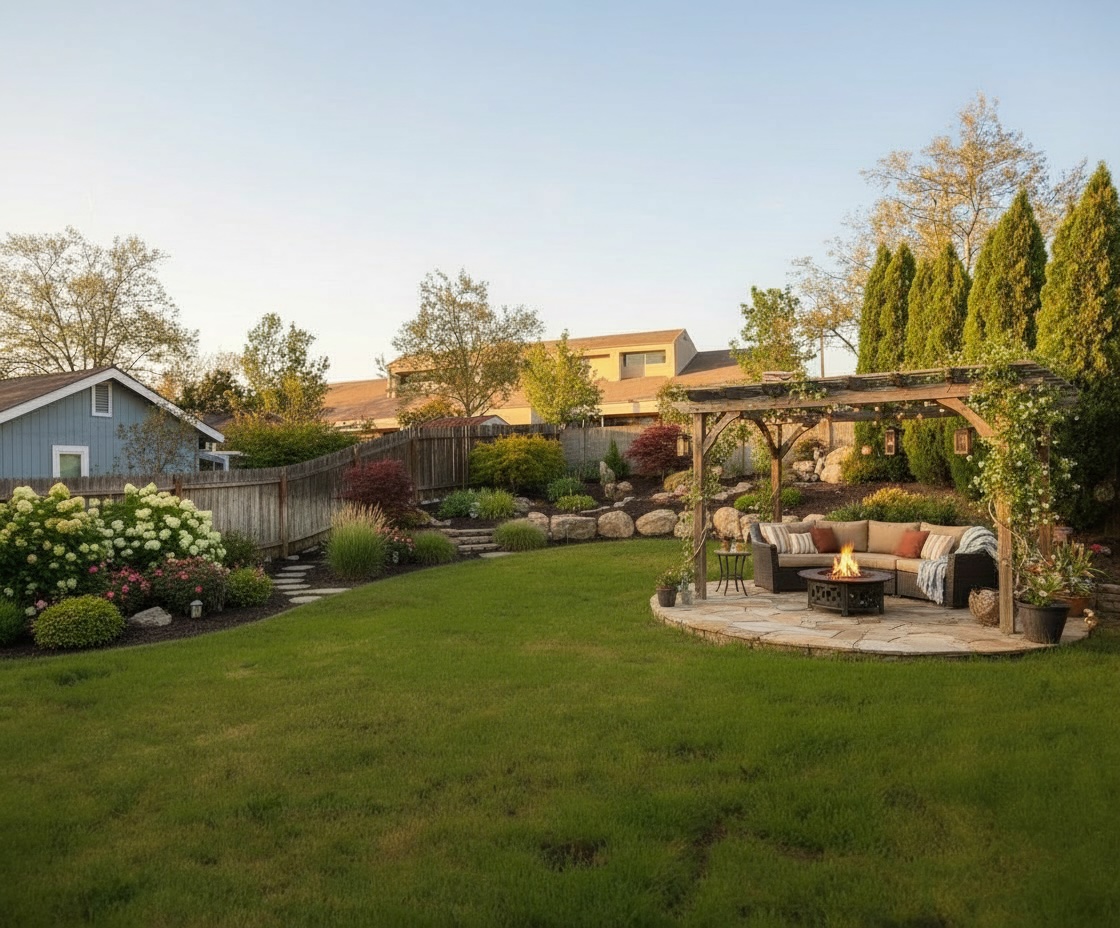
See how a cottage/english garden looks on YOUR property
Upload a photo of your Columbus yard and visualize your dream garden in seconds.
Try ProScapeAI Free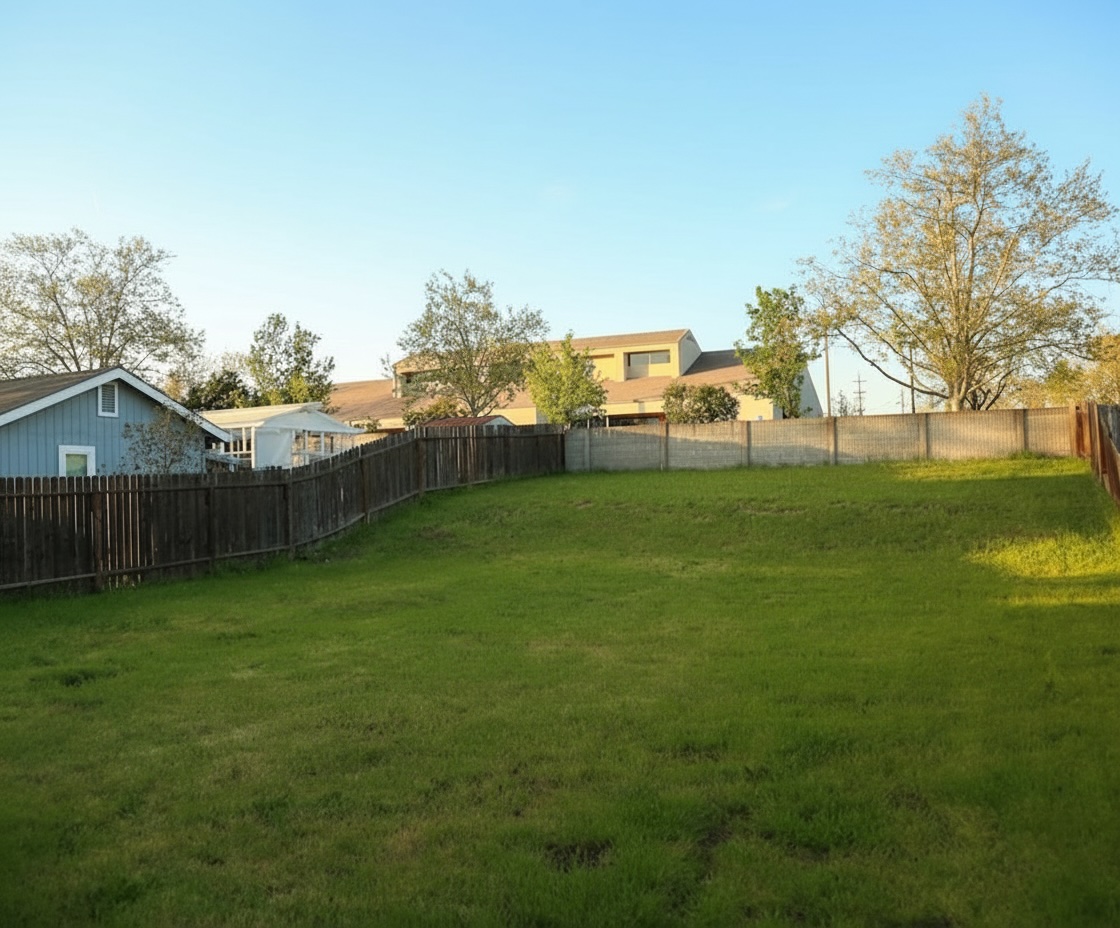
Featured Trees & Shrubs for Cottage/English Gardens
Browse all 175 plants for Columbus
Buckwheat Tree
Cliftonia monophylla
medium-sized at 15 feet, white blooms in spring. Attracts butterflies.

Fetterbush
Lyonia lucida
grows to 6 feet, white blooms in spring. Evergreen year-round.

Florida Anise
Illicium floridanum
medium-sized at 8 feet, red blooms in spring. Evergreen year-round.

Inkberry
Ilex glabra
medium-sized at 8 feet, white blooms in spring. Pollinator-friendly.
Featured Grasses & Groundcovers for Cottage/English Gardens

Pink Muhly Grass
Muhlenbergia capillaris
grows to 3 feet, pink blooms in fall.
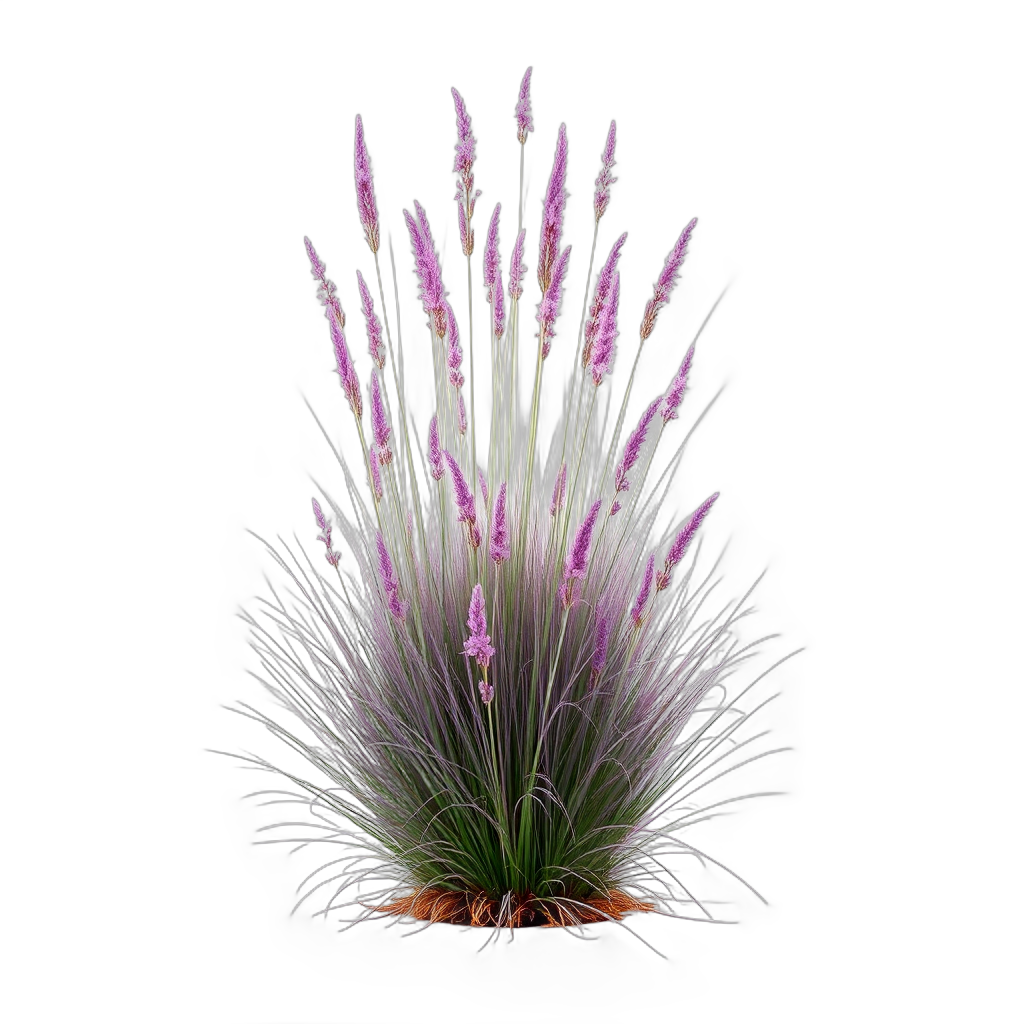
Purple Love Grass
Eragrostis spectabilis
low-growing ground cover, purple blooms in fall. Orange fall color.

Anceps Bamboo
Yushania anceps
medium-sized at 12 feet, blooms in none. Evergreen year-round.

Arrow Bamboo
Pseudosasa japonica
medium-sized at 15 feet, blooms in none. Evergreen year-round.
Featured Flowers & Perennials for Cottage/English Gardens
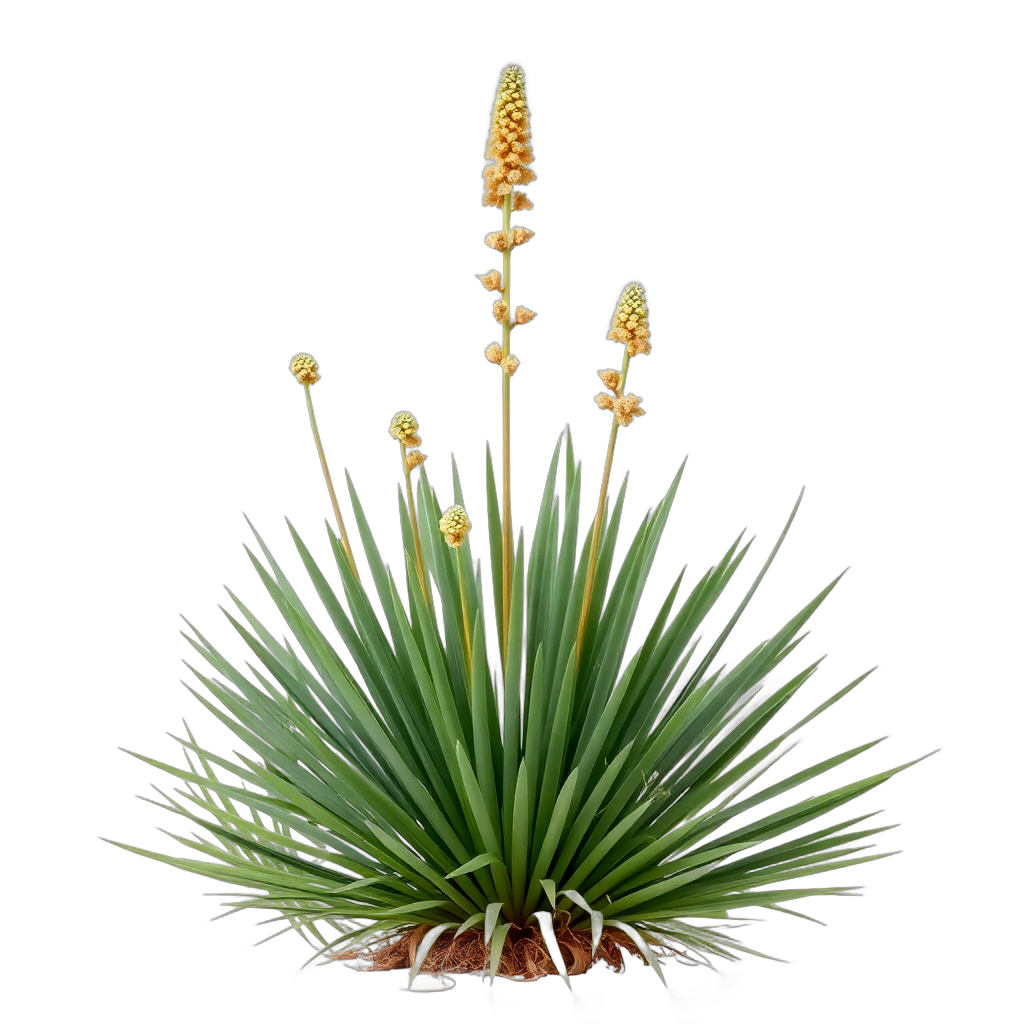
Adam's Needle
Yucca filamentosa
low-growing ground cover, white blooms in summer. Attracts hummingbirds.

Tussock Sedge
Carex stricta
low-growing ground cover, blooms in spring. Brown fall color.

Umbrella Sedge
Cyperus alternifolius
grows to 4 feet, blooms in summer. Evergreen year-round.
Bloom Calendar for Columbus
spring
Buckwheat Tree, Fetterbush, Florida Anisesummer
Adam's Needle, Swamp Cyrilla, Loblolly Bayfall
Pink Muhly Grass, Purple Love Grasswinter
Limited bloomsDesign Tips for Columbus (Zone 8b)
- Raise every rose and Mediterranean-herb bed 6–10 inches above grade — on Columbus's fall-line soils, wet feet in a rainy January kill more cottage plants than any summer heat wave
- Plant foxgloves and larkspur in October, not spring — they're your Zone 8b stand-ins for delphinium and they only perform when fall-planted and overwintered
- Choose no-spray roses ruthlessly: Knock Out, Drift, 'Peggy Martin', and noisettes stay clean through Chattahoochee Valley humidity, while spray-dependent hybrid teas will make you quit gardening by August
- Put your seating destination — bistro set, tea table, bench — on the east side of trees or structures so it's shaded after 10 a.m.; an unshaded garden seat in Columbus goes unused from June through September
- Swap English lavender for 'Phenomenal' lavender, catmint, or rosemary along paths — same silver-and-purple cottage effect, none of the humidity rot
- Lean on the Southern cheat codes Northern cottage gardens can't grow: camellias for November-to-March bloom, gardenias by the porch for June fragrance, and confederate jasmine to clothe a fence in one season
Where to Source Plants in Columbus
Skip the big-box stores. These independent Columbus nurseries specialize in the plants that make cottage/english gardens thrive in Zone 8b.
To-Mar Garden Center
North Columbus
Locally owned garden center with extensive plant selection, expert customer service, and landscaping advice.
Bloomers at Midtown
Midtown
Family-owned showroom featuring houseplants, indoor pottery, seasonal annuals, perennials, and garden gifts.
Cottage/English Landscaping Costs in Columbus
| Project Scope | Estimated Cost |
|---|---|
| Front-yard cottage border conversion (400–600 sqft, path + roses + perennials) | $5,000 – $12,000 |
| White picket fence with arbor gate (typical frontage) | $3,500 – $8,000 |
| Flagstone or brick garden path (50–100 linear ft) | $2,500 – $7,000 |
| Rose arch tunnel or timber pergola with climbers, installed | $2,000 – $9,000 |
| Full backyard cottage garden with dining structure | $15,000 – $35,000 |
| AI visualization with ProScapeAI | Free to start |
Estimates based on Columbus, GA-area contractor rates as of 2026. Actual costs vary by site conditions, materials, and contractor.
Columbus Climate & Growing Zone
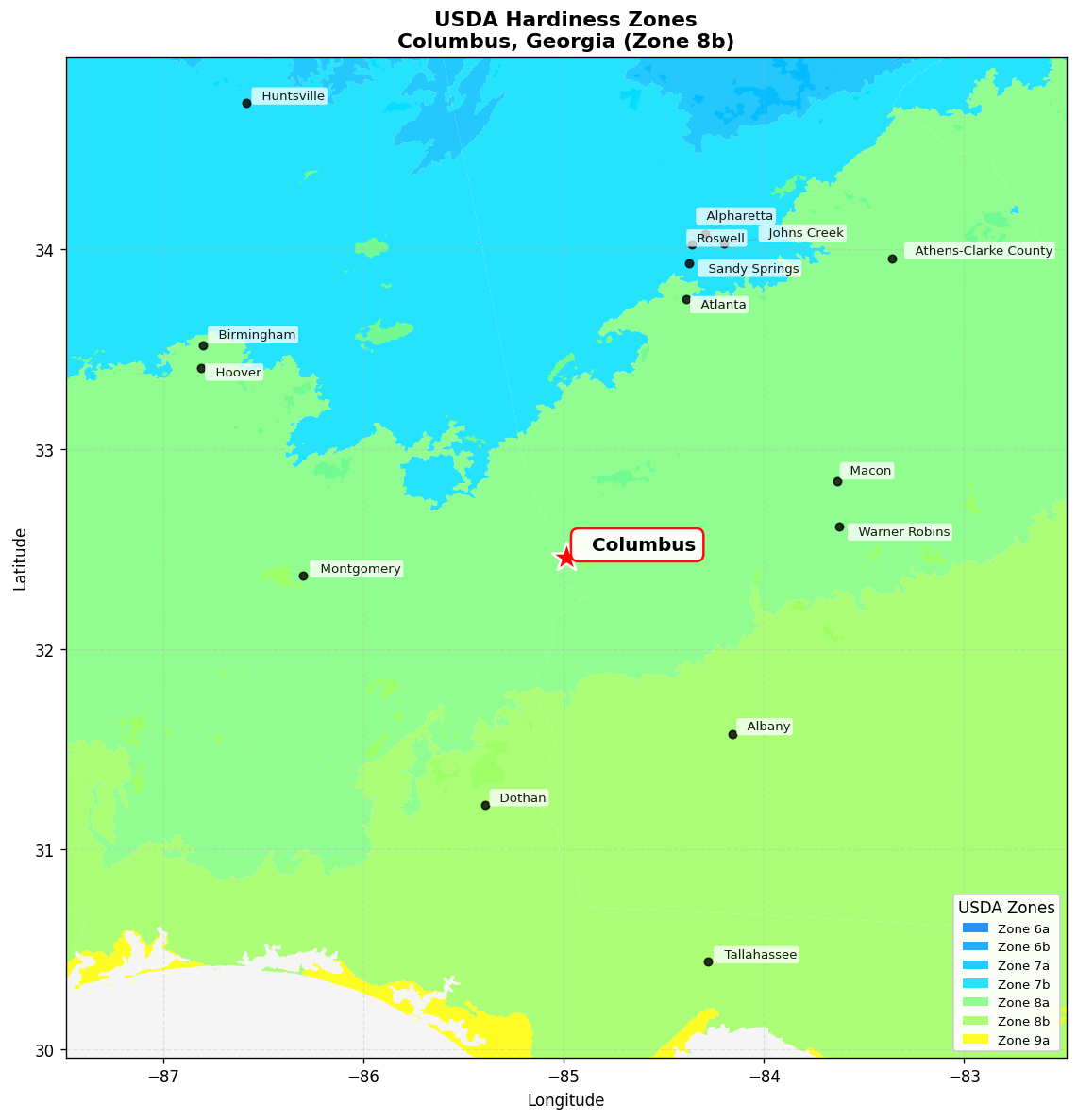
USDA Zone 8b
Hardiness zone for Columbus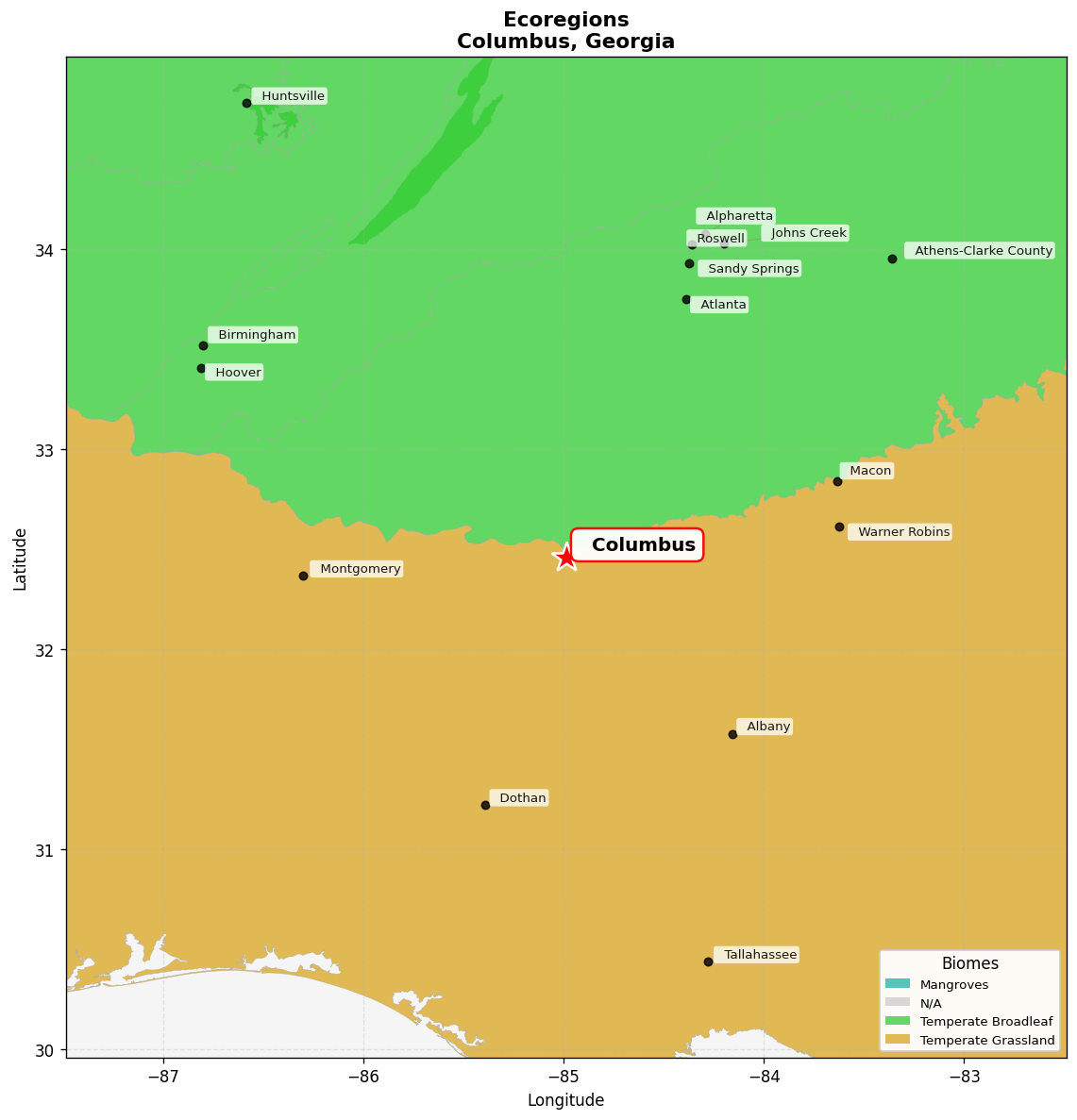
Southeast US conifer savannas
Native ecoregionFrequently Asked Questions
How much does a cottage garden cost in Columbus, GA?
Columbus is one of the more affordable metros in the Southeast for landscaping — labor and materials typically run 15–25% below national averages. A front-yard cottage conversion (deep borders, path, roses and perennials) on a typical 400–600 sqft frontage lands between $5,000 and $12,000 installed. Adding a picket fence and arbor gate runs $3,500–8,000 more depending on frontage length. A full backyard build with pergola or rose-arch tunnel, flagstone paths and mature borders commonly runs $15,000–35,000. Cottage gardens also reward sweat equity better than any other style — a determined DIY gardener planting from quart and gallon pots can build the same borders for a third of the installed price and let three growing seasons do the rest.
Can I actually grow English lavender and roses in Columbus's humidity?
Roses, absolutely — Columbus's nine-month season is rose heaven if you choose disease-resistant varieties. Knock Out and Drift series are bulletproof; among romantic English types, 'Olivia Rose Austin' and old Southern noisettes handle humidity far better than most David Austins. Avoid spray-dependent hybrid teas. English lavender ('Hidcote', 'Munstead') is the honest casualty: our 47 inches of rain and humid nights rot it within a season or two in ordinary soil. Plant 'Phenomenal' lavender in raised, gravel-amended spots, or substitute rosemary, catmint, or Russian sage — all deliver the same silver-purple effect and shrug off Chattahoochee Valley summers.
What's the deal with Columbus soil — clay or sand?
Both, and it depends on your neighborhood. Columbus sits on the fall line where the Piedmont meets the Coastal Plain: lots in North Columbus, Green Island Hills, and toward Fortson tend toward red clay, while South Columbus and areas closer to the Chattahoochee often run sandy. Clay lots drain slowly — plant roses, lavender and any Mediterranean herb in beds raised 6–10 inches above grade so crowns never sit in winter wet. Sandy lots drain too fast — work in 3–4 inches of compost and mulch heavily so beds survive July without daily watering. A $20 soil test through the UGA Extension office in Muscogee County tells you exactly which problem you have.
When should I plant a cottage garden in Columbus?
October and November, no contest. Fall-planted shrubs, roses and perennials establish roots all through Columbus's mild Zone 8b winter and explode in their first spring; foxgloves and larkspur — your delphinium substitutes — must go in during fall to bloom the following May. February through March is the second window for roses and perennials. Avoid major planting from June through September: even with irrigation, new plants struggle to establish through 90°F+ humidity, and you'll fight for survival instead of watching things grow. Hardscape — paths, fences, arbors, pergolas — can be built any month of the year here.
Which classic cottage plants thrive in Columbus, and which should I skip?
Thriving here: roses (disease-resistant types), salvias of every kind, catmint, phlox, coneflowers, black-eyed Susans, daylilies, hydrangeas (oakleaf is native), foxglove as a biennial, dianthus, veronica, and self-sowing larkspur. Struggling or failing: delphiniums (melt by June — use larkspur), lupines (skip entirely), English lavender (use 'Phenomenal' or rosemary), most peonies (only early single varieties like 'Festiva Maxima' get enough chill in 8b), and tulips (treat as annuals). The Southern bonus list Northern cottage gardeners can't touch: gardenias, camellias for winter bloom, and confederate jasmine on any fence or arbor.
Do I need permits or approvals for a cottage garden in Columbus?
Planting beds, paths, and gardens need no permit anywhere in Columbus. Fences generally require a simple permit from Columbus Consolidated Government's Inspections and Codes department, with height limits (typically 4 feet in front yards). The important exception: if your home sits in a locally designated historic district — the Columbus Historic District, High Uptown, Peacock Woods–Dimon Circle, or Weracoba–St. Elmo — exterior changes visible from the street, including fences and significant structures like pergolas, need a Certificate of Appropriateness from the Board of Historic and Architectural Review. Plantings themselves are not regulated, and a picket fence and rose arbor are usually easy approvals since they suit the district character.