4 Modern Landscape Ideas for Corona, CA | Zone 9b Garden Design
Native plants from the California coastal sage and chaparral (Zone 9b) — Cold semi-arid climate
Why Modern/Minimalist Gardens in Corona?
Modern landscape design has an easy time in Corona, because the raw ingredients are already on site: hard sun, knife-edge shadows, a mountain skyline on three sides, and a housing stock that keeps handing designers straight lines. The postwar streets just outside the Grand Boulevard circle are full of low-slung ranches and flat-roofed mid-century houses waiting to be un-fussed, and the newer builds in Dos Lagos, Eagle Glen and Sycamore Creek arrive with tall black-framed glass that only makes sense over a clean groundplane. What a modern design mostly asks for in this city is subtraction: pull out the juniper ribbon, the scalloped bed edge and the kidney-shaped lawn, replace them with two or three big rectangles, and let a specimen Agave 'Blue Glow' or a multi-trunk Arbutus 'Marina' carry the entire front elevation.
Corona receives about 13 inches of rain a year against roughly 55 inches of reference evapotranspiration — the yard loses more than four times what falls on it, and from June through October nothing falls at all. July and August run 93–96°F with several days over 105°F, and the Santa Ana Canyon delivers cool marine air most evenings and hot offshore winds every autumn. That combination is exactly why the modern palette works here better than a soft, layered one: Zone 9b lows of 25–30°F let a garden hold its architecture 365 days a year. Agave ovatifolia, Agave parryi var. truncata, Yucca rostrata 'Sapphire Skies', Echinocactus grusonii, Westringia fruticosa 'Morning Light' and Olea europaea 'Little Ollie' never go dormant, never go bare, and never need a spring cutback to look intentional. The two softening elements that carry the seasons — Muhlenbergia capillaris 'Regal Mist' turning pink in October and Lavandula x intermedia 'Provence' running purple from May — do it without a drop more water than the structure plants.
Hardscape is where Corona projects are won or lost. Most of the city sits on decomposed granite and gravelly alluvium washed off the Santa Ana Mountains, which compacts into an excellent base, but there are heavy clay pockets on the older flats toward the Santa Ana River and Temescal Wash that move enough between February wet and August dry to crack an underbuilt slab. Large-format work needs a properly compacted crushed-aggregate base and saw-cut control joints every 8–10 feet, and pale broom-finished concrete beats dark or polished every time — a charcoal slab in a Corona backyard is genuinely too hot to walk on barefoot in August, and a polished one throws glare off the low winter sun straight into the glass. Steel edging is the detail that separates a modern Corona yard from a merely tidy one: a crisp Corten or powder-coated line holding 3/8-inch gravel against a planted bed is what keeps the geometry legible once the plants fill in. Soil pH sits around 7.5–8.2, so beds want no amendment at all for this palette.
The lawn question is the one every Corona homeowner asks, and it now has a legal answer as well as an aesthetic one. Water is metered by Corona Department of Water and Power, and California's Model Water Efficient Landscape Ordinance applies to new and rehabilitated residential landscapes over 500 square feet that pull a permit — it caps turf at roughly a quarter of the landscape area and requires dedicated drip valves and a weather-based controller. AB 1572 is separately phasing out potable irrigation of purely decorative turf at HOA, commercial and institutional properties. Modern design happens to want exactly what the rules want: one crisp rectangle of usable lawn on its own valve, not wall-to-wall grass. Plant that rectangle in a warm-season grass — hybrid bermuda such as 'Tifway 419', or UC Verde buffalograss — and it will use roughly half the water of tall fescue through a Corona August while holding a sharper edge against concrete. Turf-replacement rebates through SoCal Water$mart have run in the $2–5 per square foot range in recent years, applied for before the sod comes out.
4 Modern/Minimalist Design Ideas for Corona

The Lavender and Agave Entry Walk
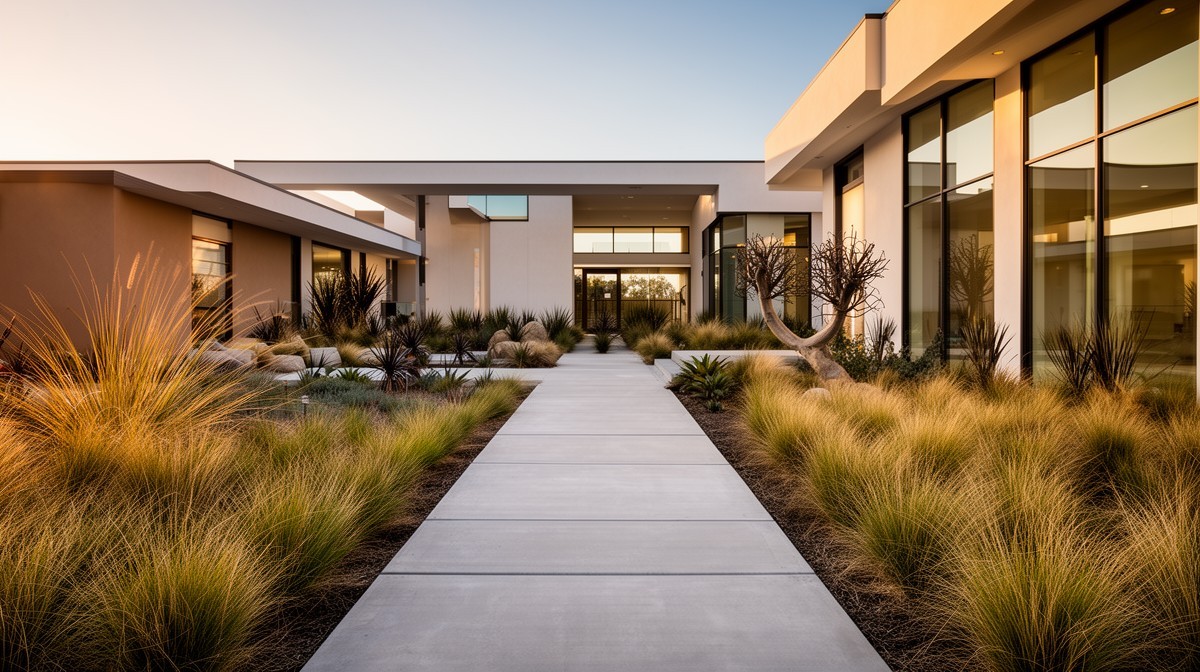
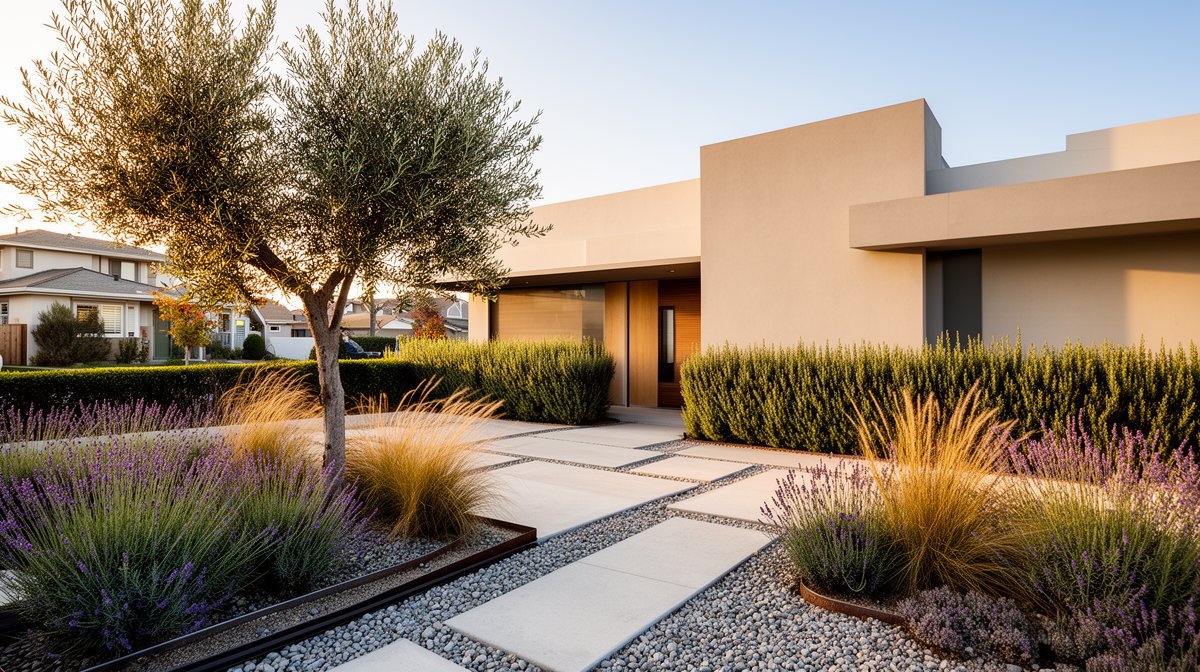
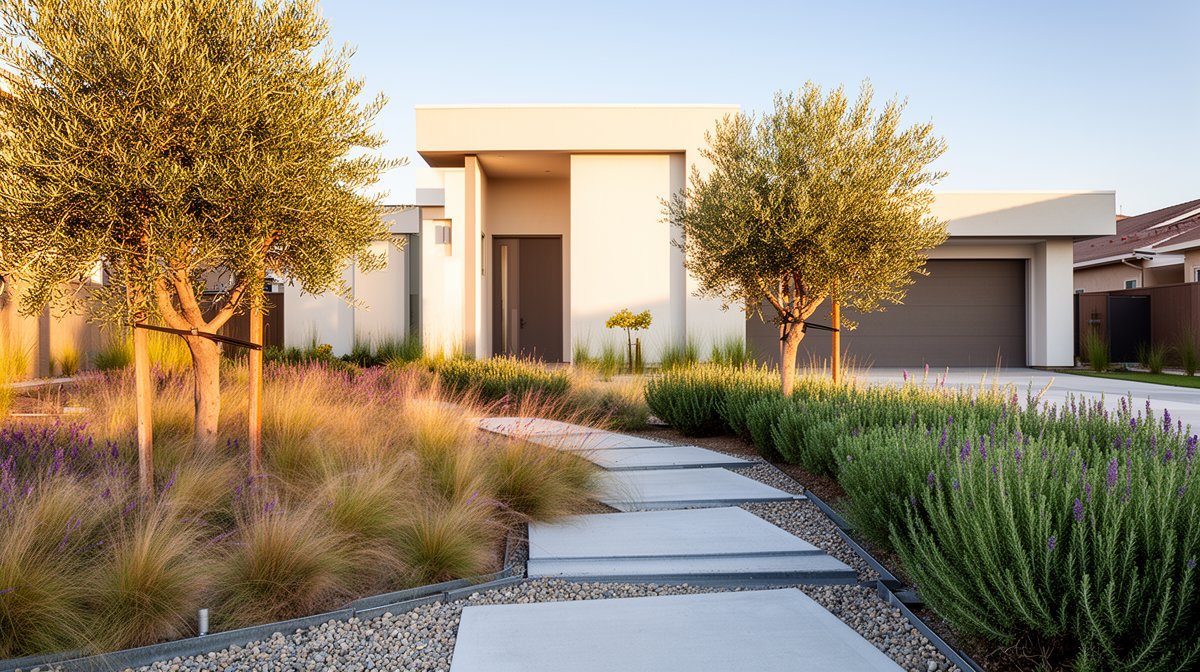
$9–18/sqftA flat-roofed white stucco house with black window frames and a plain gray door, fronted by a wide poured concrete walk with fine scored joints that runs dead straight from the sidewalk to the entry. What makes it modern is the discipline of the planting rather than the removal of the lawn: two clean panels of green turf survive on either side, but the entire zone framing the walk is given over to three repeating textures in loose bands — mounded purple lavender at the sidewalk end, honey-colored bunchgrass through the middle, and a run of blue-gray agave rosettes tucked against the foundation where the stucco reflects heat back at them. One mature broadleaf tree shades the left half of the front lawn and the wooden side gate, so the composition has a canopy layer without a single shrub above waist height. It is the least expensive of these four designs and the easiest to phase.

The Corten Bed Cactus Grid
$16–30/sqftA mid-century flat-roofed house in warm gray stucco, black-framed windows, mountains stacked behind the roofline — and no lawn at all. The front yard becomes a pale tan gravel field with two large rectangular raised beds set into it, edged in weathering steel that has rusted to a deep orange against the neutral ground. Inside those rectangles the planting is a deliberate grid rather than a drift: blue agave rosettes at the corners, chartreuse golden barrel cactus repeating along the front edge, columnar cactus punctuating the back line, burgundy cordyline breaking the blue-green, and low blue-gray rosettes filling the gaps over dark gravel mulch. A straight run of large-format pale porcelain pavers walks you to the door between the two beds, with two terracotta pots as the only soft note. It photographs like a gallery and needs almost no maintenance.

The Concrete Terrace and Lawn Panel
$20–38/sqftAt dusk behind a flat-roofed white stucco house, a rectangular poured concrete terrace with wide scored joints holds three black-framed sofas in a loose square around a round precast concrete gas fire bowl. Bistro string lights run overhead on straight catenary cables — a deliberate choice in a Santa Ana wind corridor, where a shade sail becomes a problem every October. Beyond the terrace a single clean panel of lawn runs to a smooth stucco perimeter wall planted with young upright trees, and the terrace itself is framed on the near side by big soft mounds of ornamental grass that blur the concrete edge and catch the last light. The whole scheme is three materials and three plant types, which is what lets a modest suburban backyard read as designed rather than furnished.

The Glass Wall Pool Court
$110,000–$260,000 (pool and full landscape)A low, wide house with a dark hipped roof opens its entire rear elevation in floor-to-ceiling glass, and at twilight the lit kitchen, dining room and living room read as three glowing panels behind the water. A rectangular pool with underwater lighting sits in a broad, pale broom-finished concrete deck, with a raised warm timber deck bridging back to the house and a linear gas fire table anchoring a sectional on the right. The planting is deliberately thin and all in dark gravel — narrow beds of upright strappy foliage and spiky rosettes along the fence lines, one granite boulder as a full stop near the deck edge, and low path lights plus foliage uplighting doing the rest. Nothing competes with the reflection in the pool, which is the entire point.
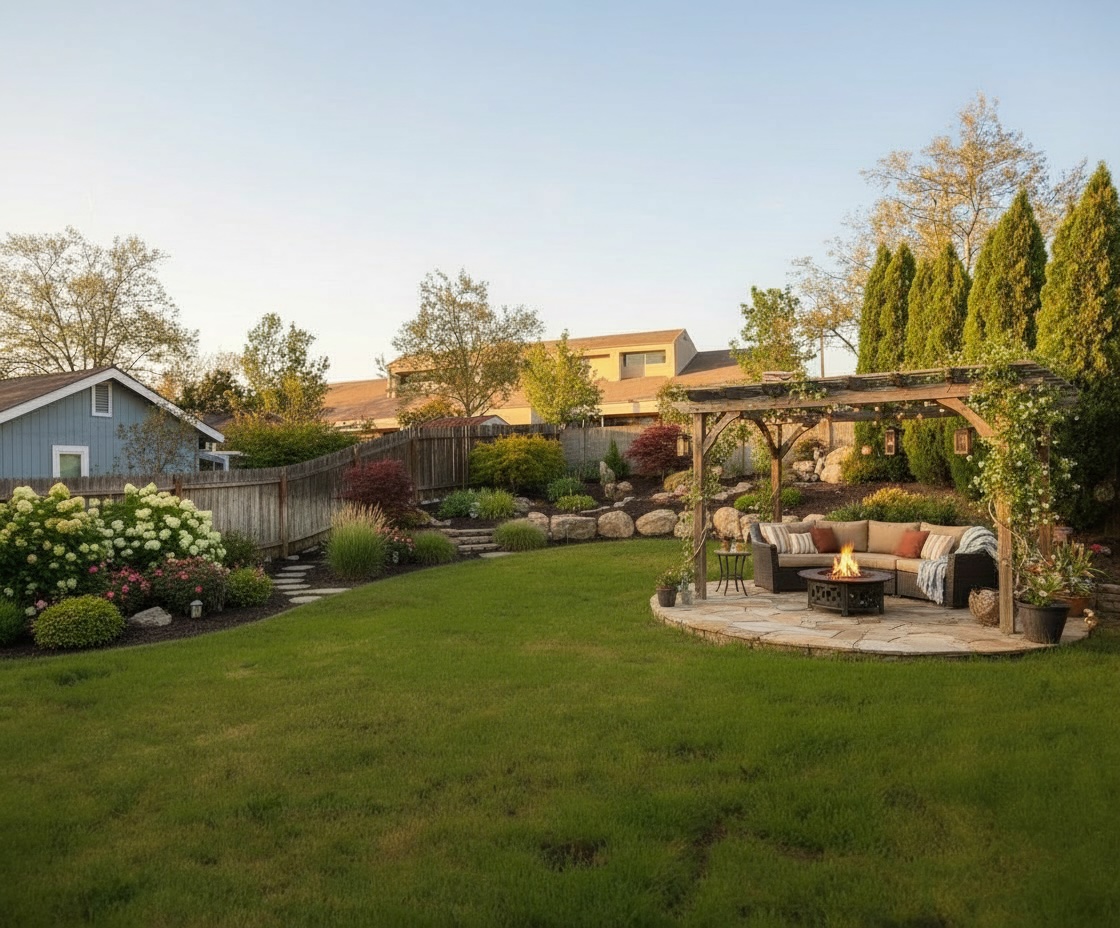
See how a modern/minimalist garden looks on YOUR property
Upload a photo of your Corona yard and visualize your dream garden in seconds.
Try ProScapeAI Free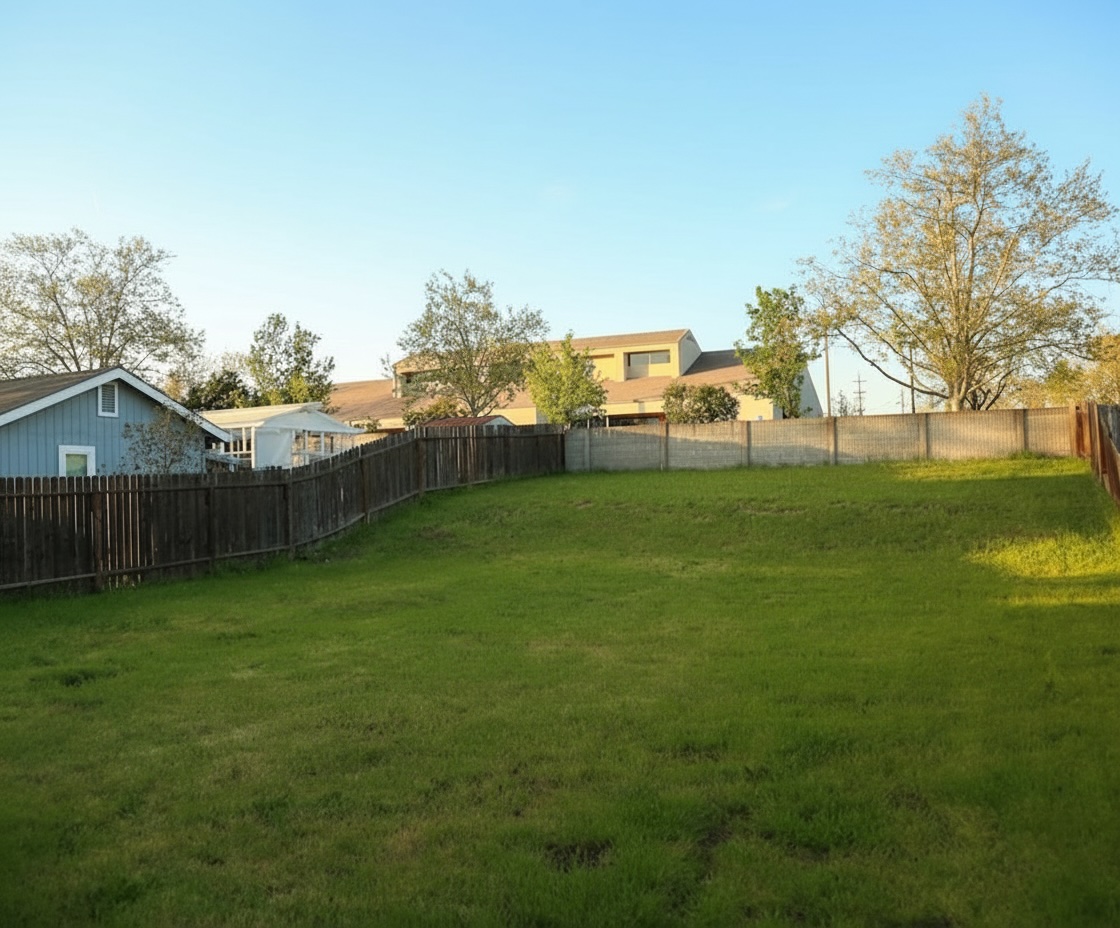
Featured Trees & Shrubs for Modern/Minimalist Gardens
Browse all 221 plants for Corona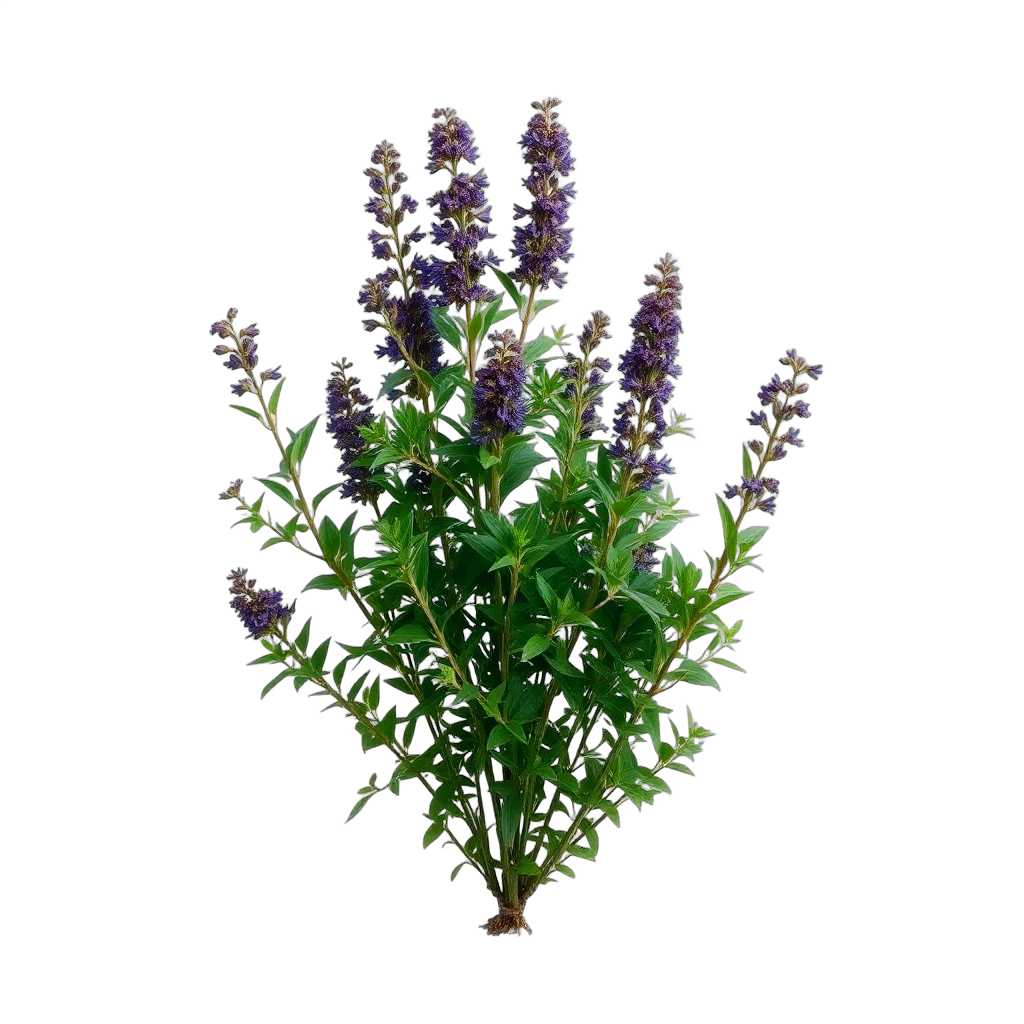
Black Sage
Salvia mellifera
grows to 4 feet, white blooms in spring. Attracts butterflies.
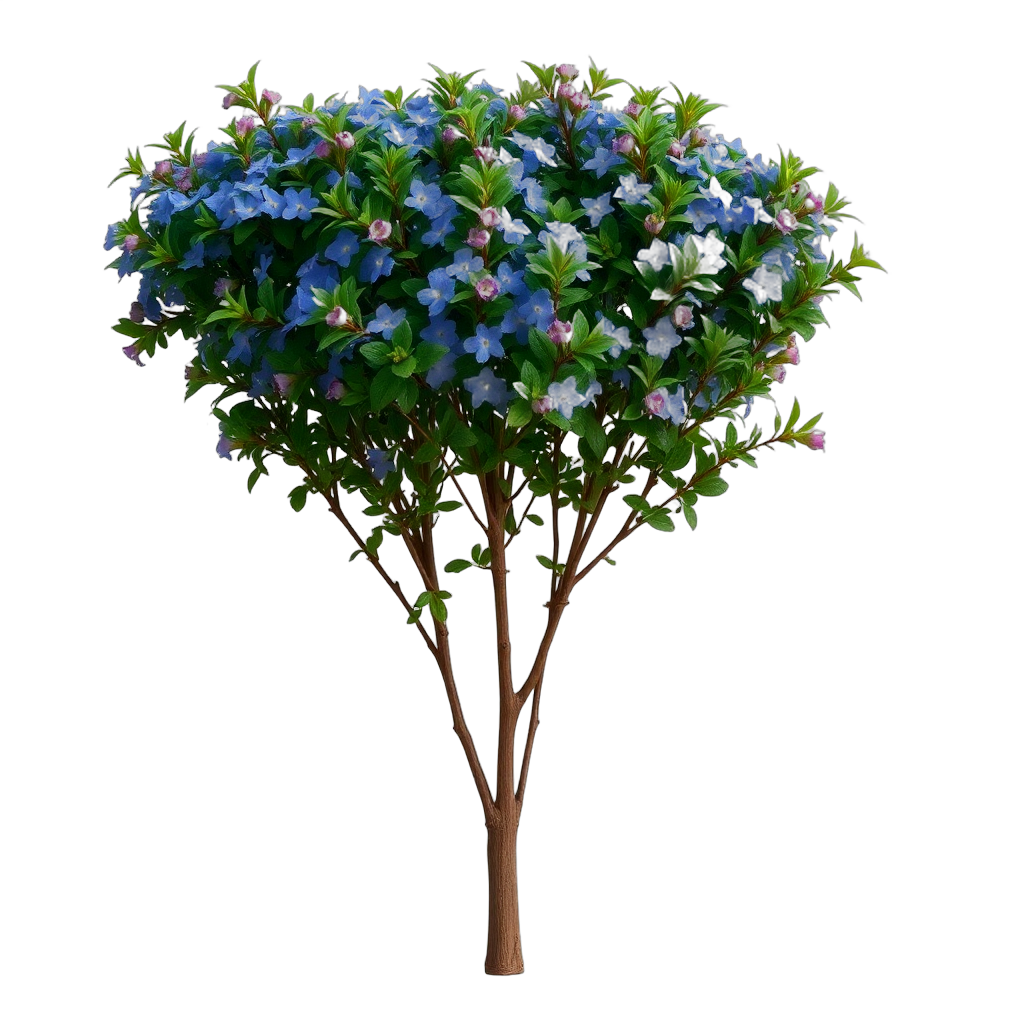
Blue Blossom
Ceanothus thyrsiflorus
medium-sized at 12 feet, blue blooms in spring. Attracts butterflies.
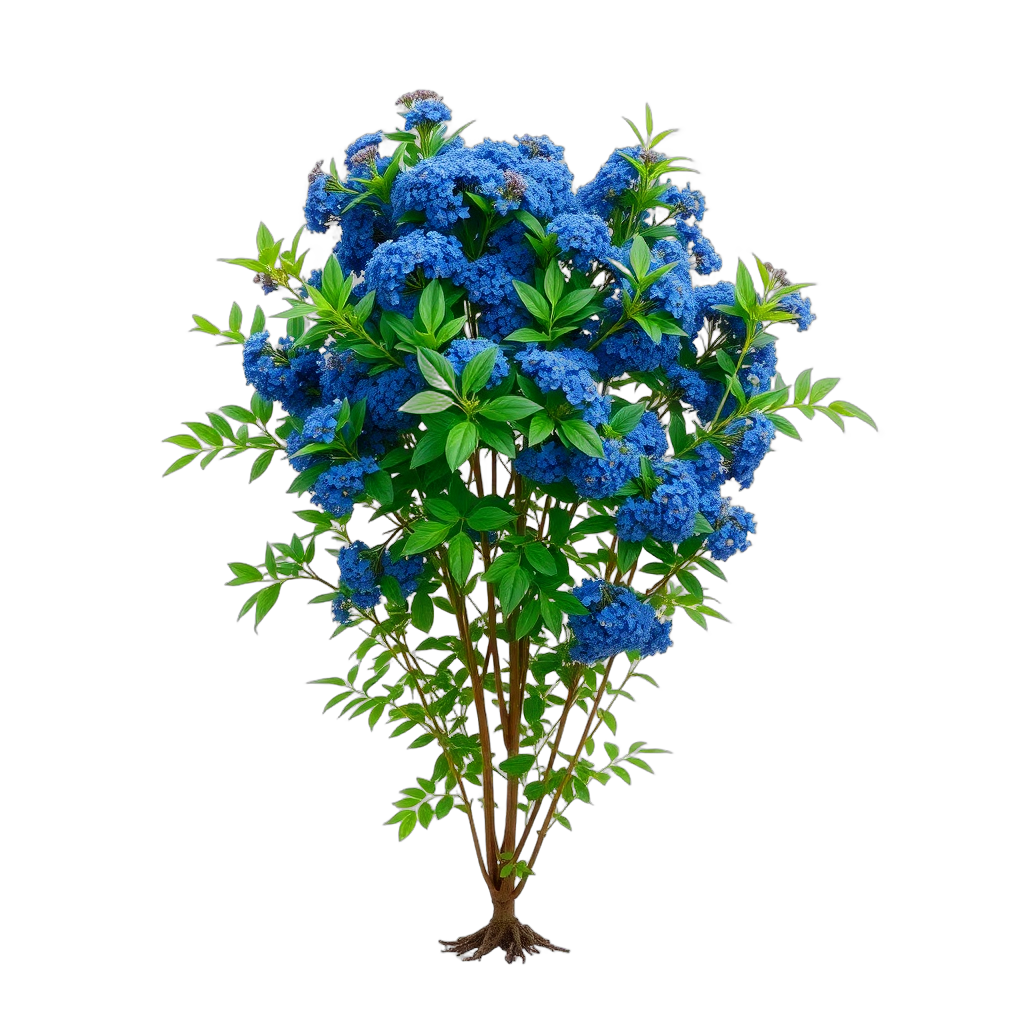
Blue Elderberry
Sambucus cerulea
medium-sized at 15 feet, white blooms in spring. Attracts butterflies.
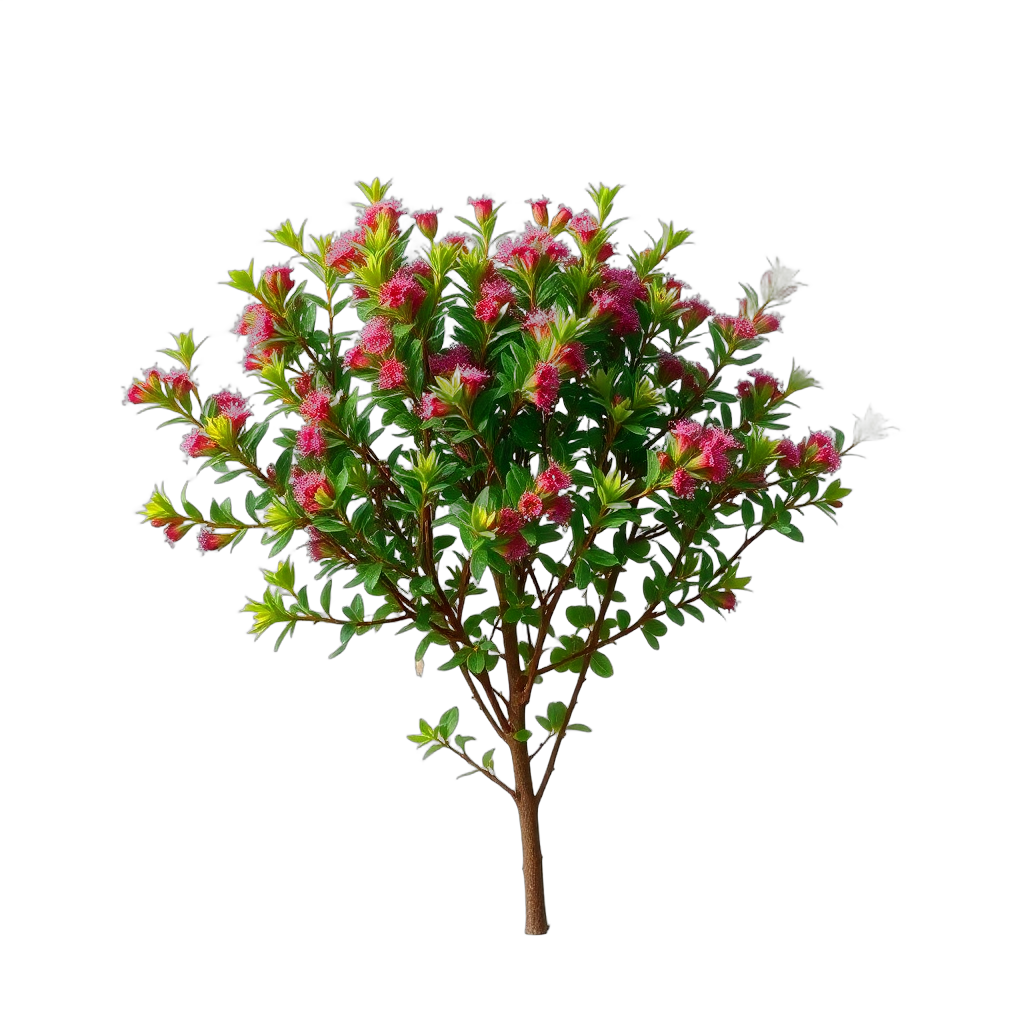
Buckbrush
Ceanothus cuneatus
medium-sized at 7 feet, white blooms in spring. Attracts butterflies.
Featured Grasses & Groundcovers for Modern/Minimalist Gardens
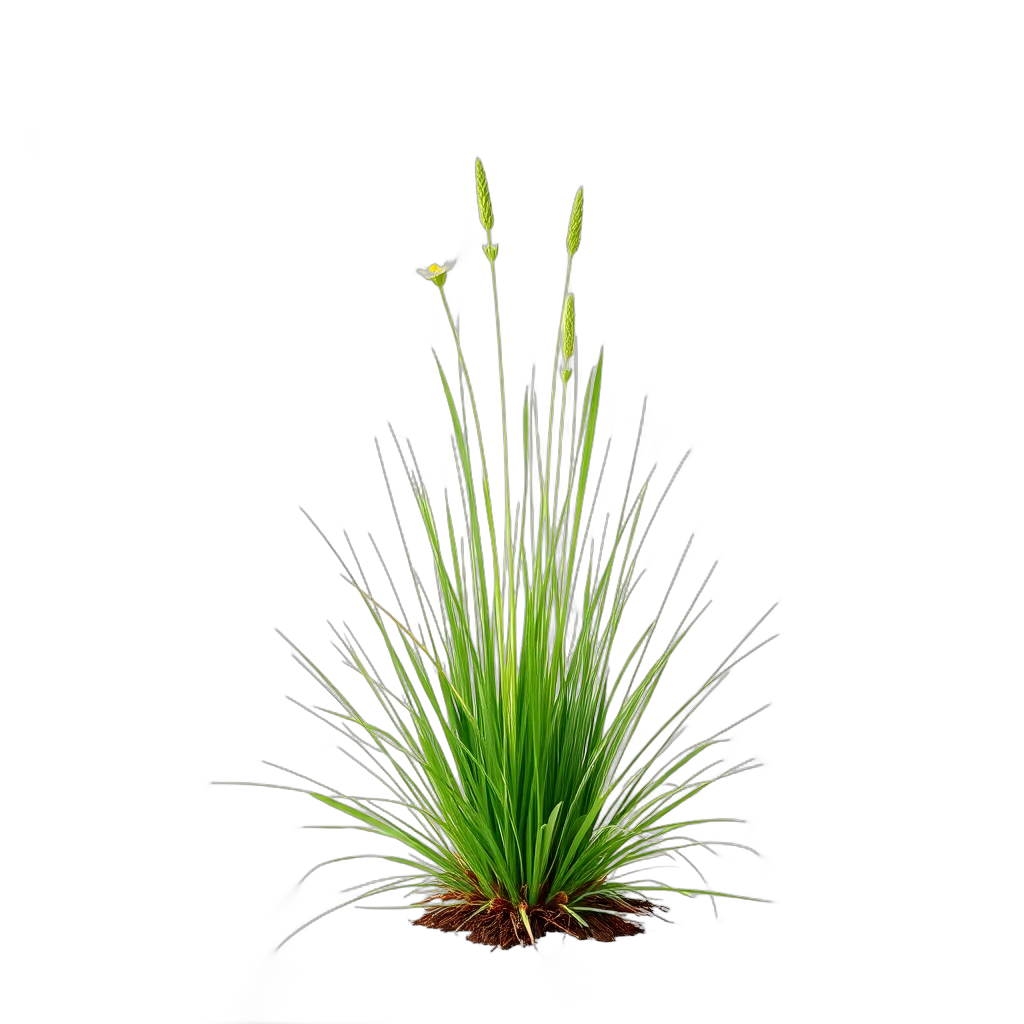
California Brome
Bromus carinatus
low-growing ground cover, blooms in spring. Yellow fall color.
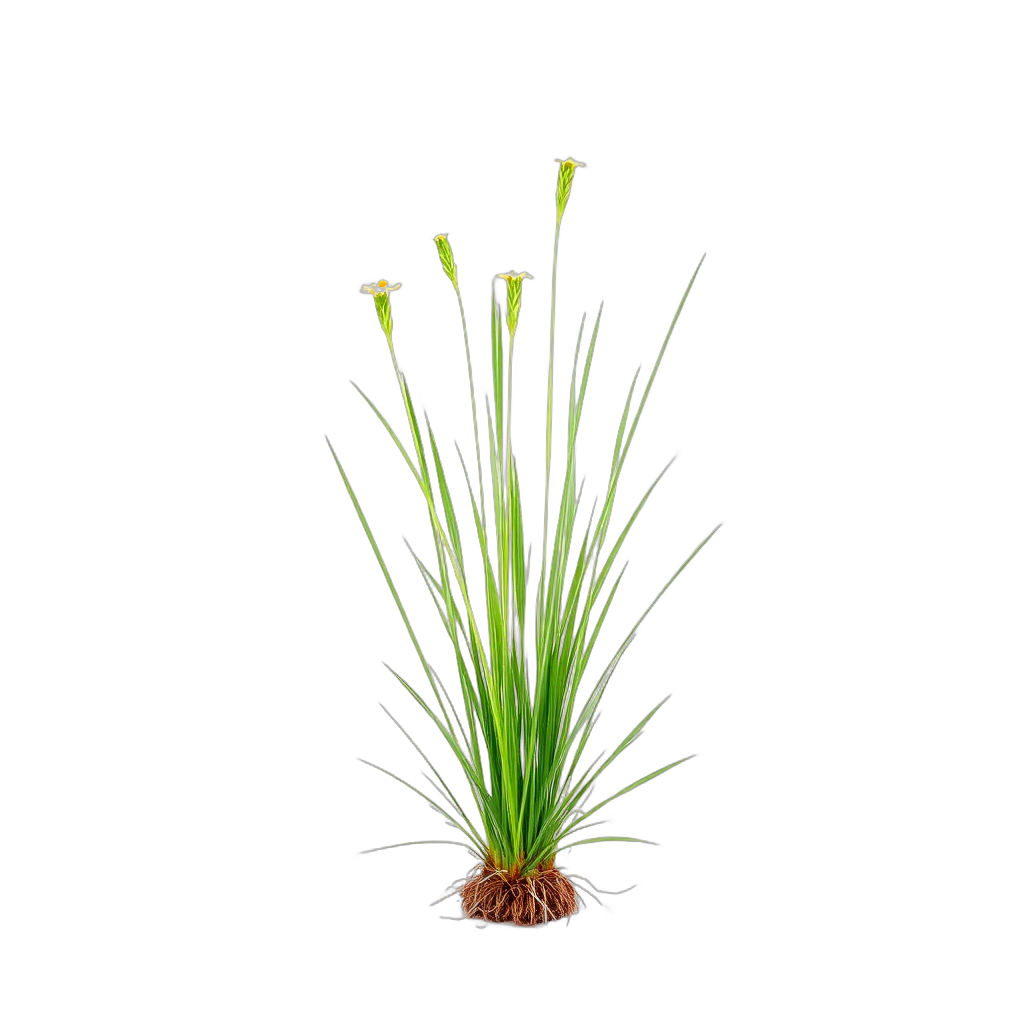
California Melic
Melica californica
low-growing ground cover, blooms in spring.
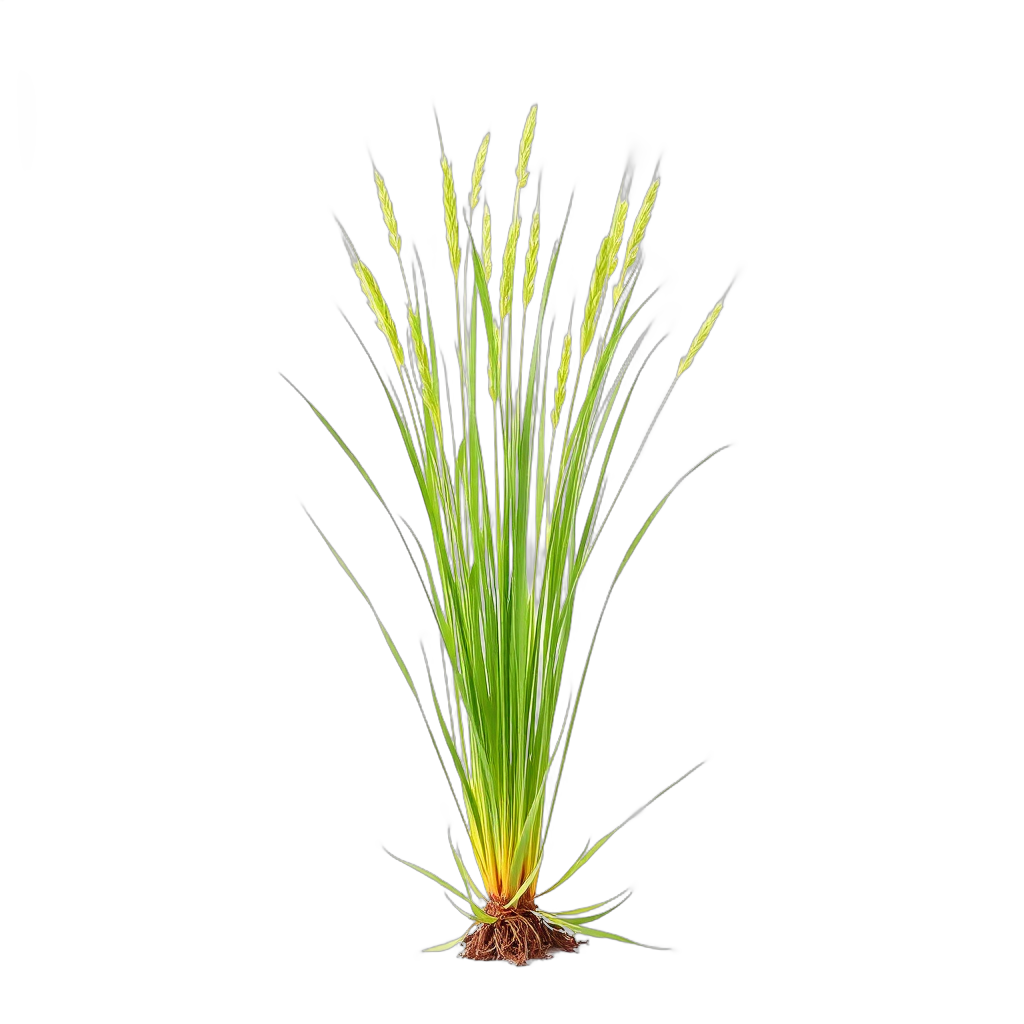
California Oatgrass
Danthonia californica
low-growing ground cover, blooms in spring. Yellow fall color.
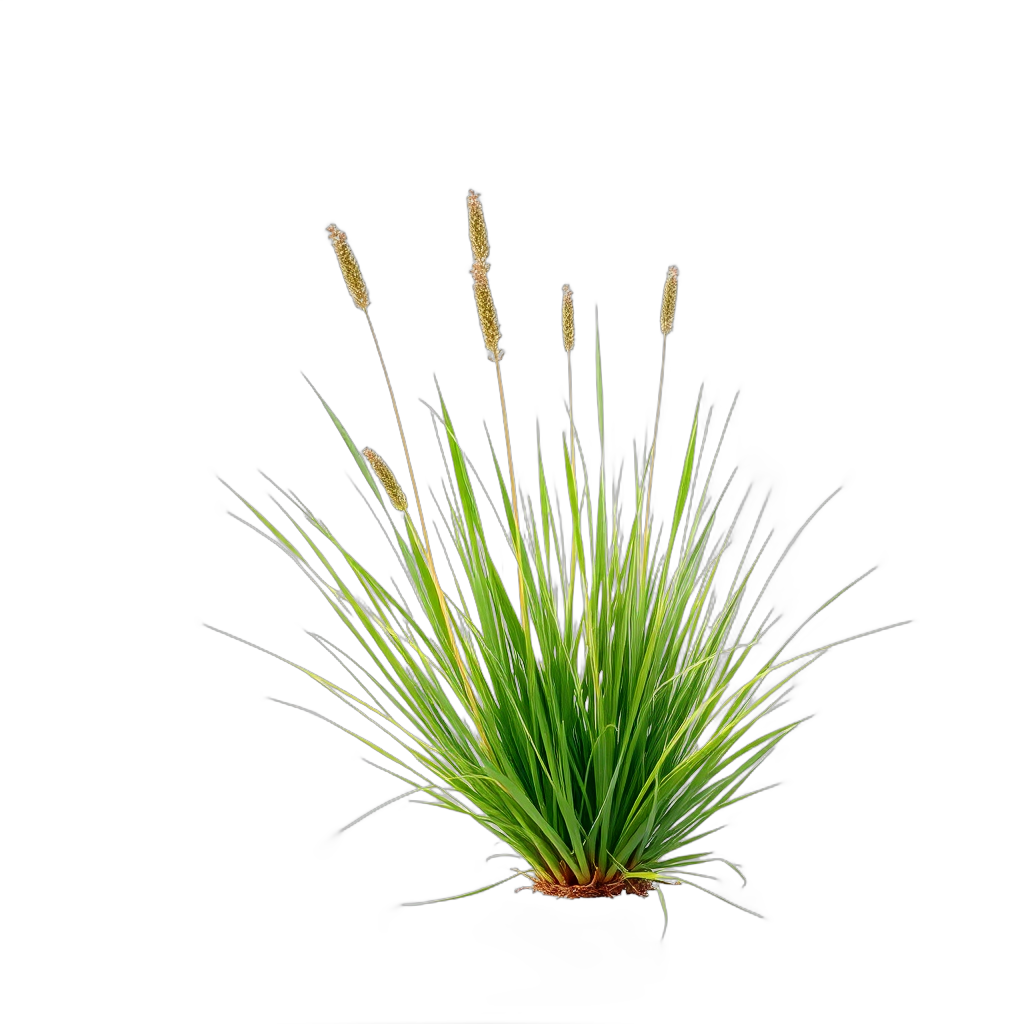
Deer Grass
Muhlenbergia rigens
grows to 3 feet, yellow blooms in fall. Evergreen year-round.
Featured Flowers & Perennials for Modern/Minimalist Gardens
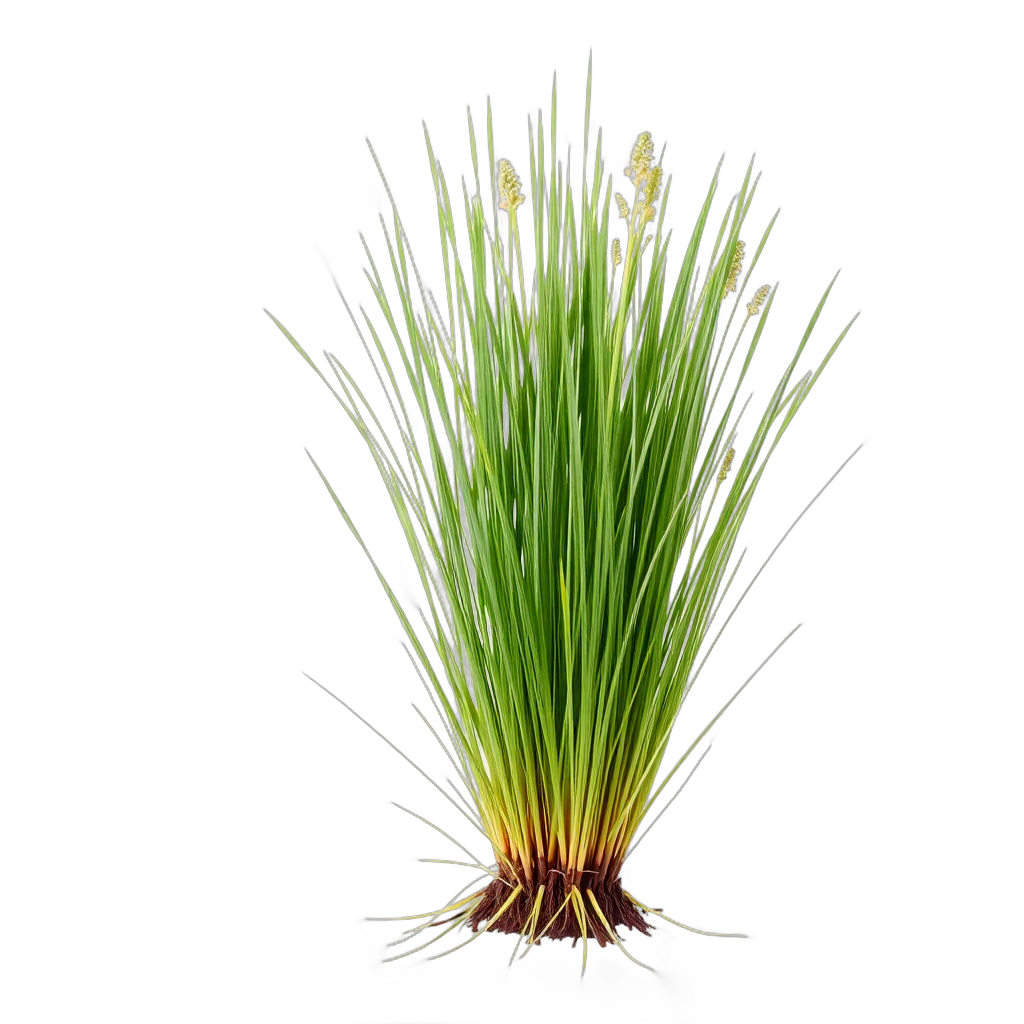
California Gray Rush
Juncus patens
low-growing ground cover, blooms in summer. Evergreen year-round.
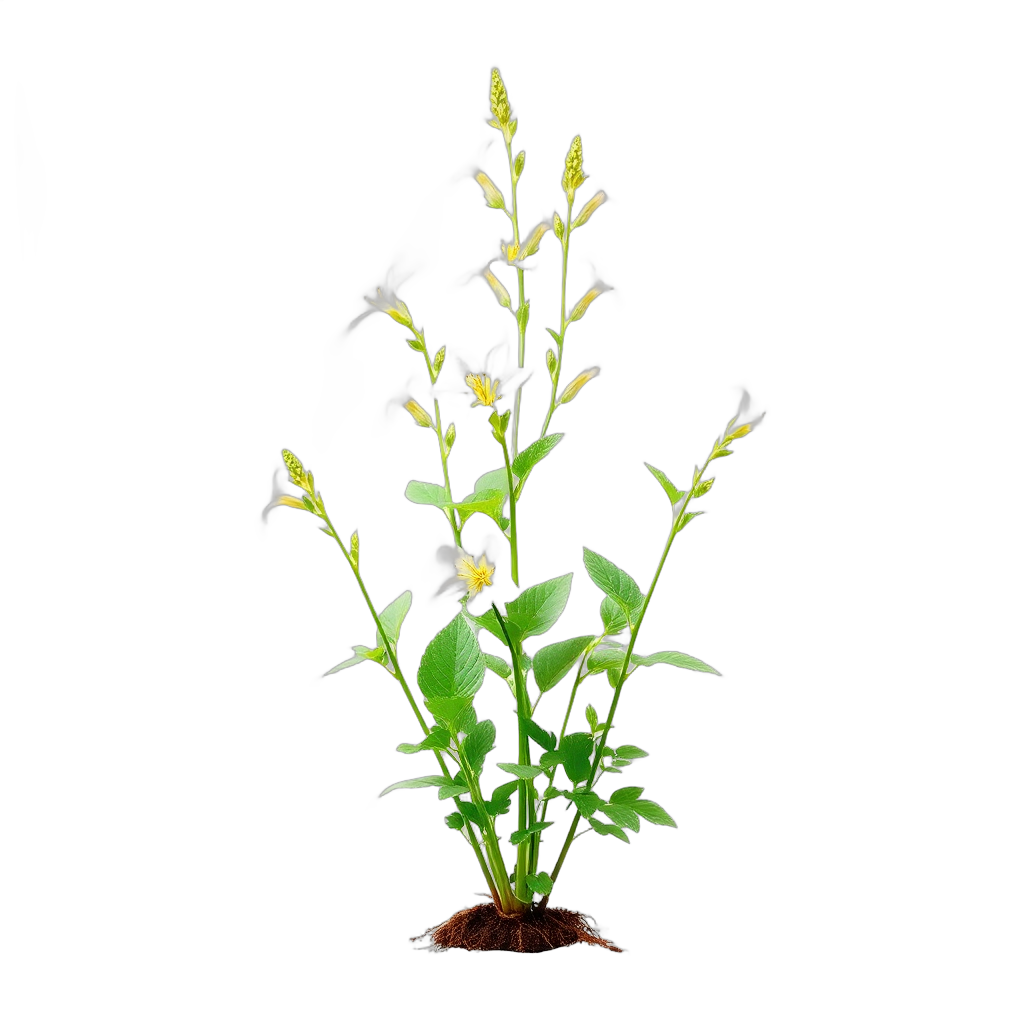
Beach Evening Primrose
Camissonia cheiranthifolia
low-growing ground cover, yellow blooms in spring. Attracts butterflies.
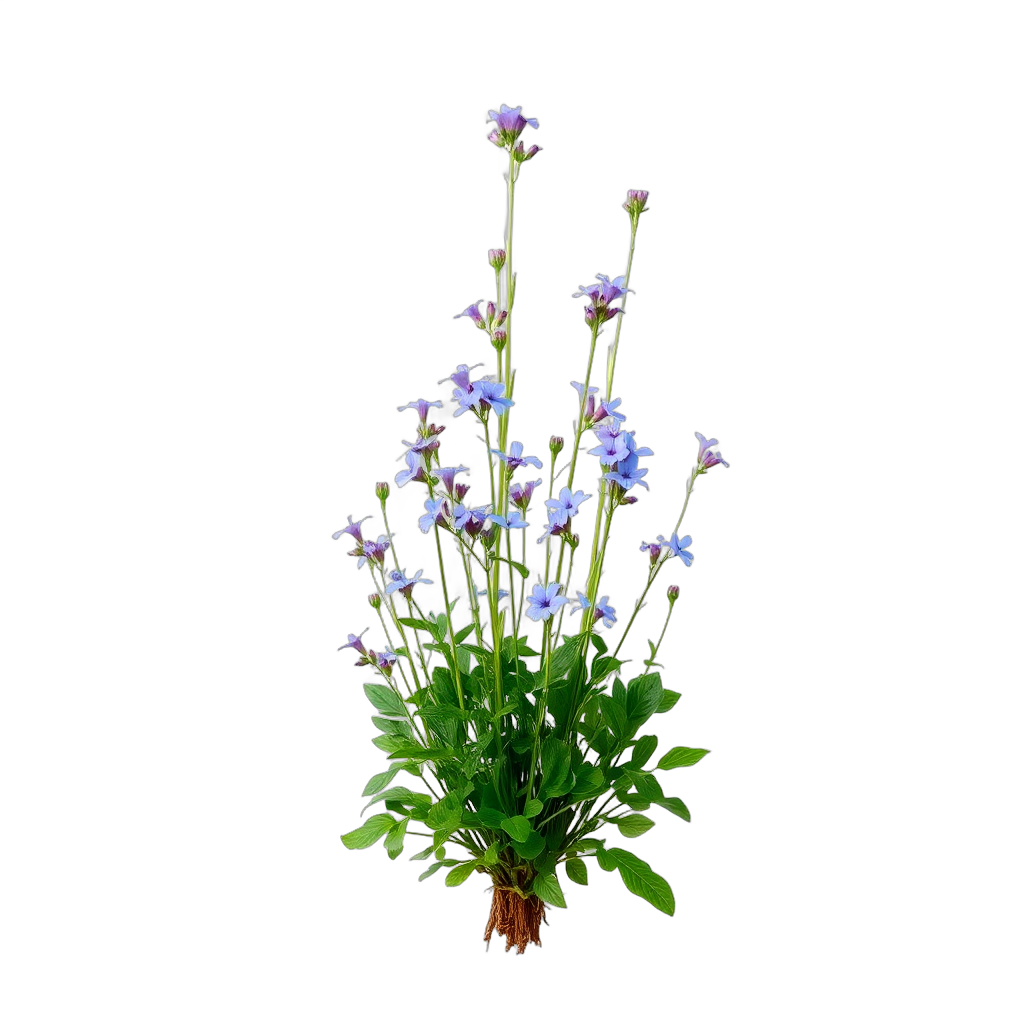
Blue Dicks
Dichelostemma capitatum
low-growing ground cover, blue blooms in spring. Pollinator-friendly.
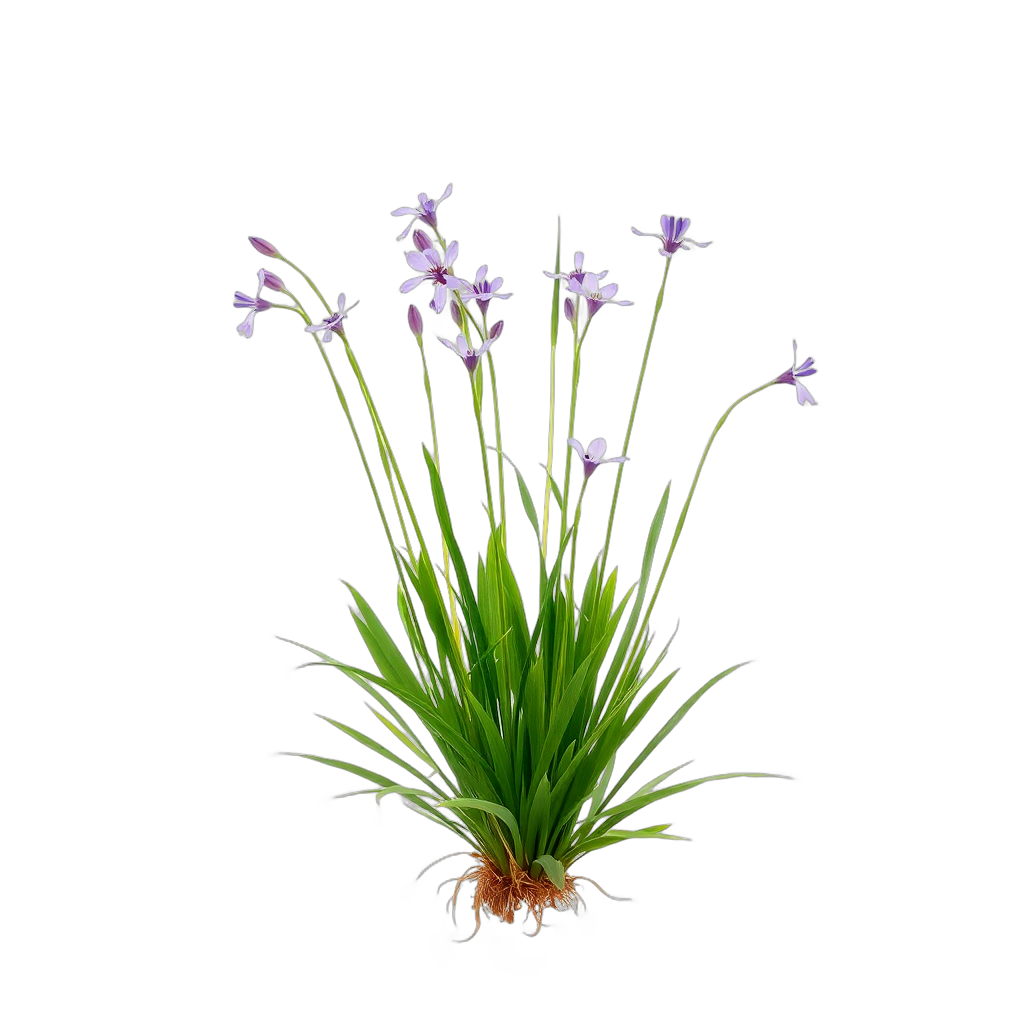
Blue-Eyed Grass
Sisyrinchium bellum
low-growing ground cover, blue blooms in spring. Attracts butterflies.
Zone and sun checks come from our database — confirm with your local nursery before you buy.
Bloom Calendar for Corona
spring
Beach Evening Primrose, Blue Dicks, Blue-Eyed Grasssummer
California Gray Rush, Hooker's Evening Primrose, Hummingbird Mintfall
California Fuchsiawinter
Limited bloomsDesign Tips for Corona (Zone 9b)
- Specify pale broom-finished concrete and refuse the charcoal or polished options a contractor will offer — a dark slab in a Corona backyard is too hot to cross barefoot in August, and a polished one throws the low winter sun straight back through the glass wall it is supposed to serve
- Keep any lawn to one true rectangle on its own valve and plant it in hybrid bermuda 'Tifway 419' or UC Verde buffalograss; it uses roughly half the water of tall fescue through a 96°F Corona August and holds a far crisper edge against concrete
- Repeat, do not collect — three drifts of the same Agave 'Blue Glow' and one long band of Muhlenbergia capillaris 'Regal Mist' will read as modern where fifteen different one-gallon plants will read as a nursery clearance shelf
- Use steel edging everywhere gravel meets planting; the geometry is the design in a modern Corona yard, and a 3/8-inch gravel field without a hard line will migrate into the beds by the second winter storm
- Hang string lights on tensioned catenary cables and choose a solid or louvered roof over a fabric sail — Corona sits at the mouth of the Santa Ana Canyon, and the October offshore winds destroy anything that behaves like a sail
- Uplight the plants, never the house — a single narrow-beam fixture under a Yucca rostrata 'Sapphire Skies' or an Agave ovatifolia throws the shadow that makes a modern garden work after dark, and Corona's long warm evenings pay that back nine months a year
- Saw-cut control joints every 8–10 feet on a compacted crushed-aggregate base; the clay pockets near the Santa Ana River and Temescal Wash swing far enough between February wet and August dry to crack a slab poured straight onto native grade
Where to Source Plants in Corona
Skip the big-box stores. These independent Corona nurseries specialize in the plants that make modern/minimalist gardens thrive in Zone 9b.
P & C Nursery
South Corona (South Main Street)
Family-run specialty grower with one of the region's deepest cactus and succulent benches — echeveria, crassula, aeonium, sedum, cotyledon and cactus from cuttings up to large specimen pots, ideal for filling steel-edged modern beds
Parkview Nursery
Riverside (Jackson at Magnolia)
Locally owned since 1970; broad retail stock of water-wise shrubs, California natives, specimen shade trees, roses and pottery — the closest full garden center to Corona carrying architectural material in real size
Louie's Nursery & Garden Center
Woodcrest, Riverside
Full-service independent garden center with a large succulent and cactus yard, specimen trees, the Inland Empire's biggest avocado and citrus selection, sod and bulk soil amendments
Riverside-Corona Resource Conservation District Native Plant Nursery
Riverside (Glenwood Drive)
Conservation district nursery propagating roughly 80 California native species from local Santa Ana watershed seed — coastal sage scrub and chaparral stock for the wild edge of a modern scheme; limited availability, cash or check
Modern/Minimalist Landscaping Costs in Corona
| Project Scope | Estimated Cost |
|---|---|
| Front yard modern conversion, 700 sqft (concrete walk, steel-edged beds, plants) | $9,000 – $20,000 |
| Large-format porcelain paver walkway (per sqft installed) | $28 – $55 |
| Poured concrete terrace with saw-cut joints, 300–450 sqft | $9,000 – $22,000 |
| Weathering steel raised planter bed (fabricated, set and filled) | $700 – $1,800 each |
| Round precast gas fire bowl with gas line run | $3,500 – $9,000 |
| Pool, deck and full backyard modern landscape | $110,000 – $260,000 |
| AI visualization with ProScapeAI | Free to start |
Estimates based on Corona, CA-area contractor rates as of 2026. Actual costs vary by site conditions, materials, and contractor.
Corona Climate & Growing Zone
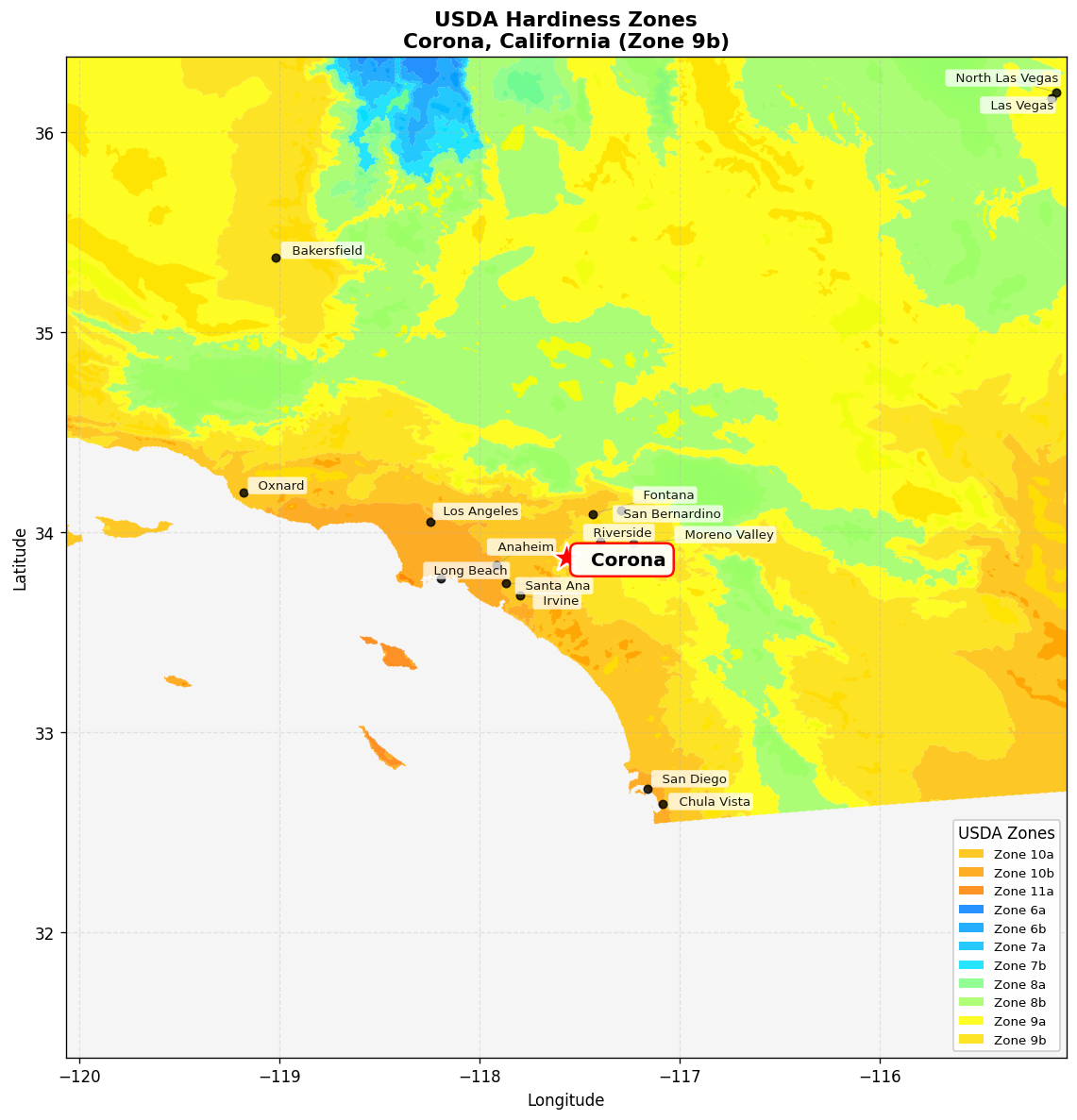
USDA Zone 9b
Hardiness zone for Corona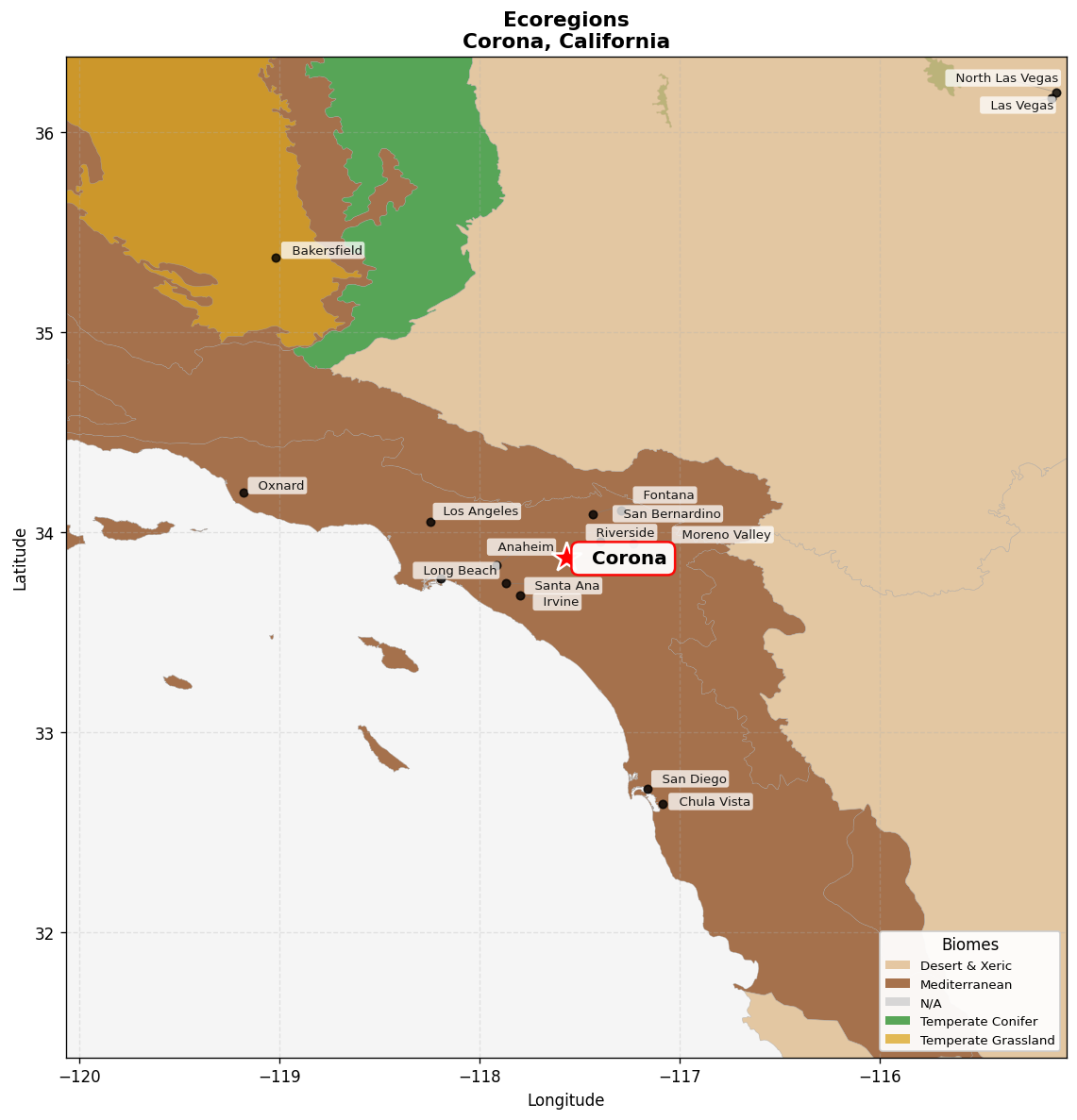
California coastal sage and chaparral
Native ecoregionFrequently Asked Questions
How much does a modern landscape cost in Corona, CA?
Front yards are the affordable end: a full modern conversion with a concrete entry walk, steel-edged beds, gravel and architectural plants runs $9–18 per square foot installed, so a typical 700 sqft Corona front yard is a $9,000–20,000 project. Adding weathering steel raised beds pushes it to $16–30 per square foot, since each fabricated planter is $700–1,800 set and filled. A poured concrete back terrace of 300–450 sqft with saw-cut joints is $9,000–22,000, and a round precast gas fire bowl with the gas line run costs $3,500–9,000 on top. A complete pool-and-landscape backyard in Sierra Del Oro or Dos Lagos commonly lands between $110,000 and $260,000. Riverside County labor runs a little under coastal Orange County, which is the main reason the same design is 10–20 percent cheaper here than in Irvine.
Can I still have a lawn in Corona under current water rules?
Yes, if it is a real lawn and not a decorative carpet. California's Model Water Efficient Landscape Ordinance applies to new and rehabilitated residential landscapes over 500 square feet that pull a permit, and it caps turf at roughly a quarter of the landscape area with its own dedicated valve and a weather-based controller. AB 1572 targets non-functional turf at HOA, commercial and institutional sites rather than individual front yards, but the direction of travel is obvious. The design answer is the same as the legal one: one crisp rectangle you actually walk on. Plant it in hybrid bermuda 'Tifway 419' or UC Verde buffalograss instead of tall fescue and it will use around half the water through a 96°F Corona August while holding a much sharper edge against concrete.
Which plants keep a modern look year-round in Zone 9b?
The structural spine should be evergreen and sculptural, because Corona has no winter to hide behind. Agave ovatifolia, Agave parryi var. truncata, Agave 'Blue Glow', Yucca rostrata 'Sapphire Skies', Dasylirion wheeleri and Echinocactus grusonii all hold their form through 25–30°F lows without protection. For clipped mass, Westringia fruticosa 'Morning Light', Olea europaea 'Little Ollie' and Rhaphiolepis indica 'Ballerina' take shearing far better than boxwood does in this heat. Add movement with Muhlenbergia capillaris 'Regal Mist', Pennisetum spathiolatum and Lomandra longifolia 'Breeze', and colour with Lavandula x intermedia 'Provence' and Salvia greggii 'Furman's Red'. Keep the total species count under about ten — repetition, not variety, is what reads as modern.
Concrete or pavers for Corona's heat and soil?
Both work, but the details matter more than the choice. Poured concrete gives the large uninterrupted planes modern design wants and is cheaper per square foot, provided you compact a proper crushed-aggregate base and saw-cut control joints every 8–10 feet — the clay pockets near the Santa Ana River and Temescal Wash move enough between February and August to crack a slab poured on bare ground. Large-format porcelain pavers at $28–55 per square foot installed stay noticeably cooler underfoot and can be lifted if something below needs attention. Whichever you pick, go pale and broom-finished: a dark or polished surface in a Corona backyard is unusable barefoot on a 105°F afternoon and throws hard glare off the low winter sun into all that glass.
How do I handle Santa Ana winds on a modern patio?
Design for them rather than around them. Corona sits at the mouth of the Santa Ana Canyon, and the autumn offshore winds regularly take out shade sails, umbrellas and lightweight furniture. Hang string lights on tensioned catenary cables anchored to the structure and a post rather than draping them from a pergola, choose steel-framed furniture heavy enough to stay put, and prefer a solid or louvered roof structure over fabric if you need shade. Plant windbreaks that bend instead of snapping — Westringia fruticosa 'Morning Light' and Arbutus 'Marina' handle it, and skip Italian cypress, which is both a wind sail and poor practice in a fire zone. Also keep the first five feet from the house free of woody planting if you are on the Cleveland National Forest side of town.
When is the best time to install in Corona?
Build hardscape in summer, plant in late autumn. Concrete can be poured year-round here, and the June-to-September stretch is dry, predictable and easy to schedule, so the slab, walls, steel edging and gravel are best done then. Planting is the opposite: October through February lets Agave, Muhlenbergia and Lavandula root on winter rain before their first 100°F day, and roughly halves the establishment irrigation a spring or summer install would need. March still works. Late May through September is the window to avoid — new plants sitting in 96°F soil spend the season surviving rather than establishing, whatever the drip controller is doing.
Do I need a permit for modern landscaping in Corona?
Planting, gravel conversions, bed edging and standard drip irrigation generally do not require a permit anywhere in the city. Permits typically come into play for retaining walls above a set height, pools and spas, patio covers and other roofed structures, gas lines to a fire feature, and any new low-voltage or line-voltage electrical work — and for permitted new or rehabilitated landscapes over 500 square feet, the state landscape ordinance documentation comes with them. Thresholds and submittal requirements change, and HOA design review in Dos Lagos, Eagle Glen, Sycamore Creek and Trilogy at Glen Ivy is a separate approval on top of anything the city asks for. Confirm current requirements with the City of Corona and your association before the design is finalized.