4 Modern Landscape Ideas for Dayton, OH | Zone 6a Garden Design
Native plants from the Southern Great Lakes forests (Zone 6a) — Humid continental (hot summer) climate
Why Modern/Minimalist Gardens in Dayton?
Modern landscape design has a stronger foothold in Dayton than most people expect, and the housing stock is the reason. The Miami Valley is full of clean-lined mid-century brick ranches — Kettering, Oakwood's post-war blocks, Trotwood, Overlook and the wide streets of Huber Heights, still America's largest concentration of brick homes — and those low horizontal rooflines, wide eaves and dark window frames are exactly the architecture a modern landscape amplifies. At the other end, the new contemporary builds going up around Beavercreek, Springboro, Washington Township and Austin Landing arrive with two-storey glazing and flat entry canopies that a traditional foundation planting simply fights. Dayton's engineering culture helps too: this is Wright brothers and Wright-Patterson country, and a geometric, precisely detailed front yard reads as confident here rather than cold.
The climate sets the plant list honestly. Dayton is USDA Zone 6a — design winter lows near -10°F — in a humid-continental (Köppen Dfa) climate with roughly 40 inches of rain, 22 inches of snow, and about 170 frost-free days between an April 25 last frost and a mid-October first frost. That rules out the true desert-modern palette: Agave americana, Aloe and most Echeveria will not overwinter outdoors. The good news is that the sculptural look is fully achievable with hardy substitutes. Agave parryi var. neomexicana and Yucca rostrata hold the same architectural rosette down to -20°F given sharp drainage, Yucca filamentosa 'Color Guard' gives you the spiky silhouette with no fuss at all, and Sempervivum tectorum reads as a colony of echeverias in a gravel panel while being one of the toughest plants in Ohio. For movement, Calamagrostis × acutiflora 'Karl Foerster' is the workhorse — perfectly vertical, tan by August, standing through snow load until you cut it in March — with Schizachyrium scoparium 'Standing Ovation', Panicum virgatum 'Northwind', Festuca glauca 'Elijah Blue' and Sporobolus heterolepis filling the lower tiers.
Dayton's soil is heavy Wisconsinan glacial till — Miamian and Crosby silt loams built on pulverized limestone, slow-draining and alkaline at roughly pH 7.0 to 7.8. For modern design that cuts both ways. The alkalinity is a plus: Yucca, Sempervivum, Perovskia atriplicifolia 'Blue Spire' and Juniperus all prefer sweet soil, and Dayton gravel gardens look better than their equivalents in acid-soil cities. The clay is the problem. Every rosette and every silver-leaved plant must sit in a bed raised four to eight inches and backfilled 50/50 with limestone screenings, or it will rot in a wet February rather than freeze in January. Hardscape needs the same discipline: excavate six to ten inches, compact a proper crushed-limestone base, and set footings below the roughly 32-inch Ohio frost line — clay that swells wet and shrinks dry will lift a slab poured on bare ground within three winters, and freeze-thaw cycling is the single most common reason Dayton patios crack.
Water and drainage are governed locally in ways that quietly favour the modern palette. Dayton's drinking water comes from the Great Miami Buried Valley Aquifer, an EPA-designated sole-source aquifer protected by one of the country's longest-running wellfield programs, and Montgomery County's stormwater district bills by impervious area — so gravel panels, permeable jointed pavers and planted infiltration beds cost less to own than a sealed slab of the same size. The 1913 flood left the region ringed by Miami Conservancy District levees and five dry dams, and low-lying yards in Old North Dayton, Riverside and along the Stillwater still pond after heavy spring rain. A modern design handles that elegantly: a Corten-edged gravel field is a stormwater feature that happens to look like a Palm Springs courtyard, and it needs no mowing between April and October.
4 Modern/Minimalist Design Ideas for Dayton

The Contemporary Entry Curve
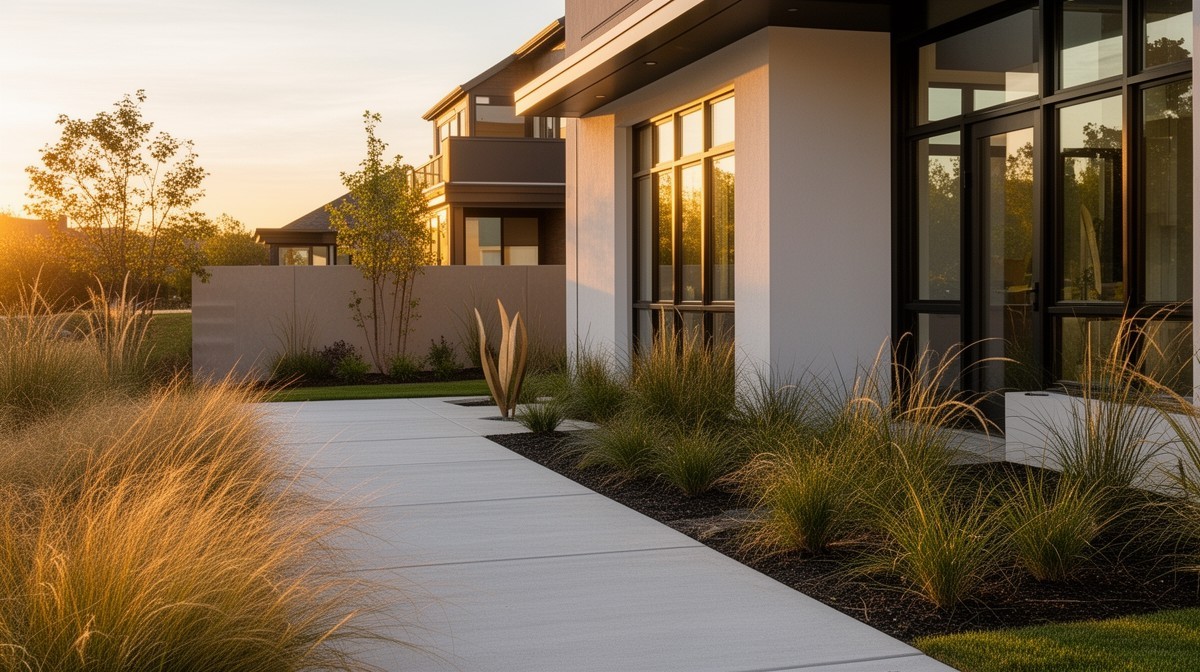
$12–24/sqftA two-storey contemporary in white stucco and vertical cedar cladding, with black-framed glass and a flat cantilevered entry canopy over a walnut door. A broom-finished concrete walk curves out from the entry to the street, and the design plays one sweep of clipped lawn against two dark-mulched beds: tan-plumed upright grasses massed against the facade, spiky blue-grey rosettes punched in as focal points, low purple flowering mounds at the kerb, and a scatter of rounded river boulders for weight. A single young canopy tree stands in the lawn where it will eventually shade the west glazing.

The Corten Gravel Front Yard
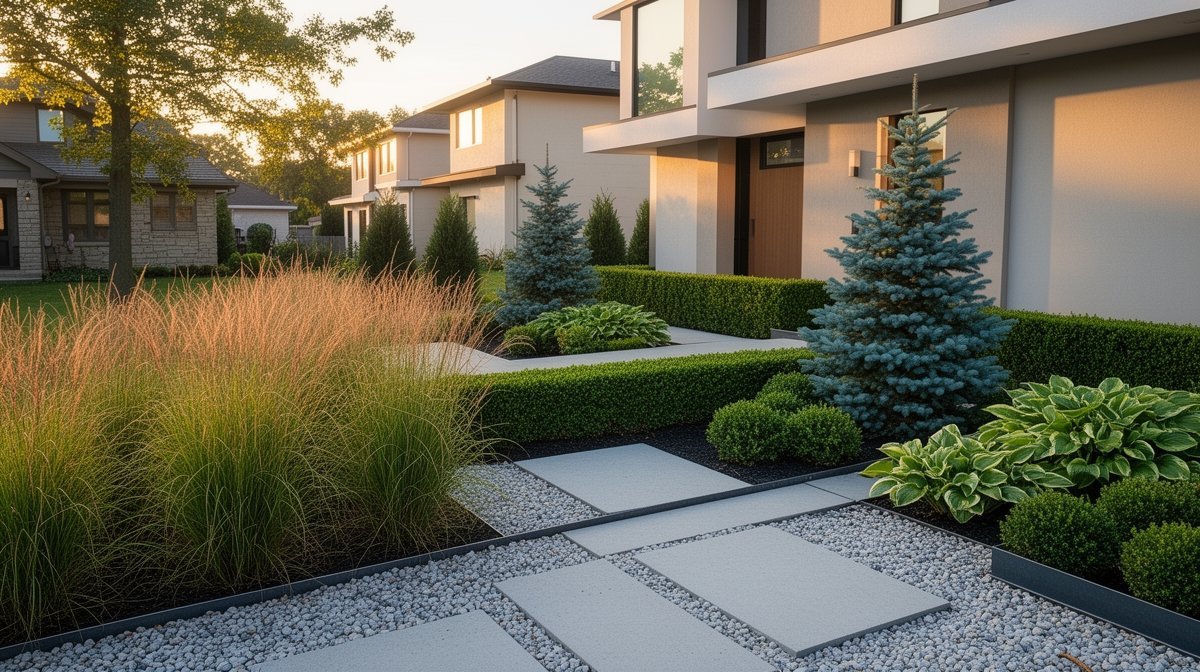
$9–18/sqftA mid-century brick ranch with wide eaves, dark fascia and a recessed entry, its entire front lawn replaced by two large pea-gravel panels framed in weathered Corten steel and split by a straight concrete walk. Inside the panels, big blue-green rosettes sit in loose colonies alongside blue and bronze grass tufts, spaced generously so the gravel itself is part of the composition. A tight row of clipped foundation shrubs and one wine-red accent shrub run along the brick, and a mature canopy tree behind the roofline gives the whole flat design its vertical counterweight.

The Fire Bowl Terrace
$18–34/sqftLarge-format grey concrete pavers form a clean rectangle off the back of a white contemporary with a sliding glass wall and a first-floor balcony. Black steel-framed sofas with cream cushions face a round cast-concrete gas fire bowl, catenary string lights run from a single black post to the roofline, and squared Corten and timber planters set on the lawn edge hold silver-plumed grasses that catch the low evening sun. A young maple gives afternoon shade and a clipped low hedge closes the boundary without blocking the long view — a design built to extend a Dayton evening from April into November.

The Lit Pool Garden
$40–85/sqft (pool area inclusive)Photographed at dusk: a rectangular pool in a pale broad-jointed concrete deck, mirroring a two-storey glass-walled house lit warm from inside, with a dark horizontal board fence wrapping the lot. The landscape works entirely at the edges — continuous uplit grass borders down both fence lines throwing evening shadow, path lights along the deck joints, and a foreground band of lavender-blue flowering mounds and fine grasses framing the approach. Restricting the palette to pale concrete, dark timber, green-and-wheat grass and warm light is what makes a modest Ohio backyard read as a resort.
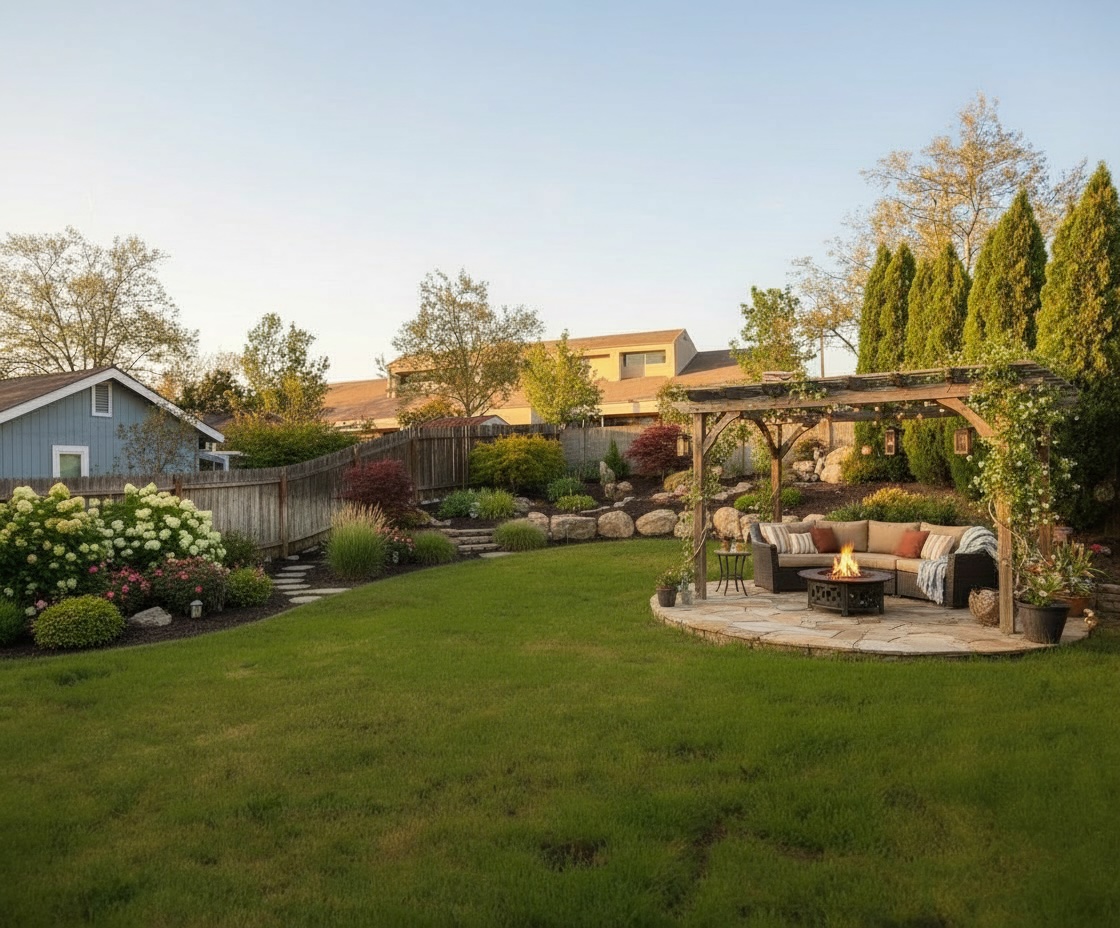
See how a modern/minimalist garden looks on YOUR property
Upload a photo of your Dayton yard and visualize your dream garden in seconds.
Try ProScapeAI Free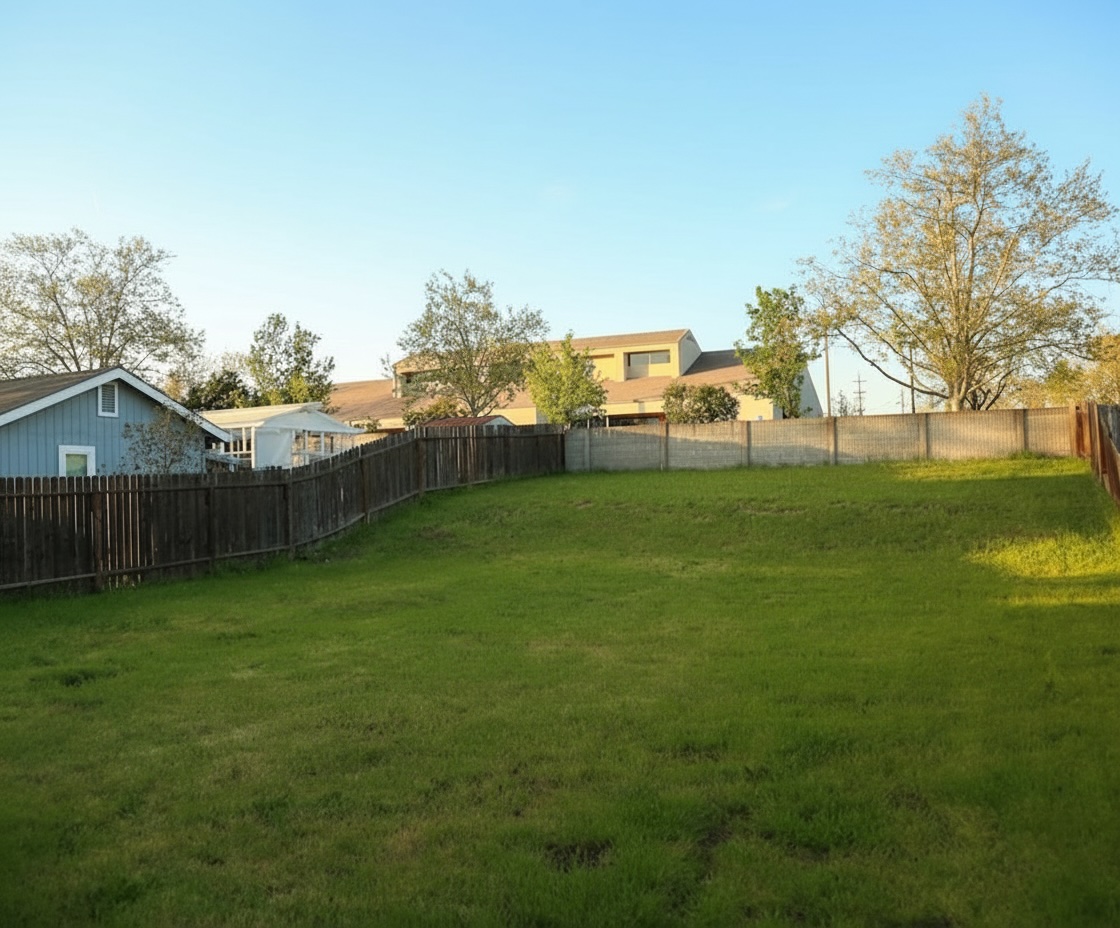
Featured Trees & Shrubs for Modern/Minimalist Gardens
Browse all 248 plants for Dayton
American Black Currant
Ribes americanum
grows to 5 feet, white,yellow blooms in spring. Attracts hummingbirds.

Buttonbush
Cephalanthus occidentalis
medium-sized at 8 feet, white blooms in summer. Attracts butterflies.
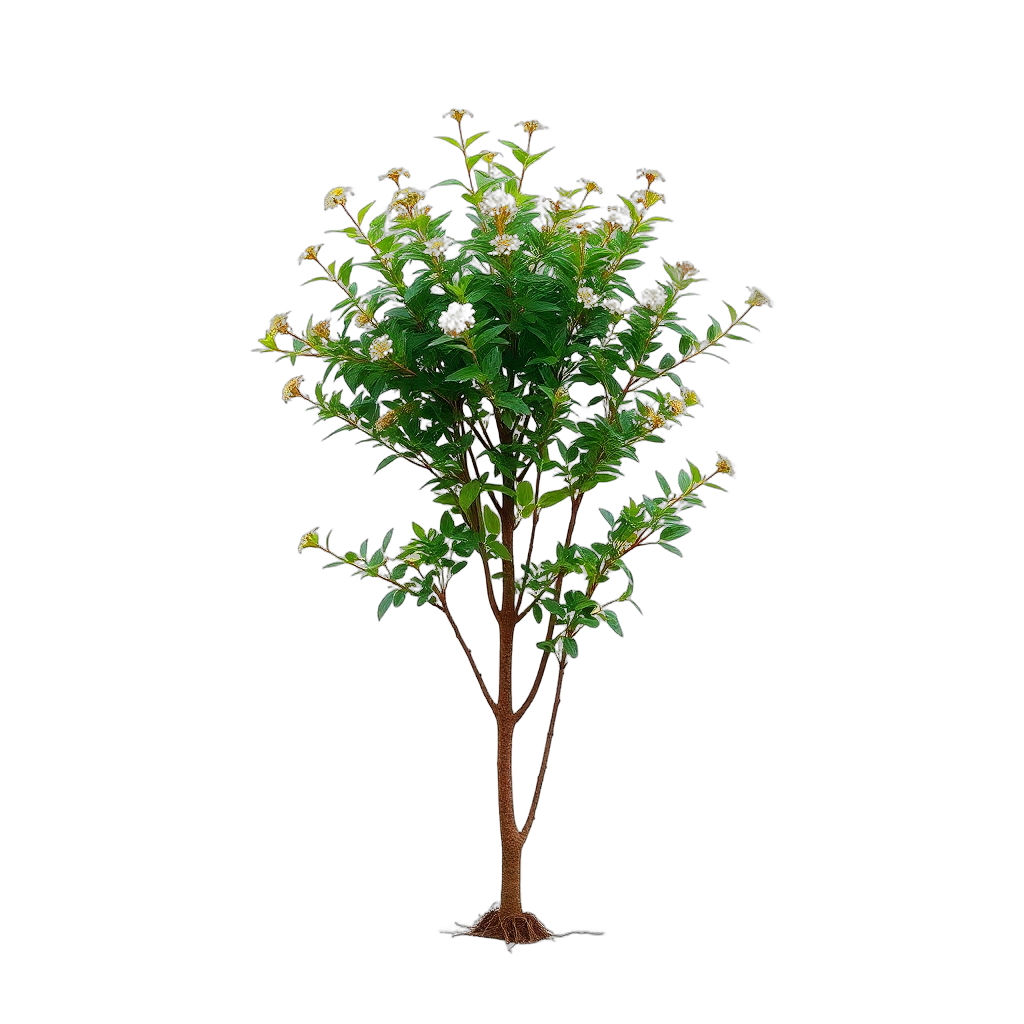
Coppertina Ninebark
Physocarpus 'Coppertina'
medium-sized at 7 feet, white blooms in spring. Pollinator-friendly.
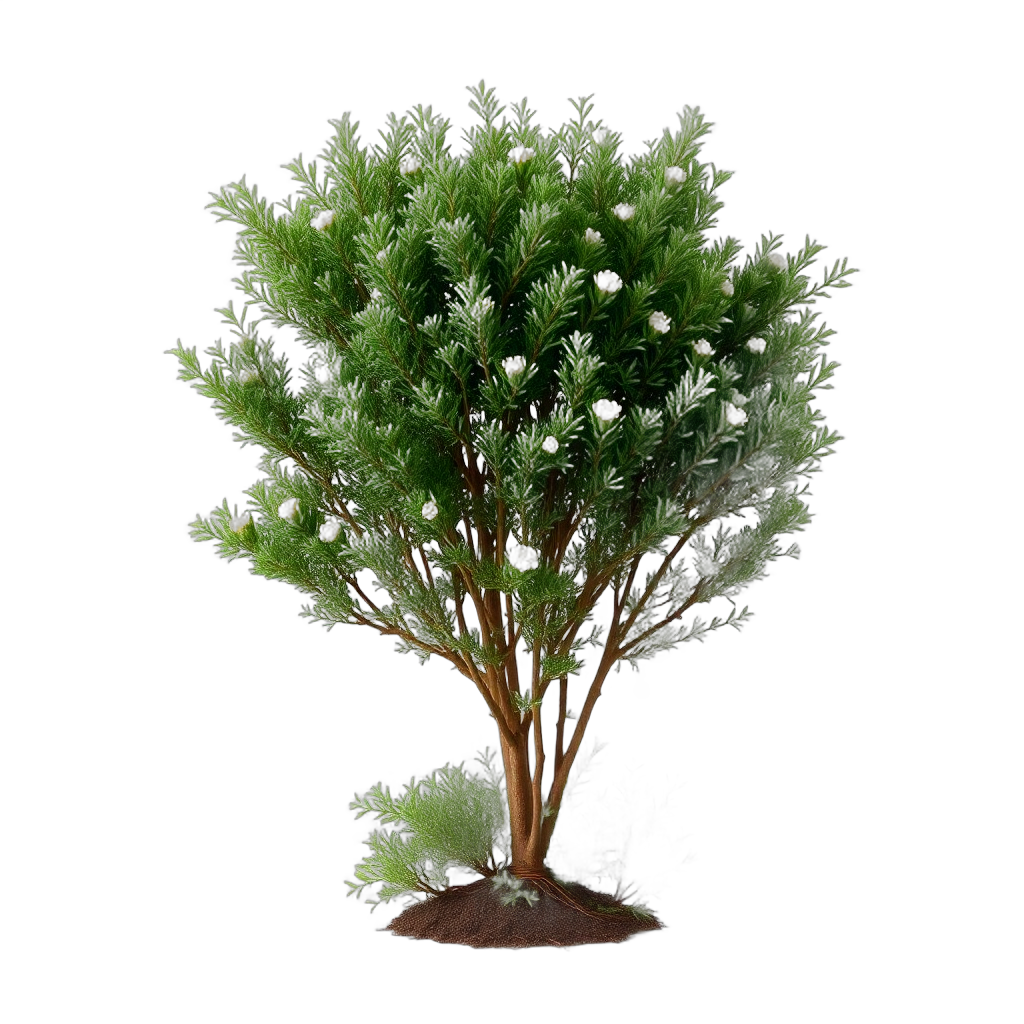
Creeping Juniper
Juniperus horizontalis
low-growing ground cover, blooms in spring. Evergreen year-round.
Featured Grasses & Groundcovers for Modern/Minimalist Gardens

Canada Wild Rye
Elymus canadensis
grows to 4 feet, blooms in summer. Yellow fall color.
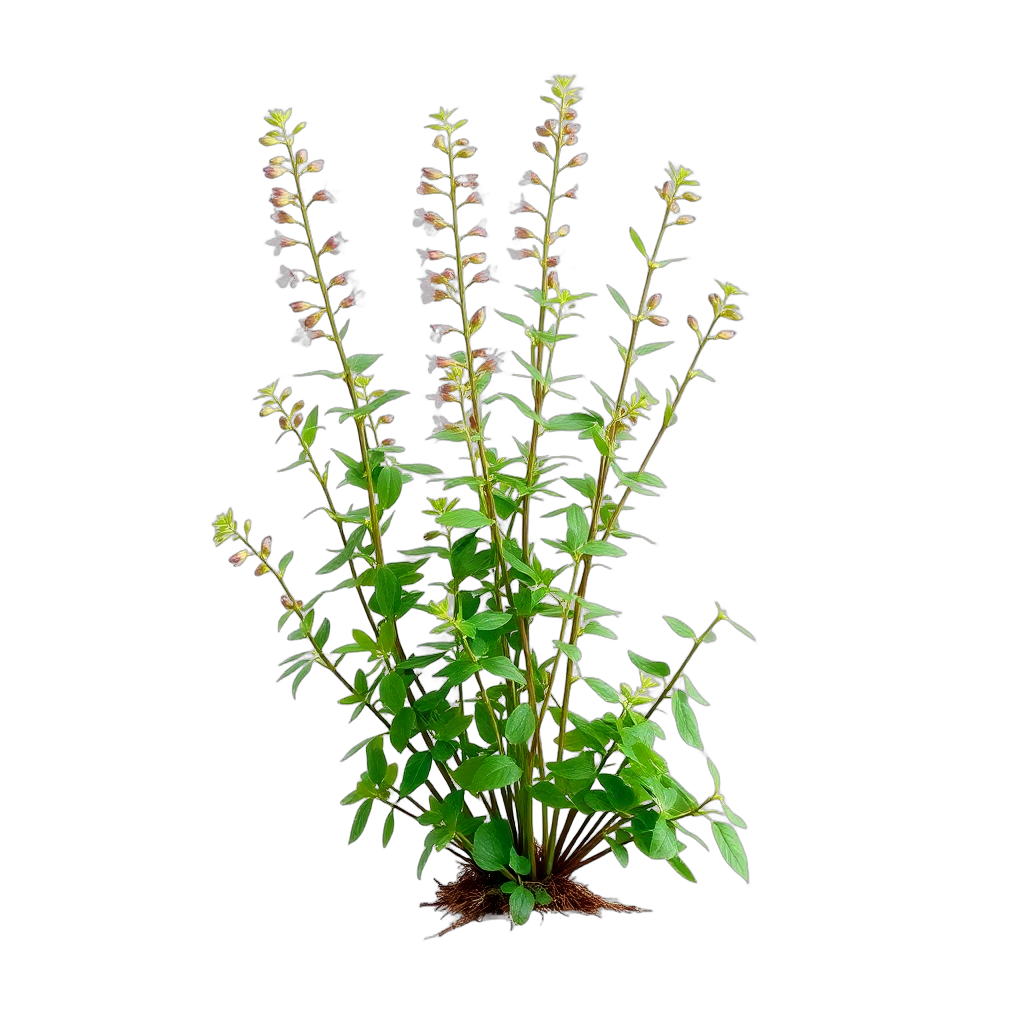
Creeping Jacob's Ladder
Polemonium reptans
low-growing ground cover, blue blooms in spring. Attracts butterflies.

Dwarf Fernleaf Bamboo
Pleioblastus distichus
low-growing ground cover, blooms in none. Evergreen year-round.

Eastern Gamagrass
Tripsacum dactyloides
grows to 6 feet, blooms in summer. Yellow fall color.
Featured Flowers & Perennials for Modern/Minimalist Gardens

Cardinal Flower
Lobelia cardinalis
grows to 3 feet, red blooms in summer. Attracts hummingbirds.

Hardstem Bulrush
Scirpus acutus
medium-sized at 7 feet, blooms in summer.

Path Rush
Juncus tenuis
low-growing ground cover, blooms in summer. Evergreen year-round.

Softstem Bulrush
Schoenoplectus tabernaemontani
grows to 4 feet, blooms in summer.
Zone and sun checks come from our database — confirm with your local nursery before you buy.
Bloom Calendar for Dayton
spring
Bellwort, Blue Star, Blue-Eyed Grasssummer
Cardinal Flower, Hardstem Bulrush, Path Rushfall
Canada Goldenrod, New England Aster, Nodding Ladies' Tresseswinter
Limited bloomsDesign Tips for Dayton (Zone 6a)
- Build every sculptural bed up, not down — a rosette of Agave parryi or Sempervivum tectorum set four to eight inches above Dayton's Miamian clay and backfilled with limestone screenings survives -10°F easily, while the same plant at grade dies of February wet feet
- Use Calamagrostis × acutiflora 'Karl Foerster' where a Phoenix design would use agave masses; it stands upright through 22 inches of Miami Valley snow, reads architectural from August to March, and costs a fraction of a specimen succulent
- Compact a real crushed-limestone base under every square foot of hardscape and take footings below the roughly 32-inch Ohio frost line — freeze-thaw movement in Dayton's swelling clay is what cracks slabs, not the load on top of them
- Choose permeable gravel panels and broad-jointed pavers over a sealed slab: Montgomery County's stormwater district bills by impervious area, and a Corten-edged gravel field doubles as an infiltration bed on a lot that ponds after spring rain
- Design for the bare season, because Dayton's 170-day growing season leaves the garden dormant nearly half the year — Corten edging, gravel geometry, Taxus × media 'Densiformis' blocks and standing grass plumes are what carry a modern landscape from November to April
- Light the grasses, not the lawn: in-ground uplights behind Panicum virgatum 'Northwind' and 'Karl Foerster' borders create the evening depth that makes these designs work, and Dayton's long summer dusk gives you six months of payoff
- Keep the alkaline pH 7.0–7.8 soil in mind when selecting plants — Juniperus, Yucca, Perovskia and Sempervivum thrive in it, while pin oak, Rhododendron and blueberry yellow with chlorosis within a few seasons no matter how good the design is
Where to Source Plants in Dayton
Skip the big-box stores. These independent Dayton nurseries specialize in the plants that make modern/minimalist gardens thrive in Zone 6a.
Siebenthaler's Garden Center
Beavercreek (also Centerville)
Growing in the Miami Valley since 1870 on a 250+ acre Beavercreek nursery; the best local source for specimen trees, structural conifers and Zone 6a grasses grown in local soil
Knollwood Garden Center & Landscaping
Beavercreek (Dayton-Xenia Road)
Independent garden center voted the area's best; strong selection of hardy Yucca, Sempervivum, Festuca and architectural grasses suited to gravel beds
North Dayton Garden Center & Nursery
Old North Dayton / Brandt Pike
Family-run since 1963, growing roughly two million plants and 50,000 trees and shrubs a year on site — deep stock of sculptural evergreens and container specimens
Berns Garden Center
Beavercreek (Indian Ripple Road)
Family-owned since 1956 with its own greenhouses and an in-house design studio; locally grown trees, shrubs and container plants for hardscape-led designs
Modern/Minimalist Landscaping Costs in Dayton
| Project Scope | Estimated Cost |
|---|---|
| Front-yard modern conversion (turf removal, gravel panels, Corten edging, planting) | $5,000 – $11,000 |
| Large-format paver or concrete terrace (250–400 sqft) | $9,000 – $24,000 |
| Gas fire bowl with seating terrace and string lighting | $12,000 – $32,000 |
| Corten steel planters, fabricated and filled | $600 – $1,400 each |
| Pool deck with perimeter grass borders and uplighting | $70,000 – $160,000 |
| AI visualization with ProScapeAI | Free to start |
Estimates based on Dayton, OH-area contractor rates as of 2026. Actual costs vary by site conditions, materials, and contractor.
Dayton Climate & Growing Zone
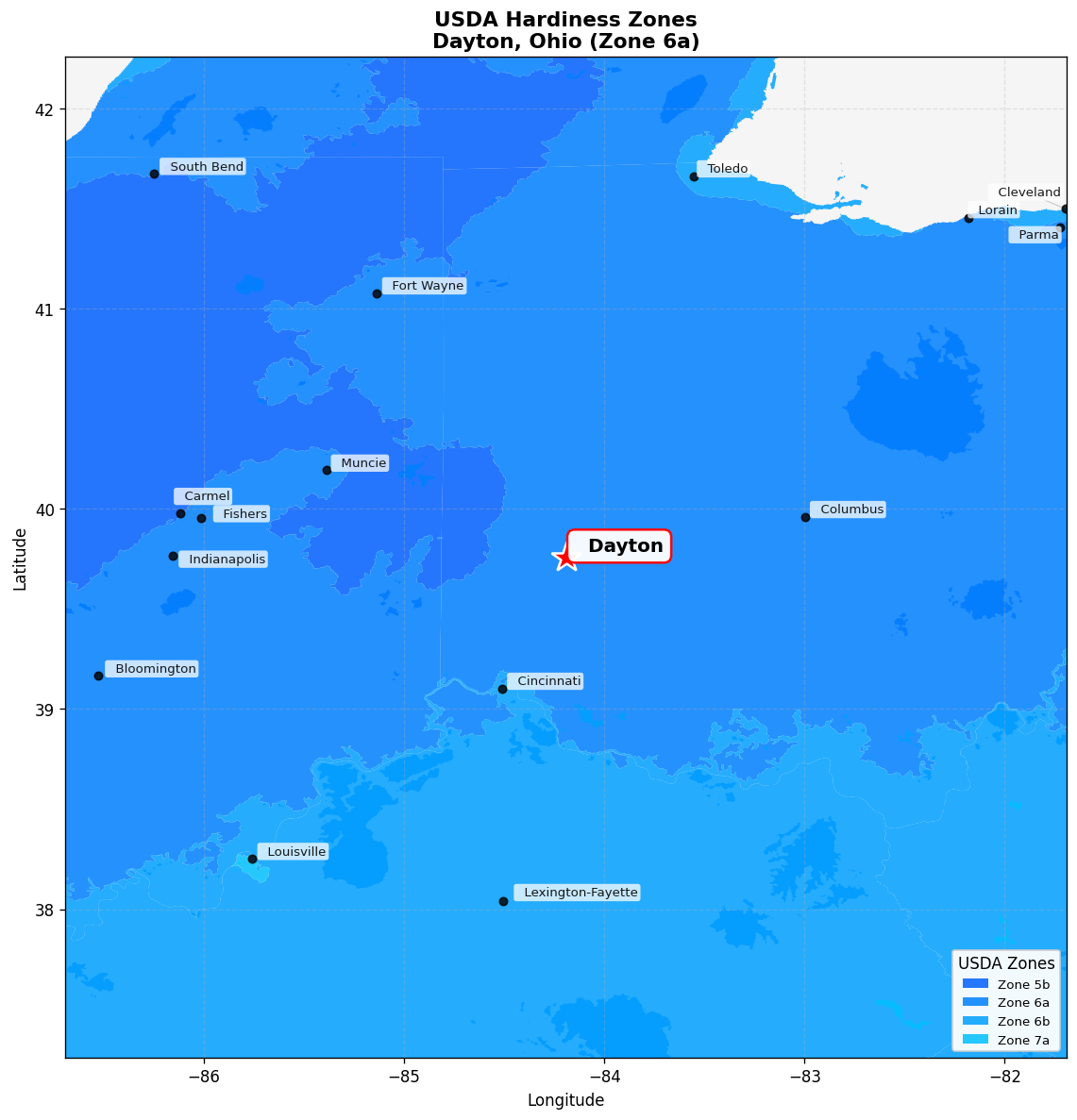
USDA Zone 6a
Hardiness zone for Dayton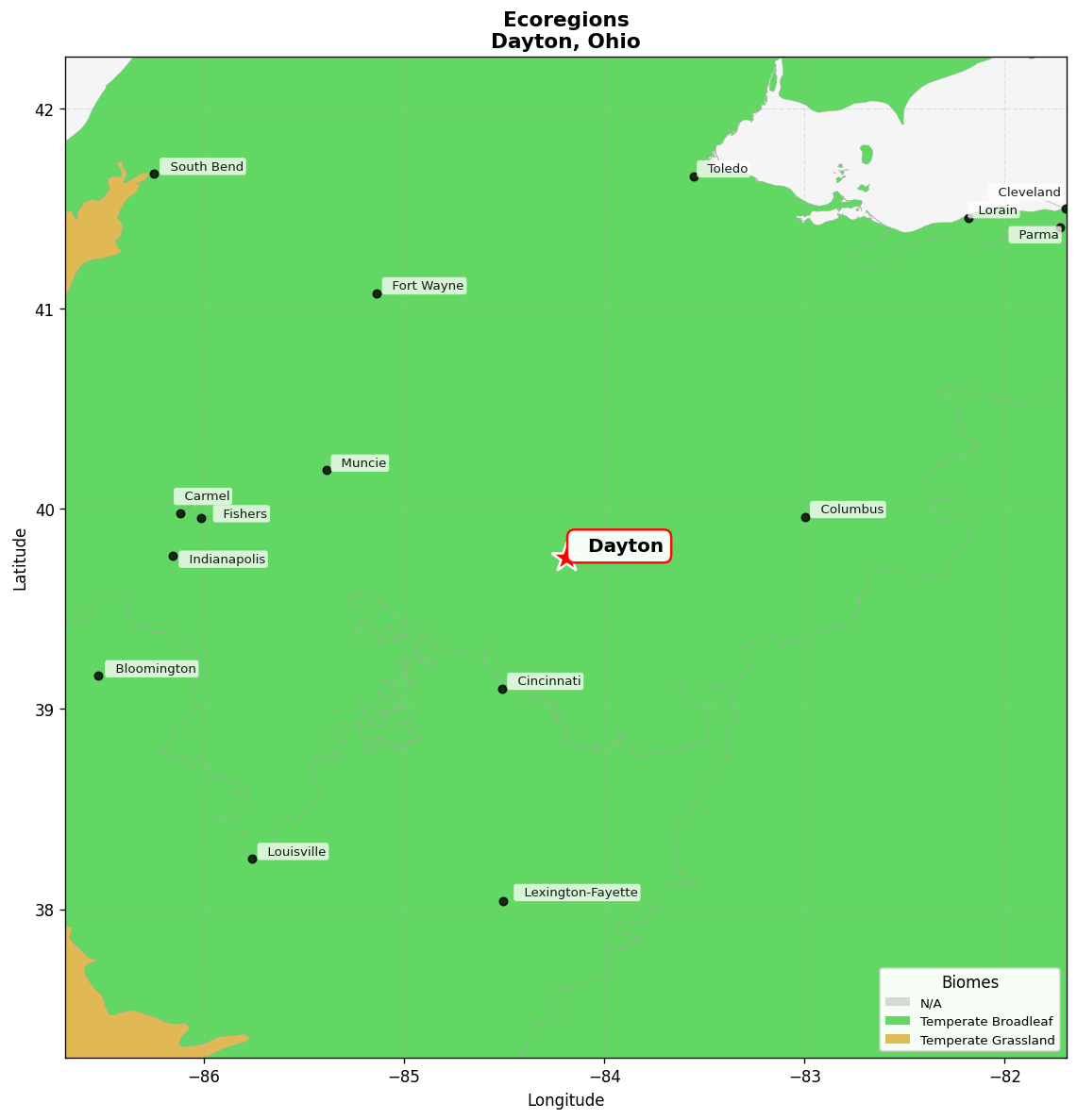
Southern Great Lakes forests
Native ecoregionFrequently Asked Questions
How much does a modern landscape design cost in Dayton?
Miami Valley installation runs roughly 10–20% below the national metro average. A full front-yard modern conversion — turf removal, Corten-edged gravel panels, sculptural planting — on a typical 500 sqft front yard lands at $5,000–$11,000 installed, or under $5/sqft if you do the labour and buy gravel by the tonne locally. A large-format paver terrace of 250–400 sqft with a fire bowl and lighting runs $12,000–$32,000. A pool deck with full perimeter grass borders and uplighting is commonly $70,000–$160,000 in Oakwood or Washington Township. Individual plants are cheap by comparison: a 3-gallon Calamagrostis 'Karl Foerster' is $22–$35 at a local grower.
Can I grow agaves and succulents outdoors in Dayton's Zone 6a?
Some, and the ones that work are worth designing around. Agave americana and Echeveria will not overwinter, but Agave parryi var. neomexicana, Yucca rostrata, Yucca filamentosa 'Color Guard' and Sempervivum tectorum all handle -10°F and colder in the Miami Valley — provided drainage is ruthless. Build the bed up four to eight inches above grade, backfill 50/50 with limestone screenings or #8 gravel, mulch with gravel rather than bark so the crown stays dry, and site them where snowmelt runs off rather than pools. Planted at grade in Miamian clay, every one of them will rot in a wet February; planted high and sharp, they are effectively permanent.
Which grasses look best against modern hardscape in Dayton?
Calamagrostis × acutiflora 'Karl Foerster' is the local backbone — dead vertical, tan and architectural from August, and stiff enough to stand through Dayton's roughly 22 inches of annual snow instead of flopping across your pavers. Panicum virgatum 'Northwind' does the same job wider and taller, Schizachyrium scoparium 'Standing Ovation' brings copper and blue at knee height and is native to the region's prairie openings, Sporobolus heterolepis makes the finest low mass, and Festuca glauca 'Elijah Blue' gives you steel-blue tufts for gravel panels. Cut them all back to six inches in early March, before new growth starts — that is the only maintenance they need.
How do I stop a Dayton patio from cracking or heaving?
Budget the base, not just the surface. Miamian and Crosby silt loams swell when saturated and shrink when baked, and the Miami Valley runs through dozens of freeze-thaw cycles each winter, so a slab or paver field laid on bare clay will move within two or three seasons. Excavate six to ten inches, compact crushed limestone in lifts, and for anything with a footing — pergola posts, seat walls, a fire feature — go below the roughly 32-inch Ohio frost line. Grade a minimum quarter-inch per foot away from the house. Large-format pavers on a proper base are more forgiving than poured concrete here because individual units can be lifted and re-levelled instead of the whole slab being replaced.
What trees suit a modern Dayton design now that ash and Callery pear are out?
Emerald ash borer has taken most of the region's Fraxinus canopy and Ohio has banned the sale of Pyrus calleryana including 'Bradford', so the two default subdivision trees are gone. For modern design the strongest replacements are Gymnocladus dioicus 'Espresso' for open, sculptural branching, Acer rubrum 'October Glory' for a clean oval and reliable colour, Quercus muehlenbergii and Celtis occidentalis for tough limestone-till performance, and Amelanchier × grandiflora 'Autumn Brilliance' as a multi-stem accent by an entry. All are Zone 6a-hardy and tolerate the alkaline pH that quietly kills pin oak here.
Do I need a permit for a modern landscape project in Dayton?
Gravel conversions, planting beds and dry-laid patios generally need no permit across Montgomery and Greene County, but rules differ by municipality and you should confirm with your own city before building. Permits usually apply to pools, decks, retaining walls above four feet, roofed structures, and any work inside a floodplain or a Miami Conservancy District levee easement. Kettering, Oakwood, Centerville and Beavercreek each run separate reviews with their own front-yard and fence standards, and some require review before replacing a front lawn with gravel. If your lot sits in the city's wellfield protection area, check that overlay first — it catches more Dayton projects than the building code does.