4 Cottage Garden Ideas for Fort Worth, TX | English Garden Design in Zone 8a
Native plants from the Cross-Timbers savanna-woodland (Zone 8a) — Humid subtropical climate
Why Cottage/English Gardens in Fort Worth?
Fort Worth is the western anchor of the DFW metroplex and the city where the American West begins — a fact that makes its cottage garden tradition all the more surprising and satisfying. The Cross-Timbers savanna-woodland ecoregion that covers Tarrant County is defined by post oak and blackjack oak woodlands interspersed with prairie grasslands, and those mature trees are the foundation of Fort Worth's most beautiful cottage gardens. The Botanic Garden District and the Fairmount and Monticello neighborhoods are lined with live oaks and post oaks that have been growing since the 1920s; beneath that canopy, cottage borders of antique roses, lavender, and salvia perform for months without summer stress.
The climate numbers tell the Zone 8a story honestly. Summer highs regularly exceed 100°F from late June through August, and Fort Worth's position west of Dallas means it typically receives slightly less of the Gulf moisture that moderates Dallas humidity. Annual rainfall averages 34 inches, distributed well across the year with reliable spring rains. Cold winters are brief — the last freeze averages around March 15, and the first fall freeze isn't until mid-November — giving a 245-day growing season that cottage perennials and repeat-blooming antique roses use to full advantage. The two glory windows of February–May and September–November are genuinely spectacular in a well-managed Fort Worth cottage garden.
Fort Worth's architectural identity is the key to understanding where cottage gardens shine brightest here. The Fairmount Historic District — just south of downtown — is one of Texas's best-preserved Victorian neighborhood streetscapes, with Queen Anne, Craftsman, and Folk Victorian houses from the 1890s through 1920s that were literally built to have cottage gardens. Monticello and Berkeley Place have 1920s–1940s period revival homes where a rose arbor and picket fence are architectural necessities. Even in newer areas like Tanglewood or the TCU neighborhood, the generous tree canopy and established lots support cottage garden character. Fort Worth's cow-town reputation undersells its genuine cottage garden potential — the bones are excellent.
4 Cottage/English Design Ideas for Fort Worth
AI-generated image
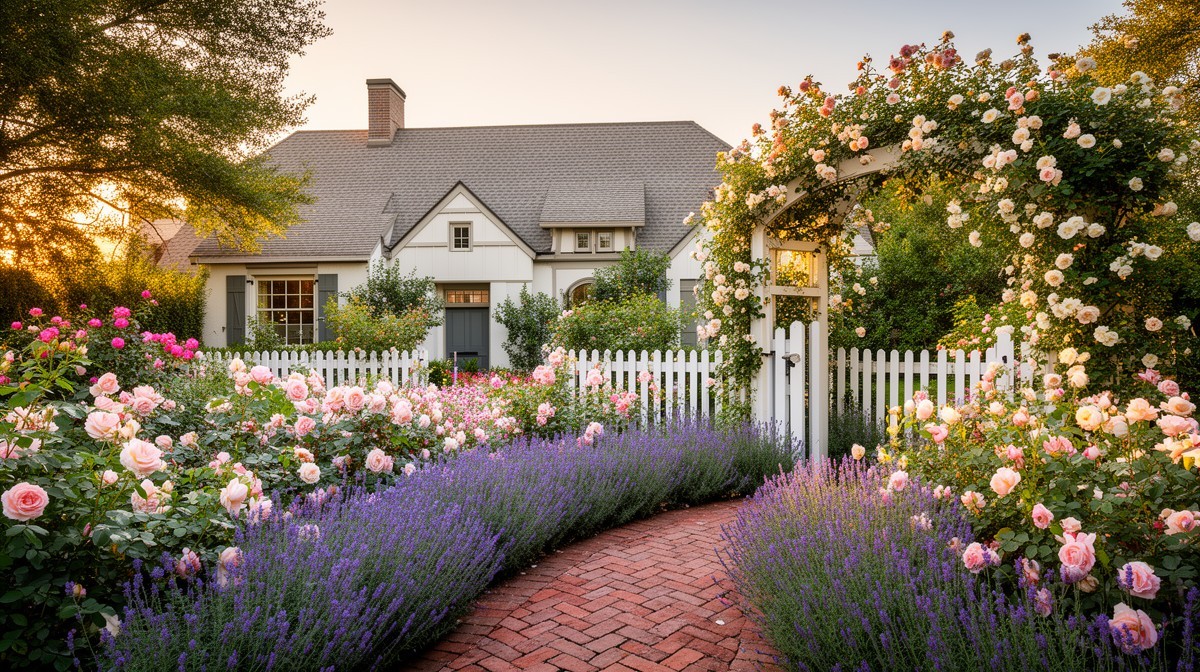
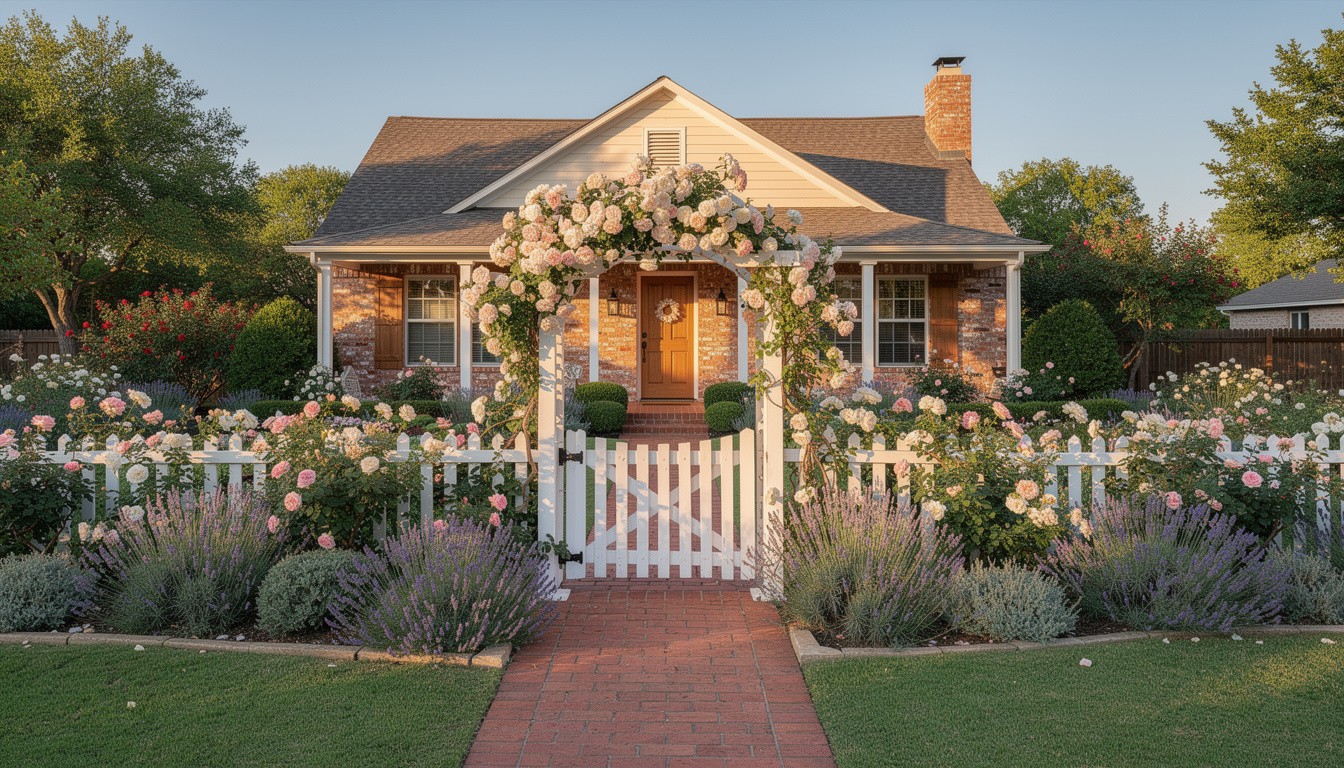
The Lavender and Rose Gate Garden
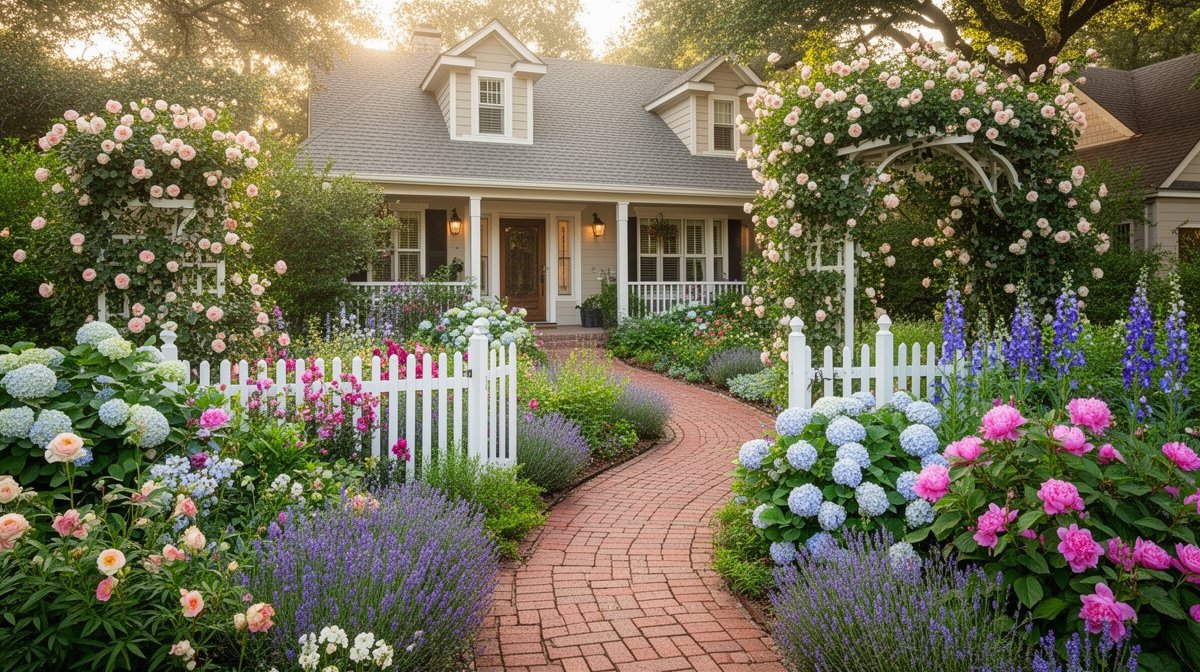
$12–22/sqftA white picket fence borders the full front yard of a classic Fort Worth cottage, with a rose-covered arbor gate at the center opening onto a brick path that leads to the front porch. Lavender and white flowering shrubs flank the fence interior and climbing roses — deep pink and pale blush — drape the wooden arch in peak spring bloom. The composition reads as quintessentially English cottage while being perfectly adapted to Fort Worth's Zone 8a climate: lavender thrives in the well-drained soil and summer heat, and antique climbing roses perform reliably without the disease-management demands of modern hybrid teas.
AI-generated image
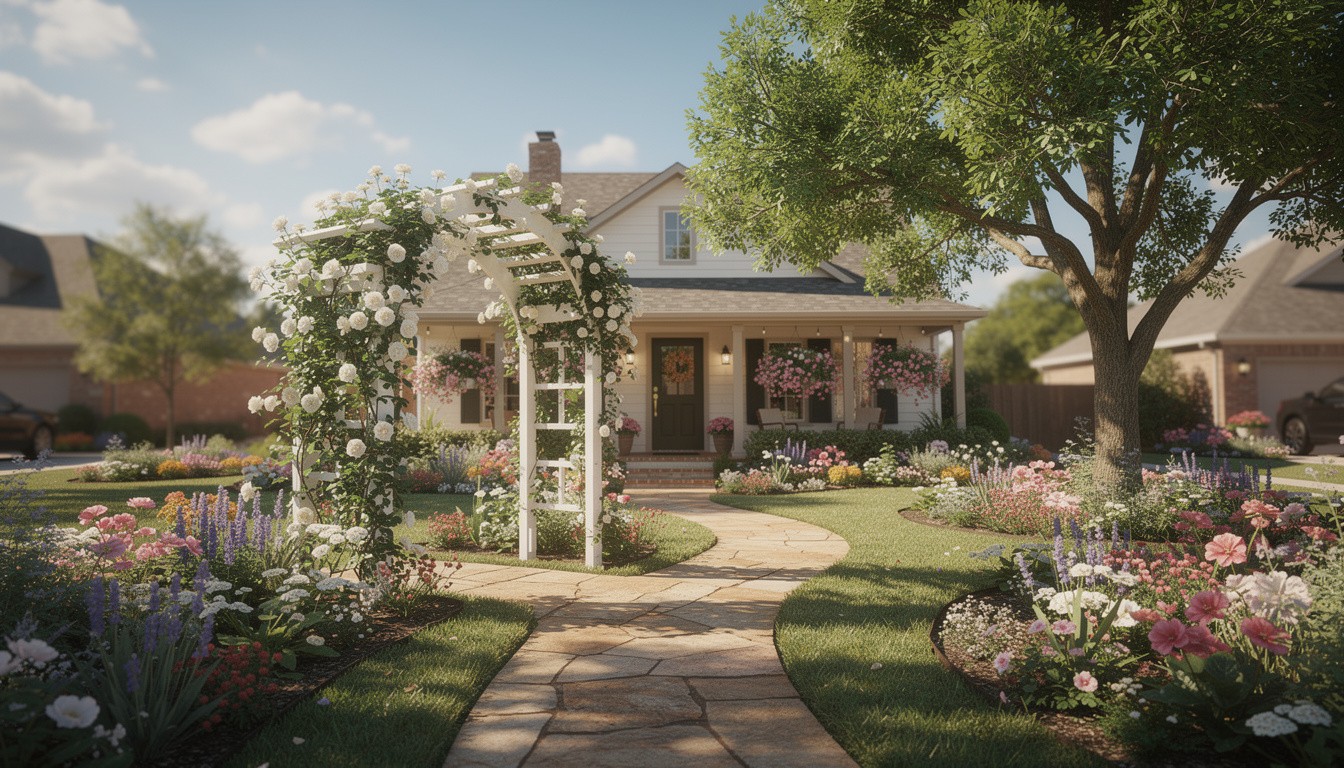
The Cottage Arch and Mixed Perennial Front
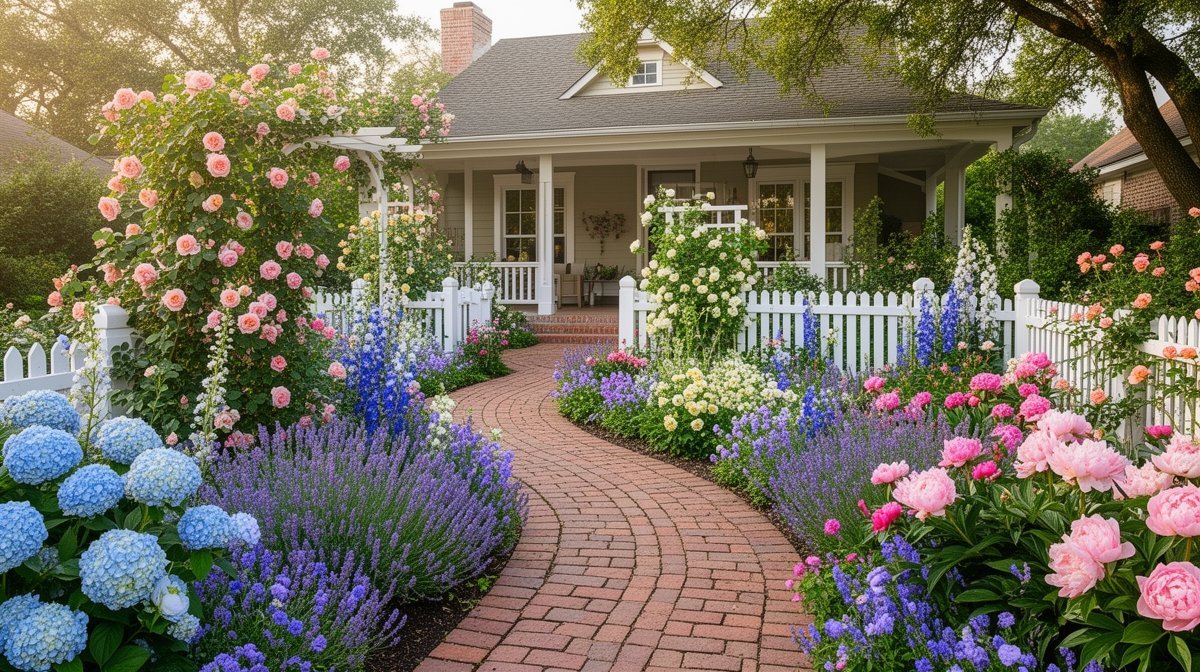
$14–24/sqftA freestanding white rose arch frames the front walk of a two-story craftsman, surrounded by wide mixed perennial borders that spill outward with roses, foxgloves, lavender, and colorful annuals. Hanging flower baskets on the porch add vertical layers of color and a mature shade tree anchors the right side of the composition. A flagstone path winds informally through the planting from sidewalk to steps. This design transforms a conventional Fort Worth front lawn into an abundant, informal cottage display — at its spring peak, every square foot of the front yard is productive with color.
AI-generated image
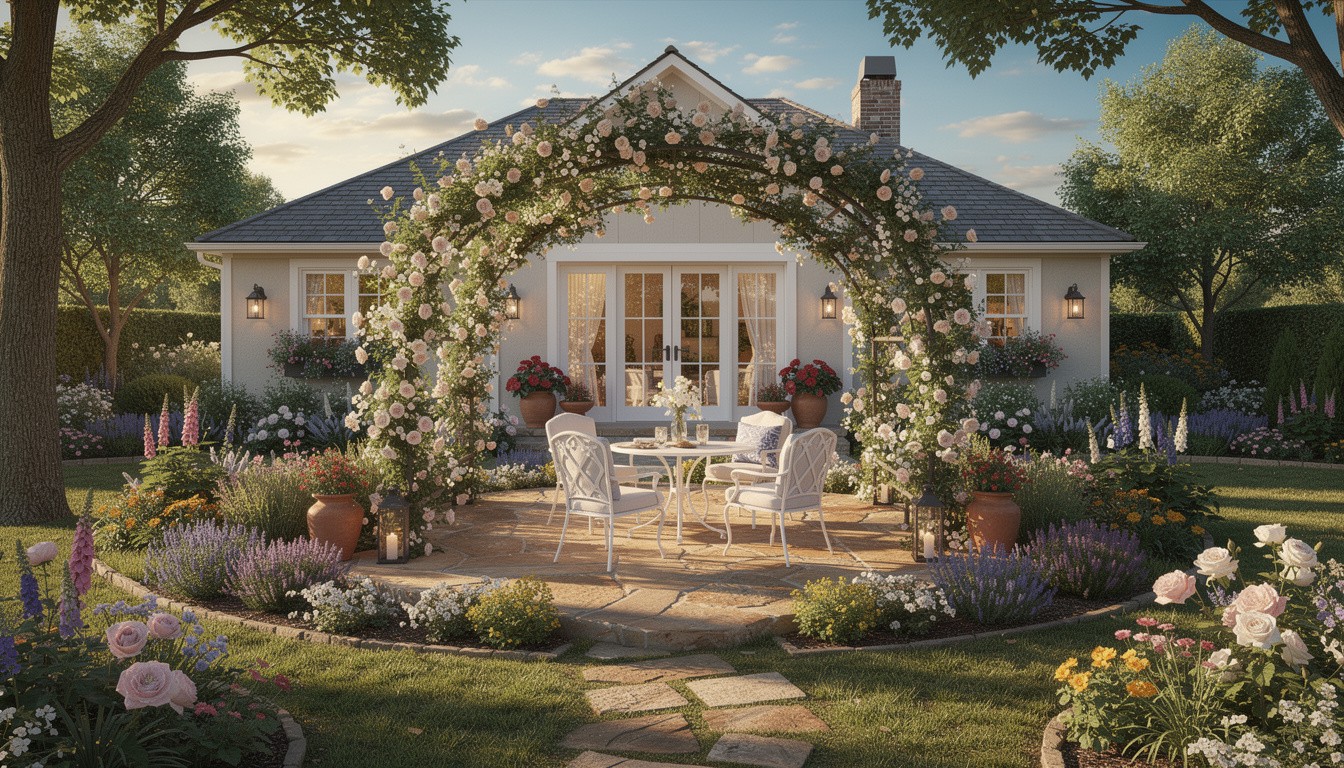
The Garden Arch Patio with Bistro Seating
$16–30/sqftA white rose-covered arch frames the entrance to a backyard patio where a small bistro set sits beneath the shade of mature deciduous trees. Lavender, foxgloves, salvia, and roses fill surrounding cottage borders in full bloom, pressing in on three sides to create the feeling of an outdoor garden room. Flagstone paving under foot and warm golden light through the canopy completes the scene. This is Fort Worth's ideal cottage backyard for the spring and fall seasons — intimate, sheltered, and fully enclosed by planting so that the patio feels like a room discovered within the garden.
AI-generated image
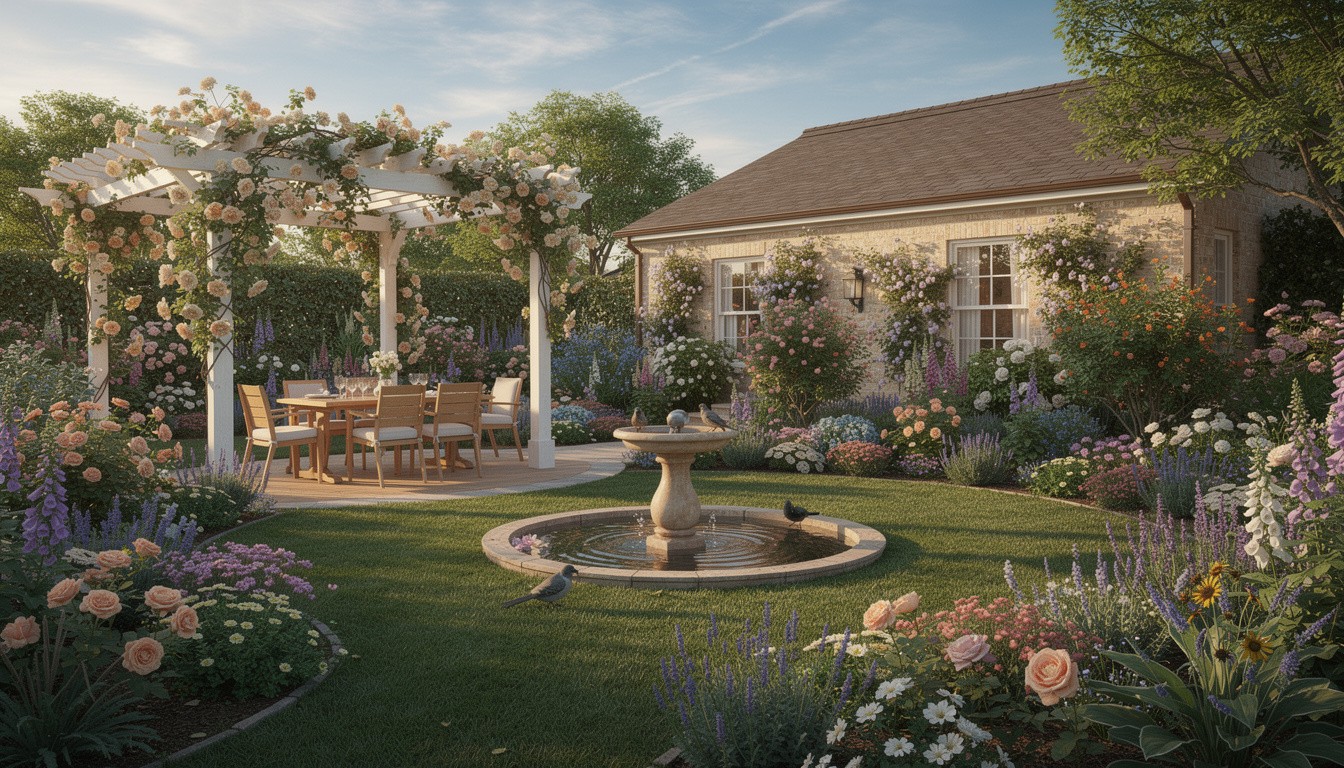
The Pergola and Fountain Cottage Garden
$20–42/sqftA white pergola covered in climbing roses shelters a dining table and chairs at the far end of the rear garden, while a round stone fountain anchored in a circular island bed sits at the center of a well-maintained lawn. Mixed cottage borders of roses, lavender, foxgloves, and salvia surround the entire composition. The pergola provides summer shade for dining while the fountain creates a focal point and ambient sound that the lawn frames perfectly. The climbing rose coverage on the pergola structure is generous — pink and white blooms frame every outdoor meal from March through June.
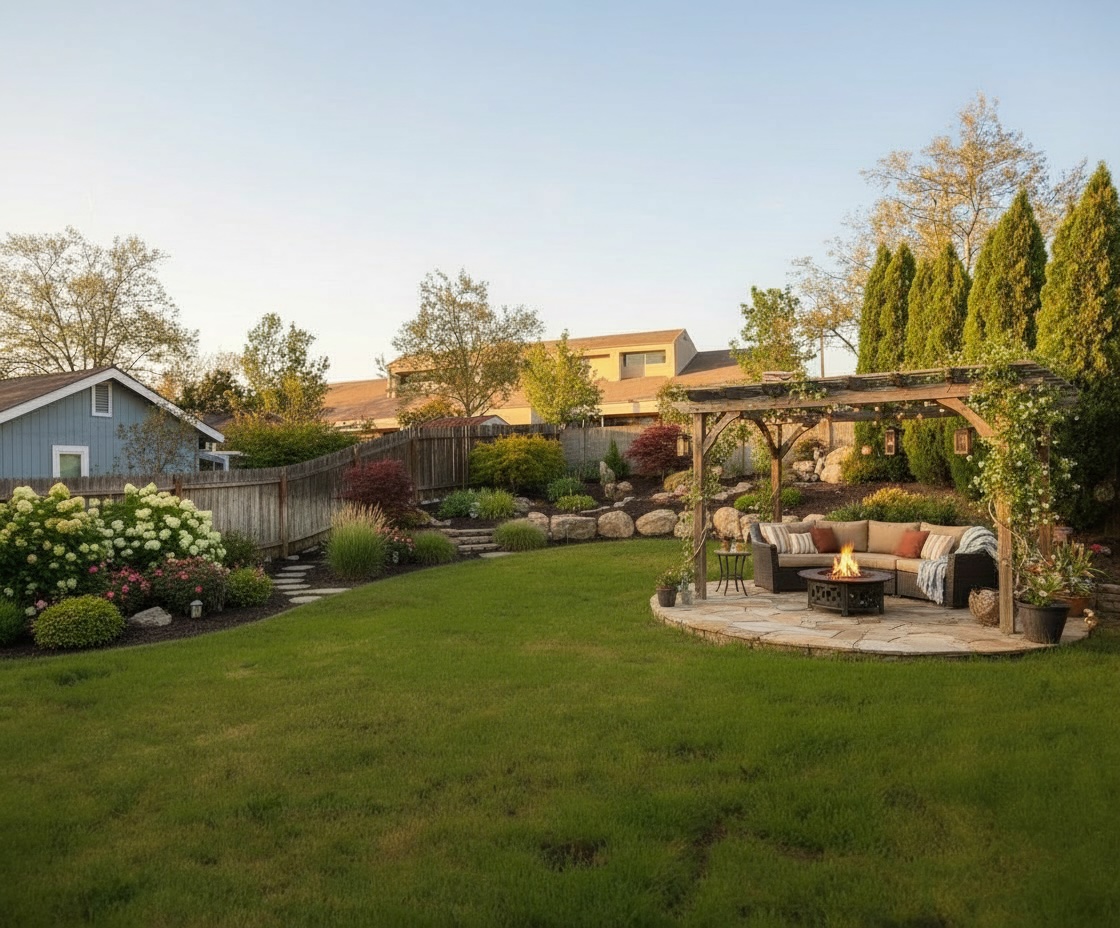
See how a cottage/english garden looks on YOUR property
Upload a photo of your Fort Worth yard and visualize your dream garden in seconds.
Try ProScapeAI Free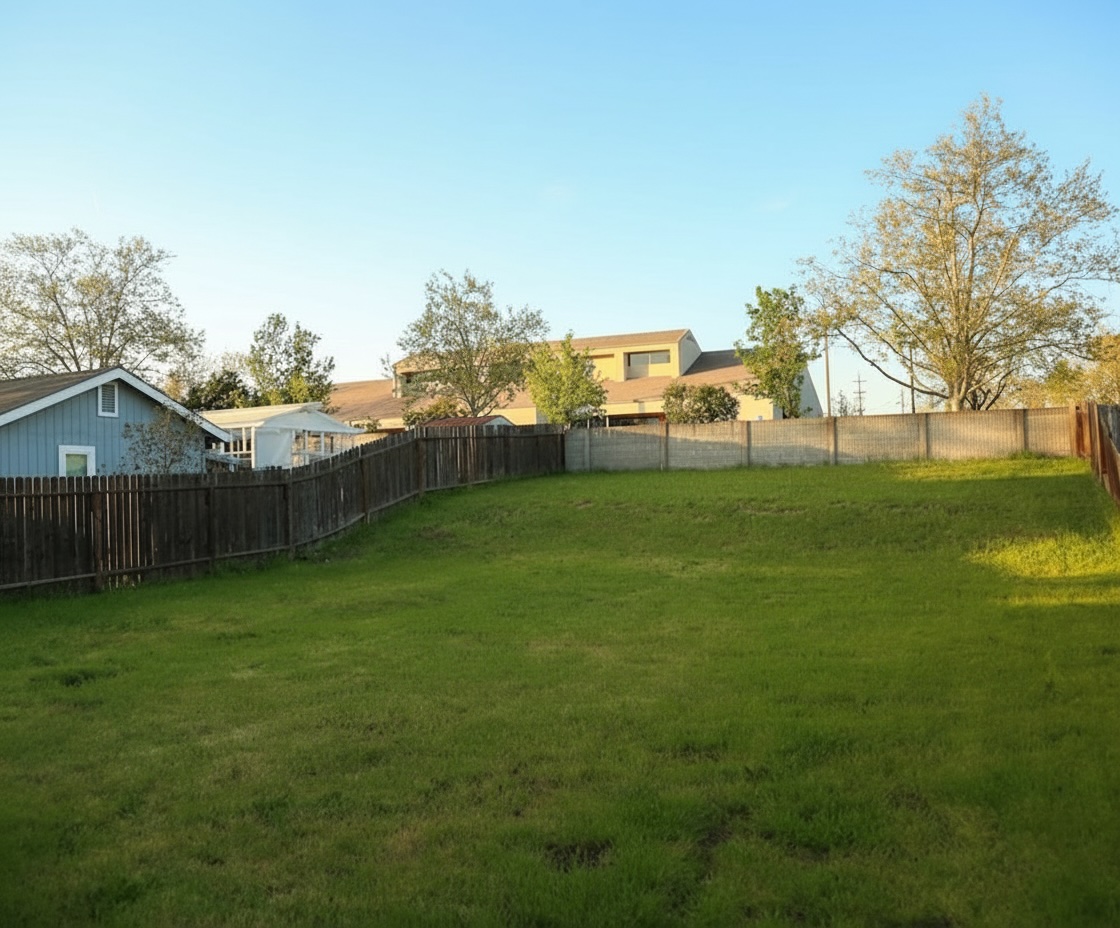
AI-generated image
Featured Trees & Shrubs for Cottage/English Gardens
Browse all 154 plants for Fort Worth
Mexican Buckeye
Ungnadia speciosa
medium-sized at 12 feet, pink blooms in spring. Attracts butterflies.
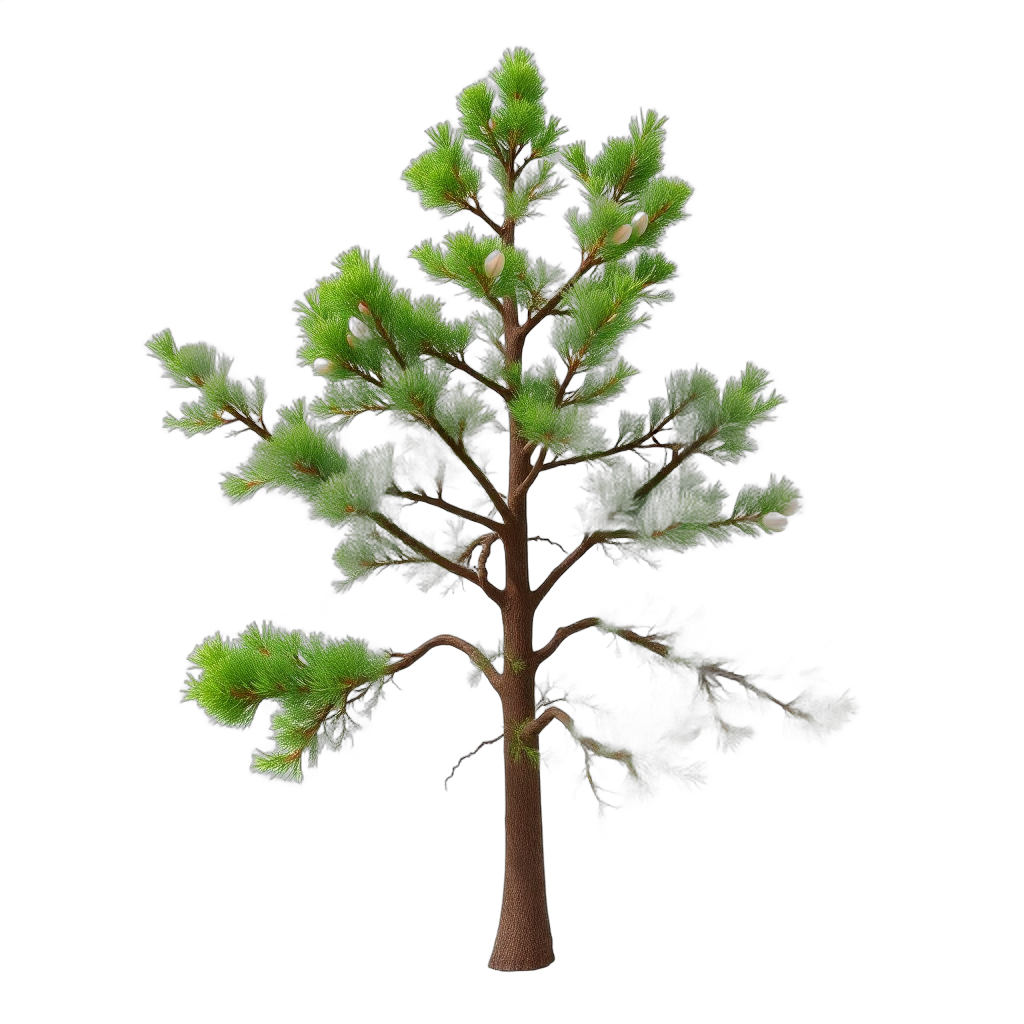
Ashe Juniper
Juniperus ashei
reaches 25 feet tall, blooms in winter. Evergreen year-round.
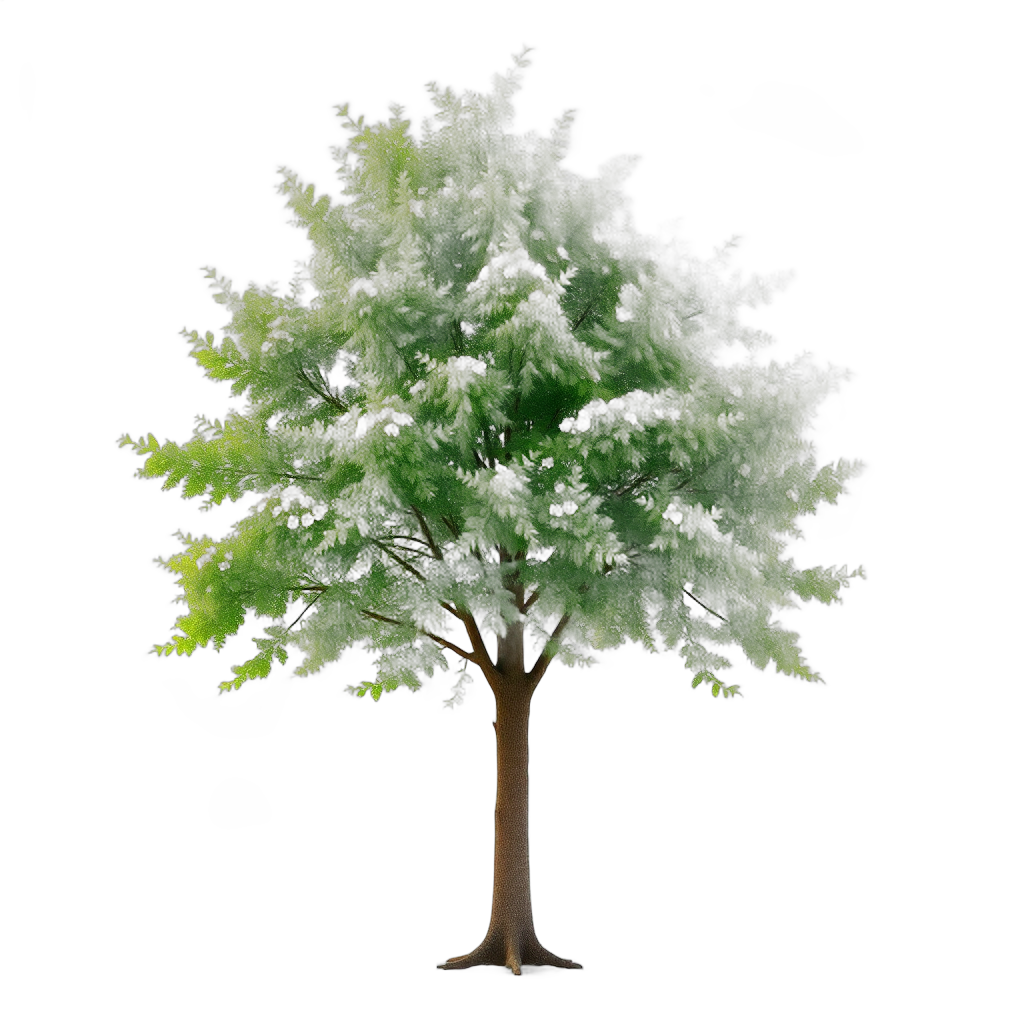
Cedar Elm
Ulmus crassifolia
large shade tree reaching 60+ feet, blooms in fall. Yellow fall color.

Osage Orange
Maclura pomifera
large shade tree reaching 50+ feet, blooms in spring. Yellow fall color.
Featured Flowers & Perennials for Cottage/English Gardens

Water Lettuce
Pistia stratiotes
low-growing ground cover, white blooms in summer. Evergreen year-round.
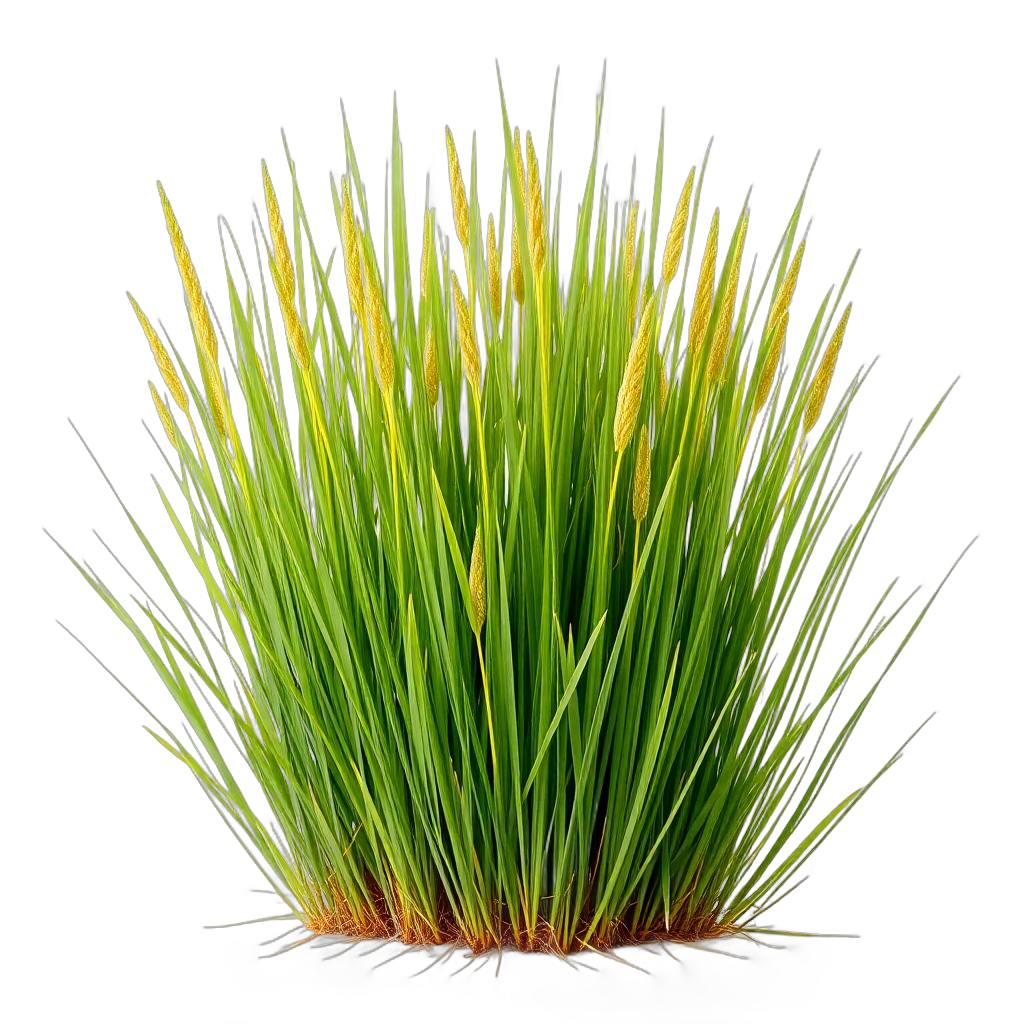
Bowles' Golden Sedge
Carex elata 'Aurea'
low-growing ground cover, blooms in none.

Tussock Sedge
Carex stricta
low-growing ground cover, blooms in spring. Brown fall color.

Umbrella Sedge
Cyperus alternifolius
grows to 4 feet, blooms in summer. Evergreen year-round.
Zone and sun checks come from our database — confirm with your local nursery before you buy.
Bloom Calendar for Fort Worth
spring
Mexican Buckeye, Ashe Juniper, Osage Orangesummer
Water Lettuce, Umbrella Sedge, Alpine Sea Hollyfall
Cedar Elm, Autumn Snakerootwinter
Ashe JuniperDesign Tips for Fort Worth (Zone 8a)
- Treat Fort Worth's established post oaks and live oaks as the greatest assets in any cottage garden — build the design around the tree canopy rather than working against it
- Focus on antique and species roses exclusively: 'Belinda's Dream', 'Mutabilis', 'Lady Banks', and the Texas Teas perform in Fort Worth heat where modern hybrid teas fail
- Fairmount and Monticello homes have wrought-iron fences already — train climbing roses directly on the existing fence before investing in additional structures
- Plan for the two glory windows (February–May and September–November) and treat summer as a maintenance period: deep watering, heavy mulch, no new planting
- Expanded shale is Fort Worth's best clay soil amendment and is available at most Tarrant County nurseries — add it to every new bed alongside compost for dramatically improved drainage
- Fort Worth Botanic Garden's public rose garden (the oldest in Texas) is the best local reference for which antique and modern rose varieties actually perform in Tarrant County conditions
Where to Source Plants in Fort Worth
Skip the big-box stores. These independent Fort Worth nurseries specialize in the plants that make cottage/english gardens thrive in Zone 8a.
Nicholson-Hardie Nursery & Garden
Cultural District / Camp Bowie
Perennials, antique roses, premium plants, design services — established 1934
Fort Worth Botanic Garden Plant Sales
Botanic Garden District
Native and adapted plants, specialty perennials, seasonal sales
Calloway's Nursery – Fort Worth
Multiple Fort Worth locations
Broad plant selection, perennials, trees, Texas-adapted varieties
The Antique Rose Emporium
Brenham, TX (2-hr drive)
Antique and species roses — the premier Texas old rose source since 1983
North Haven Gardens
University Park, Dallas (30 min from Fort Worth)
Native Texas shrubs, perennials, trees — established 1951
Cottage/English Landscaping Costs in Fort Worth
| Project Scope | Estimated Cost |
|---|---|
| Rose arbor + picket fence cottage entry | $5,000 – $12,000 |
| Full cottage front yard redesign (400–600 sqft) | $6,500 – $15,000 |
| Backyard cottage patio with arch and bistro seating | $7,500 – $18,000 |
| Pergola + fountain + cottage garden (full backyard) | $18,000 – $45,000 |
| Soil amendment + raised bed installation | $1,200 – $3,500 |
| Drip / soaker irrigation system | $1,000 – $2,800 |
| AI visualization with ProScapeAI | Free to start |
Estimates based on Fort Worth, TX-area contractor rates as of 2026. Actual costs vary by site conditions, materials, and contractor.
Fort Worth Climate & Growing Zone
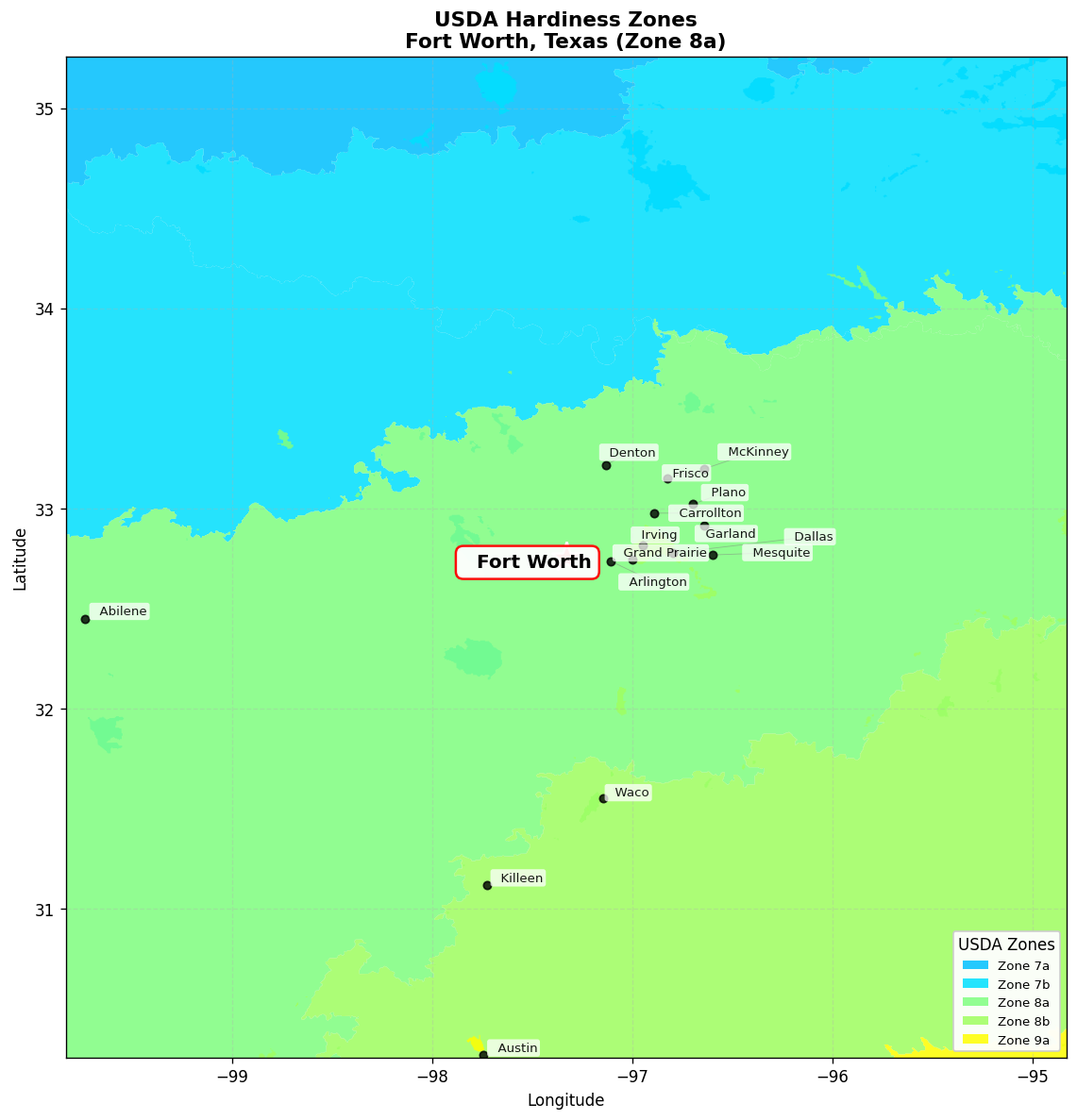
USDA Zone 8a
Hardiness zone for Fort Worth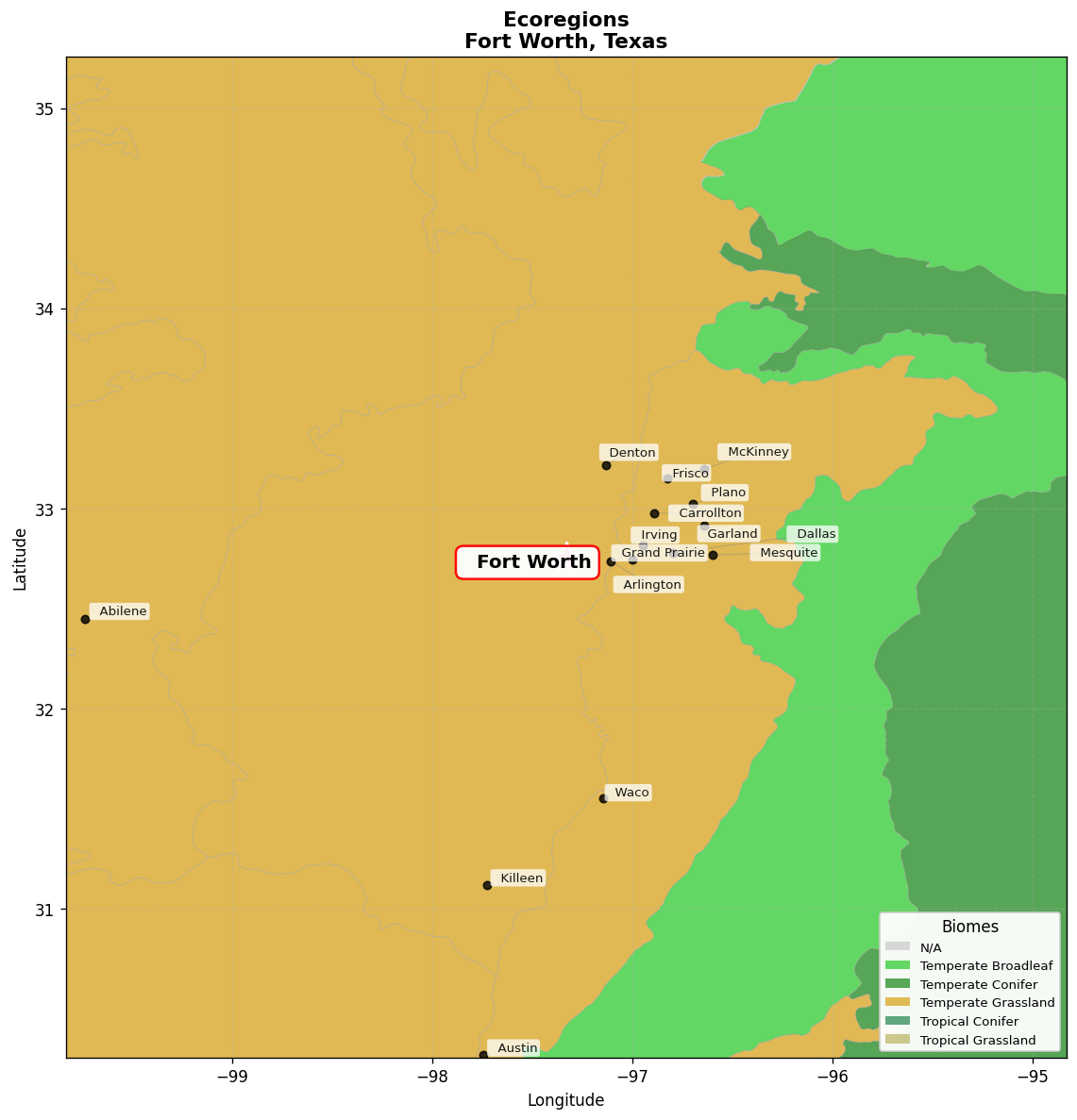
Cross-Timbers savanna-woodland
Native ecoregionFrequently Asked Questions
Can you really grow a cottage garden in Fort Worth's heat?
Yes — and Fort Worth has genuine advantages that western Texas cities don't. The 34 inches of annual rainfall distributed across the year does significant irrigation work, and the Cross-Timbers post oaks that shade established neighborhoods create the dappled light conditions that cottage plants love. The approach is to treat summer (June–August) as a survival period, not a performance period — water deeply and infrequently, mulch heavily, and focus your planting efforts and expectations on the genuine glory windows of February–May and September–November. A well-managed Fort Worth cottage garden is spectacular for roughly half the year.
Which roses perform best in Fort Worth Zone 8a?
Antique and species roses are dramatically more reliable than modern hybrid teas in Fort Worth's conditions. The best performers: 'Belinda's Dream' (pink shrub, disease-resistant, prolific), 'Mutabilis' (China rose, nearly year-round bloom with chameleon-color flowers), 'Caldwell Pink' (found rose, extremely heat-tolerant), 'Duchesse de Brabant' (Tea rose, Monticello gardens have specimens over 50 years old), climbing 'Lady Banks' (yellow or white, no thorns, spectacular April bloom), and 'New Dawn' for arbors. The Antique Rose Emporium in Brenham is the authoritative Texas source for all of these.
How does clay soil affect cottage gardens in Fort Worth?
Tarrant County's heavy clay requires preparation before planting any cottage border. The standard protocol: till to 12 inches, work in 4–6 inches of compost, and add expanded shale (a regional soil amendment widely available in DFW) to the most problematic drainage areas. Raised beds 6–12 inches above grade are the most reliable solution for persistent wet spots. Mulch all beds to 3–4 inches to regulate clay's extreme temperature and moisture swings. Once properly prepared, clay's moisture-retention becomes an advantage — established cottage roses and perennials in amended Fort Worth clay need far less supplemental irrigation than plants in sandy or shallow soils.
What Fort Worth neighborhoods are best for cottage gardens?
Fairmount Historic District is the gold standard: Victorian and Craftsman houses from the 1890s–1920s with wrought-iron fences and mature canopy trees that were designed for cottage garden treatment. Monticello has 1930s–1940s period revival homes with established oak canopy ideal for layered cottage borders. Berkeley Place and Ryan Place offer similar period architecture with mature tree cover. The Botanic Garden District has some of Fort Worth's largest specimen trees — the garden foundation is already there. In newer neighborhoods, establishing canopy trees is the first priority before any serious cottage garden planning.
What cottage plants work well in Fort Worth's climate?
Excellent performers for Zone 8a Fort Worth: antique and shrub roses, lavender (Phenomenal and Spanish lavender especially), Salvia greggii and S. farinacea, coneflower, coreopsis, black-eyed Susan, catmint, yarrow, and ornamental grasses. In afternoon shade under oaks: foxgloves (spring), hollyhocks, hostas, and astilbe. Avoid in full Fort Worth sun: delphiniums, true lupins, impatiens, and astilbe. The rule of thumb is to treat shade-loving English cottage classics as spring annuals and replace them in summer with heat-tolerant alternatives like Salvia coccinea, porter weed, or Turk's cap.
When is the best time to plant a cottage garden in Fort Worth?
Fall (October–November) is the ideal planting window for roses, perennials, and spring bulbs. Fort Worth's mild winters and reliable winter rains handle establishment without heat stress, and plants are root-established before the brutal May–June heat ramp. Spring (February–April) works well for annuals and warm-season perennials like salvia, coreopsis, and coneflower. Avoid planting June–August: transplant stress in 100°F heat with Fort Worth's drying west winds is unforgiving. If you must plant in summer, water at planting with a diluted root stimulator solution and shade new transplants for the first two weeks.