4 Modern Landscape Ideas for Hollywood, FL | Zone 10b Design
Native plants from the Everglades flooded grasslands (Zone 10b) — Tropical rainforest climate
Why Modern/Minimalist Gardens in Hollywood?
Hollywood was drawn on paper before it was built. Joseph Young platted “Hollywood by the Sea” in 1925 around what is now Young Circle, and the grid he laid down is still the reason modern landscape design lands so easily here — straight streets, generous setbacks, and block after block of low, horizontal houses. The 1950s and 1960s concrete-block ranches of Lawn Acres, Driftwood and Boulevard Heights already carry the flat fascias, deep eaves and carport slabs that contemporary landscaping is built to extend, and the MiMo apartment blocks behind the Broadwalk gave this city a modernist vocabulary decades before it was fashionable. Even the 1920s Mediterranean Revival houses in the Hollywood Lakes Historic District take a modern ground plane well, because their ornament sits above eye level and leaves the garden free to be geometric. Emerald Hills split-levels and the newer contemporary infill off Sheridan Street want the same thing: a clean horizontal base that makes the architecture read.
Zone 10b means Hollywood's coldest night in an average year falls between 35 and 40°F, and the last hard freeze in Broward County was January 1977 — nothing in a modern palette will ever be lost here to cold. The constraint runs the other way. Hollywood collects roughly 62 inches of rain a year, about 70 percent of it between June and October, with July dew points parked above 75°F for weeks. That is why the gravel-and-agave look from Scottsdale has to be engineered differently on Taft Street: Agave americana and most true desert species rot at the crown within two wet seasons if they are planted at grade. Agave desmettiana 'Variegata', Agave attenuata, Furcraea foetida 'Mediopicta', Dracaena marginata 'Tricolor' and Sansevieria trifasciata 'Laurentii' deliver the same hard sculptural line and shrug off a Hollywood August, provided every bed is raised four to eight inches above surrounding grade over open-graded stone. Keep an eye out for agave snout weevil (Scyphophorus acupunctatus), which hunts the big Agave americana group far more than the smaller species.
The ground itself is the other design driver. East Hollywood sits on the Atlantic Coastal Ridge over Miami Limestone — oolite your shovel will find eighteen inches down — while the west side of the city, out past Boulevard Heights and Driftwood, is drained Everglades marl inside the Everglades flooded grasslands ecoregion, where the wet-season water table can climb to within a foot or two of the surface. Both are sandy, both hold almost no organic matter, and both run alkaline: a soil pH of 7.5 to 8.4 is ordinary across Broward. In practice iron and manganese lock up, and anything acid-loving yellows between the veins inside a season. Chelated iron in the EDDHA form is the only kind that stays available above pH 7.5, and the smarter move is to design with plants that never minded limestone in the first place — Zamia integrifolia, Coccoloba uvifera, Conocarpus erectus var. sericeus, Muhlenbergia capillaris and Tripsacum floridanum were growing on this rock long before the city was platted. It also rules out deep excavation: a sunken fire pit in west Hollywood is a sump waiting to fill.
Irrigation is regulated here, not a matter of preference. Broward County and the South Florida Water Management District hold homeowners to two watering days a week year-round — odd-numbered addresses Wednesday and Saturday, even-numbered addresses Thursday and Sunday, and nothing at all between 10 a.m. and 4 p.m. A modern gravel court on a drip zone is the easiest way to live inside that rule and still look immaculate through May, the hot dry pinch before the rains return. One last local note: the onshore breeze carries salt aerosol roughly a mile inland, so anything east of Federal Highway should be chosen for salt tolerance. Conocarpus erectus, Coccoloba uvifera, Chrysobalanus icaco 'Red Tip' and Spartina bakeri take it without complaint; Ixora coccinea and Hibiscus rosa-sinensis scorch.
4 Modern/Minimalist Design Ideas for Hollywood

The Frangipani Forecourt
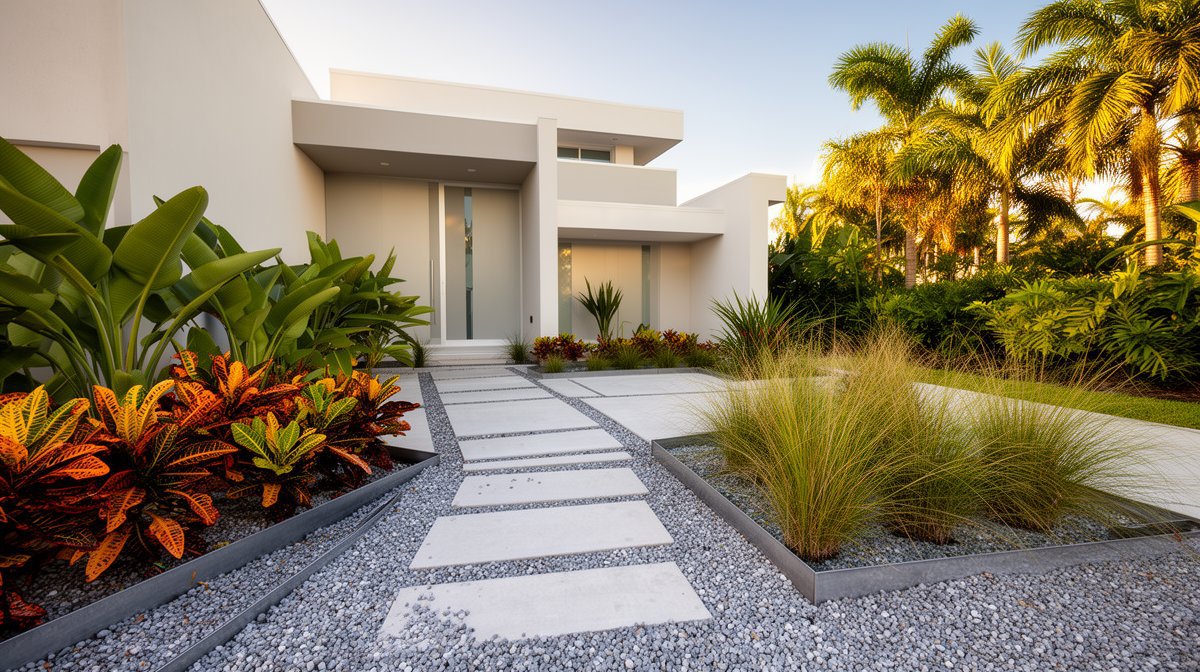
$16–30/sqftA low white-and-taupe flat-roofed house with a black-framed glass entry, approached on a wide sawn-concrete walk that runs dead straight from the sidewalk to the door. A single spreading frangipani stands off-centre in the left panel and throws its canopy across the stucco, while the beds either side of the walk are one long drift of cream-plumed muhly grass shot through with purple flower spikes — soft material used with hard discipline. Broad-leaved white bird of paradise fills the wall corners where the eave shades them, three rounded white boulders sit as a quiet sculpture group to the right, and short black bollard lights mark the walk. Two clipped strips of lawn keep the whole composition from reading as a parking lot, which is the mistake most modern front yards in Hollywood make.

The Agave Gravel Court
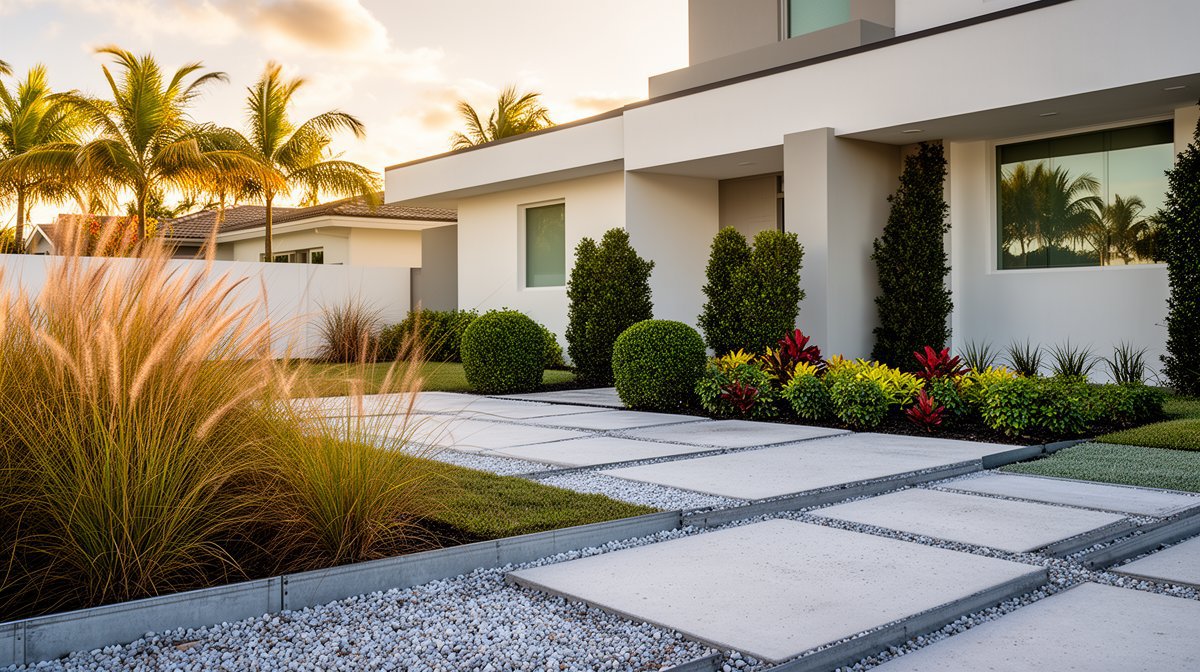
$9–18/sqftA 1950s CBS ranch stripped back to white stucco, black window frames and a blackened-steel house number, with the front lawn gone entirely. The ground plane is a field of buff pea gravel, and the planting is organised into crisp steel-edged rectangles filled with red-brown gravel mulch — each one holding a rhythm of blue-grey agave rosettes at three sizes, with a single grass clump at the driveway edge to break the geometry. The mature live oak was kept and limbed high, so the whole court sits in dappled shade by mid-afternoon and the gravel never becomes a heat trap. This is the design that answers Hollywood's two-day watering rule most directly: once the agaves are established the front yard needs essentially nothing.

The Concrete Fire Terrace
$22–40/sqftA large poured-concrete terrace runs the full width of the back of the house and meets a sliding glass wall without a step. At its centre sits a low round steel fire bowl, ringed by four slim-framed lounge chairs and a sofa; overhead, two runs of catenary string lights are carried on black poles so the ceiling of the room is light rather than structure. The terrace edges are board-formed white concrete seat walls that double as raised planters, filled with feathery grasses and one red-leaved accent, and a mature canopy tree on the left is left exactly where it is — the shade is the most valuable thing in a Hollywood backyard from June through September. Lawn is kept only as a green frame at the far edges.

The Lit Pool Court
$45–95/sqft (pool inclusive)Shot at blue hour, this is the whole backyard treated as one lit room: a rectangular pool with a sun shelf, in-pool lights and a pale plaster interior, wrapped on all four sides by large-format shell-toned pavers laid tight with almost no joint. Two chaise lounges face each other across the water. The real design work is at the perimeter — rendered white privacy walls grazed by in-grade uplights, with spiky clumps of grass and agave planted at their base so every fixture throws a shadow pattern up the wall. Areca and coconut palms rise behind the walls and read as black silhouettes against the sky. The palette is deliberately three colours: white, pale stone, and the turquoise of the water.
See how a modern/minimalist garden looks on YOUR property
Upload a photo of your Hollywood yard and visualize your dream garden in seconds.
Try ProScapeAI Free
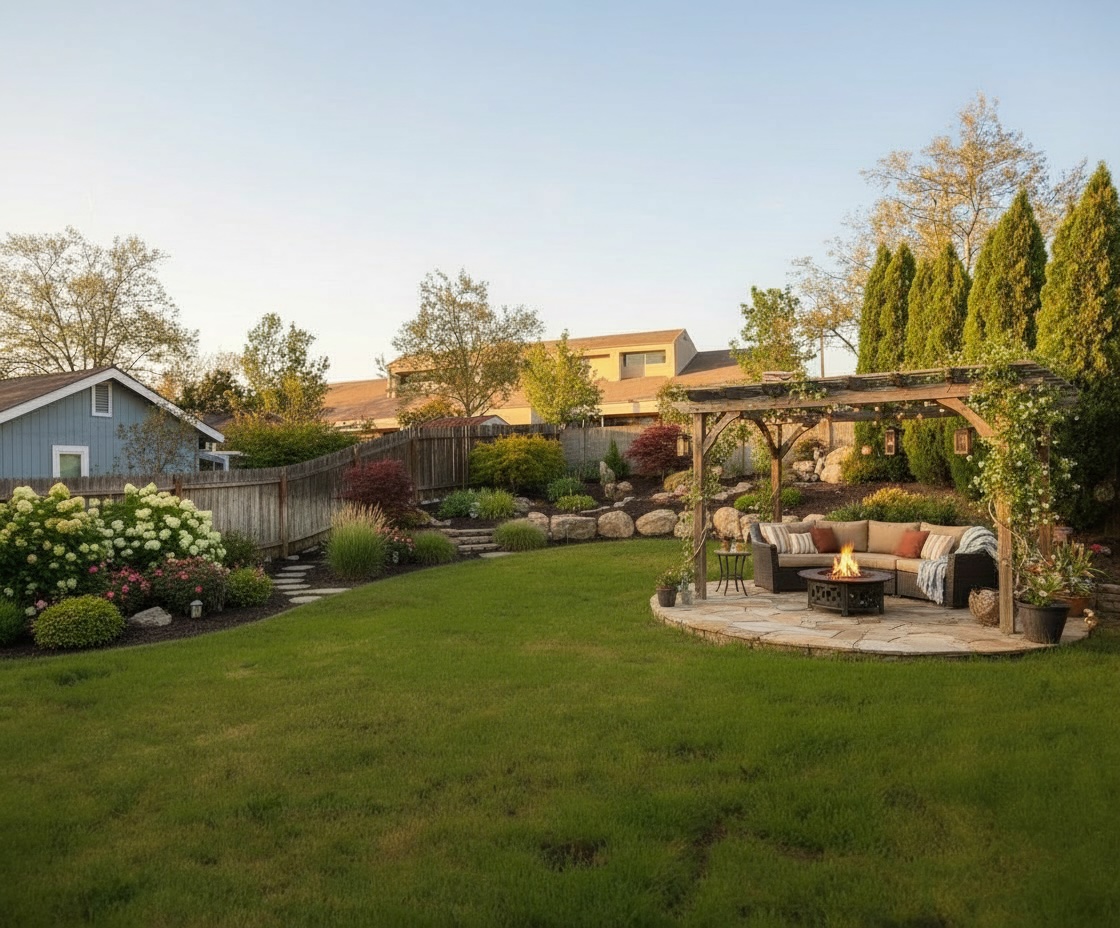
Featured Trees & Shrubs for Modern/Minimalist Gardens
Browse all 150 plants for Hollywood
Bismarck Palm
Bismarckia nobilis
reaches 30 feet tall, blooms in summer. Pollinator-friendly.

Clustering Fishtail Palm
Caryota mitis
medium-sized at 15 feet, yellow blooms in summer. Pollinator-friendly.

Pygmy Date Palm
Phoenix roebelenii
grows to 6 feet, yellow blooms in spring. Pollinator-friendly.

Royal Palm
Roystonea regia
large shade tree reaching 50+ feet, white blooms in spring. Pollinator-friendly.
Featured Grasses & Groundcovers for Modern/Minimalist Gardens
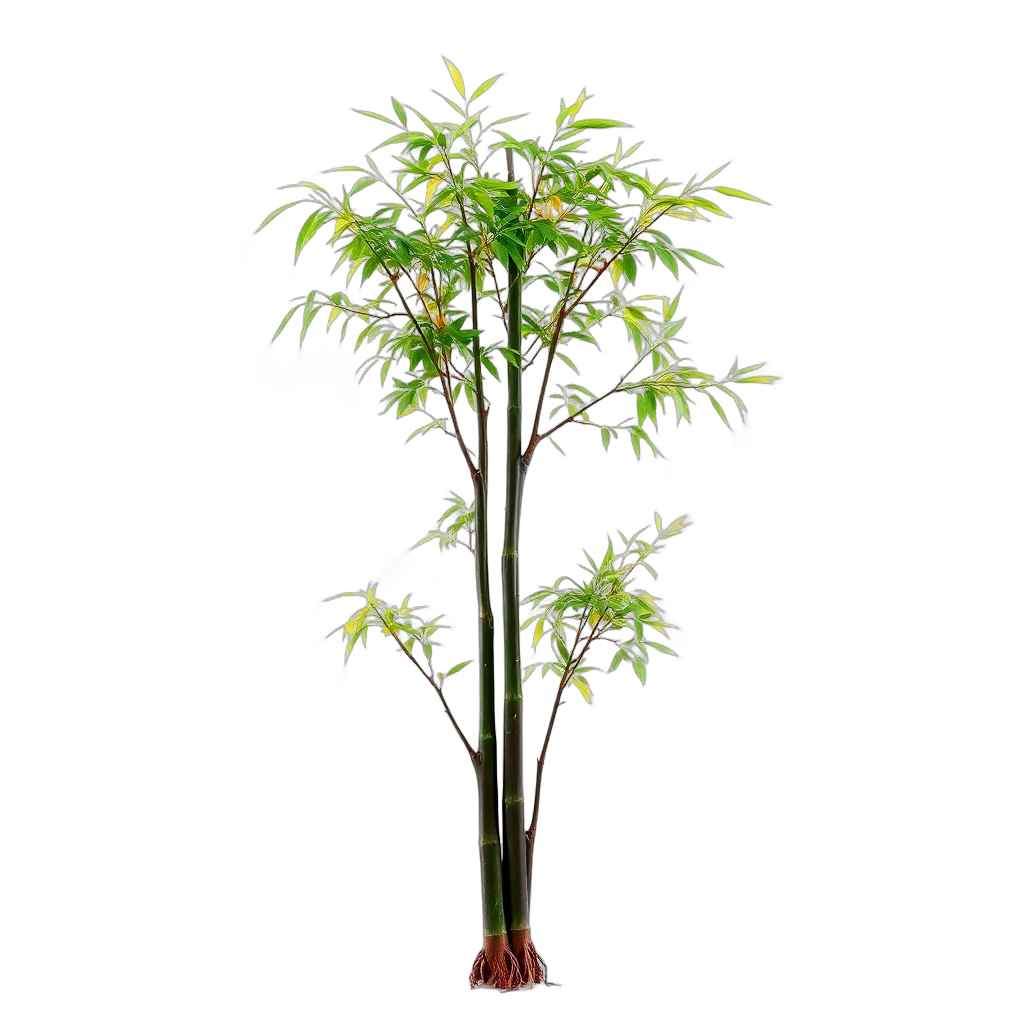
Black Bamboo
Phyllostachys nigra
reaches 25 feet tall, blooms in none. Evergreen year-round.
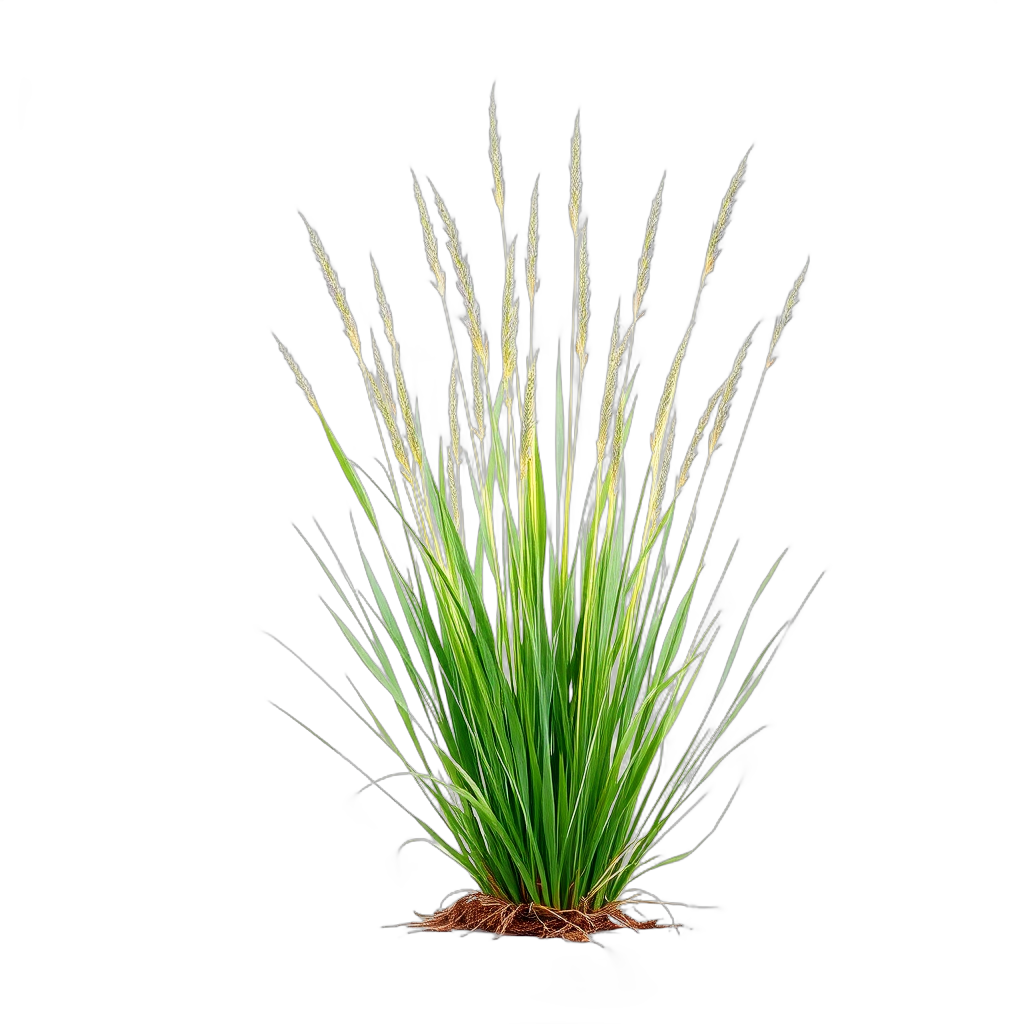
Blue Grama Grass
Bouteloua gracilis
low-growing ground cover, purple blooms in summer. Yellow fall color.
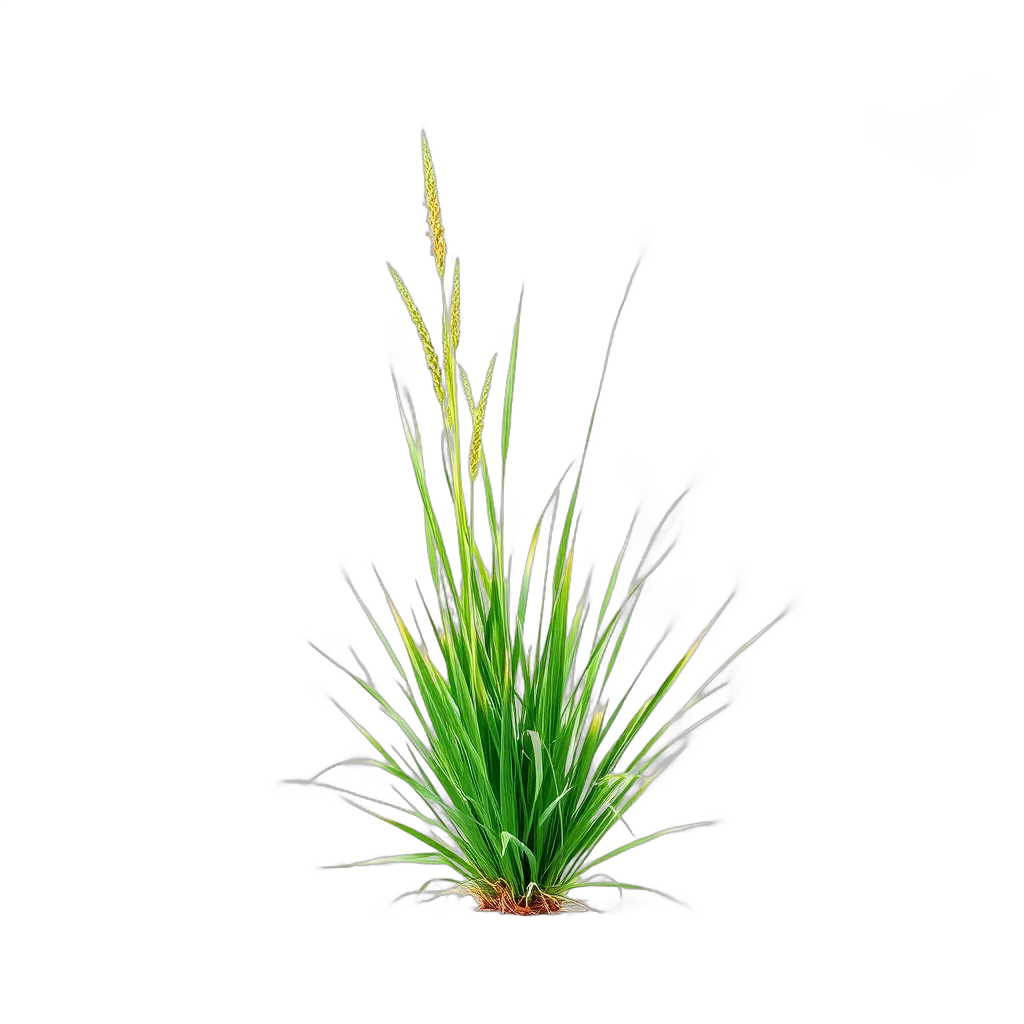
Bull Grass
Muhlenbergia emersleyi
grows to 4 feet, purple blooms in fall. Yellow fall color.
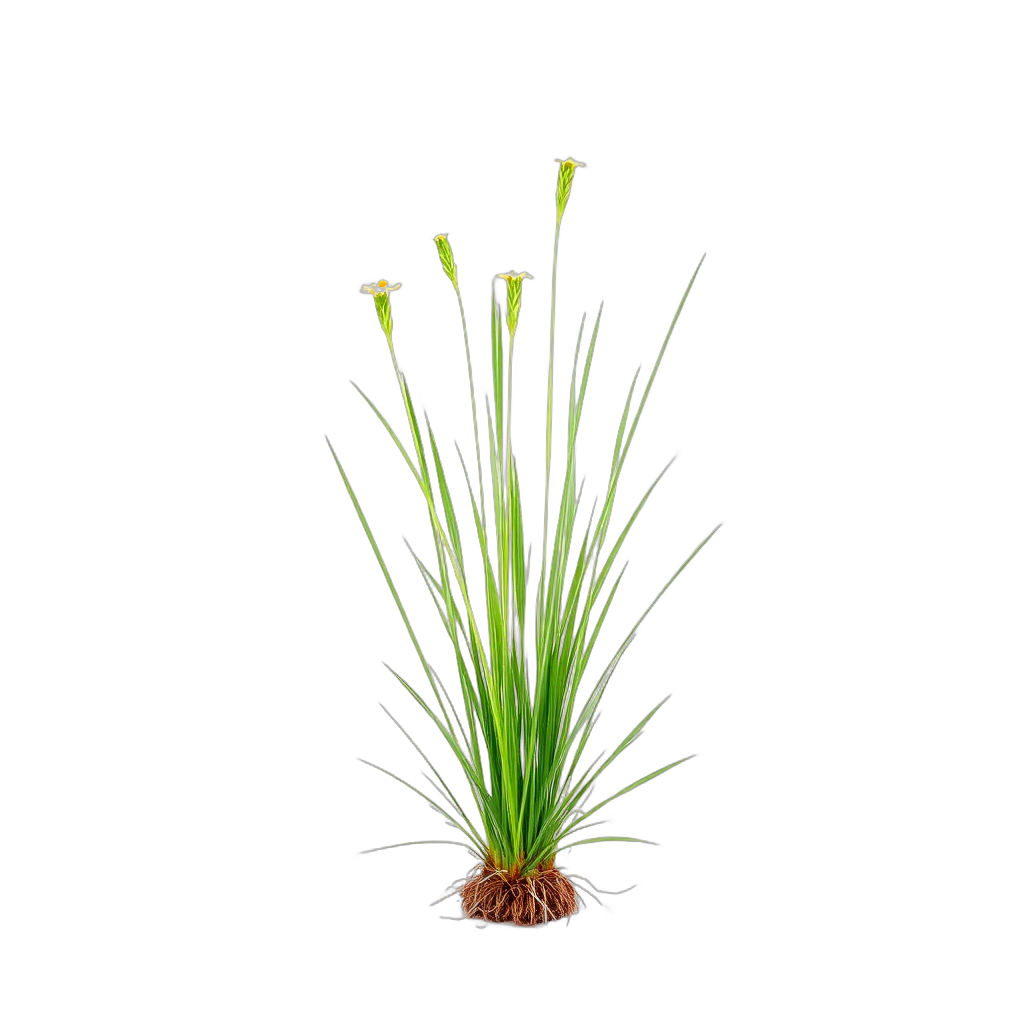
California Melic
Melica californica
low-growing ground cover, blooms in spring.
Featured Flowers & Perennials for Modern/Minimalist Gardens

Canadian Waterweed
Elodea canadensis
grows to 3 feet, white blooms in spring. Evergreen year-round.

Common Cattail
Typha latifolia
grows to 5 feet, blooms in summer. Pollinator-friendly.

Common Duckweed
Lemna minor
low-growing ground cover, white blooms in summer. Evergreen year-round.

European Frogbit
Hydrocharis morsus-ranae
low-growing ground cover, white blooms in summer. Pollinator-friendly.
Zone and sun checks come from our database — confirm with your local nursery before you buy.
Bloom Calendar for Hollywood
spring
Canadian Waterweed, Sweet Flag, African Daisysummer
Canadian Waterweed, Common Cattail, Common Duckweedfall
Canadian Waterweed, Pickerelweed, African Daisywinter
Limited bloomsDesign Tips for Hollywood (Zone 10b)
- Raise every bed four to eight inches above grade over open-graded stone — with 62 inches of rain a year and a wet-season water table two to five feet down, drainage is the single decision that determines whether an Agave attenuata court still looks sharp in year three
- Use Muhlenbergia capillaris where a Southwest designer would use gravel and nothing — it takes Hollywood humidity without a sulk, needs one February cut-back, and its October pink haze does more for a white stucco wall than any hardscape upgrade of the same cost
- Assume pH 7.5–8.4 and buy EDDHA-chelated iron before you need it; better still, keep Ixora coccinea and Gardenia jasminoides out of a modern plan entirely and lean on Clusia guttifera, Conocarpus erectus var. sericeus and Zamia integrifolia, which never yellow on limestone
- Keep the canopy you inherited. A Quercus virginiana or Bursera simaruba limbed high turns a gravel court from a heat trap into a usable room, and in a Hollywood July the difference between full sun and dappled shade on a concrete terrace is roughly fifteen degrees underfoot
- Design for two watering days: put every bed on inline drip, group by water need, and let turf shrink to a deliberate green frame rather than a default surface — 'Empire' zoysia holds colour on far less water than 'Floratam' St. Augustine
- East of Federal Highway, specify for salt aerosol — Coccoloba uvifera, Chrysobalanus icaco 'Red Tip', Spartina bakeri and Conocarpus erectus take the onshore breeze; Hibiscus rosa-sinensis and Ixora coccinea burn at the leaf margin within a season
- Light the walls and the plant silhouettes, never the lawn — in-grade grazing uplights behind Dianella tasmanica 'Variegata' and Agave attenuata give a Hollywood backyard its whole evening character, and with warm nights nine months of the year that is when the garden actually gets used
Where to Source Plants in Hollywood
Skip the big-box stores. These independent Hollywood nurseries specialize in the plants that make modern/minimalist gardens thrive in Zone 10b.
Living Color Garden Center
Griffin Road, Fort Lauderdale (5 minutes north of Hollywood)
Five acres of plants under one independent roof since 1990 — palms, crotons, bromeliads, pottery and specimen material for Zone 10b gardens
Flamingo Road Nursery
Davie / west Broward
Destination garden center with a deep shrub and palm yard, over 200 fountains, pottery and hardscape, plus in-home garden consultations
Jesse Durko's Nursery
Davie (SW 70th Avenue / Viele Road)
Rare and hard-to-find tropicals grown without pesticides — aroids, heliconias, gingers, bromeliads, flowering trees, bamboos and antique roses
Nu Turf of Pompano Beach
North Dixie Highway, Pompano Beach
Over five acres of trees, palms, hedge material and shrubs — the practical stop when a design needs 40 clusia or a 16-foot specimen palm
Modern/Minimalist Landscaping Costs in Hollywood
| Project Scope | Estimated Cost |
|---|---|
| Front-yard modern conversion (turf removal + gravel court + steel-edged beds, ~600 sqft) | $6,500 – $15,000 |
| Poured concrete terrace with sawcut joints (300–500 sqft) | $9,000 – $24,000 |
| Backyard modern room — gas fire bowl, board-formed seat walls, string lighting | $18,000 – $45,000 |
| Pool deck in large-format pavers + full modern backyard design | $70,000 – $180,000 |
| Low-voltage lighting package (12–20 in-grade and bollard fixtures, transformer) | $3,500 – $9,000 |
| Drip retrofit with smart controller and rain sensor (two-day-a-week compliant) | $2,200 – $5,500 |
| AI visualization with ProScapeAI | Free to start |
Estimates based on Hollywood, FL-area contractor rates as of 2026. Actual costs vary by site conditions, materials, and contractor.
Hollywood Climate & Growing Zone
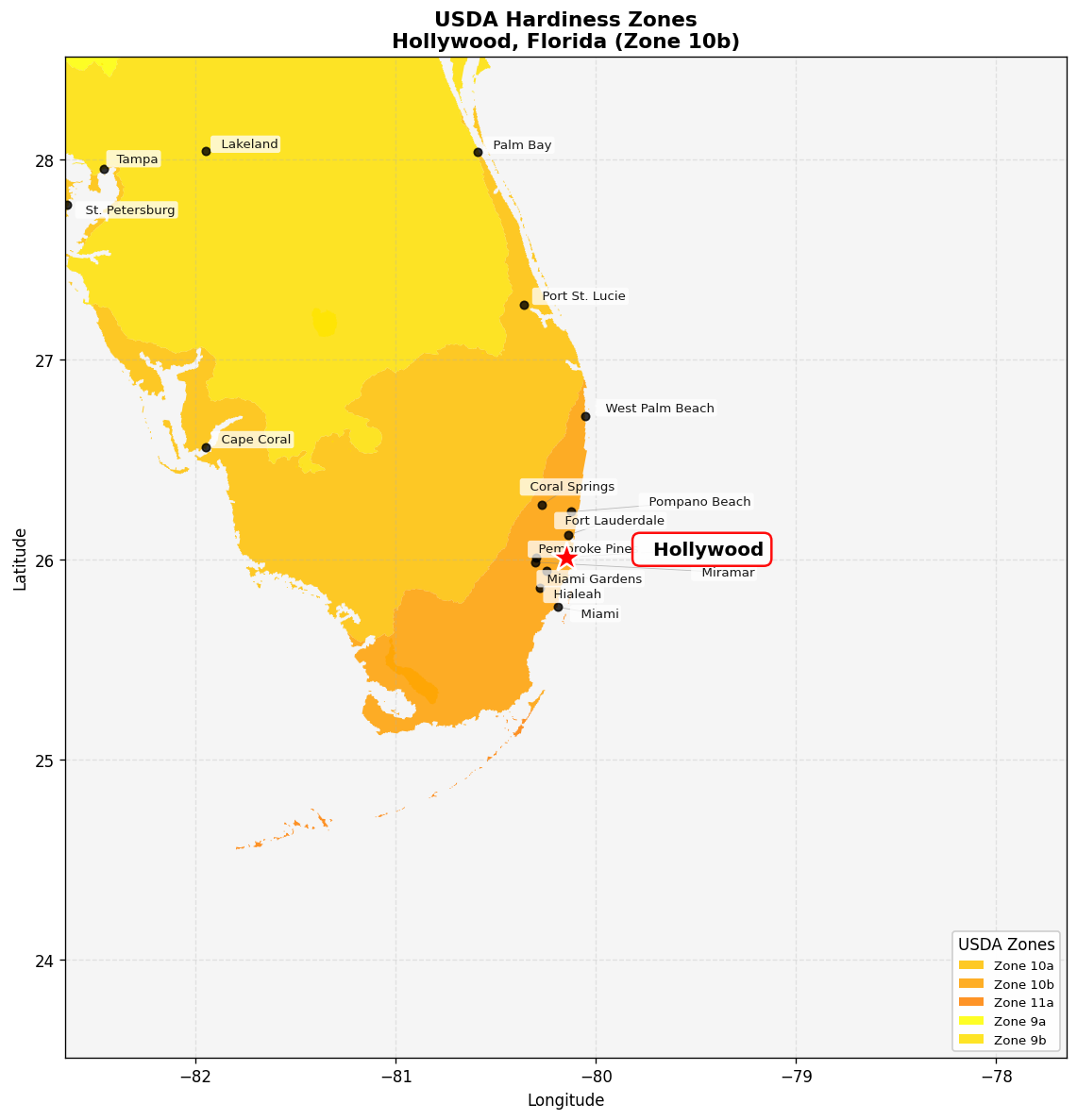
USDA Zone 10b
Hardiness zone for Hollywood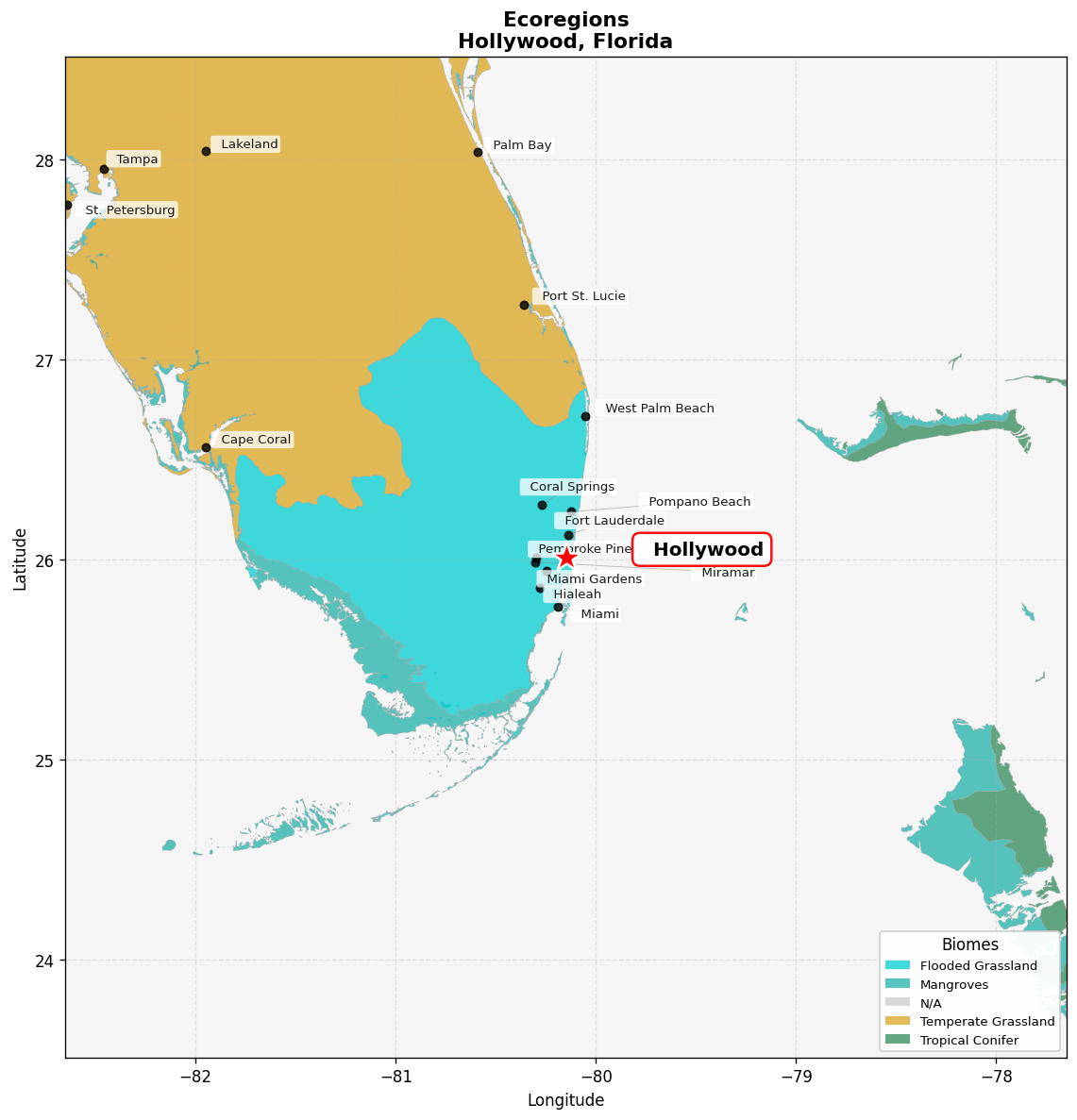
Everglades flooded grasslands
Native ecoregionFrequently Asked Questions
How much does modern landscaping cost in Hollywood, FL?
A front-yard conversion — turf removal, gravel field, steel-edged raised beds and architectural planting across a typical 600 sqft Hollywood front yard — runs $6,500 to $15,000 installed. A poured-concrete back terrace of 300 to 500 sqft with sawcut joints lands between $9,000 and $24,000. Add a gas fire bowl, board-formed seat walls and lighting and the backyard room is $18,000 to $45,000. Pool-inclusive modern backyards in Hollywood Lakes commonly run $70,000 to $180,000. Broward labour rates sit close to the national metro average, but material haul is cheap here because the quarries and the wholesale palm growers are both in the county.
Can agaves and gravel gardens actually survive 62 inches of rain a year?
Yes, if you build up rather than dig down. Everything that kills desert plants in Hollywood is water sitting at the crown, not cold — Zone 10b never gets below about 35°F. Set beds four to eight inches proud of grade over open-graded #57 stone, backfill with a coarse sand and crushed limestone mix, and top with gravel rather than shredded mulch. Then pick the right species: Agave desmettiana 'Variegata', Agave attenuata and Furcraea foetida 'Mediopicta' are the reliable performers, while Agave americana and Agave parryi are the two that rot and attract snout weevil. Dracaena marginata 'Tricolor' and Sansevieria trifasciata 'Laurentii' give a comparable architectural line with no drainage anxiety at all.
How often am I allowed to water a new landscape in Hollywood?
Broward County and the South Florida Water Management District enforce a two-day-a-week year-round schedule: odd-numbered addresses on Wednesday and Saturday, even-numbered addresses on Thursday and Sunday, and no irrigation between 10 a.m. and 4 p.m. on any day. New plantings get a limited establishment window with more frequent watering — confirm the current allowance with the county before installation, as the terms are updated periodically. Design around it instead of fighting it: run beds on inline drip rather than spray, put Muhlenbergia capillaris, Tripsacum floridanum and Spartina bakeri where you would otherwise put thirsty turf, and specify a WiFi controller with a rain sensor so a July storm cancels the next cycle automatically.
Why do new plants turn yellow between the veins in Hollywood?
That is iron chlorosis, and it is a soil chemistry problem rather than a watering one. Hollywood soils sit on Miami Limestone and shell fill with a pH commonly between 7.5 and 8.4, which locks iron and manganese out of solution. Ordinary iron sulphate or EDTA-chelated iron will not hold at that pH — EDDHA-chelated iron is the form that works. The durable fix is a plant list that never needed acid soil: Zamia integrifolia, Conocarpus erectus var. sericeus, Coccoloba uvifera, Clusia guttifera, Muhlenbergia capillaris and Dietes bicolor all evolved on this rock. The usual victims — Ixora coccinea, Gardenia jasminoides and Rhododendron indicum — will need feeding forever, which is exactly the maintenance a modern design should not be carrying.
What holds up in a hurricane, and does landscaping make it worse?
Broward sits in the Florida Building Code High Velocity Hurricane Zone, and the season runs June 1 to November 30. The landscape choices that matter are species and structure. Sabal palmetto, Coccoloba uvifera, Bursera simaruba, Quercus virginiana and Conocarpus erectus have the best survival records in Broward, while Ficus benjamina, Schefflera actinophylla and Casuarina equisetifolia are the ones that fail and take fences with them. Do not let anyone hurricane-cut or over-thin your palms — removing green fronds weakens the crown rather than protecting it. Hard elements should be specified to stay put: mortared or heavy pavers rather than loose ones near the house, and gravel kept below the top of its steel edge so it cannot become airborne.
When is the best time to install a landscape in Hollywood?
October through March is the window. Rain has eased, humidity drops, daytime highs sit in the high 70s and low 80s, and everything you plant has five or six mild months to root before the first 90°F day. It is also the only stretch when a concrete pour is not competing with an afternoon thunderstorm. April and May are workable but you will be hand-watering hard, since those are the driest weeks of the Hollywood year. Avoid starting hardscape between mid-August and early October: that is peak storm season, contractor schedules go sideways after any named system, and a fresh gravel court in a tropical downpour is a mess nobody enjoys.