4 Tropical Garden Ideas for Hollywood, FL | Zone 10b Design
Native plants from the Everglades flooded grasslands (Zone 10b) — Tropical rainforest climate
Why Tropical/Lush Gardens in Hollywood?
Hollywood is one of the few American cities where a genuinely tropical garden is not a costume — it is simply what grows. The city sits at 26°N in USDA Zone 10b, inside a tropical rainforest (Af) climate, with an average annual minimum between 35 and 40°F and no hard freeze since January 1977. Coconut palms fruit here, Delonix regia flowers scarlet over the streets every June, and mango and avocado carry crops in back gardens from Hollywood Lakes to Emerald Hills. The housing stock is built for it too: the barrel-tile ranches of Hollywood Hills and Playa del Mar, the 1920s Mediterranean Revival houses that Joseph Young's 1925 plat produced around Young Circle, and the covered lanais on almost everything built after 1960 all assume the garden is a room you live in rather than a view you look at.
Rainfall is the number that shapes the planting plan: roughly 62 inches a year, with about 70 percent of it arriving between June and October. That is a monsoon pattern, not an even drizzle, and it splits the Hollywood year in two. From June the garden grows so fast that Codiaeum variegatum 'Petra' needs tipping twice a season and Musa 'Dwarf Cavendish' can throw a new leaf every ten days; from March to May it is bone dry and everything newly planted needs hand-watering. Design accordingly. Put the water-hungry material — Heliconia psittacorum 'Lady Di', Alpinia zerumbet 'Variegata', Ravenala madagascariensis — where it catches roof runoff or sits in the lower part of the lot, and give the higher, driest ground to Cocos nucifera 'Maypan', Wodyetia bifurcata, Chrysobalanus icaco 'Red Tip' and Zamia integrifolia, all of which shrug off a dry May.
The soil is sandy, shallow and alkaline, and it changes across the city. East Hollywood sits on the Atlantic Coastal Ridge over Miami Limestone — you hit oolite about eighteen inches down — while the western neighbourhoods out past Boulevard Heights and Driftwood are drained Everglades marl within the Everglades flooded grasslands ecoregion, with a wet-season water table sometimes only a foot or two below the surface. Both run a soil pH of 7.5 to 8.4, which is why the most common complaint in Broward gardens is yellow leaves with green veins on Ixora coccinea and Gardenia jasminoides. Only EDDHA-chelated iron stays available at that pH; the better answer is to lean on plants that are indifferent to limestone — Clusia guttifera, Coccoloba uvifera, Conocarpus erectus var. sericeus, Myrcianthes fragrans and Psychotria nervosa — and use the chlorosis-prone showpieces in raised beds where the mix is yours to control. Palms are the other thing to buy carefully: lethal bronzing has spread through South Florida and hits Phoenix sylvestris, Phoenix dactylifera and Sabal palmetto hardest, so source from local growers who can tell you where the stock came from.
Water rules and salt finish the brief. Broward County and the South Florida Water Management District allow two irrigation days a week year-round — odd-numbered addresses Wednesday and Saturday, even-numbered addresses Thursday and Sunday, nothing between 10 a.m. and 4 p.m. A lush look is still perfectly achievable inside that: mass planting shades its own root zone, three inches of melaleuca mulch halves evaporation, and inline drip under Heliconia and Alpinia does more with less than any spray head. East of Federal Highway, the onshore breeze carries salt aerosol about a mile inland, so the beachside blocks want Coccoloba uvifera, Cocos nucifera, Chrysobalanus icaco 'Red Tip' and Hymenocallis latifolia rather than Ixora, which browns at the margins within a season. And keep the hurricane season in mind when you place the big material: Broward is in the Florida Building Code High Velocity Hurricane Zone, so plant Ravenala and Musa clumps where a shredded leaf is cosmetic rather than where a falling frond lands on glass.
4 Tropical/Lush Design Ideas for Hollywood

The Croton and Foxtail Front
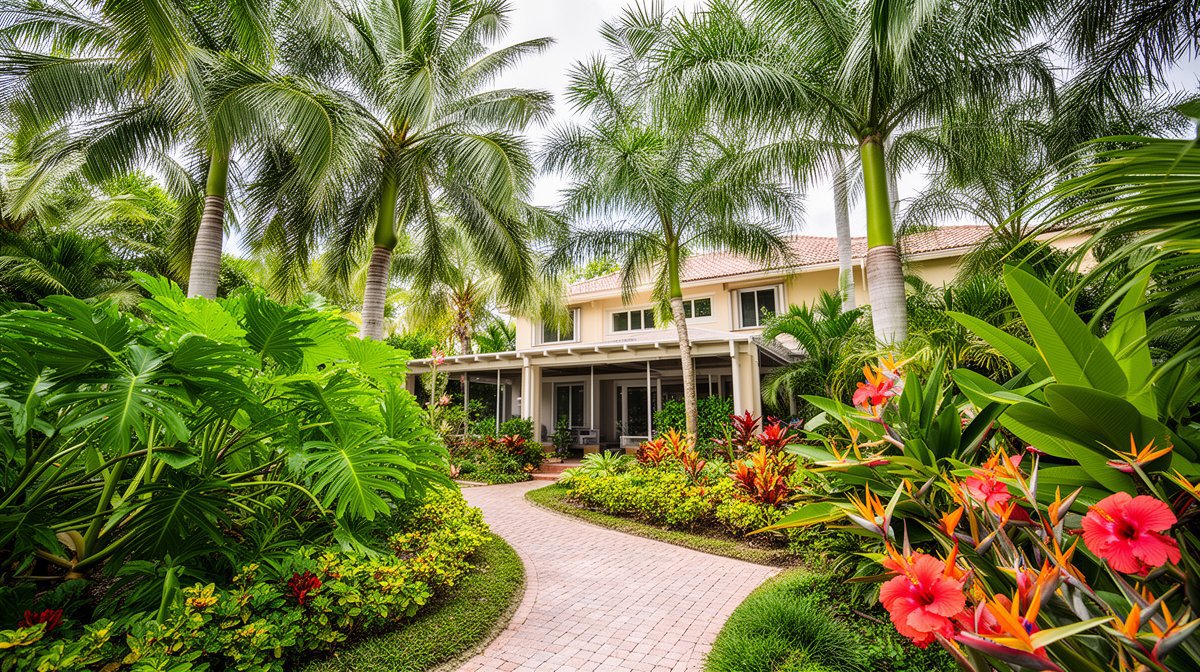
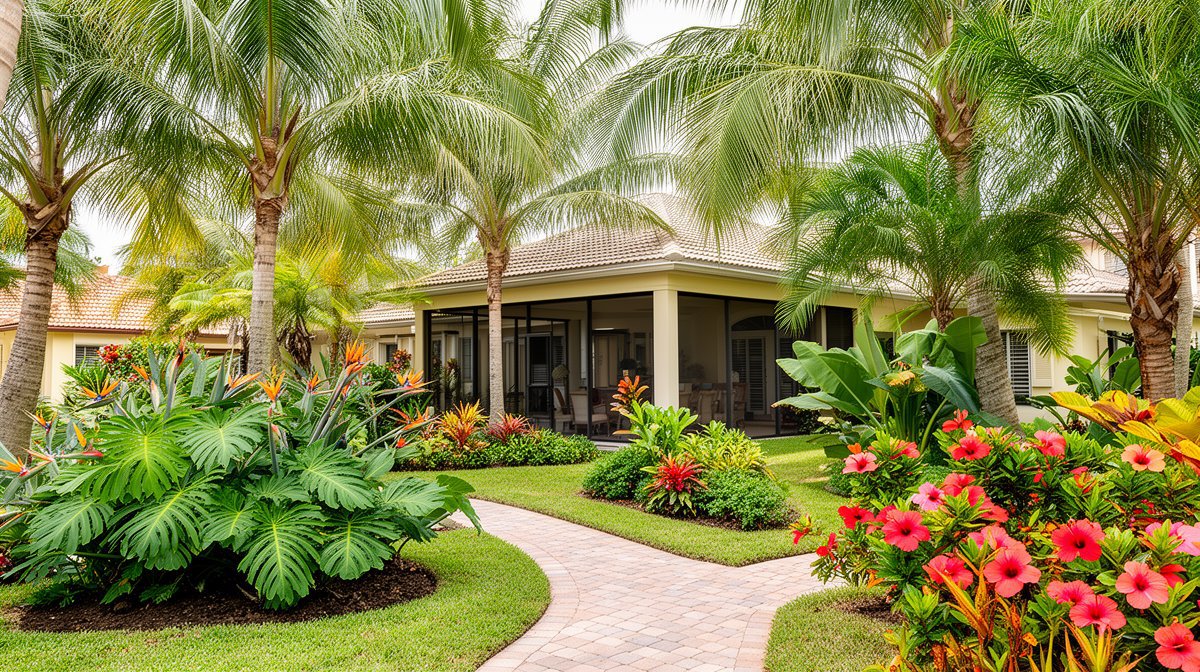
$12–22/sqftA cream barrel-tile ranch with an attached garage, given height by three smooth-trunked foxtail palms set at uneven spacing so the canopy breaks the roofline rather than lining up with it. At the house wall, big clumps of white bird of paradise fan their paddle leaves against the stucco and hide the window sills. The colour is all at ground level: two deep, curving beds of mixed crotons in red, orange and acid yellow, mulched dark so the foliage reads at full saturation from the street. A curving pale concrete walk swings from the driveway to the front door, and a clean sweep of St. Augustine holds the middle. This is the most Hollywood front yard there is, and the entire colour scheme is leaf rather than flower, so it looks identical in February and August.

The Coral Rock Hibiscus Walk
$18–32/sqftA pale mint stucco house with a white columned portico, reached along a keystone flagstone path whose edges are held by rough coral rock boulders rather than a manufactured curb — the detail that makes the whole garden read as South Florida rather than generic resort. Tall coconut palms lean over the roof. Either side of the path the planting is layered three deep: red hibiscus at shoulder height, arching foxtail fern and macho fern in the middle, and a front ribbon of mixed annual colour in pink, red, purple and yellow that gets swapped twice a year. Red-leaved ti plants punch through the greens. Late afternoon light comes straight down the path, which is how this design should be planned — orient the walk so the sun sets along it.

The Tiki Torch Grill Court
$40–75/sqft (deck and kitchen inclusive)Sunset over a travertine pool deck built around a simple rectangular pool with a dark waterline tile. The working half of the yard is an L-shaped outdoor kitchen faced in stacked stone with a stainless grill, a raised granite bar and three rattan stools — placed at the far end so the cook faces the water and the guests. Bronze tiki torches march down the deck edge and carry the evening light. Privacy comes from a tightly clipped clusia hedge that runs the full back boundary, with coconut palms and banana clumps rising above it and a planted band of orange bird of paradise, blue plumbago and dark red ti between hedge and coping. A strip of lawn in the foreground keeps the deck from swallowing the whole lot.

The Grotto Lanai
$55–110/sqft (pool and grotto inclusive)A deep covered lanai with two paddle ceiling fans, stucco columns and a barrel-tile edge opens through sliding glass onto a freeform pool — and the far side of that pool is a stacked boulder grotto with a single sheet of water falling into the deep end. Rattan sofa and armchairs sit on travertine under the roof, so the room works in a downpour, which in a Hollywood July is the point. The planting closes the composition on both sides: huge banana and traveller's palm paddles frame the view left and right, red ti and bromeliads sit at the boulder joints where they catch spray, and the foreground beds run hot with orange and pink so the eye lands on colour before it reaches the water.
See how a tropical/lush garden looks on YOUR property
Upload a photo of your Hollywood yard and visualize your dream garden in seconds.
Try ProScapeAI Free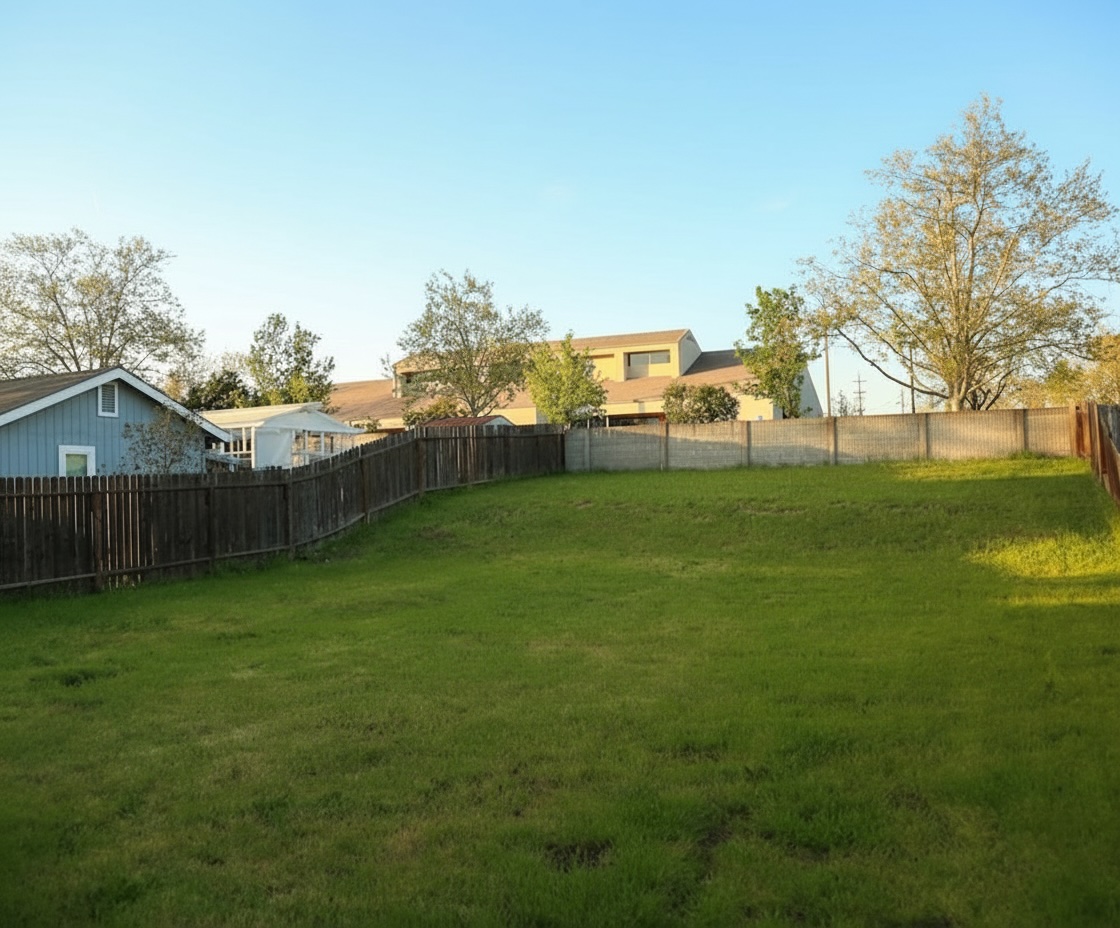
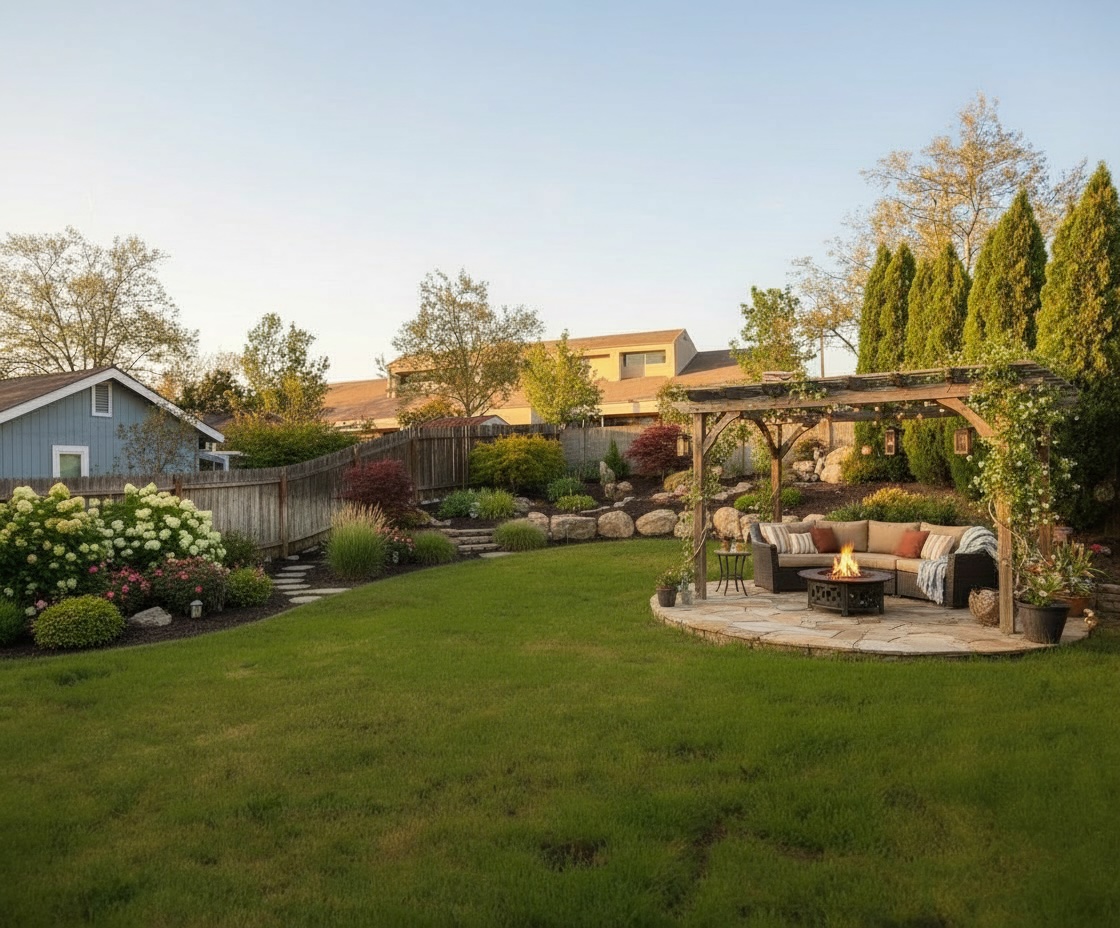
Featured Trees & Shrubs for Tropical/Lush Gardens
Browse all 150 plants for Hollywood
Bismarck Palm
Bismarckia nobilis
reaches 30 feet tall, blooms in summer. Pollinator-friendly.

Clustering Fishtail Palm
Caryota mitis
medium-sized at 15 feet, yellow blooms in summer. Pollinator-friendly.

Pygmy Date Palm
Phoenix roebelenii
grows to 6 feet, yellow blooms in spring. Pollinator-friendly.

Royal Palm
Roystonea regia
large shade tree reaching 50+ feet, white blooms in spring. Pollinator-friendly.
Featured Grasses & Groundcovers for Tropical/Lush Gardens
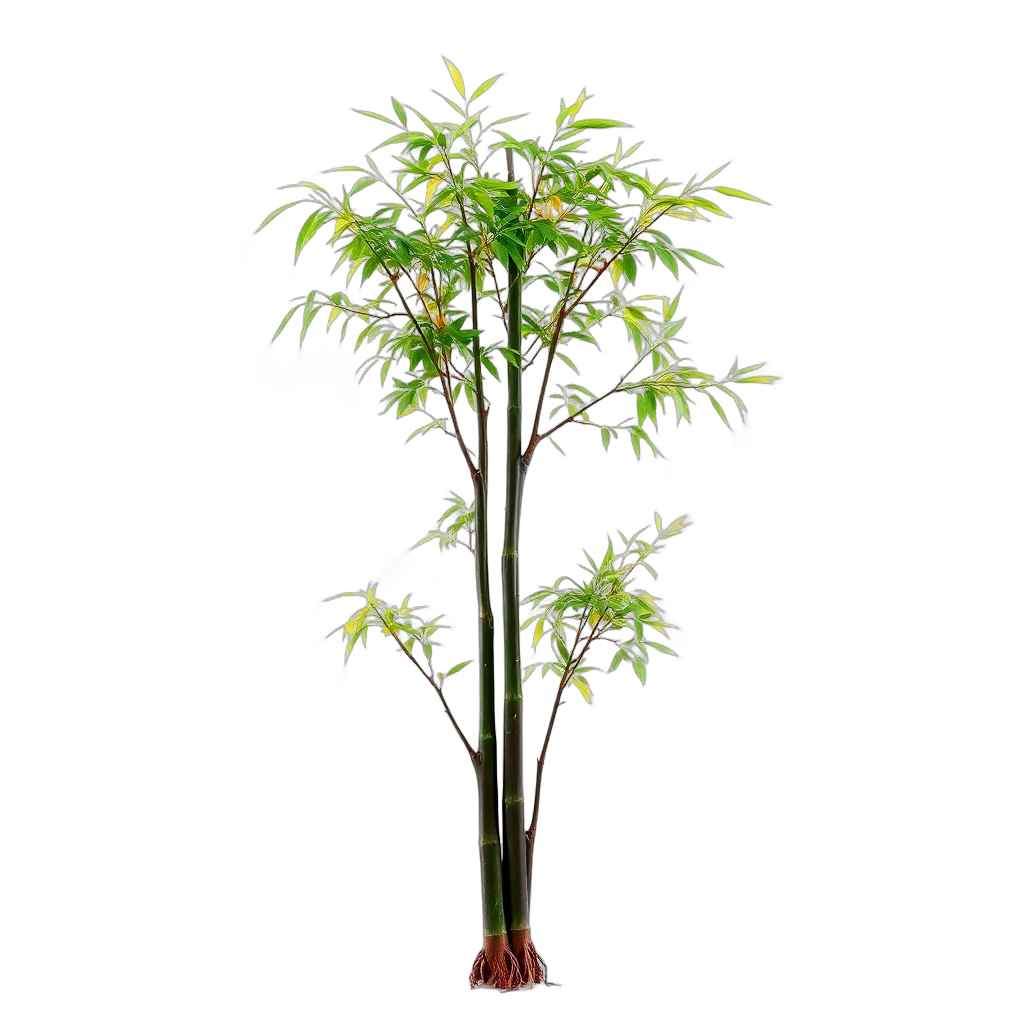
Black Bamboo
Phyllostachys nigra
reaches 25 feet tall, blooms in none. Evergreen year-round.
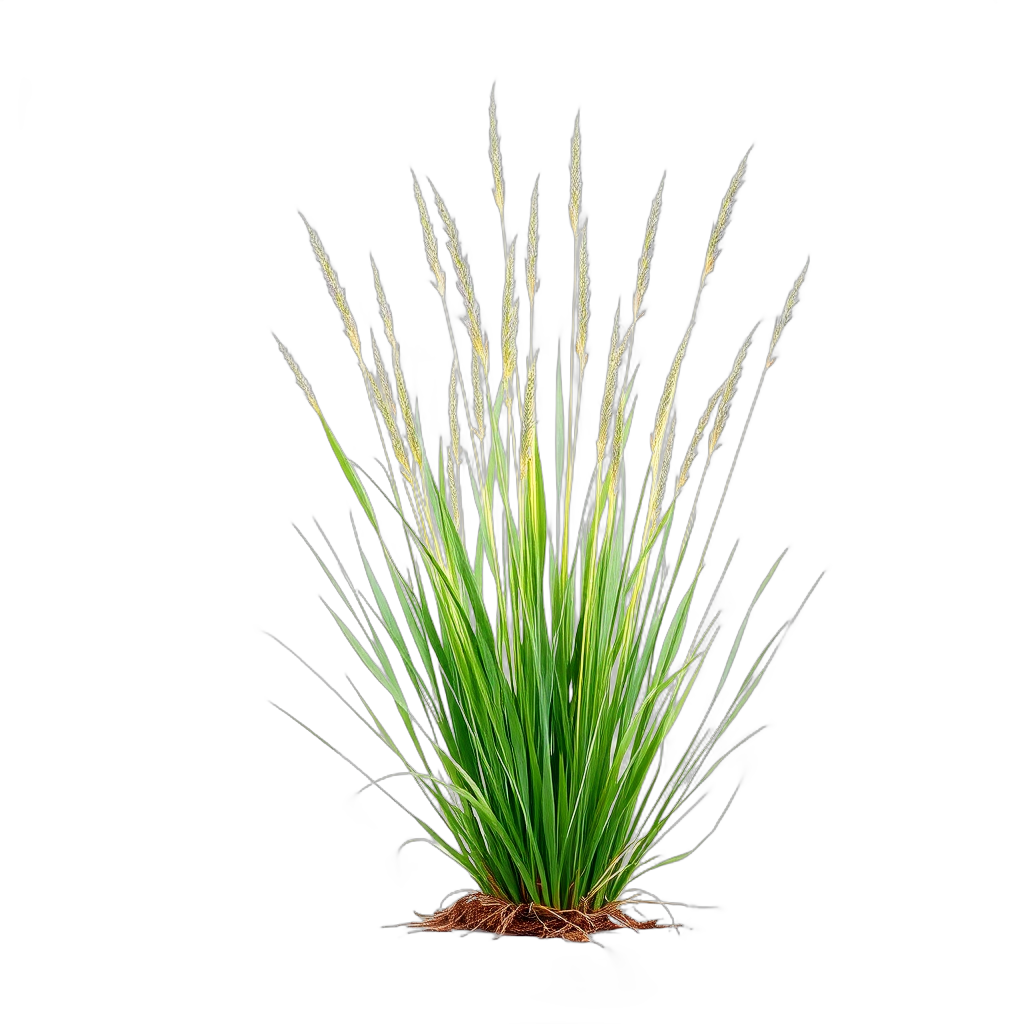
Blue Grama Grass
Bouteloua gracilis
low-growing ground cover, purple blooms in summer. Yellow fall color.
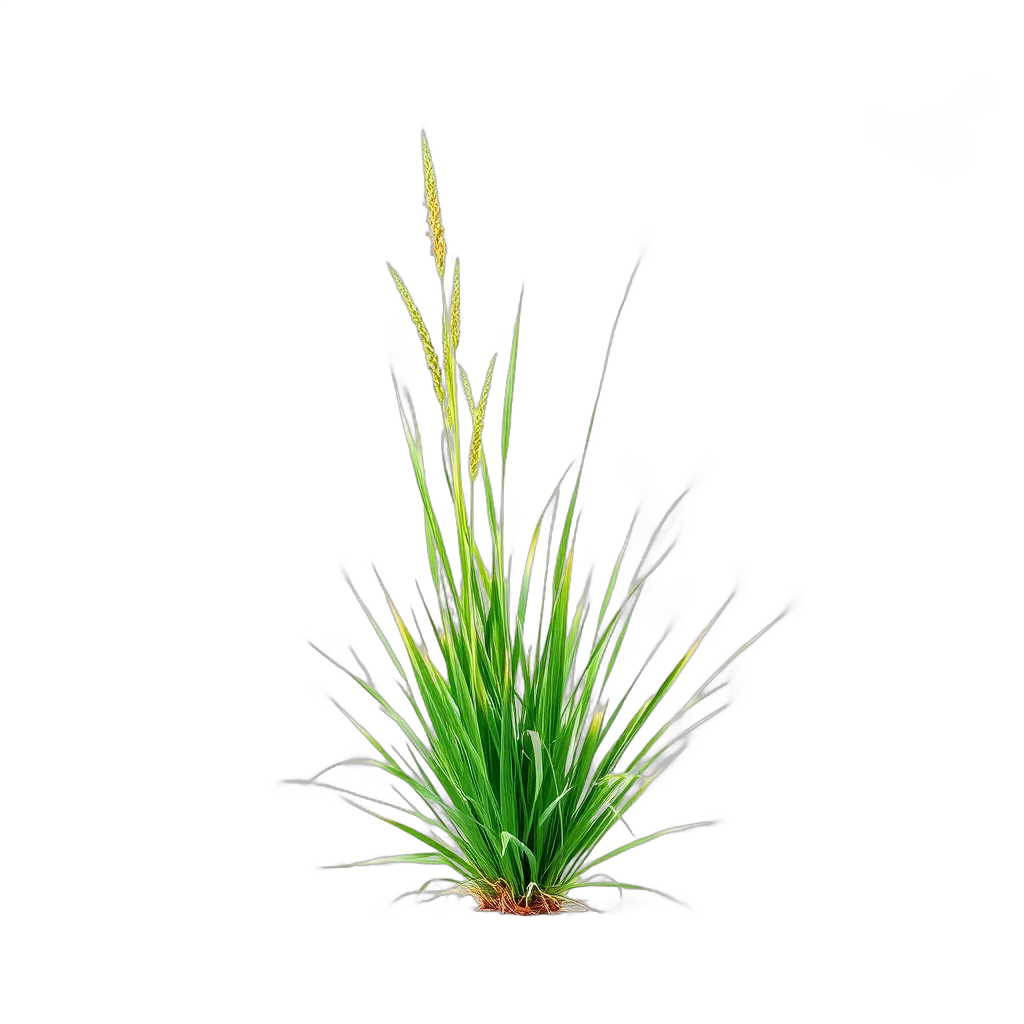
Bull Grass
Muhlenbergia emersleyi
grows to 4 feet, purple blooms in fall. Yellow fall color.
California Melic
Melica californica
low-growing ground cover, blooms in spring.
Featured Flowers & Perennials for Tropical/Lush Gardens

Canadian Waterweed
Elodea canadensis
grows to 3 feet, white blooms in spring. Evergreen year-round.

Common Cattail
Typha latifolia
grows to 5 feet, blooms in summer. Pollinator-friendly.

Common Duckweed
Lemna minor
low-growing ground cover, white blooms in summer. Evergreen year-round.

European Frogbit
Hydrocharis morsus-ranae
low-growing ground cover, white blooms in summer. Pollinator-friendly.
Zone and sun checks come from our database — confirm with your local nursery before you buy.
Bloom Calendar for Hollywood
spring
Canadian Waterweed, Sweet Flag, African Daisysummer
Canadian Waterweed, Common Cattail, Common Duckweedfall
Canadian Waterweed, Pickerelweed, African Daisywinter
Limited bloomsDesign Tips for Hollywood (Zone 10b)
- Build the garden out of leaf colour, not flower colour — Codiaeum variegatum 'Petra', Cordyline fruticosa 'Red Sister' and Neoregelia 'Fireball' look the same in February as they do in August, which is what keeps a Hollywood front yard photographing well twelve months a year
- Assume pH 7.5–8.4 and plan around it: keep Ixora coccinea and Gardenia jasminoides in raised beds with a controlled mix, buy EDDHA-chelated iron rather than the cheaper sulphate, and let Clusia guttifera, Myrcianthes fragrans and Coccoloba uvifera carry the permanent structure
- Zone the lot by water before you place a single plant — Heliconia psittacorum 'Lady Di', Alpinia zerumbet 'Variegata' and Ravenala madagascariensis belong wherever roof runoff collects, while Chrysobalanus icaco 'Red Tip' and Zamia integrifolia take the high dry ground that bakes through a rainless May
- Mass, do not dot. A tropical bed planted tight shades its own root zone and cuts evaporation enough to live comfortably inside Broward's two watering days; the same plants spread thin across mulch will need hand-watering every dry season for the rest of their lives
- Screen with a clipped Clusia guttifera hedge rather than a taller fence — it takes salt, limestone and wind, holds a crisp face at 6 to 8 feet, and gives the palms and Musa clumps behind it a green backdrop instead of a board one
- Place big-leaved material where a shredded leaf is cosmetic, not structural. Broward is in the High Velocity Hurricane Zone, and Ravenala madagascariensis and Musa 'Dwarf Cavendish' will be ribbons after a named storm — fine at the back of a bed, a problem directly over glass or a screen enclosure
- Light the trunks and the undersides of the canopy. Uplighting a Wodyetia bifurcata or a Cocos nucifera 'Maypan' from two directions turns the palm into the evening focal point, and with warm nights nearly all year that lighting budget buys more usable garden than another 200 square feet of deck
Where to Source Plants in Hollywood
Skip the big-box stores. These independent Hollywood nurseries specialize in the plants that make tropical/lush gardens thrive in Zone 10b.
Living Color Garden Center
Griffin Road, Fort Lauderdale (5 minutes north of Hollywood)
Five acres of plants under one independent roof since 1990 — palms, crotons, bromeliads, pottery and specimen material for Zone 10b gardens
Flamingo Road Nursery
Davie / west Broward
Destination garden center with a deep shrub and palm yard, over 200 fountains, pottery and hardscape, plus in-home garden consultations
Jesse Durko's Nursery
Davie (SW 70th Avenue / Viele Road)
Rare and hard-to-find tropicals grown without pesticides — aroids, heliconias, gingers, bromeliads, flowering trees, bamboos and antique roses
Nu Turf of Pompano Beach
North Dixie Highway, Pompano Beach
Over five acres of trees, palms, hedge material and shrubs — the practical stop when a design needs 40 clusia or a 16-foot specimen palm
Tropical/Lush Landscaping Costs in Hollywood
| Project Scope | Estimated Cost |
|---|---|
| Front-yard tropical planting (3 specimen palms, croton beds, drip, ~800 sqft) | $9,000 – $18,000 |
| Keystone flagstone walk with coral rock edging and layered borders | $18 – $32/sqft |
| Travertine pool deck + stacked-stone outdoor kitchen | $35,000 – $80,000 |
| Freeform pool with boulder waterfall grotto and planted surround | $85,000 – $200,000 |
| Clusia privacy hedge, 7-gallon at 30 inches on centre (per 50 linear feet) | $1,800 – $4,500 |
| Specimen palm supplied and installed (14 ft foxtail or coconut) | $600 – $1,800 each |
| AI visualization with ProScapeAI | Free to start |
Estimates based on Hollywood, FL-area contractor rates as of 2026. Actual costs vary by site conditions, materials, and contractor.
Hollywood Climate & Growing Zone
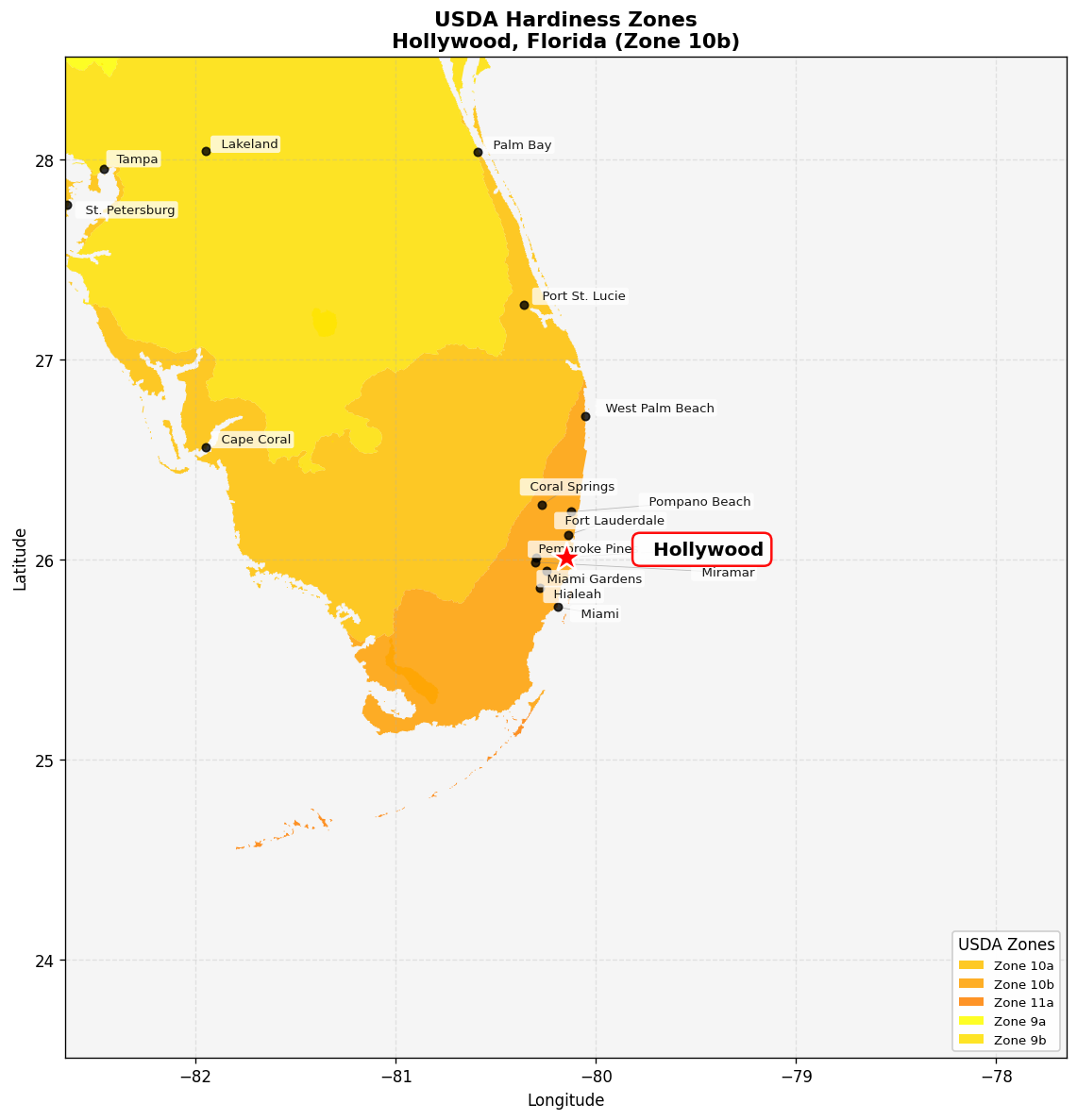
USDA Zone 10b
Hardiness zone for Hollywood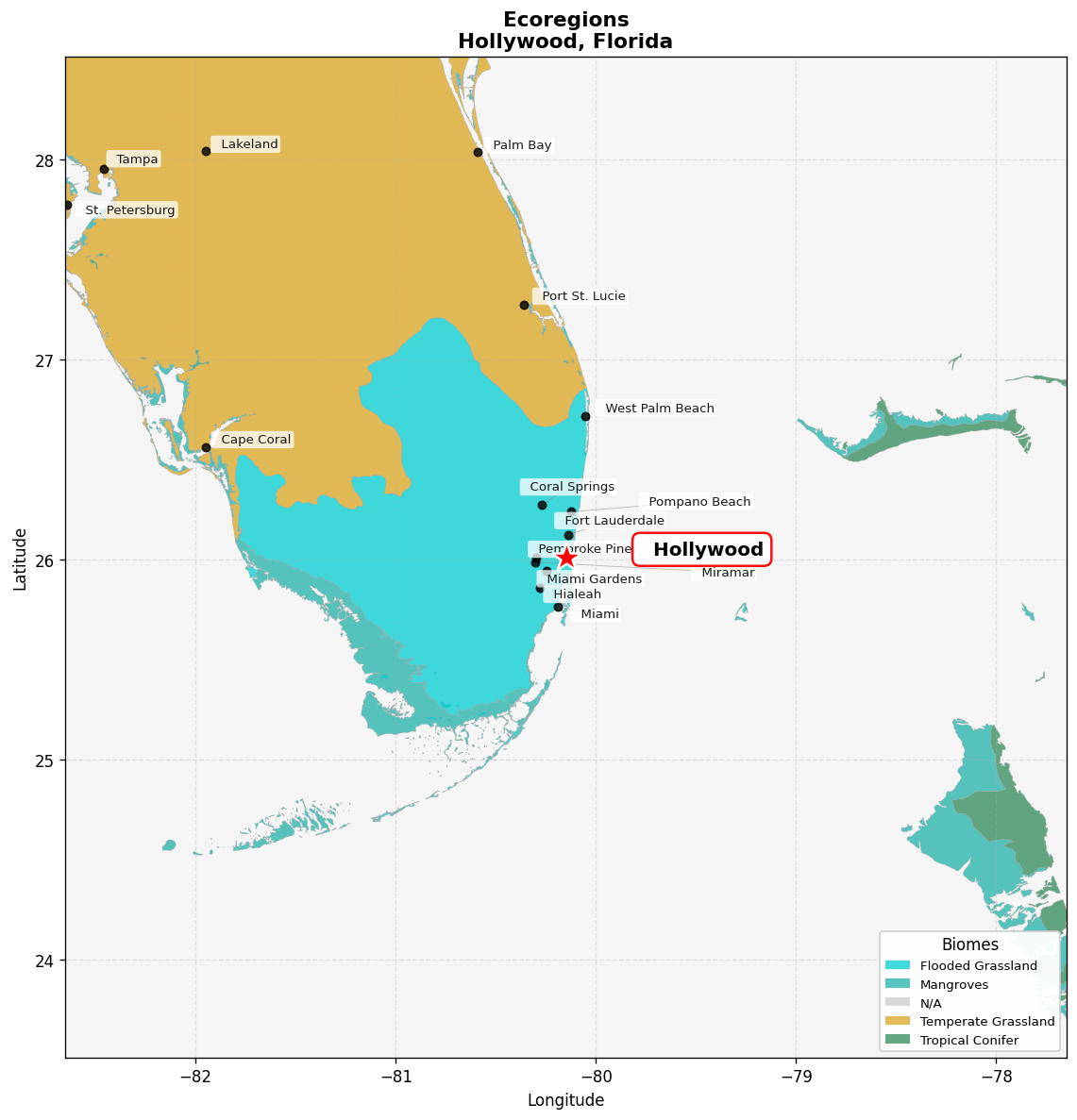
Everglades flooded grasslands
Native ecoregionFrequently Asked Questions
How much does a tropical landscape cost in Hollywood, FL?
A full front-yard tropical planting — three specimen palms, curving croton beds, bird of paradise at the house line, mulch, edging and drip across roughly 800 sqft — runs $9,000 to $18,000 installed. A keystone flagstone walk with coral rock edging and layered planting is $18 to $32 a square foot. Travertine pool decks with an outdoor kitchen land between $40 and $75 a square foot, and a freeform pool with a boulder grotto pushes the backyard to $55 to $110. Specimen palms are the swing factor: a 14-foot Wodyetia bifurcata is $600 to $1,400 installed, a mature Cocos nucifera 'Maypan' can be $1,500 or more, and Broward's wholesale growers mean you pay less here than almost anywhere else in the country.
Which palms should I plant in Hollywood, and which should I avoid?
Lethal bronzing, a phytoplasma disease, has spread widely through South Florida and hits Phoenix sylvestris, Phoenix dactylifera, Phoenix canariensis and Sabal palmetto hardest, with Cocos nucifera and Adonidia merrillii also susceptible. Safer choices for a Hollywood garden are Wodyetia bifurcata, Dypsis lutescens, Bismarckia nobilis, Ptychosperma elegans and the native Coccothrinax argentata and Thrinax radiata. Whatever you plant, buy from a local grower who can tell you the source, and never let a crew hurricane-cut the crown — removing green fronds weakens a palm rather than storm-proofing it. Coconut palms should be de-nutted before June if they overhang a deck.
How do I keep a lush tropical garden on two watering days a week?
Broward County and the South Florida Water Management District allow two days year-round — odd addresses Wednesday and Saturday, even addresses Thursday and Sunday, and nothing between 10 a.m. and 4 p.m. Lush is still very achievable, because a tropical planting shades its own soil. Plant in dense masses rather than dotted specimens, keep three inches of melaleuca mulch on every bed, and run inline drip under Heliconia psittacorum 'Lady Di' and Alpinia zerumbet 'Variegata' instead of spray. Then zone by thirst: put Ravenala madagascariensis and Musa 'Dwarf Cavendish' where roof runoff lands, and give the high dry ground to Chrysobalanus icaco 'Red Tip', Zamia integrifolia and Cocos nucifera, which barely notice a dry May.
Why do my ixora and gardenias go yellow with green veins?
Hollywood soils sit on Miami Limestone and shell fill, and a pH of 7.5 to 8.4 is completely normal across Broward. At that pH iron and manganese stop being available, and the classic interveinal yellowing follows within a season. Iron sulphate and EDTA-chelated products will not hold above pH 7.5 — EDDHA-chelated iron is the form that works, applied two or three times a year. Better still, put the chlorosis-prone plants in raised beds with a soil mix you control, and build the permanent structure of the garden from species that never minded limestone: Clusia guttifera, Myrcianthes fragrans, Psychotria nervosa, Conocarpus erectus var. sericeus and Coccoloba uvifera.
What is the best time of year to plant tropicals in Hollywood?
Late May into early June is the ideal window for tropical material, because you plant just as the wet season begins and the roots get the benefit of four months of natural rainfall — roughly 70 percent of Hollywood's 62 annual inches. October and November are the next best, mild and still warm enough for root growth. Avoid March through mid-May for anything large: those are the driest weeks of the year and the two-day watering rule makes establishment genuinely hard. Hardscape is the reverse — pour concrete and lay travertine between November and April, when afternoon thunderstorms are not rescheduling the crew twice a week.
Do I need a permit for tropical landscaping work in Hollywood?
Planting beds, mulch, drip irrigation and container work generally do not require one. Pools, outdoor kitchens with gas or electric service, structural walls, decks and the removal of protected trees are a different matter — the City of Hollywood runs its own landscape and tree provisions and Broward County has a separate tree preservation ordinance, and Broward is inside the Florida Building Code High Velocity Hurricane Zone, which adds requirements to anything structural. Rules change, so confirm the current requirements with the City of Hollywood Development Services and Broward County before you build. Note also that the Florida-Friendly Landscaping statute limits how far an HOA can prohibit water-wise planting.