4 Modern Landscape Ideas for Miami Gardens, FL | Clean Lines for Zone 10b Rain
Native plants from the Everglades flooded grasslands (Zone 10b) — Tropical monsoon climate
Why Modern/Minimalist Gardens in Miami Gardens?
Modern landscape design suits most Miami Gardens houses. The city's housing is mostly low, flat-fronted concrete-block ranches from the 1950s and 1960s in Carol City, Bunche Park, Myrtle Grove and Norland, with long horizontal rooflines, a carport and a flat, square lot. Those houses are already mid-century modern in bones, and a clean front yard (one statement palm, a raised gravel field, a single hedge line) makes a plain ranch look designed rather than dated. The newer houses of Rolling Oaks, Lake Lucerne and Vista Verde, with tile roofs and stucco walls, give a flat painted plane that sculptural plants read well against.
Rain is the constraint here. Zone 10b means average extreme lows of 35–40°F, so Agave desmettiana, Furcraea foetida 'Mediopicta', Zamia integrifolia and Bismarckia nobilis keep their shape all year. But the area gets roughly 60 inches of rain a year, most of it between May and October, and a summer storm can drop two or three inches in an hour. Agaves and other rosettes die of wet crowns here. So every gravel bed is a raised, free-draining mound with the plant's neck sitting above the pebble, and the gravel itself sits on filter fabric so the sand does not wash up through it.
The ground is sand and fill over limestone. The city sits on the eastern rim of the old Everglades flooded grasslands, the soil runs alkaline at about pH 7.5–8.3, and the rock is close to the surface in many yards. That makes a good base for hardscape: a compacted 4–6 inch limerock base under pavers or concrete is standard, and there is no frost line to dig below. It also means plants that like acid soil yellow without chelated iron, which is one more reason a modern palette here leans on natives such as Tripsacum floridanum, Muhlenbergia capillaris and silver buttonwood, which are happy on this ground.
Two local rules shape the plan. Miami-Dade only allows spray irrigation two days a week, which favors a gravel-and-drip design over lawn, and all of Miami-Dade is in the High-Velocity Hurricane Zone, so pergolas, shade sails and tall screens need permitted, engineered designs. Removing an old tree to clear a sight line needs a City of Miami Gardens tree removal permit. Design around what is already there, keep the plant list short, and let a single Bismarckia nobilis do the talking.
4 Modern/Minimalist Design Ideas for Miami Gardens

AI-generated image
The Mid-Century Ranch Gravel Front
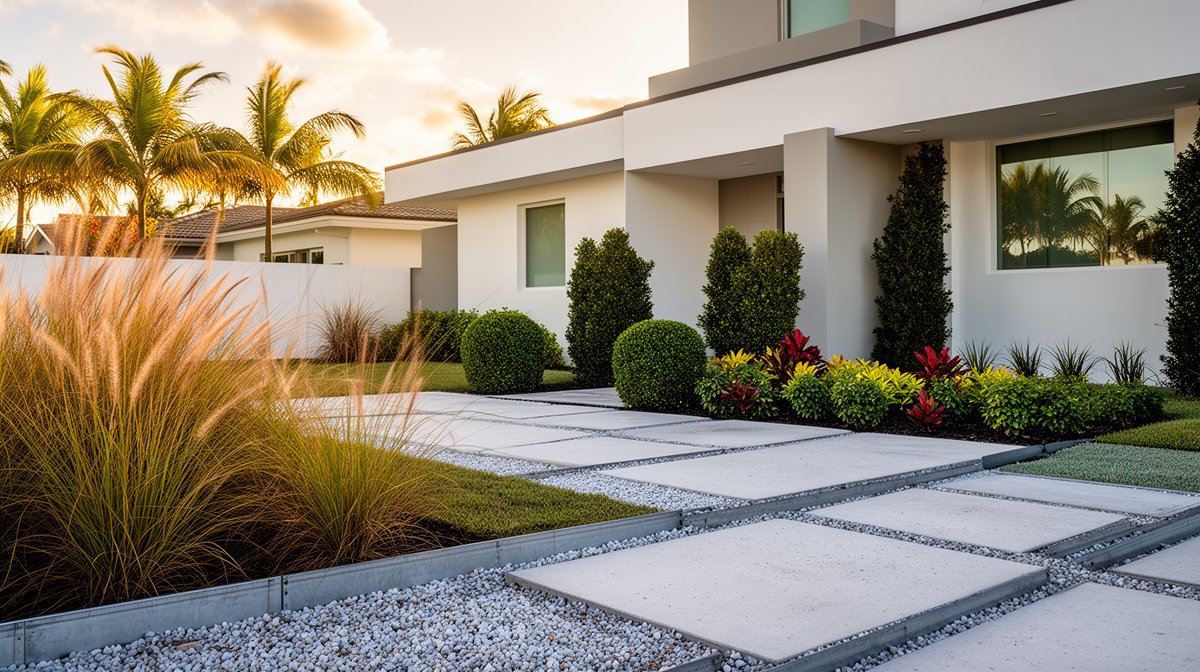
$10–20/sqftA 1960s block ranch in Carol City loses its front lawn for a field of gray river pebble on two raised mounds, edged in black steel. One silver Bismarck palm stands off-center in the west corner where it catches the late sun against the white wall, and three groups of Agave desmettiana and a band of coontie sit on the mounds. A poured concrete walk with sawcut joints runs straight from the carport to the door.

AI-generated image
The Hedge Room Back Yard
$14–28/sqftBehind a Norland or Scott Lake ranch, one 8 ft wall of Clusia hides the chain-link on three sides and turns the yard into an outdoor room. A large-format concrete paver pad holds a dining table under a tilted shade sail, a rectangle of Palmetto St. Augustine stays as one clean lawn panel, and a row of Muhly grass along the far edge goes pink in autumn. The pad faces east so the house shades it from mid-afternoon.

AI-generated image
The Lakefront Pool Terrace
$28–55/sqftA Lake Lucerne or Rolling Oaks pool deck in pale shellstone runs flush to a long raised planter of Furcraea and Agave attenuata, with a pair of foxtail palms framing the view to the water. Black pebble fills a strip between the deck and the planter so splash-out drains fast. At night, narrow-beam uplights put the palm shadows on the stucco.

AI-generated image
The Native Modern Courtyard
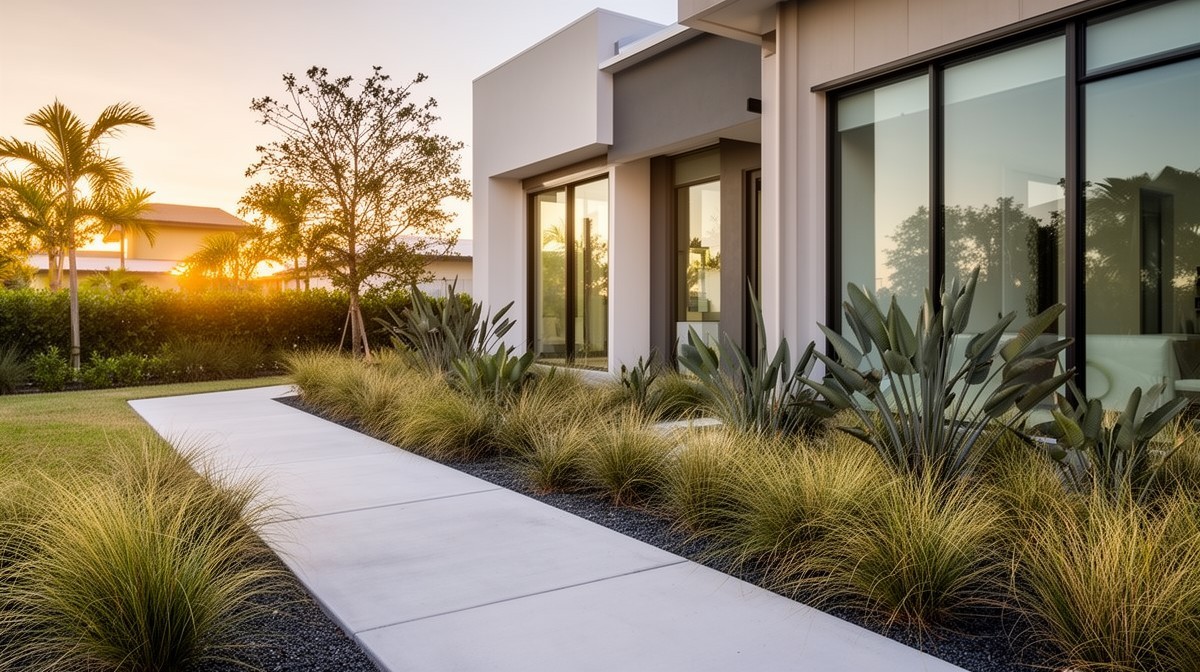
$12–24/sqftA small front courtyard inside a low stucco wall on a Vista Verde house is planted in grids: square concrete stepping pads set in crushed shell, with blocks of Fakahatchee grass and coontie between them and one silver saw palmetto as the accent. It uses only Florida natives that like the alkaline sand, so after the 90-day establishment window it runs on rain alone. Full sun from the south keeps the silver foliage bright.
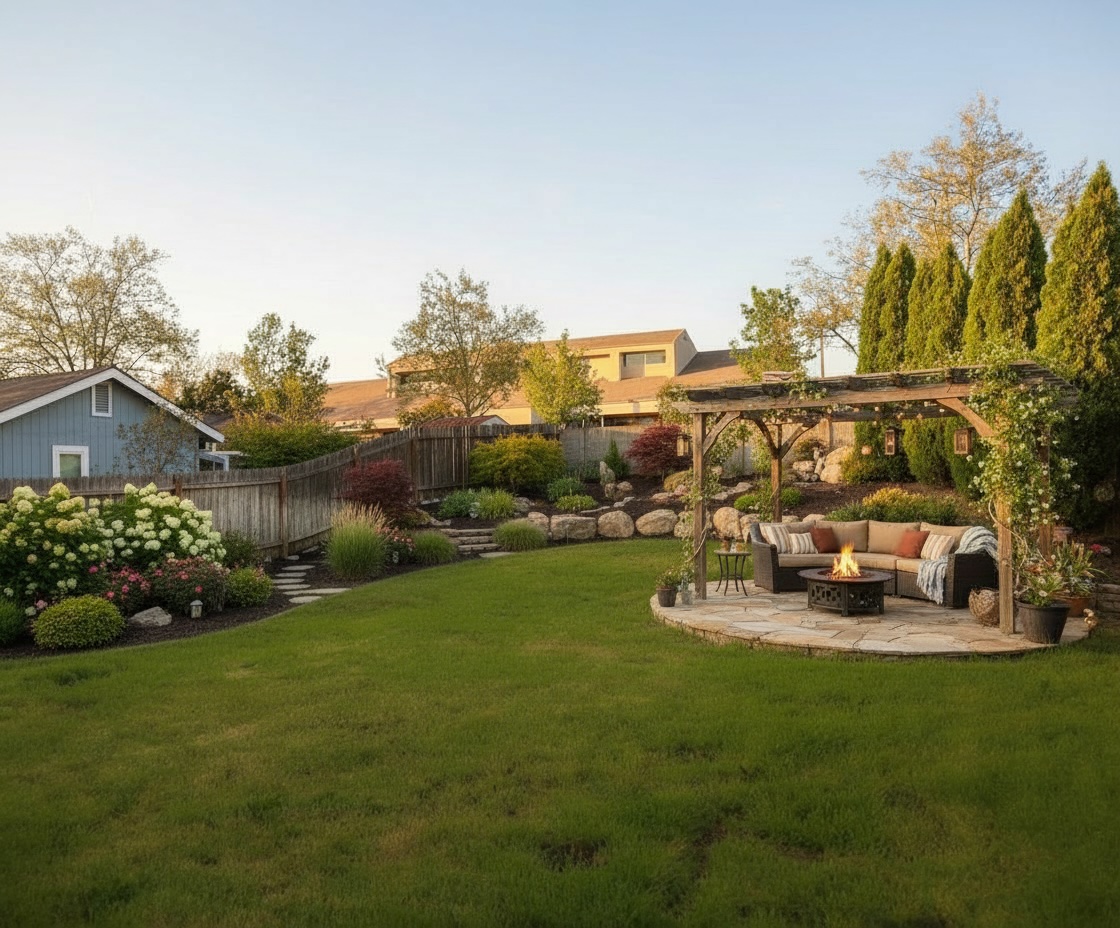
See how a modern/minimalist garden looks on YOUR property
Upload a photo of your Miami Gardens yard and visualize your dream garden in seconds.
Try ProScapeAI Free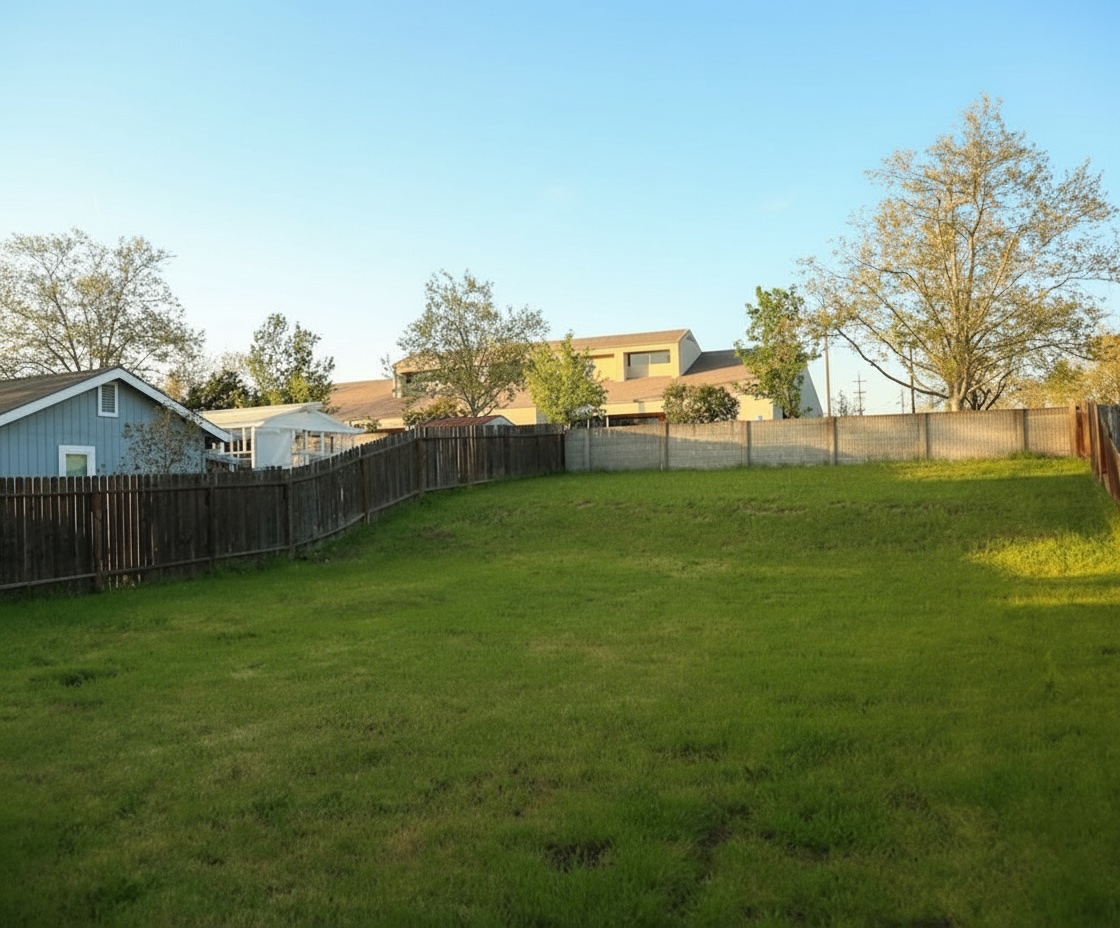
AI-generated image
Featured Trees & Shrubs for Modern/Minimalist Gardens
Browse all 150 plants for Miami Gardens
Bismarck Palm
Bismarckia nobilis
reaches 30 feet tall, blooms in summer. Pollinator-friendly.

Clustering Fishtail Palm
Caryota mitis
medium-sized at 15 feet, yellow blooms in summer. Pollinator-friendly.

Pygmy Date Palm
Phoenix roebelenii
grows to 6 feet, yellow blooms in spring. Pollinator-friendly.

Royal Palm
Roystonea regia
large shade tree reaching 50+ feet, white blooms in spring. Pollinator-friendly.
Featured Grasses & Groundcovers for Modern/Minimalist Gardens
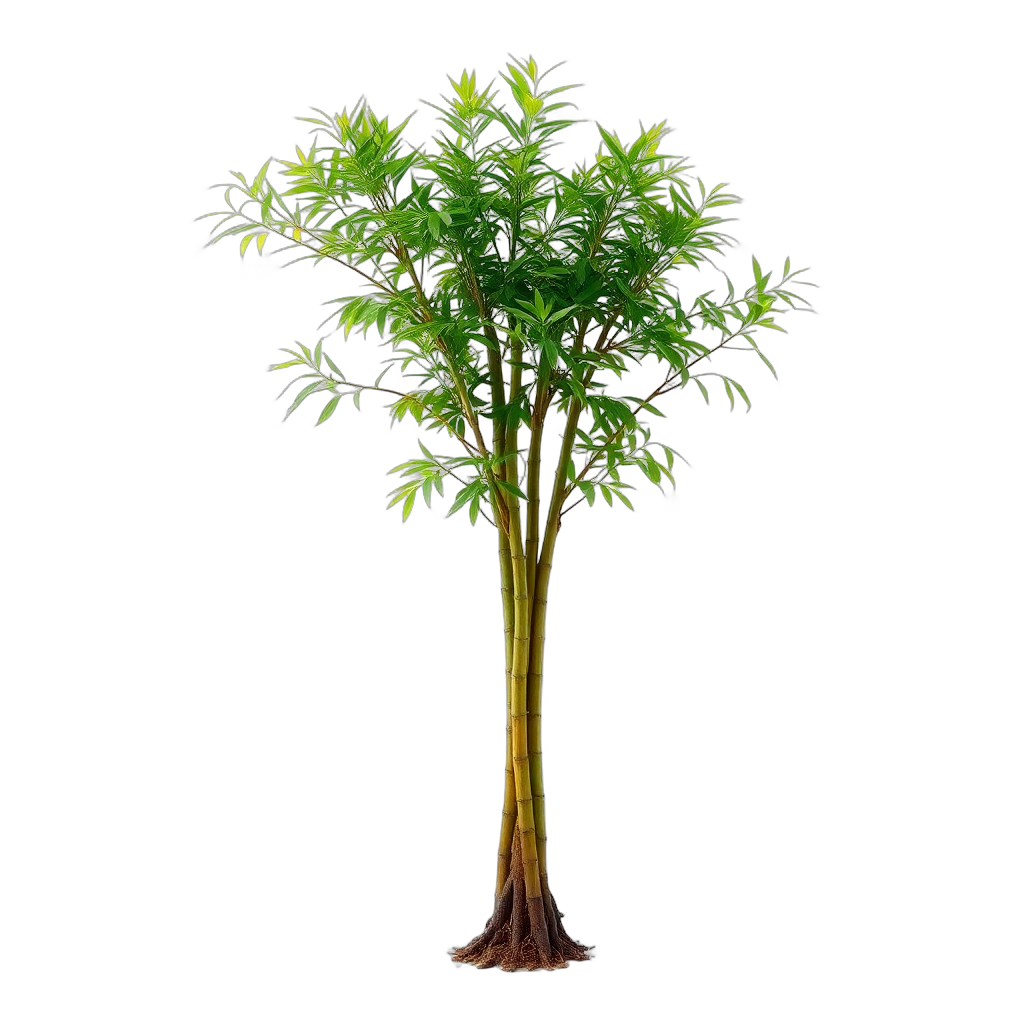
Anceps Bamboo
Yushania anceps
medium-sized at 12 feet, blooms in none. Evergreen year-round.
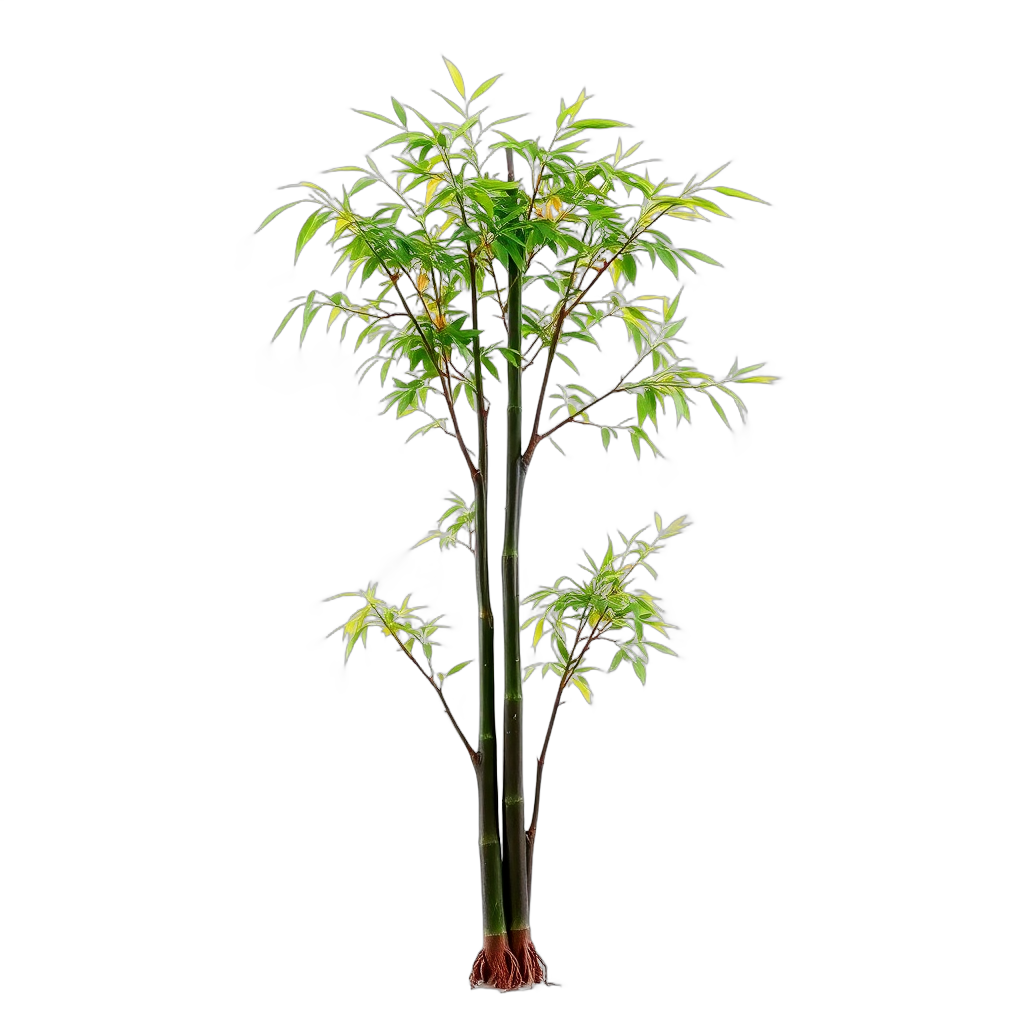
Black Bamboo
Phyllostachys nigra
reaches 25 feet tall, blooms in none. Evergreen year-round.
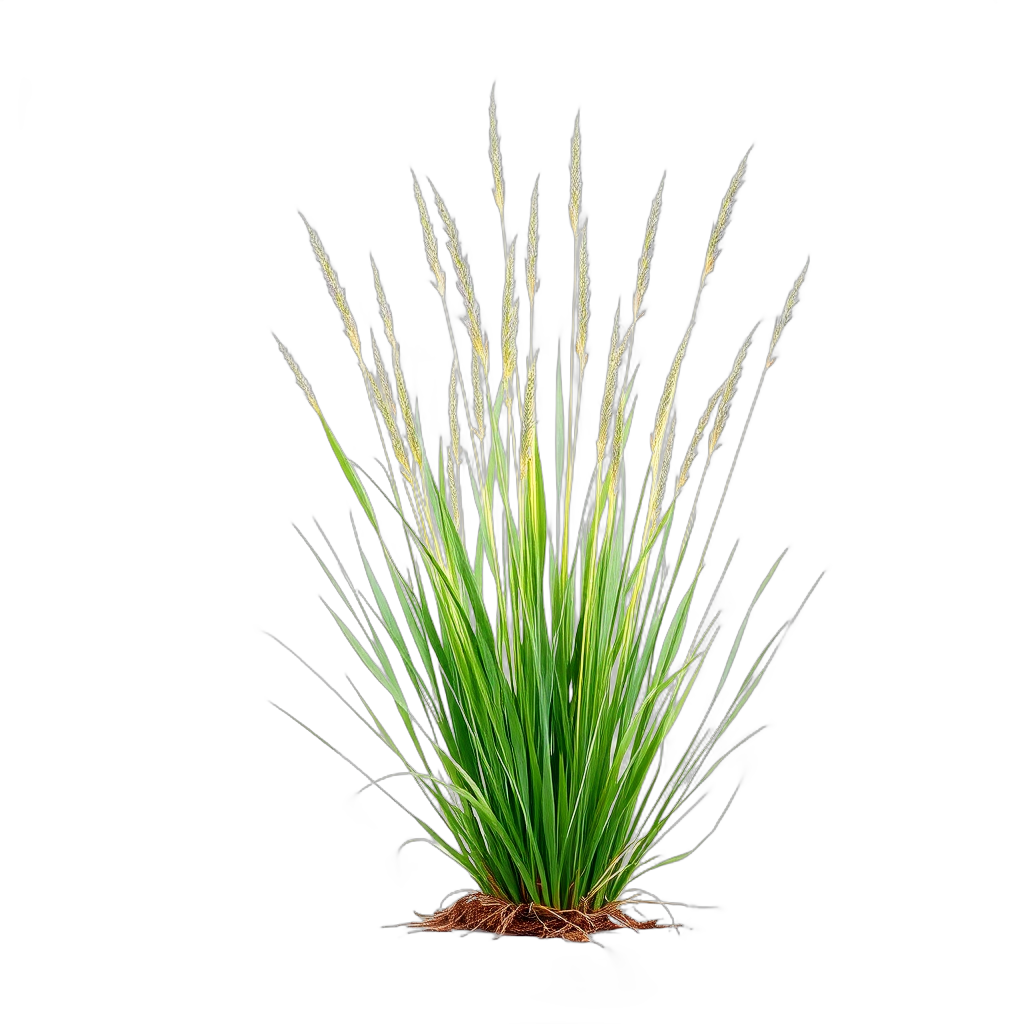
Blue Grama Grass
Bouteloua gracilis
low-growing ground cover, purple blooms in summer. Yellow fall color.
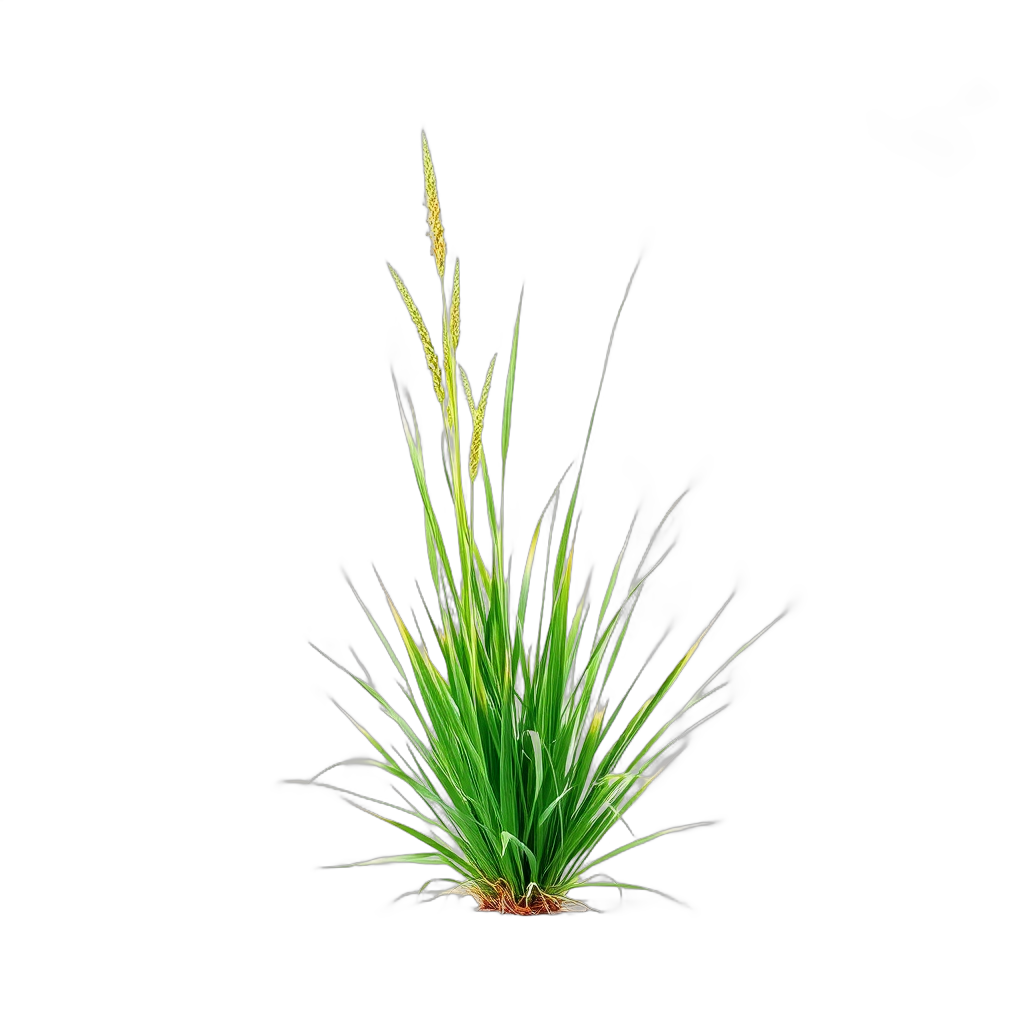
Bull Grass
Muhlenbergia emersleyi
grows to 4 feet, purple blooms in fall. Yellow fall color.
Featured Flowers & Perennials for Modern/Minimalist Gardens

Canadian Waterweed
Elodea canadensis
grows to 3 feet, white blooms in spring. Evergreen year-round.

Common Cattail
Typha latifolia
grows to 5 feet, blooms in summer. Pollinator-friendly.

Common Duckweed
Lemna minor
low-growing ground cover, white blooms in summer. Evergreen year-round.

European Frogbit
Hydrocharis morsus-ranae
low-growing ground cover, white blooms in summer. Pollinator-friendly.
Zone and sun checks come from our database — confirm with your local nursery before you buy.
Bloom Calendar for Miami Gardens
spring
Canadian Waterweed, Sweet Flag, African Daisysummer
Canadian Waterweed, Common Cattail, Common Duckweedfall
Canadian Waterweed, Pickerelweed, African Daisywinter
Limited bloomsDesign Tips for Miami Gardens (Zone 10b)
- Raise every gravel bed 6–10 inches: with roughly 60 inches of rain a year, a Miami Gardens agave lives or dies on whether its crown sits above the pebble
- Lay filter fabric under all pebble and shell so the fine sand underneath does not wash up and turn a clean bed muddy after the first wet season
- Compact a 4–6 inch limerock base under pavers and concrete and slope it a quarter inch per foot away from the house; there is no frost heave here, but standing water wrecks hardscape
- Lean on natives that like the pH 7.5–8.3 sand: Tripsacum floridanum, Zamia integrifolia and silver buttonwood stay sharp without the chelated iron that exotics need
- Use one hedge species at one height for screening (Clusia guttifera at 8 ft or Podocarpus 'Pringles Dwarf' at 4 ft) and skip Ficus benjamina, whose roots lift pavers and whose hedges whitefly strips
- Specify brass or 316 stainless lighting and powder-coated steel edging: the humidity pits cheap aluminum and bare steel in a few seasons
- Keep the plant list to five or six species and repeat them; on a 60 ft ranch frontage that is what makes the yard read as modern rather than busy
Where to Source Plants in Miami Gardens
Skip the big-box stores. These independent Miami Gardens nurseries specialize in the plants that make modern/minimalist gardens thrive in Zone 10b.
Flora of Miami
Allapattah, Miami (NW 21st Street)
Native plant nursery selling locally sourced Florida natives from 1-gallon pots to large trees, with workshops and landscaping help; open Thursday to Sunday, so call ahead for stock
Pop's Nursery
Hollywood (North University Drive)
Family-run tropical plant nursery a short drive north up University Drive, carrying tropical container plants, decorative pebble and rock, and landscape design help
Midtown Garden Center
Midtown / Edgewater, Miami
City garden centre with hand-picked indoor and outdoor plants, pottery and arrangements, plus install and delivery
Living Color Garden Center
Fort Lauderdale (Griffin Road)
Five-acre independent centre with plants, pottery and fountains; about 80% of its stock is grown at its sister nursery, Black Olive East, so anthuriums, orchids and bougainvillea are a strength
Florida Nursery Mart
Cooper City (Griffin Road)
Open seven days with more than 400 kinds of plants: palms, shade and flowering trees, hedging, Florida natives and fruit trees, plus 'Palmetto' St. Augustine sod, mulch, stone and soil
Modern/Minimalist Landscaping Costs in Miami Gardens
| Project Scope | Estimated Cost |
|---|---|
| Front lawn to raised pebble field with palm and agaves (500–700 sqft) | $6,000 – $14,000 |
| Paver dining pad on limerock base (300–400 sqft) | $5,000 – $11,000 |
| Clusia hedge room, 8 ft screen on three sides (150 linear ft) | $4,500 – $10,000 |
| Engineered shade sail or pergola, permitted for the hurricane zone | $5,000 – $15,000 |
| Shellstone pool terrace with raised planter | $35,000 – $90,000 |
| Low-voltage lighting, 12–18 fixtures | $2,800 – $6,500 |
| AI visualization (ProScapeAI) | Free to start |
Estimates based on Miami Gardens, FL-area contractor rates as of 2026. Actual costs vary by site conditions, materials, and contractor.
Miami Gardens Climate & Growing Zone
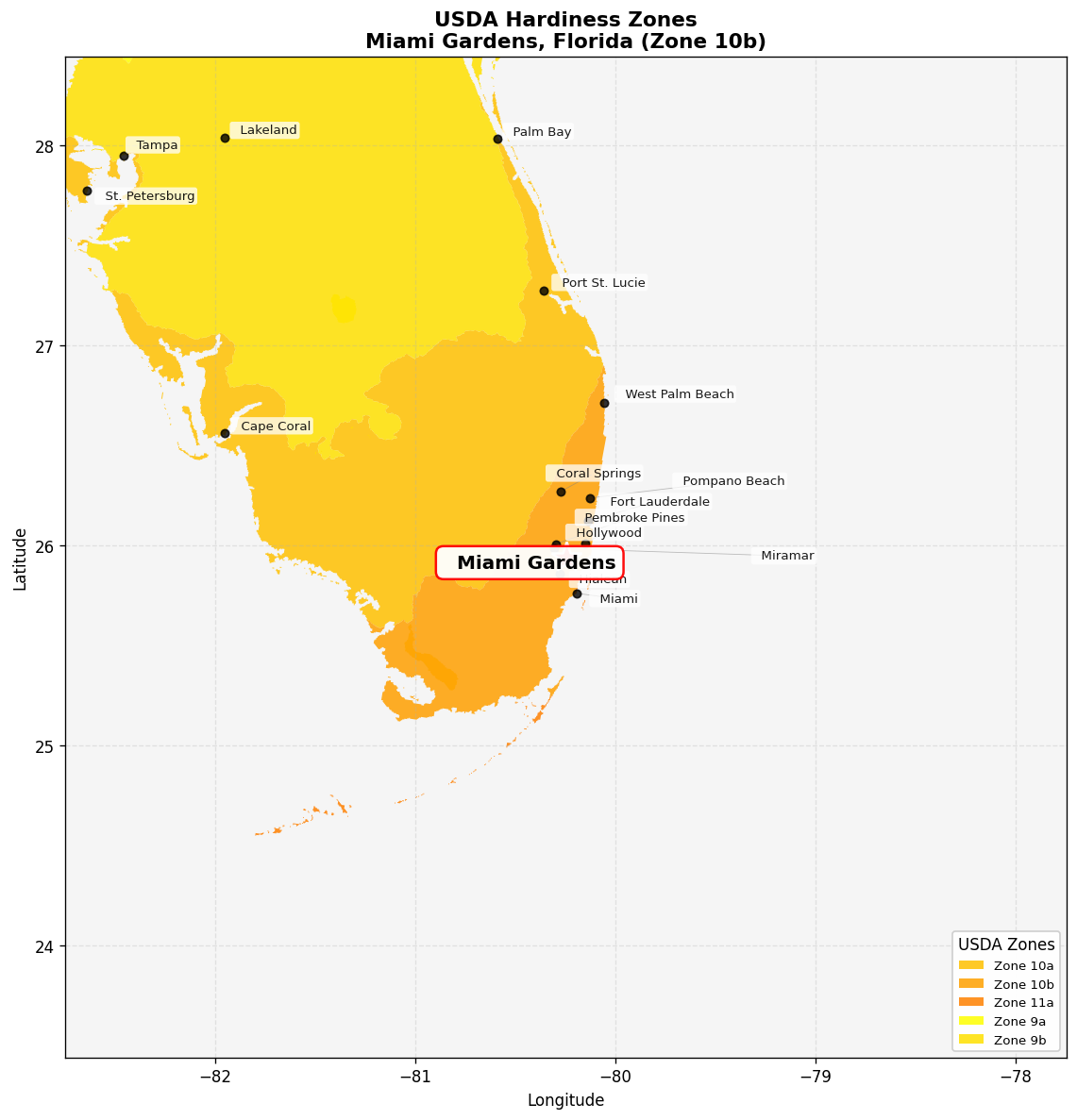
USDA Zone 10b
Hardiness zone for Miami Gardens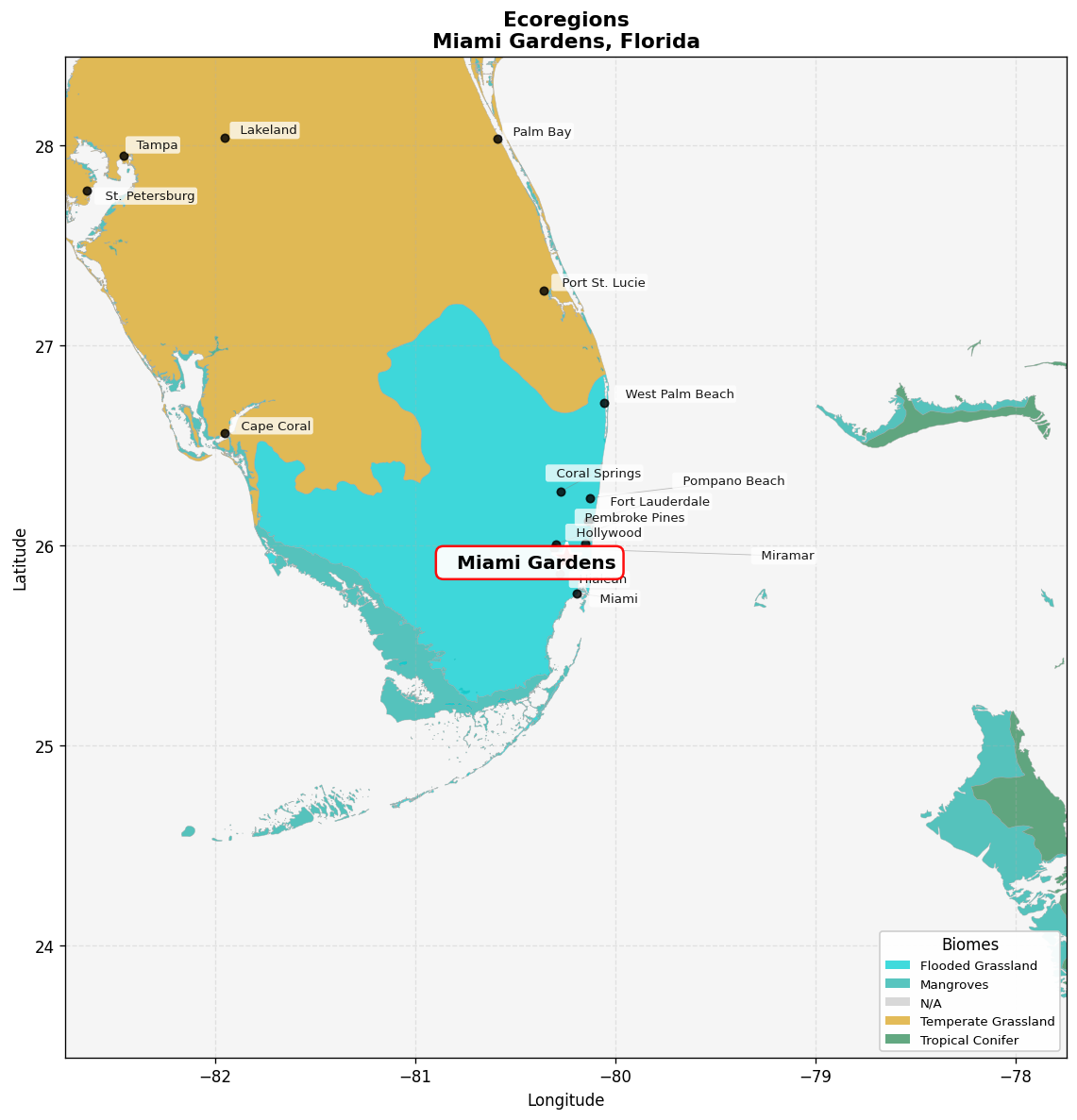
Everglades flooded grasslands
Native ecoregionFrequently Asked Questions
How much does a modern landscape cost in Miami Gardens, FL?
Miami-Dade landscape crews typically charge about $45–75 per hour. Converting a 500–700 sqft front lawn to a raised pebble field with steel edging, a Bismarckia nobilis and agave groups runs about $6,000–14,000. A paver dining pad with a Clusia guttifera hedge room and an engineered shade sail lands around $12,000–30,000. A shellstone pool terrace with raised planters on a lake lot commonly runs $35,000–90,000. Doing the pebble and planting yourself, with pebble bought by the yard, can bring a front yard under $7 per square foot.
Will agaves survive Miami Gardens' rain?
Yes, if they never sit at grade. With 35–40°F lows, the risk is a wet crown through the May-to-October rain. Build mounds of coarse sand and limerock screenings 6–10 inches above the lawn, top them with pebble, and set each plant's neck above the mulch. Agave desmettiana, Agave angustifolia 'Marginata', Agave attenuata 'Ray of Light' (in part shade) and Furcraea foetida 'Mediopicta' are the proven ones in South Florida. Avoid Agave americana, which rots and attracts agave snout weevil here.
What can replace the lawn in a modern Miami Gardens yard?
A pebble or crushed-shell field on raised mounds is the usual answer, and it removes mowing and most watering. If you want some green, keep one hard-edged panel of 'Palmetto' or 'CitraBlue' St. Augustine on its own zone. For a soft groundcover with no mowing, mass Tripsacum floridanum at 30 inches apart or Muhlenbergia capillaris at 36 inches; both are Florida natives that hold their shape year-round.
When should I build and plant a modern landscape here?
Hardscape can be built any time because there is no frost, but the dry season from November to April is far easier: wet-season storms soak the limerock base, and a soaked base will not compact properly. Plant agaves and Furcraea in the dry months too, so the crown seals before June rain. Palms such as Bismarckia nobilis prefer warm soil and go in best from May to July.
What are the watering rules in Miami Gardens?
Miami-Dade's permanent rule allows lawn irrigation two days a week: odd-numbered addresses on Wednesday and Saturday, even-numbered addresses on Thursday and Sunday, and only before 10 a.m. or after 4 p.m. Drip and micro-jet irrigation is not restricted, and newly installed landscaping may be watered every day except Friday, in the same hours, for its first 90 days (keep the plant receipt). A modern design with gravel beds on drip and one small lawn panel fits the rule with room to spare.
Do I need permits for a pergola, shade sail or tree removal?
Removing a tree needs a City of Miami Gardens tree removal permit: the application wants a property survey, a site plan showing the trunk and canopy size of the trees involved and the quantity and variety of each proposed plant, and a Homeowners Association Affidavit of Awareness. A Notice of Commencement has to be recorded for permitted work valued over $5,000. Pergolas, pool work and larger structures also fall under the Florida Building Code's High-Velocity Hurricane Zone, which covers all of Miami-Dade, so they need permitted, engineered designs. Check with the city's Building and Code department before you start.
Which palms look modern and are safe in a storm?
Bismarckia nobilis is the strongest single statement palm, and one is usually enough. Wodyetia bifurcata, Adonidia merrillii and Coccothrinax argentata have clean, slim trunks for tight beds and good storm records. Skip queen palms, which are brittle and yellow on alkaline soil, and be aware that lethal bronzing disease is established in South Florida and hits Sabal palmetto and Phoenix palms hardest.