4 Desert Xeriscape Ideas for Lancaster, CA | Zone 8b Design
Native plants from the Mojave desert (Zone 8b) — Cold semi-arid climate
Why Desert/Xeriscape Gardens in Lancaster?
Lancaster sits at roughly 2,350 feet on the western floor of the Mojave, and that elevation drives every good xeriscape decision made here. The city's housing stock reads in layers: the 1950s and 1960s ranch tracts around downtown and The BLVD, the tile-roofed stucco tracts that fill in west of 30th Street West and out through Quartz Hill, the newer stucco-and-tile builds along Avenue K and the Amargosa Creek corridor, and the half-acre-plus horse lots of Antelope Acres and Roosevelt. Nearly all of them share the same three problems: a wide, flat, deeply set-back front yard, no mature canopy, and a lawn that was never going to survive the Antelope Valley on a Los Angeles County water budget. Xeriscape is not a compromise on those lots — a field of decomposed granite with placed boulders, a few sculptural rosettes and a dry creek reads as a finished, intentional design in a way that a scorched fescue rectangle never will.
The climate numbers are unusually demanding. Lancaster averages about 6.5 inches of rain a year against roughly 65 inches of reference evapotranspiration — the yard wants ten times more water than the sky delivers. July highs average near 96°F with 100-plus days above 90°F, and yet winter is genuinely cold: this is USDA Zone 8b, with typical annual lows of 15–20°F and a 30°F day-to-night swing for much of the year. That combination rules out most of the low-desert palette people copy from Palm Springs and Phoenix. Bougainvillea, saguaro and the tender blue Agave hybrids marketed as desert plants will burn to mush in a Lancaster January. What thrives is the cold-hardy high-desert group: Agave parryi var. truncata, Agave ovatifolia 'Frosty Blue', Yucca rostrata 'Sapphire Skies', Dasylirion wheeleri, Hesperaloe parviflora 'Brakelights', Opuntia santa-rita and the local natives Ericameria nauseosa and Atriplex canescens, all of which shrug off both 105°F afternoons and hard frost.
Soil here is a sandy loam sitting on caliche — a cemented lime hardpan that can start six inches down and run a foot thick, with a pH usually between 7.5 and 8.5. Caliche does not drain; a hole dug into it and backfilled with good soil becomes a bathtub that drowns an Agave in a single wet February. The fix is mechanical and cheap: punch through the pan with a bar or auger under every specimen so water has somewhere to go, then build the planting areas UP into 6–18 inch berms of native sand cut with crushed granite. Alkaline soil also means iron chlorosis on the wrong plants, which is another reason the desert palette wins over acid-loving imports. And then there is the wind. Spring gusts of 30–50 mph funnel through the valley from the Tehachapi and Soledad gaps for weeks at a time, which is why fine gravel blows away and 3/8 to 3/4 inch angular DG stays put, why every new tree needs two low stakes rather than one tall one, and why a Pinus eldarica or Chitalpa tashkentensis 'Pink Dawn' windbreak on the west side pays for itself in plant survival.
Water policy is the last local factor, and it is the one that turns xeriscape from a style into an investment. Most of Lancaster is served by Los Angeles County Waterworks District 40, Antelope Valley Region, on tiered rates that punish summer turf irrigation hard, and the basin has been under the Antelope Valley groundwater adjudication since 2015, so pumping is capped and the long-term direction of water cost here is only up. California's Model Water Efficient Landscape Ordinance applies to new permitted residential landscapes over 500 square feet and rehabilitated landscapes over 2,500 square feet, statewide rules already prohibit irrigation runoff onto sidewalks and watering within 48 hours of measurable rain, and Lancaster protects Joshua trees (Yucca brevifolia) and other native desert vegetation under city ordinance on top of the state's Western Joshua Tree Conservation Act. Design around an existing Joshua tree rather than through it — check requirements with the city before any removal — and it becomes the single best feature on the property.
4 Desert/Xeriscape Design Ideas for Lancaster

The Boulder-and-Agave Zero-Turf Front
$7-14/sqftA tile-roofed stucco ranch fronted by a continuous field of tan decomposed granite that runs uninterrupted from the porch to the street, with no lawn and no bed edging to break it up. The composition is carried entirely by three things: tall multi-trunk tree yuccas whose fan-shaped heads catch the low sun, wide blue-grey agave rosettes spaced far enough apart that each reads as an individual specimen, and four large angular boulders in rust and cream half-buried at the grade so they look quarried in place rather than dropped. Small bunch grasses and low barrel forms fill the middle distance, and the parkway strip between sidewalk and curb gets the same treatment so the design does not stop at the property line.

The Dry Creek and Terracotta Entry
$9-16/sqftTwo tones of gravel are separated by a curved poured-concrete mow band that sweeps across the front yard, and a cobble-lined dry creek runs the length of the curve to catch what little rain the roof and drive shed in a January storm. A big mounding prickly pear anchors the left side of the house, variegated agaves and slender sotol clumps punctuate the gravel, and three fat terracotta urns of graduated height sit against the stucco beside the entry as the only ornament the design needs. A fine-leaved desert tree by the garage throws filtered shade across the driveway apron by late afternoon.

The Raked Gravel Fire Circle
$14-26/sqftThe back yard is organised as one big circle: concentric rings raked into a fine gravel groundplane, a round dry-stacked stone gas fire pit dead centre, and two facing outdoor sofas dressed in Southwest-patterned cushions. Low curved stucco seat walls in the same colour as the house hold the grade change and double as overflow seating, glass lanterns sit straight on the gravel, and a single run of string lights spans the whole yard from the roofline to the far wall. Big agaves, upright grasses and a scatter of boulders sit outside the circle so the mountain view over the back wall stays completely open.

The Boulder Waterfall Pool Oasis
$45-90/sqft (pool area inclusive)A freeform pool is set into a boulder outcrop, with a three-tier waterfall spilling off stacked granite into the deep end and warm uplights hidden behind the rocks so the whole outcrop glows after sundown. Oversized flagstone pads float through a gravel and cobble groundplane to link the pool to a concrete lounge deck, agaves and barrel forms cluster at the boulder bases, and slim flower spikes rise out of the gravel at eye level. The rear fence is deliberately low and open because the whole design is aimed at the valley and mountain view behind it.
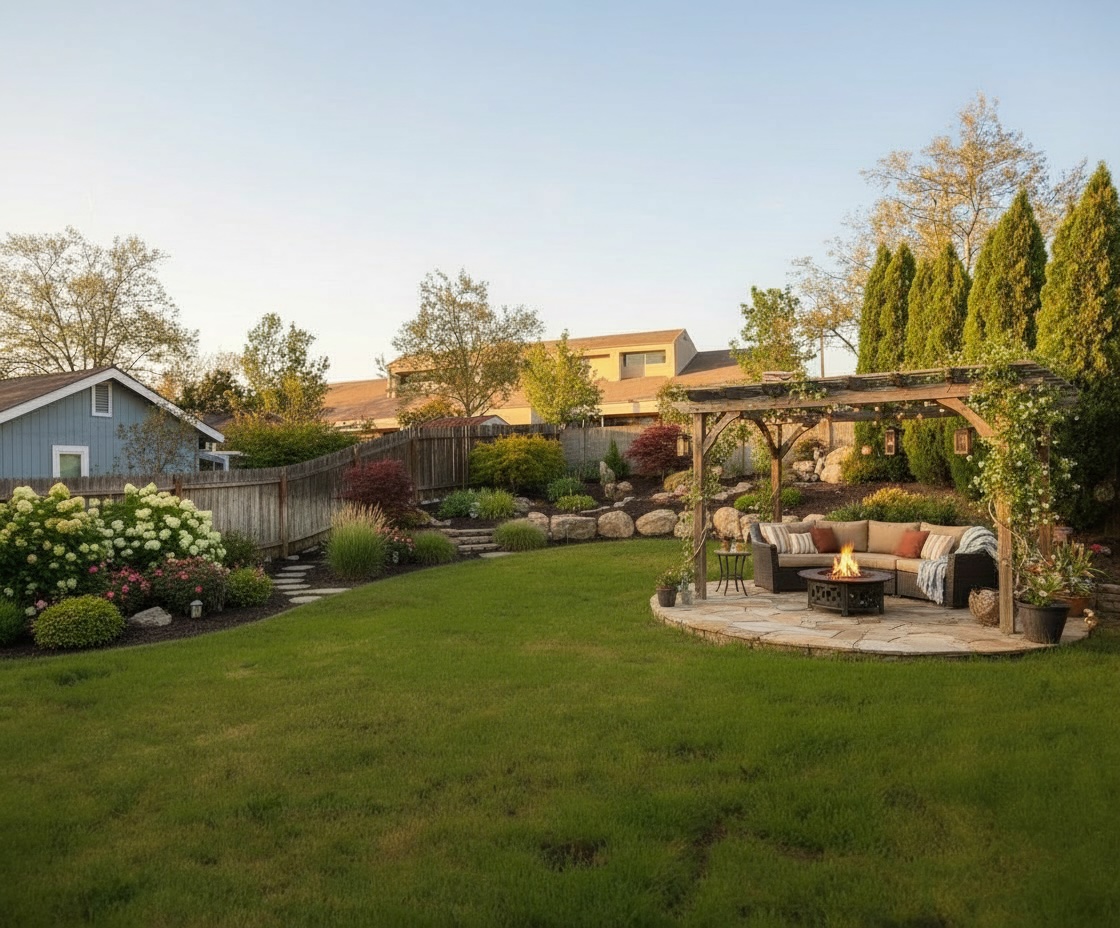
See how a desert/xeriscape garden looks on YOUR property
Upload a photo of your Lancaster yard and visualize your dream garden in seconds.
Try ProScapeAI Free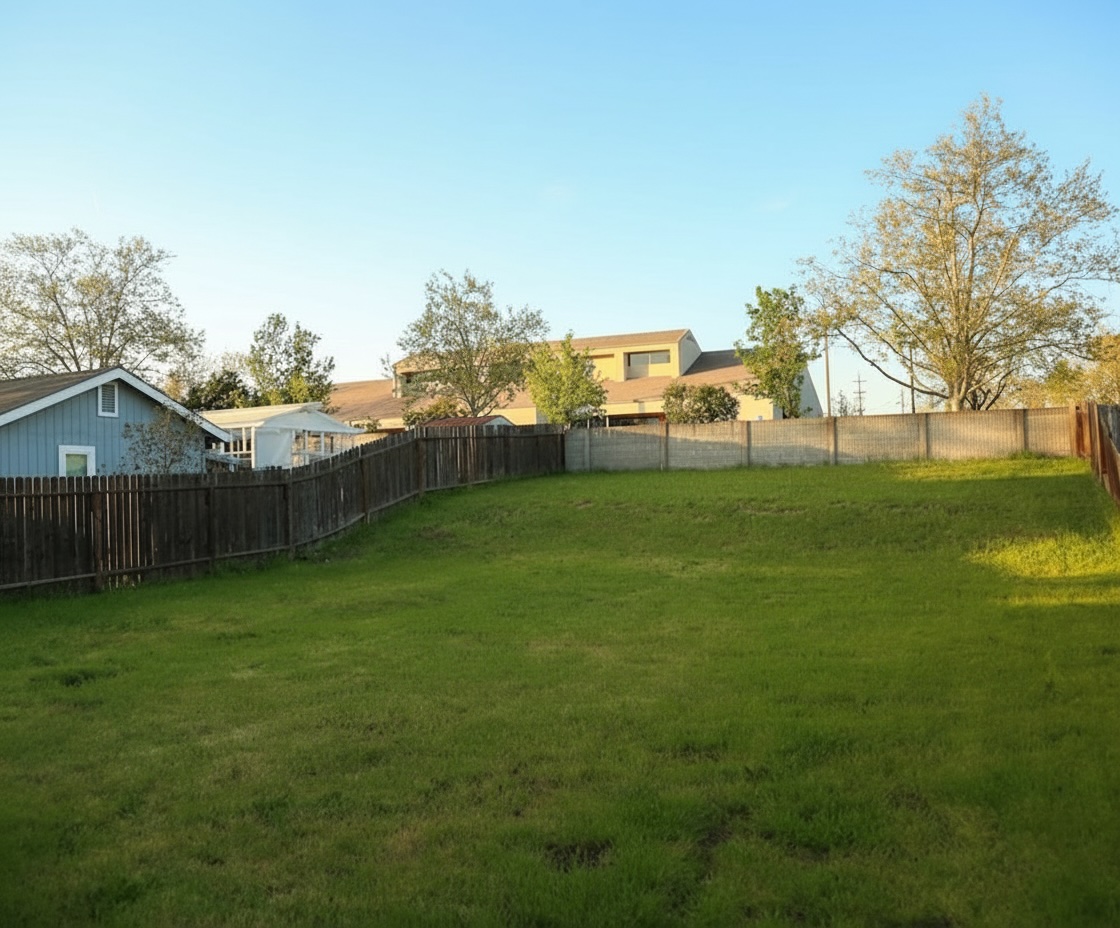
Featured Trees & Shrubs for Desert/Xeriscape Gardens
Browse all 169 plants for Lancaster
Anderson Wolfberry
Lycium andersonii
grows to 5 feet, purple blooms in spring. Attracts hummingbirds.
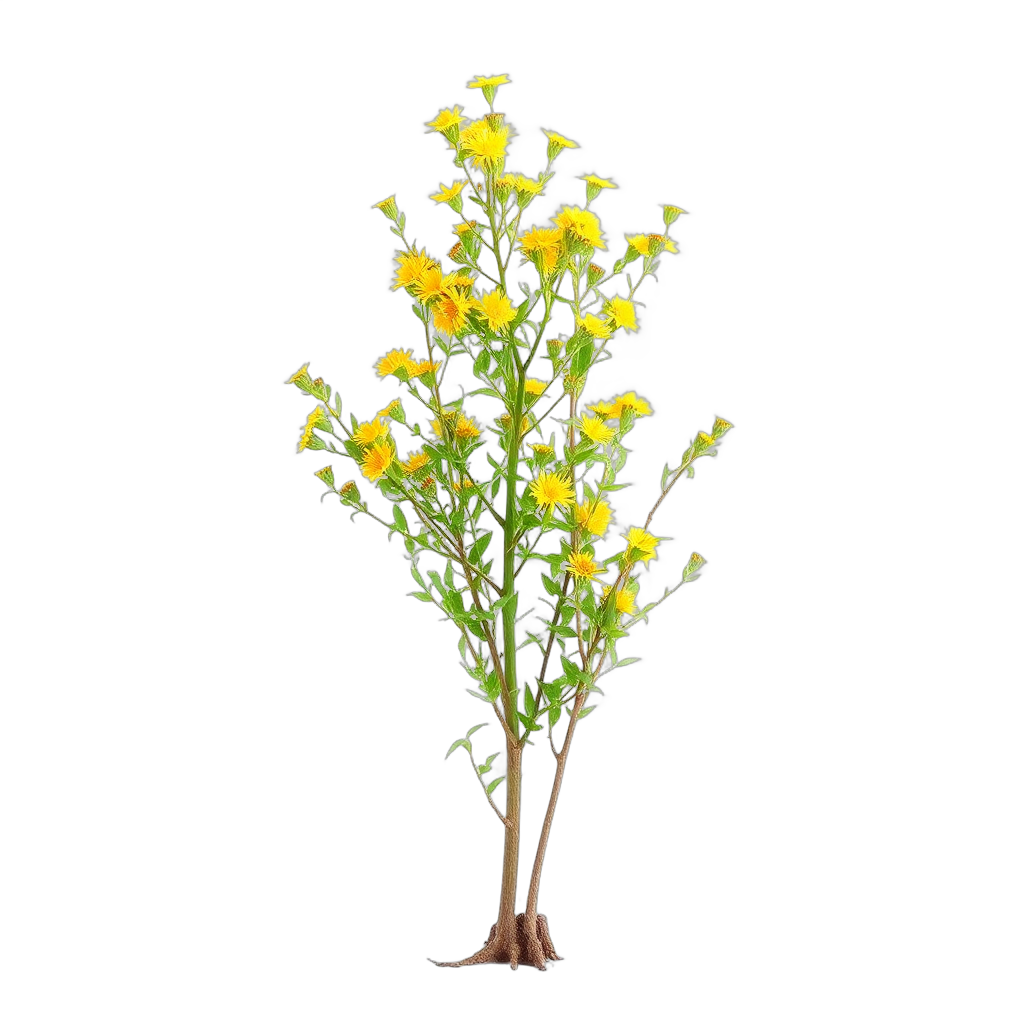
Brittlebush
Enca farinosa
grows to 3 feet, yellow blooms in spring. Attracts butterflies.
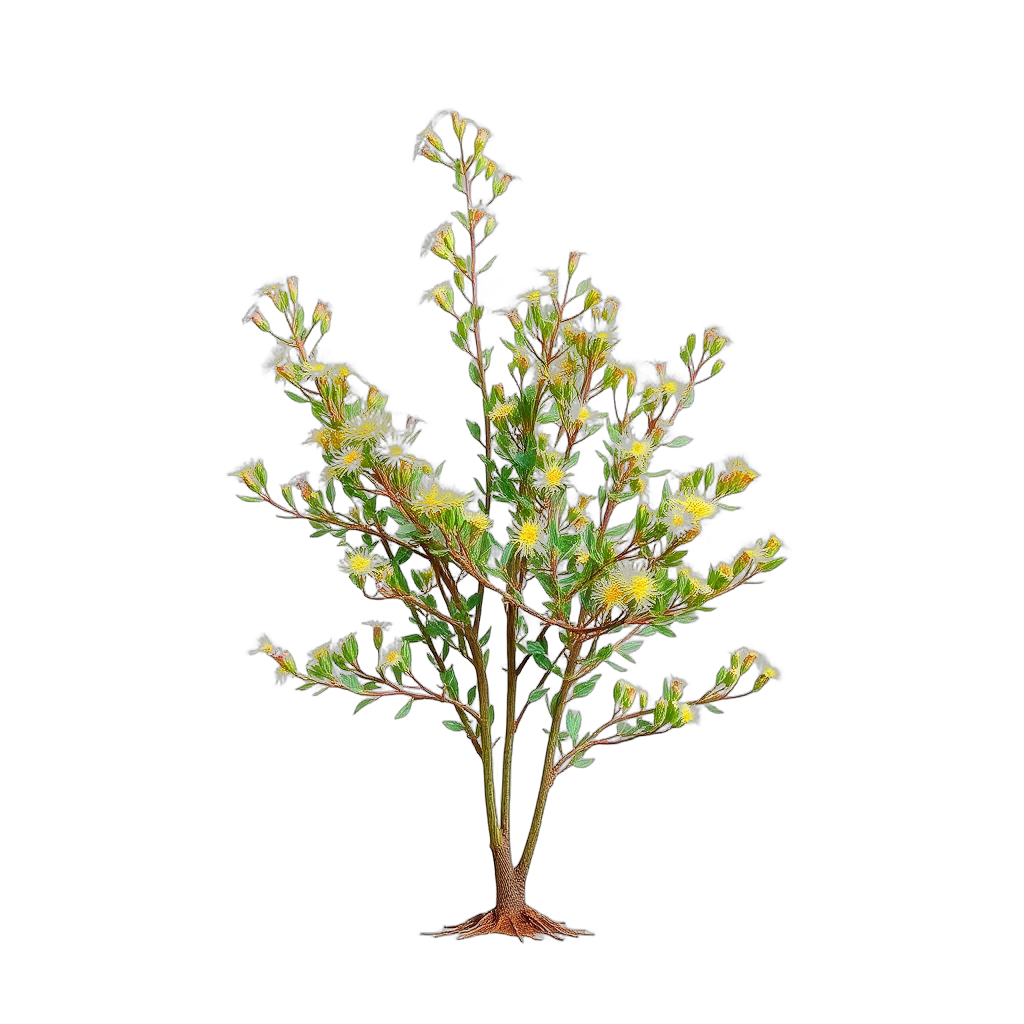
Catclaw Acacia
Acacia greggii
medium-sized at 15 feet, yellow blooms in spring. Pollinator-friendly.
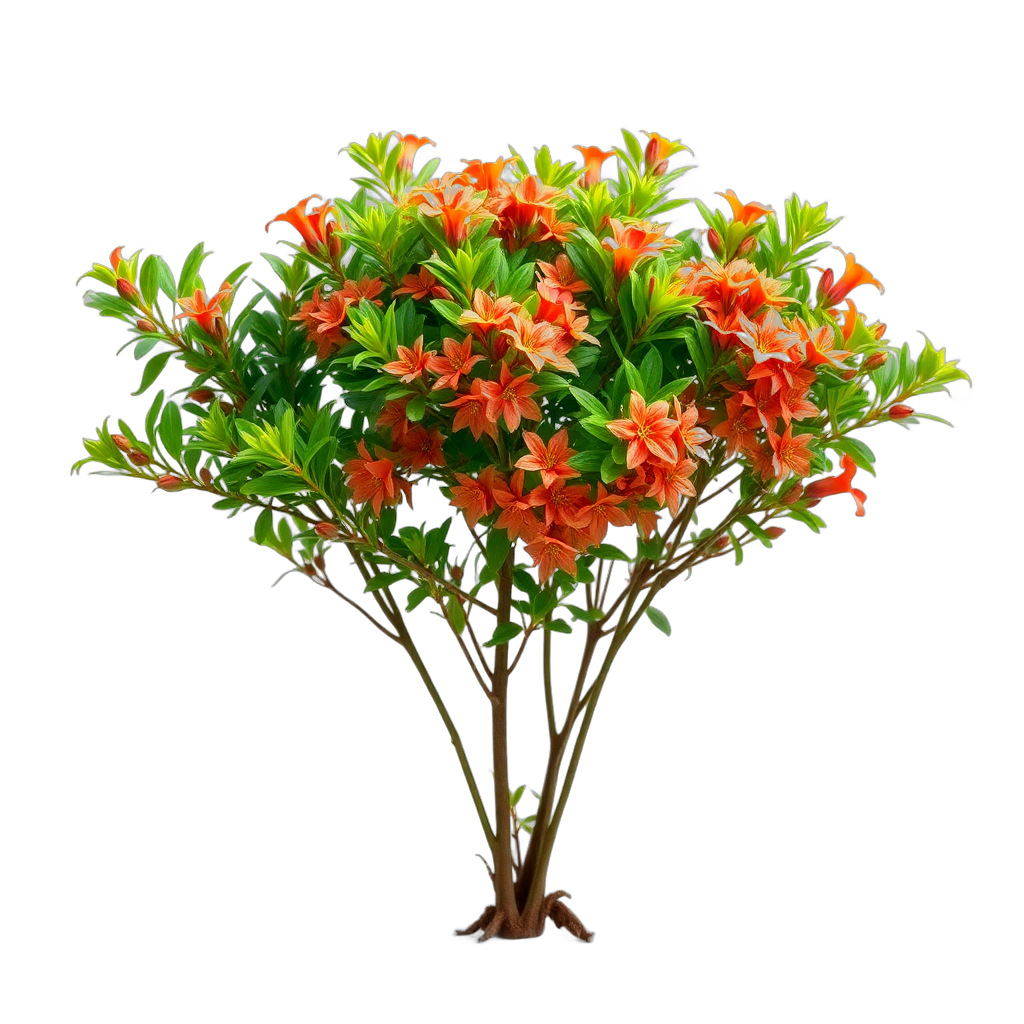
Chuparosa
Justicia californica
grows to 5 feet, red blooms in spring. Attracts hummingbirds.
Featured Grasses & Groundcovers for Desert/Xeriscape Gardens
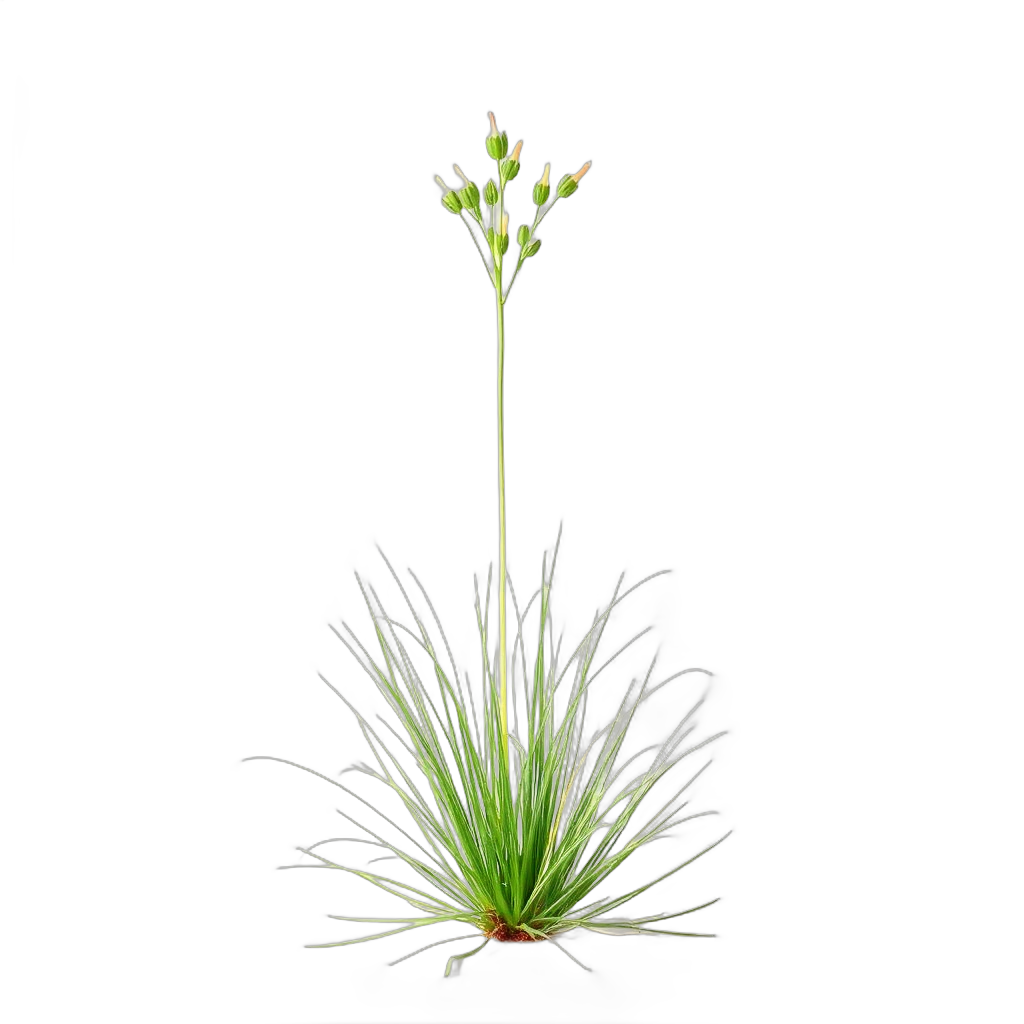
Alkali Sacaton
Sporobolus airoides
grows to 3 feet, blooms in summer. Yellow fall color.
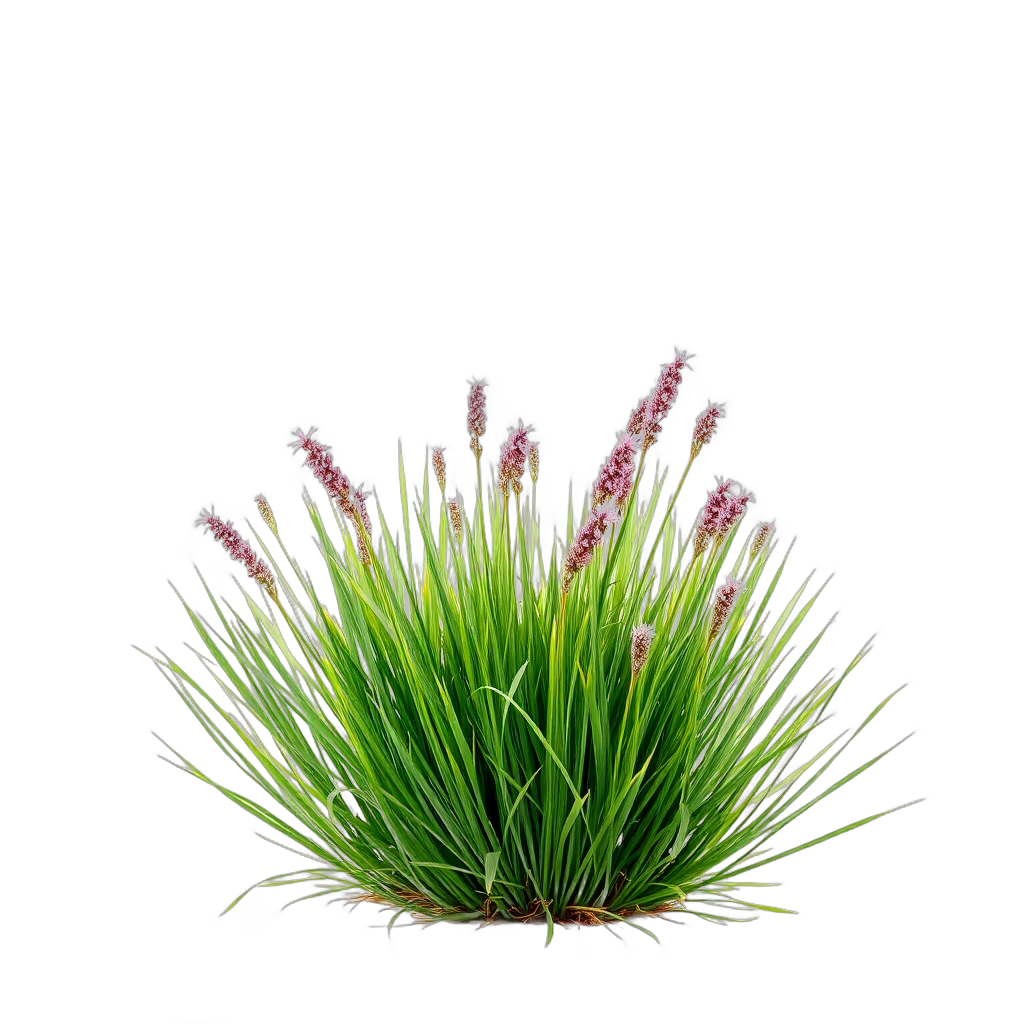
Purple Three-Awn
Aristida purpurea
low-growing ground cover, purple blooms in fall. Yellow fall color.
Featured Flowers & Perennials for Desert/Xeriscape Gardens
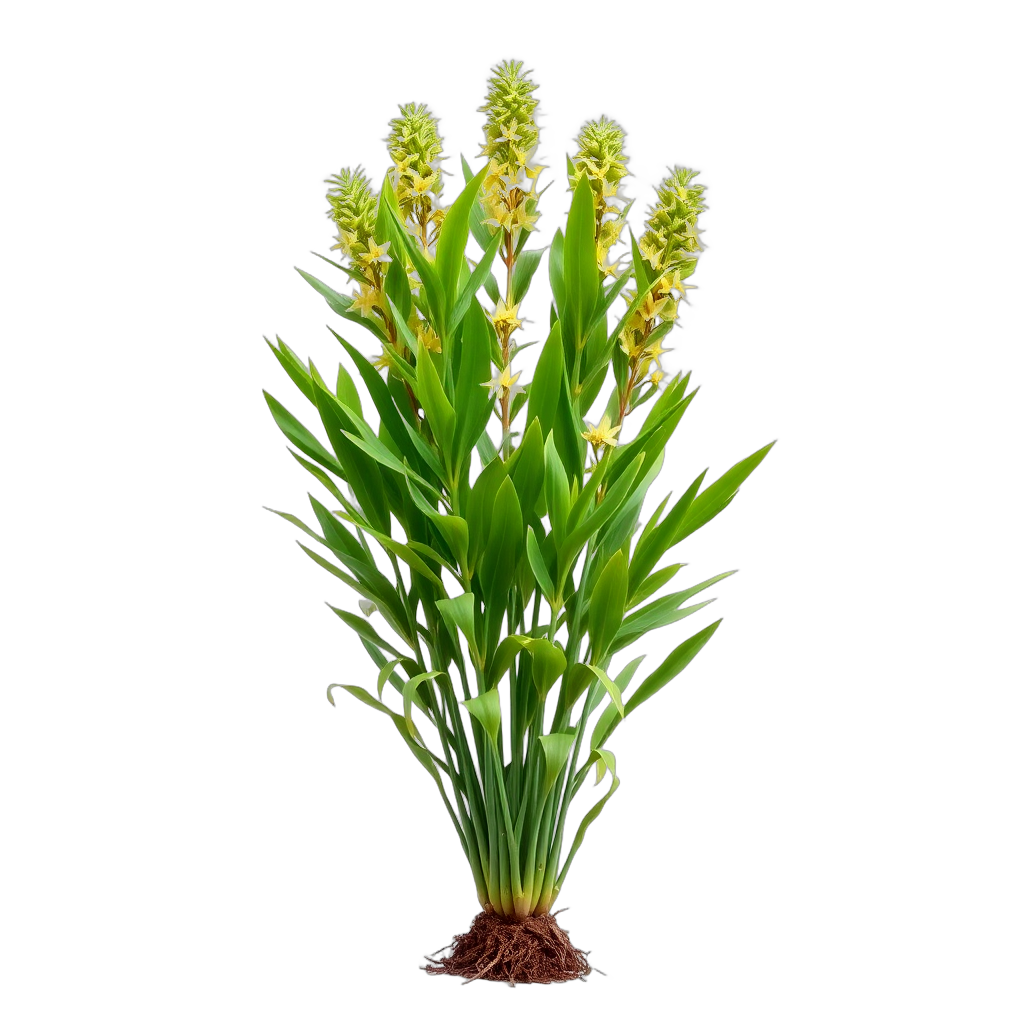
Banana Yucca
Yucca baccata
low-growing ground cover, white blooms in spring. Attracts hummingbirds.
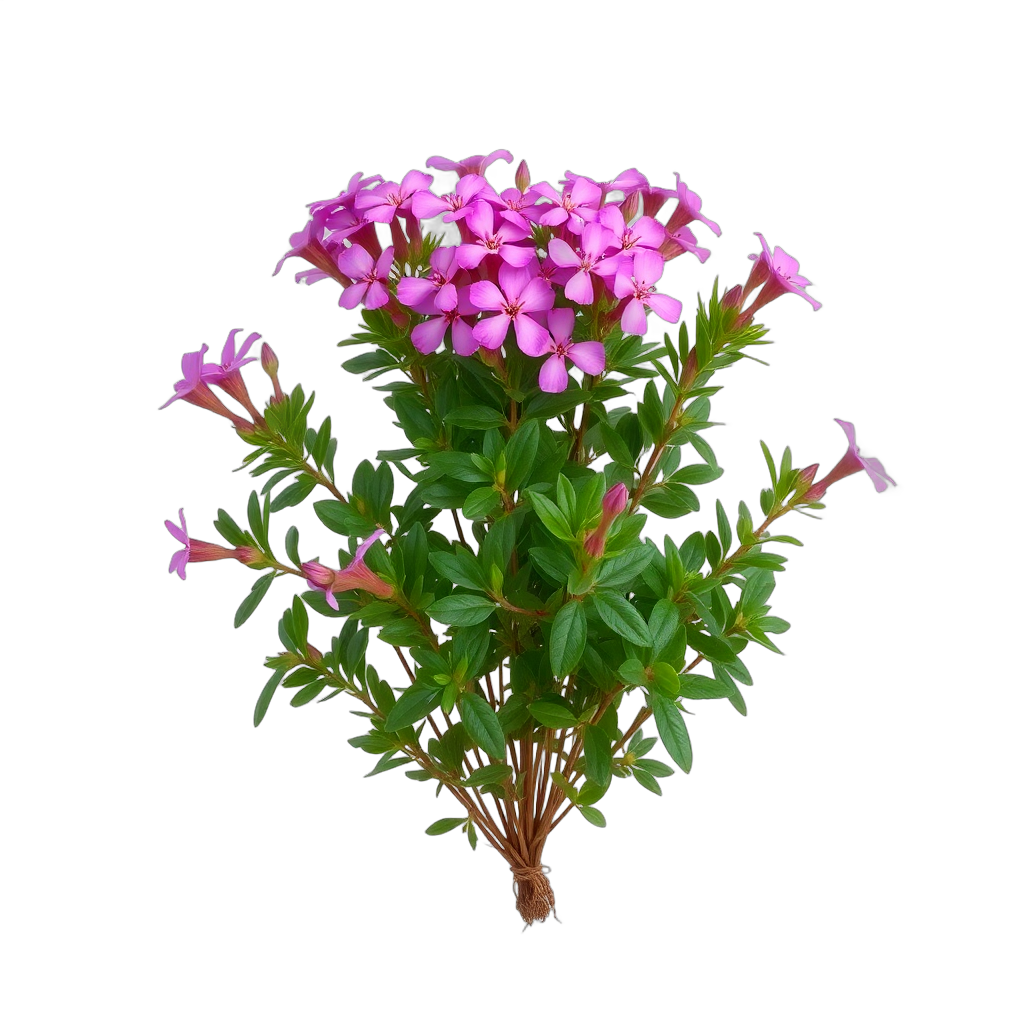
Desert Phlox
Phlox austromontana
low-growing ground cover, pink blooms in spring. Attracts hummingbirds.
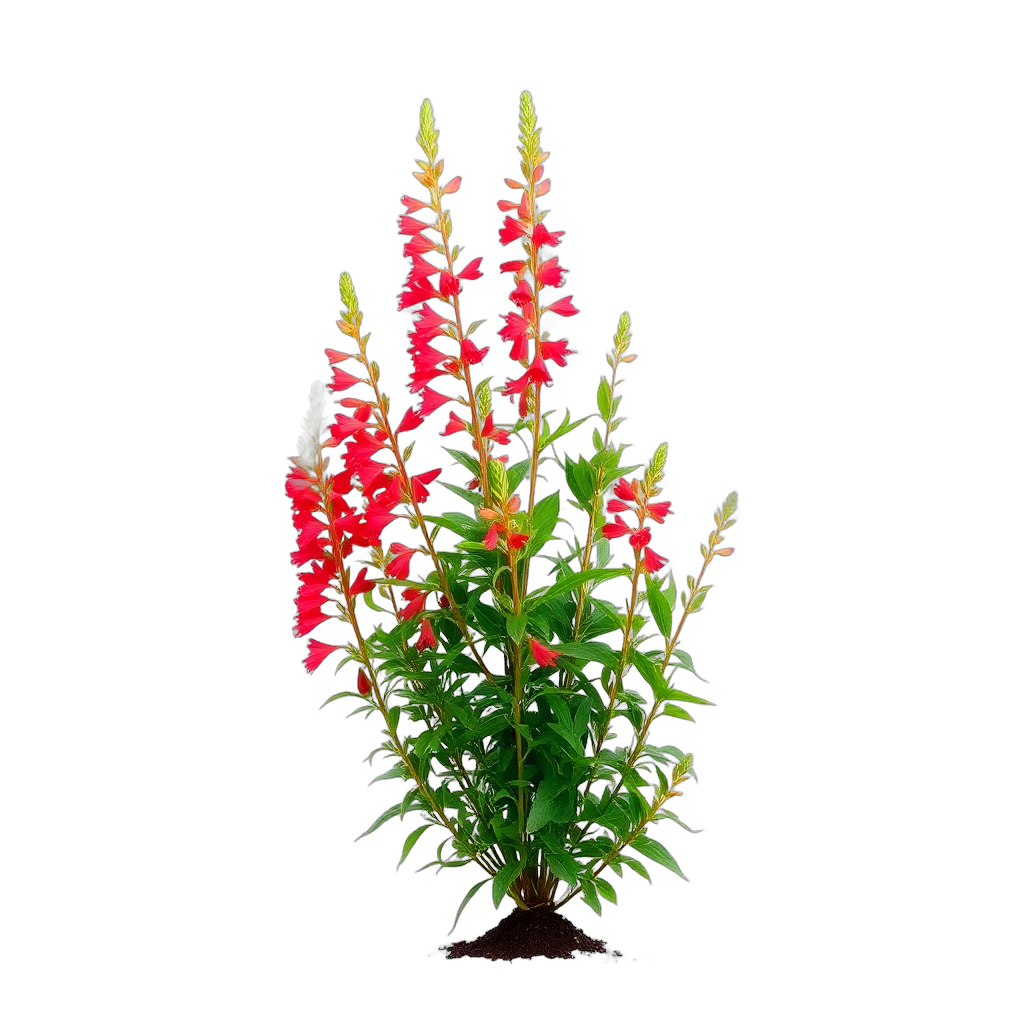
Firecracker Penstemon
Penstemon eatonii
low-growing ground cover, red blooms in spring. Attracts hummingbirds.

Palmer's Penstemon
Penstemon palmeri
grows to 4 feet, pink blooms in spring. Attracts hummingbirds.
Zone and sun checks come from our database — confirm with your local nursery before you buy.
Bloom Calendar for Lancaster
spring
Banana Yucca, Desert Phlox, Firecracker Penstemonsummer
Alkali Sacaton, Quailbushfall
Purple Three-Awnwinter
Limited bloomsDesign Tips for Lancaster (Zone 8b)
- Filter every plant on cold hardiness first, drought second - Lancaster's 15-20 degrees F winter lows kill more Palm Springs imports than the summer heat ever does; if the tag does not state hardiness below 20 degrees F, leave it at the nursery
- Punch through the caliche under every specimen hole and plant the crown 2-3 inches above grade; a backfilled hole in hardpan is a bathtub and it is how most Agave ovatifolia and Yucca rostrata die here
- Use angular 3/8 to 3/4 inch decomposed granite, never rounded pea gravel - 40 mph spring gusts off the Tehachapi gap will redistribute pea gravel across your driveway within a season
- Buy fewer, bigger boulders and bury a third of each one; three well-set 3 ft granite boulders read as landscape design, while a dozen small ones scattered on the surface read as a rock delivery
- Plant a west-side windbreak of Pinus eldarica or Chitalpa tashkentensis 'Pink Dawn' before you plant anything ornamental - everything downwind of it establishes faster and needs less water
- Keep the parkway strip between sidewalk and curb in the same gravel and the same plant palette as the yard; that 4 ft band is the piece of the design people actually walk past, and a dead grass strip undoes the whole front
- Design in a dry creek that actually catches roof and driveway runoff - Lancaster's 6.5 inches arrives in a handful of intense winter storms, and a cobble swale turns that flash into deep soil moisture instead of street runoff
- Put the low-voltage uplights on the boulders and the tall Yucca rostrata heads rather than on the house; the shadow play across a gravel plane is what makes a Mojave garden work after dark
Where to Source Plants in Lancaster
Skip the big-box stores. These independent Lancaster nurseries specialize in the plants that make desert/xeriscape gardens thrive in Zone 8b.
Quartz Hill Garden Center
Quartz Hill / west Lancaster
High-desert specialist open since 1992 - trees, shrubs, cacti and agaves alongside irrigation supply, fertiliser and non-GMO seed, all selected for Antelope Valley conditions
CDRCD Nursery (Canyons to the Desert Resource Conservation District)
West Lancaster / Avenue I
Conservation district nursery and arboretum selling Mojave natives, desert trees, shrubs, bunch grasses and wildflower seed; open Thursday to Saturday
Evergreen Nursery
West Palmdale (22nd Street West)
Locally owned since 2014, growing plants on site for the Antelope Valley climate - low-water shrubs, shade and fruit trees, plus delivery and planting
California Nursery Specialties (Cactus Ranch)
Reseda - the specimen run over the pass
Over 100,000 cacti and agaves, including large field-grown specimens and cold-hardy Agave and Yucca in sizes no Antelope Valley garden centre stocks; weekends only
Theodore Payne Foundation
Sun Valley - the native-plant run over the pass
Non-profit native nursery carrying 900-plus California native species and cultivars, including Mojave and high-desert material like Ericameria nauseosa and Sphaeralcea ambigua
Desert/Xeriscape Landscaping Costs in Lancaster
| Project Scope | Estimated Cost |
|---|---|
| Front yard xeriscape conversion (turf removal, DG, boulders, plants, drip) 900-1,200 sqft | $7,000 - $16,000 |
| Drip irrigation retrofit from spray heads + smart controller | $1,400 - $3,800 |
| Delivered and set landscape boulder (2-4 ft) | $250 - $900 each |
| Cobble dry creek with basin (30-60 linear ft) | $1,800 - $5,500 |
| Gravel patio with gas fire pit and seat walls | $12,000 - $32,000 |
| Pool, boulder waterfall and full rear-yard hardscape | $75,000 - $180,000 |
| AI visualization with ProScapeAI | Free to start |
Estimates based on Lancaster, CA-area contractor rates as of 2026. Actual costs vary by site conditions, materials, and contractor.
Lancaster Climate & Growing Zone
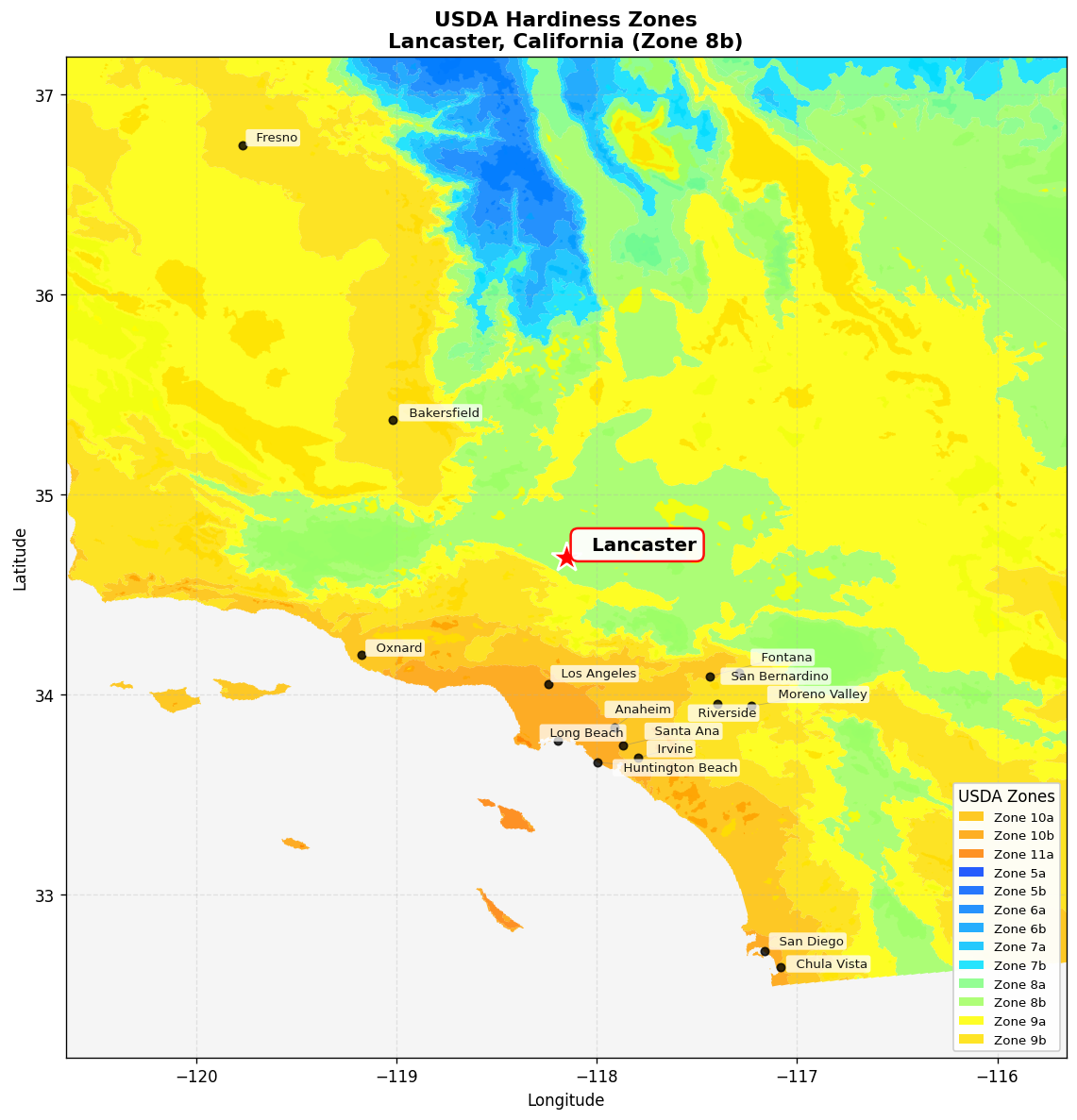
USDA Zone 8b
Hardiness zone for Lancaster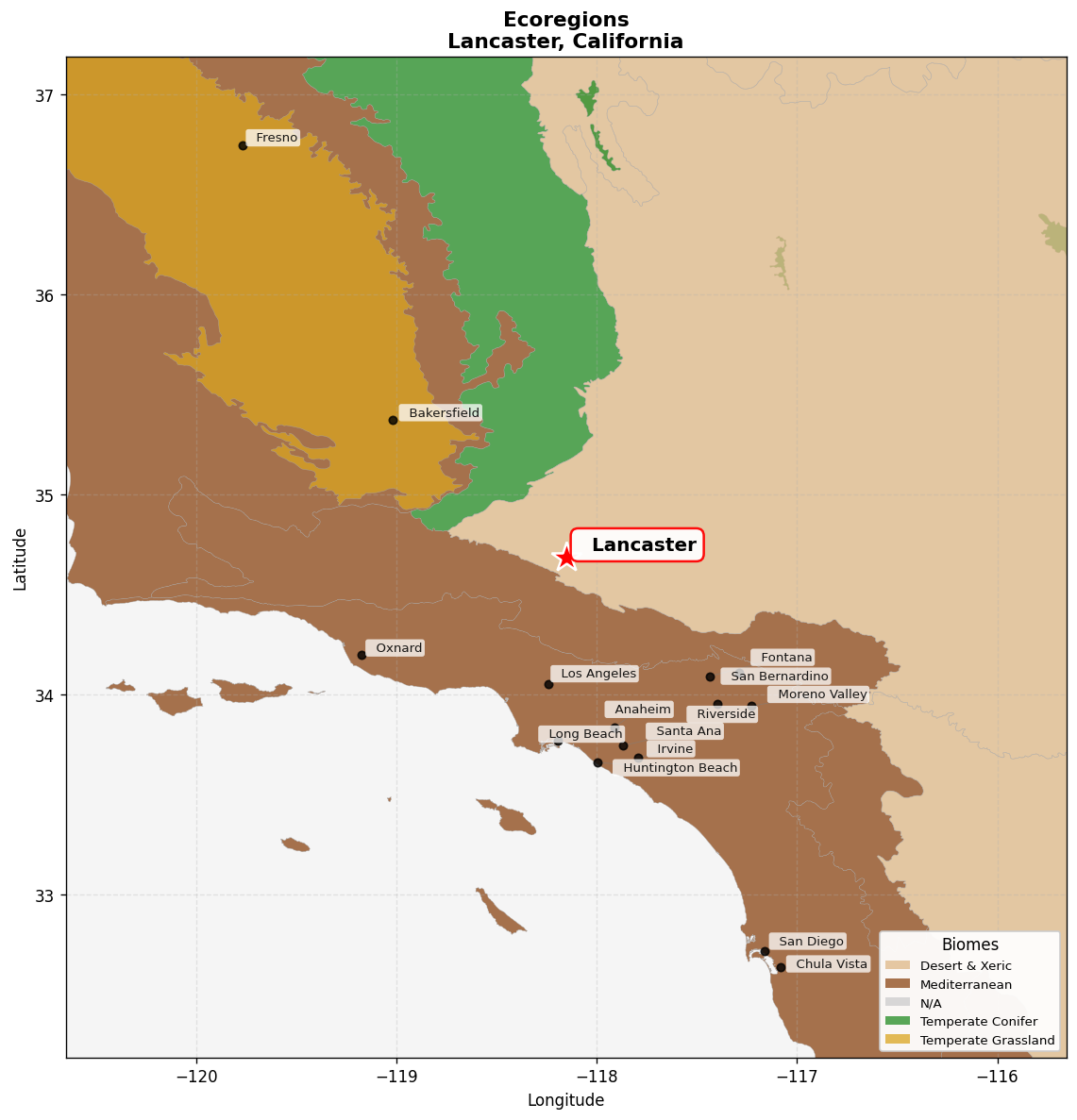
Mojave desert
Native ecoregionFrequently Asked Questions
How much does a xeriscape front yard cost in Lancaster?
Antelope Valley installation pricing runs roughly 10-20 percent under the Los Angeles basin. A typical 900-1,200 square foot Lancaster front yard converted from dead turf to decomposed granite, placed boulders, drip irrigation and 25-40 specimen plants lands between $7,000 and $16,000 installed. Doing the turf kill, DG and planting yourself and paying a contractor only for the boulder placement and drip conversion brings that to $3-5 per square foot. Costs climb fastest with boulders (delivered and set, $250-900 each depending on size and access) and with anything that needs a concrete truck.
Which desert plants actually survive a Lancaster winter?
Lancaster is Zone 8b, not Zone 10, so cold hardiness is the filter. Reliable performers include Agave parryi var. truncata and Agave havardiana (both good below 0 degrees F), Agave ovatifolia 'Frosty Blue' to about 5 degrees F, Yucca rostrata 'Sapphire Skies', Dasylirion wheeleri, Hesperaloe parviflora 'Brakelights', Opuntia santa-rita and Nolina nelsonii. Agave americana handles a normal Lancaster winter but scars in a hard one. Golden barrel, Echinocactus grusonii, is genuinely marginal here at roughly 18-20 degrees F, so site it against a south-facing stucco wall where the masonry radiates heat overnight. Skip anything sold for Palm Springs without a stated hardiness under 20 degrees F.
What do I do about the caliche layer under my yard?
Test for it before you buy a single plant: dig a 12 inch hole, fill it with water and time the drop. If it has not drained in 24 hours you have caliche or a compacted hardpan. The remedy is to punch a chimney through the pan under each planting hole with a rock bar or a 4 inch auger so water can escape below root level, then plant high with the root crown 2-3 inches proud of grade. Never dig a neat hole in caliche and backfill with rich potting soil; that is a sealed bathtub, and it is the single most common way Agave and Yucca die in the Antelope Valley. On broad beds, berming 8-18 inches above grade is faster and cheaper than trying to fix the profile.
Will the Antelope Valley wind wreck a gravel yard?
Only if the gravel is too small. Lancaster regularly sees 30-50 mph spring gusts, which will move pea gravel and strip fine crushed stone off a slope. Specify angular 3/8 to 3/4 inch decomposed granite or crushed rock rather than rounded pea gravel, compact it in two lifts, and hold it back with a concrete mow band or steel edge at the driveway and sidewalk. Wind also means new trees blow over: use two short stakes set outside the rootball, remove them after 18 months, and put a Pinus eldarica or a Chitalpa tashkentensis 'Pink Dawn' on the west or southwest boundary as a windbreak that shelters everything downwind of it.
Do I still need irrigation in a xeriscape?
Yes, for the first two to three years, and then far less. With about 6.5 inches of annual rain and roughly 65 inches of evapotranspiration, nothing establishes on rainfall alone in Lancaster. Run inline drip with pressure-compensating emitters under the gravel, water deeply and infrequently (two to three times a week through the first summer, dropping to every 10-14 days by year three), and put the valves on a weather-based controller. Once Agave parryi, Hesperaloe and Muhlenbergia rigens are established, most Lancaster xeriscapes hold up on a monthly deep soak from May to September and nothing at all in winter.
When is the best time to plant a desert garden in Lancaster?
October and November are the best window by a wide margin, with a second window in March and early April. Fall planting gives roots the cool, damp months to establish before the first 100 degree F day, and nursery stock is cheaper and better rooted then. Avoid planting cacti and agaves in December and January, when a cold snap can hit a plant that has not yet anchored, and avoid June through August entirely for anything larger than a one-gallon. Hardscape - gravel, DG, boulders, dry creeks, patios - can go in year round; the practical constraints are wind days in spring and the summer heat on the crew.
Are there rules about removing my lawn or a Joshua tree?
Removing turf and replacing it with a planted, mulched or gravelled design is allowed and encouraged, and Waterworks District 40 has run turf-replacement incentive programs from time to time - check what is currently open before you start, because most require pre-approval with before photos. California's Model Water Efficient Landscape Ordinance kicks in for permitted new landscapes over 500 square feet and rehabs over 2,500 square feet. Joshua trees are the real constraint: Yucca brevifolia is protected both by Lancaster's native desert vegetation ordinance and by the state Western Joshua Tree Conservation Act, so any removal or relocation needs authorisation from the city and the state. Plan the design around the tree; verify current requirements with the City of Lancaster before you touch it.