4 Cottage Garden Ideas for Madison, WI | Zone 5a Forest-Grasslands Cottage Style
Native plants from the Central US forest-grasslands transition (Zone 5a) — Humid continental (hot summer) climate
Why Cottage/English Gardens in Madison?
Madison sits within the Central US forest-grasslands transition ecoregion — a landscape historically characterized by the meeting of the eastern deciduous forest and the tall-grass prairie, creating a rich diversity of plant communities that thrives on Madison’s rolling morainic topography, glacially formed lakes, and fertile soils. The four lakes that define the city — Mendota, Monona, Waubesa, and Kegonsa — create a microclimate that is slightly more temperate than surrounding Dane County, moderating temperature extremes and providing the moisture that cottage gardens love.
Madison’s Zone 5a climate defines the cottage garden approach: cold winters averaging −10°F at their coldest provide the extended chilling requirements that make peonies, lilacs, and astilbe perform at their absolute best. The growing season from April through October is intense and generous — Madison averages 32 inches of rainfall spread across the seasons, and the long warm summer creates lush perennial borders that rival English cottage garden tradition. The city’s progressive university culture and deep Scandinavian heritage have fostered an exceptionally active gardening community.
Madison’s historic neighborhoods — Mansion Hill, Marquette, Tenney-Lapham, Vilas, and the Near West Side — are filled with Victorian, Craftsman, and Prairie Style homes that call for the kind of lush, richly layered planting that cottage garden design provides. The Olbrich Botanical Gardens on the east side and the University of Wisconsin Arboretum on the west are among Madison’s greatest gardening resources, both offering model plant combinations calibrated perfectly for Zone 5a Dane County conditions.
4 Cottage/English Design Ideas for Madison
The Madison Victorian Cottage Border
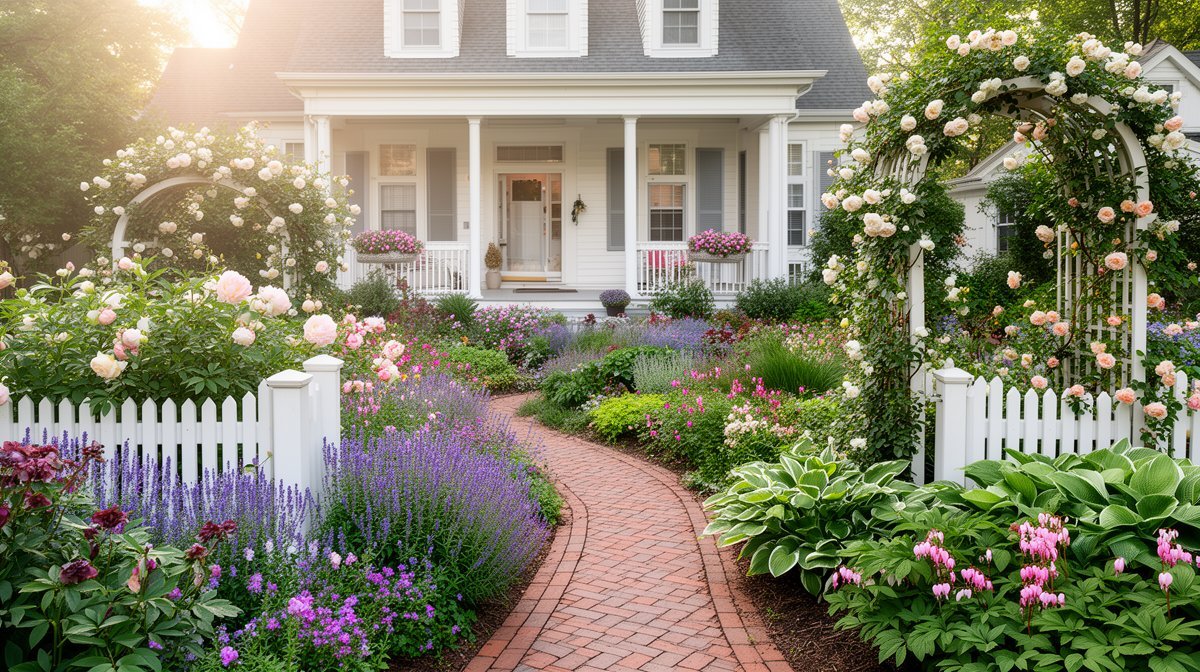
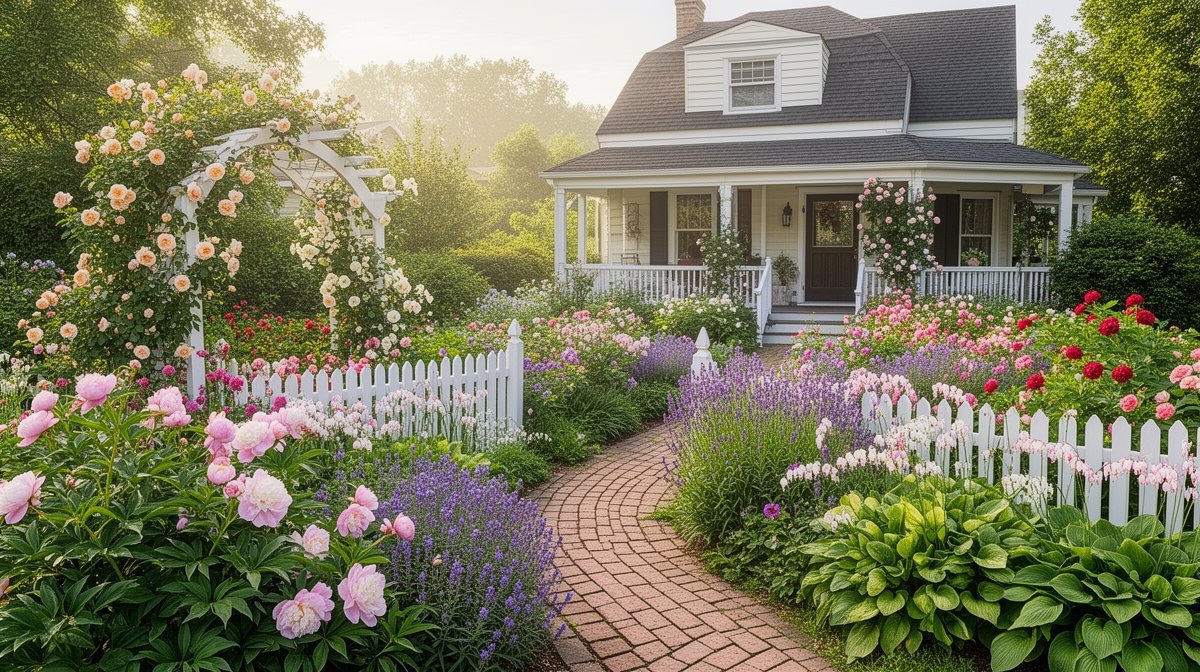
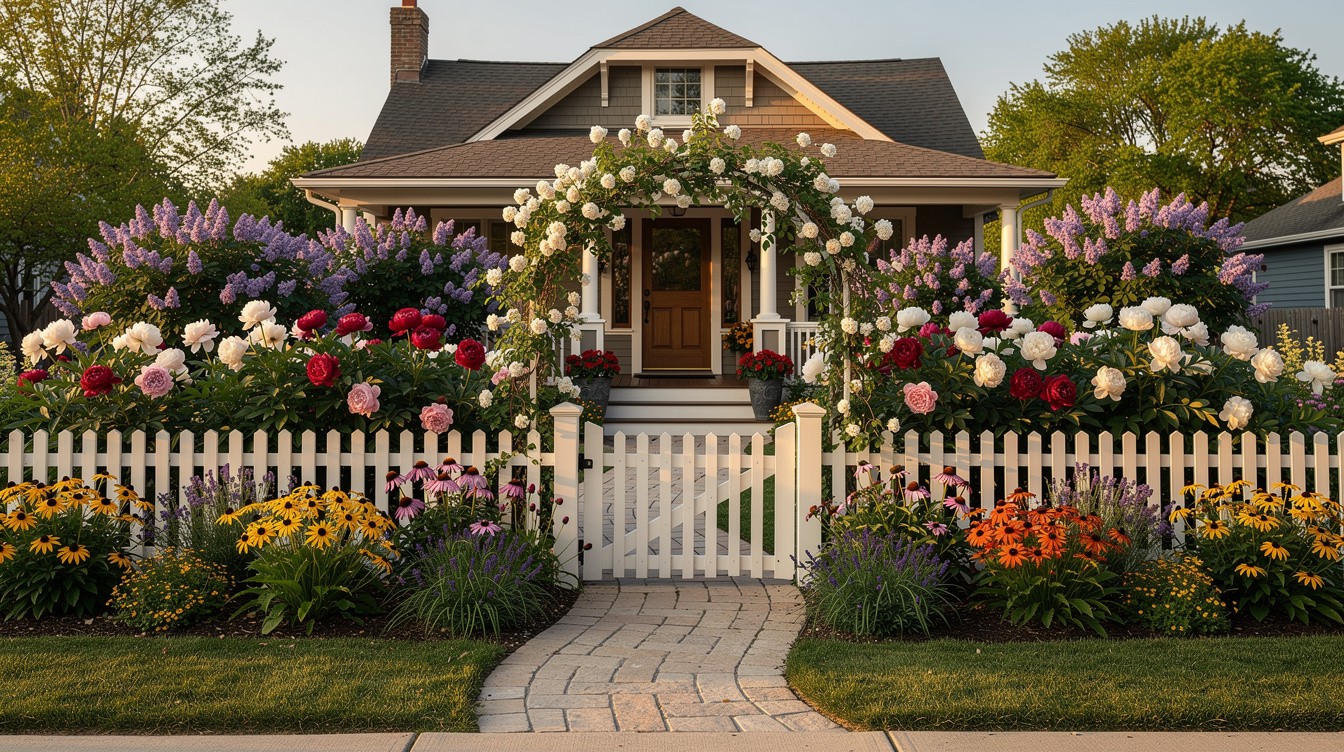
$6–14/sqftA Madison Victorian or Craftsman front yard designed in the classic Northern cottage tradition: a deep border along the property line holds a succession of hardy Zone 5a cottage plants from May through October. Lilacs at the back anchor the design with May fragrance and structure. Peonies in the mid-border create the spectacular June bloom that Madison’s cottage gardens are famous for. Rudbeckia, coneflower, and rugged daylilies sustain the display through July–September. A simple white picket fence runs along the property, and a lilac or climbing rose arches over the gate. A brick or limestone path meanders from the sidewalk to the porch. When the peonies and lilacs are in peak bloom simultaneously in early June, this garden is extraordinary.
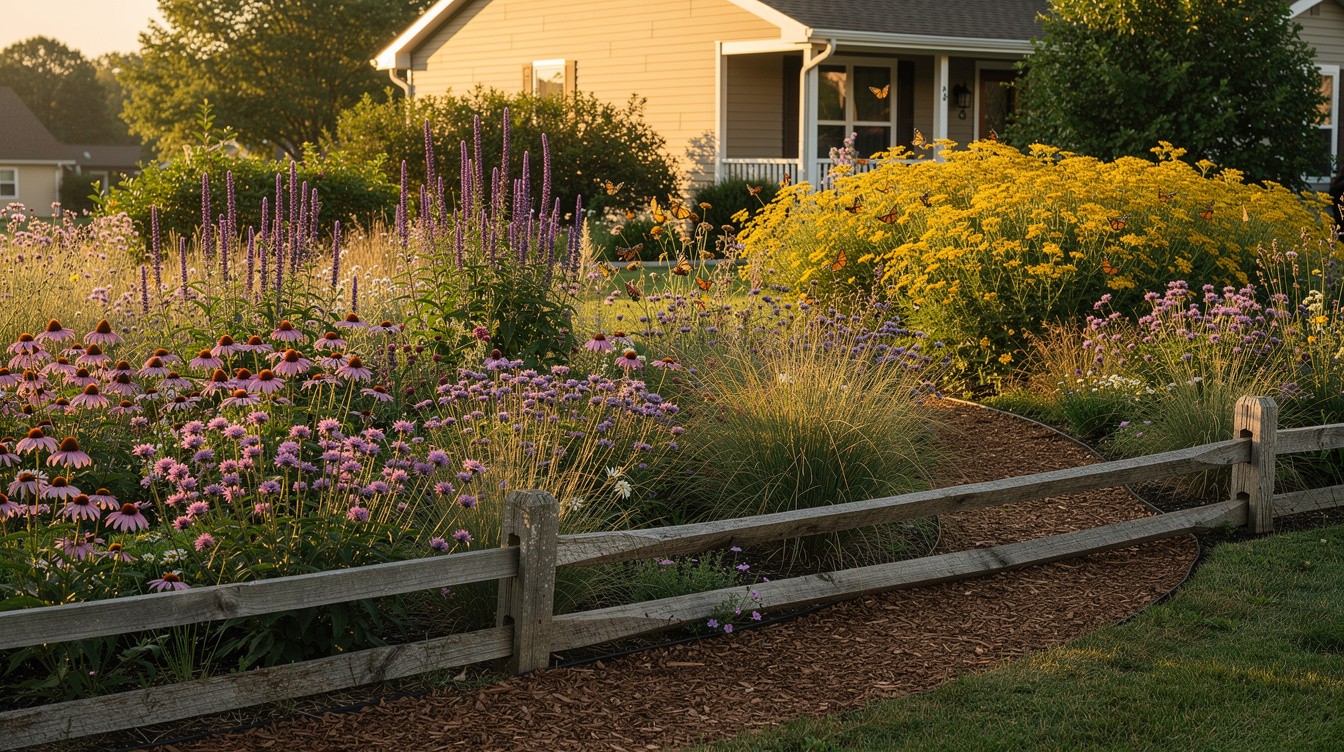
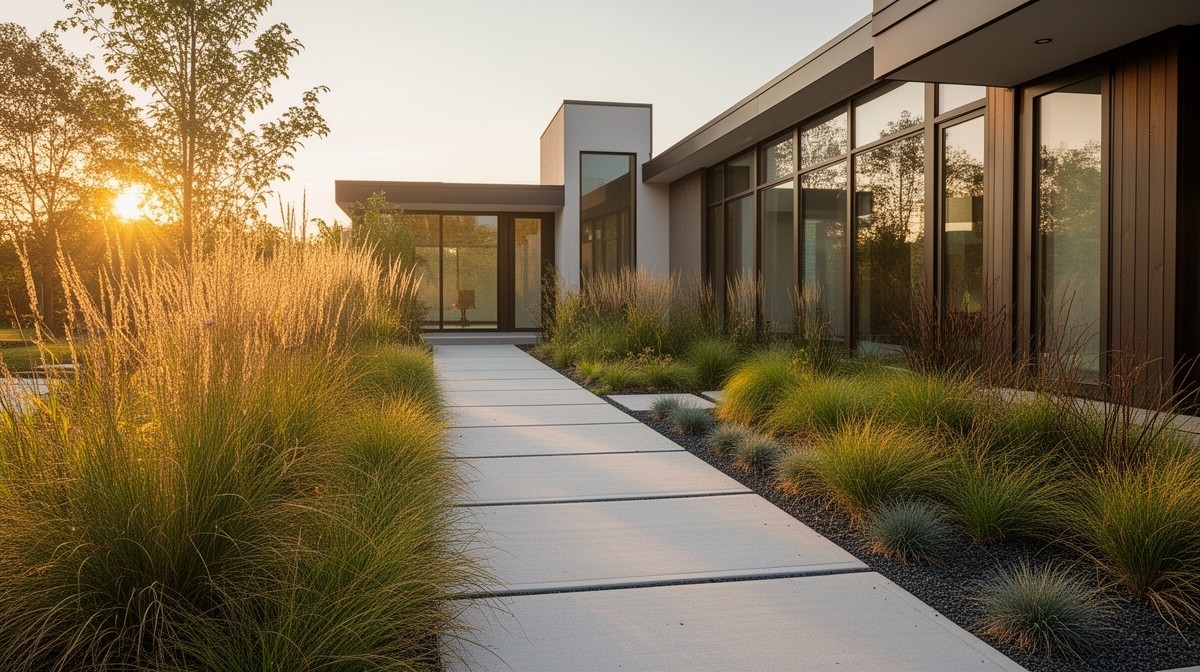
The Prairie Wildflower Cottage Garden
$5–11/sqftA Madison front or side yard planted in the tradition of the Central US forest-grassland transition — a prairie wildflower garden that celebrates the native landscape of southern Wisconsin. Purple coneflower and wild bergamot create the July–August color peak. Prairie blazingstar provides dramatic July spikes. Goldenrod anchors the back in September with golden masses beloved by monarch butterflies. Little bluestem and native Indian grass provide ornamental autumn structure. A simple oak-split or cedar rail fence references the agricultural heritage of the Dane County landscape. A bark chip path meanders through the planting in a natural curve. This design qualifies for the UW Extension’s Clean Water Action lawn replacement program.
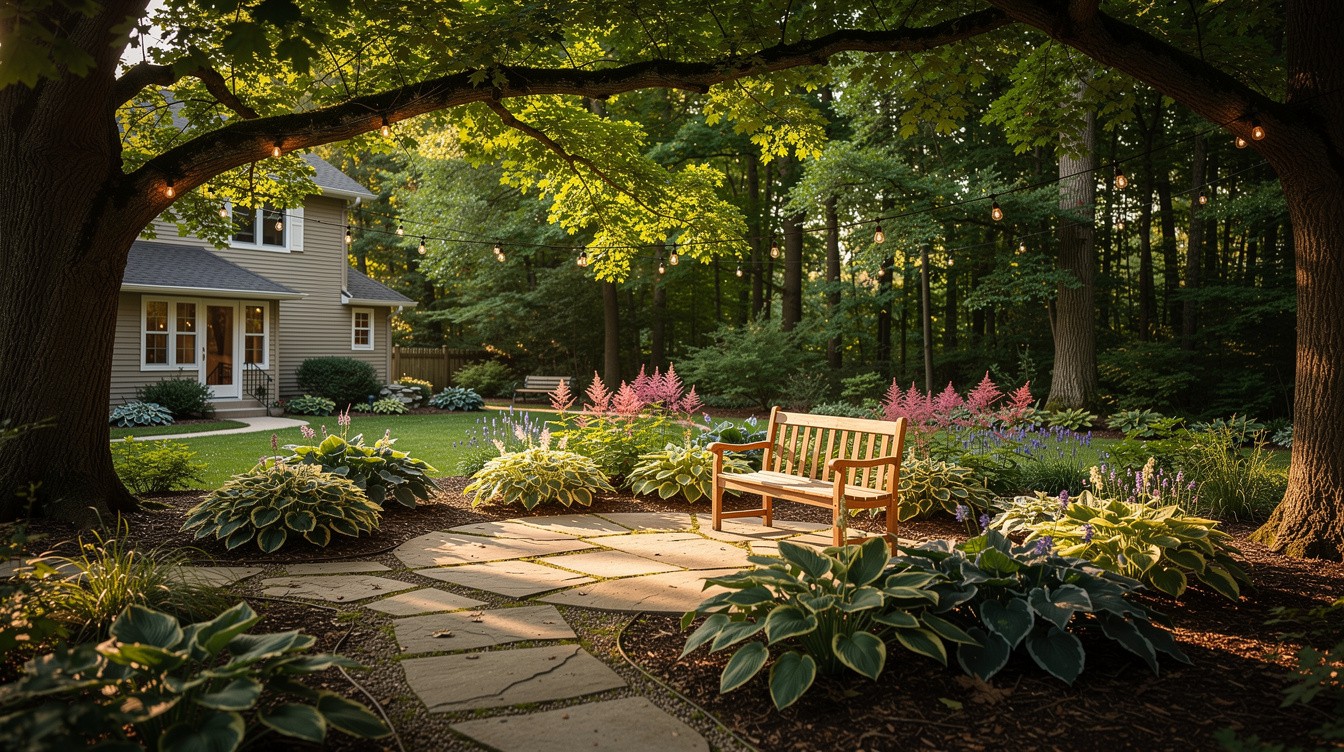
The Madison Shade Garden Retreat
$9–20/sqftA Madison backyard designed as a cool woodland retreat beneath the mature oaks and maples that dominate the city’s established residential canopy: a simple flagstone or limestone patio extends from the back of the house into the dappled shade. Hostas in dozens of varieties — blue, gold, and variegated — create the primary shade garden texture. Astilbe provides July-pink flower plumes above the hosta foliage. Native trilliums and Virginia bluebells provide April–May spring spectacle before the hosta canopy fills in. A simple wood bench in a clearing creates the garden’s resting point. String lights in the oak canopy create evening atmosphere through Madison’s gorgeous summer and fall seasons.
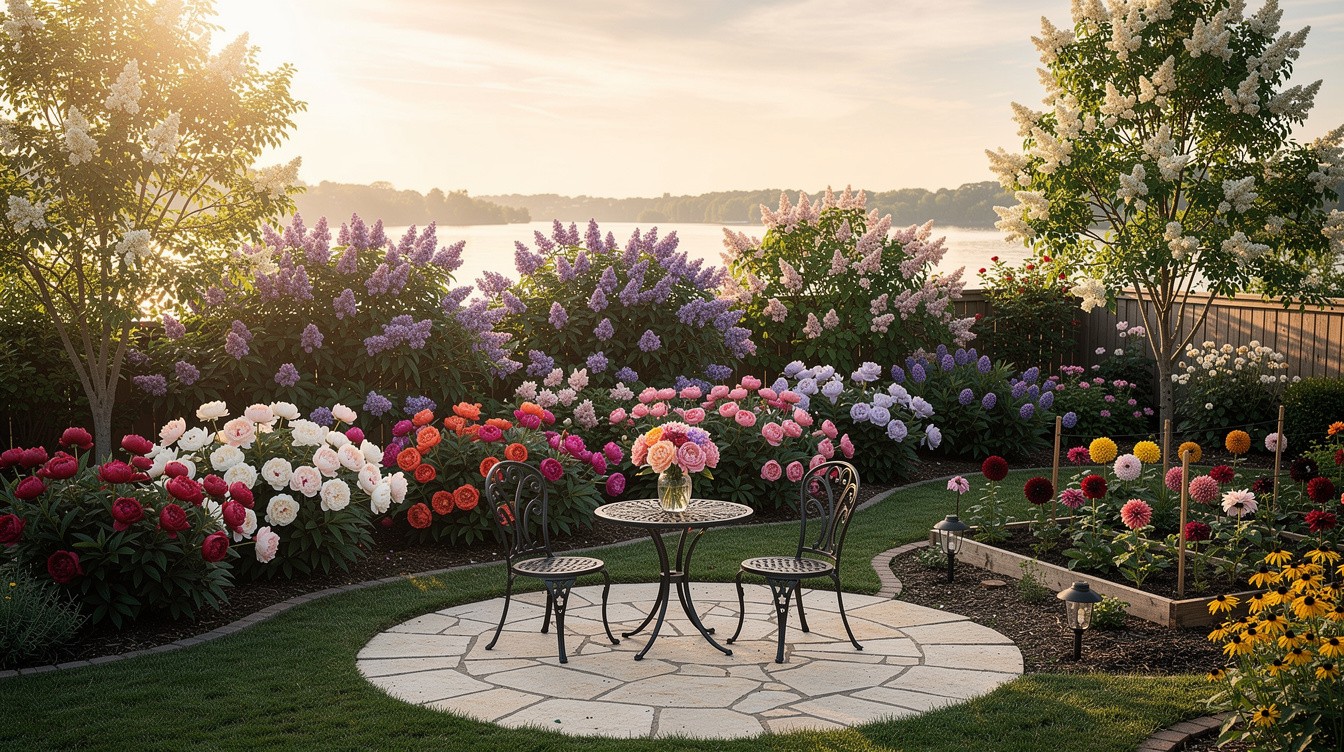
The Peony and Lilac Premier Garden
$12–24/sqftA premium Madison cottage backyard built around the two signature plants of Zone 5a cottage gardens: peonies and lilacs. A long curving border holds a peony collection of 20–30 varieties in every available color from pale blush through deep red-maroon — single, semi-double, and bomb-type. Behind the peonies, a collection of lilac varieties — common lilac, Persian lilac, Miss Kim lilac, and tree lilac — provides overlapping fragrance and bloom from May through June. A cutting-garden section is dedicated to dahlia and rudbeckia for August–October vase flowers. A limestone patio with wrought iron bistro table creates the garden’s social center. In early June, when peonies and lilacs peak simultaneously against the backdrop of Madison’s lake-brightened sky, this garden is one of the most beautiful private spaces in Wisconsin.
See how a cottage/english garden looks on YOUR property
Upload a photo of your Madison yard and visualize your dream garden in seconds.
Try ProScapeAI Free
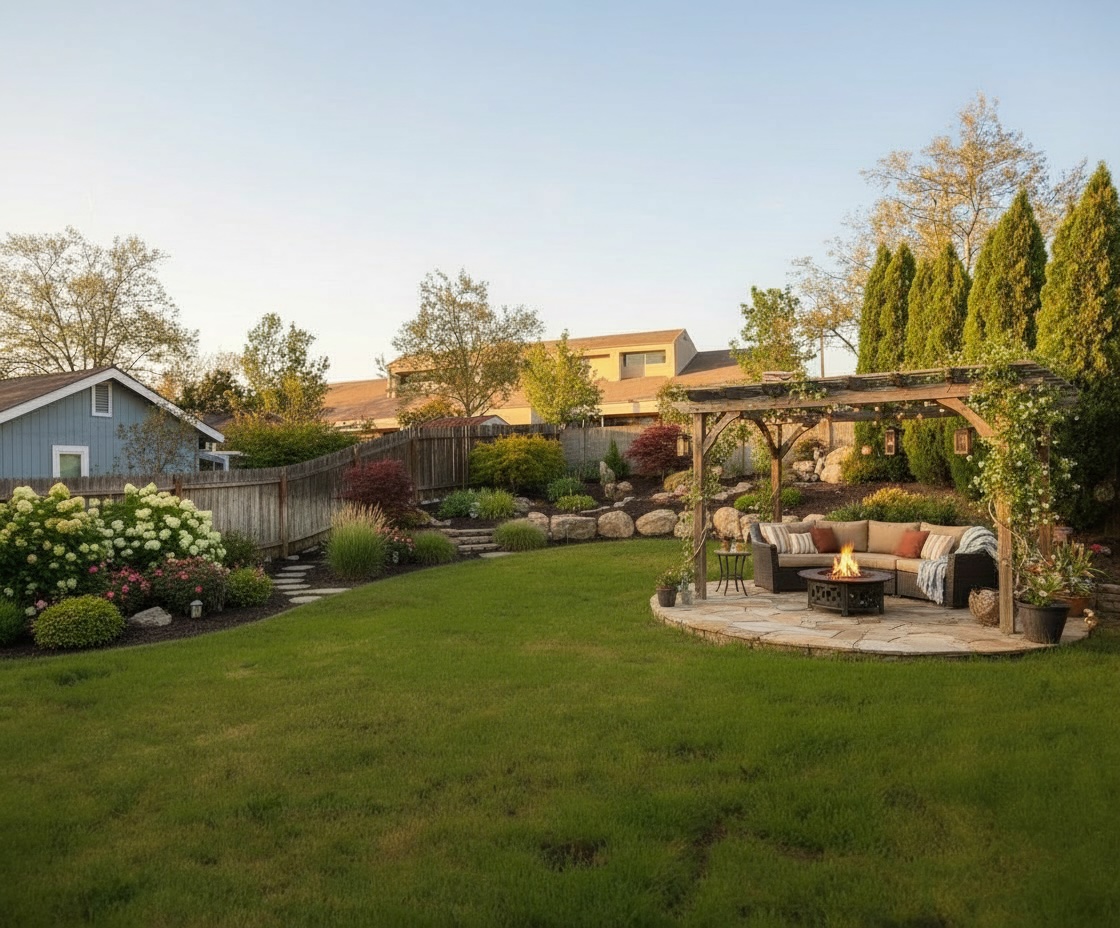
Featured Trees & Shrubs for Cottage/English Gardens
Browse all 168 plants for Madison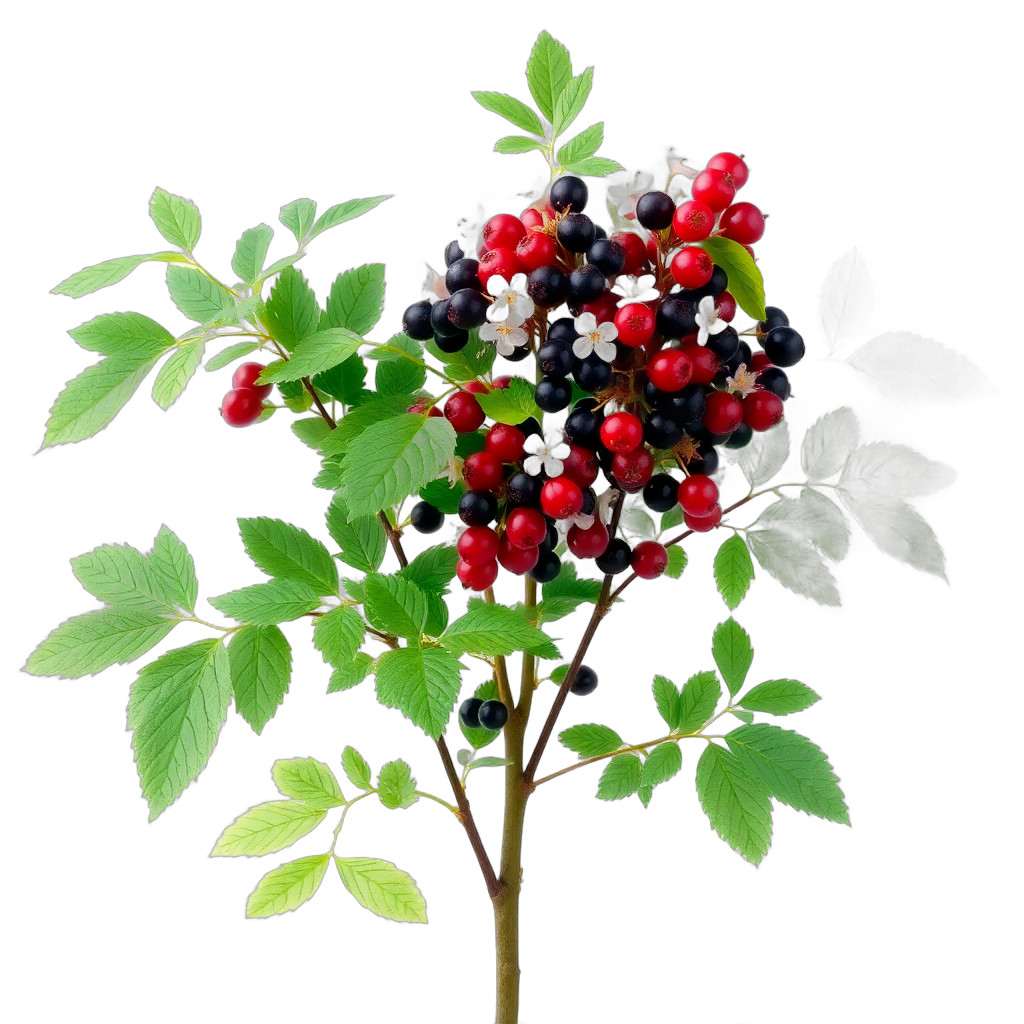
American Black Currant
Ribes americanum
grows to 5 feet, white,yellow blooms in spring. Attracts hummingbirds.
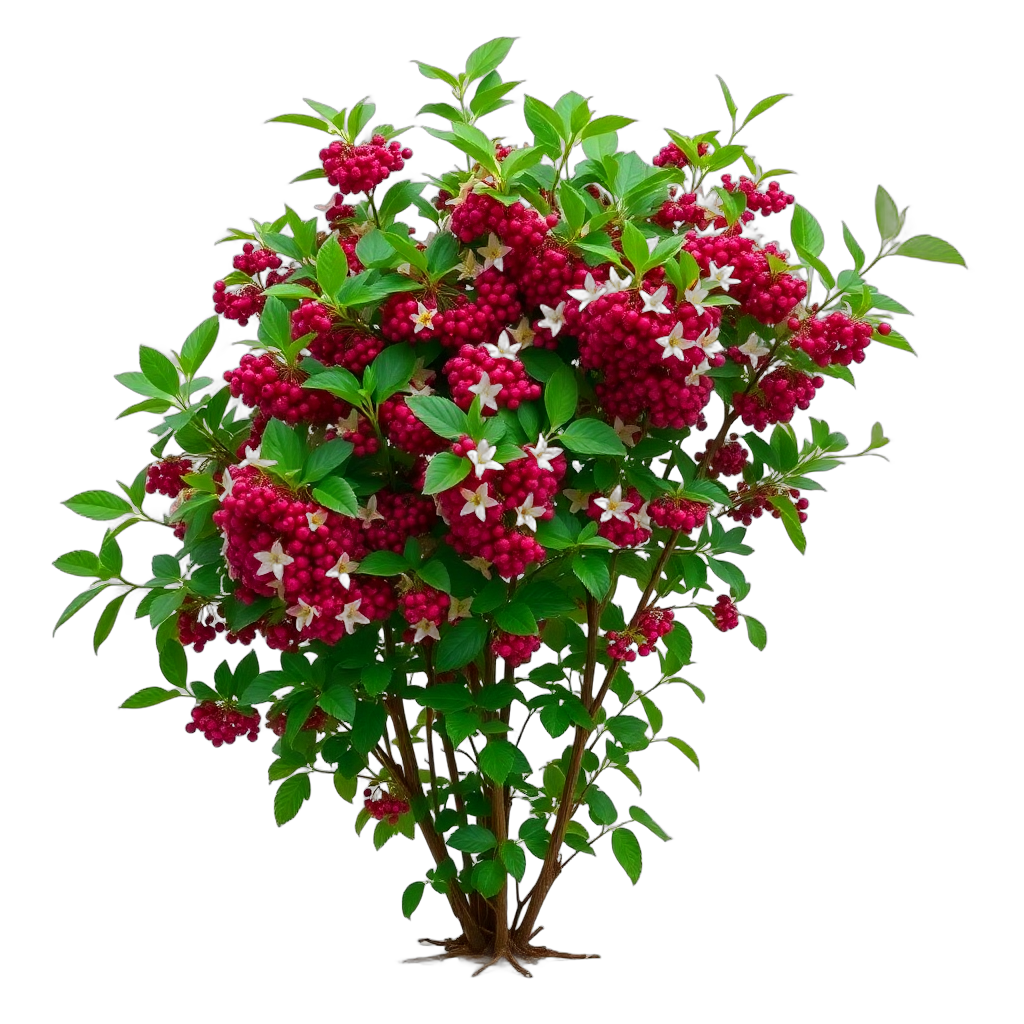
Clove Currant
Ribes odoratum
grows to 6 feet, yellow blooms in spring. Attracts hummingbirds.

Fragrant Sumac
Rhus aromatica
grows to 4 feet, yellow blooms in spring. Attracts butterflies.
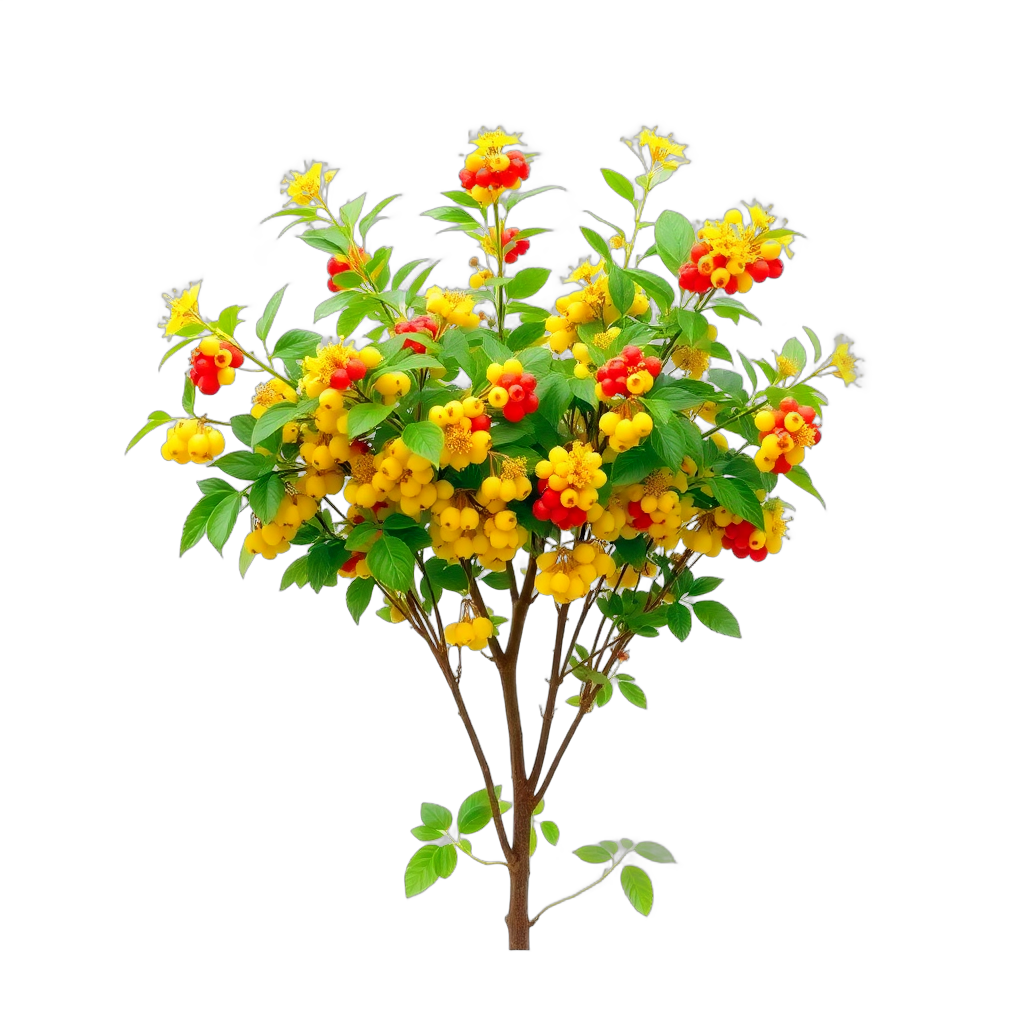
Golden Currant
Ribes aureum
grows to 6 feet, yellow blooms in spring. Attracts hummingbirds.
Featured Grasses & Groundcovers for Cottage/English Gardens
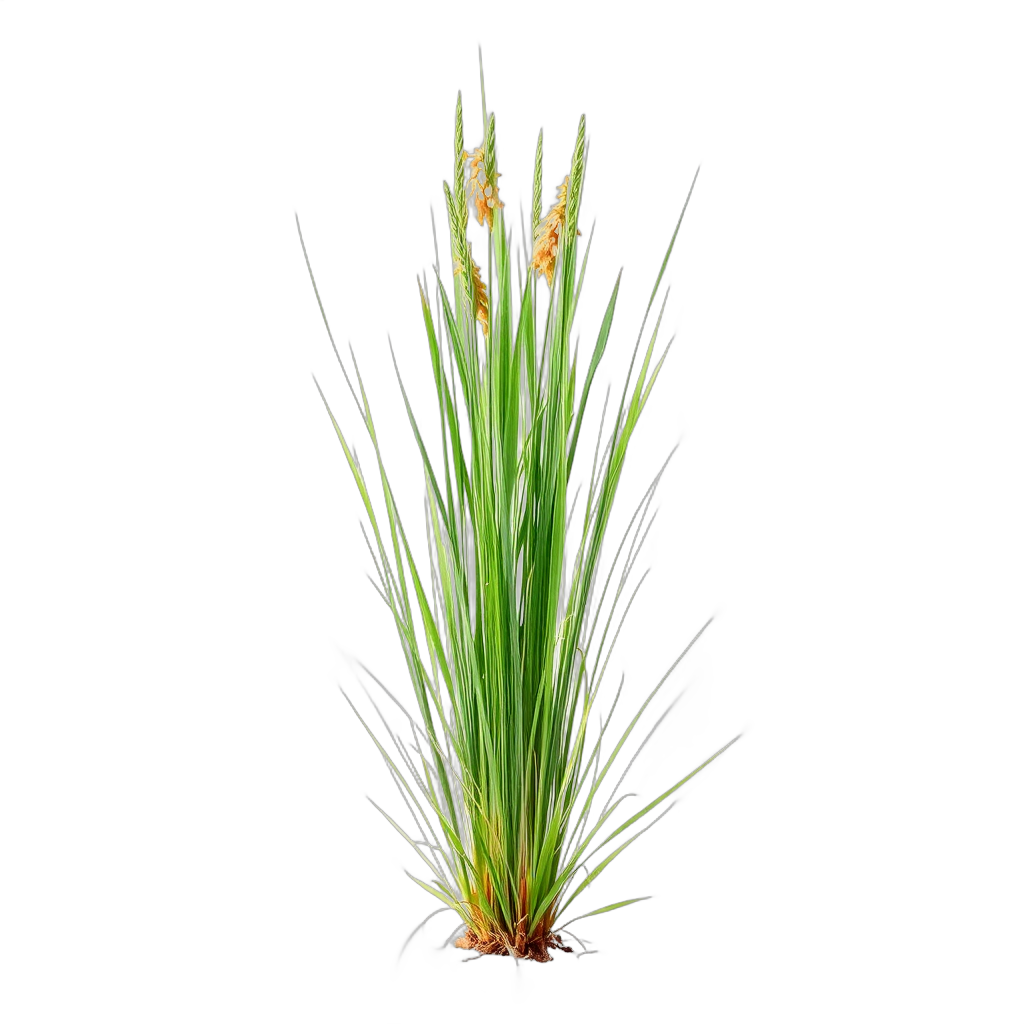
Eastern Gamagrass
Tripsacum dactyloides
grows to 6 feet, blooms in summer. Yellow fall color.
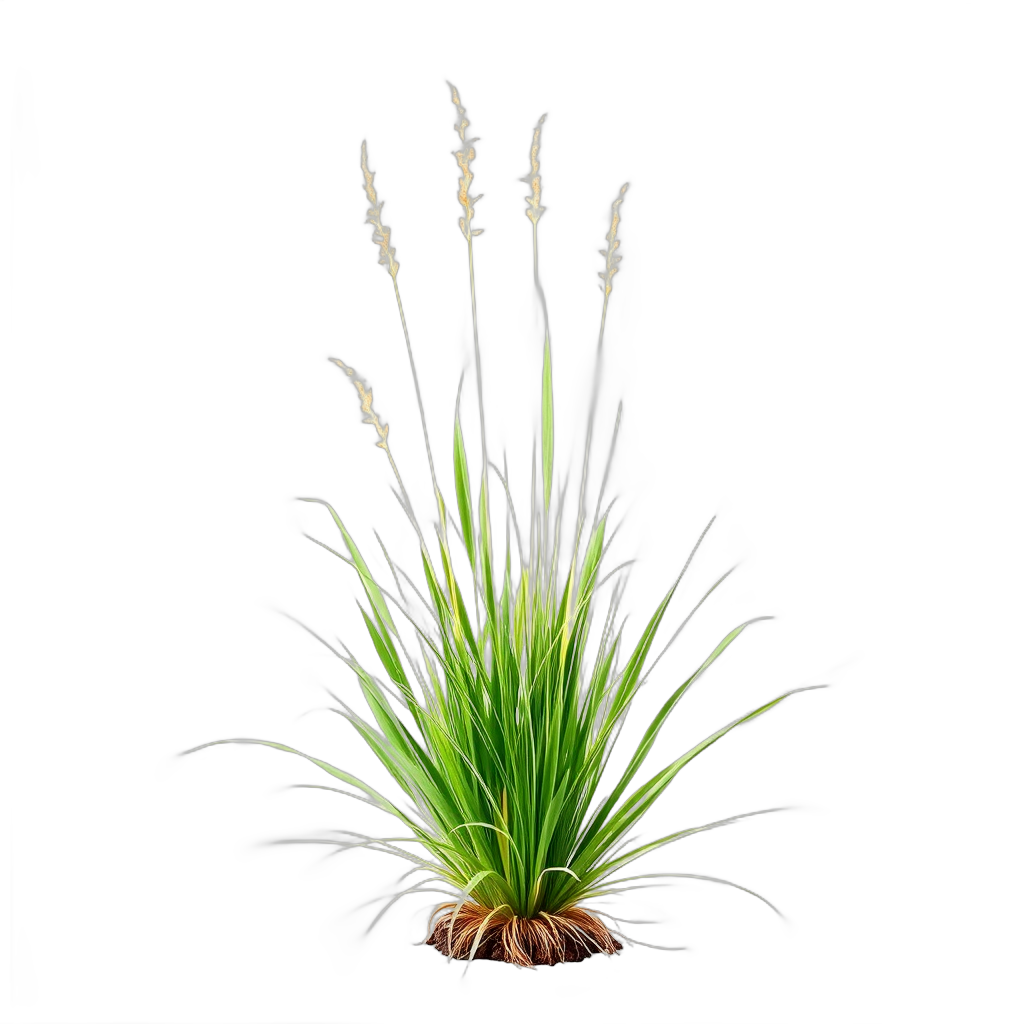
Northern Sea Oats
Chasmanthium latifolium
grows to 4 feet, blooms in fall. Bronze fall color.
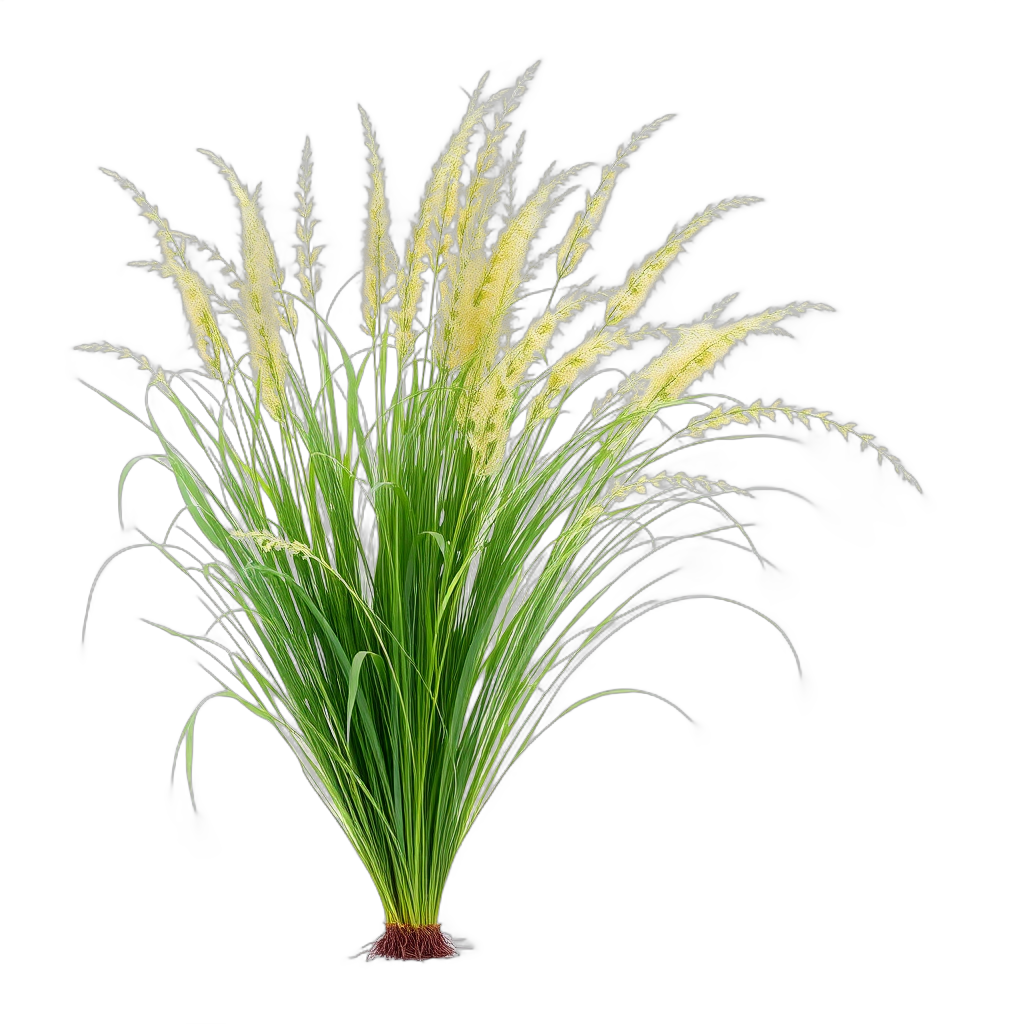
Adagio Maiden Grass
Miscanthus sinensis 'Adagio'
low-growing ground cover, pink blooms in summer. Orange fall color.
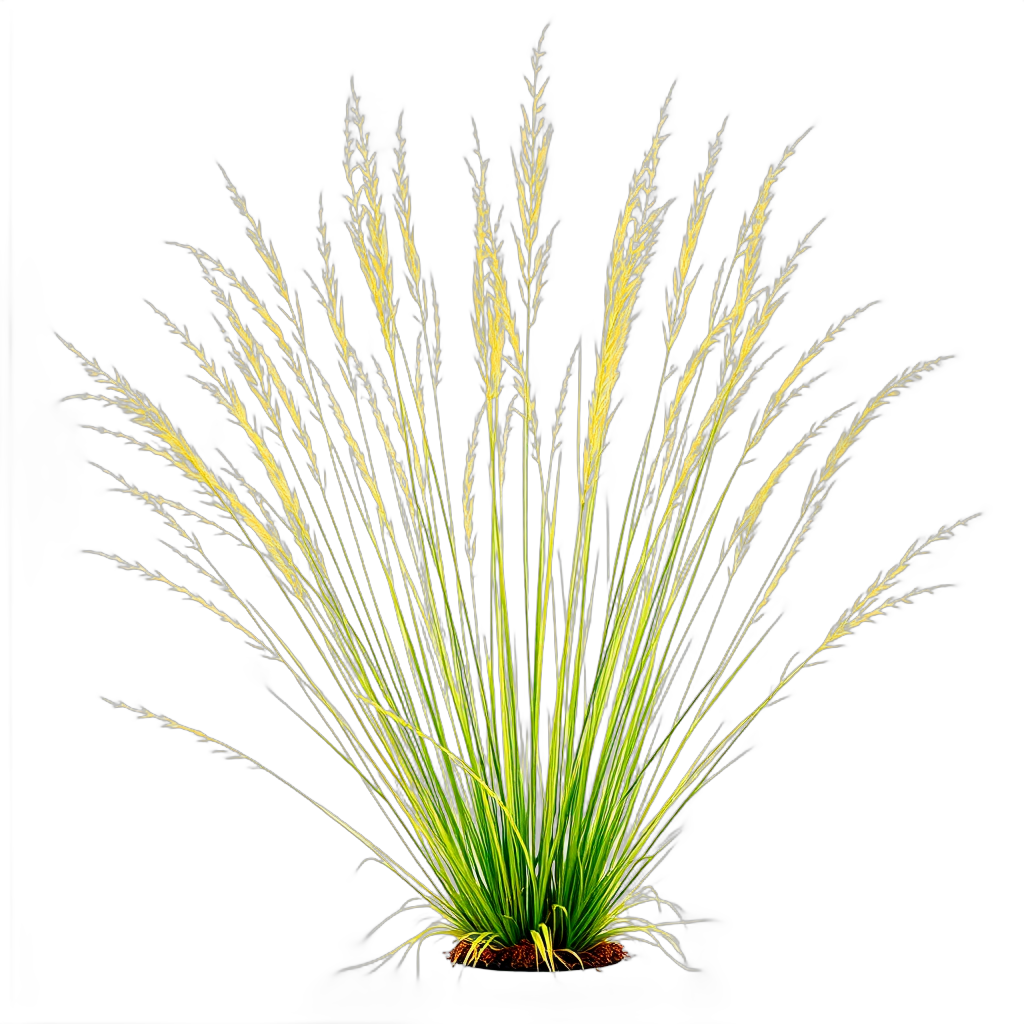
All Gold Japanese Forest Grass
Hakonechloa macra 'All Gold'
low-growing ground cover, blooms in summer.
Featured Flowers & Perennials for Cottage/English Gardens

Cup Plant
Silphium perfoliatum
medium-sized at 7 feet, yellow blooms in summer. Attracts butterflies.
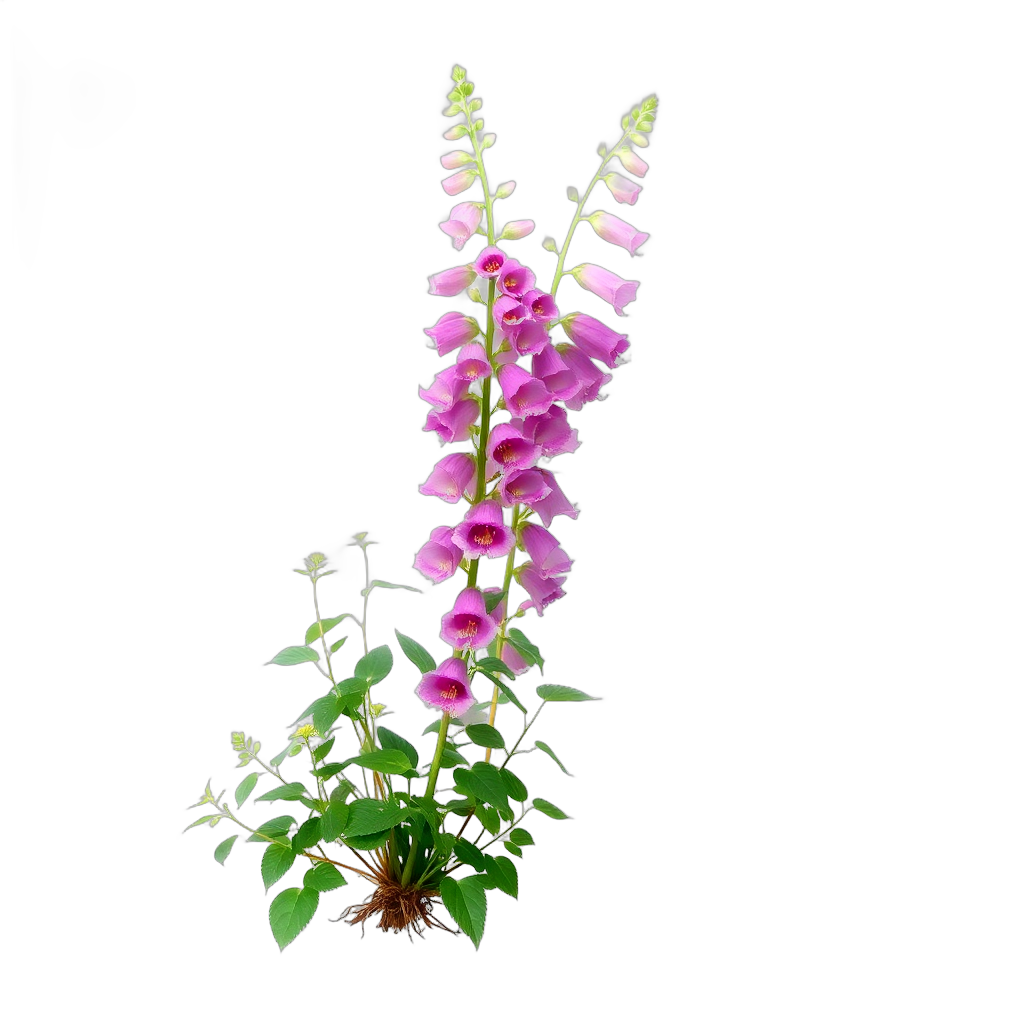
Foxglove Beardtongue
Penstemon digitalis
grows to 3 feet, white blooms in spring. Attracts hummingbirds.
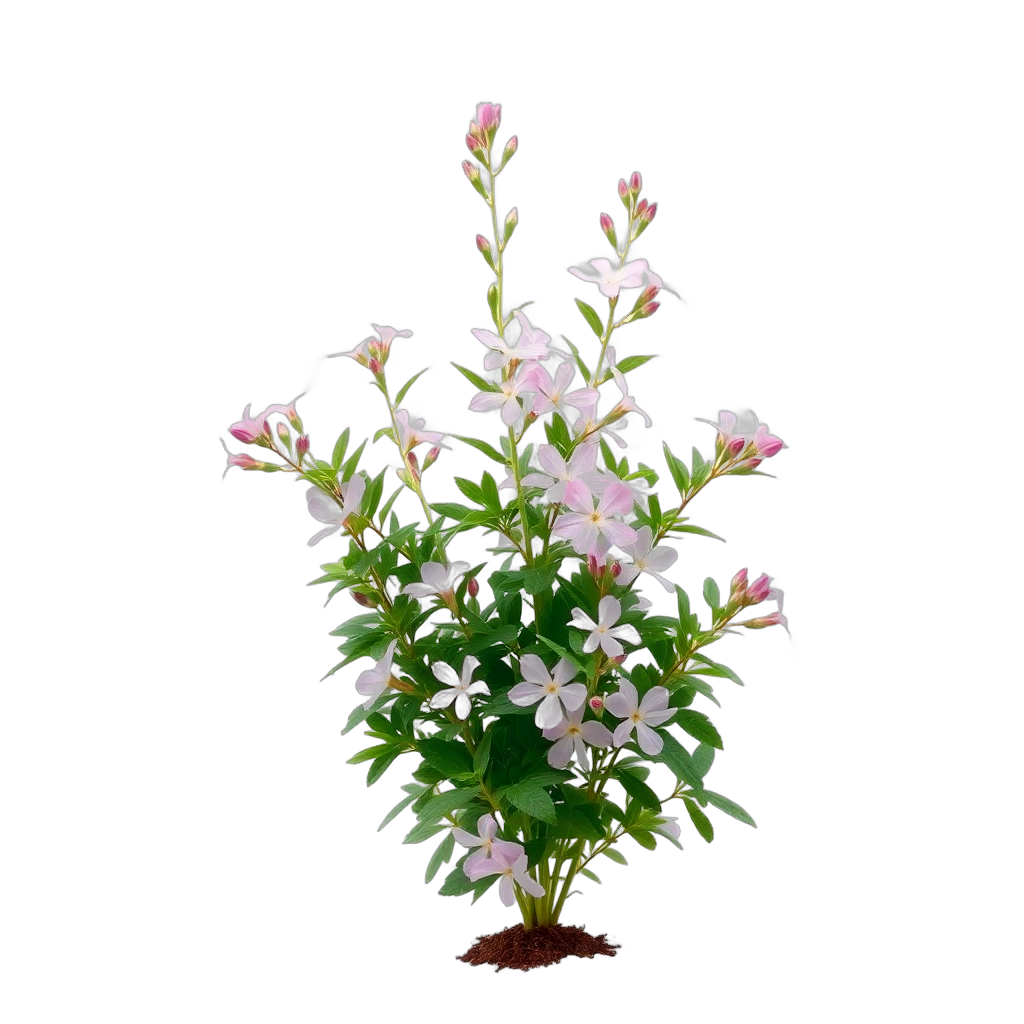
Garden Phlox
Phlox paniculata
grows to 3 feet, multi blooms in summer. Attracts hummingbirds.

Gloriosa Daisy
Rudbeckia hirta
low-growing ground cover, yellow blooms in summer. Attracts butterflies.
Zone and sun checks come from our database — confirm with your local nursery before you buy.
Bloom Calendar for Madison
spring
Foxglove Beardtongue, American Black Currant, Clove Currantsummer
Cup Plant, Garden Phlox, Gloriosa Daisyfall
Northern Sea Oatswinter
Limited bloomsDesign Tips for Madison (Zone 5a)
- Visit Olbrich Botanical Gardens in Madison during June for the best cottage garden inspiration available in Wisconsin — the garden’s plant combinations are calibrated for Zone 5a Dane County conditions and show exactly which roses, perennials, and shrubs succeed in Madison’s specific microclimate
- Plant peonies in full sun (6+ hours) with exceptional drainage in Madison — plant the ‘eyes’ (red buds) no deeper than 1–2 inches below the soil surface; planting too deep is the most common reason peonies fail to flower in Wisconsin
- Choose panicle hydrangeas (Limelight, Quick Fire, Bobo) over bigleaf hydrangeas for any Madison cottage garden where reliable summer bloom is a priority — panicle hydrangeas bloom on new wood and their flower buds never winter-kill in Madison’s Zone 5a winters
- Allow the dried winter stalks of coneflower, goldenrod, and prairie blazingstar to stand through the winter in any Madison cottage-prairie design — they provide critical winter bird food for goldfinches and native sparrows, and their snow-dusted silhouettes are beautiful against Madison’s white January landscapes
- Mulch all perennial beds with 3–4 inches of shredded leaves in November after the first hard freeze in Madison — the shredded leaves (from the yard’s own maples and oaks, run through a mower) protect crown divisions through −10°F January nights and decompose to feed the soil by spring
- Plant lilacs against the prevailing southwest wind direction in Madison — early May’s frequent southwest winds carry the fragrance throughout the neighborhood, and a well-placed lilac hedge along the southwest property line becomes a neighborhood landmark during its 2–3 week bloom season
Where to Source Plants in Madison
Skip the big-box stores. These independent Madison nurseries specialize in the plants that make cottage/english gardens thrive in Zone 5a.
Sprig Native Plant Nursery
East Madison
Woman-owned Madison nursery growing all plants from Midwest seed in small pots; pickup only on east side; no neonicotinoids
Two Ferns Native Nursery
Madison
Native perennials grown locally for Madison’s Zone 5a climate; excellent prairie and woodland plant selection
Jung Garden Centers
Madison
Family business since 1909; seeds, bulbs, plants, trees, shrubs, and garden supplies; one-stop cottage garden shop
Toddle-In Nursery
Madison area
Premier family-owned garden center open April–October with weekly shrubs, evergreens, perennials, and trees
K&A Greenhouse
Madison (two locations)
Thriving gardening destination with two greater Madison locations; open spring through fall
Cottage/English Landscaping Costs in Madison
| Project Scope | Estimated Cost |
|---|---|
| Cottage front border with peonies, lilacs, and arbor (400–600 sqft) | $4,000 – $10,000 |
| Flagstone or limestone patio (200–350 sqft) | $4,000 – $10,000 |
| White picket fence with gate arbor (50 linear feet + arbor) | $2,000 – $5,500 |
| Prairie wildflower garden installation (400–600 sqft) | $2,500 – $7,000 |
| Wood pergola or arbor installation | $2,500 – $8,000 |
| Full cottage backyard transformation (800–1,200 sqft) | $10,000 – $26,000 |
| AI visualization with ProScapeAI | Free to start |
Estimates based on Madison, WI-area contractor rates as of 2026. Actual costs vary by site conditions, materials, and contractor.
Madison Climate & Growing Zone
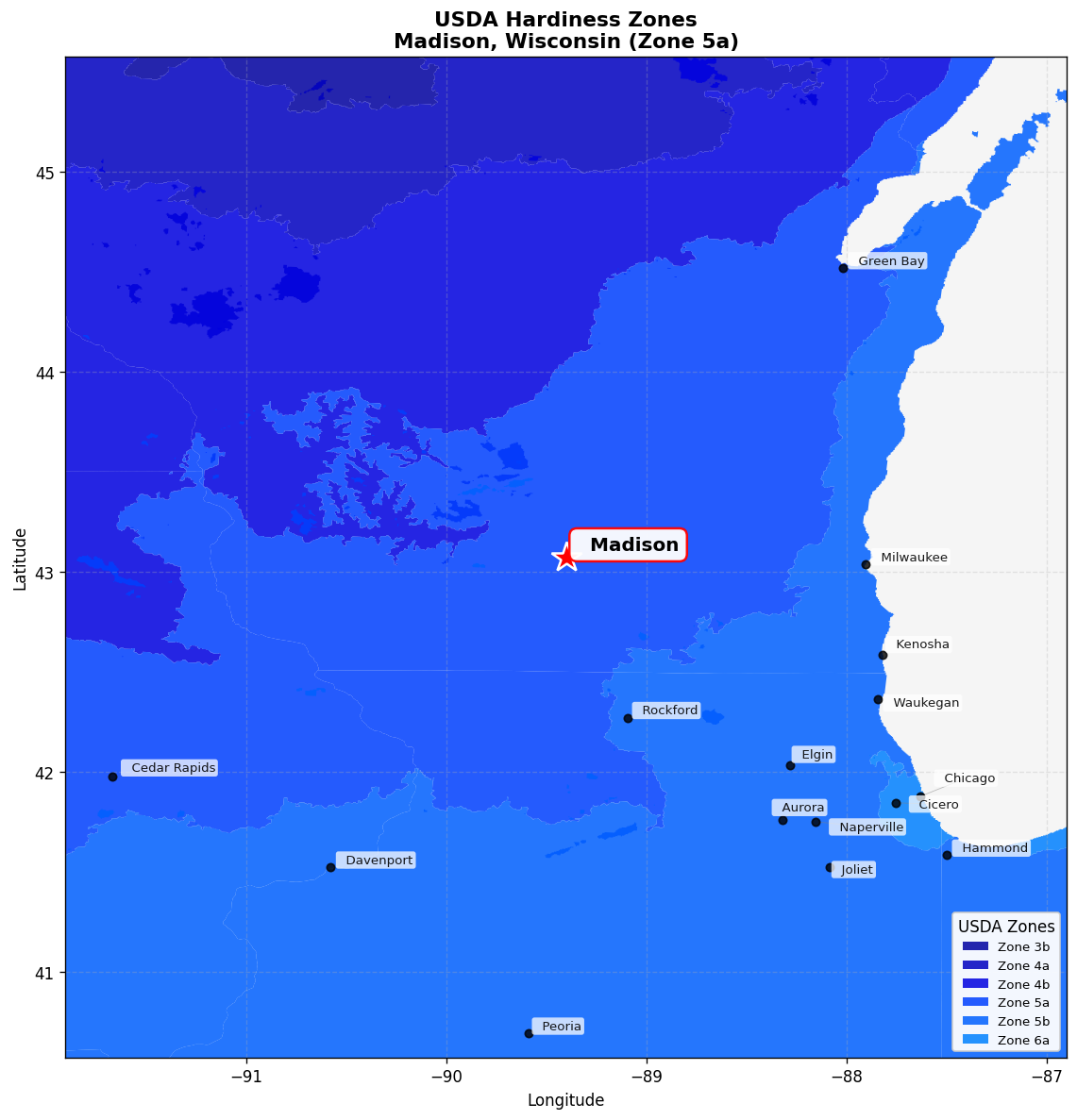
USDA Zone 5a
Hardiness zone for Madison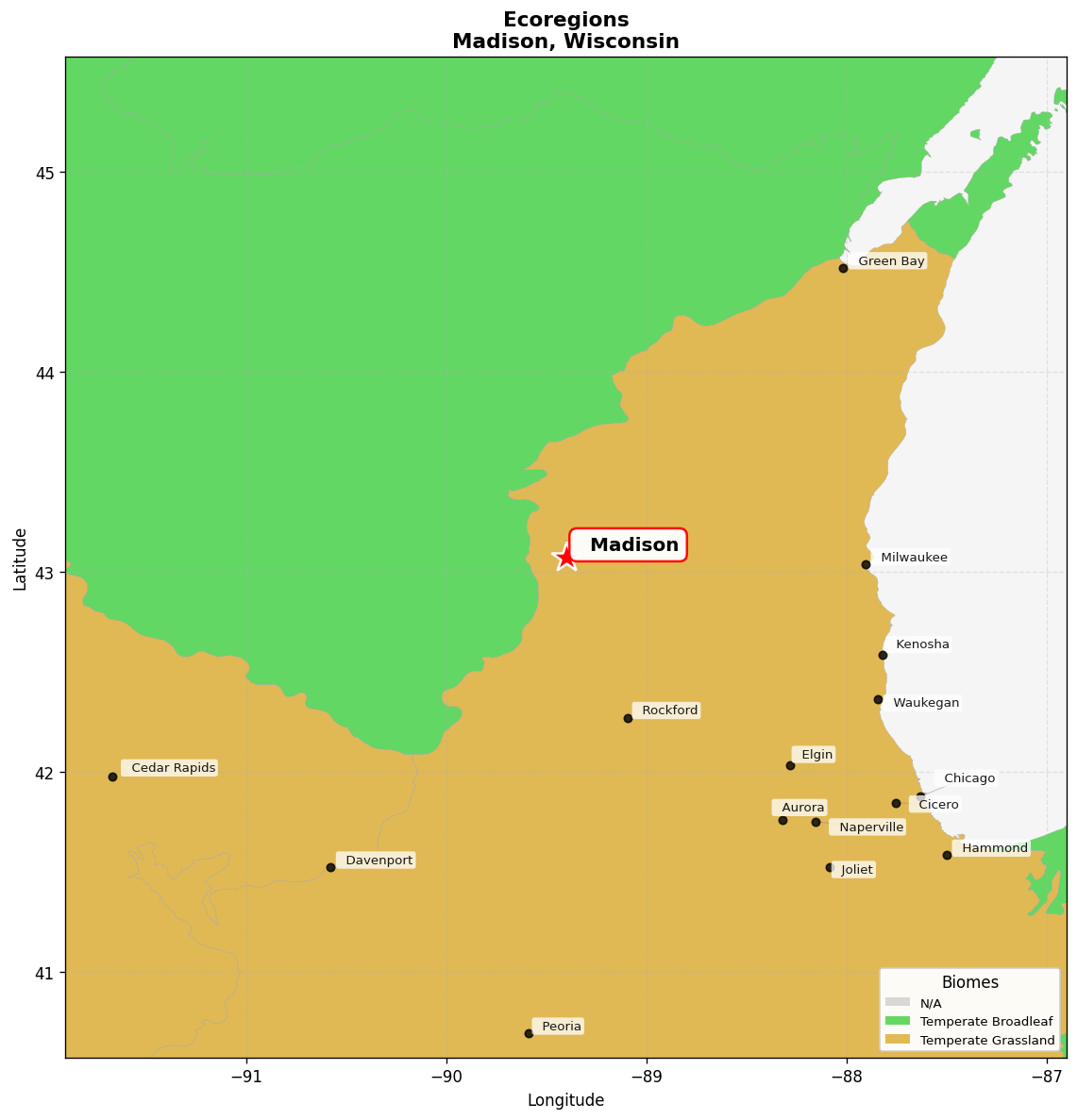
Central US forest-grasslands transition
Native ecoregionFrequently Asked Questions
What cottage plants are most reliable in Madison’s Zone 5a climate?
Madison’s cold winters make Zone 5a plant selection critical. Guaranteed performers: peonies (Zone 3–8, absolute stars in Madison’s cold winters), lilacs (Zone 3–7, thrive here), hostas (Zone 3–9, bulletproof), astilbe (Zone 3–8, loves Madison’s moisture), Rudbeckia/black-eyed Susan (Zone 3‒9, spreads and blooms without care), purple coneflower (Zone 3–9, native Midwest), native prairie plants (little bluestem, prairie blazingstar, goldenrod — all Zone 3–4), Karl Foerster feather reed grass (Zone 4–9), panicle hydrangeas (Limelight, Quick Fire — Zone 3–8). Avoid: bigleaf hydrangeas (the flower buds die in Zone 5 winters), gardenias, and any Zone 7+ tender perennial.
How much does cottage garden landscaping cost in Madison?
Madison landscaping is moderately priced for Wisconsin. Basic installation: $4–12 per square foot. A cottage front border with peonies, lilacs, and arbor (400–600 sqft) costs $4,000–10,000. A patio with pergola and planting (600–900 sqft) runs $10,000–25,000. Full design-build projects for a typical Madison lot are $12,000–30,000. Sprig Native Plant Nursery and Two Ferns Native Nursery provide native plants. Jung Garden Centers and Toddle-In Nursery carry traditional cottage plants. Landscaping maintenance in Dane County averages $21–$117 monthly.
When should I plant a cottage garden in Madison?
Madison’s planting calendar: Spring planting (April 15 – May 31) for most perennials and annuals — average last frost is May 5–10; plant tender annuals only after May 10. Fall planting (September 1 – October 15) is excellent for perennials, shrubs, and trees — Madison’s fall rains and warm soil allow 6 weeks of root establishment before freeze. Peonies and bare-root roses plant October 1–15 for spring establishment. Lilacs plant April or October. Native prairie plants from seed can be sown in November (cold stratification overwinter) for natural spring germination. Avoid midsummer planting (July–August) without irrigation capability.
How do I protect cottage plants through Madison winters?
Madison’s Zone 5a winters require some plant protection: (1) Apply 3–4 inches of shredded leaf mulch over all perennial beds in November, after the ground begins to freeze. (2) Rose canes: apply a 12-inch mound of compost or soil over the bud union in November; remove in April. Alternatively, plant only hardy shrub roses (Knock Out, Canadian roses) that need no protection. (3) Ornamental grasses: leave standing all winter for maximum structural winter interest; cut back in March before new growth. (4) Remove mulch from peonies in April — mulch over peony crowns can cause botrytis. (5) Protect tender hydrangea flower buds with burlap wrapping in late November — or plant panicle hydrangeas which don’t need protection.
Can I grow hydrangeas in Madison’s Zone 5a?
Yes, but variety selection is critical. Reliable Zone 5a hydrangeas for Madison: Annabelle smooth hydrangea (H. arborescens, Zone 3–9) — blooms on new wood, completely reliable in Zone 5a with no flower bud winter-kill. Limelight panicle hydrangea (H. paniculata, Zone 3‒8) — the most spectacular panicle type, lime-to-pink transition August–October. Quick Fire panicle hydrangea — earliest blooming panicle, starts July. Oakleaf hydrangea (H. quercifolia, Zone 5–9) — on the zone edge but survives in Madison with shelter. Avoid standard bigleaf hydrangeas (Nikko Blue, Endless Summer) — the flower buds freeze in Zone 5a Madison winters despite the ‘Endless Summer’ marketing.
What are the best peonies for a Madison cottage garden?
Madison’s Zone 5a is absolutely perfect for peonies — they require cold winters for proper dormancy and flower magnificently here. Top performers: Sarah Bernhardt (pale pink, intensely fragrant), Festiva Maxima (white with red flecks, heirloom reliability), Karl Rosenfield (deep red), Bowl of Beauty (pink Japanese type), Coral Charm (coral-peach, very popular), and any tree peony for earlier bloom in May. Itoh (intersectional) peonies are increasingly popular in Madison — longer-blooming, more heat-tolerant, and with stronger stems than standard herbaceous types. Plant in full sun with well-drained soil; Madison’s clay soils benefit from raised beds or thorough compost amendment.