4 English Cottage Garden Ideas for Miami Gardens, FL | Zone 10b Swaps That Work
Native plants from the Everglades flooded grasslands (Zone 10b) — Tropical monsoon climate
Why Cottage/English Gardens in Miami Gardens?
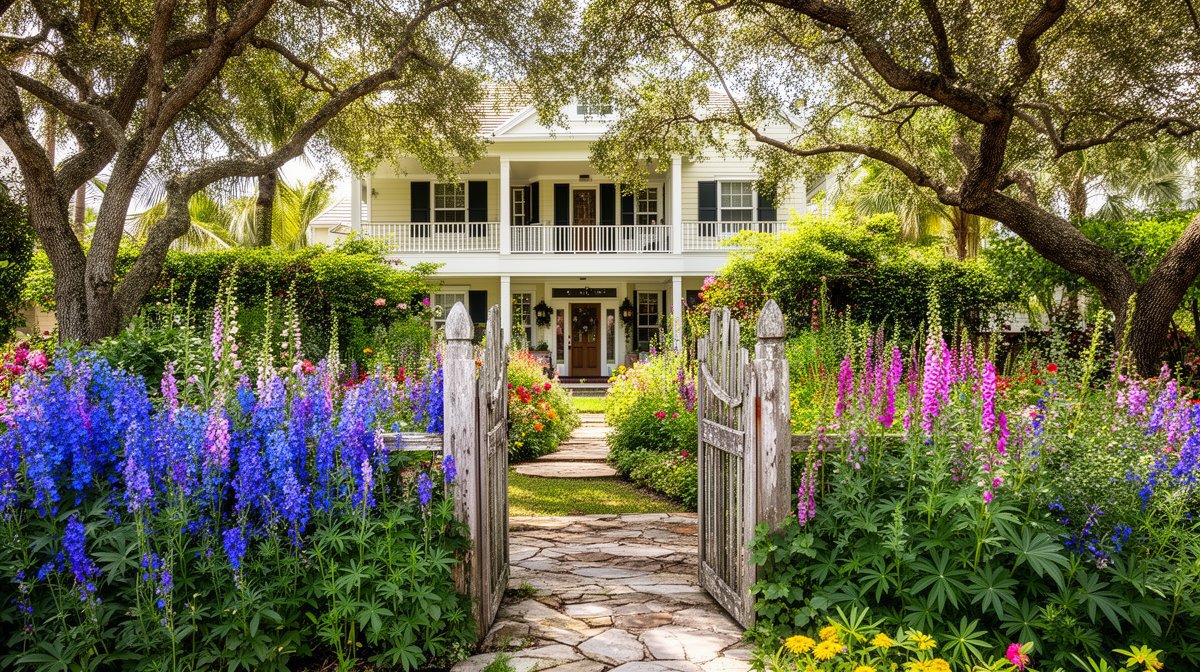
An English cottage garden in Miami Gardens has to be built honestly, because most of the classic English plant list cannot live here. Zone 10b has average extreme lows of 35–40°F, no winter chill and roughly 60 inches of rain a year, most of it in a hot, wet May-to-October season. Lavandula angustifolia, foxglove, delphinium, peonies and hollyhocks either melt in the first wet summer or never get the cold they need to flower. What you keep is the look: a full, layered border, a path that brushes past flowers, something climbing over the gate, and color from the door to the street. What changes is every plant that makes it.
The substitutes are good, and several are Florida natives. Angelonia angustifolia 'Serena' and Salvia farinacea 'Victoria' give the blue spires that foxglove and delphinium give in England. Plumbago auriculata 'Imperial Blue' does the job of a catmint edging, and Stachytarpheta jamaicensis, the native blue porterweed, fills the gap left by lavender while feeding butterflies all year. For roses, choose old garden and Earth-Kind types grafted on Fortuniana rootstock, such as Rosa 'Louis Philippe', 'Mrs. B.R. Cant' and 'Belinda's Dream', which handle the heat and the nematodes in sandy soil. Over the arbour, Trachelospermum jasminoides and Petrea volubilis 'Queen's Wreath' take the place of a climbing rose that would sulk.
The houses help. Carol City, Bunche Park and Myrtle Grove are full of modest 1950s and 1960s concrete-block ranches with a short front walk, a low wall or chain-link line and a front setback small enough that a deep border reads from the street. Painted block, a pastel door and a picket or aluminum fence are a natural cottage backdrop, and the small lots mean a cottage border of 300–500 square feet looks full rather than unfinished. In Rolling Oaks and Lake Lucerne the bigger lots can take a proper rose arbour and a seating circle.
Soil and water decide the details. Under the sod is fine sand and fill over limestone, alkaline at about pH 7.5–8.3, so roses and gardenias need chelated iron and a 2–3 inch layer of compost worked in each year. There is no frost line, but the rock is close, so beds are built up rather than dug down. Miami-Dade allows spray irrigation only two days a week, which suits a cottage border fed by drip line under the mulch. And because the wet season drives disease, every cottage plant here gets more room between it and its neighbor than an English book would suggest.
4 Cottage/English Design Ideas for Miami Gardens

AI-generated image
The Block Ranch Picket Border
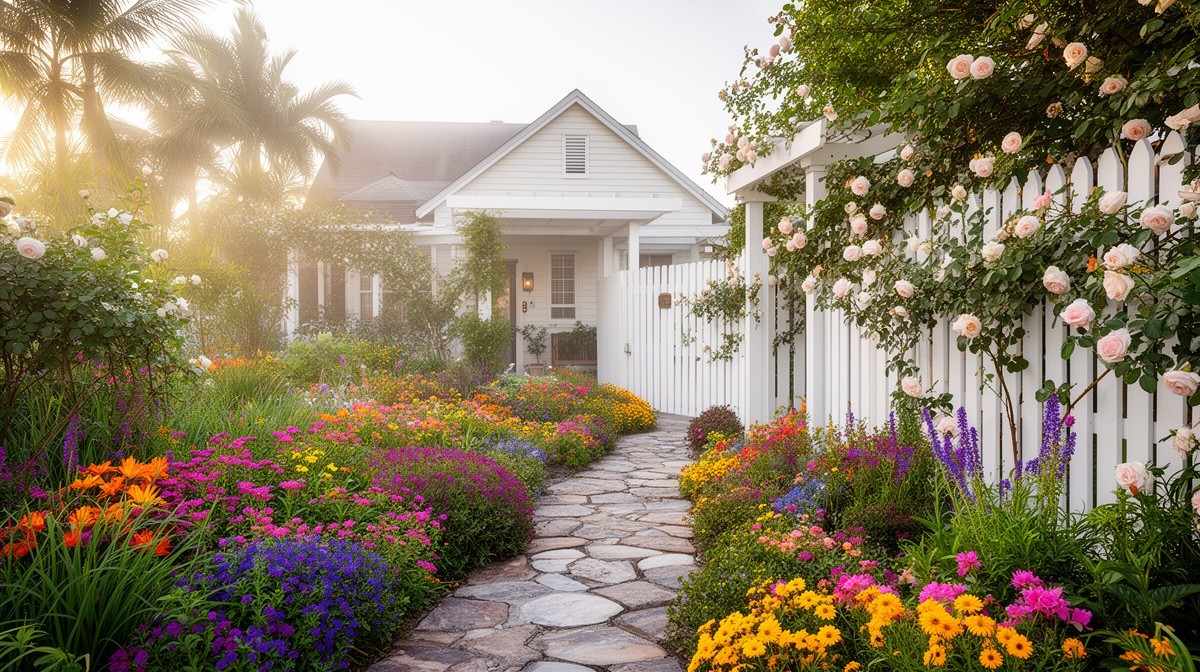
$12–24/sqftA pastel 1960s concrete-block ranch in Myrtle Grove gets a white aluminum picket fence along the frontage and a 6 ft deep border behind it, mounded above the lawn. Blue porterweed and Imperial Blue plumbago fill the back, Serena angelonia and pentas the middle, and a low clipped edge of Podocarpus 'Pringles Dwarf' holds the front where boxwood would fail. The border faces south to the street, so it gets full sun from late morning, which is what keeps the flowering heavy through the year.

AI-generated image
The Queen's Wreath Gate Arbour
$16–32/sqftA cedar arbour over the front gate of a Norland ranch carries Queen's Wreath on one side and Confederate jasmine on the other, so the gate is purple in spring and scented in early summer. A curved brick path runs from the arbour to the porch through low beds of Mexican heather and Victoria salvia, with a Louis Philippe rose on Fortuniana rootstock at each corner of the stoop. The arbour sits on the sunny side of the yard so the vines flower; the porch end, shaded by the house, carries the softer plants.

AI-generated image
The Rose and Butterfly Back Border
$14–28/sqftAlong the back fence of an Andover or Vista Verde yard, a long curved border mixes heat-proof roses with butterfly plants: Belinda's Dream and Mrs. B.R. Cant roses spaced 4 feet apart for airflow, firebush and pentas between them, and a front edge of perennial peanut. A small shellstone landing with a bench sits where the border curves, facing east so the morning sun dries the rose leaves fast. Monarchs, zebra longwings and sulfurs visit most of the year.

AI-generated image
The Lake Lucerne Tea Circle
$20–45/sqftOn a larger lake-view lot, a gravel circle with a café table sits in a lawn of Palmetto St. Augustine, ringed by a deep cottage planting of white and blue: white plumbago, Serena White angelonia and Victoria salvia, with a red fringe of firecracker plant spilling over the gravel edge. A Confederate jasmine-covered pergola on the west side throws afternoon shade over the table. It is a cottage garden that looks cool even in August.
See how a cottage/english garden looks on YOUR property
Upload a photo of your Miami Gardens yard and visualize your dream garden in seconds.
Try ProScapeAI Free

AI-generated image
Featured Trees & Shrubs for Cottage/English Gardens
Browse all 150 plants for Miami Gardens
Bismarck Palm
Bismarckia nobilis
reaches 30 feet tall, blooms in summer. Pollinator-friendly.

Clustering Fishtail Palm
Caryota mitis
medium-sized at 15 feet, yellow blooms in summer. Pollinator-friendly.

Pygmy Date Palm
Phoenix roebelenii
grows to 6 feet, yellow blooms in spring. Pollinator-friendly.

Royal Palm
Roystonea regia
large shade tree reaching 50+ feet, white blooms in spring. Pollinator-friendly.
Featured Grasses & Groundcovers for Cottage/English Gardens
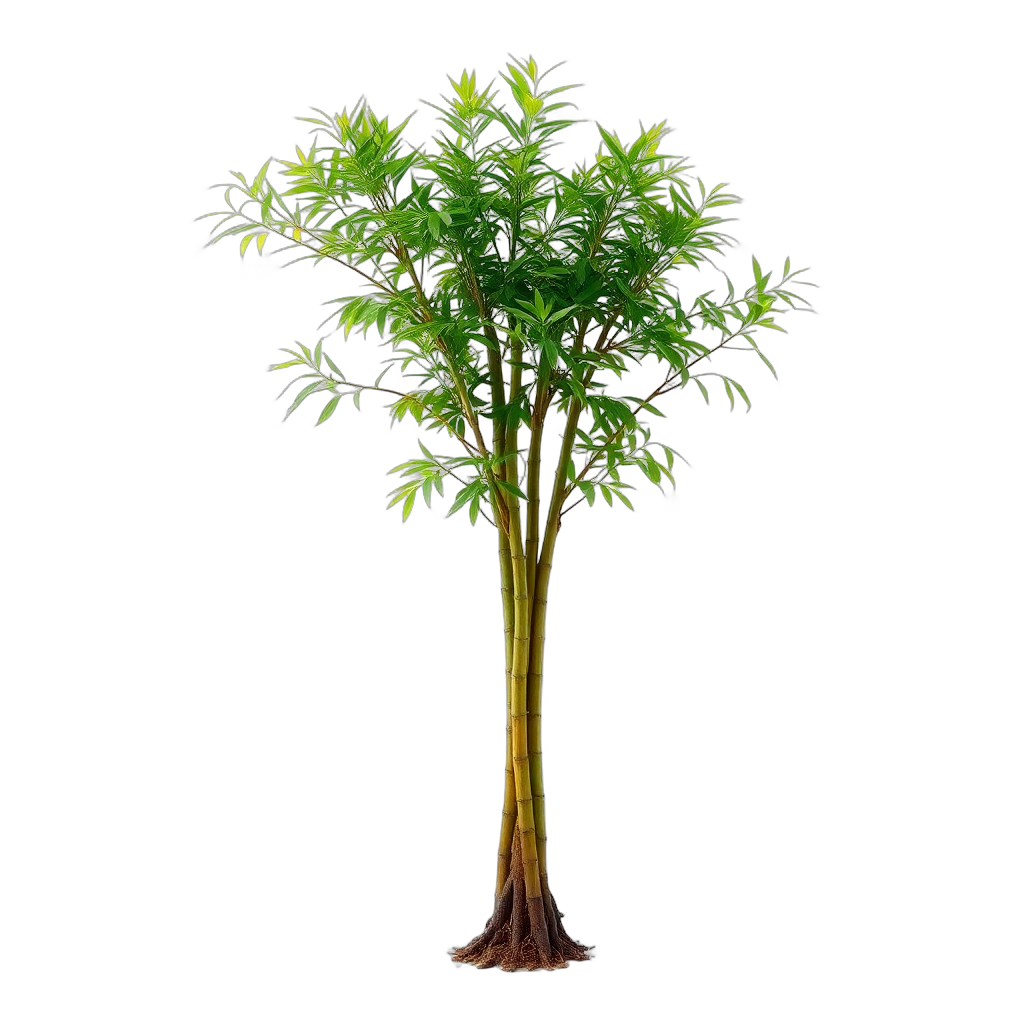
Anceps Bamboo
Yushania anceps
medium-sized at 12 feet, blooms in none. Evergreen year-round.
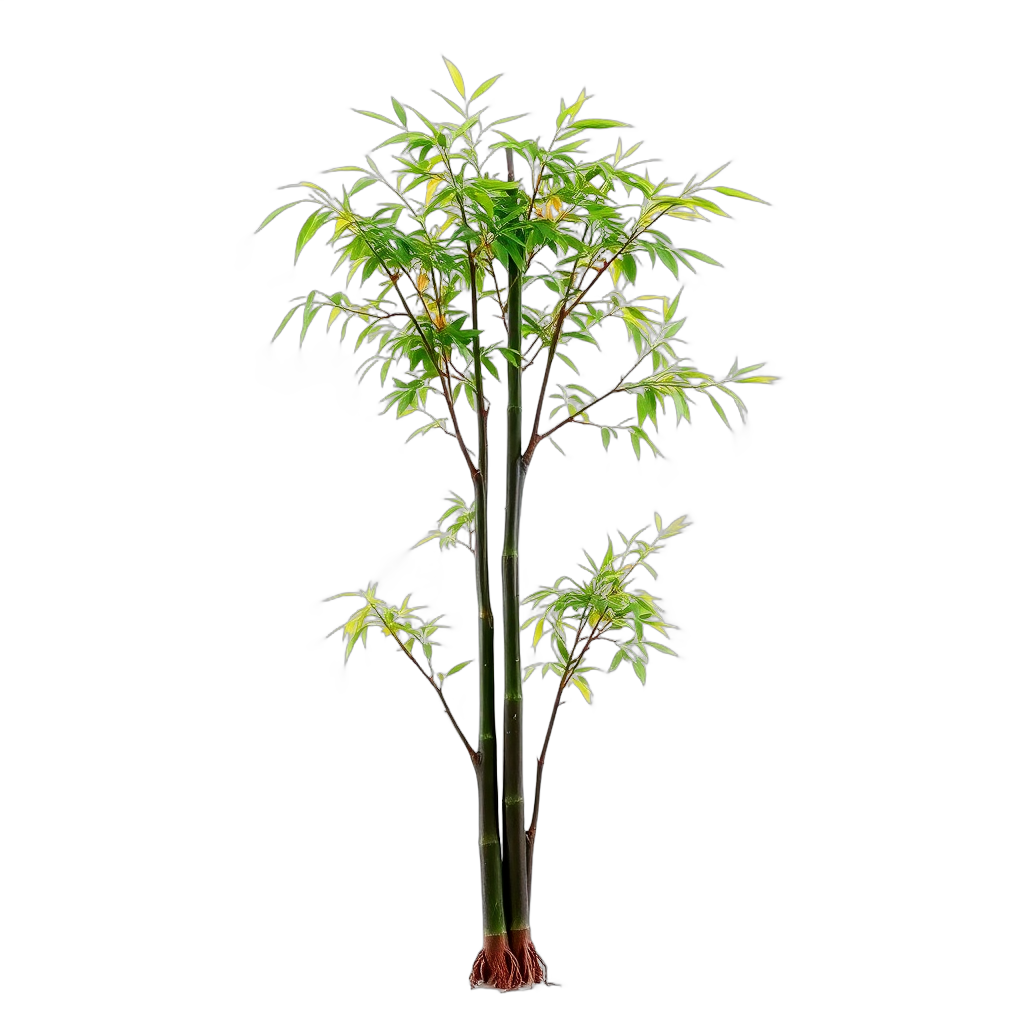
Black Bamboo
Phyllostachys nigra
reaches 25 feet tall, blooms in none. Evergreen year-round.
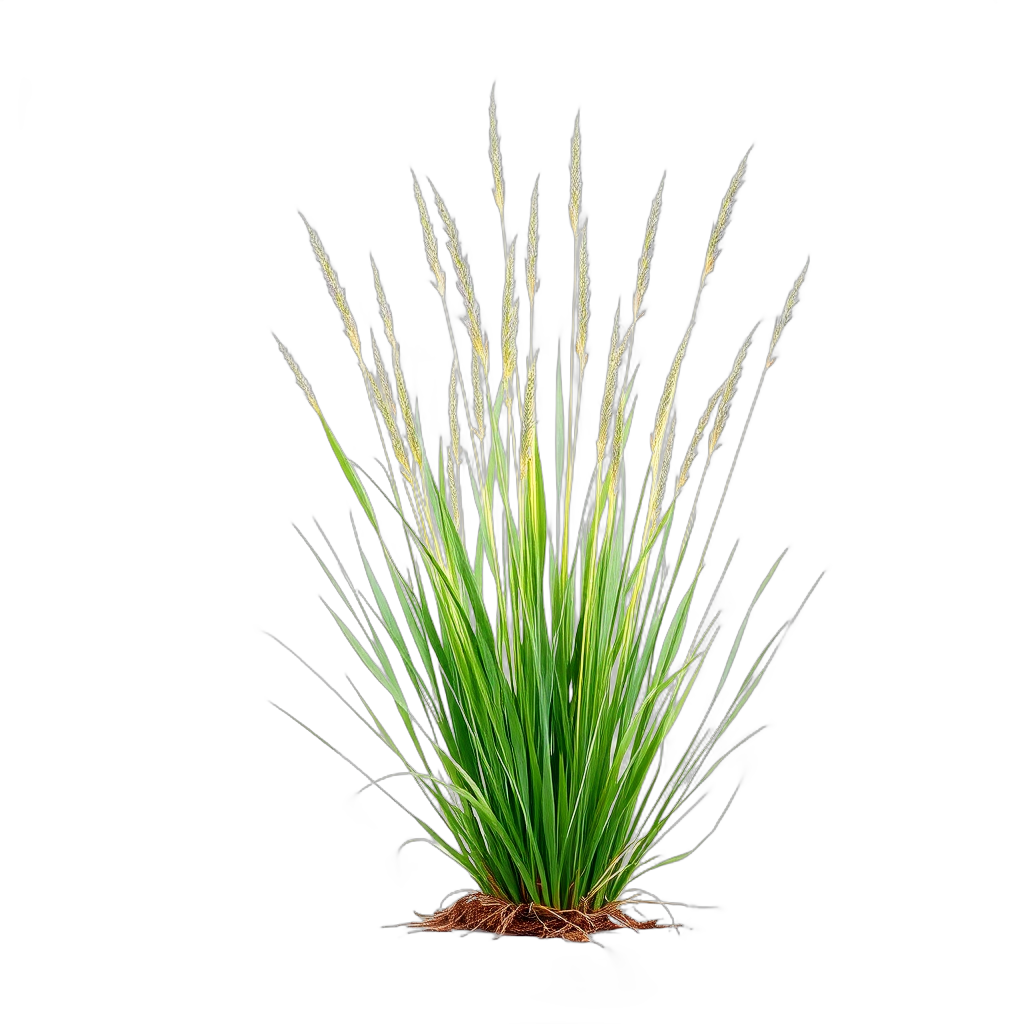
Blue Grama Grass
Bouteloua gracilis
low-growing ground cover, purple blooms in summer. Yellow fall color.
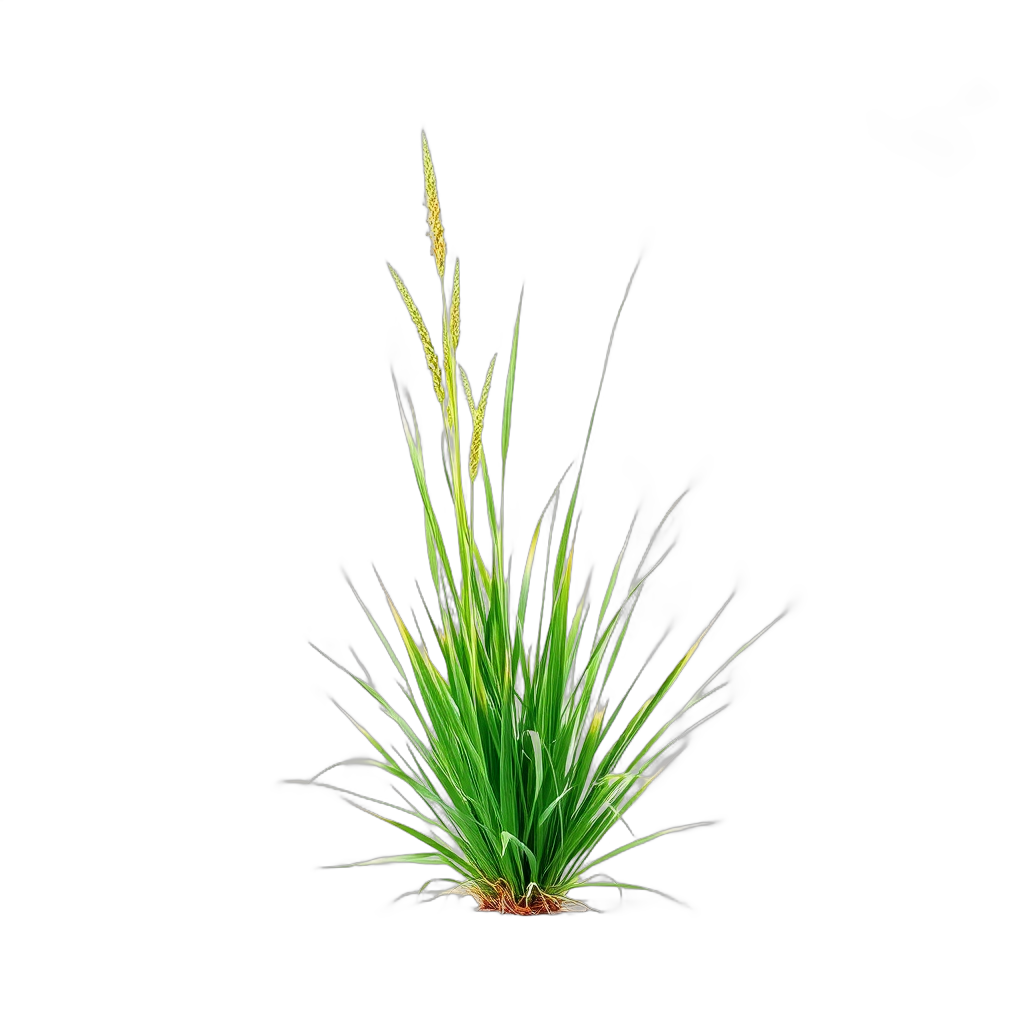
Bull Grass
Muhlenbergia emersleyi
grows to 4 feet, purple blooms in fall. Yellow fall color.
Featured Flowers & Perennials for Cottage/English Gardens

Canadian Waterweed
Elodea canadensis
grows to 3 feet, white blooms in spring. Evergreen year-round.

Common Cattail
Typha latifolia
grows to 5 feet, blooms in summer. Pollinator-friendly.

Common Duckweed
Lemna minor
low-growing ground cover, white blooms in summer. Evergreen year-round.

European Frogbit
Hydrocharis morsus-ranae
low-growing ground cover, white blooms in summer. Pollinator-friendly.
Zone and sun checks come from our database — confirm with your local nursery before you buy.
Bloom Calendar for Miami Gardens
spring
Canadian Waterweed, Sweet Flag, African Daisysummer
Canadian Waterweed, Common Cattail, Common Duckweedfall
Canadian Waterweed, Pickerelweed, African Daisywinter
Limited bloomsDesign Tips for Miami Gardens (Zone 10b)
- Swap every English plant that needs winter cold: in Zone 10b with 35–40°F lows, Angelonia angustifolia 'Serena' replaces foxglove, Stachytarpheta jamaicensis replaces lavender and Plumbago 'Imperial Blue' replaces catmint
- Buy roses on Fortuniana rootstock only; in Miami Gardens' sandy, nematode-heavy soil they outlive own-root and Dr. Huey plants by years
- Mound borders 6 inches above the lawn and work 2–3 inches of compost in each fall, since the sand over limestone holds little water or nutrient and the wet season can flood flat beds
- Feed roses, gardenias and ixoras chelated iron (Fe-EDDHA): the soil runs pH 7.5–8.3 and yellow leaves are the result, not a lack of water
- Run drip under the mulch rather than spray heads: Miami-Dade limits spray watering to two days a week, and dry leaves mean far less blackspot
- Choose powder-coated aluminum over wood for pickets and arbours; wood rots fast in the humidity and termites are active all year
- Plant winter annuals such as snapdragons and petunias in November for an English-style show from December to March, then let the heat-proof perennials take over
Where to Source Plants in Miami Gardens
Skip the big-box stores. These independent Miami Gardens nurseries specialize in the plants that make cottage/english gardens thrive in Zone 10b.
Flora of Miami
Allapattah, Miami (NW 21st Street)
Native plant nursery selling locally sourced Florida natives from 1-gallon pots to large trees, with workshops and landscaping help; open Thursday to Sunday, so call ahead for stock
Pop's Nursery
Hollywood (North University Drive)
Family-run tropical plant nursery a short drive north up University Drive, carrying tropical container plants, decorative pebble and rock, and landscape design help
Midtown Garden Center
Midtown / Edgewater, Miami
City garden centre with hand-picked indoor and outdoor plants, pottery and arrangements, plus install and delivery
Living Color Garden Center
Fort Lauderdale (Griffin Road)
Five-acre independent centre with plants, pottery and fountains; about 80% of its stock is grown at its sister nursery, Black Olive East, so anthuriums, orchids and bougainvillea are a strength
Florida Nursery Mart
Cooper City (Griffin Road)
Open seven days with more than 400 kinds of plants: palms, shade and flowering trees, hedging, Florida natives and fruit trees, plus 'Palmetto' St. Augustine sod, mulch, stone and soil
Cottage/English Landscaping Costs in Miami Gardens
| Project Scope | Estimated Cost |
|---|---|
| Front cottage border with drip (300–500 sqft) | $4,500 – $11,000 |
| White aluminum picket fence and gate (60 ft frontage) | $2,500 – $6,000 |
| Clay brick path on a limerock base (120–200 sqft) | $2,200 – $6,000 |
| Gate arbour with vines, installed | $1,500 – $4,500 |
| Back rose and butterfly border with seating pad | $8,000 – $20,000 |
| Pergola engineered for the hurricane zone, with permit | $6,000 – $16,000 |
| AI visualization (ProScapeAI) | Free to start |
Estimates based on Miami Gardens, FL-area contractor rates as of 2026. Actual costs vary by site conditions, materials, and contractor.
Miami Gardens Climate & Growing Zone
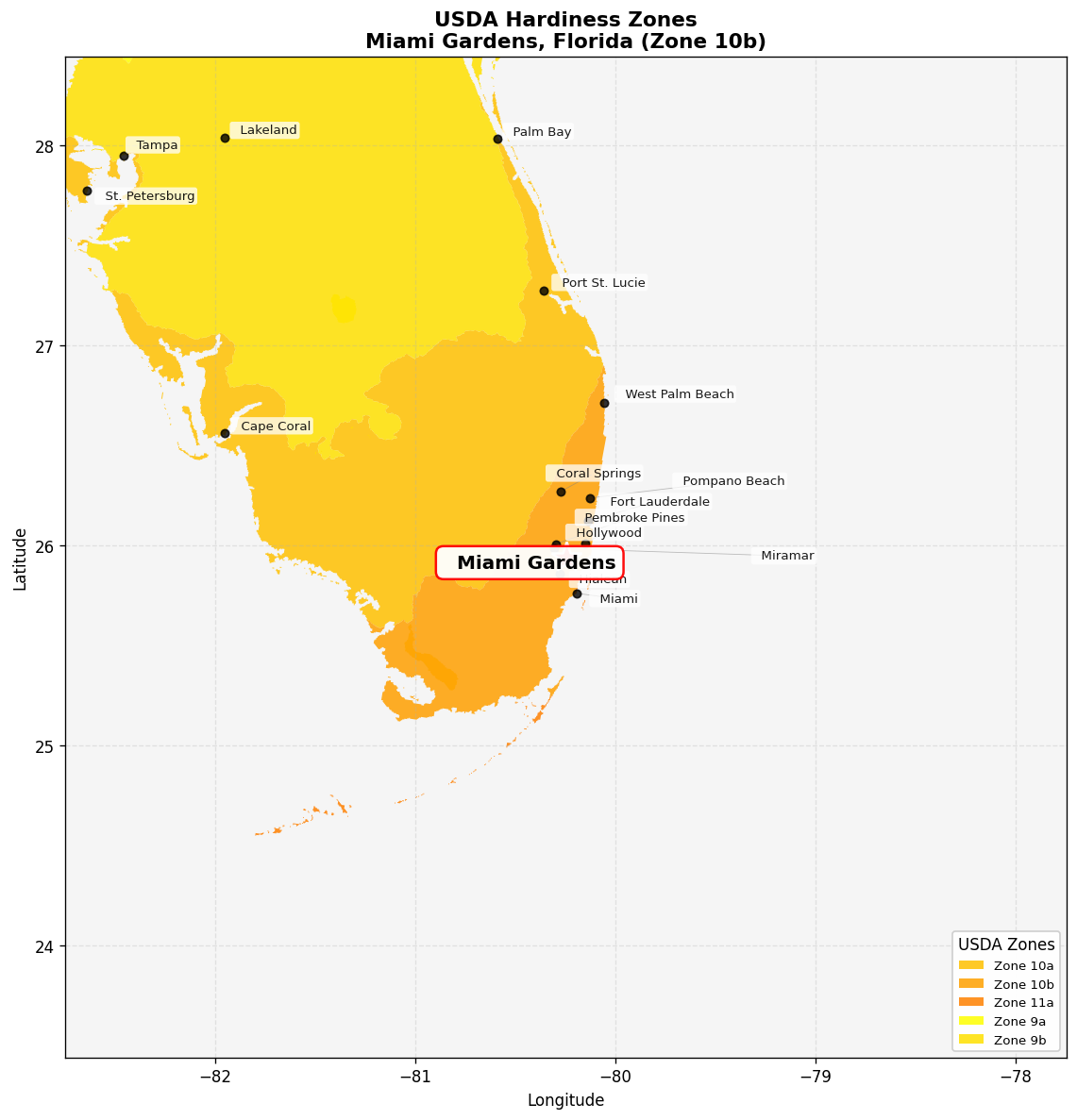
USDA Zone 10b
Hardiness zone for Miami Gardens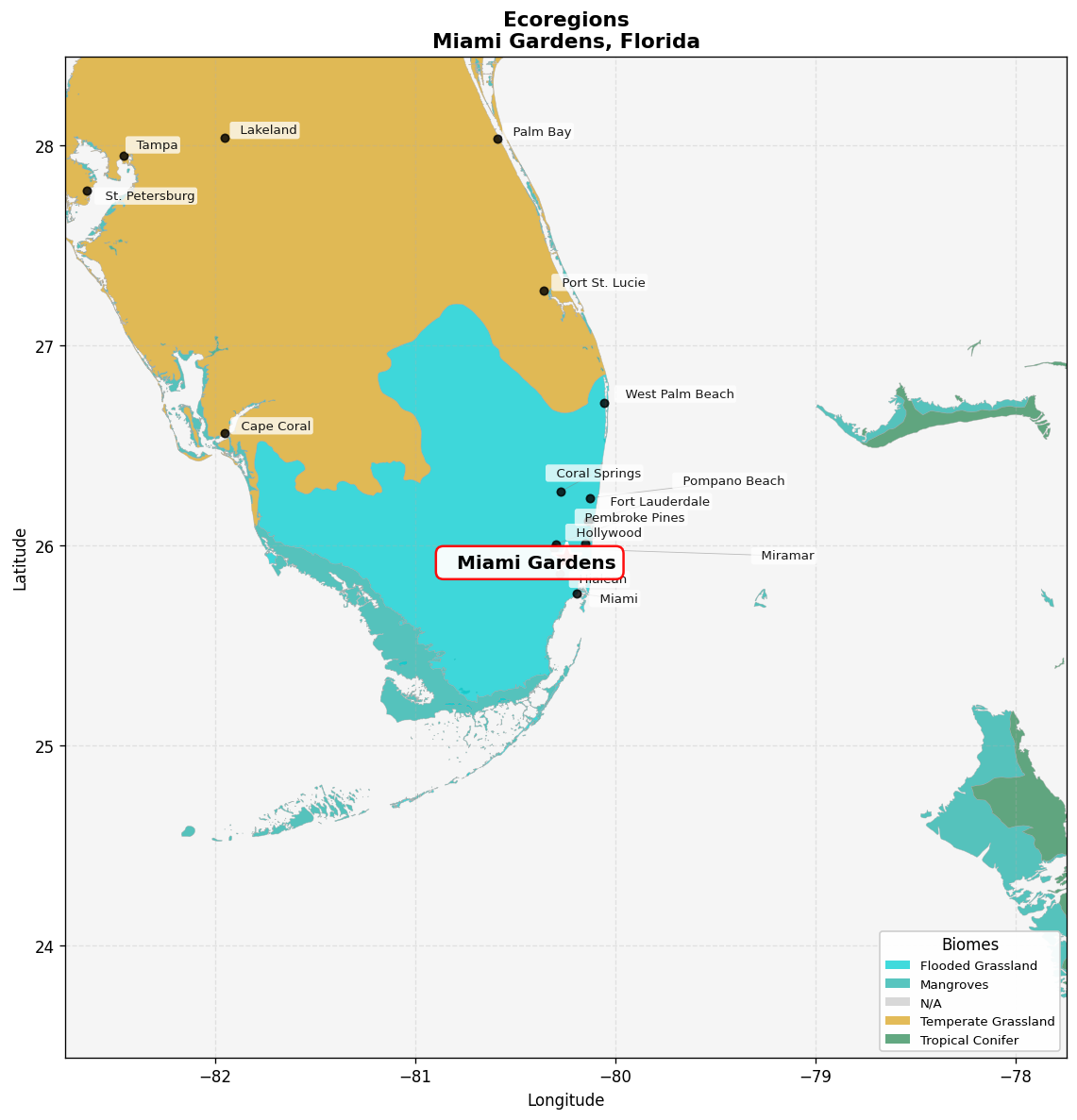
Everglades flooded grasslands
Native ecoregionFrequently Asked Questions
How much does a cottage garden cost in Miami Gardens, FL?
Miami-Dade landscape crews charge roughly $45–75 per hour. A planted front cottage border with drip, on a 300–500 sqft frontage in Carol City or Myrtle Grove, runs about $4,500–11,000; add $2,500–6,000 for a white aluminum picket fence and gate. A brick path on a limerock base is about $18–30 per square foot, and a cedar or aluminum gate arbour $1,500–4,500 installed. A full back cottage border with roses, a seating pad and a pergola on a bigger Lake Lucerne lot commonly lands between $18,000 and $45,000. Doing the planting yourself with 1-gallon Angelonia angustifolia 'Serena' and Stachytarpheta jamaicensis keeps a border near $6–8 per square foot.
Can I grow lavender, foxglove and delphinium in Miami Gardens?
Not as perennials. Lavandula angustifolia rots in the wet season, and foxglove and delphinium need a cold winter that Zone 10b, with lows of 35–40°F, never gives. You can treat foxglove as a December-to-March annual, but the border should be built from substitutes: Angelonia angustifolia 'Serena' and Salvia farinacea 'Victoria' for blue spires, Stachytarpheta jamaicensis (native porterweed) in the lavender role, and Plumbago auriculata 'Imperial Blue' as a soft blue edging.
Which roses actually grow here?
Choose roses grafted on Fortuniana rootstock, which copes with sandy soil and nematodes far better than Dr. Huey or own-root plants in South Florida. Rosa 'Louis Philippe', 'Mrs. B.R. Cant', 'Duchesse de Brabant' and 'Belinda's Dream' flower most of the year and shrug off blackspot better than hybrid teas. Give each one six hours of sun, east light so leaves dry early, 4 feet of space, drip at the base and a chelated iron feed, because the pH 7.5–8.3 soil locks iron up.
When should I plant a cottage border in Miami Gardens?
October through March is the best window for a cottage border: the heat drops, the rain eases off and fungal pressure is low, so roses and Salvia farinacea 'Victoria' root in before May. That is also the season to plant winter annuals such as petunias, snapdragons and foxglove for a short English show. Avoid planting roses in July and August, when heat and daily storms stress new roots.
What are the watering rules in Miami Gardens?
Miami-Dade's permanent rule allows lawn irrigation two days a week: odd-numbered addresses on Wednesday and Saturday, even-numbered addresses on Thursday and Sunday, and only before 10 a.m. or after 4 p.m. Drip and micro-jet irrigation is not restricted, and newly installed landscaping may be watered every day except Friday, in the same hours, for its first 90 days (keep the plant receipt). A cottage border on drip under the mulch is the easiest way to keep flowering going through the dry months without breaking the rule.
Do I need a permit or HOA approval for a fence or arbour?
Removing a tree needs a City of Miami Gardens tree removal permit: the application wants a property survey, a site plan showing the trunk and canopy size of the trees involved and the quantity and variety of each proposed plant, and a Homeowners Association Affidavit of Awareness. A Notice of Commencement has to be recorded for permitted work valued over $5,000. Pergolas, pool work and larger structures also fall under the Florida Building Code's High-Velocity Hurricane Zone, which covers all of Miami-Dade, so they need permitted, engineered designs. Check with the city's Building and Code department before you start. Fences also have height and setback rules, and many Rolling Oaks and Andover homes sit inside an HOA, so check both before ordering the picket fence.
What replaces boxwood for a clipped cottage edge?
Boxwood struggles in South Florida's heat, nematodes and alkaline sand. For a clipped low edge use Podocarpus macrophyllus 'Pringles Dwarf', Ilex vomitoria 'Schillings Dwarf' or the native Psychotria nervosa (wild coffee) in part shade. All three take a shear twice a year and keep the crisp line a cottage border needs.