4 Tropical Garden Ideas for Miami Gardens, FL | Palms, Fruit and Shade in Zone 10b
Native plants from the Everglades flooded grasslands (Zone 10b) — Tropical monsoon climate
Why Tropical/Lush Gardens in Miami Gardens?
Miami Gardens is about as close to the tropics as a mainland American suburb gets, and a tropical garden here is just what the climate grows. USDA Zone 10b means average extreme winter lows of 35–40°F, so Bismarckia nobilis, Heliconia psittacorum 'Lady Di', Alpinia purpurata 'Jungle King' and a full canopy of mango stay in the ground all year. The city's house stock suits the style too: the 1950s and 1960s concrete-block ranches of Carol City, Bunche Park and Myrtle Grove sit on flat, square lots with a carport, a jalousie-window front and a fenced back yard, while Rolling Oaks, Lake Lucerne and Andover add bigger lots and lake frontage. Every one of them has room for a palm, a fruit tree and a layered bed.
Water matters more here than cold. The area takes roughly 60 inches of rain a year, most of it between May and October when afternoon storms can drop two or three inches in an hour, and then goes almost dry from December to April. The city sits on the eastern rim of the old Everglades flooded grasslands, and under the sod most lots are a thin layer of fine sand and fill over limestone, with gray marl in the lower spots near the lakes and the Snake Creek Canal. That soil runs alkaline, about pH 7.5–8.3, which is why gardenias and Ixora 'Nora Grant' turn yellow without chelated iron and why Chrysobalanus icaco 'Red Tip', Zamia integrifolia and Sabal palmetto, all native to this ground, never do. There is no frost line to dig below; what you dig into is rock.
Wind is the third factor. All of Miami-Dade is in the Florida Building Code's High-Velocity Hurricane Zone, and a tropical garden here should be built to come through a storm. Sabal palmetto, Roystonea regia and Adonidia merrillii shed fronds and flex; a tall queen palm or a shallow-rooted Ficus benjamina tends to come down across the carport. Plant the big specimens well away from the roof line, keep the canopy open enough for wind to pass, and save the soft, showy layer of Codiaeum variegatum 'Petra', Neoregelia 'Fireball' and Alcantarea imperialis for the protected side of the house.
Miami-Dade's two-day watering rule (odd addresses Wednesday and Saturday, even addresses Thursday and Sunday, before 10 a.m. or after 4 p.m.) pushes a tropical yard toward drip-fed beds, mulch and natives, and the City of Miami Gardens wants a permit before you take a tree out. Design the garden around the trees you already have, put the thirsty plants in one drip zone, and the rest will live on the rain.
4 Tropical/Lush Design Ideas for Miami Gardens

AI-generated image
The Carport Ranch Palm Court
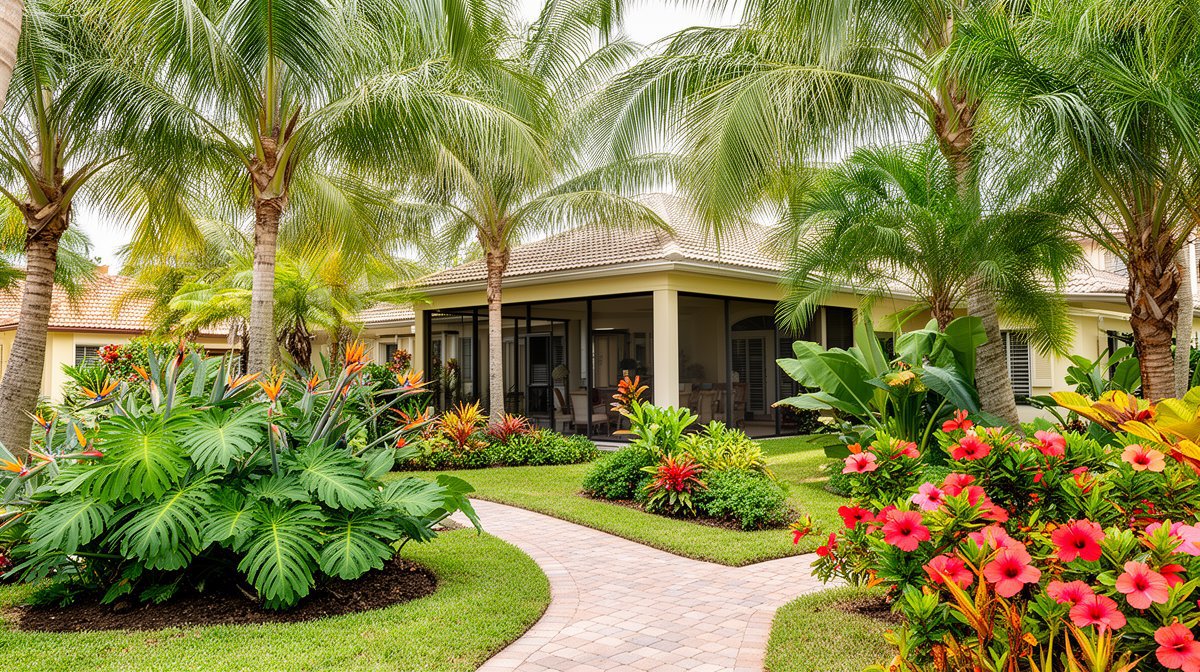
$9–18/sqftA 1960s concrete-block ranch in Carol City keeps its open carport, but the lawn between it and the street becomes a raised, curved bed edged in rough limestone boulders. A triple Adonidia merrillii stands off the front corner where it catches the full afternoon sun from the west, underplanted with a sweep of crotons and coontie, and a single Bismarckia nobilis anchors the far side well clear of the roof. The bed is mounded six inches so the wet-season downpours run off to the swale instead of sitting around the roots.

AI-generated image
The Back-Yard Mango Grove
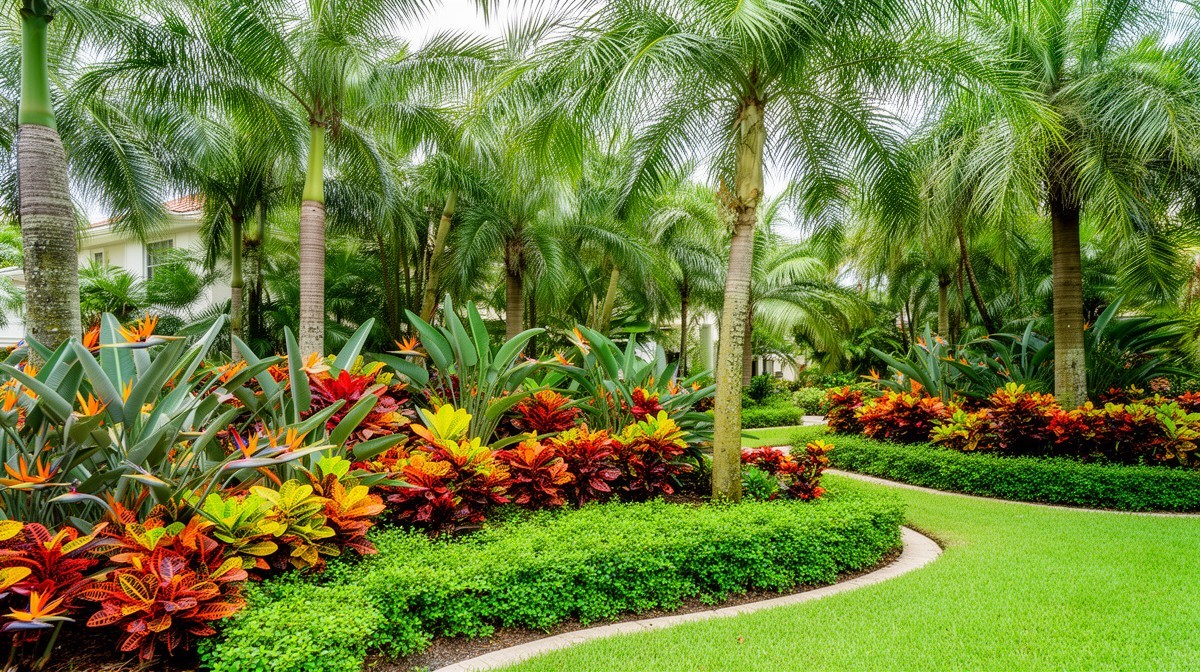
$8–16/sqftThe fenced back yard of a Norland or Scott Lake ranch is planted as a small grove: two grafted mangoes and a Choquette avocado set 20 feet apart in the sunniest corner, with a paver path winding under them to a shaded seating pad. Beneath the trees sit Calathea lutea, wild coffee and bromeliads that like the dappled light, and a low hedge of red-tip cocoplum hides the chain-link. It is the most traditional Miami Gardens back yard there is, done with grafted dwarf trees so the fruit stays within reach and the canopy does not shade out the house.

AI-generated image
The Lake Lucerne Pool Jungle
$22–45/sqftA screened pool behind a larger 1980s house on the lake gets a deep planting pocket on the side away from the water, layered from tall to low. Foxtail palms and a clumping Heliconia rise behind a wall of red ginger, philodendron and giant bromeliads fill the middle, and travertine decking stays cool underfoot in the noon sun. The tall layer sits on the south side so it shades the deck in the afternoon without dropping leaves straight into the pool.

AI-generated image
The Native Hammock Strip
$6–12/sqftThe side yard between two Bunche Park houses, often a dead strip of sand, becomes a narrow native hammock: a gumbo limbo and a Sabal palm for height, Simpson's stopper and firebush in the middle, coontie and native bromeliads at the ground. The house walls give morning or afternoon shade on either side, which is how a hardwood hammock likes it, and once established the strip lives on rain alone. It pulls in butterflies and birds and asks for one trim a year.
See how a tropical/lush garden looks on YOUR property
Upload a photo of your Miami Gardens yard and visualize your dream garden in seconds.
Try ProScapeAI Free

AI-generated image
Featured Trees & Shrubs for Tropical/Lush Gardens
Browse all 150 plants for Miami Gardens
Bismarck Palm
Bismarckia nobilis
reaches 30 feet tall, blooms in summer. Pollinator-friendly.

Clustering Fishtail Palm
Caryota mitis
medium-sized at 15 feet, yellow blooms in summer. Pollinator-friendly.

Pygmy Date Palm
Phoenix roebelenii
grows to 6 feet, yellow blooms in spring. Pollinator-friendly.

Royal Palm
Roystonea regia
large shade tree reaching 50+ feet, white blooms in spring. Pollinator-friendly.
Featured Grasses & Groundcovers for Tropical/Lush Gardens
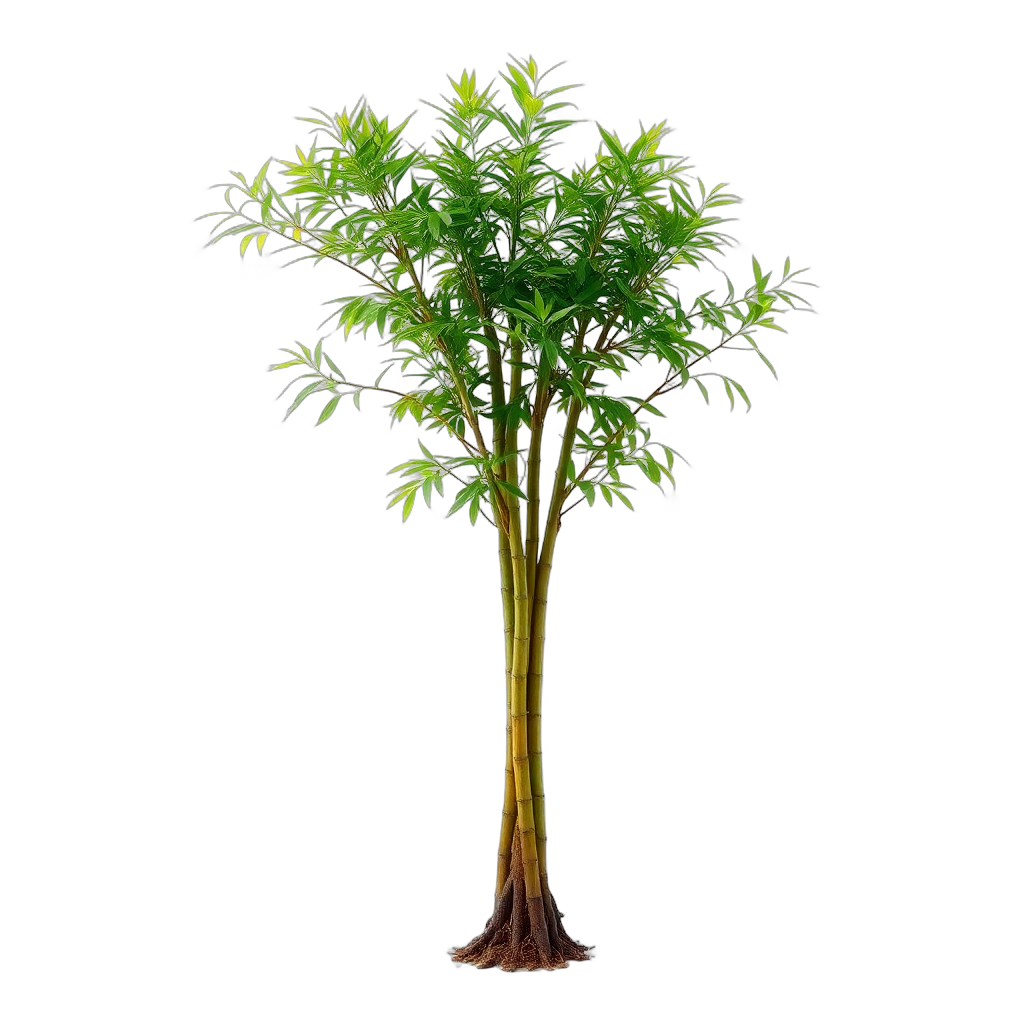
Anceps Bamboo
Yushania anceps
medium-sized at 12 feet, blooms in none. Evergreen year-round.
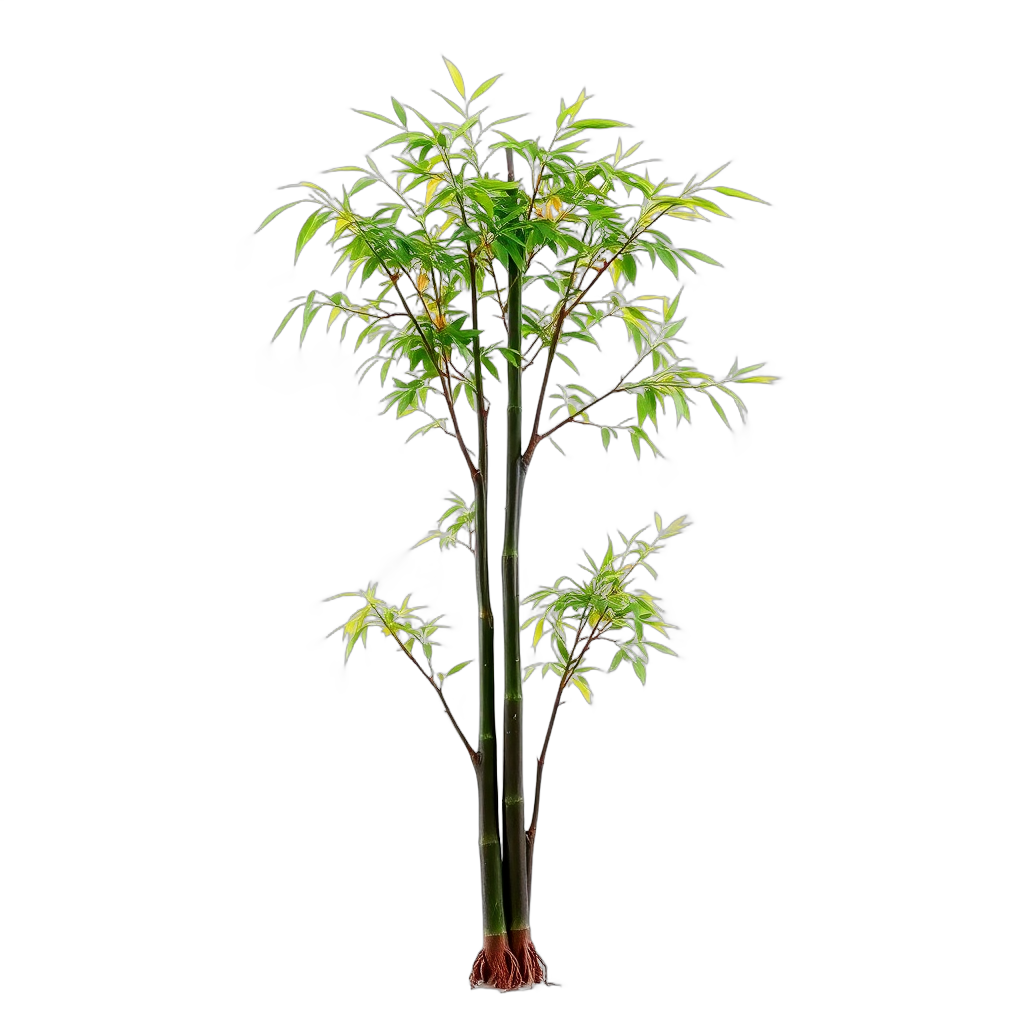
Black Bamboo
Phyllostachys nigra
reaches 25 feet tall, blooms in none. Evergreen year-round.
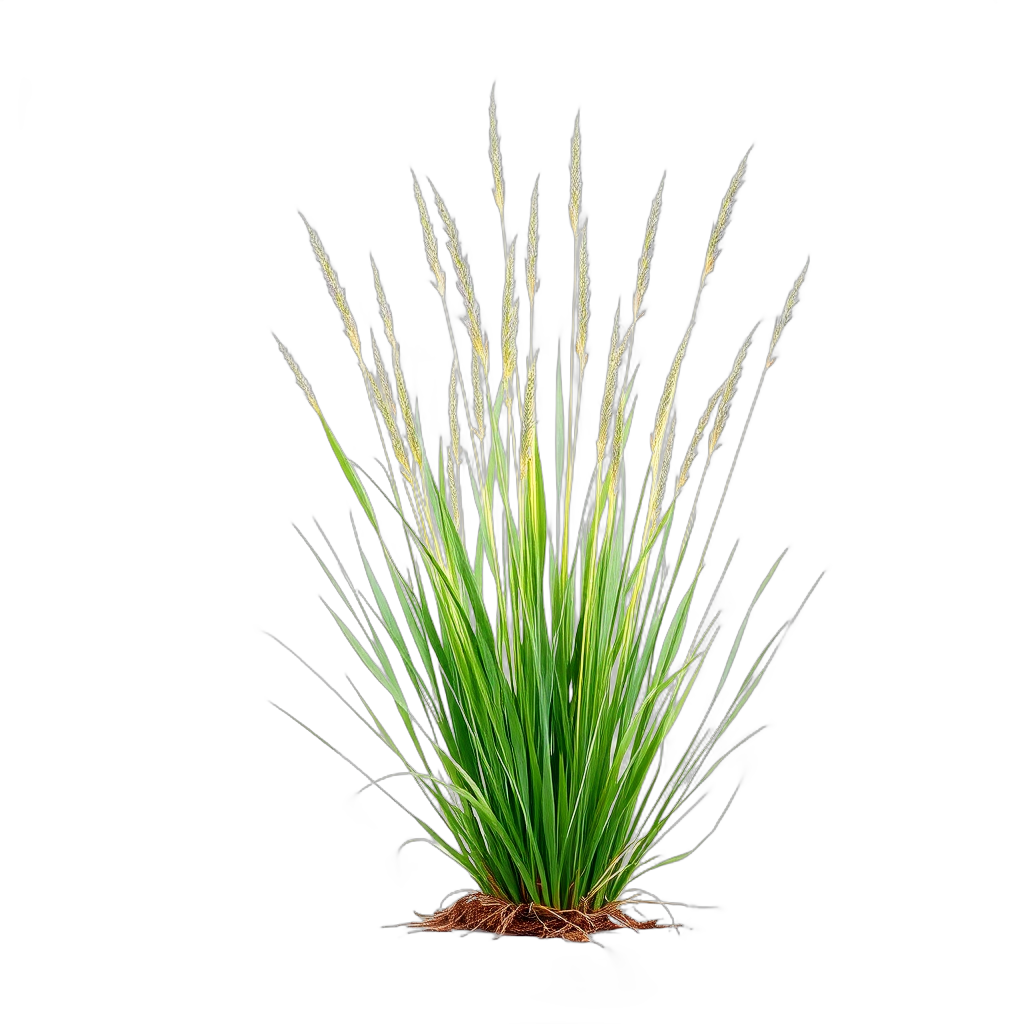
Blue Grama Grass
Bouteloua gracilis
low-growing ground cover, purple blooms in summer. Yellow fall color.
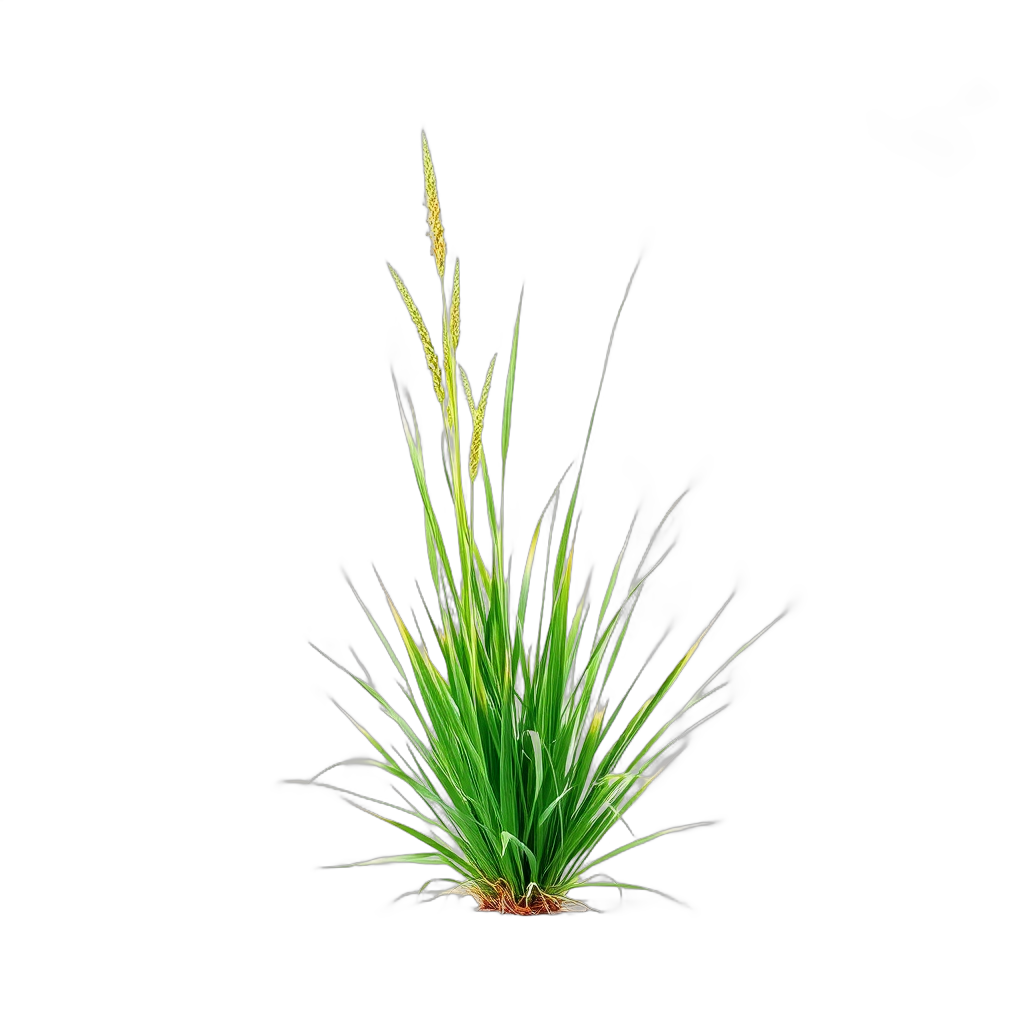
Bull Grass
Muhlenbergia emersleyi
grows to 4 feet, purple blooms in fall. Yellow fall color.
Featured Flowers & Perennials for Tropical/Lush Gardens

Canadian Waterweed
Elodea canadensis
grows to 3 feet, white blooms in spring. Evergreen year-round.

Common Cattail
Typha latifolia
grows to 5 feet, blooms in summer. Pollinator-friendly.

Common Duckweed
Lemna minor
low-growing ground cover, white blooms in summer. Evergreen year-round.

European Frogbit
Hydrocharis morsus-ranae
low-growing ground cover, white blooms in summer. Pollinator-friendly.
Zone and sun checks come from our database — confirm with your local nursery before you buy.
Bloom Calendar for Miami Gardens
spring
Canadian Waterweed, Sweet Flag, African Daisysummer
Canadian Waterweed, Common Cattail, Common Duckweedfall
Canadian Waterweed, Pickerelweed, African Daisywinter
Limited bloomsDesign Tips for Miami Gardens (Zone 10b)
- Mound every bed 6–8 inches above the lawn: a wet-season storm can drop two or three inches in an hour on Miami Gardens' flat lots, and crowns that sit in water rot faster than anything the 35–40°F winter lows can do
- Build the backbone from natives that like pH 7.5–8.3 limestone soil (Sabal palmetto, Zamia integrifolia, Chrysobalanus icaco 'Red Tip', Hamelia patens) and treat yellowing exotics like Ixora 'Nora Grant' as accents that get chelated iron
- Put the thirsty tropicals (red ginger, heliconia, calathea) in one drip zone: Miami-Dade limits spray irrigation to two days a week, but drip and micro-jet are not restricted
- Plant tall palms at least their mature height from the roof and pool cage, and skip queen palms and Ficus benjamina, which are the trees most often found across Miami Gardens carports after a storm
- Fertilize palms with a slow-release 8-2-12-4Mg palm food in spring, summer and fall; potassium and magnesium deficiency, not pests, is what makes most local palms look ragged
- Use oolitic limestone boulders and shellrock for hardscape: they come out of this ground, cost less than imported stone and age well in the humidity
- Keep a 2 ft gravel strip between beds and the house's concrete-block walls so mulch never touches the stucco and termites have no bridge in
Where to Source Plants in Miami Gardens
Skip the big-box stores. These independent Miami Gardens nurseries specialize in the plants that make tropical/lush gardens thrive in Zone 10b.
Flora of Miami
Allapattah, Miami (NW 21st Street)
Native plant nursery selling locally sourced Florida natives from 1-gallon pots to large trees, with workshops and landscaping help; open Thursday to Sunday, so call ahead for stock
Pop's Nursery
Hollywood (North University Drive)
Family-run tropical plant nursery a short drive north up University Drive, carrying tropical container plants, decorative pebble and rock, and landscape design help
Midtown Garden Center
Midtown / Edgewater, Miami
City garden centre with hand-picked indoor and outdoor plants, pottery and arrangements, plus install and delivery
Living Color Garden Center
Fort Lauderdale (Griffin Road)
Five-acre independent centre with plants, pottery and fountains; about 80% of its stock is grown at its sister nursery, Black Olive East, so anthuriums, orchids and bougainvillea are a strength
Florida Nursery Mart
Cooper City (Griffin Road)
Open seven days with more than 400 kinds of plants: palms, shade and flowering trees, hedging, Florida natives and fruit trees, plus 'Palmetto' St. Augustine sod, mulch, stone and soil
Tropical/Lush Landscaping Costs in Miami Gardens
| Project Scope | Estimated Cost |
|---|---|
| Tropical front yard bed with palms, crotons and drip (500–700 sqft) | $5,000 – $12,000 |
| Single field-grown specimen palm, installed (Bismarckia or foxtail) | $600 – $2,500 |
| Back-yard fruit grove: 3 grafted trees, path and understory (1,500 sqft) | $9,000 – $22,000 |
| Pool-side layered planting with travertine edge | $25,000 – $60,000 |
| Native hammock side yard (300 sqft) | $1,800 – $3,600 |
| Drip conversion of existing beds off the lawn zones | $1,500 – $3,500 |
| AI visualization (ProScapeAI) | Free to start |
Estimates based on Miami Gardens, FL-area contractor rates as of 2026. Actual costs vary by site conditions, materials, and contractor.
Miami Gardens Climate & Growing Zone
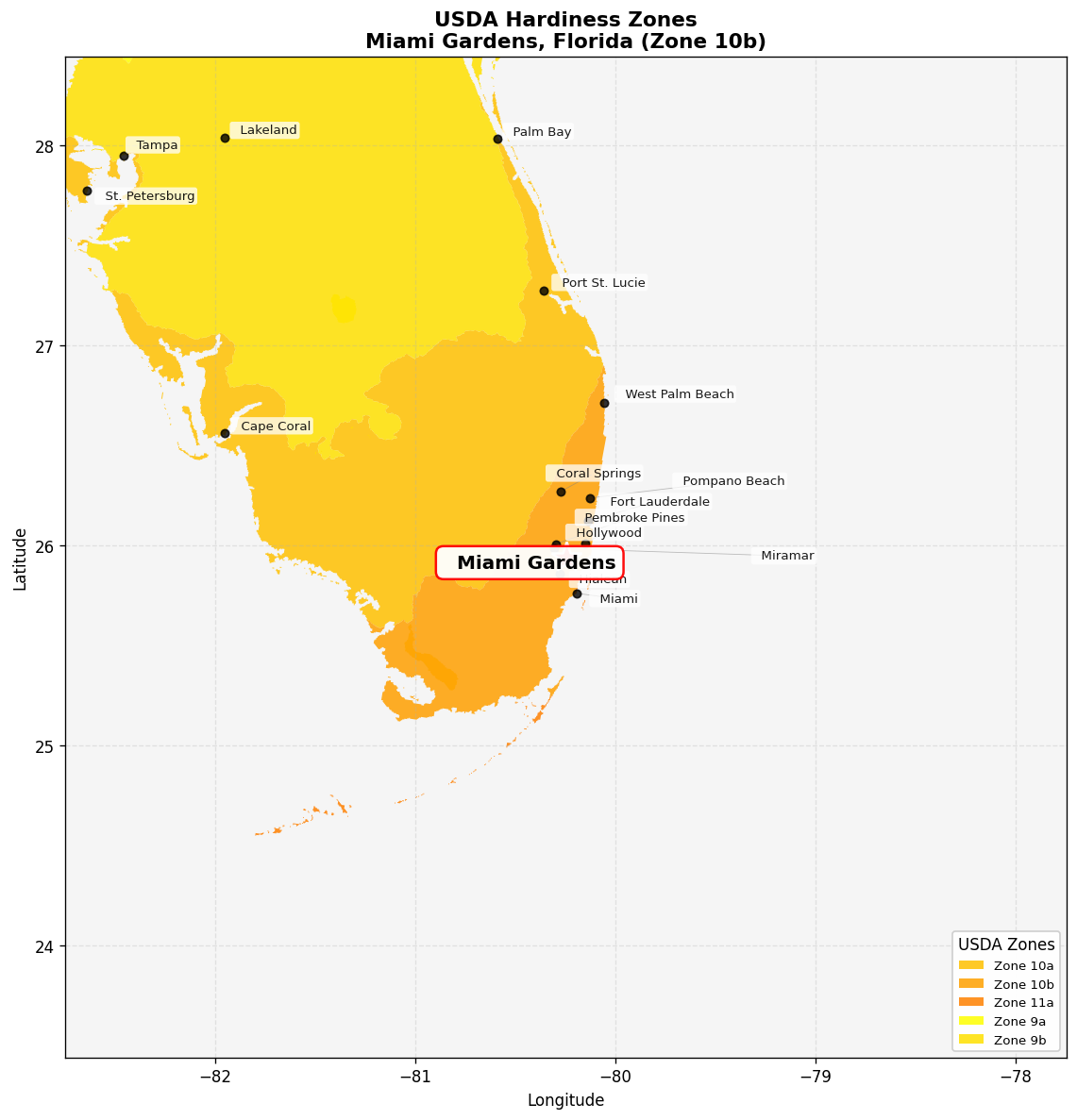
USDA Zone 10b
Hardiness zone for Miami Gardens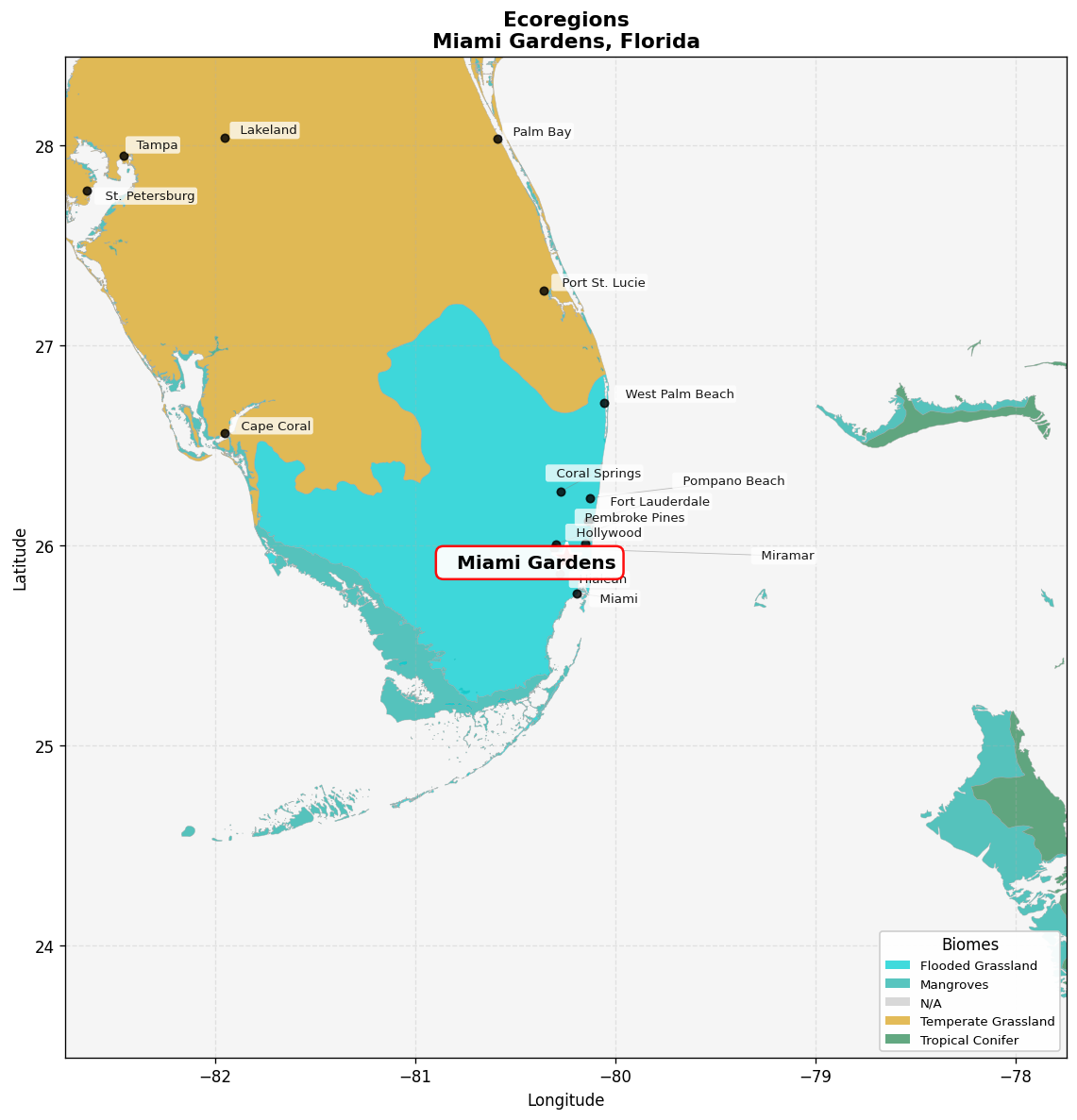
Everglades flooded grasslands
Native ecoregionFrequently Asked Questions
How much does a tropical garden cost in Miami Gardens, FL?
Miami-Dade landscape crews typically charge around $45–75 per hour, and a planted bed with mulch and drip usually lands at $8–18 per square foot installed. A tropical front yard on a typical 500–700 sqft Carol City or Norland frontage, with a triple Adonidia merrillii, crotons, coontie and a raised boulder edge, runs about $5,000–12,000. A single field-grown Bismarckia nobilis or Wodyetia bifurcata adds $600–2,500 depending on height, plus crane or tree-spade time. A layered pool-side planting with travertine on a bigger Lake Lucerne or Rolling Oaks lot commonly runs $25,000–60,000. Buying 3-gallon plants and doing the planting yourself can bring a bed under $6 per square foot.
Which palms come through a hurricane best in Miami Gardens?
Sabal palmetto is the toughest palm you can plant here: it flexes, sheds fronds and almost never snaps. Roystonea regia, Adonidia merrillii, Wodyetia bifurcata and Coccothrinax argentata also have good storm records. Queen palm (Syagrus romanzoffiana) is the one to skip: it is brittle, short-lived on alkaline soil and often comes down in a strong storm. Plant tall palms at least their mature height away from the roof, never 'hurricane cut' them down to a few green fronds (it weakens the trunk), and remove only dead or hanging fronds before June.
When is the best time to plant a tropical garden here?
Plant palms and most tropicals at the start of the wet season, from May into July: the soil is warm, rain does most of the watering and roots grow fast. Bromeliads, crotons and Codiaeum variegatum 'Petra' can go in almost any time. Fruit trees such as Mangifera indica 'Nam Doc Mai' establish well from late spring. Avoid planting big specimens in the dry months of January to April unless you can water them through the 90-day establishment window.
What are the watering rules in Miami Gardens?
Miami-Dade's permanent rule allows lawn irrigation two days a week: odd-numbered addresses on Wednesday and Saturday, even-numbered addresses on Thursday and Sunday, and only before 10 a.m. or after 4 p.m. Drip and micro-jet irrigation is not restricted, and newly installed landscaping may be watered every day except Friday, in the same hours, for its first 90 days (keep the plant receipt). In practice that means putting palms, bromeliads and natives on rain and drip, and keeping thirsty plants like Alpinia purpurata 'Jungle King' together in one drip-fed bed.
Do I need a permit to remove or plant trees in Miami Gardens?
Removing a tree needs a City of Miami Gardens tree removal permit: the application wants a property survey, a site plan showing the trunk and canopy size of the trees involved and the quantity and variety of each proposed plant, and a Homeowners Association Affidavit of Awareness. A Notice of Commencement has to be recorded for permitted work valued over $5,000. Pergolas, pool work and larger structures also fall under the Florida Building Code's High-Velocity Hurricane Zone, which covers all of Miami-Dade, so they need permitted, engineered designs. Check with the city's Building and Code department before you start. Planting a new palm or fruit tree does not usually need anything, but keep it clear of power lines and the swale utilities.
Why do my palms and ixoras turn yellow?
Almost always it is the soil, not the water. Miami Gardens sits on sand and fill over limestone with a pH around 7.5–8.3, and at that pH plants such as Ixora 'Nora Grant', gardenia and many palms cannot take up iron and manganese. Use a palm fertilizer with slow-release potassium and magnesium (an 8-2-12-4Mg type) and a chelated iron in the Fe-EDDHA form for shrubs. Native plants like Zamia integrifolia, Chrysobalanus icaco and Sabal palmetto do not have the problem, which is a good reason to build the garden's backbone from them.
Can I grow fruit trees in a small Miami Gardens back yard?
Yes, and many families here already do. Mango, avocado, Barbados cherry, carambola and banana all fruit in Zone 10b. For a typical ranch back yard pick compact, grafted mangoes such as 'Nam Doc Mai', 'Carrie' or 'Glenn' and keep them pruned to about 12–15 feet after harvest. For avocado, 'Choquette' and other West Indian types suit the heat and alkaline soil better than the Hass you buy in the shop. Plant on a slight mound so wet-season rain drains away from the trunk.