4 Modern Landscape Ideas for Orange, CA | Zone 10a Design
Native plants from the California coastal sage and chaparral (Zone 10a) — Cold semi-arid climate
Why Modern/Minimalist Gardens in Orange?
Few cities in Southern California have a better claim on modern landscape design than Orange, and it is not because of new construction. Orange holds three genuine Joseph Eichler tracts — Fairhaven, Fairmeadow and Fairhills — which the City designated as historic districts in 2018, several hundred post-and-beam homes with flat roofs, floor-to-ceiling glass and atriums that were drawn to dissolve the line between inside and outside. Add the wider mid-century stock west of Tustin Street, the low-slung 1960s ranches around Taft and Cambridge, and the contemporary rebuilds going up on the hillside lots toward Serrano Heights, and you have a city where clean geometry in the front yard is contextual rather than imported. A modern landscape design here does one job above all others: it gives those long horizontal rooflines a ground plane simple enough to read against.
The climate does the rest of the work. Orange averages about 13 inches of rain a year, almost all of it between November and March, and Zone 10a winter lows of 30–35°F mean a designed garden never goes dormant, never browns off, and never needs to be rebuilt in spring. That is the quiet luxury of modern design in Orange: the architectural plants that carry the look are evergreen and structural twelve months a year. Agave attenuata holds its soft grey-green fountain shape indefinitely, Agave ovatifolia 'Frosty Blue' and Yucca rostrata read as sculpture from the street, Olea europaea 'Swan Hill' gives the silver, fruitless canopy that a clean stucco elevation wants, and Lavandula × intermedia 'Provence' delivers repeatable colour blocks without a single annual planting. The constraint is the reverse of a cold-climate city — not what survives winter, but what survives the September-to-December Santa Ana winds, when humidity drops under 10% and thin-leaved plants desiccate in a day.
Under all of it sits soil that needs respect. The flats along Santiago Creek are deep alluvial loam left over from the Valencia orange groves the city is named after, usually compacted hard by fifty years of sprinklers and mowers, while the tracts climbing east of Cannon Street sit on decomposed granite and clay-loam that turns unworkable by August. Modern design leans heavily on hardscape, and hardscape is where that soil bites: large-format concrete slabs and floating pads need a properly compacted 4–6 inch crushed-aggregate base and clean control joints, or the loam will settle a corner within three winters and the whole point of the crisp grid is lost. Planting beds do best raised or bermed above the gravel plane, with 1/4-inch crushed granite blended into the native soil so agave crowns sit above the water line during a wet February.
Water policy has quietly made modern design the cheapest good-looking option in Orange. California's Model Water Efficient Landscape Ordinance limits turf and requires separate hydrozones on new or rehabilitated landscapes over 500 square feet that need a permit, AB 1572 phases out potable irrigation of non-functional turf on HOA common areas and commercial frontages between 2027 and 2031, and the regional SoCal Water$mart turf replacement rebate starts at $2 per square foot with periodic top-ups from Municipal Water District of Orange County. The modern gravel-and-slab front yard happens to be the single easiest design to qualify: little or no turf, one drip valve, defined hydrozones. Keep a small lawn panel if the household wants one — the images that work best in Orange usually pair a hard geometric ground plane with one clean ribbon of turf — but design it as a shape, not as the leftover space around everything else.
4 Modern/Minimalist Design Ideas for Orange

The Eichler-Era Walkway Garden
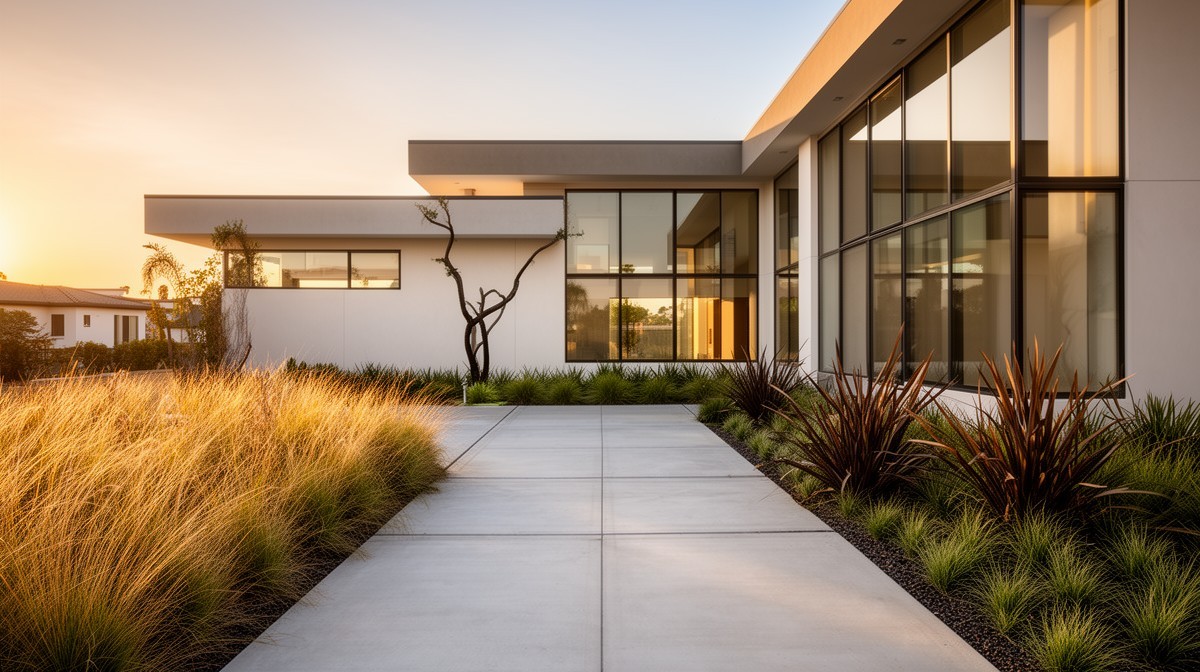
$12–24/sqftA low, wide mid-century elevation — horizontal wood siding, stacked stone piers, a warm walnut front door and deep flat eaves — met by a broad poured concrete walkway that runs straight from the sidewalk to the entry with no steps and no fuss. The planting either side is deliberately layered in three heights only: knee-high blocks of purple lavender at the front edge, honey-toned grass mounds behind them catching the low evening sun, and blue agave rosettes set back against the stucco. A mature broad-canopy tree stands mid-lawn and shades the west face, with narrow ribbons of turf left along the property lines to keep the composition soft.

The Raked Gravel Forecourt
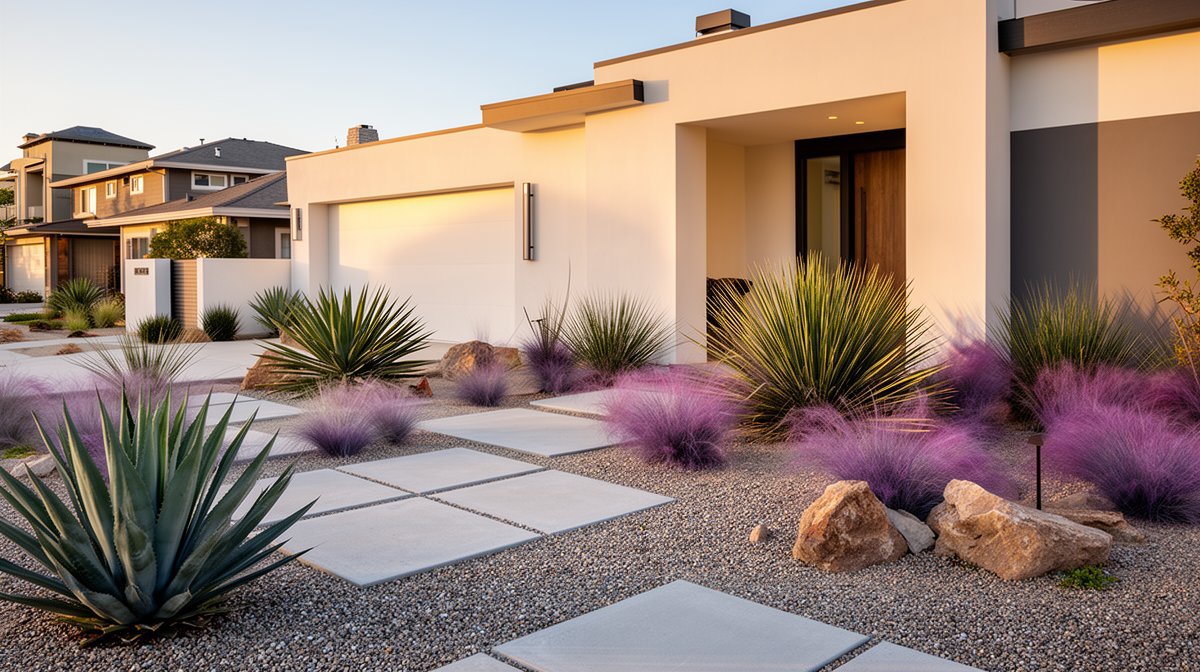
$10–20/sqftA flat-roofed mid-century house in cream stucco with one dark wood accent panel, fronted by a yard that is almost entirely fine tan gravel raked into slow ripples — no lawn, no curbing, no clutter. Floating rectangular concrete pads step from the driveway to the door with gravel showing in every joint, and low steel-edged planters hold single blue agave rosettes like objects on a shelf. Pale granite boulders sit at two points to break the plane, small blue-green grass tufts punctuate the field at irregular intervals, and a big eucalyptus behind the roofline supplies the only vertical mass the design needs.

The Fire Bowl Patio Under Lights
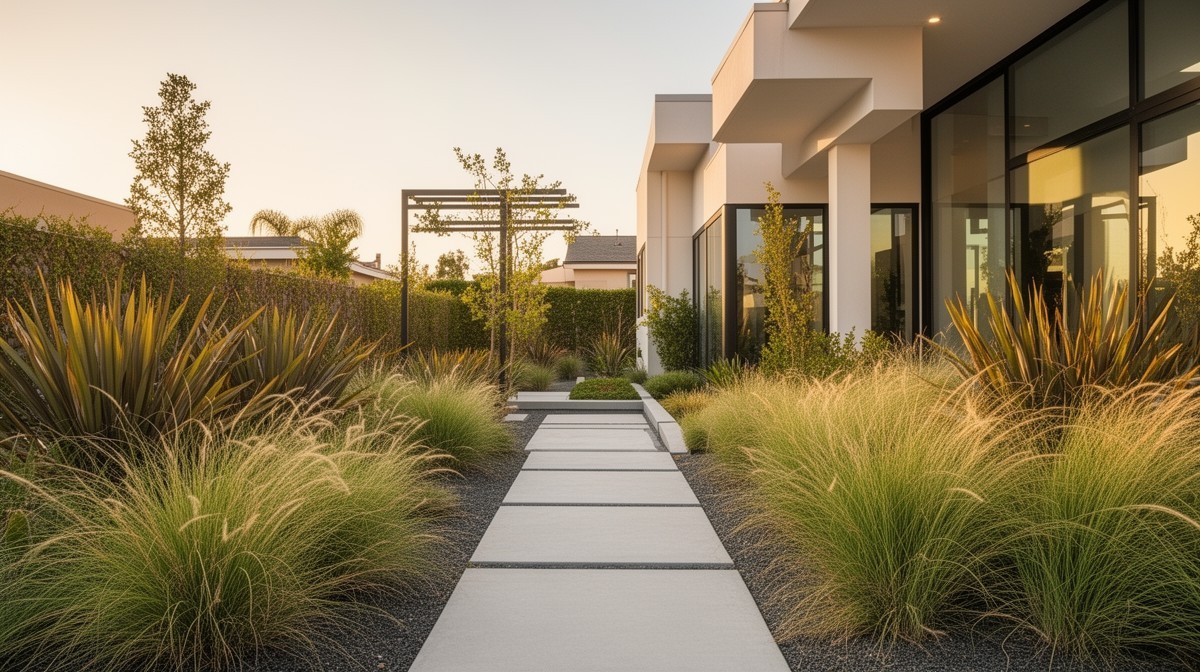
$18–36/sqftA white stucco rear elevation with black-framed sliding glass opens onto a wide field of large-format concrete slabs, dark joints running the grid straight out from the house. Two runs of catenary bulb lights cross the whole space from the roofline to the fence, a low round matte-black fire bowl sits off-centre with a single slim-framed sofa pulled up to it, and a multi-trunk fruitless olive grows out of a bed cut into the paving so the canopy sits inside the room rather than beside it. Feathery grass masses spill over the slab edges in the foreground, a clipped hedge screens the neighbours, and one strip of lawn is left along the far side.

The Glass Wall Pool Deck
$45–95/sqft (pool area inclusive)A long single-story glass-walled home with a flat roof and a full run of black-framed sliders faces a rectangular pool set into a wide, pale concrete deck. The lighting is the design: a continuous warm LED strip washes the underside of the deck edge so the whole platform appears to float above a band of gravel at dusk, matching the glow coming out of the house. Furniture is one grey sectional and a low table, placed off-centre to keep the deck reading as a plane. Planting is restrained to the edges — a spiky bronze accent at the pool corner, silver grass tufts along the gravel band, and two clean panels of lawn wrapping the outside.
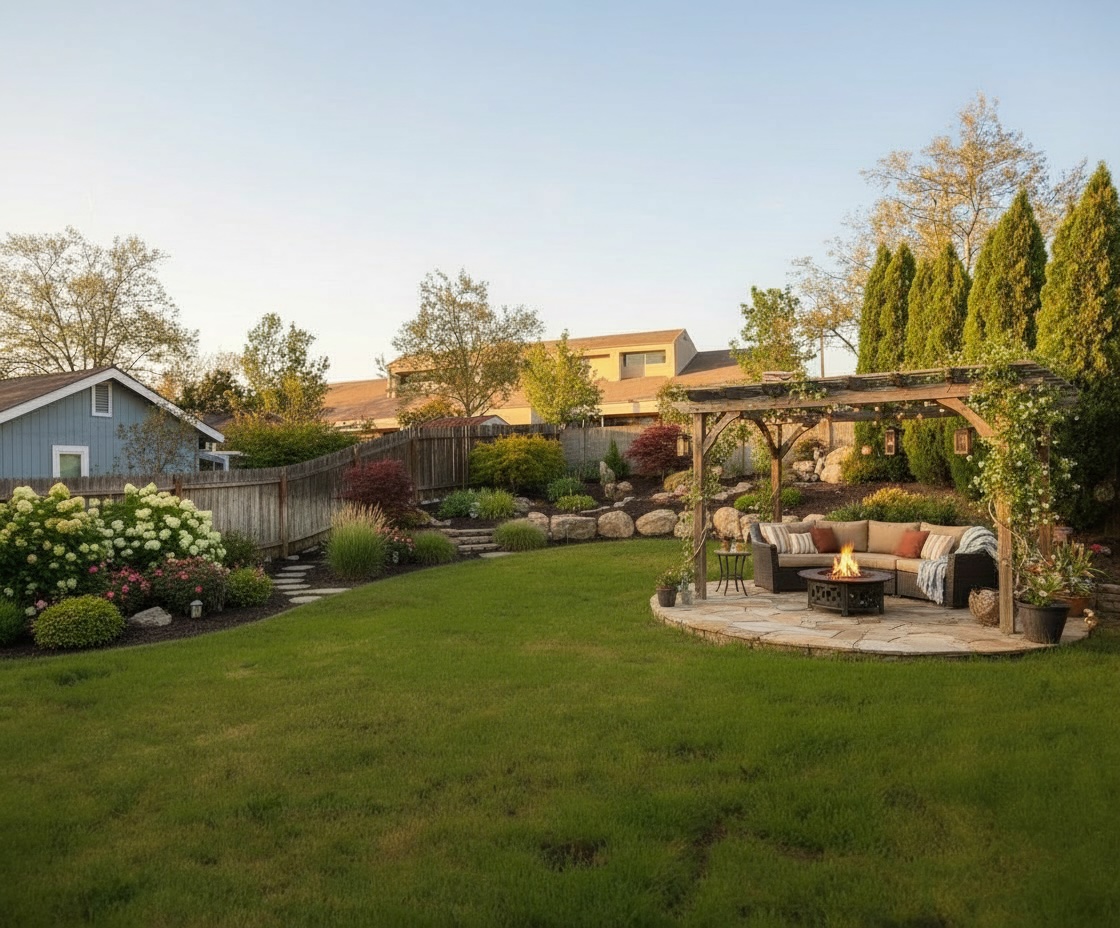
See how a modern/minimalist garden looks on YOUR property
Upload a photo of your Orange yard and visualize your dream garden in seconds.
Try ProScapeAI Free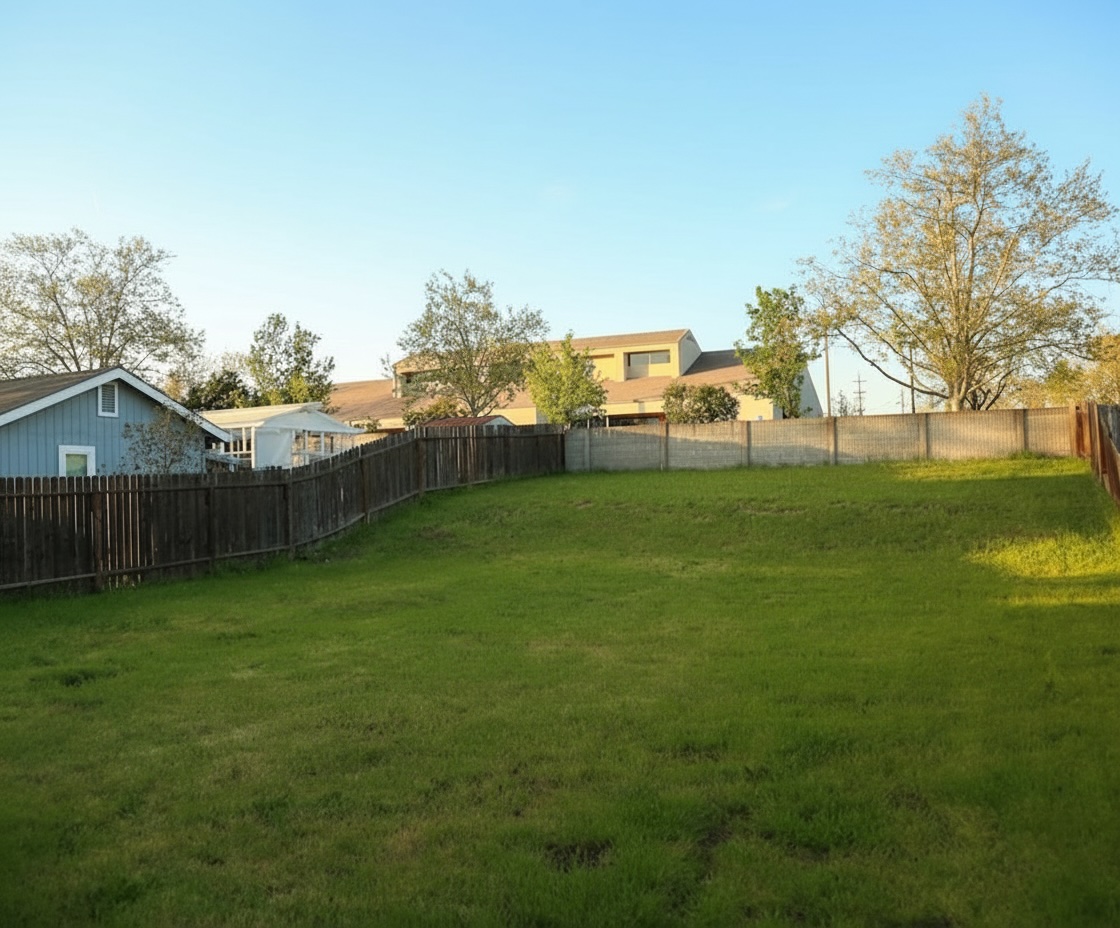
Featured Trees & Shrubs for Modern/Minimalist Gardens
Browse all 219 plants for Orange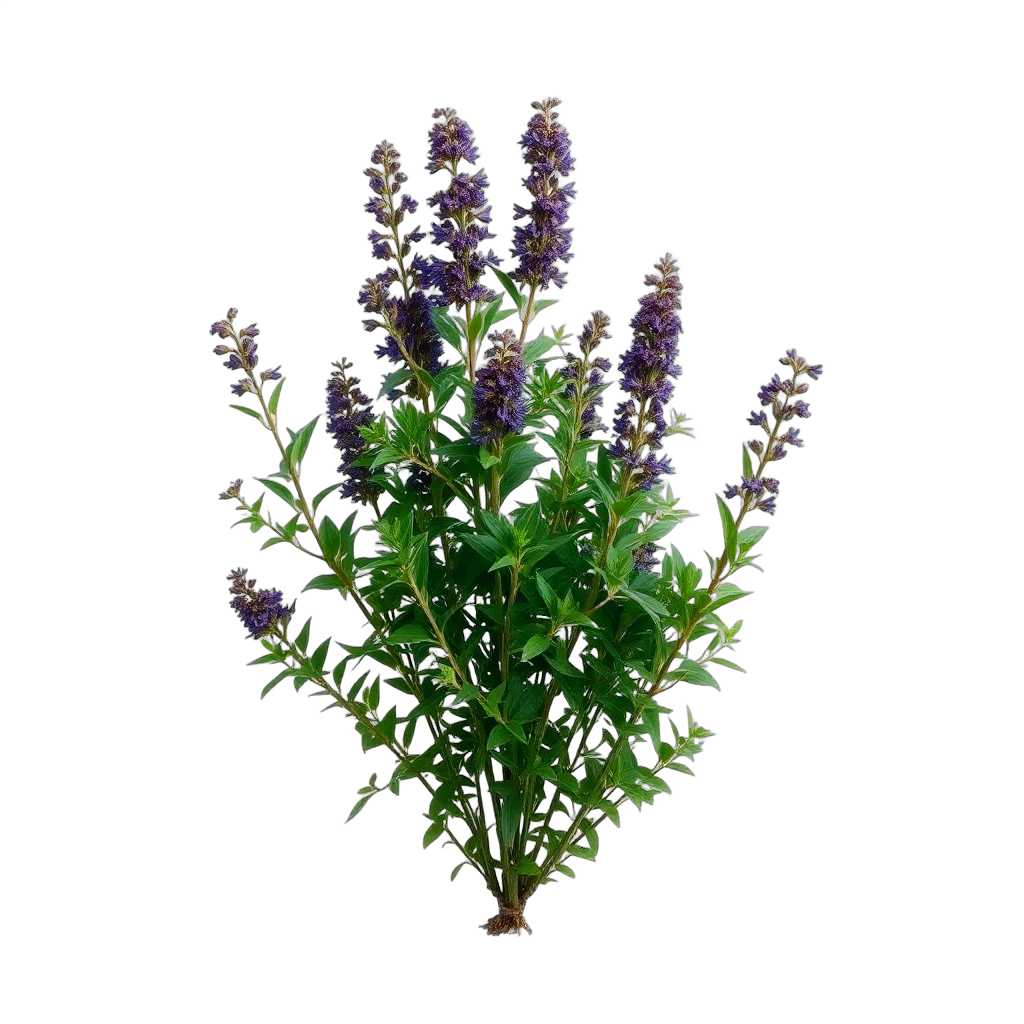
Black Sage
Salvia mellifera
grows to 4 feet, white blooms in spring. Attracts butterflies.
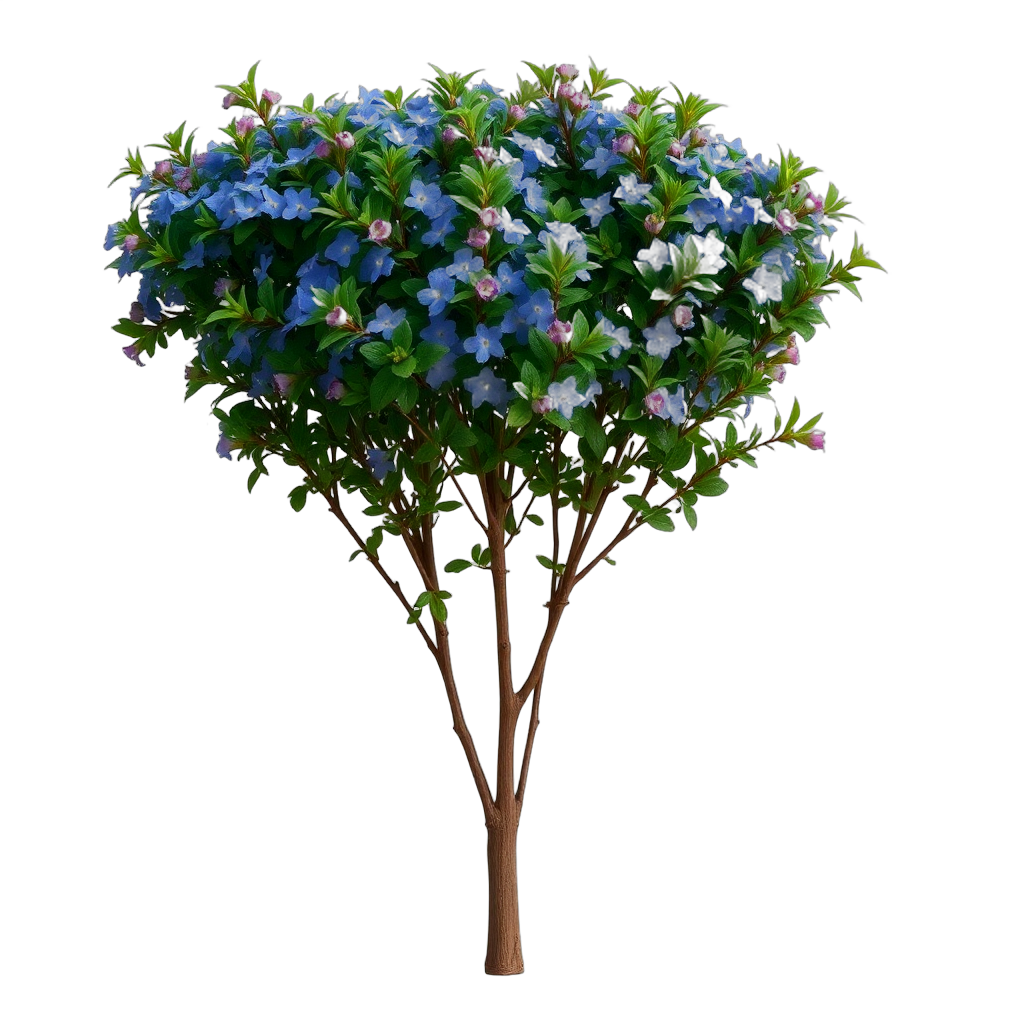
Blue Blossom
Ceanothus thyrsiflorus
medium-sized at 12 feet, blue blooms in spring. Attracts butterflies.
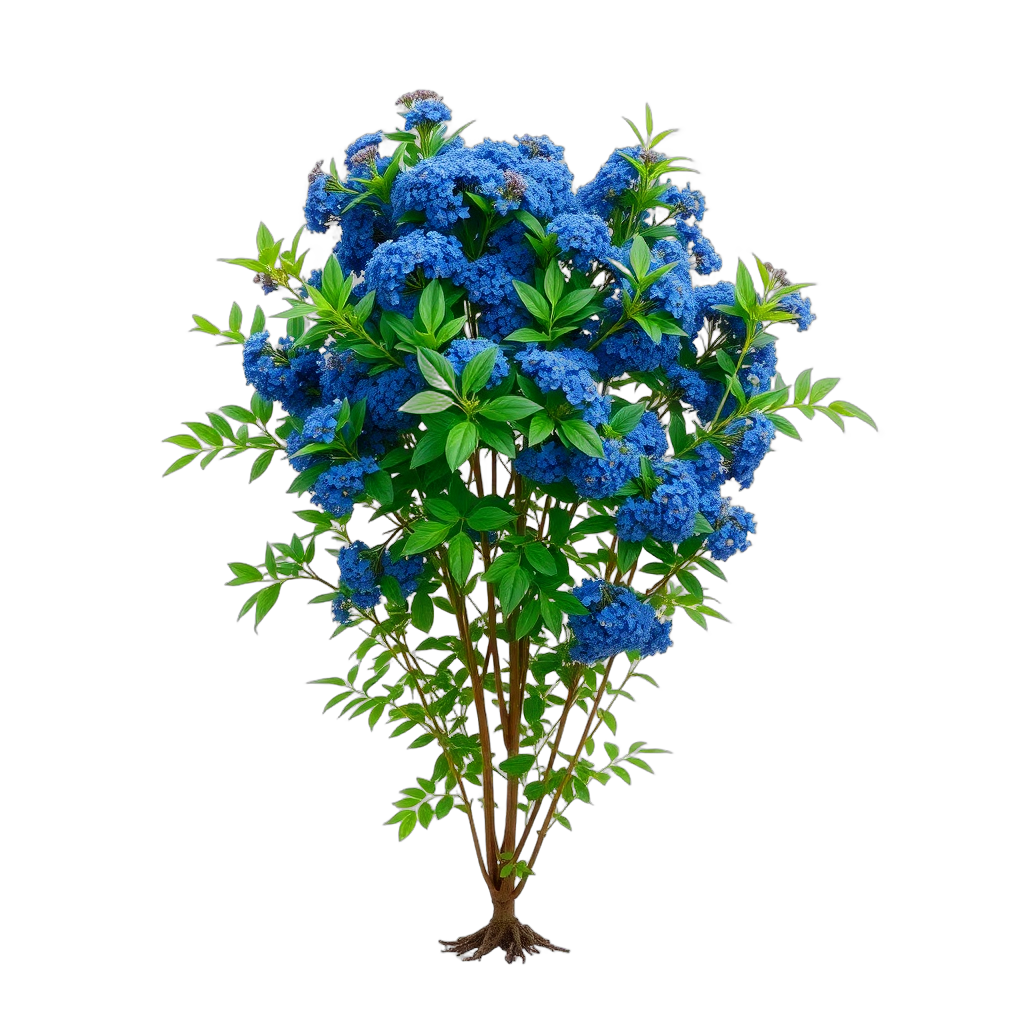
Blue Elderberry
Sambucus cerulea
medium-sized at 15 feet, white blooms in spring. Attracts butterflies.
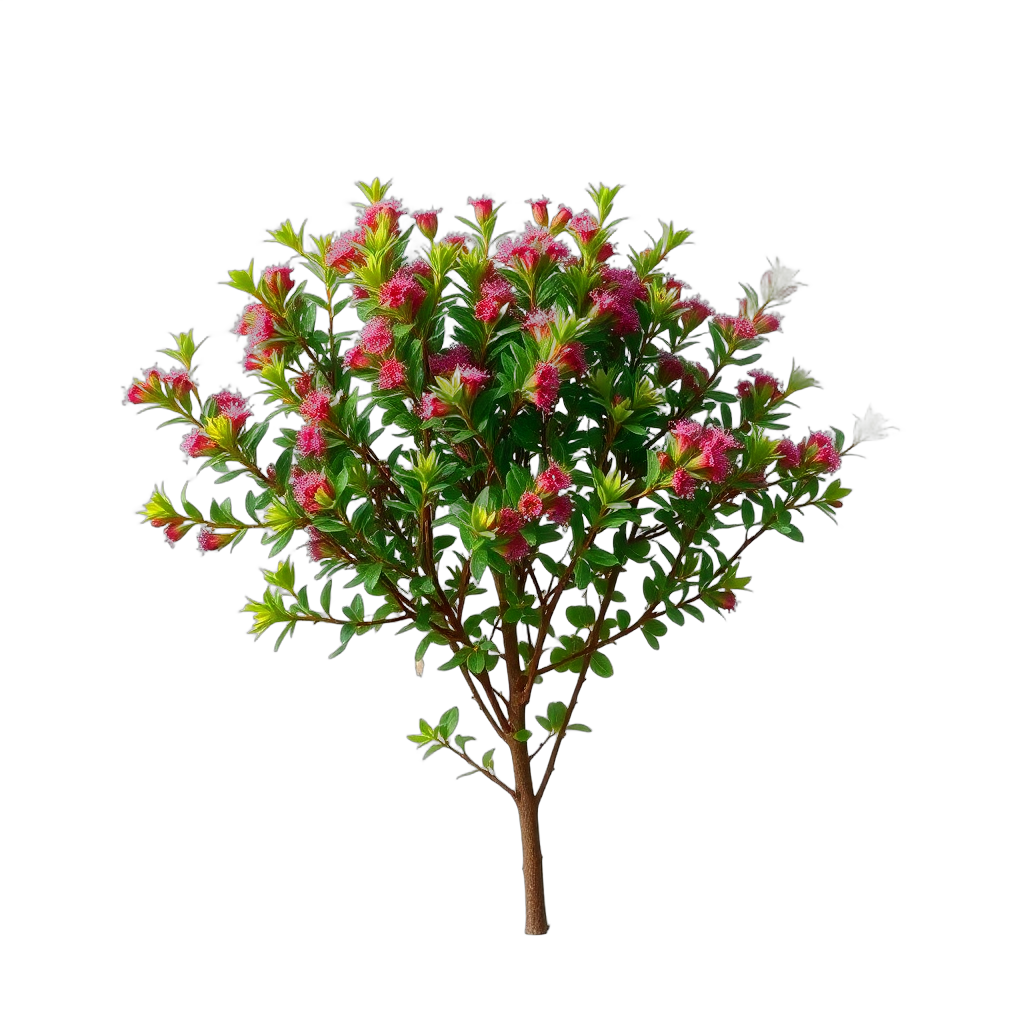
Buckbrush
Ceanothus cuneatus
medium-sized at 7 feet, white blooms in spring. Attracts butterflies.
Featured Grasses & Groundcovers for Modern/Minimalist Gardens
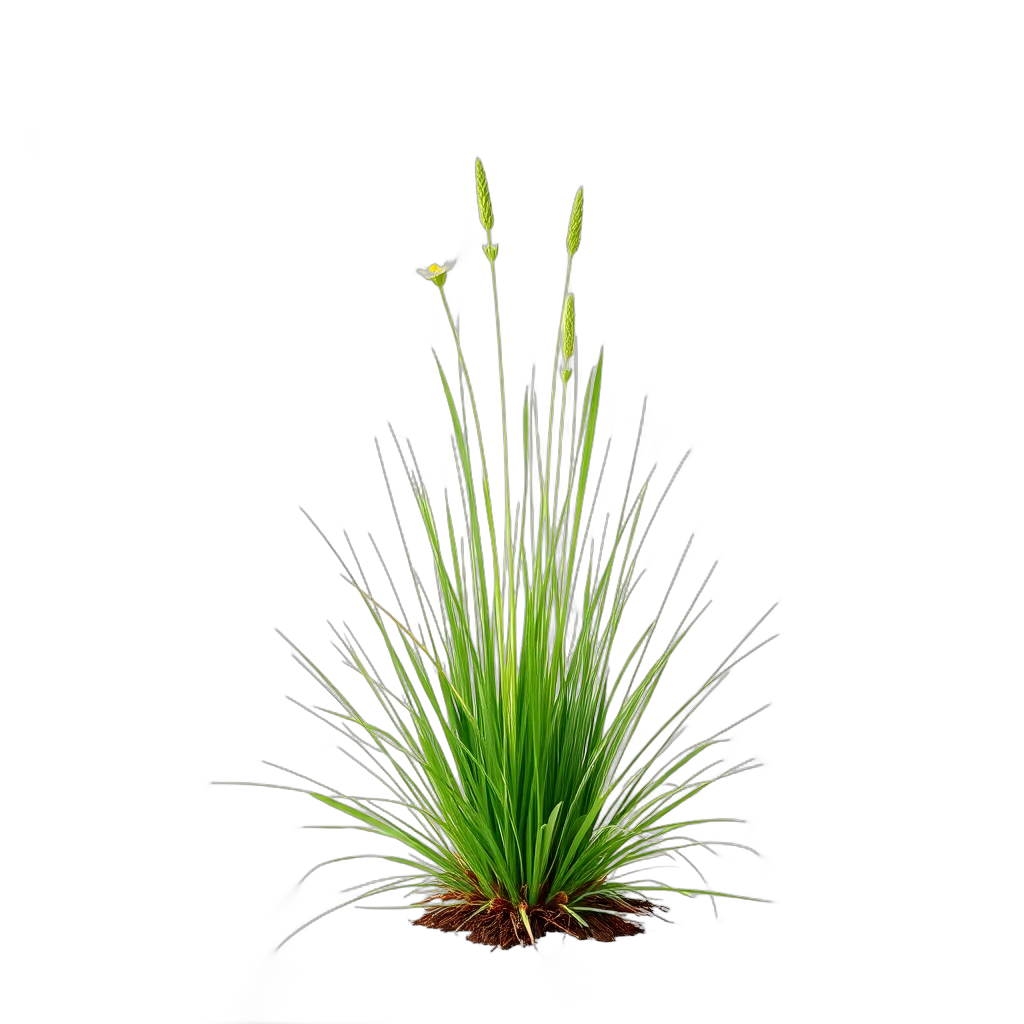
California Brome
Bromus carinatus
low-growing ground cover, blooms in spring. Yellow fall color.
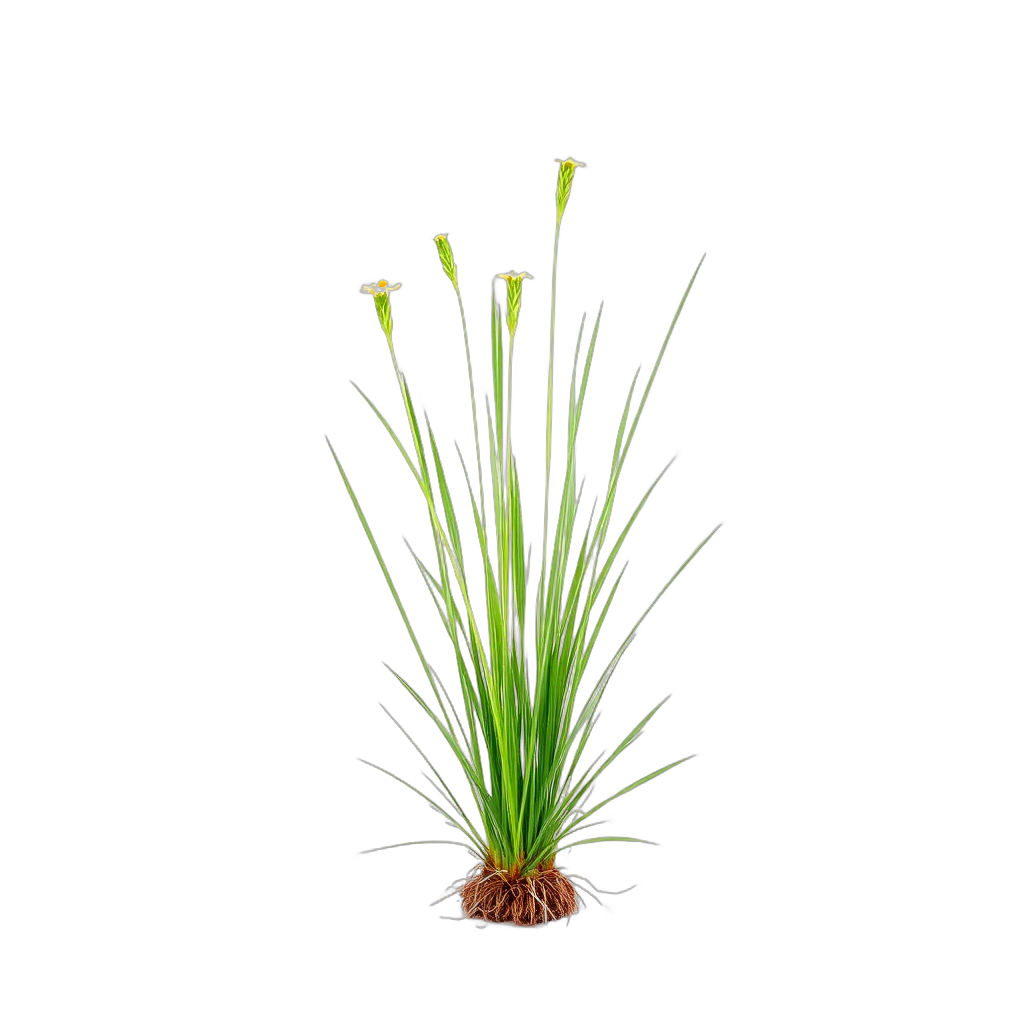
California Melic
Melica californica
low-growing ground cover, blooms in spring.
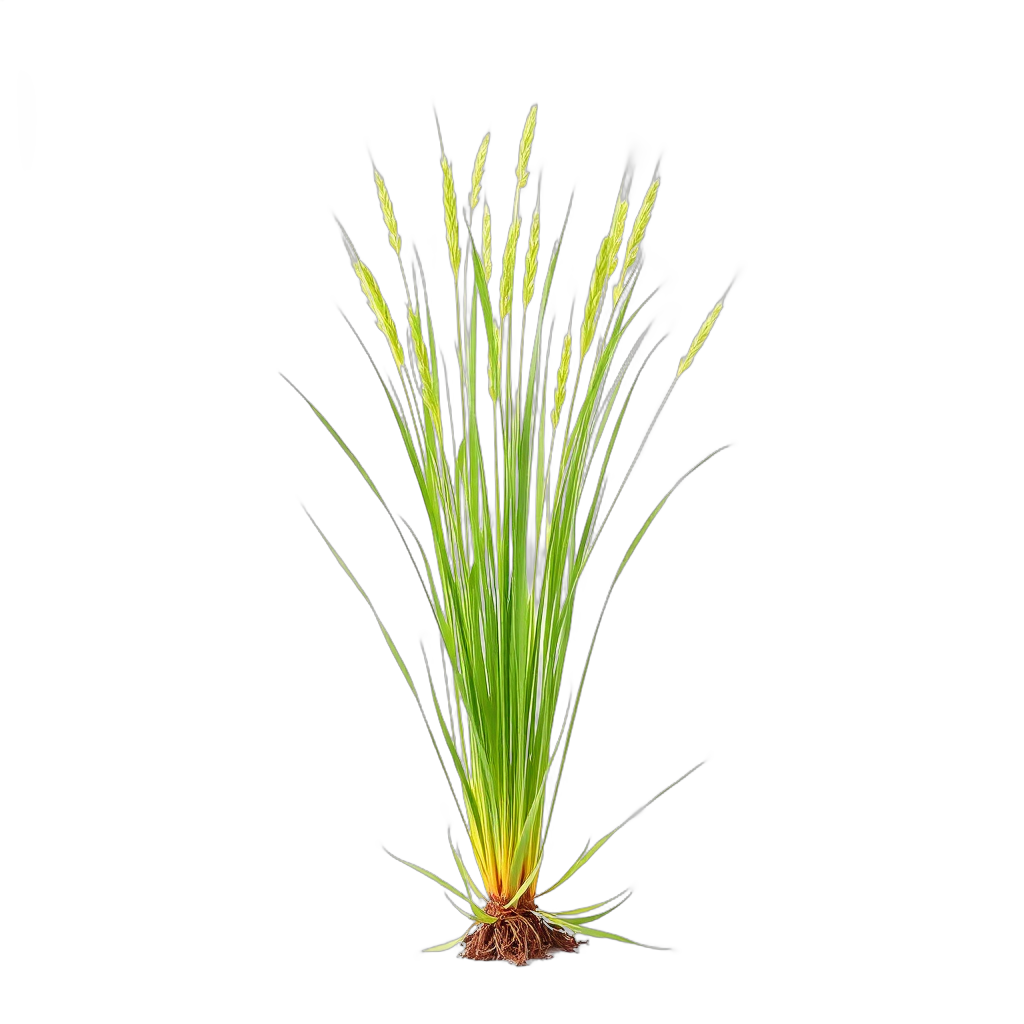
California Oatgrass
Danthonia californica
low-growing ground cover, blooms in spring. Yellow fall color.
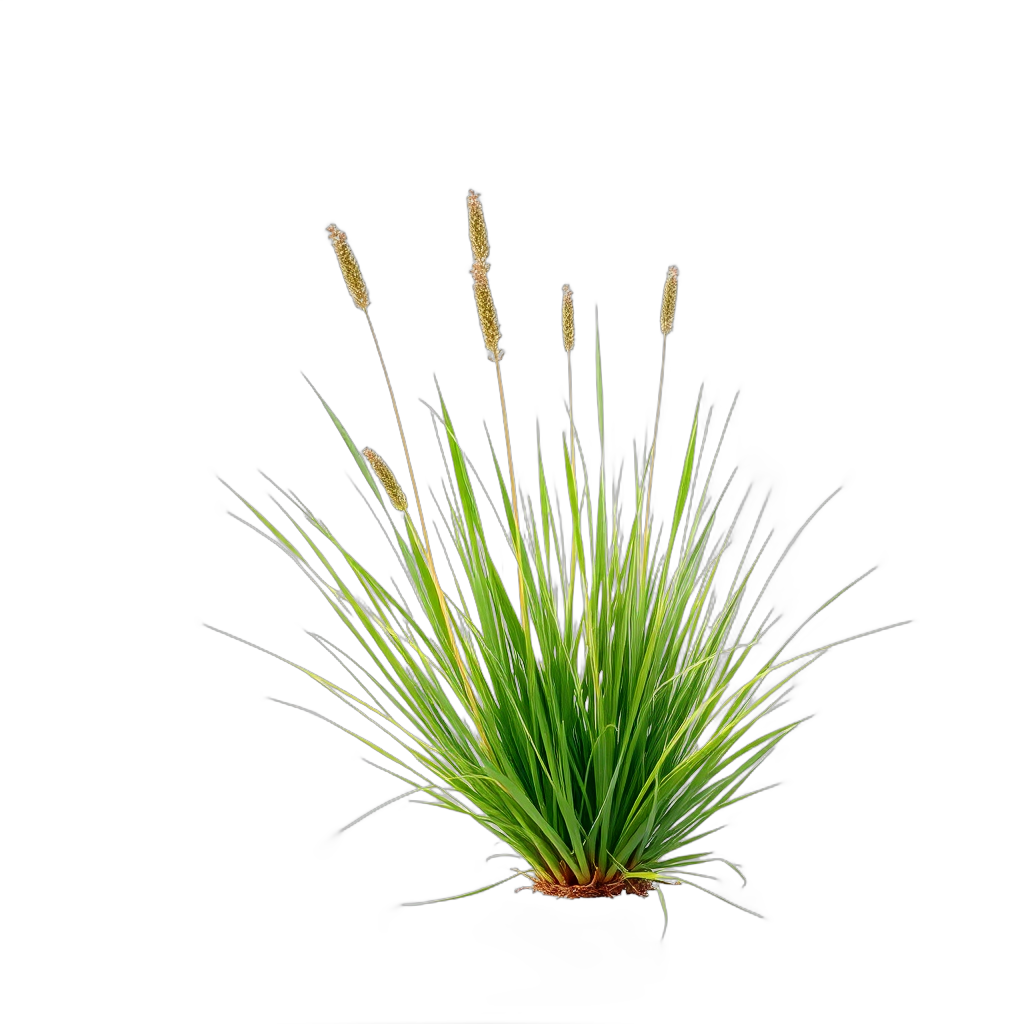
Deer Grass
Muhlenbergia rigens
grows to 3 feet, yellow blooms in fall. Evergreen year-round.
Featured Flowers & Perennials for Modern/Minimalist Gardens
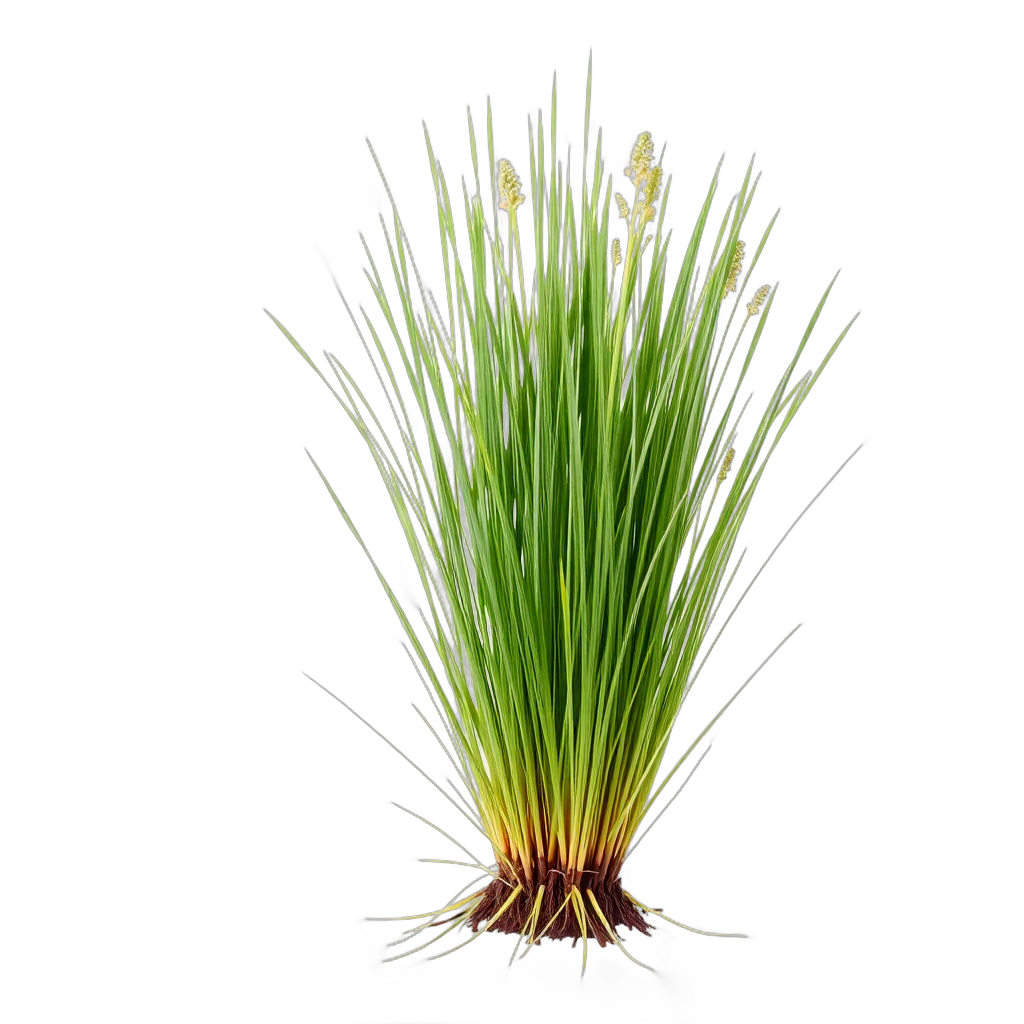
California Gray Rush
Juncus patens
low-growing ground cover, blooms in summer. Evergreen year-round.
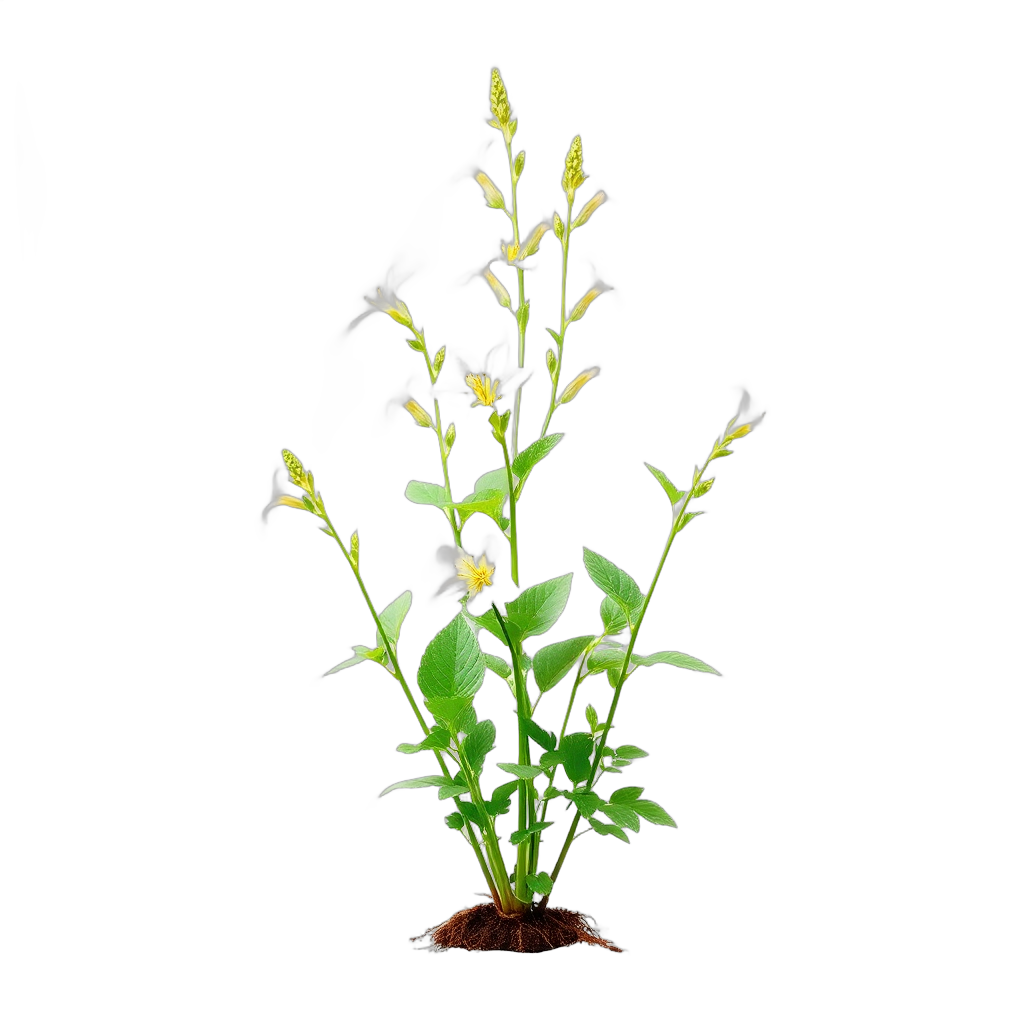
Beach Evening Primrose
Camissonia cheiranthifolia
low-growing ground cover, yellow blooms in spring. Attracts butterflies.
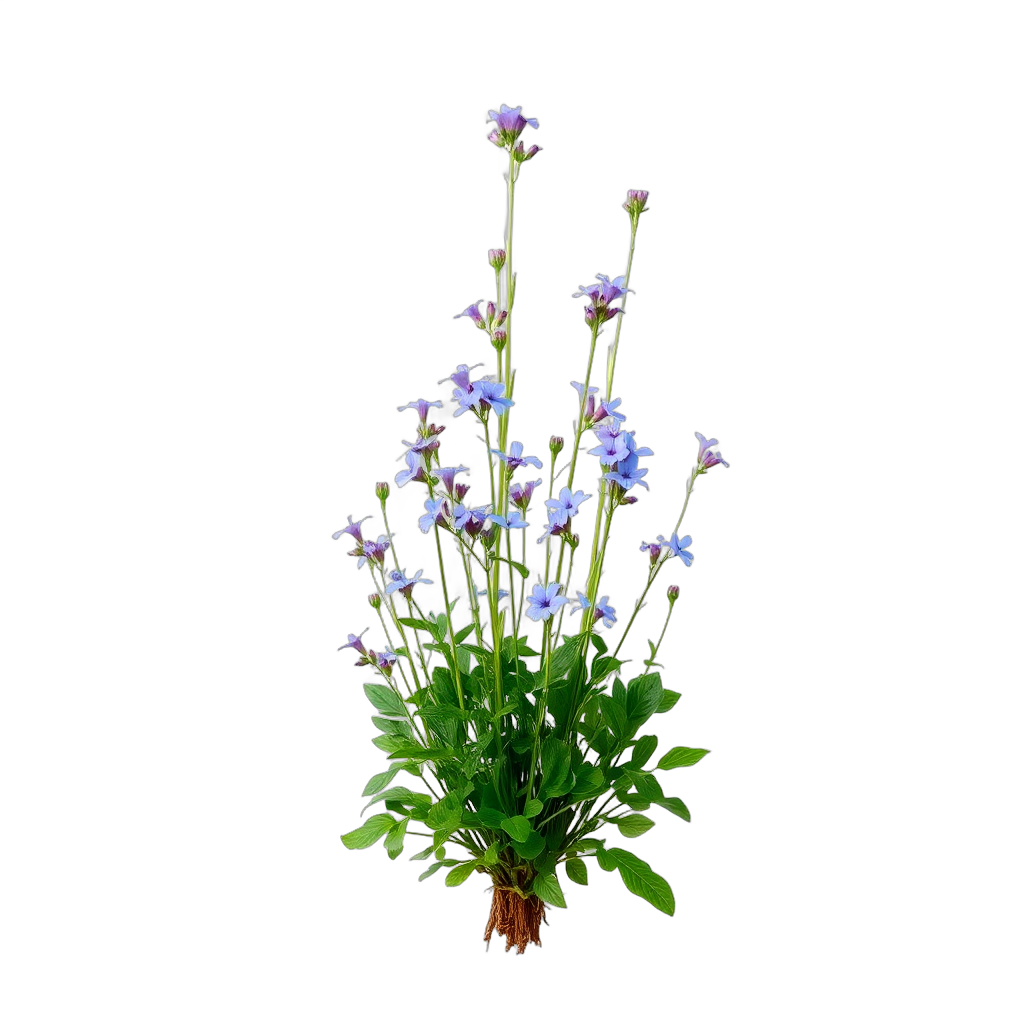
Blue Dicks
Dichelostemma capitatum
low-growing ground cover, blue blooms in spring. Pollinator-friendly.
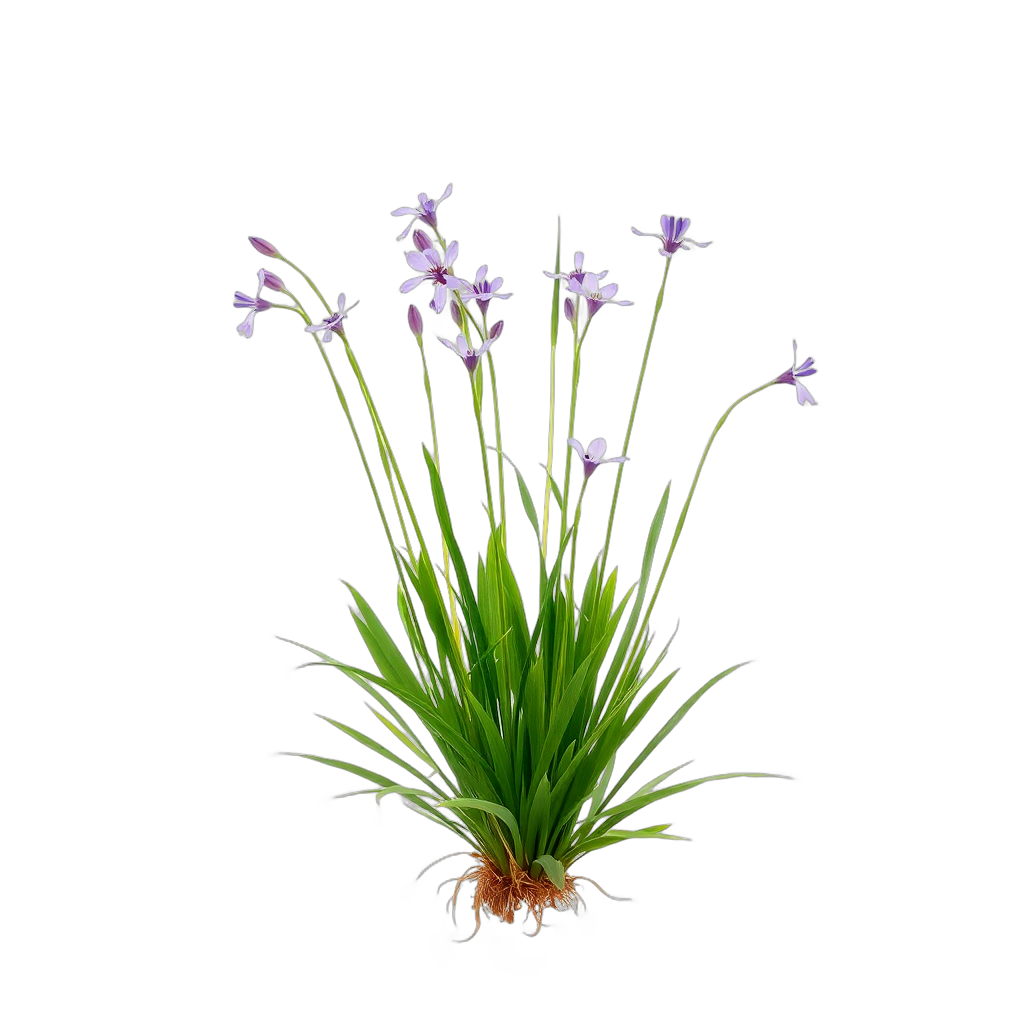
Blue-Eyed Grass
Sisyrinchium bellum
low-growing ground cover, blue blooms in spring. Attracts butterflies.
Zone and sun checks come from our database — confirm with your local nursery before you buy.
Bloom Calendar for Orange
spring
Beach Evening Primrose, Blue Dicks, Blue-Eyed Grasssummer
California Gray Rush, Hooker's Evening Primrose, Hummingbird Mintfall
California Fuchsiawinter
Limited bloomsDesign Tips for Orange (Zone 10a)
- Let the architecture set the grid. Orange's Eichler and ranch stock is built on long horizontals, so run slab joints, bed edges and planting bands parallel to the roofline — a modern ground plane that argues with the house never reads as clean, no matter how good the plants are
- Choose one gravel and one paving colour and hold the line. Orange's low winter sun and long golden evenings make warm tan decomposed granite glow, while cool grey aggregate stays flat all day; mixing both is the most common way a modern Orange front yard turns muddy
- Space agaves for their mature width, not for install day. Agave americana reaches 6 feet across in frost-free Zone 10a and Agave ovatifolia holds 4 feet, so a design that looks under-planted the first spring is correctly planned for year four
- Design the lawn as a shape or delete it. With roughly 13 inches of annual rain and turf rebates starting at $2 per square foot, a leftover strip of grass around the paving costs water and reads as an afterthought — a single crisp rectangle on its own valve does not
- Build hardscape on a compacted crushed-aggregate base, always. Orange's grove loam and hillside clay-loam move enough between February wet and September dry to drop a slab corner within three winters, and nothing kills a geometric design faster than one uneven joint
- Use silver and blue foliage against warm stucco. Olea europaea 'Swan Hill', Westringia fruticosa 'Morning Light', Leucophyllum frutescens 'Green Cloud' and Agave ovatifolia 'Frosty Blue' hold their colour through Santa Ana season, when soft green foliage browns off in a single dry wind event
- Light the silhouettes and float the hardscape. Uplights on Yucca rostrata and an LED cove strip under a deck edge give a modern Orange garden nine usable months of evening presence — far more return than any daytime detail on a lot this warm
Where to Source Plants in Orange
Skip the big-box stores. These independent Orange nurseries specialize in the plants that make modern/minimalist gardens thrive in Zone 10a.
Upland Nursery
North Tustin Street, Orange
Independent Orange nursery stocking plumeria, bonsai, rare fruit trees and a strong run of dry-climate perennials and container specimens
OC Succulents
Warner Avenue, Irvine
Greenhouse grower with Orange County's deepest agave, aloe and Hesperaloe bench, including the large matched rosettes modern planting schemes need
Roger's Gardens
Corona del Mar
Seven-acre destination nursery known for specimen olives, sculptural agaves, mature container stock and architectural pottery
Plant Depot
San Juan Creek Road, San Juan Capistrano
Family-run six-acre garden center with Mediterranean trees, grasses and a large cactus and succulent yard sized for residential design
Tree of Life Nursery
Ortega Highway, San Juan Capistrano
California native plant grower supplying the coastal sage scrub palette — Ceanothus, Arctostaphylos, Salvia and deergrass — for low-water modern beds
Modern/Minimalist Landscaping Costs in Orange
| Project Scope | Estimated Cost |
|---|---|
| Modern front yard conversion (600 sqft: gravel or pads, edging, drip, architectural planting) | $6,000 – $14,000 |
| Large-format concrete patio with compacted base (300–450 sqft) | $11,000 – $28,000 |
| Outdoor room with gas fire bowl, seating and catenary lighting | $18,000 – $45,000 |
| Low-voltage uplighting and LED cove lighting package | $2,500 – $8,000 |
| Specimen Agave ovatifolia, Yucca rostrata or multi-trunk Swan Hill olive | $200 – $1,400 each |
| Pool deck plus full modern rear landscape | $90,000 – $250,000 |
| AI visualization with ProScapeAI | Free to start |
Estimates based on Orange, CA-area contractor rates as of 2026. Actual costs vary by site conditions, materials, and contractor.
Orange Climate & Growing Zone
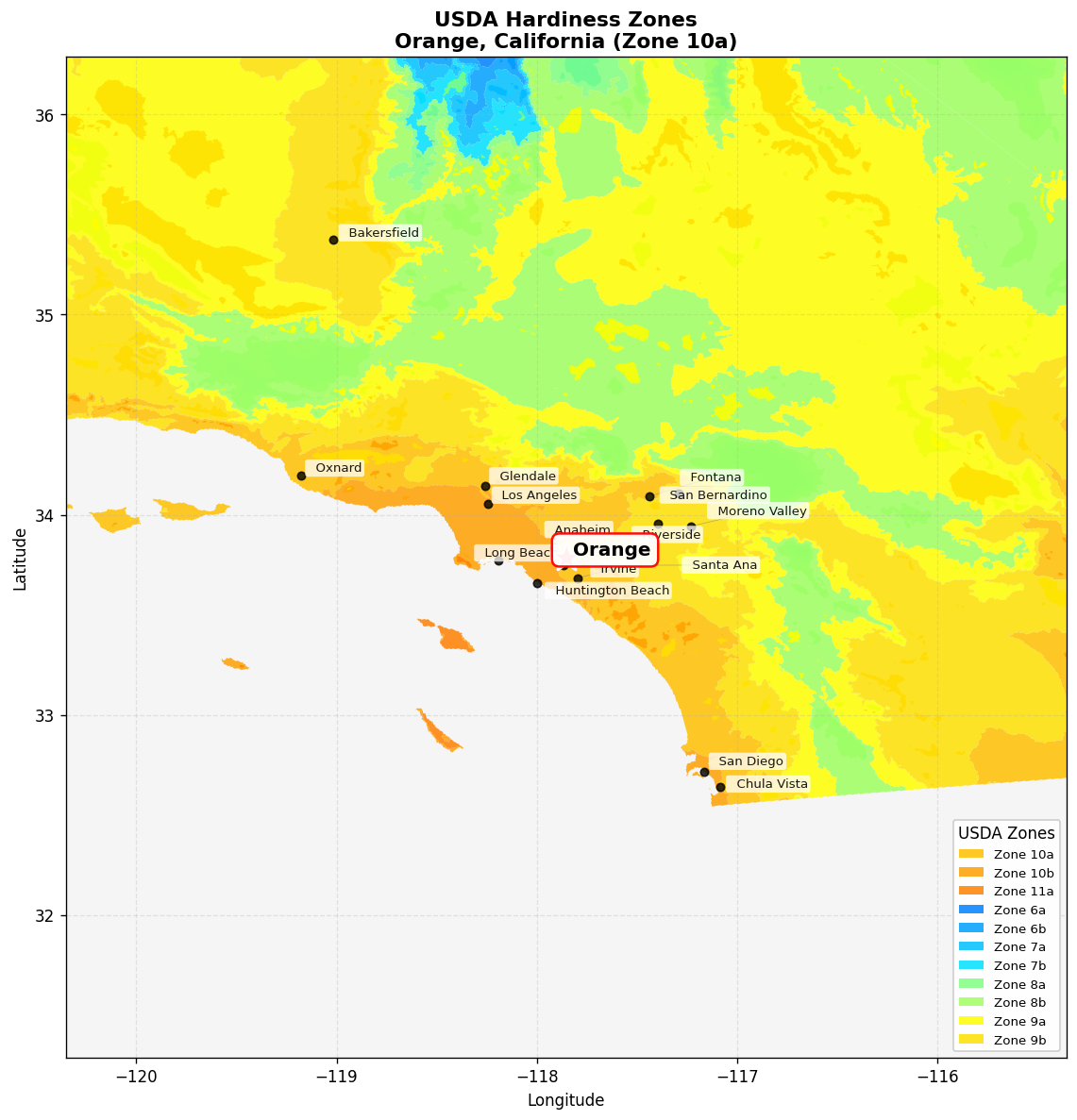
USDA Zone 10a
Hardiness zone for Orange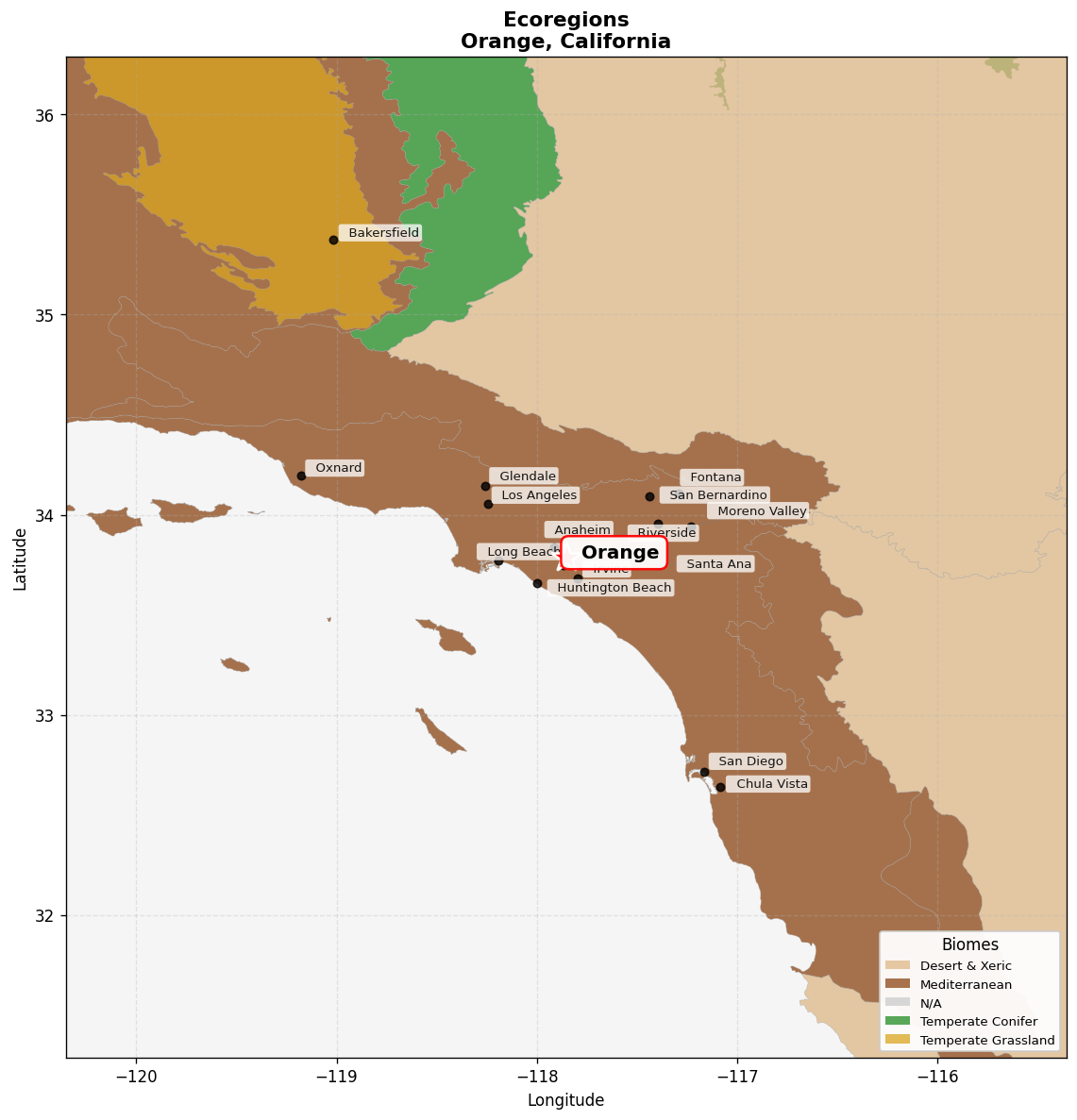
California coastal sage and chaparral
Native ecoregionFrequently Asked Questions
How much does modern landscaping cost in Orange, CA?
Orange County pricing sits above the national average, mostly on labour and hardscape. A modern front yard conversion — turf out, base prep, gravel field or concrete pads, steel edging, drip and architectural planting — runs about $10–24 per square foot installed, so a 600 square foot Orange front yard is roughly $6,000–$14,000. A large-format concrete rear patio with a fire bowl, lighting and planting beds lands at $18–36 per square foot, typically $18,000–$45,000 for a usable outdoor room. Pool-inclusive backyards on hillside lots commonly run $90,000–$250,000. Subtract the turf rebate, which starts at $2 per square foot, before you compare quotes.
Which architectural plants stay sculptural year-round in Zone 10a Orange?
Everything that carries a modern design here is evergreen, which is the local advantage. Agave attenuata is the workhorse for soft grey-green rosettes in part shade, Agave ovatifolia 'Frosty Blue' and Agave parryi var. truncata give the tight blue forms for full sun, Yucca rostrata and Dasylirion wheeleri supply the spherical verticals, and Olea europaea 'Swan Hill' provides silver canopy with no fruit drop on concrete. For low mass, Westringia fruticosa 'Morning Light' clips into blocks better than boxwood in this heat, and Muhlenbergia rigens holds a clean 3 foot mound with one February cut-back. None of them need winter protection at Orange's 30–35°F lows.
How do I keep large-format concrete from cracking in Orange soil?
Treat base prep as part of the design budget. The old grove loam along Santiago Creek is deep and compacts unevenly, and the decomposed granite and clay-loam east of Cannon Street swells and shrinks between a wet February and a bone-dry September. For slabs and floating pads, excavate and compact a 4–6 inch crushed-aggregate base in lifts, use proper control joints on a grid that matches the slab pattern rather than fighting it, and isolate the paving from the house with an expansion joint. Frost depth is not a factor in Zone 10a, so the risk is settlement and soil movement, not heave.
Can I keep some lawn and still meet water rules in Orange?
Yes for a private residential yard. California's Model Water Efficient Landscape Ordinance applies to new or rehabilitated landscapes over 500 square feet that require a permit, and it caps rather than bans turf while requiring turf to sit on its own hydrozone and valve. AB 1572 targets non-functional turf on HOA common areas, commercial and institutional frontages between 2027 and 2031, not single-family back lawns. The practical modern approach in Orange is to design the lawn as a deliberate rectangle or ribbon on its own valve — often 150–400 square feet — and take the turf rebate on everything you removed around it.
When is the best time to install a modern landscape in Orange?
October through early December is the strongest window: Lavandula, Westringia, Muhlenbergia and agaves all root through the mild wet winter and arrive at their first Santa Ana season already established. February and March is the second window. Avoid new planting in July and August, when Orange highs sit in the high 80s to low 90s and young agaves scorch on their exposed shoulder. Hardscape is different — concrete pours, gravel and lighting can be scheduled any month of the year here, and winter is often the easiest time to book a good crew.
What lighting actually makes a modern Orange garden work at night?
Three layers and nothing more. Low-voltage uplights aimed at silhouettes — Yucca rostrata, Dasylirion wheeleri, a multi-trunk Olea europaea 'Swan Hill' — do the heavy lifting against pale stucco. A continuous warm LED strip under a deck edge or bench face makes hardscape appear to float, which is the single highest-impact trick in a flat Orange backyard. Catenary bulb strings define the ceiling of an outdoor room. Skip path lights along walkways; they read as runway markers and undercut the geometry the design is built on. With frost-free evenings most of the year, the lighting is used far more than the plants are looked at.