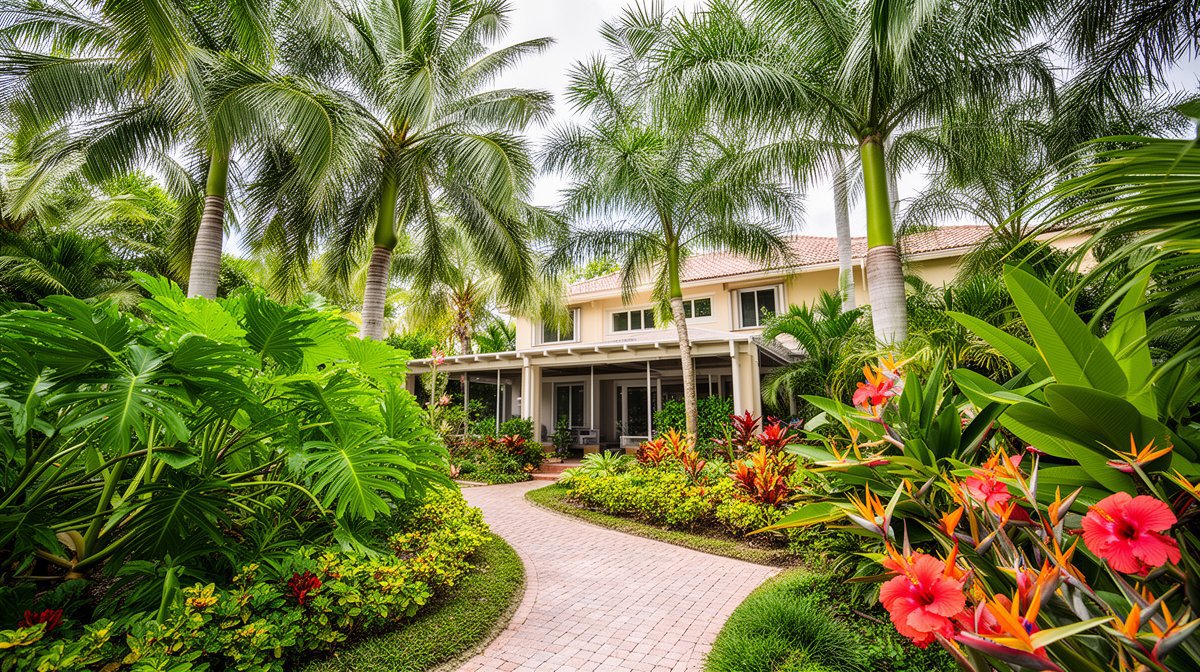
4 Tropical Garden Ideas for Pembroke Pines, FL | Palm, Croton & Heliconia Design for Zone 10b
Native plants from the Everglades flooded grasslands (Zone 10b) — Tropical monsoon climate
Why Tropical/Lush Gardens in Pembroke Pines?
Pembroke Pines sits in USDA Zone 10b, one of the few places on the U.S. mainland where a genuinely tropical garden is not an experiment — it is simply what grows. Winter lows here rarely drop below 40°F, so Adonidia merrillii, Wodyetia bifurcata, Codiaeum variegatum 'Petra' and Strelitzia reginae hold full color through January while gardeners two hours north are throwing frost cloth over everything. The housing stock plays along: the tile-roof Mediterraneans of Pembroke Falls and Grand Palms want the vertical punctuation of palms, the 1980s ranches of Towngate and Chapel Trail have deep side yards ready for layered understory, and the lakefront lots in Silver Lakes hand you a borrowed water view worth framing with Strelitzia nicolai and clumping Dypsis lutescens.
The catch is underfoot. Western Pembroke Pines is drained Everglades, and the soil is sandy marl over oolitic limestone running a pH of roughly 7.5 to 8.3. At that alkalinity iron locks up, and the symptom is unmistakable: yellow leaves with green veins on Ixora coccinea 'Nora Grant', Gardenia jasminoides 'Frost Proof' and Hibiscus rosa-sinensis 'Seminole Pink'. Ordinary iron sulfate is wasted money above pH 7.5 — the fix is chelated iron in EDDHA form plus manganese sulfate, and leaning on alkaline-tolerant structure like Clusia guttifera, Chrysobalanus icaco 'Red Tip' and Conocarpus erectus 'Sericeus' wherever you can. Rain is not the constraint — about 60 inches a year, two-thirds of it May through October — but Broward County's year-round two-day-a-week irrigation rule (odd addresses Wednesday and Saturday, even Thursday and Sunday, never between 10 a.m. and 4 p.m.) means the dry season, January to April, is when new plants actually go thirsty.
Then there is wind. Broward sits inside Florida's High-Velocity Hurricane Zone, designed to roughly 170 mph, and Wilma taught everyone here which species stay standing. Sabal palmetto, Bursera simaruba, Coccoloba uvifera and Cocos nucifera ride storms out; Ficus benjamina, Schefflera actinophylla and Syagrus romanzoffiana shed limbs or lay over in saturated ground. Specify 'Maypan' or 'Malayan Dwarf' coconuts instead of Jamaica Talls to dodge lethal yellowing, and keep Phoenix and Sabal specimens clear of the roofline given lethal bronzing pressure. Finally, budget calendar time as well as money: Pembroke Falls, Silver Lakes and Chapel Trail all run HOA architectural review at 30 to 45 days, and the city requires a permit before any protected tree comes down.
4 Tropical/Lush Design Ideas for Pembroke Pines
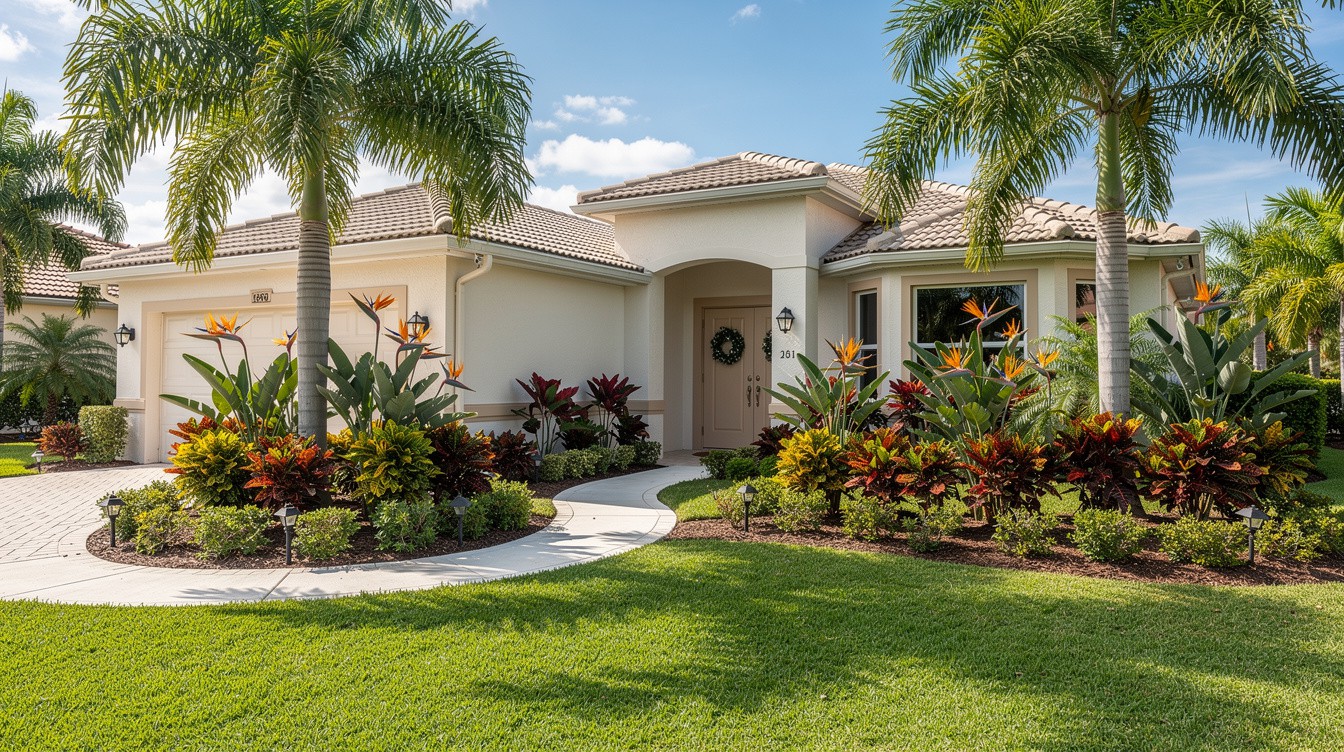
The Pembroke Falls Palm-and-Croton Entry
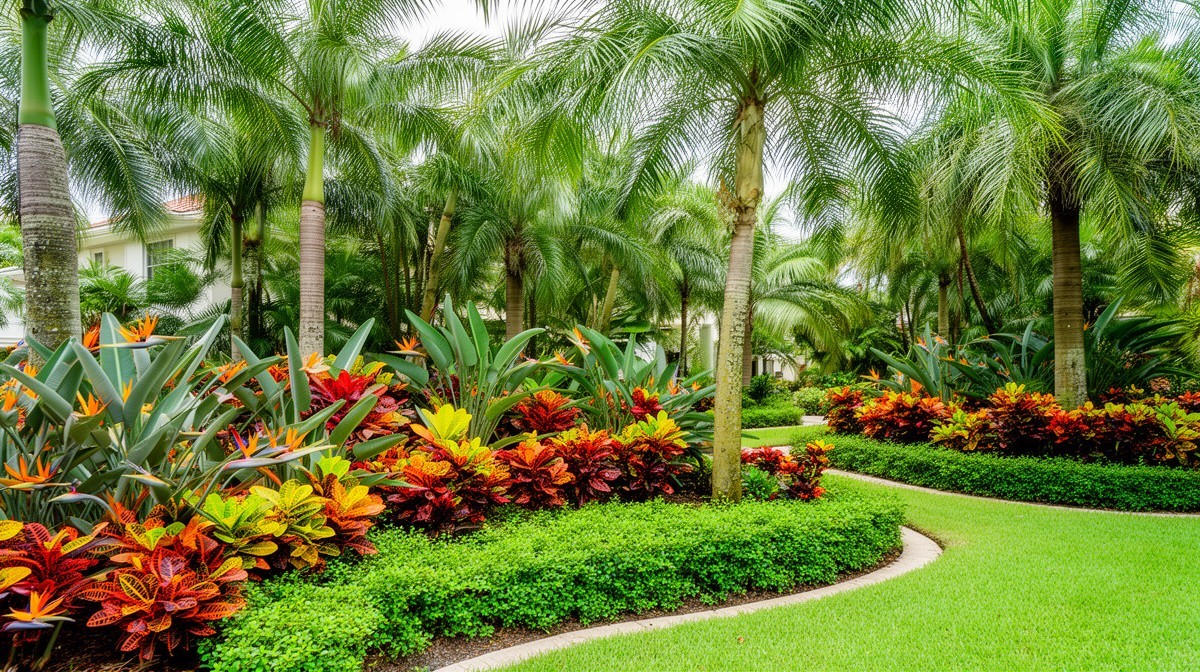
$9–18/sqftA tile-roof stucco home with an arched, columned entry, flanked by a matched pair of tall palms that frame the door without hiding it. The foundation bed is built in three deliberate layers — a clipped green ribbon at the curb line, then a bold mid-layer of red and gold crotons alternating with burgundy ti plants, then upright clumps of orange bird of paradise breaking the stucco wall at window height. A crisp curved concrete walk cuts a lawn panel of Floratam in two, and low bronze path bollards wash the bed at night. It is the most HOA-approvable version of tropical there is: symmetrical, edged, and visibly maintained.
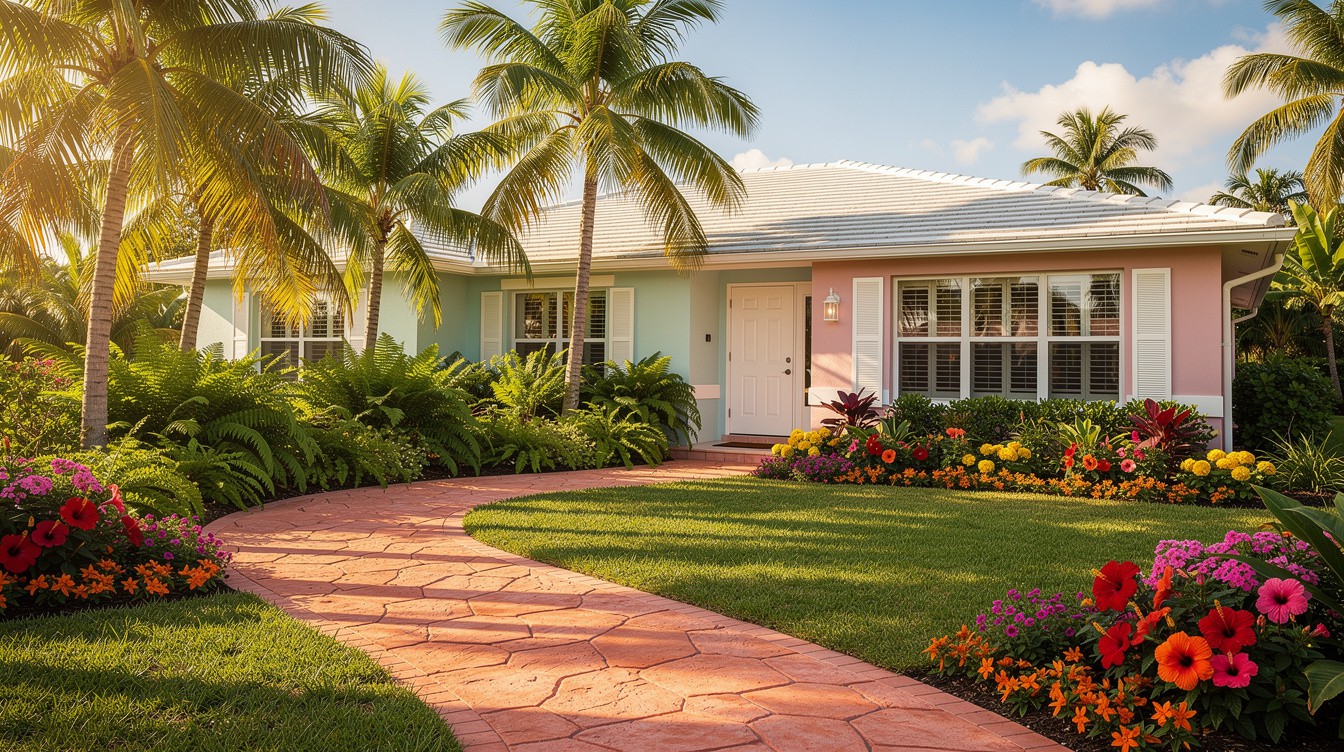
The Old Florida Pastel Cottage Front
$7–14/sqftA mint-and-blush painted ranch under a white metal roof, with tall coconut palms leaning over the roofline and a salmon-tinted stamped concrete walk curving from the drive to the door. The planting is soft rather than spiky: broad drifts of macho fern fill the shaded foundation strip, scarlet hibiscus punctuate the corners, and a low ribbon of pentas, lantana and blue daze runs the sunny edge of the beds in continuous color. This is the Key West palette applied to a 1970s Broward ranch, and it is the cheapest of the four to build because ferns and pentas do the heavy lifting instead of specimen palms.
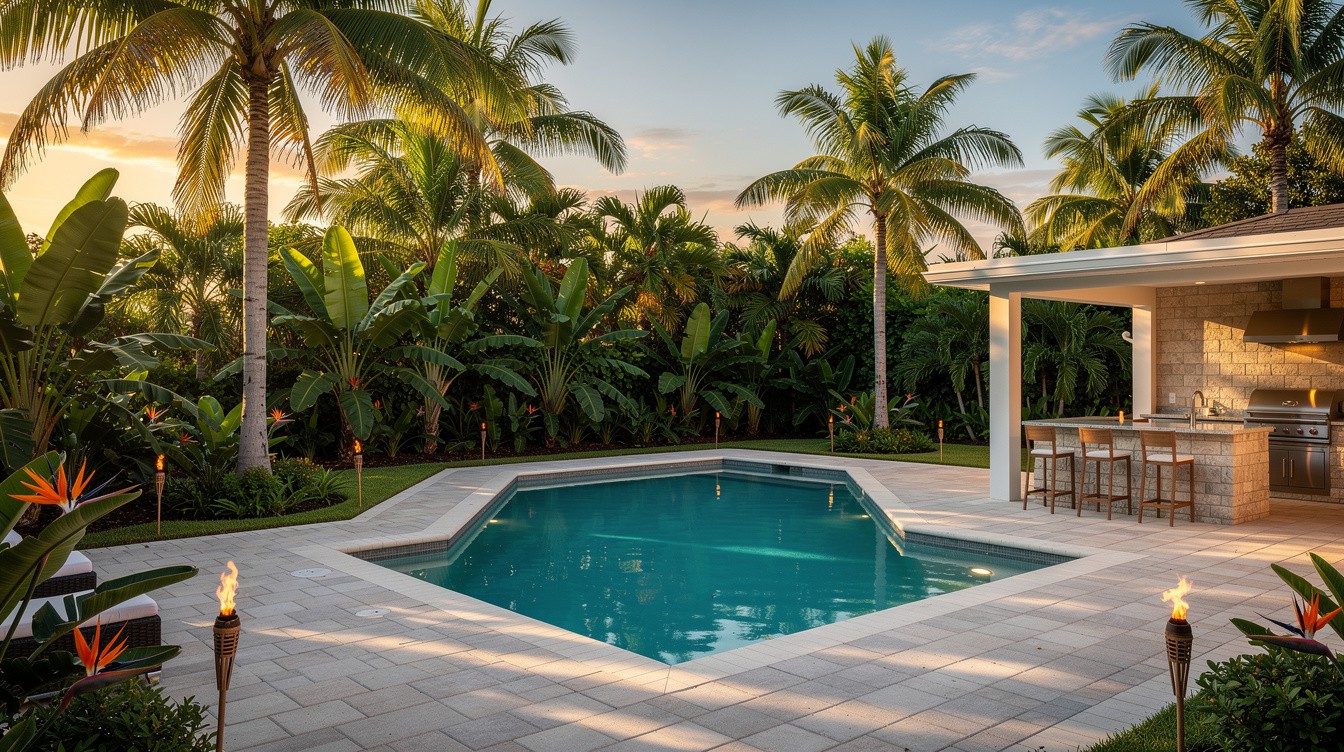
The Travertine Pool and Outdoor Kitchen
$45–85/sqft (pool and kitchen inclusive)A rectangular pool set in ivory travertine, with a covered pavilion at one end housing a stacked coral-stone kitchen island, stainless grill and four bar stools. The screening is entirely botanical: a dense evergreen hedge closes the property line, tall coconut and royal palms rise above it for canopy, and clumps of white bird of paradise and dwarf banana break up the hedge face so it never reads as a green wall. Bamboo torches mark the deck perimeter at dusk. The design solves a Broward problem elegantly — on a standard lot the neighbors are close, and a layered planted screen buys privacy that a taller fence legally cannot.
The Lanai and Rock Grotto Waterfall
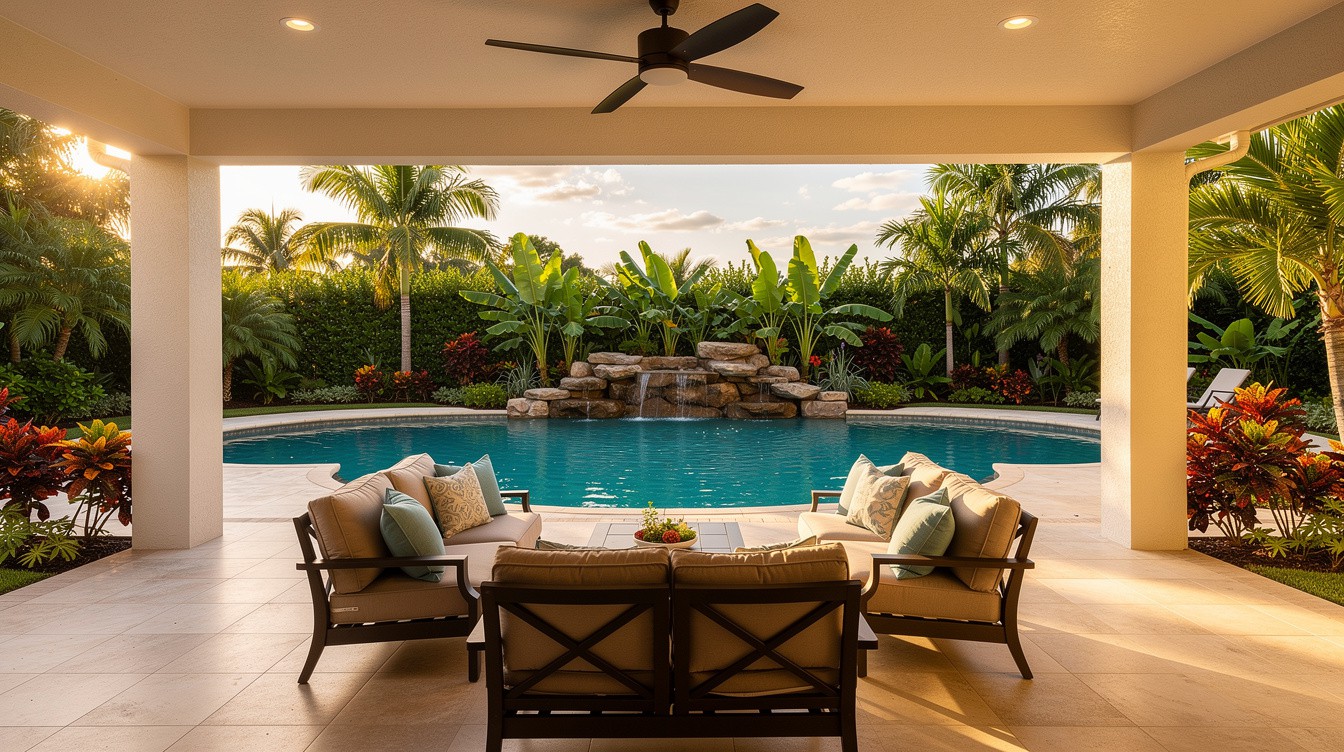
$50–95/sqft (pool, grotto and lanai inclusive)The view out from under a deep covered lanai with paddle fans: a freeform pool wrapping around a keystone boulder waterfall, with the whole far bank planted as a solid tropical hedge so nothing beyond the property line is visible. Color comes from the corners rather than the middle — masses of red-and-gold crotons and burgundy ti flanking the lanai columns, coarse-leaved philodendron and elephant ear filling the shadow line at the base of the hedge, and slender solitaire palms threading up through the planting for height without bulk. The result photographs like a resort but is built from six species repeated.
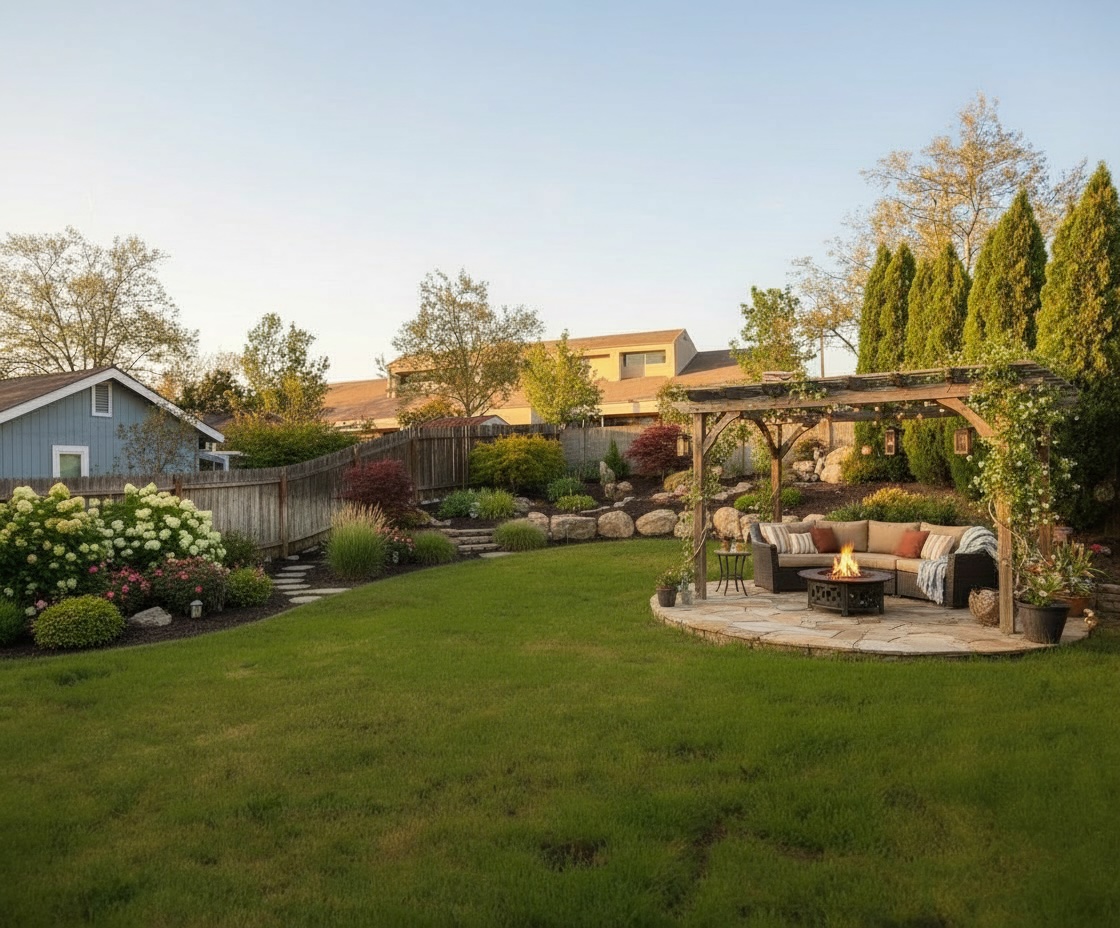
See how a tropical/lush garden looks on YOUR property
Upload a photo of your Pembroke Pines yard and visualize your dream garden in seconds.
Try ProScapeAI Free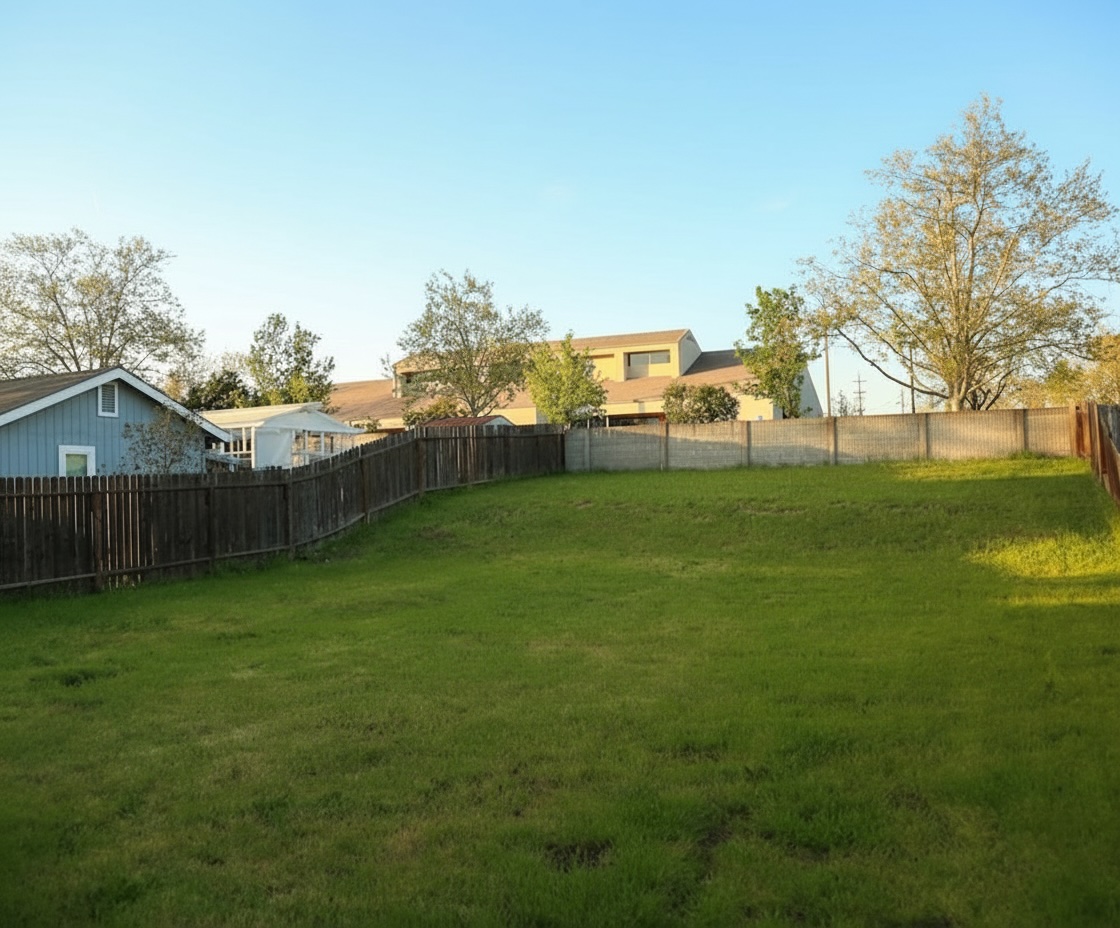
Featured Trees & Shrubs for Tropical/Lush Gardens
Browse all 34 plants for Pembroke Pines
Pygmy Date Palm
Phoenix roebelenii
grows to 6 feet, yellow blooms in spring. Pollinator-friendly.

Royal Palm
Roystonea regia
large shade tree reaching 50+ feet, white blooms in spring. Pollinator-friendly.

Buddha's Hand Citron
Citrus medica
medium-sized at 10 feet, white,purple blooms in winter. Attracts butterflies.

Common Fig
Ficus carica
medium-sized at 15 feet, blooms in spring. Attracts butterflies.
Featured Grasses & Groundcovers for Tropical/Lush Gardens

Bermuda Grass
Cynodon dactylon
low-growing ground cover, blooms in summer. Brown fall color.
Featured Flowers & Perennials for Tropical/Lush Gardens

Broadleaf Arrowhead
Sagittaria latifolia
low-growing ground cover, white blooms in summer. Attracts butterflies.

Canadian Waterweed
Elodea canadensis
grows to 3 feet, white blooms in spring. Evergreen year-round.

Common Cattail
Typha latifolia
grows to 5 feet, blooms in summer. Pollinator-friendly.

European Frogbit
Hydrocharis morsus-ranae
low-growing ground cover, white blooms in summer. Pollinator-friendly.
Bloom Calendar for Pembroke Pines
spring
Canadian Waterweed, Arrow Arum, Pygmy Date Palmsummer
Broadleaf Arrowhead, Canadian Waterweed, Common Cattailfall
Broadleaf Arrowhead, Canadian Waterweed, Pickerelweedwinter
Jade Plant, Silver Jade, Buddha's Hand CitronDesign Tips for Pembroke Pines (Zone 10b)
- Buy the soil chemistry before you buy the plants — a $20 pH test tells you whether your bed is at 7.6 or 8.2, and at 8.2 you should skip Ixora 'Nora Grant' and Gardenia 'Frost Proof' entirely in favor of Clusia guttifera, Conocarpus erectus 'Sericeus' and Chrysobalanus icaco 'Red Tip'
- Feed palms on the UF/IFAS schedule, not a generic lawn fertilizer: an 8-2-12 plus 4 percent magnesium controlled-release palm blend four times a year prevents the potassium-deficiency frizzling and orange speckling that ruins Wodyetia and Adonidia fronds in sandy Broward soil
- Plant Zamia integrifolia (coontie) in every front bed — it is the native host plant for the atala butterfly, a Broward conservation comeback story, it needs almost no water once rooted, and it gives modern-clean structure that HOA reviewers read as tidy
- Berm your beds 8 to 12 inches above grade; the water table under western Pembroke Pines is shallow and 60 inches of annual rain will drown Heliconia rhizomes and Alocasia crowns sitting at flat grade through the summer
- Flush bromeliad cups weekly or plant Neoregelia 'Fireball' where a hose reaches — Broward mosquito control treats bromeliad tanks as an Aedes breeding source, and a stagnant Alcantarea in the front bed is the fastest way to draw a complaint
- Buy crotons and ti plants in 3-gallon size and mass them in odd-numbered drifts of five or seven; Codiaeum variegatum 'Petra' at 3-gallon costs a third of a 7-gallon and closes the same gap in eight months in Zone 10b heat
Where to Source Plants in Pembroke Pines
Skip the big-box stores. These independent Pembroke Pines nurseries specialize in the plants that make tropical/lush gardens thrive in Zone 10b.
Flamingo Road Nursery
Davie
10-acre garden center with plants, hardscape, a farmers market, and a cafe.
Spykes Grove Nursery
Davie
Tropical fruit trees, citrus, and exotic plants, with a history dating to 1946.
Living Color Garden Center
Griffin Road, Fort Lauderdale
Five acres of plants with about 80% of inventory grown at their own sister nursery.
Tropical/Lush Landscaping Costs in Pembroke Pines
| Project Scope | Estimated Cost |
|---|---|
| Front yard tropical rebuild (800 sqft: beds, crotons, palms, mulch) | $7,000 – $18,000 |
| Specimen palm installed (triple Adonidia merrillii or 14-ft Wodyetia bifurcata) | $700 – $2,200 each |
| Clusia guttifera privacy hedge (7-gal at 30 in on center) | $50 – $90 per linear foot |
| Travertine pool deck (700–900 sqft, on compacted limerock) | $18,000 – $34,000 |
| Outdoor kitchen with coral-stone island, grill and bar seating | $12,000 – $35,000 |
| AI visualization with ProScapeAI | Free to start |
Estimates based on Pembroke Pines, FL-area contractor rates as of 2026. Actual costs vary by site conditions, materials, and contractor.
Pembroke Pines Climate & Growing Zone
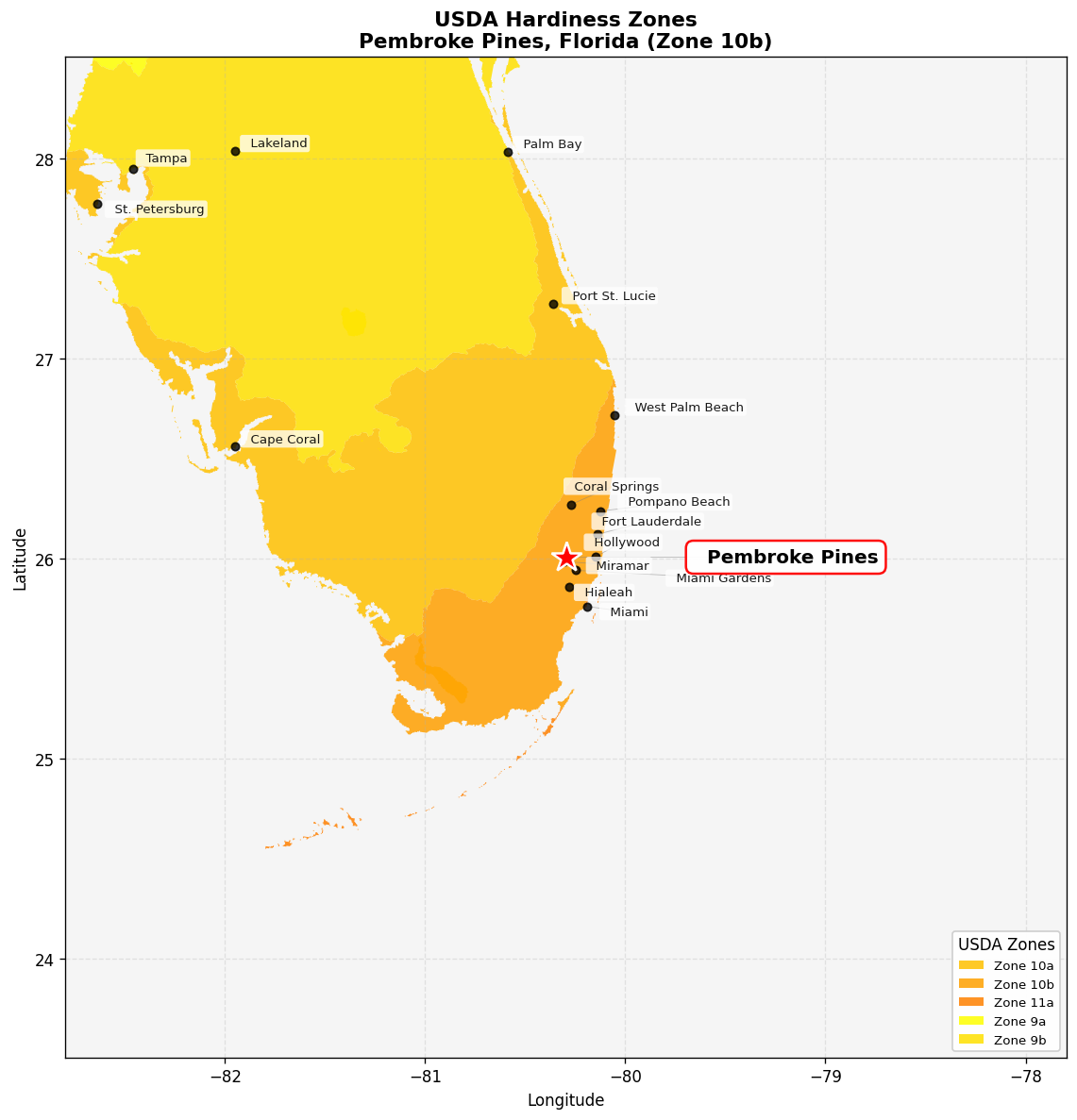
USDA Zone 10b
Hardiness zone for Pembroke Pines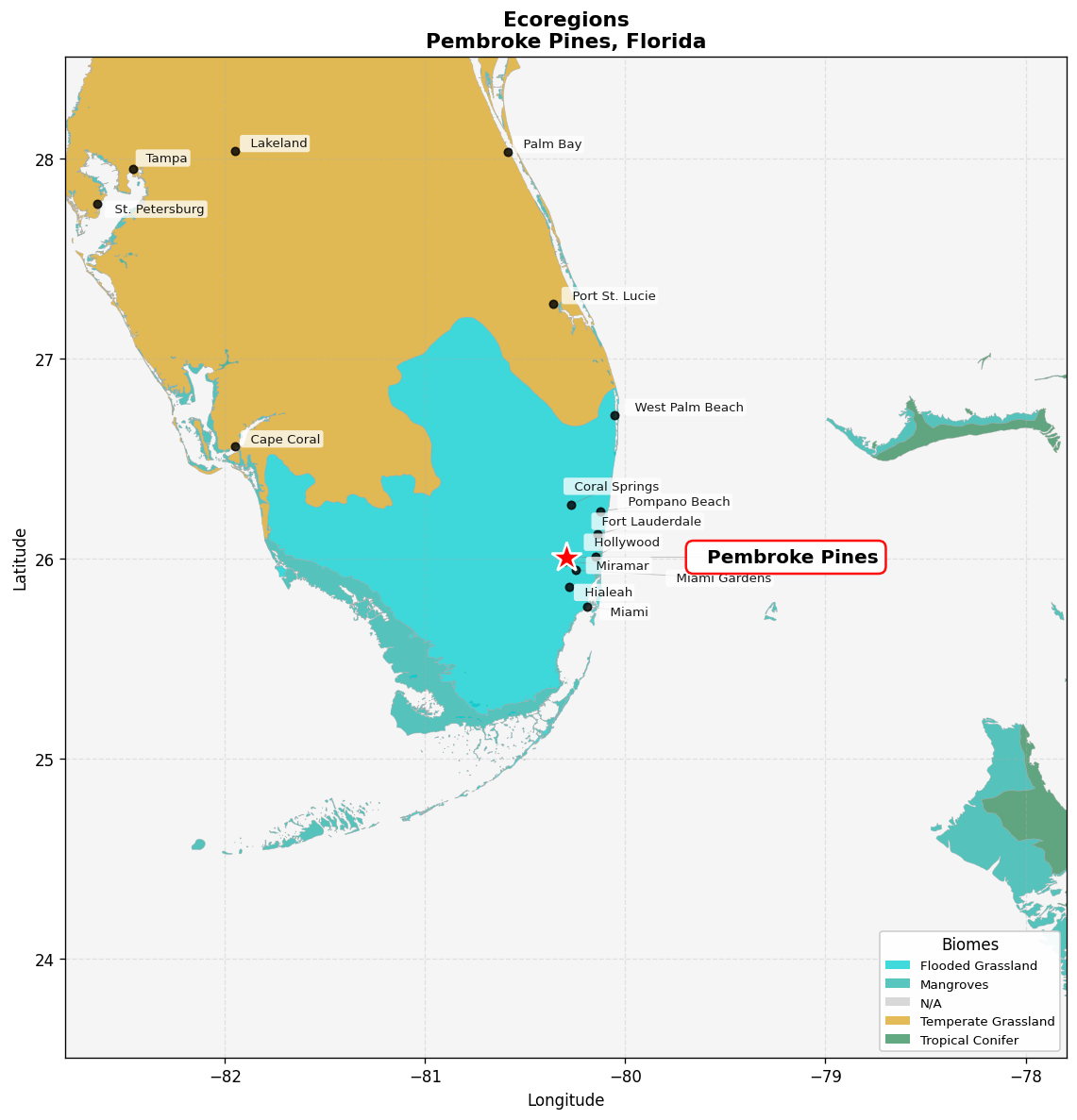
Everglades flooded grasslands
Native ecoregionFrequently Asked Questions
How much does tropical landscaping cost in Pembroke Pines?
A full front-yard tropical rebuild on a typical 800 sqft frontage — bed demolition, soil amendment, a specimen palm or two, crotons, Cordyline fruticosa 'Red Sister', a Chrysobalanus icaco 'Red Tip' ribbon and fresh mulch — runs about $7,000 to $18,000 installed in Broward. Specimen palms are the swing factor: a triple Adonidia merrillii lands around $700 to $1,400 installed, a 14-foot Wodyetia bifurcata $1,200 to $2,200. Backyards with travertine and a pool run $45 to $95 per square foot all-in. South Florida crew rates of roughly $65 to $95 per hour for a two- or three-man crew are what drive labor on any of it.
Why do my ixora, gardenia and hibiscus turn yellow here?
That is iron chlorosis, and it is a soil chemistry problem rather than a watering problem. Pembroke Pines soil is sandy marl over oolitic limestone with a pH commonly between 7.5 and 8.3, and above about pH 7.5 iron becomes chemically unavailable no matter how much is in the ground. Yellow leaf blades with sharply green veins on Ixora coccinea 'Nora Grant', Gardenia jasminoides 'Frost Proof' or Hibiscus rosa-sinensis 'Seminole Pink' is the classic signature. Iron sulfate will not fix it at this pH — use a chelated iron in EDDHA form, add manganese sulfate for the frizzled new growth, and where possible substitute alkaline-tolerant plants like Clusia guttifera, Conocarpus erectus 'Sericeus' and Chrysobalanus icaco 'Red Tip'.
Which palms and trees actually survive a hurricane in Broward?
Broward is inside Florida's High-Velocity Hurricane Zone with design wind speeds around 170 mph, and post-Wilma survey work gives a clear list. Wind-firm: Sabal palmetto, Cocos nucifera, Bursera simaruba (gumbo limbo), Coccoloba uvifera, Conocarpus erectus and Quercus virginiana. Poor performers you should not plant near the house: Ficus benjamina, Schefflera actinophylla, Casuarina, Melaleuca and Syagrus romanzoffiana, which uproots readily in saturated soil. Adonidia merrillii and Wodyetia bifurcata do well structurally but sit in the middle. Disease matters as much as wind — specify 'Maypan' or 'Malayan Dwarf' coconuts rather than Jamaica Talls for lethal yellowing resistance, and watch Phoenix and Sabal specimens for lethal bronzing.
How do Broward's watering restrictions affect a tropical garden?
Broward runs a year-round two-day-a-week landscape irrigation schedule: odd-numbered addresses Wednesday and Saturday, even-numbered addresses Thursday and Sunday, with no watering between 10 a.m. and 4 p.m. Newly installed material gets a limited establishment exemption, so schedule installs accordingly and keep the receipt. In practice this matters far less than people fear, because roughly 60 inches of rain falls here annually and most of it arrives May through October. The real stress window is the January to April dry season. Put beds on drip rather than spray, mulch to 3 inches, and group thirsty material like Heliconia and Alocasia on one zone so you are not overwatering Clusia and Chrysobalanus to keep them alive.
Will my HOA approve a tropical redesign in Pembroke Falls or Silver Lakes?
Usually yes, provided you submit. Pembroke Falls, Silver Lakes, Chapel Trail and most gated communities here run an architectural review committee with a 30 to 45 day turnaround, and many covenants specify minimum turf coverage, approved mulch colors and bed edging standards. Symmetrical, hard-edged tropical designs like the palm-and-croton entry above sail through; wholesale turf removal draws scrutiny. Note that Florida Statute 373.185 prohibits an HOA from banning Florida-Friendly Landscaping outright, which gives you real leverage for native and low-water plantings — but it does not exempt you from the review process itself. Submit a dimensioned plan with a plant schedule, not a mood board.
When is the best time to plant in Pembroke Pines?
Late spring through early summer, roughly May into July, is ideal for palms and tropicals. Soil temperatures are high, the rainy season does most of the watering, and palms in particular put out roots aggressively in warm ground — a Wodyetia or Adonidia planted in June is far more storm-stable by November than one planted in January. Avoid planting palms from December through February; cold soil stalls root initiation and the plant sits on its reserves. Perennials, crotons, Cordyline and hedge material can go in almost any month. If you are installing before hurricane season, brace palms properly with battens and never drive nails into the trunk.