4 English Cottage Garden Ideas for Savannah, GA | Zone 8b Design
Native plants from the Southeast US conifer savannas (Zone 8b) — Humid subtropical climate
Why Cottage/English Gardens in Savannah?
Savannah was laid out as a garden before it was laid out as a city, and the cottage garden has never felt like an import here. Oglethorpe's 1733 ward plan handed the city 22 surviving squares, and the private gardens that grew up around them - the walled courtyards behind the Federal and Italianate rowhouses of the Landmark Historic District, the deep front borders of 1920s Ardsley Park, the porch-and-picket cottages of Isle of Hope and Gordonston, and the Craftsman bungalows filling Thomas Square and the Starland District - are all the right shape for loose, layered, flower-first planting. Add the live oaks and their Spanish moss and you already have the one thing an English garden needs and rarely gets in the South: a high, dappled ceiling that keeps midday sun off the blooms.
The design problem in Savannah is not winter, it is August. Zone 8b lows of 15-20°F barely register - camellias, roses and rosemary all stand through them - but July highs near 92°F with dew points in the seventies, and roughly 50 inches of rain a year, will melt a literal English plant list. Delphiniums, true peonies and Lavandula angustifolia 'Hidcote' are all short-lived experiments here. The swaps are what make the style work: old China and tea roses that were bred for exactly this climate - Rosa 'Louis Philippe', Rosa 'Mrs. B.R. Cant', Rosa 'Mutabilis' - alongside Lavandula x intermedia 'Phenomenal', Leucanthemum x superbum 'Becky', Phlox paniculata 'Jeana' and Salvia guaranitica 'Black and Blue'. Foxgloves and larkspur still belong in the picture; they simply run as cool-season annuals sown in October rather than as perennials.
Underneath it all sits Southern Coastal Plain sand. Chatham County soils drain fast, hold almost no nutrients, and yet sit over a high water table, so the same bed can be bone-dry in May and waterlogged after a September tropical system. The fix is boring and non-negotiable: three to four inches of compost turned in, beds raised eight to ten inches above grade, and three inches of pine straw on top, which is both the local mulch and the one that does not crust over in humidity. There is a second soil quirk downtown - the tabby and oyster-shell lime in old walls and fill pushes courtyard pH toward 7.5, which is exactly why Hydrangea macrophylla 'Penny Mac' reads pink behind a Jones Street wall and blue in an Ardsley Park front yard.
Two local rules shape the practical side of a Savannah cottage garden. Georgia's Water Stewardship Act allows landscape irrigation any day of the week, but only between 4 p.m. and 10 a.m., and Chatham County pulls from a capped Upper Floridan aquifer because of saltwater intrusion - so drip line under the mulch beats a sprinkler on every count. Separately, exterior work visible from the street inside the Landmark Historic District goes before the Historic District Board of Review, and the City's Park and Tree Department protects street trees and significant live oaks, so check both before you set a fence line or trench an irrigation main. Finally, design for hurricane season, June 1 through November 30: flexible-stemmed shrubs like Vitex agnus-castus 'Shoal Creek' and multi-trunk Lagerstroemia 'Natchez' ride out wind far better than a top-heavy specimen planted three feet from the porch.
4 Cottage/English Design Ideas for Savannah

The Rose Arbor Gate
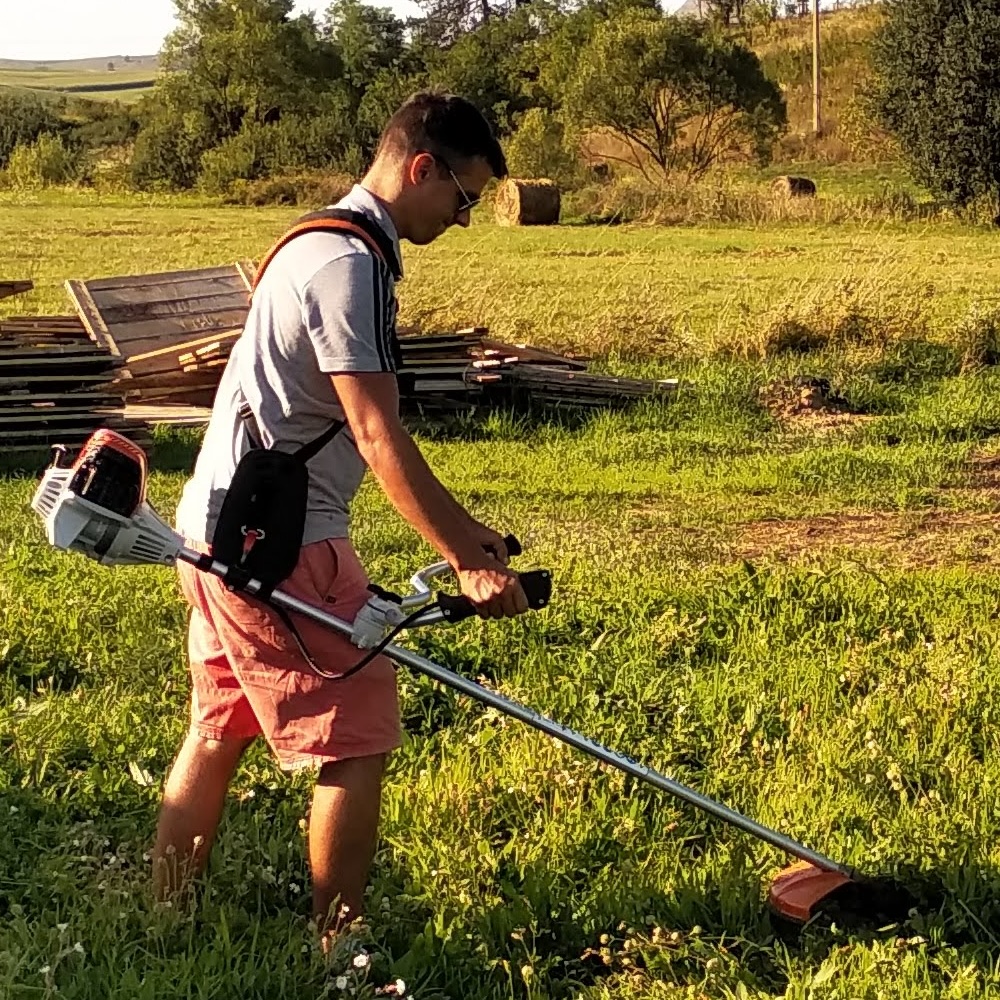
$14-26/sqftA low white picket fence runs the full street frontage with the gate standing open, and a timber arbor over it disappears under pink and cream climbing roses. A soft brick paver walk curves from the gate to a pale-yellow cottage with dark shutters and a columned porch, petals scattered across the brick. Inside and outside the fence the border is deliberately simple and repeated - lavender in front, shrub roses behind - so the arbor does all the drama on its own. Live oaks hung with Spanish moss close the top of the frame, which is the single most Savannah thing in the picture and the reason the roses on the arbor need to be varieties that flower in half a day of sun.

The Dormered Cottage Double Border
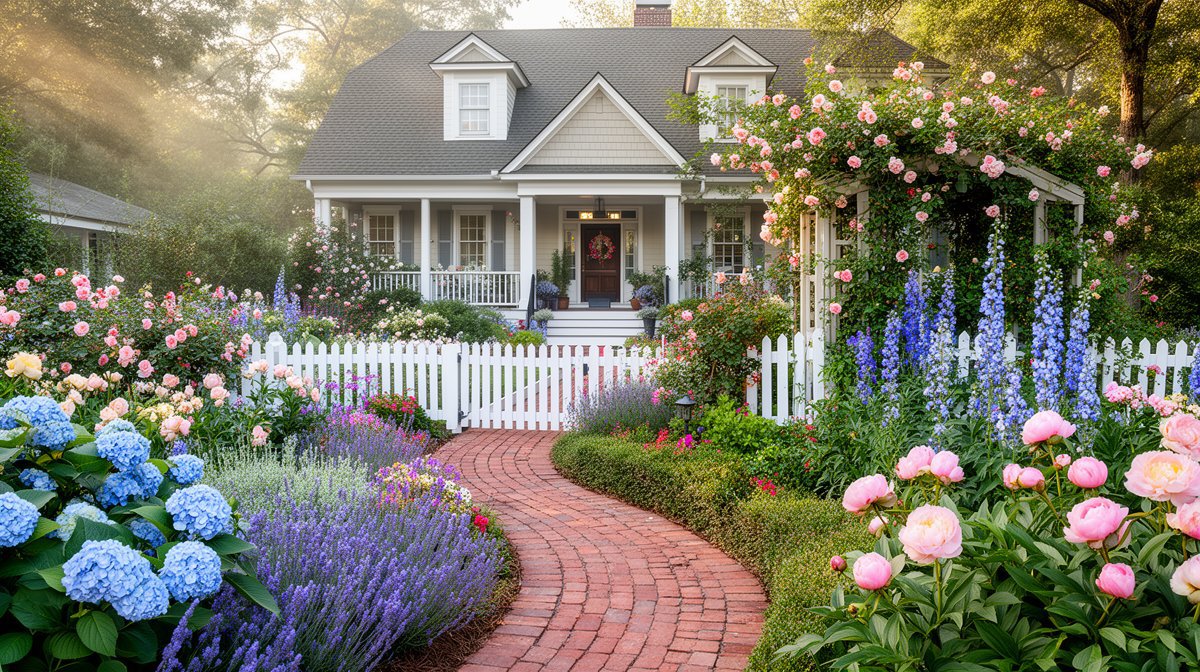
$12-22/sqftA sage-green dormered cottage with a brick chimney and a deep white porch hung with flower baskets sits behind two generous mixed borders that hold every colour at once - yellow, scarlet, blue, violet and white, all at different heights. An irregular flagstone path curves rather than runs, so the lawn between the borders reads as a green room instead of a strip. A white lattice arbor smothered in white climbing roses marks the point where the shade of a very large oak takes over from the sun, and the planting honestly changes species at that line rather than pretending the whole border gets six hours.

The Bistro Circle Under Roses
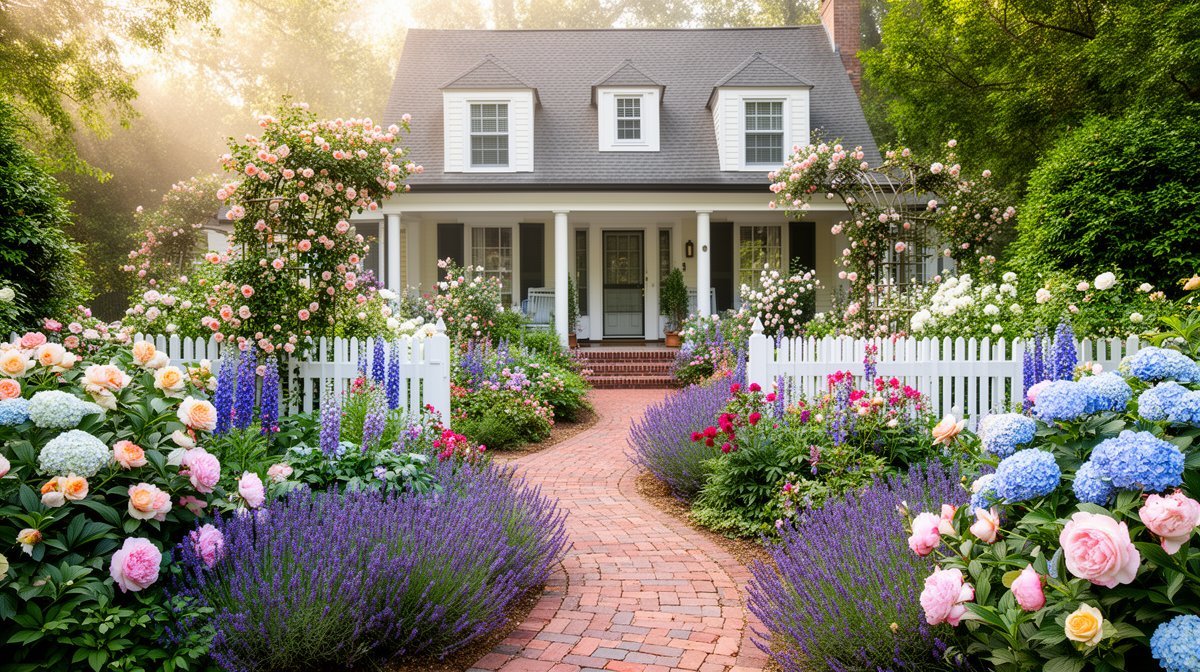
$16-30/sqftA circular flagstone terrace just big enough for a white cast-iron bistro table and two chairs sits in the middle of the back garden, with a slim white metal arch above it carrying apricot and blush climbing roses. Everything else is border: spires of pink and white foxglove, blue delphinium, mophead hydrangeas, lavender, shasta daisies and a hit of scarlet salvia, packed tightly enough that no mulch shows by May. The foxglove and delphinium in this picture are the honest part of a Savannah cottage garden - they are sown in October, they peak in April, and by late June something heat-proof has to take the same square foot.

The Pergola Dining Garden with Fountain
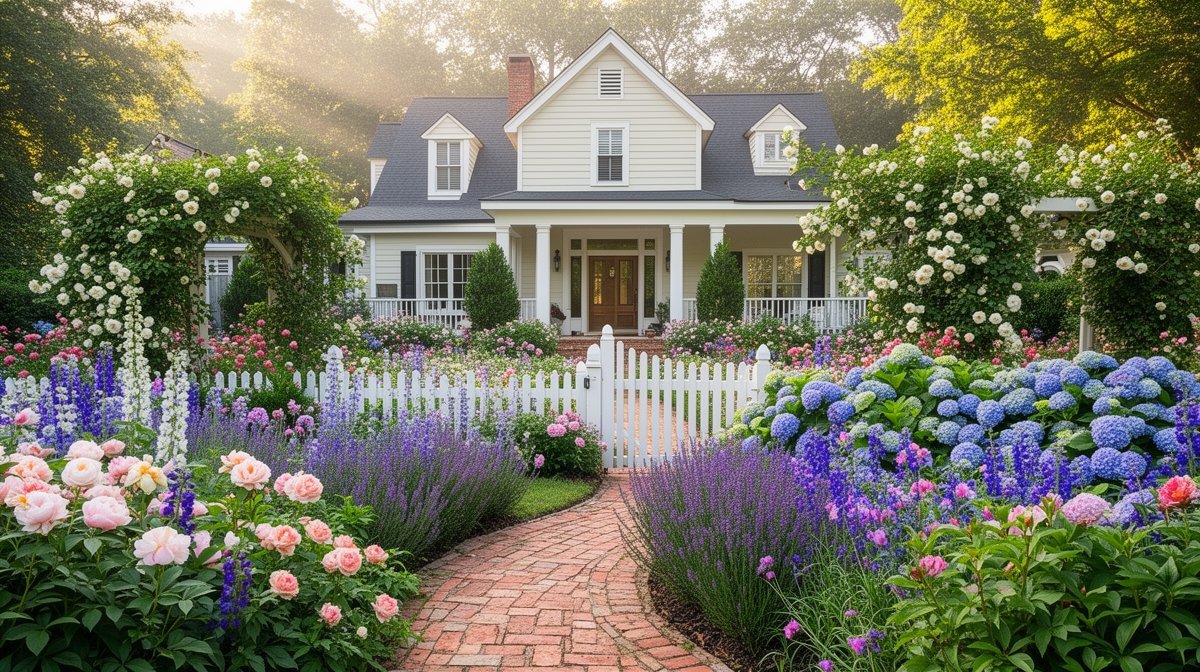
$22-40/sqftA white-painted pergola over a brick paver terrace holds a long timber dining table for six, with pink climbing roses running the whole length of the beams and a clipped evergreen hedge closing the view behind it. The lawn is kept as a deliberate open green carpet, and a two-tier cast-stone fountain sits on a small circular island bed of grasses and purple asters right in the middle of it - the trick that keeps a large back garden from feeling like a field. Along the house wall the border does the heavy lifting: roses, lavender, burgundy dahlias and white daisies stacked front to back against cream siding and sage shutters.
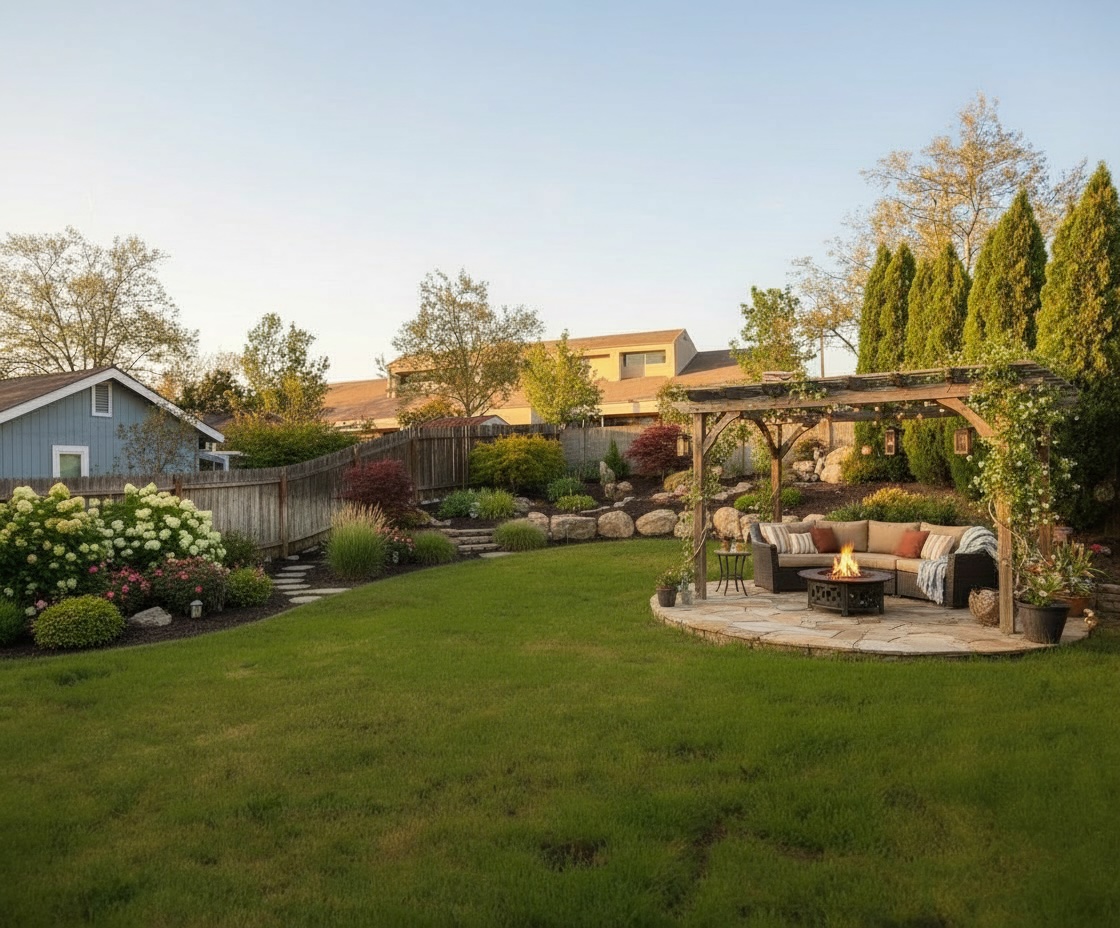
See how a cottage/english garden looks on YOUR property
Upload a photo of your Savannah yard and visualize your dream garden in seconds.
Try ProScapeAI Free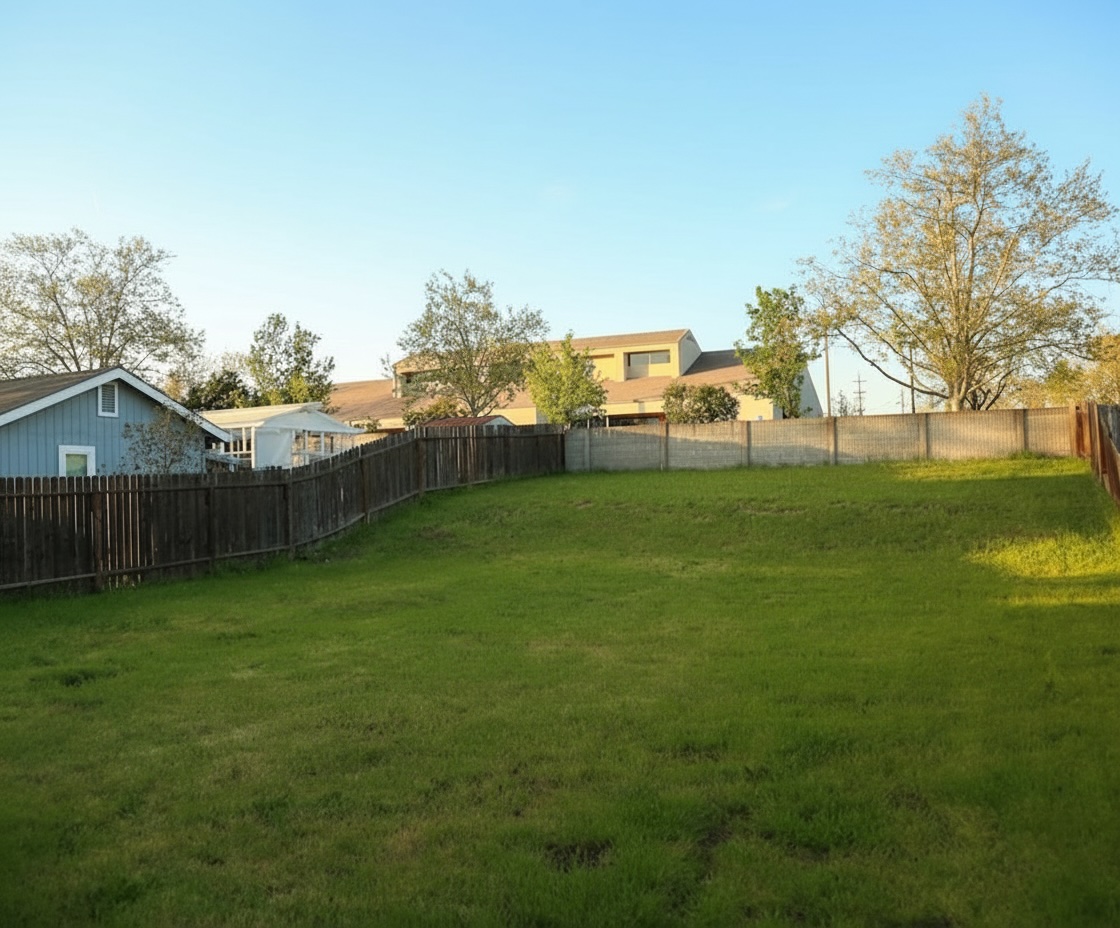
Featured Trees & Shrubs for Cottage/English Gardens
Browse all 181 plants for Savannah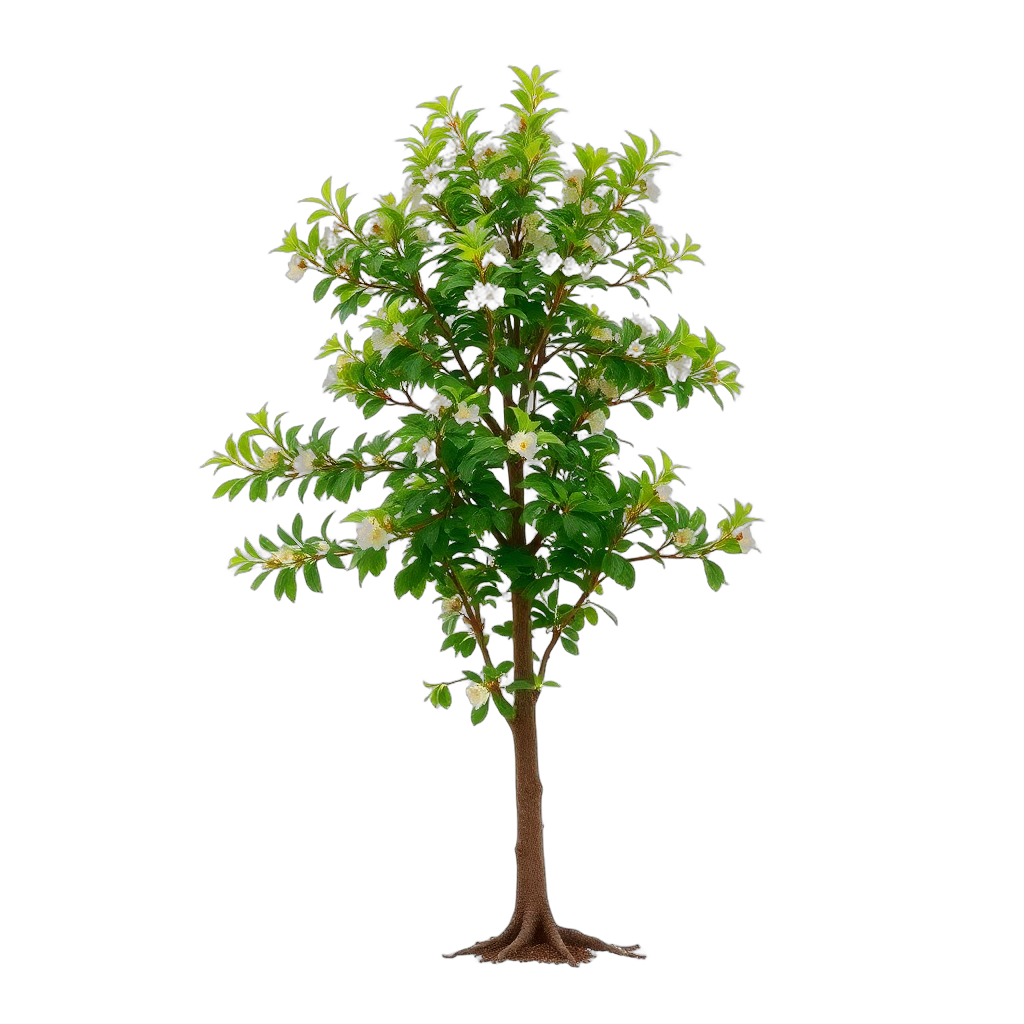
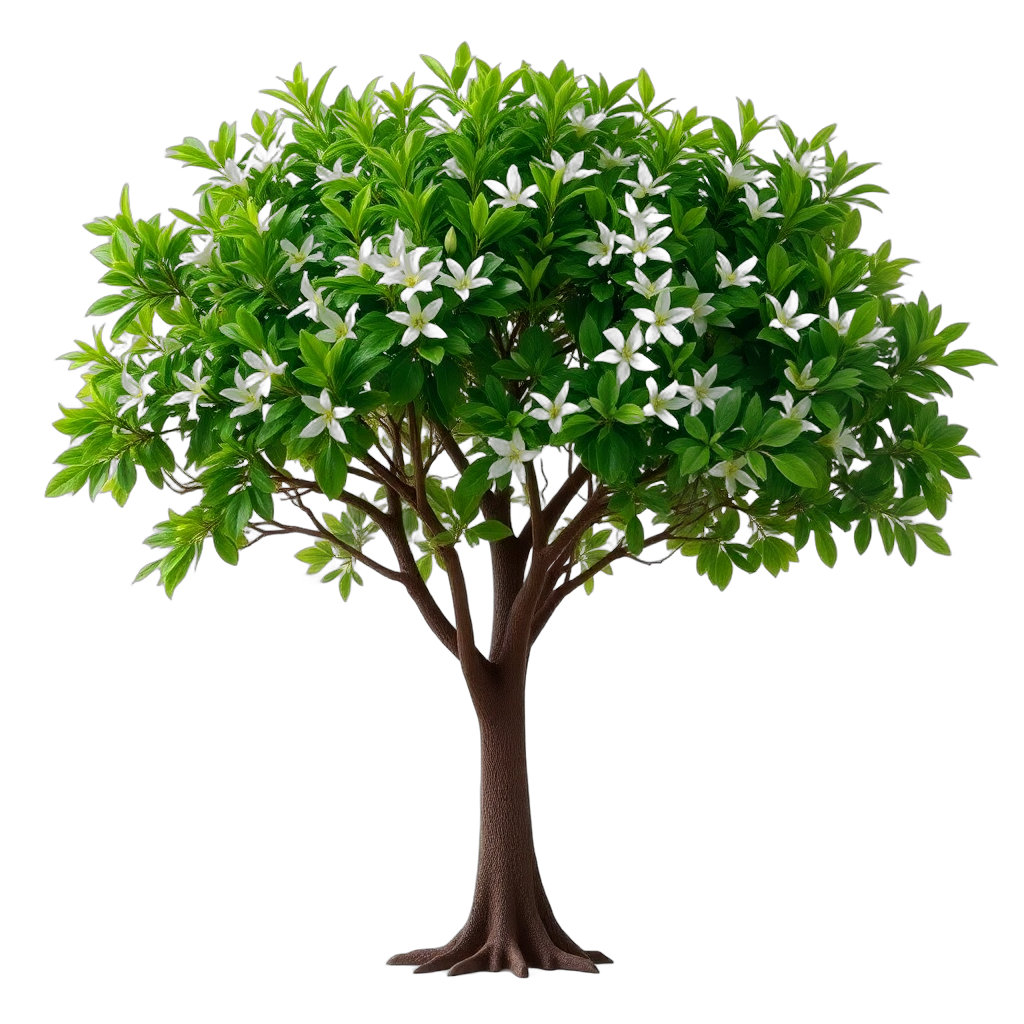
Buckwheat Tree
Cliftonia monophylla
medium-sized at 15 feet, white blooms in spring. Attracts butterflies.
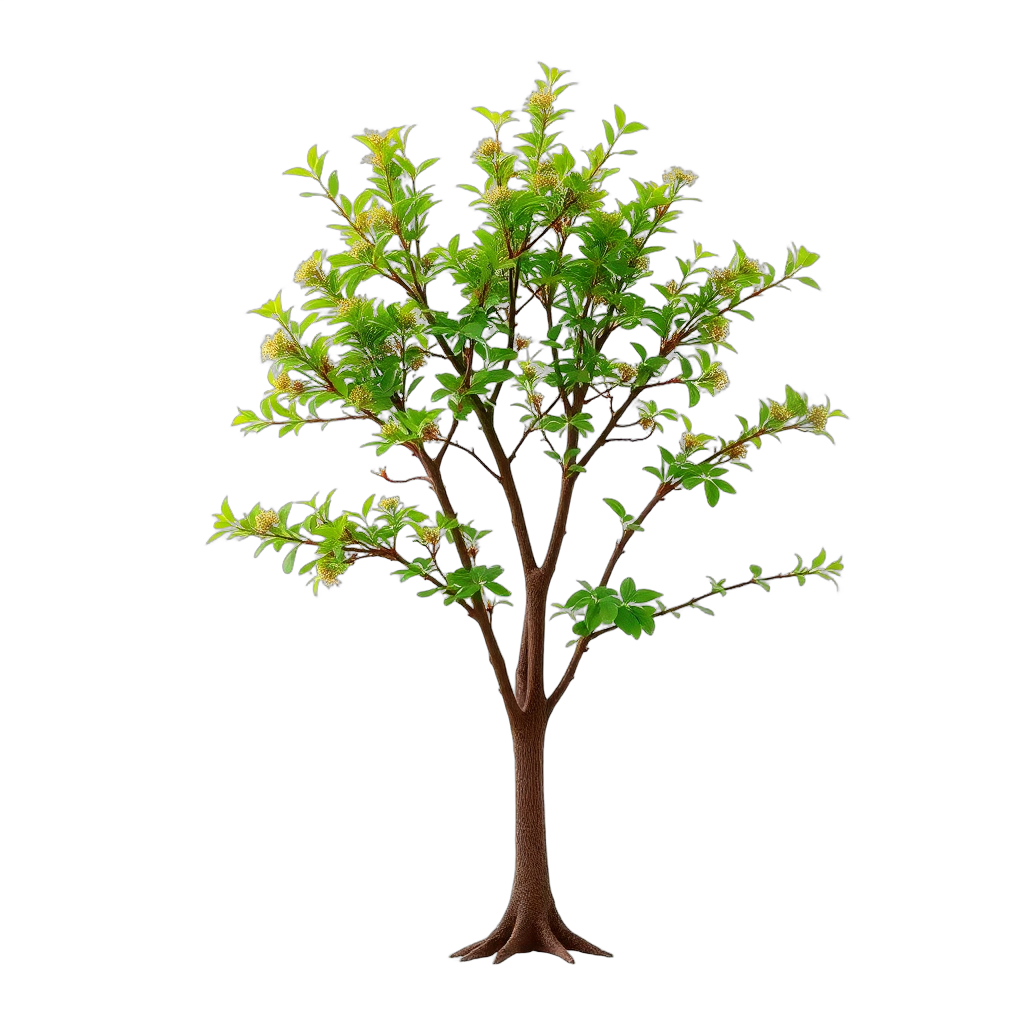
Fetterbush
Lyonia lucida
grows to 6 feet, white blooms in spring. Evergreen year-round.
Florida Anise
Illicium floridanum
medium-sized at 8 feet, red blooms in spring. Evergreen year-round.

Inkberry
Ilex glabra
medium-sized at 8 feet, white blooms in spring. Pollinator-friendly.
Featured Grasses & Groundcovers for Cottage/English Gardens

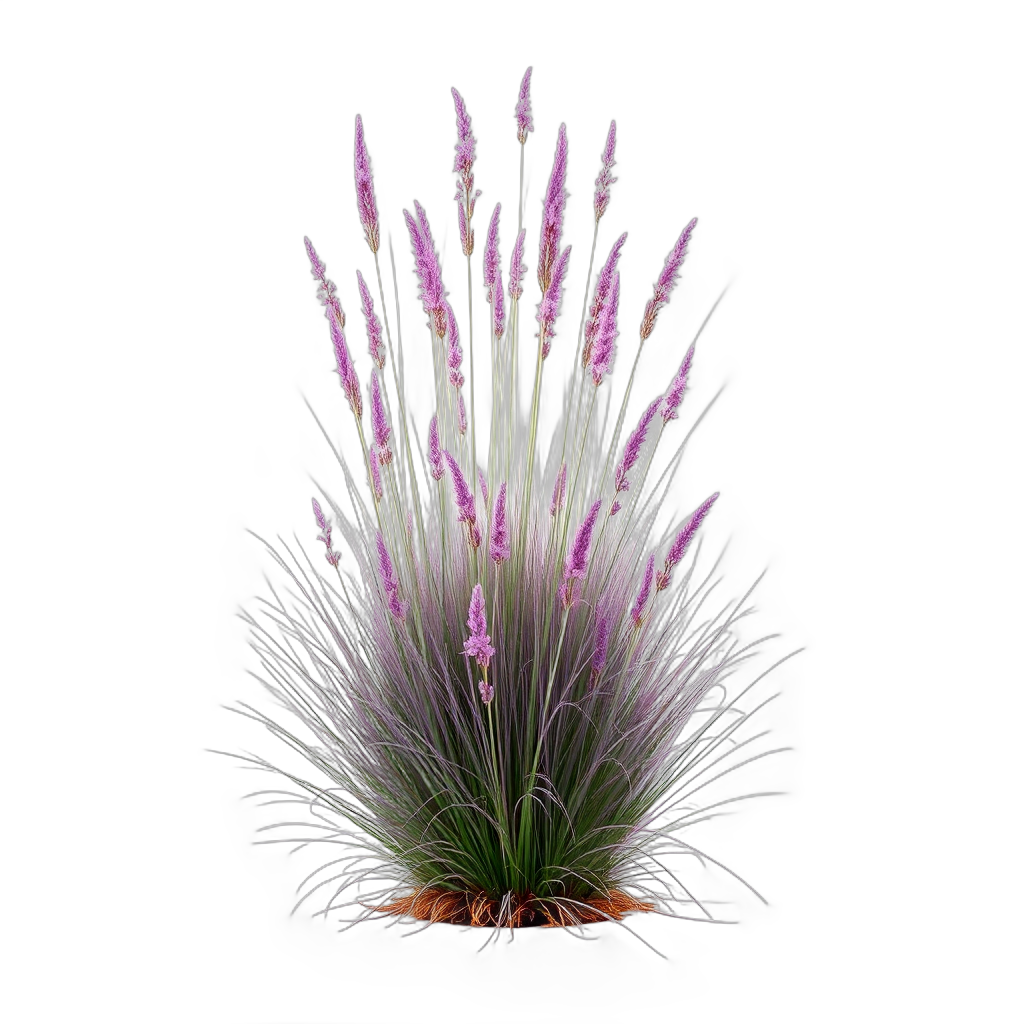
Pink Muhly Grass
Muhlenbergia capillaris
grows to 3 feet, pink blooms in fall.
Purple Love Grass
Eragrostis spectabilis
low-growing ground cover, purple blooms in fall. Orange fall color.
Featured Flowers & Perennials for Cottage/English Gardens
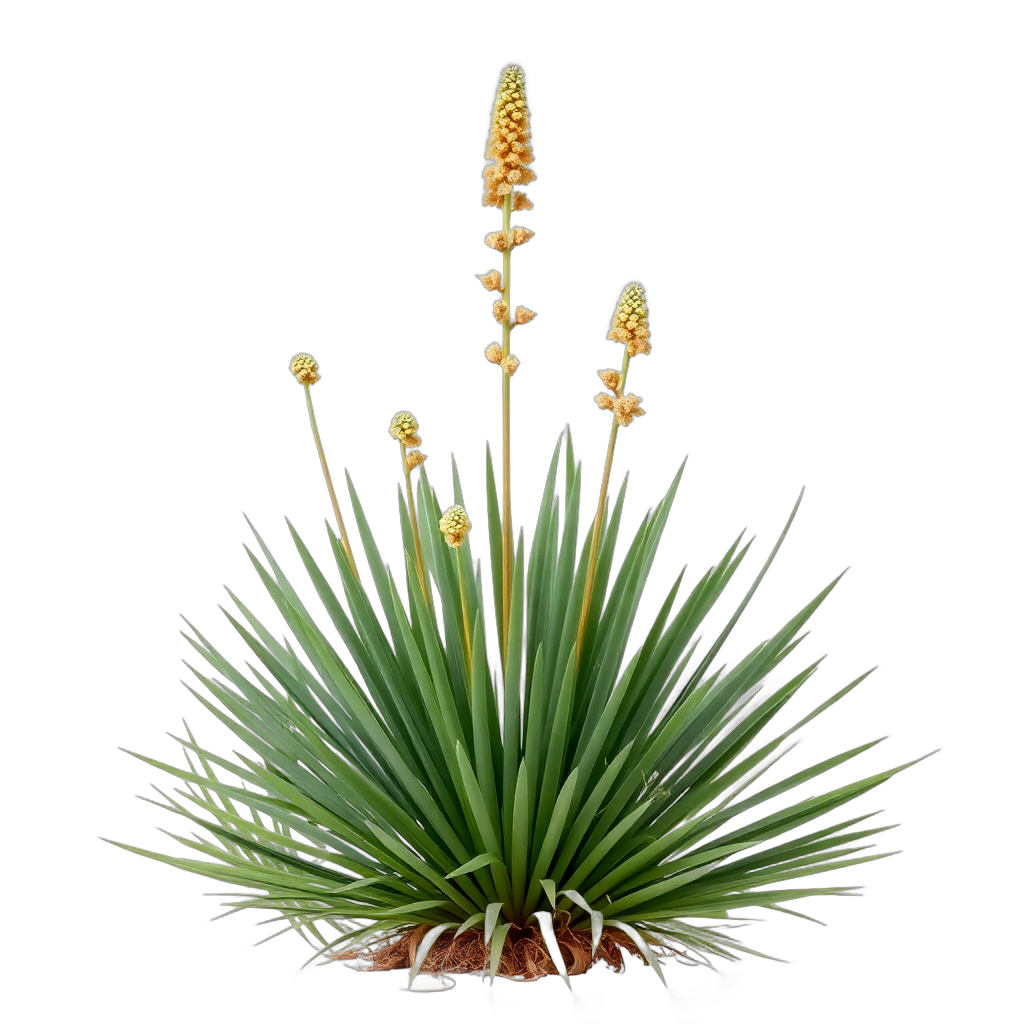
Adam's Needle
Yucca filamentosa
low-growing ground cover, white blooms in summer. Attracts hummingbirds.

Water Lettuce
Pistia stratiotes
low-growing ground cover, white blooms in summer. Evergreen year-round.

Tussock Sedge
Carex stricta
low-growing ground cover, blooms in spring. Brown fall color.

Umbrella Sedge
Cyperus alternifolius
grows to 4 feet, blooms in summer. Evergreen year-round.
Zone and sun checks come from our database — confirm with your local nursery before you buy.
Bloom Calendar for Savannah
spring
Buckwheat Tree, Fetterbush, Florida Anisesummer
Adam's Needle, Swamp Cyrilla, Loblolly Bayfall
Pink Muhly Grass, Purple Love Grasswinter
Limited bloomsDesign Tips for Savannah (Zone 8b)
- Raise every border eight to ten inches above grade. Chatham County sand drains fast but the water table is shallow, and the difference between a Lavandula x intermedia 'Phenomenal' that lives five years and one that dies in September is entirely the crown sitting above the saturation line.
- Buy the roses that were bred for this heat. Rosa 'Louis Philippe', Rosa 'Mrs. B.R. Cant' and Rosa 'Mutabilis' bloom through a Savannah July on drip and no spray programme, while hybrid teas need weekly fungicide to look presentable at 50 inches of annual rain.
- Run foxglove, larkspur and stock as a winter crop, not a border backbone. Sow in October, peak in April, pull in June, and hand the same square foot to Salvia leucantha, Pentas lanceolata and Muhlenbergia capillaris for the hot half of the year.
- Use pine straw, not hardwood mulch. It is the regional standard for a reason: it stays open in humidity instead of matting into a crust that sheds a summer thunderstorm straight off the bed and into the lawn.
- Design for half sun under the live oaks. Almost every Savannah cottage garden has a canopy line running through it, so change species at that line - Hydrangea quercifolia 'Snow Queen' and Chasmanthium latifolium on the shaded side, Echinacea purpurea 'Magnus' and Leucanthemum x superbum 'Becky' on the open side - rather than planting one list across the whole bed.
- Put the irrigation on drip and a 4 p.m. to 10 a.m. timer. Georgia's watering window is the law, overhead water at dusk is what spreads blackspot, and drip line buried under pine straw halves consumption on sand that holds almost nothing.
- Give hurricane season a thought in the plant plan. Multi-trunk Lagerstroemia 'Natchez' and Vitex agnus-castus 'Shoal Creek' flex in wind; keep brittle, top-heavy specimens well away from the porch roof and the power drop.
Where to Source Plants in Savannah
Skip the big-box stores. These independent Savannah nurseries specialize in the plants that make cottage/english gardens thrive in Zone 8b.
Cobia Clarke Nursery
Southside / Georgetown
Ten-acre growing yard for shrubs, trees, ornamentals and grasses, plus a native soil blend mixed for coastal Georgia sand
Herb Creek Landscape Supply
Sandfly (second store in Thunderbolt)
Locally owned garden centre carrying perennials, shade plants, palms and Espoma/FoxFarm organic soil amendments for Zone 8b beds
Savannah's Secret Gardens
Ogeechee Road / West Savannah
Independent garden and gift shop with trees, shrubs, perennials, exotics, fountains and statuary for cottage-style courtyards
Chatham Nurseries
Bloomingdale (west of Savannah)
Family-run grower since 1959, specialising in field-grown trees from 2-inch to 12-inch caliper plus evergreens and perennials
Fancy Plants
Montgomery Crossroad / Midtown
Savannah nursery since 1988 growing annuals, perennials and tropicals, with container and event plant rental
Cottage/English Landscaping Costs in Savannah
| Project Scope | Estimated Cost |
|---|---|
| Front-yard cottage border conversion (bed build, compost, roses and perennials, 300-500 sqft) | $4,500 - $11,000 |
| Brick or flagstone front walkway with arbor and picket gate | $6,000 - $16,000 |
| Circular flagstone patio with rose arch and bistro seating (200-350 sqft) | $7,000 - $18,000 |
| Cedar pergola over a brick dining terrace (300-450 sqft) | $18,000 - $42,000 |
| Cast-stone recirculating fountain, set with basin and power | $2,500 - $8,000 |
| Soil rebuild with compost, raised bed edging and a drip zone | $3 - $7/sqft |
| AI visualization with ProScapeAI | Free to start |
Estimates based on Savannah, GA-area contractor rates as of 2026. Actual costs vary by site conditions, materials, and contractor.
Savannah Climate & Growing Zone
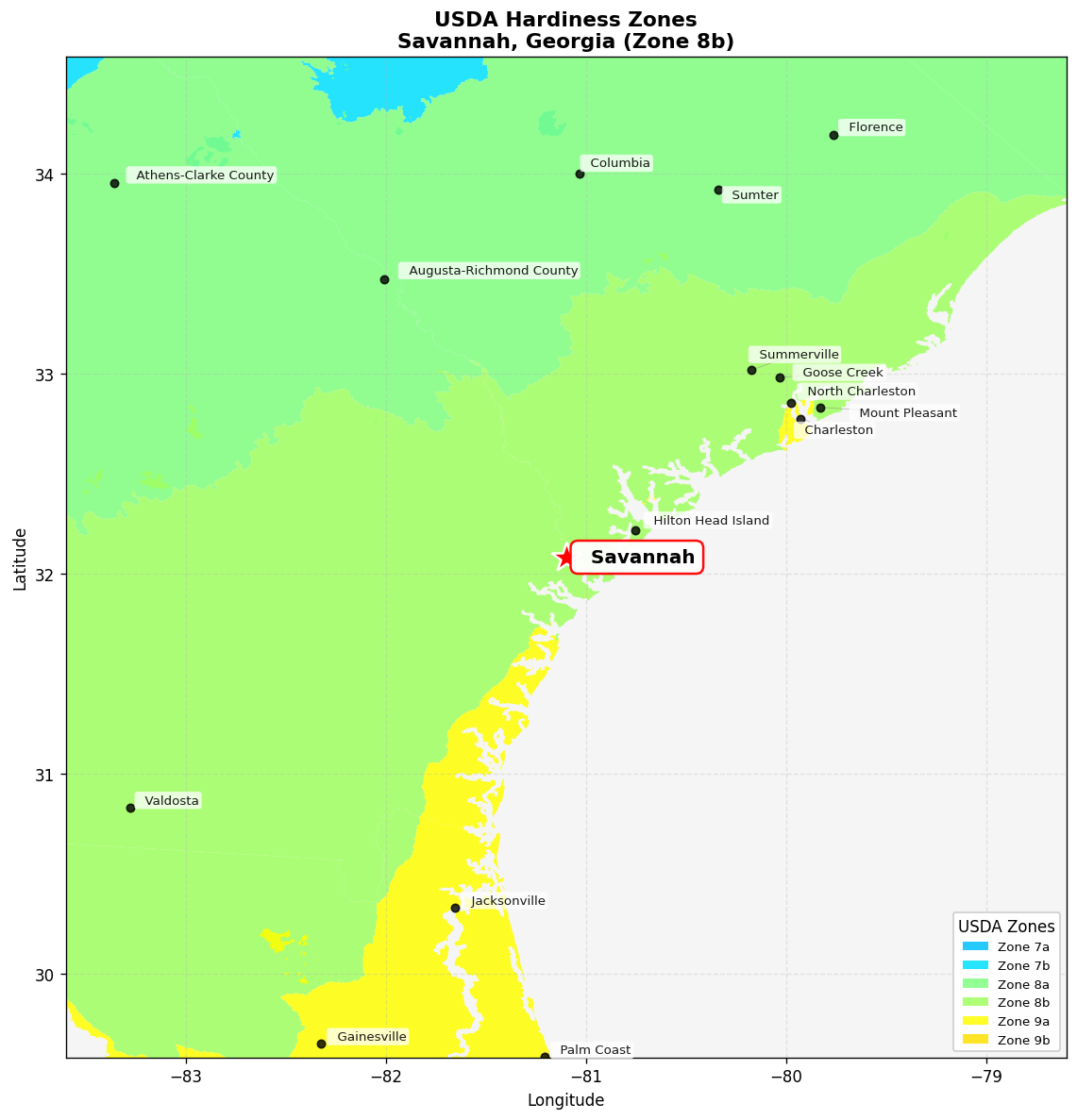
USDA Zone 8b
Hardiness zone for Savannah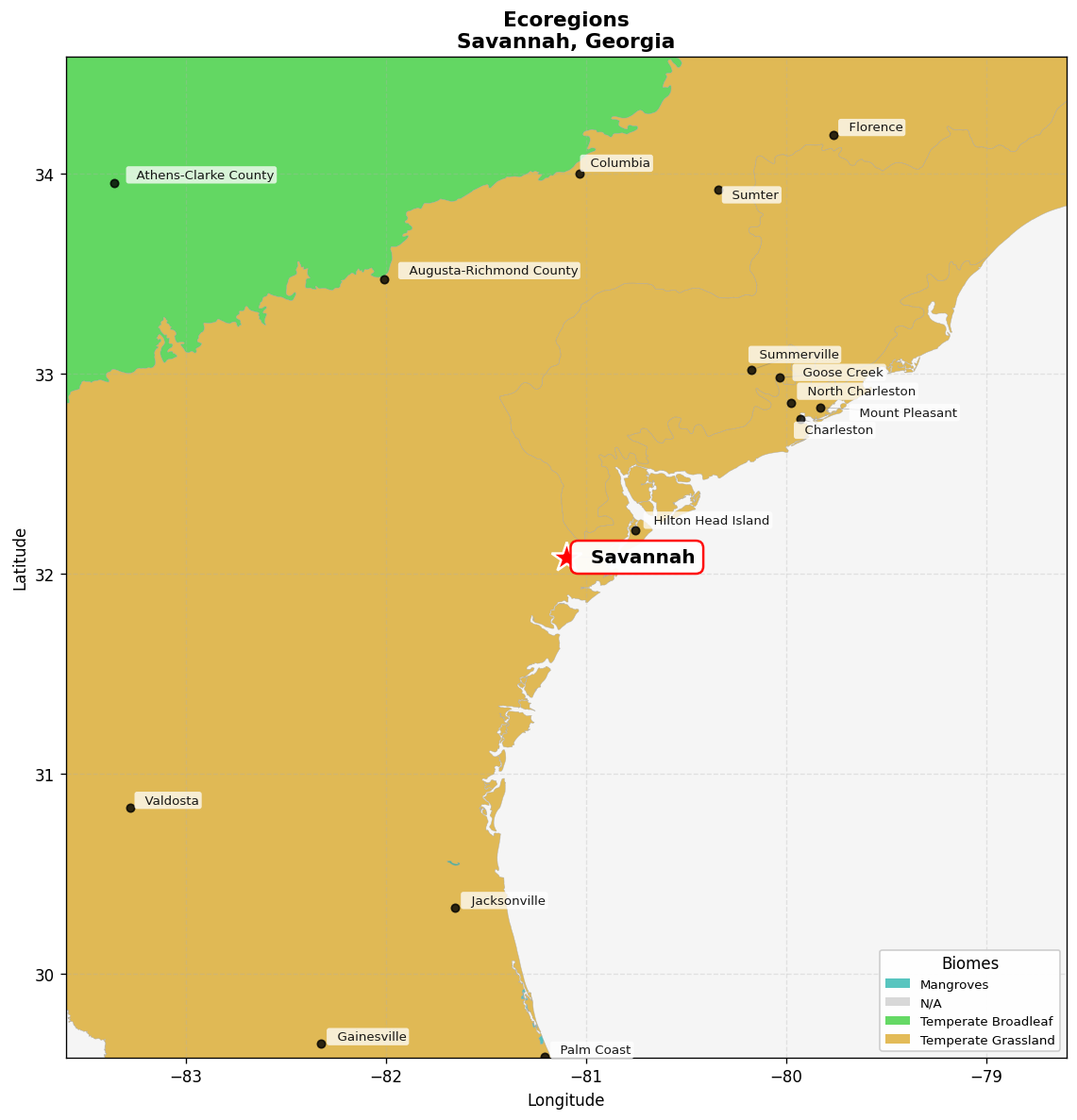
Southeast US conifer savannas
Native ecoregionFrequently Asked Questions
How much does a cottage garden cost in Savannah?
Chatham County install pricing sits a little under the national metro average, and cottage planting is labour-heavy rather than material-heavy, which helps. A front-yard border conversion of 300-500 sqft - bed prep, compost, drip, roses and perennials - typically runs $4,500-$11,000 installed. A brick or flagstone front walk with an arbor and picket gate is $6,000-$16,000. A circular flagstone bistro terrace with a rose arch lands at $7,000-$18,000, and a cedar pergola over a brick dining terrace runs $18,000-$42,000. Doing the planting yourself and buying one-gallon <em>Salvia guaranitica</em> 'Black and Blue' and <em>Leucanthemum x superbum</em> 'Becky' rather than three-gallon stock can cut the plant line by half; the roses are worth paying up for.
Which roses actually survive Savannah's humidity and blackspot?
Fifty inches of rain and dew points in the seventies make blackspot a certainty, so the answer is disease tolerance rather than spraying. The old Chinas and teas were bred in and for this kind of heat and are still the best bet: <em>Rosa</em> 'Louis Philippe', <em>Rosa</em> 'Mrs. B.R. Cant', <em>Rosa</em> 'Old Blush' and <em>Rosa</em> 'Mutabilis' will defoliate a little in September and shrug it off. For climbers, 'Peggy Martin', 'New Dawn' and <em>Rosa banksiae</em> 'Lutea' are the workhorses; 'Sombreuil' is the fragrant one worth the extra care. Modern hybrid teas are the ones that disappoint here. Whatever you plant, give it morning sun, three feet of air on every side, and drip irrigation rather than overhead - wet foliage overnight is what actually spreads the spores.
Can I grow lavender, foxglove and delphinium in Savannah?
Lavender, yes, if you cheat on drainage. <em>Lavandula x intermedia</em> 'Phenomenal' and <em>Lavandula stoechas</em> 'Anouk' will hold for years on an eight-to-ten-inch berm of half native sand and half crushed granite, mulched with grit rather than pine straw. <em>Lavandula angustifolia</em> 'Hidcote' and 'Munstead' will rot in a wet August - do not spend the money. Foxglove and delphinium are a different story: treat <em>Digitalis purpurea</em> 'Camelot Rose' and <em>Consolida ajacis</em> larkspur as cool-season annuals, sow or plant them in October and November, enjoy an April-to-May peak, then pull them in June and drop in <em>Salvia leucantha</em> or pentas for the summer half of the year.
When is the best time to plant a cottage garden in Savannah?
October through early December, without much argument. Savannah's last frost usually falls between March 10 and 20 and the first frost around early December, giving roughly a 280-day growing season, and autumn planting lets roots run all winter in soil that never freezes hard. February and March is the second-best window and the right time to set out perennials. Avoid June through September: newly planted <em>Hydrangea macrophylla</em> and <em>Echinacea purpurea</em> 'Magnus' can be watered daily and still fail to establish in 92°F heat, and afternoon thunderstorms will stall any hardscape pour. Bulbs like <em>Lycoris radiata</em> and <em>Crinum</em> 'Ellen Bosanquet' also go in during the autumn window.
What do I do about Savannah's sandy soil?
Assume you are building soil, not amending it. Chatham County's coastal plain sands drain in minutes and hold very little nutrition, but the water table is shallow enough that a bed dug down into the sand becomes a bathtub after a tropical system. Build up instead: three to four inches of compost tilled into the top eight inches, beds raised eight to ten inches above grade with a brick or steel edge, then three inches of pine straw. Feed lightly and often rather than once heavily, because sand leaches. The UGA Cooperative Extension office in Chatham County runs inexpensive soil tests and is worth using before you buy anything - especially downtown, where old tabby and oyster-shell lime can push pH to 7.5 and turn a blue hydrangea pink.
Are there watering rules or approvals I should know about in Savannah?
Yes to both. Under Georgia's Water Stewardship Act you may irrigate a landscape any day of the week, but only between 4 p.m. and 10 a.m., which is one more reason drip under mulch beats sprinklers - Chatham County draws from a capped Upper Floridan aquifer because of saltwater intrusion. On the approvals side, exterior changes visible from the street inside the Landmark Historic District, including fences, walls, gates and paving, are reviewed by the Historic District Board of Review, and the City's Park and Tree Department protects street trees and significant live oaks. Neither is a formality you can assume your way through, so confirm requirements with the city before you set posts or trench near an oak.