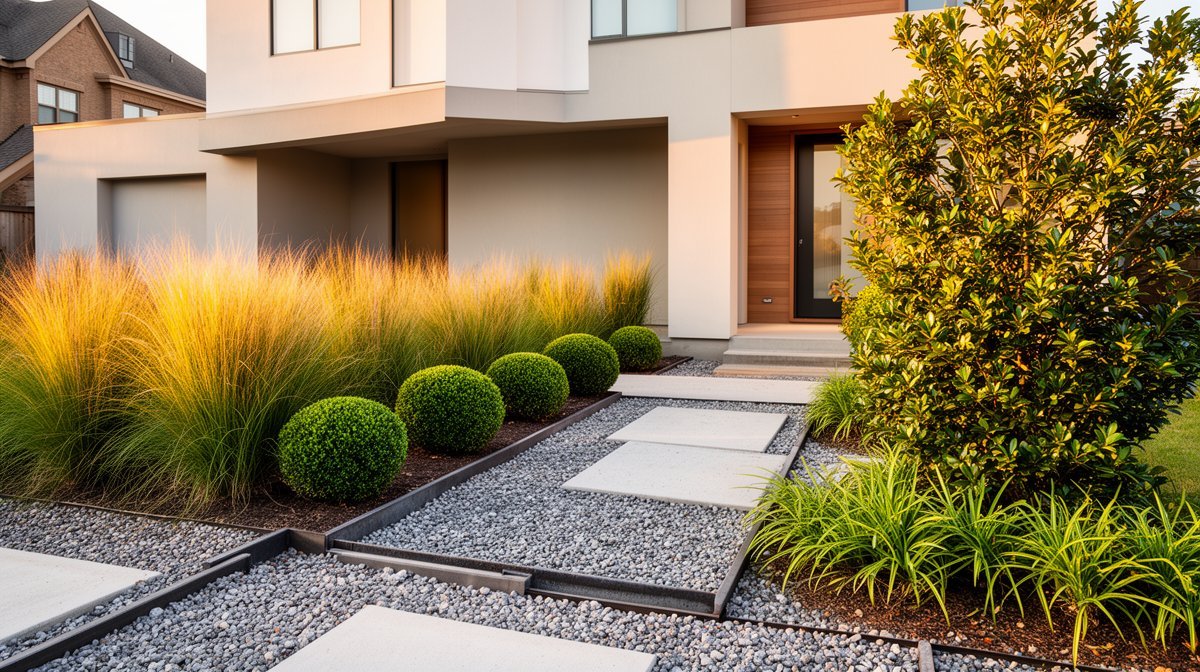
4 Modern Garden Ideas for St. Louis, MO | Contemporary Landscaping in Zone 6b
Native plants from the Central US forest-grasslands transition (Zone 6b) — Humid subtropical climate
Why Modern/Minimalist Gardens in St. Louis?
St. Louis’ contemporary landscape scene has grown significantly in neighborhoods like Clayton, Ladue, Town and Country, and the Central West End, where mid-century modern architecture, new construction, and substantial renovation projects demand outdoor spaces that match their architectural ambition. Modern landscaping in Zone 6b requires solving a design problem that warmer-climate contemporary gardens don’t face: how to maintain visual interest through Missouri’s genuine winter—December through February, with lows averaging 18–25°F and regular snow events—when most plants are dormant and garden structure must carry the design.
The solution that St. Louis modern designers have developed is a landscape framework built on strong evergreen structure, bold seed heads and dormant stems left through winter, and hardscape that reads as clean and designed even under snow. Ornamental grasses are central to this strategy—their dried seed heads and arching form are genuinely beautiful through winter, and Gulf muhly’s fall pink cloud is one of the Missouri landscape’s great seasonal events. Boxwood and yew provide evergreen geometric structure. Concrete and steel hardscape holds its clean lines regardless of season.
The outdoor living investment case is strong in St. Louis despite the limited summer season. Missouri’s spring and fall are genuinely exceptional—moderate temperatures, low humidity relative to summer, and extraordinary color from the region’s hardwood forests in October—giving outdoor spaces usable and beautiful periods from late March through November. A well-designed fire pit terrace extends the season further into chilly October and November evenings, making the outdoor entertainment window close to 8 months. The Midwest’s lower construction costs compared to coastal markets also mean that St. Louis homeowners get more outdoor space for their investment dollar.
4 Modern/Minimalist Design Ideas for St. Louis
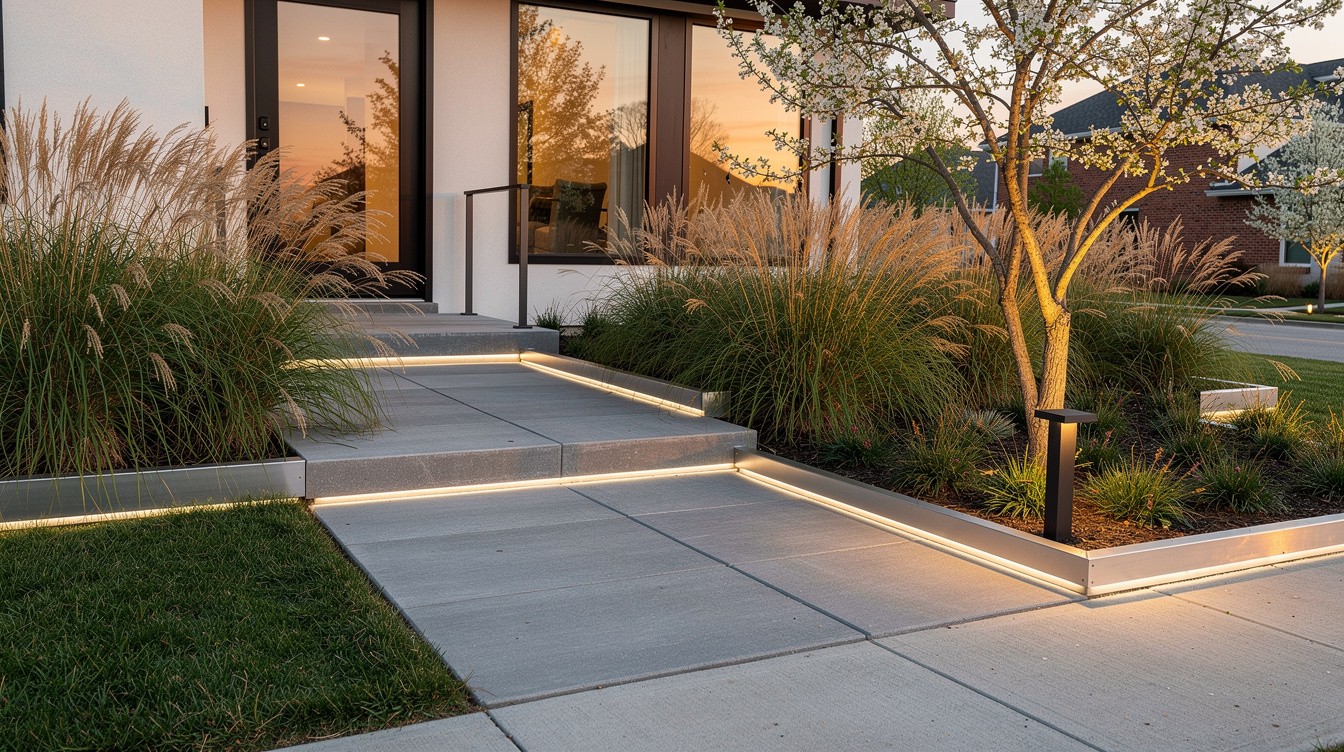
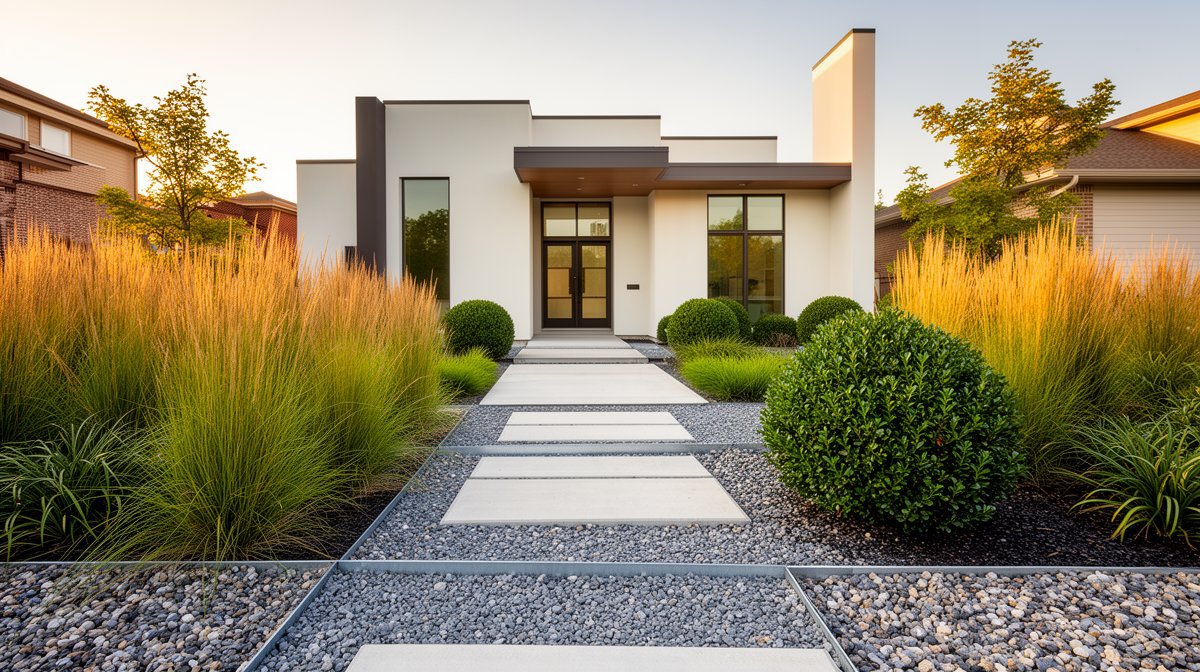
Concrete Paver Entry with Ornamental Grass Mass Planting
$12–25/sqftLarge-format concrete pavers in a cool grey tone create a contemporary front entry flanked by sweeping masses of Karl Foerster feather reed grass and sesleria that wave in Missouri’s spring breezes and turn burnished gold in winter—providing seasonal interest even when nothing else is growing. Steel edging defines geometric planting beds, and a specimen multi-stem serviceberry provides spring bloom and fall color at the property corner. Low LED lighting along the paver edges extends the design’s visual impact into the evening hours of fall and winter.
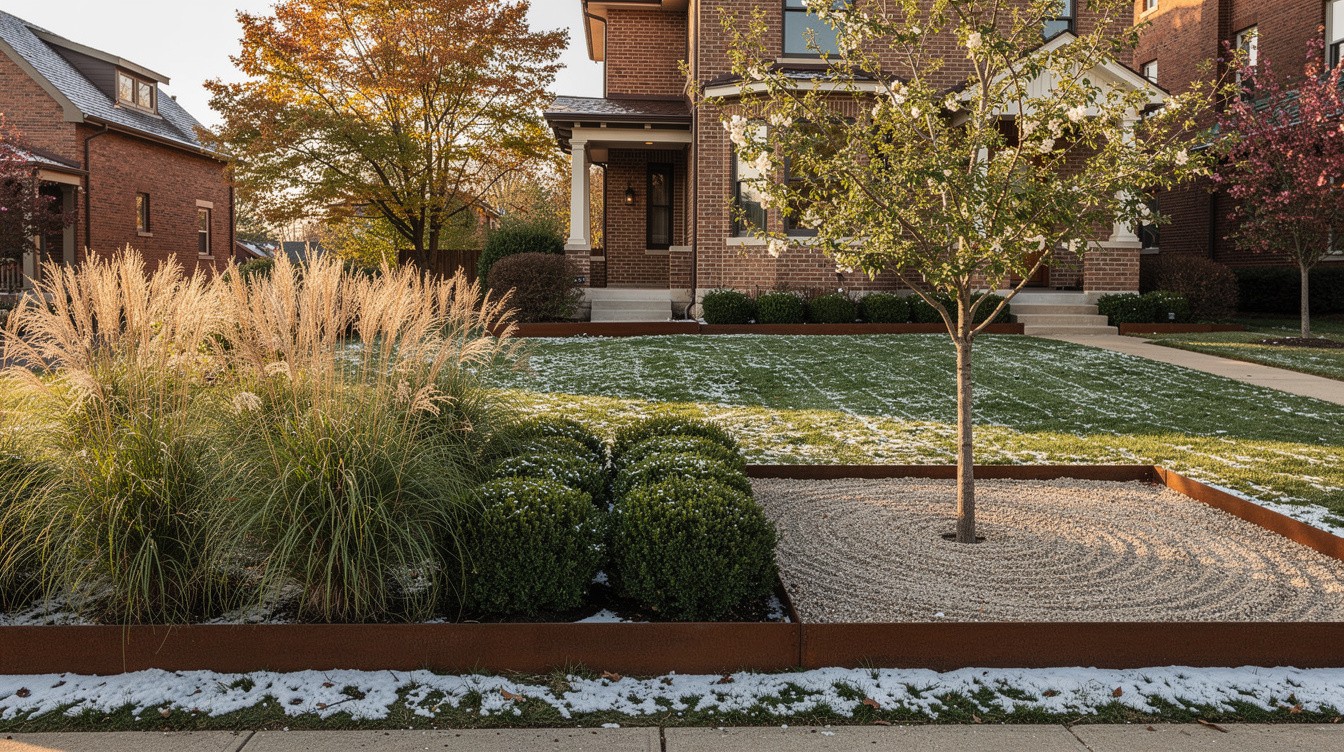
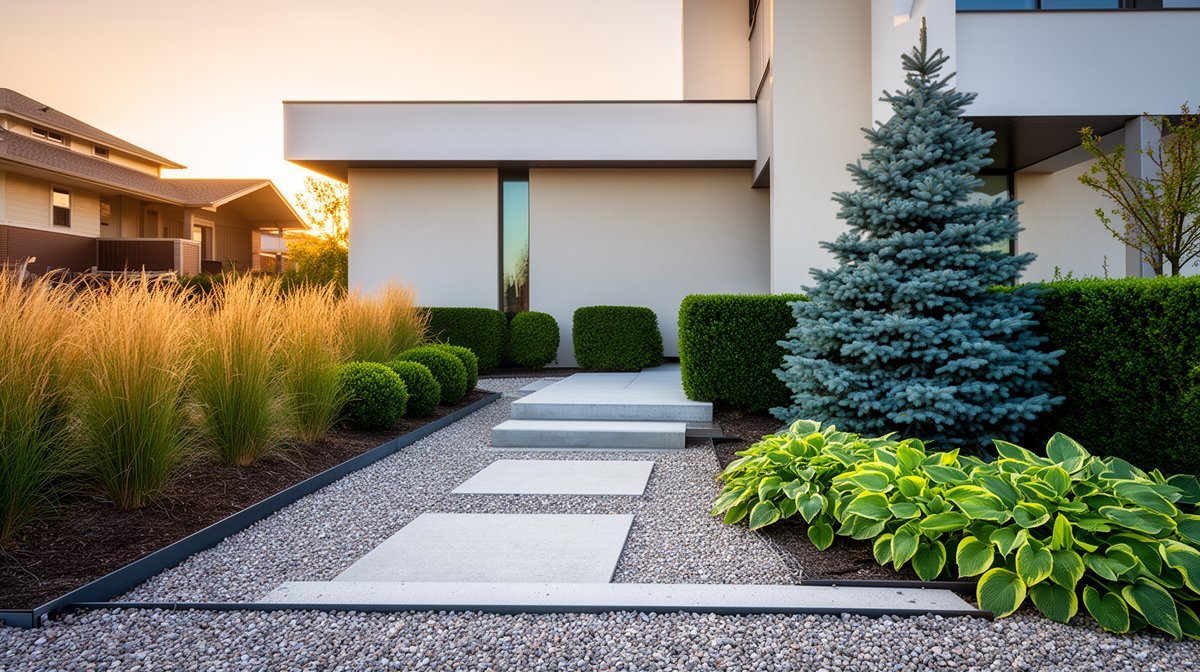
Steel-Edged Garden with Specimen Trees and Clean Lines
$14–28/sqftCorten steel edging carves the front yard into geometric planting panels—one mass of prairie-style ornamental grasses, one panel of compact boxwood structure, one open gravel bed with specimen crabapple providing spring bloom and winter silhouette. The design works at every season: spring crabapple bloom, summer grass texture, fall foliage and grass color, winter silhouette against snow. The transition from traditional St. Louis front lawns to this contemporary composition is striking in context—clean, confident, and genuinely four-season beautiful.
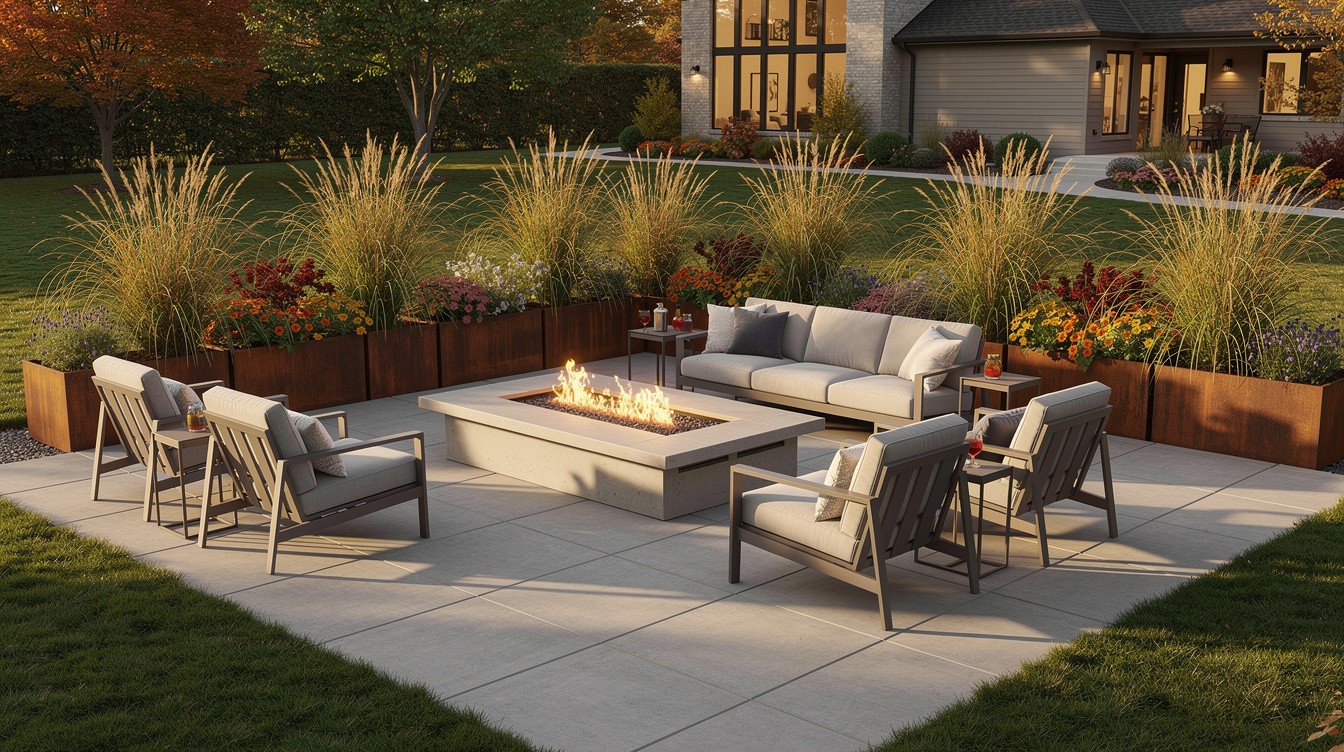
Concrete Fire Pit Terrace with Steel Planters
$18–38/sqftA large concrete paver terrace anchors the backyard with a central wood-burning or gas fire pit surrounded by modern outdoor seating—the design element that makes Missouri’s spring and fall evenings genuinely usable until late October. Large corten steel planters along the terrace edge hold ornamental grasses and seasonal color, providing the vertical interest that ground planting can’t achieve. The fire pit terrace is the most impactful single investment in St. Louis outdoor living, dramatically extending the outdoor season and creating a year-round backyard destination.
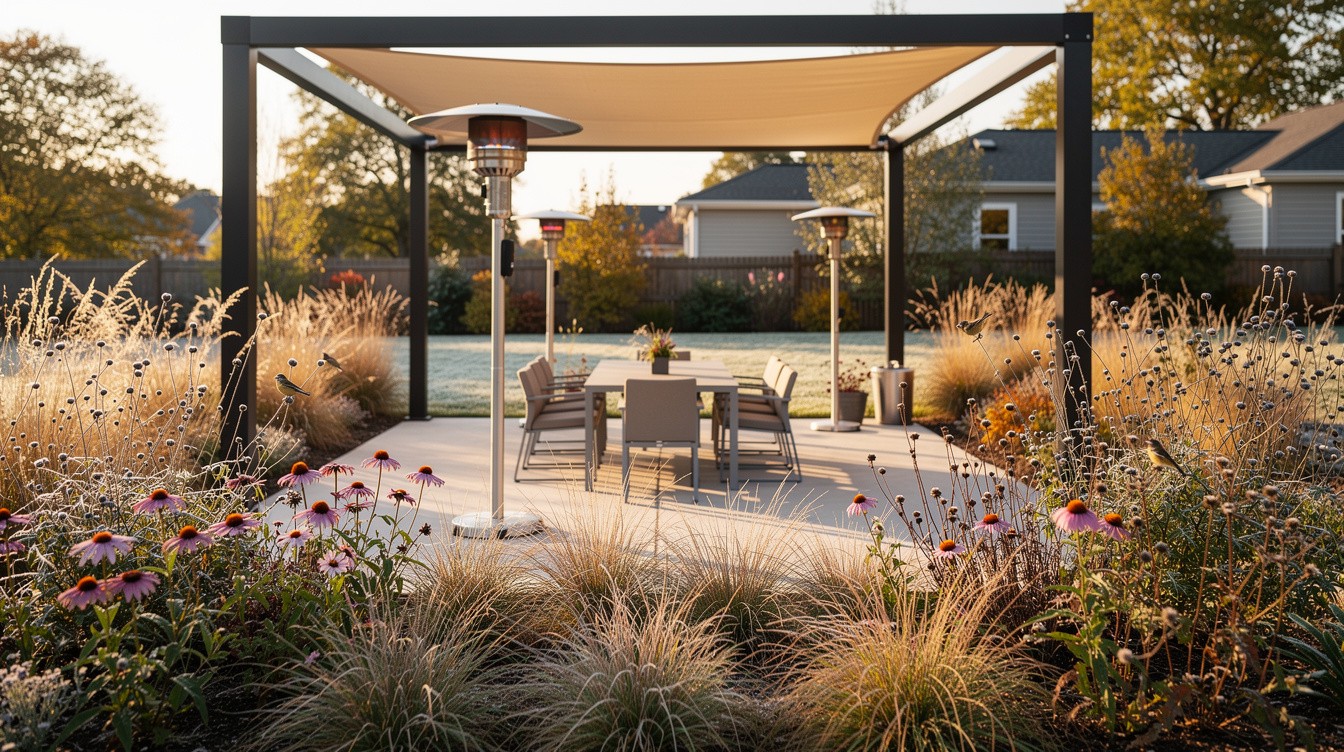
Modern Outdoor Room with Pergola and Native Prairie Border
$22–48/sqftA steel-post pergola with shade sails covers a spacious outdoor dining and living area, flanked by wide native prairie-inspired borders—little bluestem, prairie dropseed, and coneflowers creating a meadow edge that’s spectacular in summer and hauntingly beautiful with frost in November. The prairie border connects the contemporary design to Missouri’s native grassland ecology while delivering exceptional ecological function—native pollinators, songbirds, and overwintering beneficial insects use the dried stems and seed heads through winter. The pergola extends the usable season with overhead patio heaters.
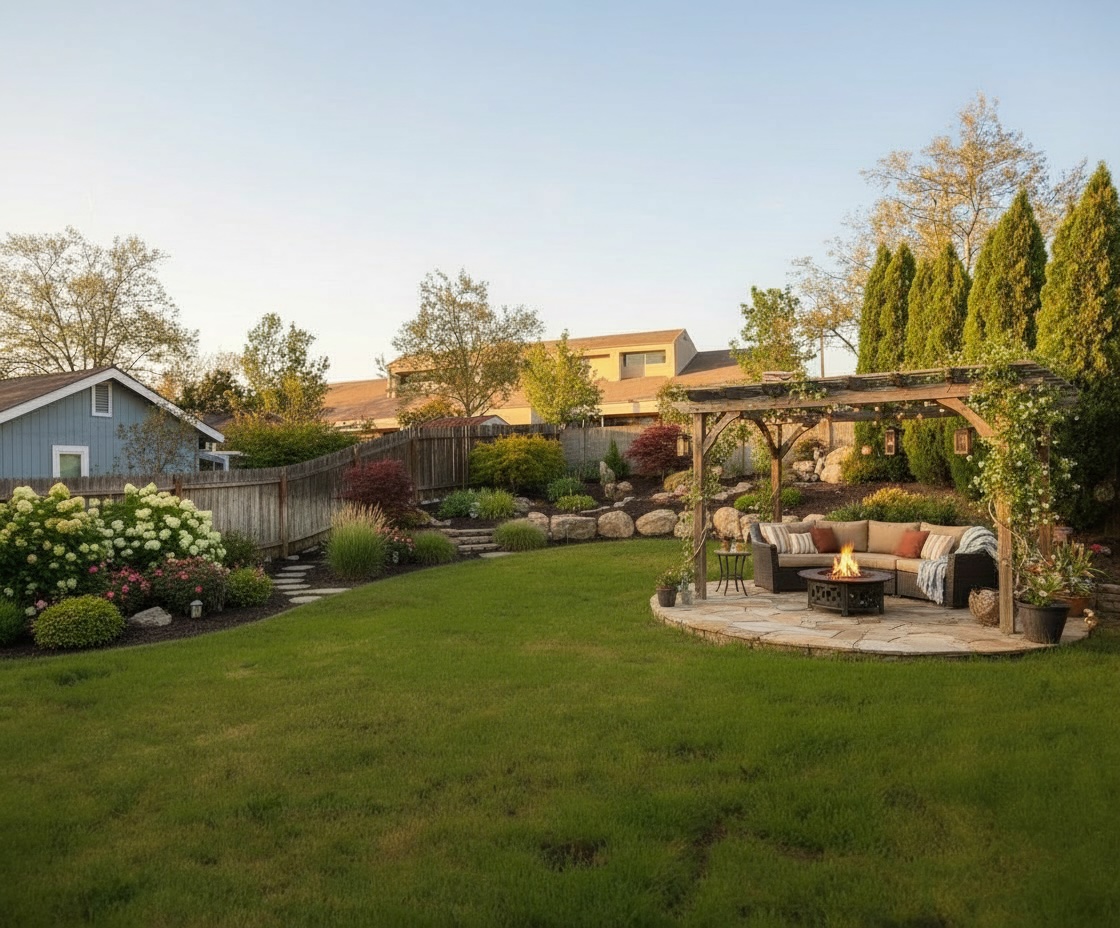
See how a modern/minimalist garden looks on YOUR property
Upload a photo of your St. Louis yard and visualize your dream garden in seconds.
Try ProScapeAI Free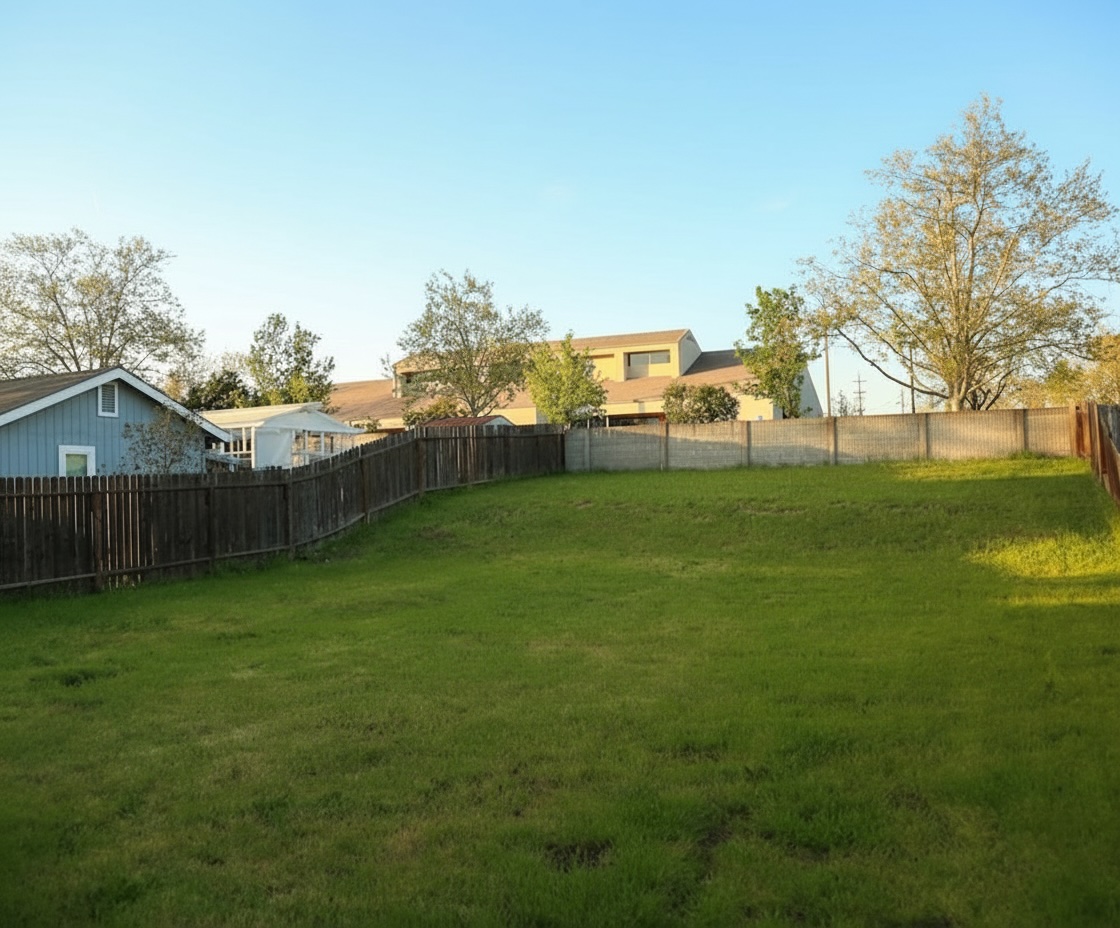
Featured Trees & Shrubs for Modern/Minimalist Gardens
Browse all 169 plants for St. Louis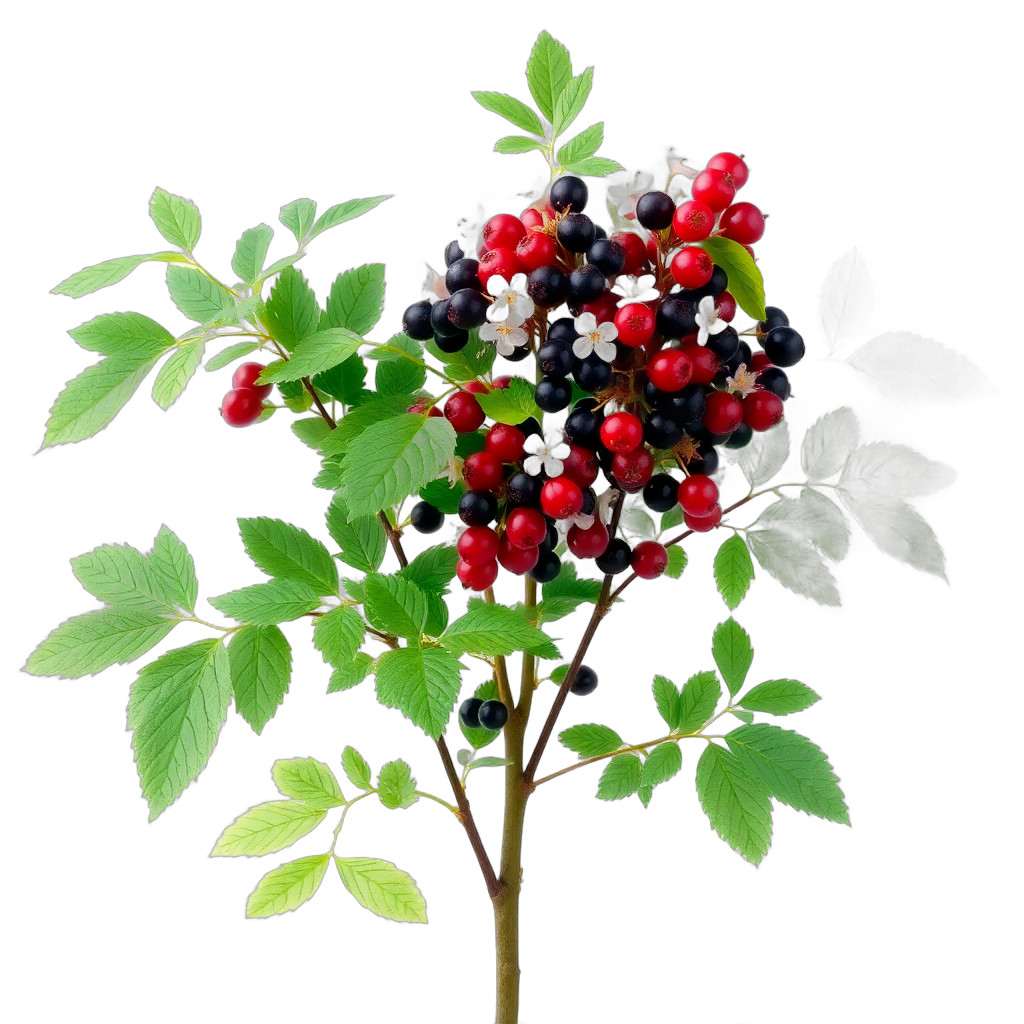
American Black Currant
Ribes americanum
grows to 5 feet, white,yellow blooms in spring. Attracts hummingbirds.
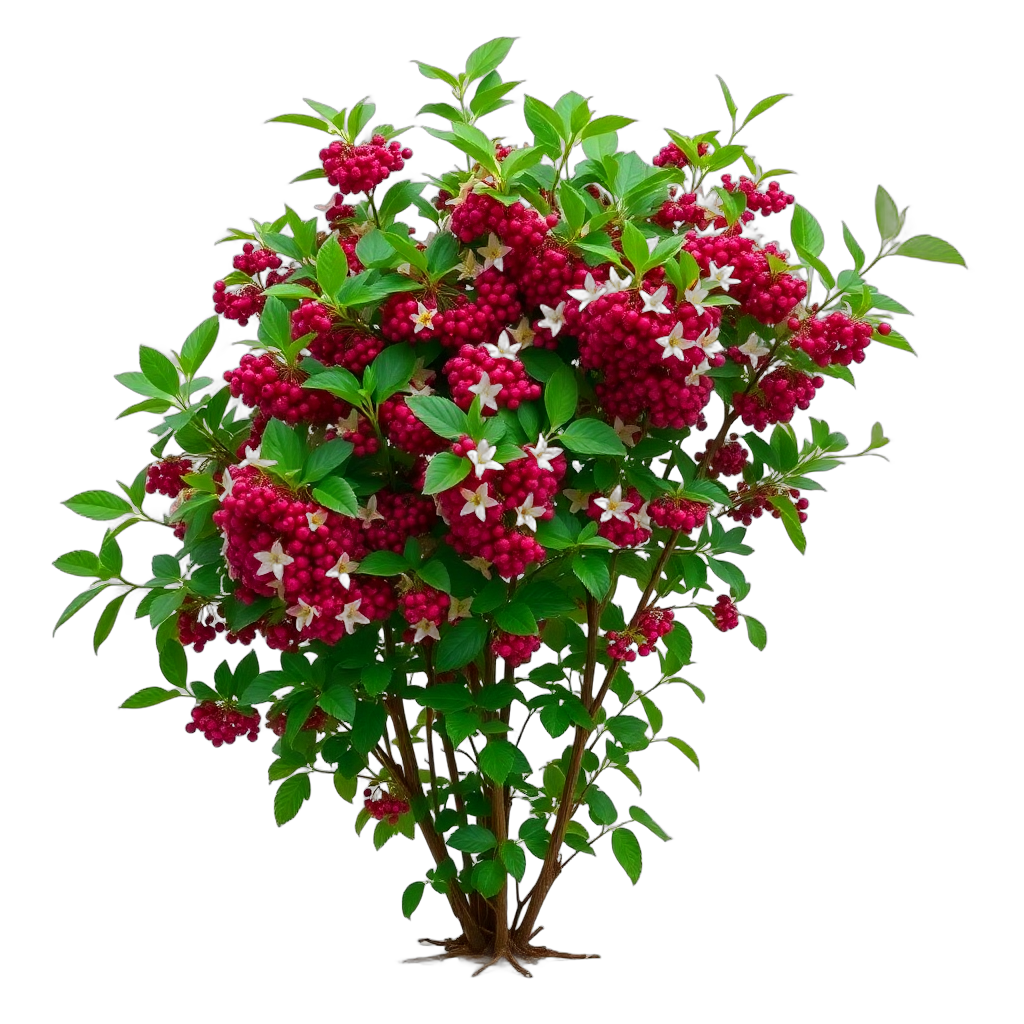
Clove Currant
Ribes odoratum
grows to 6 feet, yellow blooms in spring. Attracts hummingbirds.

Fragrant Sumac
Rhus aromatica
grows to 4 feet, yellow blooms in spring. Attracts butterflies.
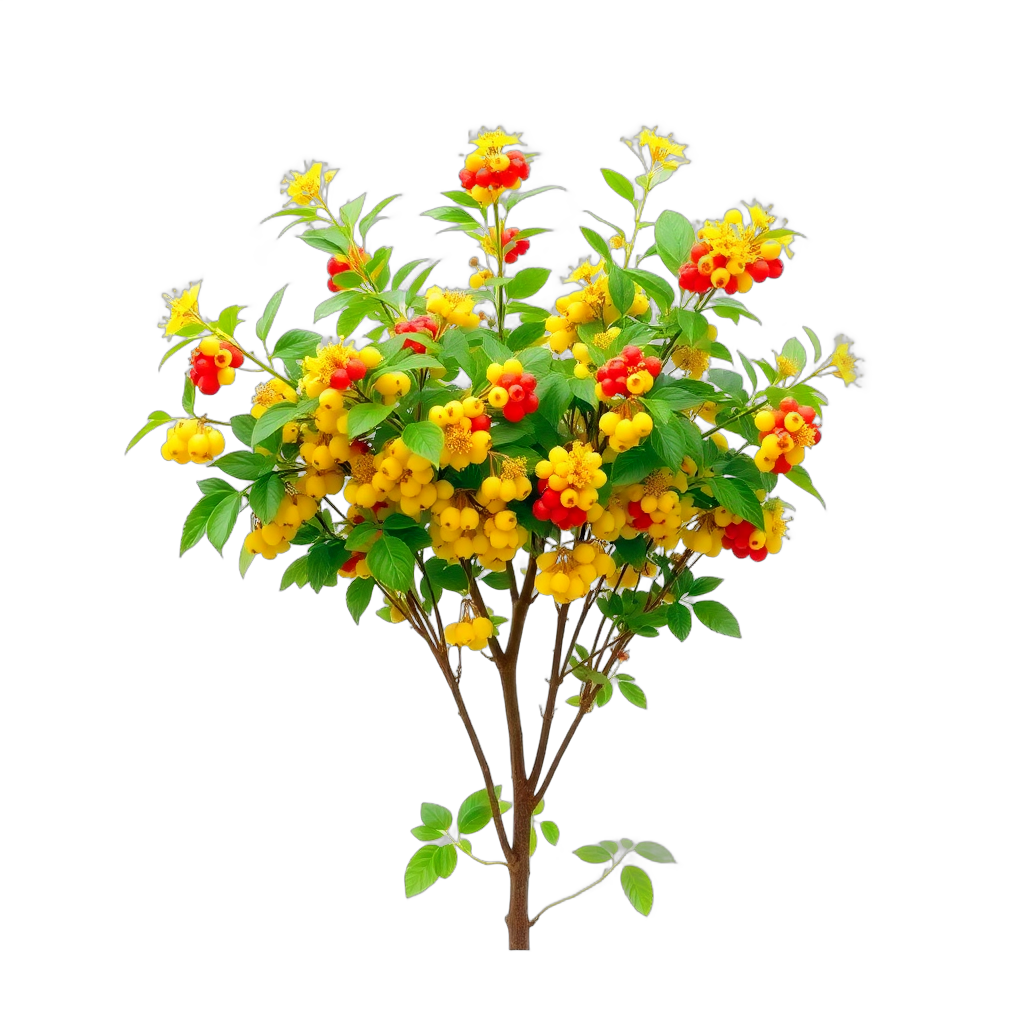
Golden Currant
Ribes aureum
grows to 6 feet, yellow blooms in spring. Attracts hummingbirds.
Featured Grasses & Groundcovers for Modern/Minimalist Gardens
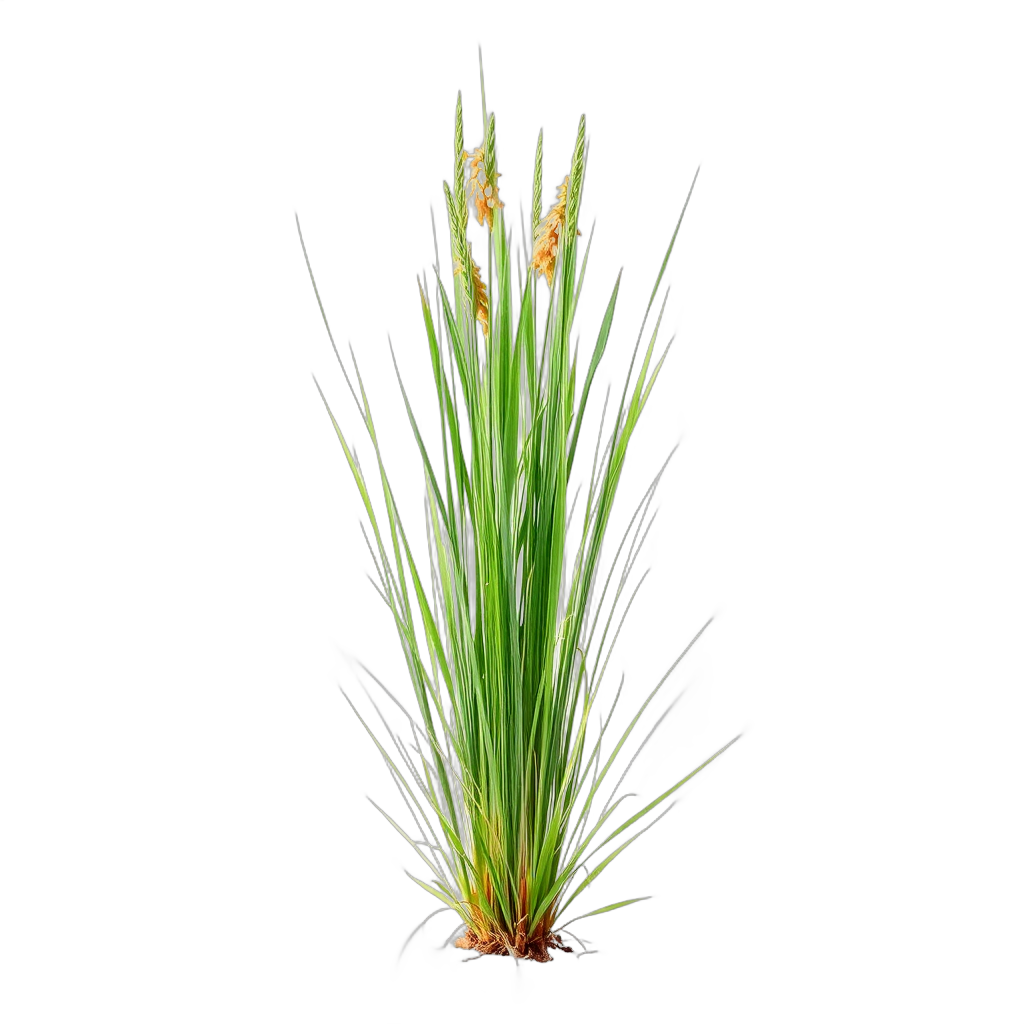
Eastern Gamagrass
Tripsacum dactyloides
grows to 6 feet, blooms in summer. Yellow fall color.
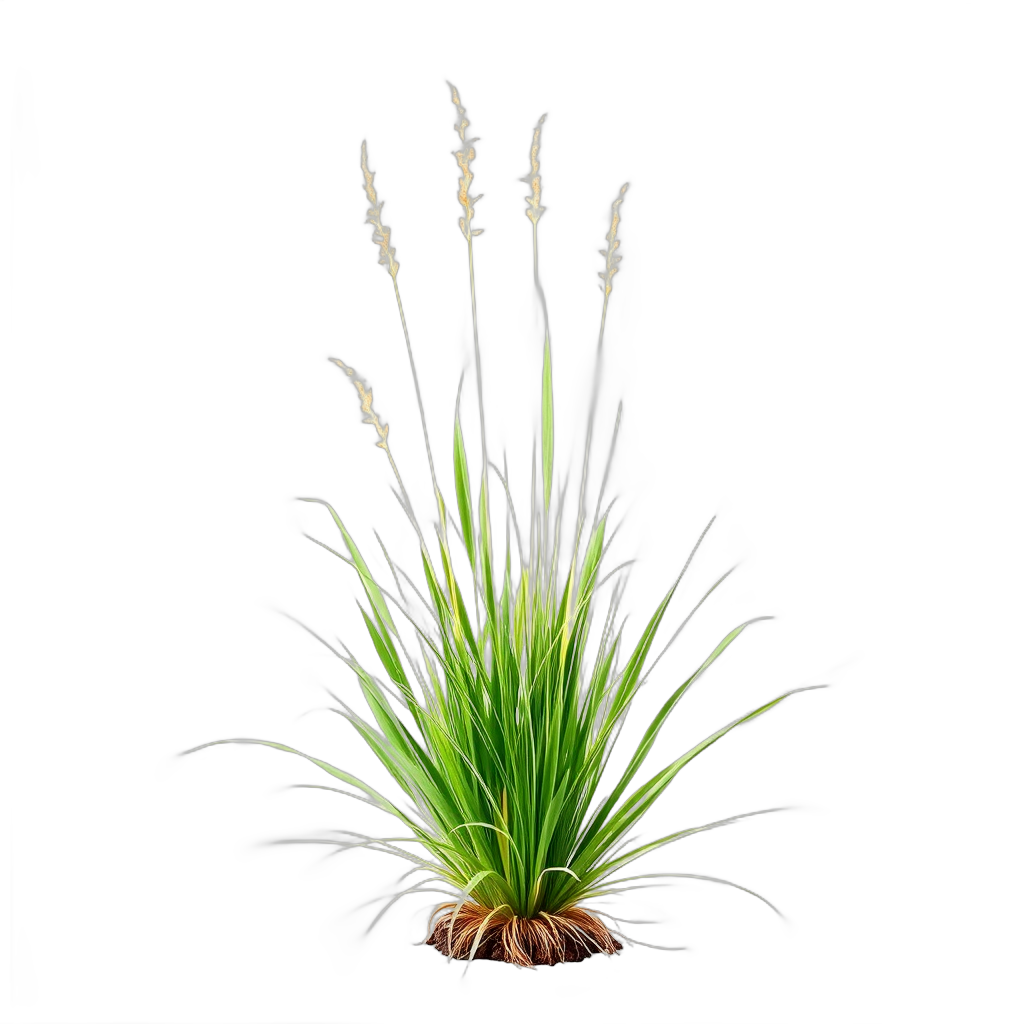
Northern Sea Oats
Chasmanthium latifolium
grows to 4 feet, blooms in fall. Bronze fall color.
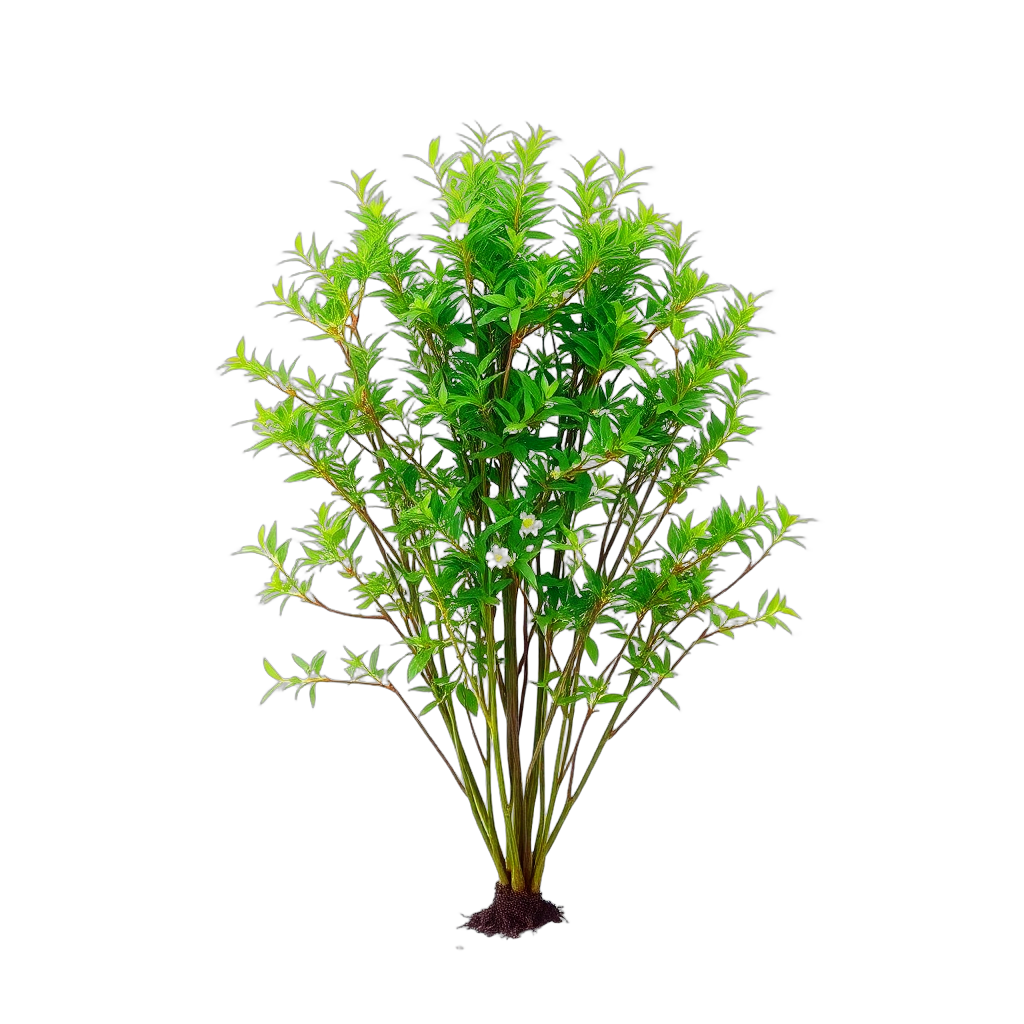
Dwarf Fernleaf Bamboo
Pleioblastus distichus
low-growing ground cover, blooms in none. Evergreen year-round.
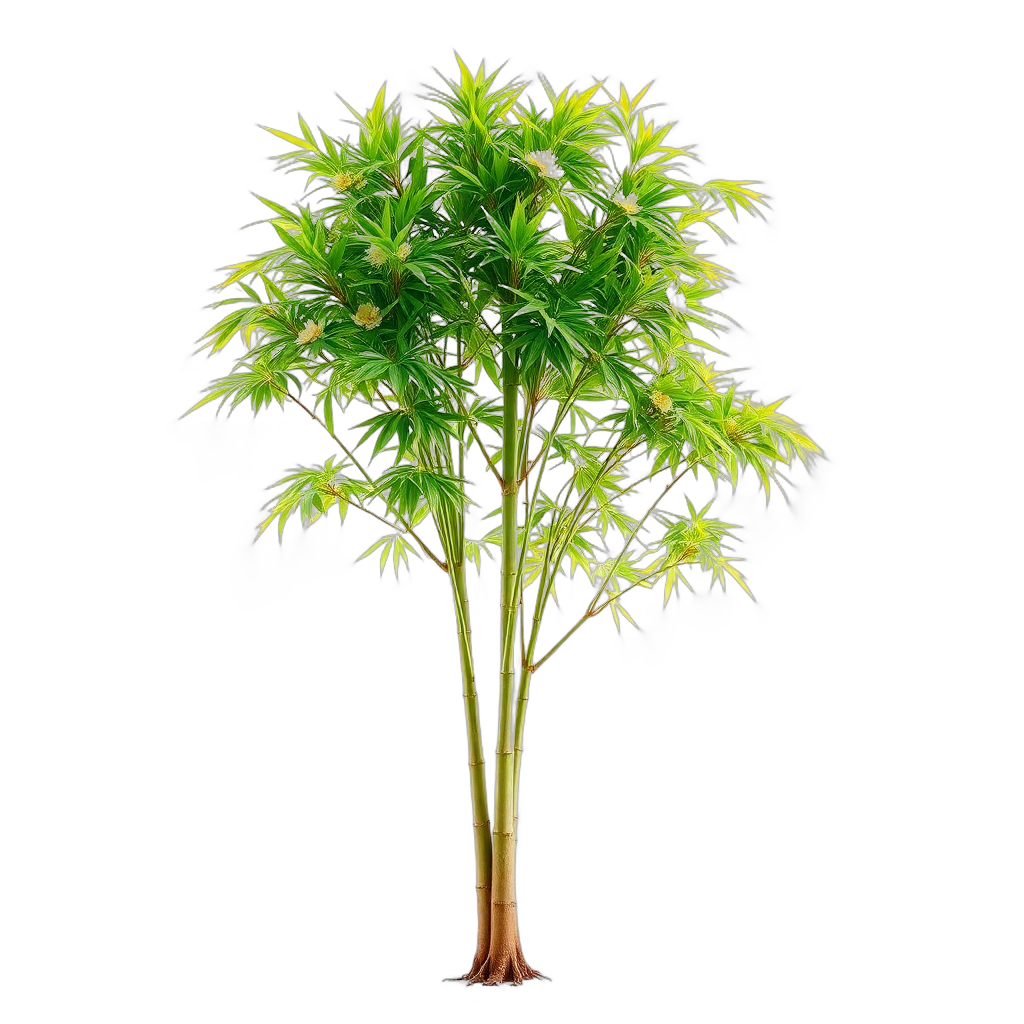
Large-leaf Bamboo
Indocalamus tessellatus
grows to 5 feet, blooms in none. Evergreen year-round.
Featured Flowers & Perennials for Modern/Minimalist Gardens
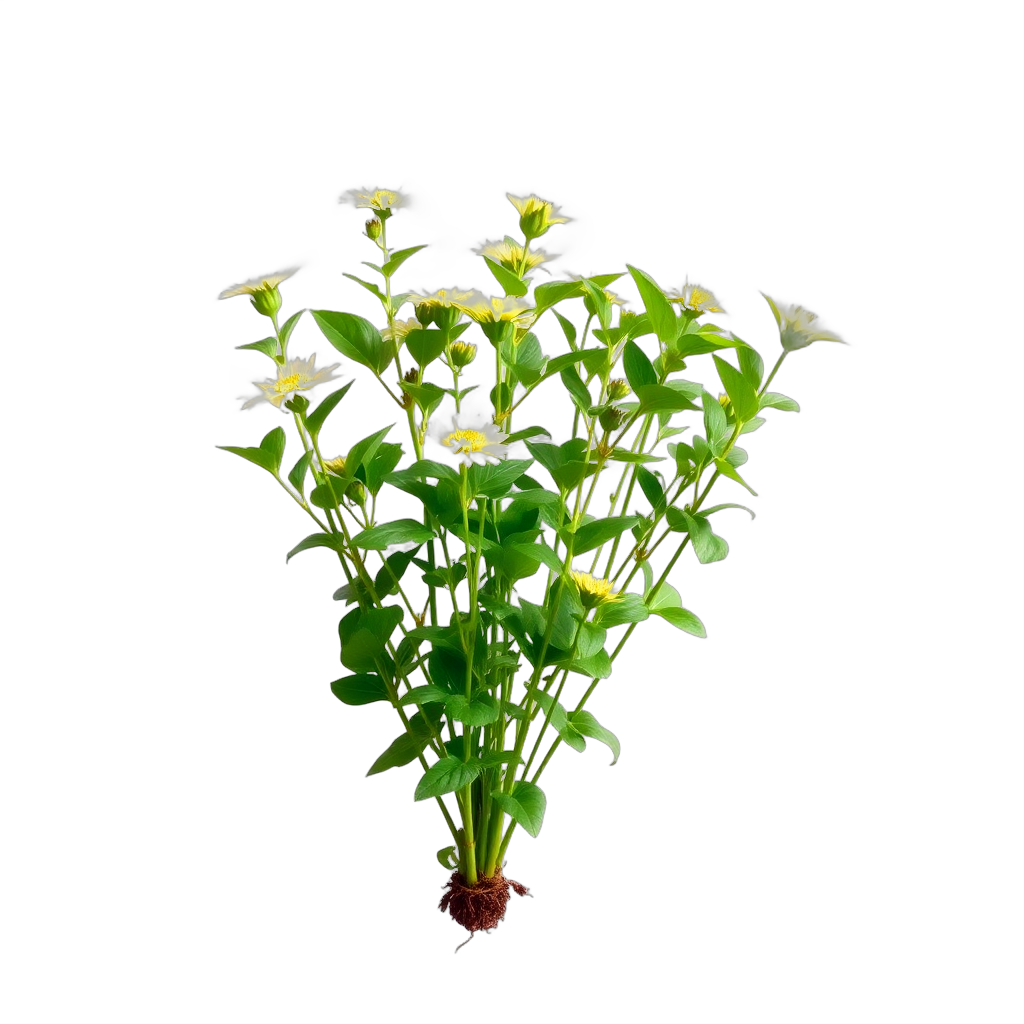
Cup Plant
Silphium perfoliatum
medium-sized at 7 feet, yellow blooms in summer. Attracts butterflies.
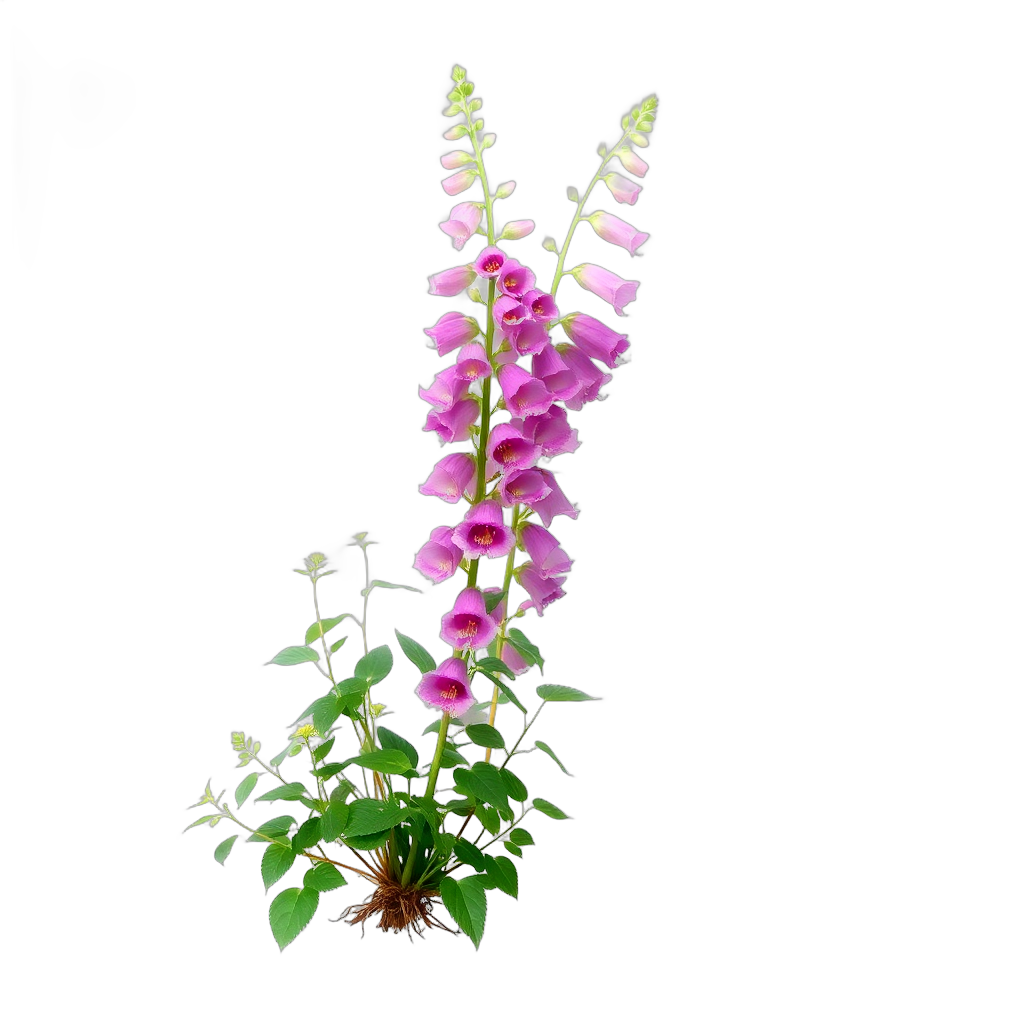
Foxglove Beardtongue
Penstemon digitalis
grows to 3 feet, white blooms in spring. Attracts hummingbirds.
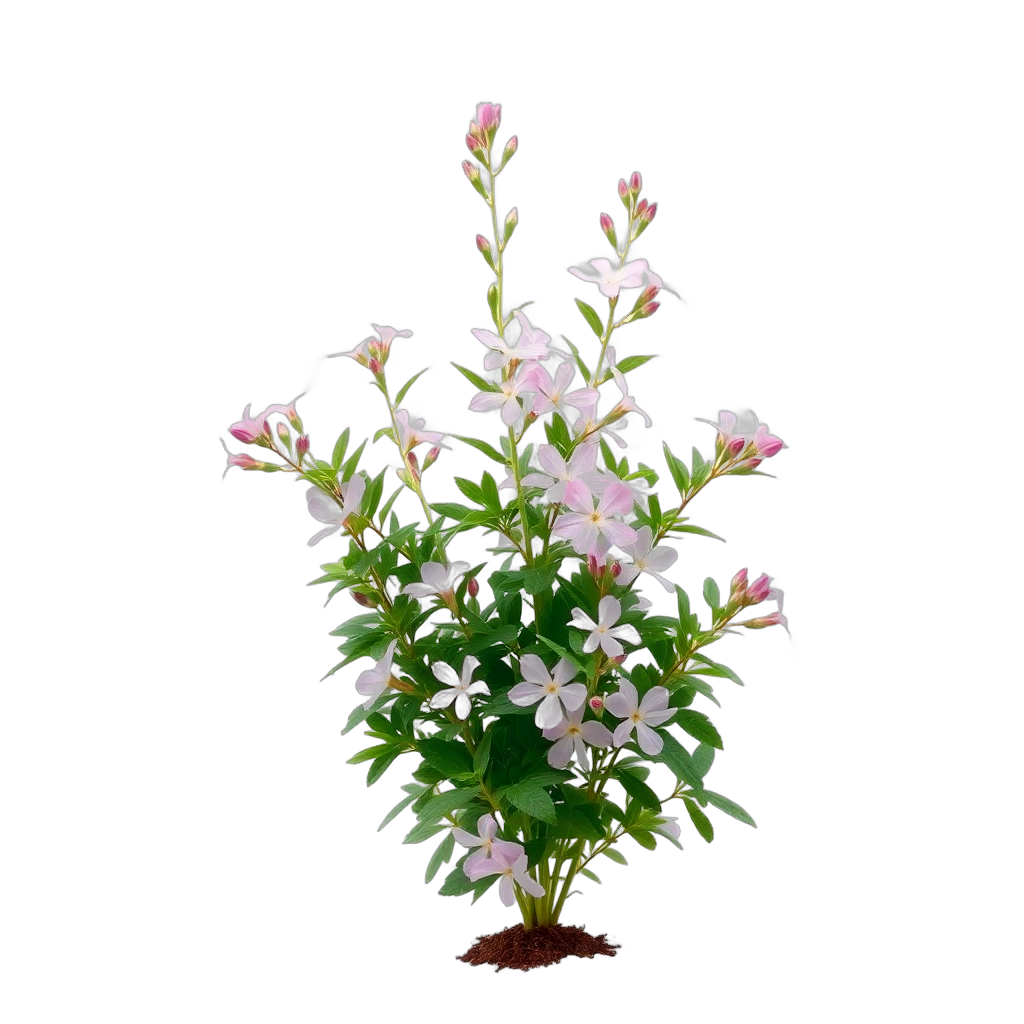
Garden Phlox
Phlox paniculata
grows to 3 feet, multi blooms in summer. Attracts hummingbirds.

Gloriosa Daisy
Rudbeckia hirta
low-growing ground cover, yellow blooms in summer. Attracts butterflies.
Zone and sun checks come from our database — confirm with your local nursery before you buy.
Bloom Calendar for St. Louis
spring
Foxglove Beardtongue, American Black Currant, Clove Currantsummer
Cup Plant, Garden Phlox, Gloriosa Daisyfall
Northern Sea Oatswinter
Limited bloomsDesign Tips for St. Louis (Zone 6b)
- Leave ornamental grasses and native perennial seed heads uncut through winter—Karl Foerster, little bluestem, and coneflower have genuinely beautiful dormant forms that are especially striking when frosted or snow-dusted in December and January
- Specify pavers rated for severe climate with 8,000+ PSI and less than 5% water absorption—Zone 6b’s freeze-thaw cycles are the primary cause of paver failure in St. Louis, and quality material selection is cheaper than replacing failed pavers in 5 years
- Install a gas fire pit connected to your home’s natural gas line rather than a propane tank unit—convenience of use determines how much a fire feature actually gets used, and a permanently connected gas line removes the barrier that prevents propane units from being lit spontaneously on cool evenings
- Use corten steel for edging, planters, and accent elements—it develops a rich rust patina appropriate to Missouri’s seasonal landscape of copper, bronze, and rust fall tones, and is structurally sound for decades in Zone 6b’s freeze-thaw conditions
- Incorporate a serviceberry as the garden’s focal tree—it provides white spring bloom, edible June berries attractive to birds, excellent fall color, and winter silhouette—four seasons of interest from a single tree that is Missouri-native and adapted to the climate without any special care
- Design the contemporary garden around viewing angles from interior rooms during winter—St. Louis’ long winter means the garden is experienced primarily through windows for 4–5 months, and a landscape designed for interior viewing with strong grass forms, seed head architecture, and clean hardscape lines pays dividends all winter
Where to Source Plants in St. Louis
Skip the big-box stores. These independent St. Louis nurseries specialize in the plants that make modern/minimalist gardens thrive in Zone 6b.
Sugar Creek Gardens
Kirkwood
Outstanding specialty perennial and grass selection, Zone 6b-tested contemporary plants, and design consultation
Greenscape Gardens
Ellisville
Full-service landscape design and nursery with strong contemporary planting expertise
Missouri Botanical Garden Shop
Tower Grove
Native plants, specialty ornamental grasses, and horticultural expertise from world-class botanical institution
Larson’s Garden Center
Hazelwood
Regional garden center with comprehensive shrub, grass, and contemporary landscape plant selection at competitive prices
Bowood Farms
Central West End
Urban garden shop and nursery with curated contemporary landscape plants and design-forward aesthetic
Modern/Minimalist Landscaping Costs in St. Louis
| Project Scope | Estimated Cost |
|---|---|
| Concrete paver entry with ornamental grass mass planting and LED lighting | $9,000 – $20,000 |
| Steel-edged contemporary garden with specimen trees and gravel beds | $10,000 – $22,000 |
| Concrete terrace with gas fire pit and modern outdoor seating | $15,000 – $36,000 |
| Steel pergola outdoor room with native prairie borders | $22,000 – $52,000 |
| Gas fire pit addition to existing patio | $2,500 – $8,000 |
| Annual contemporary landscape maintenance | $800 – $2,000/year |
| AI visualization with ProScapeAI | Free to start |
Estimates based on St. Louis, MO-area contractor rates as of 2026. Actual costs vary by site conditions, materials, and contractor.
St. Louis Climate & Growing Zone
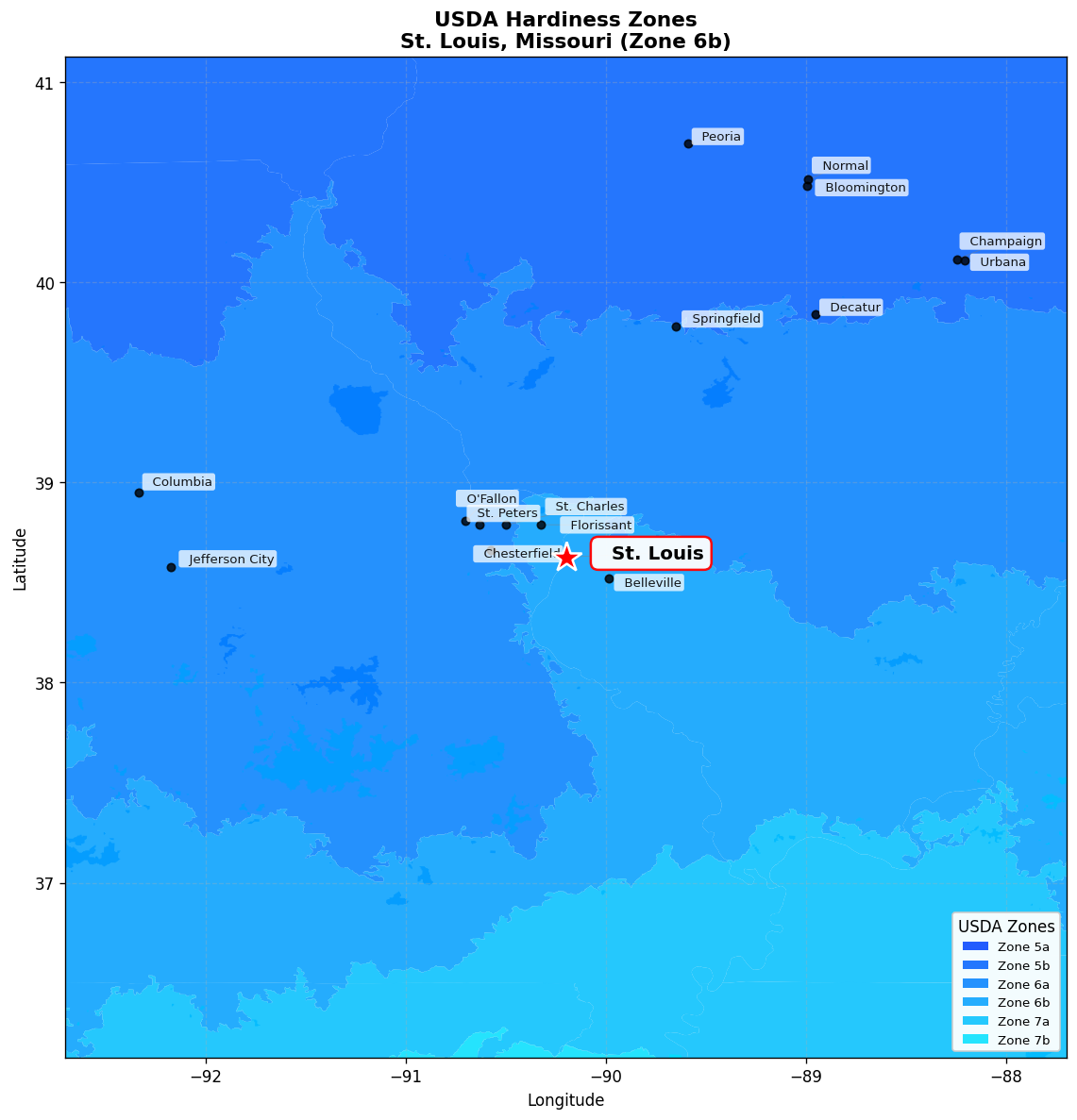
USDA Zone 6b
Hardiness zone for St. Louis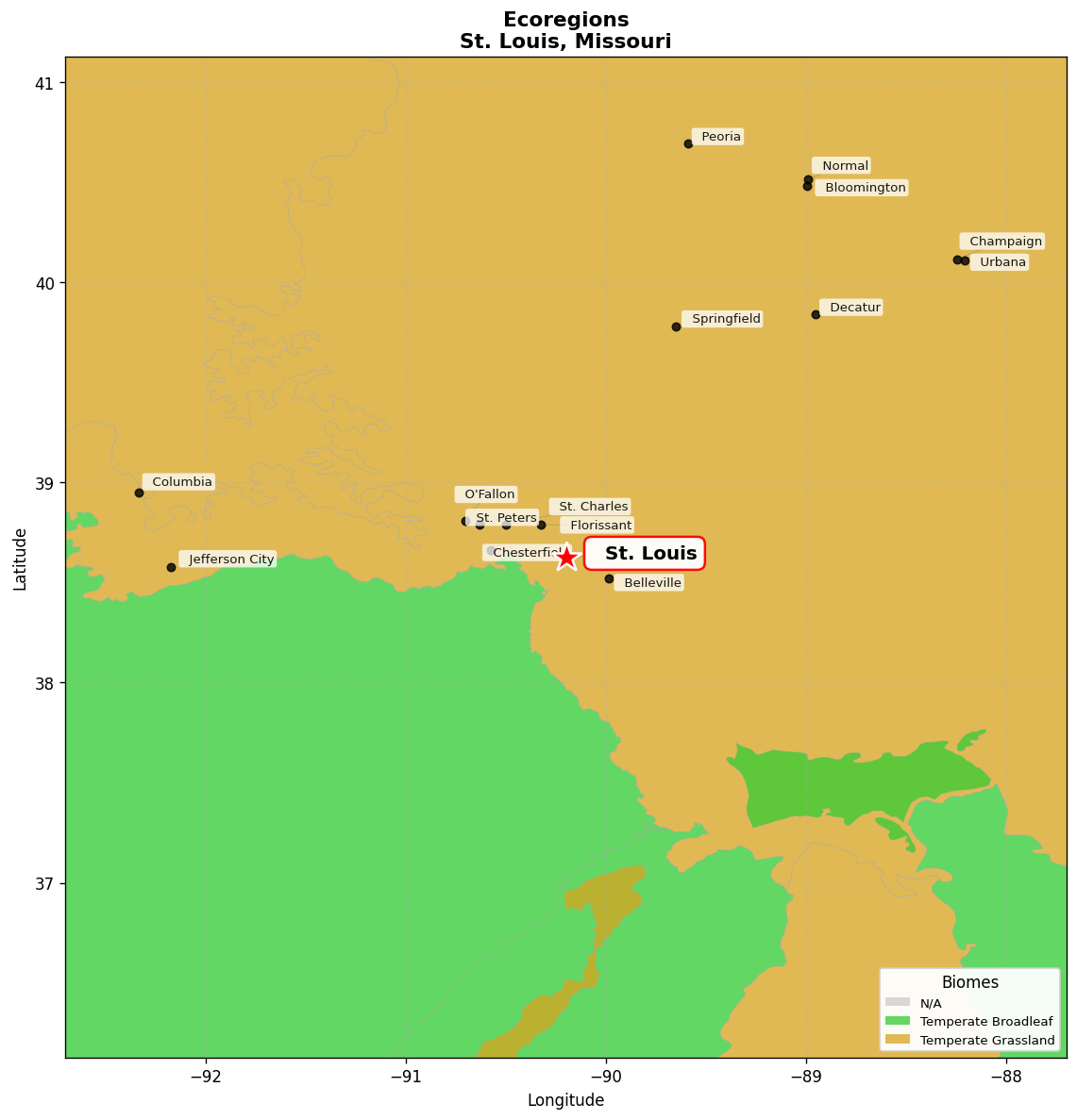
Central US forest-grasslands transition
Native ecoregionFrequently Asked Questions
How do I design a modern garden that looks good in St. Louis winter?
The key to four-season modern design in Zone 6b is building on a structural framework that reads as intentional regardless of season. Essential elements: ornamental grasses left uncut through winter (Karl Foerster, little bluestem, and prairie dropseed all have beautiful dormant forms), geometric evergreen structure (boxwood masses, yew hedges, or dwarf holly provide constant green), hardscape that holds its clean lines under snow (wide concrete pavers and geometric planting beds with steel edging look designed even when white), and specimen trees selected for winter silhouette (multi-stem serviceberry, native crabapple, and river birch have beautiful winter branch structure).
What are the best ornamental grasses for St. Louis contemporary landscapes?
Zone 6b St. Louis supports most major ornamental grasses. Top performers for contemporary design: Karl Foerster feather reed grass (Calamagrostis acutiflora, the most reliable upright grass in Midwest gardens), prairie dropseed (Sporobolus heterolepis, fine-textured native grass with extraordinary fall fragrance), little bluestem (Schizachyrium scoparium, blue summer–red fall–tan winter—Missouri native), switchgrass (Panicum virgatum, bold upright form), Gulf muhly (Muhlenbergia capillaris, spectacular pink fall bloom), and sesleria (semi-evergreen, tolerates shade). Avoid maiden grass (Miscanthus sinensis) in St. Louis due to its invasive potential in Missouri ecosystems.
What concrete paver options work best for St. Louis freeze-thaw cycles?
Zone 6b’s regular freeze-thaw cycling requires pavers rated for severe climate exposure. Concrete pavers should specify 8,000+ PSI compressive strength and less than 5% water absorption—the quality specifications that prevent surface spalling in repeated freeze-thaw cycles. Porcelain pavers (the most durable option) are an excellent choice for St. Louis: they absorb essentially zero water, resist the salt and ice melt chemicals used in Missouri winters, and maintain color fidelity over decades. Large-format pavers (24×24 or larger) require properly compacted base course (typically 4 inches compacted gravel plus 1 inch sand) to prevent frost heave.
Does a fire pit add value to a St. Louis property?
In St. Louis’s climate, a well-designed fire pit is arguably the highest-ROI single landscape feature. It extends the outdoor season from approximately 6 months to 8–9 months by making cool spring and fall evenings genuinely comfortable. Real estate agents report that fire pit spaces are among the most mentioned outdoor features by buyers in the St. Louis market. Gas fire pits (permanently connected to natural gas) are preferred over wood-burning for clean operation and ease of use. Budget $2,500–$8,000 for a quality gas fire pit with surrounding paver terrace, or $500–1,500 for a stand-alone wood-burning unit added to an existing patio.
How do I incorporate native Missouri plants in a contemporary landscape?
Missouri’s native prairie and woodland plants translate beautifully into contemporary design because many have strong architectural form. Native species well-suited to contemporary design: prairie dropseed (delicate texture, native, fragrant in fall), little bluestem (blue summer color, red fall color), serviceberry (white spring bloom, edible fruit, great fall color), native crabapples (wild Malus ioensis has single blooms and better disease resistance than hybrids), coneflower (Echinacea purpurea, native to Missouri prairies, strong seed head architecture), and native asters (fall bloom, winter seed heads for birds). Missouri native plants also qualify for native plant garden certification programs that provide recognition and community connection.
How much does a modern landscape installation cost in St. Louis?
St. Louis landscaping costs are among the most affordable of any major Midwest city. A contemporary front yard with concrete pavers, ornamental grass planting, and LED lighting typically costs $10,000–$22,000. A fire pit terrace with seating area runs $15,000–35,000. A pergola outdoor room with native prairie borders ranges $22,000–50,000. Pittsburgh’s comparative data shows St. Louis is 3–5% above national average—a reasonable premium for Missouri’s Midwest labor market. Annual maintenance for a contemporary native-inspired landscape runs $800–2,000/year—lower than traditional gardens because native plants require minimal intervention once established.