4 Modern Garden Ideas for Kansas City, MO | Architectural Landscape Design in Zone 6a
Native plants from the Central Tallgrass prairie (Zone 6a) — Humid continental (hot summer) climate
Why Modern/Minimalist Gardens in Kansas City?
Kansas City's landscape design conversation is shaped by three forces that rarely occur together: a genuine four-season climate that demands plants with year-round visual interest, the Central Tallgrass Prairie ecological heritage that provides one of the world's great native plant palettes, and an urban design culture that has produced the Nelson-Atkins Museum's extraordinary Donald Judd and Bloch Building landscapes, the updated Country Club Plaza, and some of the Midwest's most thoughtful residential landscape design. Modern landscape design in Kansas City has genuine design ambition and ecological depth.
Zone 6a is actually ideal for modern landscape design because it requires plants with four-season interest — the aesthetic laziness of a design that only works in green summer months is exposed by six months of fall, winter, and early spring. The best modern Kansas City landscapes use the winter skeleton of ornamental grasses, seedheads, and architectural bark to carry the composition through cold months; the spring emergence of native prairie grasses as a seasonal event; the summer performance of native wildflowers; and the spectacular fall color of switchgrass, Little Bluestem, and native trees as the year's visual climax. Annual rainfall of 40 inches well-distributed across the year means plants establish reliably without extended irrigation, but cold winters require careful hardiness zone discipline.
The development geography creates clear landscape opportunities. Crossroads Arts District and Midtown have contemporary loft buildings and infill townhomes where minimalist urban landscapes are both appropriate and demanded. Leawood and Mission Hills on the Kansas side have large-lot contemporary and transitional homes where major hardscape projects are justified. Brookside and Waldo are experiencing renovation investment from a younger generation of homeowners who want modern landscape interpretation of older urban lots. And the vast suburban ring in Johnson County, KS — Overland Park, Lenexa, Prairie Village — represents enormous opportunity for modern landscape transformation of conventional 1970s–1990s suburban lots.
4 Modern/Minimalist Design Ideas for Kansas City
AI-generated image
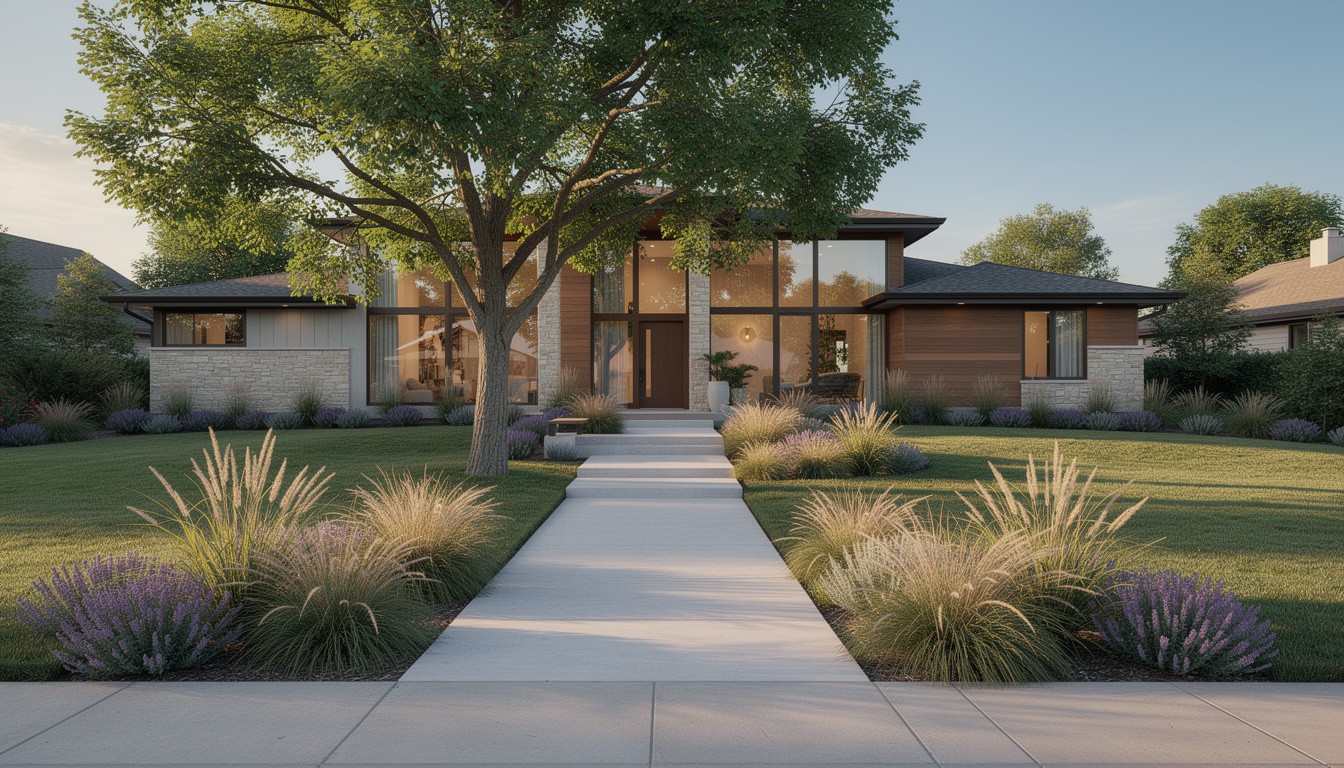
The Prairie Grass and Limestone Entry
$12–24/sqftA concrete walkway leads to the front door of a contemporary Kansas City home with warm wood and stone cladding, flanked by wide beds of ornamental grasses — Little Bluestem, Feather reed grass, and lavender-toned Salvia nemorosa — in steel-edged beds. A mature shade tree anchors one side of the composition. This design draws directly from the Midwest tallgrass prairie heritage: the native grass palette is authentic to Missouri's pre-settlement landscape, provides genuine resilience to Kansas City's variable climate (hot dry summers, cold winters, spring storms), and delivers seasonal color — amber and copper in fall, silver-white seed heads in winter — that conventional landscape plants cannot match.
AI-generated image
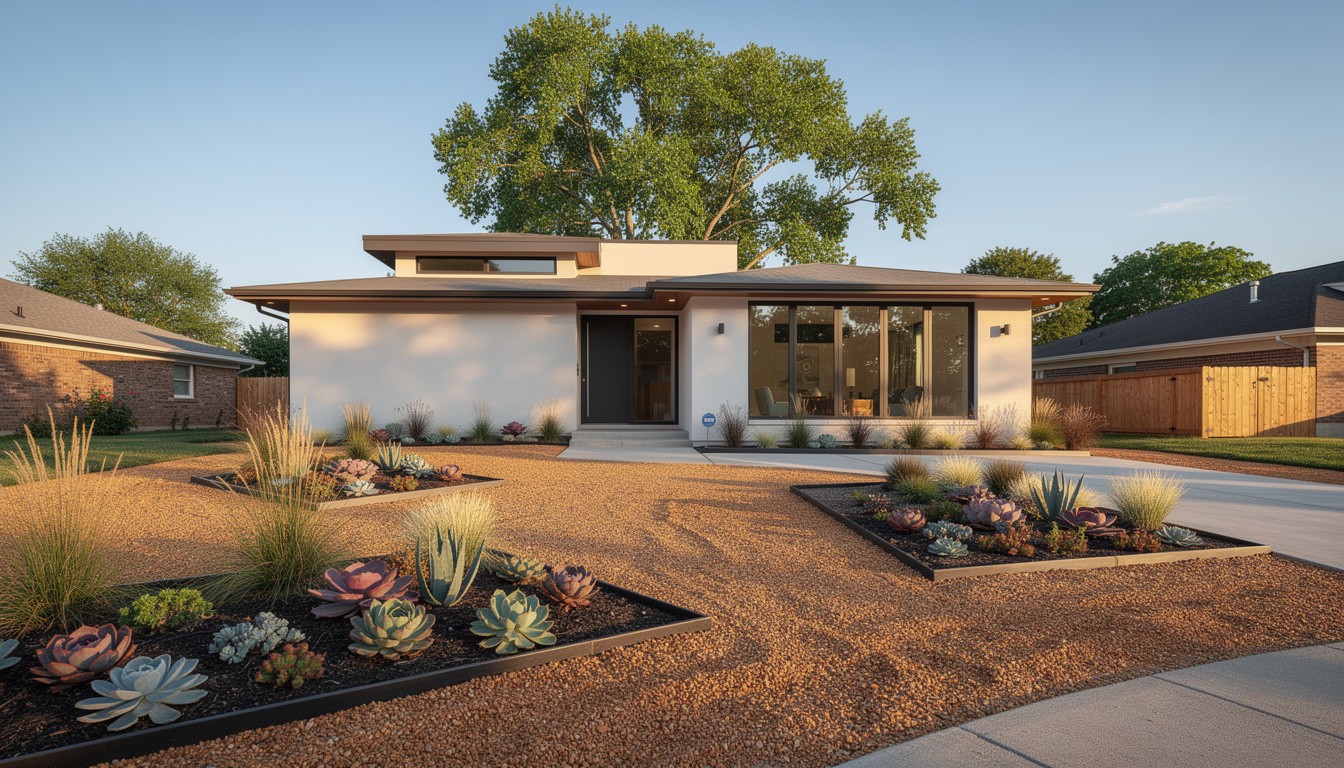
The Succulent and Gravel Modern Front
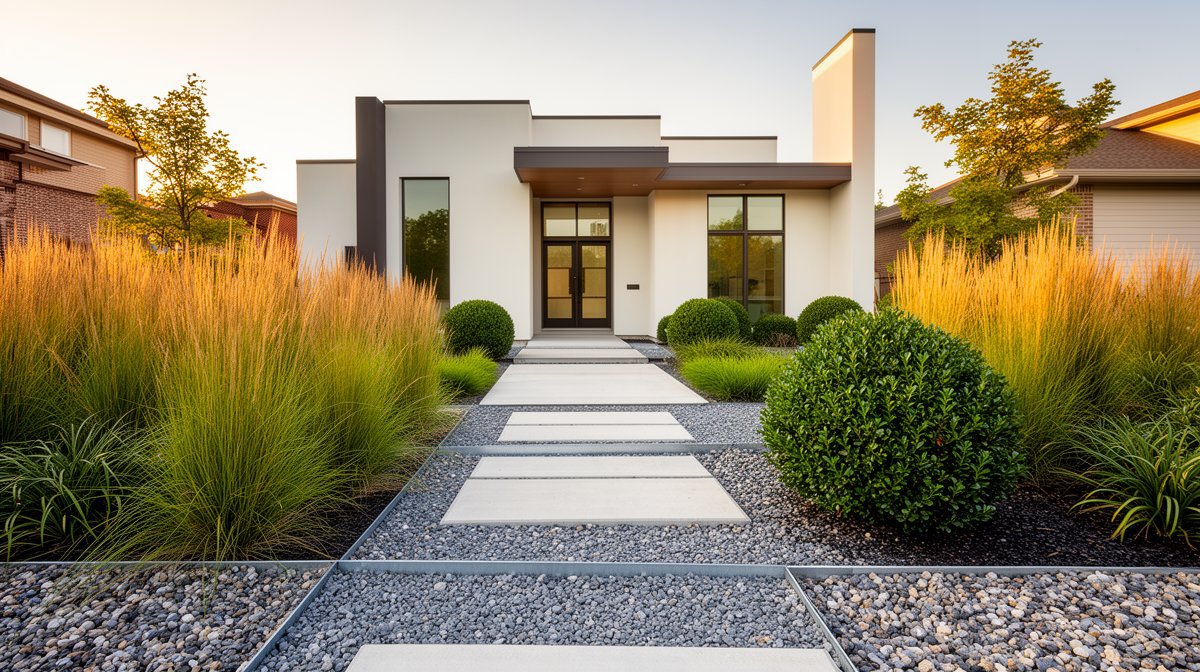
$11–22/sqftTurf is replaced with decomposed granite and raised planting beds planted with succulents, ornamental grasses, and low structural plants at geometric intervals — a contemporary Kansas City take on the water-wise front yard. The concrete path cuts straight to the front door of a white flat-roofed modern home. The plant selection accounts for Kansas City's Zone 6b winters: cold-hardy sedums, yuccas, and prairie grasses replace the agaves more suitable for southern climates, while the overall DG and gravel aesthetic remains the same. The result is a genuinely low-maintenance front yard that holds its visual quality through Kansas City's full temperature range.
AI-generated image
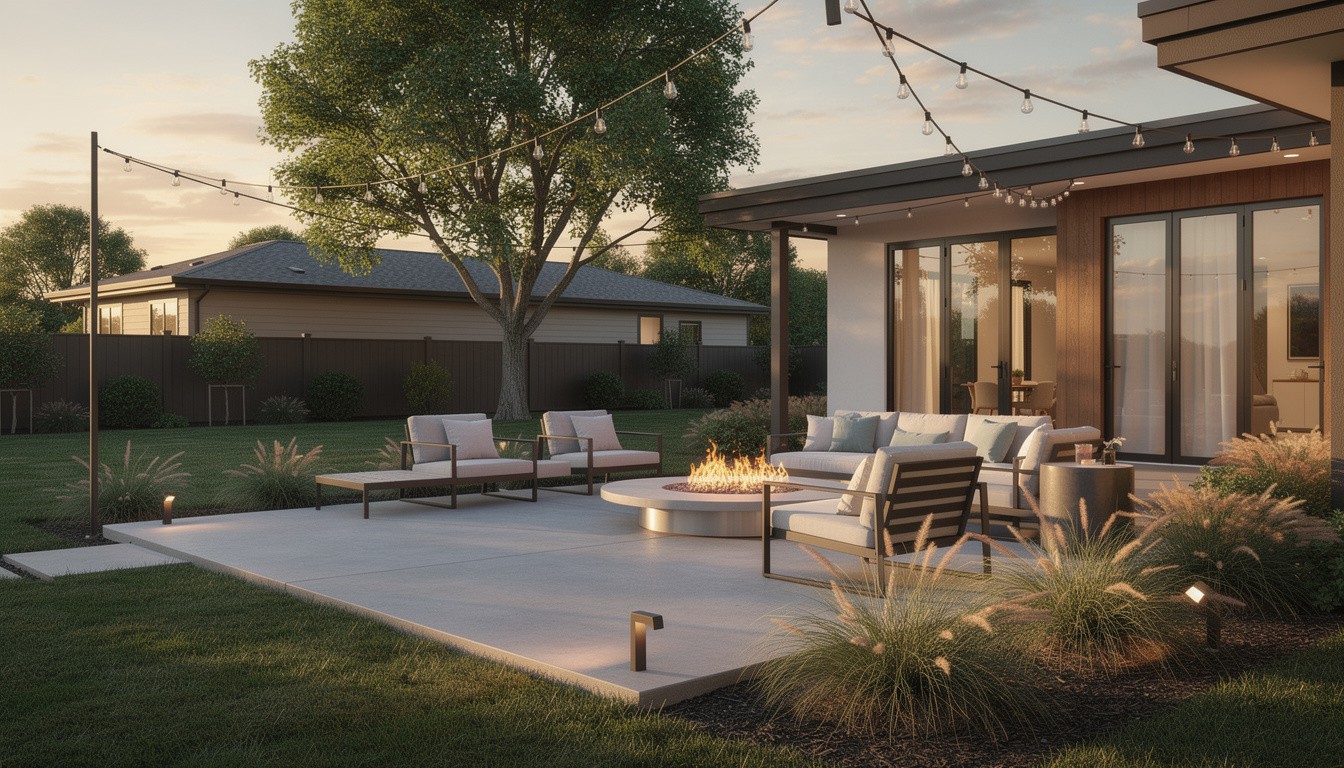
The Concrete Patio Fire Pit at Dusk
$14–28/sqftA wide poured concrete patio extends from the rear of a contemporary Kansas City home, centered on a circular fire pit with modern outdoor lounge seating. String lights span overhead from post to roofline, and a large existing tree provides natural canopy over part of the seating zone. Ornamental grasses in perimeter planting areas add soft texture. Kansas City's fall season — September through October — is arguably the best outdoor living period in the Midwest: cool evenings, low humidity, and brilliant tree color overhead make a fire pit patio the most satisfying outdoor investment a Kansas City homeowner can make. This design keeps it simple and centered on that experience.
AI-generated image
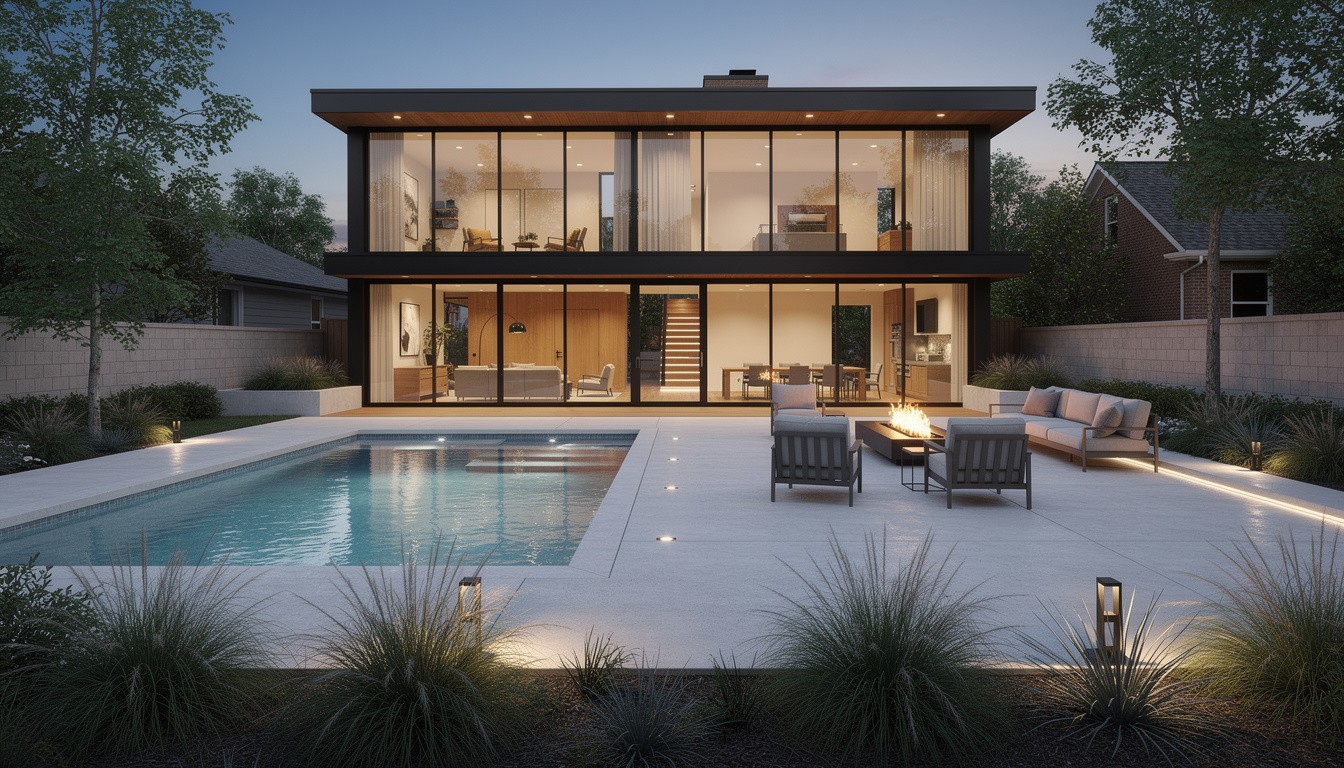
The Two-Story Pool and Outdoor Living Room
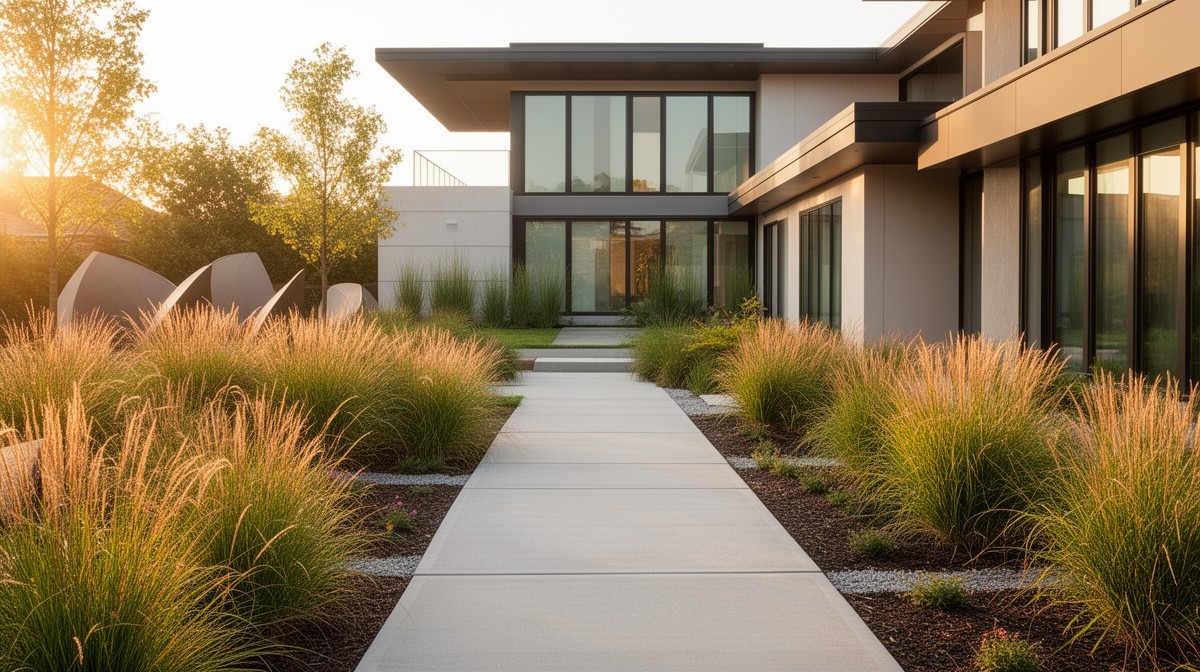
$45–100/sqft (pool included)A rectangular pool occupies the rear yard of a contemporary two-story Kansas City home, surrounded by a white concrete pool deck with lounge seating and a fire feature on one end. The home's glass-wall facade reflects off the pool surface, and sculpted ornamental grasses in raised perimeter beds frame the composition. The pool glows at dusk while the interior of the home is warmly lit behind it. Kansas City summers hit 90°F+ for weeks at a time — a pool transforms the July-August period from an outdoor dead zone into the social heart of the household. The contemporary design language ensures the pool feels like an intentional part of the home rather than an appended amenity.
See how a modern/minimalist garden looks on YOUR property
Upload a photo of your Kansas City yard and visualize your dream garden in seconds.
Try ProScapeAI Free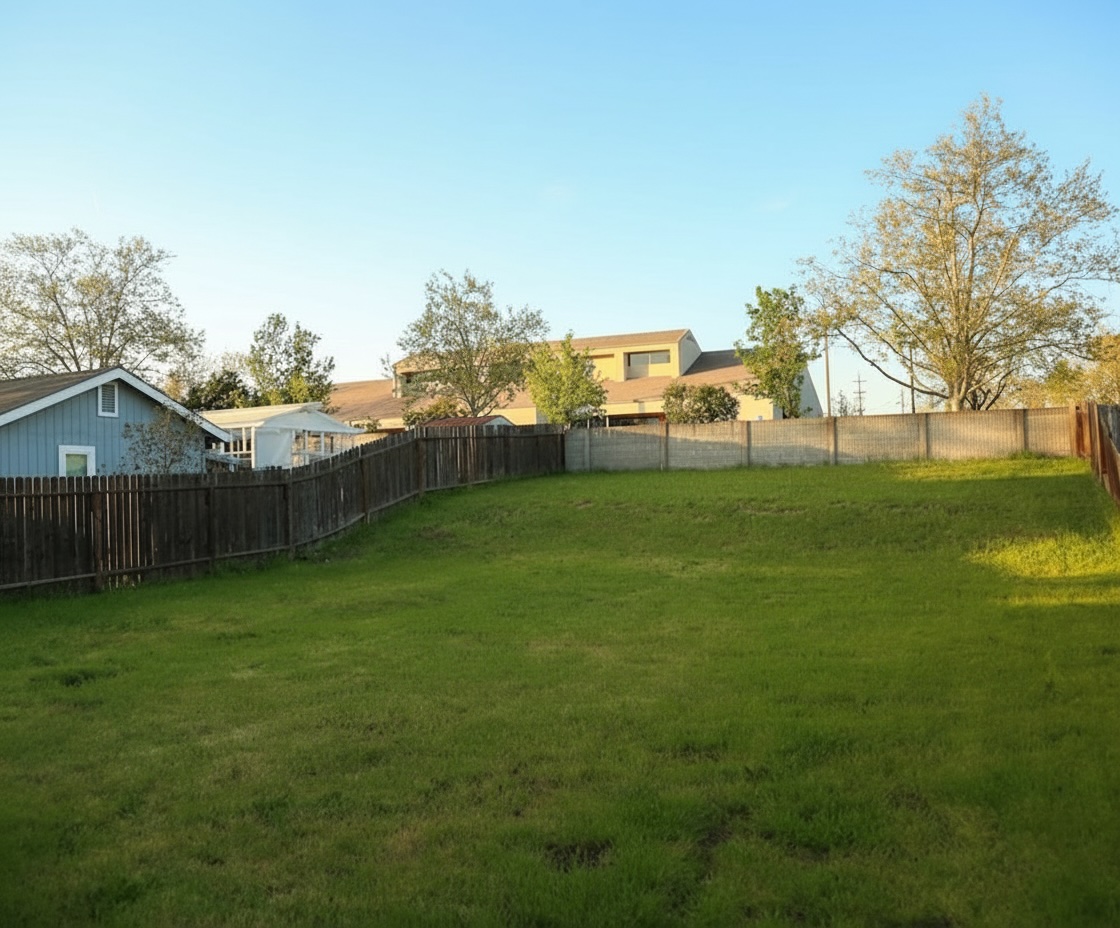
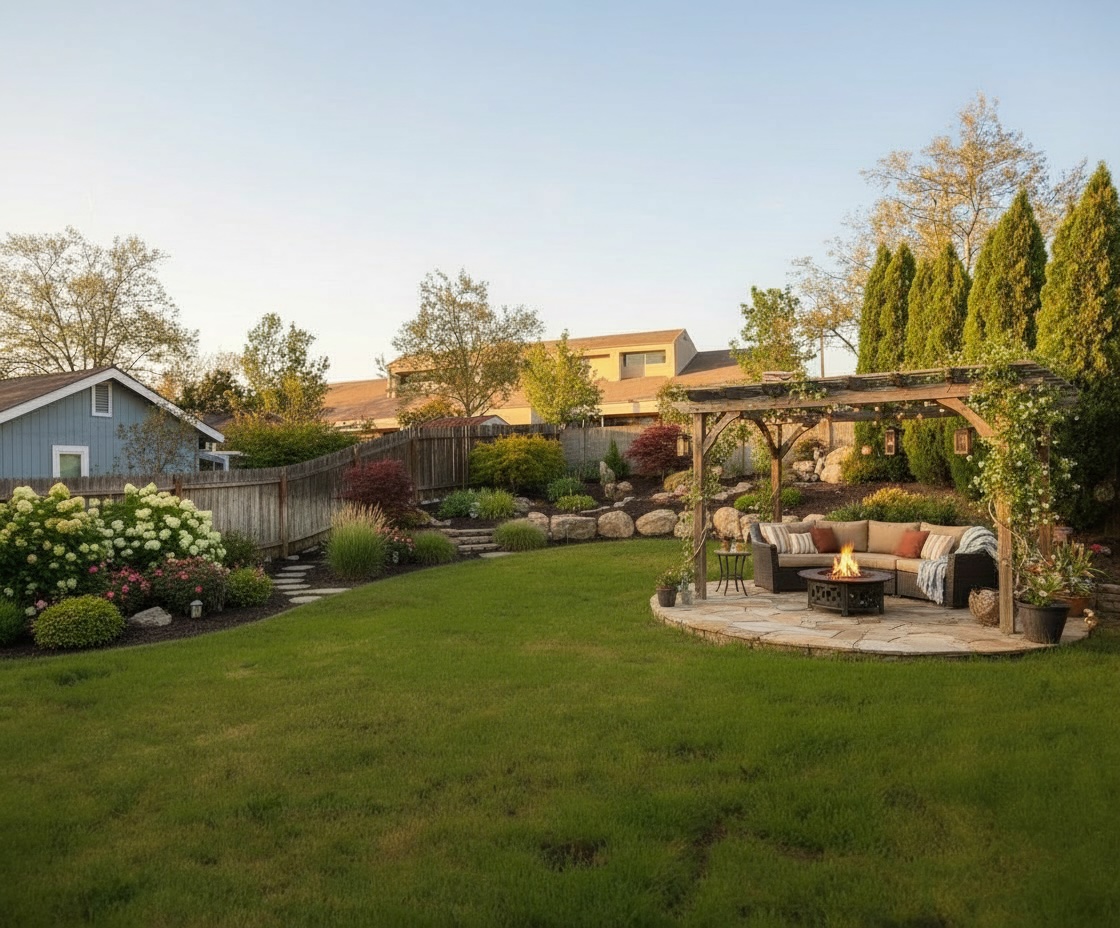
AI-generated image
Featured Trees & Shrubs for Modern/Minimalist Gardens
Browse all 194 plants for Kansas City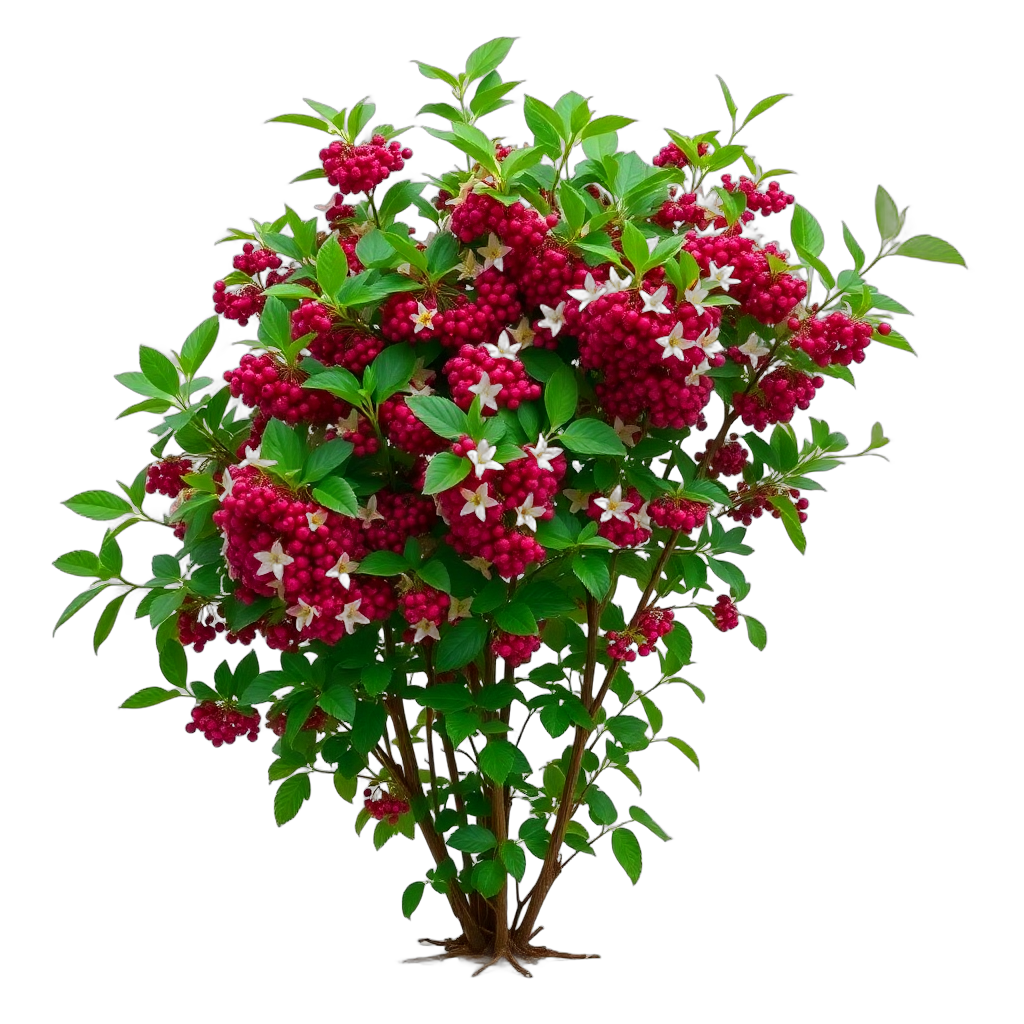
Clove Currant
Ribes odoratum
grows to 6 feet, yellow blooms in spring. Attracts hummingbirds.
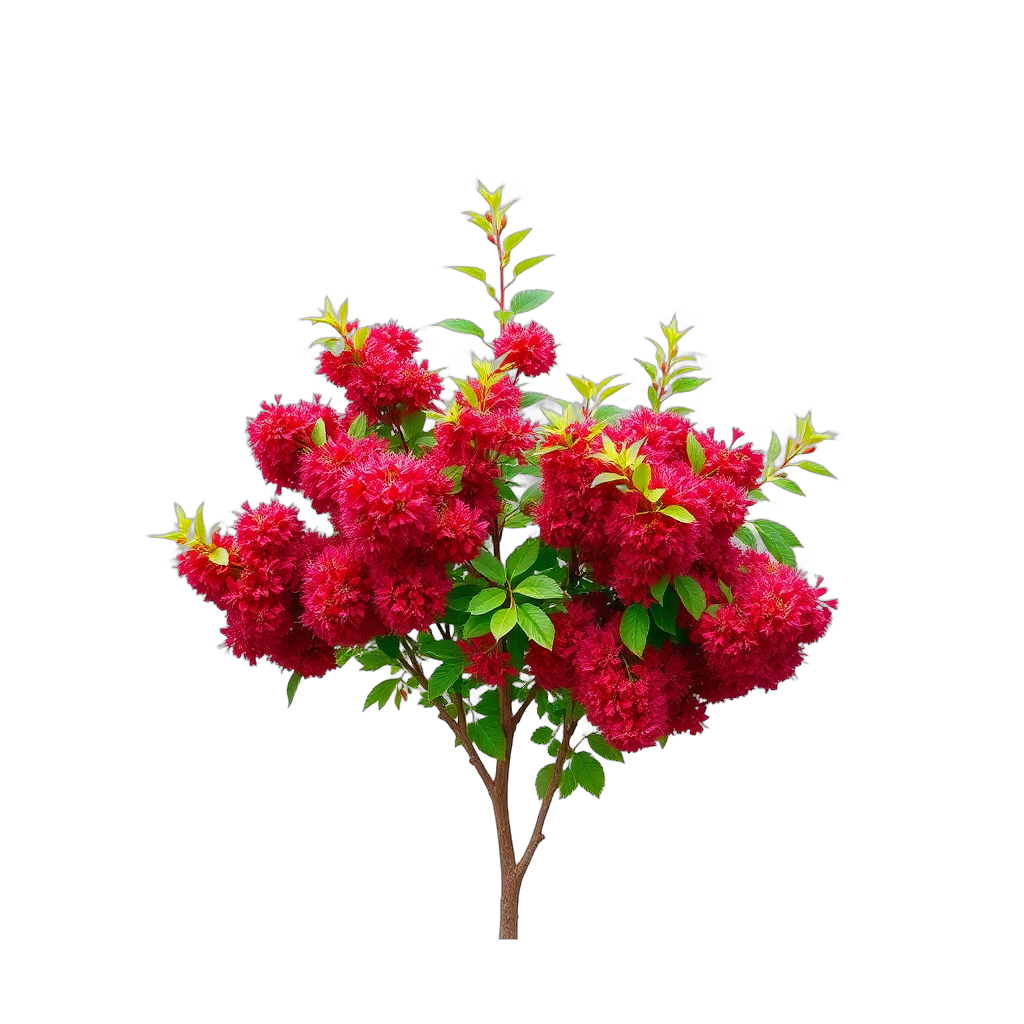
Fragrant Sumac
Rhus aromatica
grows to 4 feet, yellow blooms in spring. Attracts butterflies.
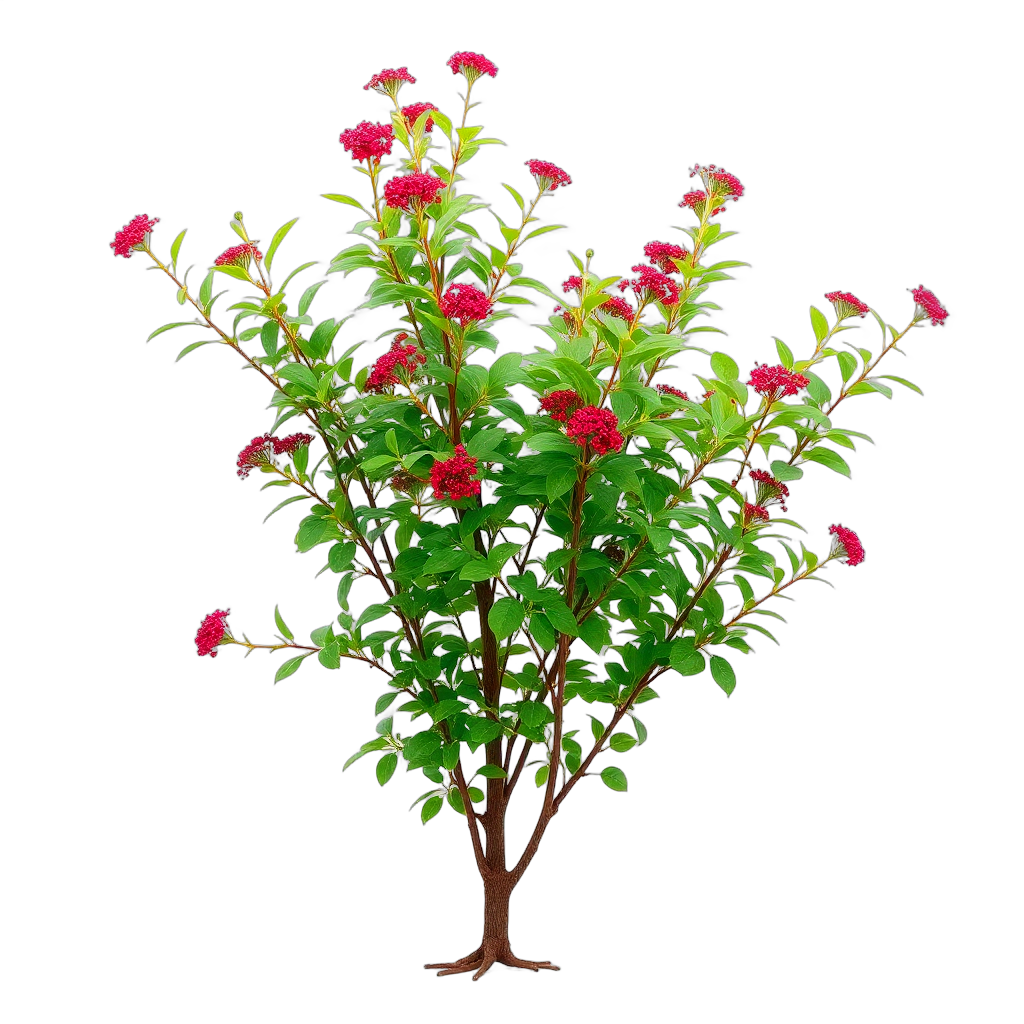
Smooth Sumac
Rhus glabra
medium-sized at 12 feet, white,green blooms in summer. Attracts butterflies.
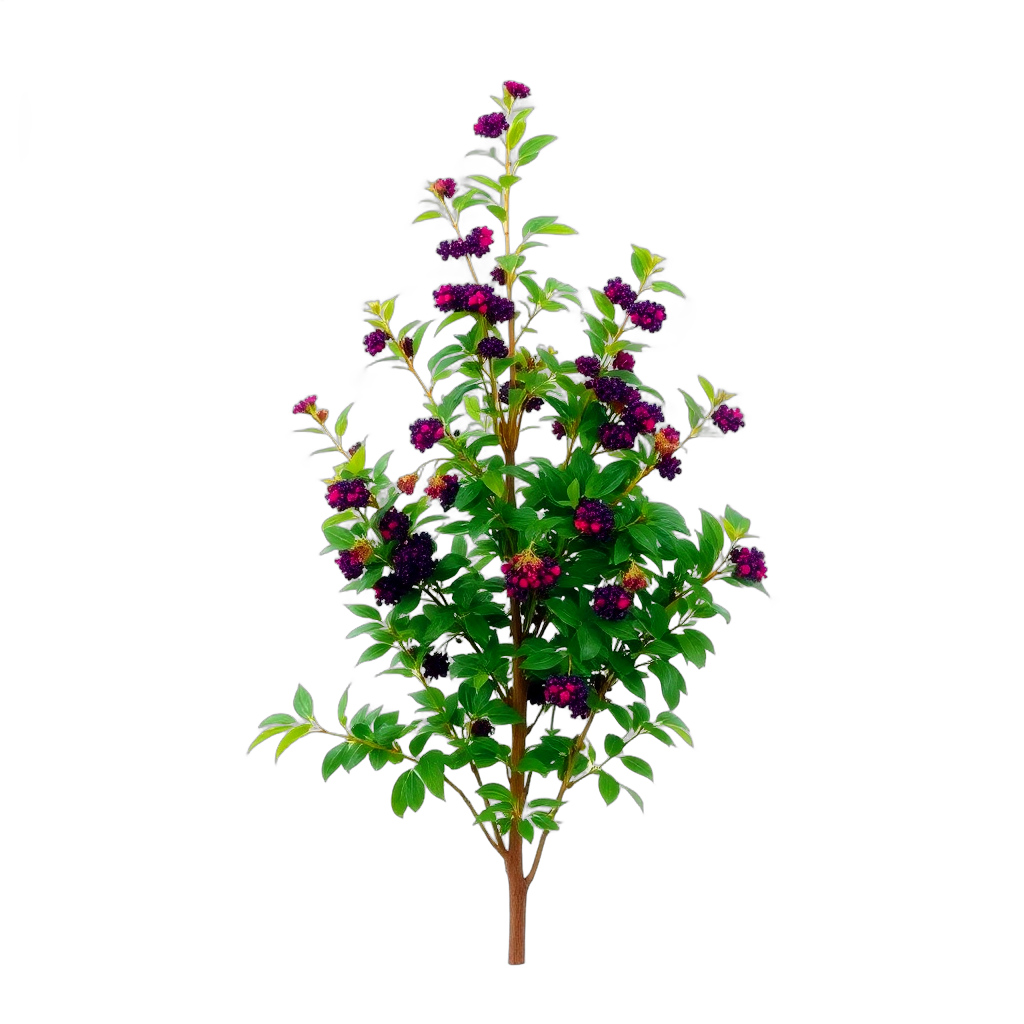
American Beautyberry
Callicarpa americana
grows to 6 feet, pink blooms in summer. Pollinator-friendly.
Featured Grasses & Groundcovers for Modern/Minimalist Gardens
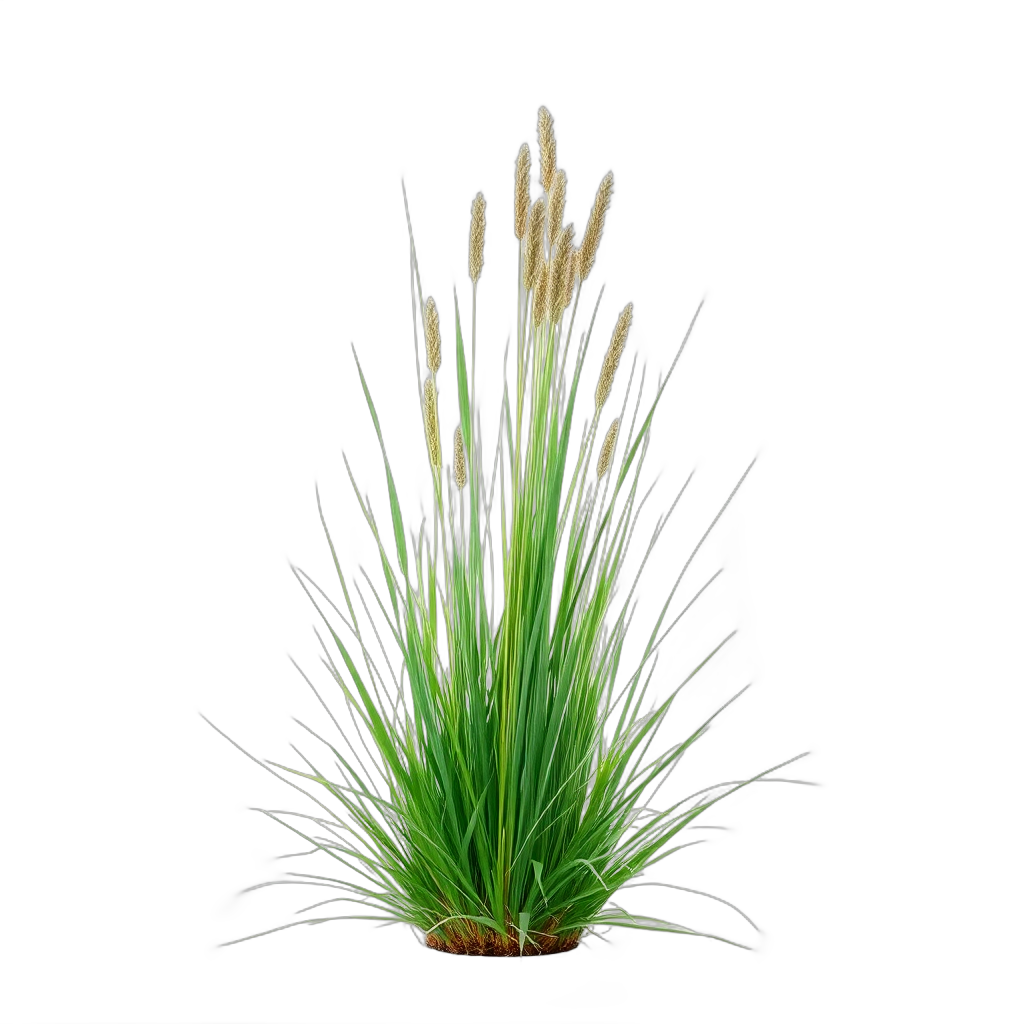
Big Bluestem
Andropogon gerardii
medium-sized at 7 feet, purple blooms in fall. Bronze,burgundy fall color.
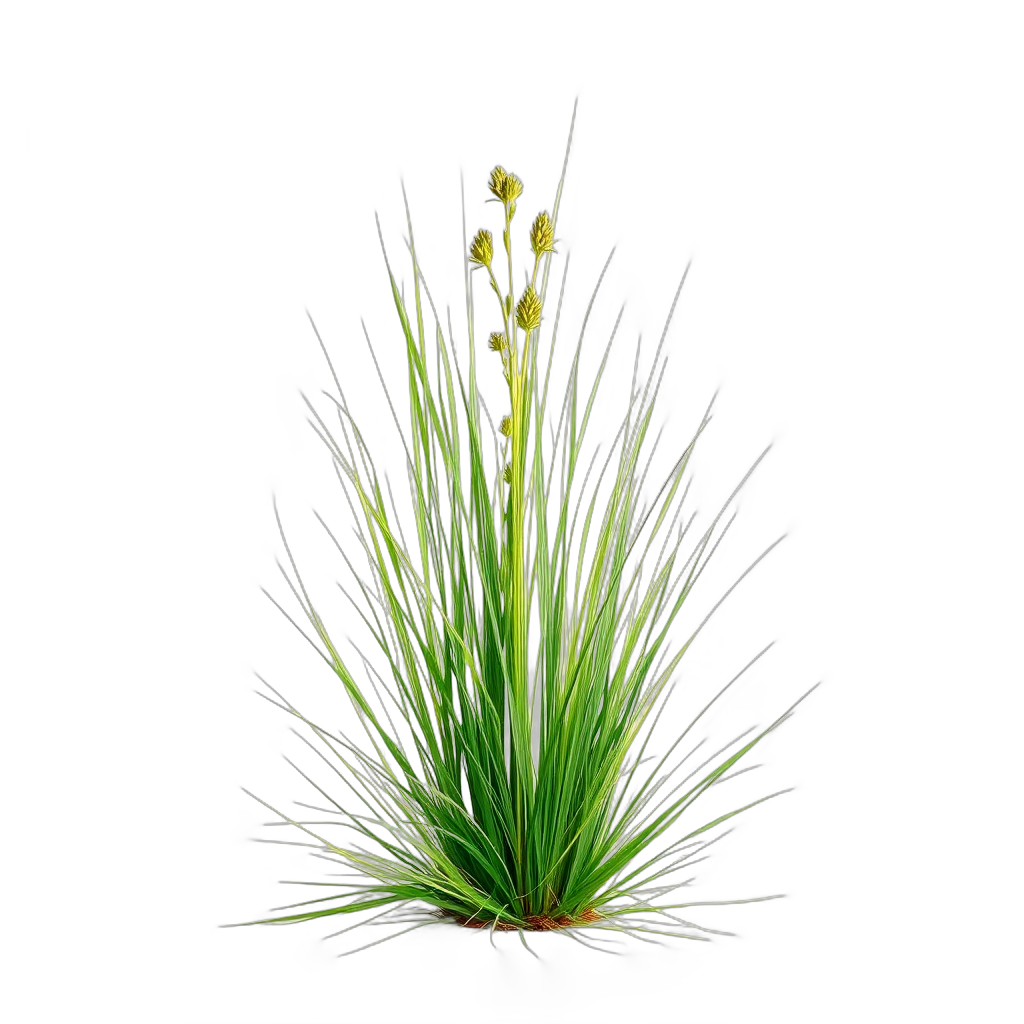
Canada Wild Rye
Elymus canadensis
grows to 4 feet, blooms in summer. Yellow fall color.
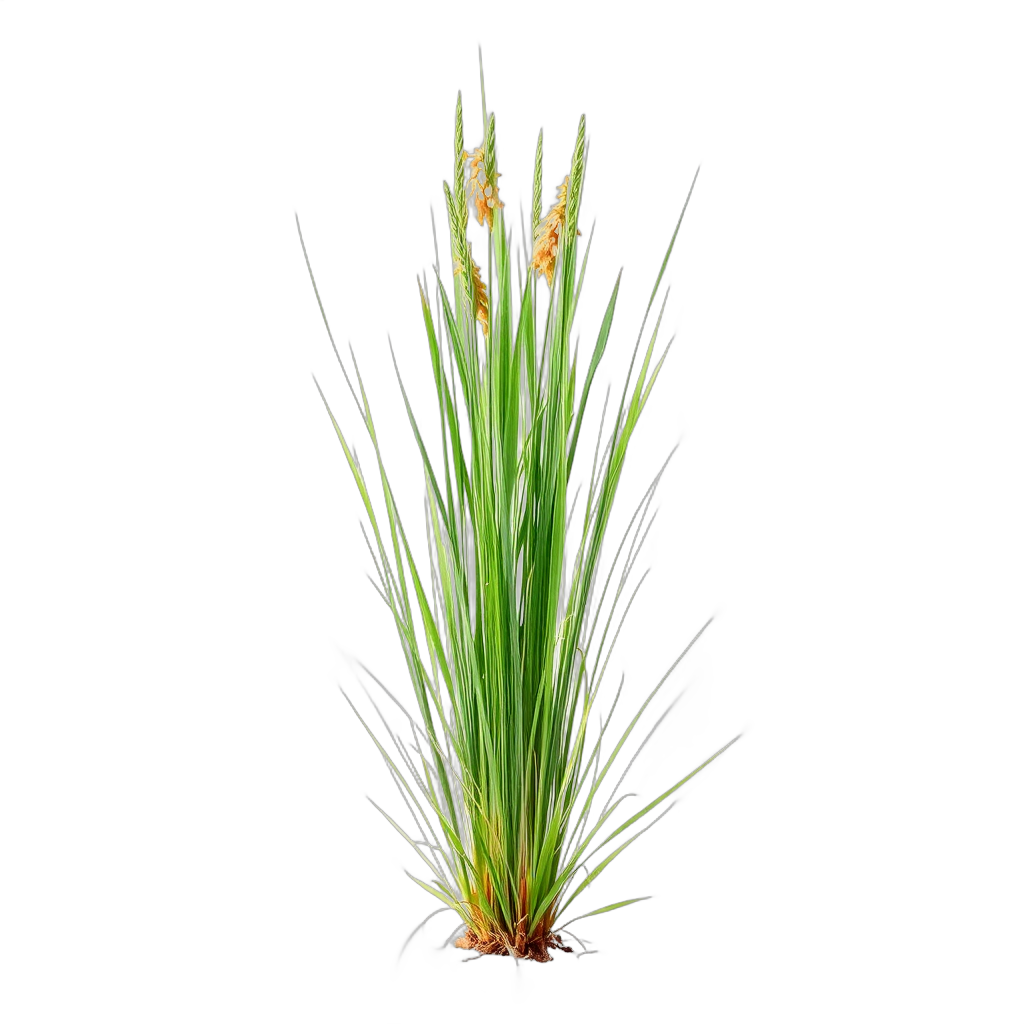
Eastern Gamagrass
Tripsacum dactyloides
grows to 6 feet, blooms in summer. Yellow fall color.
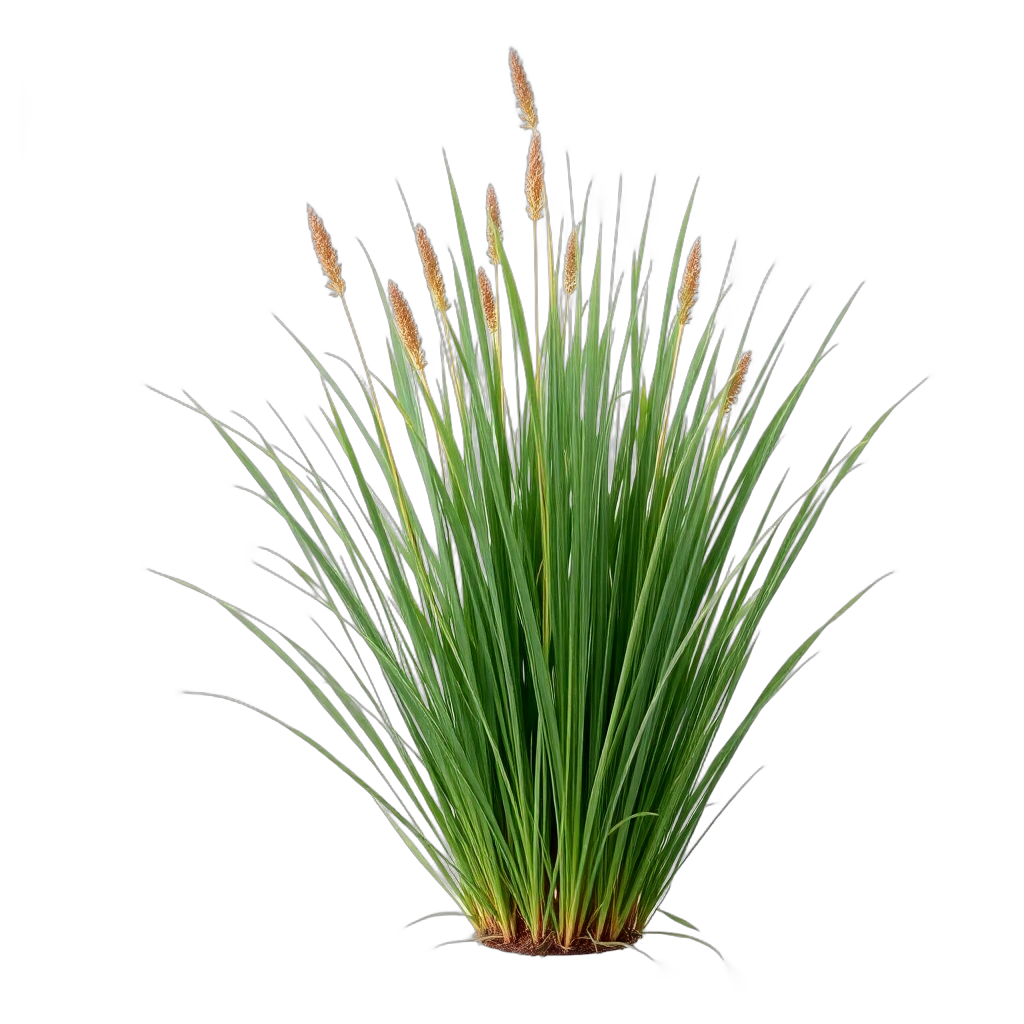
Heavy Metal Switchgrass
Panicum 'Heavy Metal'
grows to 4 feet, pink blooms in summer. Yellow fall color.
Featured Flowers & Perennials for Modern/Minimalist Gardens
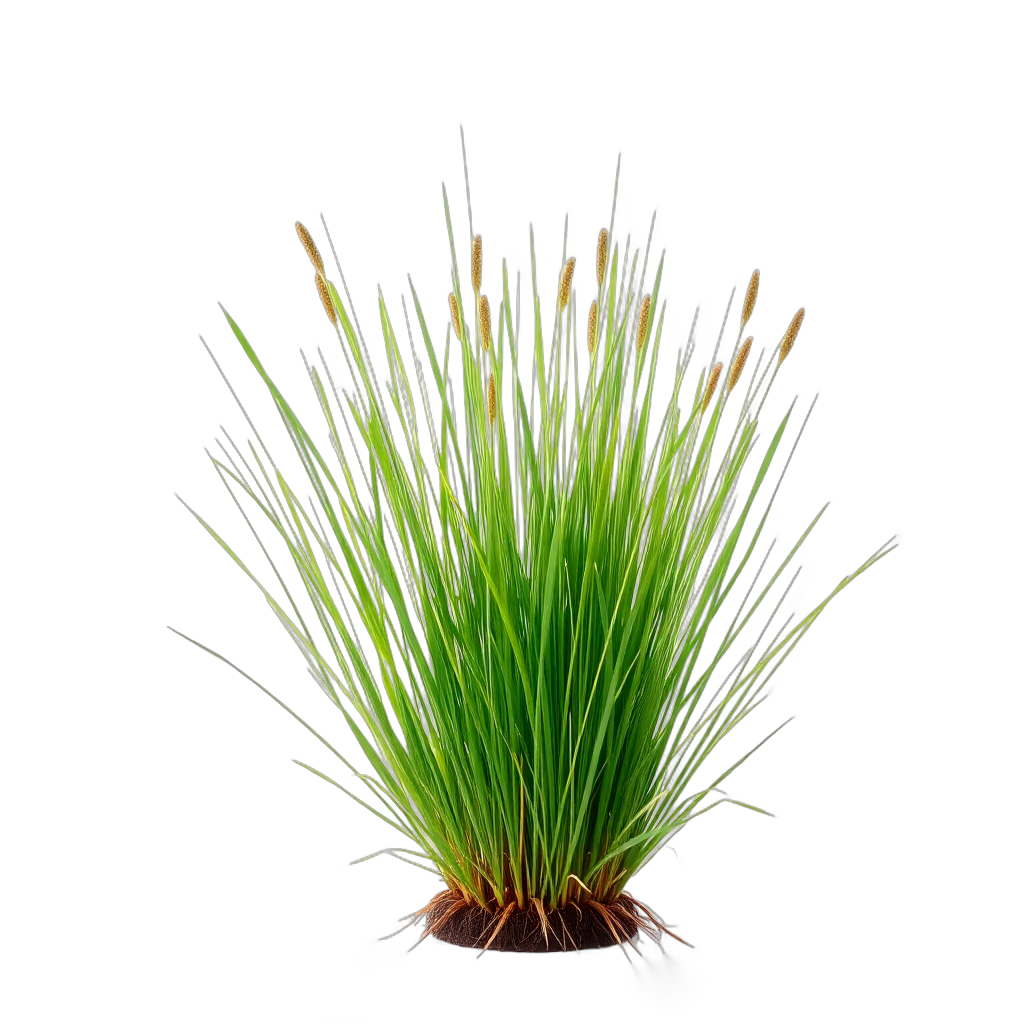
Path Rush
Juncus tenuis
low-growing ground cover, blooms in summer. Evergreen year-round.
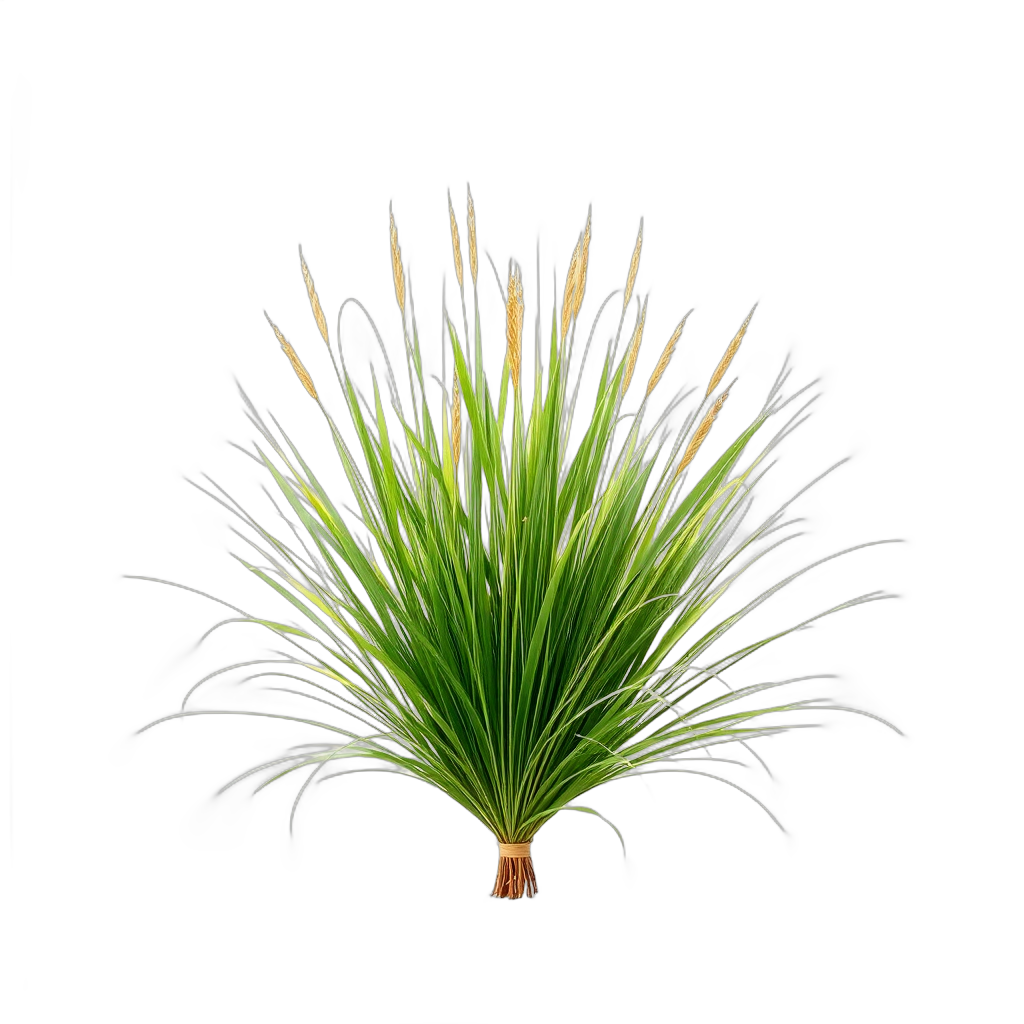
Prairie Cordgrass
Spartina pectinata
grows to 6 feet, blooms in summer. Yellow fall color.
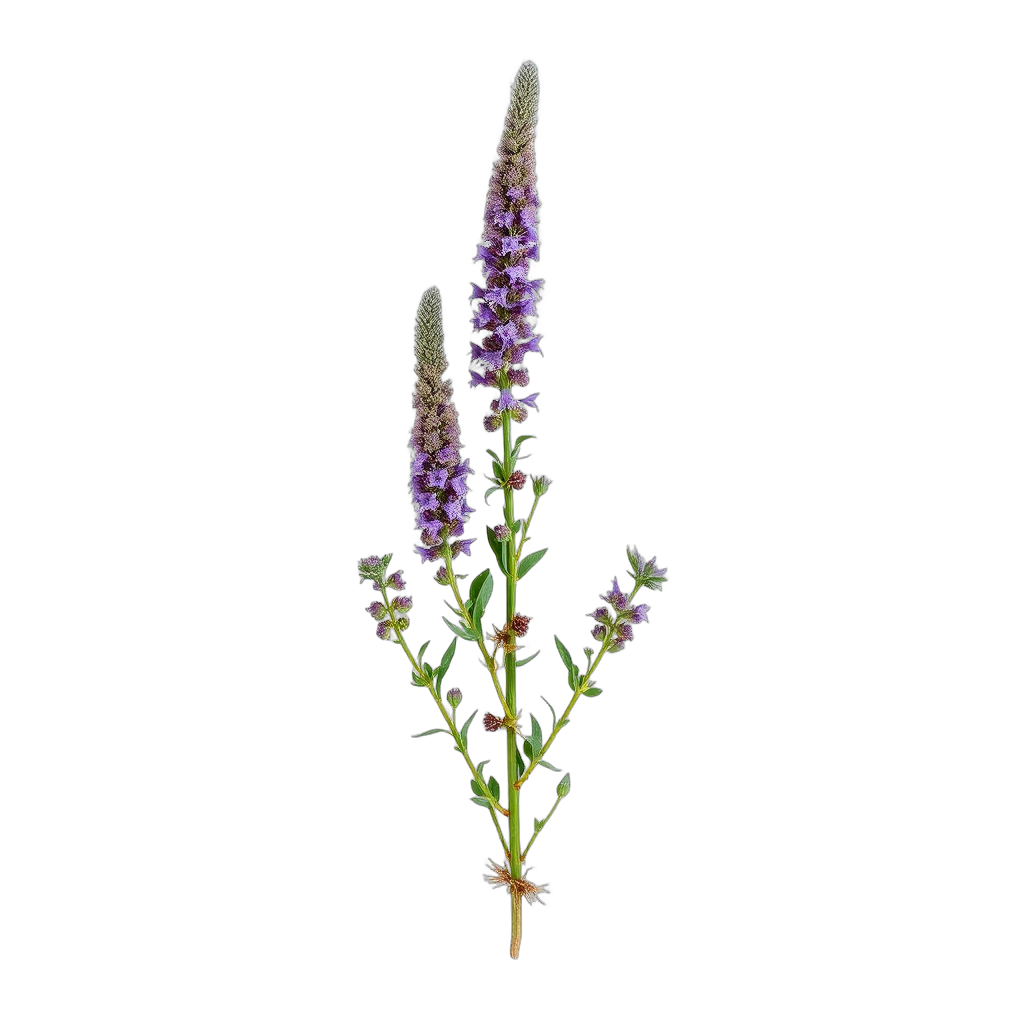
Anise Hyssop
Agastache foeniculum
grows to 3 feet, purple blooms in summer. Attracts hummingbirds.
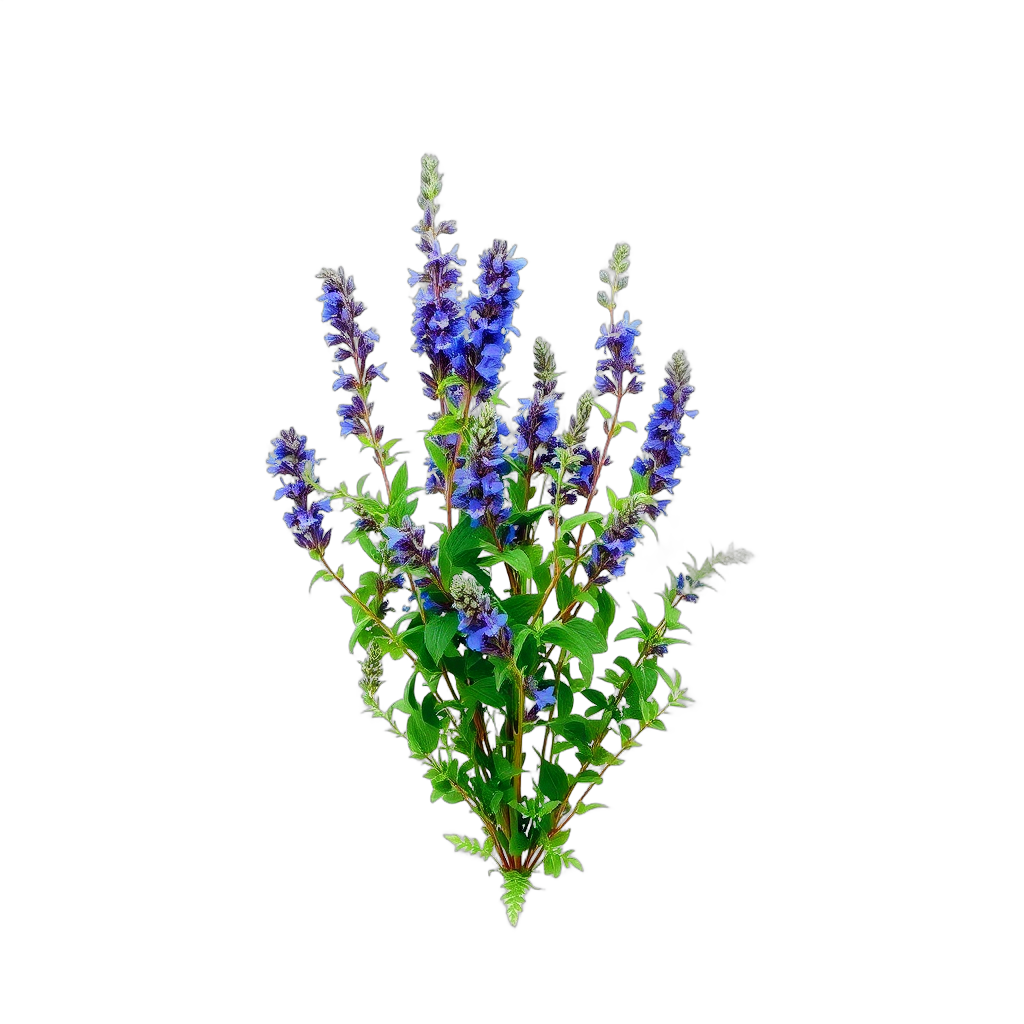
Azure Sage
Salvia azurea
grows to 4 feet, blue blooms in fall. Attracts hummingbirds.
Zone and sun checks come from our database — confirm with your local nursery before you buy.
Bloom Calendar for Kansas City
spring
Blue False Indigo, Foxglove Beardtongue, Golden Alexandersummer
Path Rush, Prairie Cordgrass, Anise Hyssopfall
Azure Sage, Maximilian Sunflower, New England Asterwinter
Limited bloomsDesign Tips for Kansas City (Zone 6a)
- Design for four seasons from the start: every plant and material choice must contribute to the winter skeleton as well as the summer green season — Zone 6a landscapes are judged heavily on their January appearance
- Switchgrass cultivars are Kansas City's most versatile modern landscape plant: 'Northwind' (upright, wind-resistant), 'Shenandoah' (burgundy fall color), and 'Prairie Fire' (red summer color) all thrive in Zone 6a
- Install a minimum 6–8 inch crushed limestone base under all hardscape — Kansas City's freeze-thaw cycle destroys paving installed over inadequate base within 2–3 winters
- The Nelson-Atkins Museum's grounds are Kansas City's most instructive free landscape design reference — observe how the Donald Judd sculpture court and Bloch Building landscape handle scale, material, and season
- Native prairie grasses turn their most spectacular colors in October: plan a site visit to Powell Gardens or the Overland Park Arboretum in early October to see Zone 6a fall grass color before finalizing a planting plan
- Kansas City's 40-inch annual rainfall is well-distributed enough that established native grasses and perennials typically don't need supplemental irrigation after the first year — invest in good soil preparation rather than irrigation infrastructure
Where to Source Plants in Kansas City
Skip the big-box stores. These independent Kansas City nurseries specialize in the plants that make modern/minimalist gardens thrive in Zone 6a.
Family Tree Nursery
Shawnee, KS (Johnson County)
Native plants, perennials, trees, grasses — full-service locally owned since 1956
Suburban Lawn & Garden
Prairie Village, KS
Full-service garden center, trees, shrubs, perennials, grasses
Soil Service Garden Center
Troost Avenue, south Kansas City
Family-owned since 1934; bulk compost, mulch and soil blends alongside a well-curated perennial, peony and heirloom-plant selection for KC-area gardens
Grass Pad
Bonner Springs (Wyandotte County)
Regional Kansas independent best known for turf, soil amendments and compost by the yard, plus shrubs, trees and mulch for cottage bed prep
Modern/Minimalist Landscaping Costs in Kansas City
| Project Scope | Estimated Cost |
|---|---|
| Lawn removal + DG / gravel modern front yard | $4,500 – $10,500 |
| Full modern front yard redesign with hardscape + plants | $8,000 – $20,000 |
| Concrete patio + fire pit lounge (backyard) | $10,000 – $26,000 |
| Pool + contemporary landscape (full backyard) | $48,000 – $110,000 |
| Privacy fence installation | $3,000 – $8,000 |
| Drip irrigation system | $1,000 – $2,600 |
| AI visualization with ProScapeAI | Free to start |
Estimates based on Kansas City, MO-area contractor rates as of 2026. Actual costs vary by site conditions, materials, and contractor.
Kansas City Climate & Growing Zone
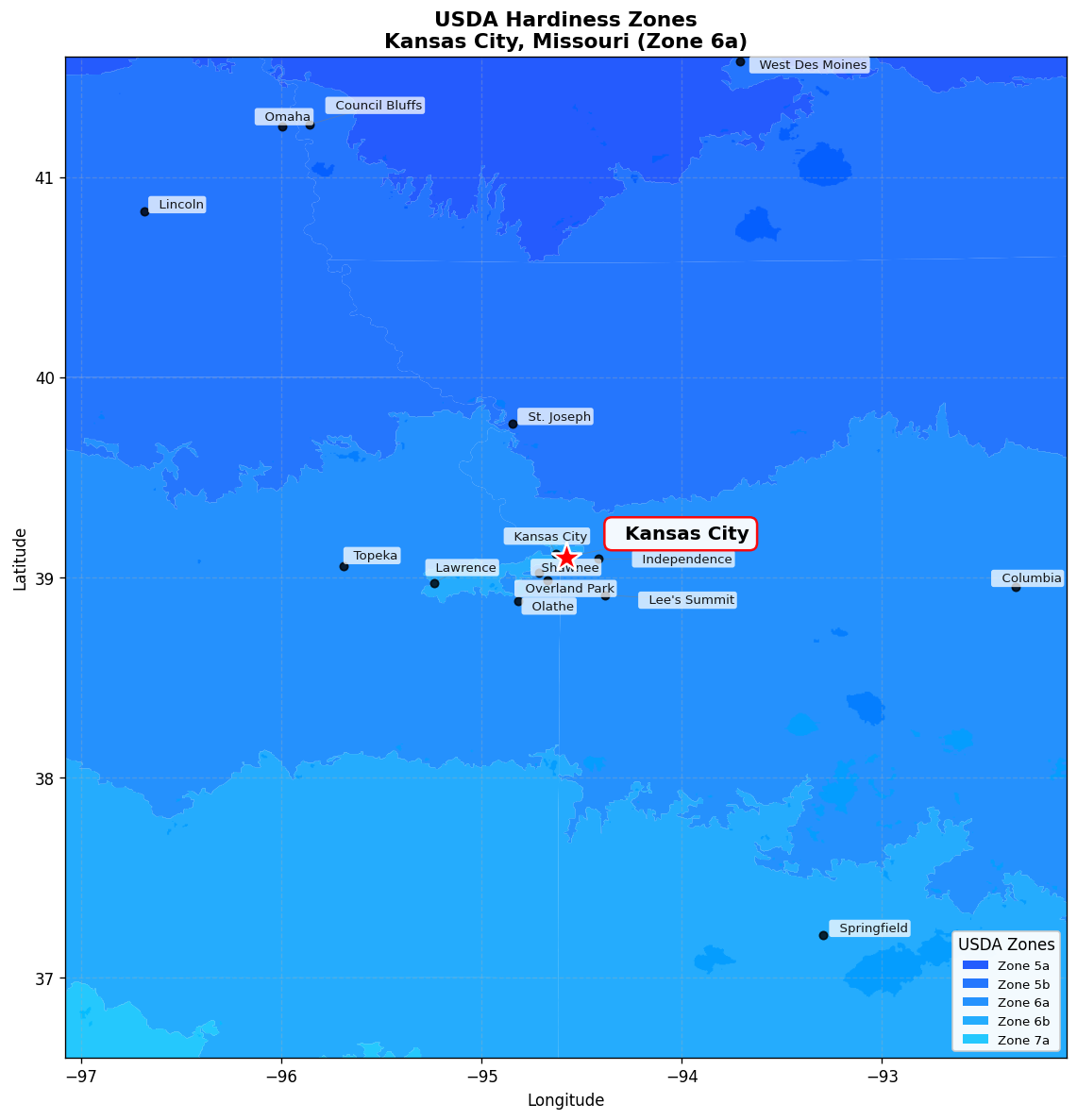
USDA Zone 6a
Hardiness zone for Kansas City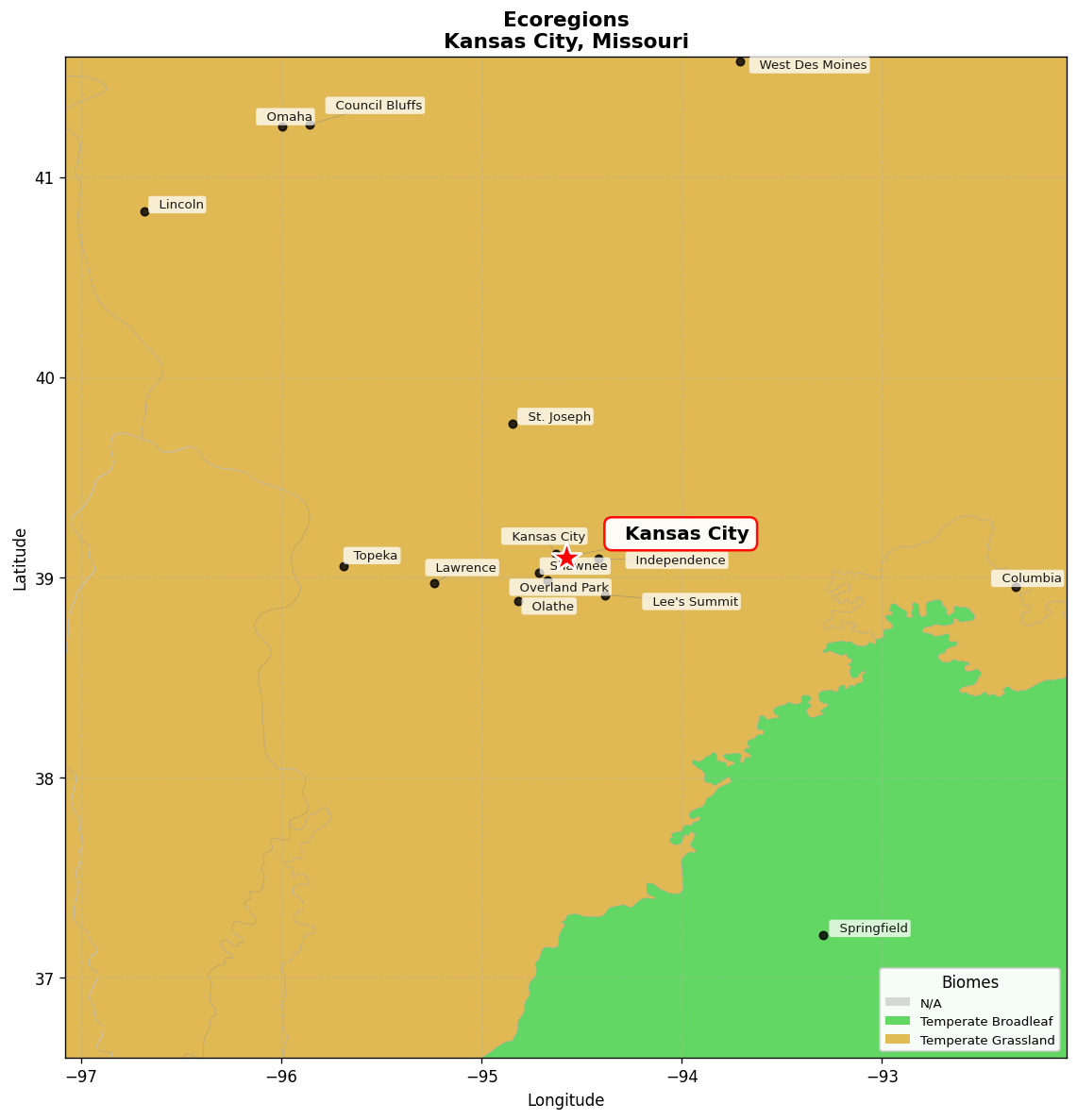
Central Tallgrass prairie
Native ecoregionFrequently Asked Questions
What modern plants work in Kansas City's Zone 6a climate?
Zone 6a requires plants that survive -10°F winter lows while also handling 95°F summer heat — the quintessential continental climate challenge. Best modern performers: switchgrass / Panicum virgatum (dozens of cultivars, all Zone 5-6 hardy, spectacular fall color), Big Bluestem and Little Bluestem (native prairie grasses, exceptional Zone 4 hardiness), Karl Foerster feather reed grass (semi-evergreen, holds structure through winter), Yucca filamentosa 'Color Guard' (Zone 4 hardy, bold architectural form), Hesperaloe parviflora (Zone 5 hardy, red summer bloom), ornamental alliums, and native coneflowers. Avoid Zone 7+ plants like Agave americana or Spanish lavender — Kansas City winters will kill them.
How do I design a four-season modern landscape in Kansas City?
Four-season design in Zone 6a requires deliberate planning for each season: Spring — early bulbs (alliums, ornamental onions) and emerging grass shoots as seasonal events. Summer — native wildflowers (coneflower, black-eyed Susan, prairie dropseed in bloom) and green grass masses. Fall — the design's peak performance: switchgrass turns burgundy-red, Big Bluestem turns copper, ornamental grasses backlit by low October sun. Winter — the skeleton: upright grass forms hold structure through snow, seedheads provide wildlife interest, hardscape and architectural specimens read without foliage. Every plant must earn its place across all four seasons or be replaced with one that does.
Can I replace my Kansas City lawn with a native grass meadow?
Yes, and it's ecologically the most appropriate choice in the Central Tallgrass Prairie ecoregion. Kansas City sits within the historic range of Big Bluestem, switchgrass, Indiangrass, and prairie dropseed — these are the native grasses that covered this landscape before European settlement. Replacing Kentucky bluegrass or fescue turf with a native grass meadow restores ecological function, dramatically reduces irrigation and fertilizer, and eliminates the winter dormancy problem of warm-season grasses (native cool-season and warm-season mixes stay green longer). Kansas City's 40-inch annual rainfall means native prairie grasses establish reliably in year one. Several Kansas City area neighborhoods have adopted meadow ordinances; check your municipality's minimum grass height rules before converting.
What hardscape materials work best for Kansas City's freeze-thaw cycles?
Kansas City's freeze-thaw cycles are more aggressive than Southern Plains cities — concrete and stone expand and contract repeatedly through a Zone 6a winter, which destroys poorly installed hardscape quickly. Requirements: 6–8 inch compacted crushed limestone base under all paving (not 4 inches as sufficient in warmer zones), concrete control joints every 8 feet, paver joints filled with polymeric sand that flexes rather than cracks, and drainage that prevents water from pooling under paving where it can freeze and heave. Missouri limestone (local buff-gray color) is excellent for seat walls and steps. Concrete with an exposed aggregate finish provides slip resistance in wet/icy conditions. Avoid cheap tropical stone imports — they deteriorate rapidly in Zone 6a freeze-thaw.
What neighborhoods in Kansas City are investing in modern landscape design?
Crossroads Arts District has the highest concentration of design-forward homeowners who are treating outdoor spaces as extensions of contemporary interior design. Midtown (Volker and Hyde Park) has renovation investment from younger homeowners modernizing 1920s–1940s lots. On the Kansas side, Leawood and Prairie Village have large-lot homes where major landscape investment is fully justified. Mission Hills has the grand-estate scale where $50,000+ landscape projects are routine. Suburban Overland Park and Lenexa represent the largest volume opportunity for conventional landscape modernization. The Nelson-Atkins Museum's expanded campus landscaping (Donald Judd's 100-foot granite columns, Steven Holl's Bloch Building landscape) has elevated the city's landscape design literacy across all neighborhoods.
What does a modern landscape in Kansas City typically cost?
Kansas City has moderate contractor labor rates similar to comparable Midwest cities. Typical ranges: native grass meadow front yard ($5,500–12,000 for 500 sqft), contemporary patio + outdoor room ($13,000–30,000), full backyard transformation without pool ($22,000–55,000), pool + landscape ($50,000–110,000+). Hardscape costs run slightly higher than Southern Plains cities due to the thicker base requirements for freeze-thaw conditions. Specialty native plants from local prairie specialists can reduce plant material costs while improving ecological performance. Always get three bids and verify experience with Zone 6a freeze-thaw hardscape installation.