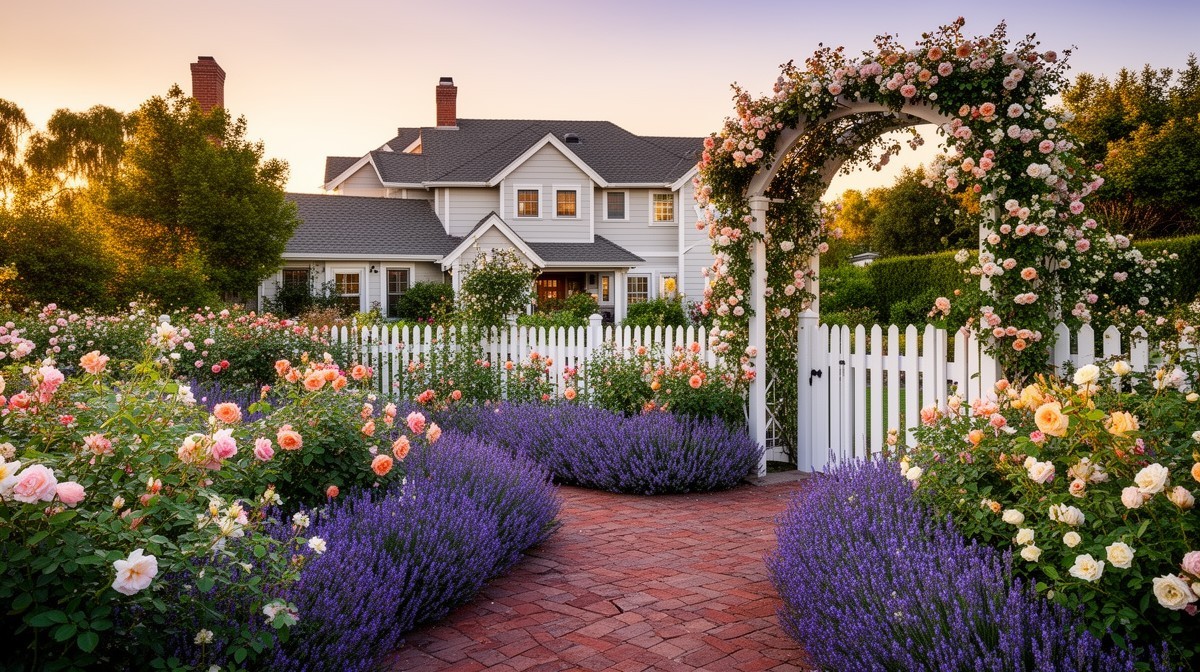
4 Cottage Garden Ideas for Stockton, CA | California Cottage Gardens in Zone 9a
Native plants from the California Central Valley grasslands (Zone 9a) — Mediterranean (hot summer) climate
Why Cottage/English Gardens in Stockton?
Stockton sits in the heart of the California Central Valley grasslands ecoregion—a Mediterranean-climate zone with hot, dry summers reaching 100°F+ and mild, wet winters averaging only 14 inches of annual rainfall. This climate is genuinely challenging for traditional English cottage gardening but extraordinarily rewarding for the California cottage style that has evolved in response to it: drought-adapted perennials, native California wildflowers, Mediterranean-origin shrubs, and heat-tolerant roses that bloom from April through November with minimal water. The California cottage garden is not a pale imitation of the English original—it’s a distinct regional tradition with its own plant palette, seasonal rhythms, and visual character.
Stockton cottage gardens typically peak in spring—March through May—when the Valley is still cool and moist and roses, lavender, and California poppies bloom simultaneously in a display that rivals any English cottage garden in color saturation. The challenge is maintaining cottage garden character through the brutal Valley summers when temperatures regularly exceed 100°F for weeks at a time. The solution is structural: a framework of heat-tolerant shrubs (lavender, salvia, rosemary, agapanthus) that maintain form and foliage through summer, while heat-sensitive annuals are replaced with drought-tolerant alternatives. With thoughtful plant selection, a Stockton cottage garden can look beautiful from February through December.
Neighborhoods like Lincoln Village, Brookside, and the Spanos Park area have established cottage garden traditions built on irrigated perennial borders and rose gardens that celebrate the Central Valley’s long growing season. Water-wise California cottage gardens—using California natives, Mediterranean plants, and drought-adapted roses—have grown substantially as water rates have increased and the state’s drought consciousness has deepened. California’s tiered water pricing structure makes over-irrigation expensive, and a well-designed cottage garden using appropriate plant material can deliver full cottage aesthetics at a fraction of the water use of a traditional lawn-and-border approach.
4 Cottage/English Design Ideas for Stockton
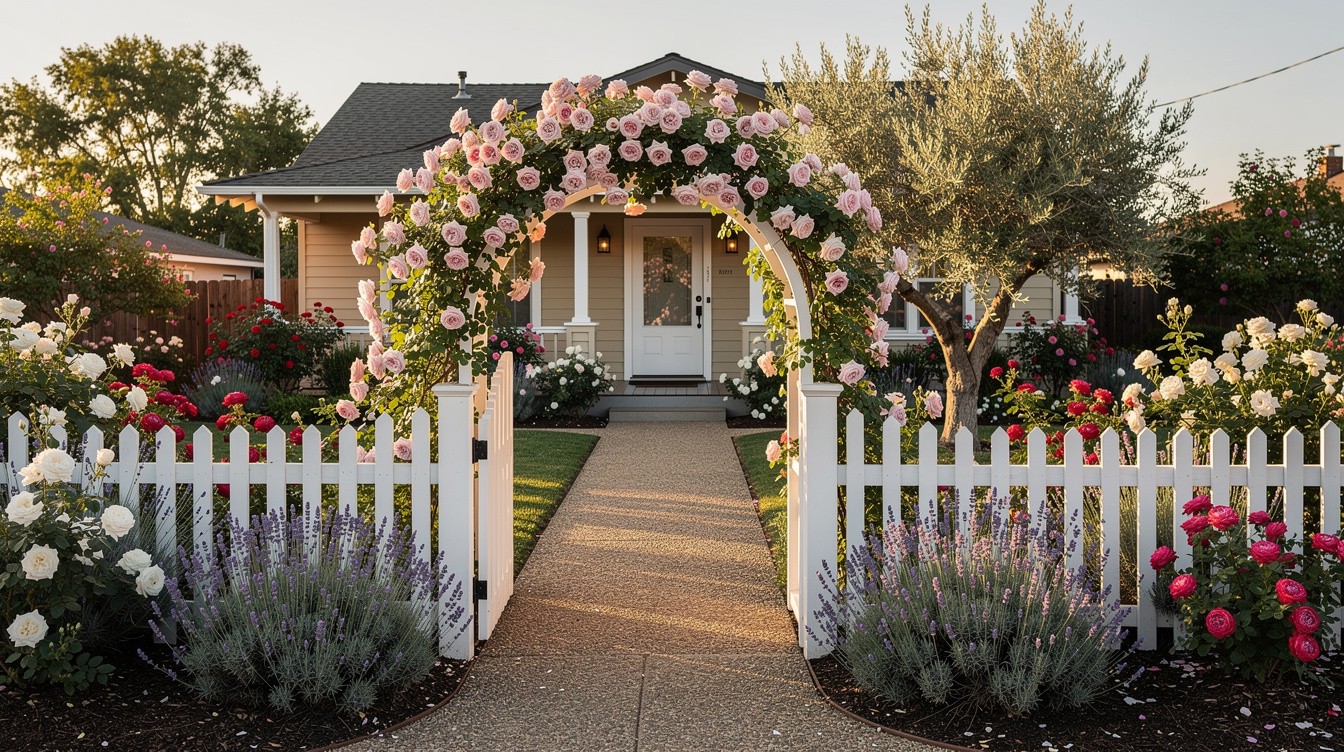
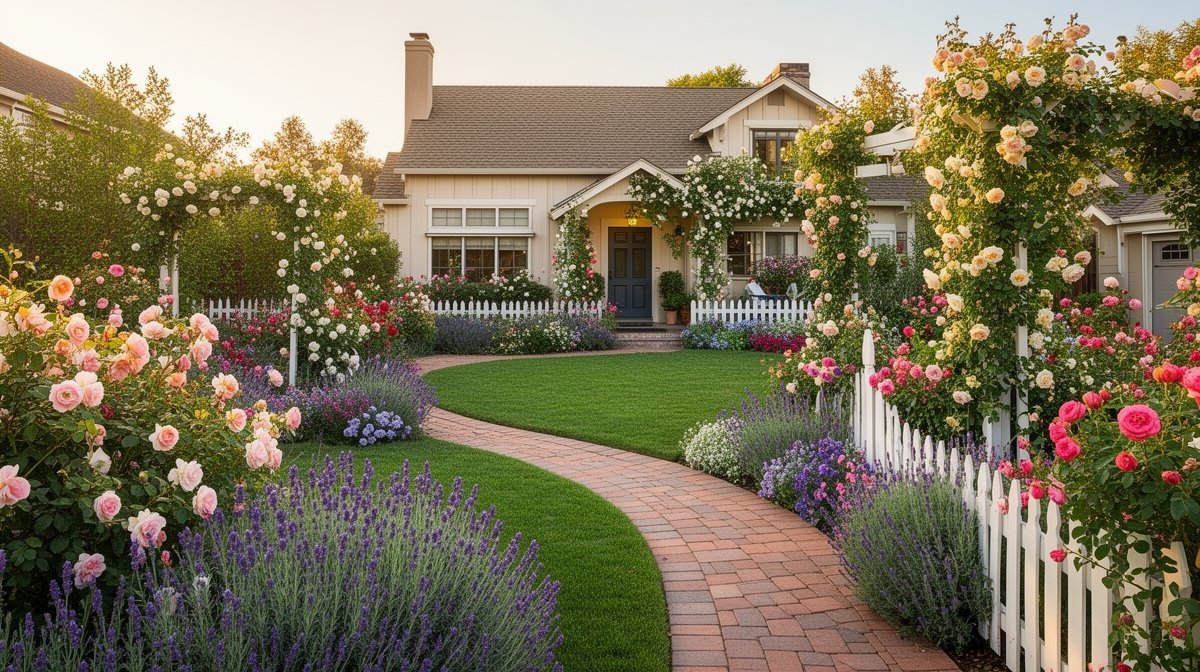
California Cottage Entry with Drought-Adapted Roses and Lavender
$10–22/sqftA decomposed granite path lined with a white picket fence leads to a California bungalow front door, flanked by generous cottage borders of drought-tolerant roses—'Cecile Brunner', 'Iceberg', and Knock Out varieties—intermixed with English lavender hedges, catmint, and salvia. The combination blooms from March through November in Stockton’s mild climate with minimal supplemental irrigation after establishment. A rose-covered arbor at the gate creates the iconic cottage entry element; a specimen olive tree provides year-round structure. The planting is California cottage at its most authentic: romantic and abundant while requiring only 30–40% of the water a traditional English cottage garden would demand.
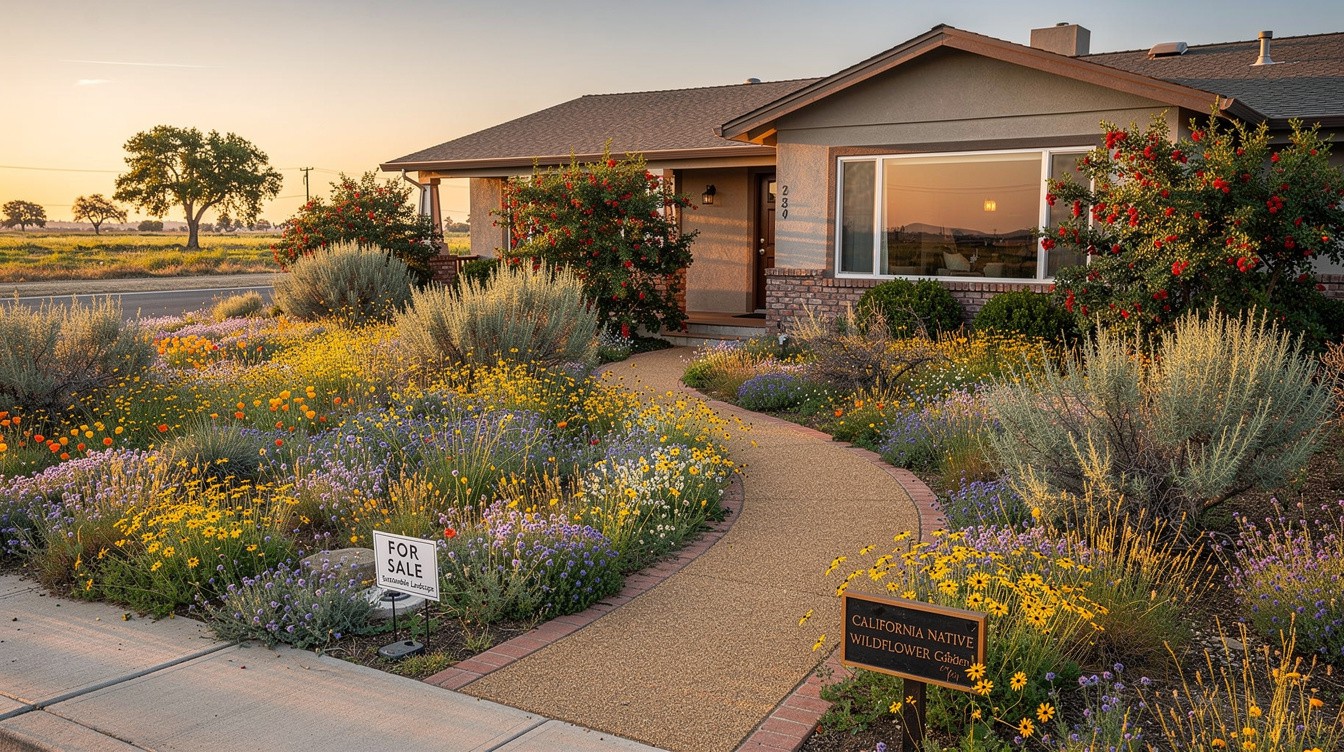
California Wildflower Cottage Garden
$8–18/sqftA California native wildflower cottage garden replaces traditional lawn with a naturalistic meadow of California poppies, phacelia, black-eyed Susan, and native bunch grasses—a design that requires no irrigation after the first establishment year and blooms spectacularly from February through May before summer dormancy. Native shrubs—coyote brush, toyon, and native sagebrush—provide the structural backbone, while a winding DG path creates a cottage sense of journey through the planting. The design celebrates the Valley’s natural landscape before agriculture transformed it: the native wildflower meadow that bloomed across the Central Valley each spring before settlement.
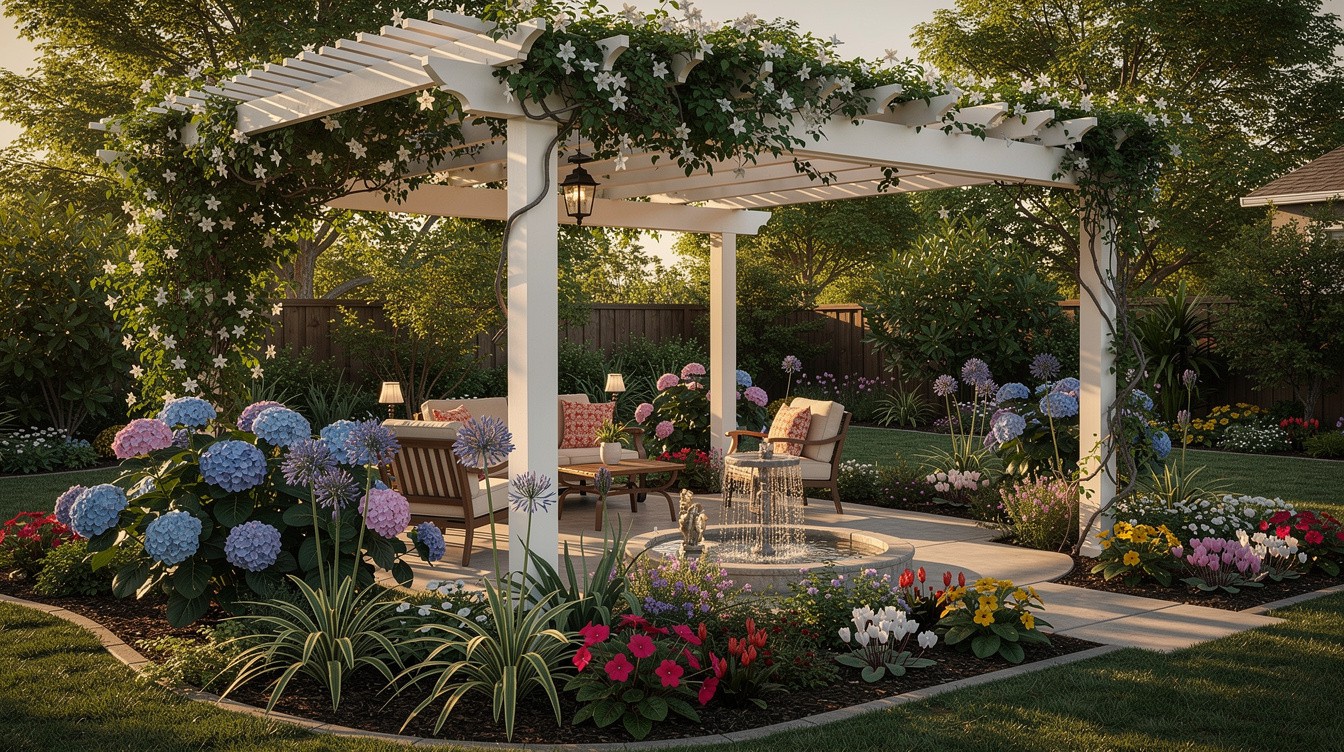
Covered Patio with Cottage Border and Shade Garden
$18—40/sqftA pergola-covered back patio provides essential shade for Stockton’s 100°F summer afternoons while creating the intimate garden room atmosphere that defines cottage outdoor living. Star jasmine climbs the pergola posts, releasing fragrance from April through June. Shade-adapted cottage plants—hydrangeas, agapanthus, and impatiens in summer; cyclamen and primrose in fall and winter—fill the border beds around the terrace perimeter. A small fountain provides the sound of water and cooling evaporation. The covered patio is the outdoor heart of a Stockton cottage garden: the heat shelter that makes outdoor living possible through July and August.
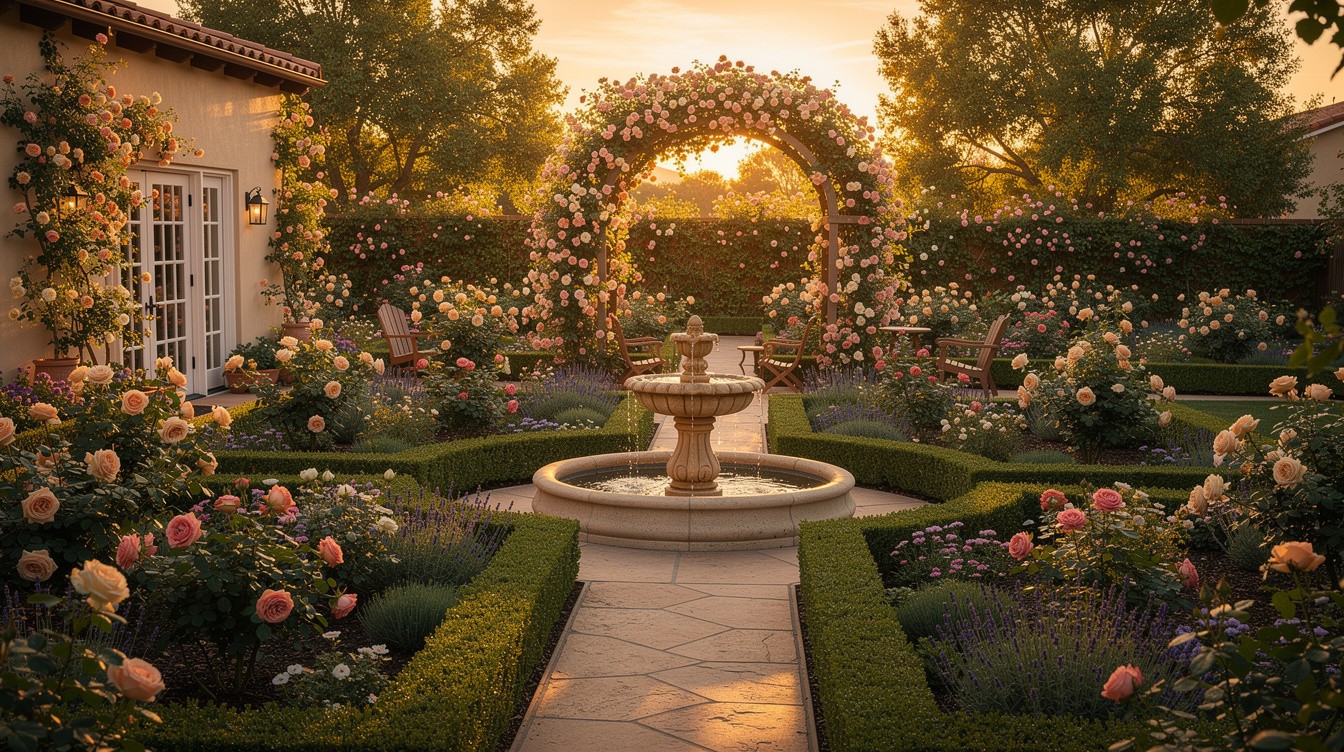
Mediterranean Cottage with Rose Garden and Fountain
$20—45/sqftA generous backyard rose garden—the Central Valley’s most celebrated cottage element—fills a rear garden with hybrid tea and David Austin English roses in a formal cottage arrangement: beds edged with boxwood hedges, a central fountain as the focal point, and a rose-covered archway marking the garden entrance. Companion plantings of lavender, salvia, and catmint underplant the roses with drought-tolerant cottage texture. The Central Valley’s long cool spring (February through May) is perfect for roses, and with evening drip irrigation these gardens can extend blooming from February through December, creating 10 months of cottage rose color that no northern garden can match.
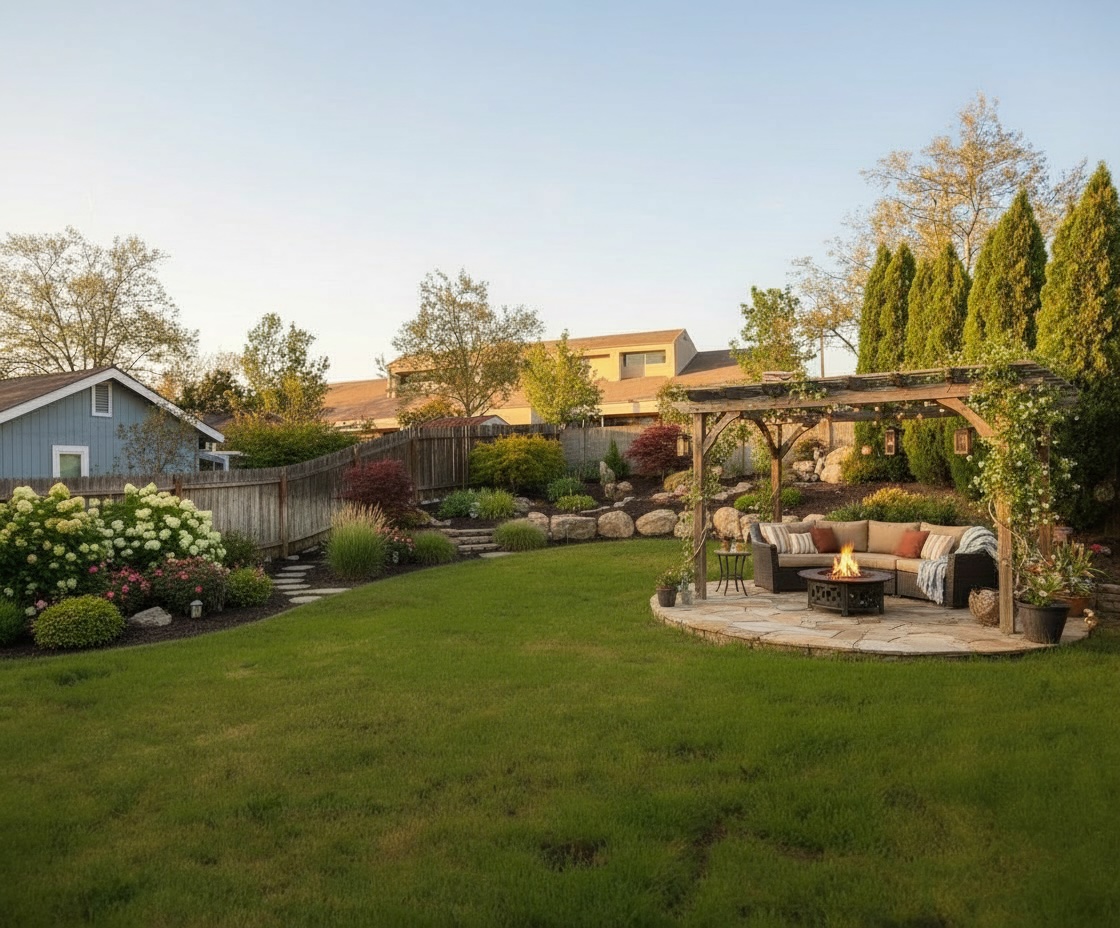
See how a cottage/english garden looks on YOUR property
Upload a photo of your Stockton yard and visualize your dream garden in seconds.
Try ProScapeAI Free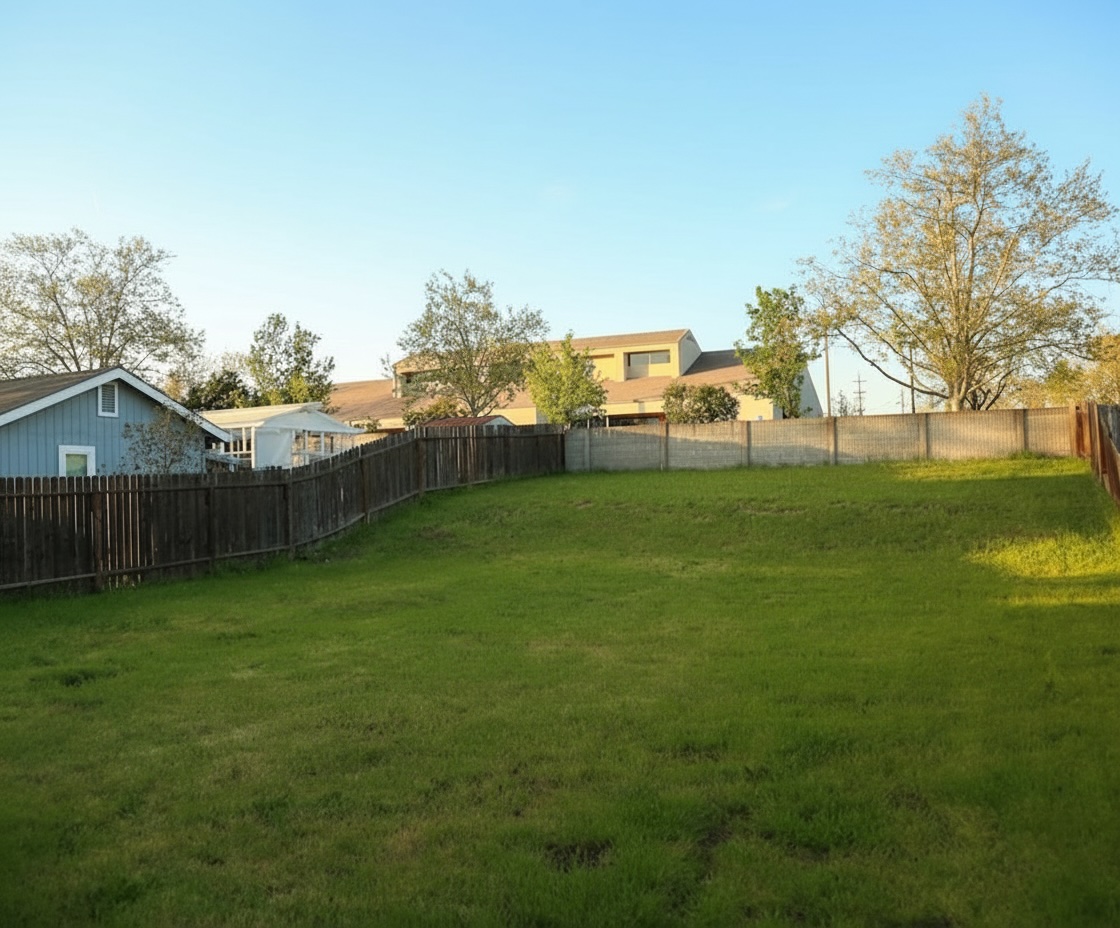
Featured Trees & Shrubs for Cottage/English Gardens
Browse all 161 plants for Stockton
Blue Oak
Quercus douglasii
large shade tree reaching 50+ feet, blooms in spring. Yellow fall color.
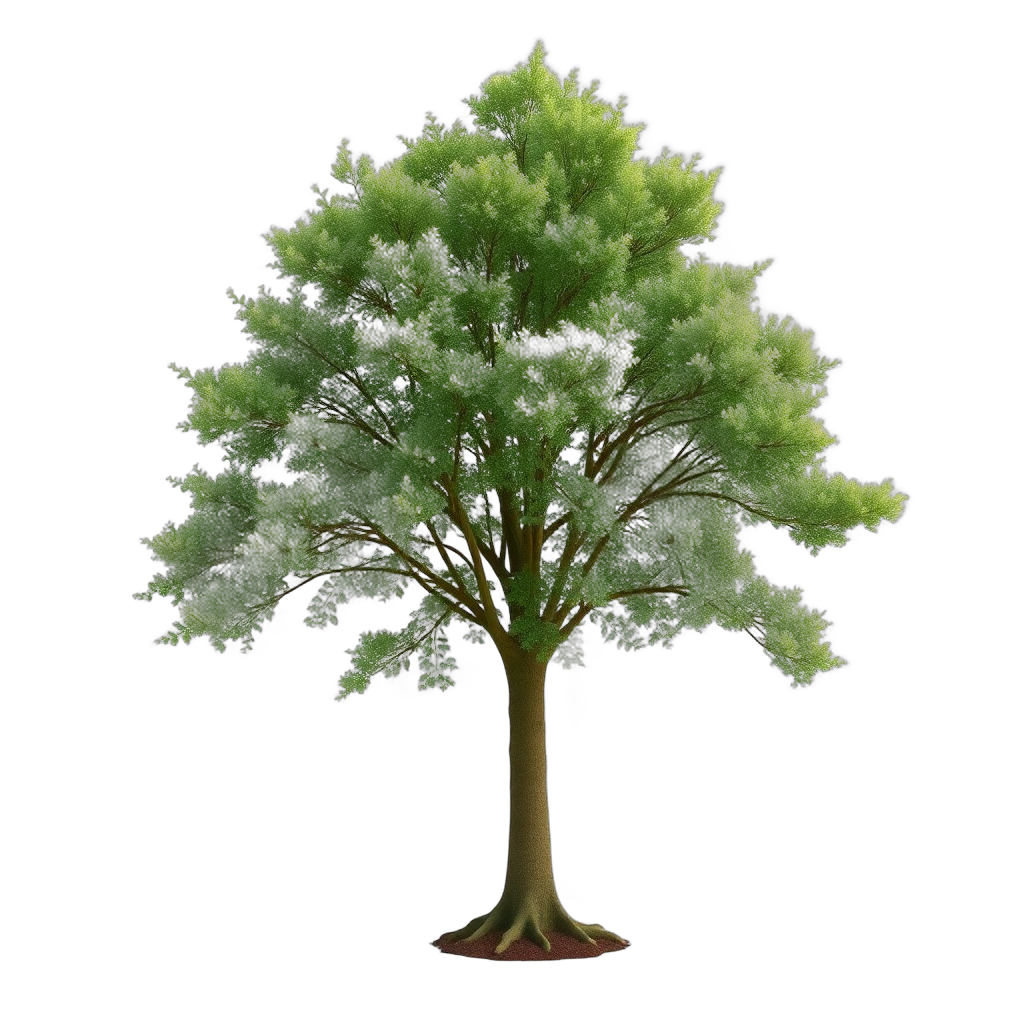
Fremont Cottonwood
Populus fremontii
large shade tree reaching 50+ feet, yellow blooms in spring. Yellow fall color.
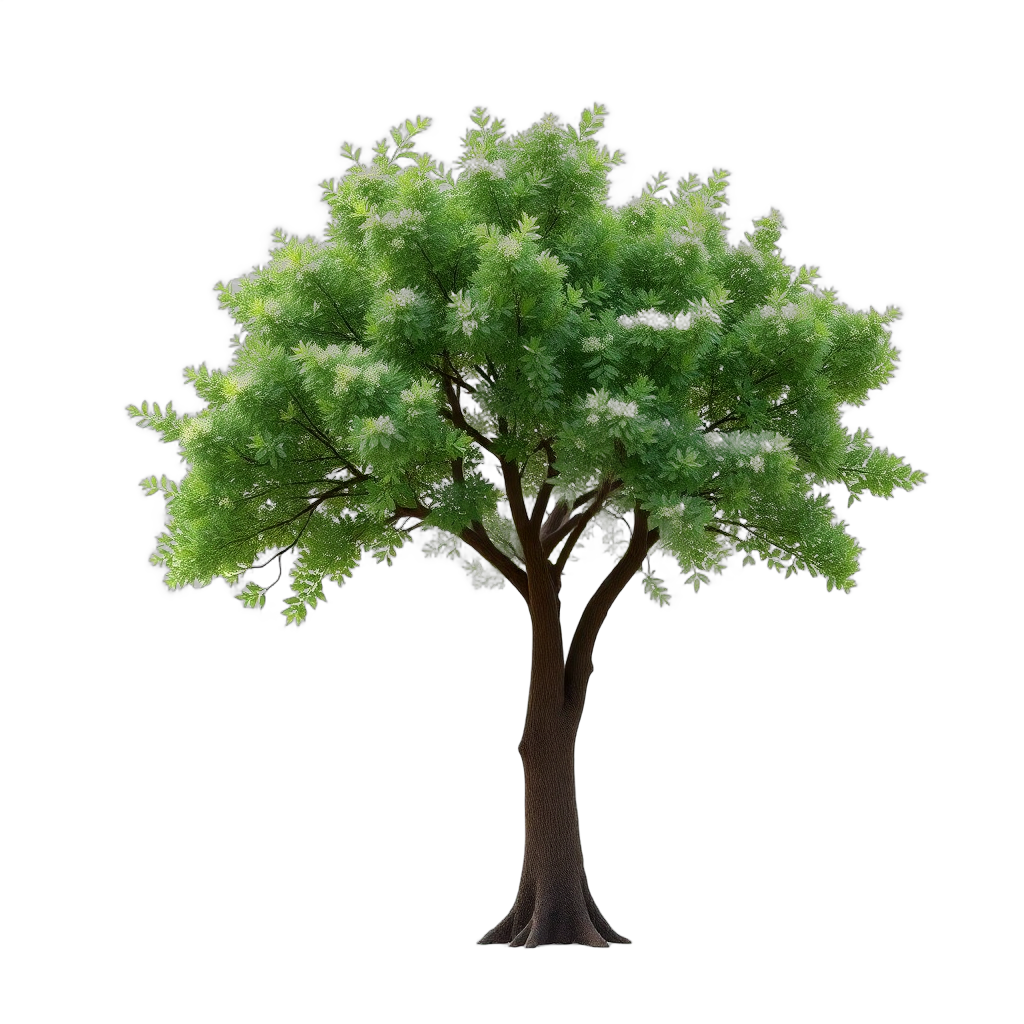
Valley Oak
Quercus lobata
large shade tree reaching 80+ feet, blooms in spring. Yellow fall color.
Featured Grasses & Groundcovers for Cottage/English Gardens
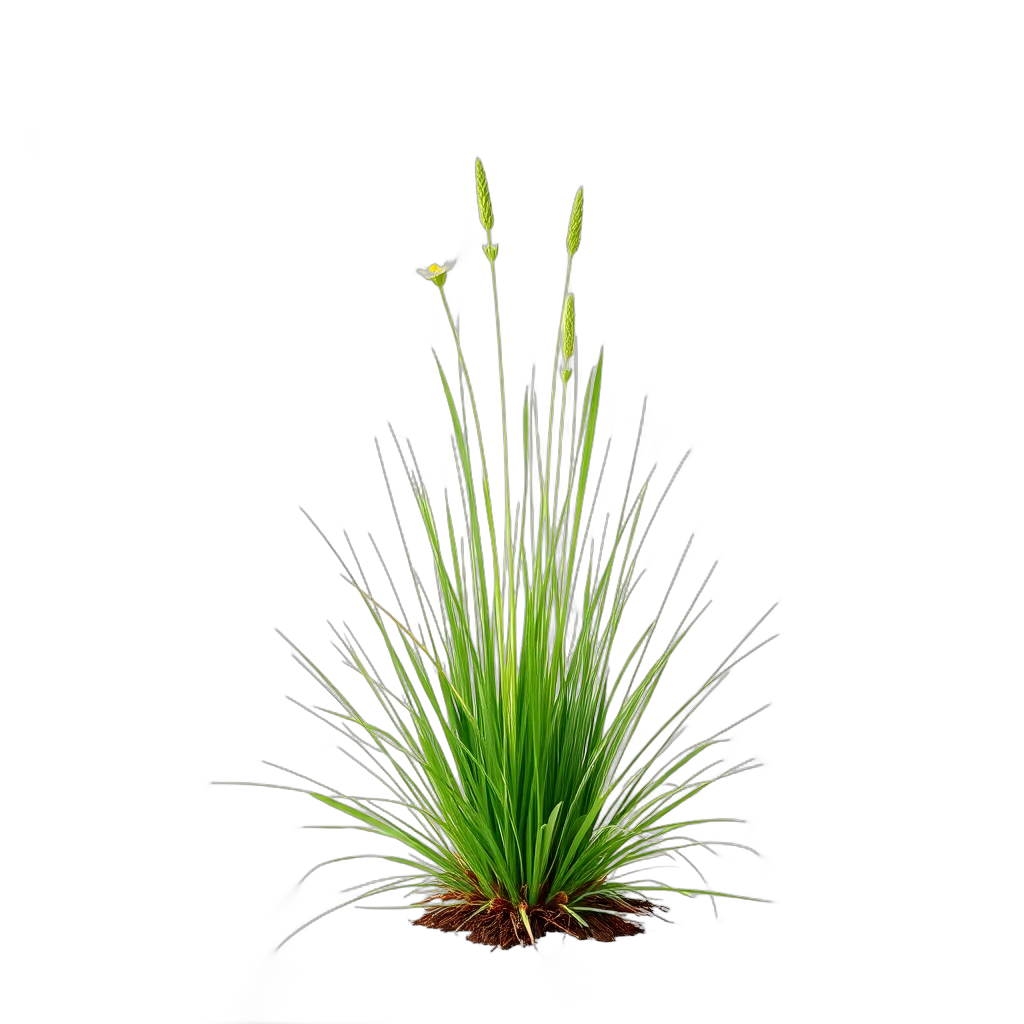
California Brome
Bromus carinatus
low-growing ground cover, blooms in spring. Yellow fall color.
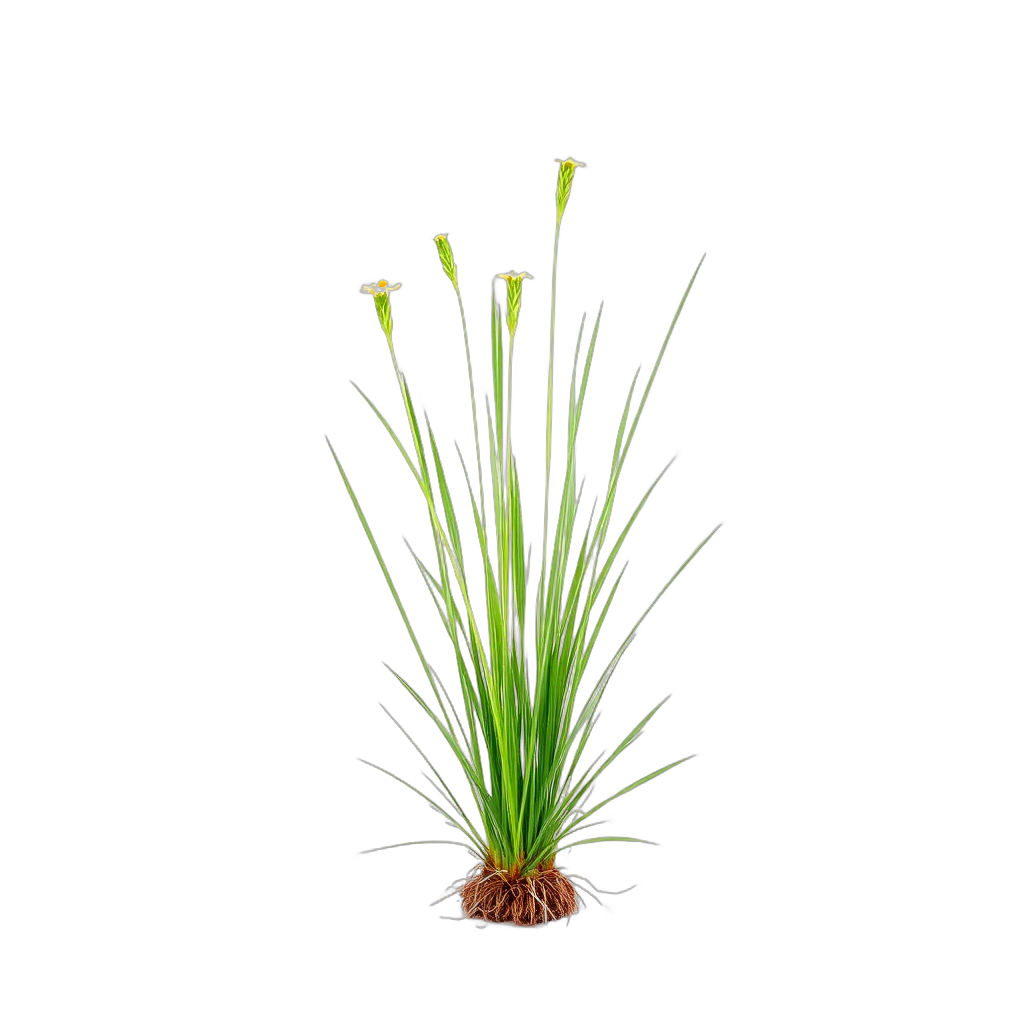
California Melic
Melica californica
low-growing ground cover, blooms in spring.
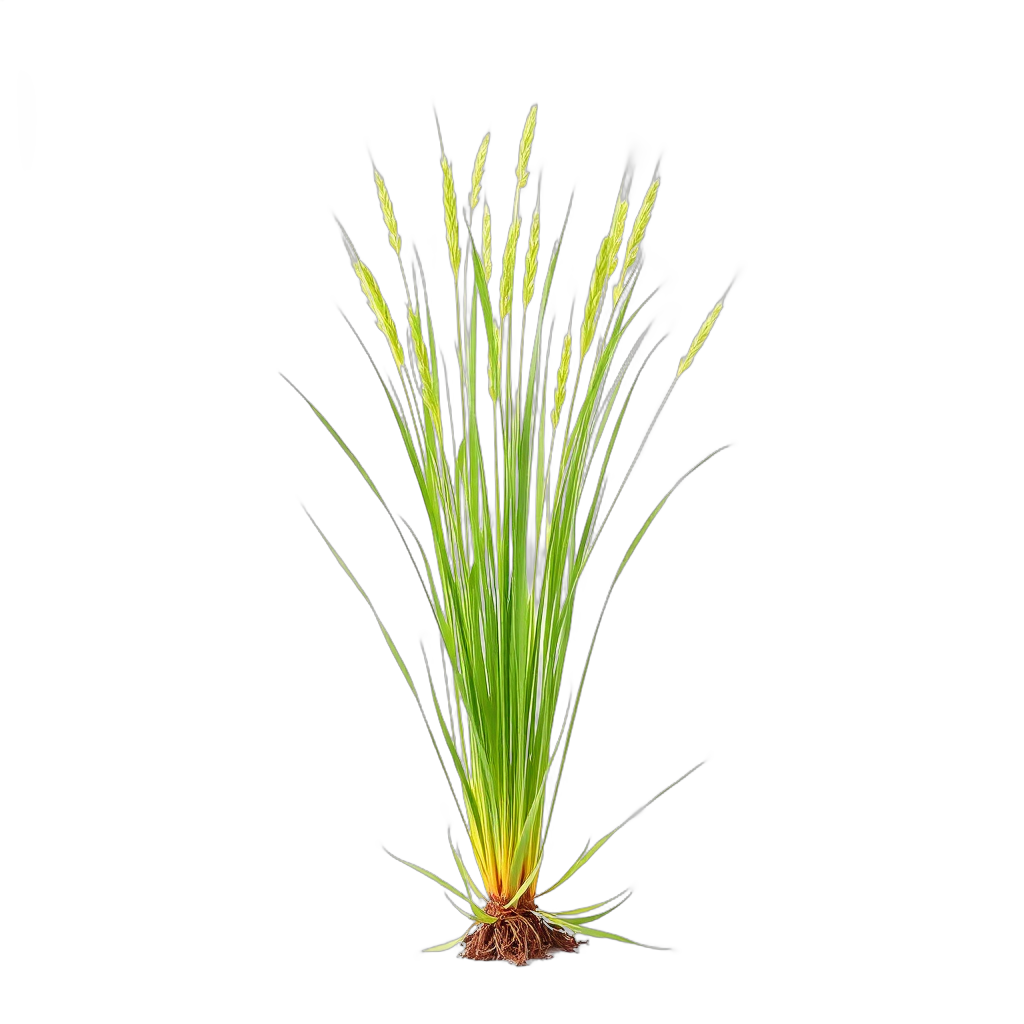
California Oatgrass
Danthonia californica
low-growing ground cover, blooms in spring. Yellow fall color.
Featured Flowers & Perennials for Cottage/English Gardens
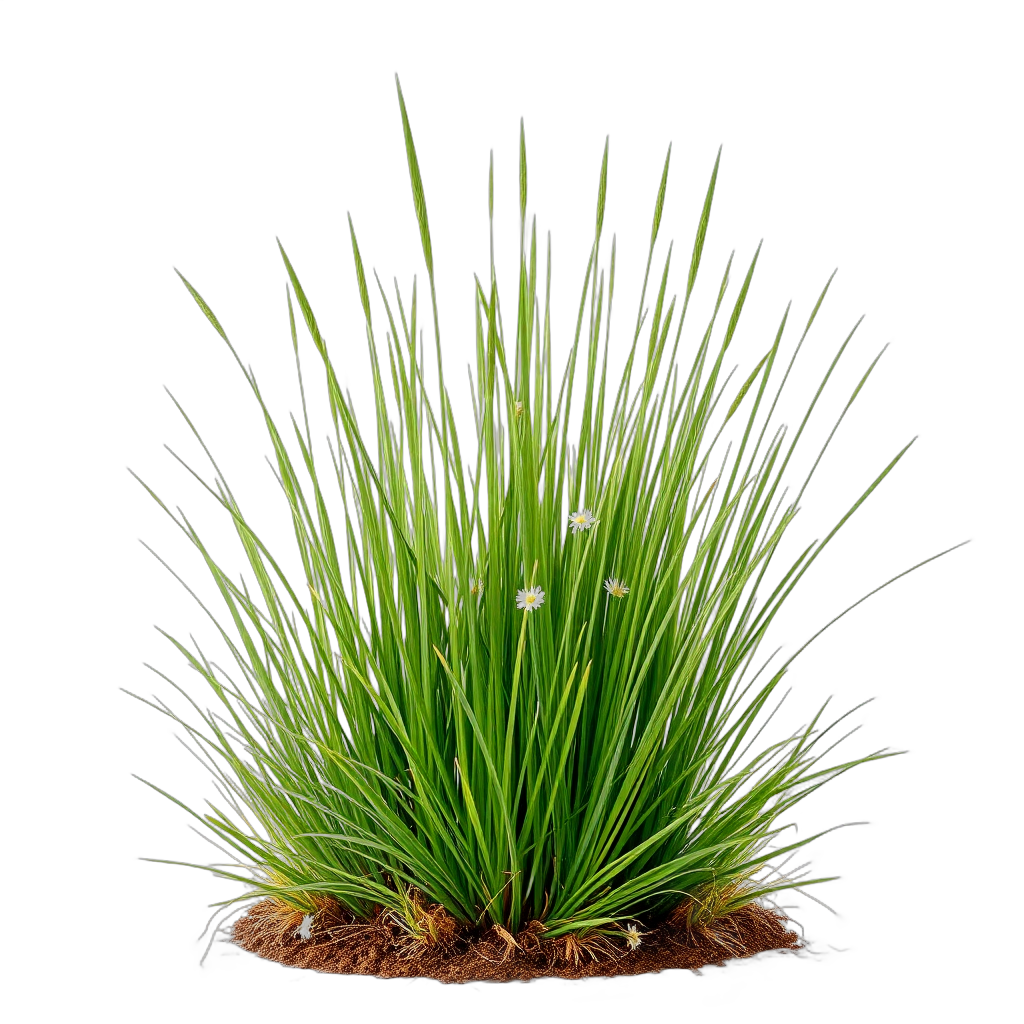
Baltic Rush
Juncus balticus
low-growing ground cover, blooms in summer. Evergreen year-round.
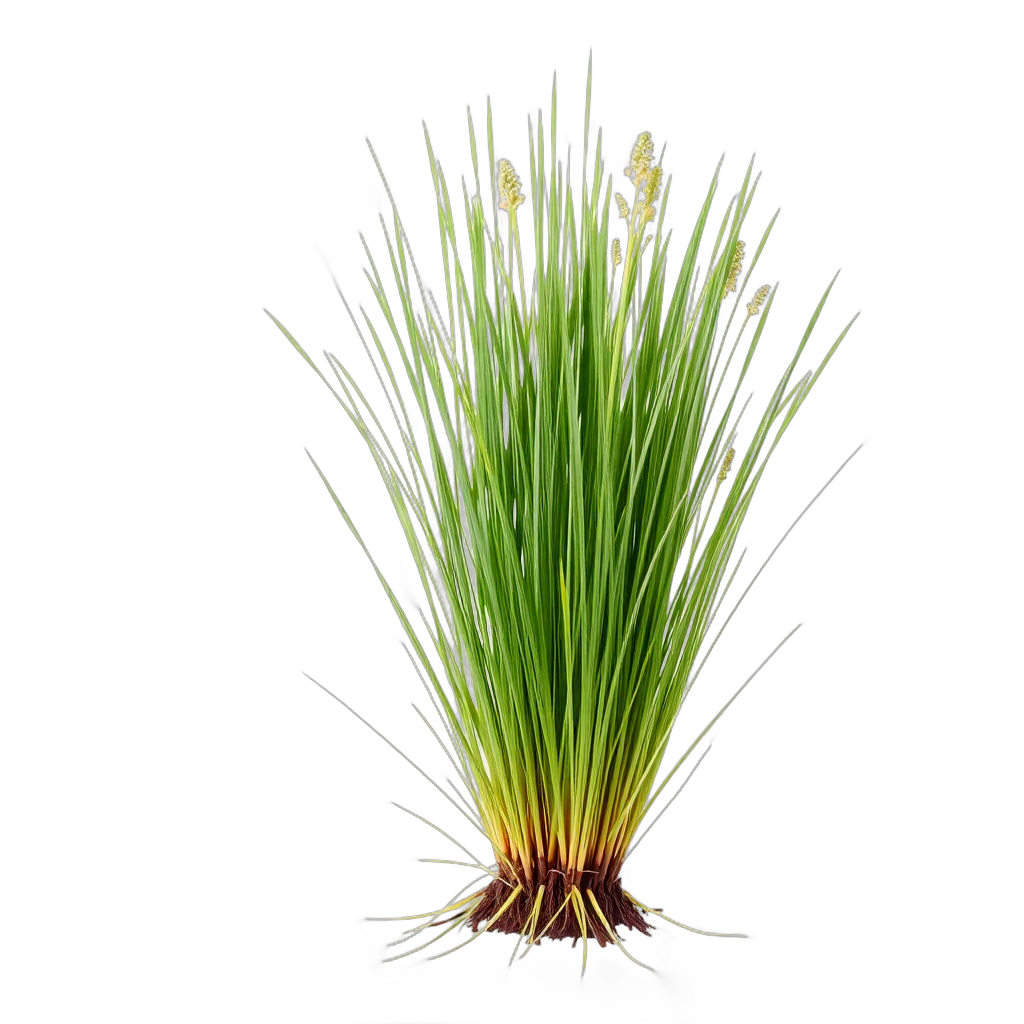
California Gray Rush
Juncus patens
low-growing ground cover, blooms in summer. Evergreen year-round.
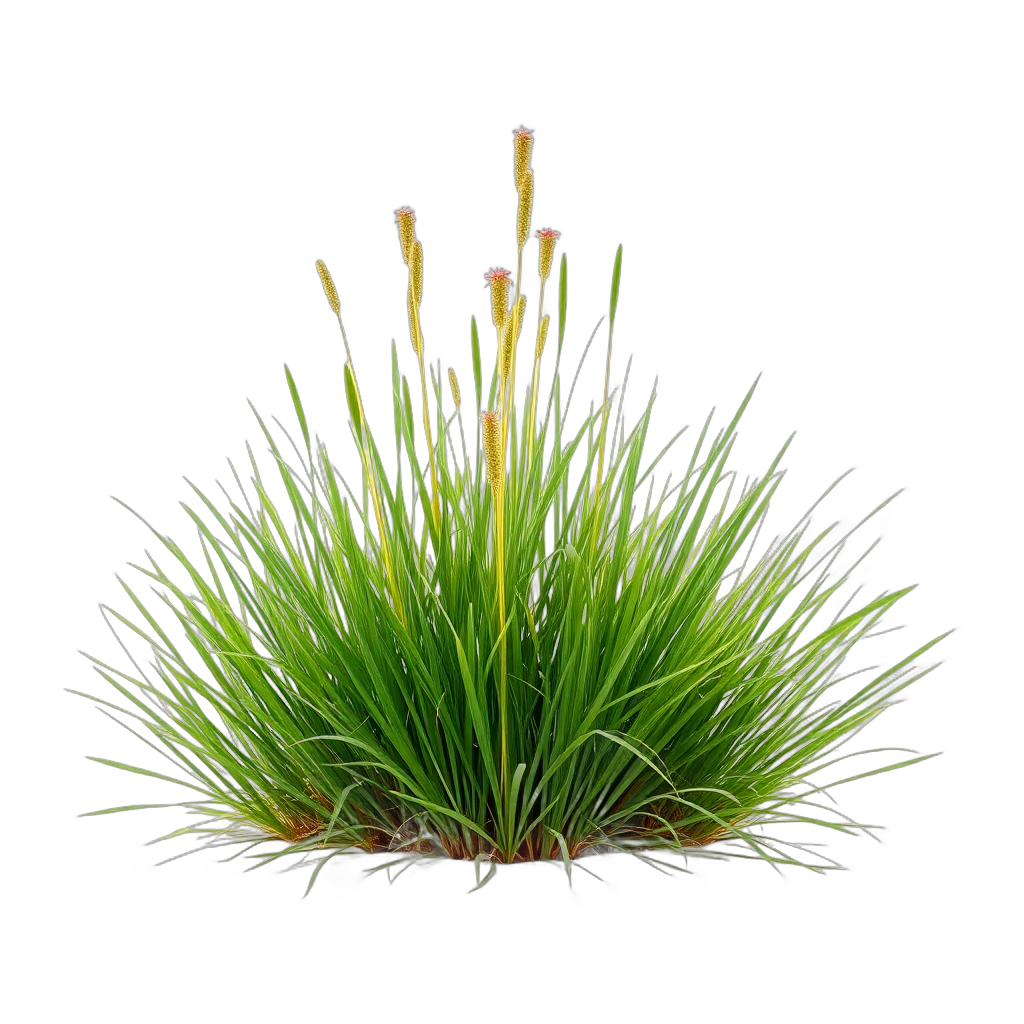
Clustered Field Sedge
Carex praegracilis
low-growing ground cover, blooms in spring.
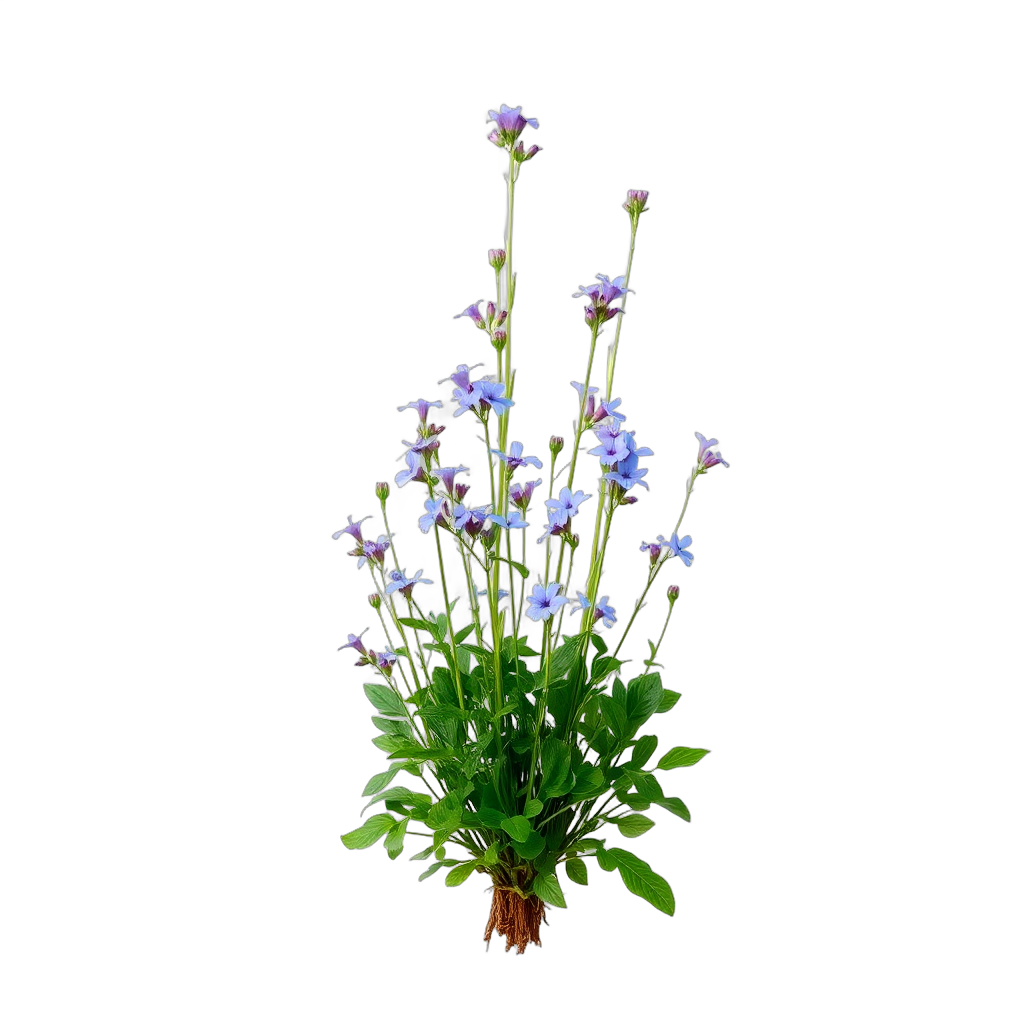
Blue Dicks
Dichelostemma capitatum
low-growing ground cover, blue blooms in spring. Pollinator-friendly.
Zone and sun checks come from our database — confirm with your local nursery before you buy.
Bloom Calendar for Stockton
spring
Clustered Field Sedge, Blue Dicks, Blue-Eyed Grasssummer
Baltic Rush, California Gray Rush, Papyrusfall
Limited bloomswinter
Limited bloomsDesign Tips for Stockton (Zone 9a)
- Design the garden to peak in March through May—Stockton’s spring is genuinely perfect for cottage plants and the window of ideal growing conditions is worth optimizing for, even if summer requires some management strategies
- Build a shade structure for any Stockton cottage seating area—outdoor dining in July without overhead shade is not comfortable at 100°F, and a pergola or shade sail creates the sheltered cottage garden room that makes the space usable 10 months of the year
- Choose drought-tolerant roses over traditional hybrid teas—Knock Out roses, David Austin varieties selected for heat tolerance, and Cecile Brunner climbers deliver full cottage rose character at 40–60% of the water a traditional hybrid tea border requires
- Use decomposed granite paths throughout the cottage garden rather than lawn panels—DG provides the warm California aesthetic, drains well, requires no mowing, and works beautifully with cottage planting textures in a way that concrete or pavers cannot match
- Plant star jasmine on any fence, arbor, or pergola—it covers structure rapidly in Stockton’s warm climate, releases extraordinary fragrance from April through June, and tolerates the summer heat that kills many other climbing plants
- Apply 3 inches of organic mulch to all cottage borders in May before heat season arrives—this single step dramatically reduces summer irrigation needs, maintains soil temperature, and reduces weeding by suppressing weed germination through the dry summer months
Where to Source Plants in Stockton
Skip the big-box stores. These independent Stockton nurseries specialize in the plants that make cottage/english gardens thrive in Zone 9a.
Green Acres Nursery & Supply
Stockton (multiple locations)
Sacramento Valley’s leading independent nursery with outstanding cottage roses, California native plants, and drought-tolerant perennials for Central Valley gardens
Orchard Nursery
Lafayette (Bay Area)
Premier California cottage garden destination with David Austin roses, English lavender, and specialty cottage perennials shipped throughout California
Lowe’s Garden Center
Stockton
Comprehensive cottage plants, roses, lavender, and hardscape materials at consistent Central Valley pricing
Home Depot Garden Center
Stockton
Broad selection of cottage annuals, perennials, and installation materials including DG, edging, and irrigation supplies
Holt Nursery
Holt / East Stockton
Local family nursery serving the Stockton area with Central Valley-adapted cottage plants, roses, and perennial selections
Cottage/English Landscaping Costs in Stockton
| Project Scope | Estimated Cost |
|---|---|
| Cottage front entry with DG path, rose arbor, and drought-tolerant perennial borders | $8,000 – $20,000 |
| California wildflower native cottage garden from lawn | $7,000 – $18,000 |
| Covered pergola patio with cottage borders and fountain | $18,000 – $42,000 |
| Formal rose garden with boxwood edging and central fountain | $20,000 – $50,000 |
| Drip irrigation installation for cottage garden beds | $2,500 – $6,000 |
| Annual cottage garden maintenance (mulching, pruning, replanting) | $1,200 – $3,000/year |
| AI visualization with ProScapeAI | Free to start |
Estimates based on Stockton, CA-area contractor rates as of 2026. Actual costs vary by site conditions, materials, and contractor.
Stockton Climate & Growing Zone
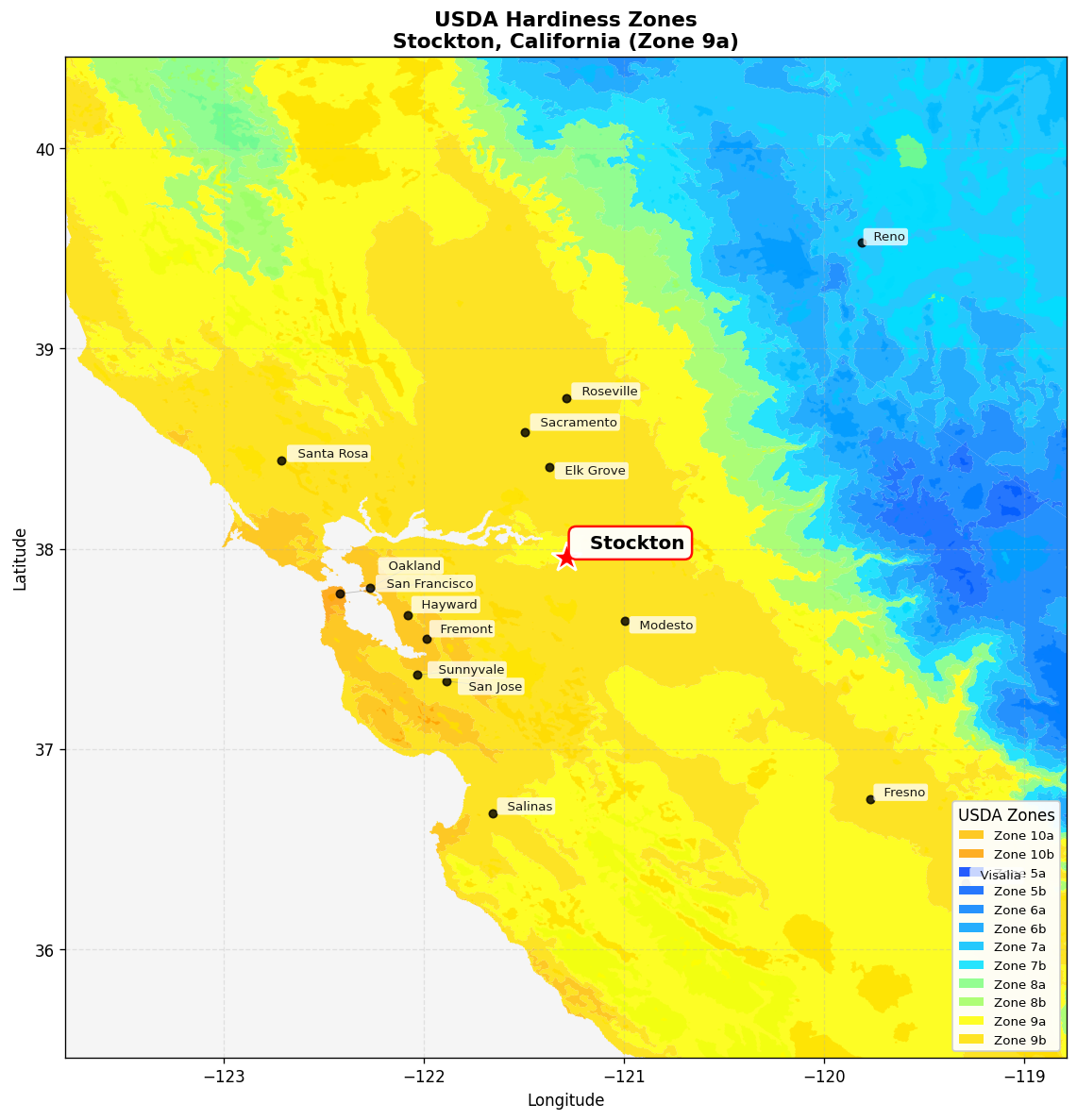
USDA Zone 9a
Hardiness zone for Stockton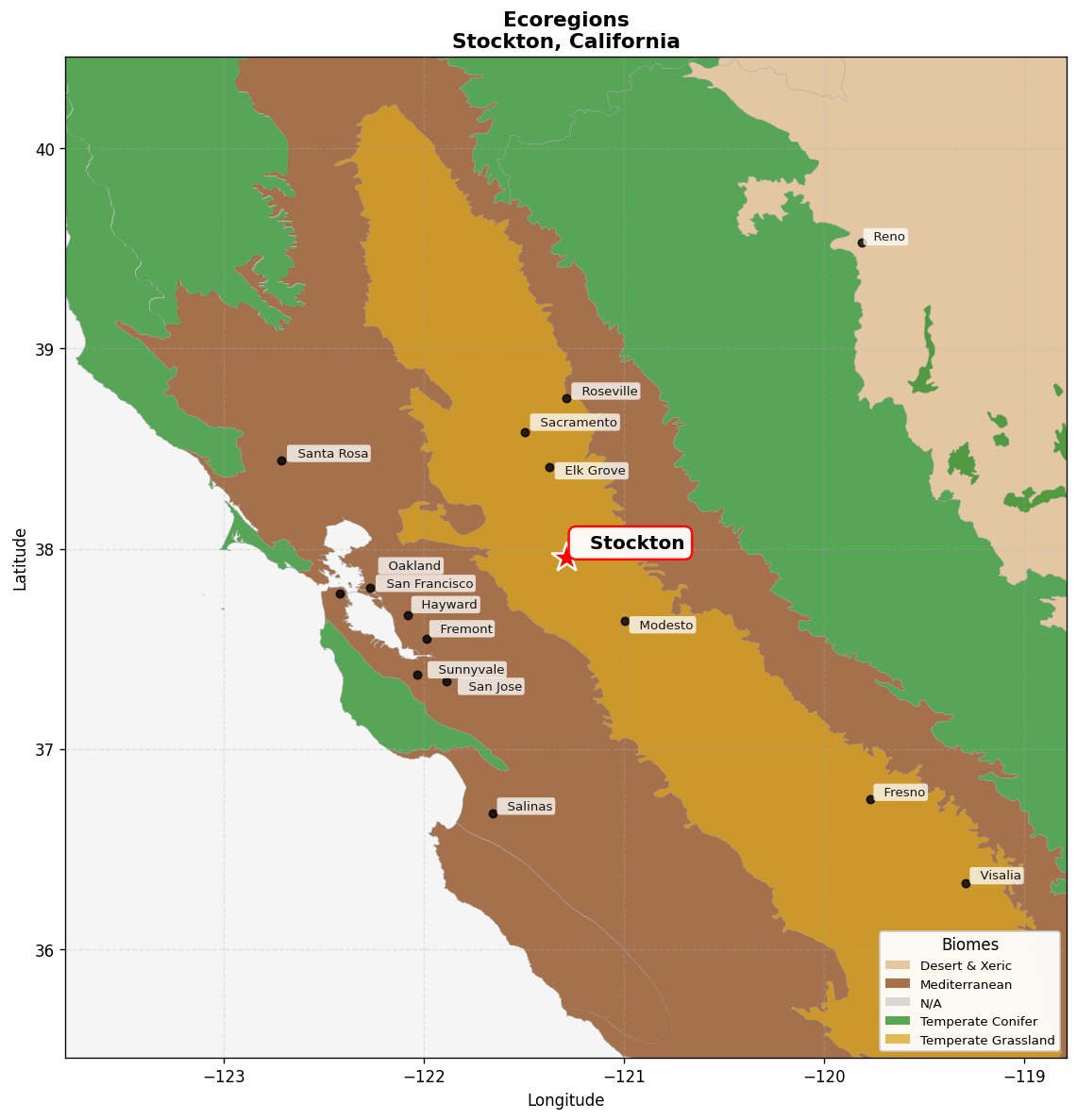
California Central Valley grasslands
Native ecoregionFrequently Asked Questions
What cottage plants are most drought-tolerant for Stockton’s hot summers?
Stockton’s 100°F summer heat and 14-inch annual rainfall require cottage plants with genuine heat and drought tolerance. Top performers: English lavender (Lavandula angustifolia, blooms May–July, extremely drought-tolerant), catmint (Nepeta spp., blooms spring through fall with deadheading, needs minimal water), salvia (multiple species, blooms throughout the warm season on little water), agapanthus (blooms June–August, very drought-tolerant once established), star jasmine (fragrant, fast-growing vine tolerating summer heat), Santa Barbara daisy (Erigeron karvinskianus, blooms year-round on very little water), and California fuchsia (Epilobium canum, red flowers in fall when little else blooms). All tolerate Stockton’s summer heat with drip irrigation only, no overhead watering required.
What roses perform best in Stockton’s Central Valley climate?
The Central Valley is actually outstanding rose country—mild winters, low humidity, and the long spring create ideal conditions. Best performers: Knock Out series roses (disease-resistant, extremely heat-tolerant, bloom continuously March–December with minimal water), David Austin English roses (many varieties perform well in the Valley with afternoon shade and drip irrigation), 'Cecile Brunner' (climbing, heat-tolerant, prolific spring bloom), 'Iceberg' floribunda (classic white, extremely vigorous in Zone 9), and 'New Dawn' climber (once-blooming June spectacular). Avoid hybrid teas without afternoon shade in the Valley—full afternoon sun at 105°F fries blooms. East or north-facing cottage rose gardens receive morning sun only, which is ideal for keeping bloom quality high through summer.
How do I cottage garden through Stockton’s summer heat?
Summer heat management is the central challenge of Stockton cottage gardening. Strategic approaches: create shade with pergolas, shade cloth (30–40% cloth over sensitive plants), and overhead tree canopy; shift to summer-dormant plantings (salvias, lavender, and Mediterranean shrubs that look good even in summer heat); replace cool-season annuals with heat-tolerant substitutes (marigolds, zinnias, moss rose/portulaca) in June; apply 3-inch mulch layer in May before heat hits to retain soil moisture; use drip irrigation timed for early morning to minimize evaporation; and focus the cottage garden’s showpiece moment in spring (March–May) when Stockton’s climate is genuinely perfect for traditional cottage plants.
How do California water restrictions affect cottage gardens in Stockton?
San Joaquin County and Stockton Municipal Utilities District have implemented tiered water pricing—use above baseline allocation is priced at 2–3x the baseline rate. For cottage gardens, this makes thoughtful plant selection an economic as well as environmental issue. Practical adaptations: replace lawn with DG paths and cottage planting beds (grass uses far more water than cottage border plants); install drip irrigation over spray—drip delivers water directly to root zones at 70–90% efficiency versus 50–65% for spray; select California-adapted cottage plants (lavender, salvia, agapanthus, native grasses) that perform at 40–60% of the water traditional English cottage plants require; mulch all beds to 3 inches; and design the garden to peak in spring when rainfall provides most moisture naturally.
Can I grow hydrangeas in Stockton’s hot climate?
Yes, with microclimate management. Bigleaf hydrangeas (Hydrangea macrophylla) bloom beautifully in Stockton cottage gardens planted in east-facing locations with morning sun and afternoon shade. West or south-facing full sun will desiccate hydrangeas in July. Practical siting: against an east-facing wall, under a deciduous tree with afternoon shade, or on the north side of the house. Oakleaf hydrangea (H. quercifolia) is significantly more heat-tolerant than bigleaf and handles Stockton summer with more grace. 'Limelight' panicle hydrangea (H. paniculata) is the most heat and drought-tolerant, blooming August–October when other hydrangeas have finished. All need deep regular watering in summer—not compatible with dry cottage garden sections but excellent under regular drip.
How much does a cottage garden installation cost in Stockton?
Stockton landscaping costs are slightly below California’s Bay Area or LA market, reflecting the Central Valley’s more moderate labor and contractor rates. A cottage front entry with DG path, rose arbor, and perennial borders typically costs $8,000–20,000. A covered patio with cottage borders runs $18,000—42,000. A formal rose garden with boxwood-edged beds and fountain ranges $20,000–50,000. A California wildflower native cottage garden conversion costs $7,000–18,000. Annual maintenance for an established Stockton cottage garden (mulching, pruning, dividing, seasonal replanting) runs $1,200–3,000/year. Native and drought-adapted cottage gardens cost significantly less to maintain than traditional water-dependent designs.