4 Modern Landscape Ideas for Suffolk, VA | Low-Care Designs for Zone 8a
Native plants from the Mid-Atlantic US coastal savannas (Zone 8a) — Humid subtropical climate
For a modern garden in Suffolk, VA, a zone 8a city with a humid subtropical climate, start with Muhlenbergia capillaris 'Regal Mist', Pennisetum alopecuroides 'Hameln' and Ilex crenata 'Sky Pencil', the plants this guide's first design is built on.
Why Modern/Minimalist Gardens in Suffolk?
Modern landscaping suits Suffolk because so much of the city is flat, open and sunny. The newer lots in the subdivisions off Nansemond Parkway and in Kings Fork, and the large rural lots around Chuckatuck have simple rooflines and wide setbacks that look right with straight-edged beds, wide pavers and a short plant list repeated in bold blocks. A modern yard here depends on restraint: one grass, one evergreen shrub and one paving material, repeated until the lot reads as calm.
Climate decides the plant list. NOAA's Suffolk Lake Kilby normals for 1991–2020 show January lows averaging 31.1°F, July highs averaging 86.8°F and 51.8 inches of rain a year, spread fairly evenly with the wettest months being July through September. The median last 32°F night is March 27 and the median first is November 15, and about nine winters in ten bring a 20°F night. That mix suits ornamental grasses that look good from August to February: Muhlenbergia capillaris 'Regal Mist', Pennisetum alopecuroides 'Hameln', Calamagrostis × acutiflora 'Karl Foerster' and Panicum virgatum 'Shenandoah'. Mediterranean favorites like Lavandula angustifolia 'Munstead' and Agave parryi rot in this much summer rain, so use Hesperaloe parviflora 'Brakelights' and Yucca filamentosa 'Color Guard' for the spiky, architectural look in a raised, gravel-mulched bed.
Suffolk sits on the Coastal Plain, so soil is mostly sandy loam and loam over clay, acidic around pH 5.0–6.0, with a seasonal high water table on the flat ground. Drainage is the main design problem. Raised beds of 6–8 inches, gravel mulch and permeable paving keep roots out of winter water and let rain soak in instead of running to the street. Evergreen structure comes from plants that handle wet soil and humidity: Ilex crenata 'Sky Pencil', Distylium 'Vintage Jade', Loropetalum chinense 'Ruby' and Magnolia grandiflora 'Little Gem'. A soil test through Virginia Cooperative Extension shows what lime or amendment a bed needs.
Rules vary by property. Suffolk has a Chesapeake Bay Preservation Area overlay, and a Historic Landmarks Commission reviews exterior changes in the historic districts, so large patios, clearing near tidal water or wetlands, and fences or walls in a historic district should be confirmed with the City of Suffolk before work starts. Permeable pavers and gravel are practical choices on flat Coastal Plain lots anyway, and they keep a modern hardscape easy to approve and easy to drain.
4 Modern/Minimalist Design Ideas for Suffolk
AI-generated image
The Grass Block Front Yard
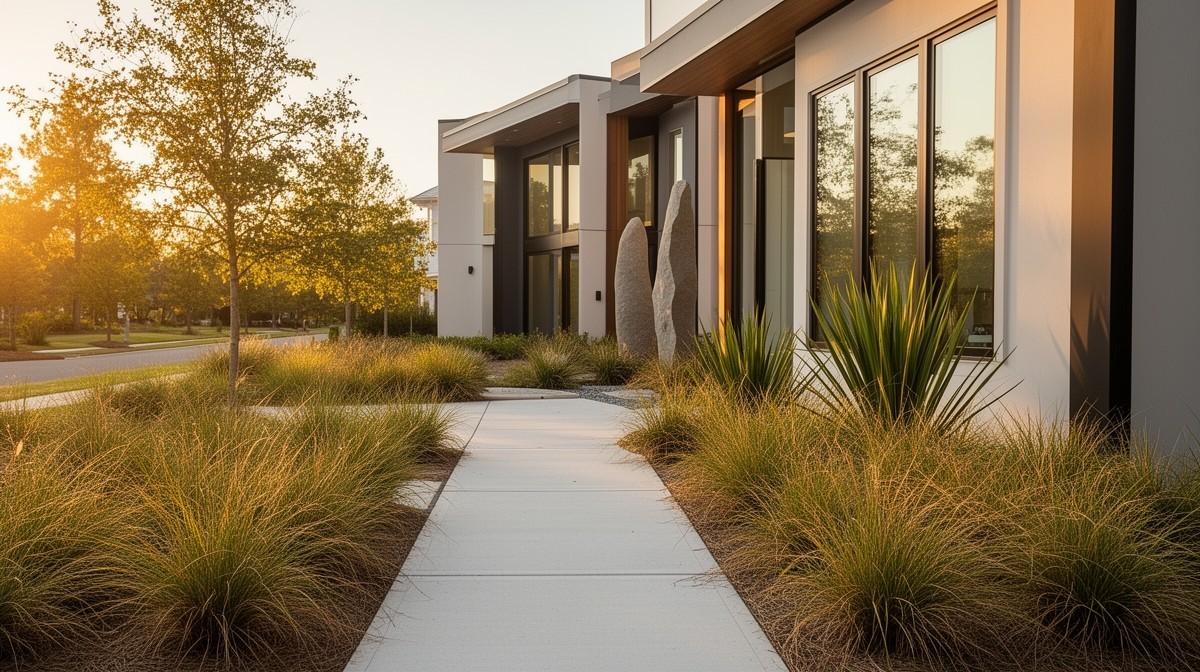
$14–30/sqftA single-story brick ranch in a Kings Fork subdivision gets a front yard reset to three bold blocks: a wide board-formed concrete walk, a gravel bed with sweeps of grass in front of the windows, and a lawn panel kept small. The sun hits the south-facing beds from late morning, which suits the grasses, and the repetition keeps the lot from looking busy. Everything stays low except one vertical accent beside the door.
Try this on your yard: The Grass Block Front YardAI-generated image
The Slatted Fence Entertaining Terrace
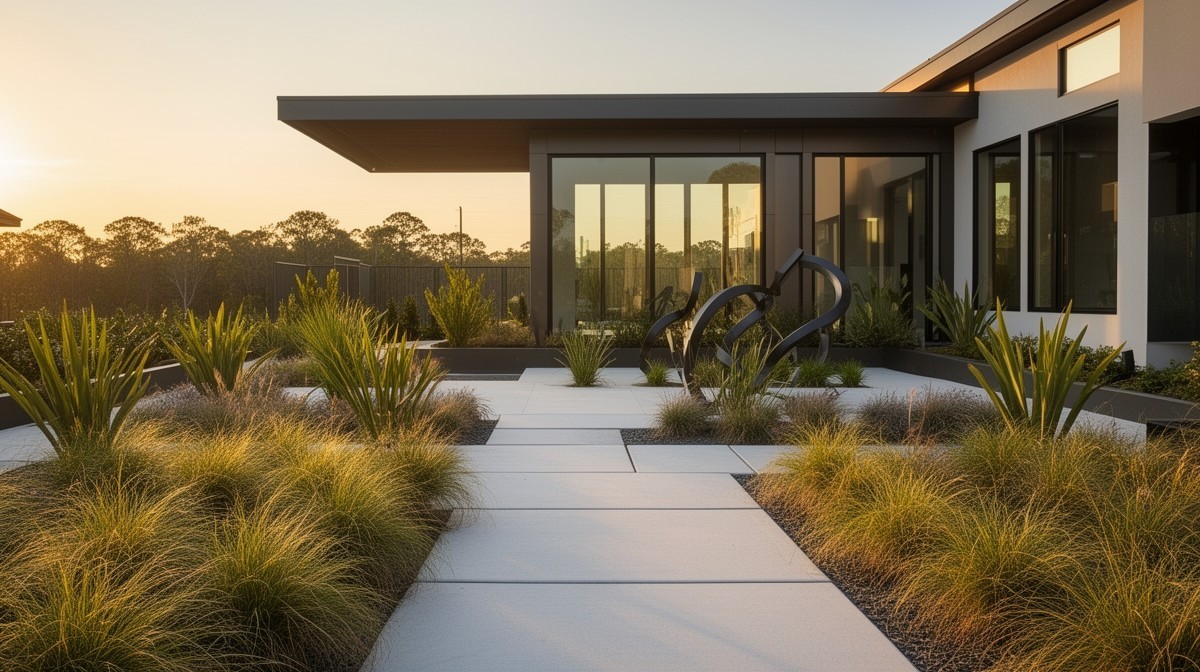
$30–62/sqftA rectangular porcelain-paver terrace sits off the back of a newer two-story, bounded by a horizontal cedar slat fence and a long raised planter. A built-in bench runs under the fence on the shady side, a fire table sits at the center, and grasses and yucca soften the edges. Evening light from the west hits the slat fence and warms the whole space.
Try this on your yard: The Slatted Fence Entertaining TerraceAI-generated image
The Gravel and Corten Water-Smart Garden
$12–28/sqftA long, low house in a rural Chuckatuck lot faces a front garden of crushed gravel, weathered steel edging and a few large boulders, with plants set in loose rows. A rain-garden swale along the drive catches roof runoff and holds switchgrass and native sedges. The gravel stays dry and clean in heavy rain and gives the beds a sharp edge against the lawn.
Try this on your yard: The Gravel and Corten Water-Smart GardenAI-generated image
The Historic Downtown Courtyard
$26–55/sqftA narrow side yard beside a historic house downtown becomes a clean courtyard: a tight grid of bluestone pavers, a single multi-stem tree, and a hedge of evergreen shrubs along a painted brick wall. Morning sun comes in over the roofline and the planting stays green through winter. The materials echo the brick and trim of the house so the new design does not compete with it.
Try this on your yard: The Historic Downtown CourtyardSee how a modern/minimalist garden looks on YOUR property
Upload a photo of your Suffolk yard and visualize your dream garden in seconds.
Try ProScapeAI Free

AI-generated image
Featured Flowers & Perennials for Modern/Minimalist Gardens
Browse all 150 plants for Suffolk
Water Lettuce
Pistia stratiotes
low-growing ground cover, white blooms in summer. Evergreen year-round.

Bowles' Golden Sedge
Carex elata 'Aurea'
low-growing ground cover, blooms in none.

Tussock Sedge
Carex stricta
low-growing ground cover, blooms in spring. Brown fall color.

Umbrella Sedge
Cyperus alternifolius
grows to 4 feet, blooms in summer. Evergreen year-round.
Zone and sun checks come from our database — confirm with your local nursery before you buy.
Bloom Calendar for Suffolk
spring
Tussock Sedge, Austrian Speedwell, Banana Yuccasummer
Water Lettuce, Umbrella Sedge, Alpine Sea Hollyfall
Autumn Snakerootwinter
Limited bloomsDesign Tips for Suffolk (Zone 8a)
- Repeat one grass, one shrub and one paver: Muhlenbergia capillaris 'Regal Mist', Distylium 'Vintage Jade' and a single bluestone or porcelain paver give a calm modern look
- Raise beds 6–8 inches and use gravel mulch: 51.8 inches of rain a year and a high water table on flat Coastal Plain lots rot roots faster than cold does
- Cut warm-season grasses back to 4–6 inches in late February: Pennisetum alopecuroides 'Hameln' and Panicum virgatum 'Shenandoah' look best from August to February and regrow quickly after the median last 32°F night on March 27
- Skip desert plants that rot in wet winters, like Agave parryi, and use Yucca filamentosa 'Color Guard' or Hesperaloe parviflora 'Brakelights' for the same spiky look
- Use permeable surfaces: gravel joints, permeable pavers and a rain-garden swale suit a Chesapeake Bay Preservation Area city and drain better than solid concrete
- Give lawn the smallest footprint you can and use Liriope muscari 'Big Blue' and Ophiopogon japonicus 'Nana' for edges: July highs average 86.8°F and lawn needs the most summer work
- Soil here is acidic (around pH 5.0–6.0): choose Loropetalum chinense 'Ruby', Ilex crenata 'Sky Pencil' and Magnolia grandiflora 'Little Gem', and test soil through Virginia Cooperative Extension before adding lime
Where to Source Plants in Suffolk
Skip the big-box stores. These independent Suffolk nurseries specialize in the plants that make modern/minimalist gardens thrive in Zone 8a.
Southern Branch Nursery
Chesapeake (Benefit Road), next to Suffolk
Native plant grower with an on-site nursery open to the public and design and installation services; good source for native grasses and sedges
McDonald Garden Center
Virginia Beach (Independence Boulevard)
Independent Hampton Roads garden center with shrubs, perennials, grasses and landscape design services
Modern/Minimalist Landscaping Cost Ranges
| Project Scope | Estimated Cost |
|---|---|
| Concrete patio, broom finish (200 sqft) | $2,100–$2,500 |
| Low-voltage landscape lighting (6 fixtures) | $1,200–$2,000 |
| Composite decking boards, surface only on existing framing (200 sqft) | $4,700–$5,800 |
| AI visualization (ProScapeAI) | Free to start |
National average installed ranges for 2026 from our landscaping price list (Homewyse and other published sources). Prices in Suffolk, VA vary with site, materials and contractor, so get two or three local quotes.
Suffolk Climate & Growing Zone
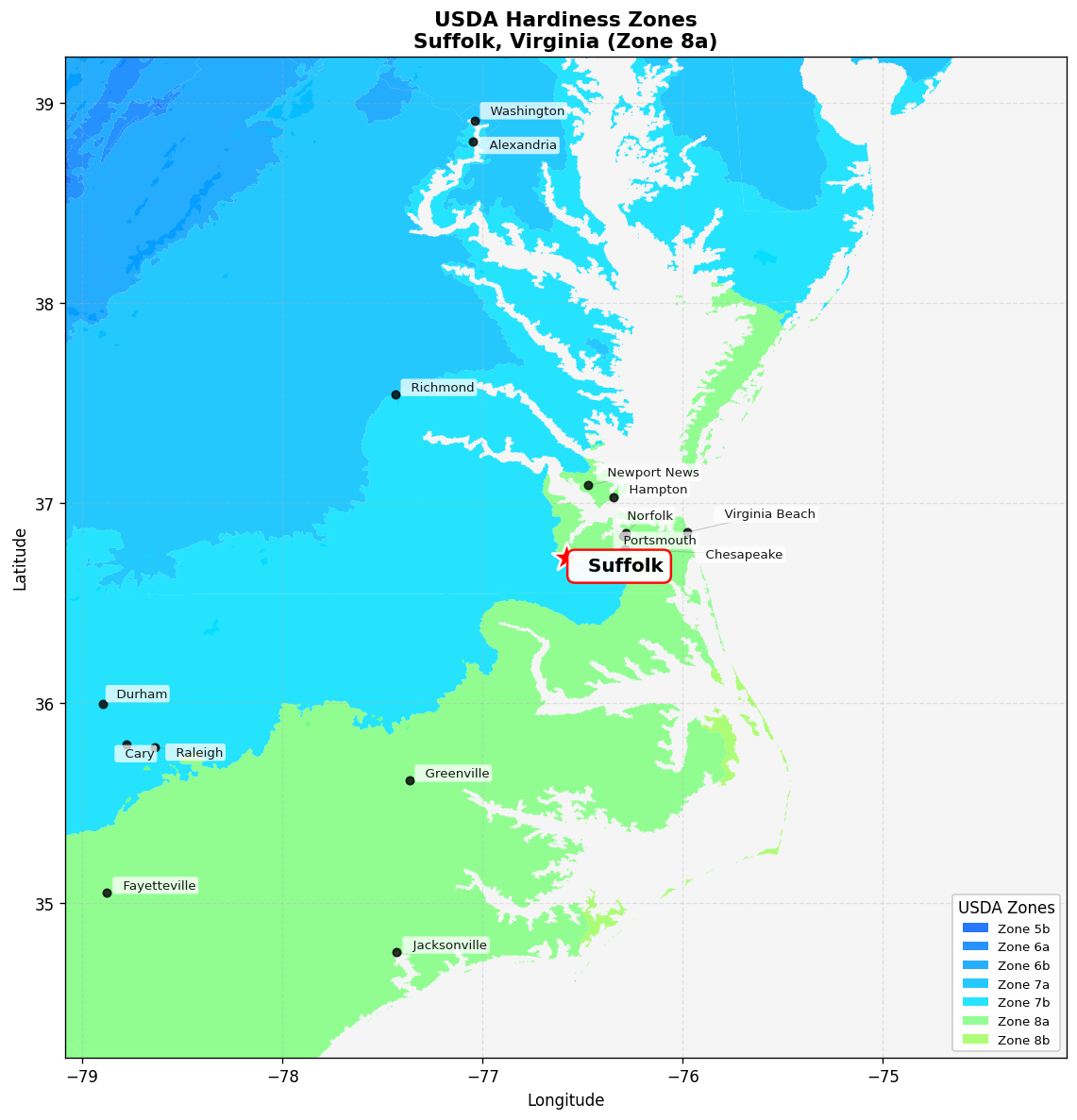
USDA Zone 8a
Hardiness zone for Suffolk
Mid-Atlantic US coastal savannas
Native ecoregionFrequently Asked Questions
How much does modern landscaping cost in Suffolk, VA?
Planting a bed of Muhlenbergia capillaris 'Regal Mist' and Calamagrostis × acutiflora 'Karl Foerster' yourself in one-gallon sizes keeps plant costs low. Prices vary with site, size and finishes, so get two or three local quotes.
Is a modern garden low maintenance in Suffolk's climate?
It can be, if you choose the right plants. Grasses like Pennisetum alopecuroides 'Hameln' and Panicum virgatum 'Shenandoah' need one hard cut-back in late February and little else, but weeds can move fast in 51.8 inches of rain a year, so gravel over landscape fabric and a good edge help. Lawn takes the most work in a Suffolk summer, so keep lawn panels small and use ground covers like Liriope muscari 'Big Blue' or Ophiopogon japonicus 'Nana' elsewhere.
What is the best time to plant in Suffolk?
Mid-October to mid-December and March to April are the best windows. NOAA's Suffolk Lake Kilby normals give a median last 32°F night of March 27 and a median first of November 15, with about 56 nights a year at or below freezing. Cool-season planting lets roots establish before July highs average 86.8°F. Warm-season grasses like Muhlenbergia capillaris 'Regal Mist' establish well when planted in April or May.
Do I need a permit for a patio, wall or fence in Suffolk?
Possibly. Suffolk has a Chesapeake Bay Preservation Area overlay that can affect clearing and new hard surface near tidal water and wetlands, and a Historic Landmarks Commission that reviews exterior changes, including fences, in its historic districts. Zoning also covers fence height and placement. Confirm the review path and permit requirements with the City of Suffolk before you build.
What plants survive Suffolk's heat and wet winters?
Choose plants that tolerate humidity and wet soil: Muhlenbergia capillaris 'Regal Mist', Panicum virgatum 'Shenandoah', Distylium 'Vintage Jade', Ilex crenata 'Sky Pencil', Loropetalum chinense 'Ruby' and Yucca filamentosa 'Color Guard'. Skip true desert plants like Agave parryi, which rot in wet winter soil, and Lavandula angustifolia 'Munstead', which tends to fail in the second wet summer. Lows average 31.1°F in January, and a 20°F night happens in about nine winters out of ten, so pick Zone 8a-hardy plants.
How do I handle drainage on a flat Suffolk lot?
Use raised beds of 6–8 inches, gravel mulch and permeable pavers, and shape a shallow swale or rain garden for roof runoff. Plants like Panicum virgatum 'Shenandoah' and Carex pensylvanica handle both wet and dry spells. A soil test through Virginia Cooperative Extension shows how acidic your soil is, and drainage problems are usually clearer after a heavy September rain than in dry months.