4 English Cottage Garden Ideas for Suffolk, VA | Zone 8a
Native plants from the Mid-Atlantic US coastal savannas (Zone 8a) — Humid subtropical climate
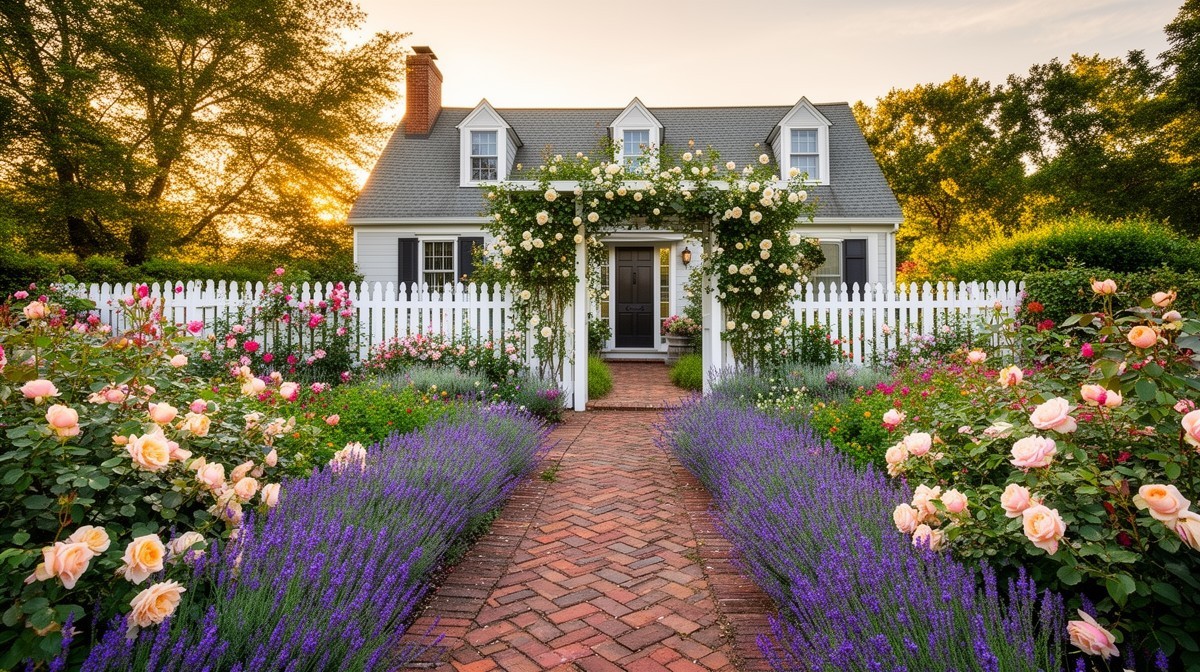
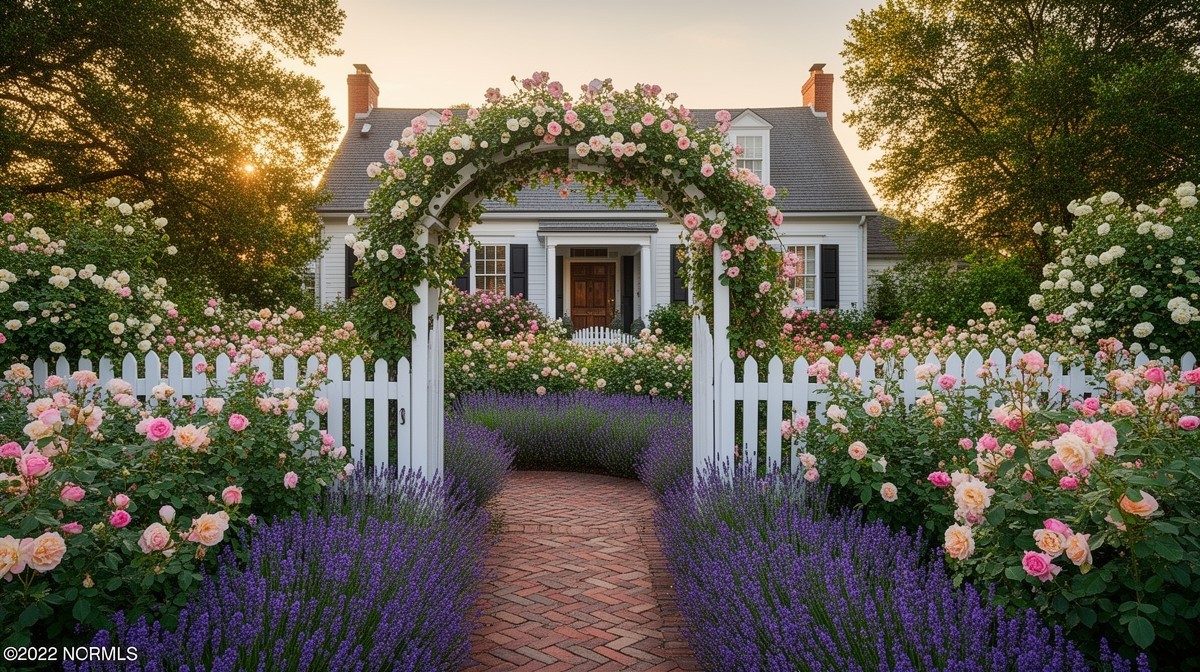
For a cottage garden in Suffolk, VA, a zone 8a city with a humid subtropical climate, start with Rosa 'New Dawn' on the arch, Lavandula × intermedia 'Phenomenal' and Nepeta × faassenii 'Walker's Low', the plants this guide's first design is built on.
Why Cottage/English Gardens in Suffolk?
Suffolk is the largest city in Virginia by land area. The Victorian and Queen Anne houses of historic downtown Suffolk, the farmhouses around Whaleyville, Holland and Chuckatuck, and the newer lots along the Nansemond River all have front yards deep enough for a proper three-layer border. A white picket fence, a rose over the gate and a brick or gravel path read well against painted clapboard and deep porches, and a half-acre lot has room to try it at full size.
The numbers from NOAA's Suffolk Lake Kilby station (1991–2020 normals) set the plant list. January lows average 31.1°F, July highs average 86.8°F, and the city takes 51.8 inches of rain a year, with 5.7–5.8 inches in each of July, August and September. The median last 32°F night is March 27 and the median first is November 15. A 20°F night shows up in about nine winters out of ten, so Zone 8a is fair, but the summers are the problem for English plants. Delphinium elatum and Lavandula angustifolia 'Munstead' usually give out after one or two wet summers. The substitutes that hold the picture are Lavandula × intermedia 'Phenomenal', Salvia nemorosa 'Caradonna', Nepeta × faassenii 'Walker's Low', Phlox paniculata 'David' and roses with real blackspot resistance: Rosa 'New Dawn', Rosa 'Iceberg' and Rosa 'Carefree Beauty'.
Suffolk sits on the Coastal Plain, so soil is mostly sandy loam and loam over a clay subsoil, with a seasonal high water table on the flat ground near the Dismal Swamp and the creeks. Native soil is typically acidic, around 5.0–6.0, which suits Hydrangea arborescens 'Annabelle', Itea virginica 'Henry's Garnet' and Camellia sasanqua 'Yuletide' but is sour for roses and lavender. A soil test through Virginia Cooperative Extension tells you how much lime to work in. Raise the rose and lavender beds 6–8 inches so crowns stay out of winter water, and mulch lavender with pea gravel instead of hardwood.
Suffolk has a Chesapeake Bay Preservation Area overlay, which affects clearing and new hard surface near tidal water and wetlands, and a Historic Landmarks Commission that reviews exterior changes, fences included, in the historic districts. Permeable surfaces such as brick on sand, gravel and dry-laid stone suit a cottage garden anyway and drain better on this flat ground. Confirm the fence and permit path with the City of Suffolk before building.
4 Cottage/English Design Ideas for Suffolk
AI-generated image
The Historic Downtown Picket Fence Border
$20–42/sqftA knee-high white picket fence runs along the sidewalk of a Queen Anne cottage with a wraparound porch, with a narrow brick walk leading to a gate under a small rose arch. Behind the pickets, a border three plants deep catches full afternoon sun on the south side: lavender and catmint at the edge, roses and salvia in the middle, tall phlox against the porch lattice. The porch shades the house wall, so the border bloom reads from the street from May through October.
Try this on your yard: The Historic Downtown Picket Fence BorderAI-generated image
The Farmhouse Rose and Boxwood Front Yard
$16–34/sqftA white farmhouse with a metal roof and a deep front porch sits behind a wide lawn panel framed by shrub roses and low clipped hedges. A gravel drive curves past a pair of crape myrtles and a bed of black-eyed Susans and coneflowers that carries color through July and August heat. The border beds sit in full sun with a bit of morning shade from the porch, which keeps rose leaves dry long enough to avoid most blackspot.
Try this on your yard: The Farmhouse Rose and Boxwood Front YardAI-generated image
The Newer Subdivision Back Garden Room
$24–48/sqftA fenced rear yard behind a two-story brick house in a newer subdivision becomes a cottage room: a small round bluestone patio with a bistro table, a white arbor at the back gate, and borders around the whole fence line. Hydrangea and camellia fill the shaded east side, while the sunny west side holds lavender, roses and salvias. The fence cuts the wind, keeps deer and dogs out, and gives the climbing rose a place to run.
Try this on your yard: The Newer Subdivision Back Garden RoomAI-generated image
The Creekside Cottage Meadow
$12–28/sqftA long gravel path winds through a loose meadow-style planting on a waterside lot along the Nansemond River or a creek cove, with a small gray-stained shed and a wood bench at the end. The beds mix cottage flowers with native grasses that handle wet feet and salt breeze: tall switchgrass behind, blue-gray little bluestem in the middle, and coneflowers and bee balm threaded through. It looks loose in summer and holds its structure through winter.
Try this on your yard: The Creekside Cottage MeadowSee how a cottage/english garden looks on YOUR property
Upload a photo of your Suffolk yard and visualize your dream garden in seconds.
Try ProScapeAI Free

AI-generated image
Featured Flowers & Perennials for Cottage/English Gardens
Browse all 150 plants for Suffolk
Water Lettuce
Pistia stratiotes
low-growing ground cover, white blooms in summer. Evergreen year-round.

Bowles' Golden Sedge
Carex elata 'Aurea'
low-growing ground cover, blooms in none.

Tussock Sedge
Carex stricta
low-growing ground cover, blooms in spring. Brown fall color.

Umbrella Sedge
Cyperus alternifolius
grows to 4 feet, blooms in summer. Evergreen year-round.
Zone and sun checks come from our database — confirm with your local nursery before you buy.
Bloom Calendar for Suffolk
spring
Tussock Sedge, Austrian Speedwell, Banana Yuccasummer
Water Lettuce, Umbrella Sedge, Alpine Sea Hollyfall
Autumn Snakerootwinter
Limited bloomsDesign Tips for Suffolk (Zone 8a)
- Test the soil before planting: Suffolk's Coastal Plain soil usually runs acidic (around pH 5.0–6.0) and Lavandula × intermedia 'Phenomenal' wants 6.5–7.0, so a Virginia Cooperative Extension soil test plus pelletized lime is the cheapest fix of the season
- Raise every rose and lavender bed 6–8 inches: with 51.8 inches of rain a year and a high water table on the flat ground, wet crowns kill more plants here than cold does
- Put roses where they get morning sun and keep spray heads off the leaves: Rosa 'New Dawn', 'Iceberg' and 'Carefree Beauty' stay cleaner when foliage dries by 9 a.m.
- Plan the July–September bloom as well as the May rose peak: Echinacea purpurea 'PowWow Wild Berry', Rudbeckia fulgida 'Goldsturm', Agastache 'Blue Fortune' and Lagerstroemia 'Natchez' carry the border through 86.8°F July highs
- Treat delphinium as a spring annual and get vertical spires from Salvia nemorosa 'Caradonna', Veronicastrum virginicum 'Fascination' and Baptisia australis, which hold up through humid summers
- Choose brick on sand, gravel and dry-laid stone over poured concrete: permeable paving suits the cottage look and helps with drainage on flat lots near Chesapeake Bay Preservation Areas
- Use evergreen backbone for winter: Ilex crenata 'Steeds', Camellia sasanqua 'Yuletide' and Magnolia grandiflora 'Little Gem' hold the garden together when the median first frost lands on November 15 and bloom goes quiet
Where to Source Plants in Suffolk
Skip the big-box stores. These independent Suffolk nurseries specialize in the plants that make cottage/english gardens thrive in Zone 8a.
Southern Branch Nursery
Chesapeake (Benefit Road), next to Suffolk
Native plant grower with an on-site nursery open to the public and design and installation services; useful for the meadow and creekside planting palette
McDonald Garden Center
Virginia Beach (Independence Boulevard)
Independent Hampton Roads garden center with perennials, shrubs, annuals and landscape design services
Cottage/English Landscaping Cost Ranges
| Project Scope | Estimated Cost |
|---|---|
| Clay brick walkway on a compacted base (150–250 sqft) | $3,000–$6,500 |
| Dry-laid bluestone patio or seating circle (250–400 sqft) | $6,200–$12,800 |
| Picket fence, 4 ft tall (60 linear ft) | $1,500–$2,400 |
| AI visualization (ProScapeAI) | Free to start |
National average installed ranges for 2026 from our landscaping price list (Homewyse and other published sources). Prices in Suffolk, VA vary with site, materials and contractor, so get two or three local quotes.
Suffolk Climate & Growing Zone
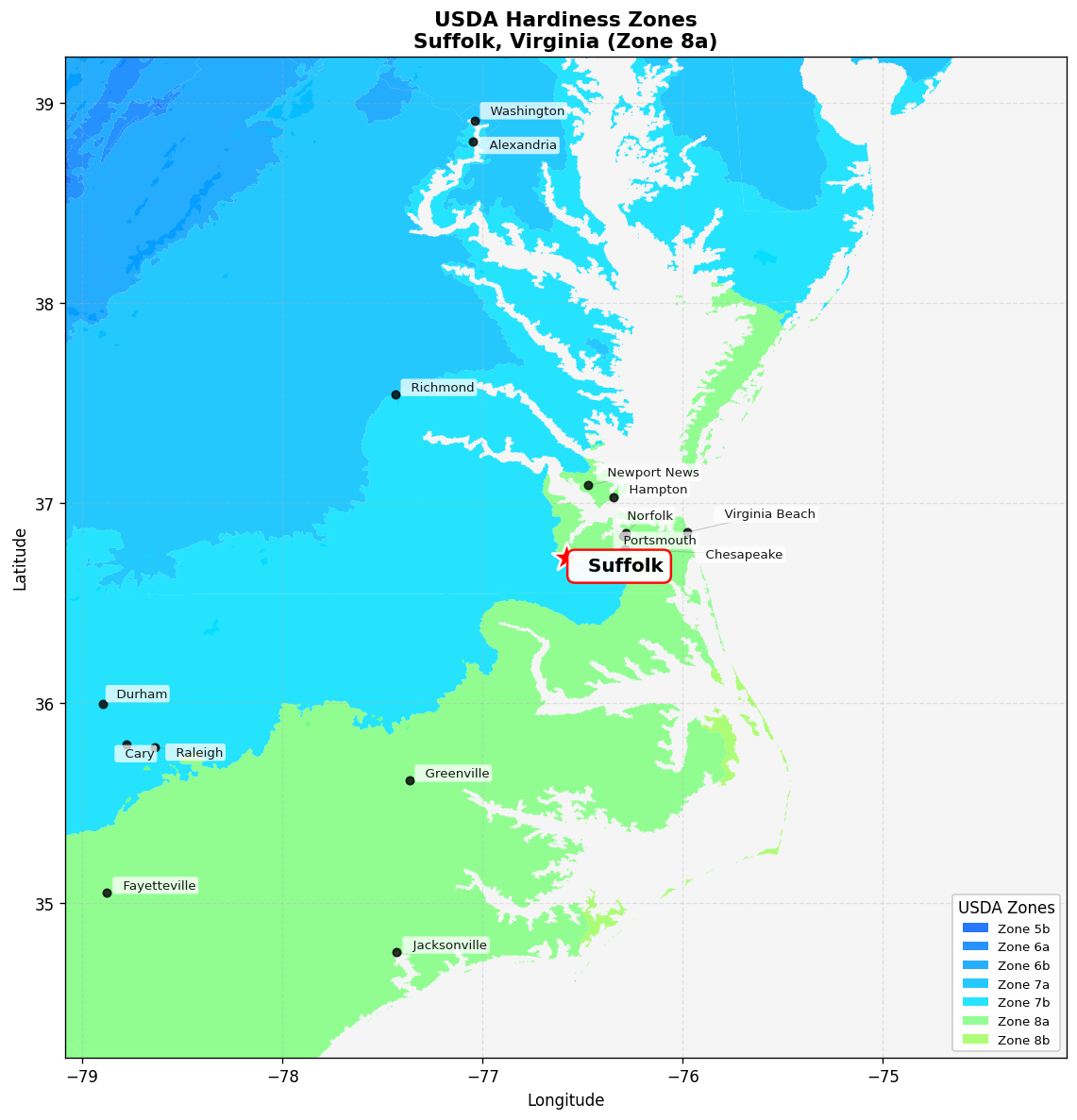
USDA Zone 8a
Hardiness zone for Suffolk
Mid-Atlantic US coastal savannas
Native ecoregionFrequently Asked Questions
How much does a cottage garden cost in Suffolk, VA?
Prices vary with site, size and finishes, so get two or three local quotes.
Which roses survive Suffolk's humidity and blackspot?
Pick disease resistance over catalog romance. Rosa 'New Dawn' is the dependable climber, Rosa 'Iceberg' and Rosa 'Carefree Beauty' carry the shrub layer, and Rosa 'Mutabilis' is a tough old China rose that blooms from April to frost. Hybrid teas tend to defoliate by August in a 52-inch rain year. Give every rose six or more hours of sun with morning exposure, space plants three feet apart for airflow, and water at the base with drip instead of overhead sprinklers.
Can lavender grow in Suffolk?
Yes, with the right variety and bed. Lavandula × intermedia 'Phenomenal' and 'Grosso' are bred for humid summers and often last five to ten years here, while Lavandula angustifolia 'Munstead' and 'Hidcote' tend to rot in the second or third wet August. Build the bed up 6–8 inches, mix in a third coarse grit, mulch with pea gravel, and lime toward pH 6.5–7.0 since native soil is more acidic. Shear a third off right after the June–July bloom.
What is the best time to plant in Suffolk?
Mid-October through mid-December is the best window: the soil is warm, rain returns, and roots grow through a mild winter. March through April is the second window. NOAA's Suffolk Lake Kilby normals give a median last 32°F night of March 27 and a median first of November 15, with about 56 nights a year at or below freezing. Avoid planting in July and August, when highs average 86.8°F and September rain is still heavy. Bare-root roses go in January and February while dormant.
Do I need approval for a fence or patio in Suffolk?
Probably some. Suffolk has a Historic Landmarks Commission that reviews exterior changes, including fences, inside its historic districts, and a Chesapeake Bay Preservation Area overlay that can affect clearing and new hard surface near tidal water and wetlands. Zoning rules also cover fence height and placement. Design the garden first, then confirm the review path and any permit with the City of Suffolk before you build.
What do I do about deer and wet winter soil?
Rural Suffolk neighborhoods around Chuckatuck, Holland and Whaleyville see regular deer pressure, so build the backbone from plants they usually leave alone: Lavandula × intermedia 'Phenomenal', Nepeta × faassenii 'Walker's Low', Salvia nemorosa 'Caradonna', Agastache 'Blue Fortune' and Baptisia australis. For wet winter soil on flat Coastal Plain lots, raise beds 6–8 inches and choose swamp-tolerant plants such as Itea virginica 'Henry's Garnet' and Hibiscus moscheutos 'Kopper King' where water lingers.