English Cottage Garden Design in Syracuse, NY | Zone 5b Ideas
Native plants from the Eastern Great Lakes lowland forests (Zone 5b) — Humid continental (warm summer) climate
Why Cottage/English Gardens in Syracuse?
Syracuse was built for the English cottage garden and mostly doesn't know it. The Tudor Revival and Colonial Revival houses of Sedgwick Farm, the Arts and Crafts bungalows stepping up Strathmore above Onondaga Park, the Victorian foursquares of the Westcott neighborhood and the tight, deep lots of Eastwood all share the one thing a cottage border needs: a textured, human-scaled facade and a short walk from sidewalk to front door. A rose-covered arbor over a picket gate looks like costume jewelry in front of a builder colonial on a half-acre cul-de-sac; in front of a 1915 stucco-and-half-timber near Sedgwick Farm, or a Cape in Eastwood, it reads as restoration. The village cores out east — Fayetteville, Manlius, Cazenovia and Skaneateles — carry the same architectural DNA with deeper setbacks, which is where a full double border with a mown grass path really has room to work.
The climate is the part people get backwards. Syracuse sits in USDA Zone 5b, with winter lows in the -10°F to -15°F range, and it collects roughly 127 inches of snow in an average winter — more than any other large city in the country. That sounds hostile to a romantic border, and it is precisely the opposite: the classic English cottage plants are cool-climate plants that resent heat, and Syracuse gives them exactly the summer they evolved for. Delphinium 'Magic Fountains', Digitalis purpurea 'Camelot Rose', Alchemilla mollis, Paeonia lactiflora 'Sarah Bernhardt', Lupinus 'Gallery Blue' and Astrantia major 'Roma' all sulk in Southern humidity and flourish on our roughly 39 inches of evenly spread rainfall, 60°F July nights and a growing season of about 150 days between a mid-May last frost and an early-October first frost. The snowpack is an asset, not an obstacle — it insulates crowns through the freeze-thaw swings that kill perennials in milder zones. Roses are the one real limit: skip tender hybrid teas and plant the Canadian Explorer and Kordes shrub roses, Rosa 'William Baffin', Rosa 'John Davis', Rosa 'Champlain' and 'New Dawn' on a sheltered south wall, all of which come through a Syracuse February on their own roots with no cones, no burlap and no spring resurrection ritual.
The soil here is a quiet advantage nobody advertises. Syracuse sits on Onondaga limestone, and the glacial till soils across the city — Honeoye and Lima silt loams on the hills, heavier clay down on the Onondaga Lake plain — run neutral to alkaline, commonly pH 7.0 to 7.8. That is the exact soil chemistry Lavandula angustifolia 'Munstead', Nepeta 'Walker's Low', Dianthus 'Firewitch', Clematis 'Jackmanii' and Buxus 'Green Velvet' want, which is why an English palette that struggles on acid soil elsewhere in the Northeast looks effortless here. The trade-off: acid-lovers such as Hydrangea macrophylla will bloom pink no matter what you do, and rhododendrons need a genuinely amended, raised bed. The other soil reality is salt. Onondaga County spreads tens of thousands of tons of road salt every winter, and plow spray reaches 15 to 25 feet back from any treated street, so the front 10 feet of a corner lot on James Street or Erie Boulevard wants Rosa rugosa, Perovskia 'Blue Spire' and Panicum virgatum 'Shenandoah' rather than a lavender edging that will brown out by April.
Water rules are gentler here than almost anywhere — there are no summer watering bans, because Syracuse drinks unfiltered water piped straight from Skaneateles Lake. That privilege comes with watershed responsibilities, and statewide law adds more: New York bans phosphorus lawn fertilizer unless a soil test shows a deficiency or you are establishing a new lawn, prohibits any lawn fertilizer application between December 1 and April 1, and keeps it 20 feet back from any waterway. Meanwhile Onondaga County's Save the Rain program has poured well over $100 million into green infrastructure to keep combined-sewer overflows out of Onondaga Lake, and a deep-rooted cottage border with a gravel-bottomed rain garden at the downspout does exactly what that program is buying — which is a good argument to make to yourself when you are pricing 40 perennials in May.
4 Cottage/English Design Ideas for Syracuse

The Rose Arbor and Picket Gate Front Garden
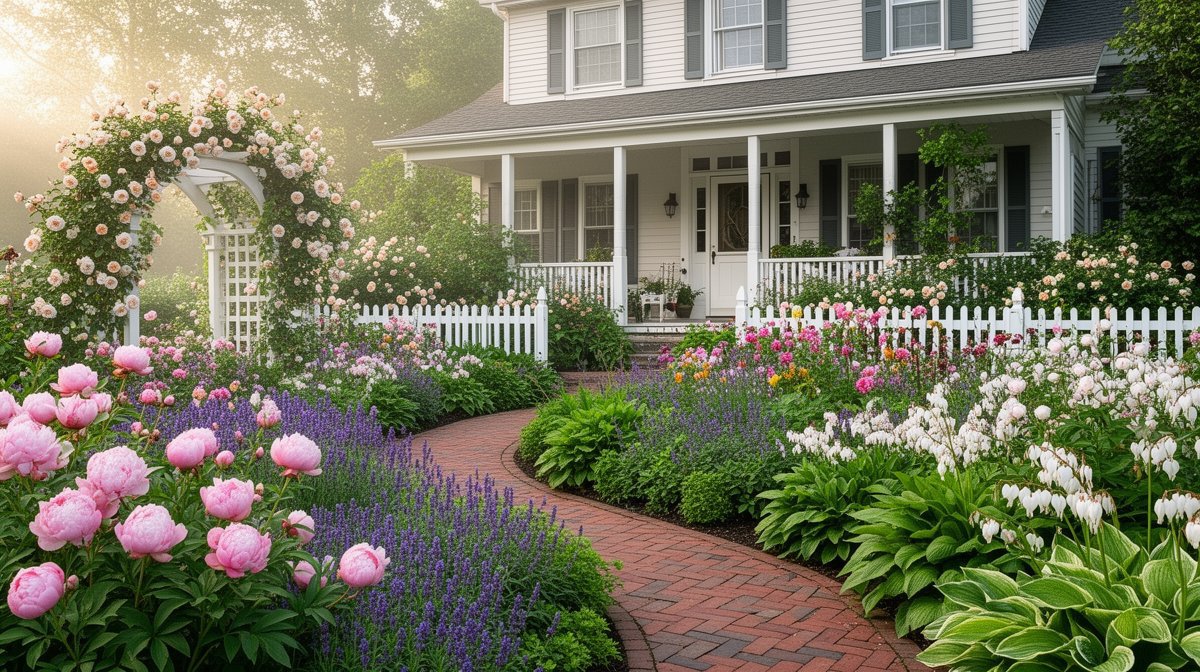
$22–38/sqftA cream two-story colonial with black shutters and a dark panelled door, fronted by a low white picket fence and a wide iron arbor over the gate that disappears under blush and cream climbing roses. A curving brick paver path swings from the gate to the front steps rather than running straight, which is what makes a 30-foot front yard feel like a journey. Behind the pickets the border is layered in three tiers: shrub roses in pink, cream and true red at the fence line, a continuous ribbon of lavender and catmint in front of them, and blue-green hosta foliage tucked at the bed edge where the path shades it. A small golden-leaved tree at the left corner lifts the whole composition in the low evening light.

The Porch Pergola Cottage Walk
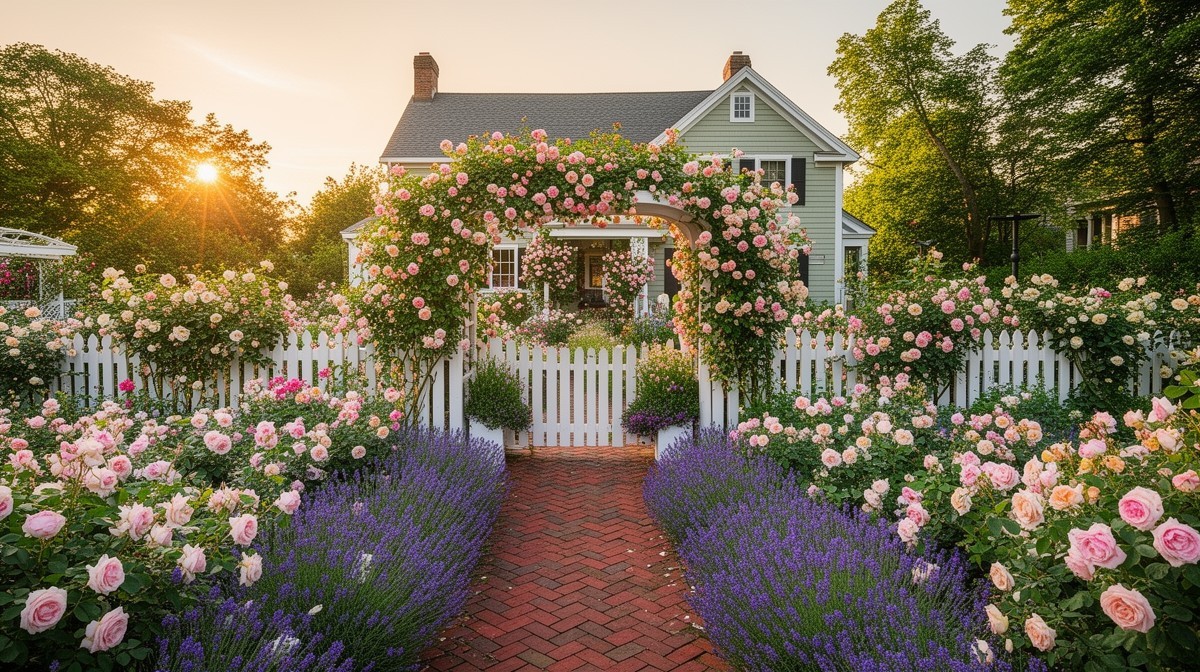
$26–45/sqftA modest cream cottage with a covered front porch, white railings and hanging baskets, approached through a white timber pergola arch smothered in white climbing roses that straddles the walk halfway to the steps. The path itself is irregular flagstone with soil-filled joints, not a poured slab, so it settles gracefully with our frost heave. Both sides are given over to a cottage jumble at full height: white and pink foxgloves and blue delphinium spires at the back, shasta daisies, phlox and golden coreopsis through the middle, lavender and pinks spilling onto the stone. A mature maple shades the left half of the lawn, and a stockade fence on the right turns a narrow city lot into an enclosed room.

The Flagstone Terrace Under a Rose Arch
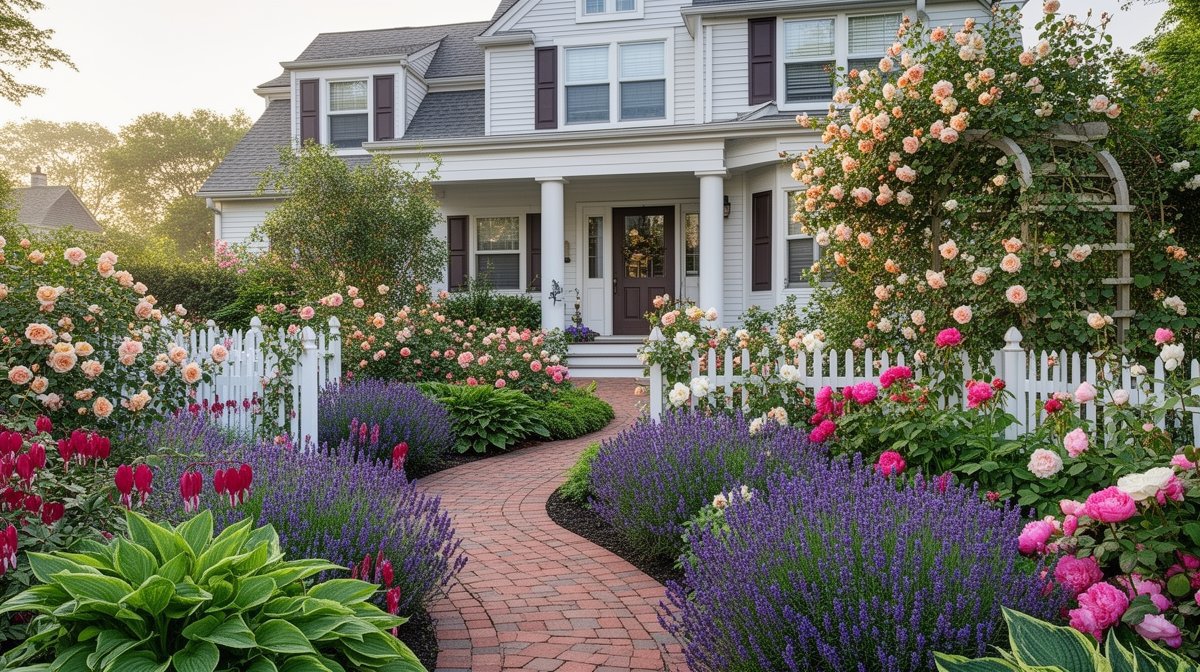
$18–32/sqftLooking back at the house from the bottom of the garden: an oval lawn ringed by deep double borders, split by a timber rose arch heavy with apricot-blush blooms that frames the white double doors beyond. Under the arch sits a small irregular flagstone terrace with grass growing in the joints and a single white wrought-iron bistro table and pair of chairs — a two-person garden, deliberately. English lavender lines both sides of the path in solid drifts, peonies in pink and white anchor the corners, and foxglove and delphinium push the borders to five feet at midsummer. Mature trees frame the view left and right and a clipped hedge closes the back boundary.

The Pergola Dining Room and Birdbath Circle
$24–42/sqftA freestanding white pergola in the back corner carries a deep-pink climbing rose across its beams and shelters a wooden dining table for six on a pale paver square. Out in the lawn, a carved stone birdbath stands in a circular bed cut straight into the turf and planted low with pink, white and burgundy flowers — a classic English trick that gives a flat rectangular yard a centre. A dark clipped hedge runs the back boundary, red and pink roses and salvia fill the perimeter borders against a neighbouring brick house, and the whole thing works because the lawn is a shape, not leftover space.
See how a cottage/english garden looks on YOUR property
Upload a photo of your Syracuse yard and visualize your dream garden in seconds.
Try ProScapeAI Free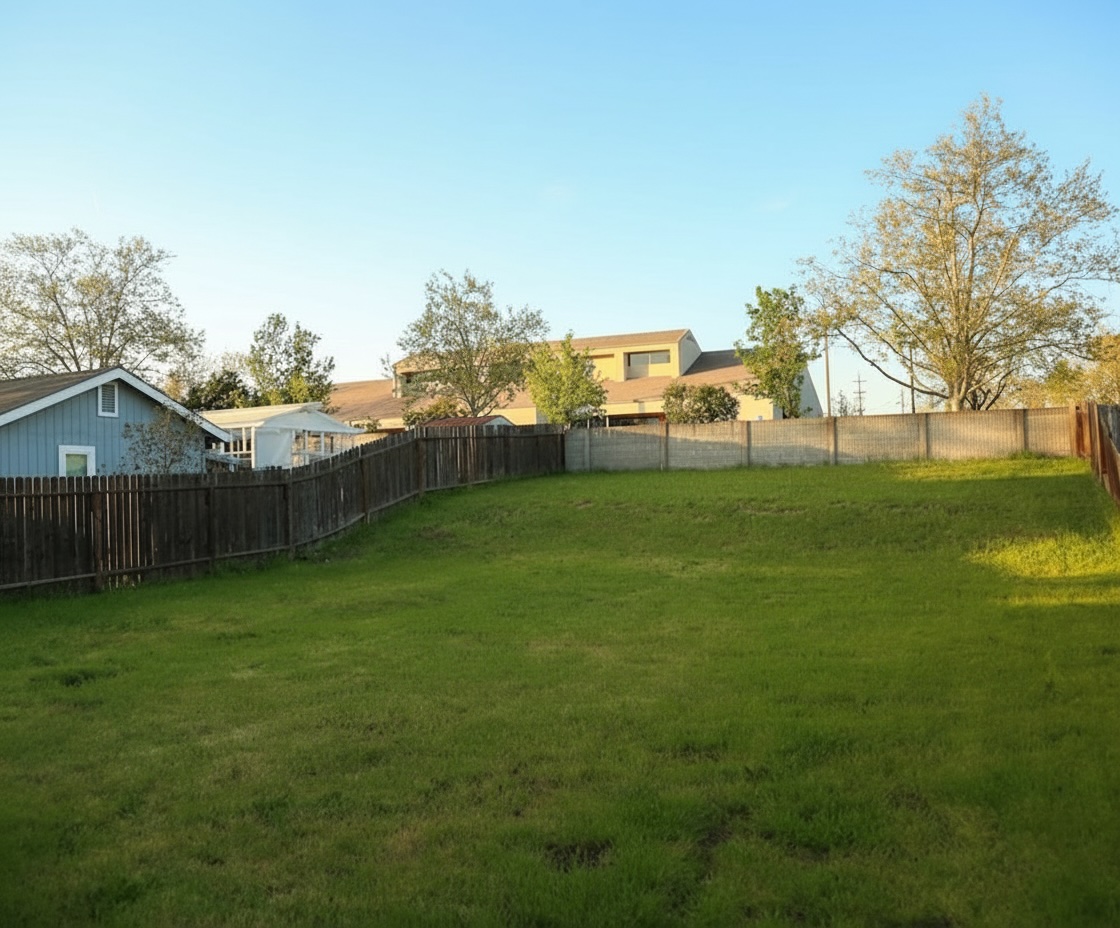
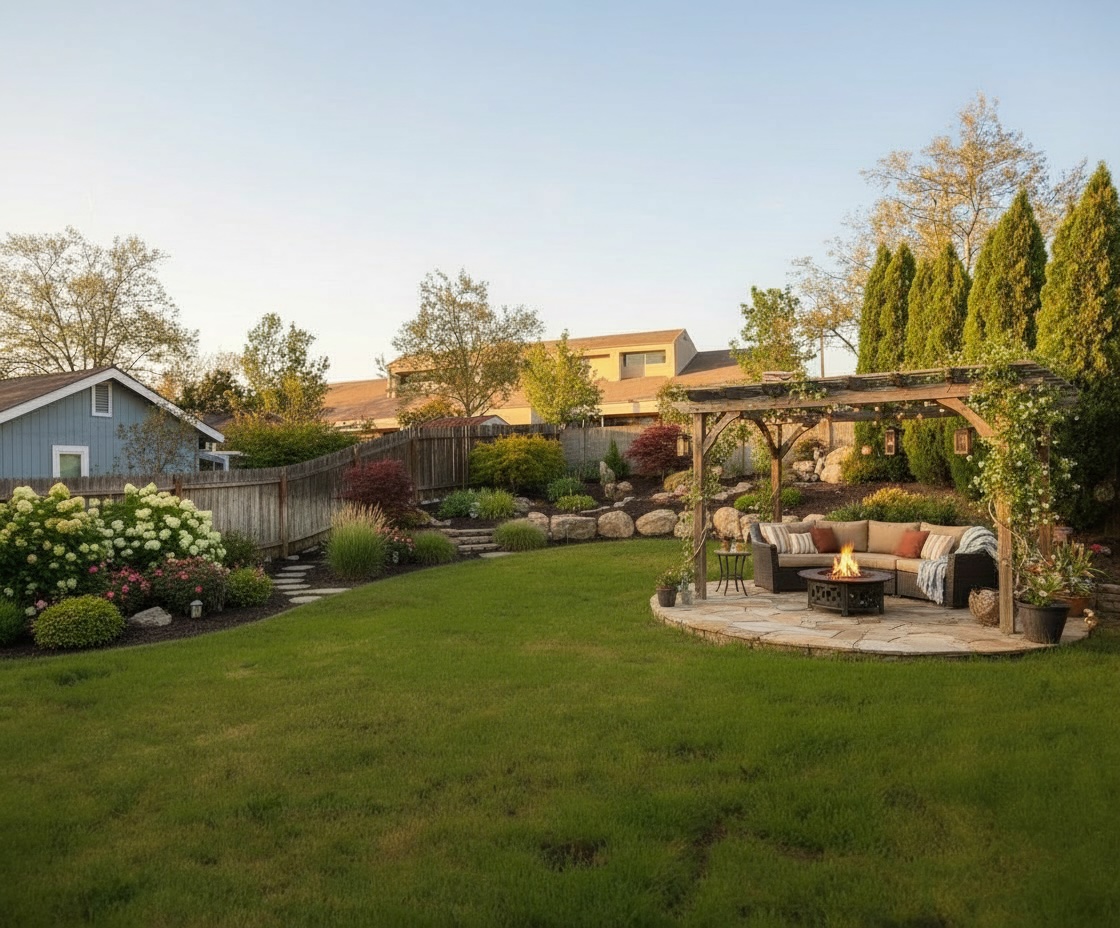
Featured Trees & Shrubs for Cottage/English Gardens
Browse all 244 plants for Syracuse
American Black Currant
Ribes americanum
grows to 5 feet, white,yellow blooms in spring. Attracts hummingbirds.
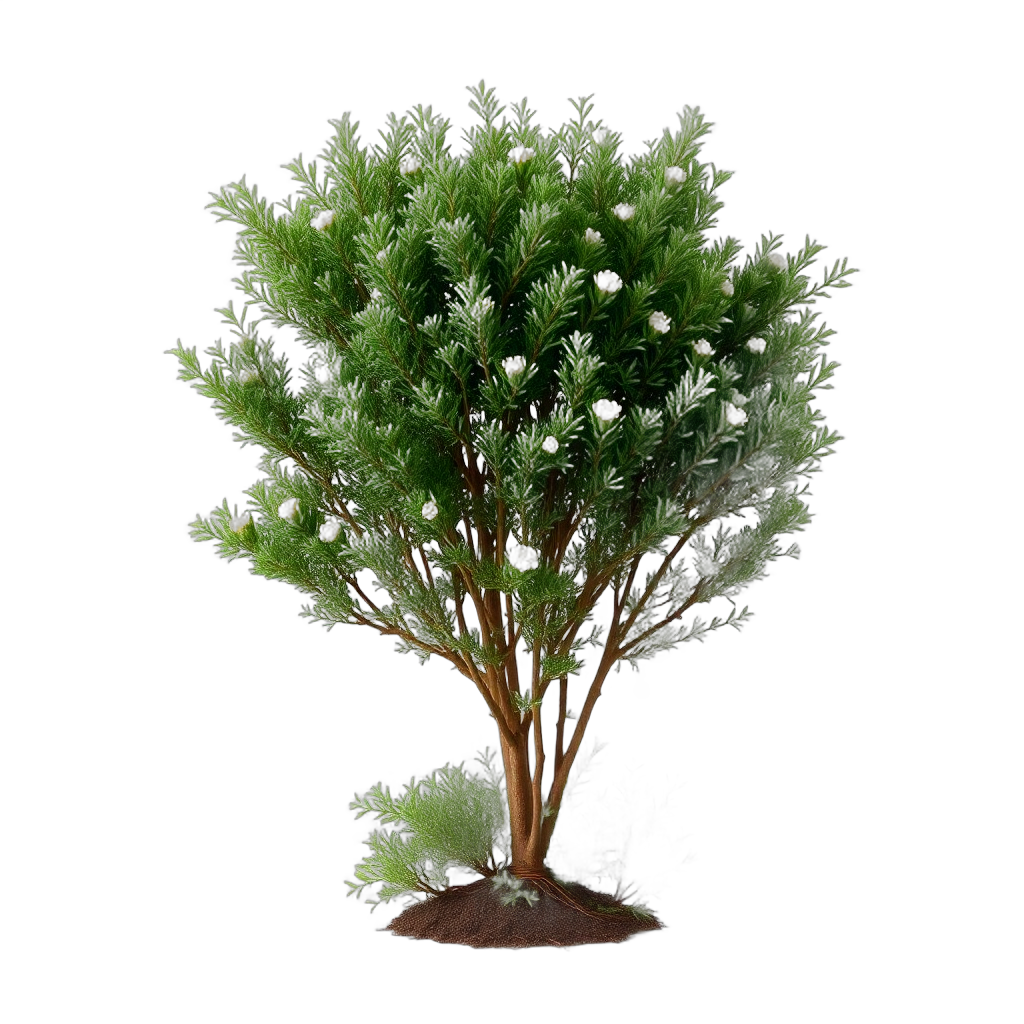
Creeping Juniper
Juniperus horizontalis
low-growing ground cover, blooms in spring. Evergreen year-round.
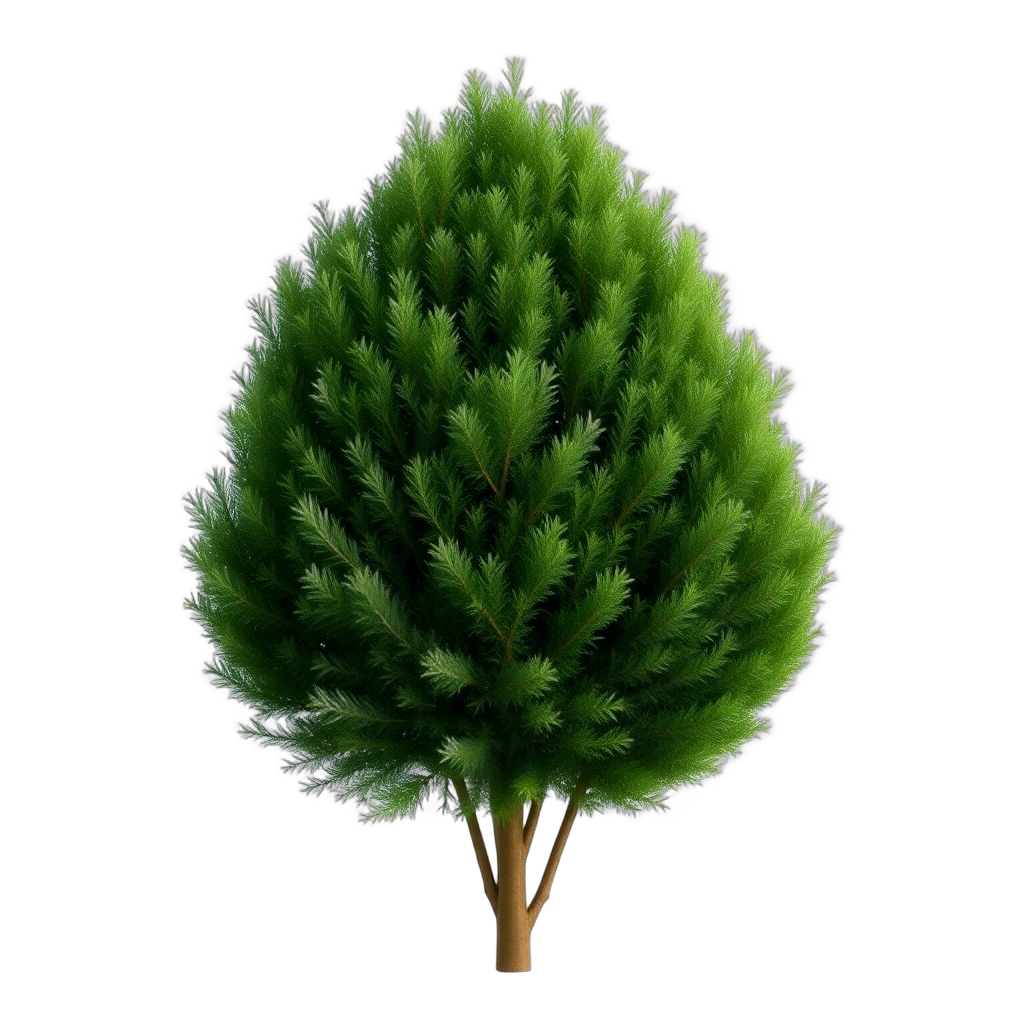
Emerald Arborvitae
Thuja occidentalis 'Emerald'
medium-sized at 14 feet, blooms in spring. Evergreen year-round.

Gray Dogwood
Cornus racemosa
medium-sized at 10 feet, white blooms in spring. Pollinator-friendly.
Featured Grasses & Groundcovers for Cottage/English Gardens
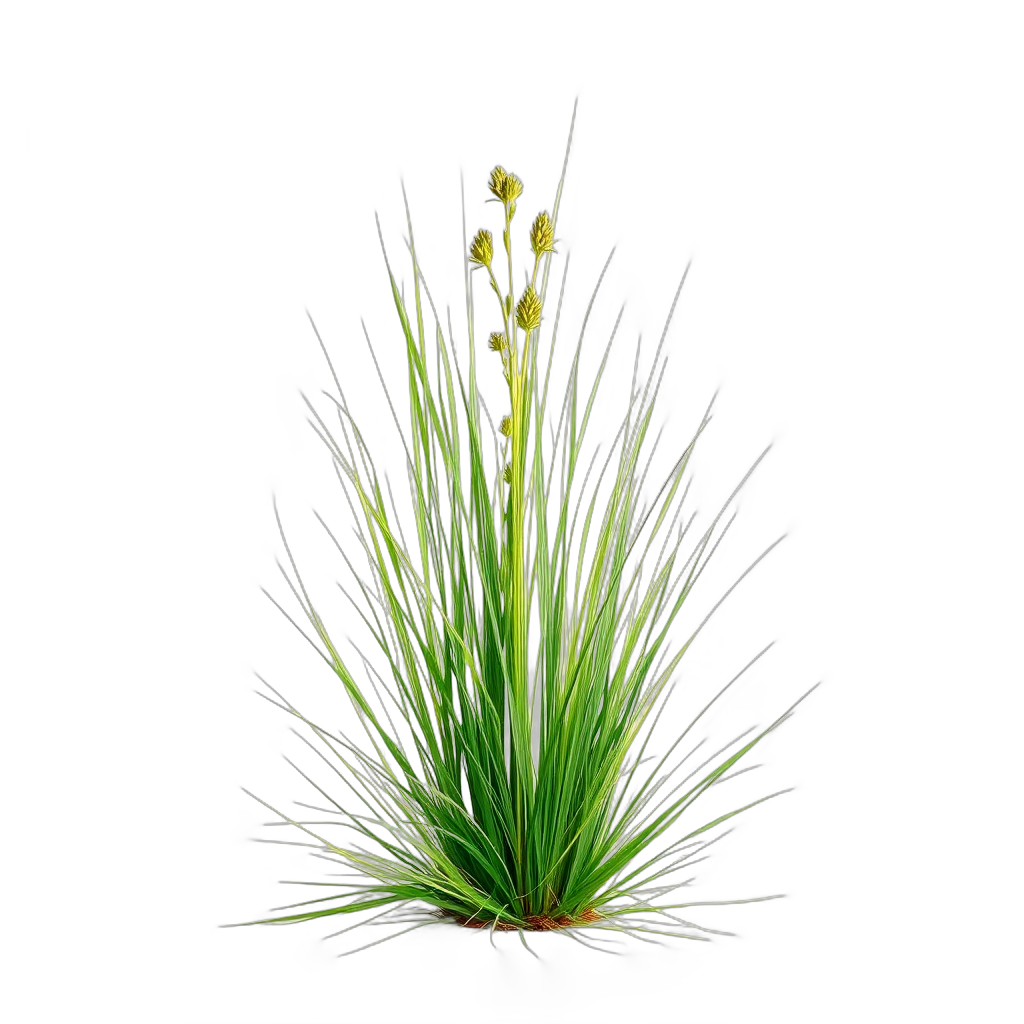
Canada Wild Rye
Elymus canadensis
grows to 4 feet, blooms in summer. Yellow fall color.

Red Fescue
Festuca rubra
low-growing ground cover, blooms in summer.
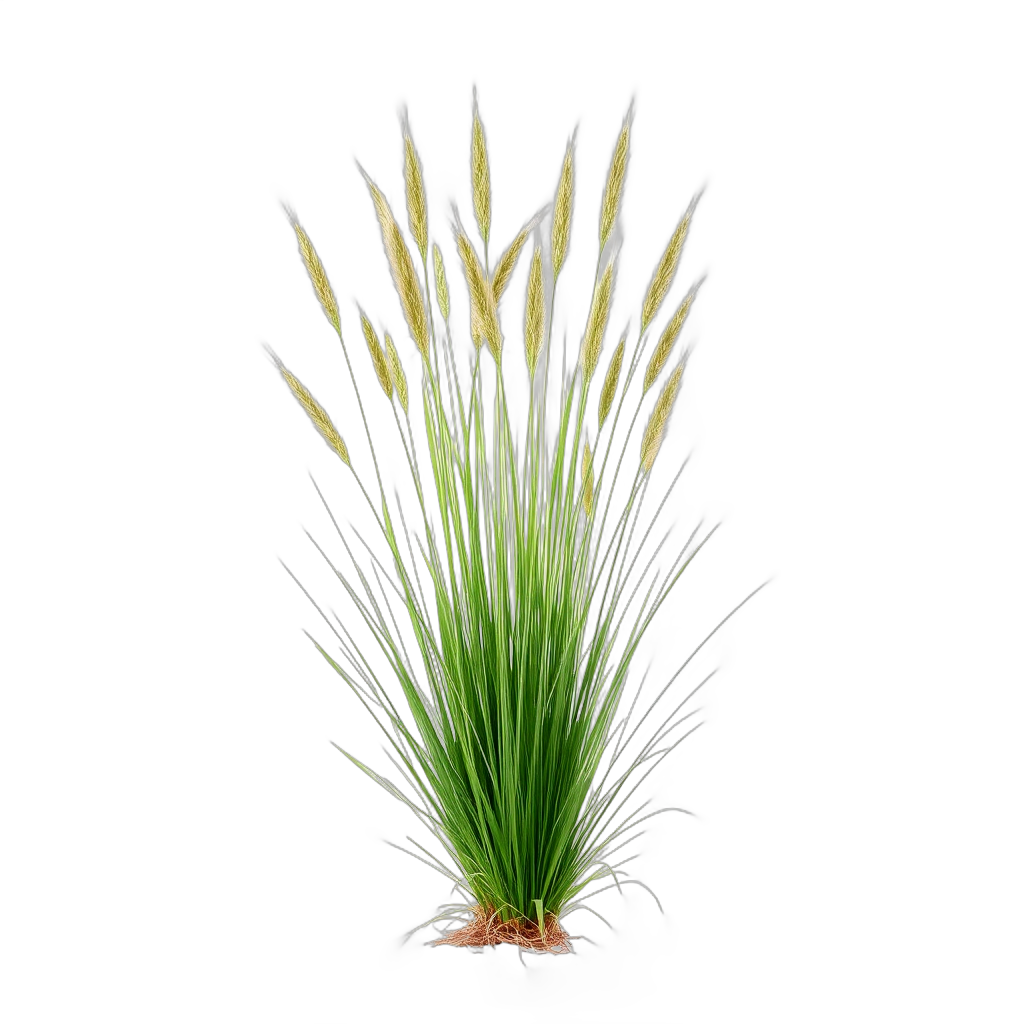
Tufted Hair Grass
Deschampsia cespitosa
grows to 3 feet, yellow blooms in summer. Yellow fall color.
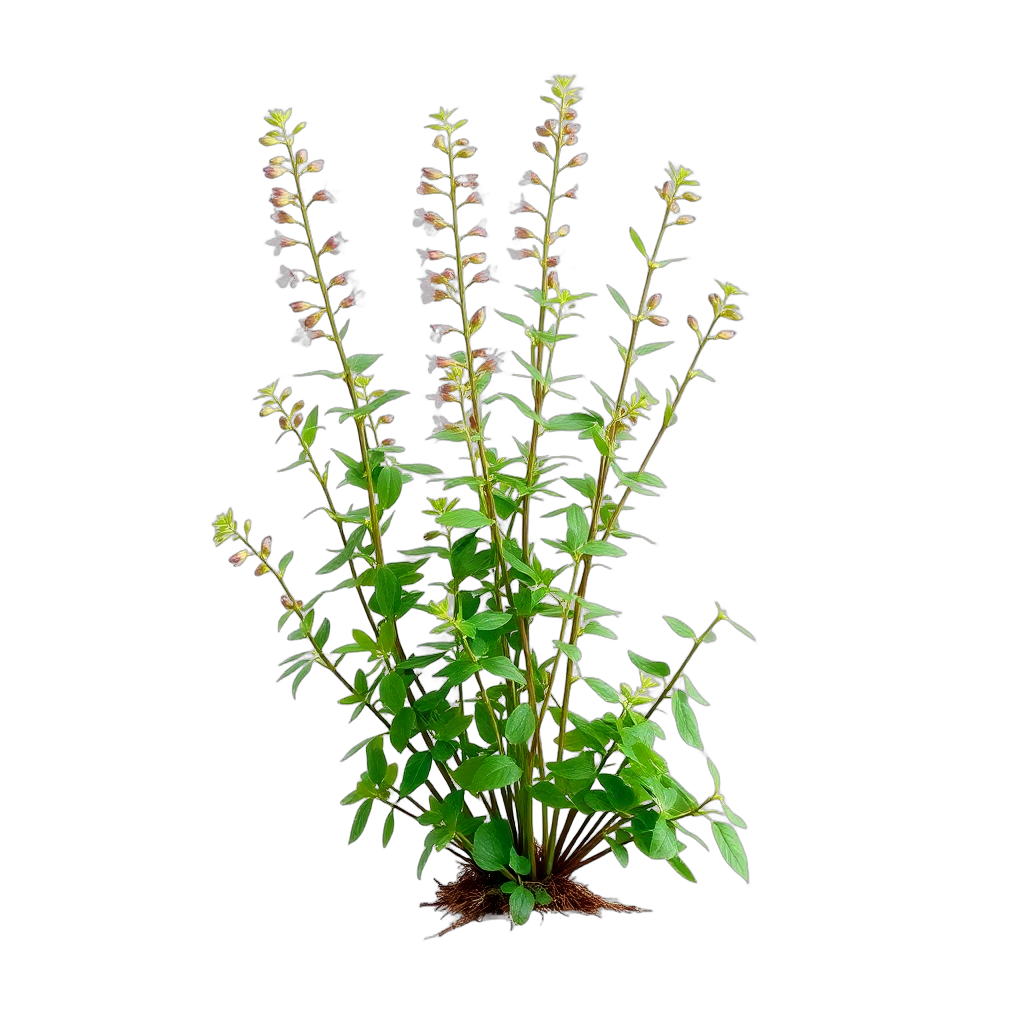
Creeping Jacob's Ladder
Polemonium reptans
low-growing ground cover, blue blooms in spring. Attracts butterflies.
Featured Flowers & Perennials for Cottage/English Gardens
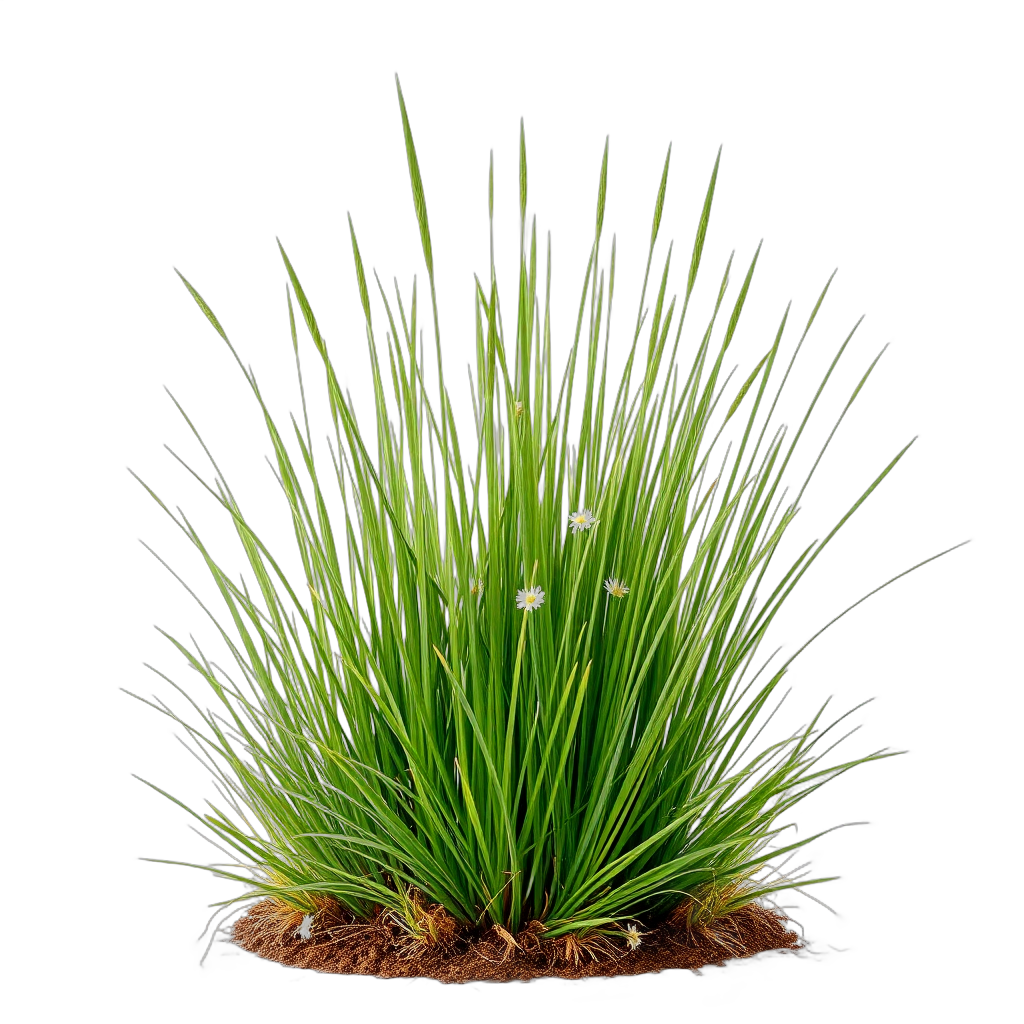
Baltic Rush
Juncus balticus
low-growing ground cover, blooms in summer. Evergreen year-round.
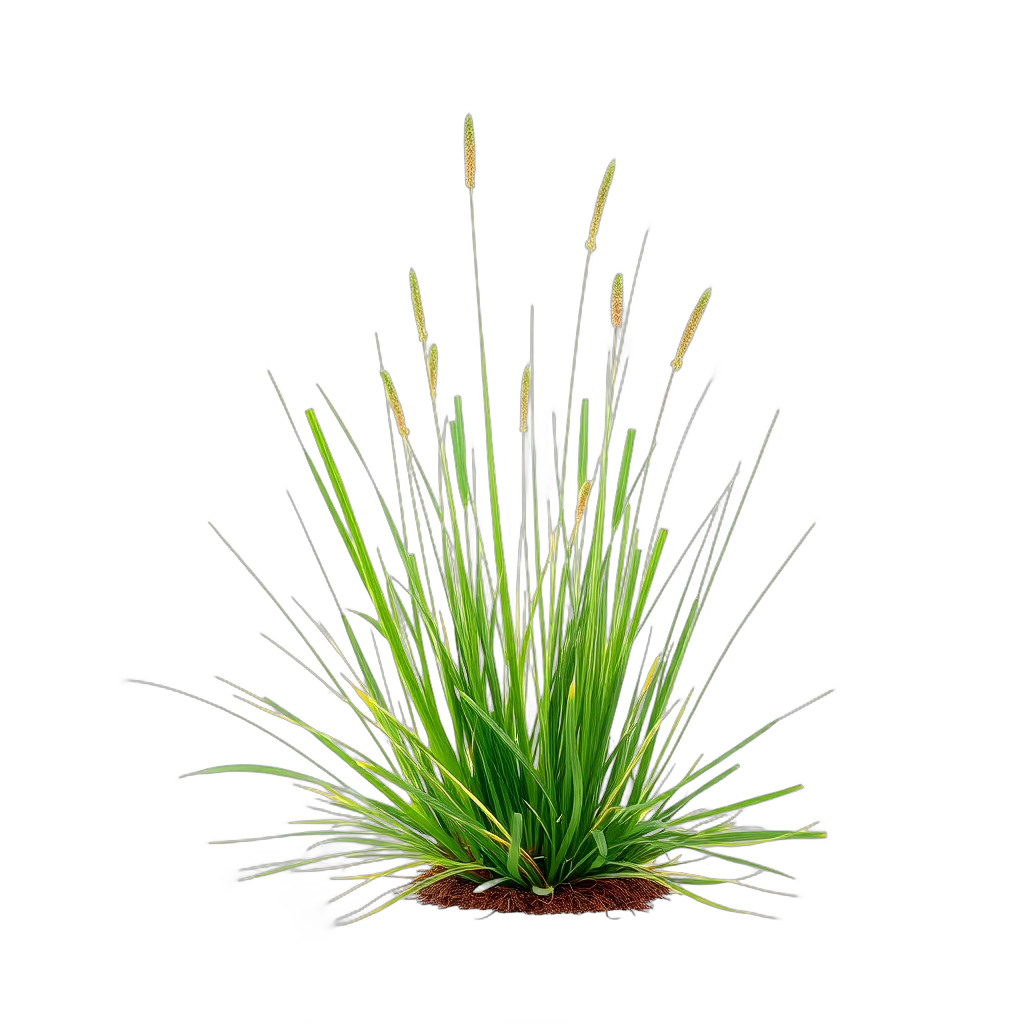
Common Rush
Juncus effusus
grows to 3 feet, blooms in summer. Evergreen year-round.
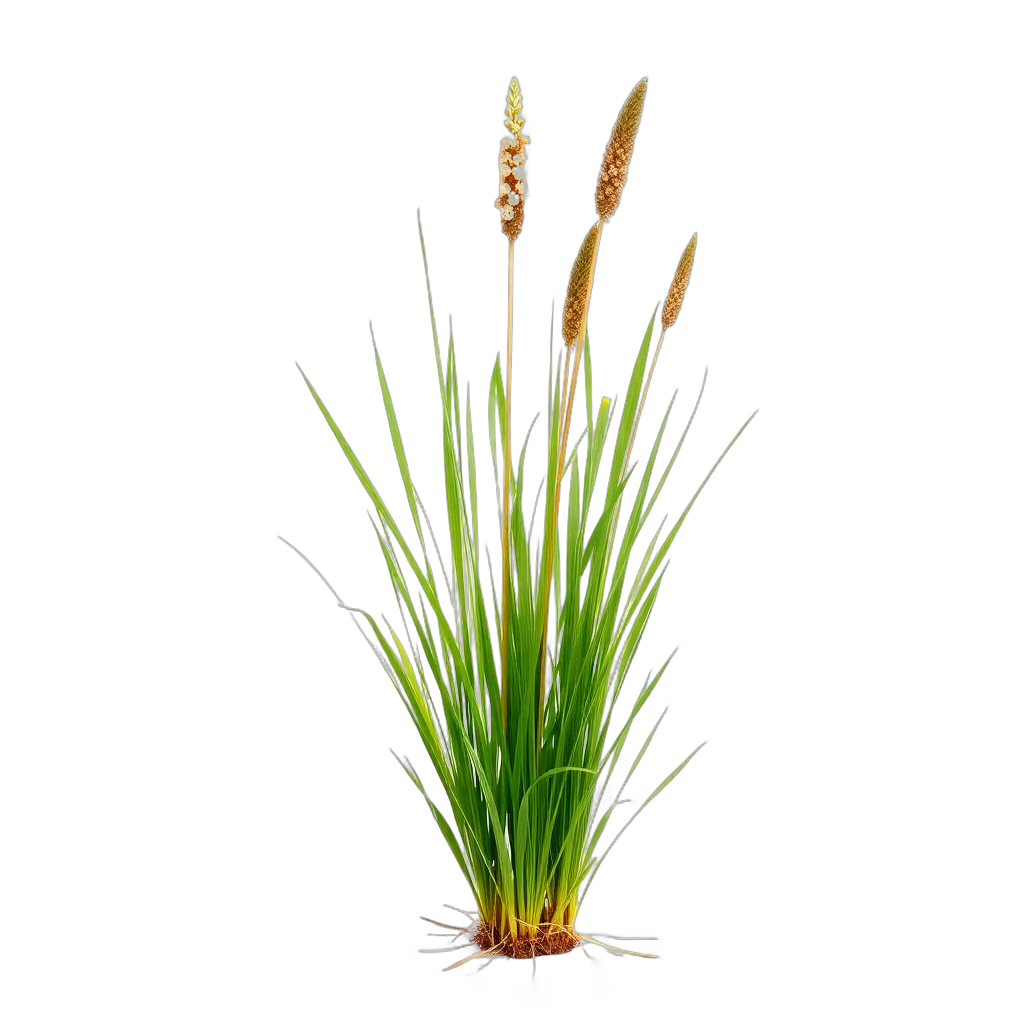
Hardstem Bulrush
Scirpus acutus
medium-sized at 7 feet, blooms in summer.
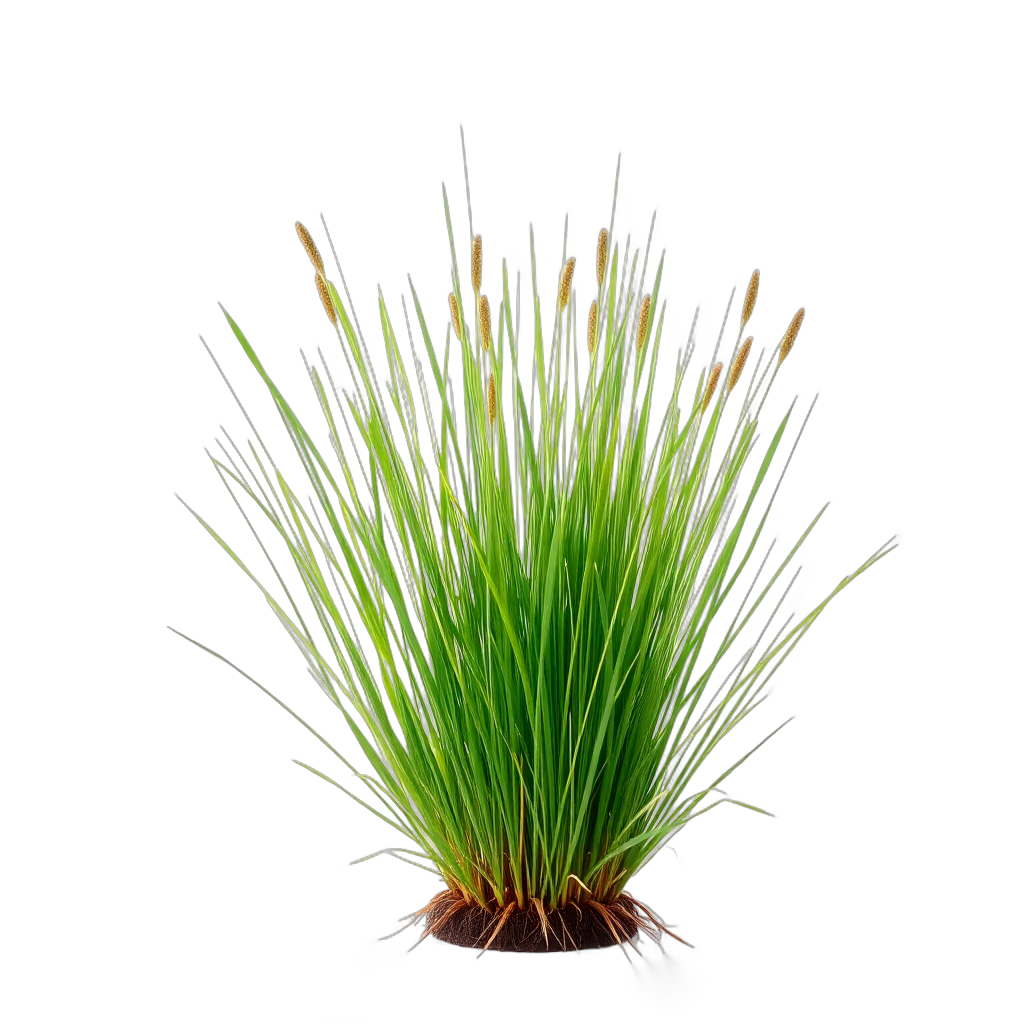
Path Rush
Juncus tenuis
low-growing ground cover, blooms in summer. Evergreen year-round.
Zone and sun checks come from our database — confirm with your local nursery before you buy.
Bloom Calendar for Syracuse
spring
Bellwort, Bloodroot, Blue-Eyed Grasssummer
Baltic Rush, Common Rush, Hardstem Bulrushfall
Pink Turtleheadwinter
Limited bloomsDesign Tips for Syracuse (Zone 5b)
- Buy roses on their own roots, not grafted — at -15°F an own-root Rosa 'William Baffin' or Rosa 'John Davis' regrows as itself after a hard winter, while a grafted hybrid tea comes back as rootstock or not at all
- Lean into the limestone instead of fighting it: at pH 7.0–7.8 Lavandula angustifolia 'Munstead', Dianthus 'Firewitch' and Nepeta 'Walker's Low' thrive with no amendment, and every dollar you would have spent on soil acidifier buys more plants
- Plant peonies and bare-root roses in late September, not spring — Syracuse soil holds 60°F into October and autumn rain is reliable, giving six weeks of root growth before the ground locks up in late November
- Keep a 3–4 foot snow-and-salt buffer along every driveway and street edge, planted only with Rosa rugosa, Panicum virgatum 'Shenandoah' or Perovskia 'Blue Spire' — anything precious in that band is on borrowed time by March
- Design the winter view first: five months of snow means the arbor, the picket fence, a Taxus x media 'Hicksii' hedge and a few Buxus 'Green Velvet' spheres carry the garden while the borders are underground
- Set grow-through supports over Delphinium 'Magic Fountains' and Paeonia lactiflora in early May — Central New York's July thunderstorms flatten unstaked five-foot spires in a single afternoon
- Raise beds 4–6 inches above grade on the heavy clay of the Onondaga Lake plain; lavender and pinks die of wet feet in a Syracuse March thaw far more often than they die of cold
Where to Source Plants in Syracuse
Skip the big-box stores. These independent Syracuse nurseries specialize in the plants that make cottage/english gardens thrive in Zone 5b.
Sollecito Landscaping Nursery
Howlett Hill / Onondaga
Over 800 varieties of hardy shrubs, trees and perennials chosen specifically for Central New York's alkaline glacial-till soils; strong roses, peonies and lavender benches
Chuck Hafner's Farmers Market & Garden Center
North Syracuse (Buckley Road)
Family-run since 1922; the region's deepest bench of perennials, climbing roses, hanging baskets and bulbs, plus bulk compost and mulch for bed building
Ballantyne Gardens
Liverpool (Hopkins Road)
Independent garden center and landscape gardening shop; custom container arrangements, cottage annuals, seeds, tools and hands-on planting workshops
Dickman Farms Greenhouses & Garden Center
Auburn (25 minutes west of Syracuse)
Third-generation grower with an enormous own-grown perennial and specialty annual range; the place to go when you want an unusual foxglove or delphinium in quantity
Cottage/English Landscaping Costs in Syracuse
| Project Scope | Estimated Cost |
|---|---|
| Front cottage border, 300–500 sqft (soil prep, 60–90 plants, edging, mulch) | $4,500 – $11,000 |
| Brick or bluestone front walk, 60–100 sqft on a compacted base | $2,400 – $5,500 |
| Cedar or steel rose arbor with two climbing roses, installed | $1,400 – $3,800 |
| White cedar picket fence with gate (per linear foot, installed) | $42 – $75 / ln ft |
| Dry-laid flagstone terrace, 250–400 sqft | $9,000 – $22,000 |
| Freestanding cedar pergola on frost-depth footings | $7,500 – $20,000 |
| Full backyard cottage garden (terrace, pergola, double borders, hedge) | $28,000 – $70,000 |
| AI visualization with ProScapeAI | Free to start |
Estimates based on Syracuse, NY-area contractor rates as of 2026. Actual costs vary by site conditions, materials, and contractor.
Syracuse Climate & Growing Zone
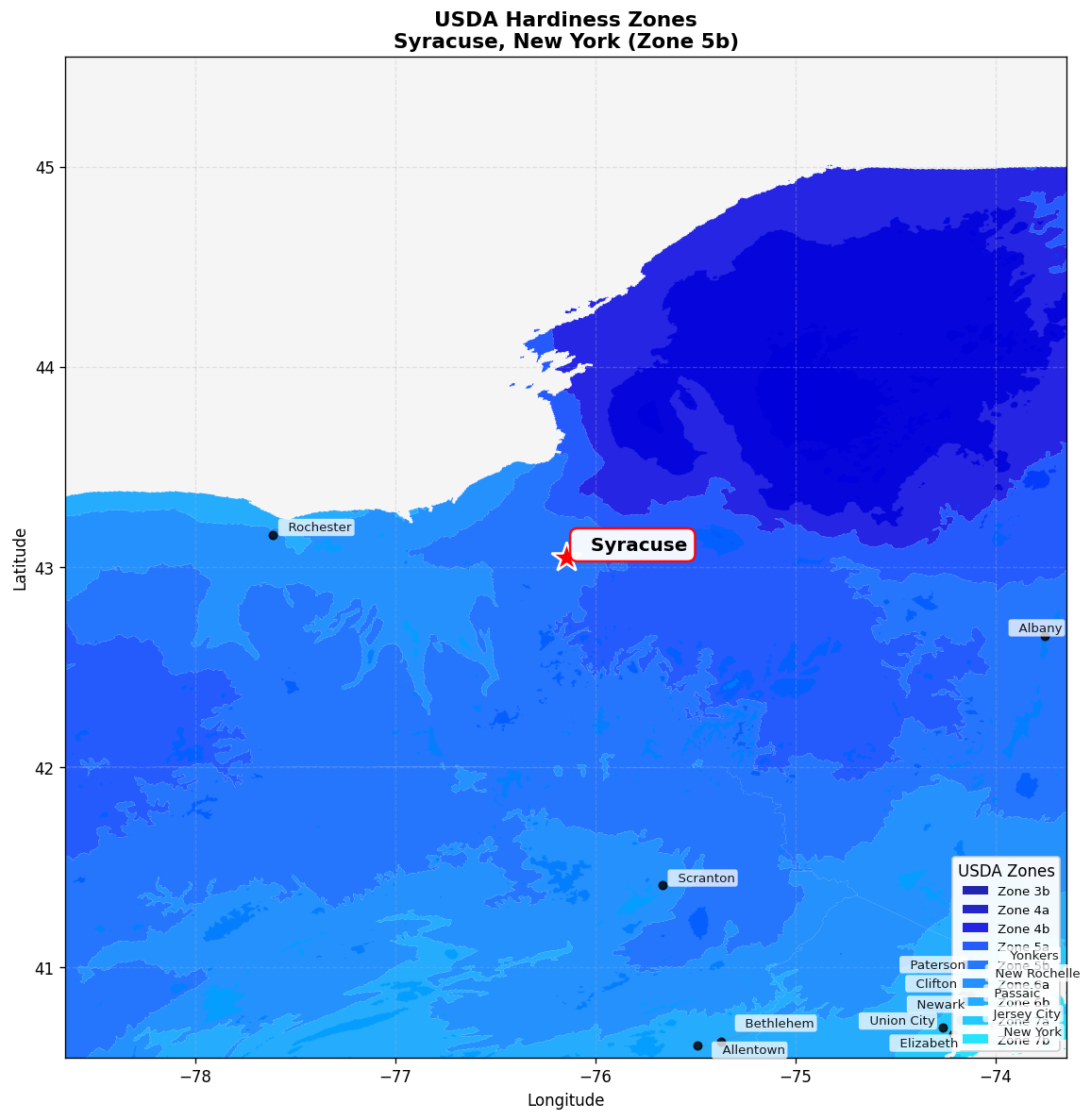
USDA Zone 5b
Hardiness zone for Syracuse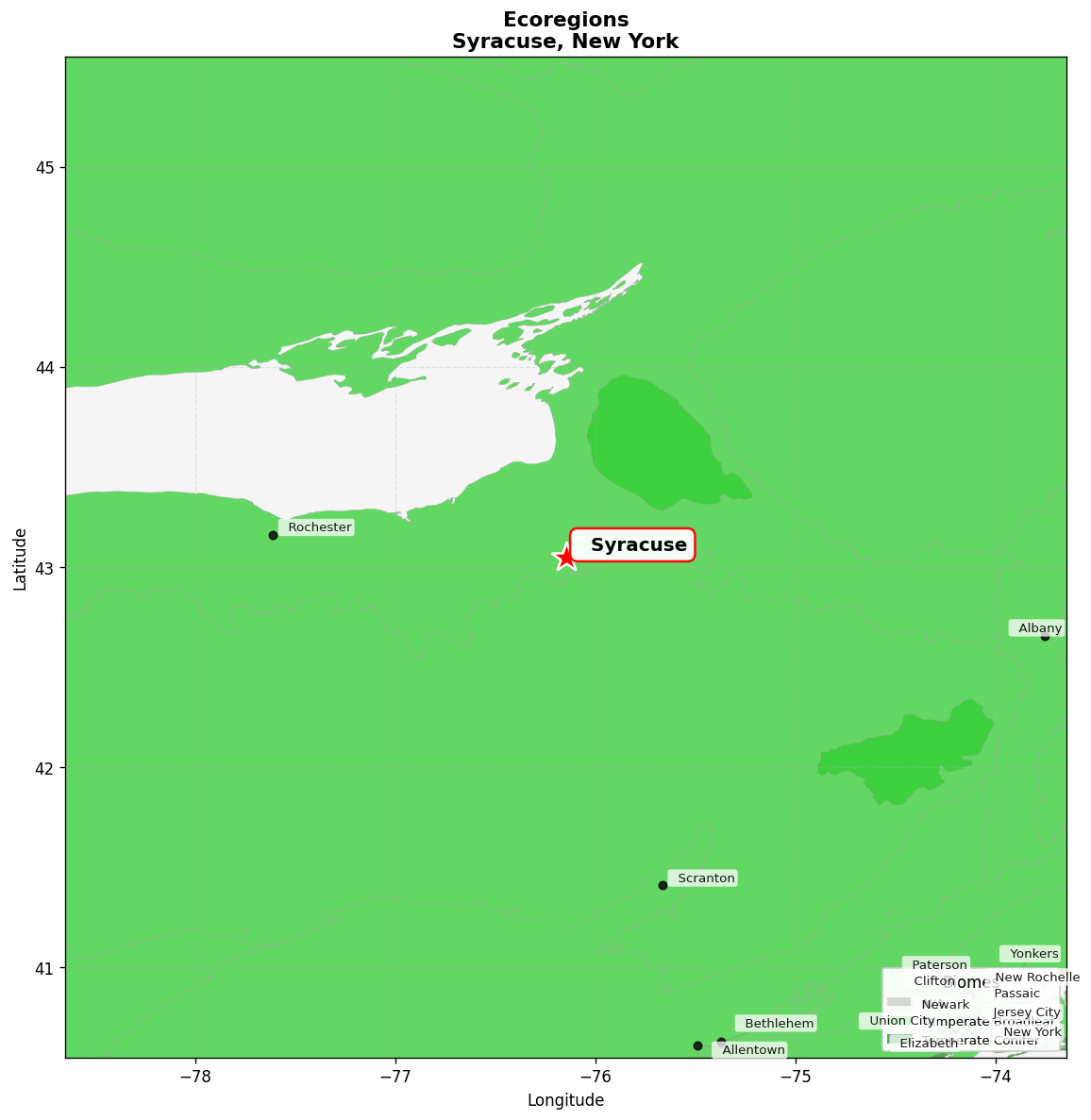
Eastern Great Lakes lowland forests
Native ecoregionFrequently Asked Questions
How much does a cottage garden cost in Syracuse?
Central New York installation labor runs close to the national average and well below downstate, which makes borders attainable and hardscape the real budget line. A planted front cottage border of 300–500 square feet, including soil amendment, edging, mulch and roughly 60–90 plants, runs $4,500–$11,000 installed. A brick or bluestone front walk of 60–100 square feet is $2,400–$5,500. A cedar arbor with two climbing roses, set on footings, is $1,400–$3,800. A full backyard scheme with a flagstone terrace, pergola, double borders and a hedge typically lands between $28,000 and $70,000. Doing the planting yourself and hiring out only the hardscape usually cuts 30–40 percent, and bare-root Rosa 'William Baffin' and divided Paeonia lactiflora from a local grower cost a fraction of container stock.
Which roses actually survive a Syracuse winter?
Own-root shrub and climbing roses bred for the Canadian prairie and northern Europe, not grafted hybrid teas. The Explorer series is the local backbone: Rosa 'William Baffin' is hardy to Zone 3 and will climb 8–10 feet on an arbor, Rosa 'John Davis' and Rosa 'Champlain' sail through -15°F unprotected, and Rosa 'John Cabot' handles a windy exposure. For a fragrant pale climber, 'New Dawn' is reliable on a south or east wall with some building heat. Rosa rugosa 'Alba' is the one to plant inside the plow line because it shrugs off road salt. Grafted hybrid teas can be grown here but need the graft union buried 3–4 inches and a mound of soil each November, and roughly one winter in four still kills them back to the graft.
Syracuse soil is alkaline — what does that change in a cottage border?
It changes your plant list far more than your fertilizer. On Onondaga limestone the till soils around the city commonly test pH 7.0–7.8, which is ideal for Lavandula angustifolia 'Munstead', Dianthus 'Firewitch', Nepeta 'Walker's Low', Clematis 'Jackmanii', Buxus 'Green Velvet' and Syringa meyeri 'Palibin' — the whole limestone-country English palette. It also means Hydrangea macrophylla will bloom pink permanently and that acid-lovers like rhododendron, Pieris and blueberry need a raised, heavily amended bed rather than a sulfur habit. The one thing worth doing before you plant anything is a $20 soil test through Cornell Cooperative Extension of Onondaga County; the pH result determines whether you fight the site or lean into it.
How do I design around 127 inches of snow and the plow?
Plan for where the snow goes before you plan where the plants go. Keep the first 3–4 feet along any driveway or public sidewalk as a snow-storage strip — lawn, gravel or tough plants like Panicum virgatum 'Shenandoah' and Rosa rugosa that get cut to the ground each spring anyway — because that band takes both the pile and the salt spray. Never plant a picket fence line tight to the street edge; leave 18–24 inches so plow wash misses the pickets. Skip narrow upright conifers near the drive, since wet lake-effect snow splays them permanently unless they are cabled every November. And site the arbor and any hedge so they do not create a drift trap across the front walk — in Syracuse a solid fence upwind of a path builds a three-foot drift in exactly the wrong place.
When should I plant a cottage garden in Syracuse?
The last frost is typically May 10–15 and the first is early October, so the planting windows are late April through mid-June and, better still, late August through early October. Fall planting is the local secret: soil is still 60°F, autumn rain is dependable, and Paeonia lactiflora, Digitalis, Lavandula and bare-root roses put down roots for six weeks before the ground freezes in late November. Peonies specifically must be planted in September or October with the eyes no deeper than 1–2 inches or they will not bloom. Tender annuals such as cosmos and cleome should not go out before Memorial Day. Hardscape can be built from April into December as long as the ground is not frozen, and installer schedules are far more open in September than in May.
Are there local rules on fertilizer, watering or garden structures?
Watering is unrestricted — Syracuse draws from Skaneateles Lake and does not run summer bans — but New York State law bans phosphorus lawn fertilizer unless a soil test shows a deficiency or you are establishing new turf, prohibits lawn fertilizer between December 1 and April 1, and requires a 20-foot setback from waterways. Property inside the Skaneateles and Otisco Lake watersheds carries tighter nutrient guidance still. Planting beds, arbors, fences and paths generally do not need review, but fence height limits, corner-lot sight-triangle rules and setbacks vary between the City of Syracuse and each surrounding town, and anything with footings, a roof or a retaining wall over four feet is a different conversation. Confirm the specifics with your municipality's codes office before you build.
How do I keep a cottage border from turning into a mess by August?
Three structural moves do almost all the work. First, give the jumble a hard edge — a steel or cut-turf edge and a mown grass or stone path make even a chaotic planting read as intentional. Second, repeat one or two plants the whole length of the border; a continuous ribbon of Nepeta 'Walker's Low' or Alchemilla mollis at the front stitches everything together. Third, build in evergreen bones for the five months of snow: Buxus 'Green Velvet' spheres, a Taxus x media 'Hicksii' hedge, or the arbor and fence themselves. Practically, stake Delphinium and peonies with grow-through rings in early May before they need it, cut Nepeta and Alchemilla back hard after the first flush for a September repeat, and let Digitalis purpurea self-sow into gaps — that self-seeding drift is the look, not a failure of tidiness.