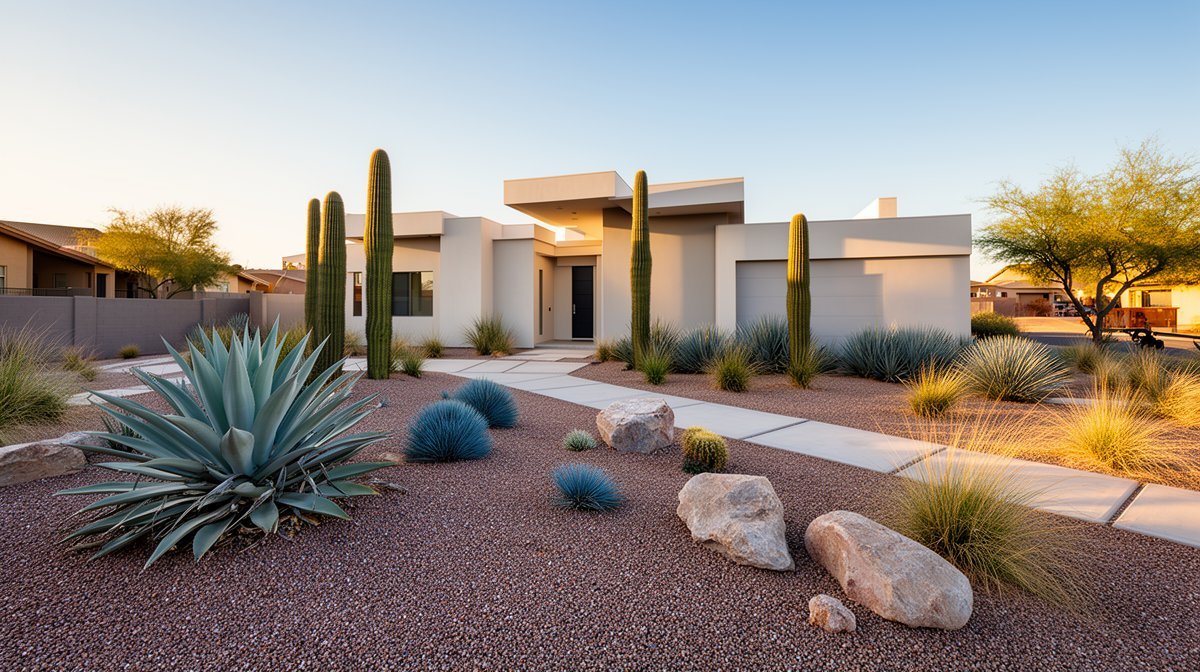
4 Modern Garden Ideas for Tempe, AZ | Desert-Modern Landscape Design for Zone 9b
Native plants from the Sonoran desert (Zone 9b) — Hot desert climate
Why Modern/Minimalist Gardens in Tempe?
Tempe was built for modern landscape design and then handed the hardest climate in the country to build it in. The post-war ranch and desert-modern stock around Mitchell Park and Maple-Ash — low flat rooflines, deep overhangs, clerestory glass, block screen walls — is exactly the architecture clean-line landscaping is meant to amplify, and the new flat-roof infill filling the gaps near Mill Avenue and Papago Park pushes the same language further. The problem is that modern's favorite move, the empty minimal plane, is a liability here. Phoenix-metro runs the most intense urban heat island in the United States, holding Tempe nights 10–15°F above the surrounding desert with summer lows that refuse to drop below 90°F. A yard of bare concrete and pale gravel photographs beautifully and then stores heat until 2am. The discipline that makes desert modernism work is choosing where the empty plane goes and paying for it with canopy somewhere else — a multi-trunk Parkinsonia ×'Desert Museum' or velvet mesquite (Prosopis velutina) placed over the west elevation is the single highest-value line item on any Tempe modern plan.
Materials behave differently at 110°F+. Light broom-finished concrete hits roughly 140–150°F on a July afternoon and dark pavers push past 160°F, so specify light integral color, textured cool-touch finishes around pools, and lay out shade so the seating zone is never bare deck at 5pm. Large-format pavers set with open granite joints are the best patio detail in the Valley: they read as a crisp modern grid and let monsoon downpours drain instead of sheeting at the slab. Corten and raw steel edging are ideal here — our dry air patinas slowly and the rust barely bleeds onto adjacent granite, unlike in humid climates. Underneath it all sits caliche, a cemented calcium-carbonate hardpan 12–36 inches down that must be broken through for planting and compacted properly beneath every square foot of hardscape.
The plant list is where modern Tempe gardens are usually too timid. Geometry wants strong single forms: Agave ovatifolia 'Frosty Blue', Agave parryi var. truncata, Agave weberi, Yucca rostrata 'Sapphire Skies', Yucca rigida, Dasylirion wheeleri and Hesperaloe parviflora 'Brakelights' — with Muhlenbergia rigens and Bouteloua gracilis 'Blonde Ambition' as the soft counterweight. Tempe lots are small — 6,000 to 7,500 square feet in the historic districts, with front yards of 500–900 square feet — and much of the ASU-adjacent stock is rental, which keeps scope tight and budgets honest. A complete modern front-yard conversion typically runs $6,000–$15,000 installed.
4 Modern/Minimalist Design Ideas for Tempe
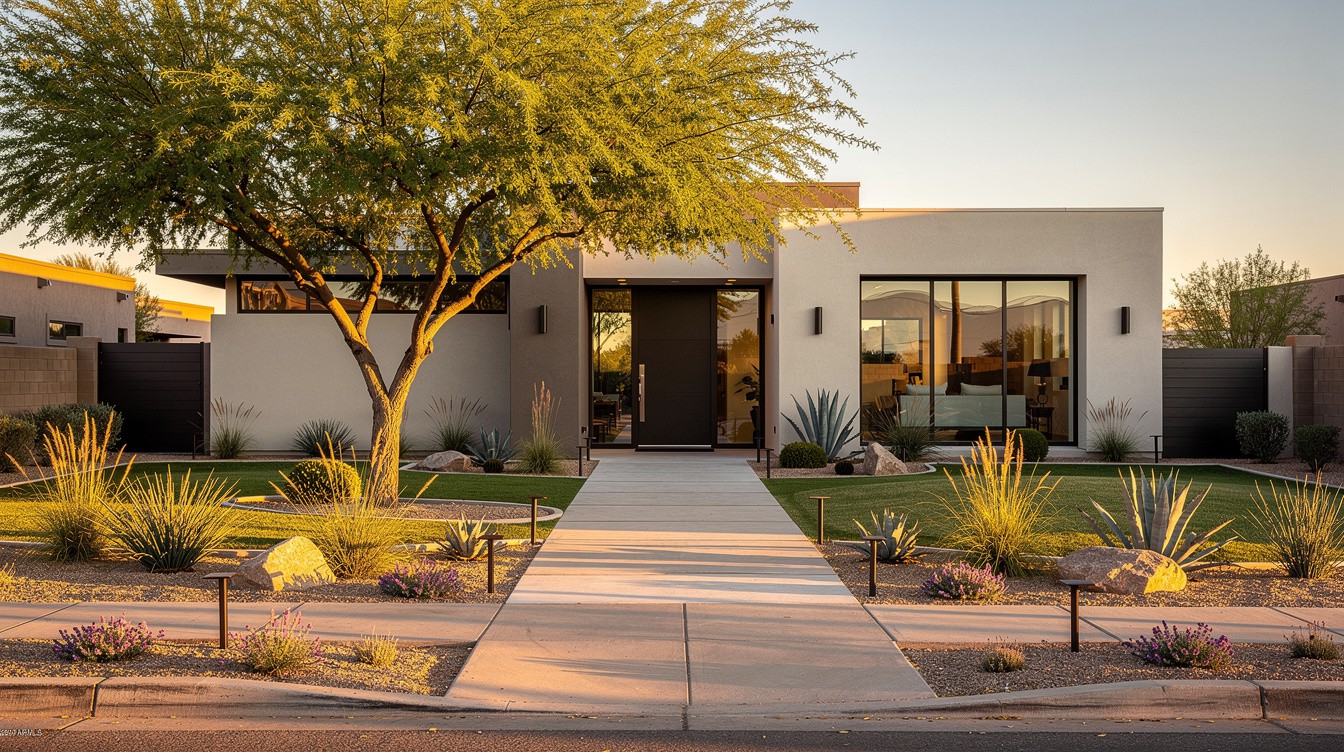
The Flat-Roof Entry Composition
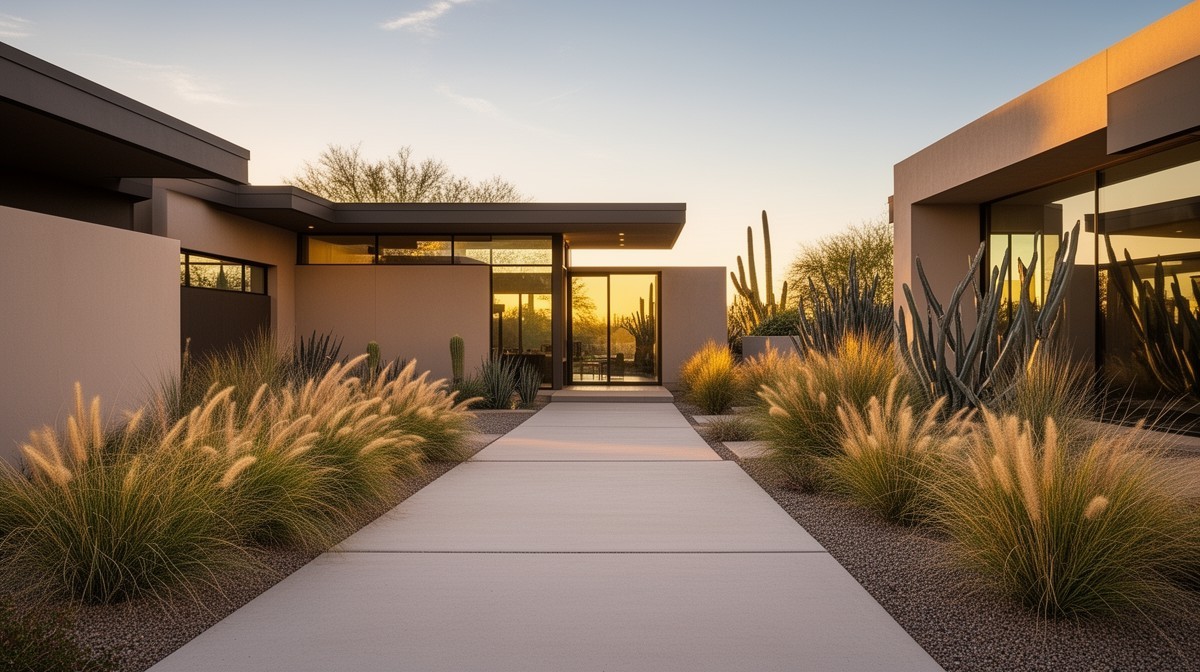
$10–20/sqftA low white-stucco contemporary with a dark steel pivot door and full-height glass, approached on a wide poured-concrete walk laid in clean bands with saw-cut joints. The design is symmetrical without being stiff: two crisp green lawn panels flank the walk, and everything beyond them dissolves into granite planted with drifts of Pennisetum-style fountain grass and Muhlenbergia rigens, single Agave americana and Agave weberi rosettes as punctuation, and low mats of trailing purple Lantana montevidensis and Dalea greggii spilling toward the sidewalk. A mature multi-trunk Parkinsonia ×'Desert Museum' sits off-axis to break the symmetry and — more importantly — shade the west end of the facade. Slim bollard path lights repeat at even intervals in both beds.
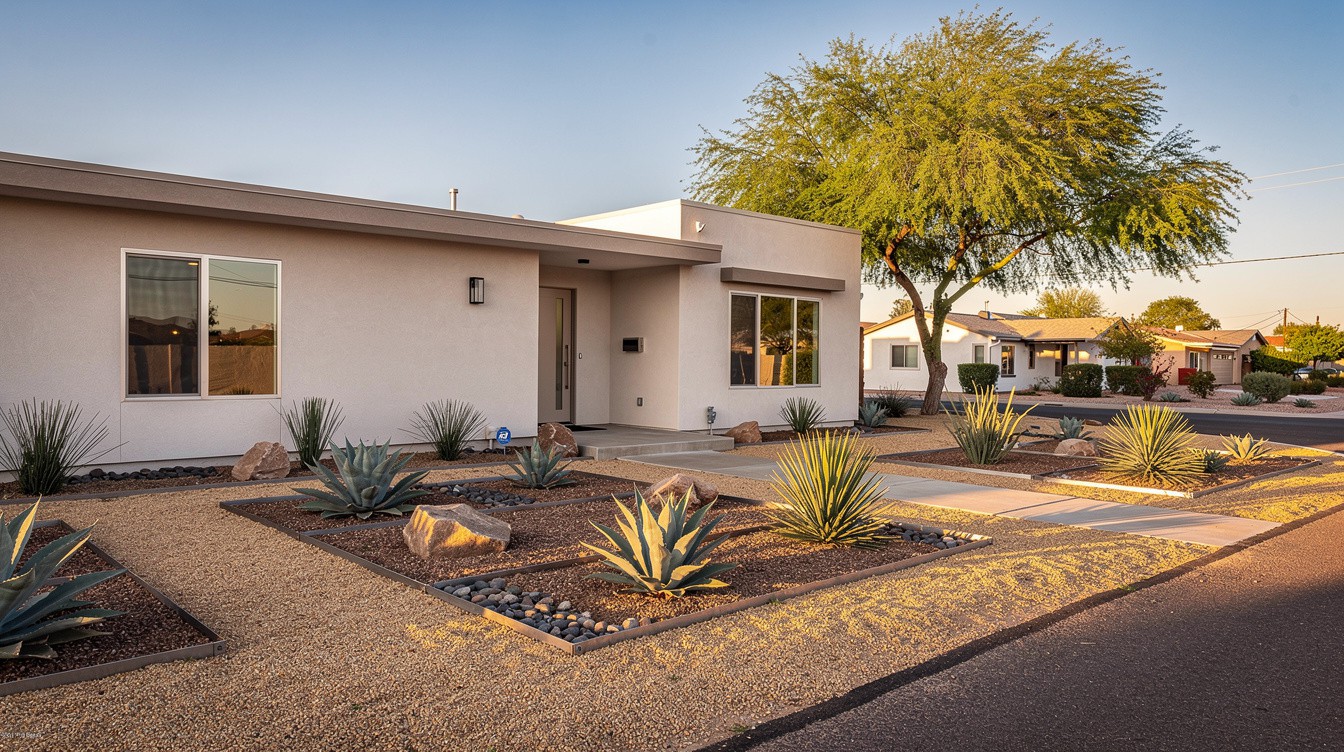
The Zero-Lawn Geometric Grid
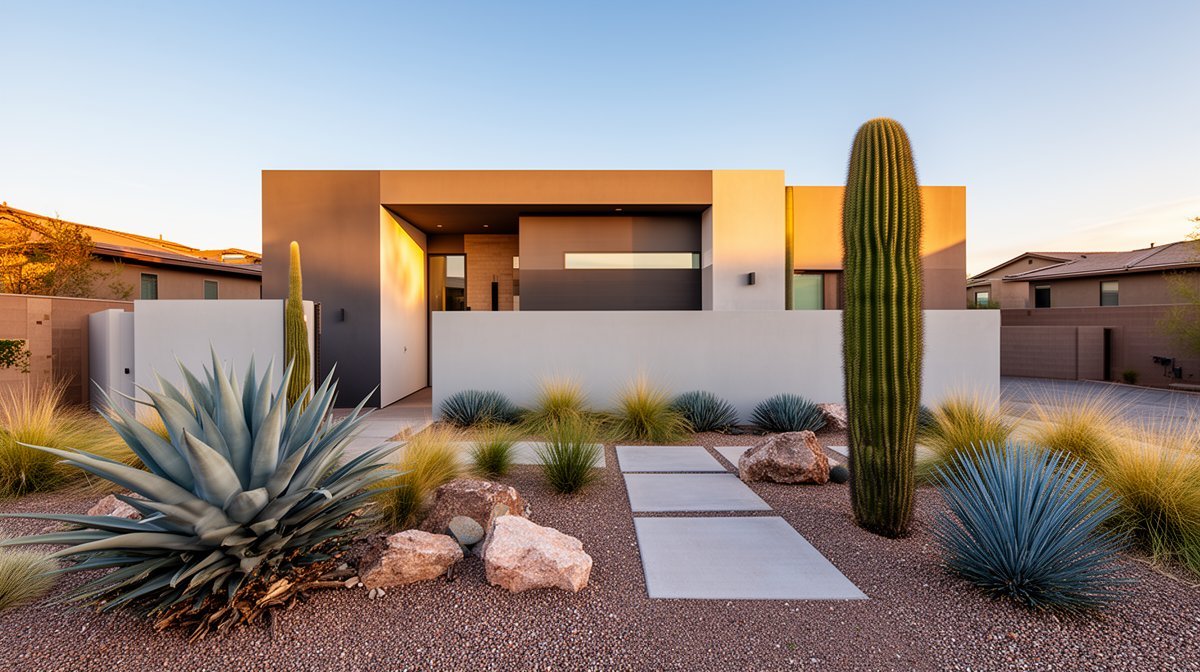
$8–16/sqftA post-war ranch remodeled into a flat-roof modern, with the entire front yard rebuilt as a set of steel-edged rectangles cut into a decomposed granite field. Each rectangle is its own composition — a trio of Agave parryi var. truncata in one, Yucca pallida and Yucca rostrata 'Sapphire Skies' in the next, a single boulder and a ribbon of Mexican beach pebble as a dry runnel through the middle — and the geometry, not the plants, carries the design. It is the most rental-friendly and lowest-water front yard on this page: no turf, no mowing, no header board rot, and the DG surface stays walkable through monsoon season. A street-side Parkinsonia ×'Desert Museum' provides the only canopy the composition needs.
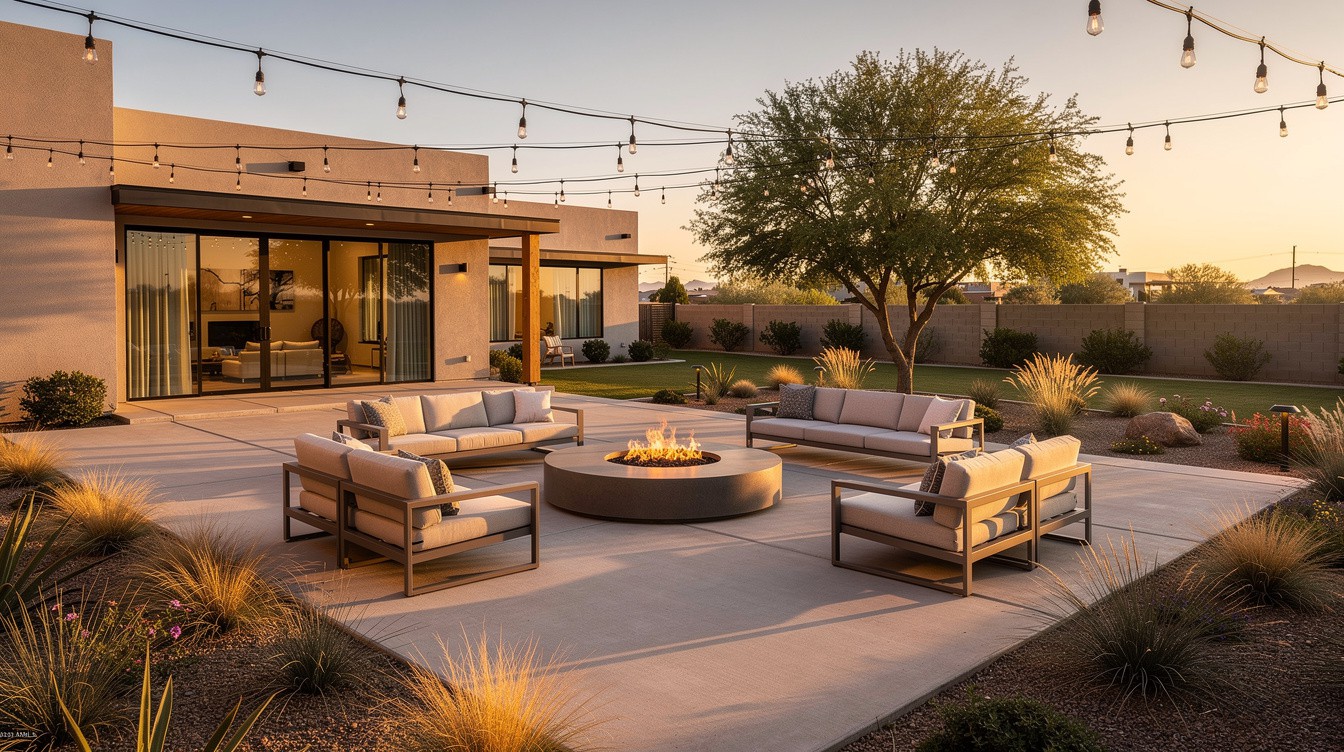
The Concrete Fire Terrace
$15–28/sqftA large poured-concrete terrace off a glass sliding wall, scored into big rectangles and finished light so it stays as cool as concrete can. A round cast-concrete gas fire table anchors four low aluminum-frame lounge sofas, string lights are hung on catenary cables across the whole width of the yard, and a modest strip of turf survives behind the seating for dogs and kids. The planting is intentionally loose against all that geometry: massed Muhlenbergia rigens and Muhlenbergia capillaris 'Regal Mist' along both edges, low mounds of Ruellia peninsularis and Leucophyllum langmaniae 'Lynn's Legacy' against the block wall, and a single spreading mesquite mid-yard that eventually shades half the terrace.
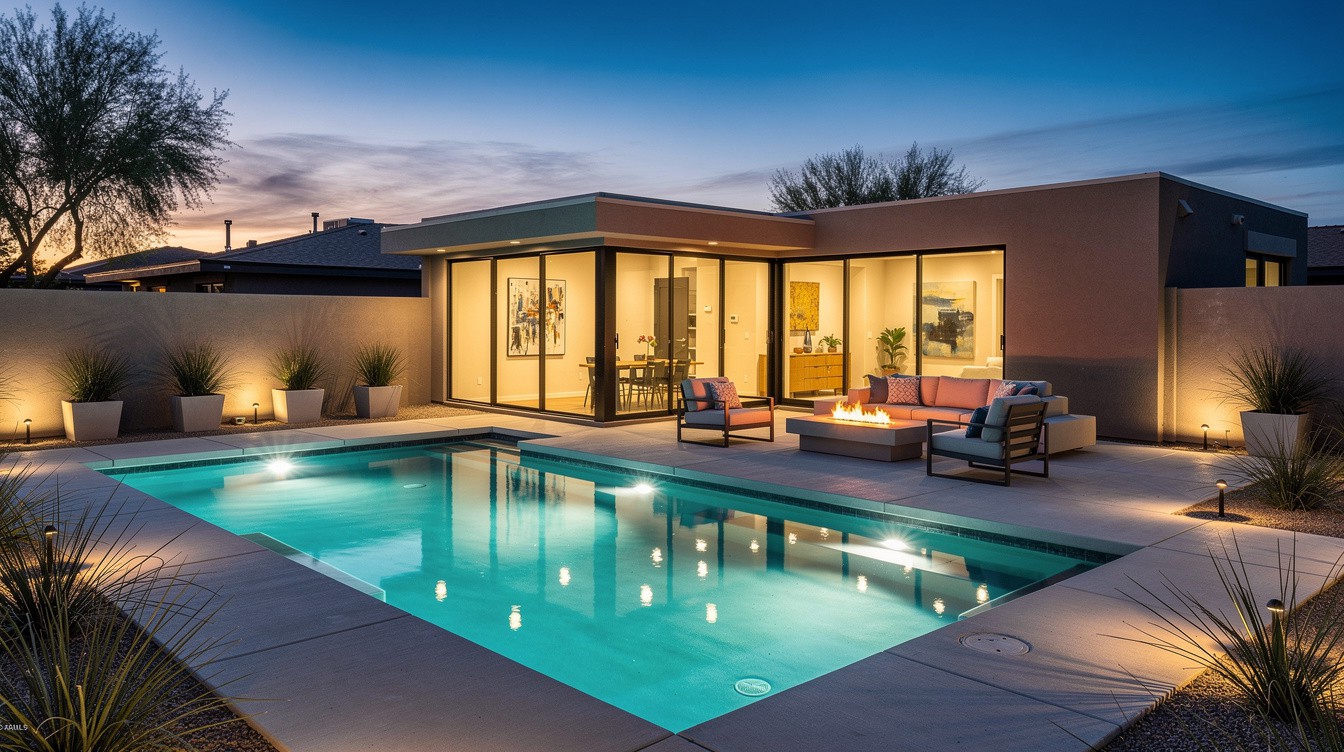
The Twilight Pool Court
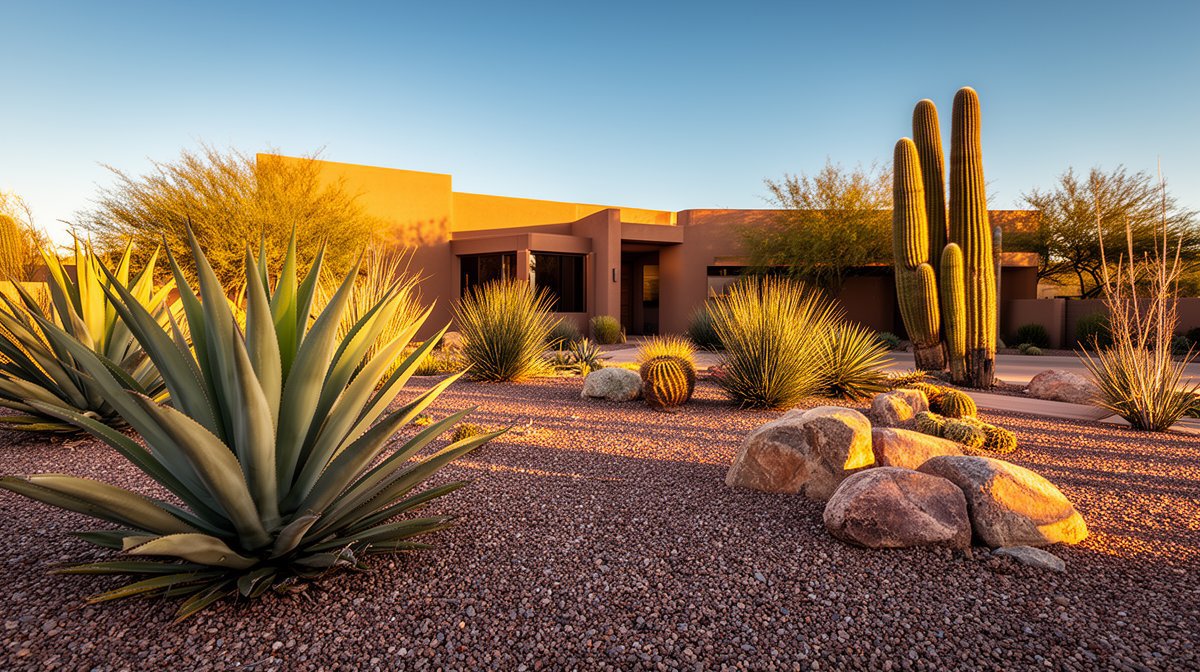
$55–110/sqft (pool area inclusive)A rectangular pool with a shallow tanning ledge set flush in a light concrete deck, photographed at the moment Tempe becomes livable. In-pool LEDs and warm wall-washers on the block perimeter do all the work after dark; a rectangular fire table and a low sectional occupy the deck beside the glass wall of the house. The planting is deliberately spare and vertical so nothing competes with the water: tall white cylindrical planters holding Dasylirion longissimum and Nolina nelsonii march along the back wall, and Muhlenbergia rigens and Hesperaloe parviflora 'Brakelights' are set into narrow granite margins where they catch the uplighting. Every plant here is chosen for low litter — nothing that drops into the skimmer.
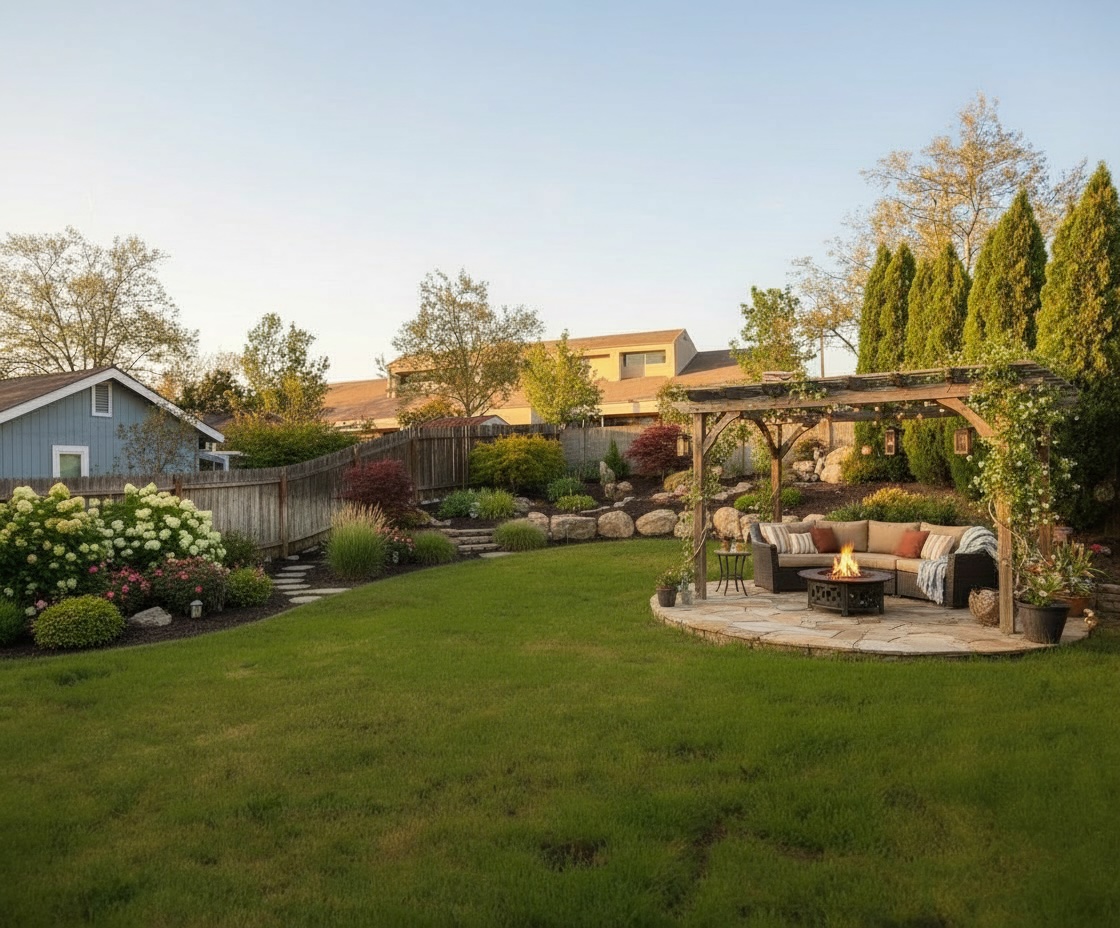
See how a modern/minimalist garden looks on YOUR property
Upload a photo of your Tempe yard and visualize your dream garden in seconds.
Try ProScapeAI Free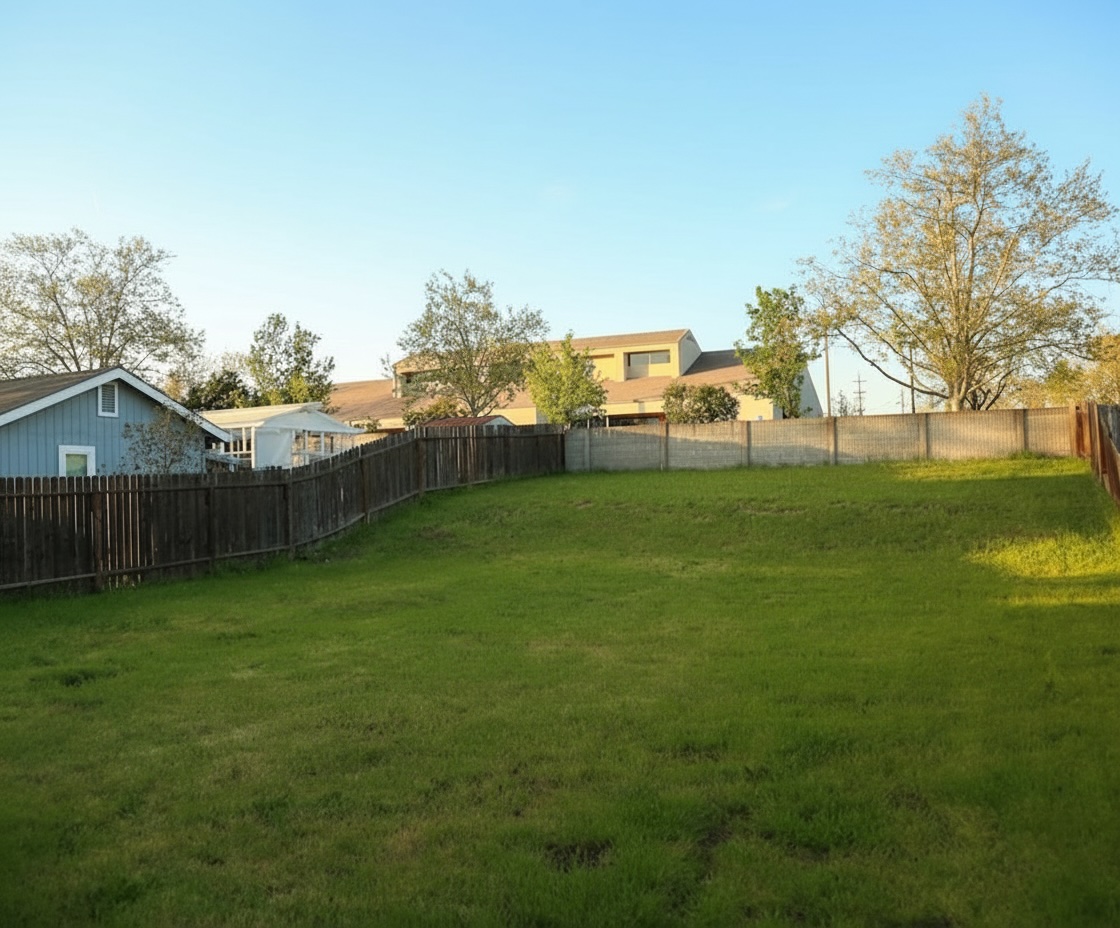
Featured Trees & Shrubs for Modern/Minimalist Gardens
Browse all 185 plants for Tempe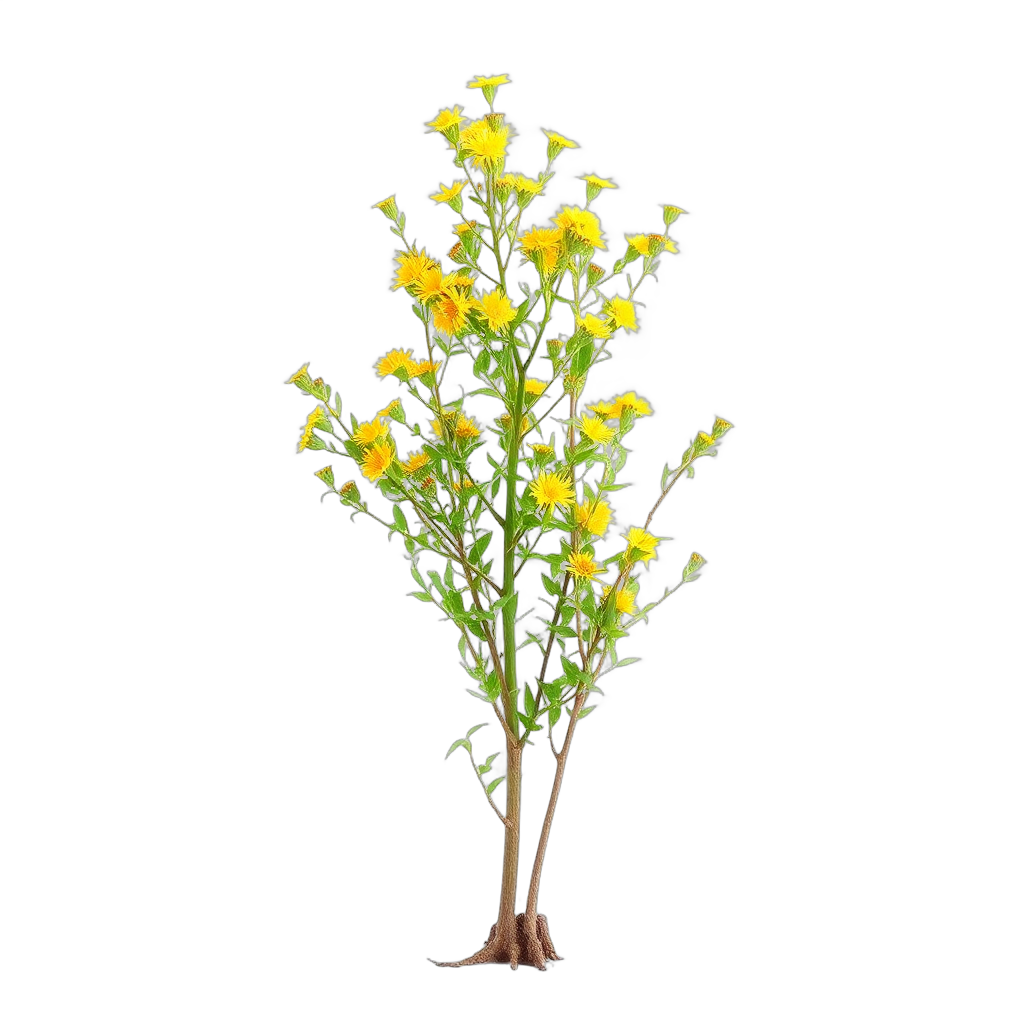
Brittlebush
Enca farinosa
grows to 3 feet, yellow blooms in spring. Attracts butterflies.
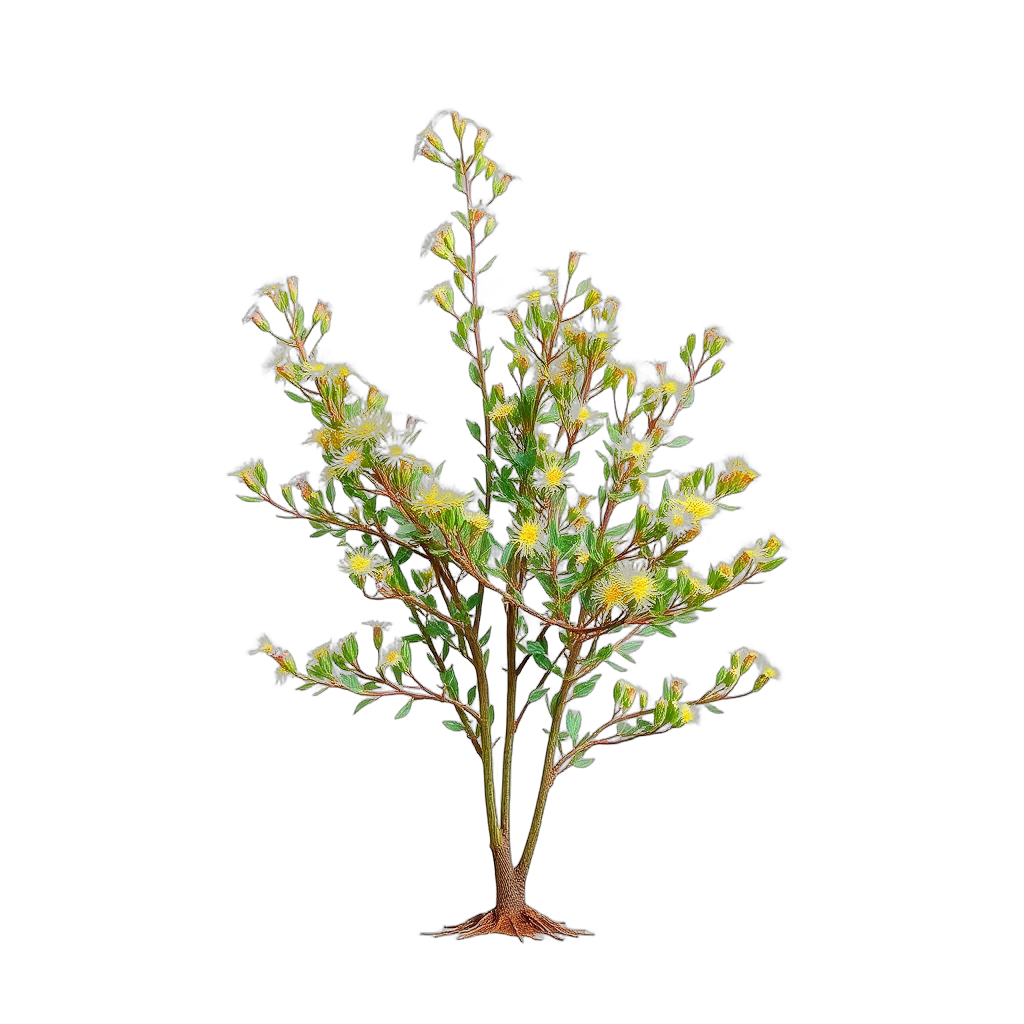
Catclaw Acacia
Acacia greggii
medium-sized at 15 feet, yellow blooms in spring. Pollinator-friendly.
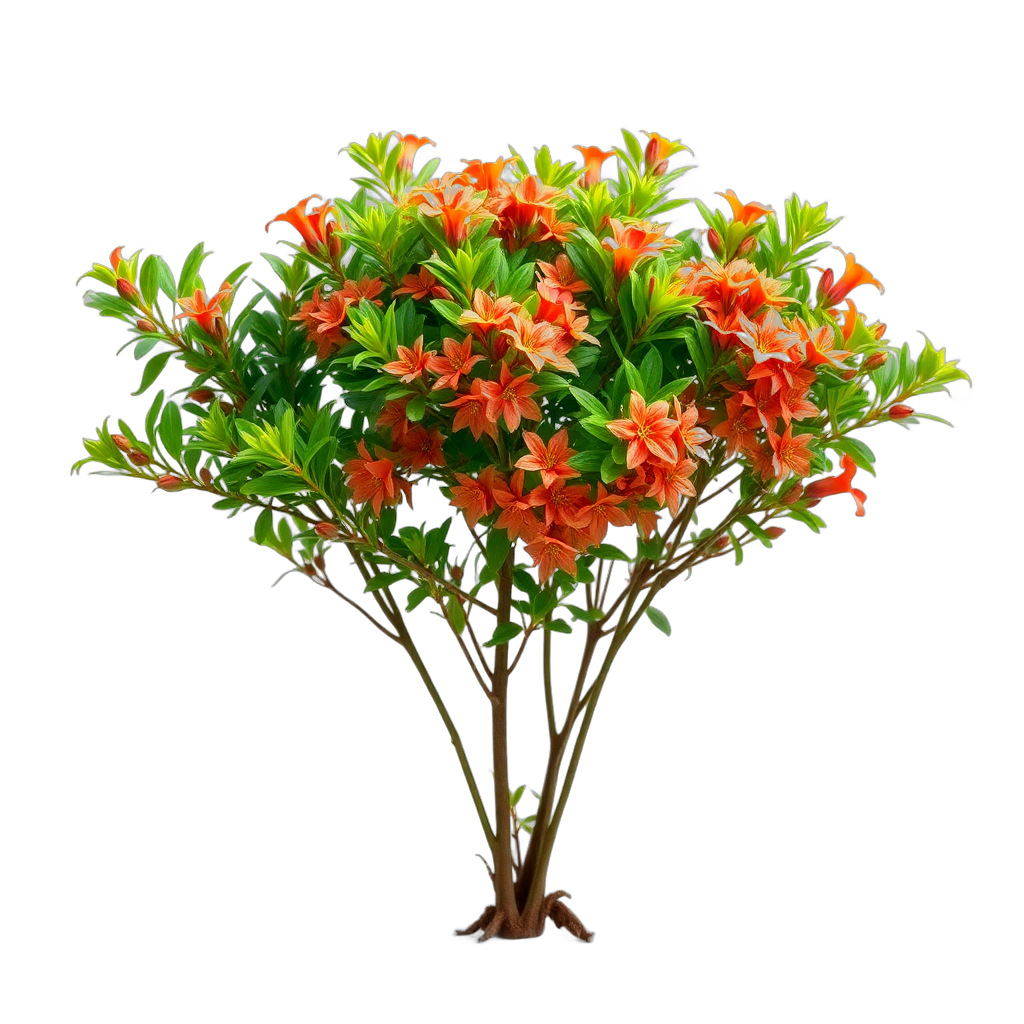
Chuparosa
Justicia californica
grows to 5 feet, red blooms in spring. Attracts hummingbirds.
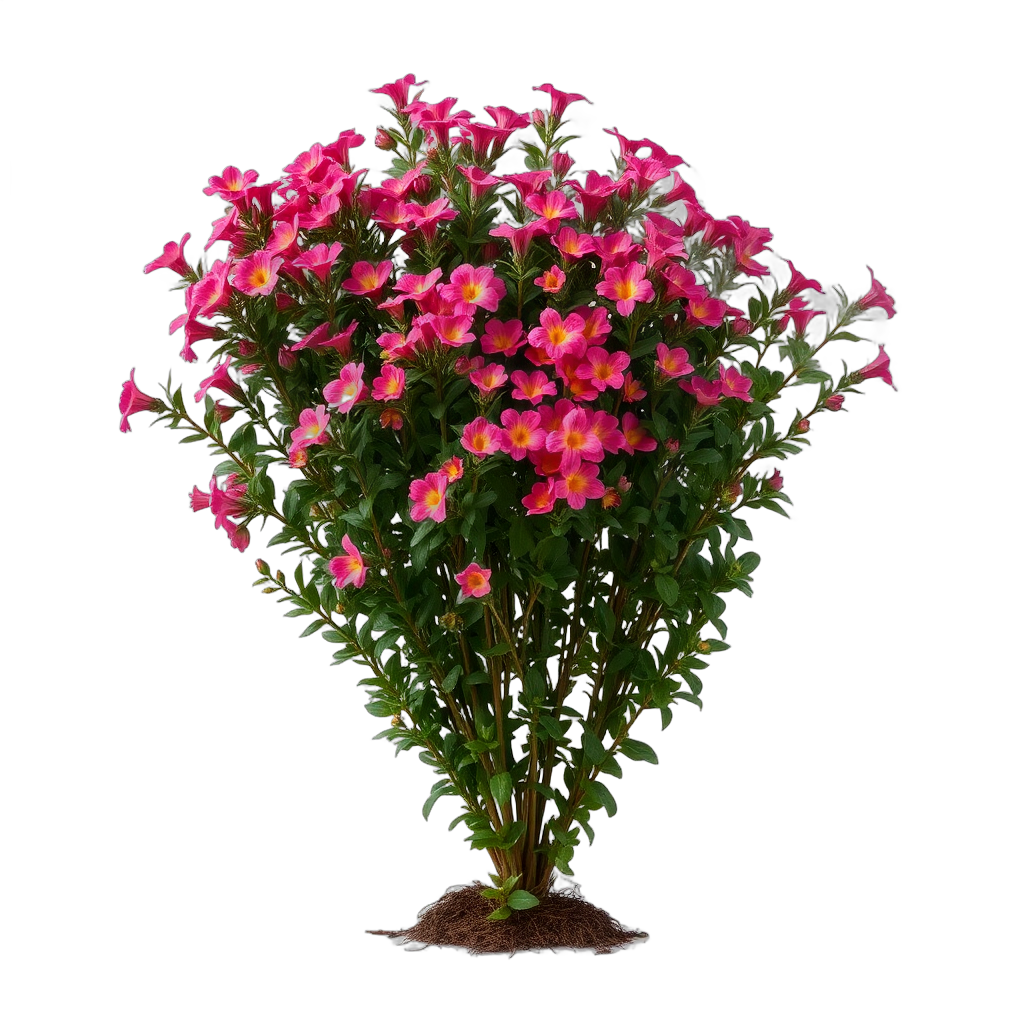
Cliffrose
Purshia mexicana
medium-sized at 8 feet, yellow blooms in spring. Attracts butterflies.
Featured Grasses & Groundcovers for Modern/Minimalist Gardens
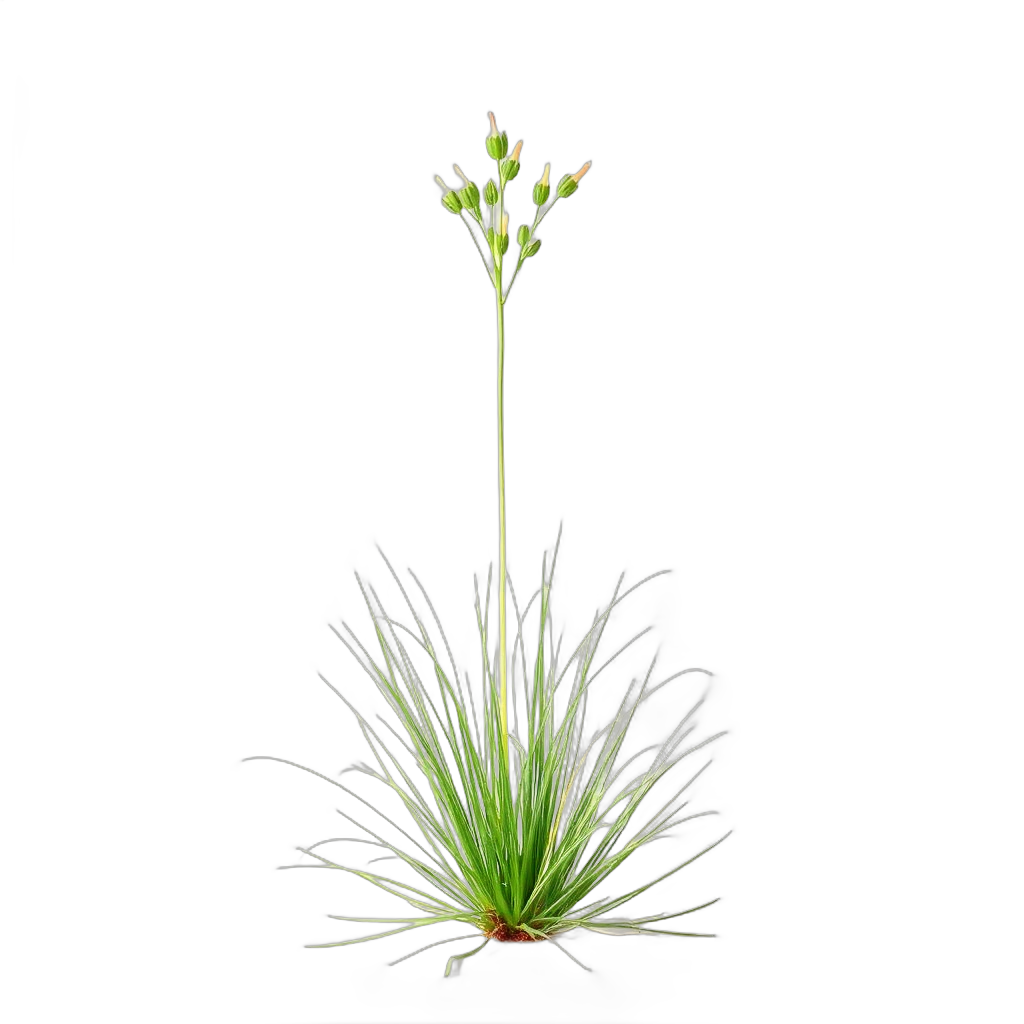
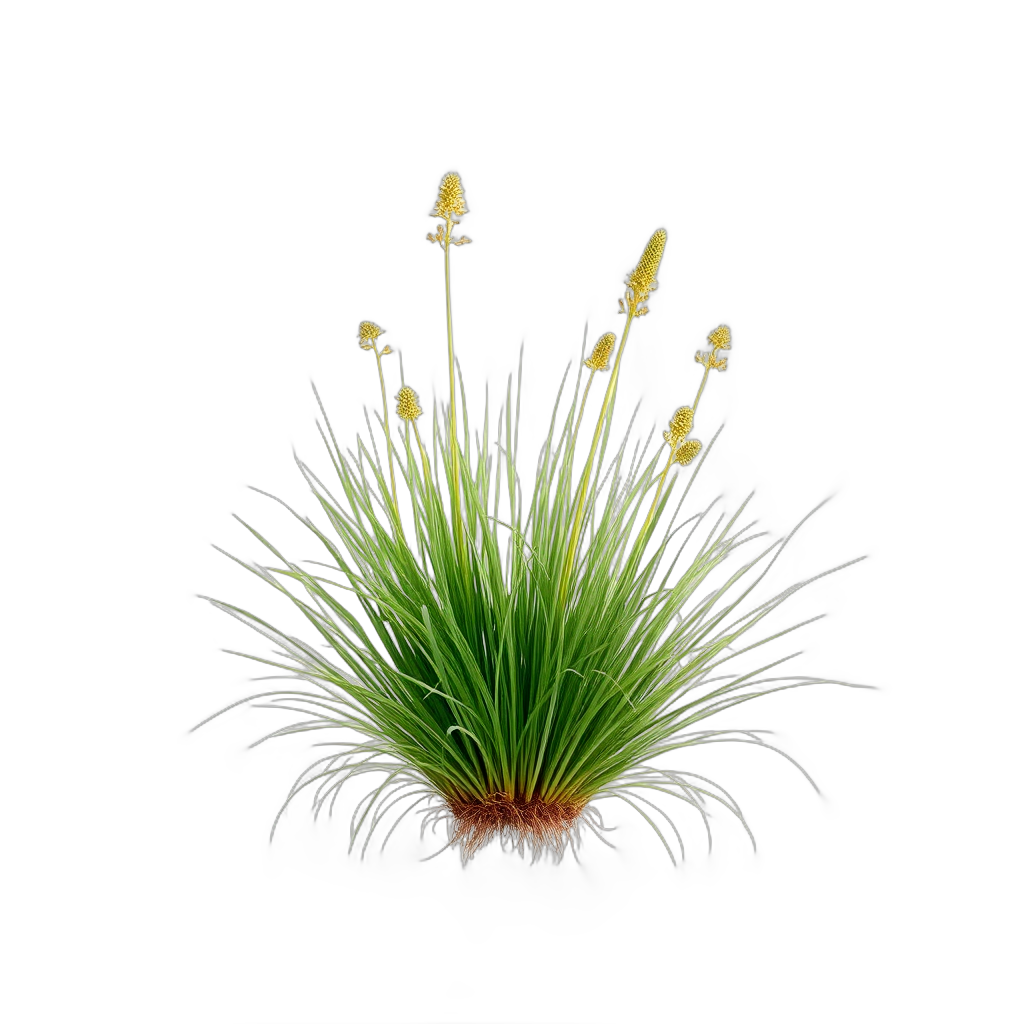
Alkali Sacaton
Sporobolus airoides
grows to 3 feet, blooms in summer. Yellow fall color.
Big Sacaton
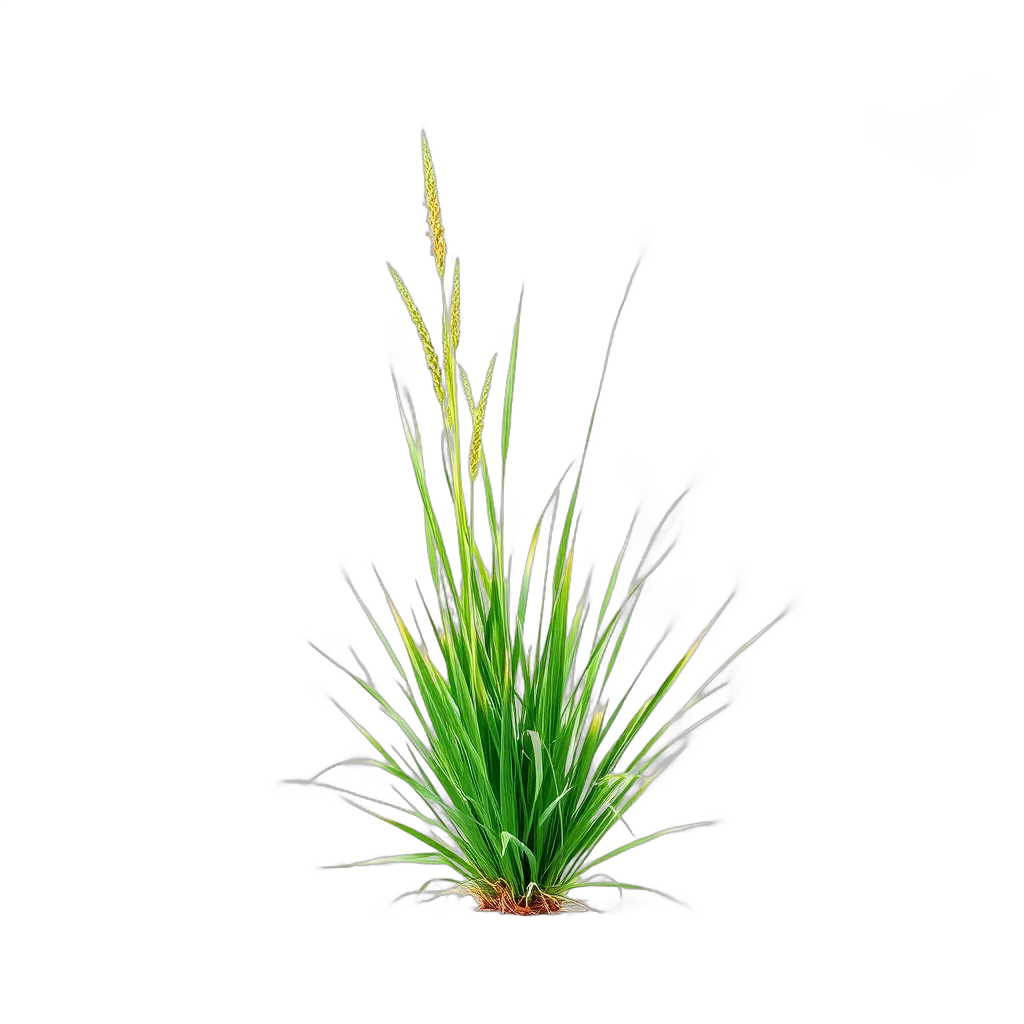
Sporobolus wrightii
grows to 5 feet, blooms in summer. Yellow fall color.
Bull Grass
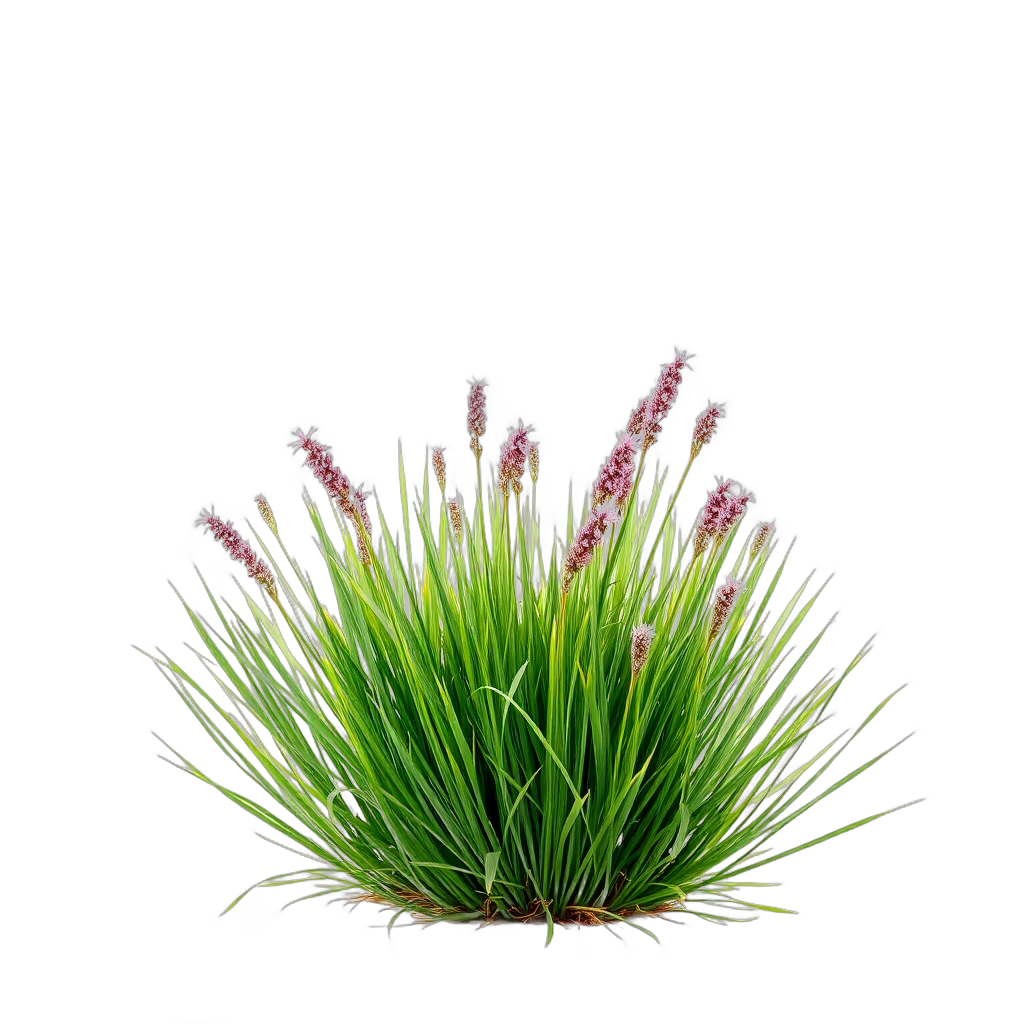
Muhlenbergia emersleyi
grows to 4 feet, purple blooms in fall. Yellow fall color.
Purple Three-Awn
Aristida purpurea
low-growing ground cover, purple blooms in fall. Yellow fall color.
Featured Flowers & Perennials for Modern/Minimalist Gardens
Banana Yucca
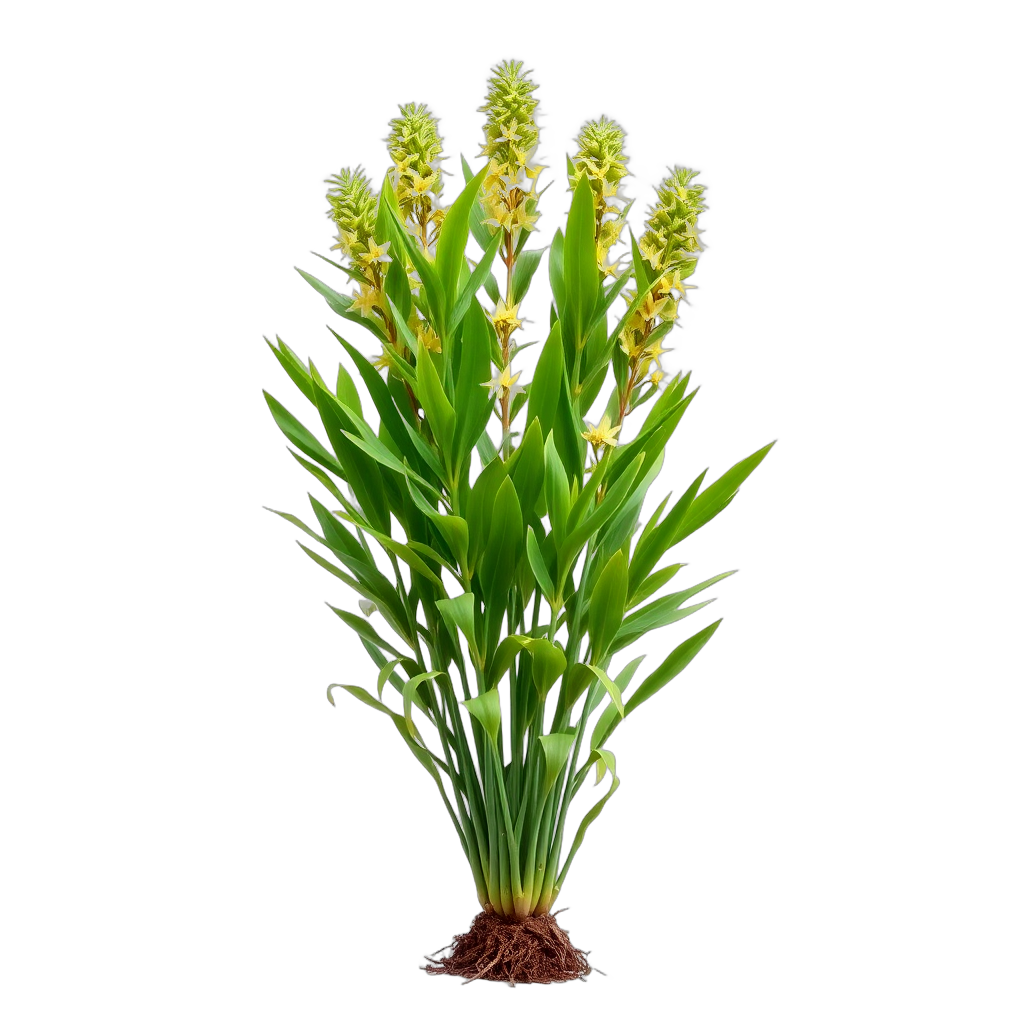
Yucca baccata
low-growing ground cover, white blooms in spring. Attracts hummingbirds.
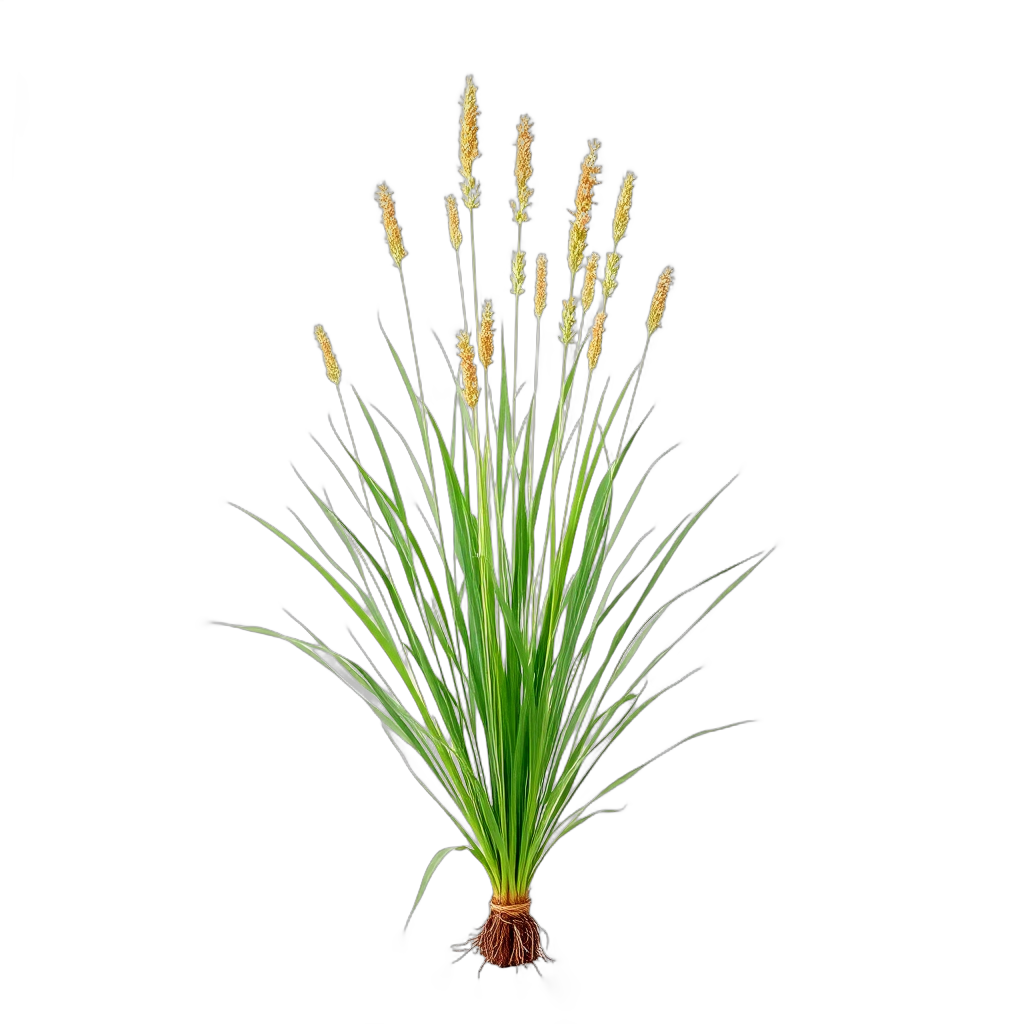
Beargrass
Nolina microcarpa
low-growing ground cover, white blooms in summer. Evergreen year-round.
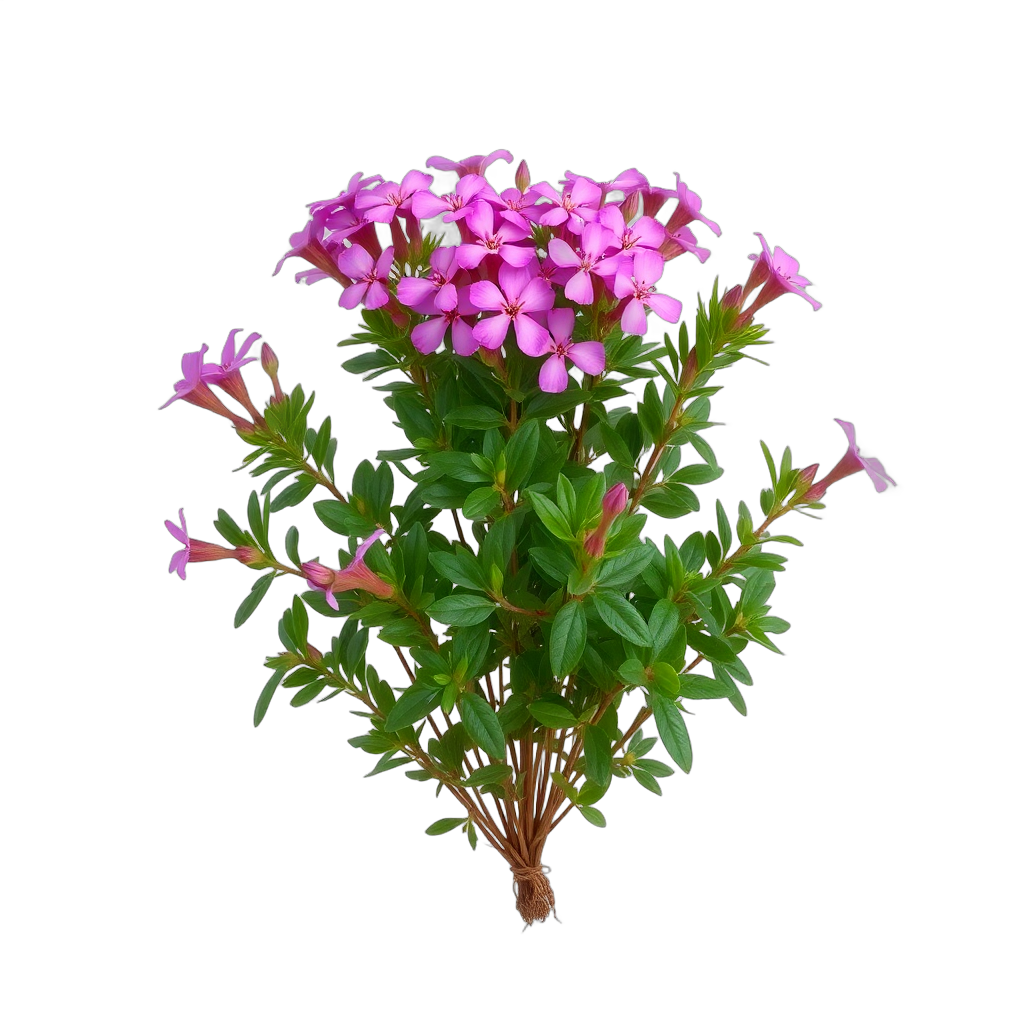
Desert Phlox
Phlox austromontana
low-growing ground cover, pink blooms in spring. Attracts hummingbirds.
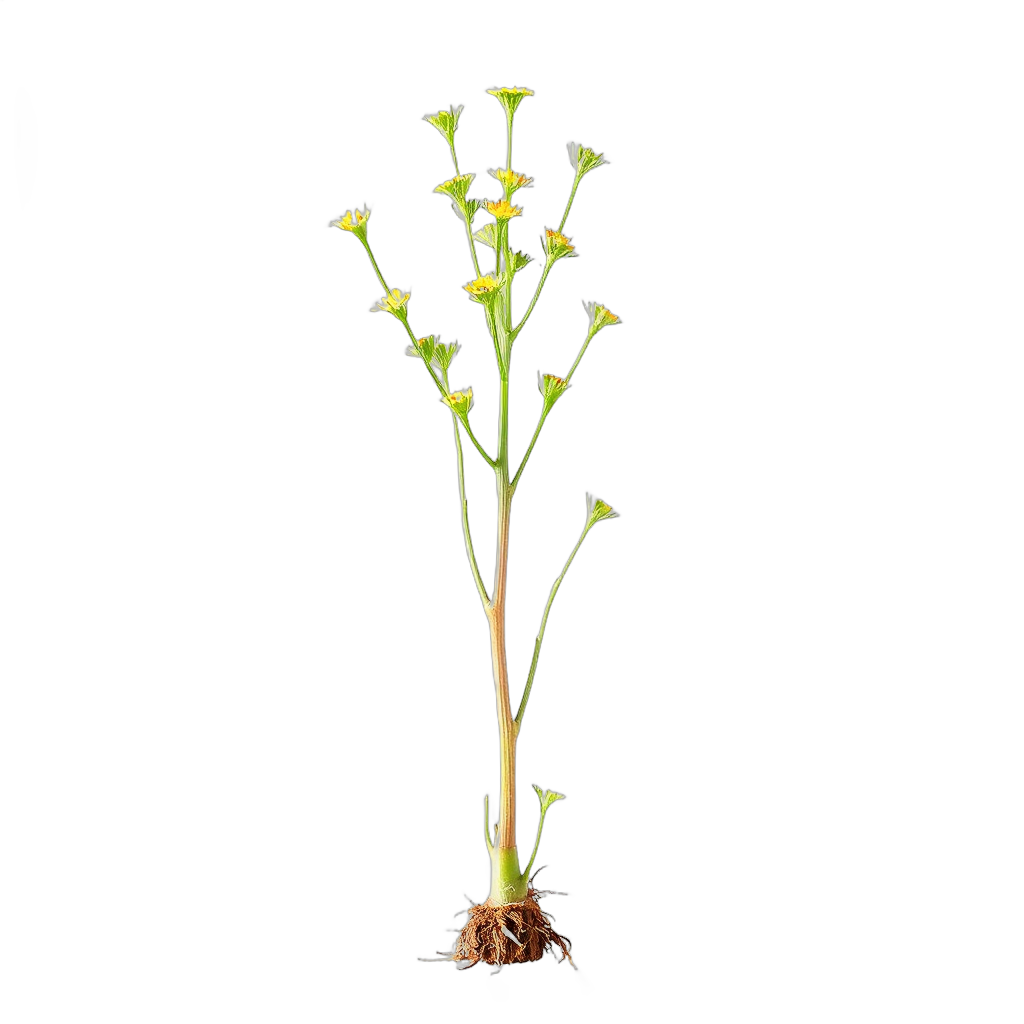
Desert Spoon
Dasylirion wheeleri
grows to 4 feet, white blooms in summer. Evergreen year-round.
Bloom Calendar for Tempe
spring
Banana Yucca, Desert Phlox, Brittlebushsummer
Beargrass, Desert Spoon, Alkali Sacatonfall
Bull Grass, Purple Three-Awnwinter
Limited bloomsDesign Tips for Tempe (Zone 9b)
- Spend the canopy budget first — a 24- to 36-inch box Parkinsonia ×'Desert Museum' or Prosopis velutina set off-axis over the west elevation makes a minimal Tempe yard usable; without it, the clean empty plane just becomes a heat battery that stays warm past midnight
- Let the saw-cut joint layout be the design: score concrete on a deliberate grid and align paver joints, bed edges and door openings, because in a landscape this spare the joint pattern is the ornament
- Use light integral-color concrete and cool-touch textured finishes around any seating or pool deck — pale broom concrete still reaches 140–150°F in July and dark pavers exceed 160°F, which quietly makes an expensive terrace unusable half the year
- Plant in odd-numbered masses of one cultivar rather than a mixed collection — nine Agave parryi var. truncata or a run of Hesperaloe parviflora 'Brakelights' reads as architecture, while one of everything reads as a nursery clearance rack
- Corten and raw steel are the right edging here: Tempe's dry air patinas them slowly with almost no bleed onto adjacent granite, and 1/4-inch steel holds a crisp line through monsoon runoff that plastic and header board will not
- Light vertically and warmly — a single uplight under a Yucca rostrata 'Sapphire Skies' or Dasylirion longissimum, plus a warm wall-wash on the block perimeter, is what turns a modern Tempe yard into an outdoor room during the 8pm-to-midnight hours when it is finally comfortable outside
Where to Source Plants in Tempe
Skip the big-box stores. These independent Tempe nurseries specialize in the plants that make modern/minimalist gardens thrive in Zone 9b.
The Plant Mill
Downtown Tempe (Mill Avenue)
Local plant shop offering healthy indoor and outdoor plants with expert care guidance.
A&P Nursery
Mesa (East Valley)
Family-owned nursery since 1970 specializing in desert-adapted trees, shrubs, and flowers.
Berridge Nurseries
Camelback East, Phoenix
Valley institution since 1938 with the largest rose selection in the Phoenix area plus cacti and succulents.
Modern/Minimalist Landscaping Costs in Tempe
| Project Scope | Estimated Cost |
|---|---|
| Modern front yard conversion (steel-edged beds, granite, specimen plants, 600–900 sqft) | $6,000 – $15,000 |
| Poured concrete terrace with saw-cut grid (300–500 sqft) | $4,500 – $12,000 |
| Large-format pavers set with open granite joints | $18 – $32/sqft |
| Plumbed gas fire table or fire bowl | $3,000 – $9,000 |
| Pool, concrete deck, lighting and perimeter planting | $70,000 – $160,000 |
| AI visualization with ProScapeAI | Free to start |
Estimates based on Tempe, AZ-area contractor rates as of 2026. Actual costs vary by site conditions, materials, and contractor.
Tempe Climate & Growing Zone
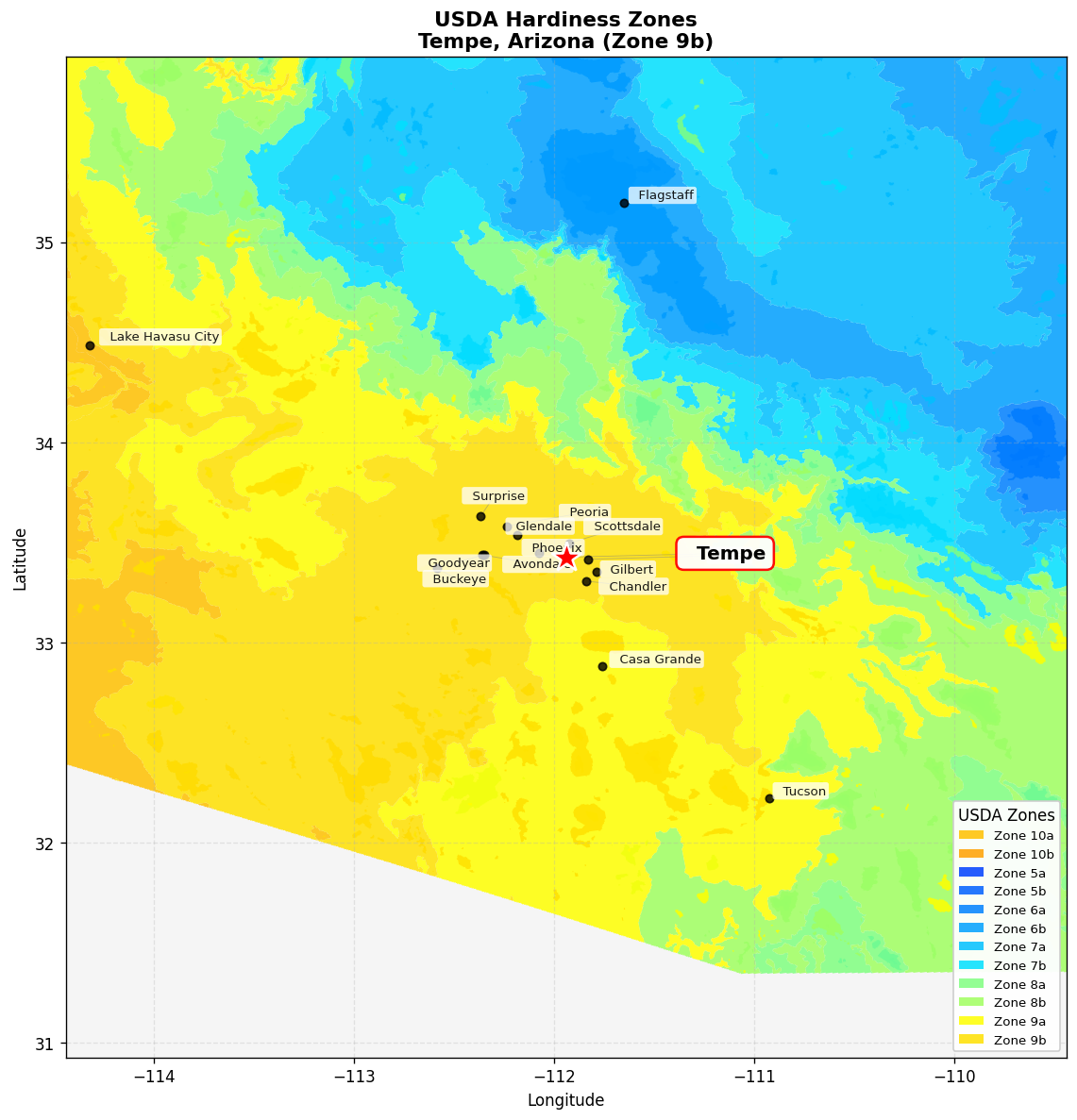
USDA Zone 9b
Hardiness zone for Tempe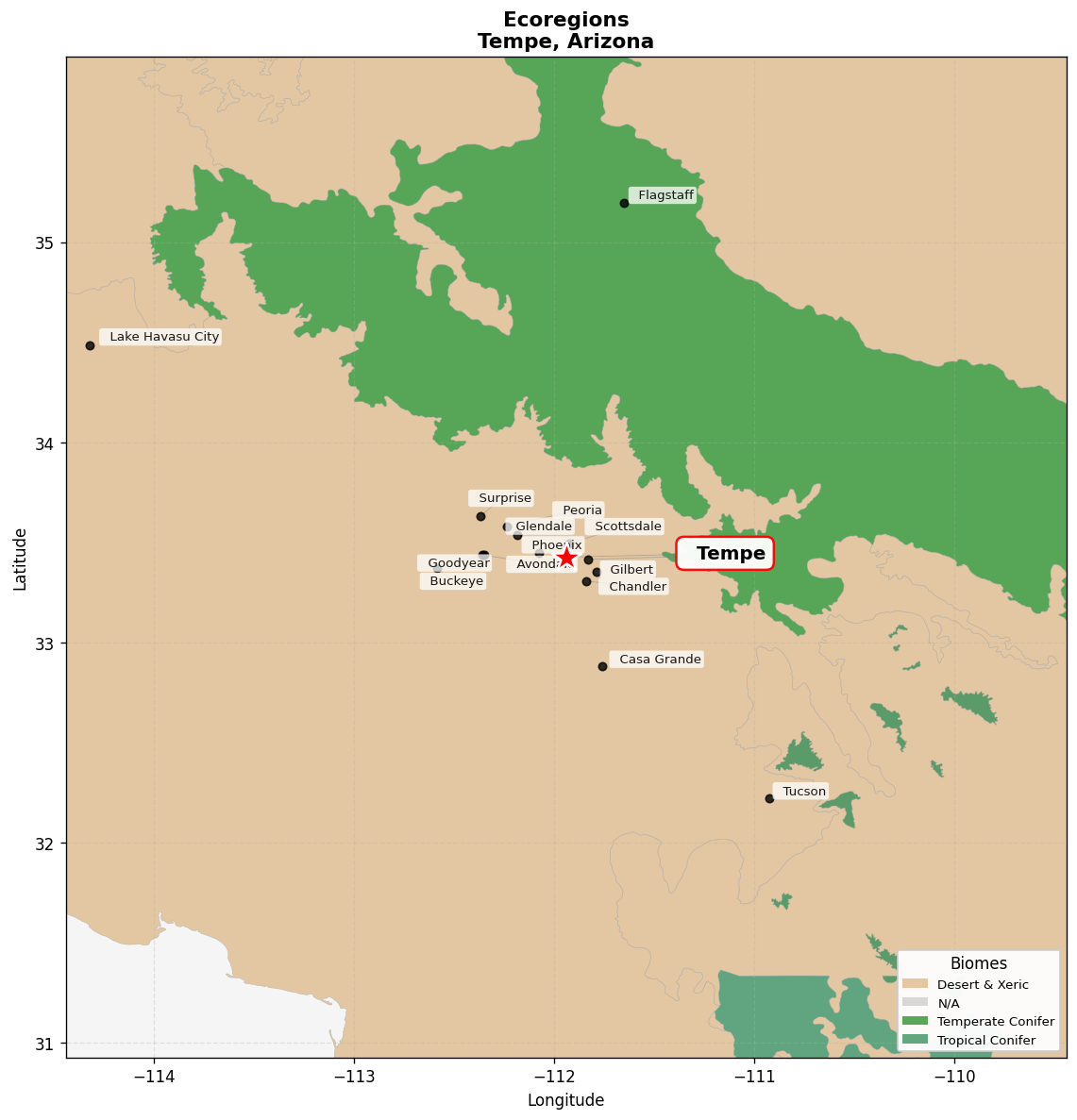
Sonoran desert
Native ecoregionFrequently Asked Questions
How much does modern landscaping cost in Tempe?
Phoenix-metro labor and locally quarried granite keep Tempe below most large metros, and small lots keep totals manageable. A modern front-yard conversion — steel-edged geometric beds, decomposed granite, specimen agaves and yuccas, drip and lighting — runs $6,000–$15,000 for a typical 600–900 sqft Tempe front yard. Poured concrete patios run $10–18/sqft; large-format pavers with open granite joints run $18–32/sqft because the layout labor is real. A plumbed gas fire table is $3,000–$9,000. A full pool court with deck, lighting and perimeter planting lands between $70,000 and $160,000. The specimen plants are where budgets quietly grow: a field-grown Yucca rostrata 'Sapphire Skies' or a large Agave ovatifolia is $200–500 each, and modern designs need them big enough to read as objects.
Should I keep any lawn in a modern Tempe yard?
A small, deliberate panel — yes; a full front lawn — no. Hybrid bermuda ('Tifway 419', 'Midiron') survives Tempe summers on roughly 55–65 inches of applied water per year, five to seven times what an equivalent area of granite and agaves uses, and it goes dormant brown from November until March unless you overseed with perennial rye, which adds another winter of watering and a spring transition mess. The modern move is to treat turf as a material with a job: one crisp rectangle where children or dogs actually play, edged in steel or concrete so it reads as intentional, and granite everywhere else. 'UC Verde' buffalograss uses less water but thins badly in low-desert heat and heavy foot traffic. If a lawn panel isn't being used, delete it — it is the largest water line item on any Tempe property.
How do I pour concrete and set hardscape that survives Tempe conditions?
Frost depth is effectively zero, so the enemies are heat, caliche and monsoon water. Excavate to competent subgrade, break or remove any caliche hardpan you hit, and compact 4 inches of ABC (aggregate base course) under slabs and pavers — caliche left in place perches water and heaves during summer storms. Pour early morning in summer or move the pour to October–April; hot slabs flash-cure and craze. Saw-cut control joints on a grid within 24 hours and use them as the design grid rather than hiding them. Specify light integral color and a broom or light sandblast finish for seating areas; dark pavers exceed 160°F barefoot in July. Slope everything away from the house at 2% minimum and use open granite joints in paver fields so a 1-inch-per-hour monsoon cell drains rather than pooling.
Which architectural plants read modern and actually survive here?
Modern design needs plants with a single strong silhouette, and Zone 9b gives you the best selection in the country. The reliable core: Agave ovatifolia 'Frosty Blue', Agave parryi var. truncata, Agave weberi, Agave geminiflora and Agave vilmoriniana for rosettes; Yucca rostrata 'Sapphire Skies', Yucca rigida and Yucca pallida for blue vertical form; Dasylirion wheeleri and Dasylirion longissimum for fine-textured spheres; Hesperaloe parviflora 'Brakelights' and Hesperaloe funifera for repeated accents; Muhlenbergia rigens, Muhlenbergia capillaris 'Regal Mist' and Bouteloua gracilis 'Blonde Ambition' for movement. For clipped green mass use Leucophyllum langmaniae 'Lynn's Legacy' or Ruellia peninsularis rather than boxwood, which fries. Skip Italian cypress — it looks the part but spider mites and reflected heat kill them out in Tempe within a few years — and avoid Nassella tenuissima, which seeds everywhere.
How do I add shade without ruining a minimal design?
Shade is the difference between a modern Tempe yard that gets used and one that gets photographed. Three approaches all stay clean: a single multi-trunk canopy tree placed off-axis — Parkinsonia ×'Desert Museum', Prosopis velutina or thornless Prosopis glandulosa 'Maverick', limbed high so the trunks read as sculpture over a bare groundplane; a flat-roofed steel or wood ramada that repeats the architecture's own lines rather than a patterned pergola ($8,000–$25,000 installed); or tensioned shade sails in a solid neutral, which cut roughly 90% of UV over a seating zone for a fraction of the cost. Prioritize the west and southwest — that is where reflected stucco heat and 6pm sun make a terrace unusable from May through September. Olneya tesota (desert ironwood) is the best long-term choice if you can wait for it.
Do I need permits, and are there historic district rules in Tempe?
Planting, granite conversions, drip irrigation and at-grade patios generally need no permit. Permits and inspections apply to pools, roofed ramadas, block or retaining walls above the code threshold, and gas lines for fire features — and Maricopa County pool barrier requirements (self-closing, self-latching gates and a compliant enclosure) are strictly enforced on every new pool. Tempe's historic districts, including Maple-Ash and Mitchell Park, carry design review for exterior changes visible from the street, so confirm scope with the city before altering front walls, driveways or significant streetscape elements. HOA-governed south Tempe communities such as Warner Ranch have their own plant and hardscape approval lists. Also check whether your block still carries SRP flood irrigation rights before you regrade a front yard — it changes the design completely.