4 Modern Garden Ideas for Washington, DC | Architectural Design in Zone 7b
Native plants from the Southeast US conifer savannas (Zone 7b) — Humid subtropical climate
Why Modern/Minimalist Gardens in Washington?
Washington, DC has an underappreciated tradition of exceptional modern landscape design — from Lawrence Halprin’s landmark Franklin Delano Roosevelt Memorial to Oehme, van Sweden’s revolutionary New American Garden style that was literally invented here in the 1970s. Oehme, van Sweden’s Georgetown studio created the design language of ornamental grasses, seed heads, and architectural planting that defined American modern garden design, and DC’s residential neighborhoods have been absorbing that influence for 50 years. When you plant Karl Foerster grass and native switchgrass in a geometric DC front yard, you’re continuing a design lineage that originated in this city.
Practically, modern design answers the specific constraints of DC’s residential fabric with remarkable efficiency. Capitol Hill, Dupont Circle, and Logan Circle row houses typically have front yards of 8–18 feet in depth — narrow enough that a maximalist cottage approach collapses into visual chaos, but perfectly suited to the restraint of modern design. A single bold move — a geometric gravel bed with architectural grasses, a specimen multi-stem serviceberry with steel ring mulch, a pair of clipped hollies flanking the stoop — creates enormous curb impact in a compressed footprint. DC’s Hill neighborhoods have seen significant modern front yard investment over the past decade as homeowners recognized that design-forward landscapes are the most effective way to differentiate a row house in a block of identical facades.
Zone 7b gives DC modern gardens a longer season than Northern cities and a broader plant palette than most homeowners realize. Average DC temperatures stay above freezing from late March through mid-November, meaning outdoor spaces are usable for nearly eight months of the year — worth investing in properly. DC’s 39 annual inches of rainfall with summer thunderstorm surges require drainage planning as a baseline design requirement. The city’s tree canopy — DC has one of the highest urban tree canopy percentages of any major American city at 35% — means many residential gardens receive dappled shade that modern shade-tolerant grasses and architectural ferns handle beautifully.
4 Modern/Minimalist Design Ideas for Washington
AI-generated image
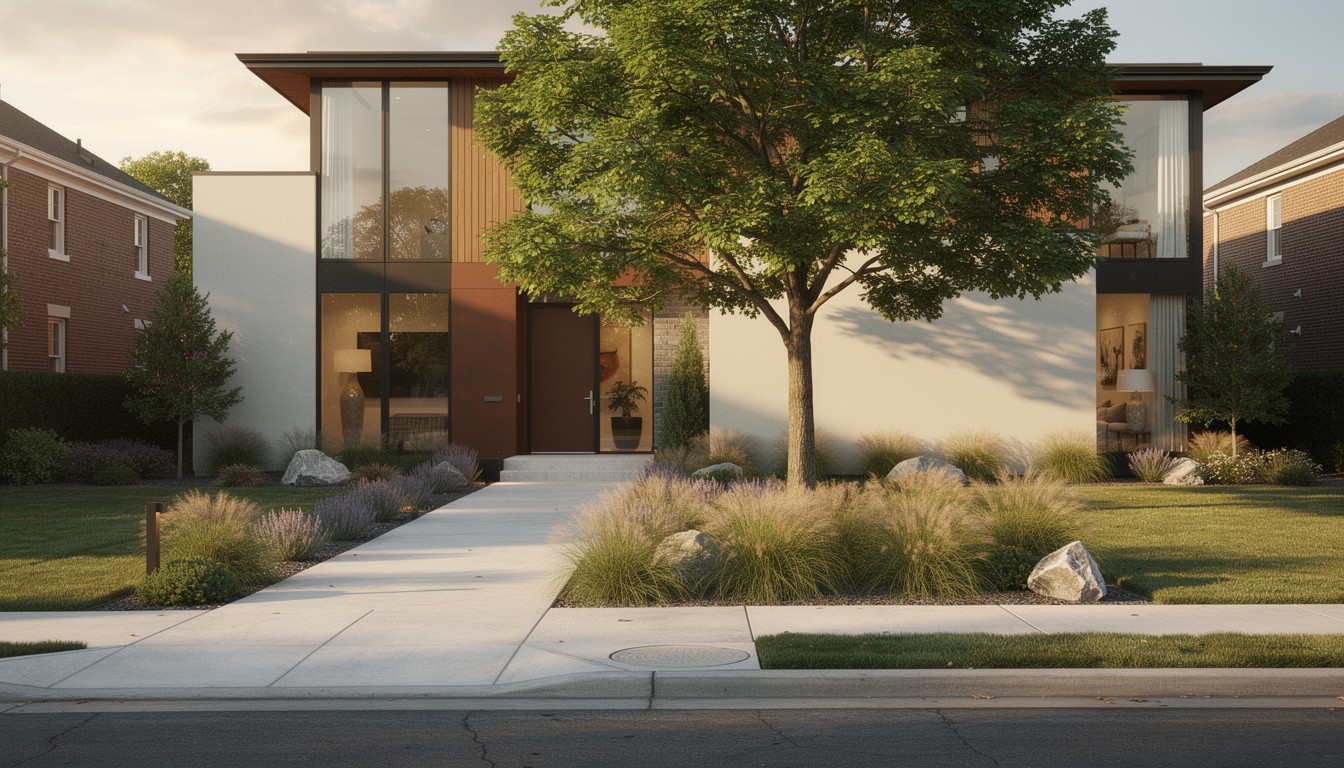
The DC Modern Row House Front
$18–32/sqftA tall modern DC home with a wood accent panel and floor-to-ceiling glass gains dramatic street presence with a wide concrete walkway flanked by sweeping ornamental grasses and boulders set in decomposed granite beds, a large shade tree providing canopy and neighborhood scale. The crisp geometry of the path and steel edging contrasts against the warm wood facade in a way that reads as deliberate and confident at dusk. Against the brick residential context of Capitol Hill or Georgetown, this front yard signals the design-forward sensibility of DC’s modernizing neighborhoods.
AI-generated image
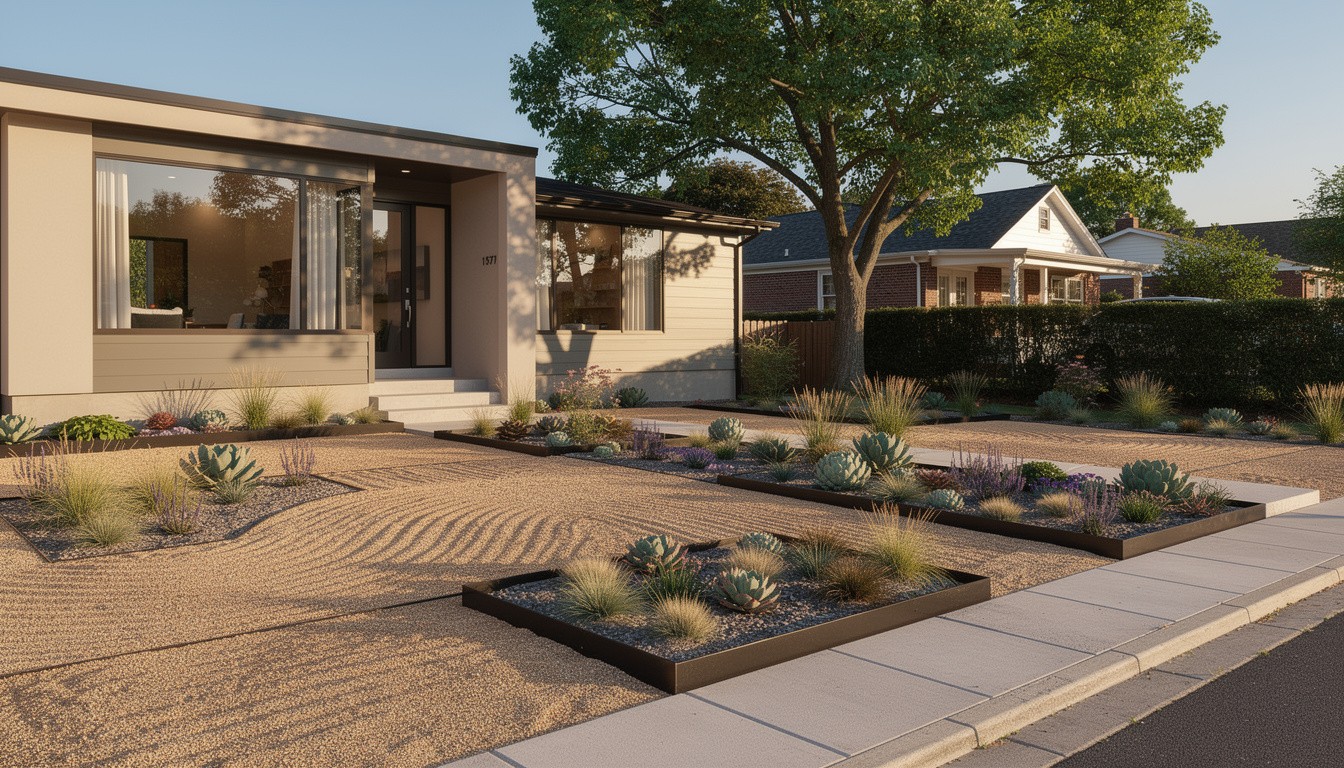
The DC Gravel-and-Agave Modern Front
$15–28/sqftA beige modern ranch-style DC home’s front replaced with a raked decomposed granite ground plane, raised dark planting beds holding agave rosettes and architectural succulents in geometric arrangements, and a large street tree providing canopy. The raked DG pattern adds texture and a deliberate craft quality to what could otherwise be a flat surface. Zone 7b requires cold-hardy alternatives to true agave: yucca filamentosa delivers the same sculptural form with full Zone 5 cold hardiness through DC’s winters.
AI-generated image
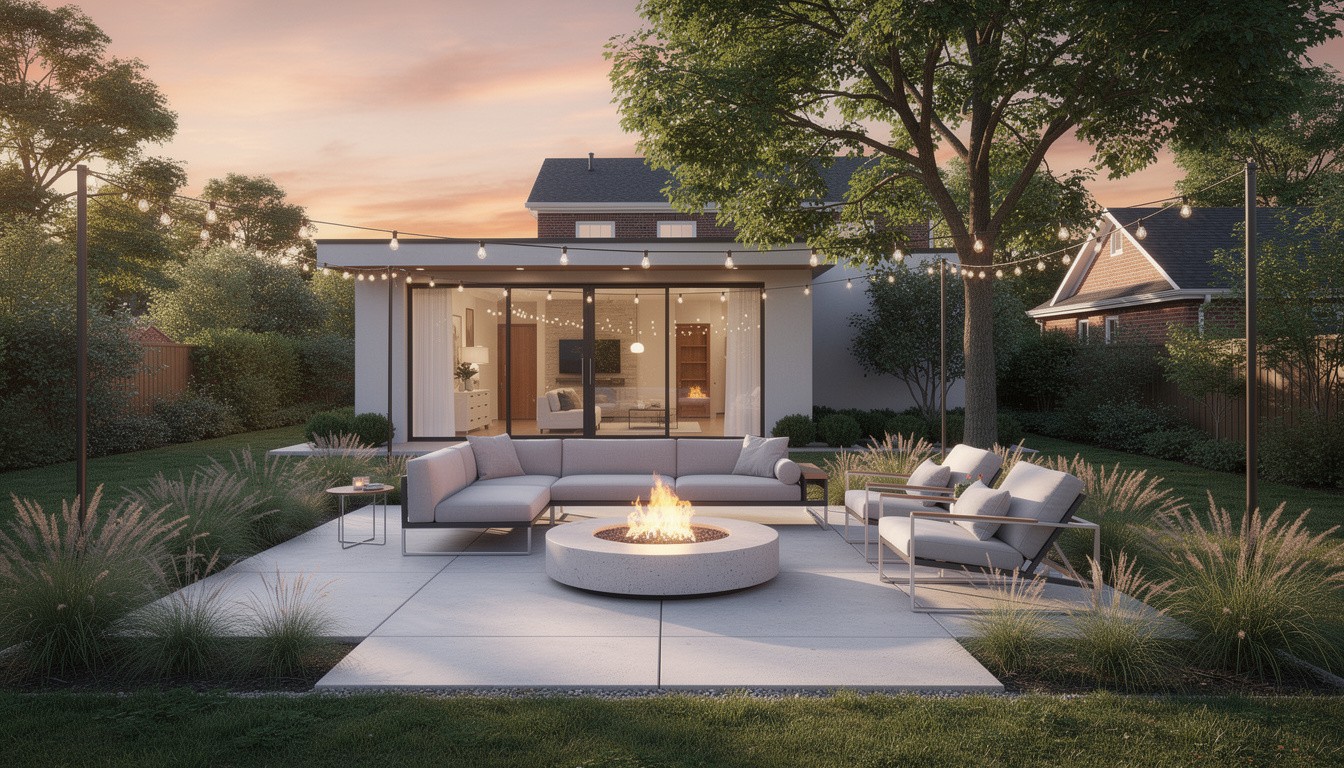
The DC Backyard Fire Pit Outdoor Room
$35–62/sqftA white and gray DC row house backyard becomes a year-round outdoor living room: a concrete patio covering the full footprint, a round fire pit as the centerpiece with modern lounge chairs in a social arrangement, ornamental grasses framing the perimeter in steel-edged beds, string lights on a steel pergola overhead, and a shade sail providing afternoon relief. DC’s outdoor season runs April through November at Zone 7b — designing specifically for that range with fire for spring and fall evenings and shade for summer afternoons maximizes the return on every dollar invested. This is where DC homeowners actually live.
AI-generated image
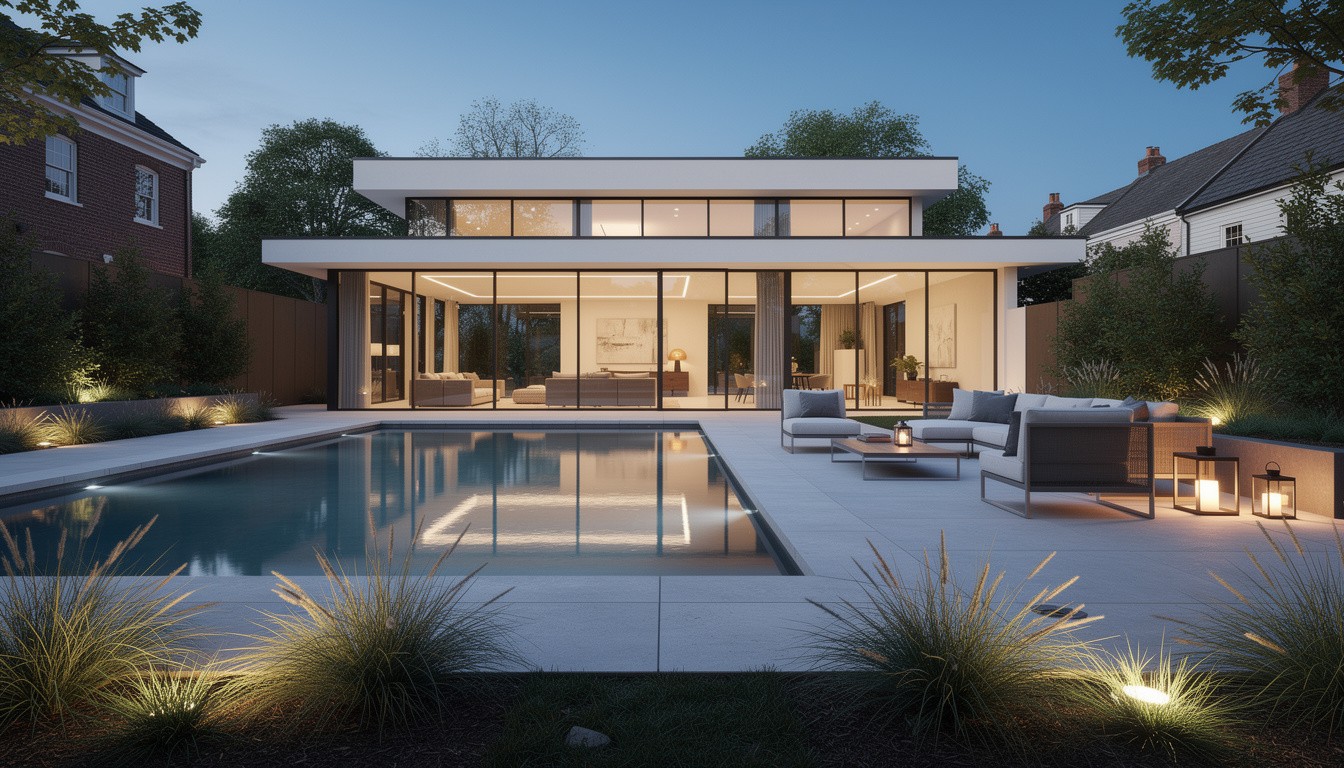
The DC Urban Pool Garden
$50–105/sqft (pool deck and landscaping, excl. pool construction)A modern two-story glass-walled DC home commands a rear yard built around a rectangular pool on white concrete decking, with a fire pit lounge at the far end, ornamental grasses in the perimeter planting beds, and neighboring brick buildings rising above the fence line as context. The urban backdrop — DC brick and glass — makes the pool garden feel like an urban oasis rather than a suburban amenity, which is exactly the right framing for this market. DC’s warm summers make the pool genuinely usable June through September, and the fire pit extends the season to November.
See how a modern/minimalist garden looks on YOUR property
Upload a photo of your Washington yard and visualize your dream garden in seconds.
Try ProScapeAI Free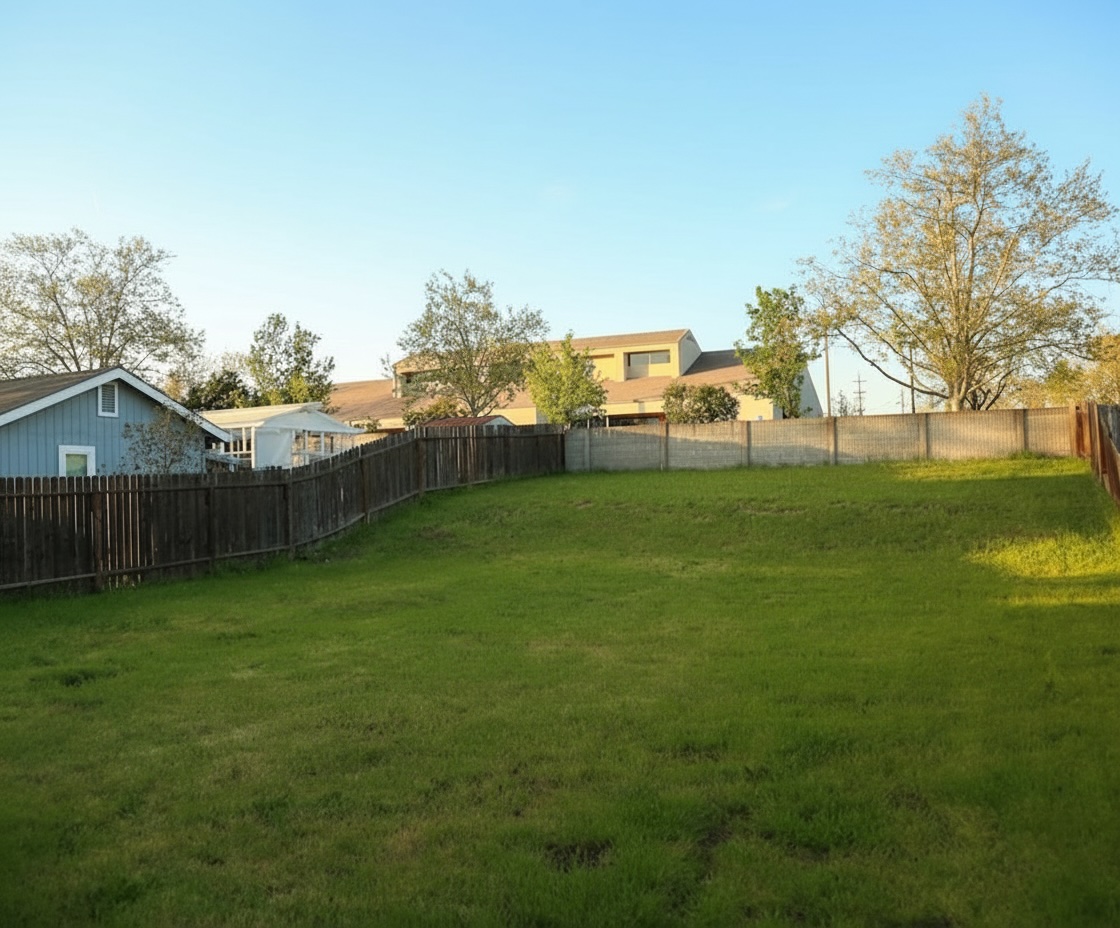
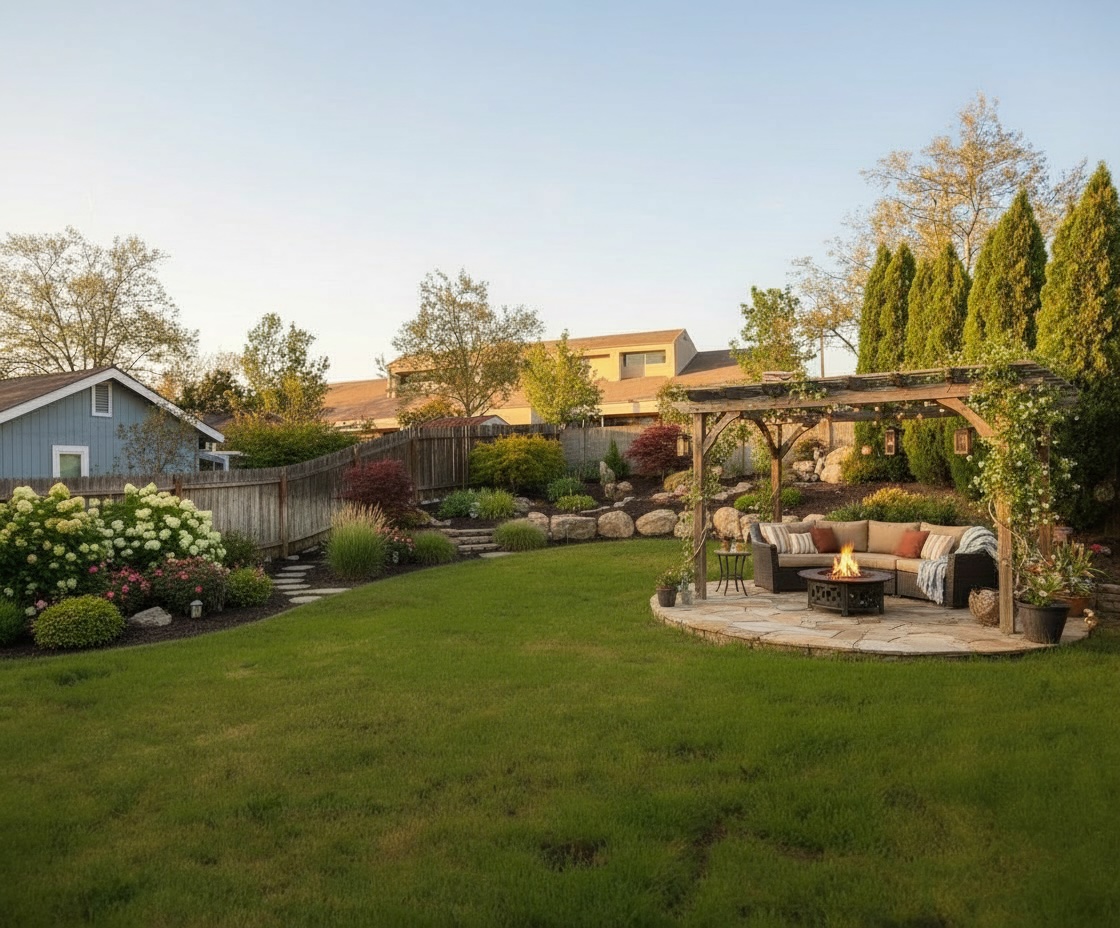
AI-generated image
Featured Trees & Shrubs for Modern/Minimalist Gardens
Browse all 178 plants for Washington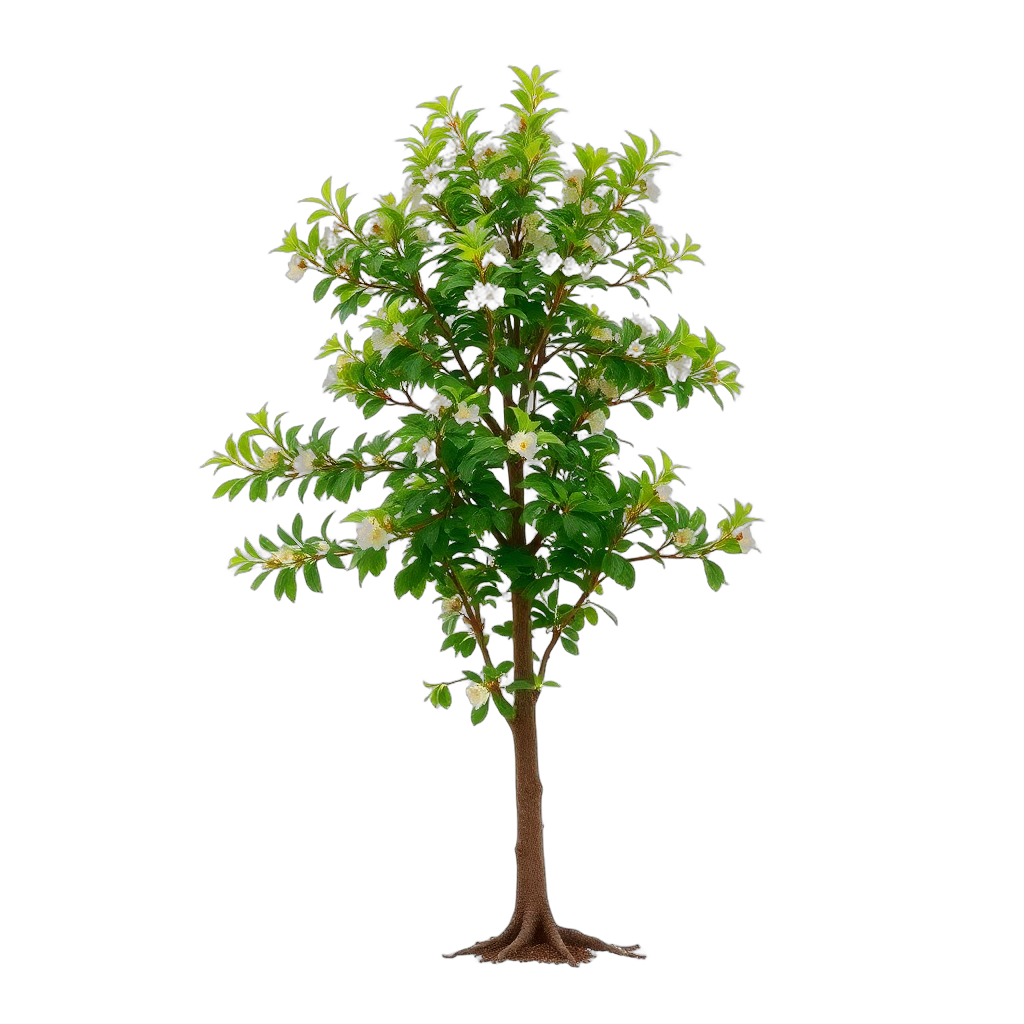
Buckwheat Tree
Cliftonia monophylla
medium-sized at 15 feet, white blooms in spring. Attracts butterflies.
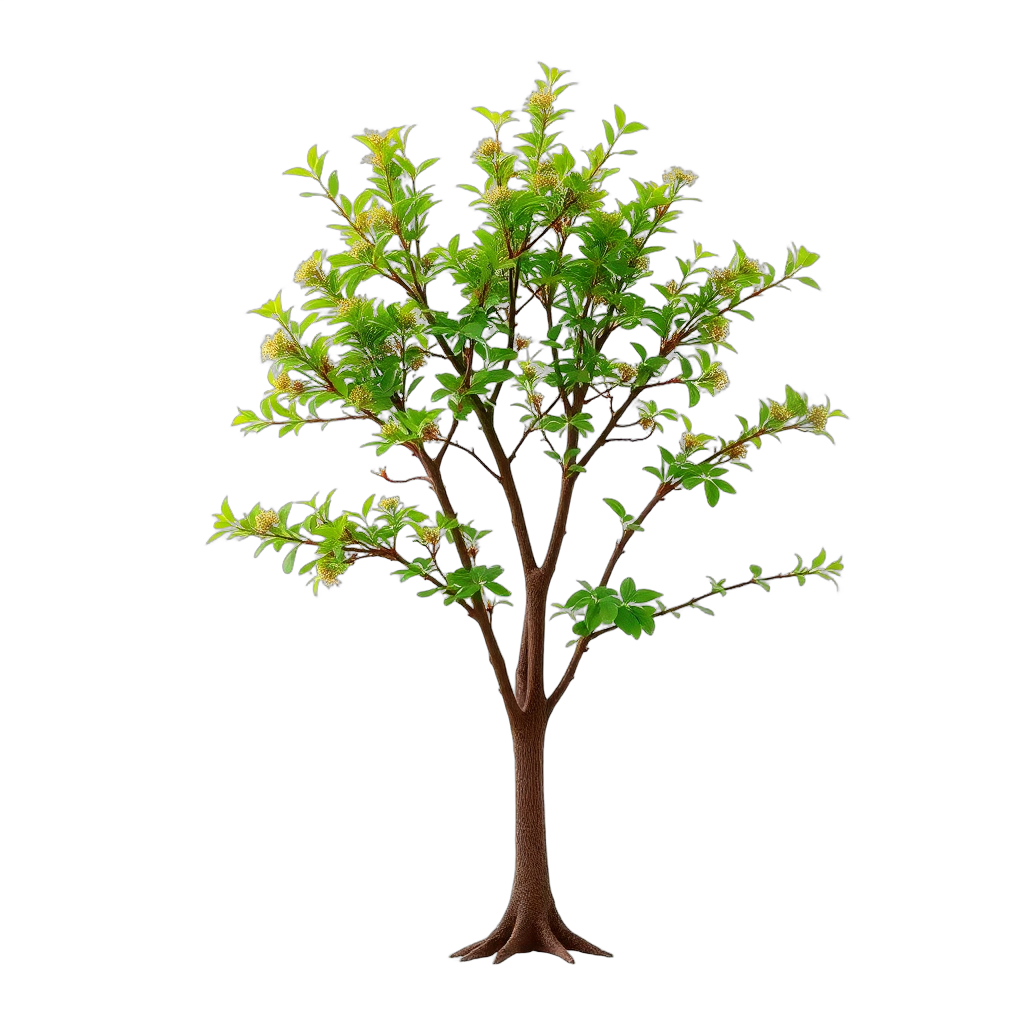
Fetterbush
Lyonia lucida
grows to 6 feet, white blooms in spring. Evergreen year-round.
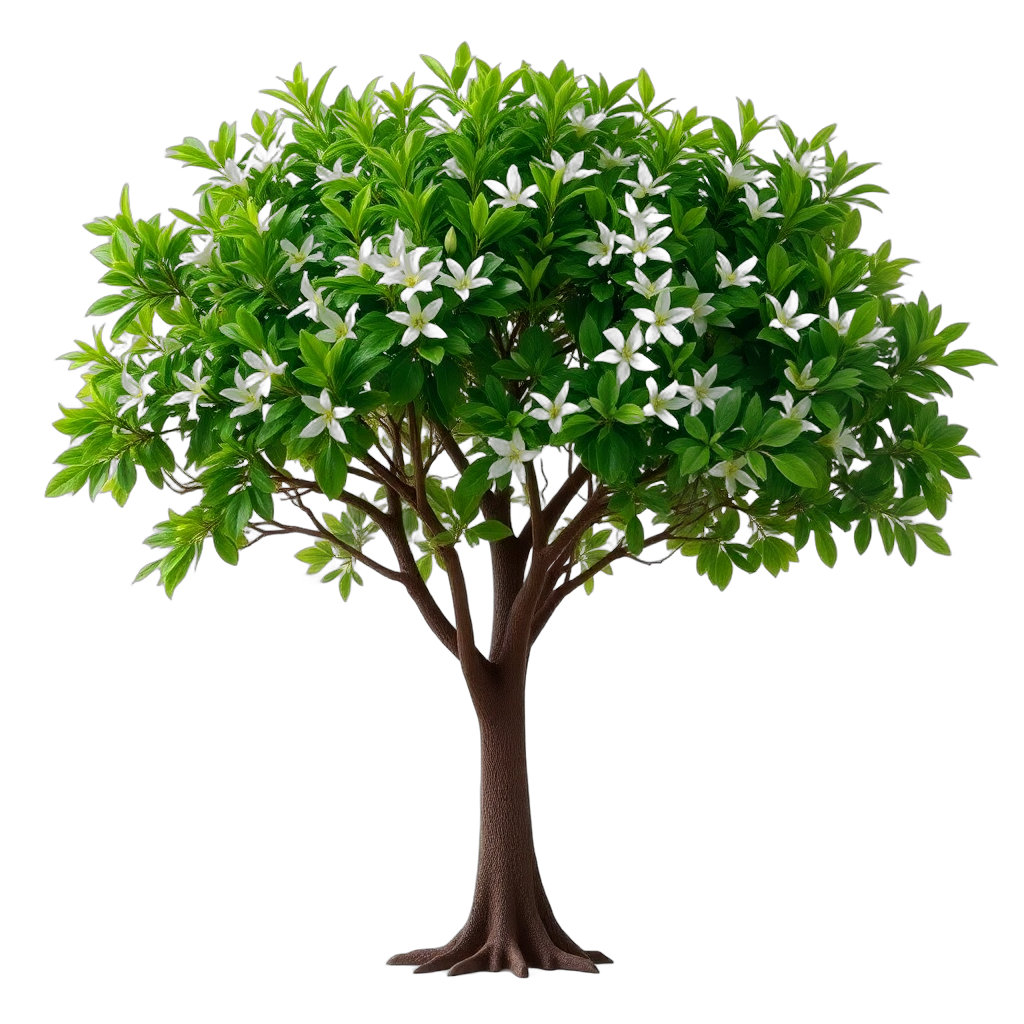
Florida Anise
Illicium floridanum
medium-sized at 8 feet, red blooms in spring. Evergreen year-round.

Inkberry
Ilex glabra
medium-sized at 8 feet, white blooms in spring. Pollinator-friendly.
Featured Grasses & Groundcovers for Modern/Minimalist Gardens

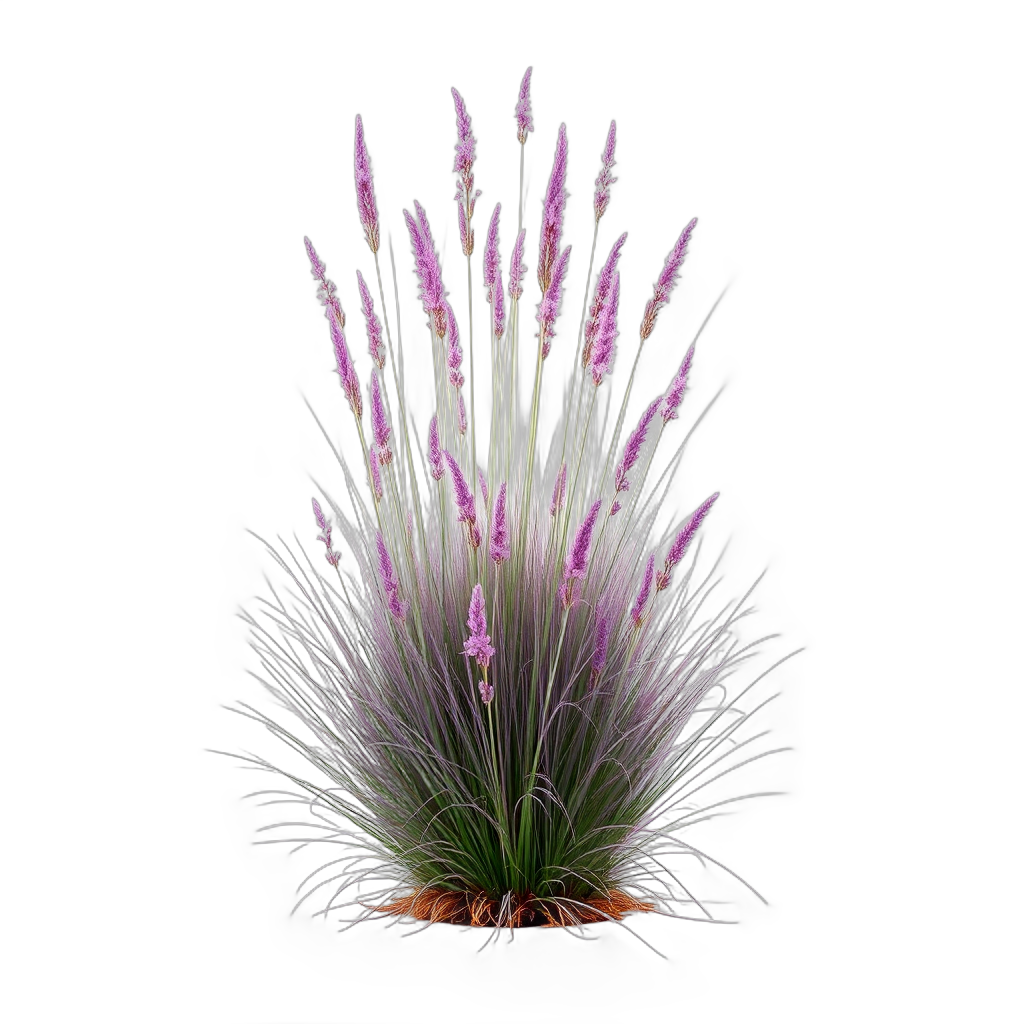
Pink Muhly Grass
Muhlenbergia capillaris
grows to 3 feet, pink blooms in fall.
Purple Love Grass
Eragrostis spectabilis
low-growing ground cover, purple blooms in fall. Orange fall color.
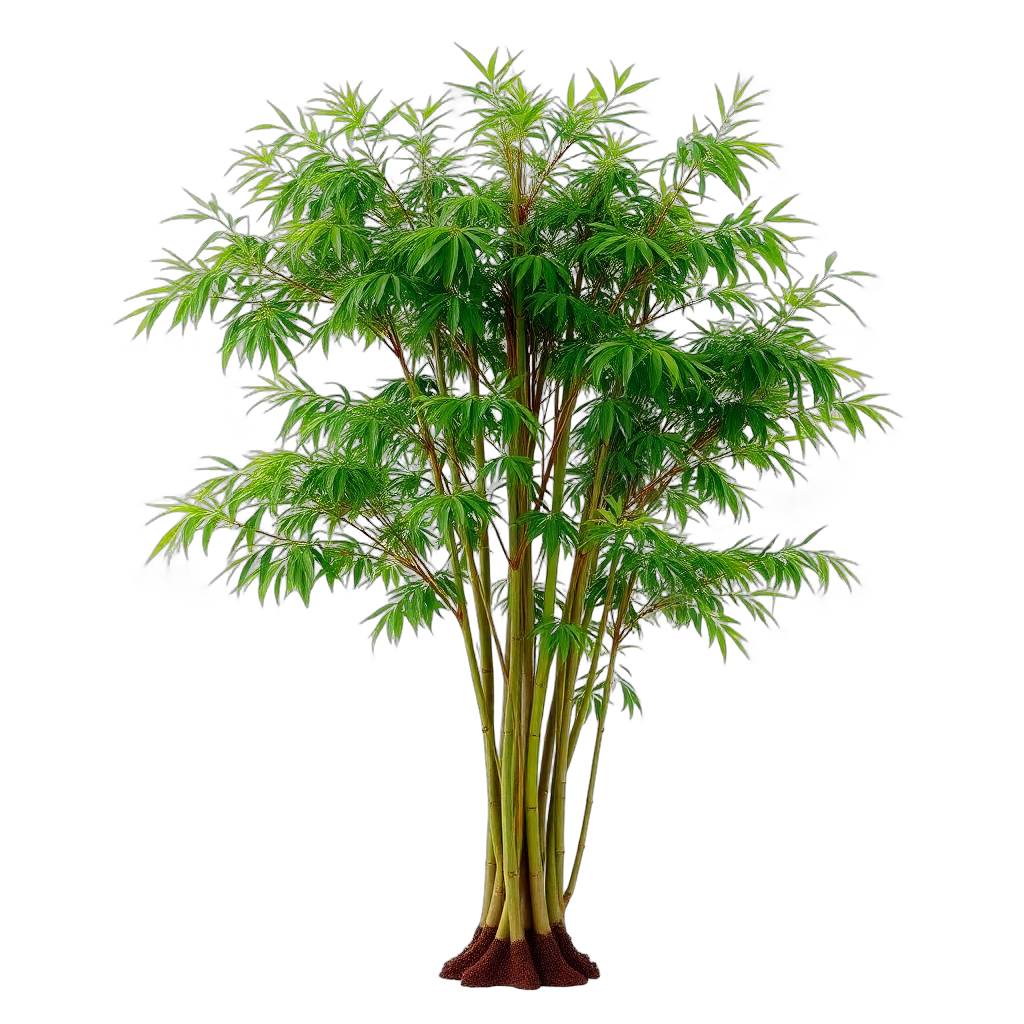
Arrow Bamboo
Pseudosasa japonica
medium-sized at 15 feet, blooms in none. Evergreen year-round.
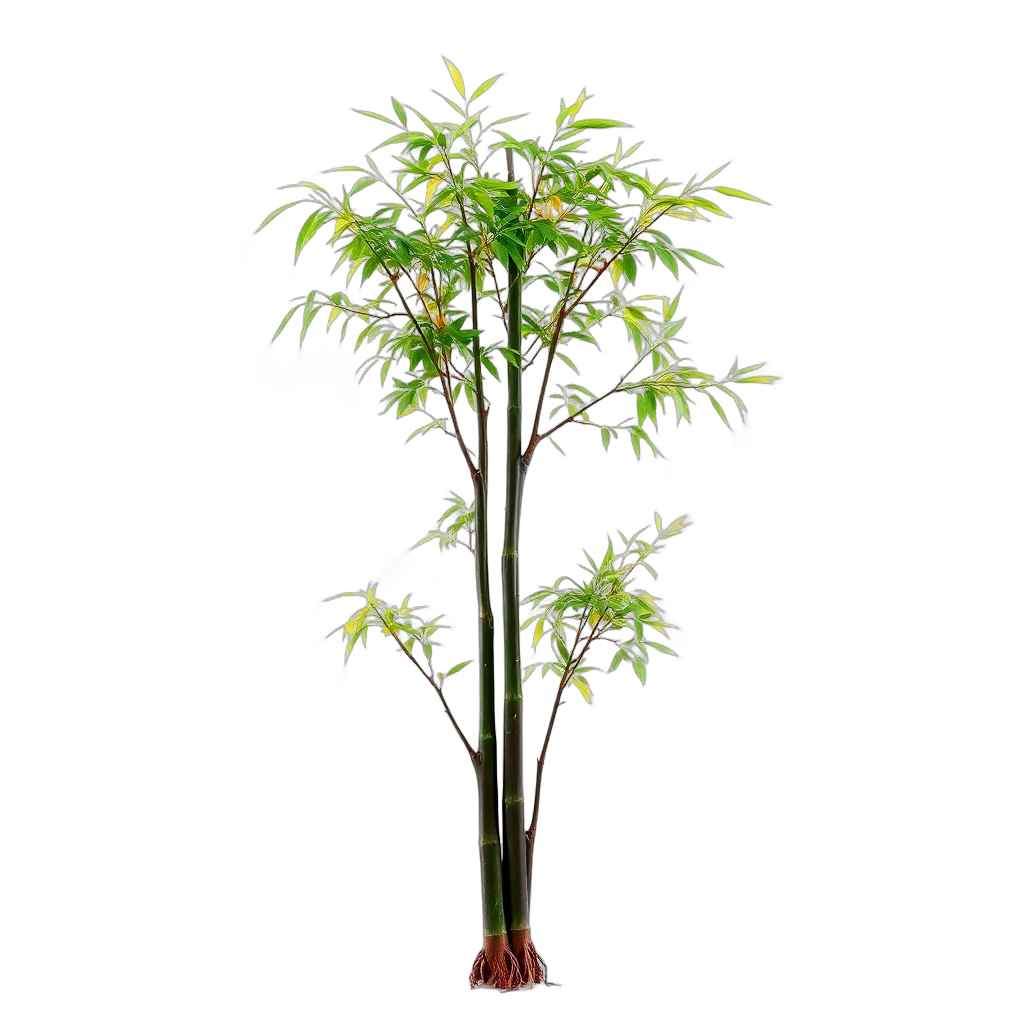
Black Bamboo
Phyllostachys nigra
reaches 25 feet tall, blooms in none. Evergreen year-round.
Featured Flowers & Perennials for Modern/Minimalist Gardens
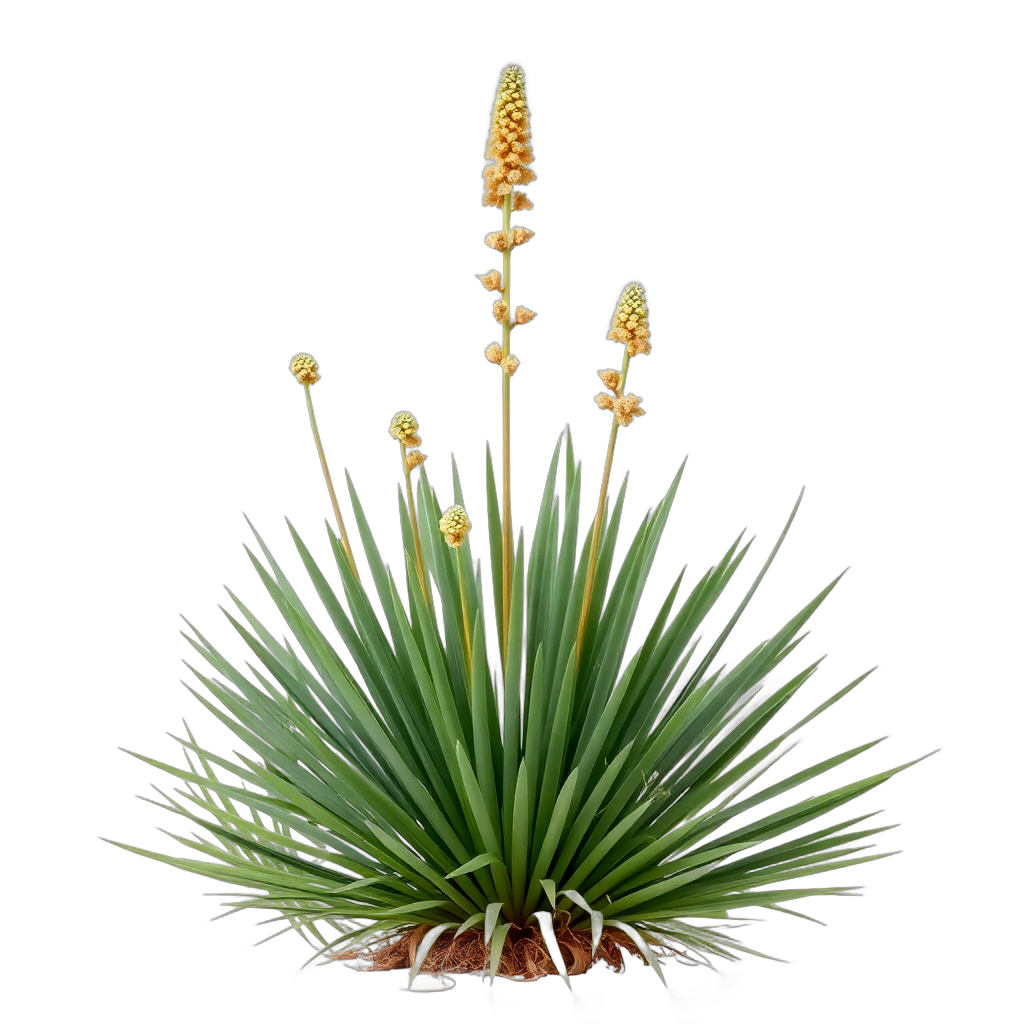
Adam's Needle
Yucca filamentosa
low-growing ground cover, white blooms in summer. Attracts hummingbirds.

Water Fern
Azolla filiculoides
low-growing ground cover, blooms in none. Red fall color.
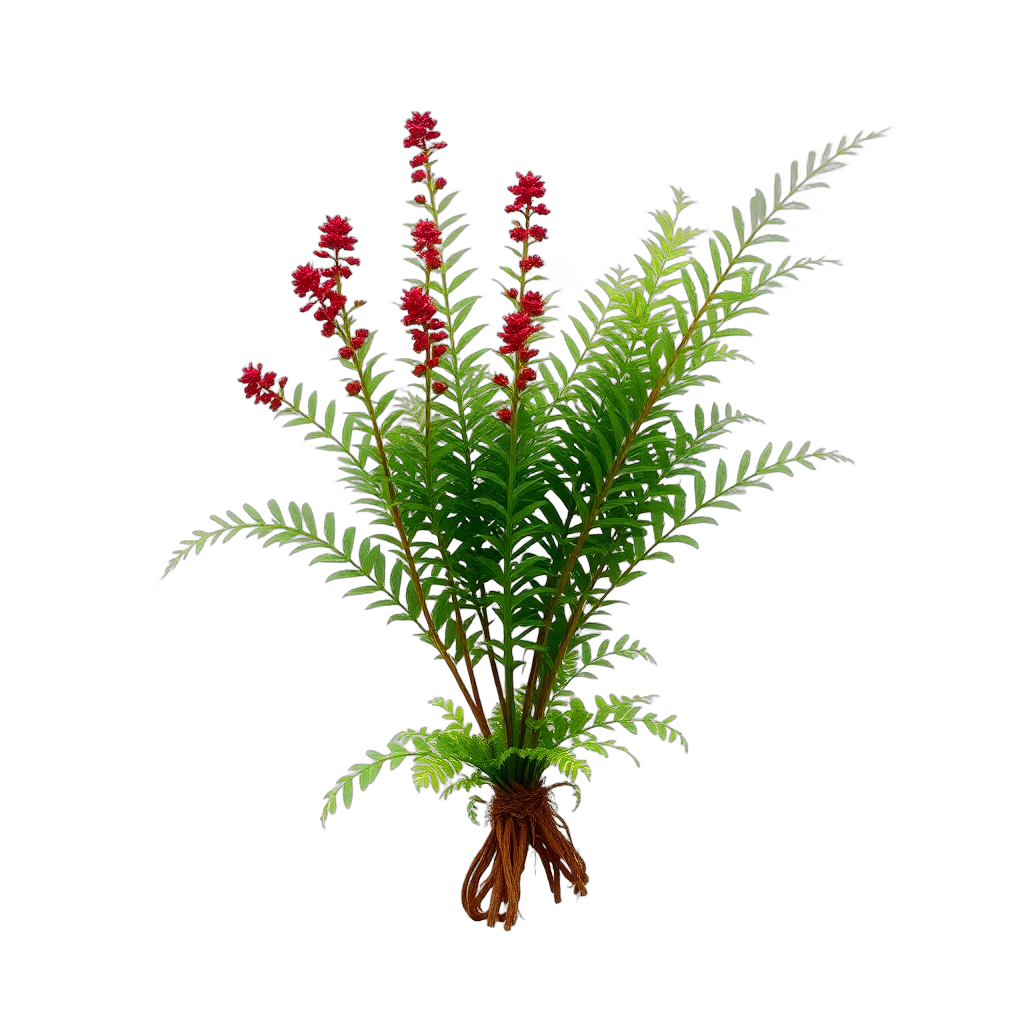
Holly Fern
Cyrtomium falcatum
low-growing ground cover, blooms in none. Evergreen year-round.
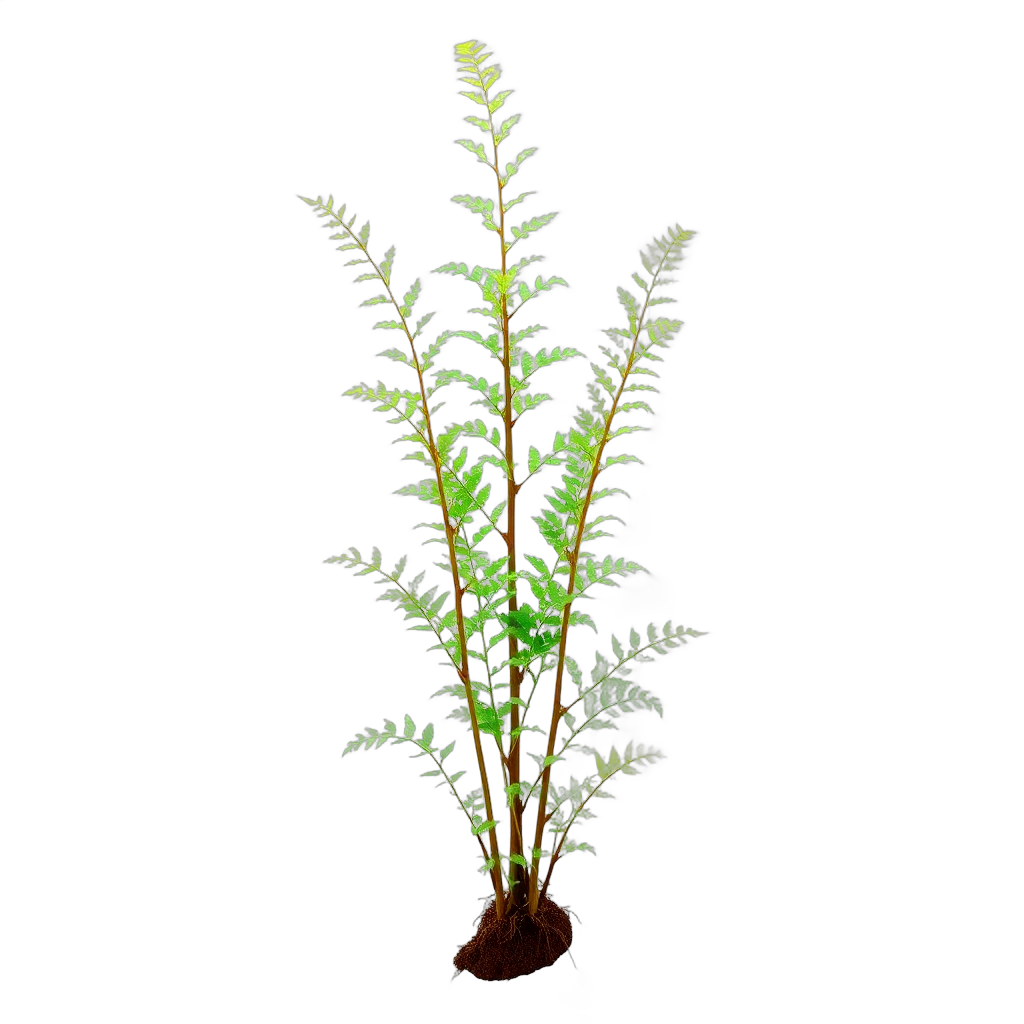
Lady Fern
Athyrium filix-femina
low-growing ground cover, blooms in none.
Zone and sun checks come from our database — confirm with your local nursery before you buy.
Bloom Calendar for Washington
spring
Buckwheat Tree, Fetterbush, Florida Anisesummer
Adam's Needle, Swamp Cyrilla, Loblolly Bayfall
Pink Muhly Grass, Purple Love Grasswinter
Limited bloomsDesign Tips for Washington (Zone 7b)
- Reference the Oehme, van Sweden design legacy when designing DC gardens — bold masses of native grasses, decisive plant placement, and the courage to remove lawn entirely are design moves that were invented in this city and belong here
- Switchgrass ‘Shenandoah’ is DC’s signature native ornamental grass for modern gardens — it turns deep burgundy-red in October precisely when DC’s outdoor season is at its best, creating a front yard moment that rivals fall foliage in the mountains
- Plan drainage before paving — DC’s July–August thunderstorm events require a 1.5–2% drainage slope on all hardscape surfaces and either a center drain or permeable surface strategy for enclosed backyards
- In Capitol Hill and Georgetown historic districts, use Corten steel (not bright steel or aluminum) and dark powder-coated metal for gates and fencing — warm metal tones are more sympathetically received in HPO review than cool contemporary finishes
- A single multi-stem serviceberry in a steel ring mulch bed is the highest-return tree investment for a DC modern front yard: four seasons of interest (spring white flowers, summer berries for birds, brilliant fall color, elegant winter structure), native to the Mid-Atlantic, and perfectly scaled for row house front yards
- Extend DC’s eight-month outdoor season to its full potential with a gas fire pit — DC’s April and October evenings are among the finest in America, and a backyard without a heat source leaves two full months of prime outdoor living on the table
Where to Source Plants in Washington
Skip the big-box stores. These independent Washington nurseries specialize in the plants that make modern/minimalist gardens thrive in Zone 7b.
Behnke Nurseries
Beltsville, MD (metro DC)
Family-operated since 1930; excellent ornamental grass, architectural shrub, and native plant selection; most trusted independent nursery in the Washington metro area
American Plant Food Co.
Bethesda, MD
Premier DC-area full-service garden center with expert staff; strong native plant and architectural shrub selection for modern DC gardens
Earth Sangha Native Plant Nursery
Springfield, VA
Northern Virginia’s leading native plant nursery; locally genotyped Mid-Atlantic natives including grasses and shrubs for modern ecologically-grounded designs
Green Spring Garden
Alexandria, VA (Fairfax County)
Fairfax County demonstration garden and plant sale; expert-curated native and ornamental selection for Zone 7a–8a DC-area modern gardens
Johnson’s Master Gardener Nursery
Upper Marlboro, MD
Large-canopy trees, ornamental specimen trees, and architectural shrubs; excellent selection for modern DC garden focal points and canopy additions
Modern/Minimalist Landscaping Costs in Washington
| Project Scope | Estimated Cost |
|---|---|
| Modern front yard redesign with gravel + grasses (200–400 sqft) | $8,000 – $24,000 |
| Full backyard transformation with patio, fire pit + planting | $30,000 – $80,000 |
| Concrete or bluestone paver patio (DC labor rates) | $22 – $44/sqft installed |
| Corten steel or dark raised planting beds (set of 2–3) | $3,500 – $9,500 |
| Round fire pit with lounge seating area | $4,000 – $11,000 |
| AI visualization with ProScapeAI | Free to start |
Estimates based on Washington, DC-area contractor rates as of 2026. Actual costs vary by site conditions, materials, and contractor.
Washington Climate & Growing Zone
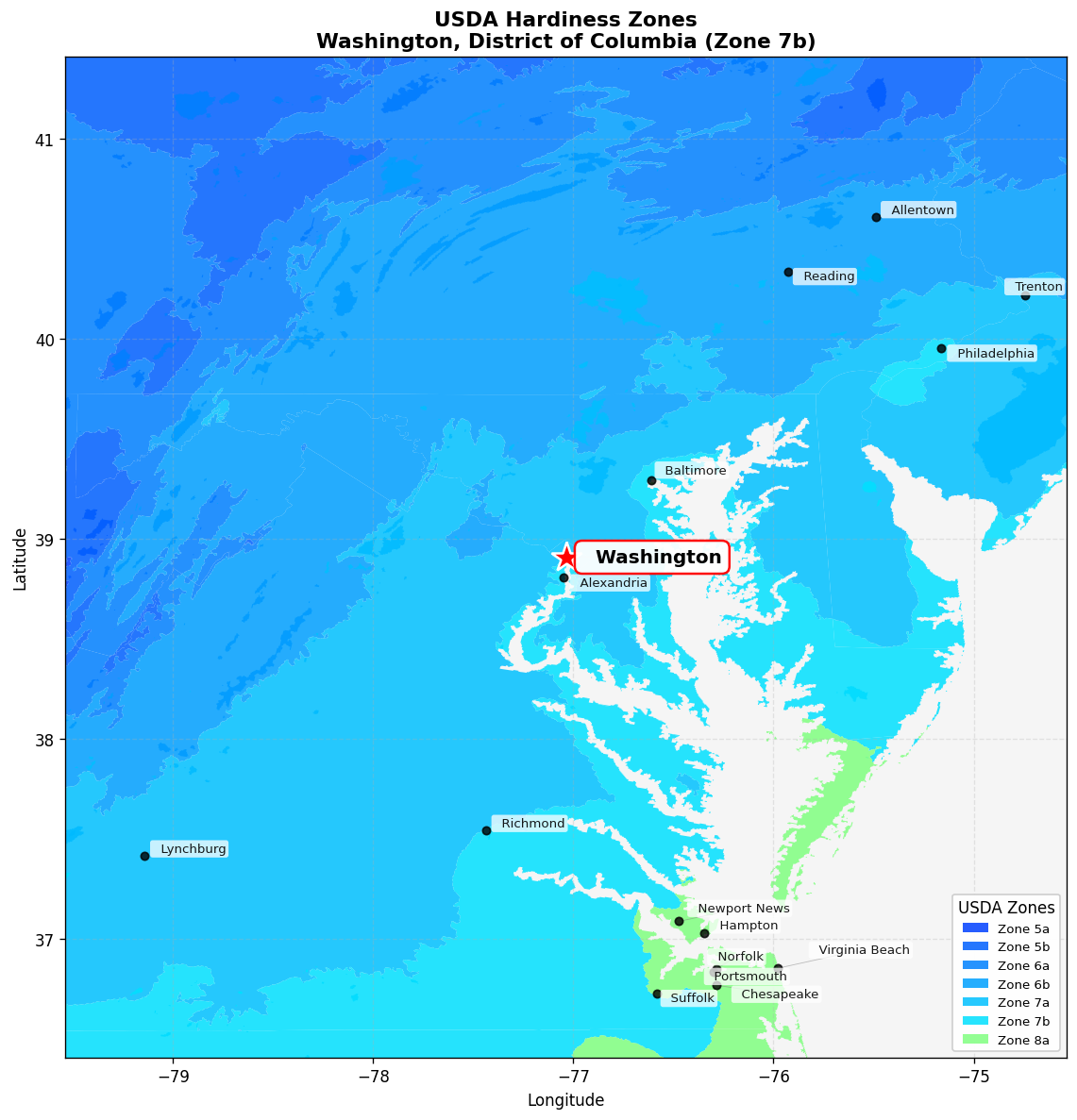
USDA Zone 7b
Hardiness zone for Washington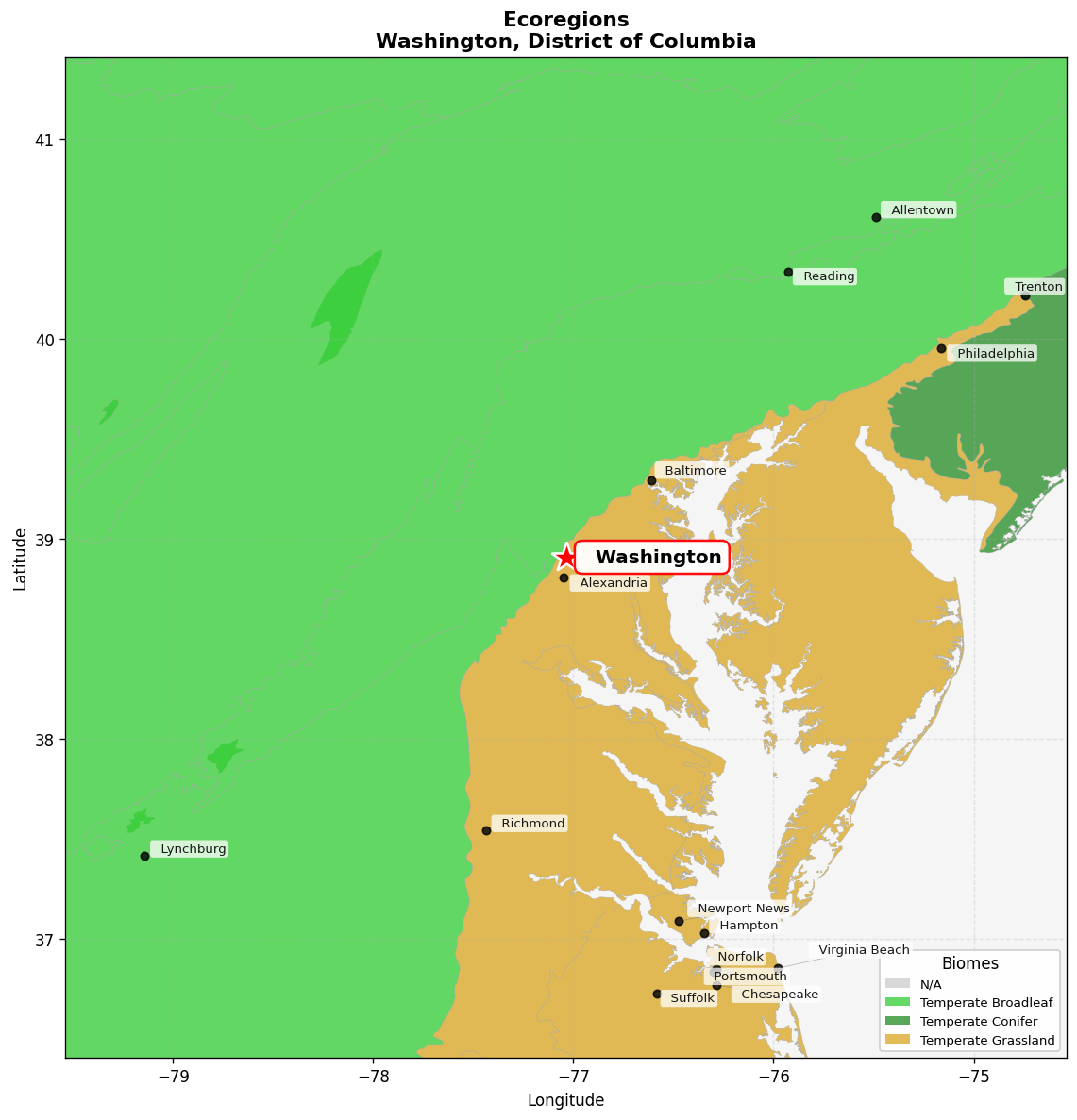
Southeast US conifer savannas
Native ecoregionFrequently Asked Questions
What modern plants thrive in DC’s Zone 7b climate?
DC’s Zone 7b supports a broad modern plant palette. Top performers: Karl Foerster feather reed grass (Zone 4, architectural, four-season), switchgrass ‘Shenandoah’ (native, Zone 4, brilliant burgundy fall color), little bluestem (native, Zone 3, orange-red fall color), inkberry holly (native evergreen, Zone 3, deer-resistant), serviceberry (native, Zone 4, four-season interest), dwarf Korean boxwood (Zone 5, clipped forms for geometric beds), ornamental allium (spring, deer-resistant), sedum (groundcover, heat-tolerant), and Japanese forest grass (Hakonechloa, for shade). Avoid tender Zone 8+ plants like Mexican feather grass in exposed DC locations without winter protection.
How much does modern landscaping cost in Washington, DC?
DC landscape costs are high, comparable to New York and significantly above national averages. A modern front strip redesign (200–400 sqft) with hardscape and planting typically runs $10,000–$28,000. A full backyard transformation with patio, pergola, and planting ranges from $30,000–$80,000+. Simpler gravel and grass front yard conversions can run $6,000–$16,000. Rooftop garden installations start around $25,000 and require a structural engineering assessment (add $3,000–6,000). DC contractor labor rates are among the highest in the mid-Atlantic; quality work requires getting three bids and verifying recent project references in similar neighborhoods.
What do DC historic district rules mean for modern garden design?
DC’s Historic Preservation Office (HPO) oversees Georgetown, Capitol Hill, Dupont Circle, Massachusetts Avenue Heights, and other historic districts. The HPO regulates changes visible from the public right-of-way, including fencing, masonry walls, paving materials, and structural elements. Modern materials — Corten steel, powder-coated metal fencing, contemporary pavers — may require HPO approval in designated districts. For permit guidance, contact HPO at historicpreservation.dc.gov or 202-442-7600. The HPO has design guidelines for each historic district; reviewing them before designing saves costly plan revisions. Plant choices themselves are generally not regulated.
What are the best native plants for a DC modern garden?
The Oehme, van Sweden tradition that originated in DC specifically celebrates native plants in modern designed masses. Best choices: switchgrass ‘Shenandoah’ (native, spectacular fall color), little bluestem (native, architectural form, drought-tolerant once established), serviceberry (native, four-season specimen), native dogwood (Cornus florida, spring bloom spectacular in DC), inkberry holly (native evergreen shrub), coneflower (Echinacea, summer color), black-eyed Susan (native, summer), native asters (Symphyotrichum, fall), and wild ginger (Asarum canadense, shade ground cover). The Lady Bird Johnson Wildflower Center and National Park Service’s native plant guides are authoritative resources for Mid-Atlantic selections.
How should I handle drainage in a DC backyard?
DC’s summer thunderstorm season — the city averages 30+ thunderstorm days annually, with intense 1–2 inch per hour events common in July–August — requires serious drainage planning. Common issues in DC row house backyards: water pooling at foundation, saturated soil under impermeable surfaces, overflow from higher adjacent yards. Required planning: grade all paved surfaces 1.5–2% away from the building foundation; install a center drain with connection to the storm system for fully paved yards; replace concrete slabs with permeable pavers or gravel beds where feasible; create an integrated rain garden at the lowest point. DC’s Department of Energy and Environment offers the RiverSmart Homes program providing rebates for on-site stormwater management.
What’s the single best design move for a DC Capitol Hill front yard?
Replace a dead or struggling lawn with a Karl Foerster grass and crushed granite front strip. A steel-edged decomposed granite ground plane with three to five Karl Foerster grasses planted in a simple cluster or linear band, a clean bluestone or concrete path, and a pair of clipped inkberry hollies at the stoop creates a front yard that: looks intentional and sophisticated year-round (including winter when grasses hold form), requires almost zero maintenance, uses no irrigation after establishment, is ecologically superior to lawn, and transforms the visual character of the entire house facade for under $8,000 for a standard Capitol Hill front strip.