4 Cottage Garden Ideas for Washington, DC | English Garden Design in Zone 7b
Native plants from the Southeast US conifer savannas (Zone 7b) — Humid subtropical climate
Why Cottage/English Gardens in Washington?
Washington, DC has one of the most distinguished formal garden traditions in the United States — from Dumbarton Oaks’ Beatrix Farrand masterpiece in Georgetown to the cherry blossoms of the National Mall — and that tradition makes the city’s residential cottage gardens feel more contextually appropriate than almost anywhere else in America. Zone 7b means minimum winter temperatures of 5–10°F and a growing season that stretches from late March through mid-November, supporting nearly the complete English cottage plant palette. The city’s famously spectacular spring — driven by the 2 million Yoshino cherry trees that bloom in late March and the waves of dogwoods, redbuds, and tulip magnolias that follow through April — sets a standard for cottage front yard design that most DC homeowners feel motivated to meet.
Georgetown, Capitol Hill, Cleveland Park, and Woodley Park have been cultivating cottage garden traditions for over 150 years. Georgetown’s Federal and Greek Revival row houses, many dating to the early 1800s, sit behind front gardens that some families have maintained continuously since the Civil War era. Capitol Hill’s Victorian and Italianate row houses create the perfect canvas for cottage planting — brick facades, iron fences, deep front stoops, and narrow but impactful front garden strips where a well-planted cottage border stops commuters on East Capitol Street. Cleveland Park and Chevy Chase offer deeper suburban lots where full English-style borders with roses, delphiniums, and peonies have room to develop their full expression.
DC’s 39 annual inches of rainfall are reasonably well-distributed, but summer heat — average July highs of 88°F with punishing humidity from the Potomac and Chesapeake watersheds — is the primary design challenge. The solution is the same layered approach that works in Baltimore: lean into DC’s magnificent spring with peonies, roses, and foxgloves that peak in May–June, then transition to heat-adapted native cottage plants — coneflowers, native phlox, cardinal flower, and oakleaf hydrangea — that carry the garden through the oppressive August heat into a spectacular October finale of asters and ornamental grasses. The Southeast US conifer savannas ecoregion context means Mid-Atlantic native plants are the ecologically correct cottage garden foundation for DC.
4 Cottage/English Design Ideas for Washington
AI-generated image
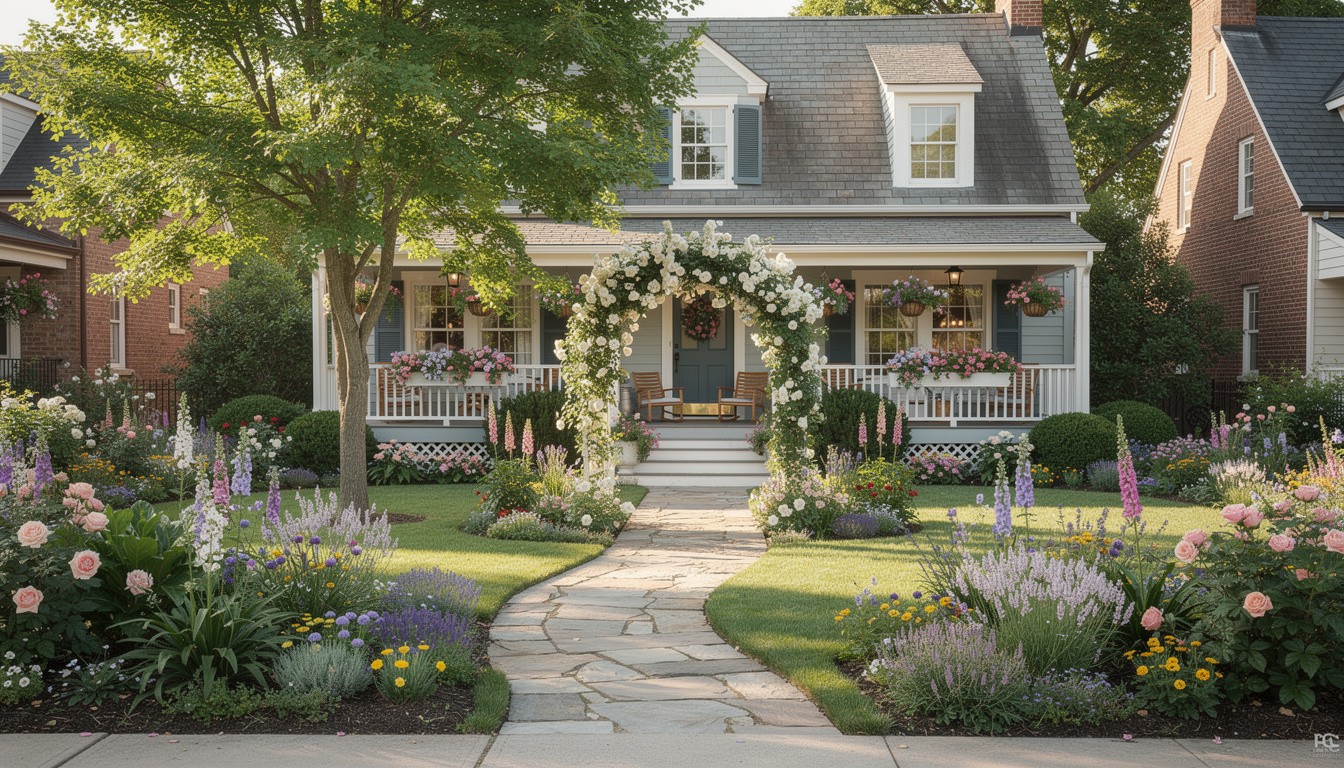
The Georgetown Rose Gate Entry
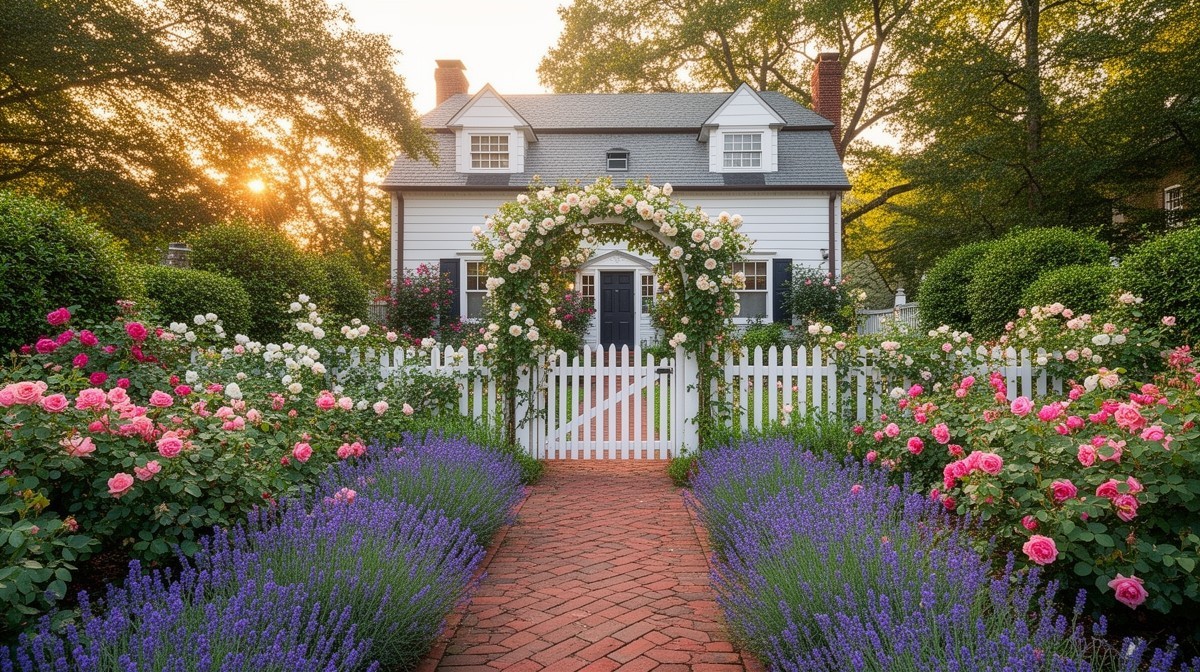
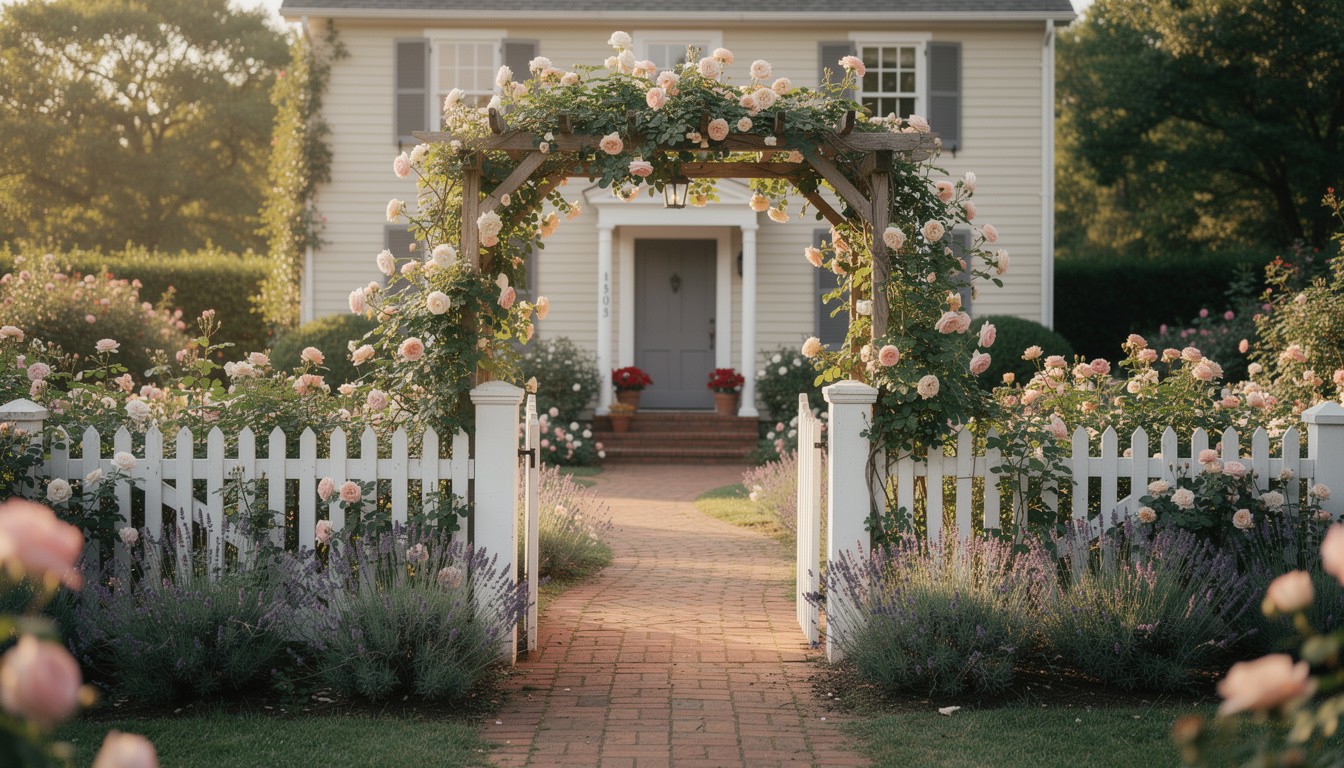
$14–28/sqftA white Colonial DC home becomes a cottage landmark with a climbing rose arch over a white picket gate, a brick path leading to the front door, and dense pink and white rose borders flanking both sides in warm afternoon light. This is the cottage design that feels native to Georgetown and Capitol Hill — traditional materials (brick path, iron or picket fence, painted wood arbor), traditional plants (peonies, roses, lavender), executed with the precision that DC’s historic houses deserve. Choose climbing roses proven for Zone 7b: ‘Zephirine Drouhin’ (thornless, ideal for stoops), ‘New Dawn’, or ‘Climbing Iceberg’ all return reliably after DC winters.
AI-generated image
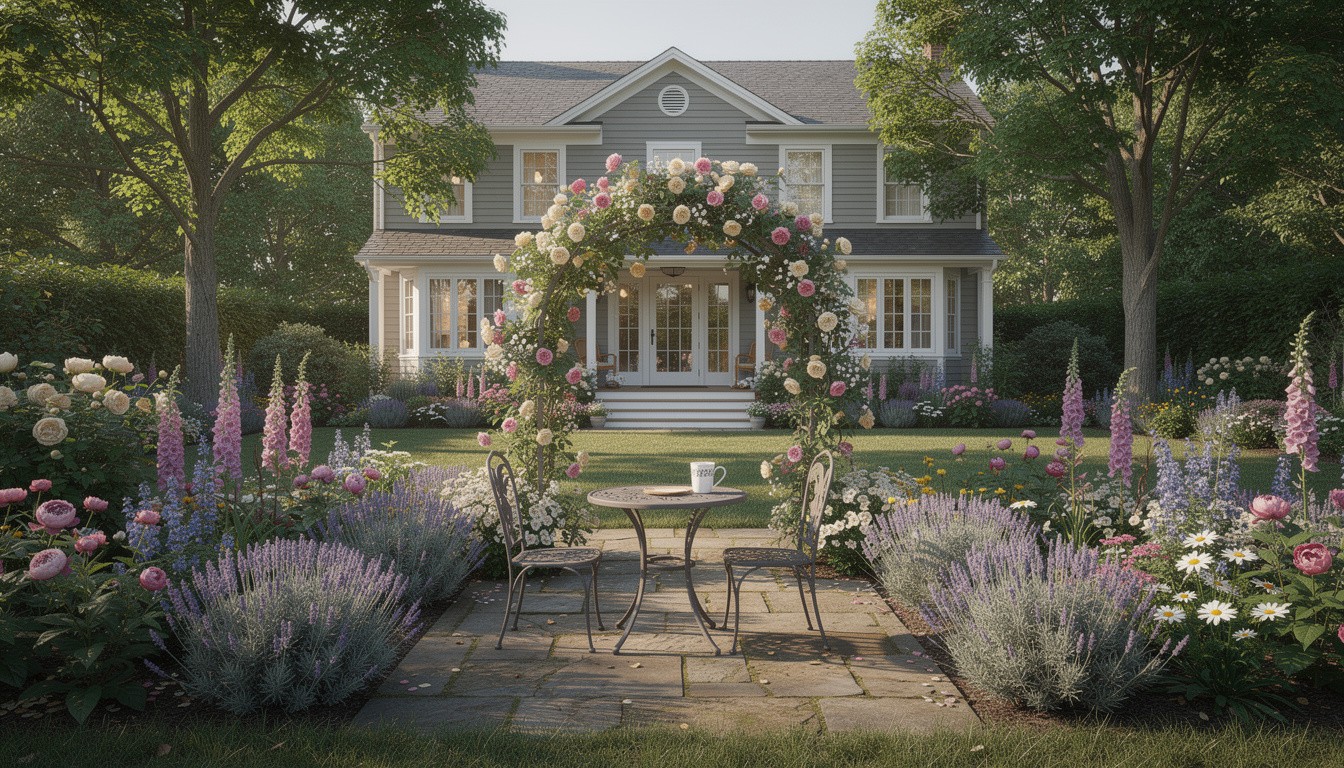
The Capitol Hill Victorian Cottage Border
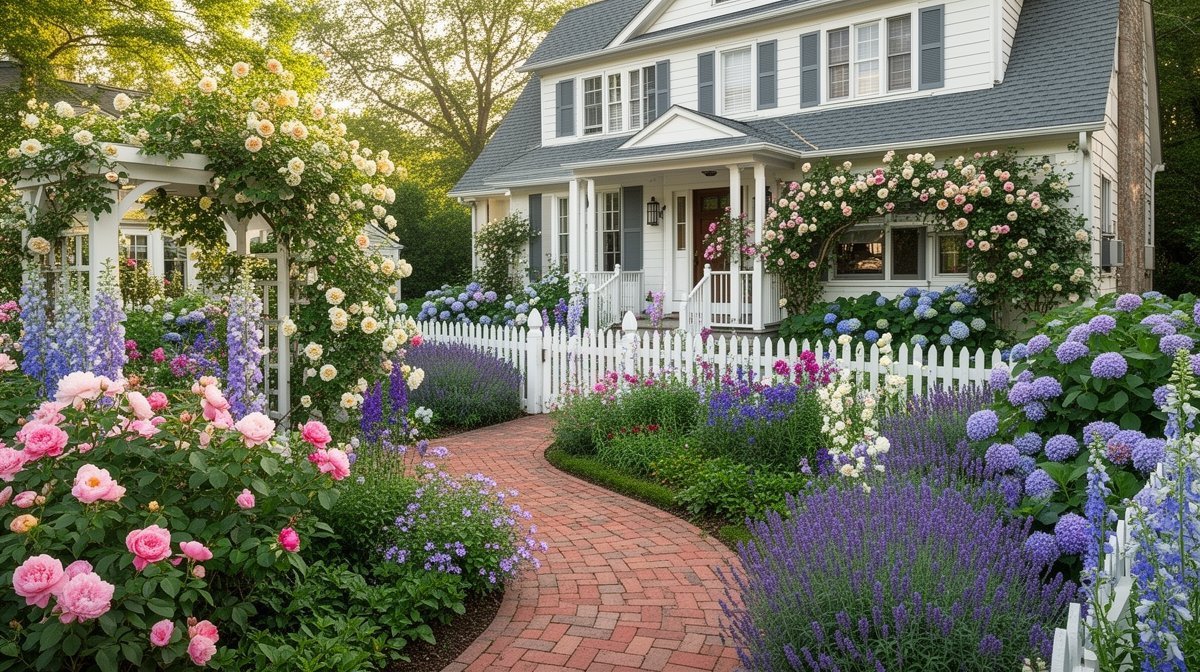
$12–24/sqftA gray Craftsman home with a front porch gains a full cottage transformation: a rose arch drapes the entry in white blooms, a flagstone path winds through layered borders of foxgloves, delphiniums, roses, and lavender on both sides, with the porch creating a covered introduction to the garden. DC’s Zone 7b means these cottage classics perform without the heat stress that defeats them in Southern cities, and the spring moment — when peonies, foxgloves, and roses all peak simultaneously in late May — is among the finest in American cottage gardening. The brick rowhome neighbors on both sides ground the planting firmly in the DC urban context.
AI-generated image
The DC Cottage Backyard Terrace
$28–56/sqftA deep-shaded DC backyard transforms into an intimate cottage garden room: a large rose arch as the garden’s centerpiece, a bistro table beneath it for outdoor dining, foxgloves and lavender and peonies blooming in the surrounding borders while mature trees overhead create a canopy of dappled light. This is the design that Georgetown and Cleveland Park homeowners dream about — enclosed, lush, and private, with the quality of a destination garden that happens to be in their own backyard. DC’s consistent summer rainfall keeps the cottage borders lush without supplemental irrigation in most years.
AI-generated image
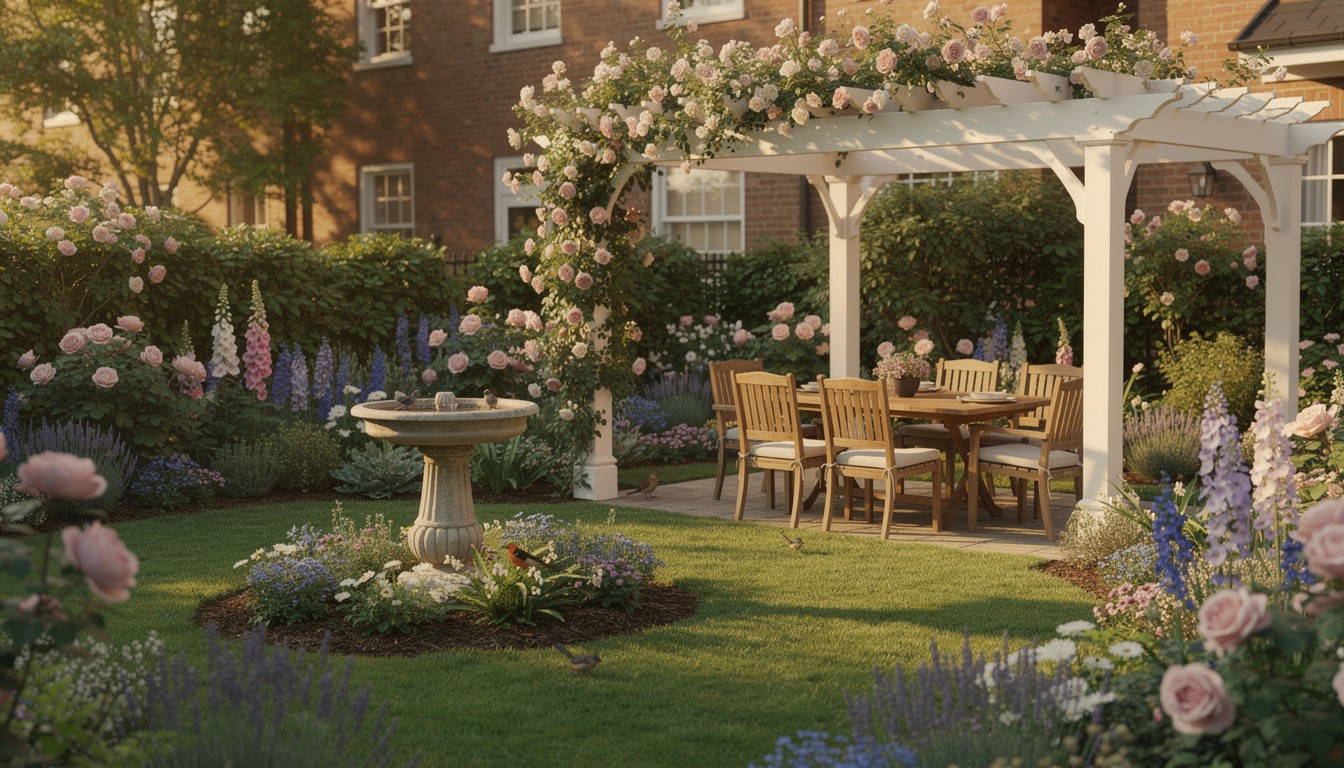
The DC Pergola Rose Garden
$30–60/sqftA white pergola draped in climbing roses creates a formal dining destination in a DC rear garden, flanked by a birdbath fountain, mixed rose and perennial borders, and the warm red brick of a neighboring DC manor wall providing privacy and context in the background. The pergola’s overhead structure is the defining move: it creates enclosure and scale in a space that would otherwise feel open and undefined, and gives climbing roses the framework to achieve full coverage within three to four seasons. DC’s Zone 7b humidity keeps rose borders thick and blooming far longer than in drier climates.
See how a cottage/english garden looks on YOUR property
Upload a photo of your Washington yard and visualize your dream garden in seconds.
Try ProScapeAI Free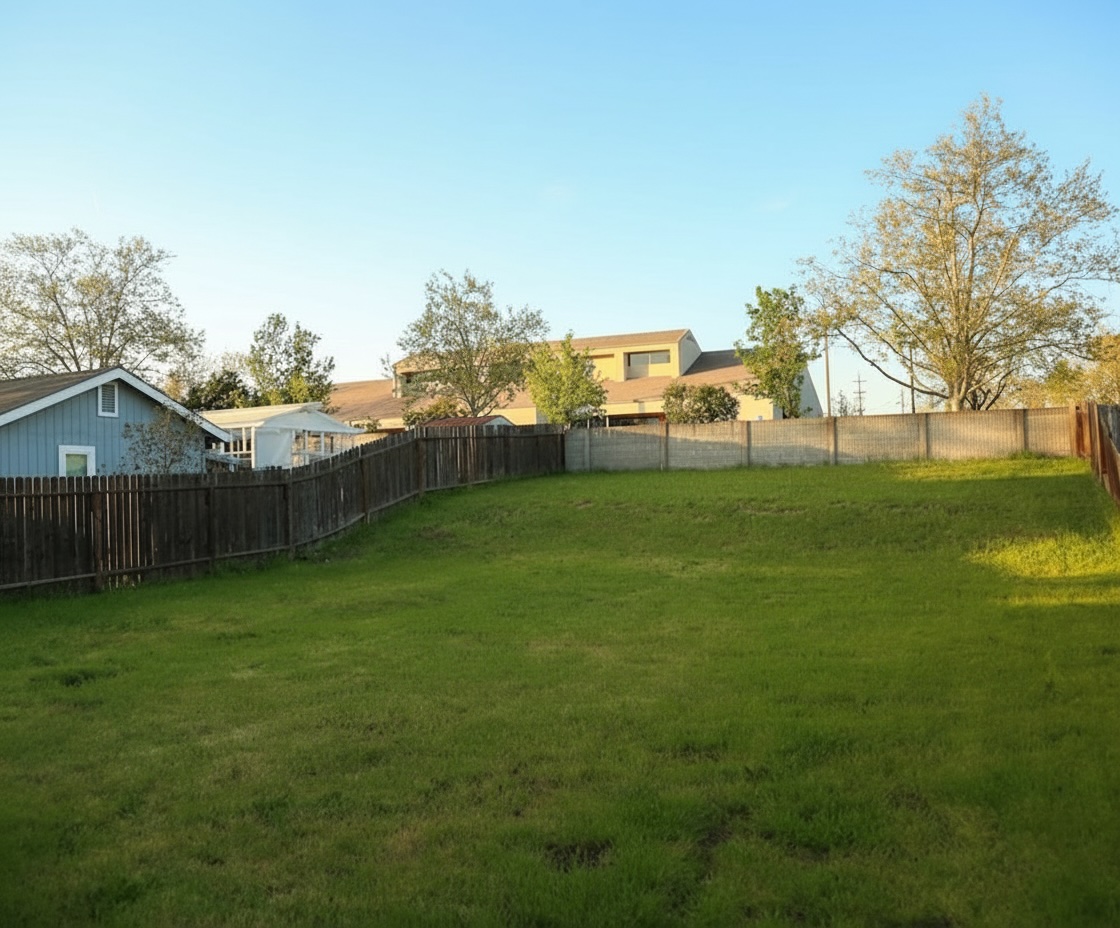
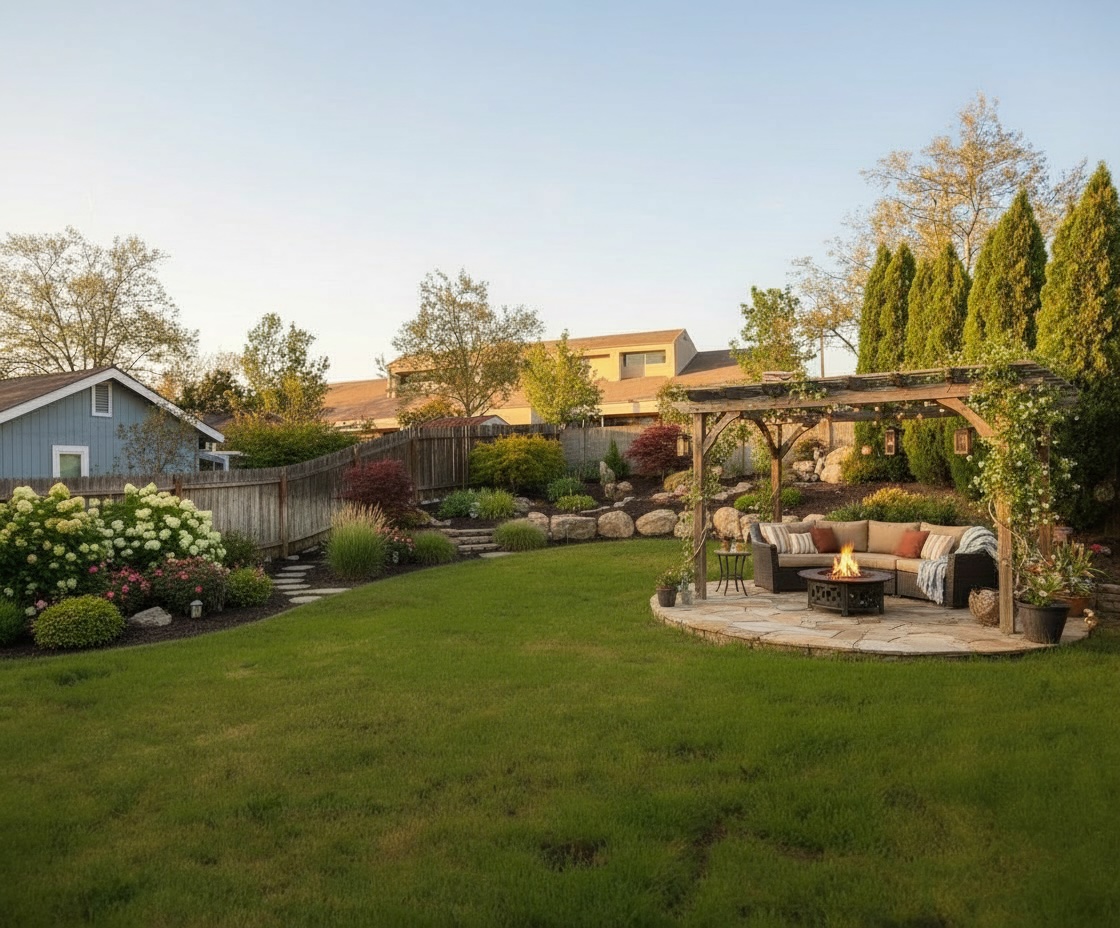
AI-generated image
Featured Trees & Shrubs for Cottage/English Gardens
Browse all 178 plants for Washington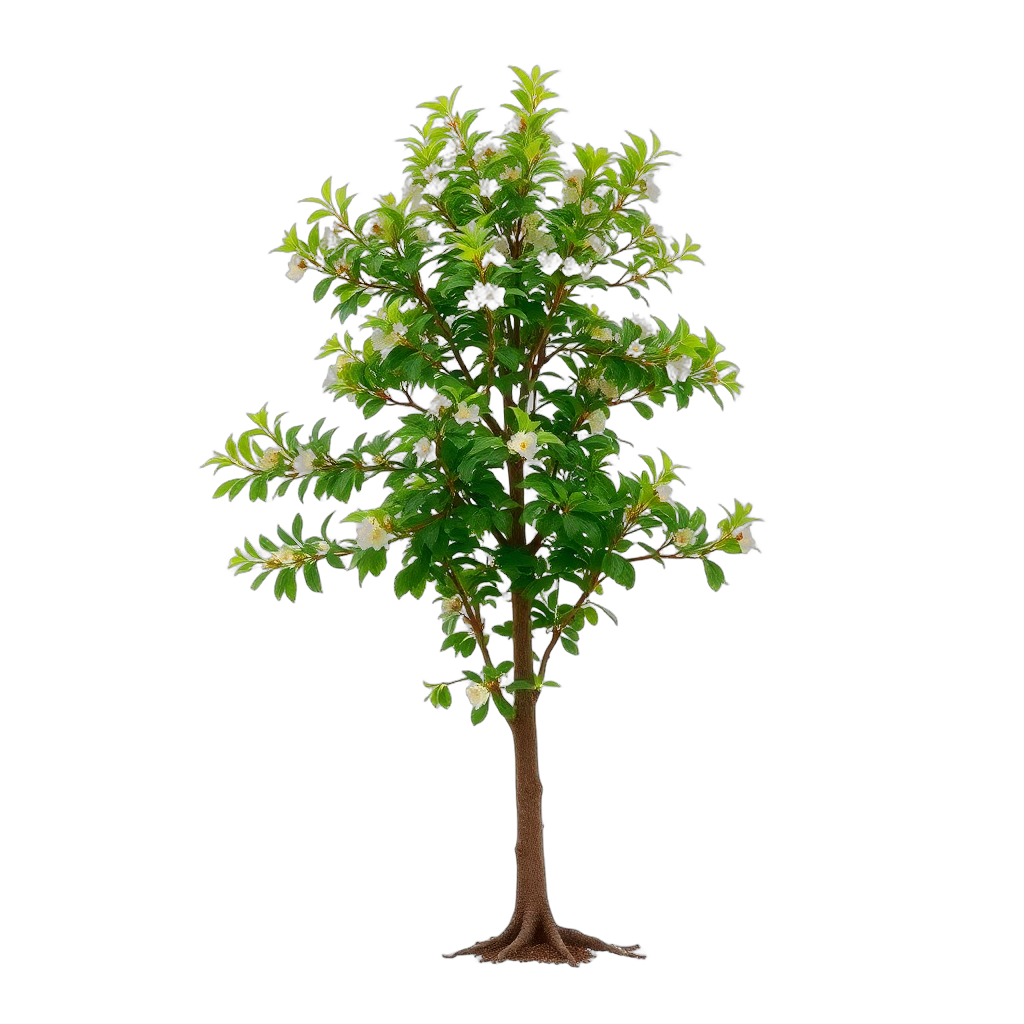
Buckwheat Tree
Cliftonia monophylla
medium-sized at 15 feet, white blooms in spring. Attracts butterflies.

Fetterbush
Lyonia lucida
grows to 6 feet, white blooms in spring. Evergreen year-round.
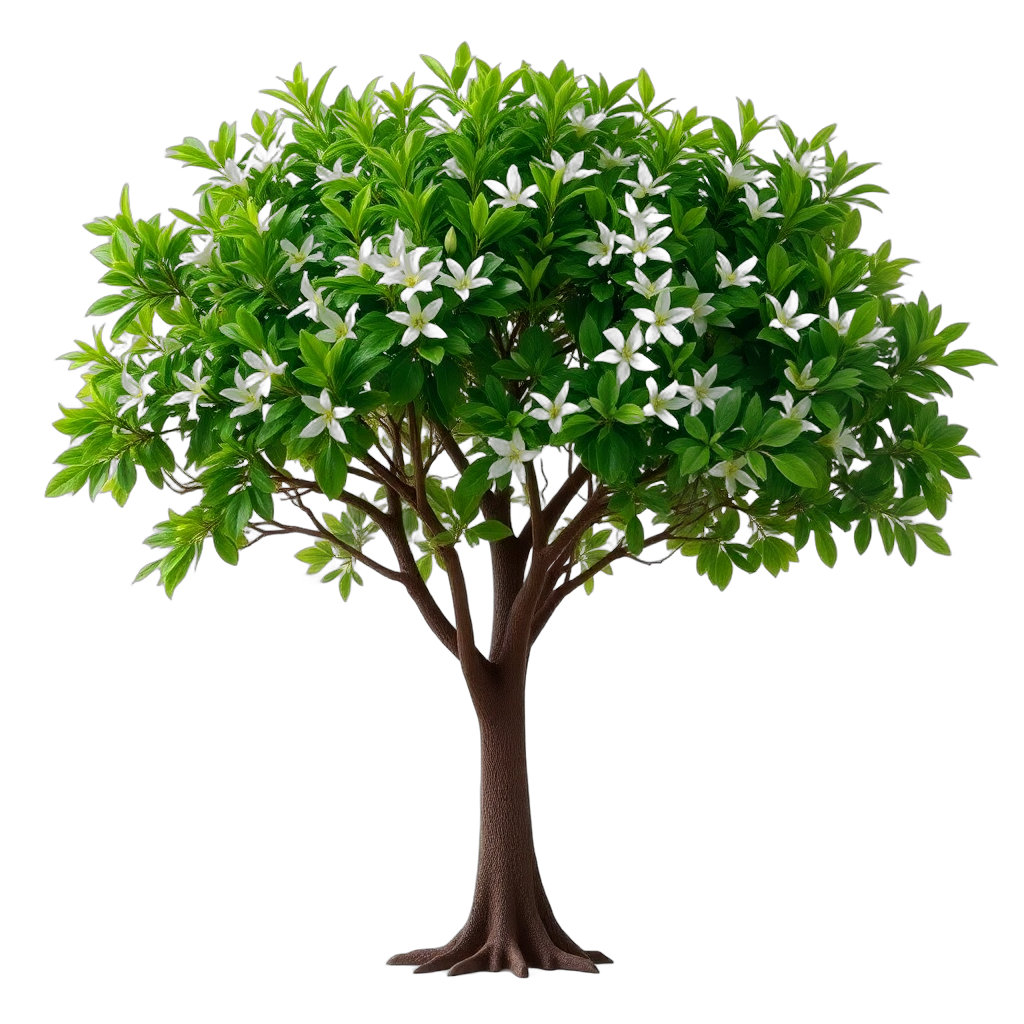
Florida Anise
Illicium floridanum
medium-sized at 8 feet, red blooms in spring. Evergreen year-round.

Inkberry
Ilex glabra
medium-sized at 8 feet, white blooms in spring. Pollinator-friendly.
Featured Grasses & Groundcovers for Cottage/English Gardens

Pink Muhly Grass
Muhlenbergia capillaris
grows to 3 feet, pink blooms in fall.
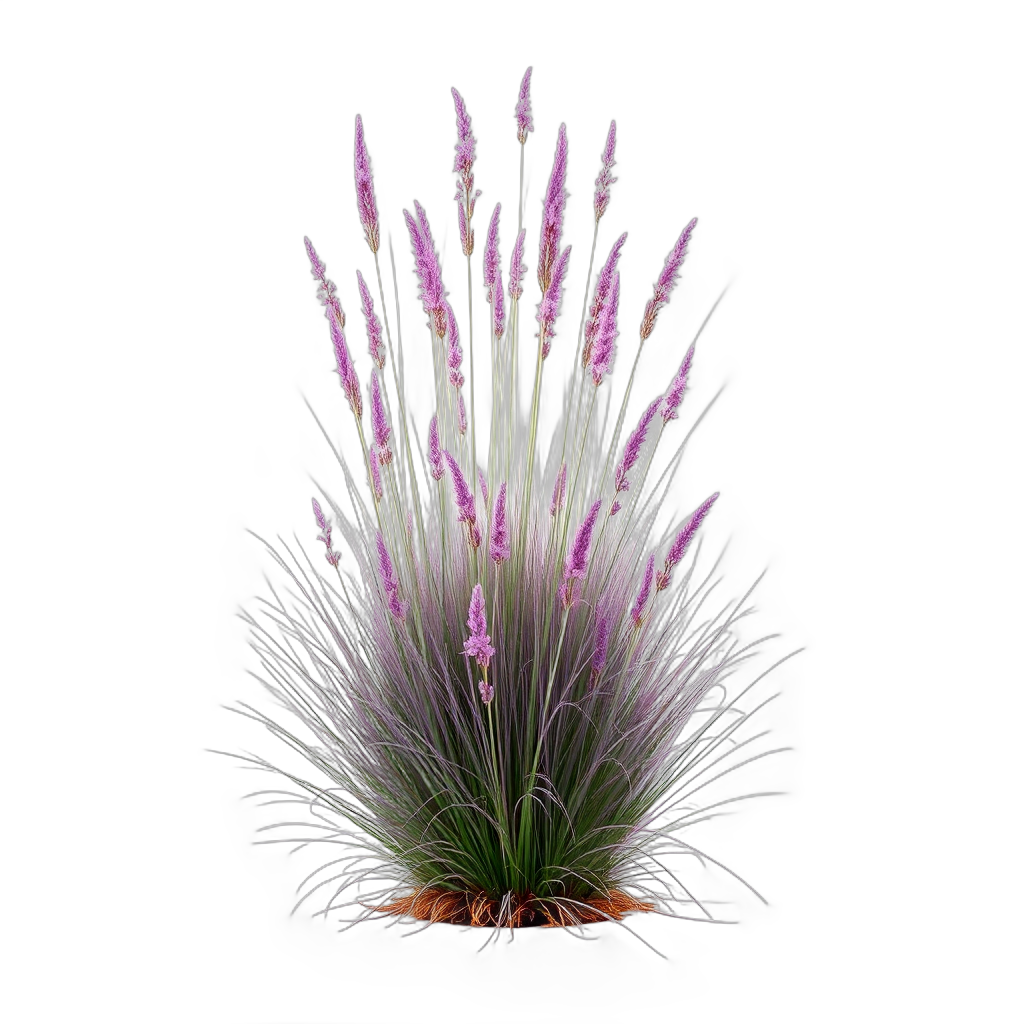
Purple Love Grass
Eragrostis spectabilis
low-growing ground cover, purple blooms in fall. Orange fall color.

Arrow Bamboo
Pseudosasa japonica
medium-sized at 15 feet, blooms in none. Evergreen year-round.
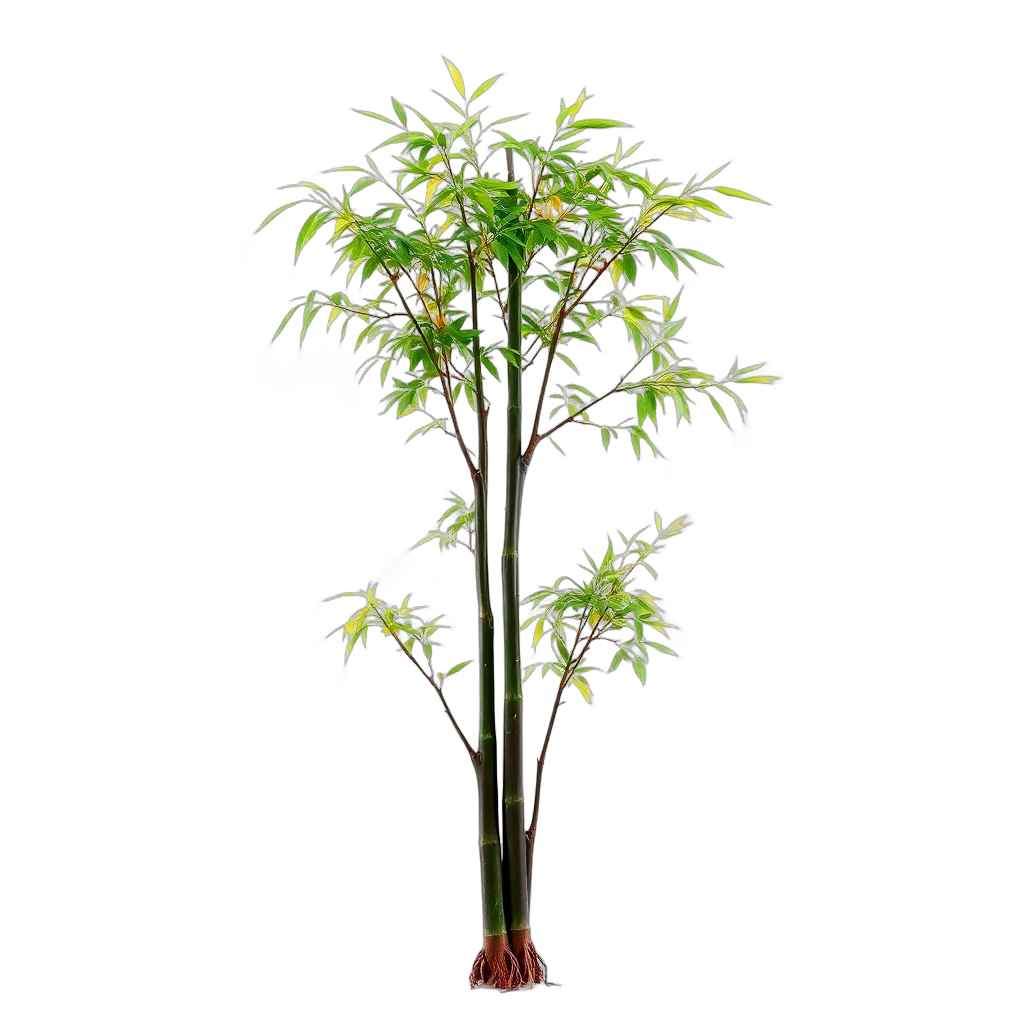
Black Bamboo
Phyllostachys nigra
reaches 25 feet tall, blooms in none. Evergreen year-round.
Featured Flowers & Perennials for Cottage/English Gardens
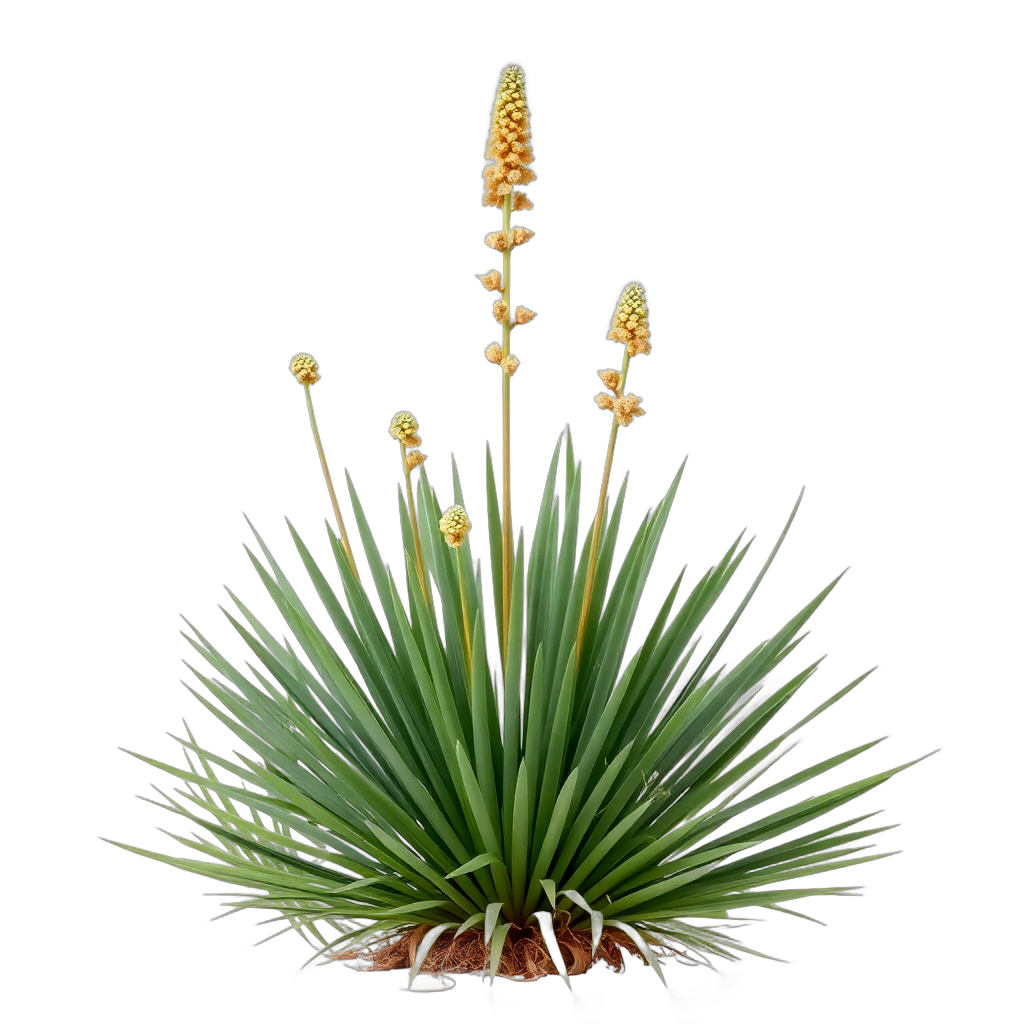
Adam's Needle
Yucca filamentosa
low-growing ground cover, white blooms in summer. Attracts hummingbirds.

Water Fern
Azolla filiculoides
low-growing ground cover, blooms in none. Red fall color.
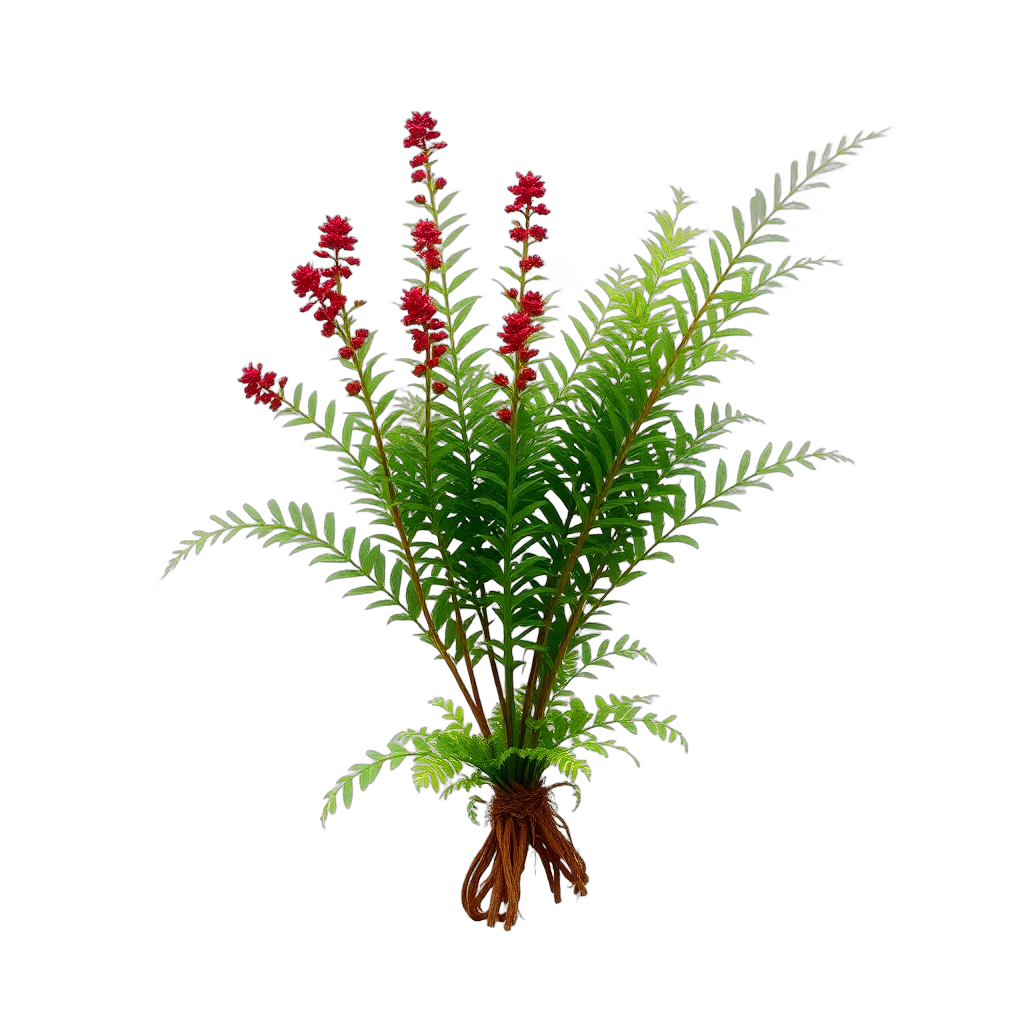
Holly Fern
Cyrtomium falcatum
low-growing ground cover, blooms in none. Evergreen year-round.
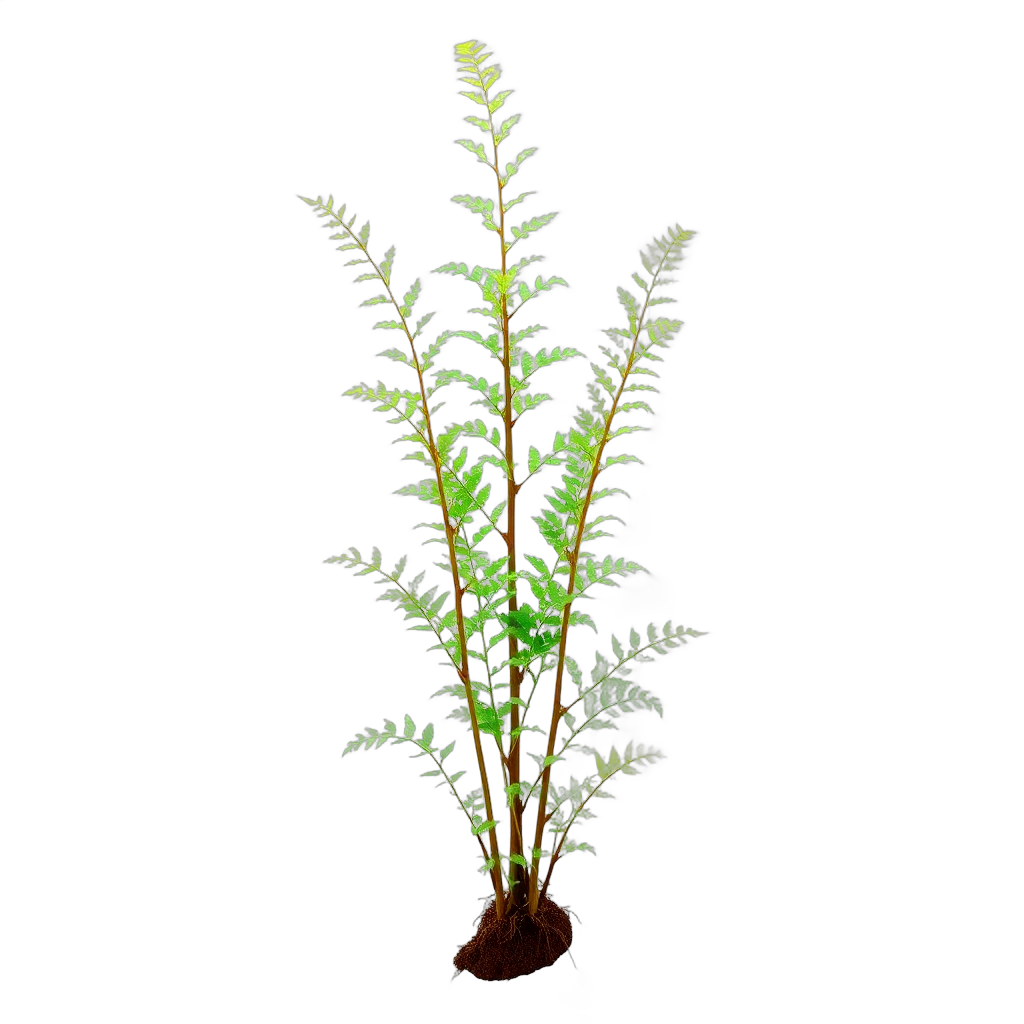
Lady Fern
Athyrium filix-femina
low-growing ground cover, blooms in none.
Zone and sun checks come from our database — confirm with your local nursery before you buy.
Bloom Calendar for Washington
spring
Buckwheat Tree, Fetterbush, Florida Anisesummer
Adam's Needle, Swamp Cyrilla, Loblolly Bayfall
Pink Muhly Grass, Purple Love Grasswinter
Limited bloomsDesign Tips for Washington (Zone 7b)
- Plant a single ornamental cherry or native serviceberry in your front yard to connect your private cottage garden to DC’s defining spring landscape moment — it costs less than almost any other design investment and pays dividends for 50+ years
- Georgetown and Capitol Hill brick is your most important design material — herringbone brick paths, brick edging, and brick wall backdrops make cottage planting look like it belongs to the neighborhood rather than being imposed on it
- Build DC’s cottage garden in three clear acts: spring classics (peonies, irises, foxgloves) in April–June; heat-adapted natives (cardinal flower, coneflower, phlox) in July–September; and fall asters with ornamental grass in October–November for the long DC autumn finale
- Choose disease-resistant roses exclusively — DC’s summer humidity is as aggressive as any Mid-Atlantic city for rose black spot and powdery mildew, and susceptible varieties require a weekly fungicide program that most homeowners will abandon
- The ‘Zephirine Drouhin’ climbing rose is the single best choice for DC stoops and entry arches: thornless (critical for narrow Georgetown passages), deep pink, fragrant, and Zone 5 hardy enough to survive DC winters with no protection
- Respect DC’s architectural formality in garden design — even a cottage planting benefits from some structural organization (a central path, a symmetrical border pair, a clipped boxwood or lavender hedge) that connects it visually to the city’s tradition of formal garden design from Dumbarton Oaks to the White House Rose Garden
Where to Source Plants in Washington
Skip the big-box stores. These independent Washington nurseries specialize in the plants that make cottage/english gardens thrive in Zone 7b.
Behnke Nurseries
Beltsville, MD (metro DC)
Family-operated since 1930; excellent perennial, rose, and cottage plant selection; one of the Washington metro area’s most trusted independent nurseries
American Plant Food Co.
Bethesda, MD
Premier DC-area garden center with expert staff and excellent selection of roses, perennials, and cottage garden plants for Zone 7b
Earth Sangha Native Plant Nursery
Springfield, VA
Northern Virginia’s leading native plant nursery; locally genotyped Mid-Atlantic natives grown from regional seed stock
Homestead Gardens
Davidsonville, MD
Large full-service regional garden center with strong rose, perennial, and ornamental tree selection for DC-area Zone 7b–8a gardens
Green Spring Garden
Alexandria, VA (Fairfax County)
Fairfax County demonstration garden and plant sale; curated Mid-Atlantic native and cottage perennial selection; expert horticultural advice
Cottage/English Landscaping Costs in Washington
| Project Scope | Estimated Cost |
|---|---|
| DC row house front cottage garden with rose arch + borders | $7,000 – $20,000 |
| Full cottage front yard redesign (250–450 sqft) | $9,000 – $24,000 |
| Backyard cottage terrace with rose arch or pergola + planting | $25,000 – $65,000 |
| White pergola installation (painted wood, 10×12 ft) | $4,500 – $12,000 |
| Brick or bluestone pathway (DC labor rates) | $22 – $40/sqft installed |
| AI visualization with ProScapeAI | Free to start |
Estimates based on Washington, DC-area contractor rates as of 2026. Actual costs vary by site conditions, materials, and contractor.
Washington Climate & Growing Zone
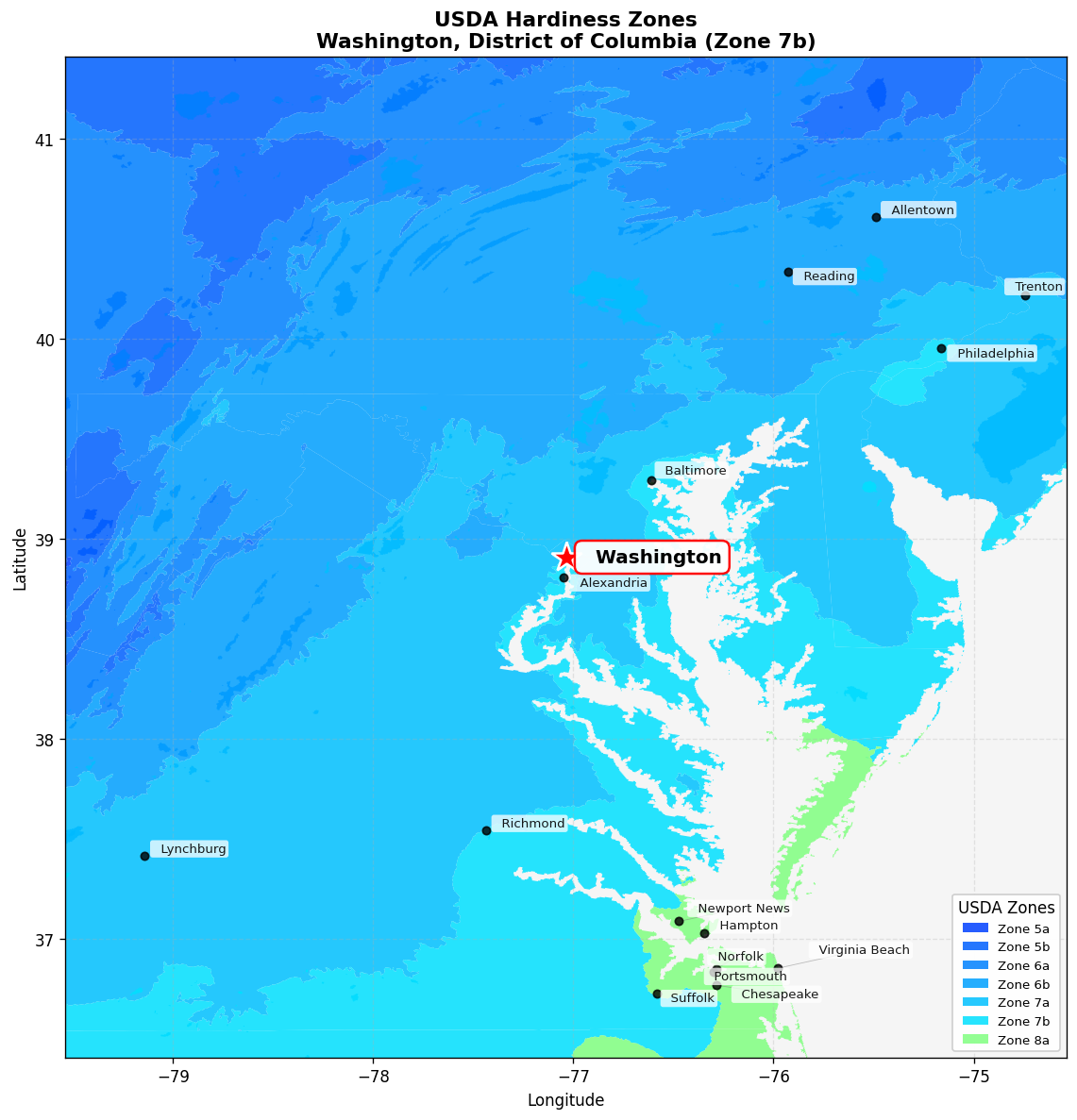
USDA Zone 7b
Hardiness zone for Washington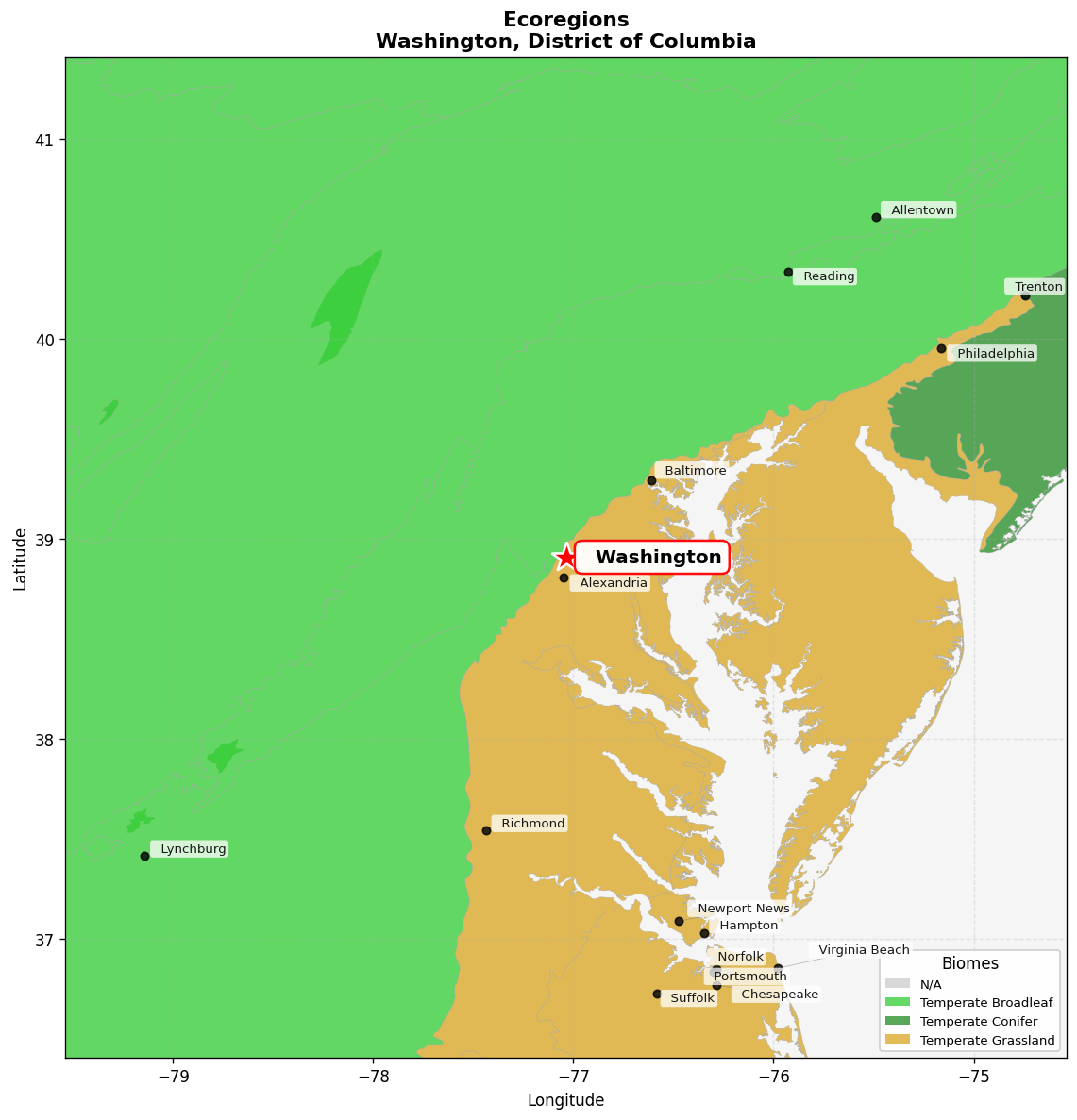
Southeast US conifer savannas
Native ecoregionFrequently Asked Questions
What cottage perennials thrive in Washington, DC’s Zone 7b climate?
DC’s Zone 7b supports most cottage perennials with good heat tolerance planning. Spring-peaking classics that love DC: peonies (spectacular in May, Zone 3 hardy), bearded irises (May–June), delphiniums (spring flush before heat sets in), foxgloves (biennial, reseed well), and lavender. Summer-carrying perennials for the heat: coneflower (Echinacea), black-eyed Susan (rudbeckia), garden phlox (heat-tolerant varieties like ‘David’), daylilies, catmint (cut back after June for August rebloom), cardinal flower (native, July–August), and oakleaf hydrangea. Fall closers: native asters (Symphyotrichum) and ornamental grasses. Plan the three-act cottage season to maintain visual interest from April through October.
Do Georgetown and Capitol Hill historic districts restrict cottage garden design?
DC has multiple historic districts with varying levels of regulation. Georgetown Historic District is overseen by the DC Historic Preservation Office (HPO) and restricts changes visible from the public right-of-way, including fencing materials, masonry alterations, and front yard structural elements. Capitol Hill Historic District has similar restrictions. For most cottage planting — flowers, shrubs, ground covers — no permit is required. However, new fences, gates, masonry retaining walls, and front yard paving materials may require HPO review. Contact DC’s Historic Preservation Office at 202-442-7600 or historicpreservation.dc.gov before installing new structural elements in a designated historic district.
When do cherry blossoms bloom in DC, and how do I plan a cottage garden around them?
DC’s Yoshino cherry blossoms typically peak March 20–April 10, with significant year-to-year variation (warmer years bring earlier bloom). The bloom is spectacular but brief — peak bloom usually lasts 4–7 days. For cottage garden design: plant early-blooming bulbs (snowdrops, early crocus) to bridge from February into cherry season. Pair the cherry bloom moment with early cottage plants — hellebores, early peonies, species tulips, and creeping phlox — that peak in the same late March–April window. If you have room for a small ornamental cherry tree (Yoshino, Kwanzan, or native serviceberry), it creates a private echo of the National Mall’s defining event right in your own front yard.
What roses work best in DC’s Zone 7b gardens?
DC’s Zone 7b and summer humidity create similar rose challenges as Baltimore. Best performers: ‘Knock Out’ series (disease-resistant, Zone 4, year-round performer), ‘New Dawn’ climbing rose (Zone 5, blush pink, vigorous on fences and facades), ‘Zephirine Drouhin’ (thornless climber, deep pink, Zone 5–9, ideal for stoops), David Austin English roses with disease resistance (‘Olivia Rose’, ‘The Generous Gardener’, both Zone 5+), and ‘Carefree Beauty’ (shrub, Zone 4, salmon-pink). Avoid hybrid teas without a fungicide program — DC’s summer humidity is as aggressive as Baltimore for rose diseases. Mulch rose crowns in November; prune in late March after the last hard frost.
How do I handle DC’s summer heat in a cottage garden?
DC’s July–August combination of 88°F highs and high humidity from the Potomac watershed is genuinely challenging for classic English cottage plants. Heat management strategies: apply 2–3 inches of organic mulch in May to moderate soil temperature and retain moisture; water deeply 1–1.5 inches per week during July–August heat (mornings preferred to reduce fungal disease); plant shade-providing trees on west-facing exposures to protect the most heat-sensitive plants from afternoon sun; choose heat-tolerant perennial varieties (phlox ‘David’ resists mildew, coneflower is heat-indifferent); accept summer dormancy of delphiniums and foxgloves after their June peak and fill those gaps with heat-hardy annuals (zinnias, salvia, cleome) until fall perennials kick in.
What native plants create authentic DC cottage gardens connected to the Chesapeake Bay watershed?
The Chesapeake Bay watershed’s native plant palette is extraordinary for cottage gardening. Key choices: native dogwood (Cornus florida, white or pink, spectacular DC spring bloom, Zone 5), serviceberry (Amelanchier, early spring white flowers, Zone 4), cardinal flower (Lobelia cardinalis, brilliant red, July–August), native phlox (Phlox paniculata, pink and white varieties), coneflower (Echinacea purpurea), black-eyed Susan (Rudbeckia hirta), native wild bergamot (Monarda fistulosa, lavender, bee magnet), oakleaf hydrangea (Hydrangea quercifolia, white summer blooms, spectacular fall color), and native asters (Symphyotrichum novae-angliae, deep purple, September–October). The Lady Bird Johnson Wildflower Center’s plant finder is the authoritative resource for Mid-Atlantic native plant selection.