4 Xeriscape Ideas for Austin, TX | Hill Country Water-Wise Landscaping
Native plants from the Texas blackland prairies (Zone 8b) — Humid subtropical climate
Why Desert/Xeriscape Gardens in Austin?
Austin isn't a desert — but Austin Water Stage 2 restrictions make it feel like one every summer. With roughly 34 inches of annual rainfall that arrives in violent spring storms and then disappears for months, Central Texas oscillates between flash flood and slow burn. When drought conditions hit and the Highland Lakes drop, Austin Water can restrict outdoor irrigation to once per week or less — which turns a conventional lawn into an expensive liability.
The practical answer is already growing in the limestone cedar breaks west of town. The Texas Hill Country sits right on Austin's doorstep, and its native plant palette — agave, yucca, sotol, prickly pear, desert willow, retama, and native bunchgrasses — evolved specifically in the shallow, alkaline, limestone-over-caliche soils that define the Austin basin. These are not imported Arizona plants. They are local plants that have survived Central Texas droughts for millennia, and they look exactly right against the cedar, live oak, and limestone outcroppings that define the Hill Country landscape.
Austin's Zone 8b classification is cooler than San Antonio's Zone 9a, which actually expands the palette: native grasses like Lindheimer's muhly and fall aster take on brilliant color in autumn, and Hill Country shrubs like agarita and inland sea oats provide layered texture through winter. The xeriscape aesthetic here reads as Hill Country modern — decomposed granite ground planes, limestone boulders, architectural agave and yucca, and drought-tolerant perennials filling in between. It's not the Sonoran desert look of Phoenix or Tucson; it's distinctly Central Texas, and it suits Austin's architecture from craftsman bungalows to contemporary stucco. Austin Water's WaterWise program supports conversions with free landscape evaluations, and replacing turf with established native plantings typically cuts outdoor water use by 50–70%.
4 Desert/Xeriscape Design Ideas for Austin
AI-generated image
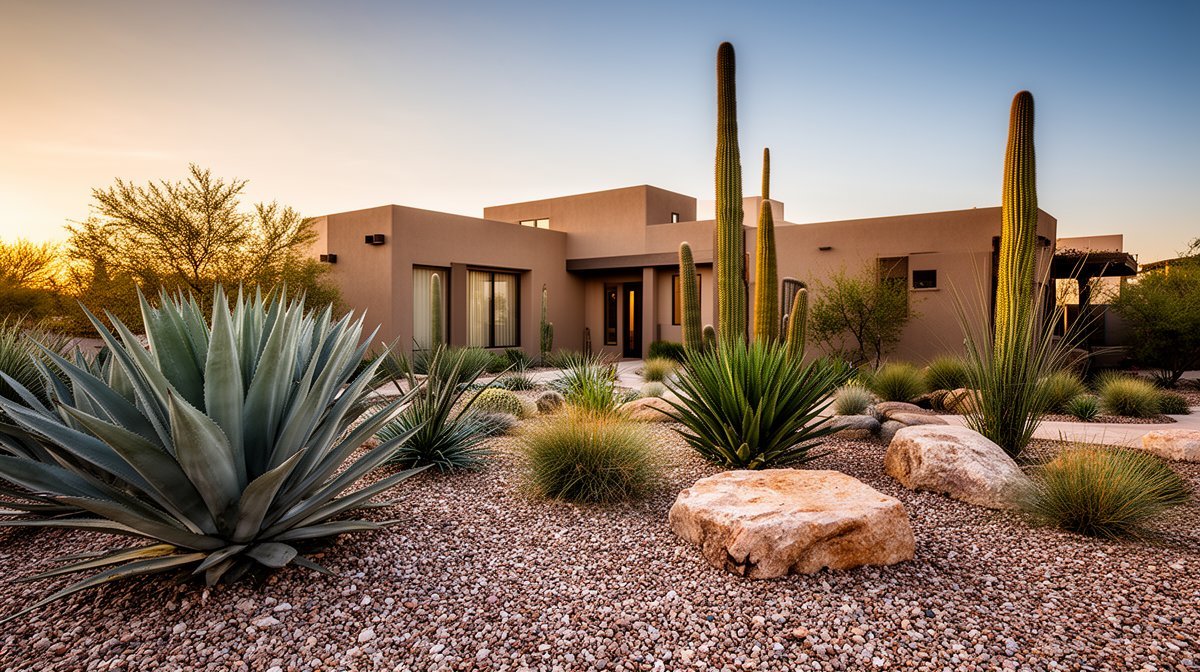
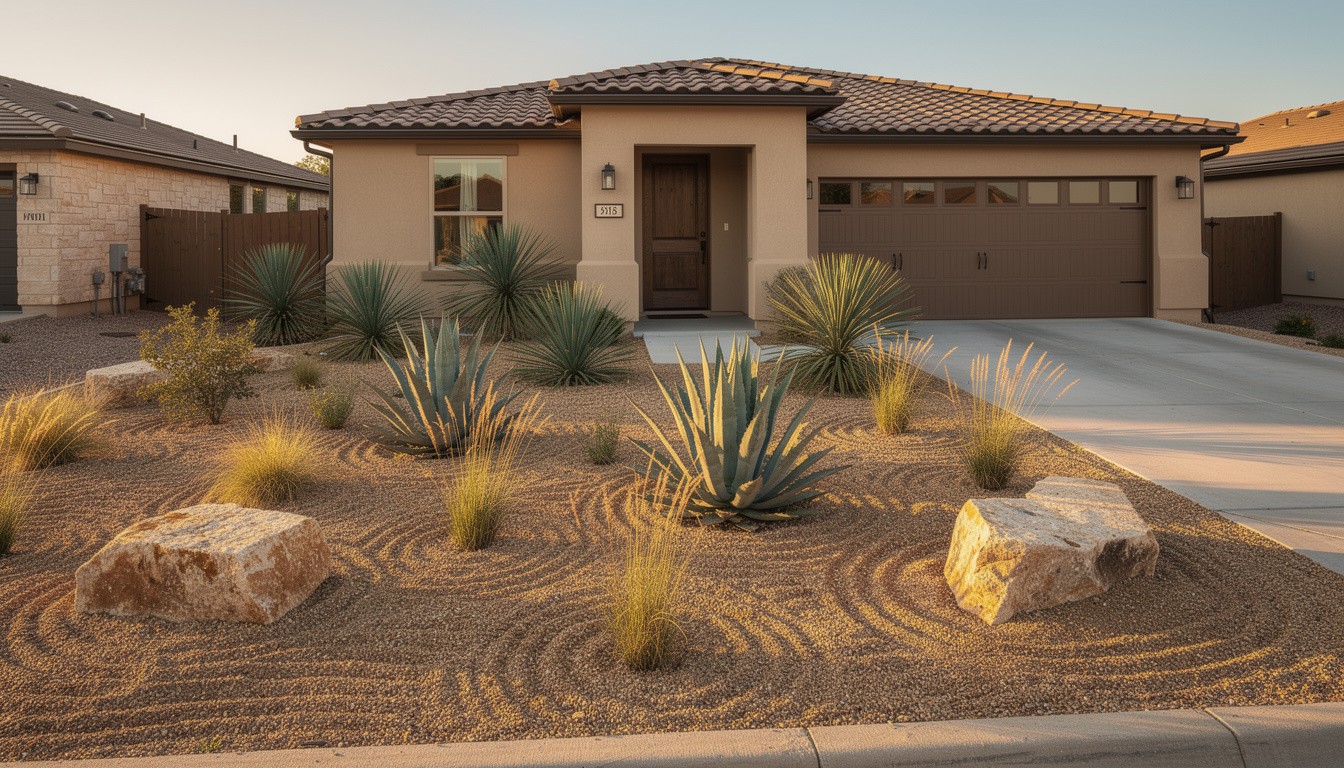
The Yucca and Boulder Desert Front
$10–20/sqftA xeriscape front yard of raked decomposed granite with scattered boulders and bold architectural plants — tall yuccas, blue agaves, and low ornamental grasses — replaces turf on a stucco ranch home. The composition is organized around the natural textures of the Hill Country: native stone boulders sit directly in the gravel bed, and yuccas rise to 4–5 feet providing strong vertical structure. This is the Central Texas xeriscape done right — not a bare gravel lot, but a curated composition that looks increasingly designed as the plants mature. After the first year it survives Austin summers without supplemental irrigation.
AI-generated image
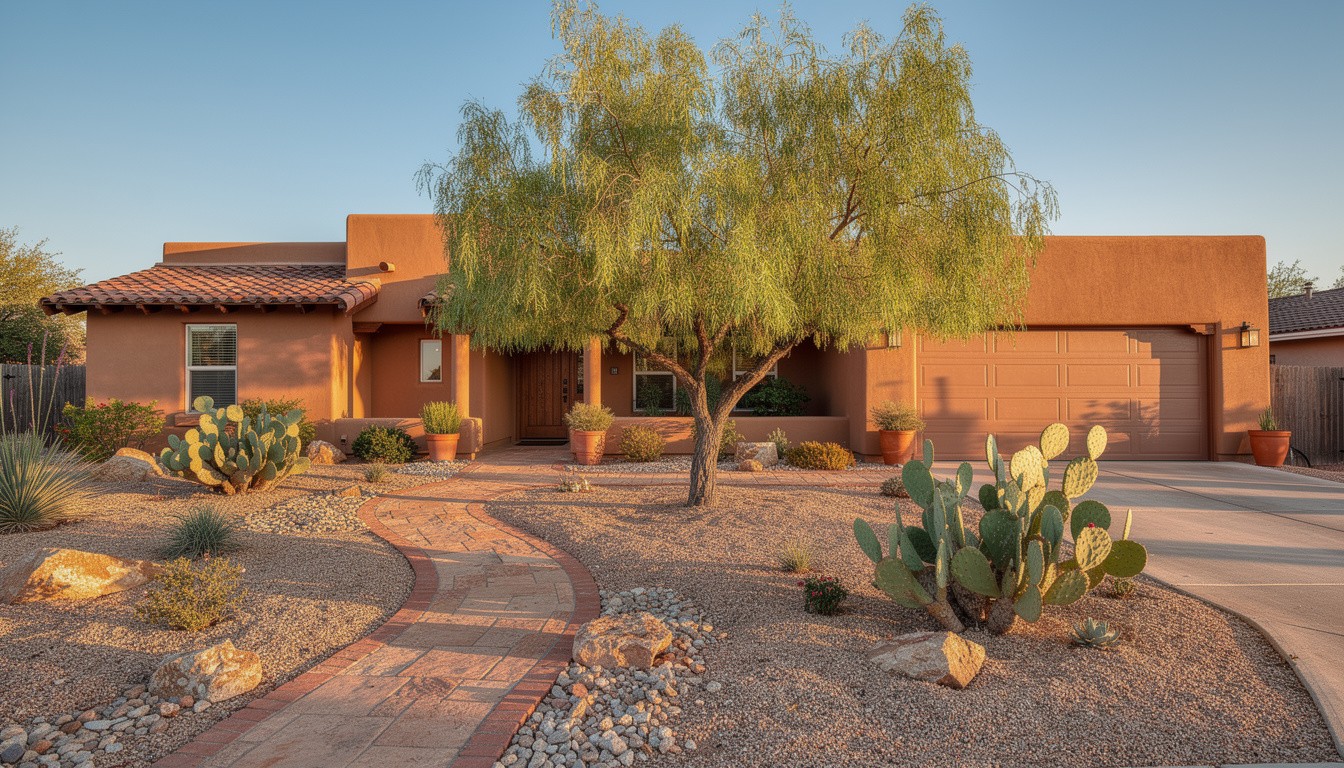
The Adobe Palo Verde Desert Entry
$10–20/sqftA Sonoran-influenced desert front yard frames an adobe-toned home with a weeping palo verde tree as the focal point, surrounded by prickly pear cactus, blue agave specimens, and pea gravel mulch in warm terra cotta tones. Decomposed granite paths wind between planted areas and terracotta pots add color accents near the entry. The design references the Southwest desert vernacular that Austin increasingly adopts in its western and southwestern neighborhoods — expansive sky, warm stone tones, and plants that read as native to a semi-arid landscape. The palo verde blooms brilliant yellow in spring, delivering the seasonal color accent the design needs.
AI-generated image
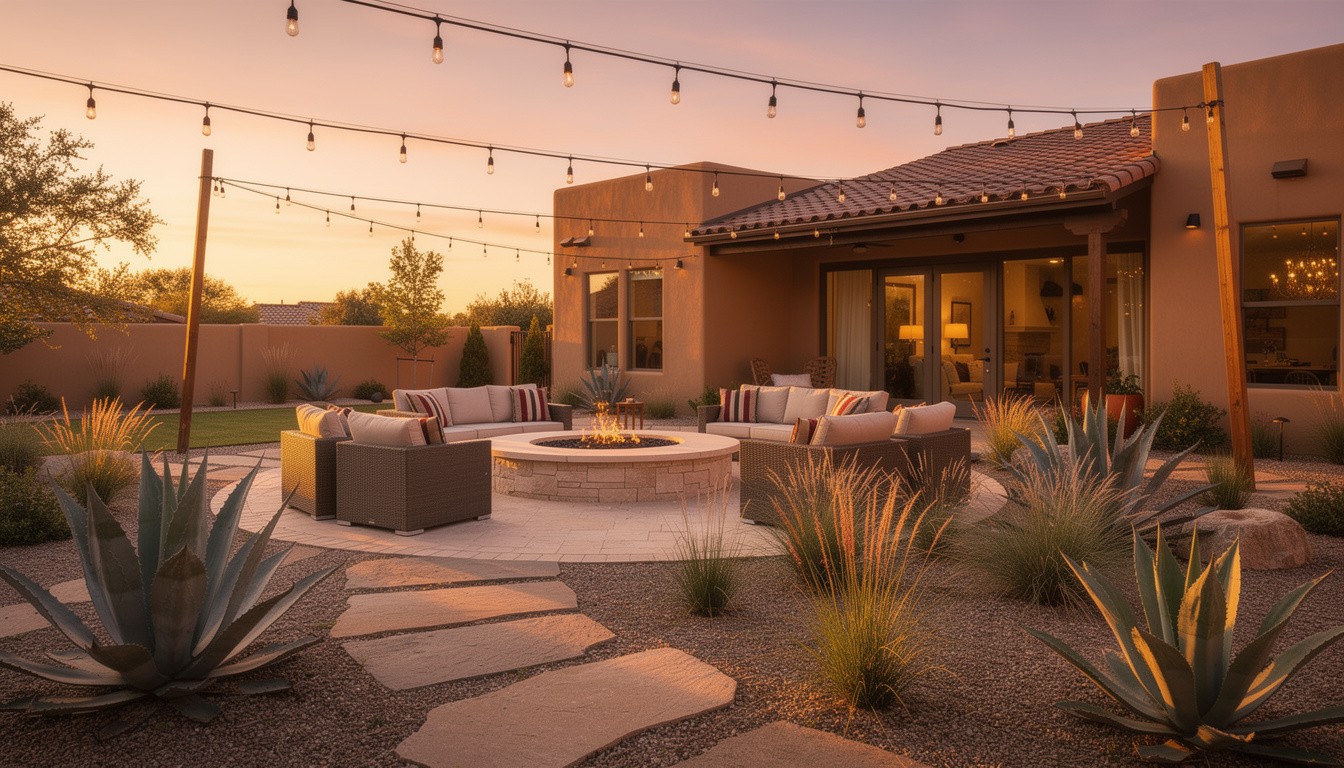
The Desert Fire Pit Patio at Dusk
$14–28/sqftA xeriscape backyard patio of decomposed granite and flagstone stepping stones centers on a round metal fire pit surrounded by modern outdoor lounge seating, string lights overhead, and bold agave and desert grass planting in all directions. This is the Austin Hill Country outdoor room — casual, functional, and fully at ease with the semi-arid character of the site. The fire pit serves from September through April when Austin evenings are cool enough to enjoy an open flame, and the surrounding desert planting requires no irrigation once established. The string lights transform the space at dusk into an outdoor room that feels as comfortable as an interior.
AI-generated image
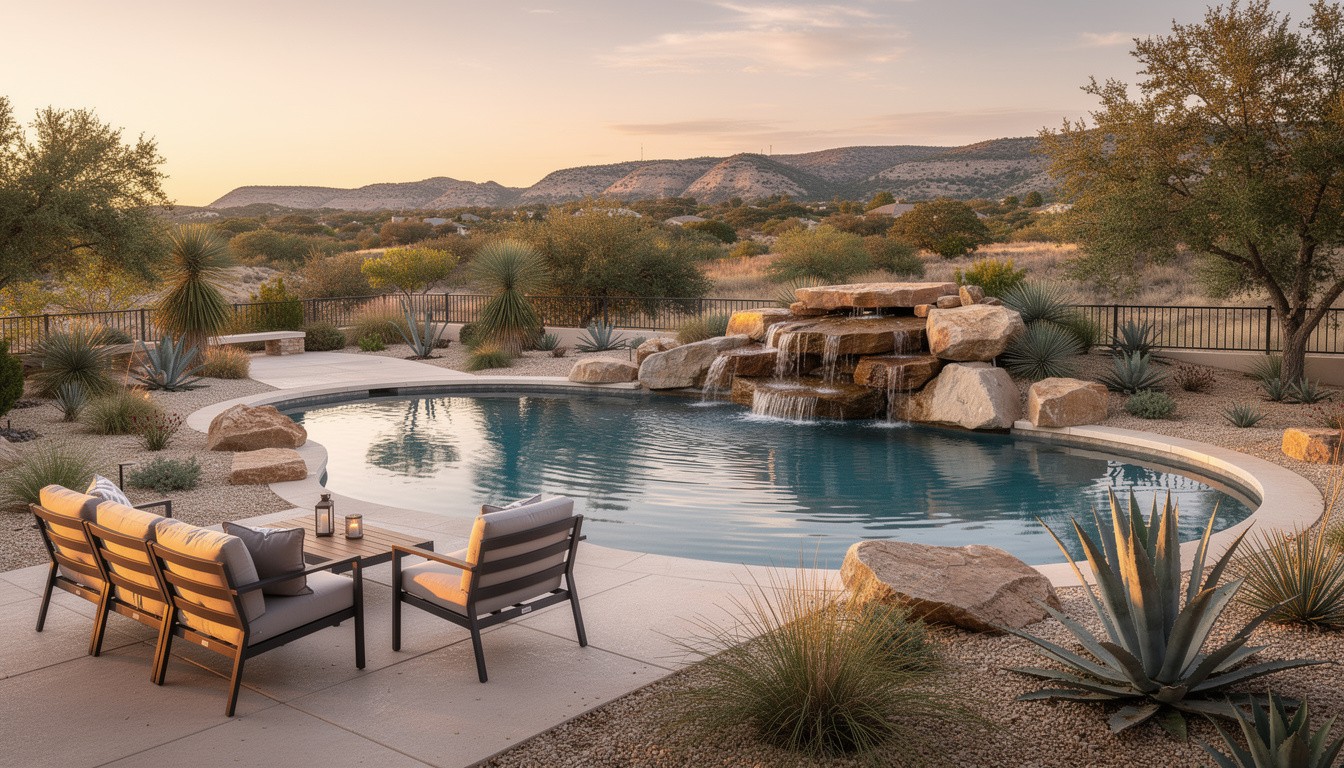
The Desert Pool with Waterfall Boulders
$55–120/sqft (pool included)A freeform pool with a natural rock waterfall feature sits in a backyard landscape of limestone boulders, agaves, desert grasses, and decomposed granite — the Hill Country landscape brought right to the pool's edge. Lounge chairs and a seating area with outdoor furniture occupy the concrete pool deck beside the waterfall feature. The water cascades over stacked native limestone boulders, and the pool's irregular shape echoes the natural creek swimming holes that define Austin's outdoor culture. This design makes a pool feel native to Central Texas rather than transplanted from Florida — the desert planting and stone waterfall integrate the pool into the landscape rather than imposing it.
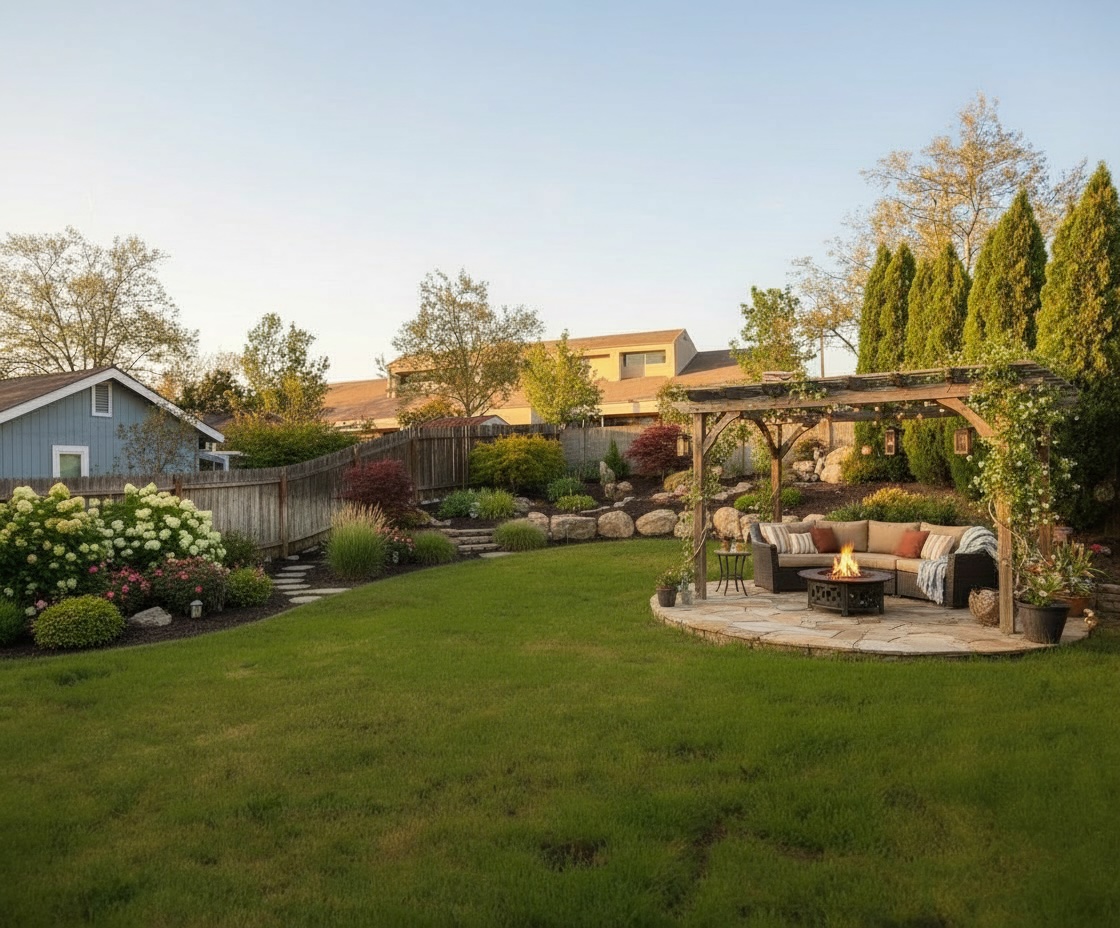
See how a desert/xeriscape garden looks on YOUR property
Upload a photo of your Austin yard and visualize your dream garden in seconds.
Try ProScapeAI Free
AI-generated image
Featured Trees & Shrubs for Desert/Xeriscape Gardens
Browse all 156 plants for Austin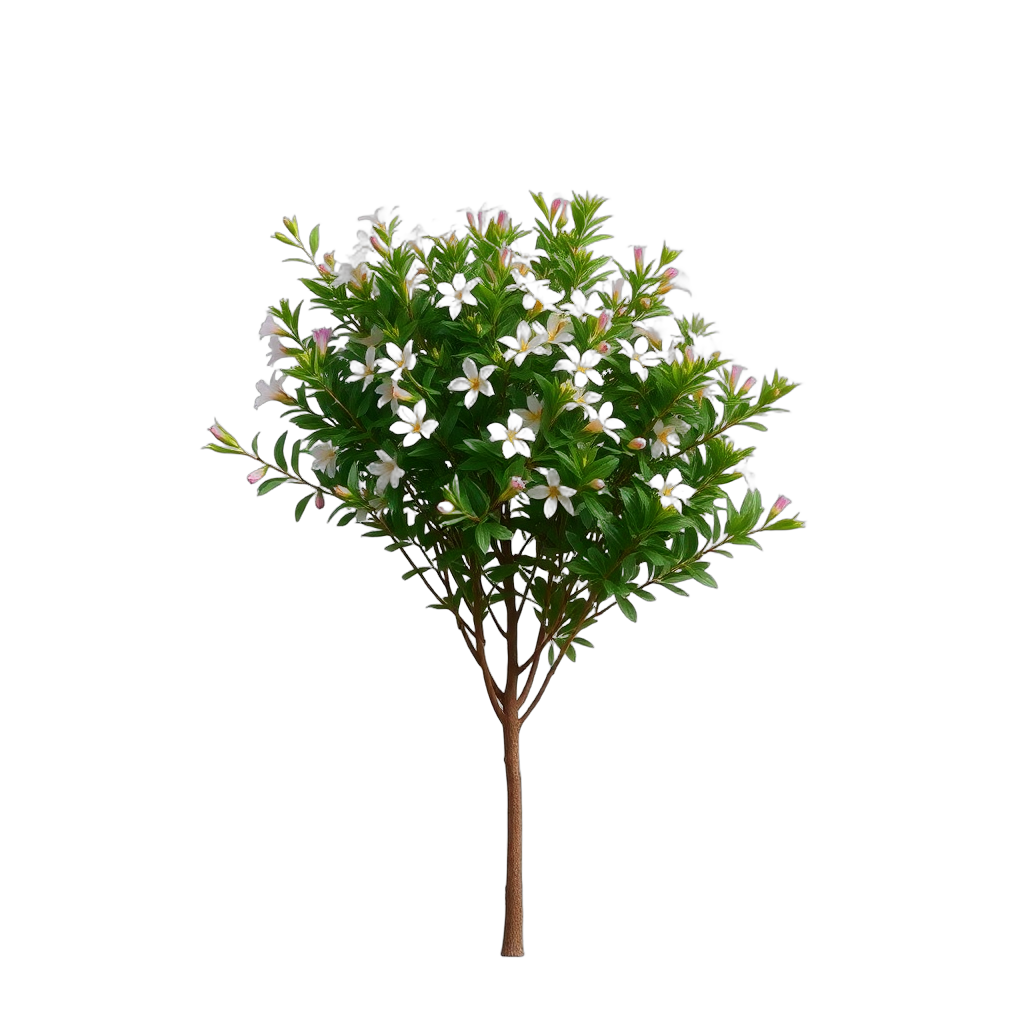
Texas Mountain Laurel
Sophora secundiflora
medium-sized at 12 feet, purple blooms in spring. Evergreen year-round.
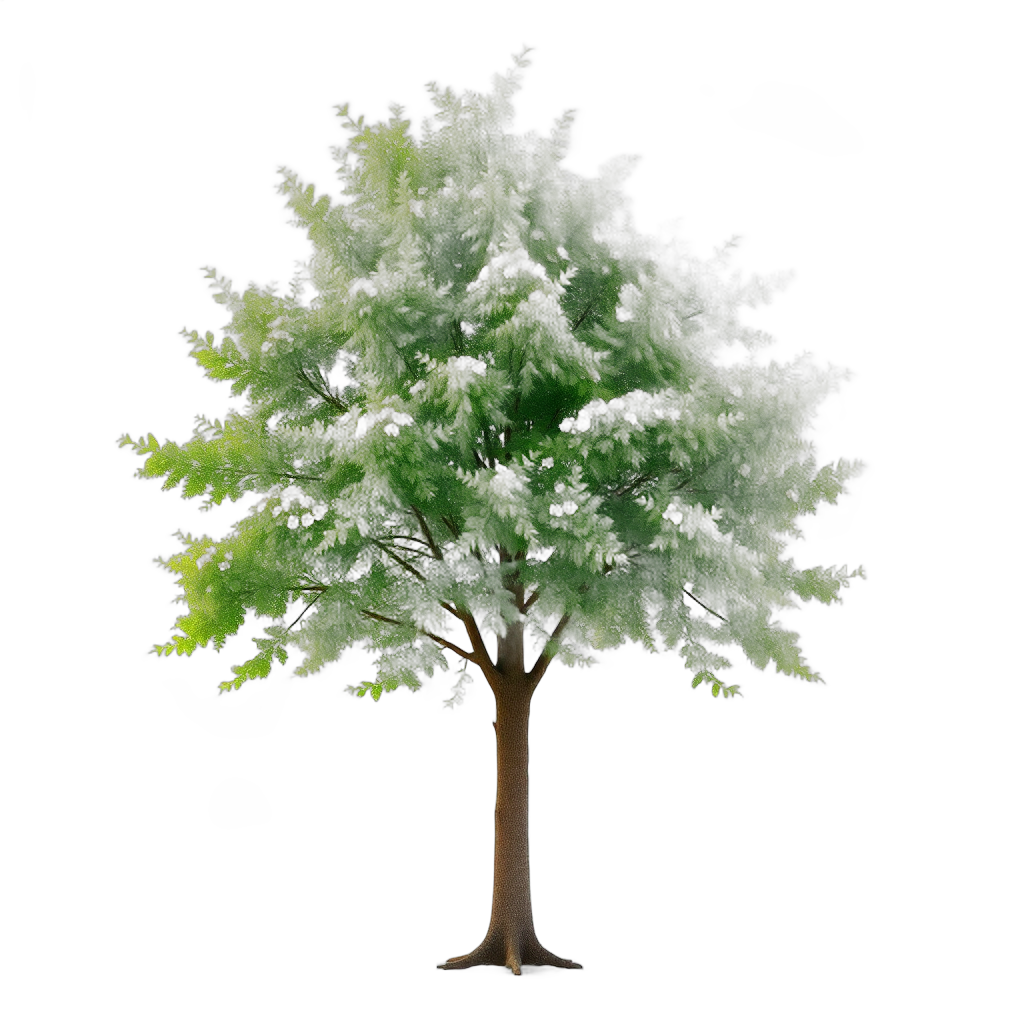
Cedar Elm
Ulmus crassifolia
large shade tree reaching 60+ feet, blooms in fall. Yellow fall color.
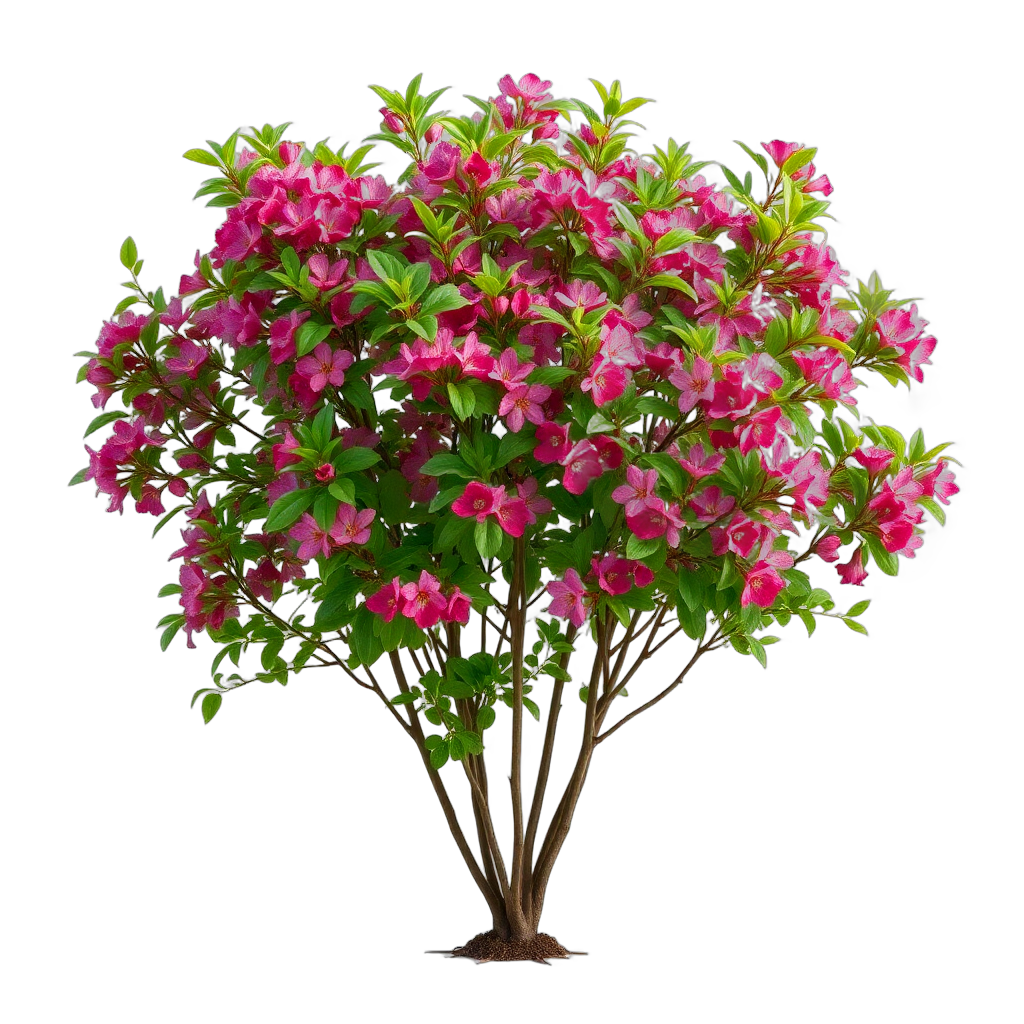
Oklahoma Redbud
Cercis reniformis
reaches 20 feet tall, purple blooms in spring. Attracts hummingbirds.
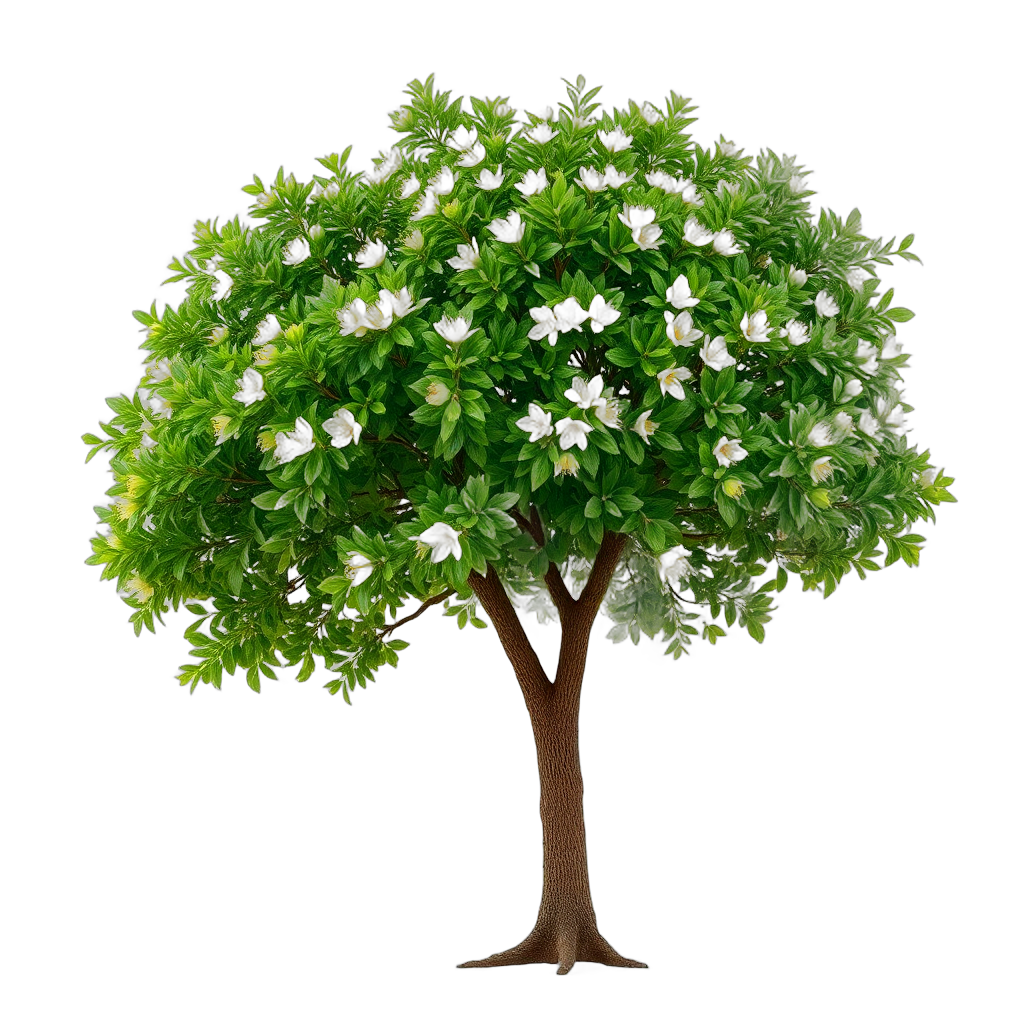
Osage Orange
Maclura pomifera
large shade tree reaching 50+ feet, blooms in spring. Yellow fall color.
Featured Grasses & Groundcovers for Desert/Xeriscape Gardens
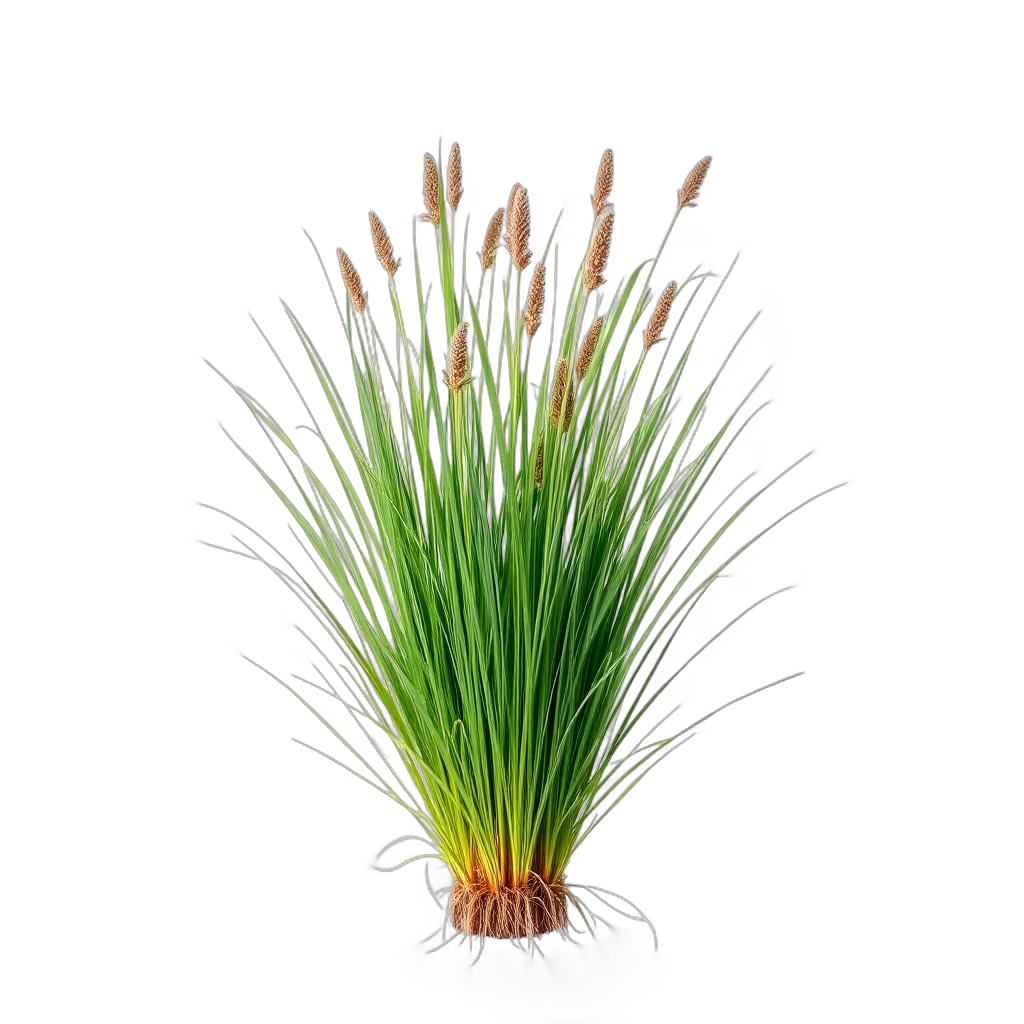
Lindheimer's Muhly
Muhlenbergia lindheimeri
grows to 4 feet, white blooms in fall.
Featured Flowers & Perennials for Desert/Xeriscape Gardens
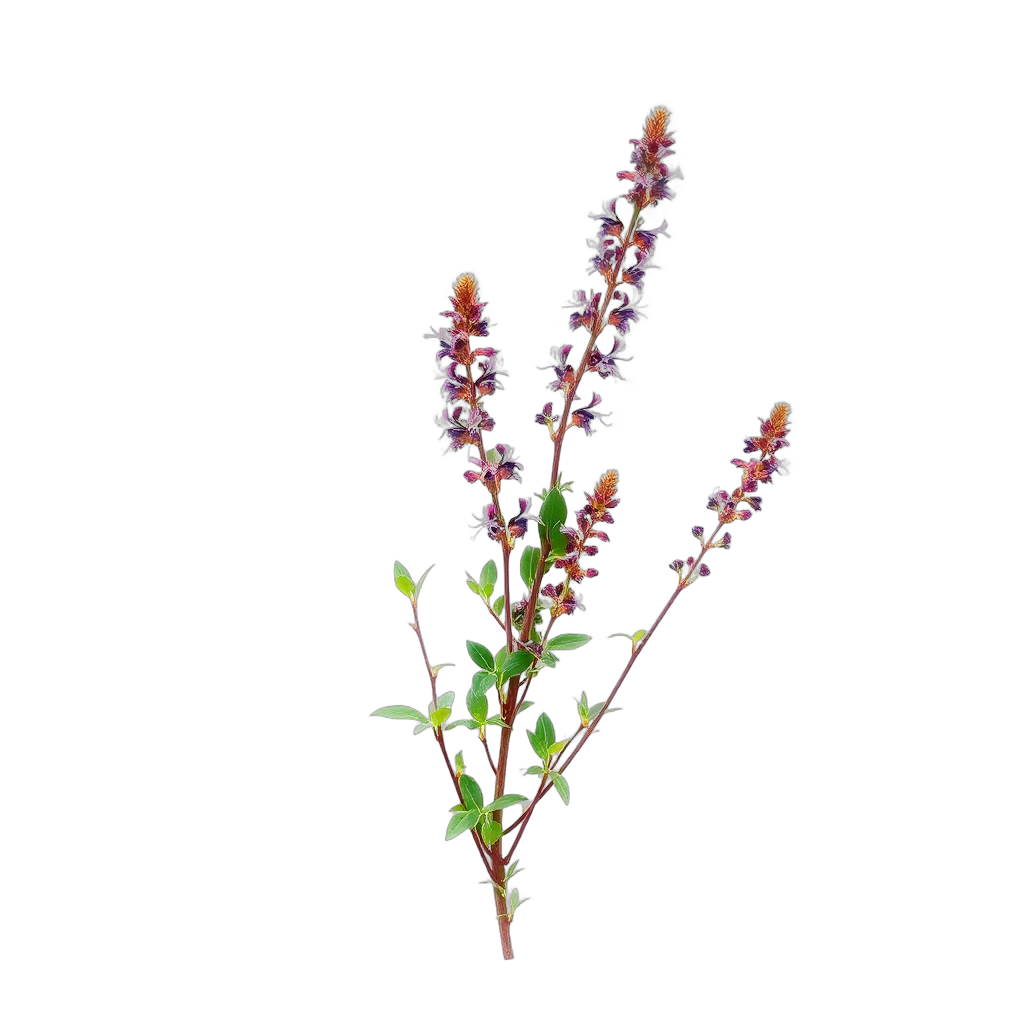
Mealy Cup Sage
Salvia farinacea
low-growing ground cover, blue blooms in summer. Attracts butterflies.
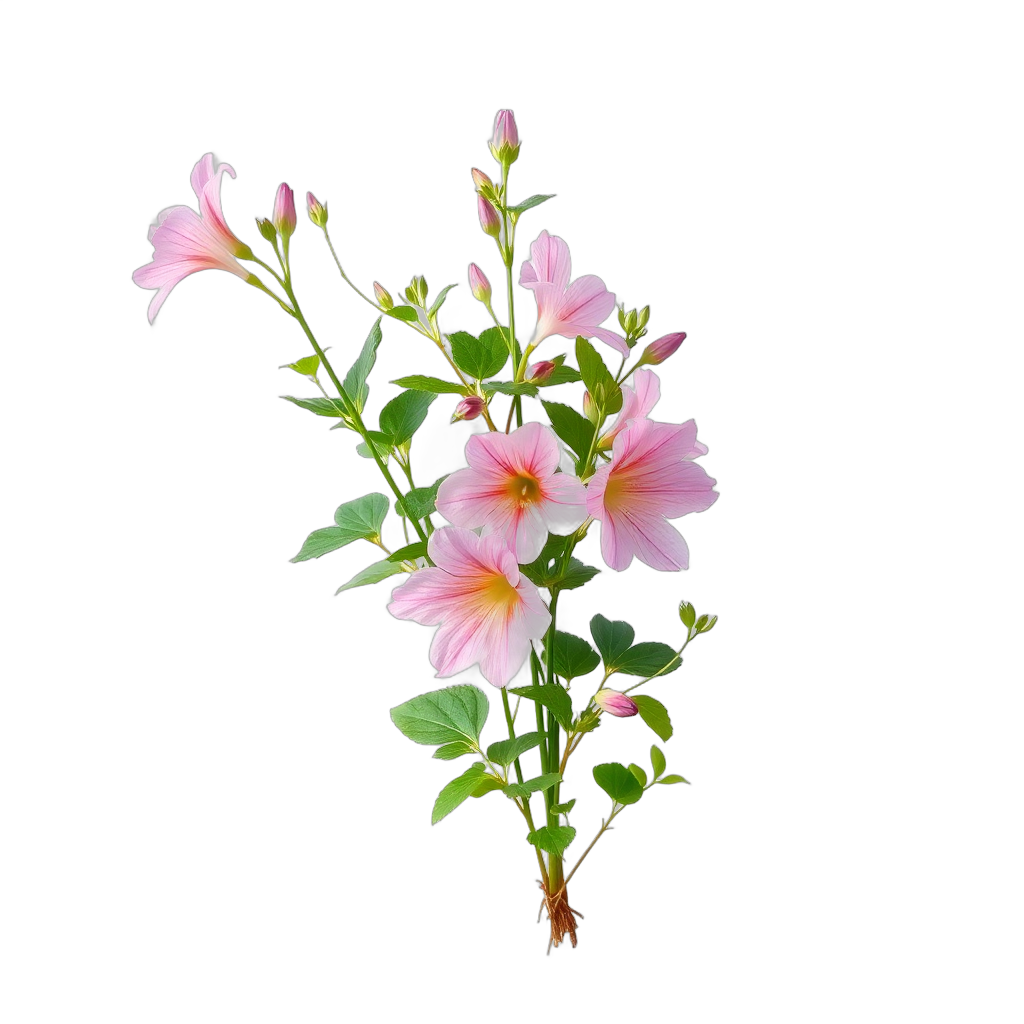
Pink Evening Primrose
Oenothera speciosa
low-growing ground cover, pink blooms in summer. Attracts butterflies.

Water Lettuce
Pistia stratiotes
low-growing ground cover, white blooms in summer. Evergreen year-round.
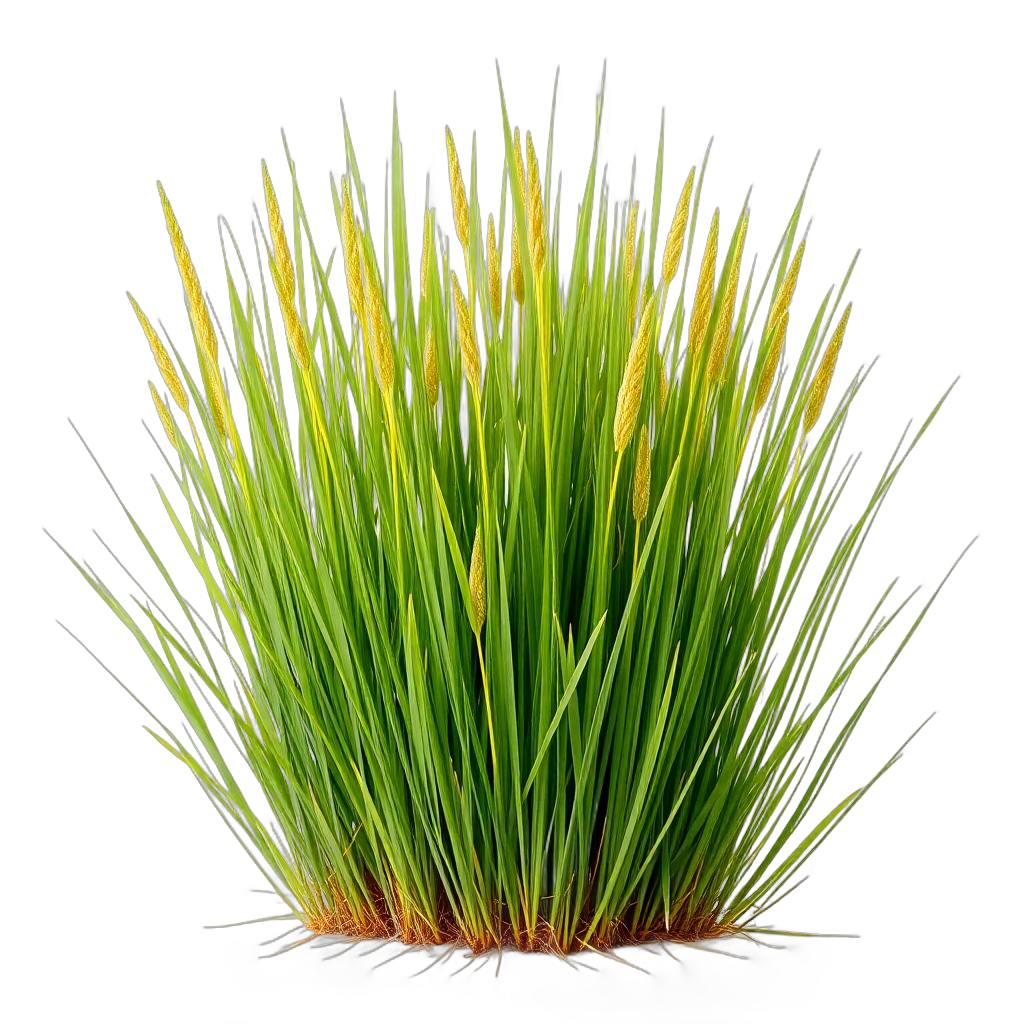
Bowles' Golden Sedge
Carex elata 'Aurea'
low-growing ground cover, blooms in none.
Zone and sun checks come from our database — confirm with your local nursery before you buy.
Bloom Calendar for Austin
spring
Texas Mountain Laurel, Oklahoma Redbud, Osage Orangesummer
Mealy Cup Sage, Pink Evening Primrose, Water Lettucefall
Mealy Cup Sage, Lindheimer's Muhly, Cedar Elmwinter
Limited bloomsDesign Tips for Austin (Zone 8b)
- Amend planting holes for agave, cacti, and sotol with 30–40% coarse grit or expanded shale — Austin's clay Blackland soils and shallow limestone both require improved drainage to prevent crown rot during the spring storm season
- Plant cenizo (Texas sage) in full sun on well-drained slopes or raised berms — it reliably blooms purple after rains and signals water availability to pollinators, but will not tolerate wet feet in heavy clay or caliche
- Design for both drought and flood: Austin's spring storms deliver intense rainfall after long dry stretches — grade all beds away from the foundation, use DG as a permeable surface, and channel runoff toward a rain garden with moisture-tolerant natives like inland sea oats or cardinal flower
- Contact Austin Water WaterWise before installing — free landscape evaluations help you design within restriction guidelines and document the project for any available rebates or incentive programs
- Source limestone boulders from Hill Country quarries west of Austin (Marble Falls, Dripping Springs, Burnet) rather than imported stone — local limestone weathers to match Austin's geology, reduces transport costs, and gives designs an authentically Central Texas character
- Protect newly planted agave and yucca from Austin's infrequent hard freezes — Zone 8b can drop below 15°F in severe winters; use frost cloth on young plants the first two winters until roots establish and cold hardiness increases
Where to Source Plants in Austin
Skip the big-box stores. These independent Austin nurseries specialize in the plants that make desert/xeriscape gardens thrive in Zone 8b.
Barton Springs Nursery
West Lake Hills
Native and adapted plants, landscape design — 4 acres of on-site propagation
Shoal Creek Nursery
Allandale
Native Texas plants, organics — family-owned, one of Austin's largest independents
Vivero Growers
South Austin
Texas native and adapted plants, broad inventory, landscape consultation
Greensleeves Nursery
Pflugerville
Native Texas plants — specialty nursery with deep native flora expertise
Desert/Xeriscape Landscaping Costs in Austin
| Project Scope | Estimated Cost |
|---|---|
| Turf removal + DG xeriscape front yard | $4,000 – $10,000 |
| Full xeriscape front yard with boulders + plants | $7,000 – $18,000 |
| Desert patio + fire pit backyard room | $10,000 – $25,000 |
| Freeform pool with rock waterfall + xeriscape (full backyard) | $60,000 – $140,000 |
| Decomposed granite installation (labor + material) | $2,000 – $5,500 |
| Native boulder placement and arrangement | $1,500 – $4,000 |
| AI visualization with ProScapeAI | Free to start |
Estimates based on Austin, TX-area contractor rates as of 2026. Actual costs vary by site conditions, materials, and contractor.
Austin Climate & Growing Zone
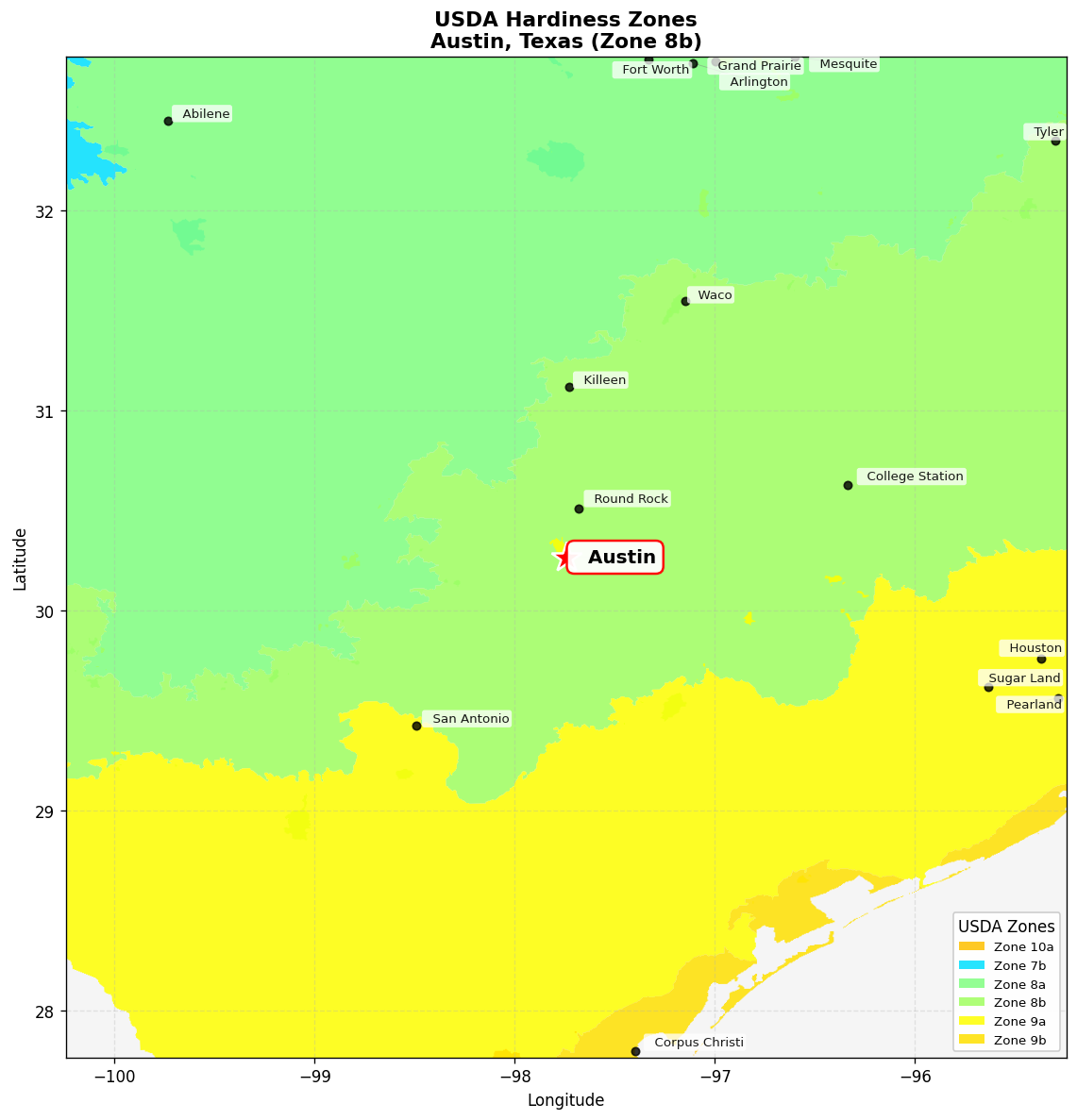
USDA Zone 8b
Hardiness zone for Austin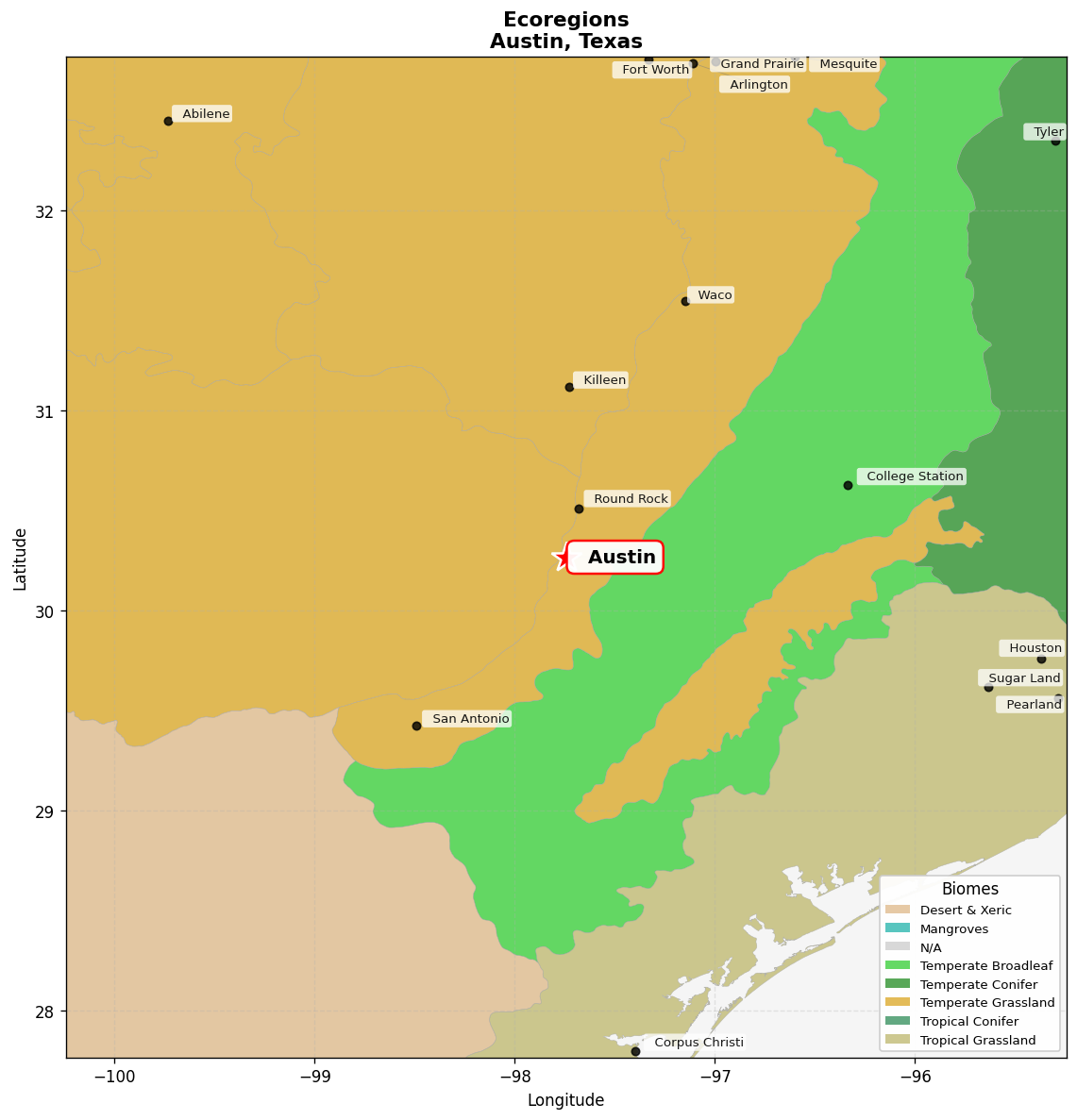
Texas blackland prairies
Native ecoregionFrequently Asked Questions
What are Austin Water Stage 2 restrictions and how do they affect landscaping?
Austin Water enforces tiered drought restrictions tied to Highland Lakes storage levels (Lake Travis and Lake Buchanan). Under Stage 1, outdoor watering is limited to twice per week on assigned days. Stage 2 — which Austin enters regularly during dry summers — reduces that to once per week and bans watering between 10am and 7pm. Stage 3 cuts to once every two weeks; Stage 4 bans all outdoor irrigation except by hand or bucket. Xeriscape landscapes with established native plants can typically survive Stage 2 and Stage 3 restrictions without any supplemental watering — which is the core practical argument for going water-wise. Austin Water's WaterWise program also offers free landscape evaluations to help homeowners plan compliant, efficient designs.
Is Austin actually dry enough to justify xeriscape?
Austin averages 34 inches of rain per year — more than Phoenix or Albuquerque — but the distribution is the problem. The majority arrives in spring and fall storm events, while June through September can be nearly rainless and brutally hot (100°F+ weeks are normal). The Highland Lakes system that supplies Austin's water is chronically vulnerable to multi-year drought cycles, meaning water restrictions can persist even after individual rains. Xeriscape in Austin isn't about surviving true desert conditions; it's about building a landscape that doesn't require supplemental irrigation during the dry months, which reduces your water bill and insulates you from Stage 2 and Stage 3 watering bans.
Which plants are native to the Austin and Hill Country area?
Austin sits at the Balcones Escarpment, the transition line between the Edwards Plateau (Hill Country) and the Blackland Prairie, giving it a rich and distinct native palette. True local natives include: Texas sage (cenizo), which blooms purple after rains; Texas mountain laurel with intensely fragrant spring blooms; prickly pear and tasajillo cactus; agave lechuguilla and sotol (desert spoon); yaupon holly; blackfoot daisy; mealy blue sage; Lindheimer's muhly grass; inland sea oats; fall aster; agarita; and plateau live oak. Desert willow and retama are native to Texas river corridors and thrive in Austin's climate. Blue agave is native to Mexico but naturalizes in Zone 8b and is widely used in Hill Country xeriscape designs across Central Texas.
How does Austin xeriscape differ from Phoenix or Tucson desert landscaping?
The differences are meaningful: Austin gets 3–5x more annual rainfall than Phoenix and has measurable humidity, so plants establish faster and the overall palette stays greener. Austin's Zone 8b also brings genuine winter freezes (occasional single-digit events, more commonly 20–28°F) that would kill tender Sonoran desert plants like saguaro, brittlebush, or palo verde. The Hill Country aesthetic is also visually distinct: limestone instead of sandstone, native bunchgrasses, cenizo instead of brittlebush, and a color palette that leans toward sage, rust, and gold rather than the stark white-and-terracotta of Tucson. Think Texas Hill Country ranch rather than Southwest resort — rugged, naturalistic, and deeply regional.
What ground cover should I use instead of grass in Austin?
Decomposed granite (DG) is the most widely used option — affordable ($80–$130/ton installed in Austin), excellent drainage for the area's clay and limestone soils, and immediately reads as a native Hill Country surface. For a softer, more planted look, native groundcovers like prairie verbena, blackfoot daisy, mealy blue sage, and Lindheimer's muhly grass spread to cover large areas with seasonal color and texture. Cedar mulch (shredded cedar or cedar flakes) is locally abundant in Austin, suppresses weeds effectively, and decomposes into the soil over time. Avoid gravel in full western sun exposures — it radiates intense heat in Austin's summer afternoons and can stress plants at the patio edge.
Does Austin's limestone soil cause problems for xeriscape plants?
Austin soils vary significantly by location: the western portions over the Edwards Plateau have shallow, fast-draining limestone with very little topsoil, while eastern Austin has heavier Blackland clay (Vertisols) that drains poorly. For cacti, agave, and sotol — which evolved in fast-draining soils — amend planting holes with 30–40% coarse grit, expanded shale, or crushed granite to prevent crown rot during Austin's spring storm periods. For large areas, raised planting berms improve drainage dramatically and add visual interest. Native grasses, cenizo, and yaupon holly are generally more tolerant of Austin's variable soils. On limestone outcrops, plant into natural pockets and crevices rather than fighting the rock — many Hill Country natives prefer exactly that environment.