4 Xeriscape Ideas for San Antonio, TX | Water-Wise Hill Country Landscaping
Native plants from the Texas blackland prairies (Zone 9a) — Humid subtropical climate
Why Desert/Xeriscape Gardens in San Antonio?
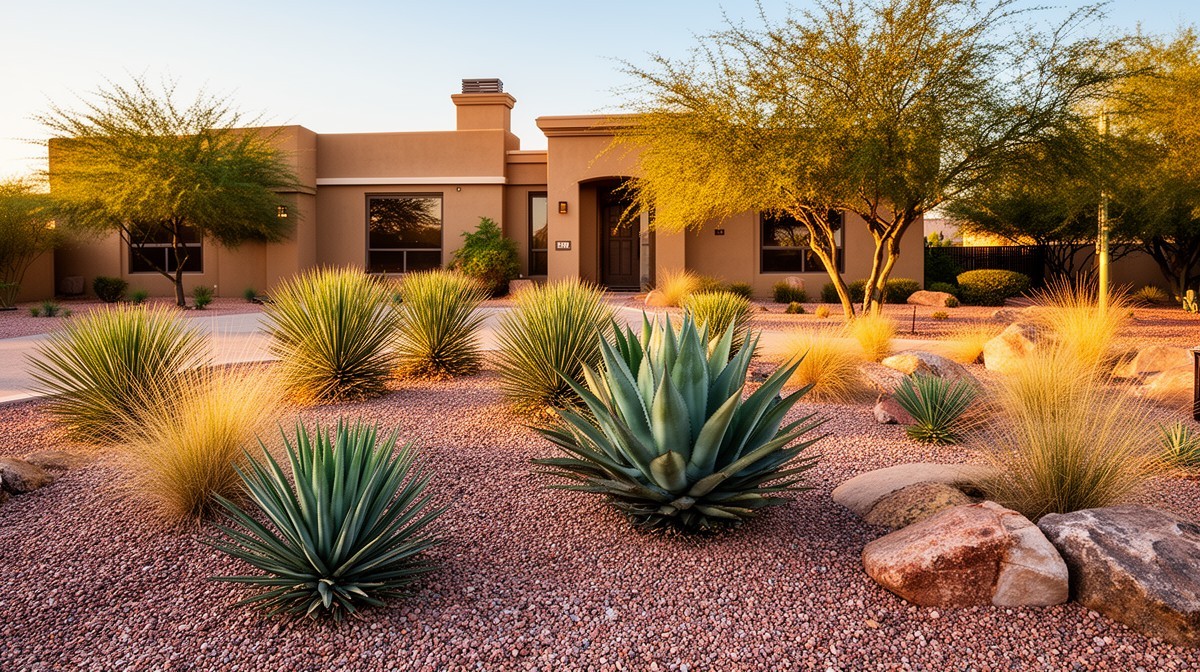
San Antonio isn't a desert — but SAWS Stage 2 water restrictions make it feel like one. With 30 inches of annual rainfall that arrives unpredictably, the city swings between drought and flood, and outdoor watering bans can kick in any summer. The smart response isn't lawn replacement for aesthetics alone — it's building a landscape that doesn't need the spigot to survive.
The good news: San Antonio sits at the gateway to the Texas Hill Country, one of the most distinctive native plant landscapes in North America. Agave, prickly pear, Texas sage (cenizo), Texas mountain laurel, and yaupon holly are all native or near-native here — not imported desert plants, but plants that evolved in the exact limestone-over-caliche soils under your feet. Blue agave, sotol, desert willow, and retama thrive in San Antonio's Zone 9a heat and its occasional winter ice events, something true desert plants from Arizona can't always handle.
The Hill Country aesthetic translates into one of the most sought-after residential landscape styles in Texas: limestone boulders, decomposed granite paths, flagstone patios, and architectural succulents arranged with the same rugged elegance that draws millions to Fredericksburg and Kerrville. Unlike Phoenix xeriscape, San Antonio's higher humidity and periodic rains mean your plants establish faster and color lasts longer. SAWS offers rebates for WaterSaver landscapes, and eliminating turf can cut outdoor water bills by 50–75% — while building a yard that looks better than the lawn it replaced.
4 Desert/Xeriscape Design Ideas for San Antonio
AI-generated image
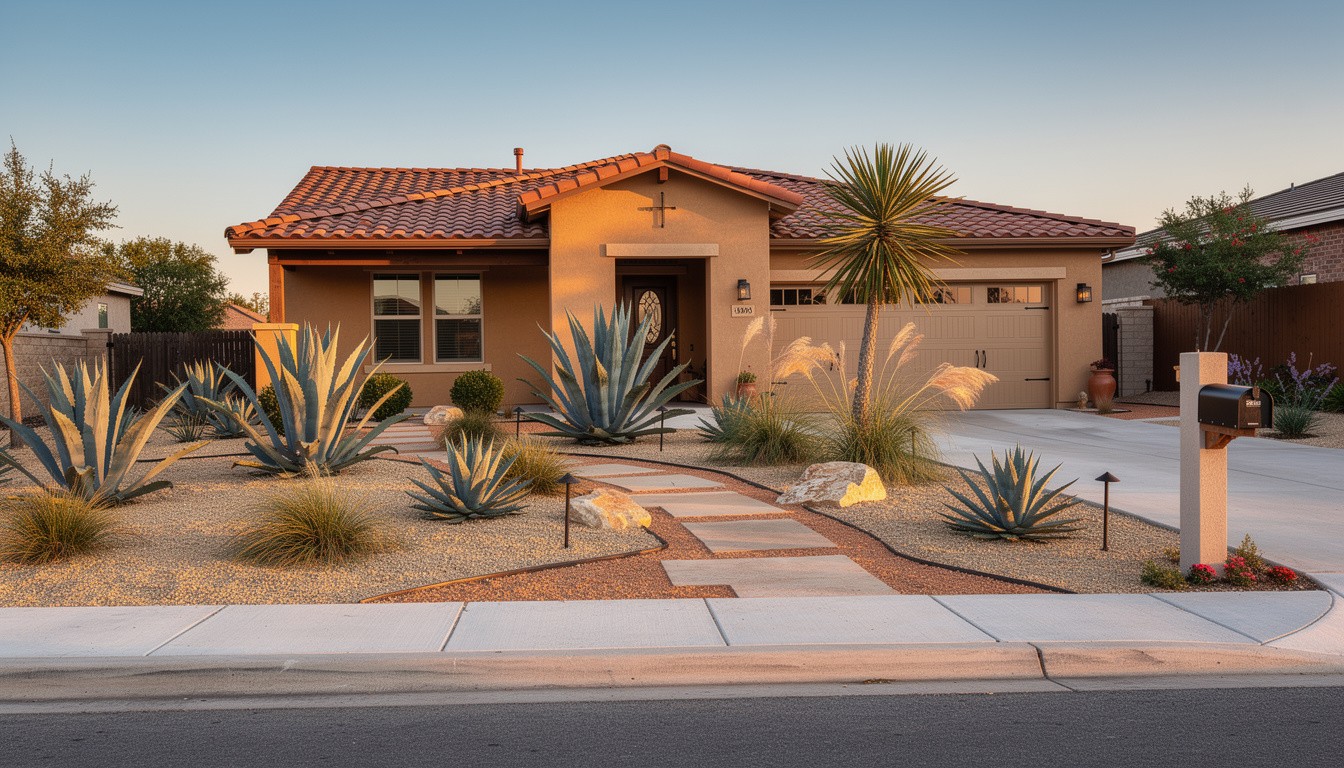
The Agave and Lit Pathway Xeriscape Front
$10–20/sqftA stucco ranch home sits behind a xeriscape front yard of decomposed granite and ground-cover rock, with tall agaves rising 4–5 feet, blue-toned yuccas, and low desert grasses planted in the gravel at deliberate intervals. Path lights illuminate the concrete walkway from street to door. The composition is organized around a few bold plant specimens rather than dense planting — each agave is given room to reach its full architectural size, and the negative space between them is as intentional as the planting. This design is optimal for San Antonio's Edwards Aquifer recharge zone: zero irrigation demand after establishment, zero lawn, and a composition that looks best in the intense summer light that defines the city's visual character.
AI-generated image
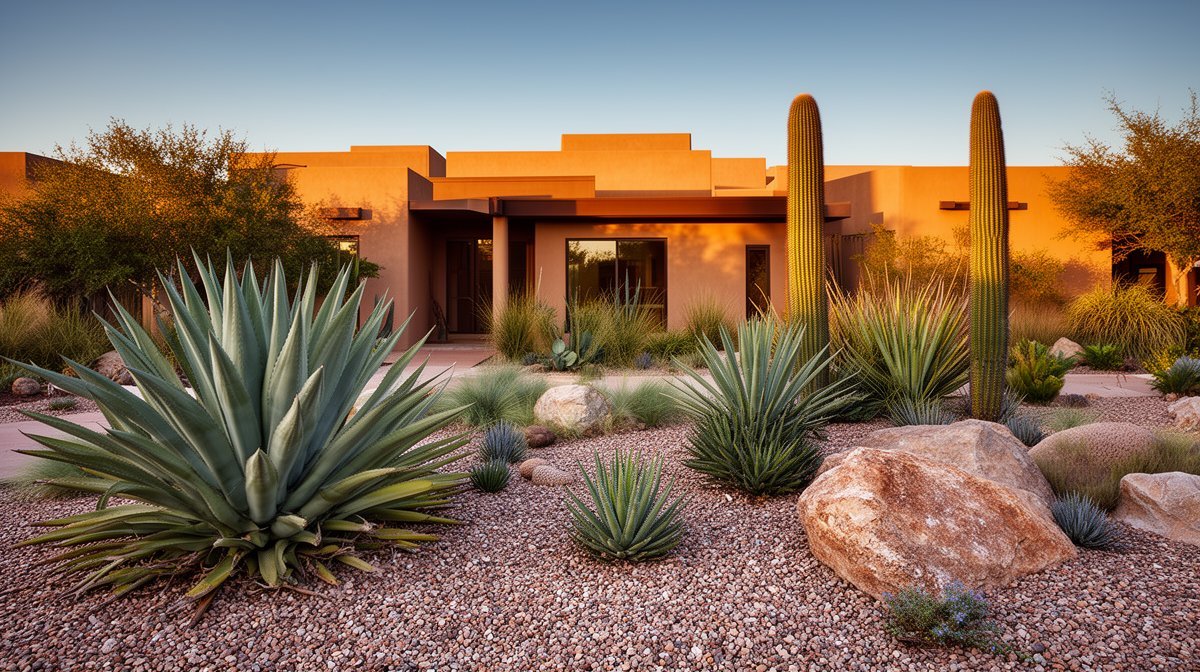
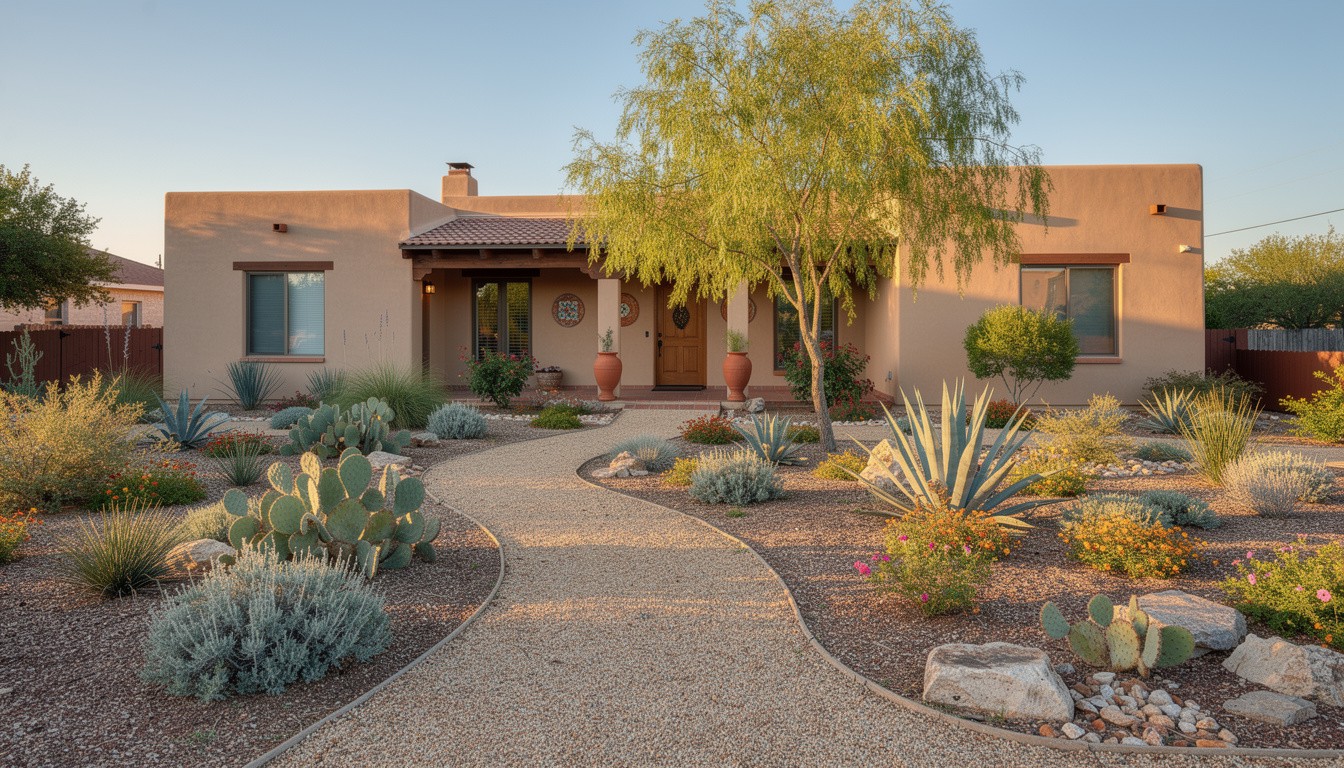
The Adobe Desert Garden with Palo Verde
$10–20/sqftA warm adobe-toned San Antonio home is framed by a desert front yard centered on a weeping palo verde tree, surrounded by blue agaves, prickly pear, barrel cactus, and desert grasses in a composition of warm terra cotta gravel and native boulders. The curved driveway approach, terracotta pot accents near the entry, and the palo verde's brilliant yellow spring bloom give this design its seasonal moment and year-round warmth. San Antonio's Southwestern-influenced architecture finds its natural landscape partner in this kind of Sonoran-meets-Hill Country plant palette — the species are adapted to the climate and the aesthetic is authentic to the region's identity.
AI-generated image
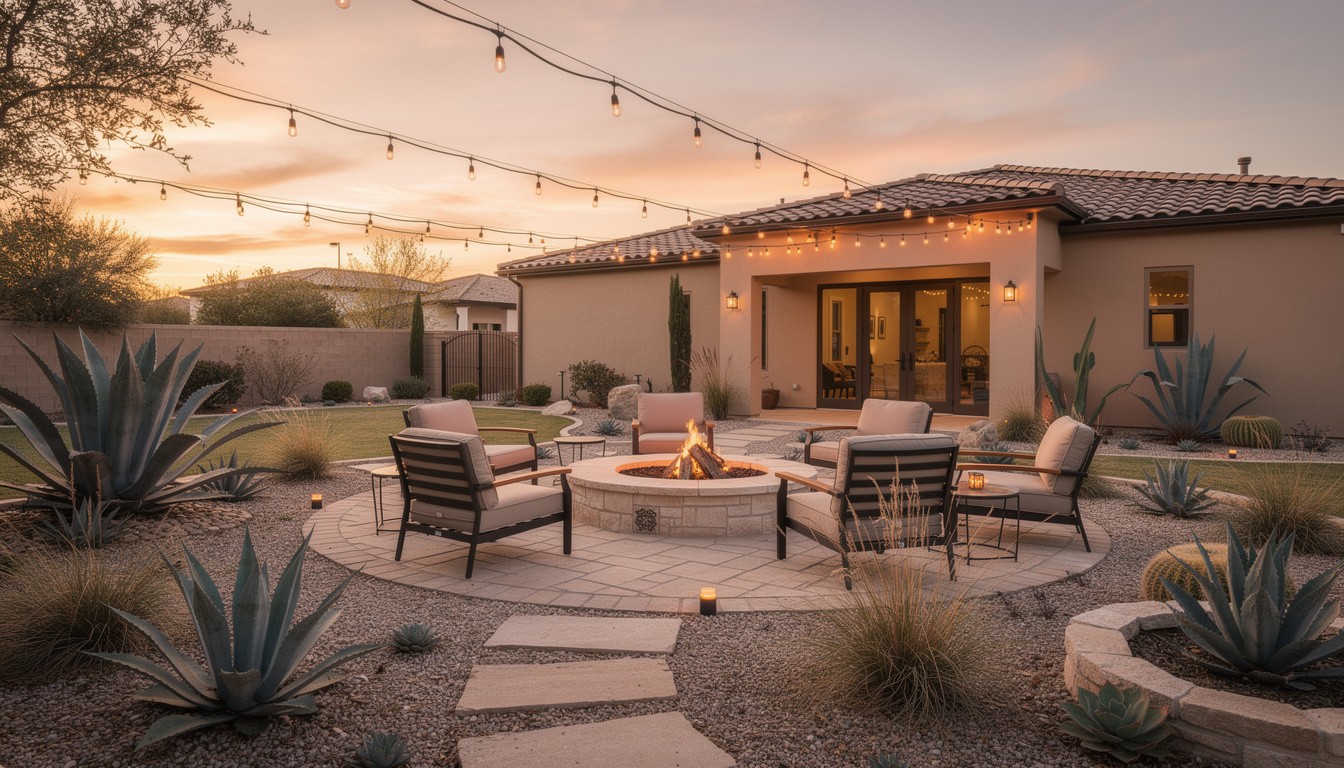
The Desert Fire Pit Patio with String Lights
$14–28/sqftA backyard patio of decomposed granite and flagstone stepping stones centers on a round fire pit surrounded by modern outdoor seating. String lights run overhead across the full width of the space, and bold agave and desert grass planting fills the surrounding beds in every direction. The stucco home's rear facade opens onto the patio through glass doors. This is the San Antonio xeriscape backyard done for outdoor living — the fire pit is the social anchor from September through April, the desert planting requires no water after establishment, and the string lights transform the space at dusk into an outdoor room as inviting as any traditional garden.
AI-generated image
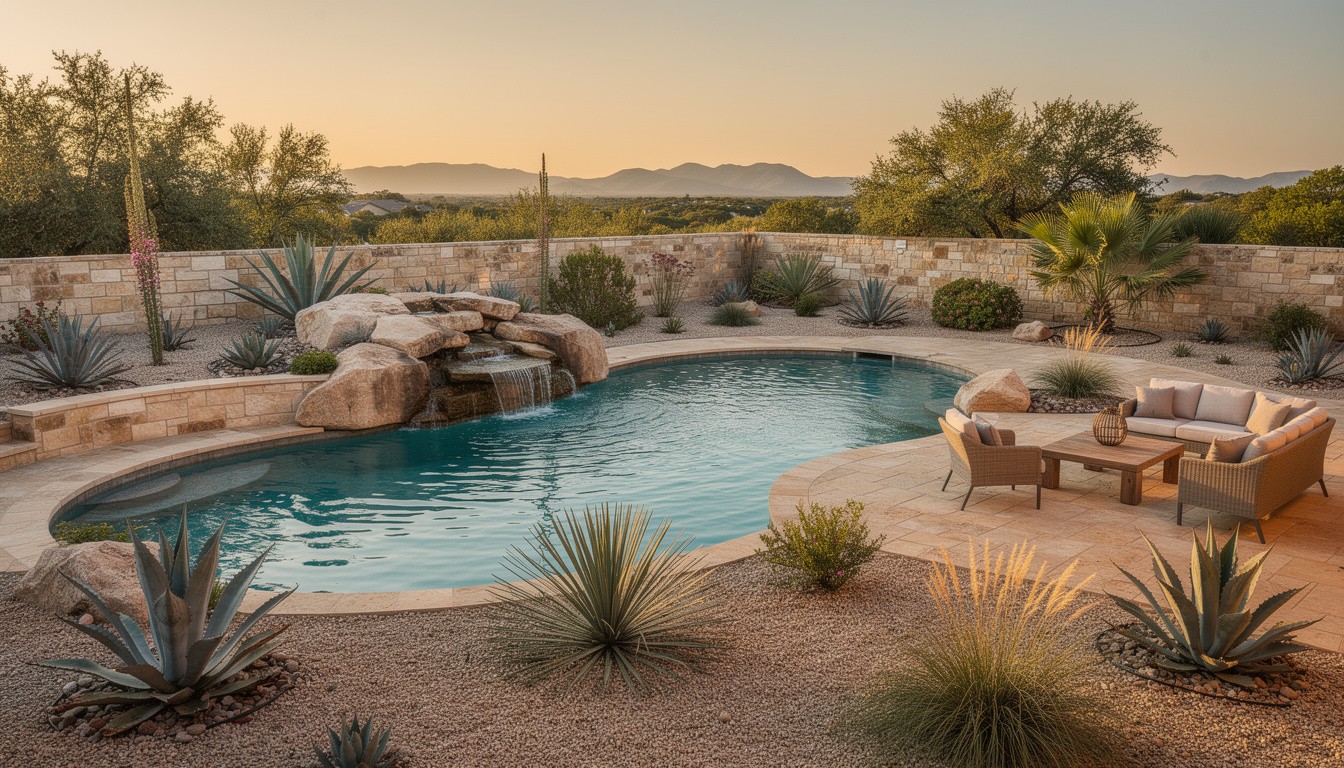
The Desert Pool with Rock Waterfall
$55–125/sqft (pool included)A freeform pool with a stacked-stone rock waterfall sits in a San Antonio xeriscape backyard landscape of boulders, agaves, prickly pear, yuccas, and decomposed granite — the Hill Country desert brought to the pool's edge. Lounge chairs and an outdoor dining set occupy the pool deck beside the waterfall, and the natural stone construction of the water feature makes the pool feel like a discovered natural swimming hole rather than a built amenity. San Antonio summers demand a pool; this design gives it a desert landscape identity that is genuine to the region and eliminates the irrigation demand of conventional tropical poolside planting entirely.
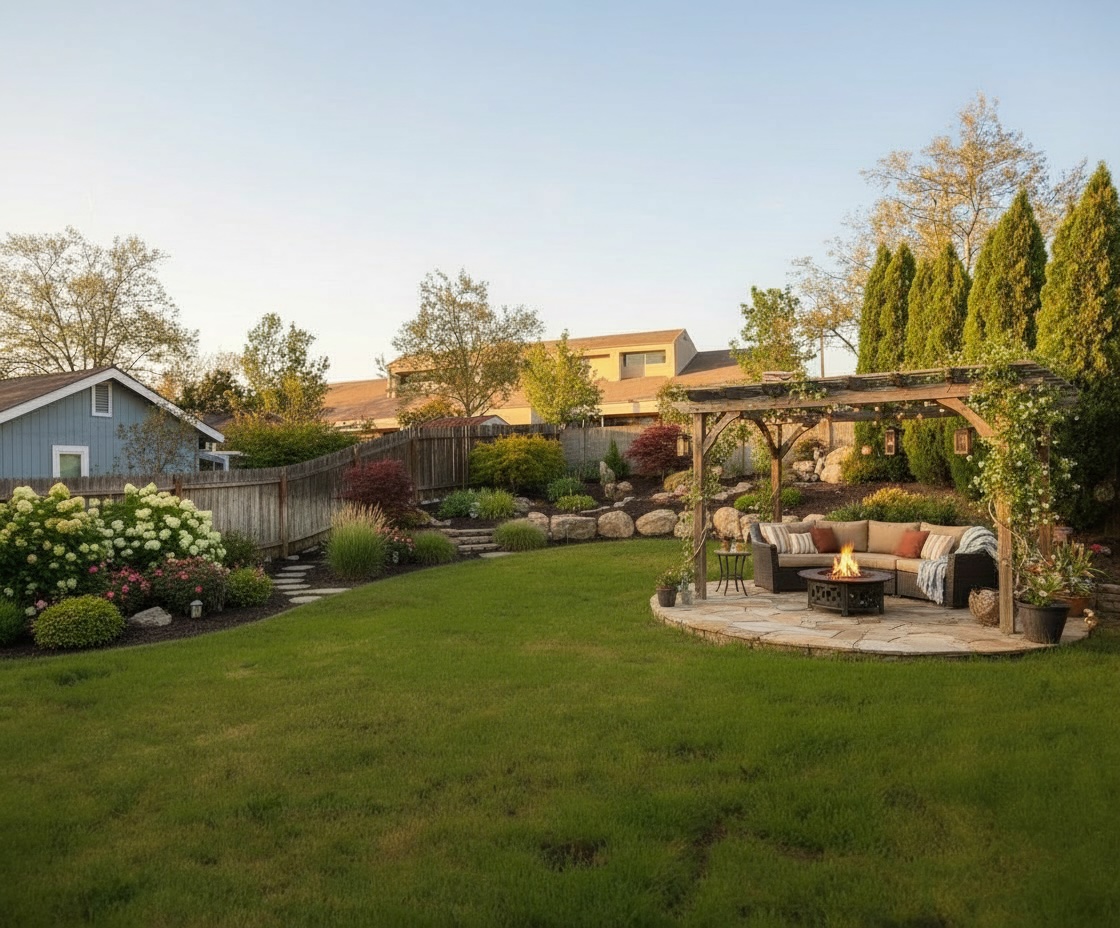
See how a desert/xeriscape garden looks on YOUR property
Upload a photo of your San Antonio yard and visualize your dream garden in seconds.
Try ProScapeAI Free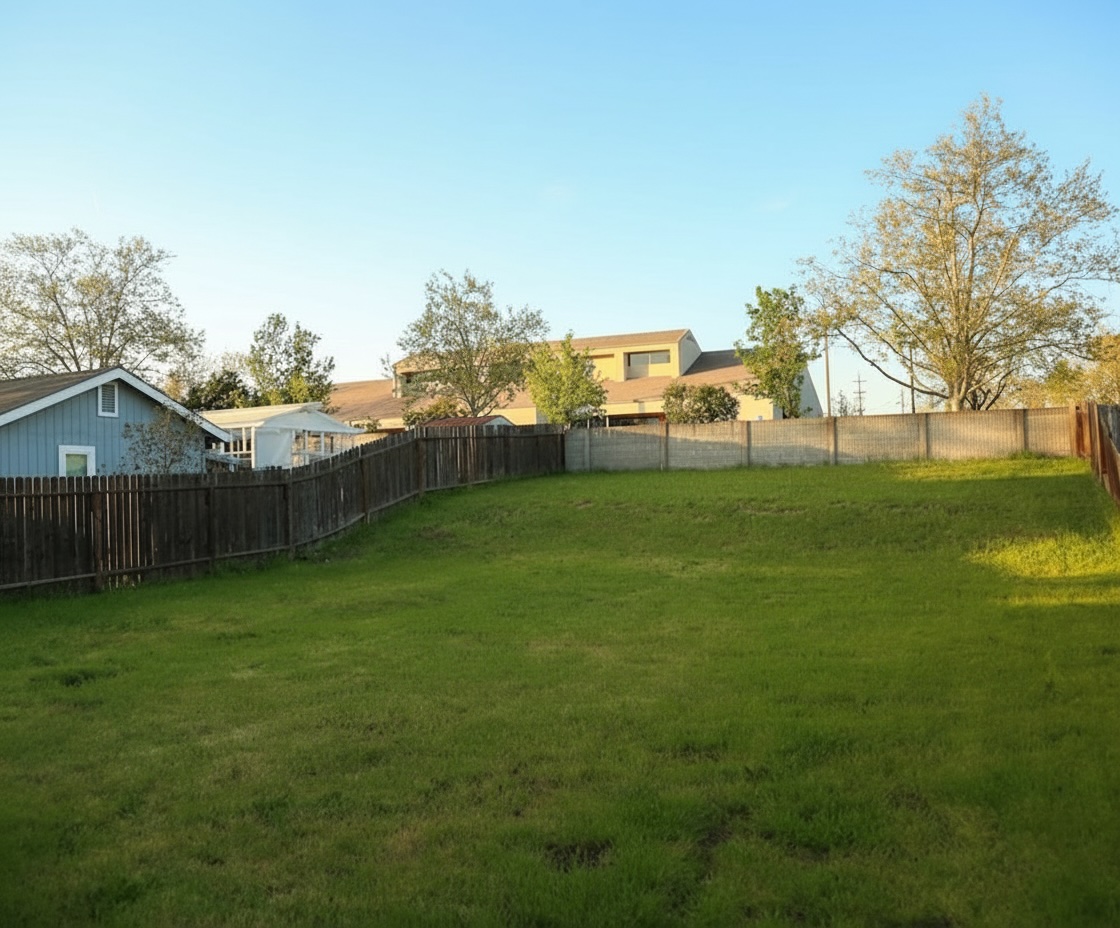
AI-generated image
Featured Trees & Shrubs for Desert/Xeriscape Gardens
Browse all 158 plants for San Antonio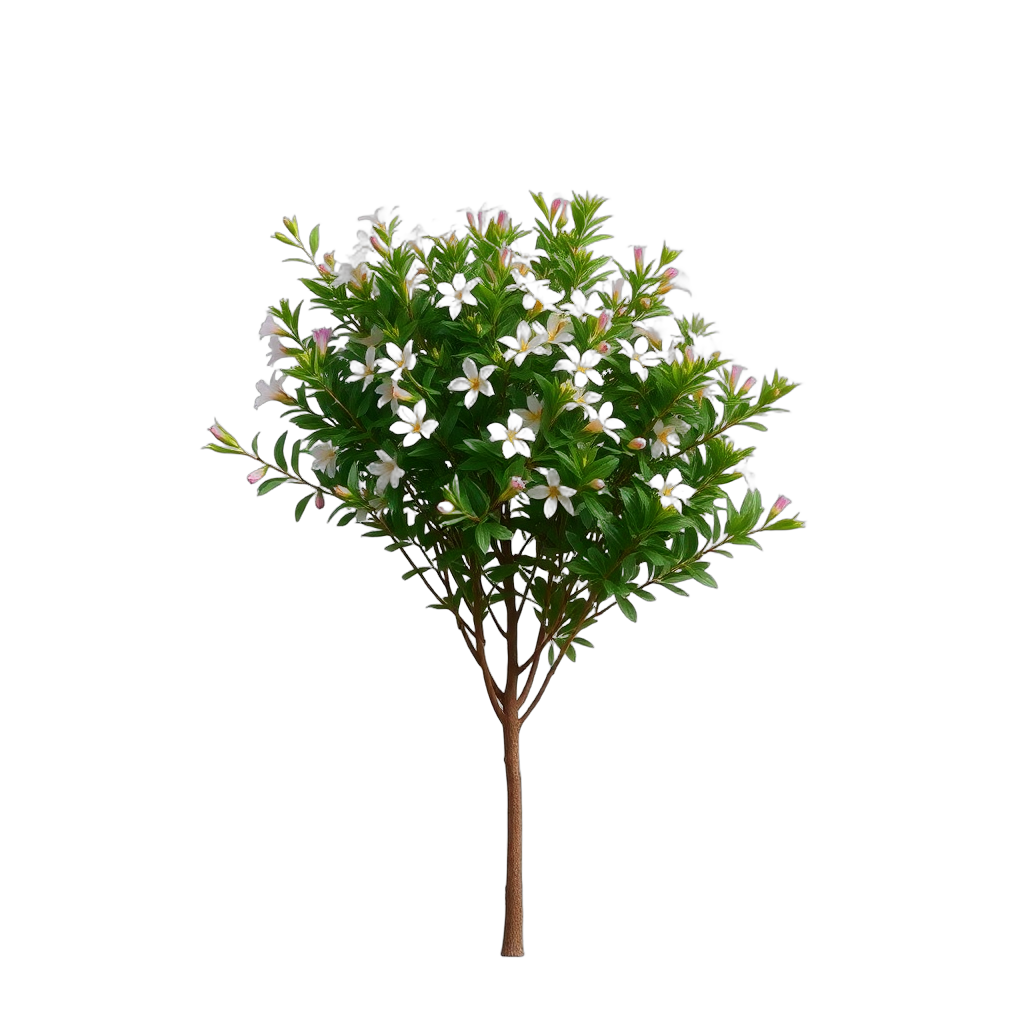
Texas Mountain Laurel
Sophora secundiflora
medium-sized at 12 feet, purple blooms in spring. Evergreen year-round.
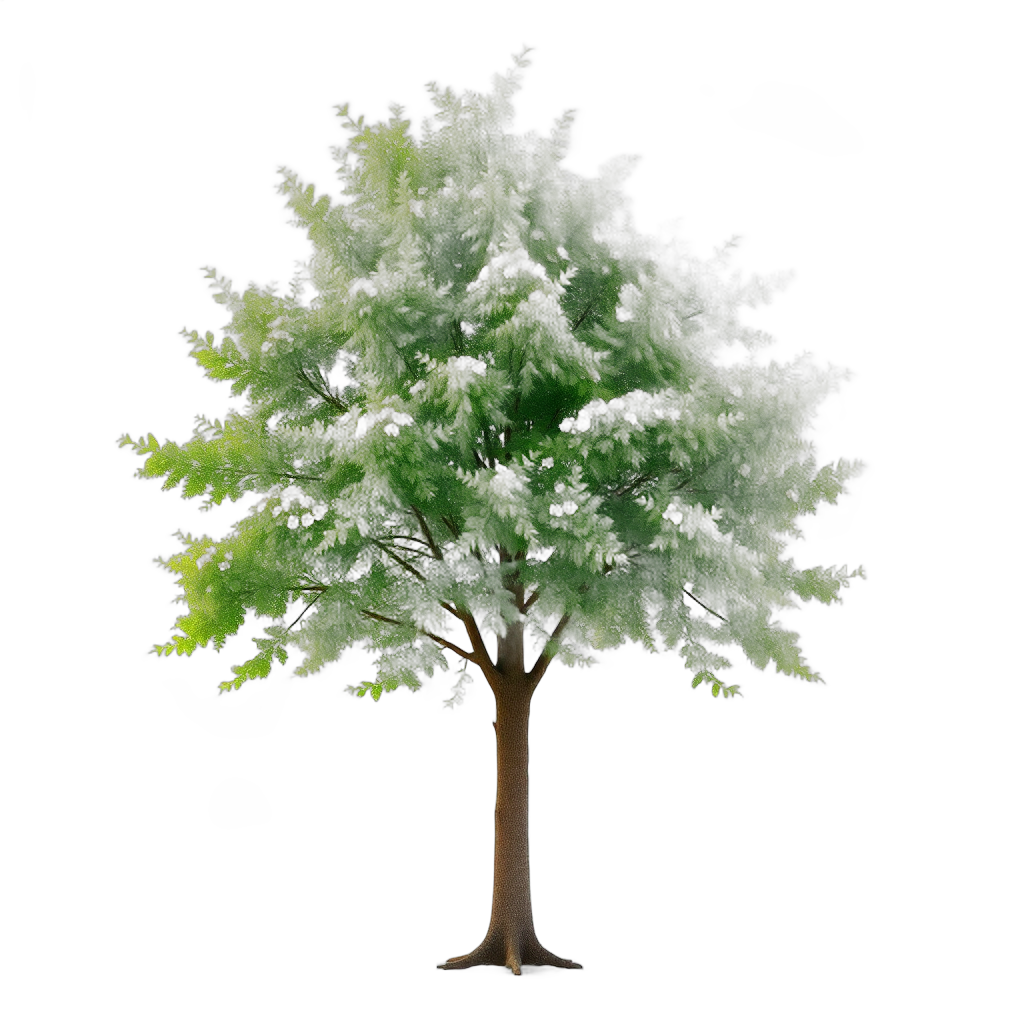
Cedar Elm
Ulmus crassifolia
large shade tree reaching 60+ feet, blooms in fall. Yellow fall color.
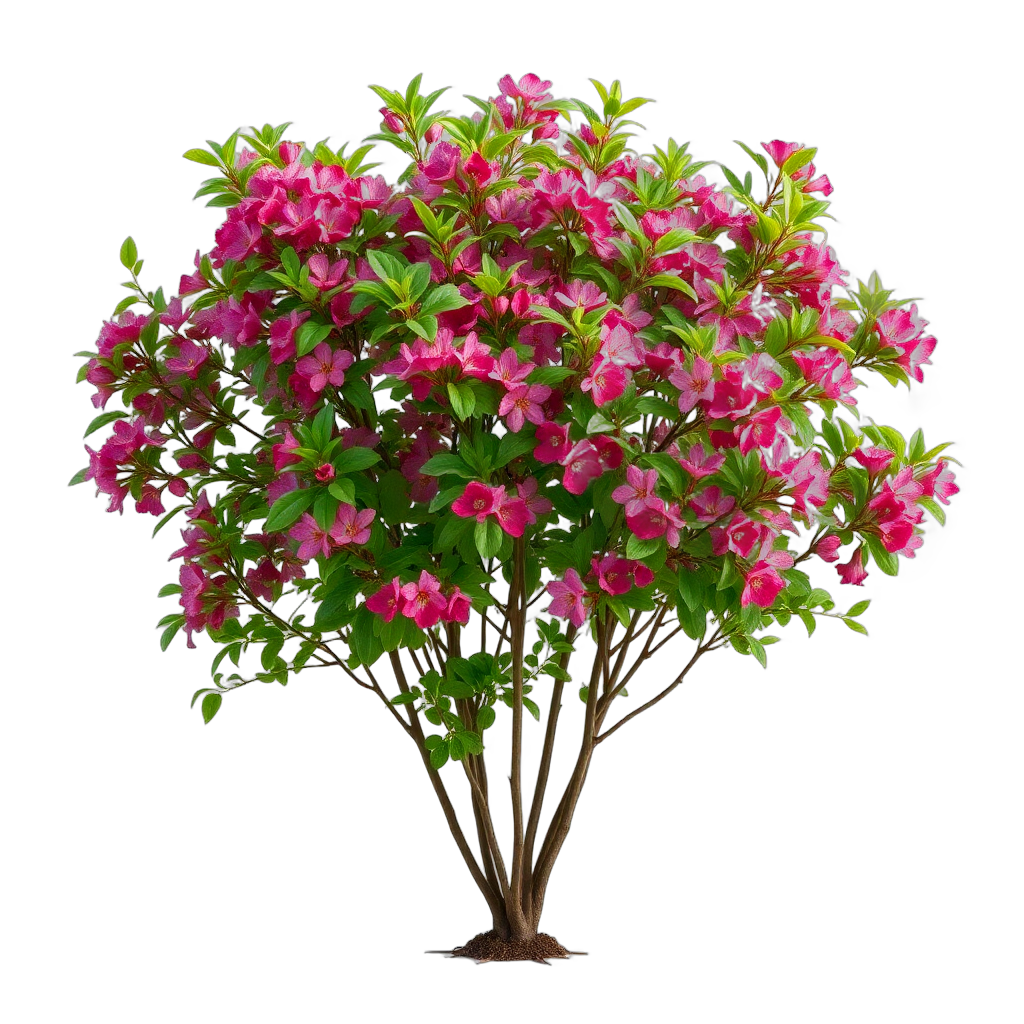
Oklahoma Redbud
Cercis reniformis
reaches 20 feet tall, purple blooms in spring. Attracts hummingbirds.
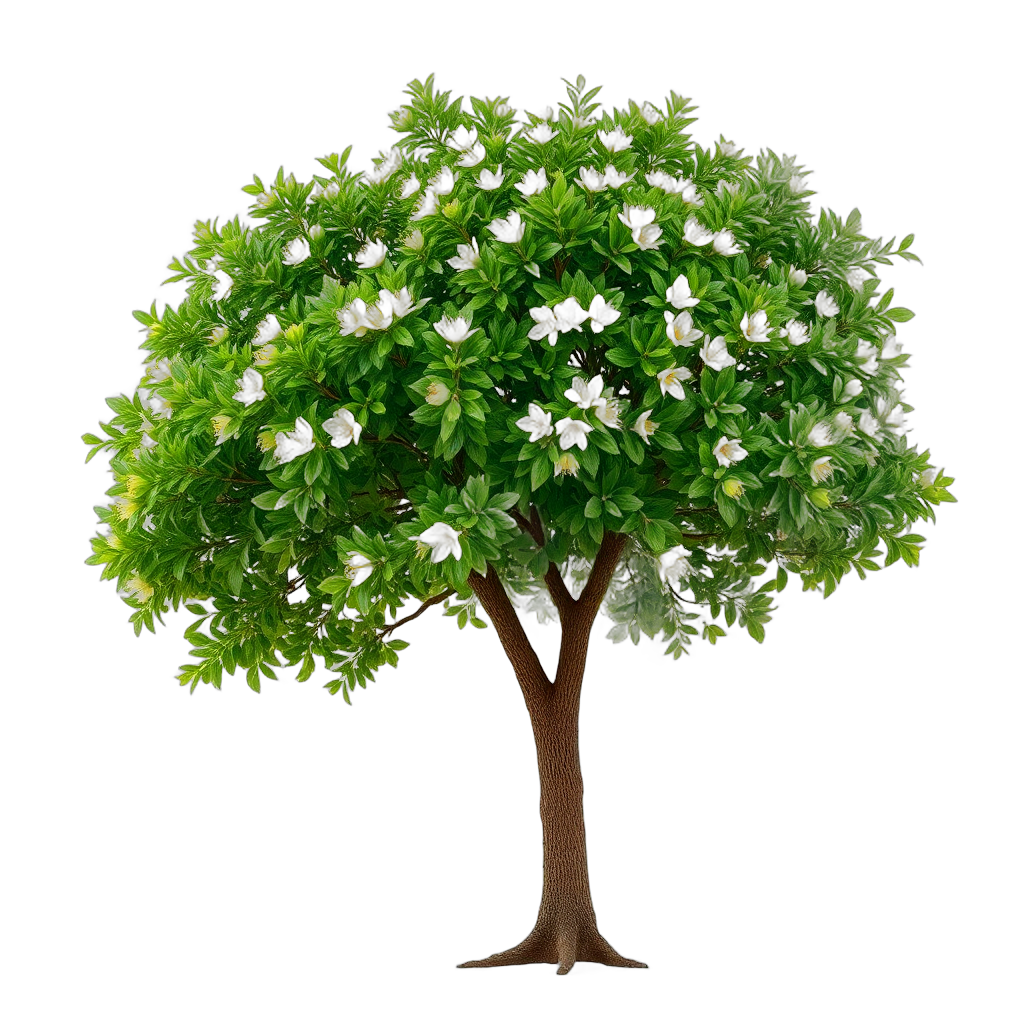
Osage Orange
Maclura pomifera
large shade tree reaching 50+ feet, blooms in spring. Yellow fall color.
Featured Grasses & Groundcovers for Desert/Xeriscape Gardens
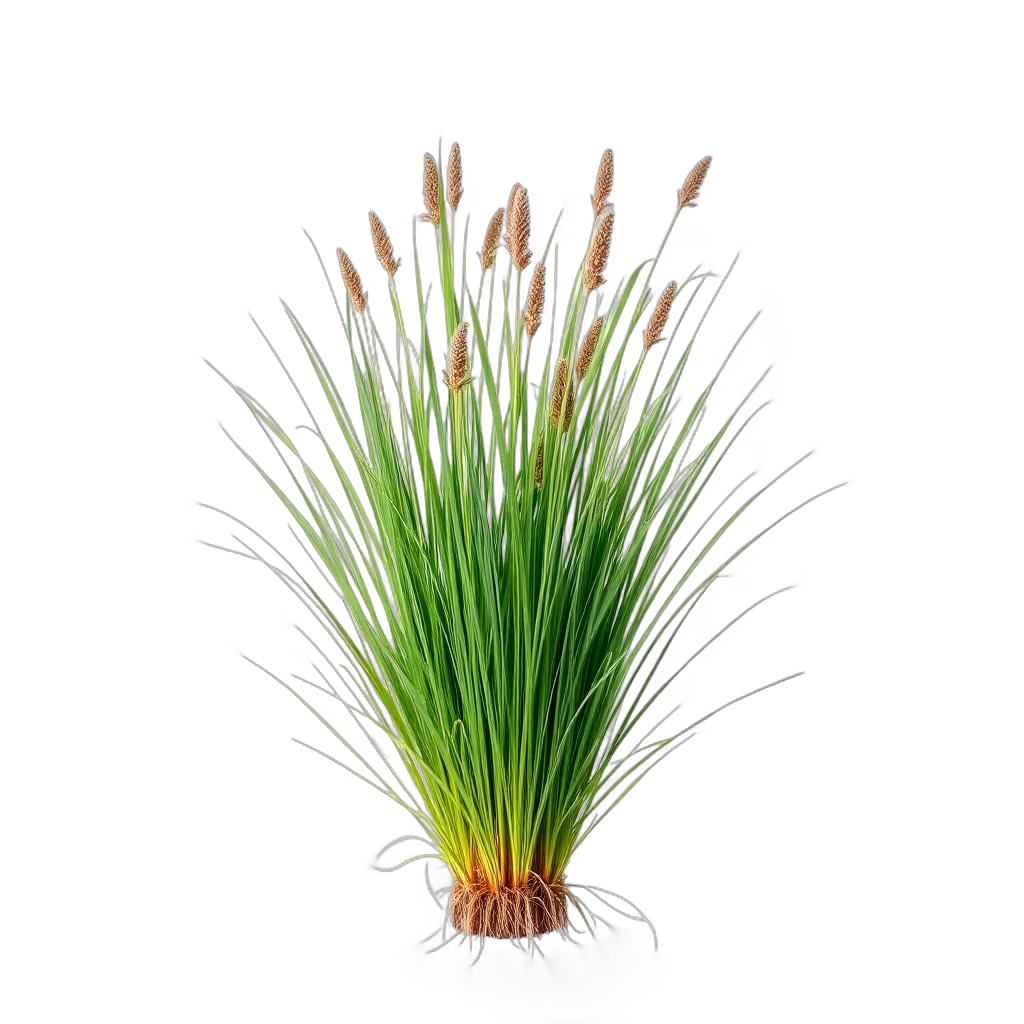
Lindheimer's Muhly
Muhlenbergia lindheimeri
grows to 4 feet, white blooms in fall.
Featured Flowers & Perennials for Desert/Xeriscape Gardens
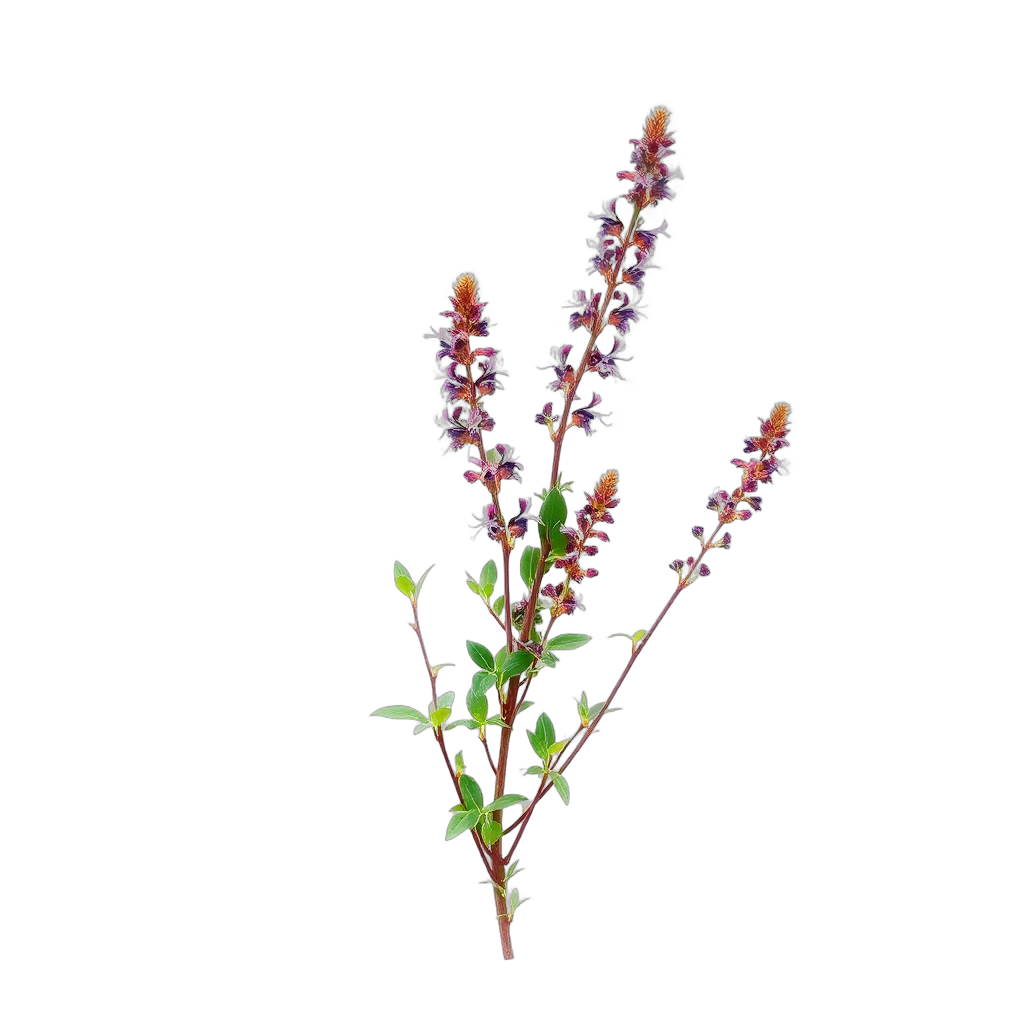
Mealy Cup Sage
Salvia farinacea
low-growing ground cover, blue blooms in summer. Attracts butterflies.
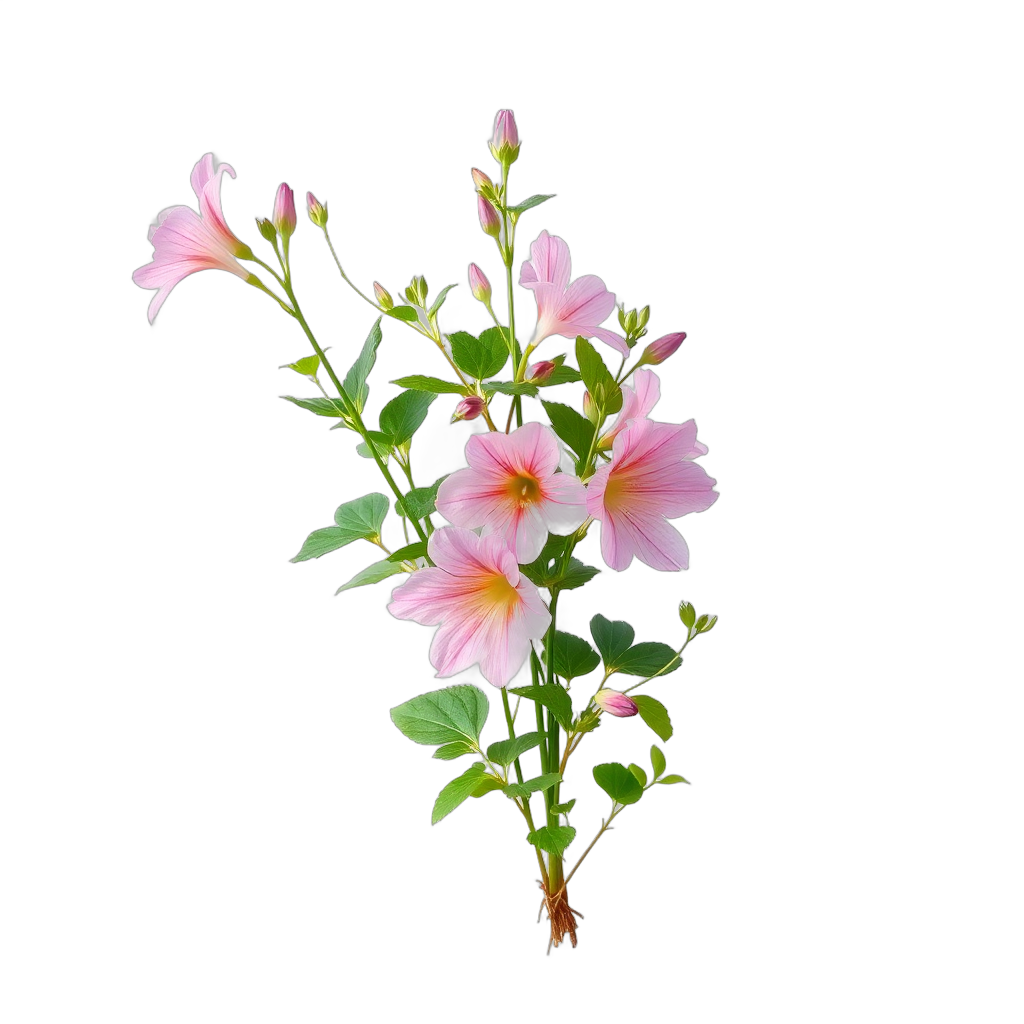
Pink Evening Primrose
Oenothera speciosa
low-growing ground cover, pink blooms in summer. Attracts butterflies.

Papyrus
Cyperus papyrus
grows to 5 feet, blooms in summer. Pollinator-friendly.

Water Hyacinth
Eichhornia crassipes
low-growing ground cover, purple blooms in summer. Attracts butterflies.
Zone and sun checks come from our database — confirm with your local nursery before you buy.
Bloom Calendar for San Antonio
spring
Texas Mountain Laurel, Oklahoma Redbud, Osage Orangesummer
Mealy Cup Sage, Pink Evening Primrose, Papyrusfall
Mealy Cup Sage, Lindheimer's Muhly, Cedar Elmwinter
Limited bloomsDesign Tips for San Antonio (Zone 9a)
- Amend heavy clay soil in planting holes for agave, cacti, and succulents — mix in 30–40% coarse grit or expanded shale to prevent crown rot during San Antonio's wet spring periods
- Plant cenizo (Texas sage) in full sun on well-drained slopes — it blooms purple after rains and is one of the most reliable native xeriscape shrubs in Bexar County, but it will not tolerate wet feet in clay
- Design for both drought and flood: San Antonio gets intense spring storms after long dry spells — grade beds away from the foundation and channel runoff toward the street or a rain garden planted with moisture-tolerant natives
- Take advantage of SAWS WaterSaver rebates before you install — schedule a free WaterSaver landscape consultation through SAWS first; they'll provide a customized planting plan and rebate documentation for eligible conversions
- Use limestone boulders from local Hill Country quarries rather than imported stone — local limestone weathers to match the regional geology, costs less to transport, and gives designs an authentically Texan character
- Protect newly planted agave and prickly pear from San Antonio ice storms — Zone 9a occasionally drops to 20–25°F; wrap young plants or use frost cloth the first two winters until roots establish and cold hardiness increases
Where to Source Plants in San Antonio
Skip the big-box stores. These independent San Antonio nurseries specialize in the plants that make desert/xeriscape gardens thrive in Zone 9a.
Rainbow Gardens
Northwest & Central (2 locations)
Native plants, xeriscape, drought-tolerant species, fruit trees — since 1976
Evergreen Garden Center
Central/Southtown
Native and adapted Central Texas plants — original 1940 greenhouse
The Garden Center
Northwest
Native and adapted plants, hand-picked local sourcing — family-owned since 1985
Pollinatives
Converse (East)
Texas native plants for pollinators and wildlife habitat — owned by Master Naturalists
The Nectar Bar
North Central
Native Texas plants, rare species, pollinator plants — Thu-Sun only
Desert/Xeriscape Landscaping Costs in San Antonio
| Project Scope | Estimated Cost |
|---|---|
| Turf removal + DG xeriscape front yard | $3,500 – $9,500 |
| Full xeriscape front yard with boulders + plants | $7,000 – $17,000 |
| Desert patio + fire pit backyard room | $9,000 – $24,000 |
| Freeform pool with rock waterfall + xeriscape (full backyard) | $58,000 – $135,000 |
| DG installation (labor + material) | $2,000 – $5,000 |
| Native boulder placement | $1,500 – $4,000 |
| AI visualization with ProScapeAI | Free to start |
Estimates based on San Antonio, TX-area contractor rates as of 2026. Actual costs vary by site conditions, materials, and contractor.
San Antonio Climate & Growing Zone
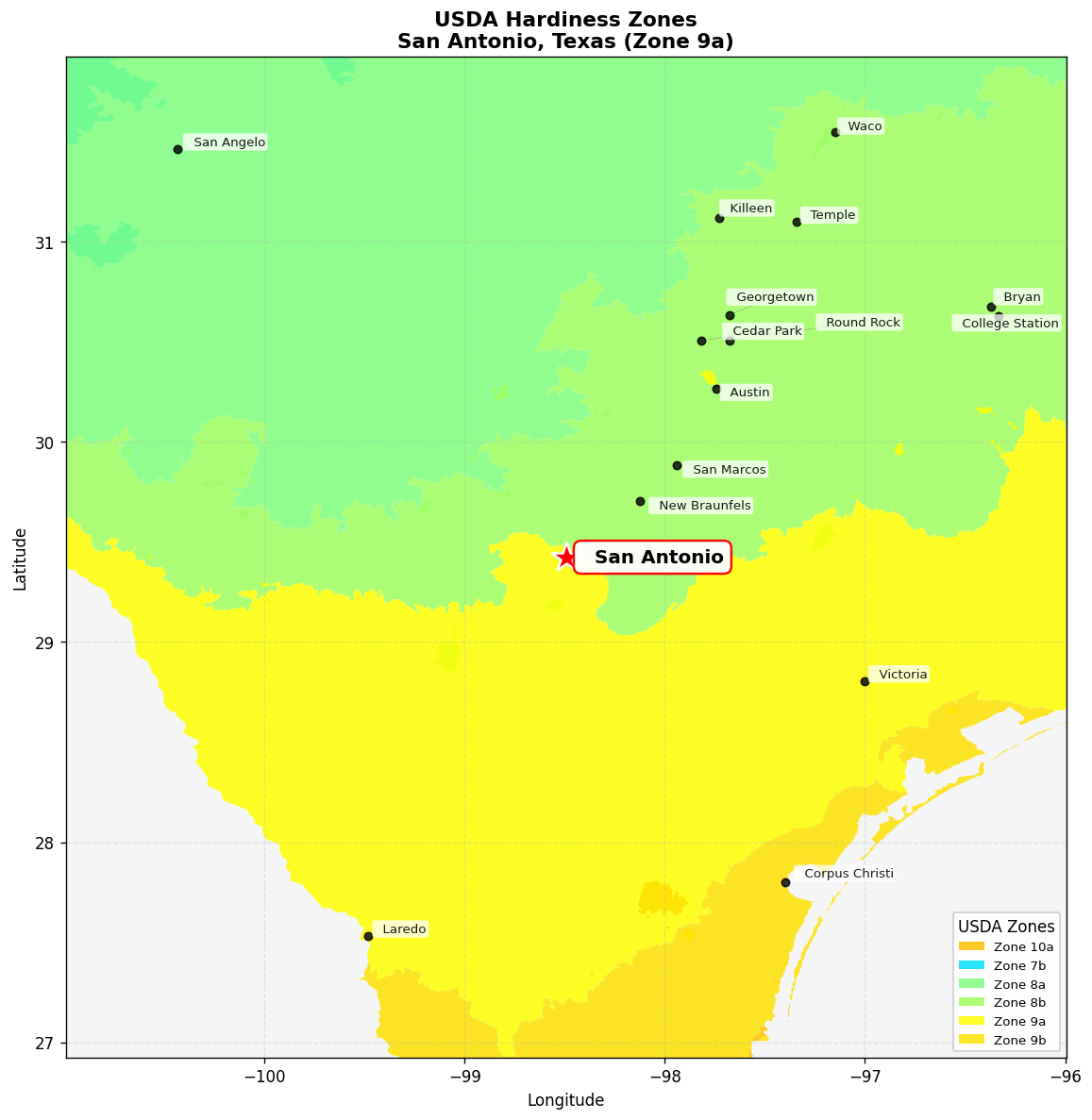
USDA Zone 9a
Hardiness zone for San Antonio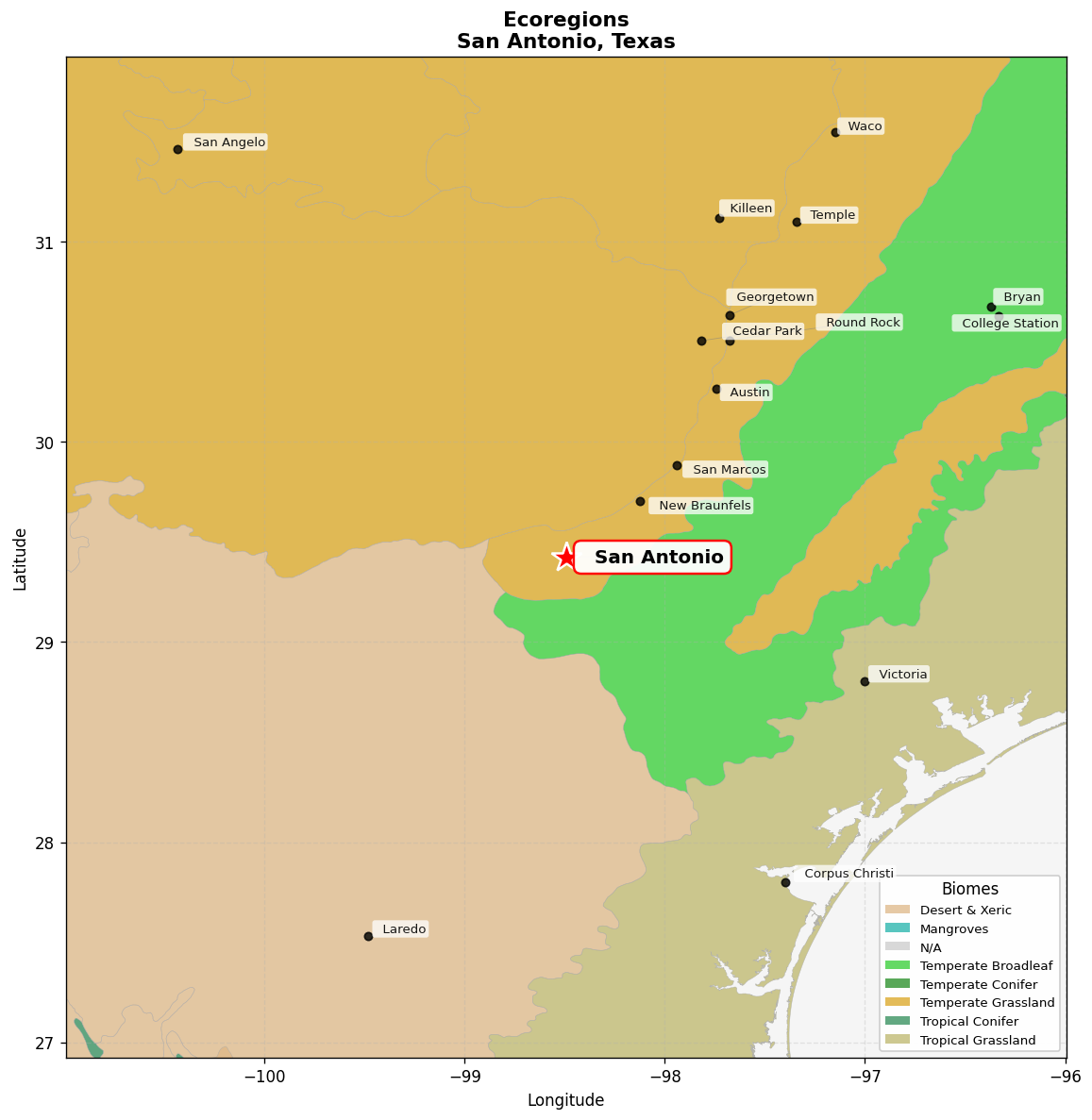
Texas blackland prairies
Native ecoregionFrequently Asked Questions
What are SAWS water restrictions and how do they affect landscaping in San Antonio?
SAWS (San Antonio Water System) enforces tiered drought restrictions based on Edwards Aquifer levels. Under Stage 1, outdoor watering is limited to once per week on assigned days. Stage 2 (common in dry summers) cuts that to once every two weeks. Stage 3 bans all outdoor irrigation except by hand or drip. Xeriscape landscapes with established native plants can typically survive Stage 2 and Stage 3 restrictions without supplemental watering — which is exactly why SAWS promotes them. SAWS also offers WaterSaver rebates of up to $100 for landscape consultations and rebates per square foot for replacing turf with water-wise plants and mulch.
Is San Antonio really dry enough to need xeriscape?
San Antonio averages about 30 inches of rain per year — more than Phoenix or Tucson — but that rainfall is extremely unpredictable. It often comes in intense bursts (especially during spring and fall) separated by weeks or months of nothing. Summer droughts are common, the Edwards Aquifer is chronically stressed, and SAWS restrictions regularly limit outdoor watering. Xeriscape in San Antonio isn't about surviving true desert conditions — it's about building a landscape that doesn't depend on supplemental irrigation during the dry stretches, which is both practical and increasingly required.
Which plants are actually native to the San Antonio and Hill Country area?
San Antonio sits at the transition between the Edwards Plateau (Hill Country) and the South Texas Plains, giving it a rich native palette. True local natives include: Texas sage (cenizo), which blooms purple after rains; Texas mountain laurel, with intensely fragrant grape Kool-Aid blooms in spring; prickly pear and tasajillo cactus; agave and sotol (desert spoon); yaupon holly; blackfoot daisy; mealy blue sage; Lindheimer's muhly grass; and plateau live oak. Desert willow and retama are native to South Texas river corridors. Blue agave is native to Mexico but thrives and naturalizes in Zone 9a — it's commonly used in Hill Country xeriscape designs.
How does San Antonio xeriscape differ from Phoenix or Tucson desert landscaping?
The main differences are humidity, rainfall, and plant palette. San Antonio gets 3–4x more rain than Phoenix and has measurable humidity, so plants establish faster and some Arizona desert plants (saguaro, brittlebush, palo verde) may not perform as well here. Conversely, San Antonio gets occasional winter freezes (ice storms in Zone 9a) that kill tender succulents that thrive in Phoenix's Zone 9b/10a. The Hill Country aesthetic also differs visually: limestone rather than sandstone, Texas native grasses, cenizo instead of brittlebush, and a greener overall tone even in the heat. Think Texas ranch, not Sonoran resort.
What ground cover should I use instead of grass in San Antonio?
Decomposed granite (DG) is the most popular option — it's affordable ($80–$120/ton installed), drains well in San Antonio's clay-heavy soils, and reads as a natural Hill Country surface. For softer alternatives, native groundcovers like prairie verbena, blackfoot daisy, and mealy blue sage spread to cover large areas with seasonal color. Mulch from cedar (cedar flakes or shredded cedar) is widely available in San Antonio and suppresses weeds well while adding a local character. Avoid rubber mulch in full sun — it overheats in San Antonio's summer temperatures.
Does San Antonio's clay soil cause problems for xeriscape plants?
Yes — San Antonio soils range from shallow limestone (in the Hill Country transition zone) to heavy black clay (Vertisols) in the flatter areas. Clay drains poorly, which can rot the roots of succulents and agave that evolved in fast-draining soils. Amendments matter: work in expanded shale, coarse grit, or decomposed granite into planting holes for cacti and agave. For large areas, raised planting berms improve drainage significantly. Cenizo, yaupon, and native grasses tolerate clay better than most xeriscape plants. When in doubt, plant high — mounding the root zone slightly above grade prevents water from pooling around the crown.