4 Cottage Garden Ideas for Baltimore, MD | English Garden Design in Zone 8a
Native plants from the Southeast US conifer savannas (Zone 8a) — Humid subtropical climate
Why Cottage/English Gardens in Baltimore?
Baltimore is a cottage gardener’s city in disguise. The Victorian and Italianate row houses of Hampden, Charles Village, Roland Park, and Bolton Hill were literally built to be framed by front gardens — stone stoops, wrought-iron railings, and brick facades that have been inviting climbing roses and cottage borders for over a century. Zone 8a means minimum winter temperatures of 10–15°F, which is mild enough to grow a wider range of cottage plants than nearly any Northern city, including some borderline tender roses, agapanthus in sheltered spots, and gardenias along south-facing walls. The growing season runs from late March through mid-November, giving Baltimore cottage gardens nearly eight full months of peak expression.
The climate challenge is not winter but summer. Baltimore’s July average high hits 87°F, and humidity from the Chesapeake Bay watershed pushes heat index values into the 95–105°F range during July and August. This heat stress affects some classic English cottage plants — delphiniums and foxgloves fade faster than they would in Boston or Seattle, and roses need vigilant black-spot management. The solution is to build Baltimore cottage gardens around heat-adapted cottage staples: crape myrtle, oakleaf hydrangea, coneflower, black-eyed Susan, native phlox, and southern-adapted shrub roses. These plants deliver full cottage character through Baltimore’s summers while the heat-sensitive English classics do their spring work in April–June before the worst heat arrives.
The Chesapeake Bay ecoregion context gives Baltimore cottage gardening a distinctly regional flavor. Native plants of the Mid-Atlantic Coastal Plain — native phlox, swamp rose (Rosa palustris), cardinal flower, native wild bergamot — fit the cottage aesthetic beautifully while supporting the Bay watershed’s native bee and butterfly populations. Baltimore’s 44 inches of annual rainfall, well-distributed through the year with summer afternoon thunderstorms, means cottage gardens rarely need supplemental irrigation except during July–August dry spells. The city’s Red Run and Jones Falls stream corridors create local moisture gradients that make low-lying neighborhoods like Remington and Hampden particularly lush for cottage plantings.
4 Cottage/English Design Ideas for Baltimore
AI-generated image
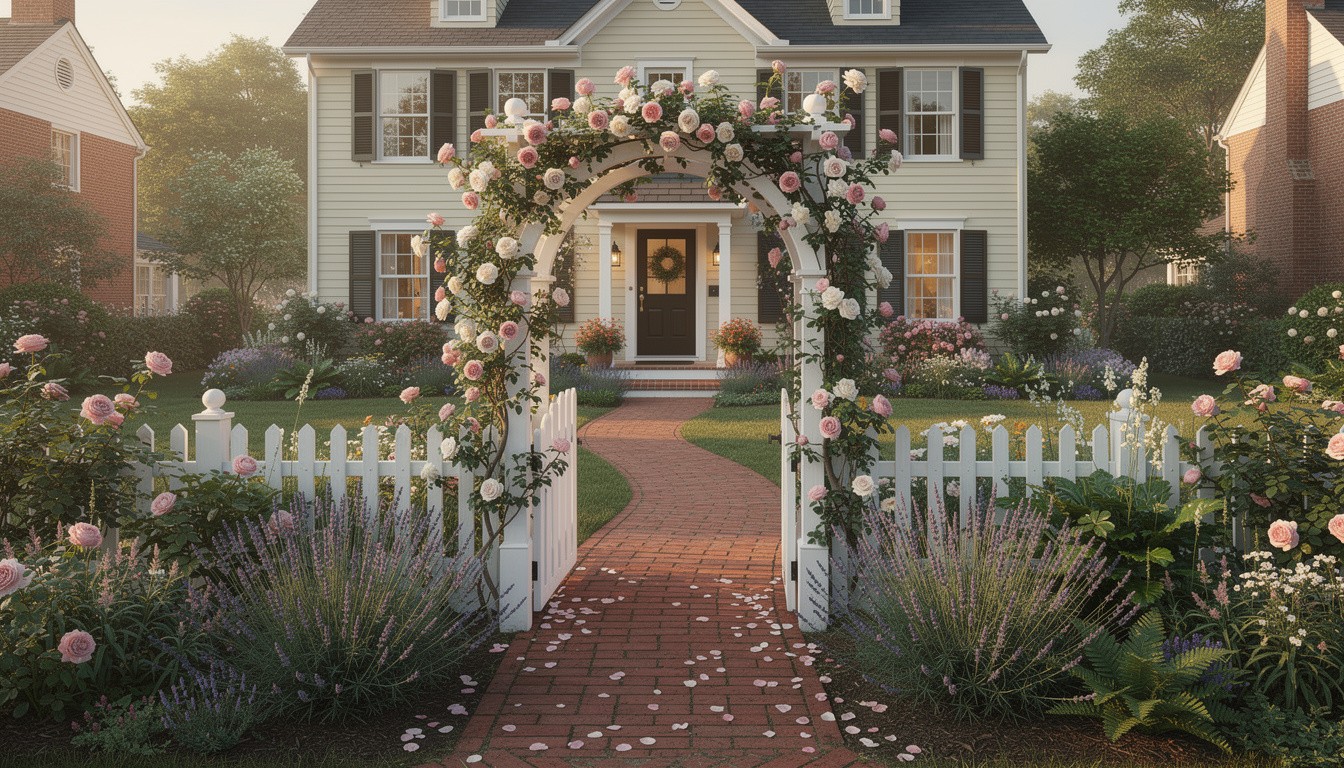
The Baltimore Rose Gate Entry
$10–20/sqftA white Colonial row house becomes a cottage landmark with a climbing rose arch cascading pink blooms over a white picket gate, a herringbone brick path to the front door, and dense lavender and rose borders flanking both sides. This is distinctly Baltimore cottage — the warm orange-red brick facade and white-painted stoop provide the backdrop that makes pink roses and purple lavender sing. The design works within the compressed dimensions of the typical Hampden or Charles Village row house front, using the vertical rose arch and fence line planting to create maximum impact in minimal space.
AI-generated image
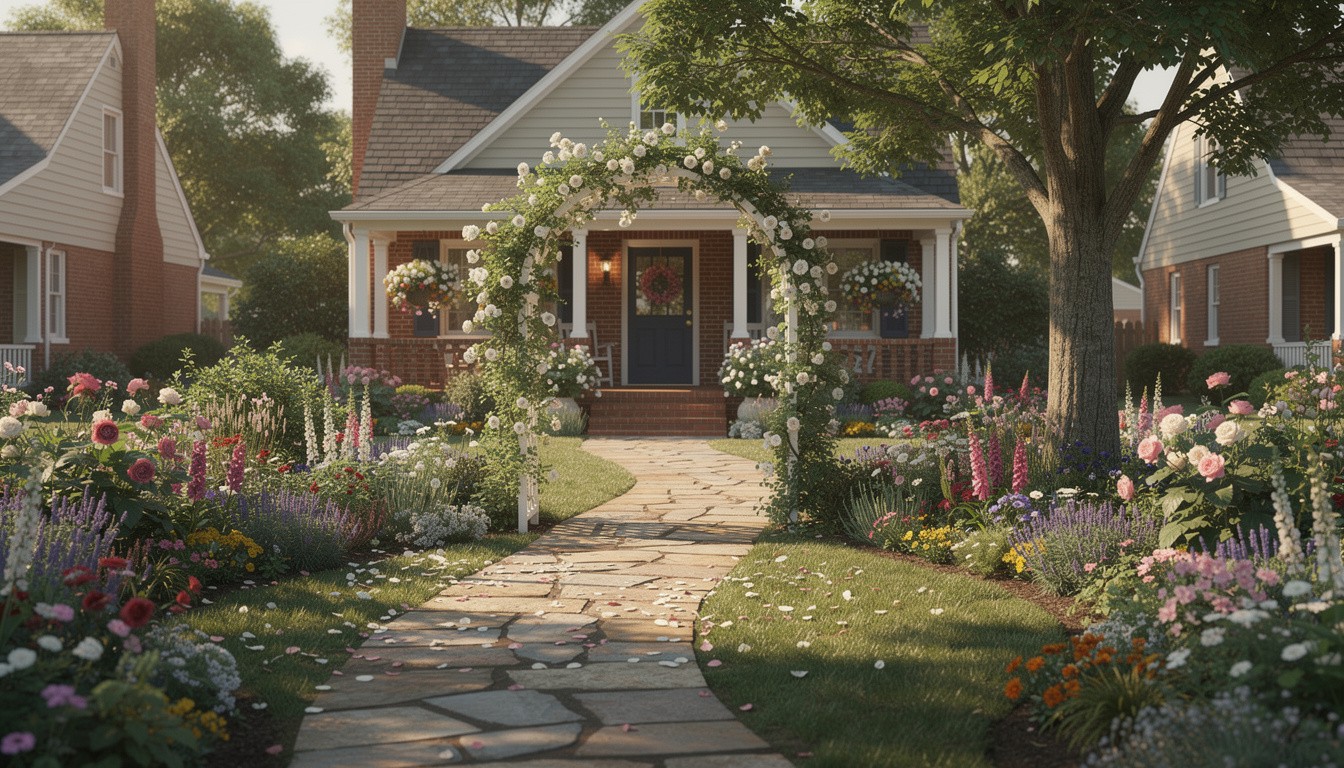
The Roland Park Cottage Border
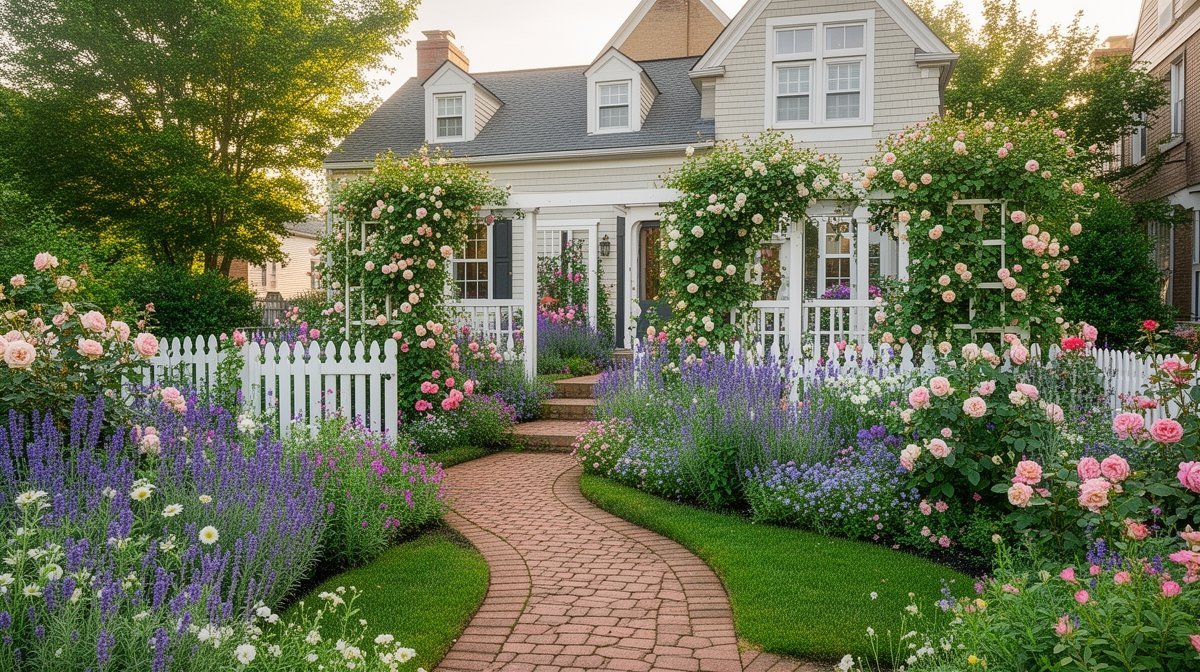
$14–26/sqftA small cottage-style home with a deep front yard gets the full English cottage treatment: a climbing rose arbor over the front entry, a flagstone path winding through layered perennial borders of roses, foxgloves, coneflowers, phlox, and daisies, and mature shade trees framing the scene. The brick rowhome neighbors on either side ground the cottage planting in Baltimore’s urban character. Baltimore’s Zone 8a means phlox, delphiniums, and roses all perform without the heat stress that defeats them in Southern cities, while the cottage perennials transition seamlessly from spring roses to summer coneflowers to fall asters.
AI-generated image
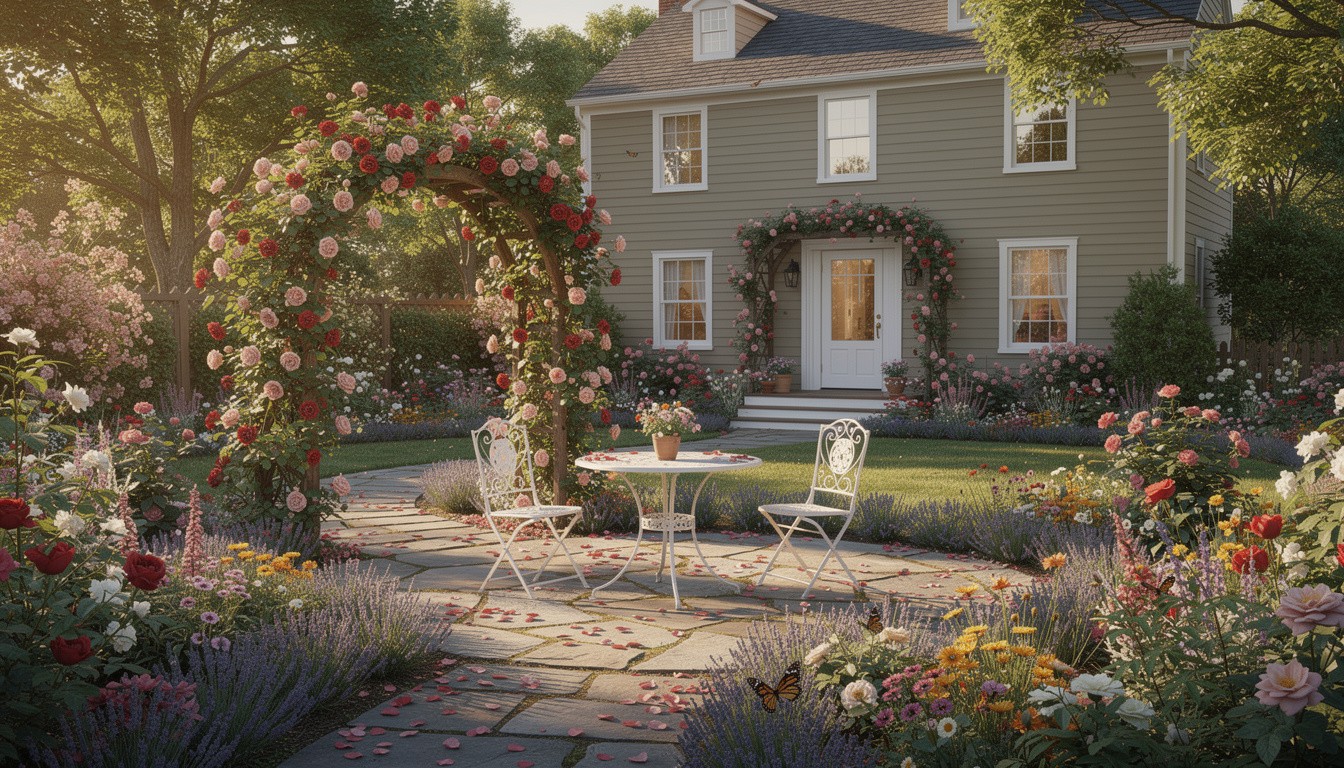
The Chesapeake Cottage Terrace
$20–40/sqftA Baltimore backyard becomes an intimate English garden room: a rose porch arbor anchors the house wall, a bistro table and chairs sit on a flagstone patio surrounded by foxgloves, lavender, and colorful cottage perennials in bloom, and warm afternoon light floods through the overhead canopy. The sage-green house facade provides a calm backdrop that makes the flower colors read clearly. Baltimore’s consistent summer rainfall keeps these cottage borders lush through the season, and the sheltered back-yard microclimate from neighboring walls creates exactly the protected spot that foxgloves and delphiniums love.
AI-generated image
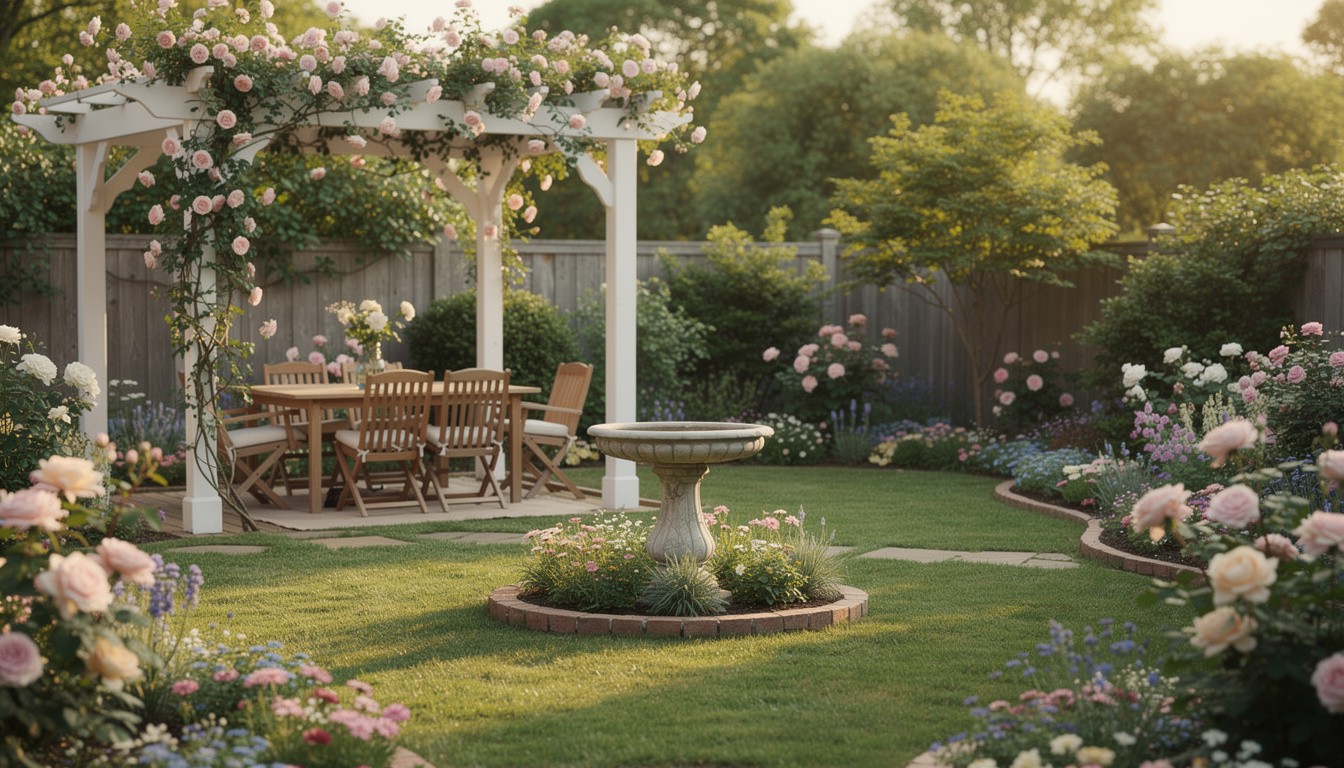
The Baltimore Garden Pergola Room
$24–48/sqftA white pergola draped in climbing roses creates a dining destination in the Baltimore rear garden, with a wooden dining set beneath and a birdbath as garden centerpiece. Mixed rose and perennial borders ring the perimeter with foxgloves, peonies, and delphiniums providing the spring show, transitioning to coneflowers and native asters for summer and fall. A wood fence encloses the space and provides the privacy that makes Baltimore rowhouse backyards feel like private retreats. The pergola’s overhead structure is the key design move — it defines the room and gives climbing roses the framework to create the lush, enclosed English garden feeling.
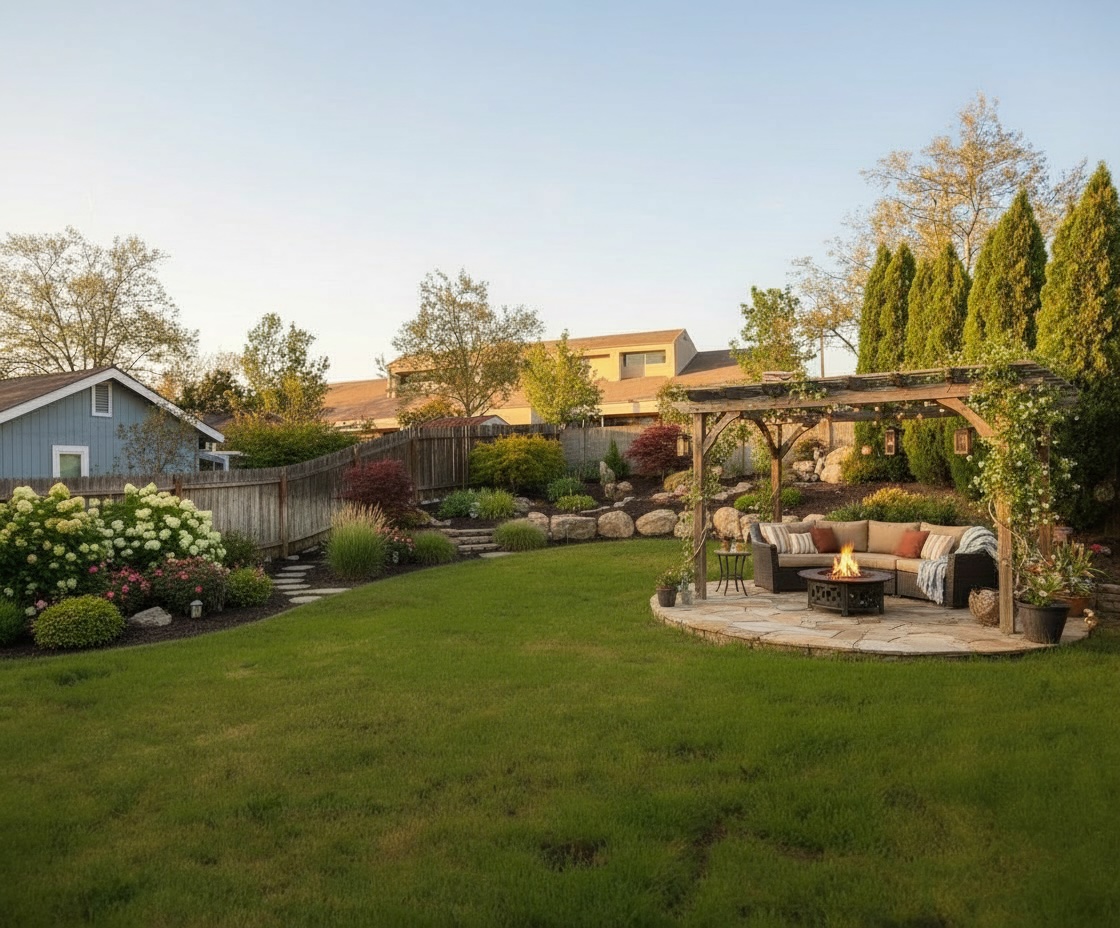
See how a cottage/english garden looks on YOUR property
Upload a photo of your Baltimore yard and visualize your dream garden in seconds.
Try ProScapeAI Free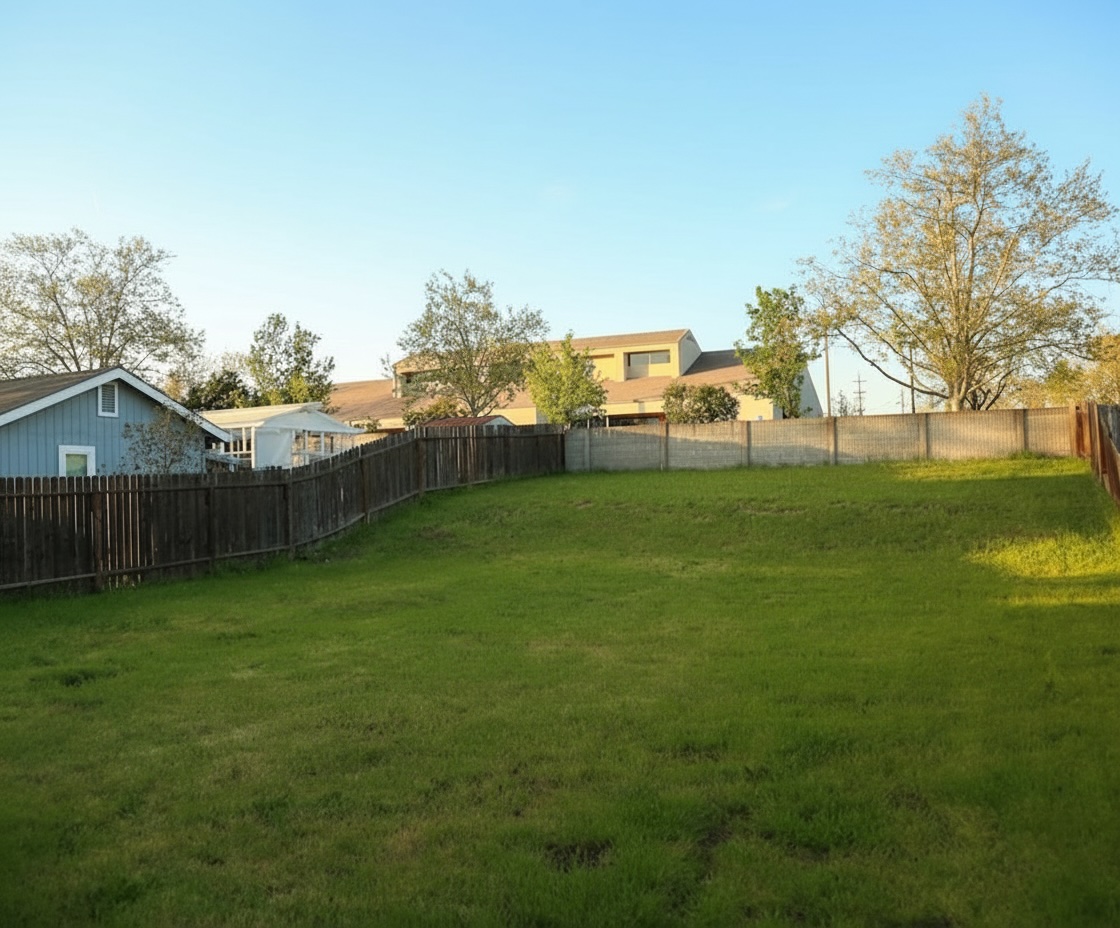
AI-generated image
Featured Trees & Shrubs for Cottage/English Gardens
Browse all 181 plants for Baltimore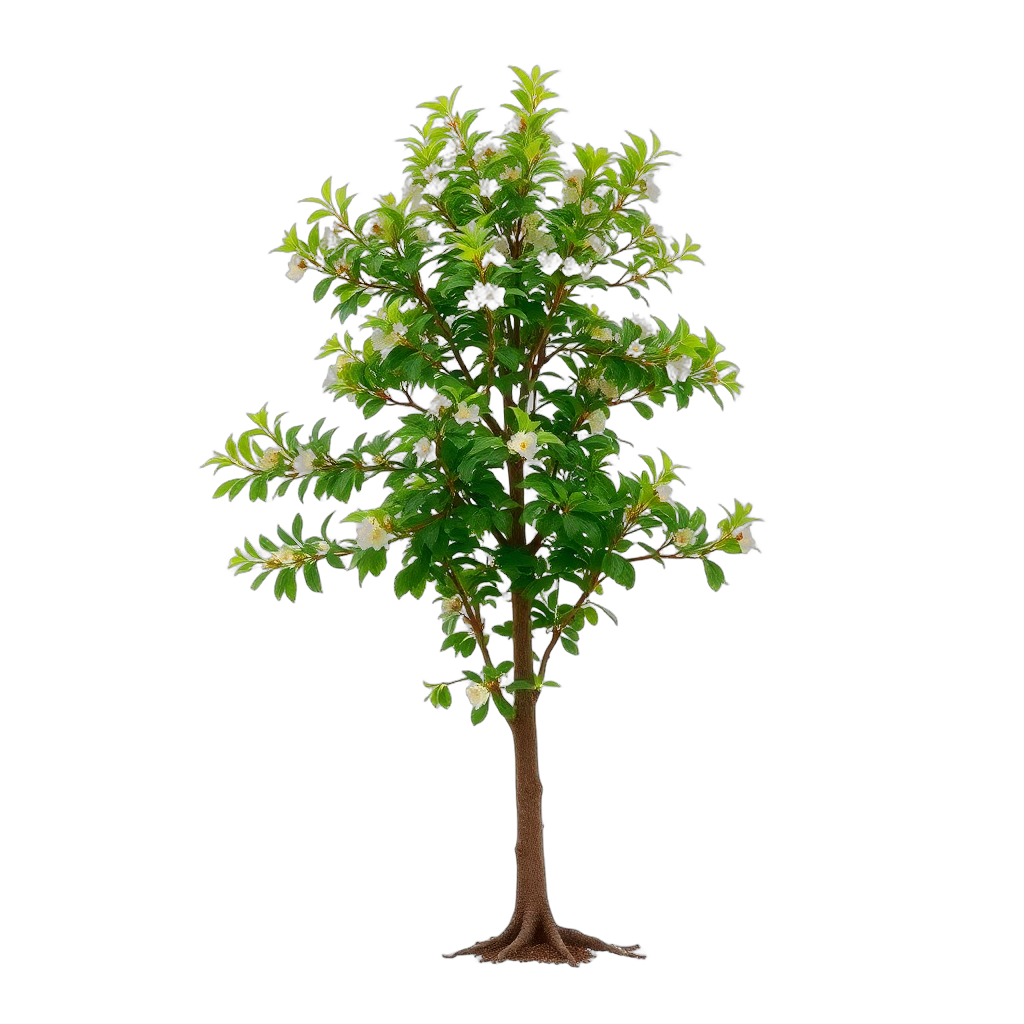
Buckwheat Tree
Cliftonia monophylla
medium-sized at 15 feet, white blooms in spring. Attracts butterflies.

Fetterbush
Lyonia lucida
grows to 6 feet, white blooms in spring. Evergreen year-round.

Florida Anise
Illicium floridanum
medium-sized at 8 feet, red blooms in spring. Evergreen year-round.

Inkberry
Ilex glabra
medium-sized at 8 feet, white blooms in spring. Pollinator-friendly.
Featured Grasses & Groundcovers for Cottage/English Gardens

Pink Muhly Grass
Muhlenbergia capillaris
grows to 3 feet, pink blooms in fall.
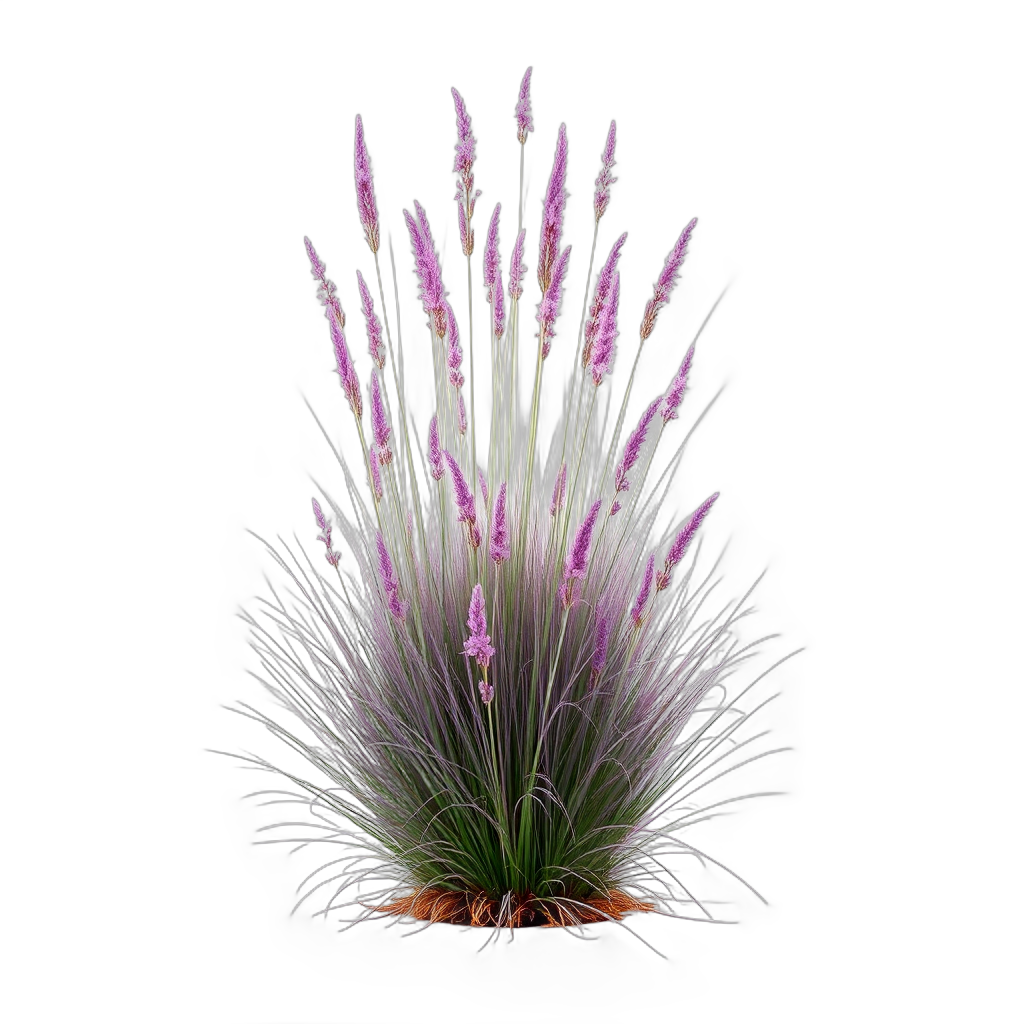
Purple Love Grass
Eragrostis spectabilis
low-growing ground cover, purple blooms in fall. Orange fall color.
Featured Flowers & Perennials for Cottage/English Gardens
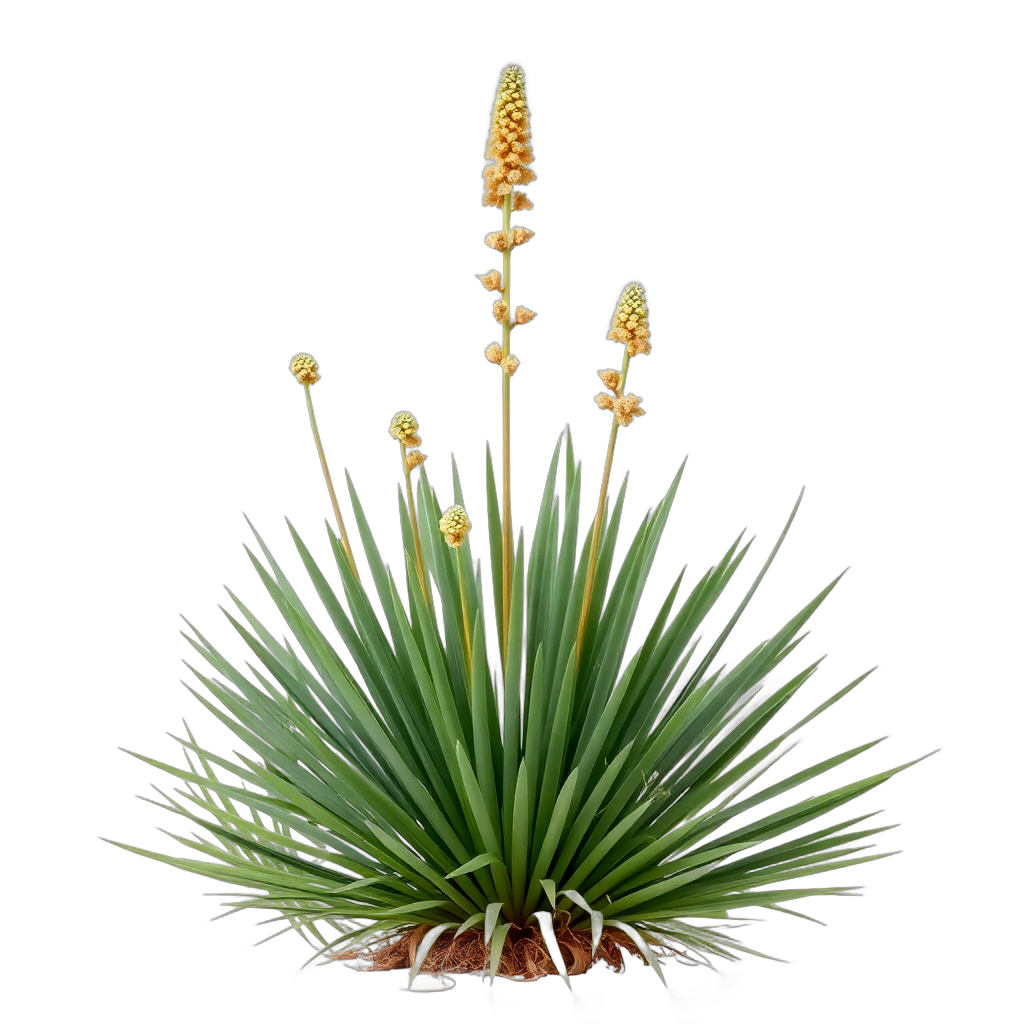
Adam's Needle
Yucca filamentosa
low-growing ground cover, white blooms in summer. Attracts hummingbirds.

Water Lettuce
Pistia stratiotes
low-growing ground cover, white blooms in summer. Evergreen year-round.
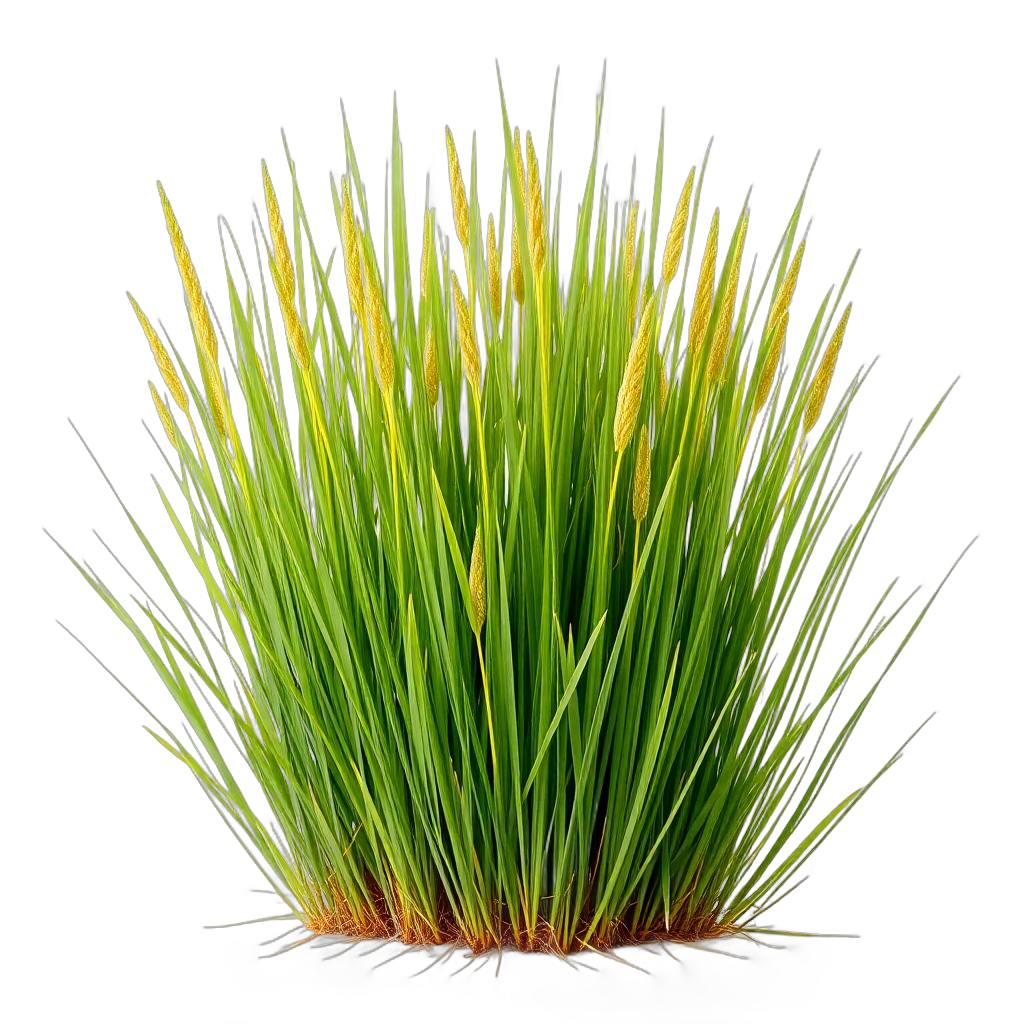
Bowles' Golden Sedge
Carex elata 'Aurea'
low-growing ground cover, blooms in none.

Tussock Sedge
Carex stricta
low-growing ground cover, blooms in spring. Brown fall color.
Zone and sun checks come from our database — confirm with your local nursery before you buy.
Bloom Calendar for Baltimore
spring
Buckwheat Tree, Fetterbush, Florida Anisesummer
Adam's Needle, Swamp Cyrilla, Loblolly Bayfall
Pink Muhly Grass, Purple Love Grasswinter
Limited bloomsDesign Tips for Baltimore (Zone 8a)
- Build your Baltimore cottage garden’s summer act around heat-adapted natives — cardinal flower, coneflower, and native phlox peak precisely in July–August when English cottage imports are struggling with Baltimore’s heat and humidity
- Use Baltimore’s brick architecture as a design asset: herringbone brick paths, brick edging, and old-brick wall backdrops create an authentic local identity for cottage planting that feels native to the city’s character
- Plant crape myrtle as your primary tree layer — it’s the defining Baltimore summer tree, blooming spectacularly in July–August when other trees offer nothing, with brilliant fall foliage and beautiful winter bark
- Choose disease-resistant roses exclusively for Baltimore: ‘Knock Out’ and David Austin disease-resistant varieties will outlast susceptible hybrid teas by years without the fungicide program Baltimore’s summer humidity demands
- Layer your season in three acts: spring classics (tulips, delphiniums, peonies) in March–May; summer natives and heat-adapted perennials (coneflower, phlox, cardinal flower) in June–September; fall asters and ornamental grasses in October–November
- Climb the facade — Baltimore row house facades are the most underused vertical space in cottage gardening. A single ‘New Dawn’ climbing rose on brackets transforms the entire front elevation of a brick row house for a fraction of what hardscape costs
Where to Source Plants in Baltimore
Skip the big-box stores. These independent Baltimore nurseries specialize in the plants that make cottage/english gardens thrive in Zone 8a.
Shady Oaks Nursery
Cockeysville (north Baltimore County)
Native plants, shade-tolerant perennials, and woodland cottage garden plants for Mid-Atlantic gardens
Herring Run Nursery
Northeast Baltimore
Maryland-native plants grown from local seed; mission-driven nursery focused on Chesapeake Bay watershed restoration species
Homestead Gardens
Davidsonville (Anne Arundel County)
Large full-service garden center with excellent rose, perennial, and cottage plant selection; multiple Maryland locations
Green Spring Garden
Alexandria (Fairfax County, nearby)
Fairfax County’s demonstration garden and plant sale; exceptional native and cottage perennial selection curated for Zone 7a–8a Mid-Atlantic gardens
Sundial Gardens & Nursery
Reisterstown (northwest Baltimore County)
Herbs, cottage perennials, and heirloom varieties; specialty in plants with historical Mid-Atlantic garden heritage
Cottage/English Landscaping Costs in Baltimore
| Project Scope | Estimated Cost |
|---|---|
| Row house front garden with rose arch + picket fence + borders | $4,500 – $12,000 |
| Full cottage front yard redesign (250–450 sqft) | $7,000 – $18,000 |
| Backyard cottage terrace with arbor + planting | $18,000 – $48,000 |
| White pergola installation (painted wood, 10×12 ft) | $4,000 – $11,000 |
| Flagstone or paver patio (Baltimore labor rates) | $14 – $22/sqft installed |
| AI visualization with ProScapeAI | Free to start |
Estimates based on Baltimore, MD-area contractor rates as of 2026. Actual costs vary by site conditions, materials, and contractor.
Baltimore Climate & Growing Zone
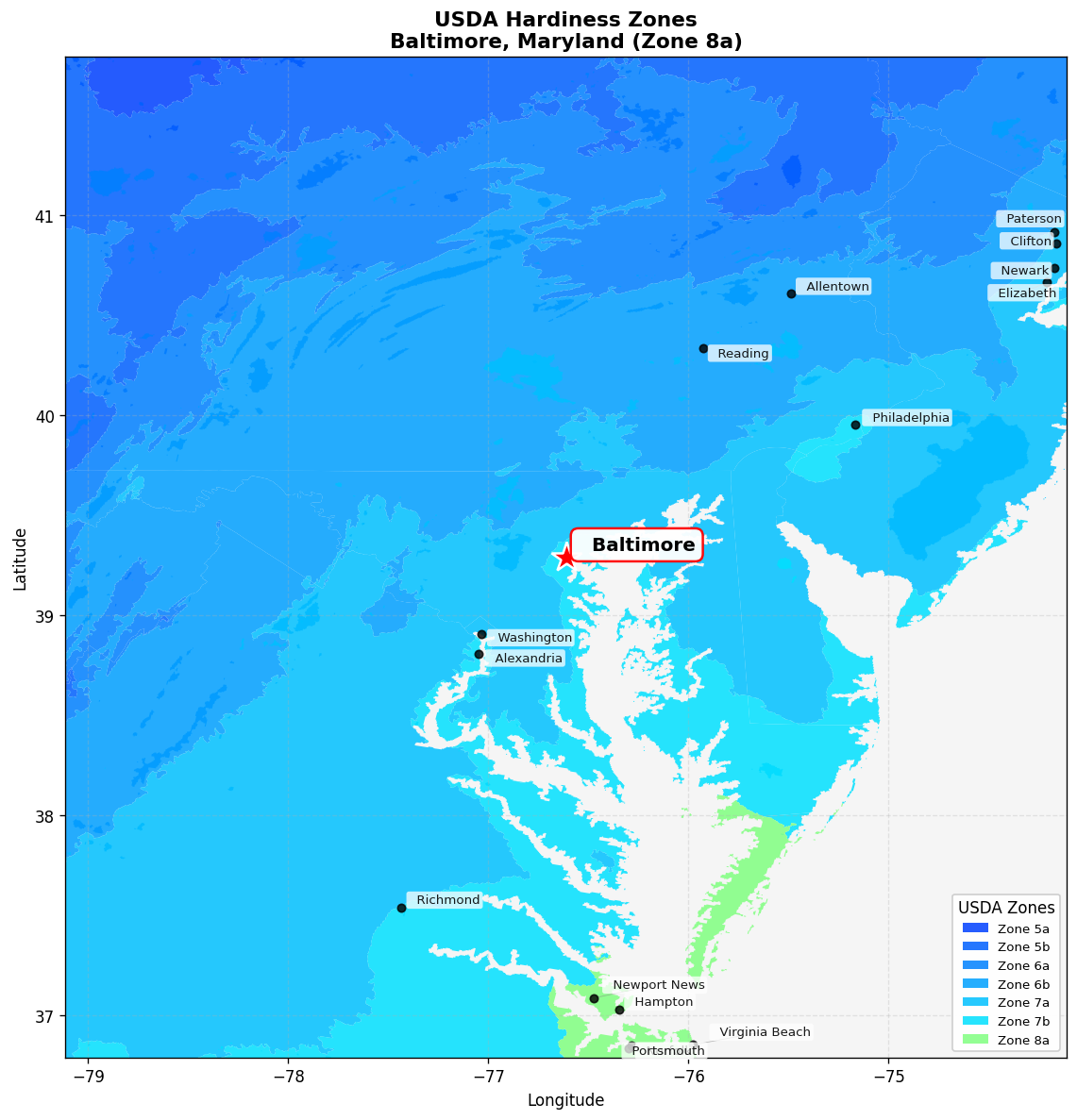
USDA Zone 8a
Hardiness zone for Baltimore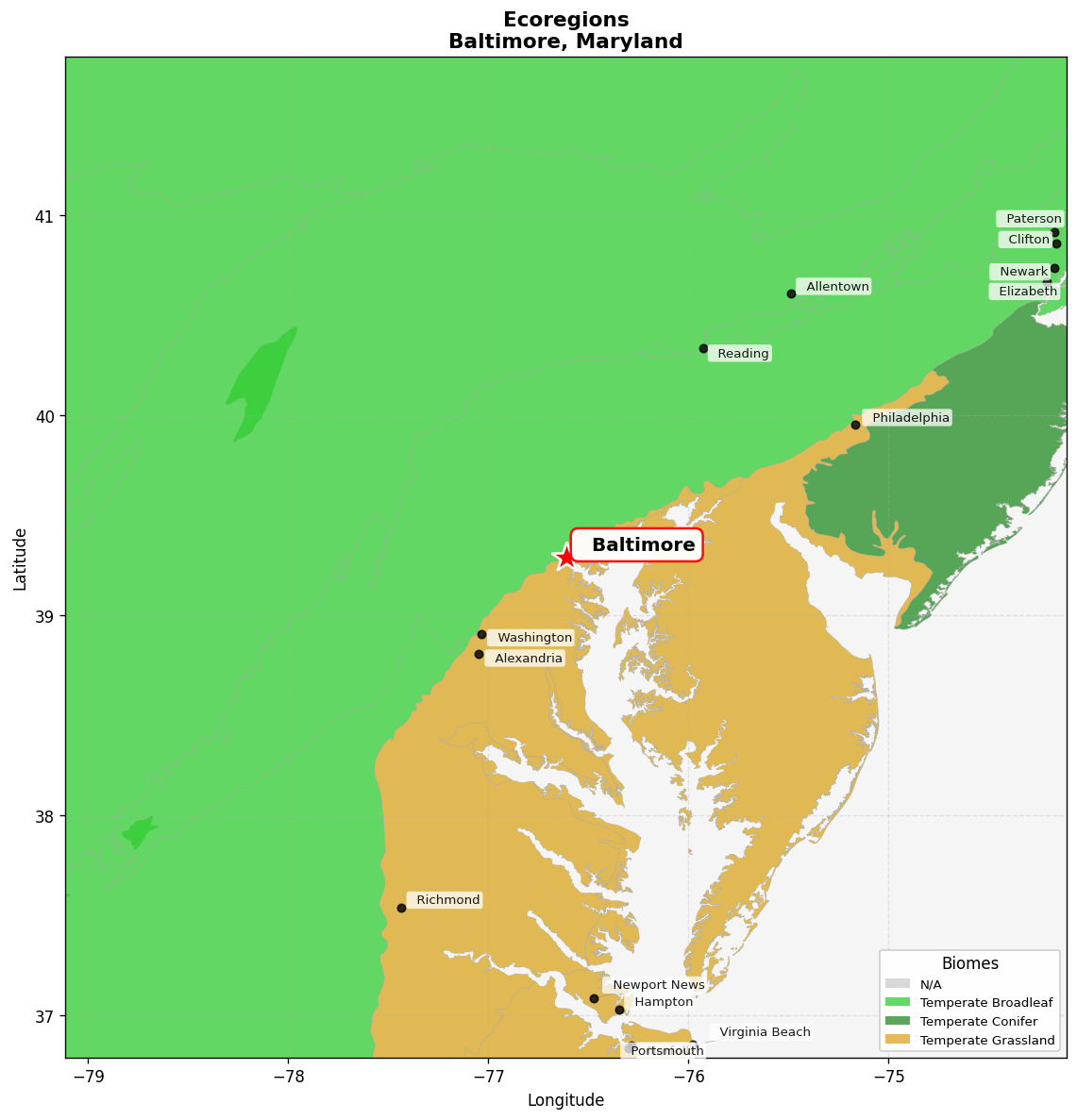
Southeast US conifer savannas
Native ecoregionFrequently Asked Questions
What cottage perennials survive Baltimore’s hot humid summers?
Baltimore’s Zone 8a heat and humidity require selecting heat-adapted cottage staples. Reliable performers: coneflower (Echinacea, thrives in heat), black-eyed Susan (rudbeckia, a regional native), garden phlox (heat-tolerant varieties like ‘David’ resist mildew), daylilies (extremely heat-tolerant, bloom June–July), cranesbill geranium, catmint (cut back after June bloom for August repeat), oakleaf hydrangea (native, heat-tolerant), cardinal flower (native, July–September), and native asters (September–October). For spring-only cottage classics that fade in heat: plant delphiniums, foxgloves, and sweet William for April–June peak, then accept they’ll go dormant. Layer heat-tolerant perennials to take over from June through October.
What roses perform best in Baltimore cottage gardens?
Zone 8a is excellent rose territory, but Baltimore’s summer humidity means black spot and rose diseases are real challenges without disease-resistant varieties. Best performers: ‘Knock Out’ series (highly disease-resistant, Zone 4, continuous bloom), ‘New Dawn’ climber (Zone 5, nearly bulletproof), David Austin English roses with disease resistance like ‘Olivia Rose’ and ‘The Generous Gardener’ (both rated Zone 5–9), and the native swamp rose (Rosa palustris, July bloom, great for moist areas). Avoid high-maintenance hybrid teas unless you’re willing to maintain a regular fungicide program — Baltimore’s July–August humidity will defoliate susceptible varieties quickly.
How do I design a cottage garden in a Baltimore row house front yard?
Most Baltimore row house front yards measure 10–18 feet in depth and 14–22 feet wide — small but powerful with the right design. Key strategies: use the fence line (iron fence or picket) to anchor climbing roses and spilling catmint. Layer depth with tall plants at the foundation (delphiniums, hollyhocks, crape myrtle) and low spreaders at the front edge (catmint, alyssum, creeping thyme). A curved or herringbone brick path from sidewalk to stoop adds length perception. Climb the facade vertically with roses or native coral honeysuckle — the facade wall is free real estate that transforms the entire front elevation of the row house.
What are the best native plants for a Baltimore Chesapeake-inspired cottage garden?
The Chesapeake Bay watershed has a remarkable native flora that meshes beautifully with cottage aesthetics. Top choices: oakleaf hydrangea (Hydrangea quercifolia, native to Eastern US, spectacular white blooms, Zone 5), cardinal flower (Lobelia cardinalis, brilliant red, July–September), wild bergamot (Monarda fistulosa, lavender, bee magnet), swamp rose (Rosa palustris, pink, native), native phlox (Phlox paniculata), coneflower (Echinacea purpurea), black-eyed Susan (Rudbeckia hirta, native to Mid-Atlantic), and native asters (Symphyotrichum). These plants are adapted to Baltimore’s summer conditions, support native pollinators, and reduce the irrigation and maintenance demands of imported exotics.
Does Baltimore have city regulations on front yard gardens?
Baltimore City’s zoning code generally permits front yard gardens and planting without specific permits for standard landscape work. However, fence installations require permits and must meet height restrictions (typically 4 feet for front yards in residential zones). Baltimore Heritage Area and historic district properties — common in Bolton Hill, Federal Hill, and Otterbein — may require historic preservation approval for structural changes to the front yard including walls, fences, and paving. Contact Baltimore City’s Permit Services at 410-396-3360 or the Commission for Historical and Architectural Preservation (CHAP) for historic district properties.
How do I keep a Baltimore cottage garden healthy through July and August heat?
August in Baltimore is the real test for cottage gardens. Key strategies: water deeply and infrequently (1–1.5 inches per week) rather than light daily watering — deep watering encourages deep roots that handle heat stress better. Apply 2–3 inch mulch layer in May to retain soil moisture and moderate soil temperature. Deadhead spent blooms regularly to encourage rebloom on roses, catmint, and phlox. Cut catmint back by one-third after its June flush for an August rebloom. Prune any diseased rose foliage immediately — Baltimore’s humidity spreads black spot rapidly on susceptible varieties. Accept that delphiniums and foxgloves will go summer-dormant — plan heat-hardy plants to fill gaps from late June through August.