4 Modern Garden Ideas for Buffalo, NY | Contemporary Great Lakes Design for Zone 6a
Native plants from the Eastern Great Lakes lowland forests (Zone 6a) — Humid continental (warm summer) climate
Why Modern/Minimalist Gardens in Buffalo?
Buffalo’s modern landscape movement is rooted in the city’s extraordinary architectural heritage. The home of Frederick Law Olmsted’s park system and a concentration of Prairie School, Arts and Crafts, and mid-century modern architecture, Buffalo has always attracted designers who understand that outdoor space is an extension of architecture rather than a decorative afterthought. Contemporary landscape designers working in Buffalo have developed a local idiom that pairs the city’s natural material palette — bluestone, limestone, native hardwoods — with the clean lines of modern design.
Modern Buffalo landscapes also respond directly to the city’s climate challenges: the lake-effect weather that makes Buffalo winters famous also creates extraordinary summer gardening conditions — reliable moisture, moderate temperatures, and the long growing season supported by Lake Erie’s thermal mass. Native grasses and structural perennials that might struggle in drier climates grow lushly in Buffalo with minimal intervention, making a minimalist planting palette both visually effective and genuinely low-maintenance.
The revival of Buffalo’s Elmwood Village, Allentown, and East Side neighborhoods has brought new investment in residential landscape design, and the modern aesthetic — clean edges, restrained plant palettes, quality materials — is increasingly the design language of Buffalo’s renovated and new-construction homes. Native grasses in mass plantings, bluestone hardscape, and steel planters translate perfectly in a city where the architecture rewards serious landscape design.
4 Modern/Minimalist Design Ideas for Buffalo
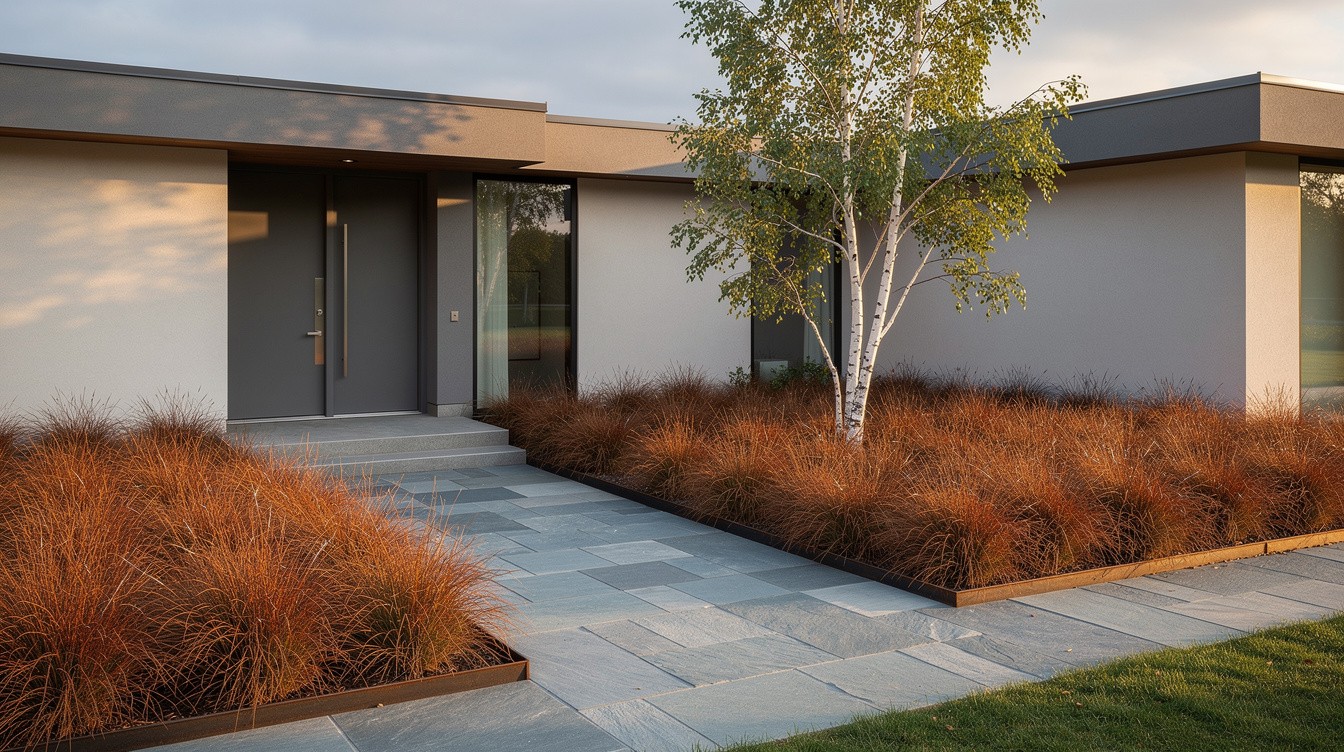
The Bluestone and Native Grass Entry
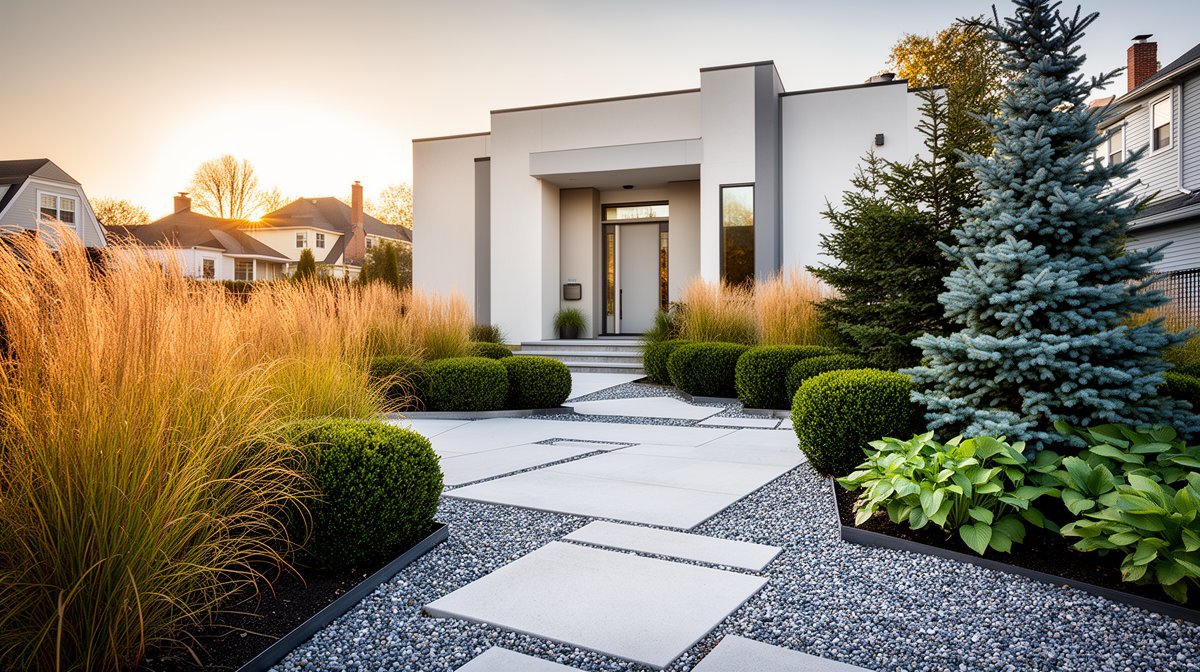
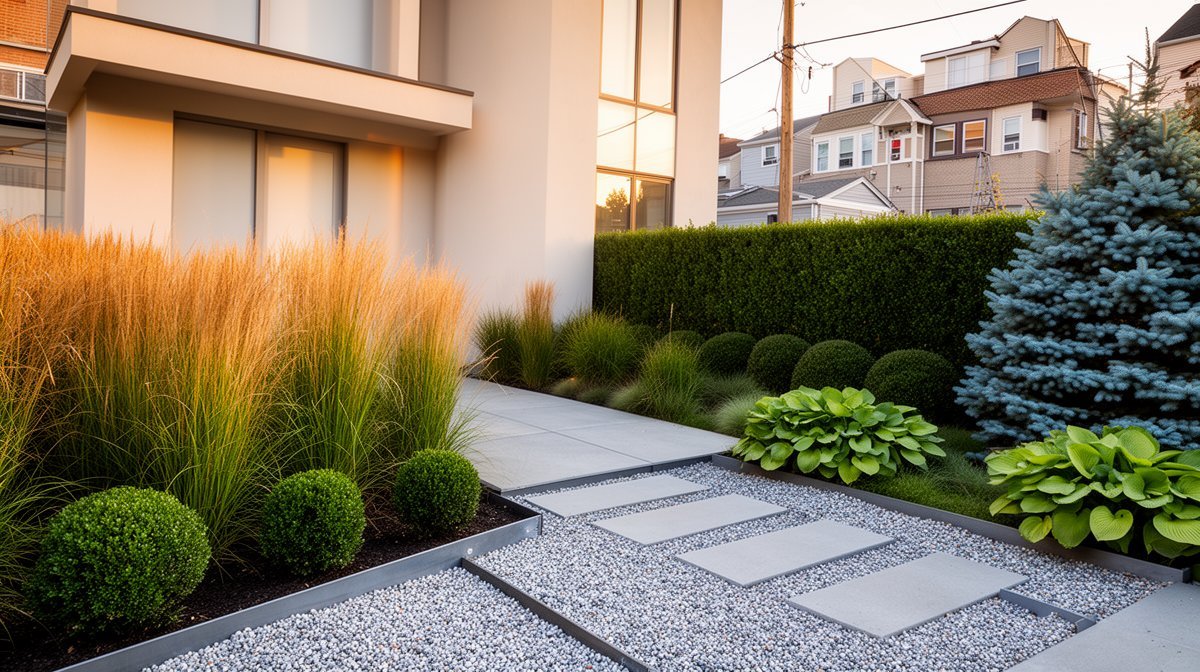
$15–25/sqftA contemporary front yard defined by large bluestone pavers set in a running bond pattern, with masses of little bluestem planted in rectangular steel-edged beds on both sides. The bluestone’s cool blue-gray color reflects Buffalo’s overcast winter light beautifully, and the little bluestem’s fall copper complements it. The composition is strictly rectilinear — no curves, no mixed species, no ornaments. A single specimen river birch adds a vertical canopy element at the far corner. Zero turf, zero annual replanting, complete seasonal interest from April through January.
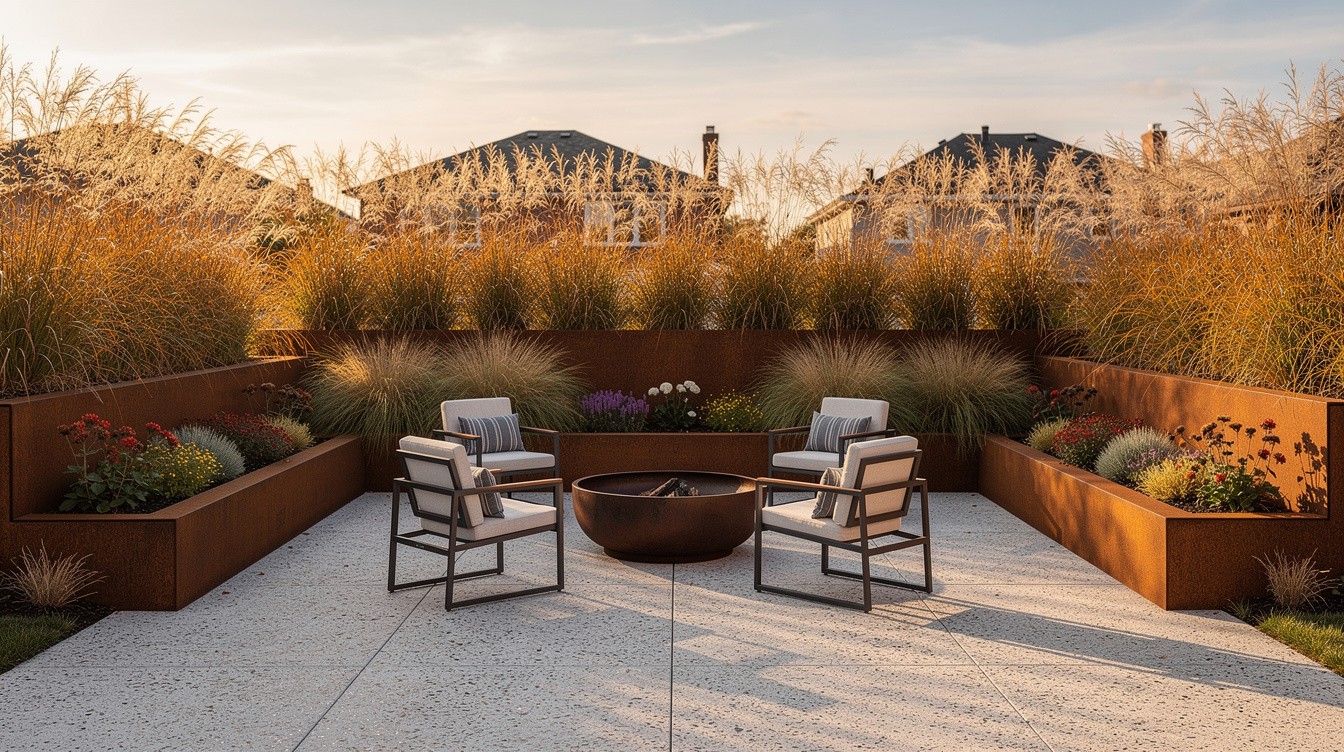
The Steel and Concrete Patio Garden
$18–32/sqftA rear patio of poured concrete with an exposed aggregate finish is flanked by Corten steel raised planting beds at different heights. The taller beds create privacy from neighboring yards while planted with switchgrass; the lower beds hold prairie dropseed and seasonal perennials. A single large steel fire pit ring at the patio center serves as the social focal point. In autumn, the switchgrass turns to amber and the steel weathers to a warm rust, creating a material conversation between the manufactured Corten and the organic grass.
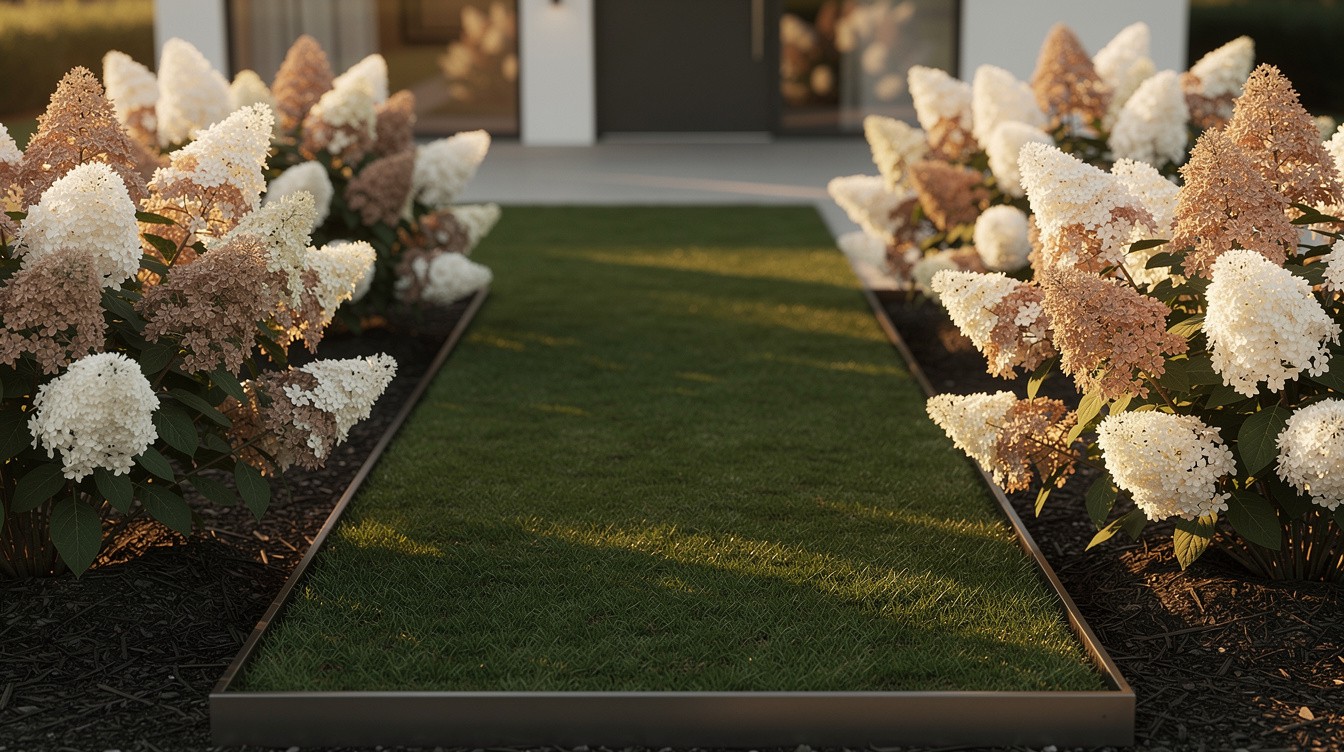
The Minimalist Hydrangea Garden
$10–18/sqftA front yard reduced to its essentials: a rectilinear lawn panel flanked by two symmetrical mass plantings of panicle hydrangeas in steel-edged rectangular beds. In August, the hydrangeas explode with white flowers that age to dusty rose and then to tan through October. The beds are mulched with dark shredded bark that sets off the white flowers. The composition has three elements — lawn, hydrangeas, mulch — and no others. Its power comes from repetition and restraint, not variety.
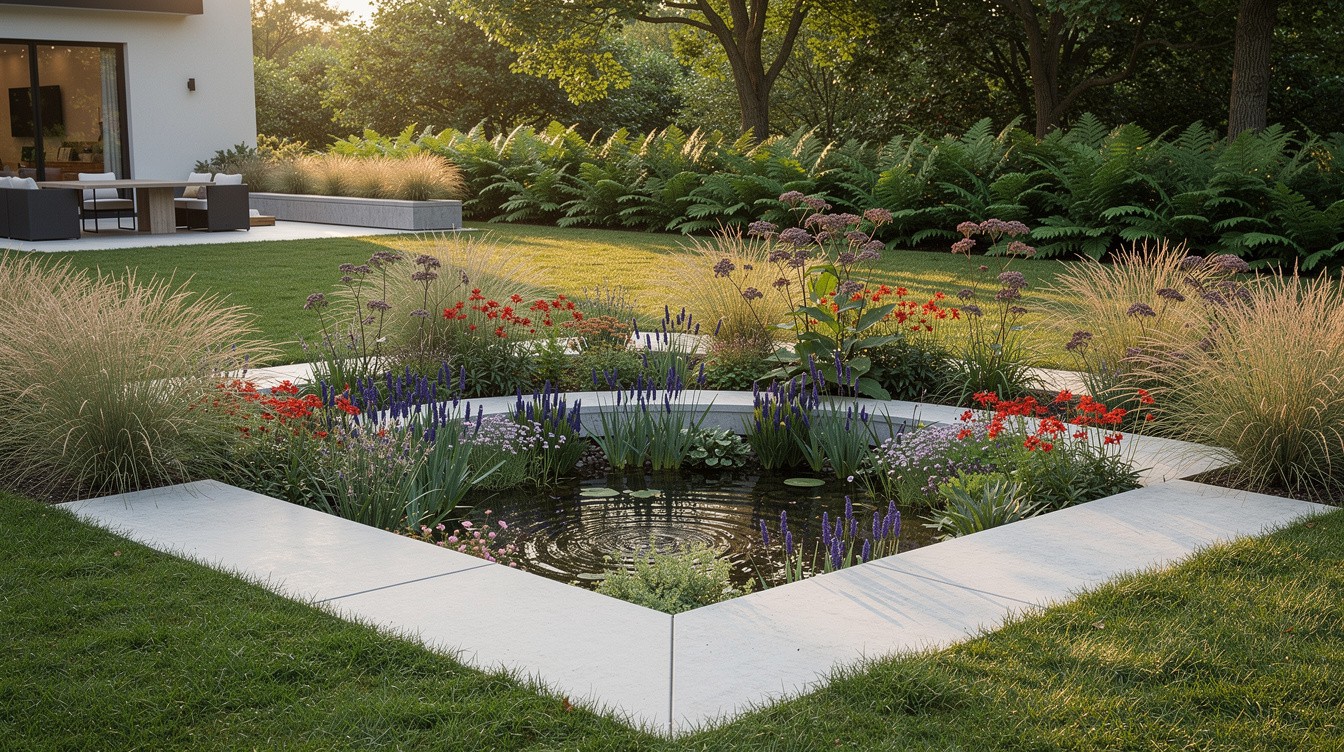
The Rain Garden and Modern Planting
$12–22/sqftA slight grade change in a Buffalo backyard becomes the centerpiece of a contemporary garden: a shallow rain garden bowl planted with cardinal flower, blue flag iris, and Joe Pye weed captures and filters stormwater. The rain garden is surrounded by a concrete path and flanked by drifts of switchgrass. Native ferns fill the shadier back border. The composition celebrates water movement rather than fighting it — after a heavy Buffalo rainstorm, the rain garden fills briefly, drains within 24 hours, and the cardinal flower and iris perform brilliantly in the moist conditions.
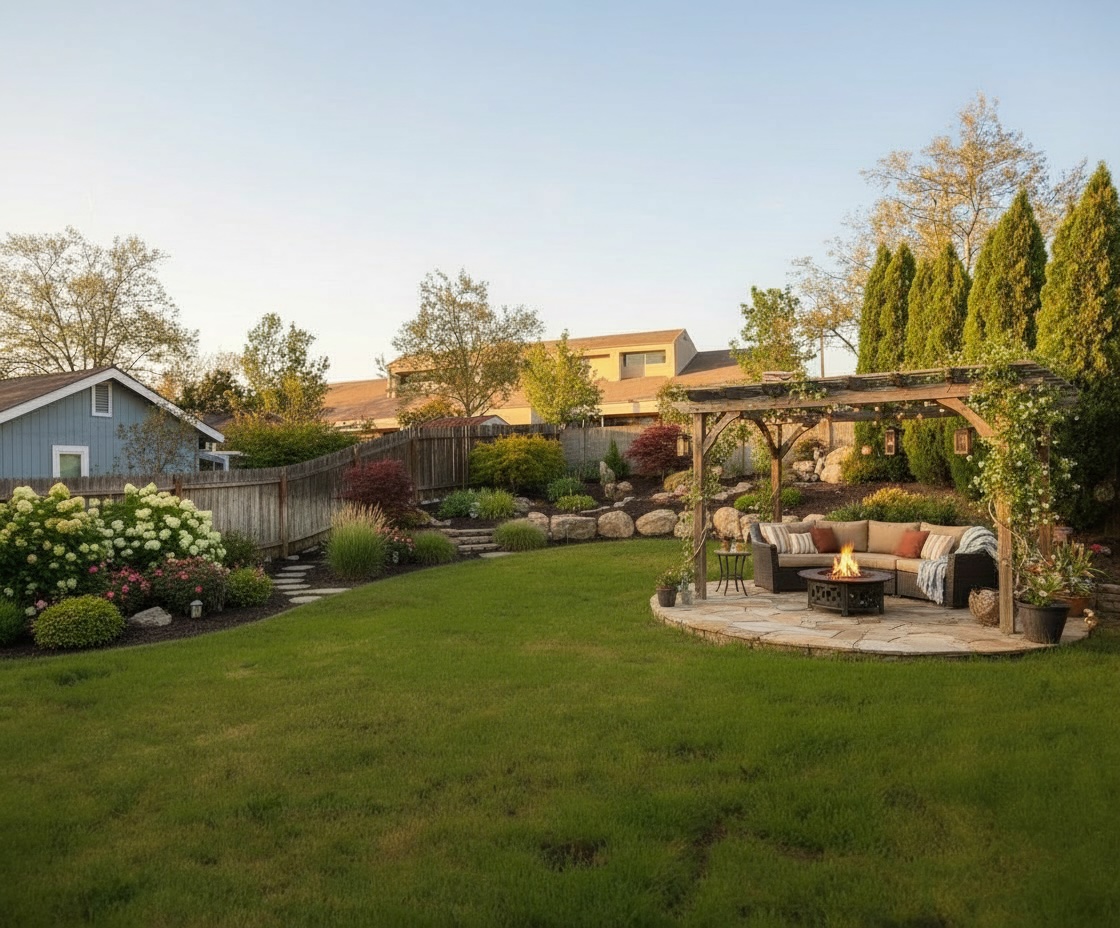
See how a modern/minimalist garden looks on YOUR property
Upload a photo of your Buffalo yard and visualize your dream garden in seconds.
Try ProScapeAI Free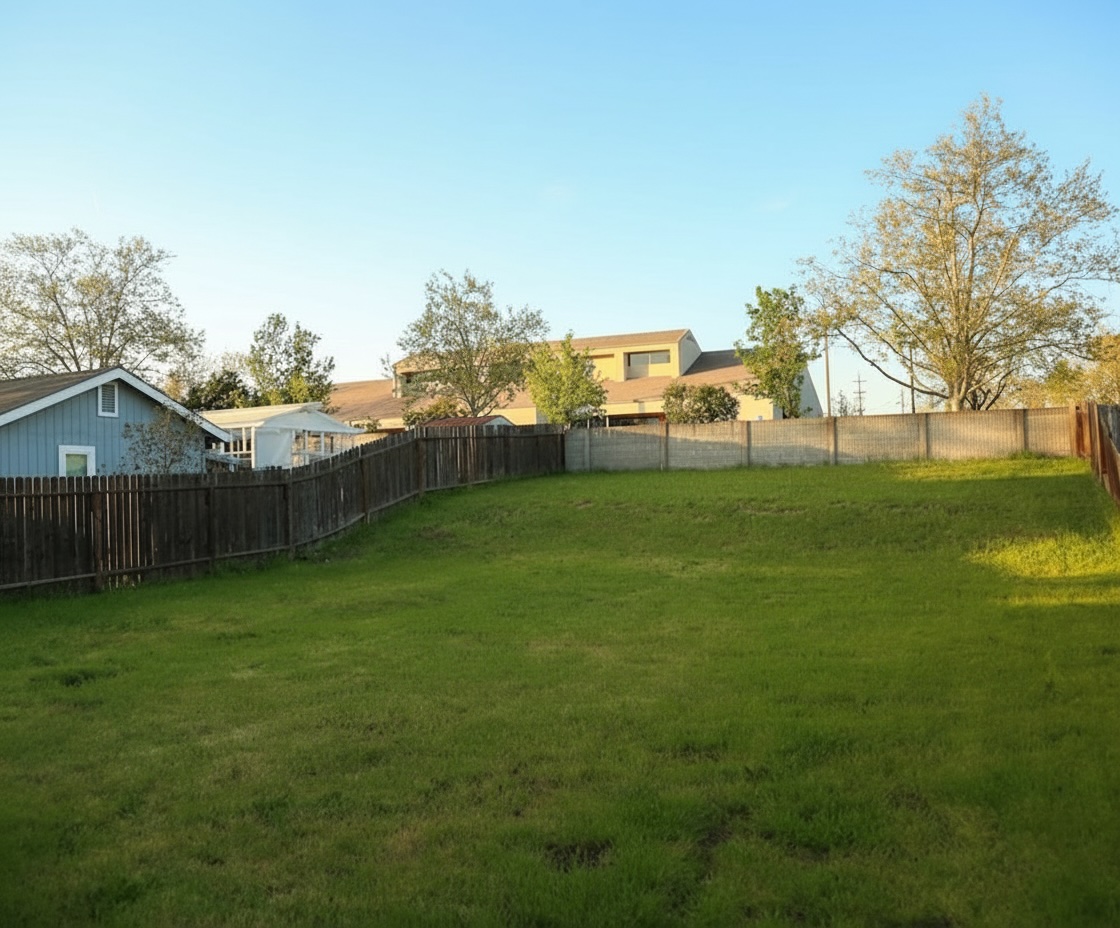
Featured Trees & Shrubs for Modern/Minimalist Gardens
Browse all 248 plants for Buffalo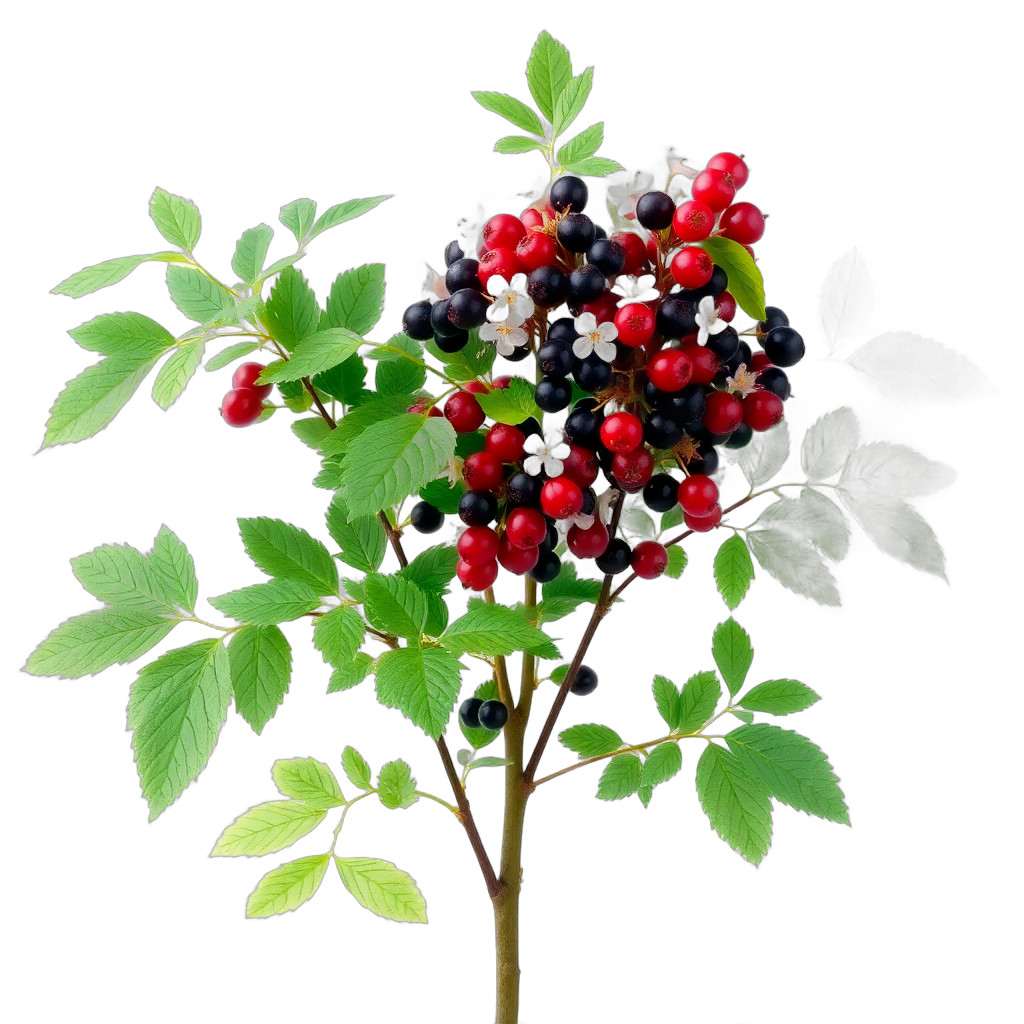
American Black Currant
Ribes americanum
grows to 5 feet, white,yellow blooms in spring. Attracts hummingbirds.
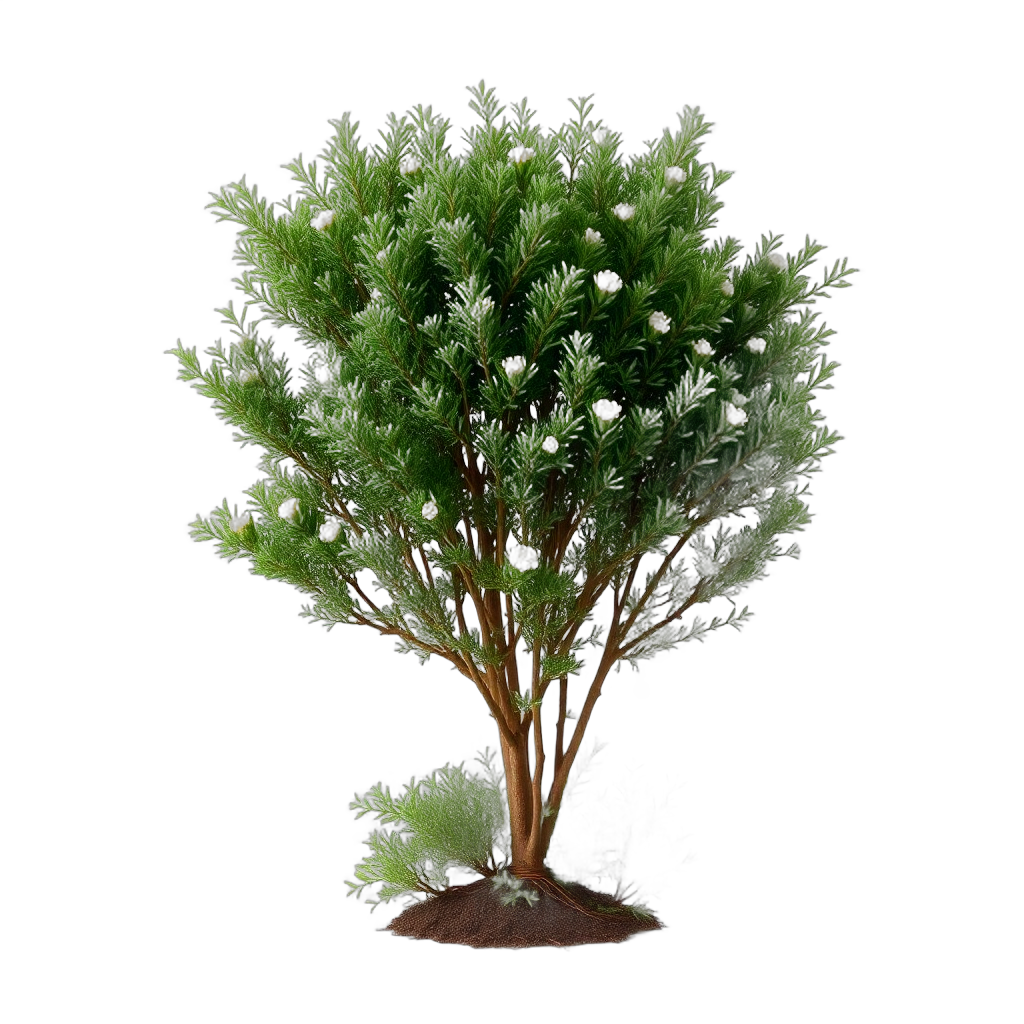
Creeping Juniper
Juniperus horizontalis
low-growing ground cover, blooms in spring. Evergreen year-round.
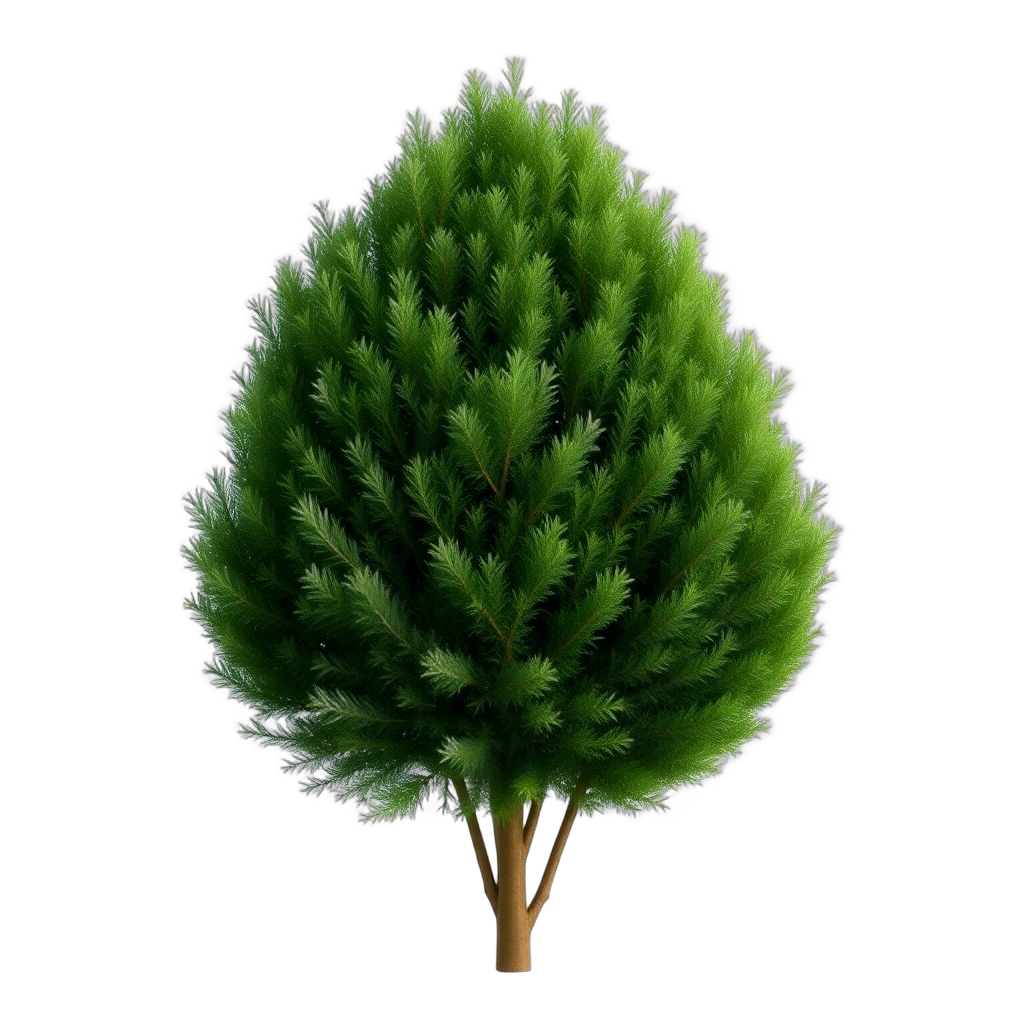
Emerald Arborvitae
Thuja occidentalis 'Emerald'
medium-sized at 14 feet, blooms in spring. Evergreen year-round.

Gray Dogwood
Cornus racemosa
medium-sized at 10 feet, white blooms in spring. Pollinator-friendly.
Featured Grasses & Groundcovers for Modern/Minimalist Gardens
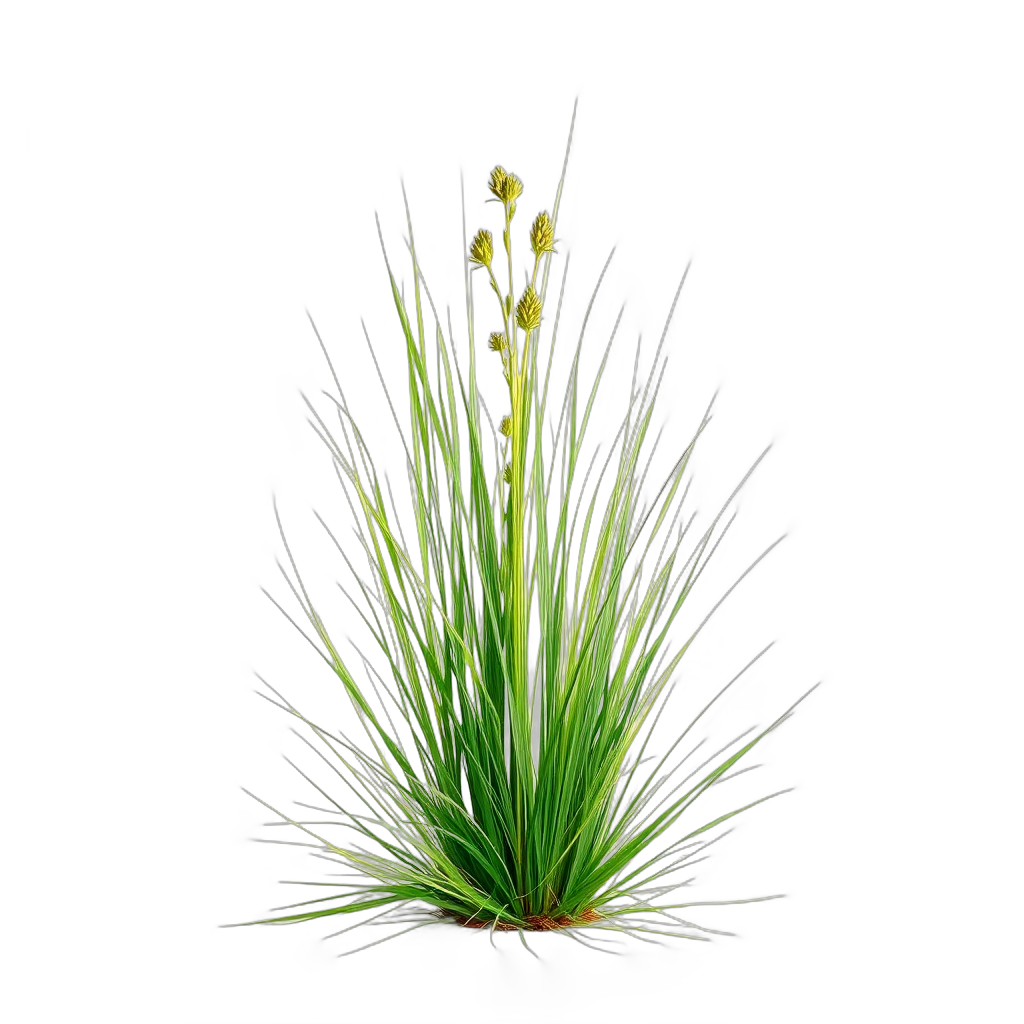
Canada Wild Rye
Elymus canadensis
grows to 4 feet, blooms in summer. Yellow fall color.

Red Fescue
Festuca rubra
low-growing ground cover, blooms in summer.
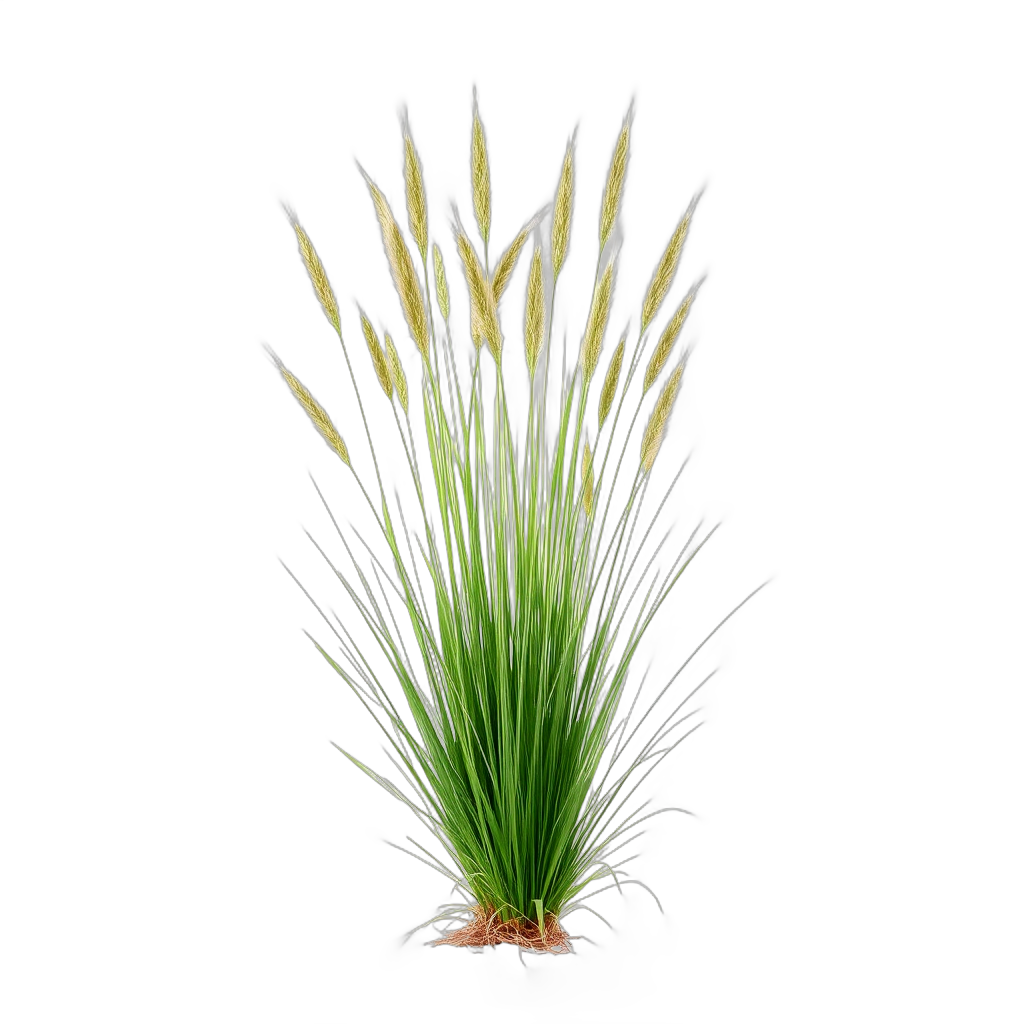
Tufted Hair Grass
Deschampsia cespitosa
grows to 3 feet, yellow blooms in summer. Yellow fall color.
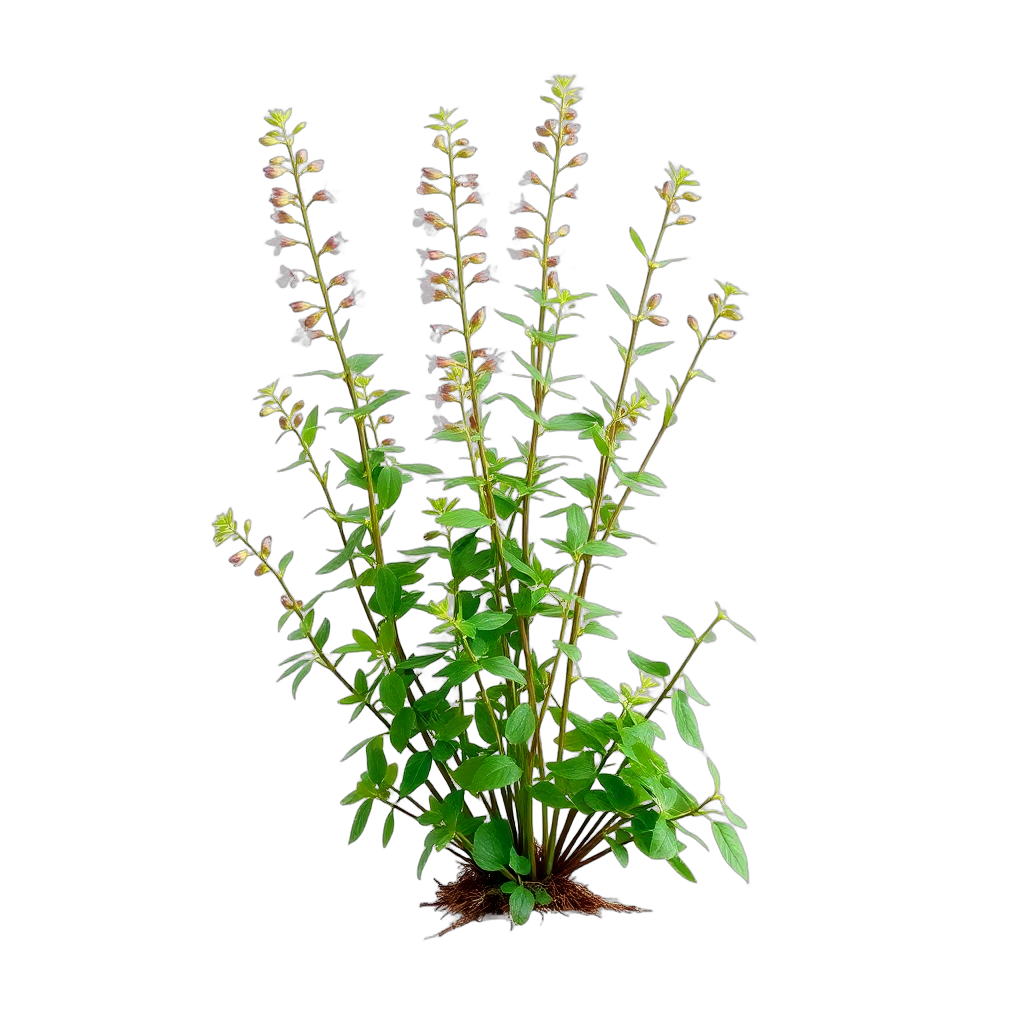
Creeping Jacob's Ladder
Polemonium reptans
low-growing ground cover, blue blooms in spring. Attracts butterflies.
Featured Flowers & Perennials for Modern/Minimalist Gardens
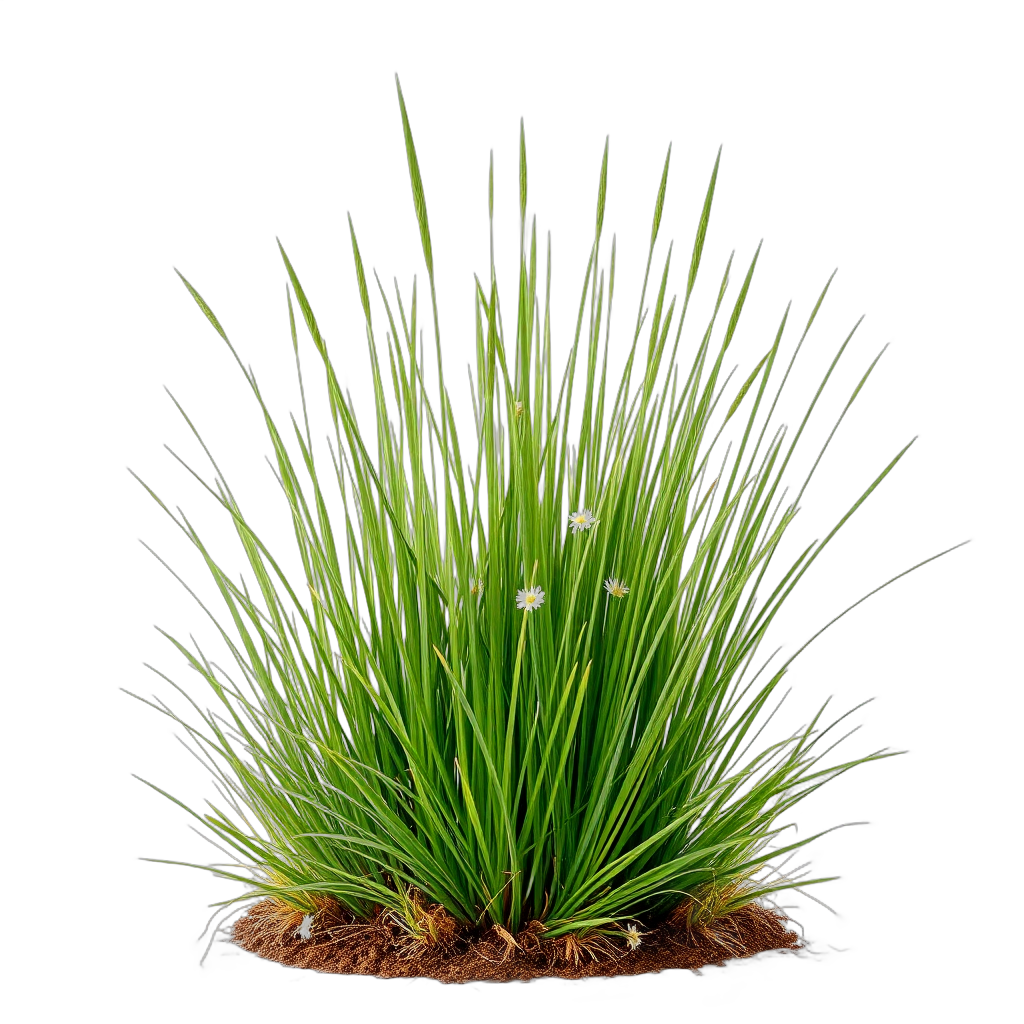
Baltic Rush
Juncus balticus
low-growing ground cover, blooms in summer. Evergreen year-round.
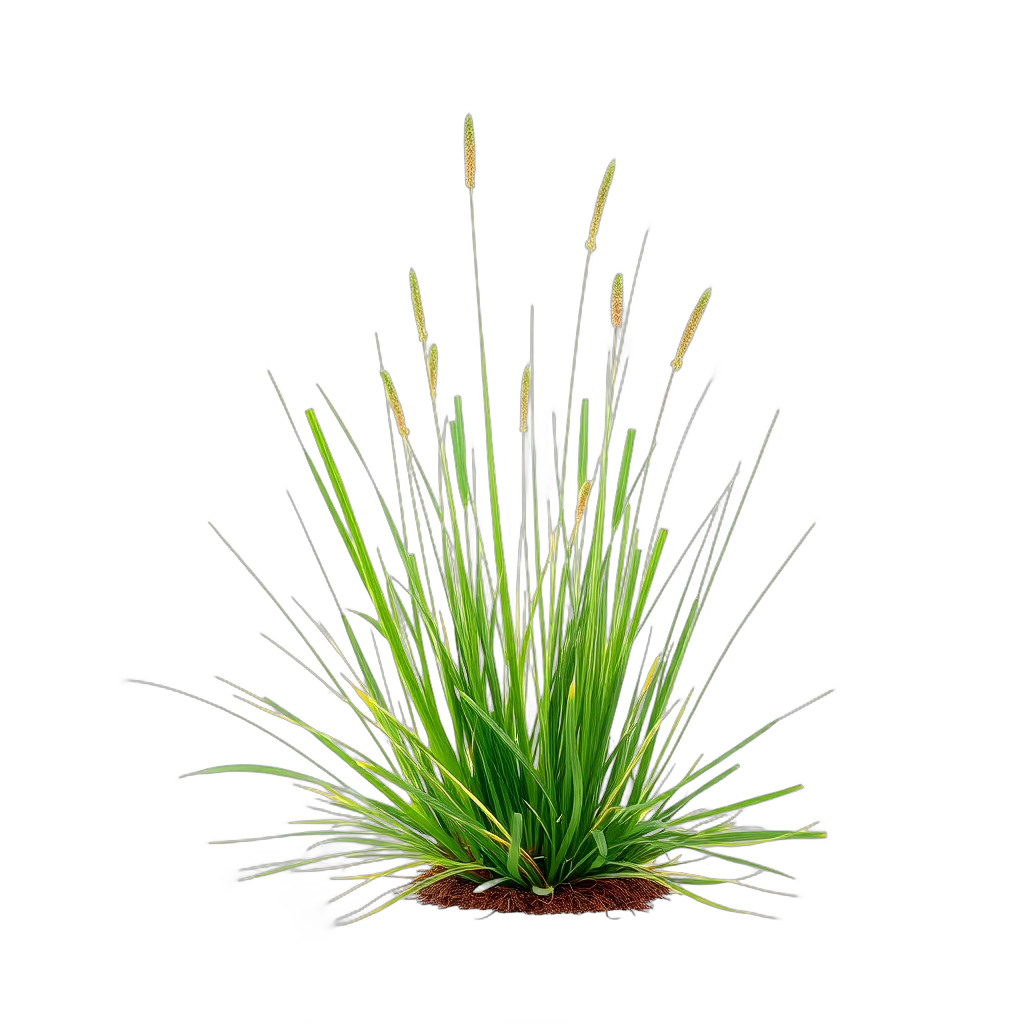
Common Rush
Juncus effusus
grows to 3 feet, blooms in summer. Evergreen year-round.
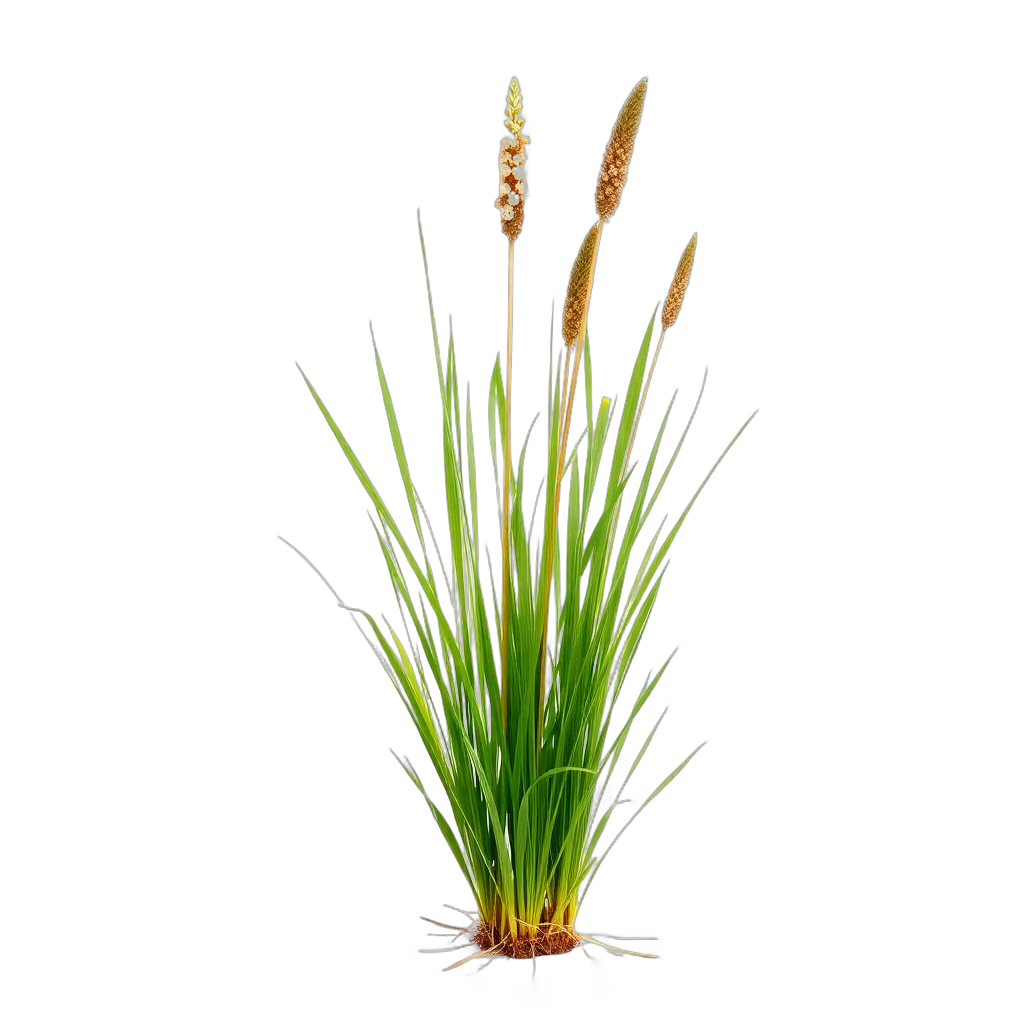
Hardstem Bulrush
Scirpus acutus
medium-sized at 7 feet, blooms in summer.
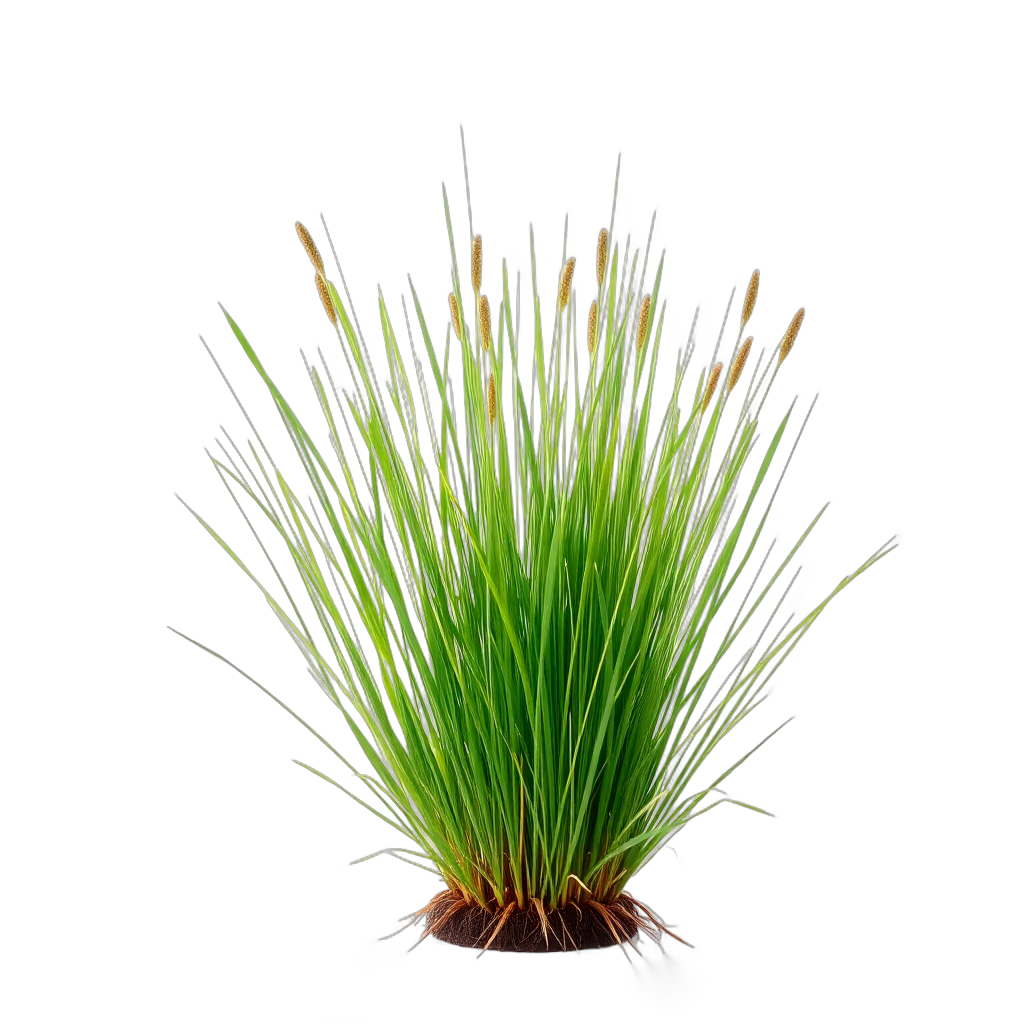
Path Rush
Juncus tenuis
low-growing ground cover, blooms in summer. Evergreen year-round.
Zone and sun checks come from our database — confirm with your local nursery before you buy.
Bloom Calendar for Buffalo
spring
Bellwort, Bloodroot, Blue-Eyed Grasssummer
Baltic Rush, Common Rush, Hardstem Bulrushfall
Pink Turtleheadwinter
Limited bloomsDesign Tips for Buffalo (Zone 6a)
- Use local bluestone for all paving in a Buffalo modern landscape — it’s quarried in New York and Pennsylvania, handles the winters, and the blue-gray color palette is indigenous to the region
- Mass native grasses in groups of 9–15 for a modern effect — repetition at scale creates the sweeping contemporary look; scattered individual specimens look random
- Install a rain garden in any Buffalo yard that collects runoff — the city’s heavy precipitation and clay soils make ponding water a common problem that a well-designed rain garden converts into a landscape feature
- Add Corten steel planters for year-round interest at the patio edge — the rust patina develops within one Buffalo winter and becomes permanently beautiful
- Leave ornamental grass seed heads and stems standing through the winter — in a snow-covered Buffalo yard, the bleached grass stems and seed heads create essential visual interest against white ground
- Contact Buffalo’s Green Infrastructure program before installing a rain garden — the city offers incentives and technical assistance for stormwater management projects
Where to Source Plants in Buffalo
Skip the big-box stores. These independent Buffalo nurseries specialize in the plants that make modern/minimalist gardens thrive in Zone 6a.
Russell’s Tree and Shrub Farm
Hamburg / South Buffalo suburbs
Trees, shrubs, and ornamental grasses for Western New York — good native grass selection
Lincoln Park Nursery
Amherst
Native and adapted plants for Western New York with two convenient locations
Zehr’s on the Lake Garden Center
North Buffalo / Northtowns
Full garden center serving Buffalo and Northtowns communities
Lavocat’s Family Greenhouse & Nursery
Buffalo area
Highly regarded local nursery with strong perennial and ornamental grass selection
Badding Farm Market and Garden Center
Clarence / North of Buffalo
Full-service garden center north of Buffalo serving Clarence, Williamsville, and Amherst
Modern/Minimalist Landscaping Costs in Buffalo
| Project Scope | Estimated Cost |
|---|---|
| Modern front yard with bluestone and native grasses (500 sqft) | $6,000 – $14,000 |
| Concrete backyard patio (300 sqft) | $3,500 – $8,000 |
| Corten steel raised planting beds (per linear foot) | $45 – $90/linear ft |
| Rain garden installation (200–300 sqft) | $2,500 – $6,000 |
| Massed hydrangea planting (per sqft, plants + labor) | $12 – $20/sqft |
| Full backyard modern landscape (1,000 sqft) | $14,000 – $32,000 |
| AI visualization with ProScapeAI | Free to start |
Estimates based on Buffalo, NY-area contractor rates as of 2026. Actual costs vary by site conditions, materials, and contractor.
Buffalo Climate & Growing Zone
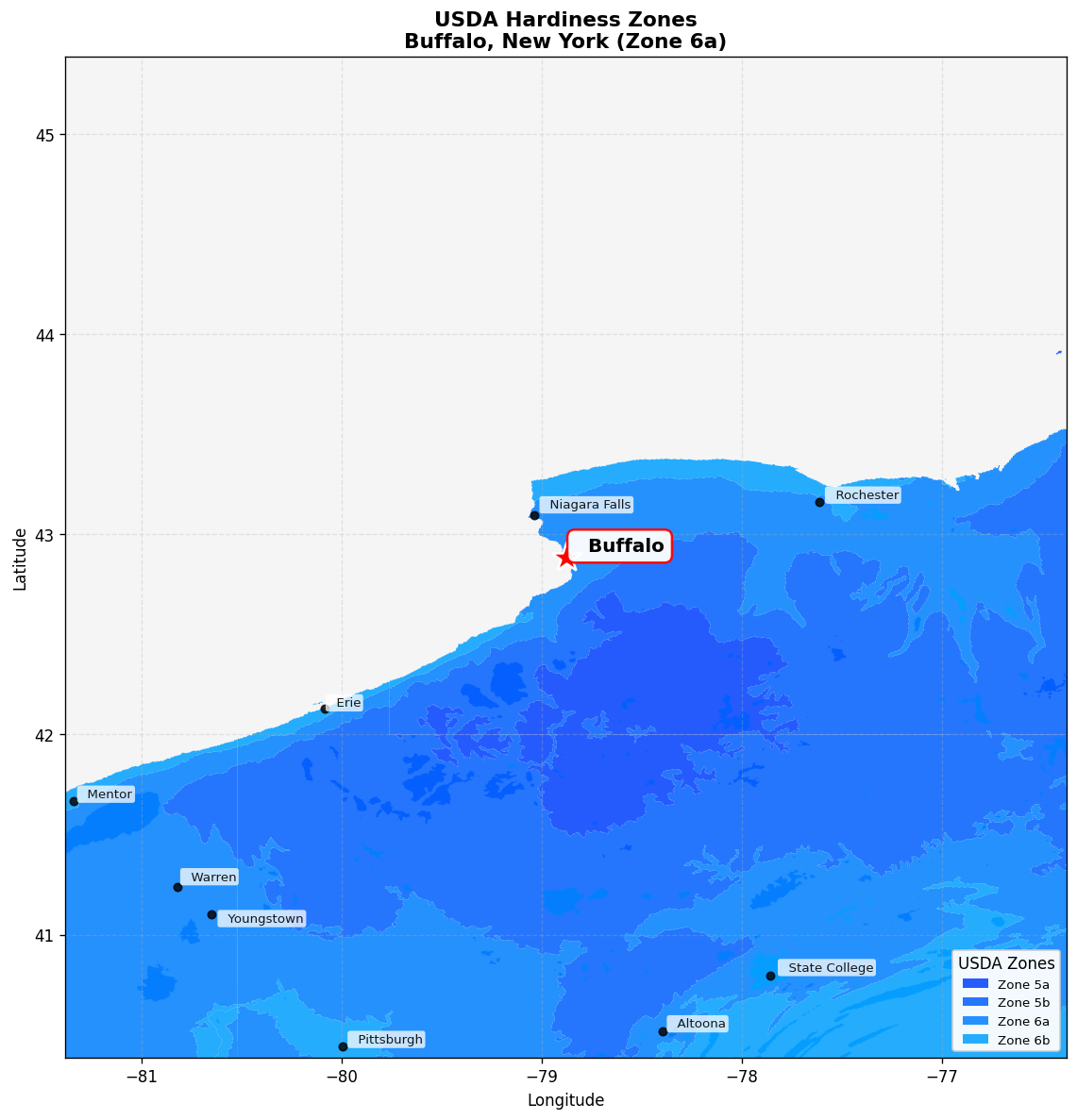
USDA Zone 6a
Hardiness zone for Buffalo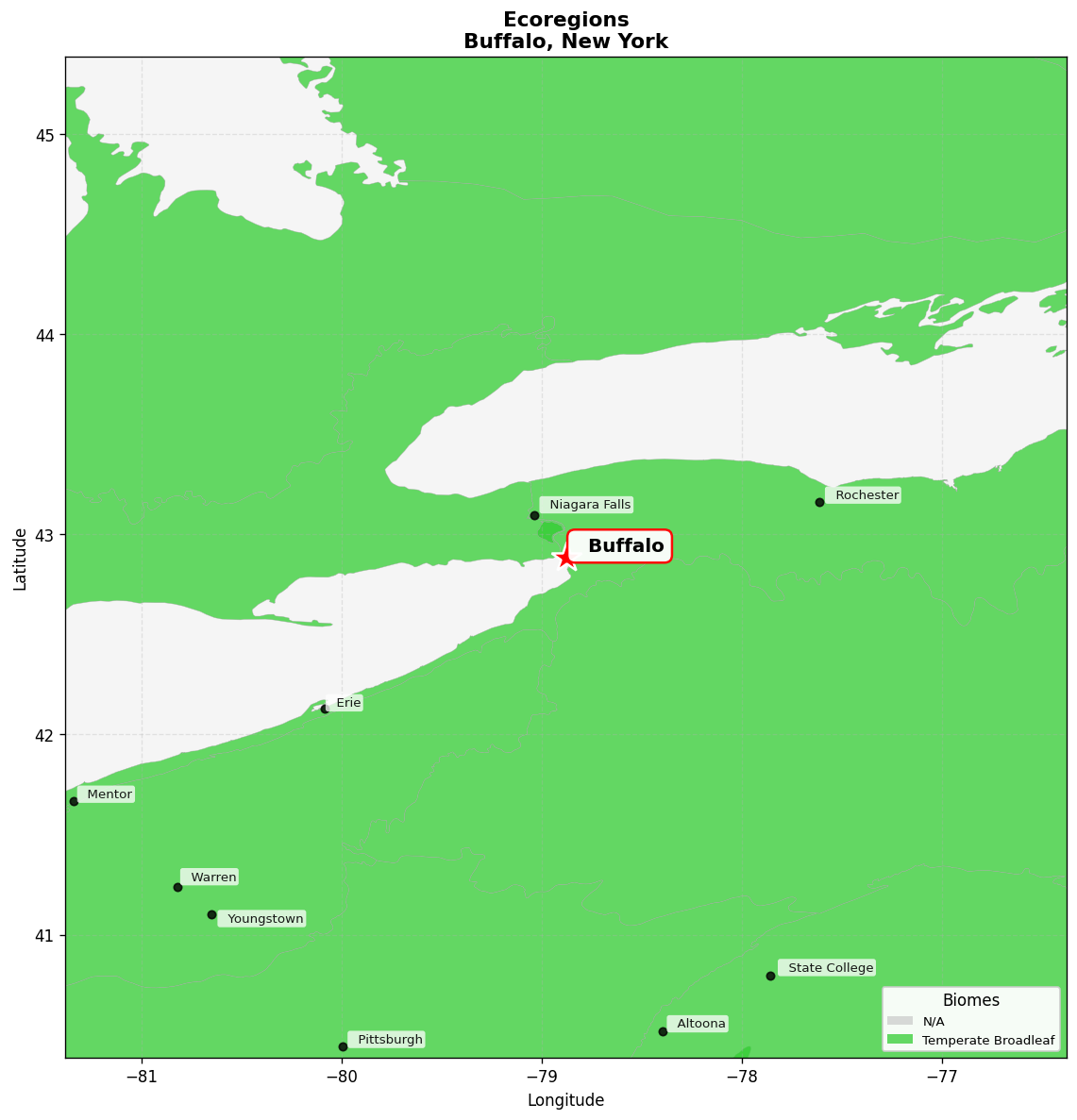
Eastern Great Lakes lowland forests
Native ecoregionFrequently Asked Questions
What materials work best for a modern Buffalo landscape?
Buffalo’s best modern landscape materials are those that handle 100+ annual inches of snowfall and repeated freeze-thaw cycles. Natural bluestone and limestone pavers are the regional standard — they’re quarried in New York and Pennsylvania, widely available, and handle Buffalo winters indefinitely. Poured concrete with control joints performs well. Corten steel is excellent for edging and planters — the rust patina seals the metal and it’s impervious to freeze-thaw. Avoid materials that absorb water and crack: soft sandstone, unsealed brick without proper base, and any thin ceramic tile in outdoor applications.
How do modern landscapes in Buffalo handle snow and ice?
Design for snow from the start: slope all hardscape surfaces at least 1–2% away from the house for meltwater drainage; avoid sunken or recessed patio designs where meltwater pools and refreezes; use salt-tolerant plant species near driveways and roads (native switchgrass and little bluestem are salt-tolerant once established); and allow space for snow storage alongside driveways — a minimum 3-foot planted buffer that can receive plow-cast snow without damaging plants. Dark hardscape absorbs more heat and melts snow faster; light-colored materials may retain ice longer.
How much does a modern landscape cost in Buffalo?
Modern landscape installation in Buffalo runs $10–20 per square foot for complete projects. A 500 sqft front yard transformation with bluestone pavers and massed native grasses typically costs $6,000–14,000. A backyard patio and planting project runs $12,000–30,000 for a typical Buffalo lot. Corten steel raised beds add $800–2,500 per planter depending on size. These are 2025 estimates; contact local Buffalo landscapers for project-specific quotes.
What are the best grasses for a modern Buffalo garden?
Little bluestem is Buffalo’s star native ornamental grass — fall copper color, fully Zone 5b+ hardy, minimal care. Switchgrass varieties (Shenandoah, Thundercloud) add height and burgundy summer color. Prairie dropseed is a fine-textured, tidy native for bed edges. For larger spaces, big bluestem and Indian grass create dramatic height. For moist areas, native blue wild rye is underused but beautiful. Avoid invasive Miscanthus sinensis — it self-seeds aggressively in Buffalo’s moist conditions.
Can I convert my Buffalo front yard from lawn to modern plantings?
Yes — and Buffalo has no municipal restriction on lawn-to-garden conversions in most neighborhoods, though some HOAs may have requirements. The main consideration for Buffalo front yard conversions is weed suppression during establishment: Buffalo’s moist conditions support vigorous weed germination. Sheet mulch (cardboard + thick mulch layer) before planting suppresses existing vegetation and weeds. Keep plantings clearly edged and maintained during the first two seasons to signal design intent to neighbors. Buffalo’s garden community is generally enthusiastic about native and modern landscape approaches.
How do I create a low-maintenance modern garden in Buffalo?
The lowest-maintenance modern Buffalo garden combines: massed native grass plantings (little bluestem, switchgrass) that need only one annual cutback in March; Corten steel edging that holds its position through freeze-thaw without maintenance; bluestone or concrete hardscape that requires only occasional sweeping; and zero annual replanting (all perennials that return year after year). Drip irrigation during the first establishment summer reduces hand-watering. After establishment (2 years), the primary maintenance tasks are: annual March cutback of grasses, spring mulch refresh every 2–3 years, and periodic weed removal.