4 Cottage Garden Ideas for Charlotte, NC | English Garden Design in Zone 7b
Native plants from the Appalachian Piedmont forests (Zone 7b) — Humid subtropical climate
Why Cottage/English Gardens in Charlotte?
Charlotte sits squarely in the Appalachian Piedmont forests ecoregion, and the climate here is genuinely one of the Southeast’s most favorable for cottage-style gardening. Zone 7b means winter lows drop to 5–10°F on the coldest nights — just cold enough to give roses and peonies the chilling hours they need for abundant spring bloom, while mild enough that most cottage perennials survive the winter without protection. The city receives 44 inches of rainfall annually, spread across all four seasons, and spring (March through May) and fall (September through November) each deliver six to eight weeks of ideal outdoor gardening and entertaining conditions.
The neighborhoods of Dilworth, Myers Park, and Plaza Midwood are the heart of Charlotte cottage gardening. Myers Park in particular — designed in 1911 by landscape architect John Nolen — features broad canopy-lined boulevards with craftsman, colonial revival, and Tudor homes on generous lots where mature oak and dogwood canopies have been developing for over a century. These properties are where Charlotte’s most spectacular cottage gardens live: deeply amended red clay beds, hydrangea borders that billow along brick walls, and rose-covered arbors that frame front entrances in ways that stop traffic every May and June.
Charlotte’s red Piedmont clay soil is the primary challenge. Like Atlanta, the city sits on heavy red clay that compacts when wet and bakes hard in summer. The standard solution is 4–6 inches of compost and pine bark worked into beds, or raised beds above grade for the most drainage-sensitive plants. But Charlotte’s slightly cooler Zone 7b winters (compared to Zone 8a Atlanta) open up a broader plant palette — peonies, classic hybrid tea roses, delphiniums, and foxgloves are all more reliably successful here than farther south. Charlotte also benefits from being at the northern edge of where crape myrtles, loropetalum, and other semi-tropical cottage companions thrive, giving its gardens a hybrid character that is authentically Piedmont.
4 Cottage/English Design Ideas for Charlotte
AI-generated image
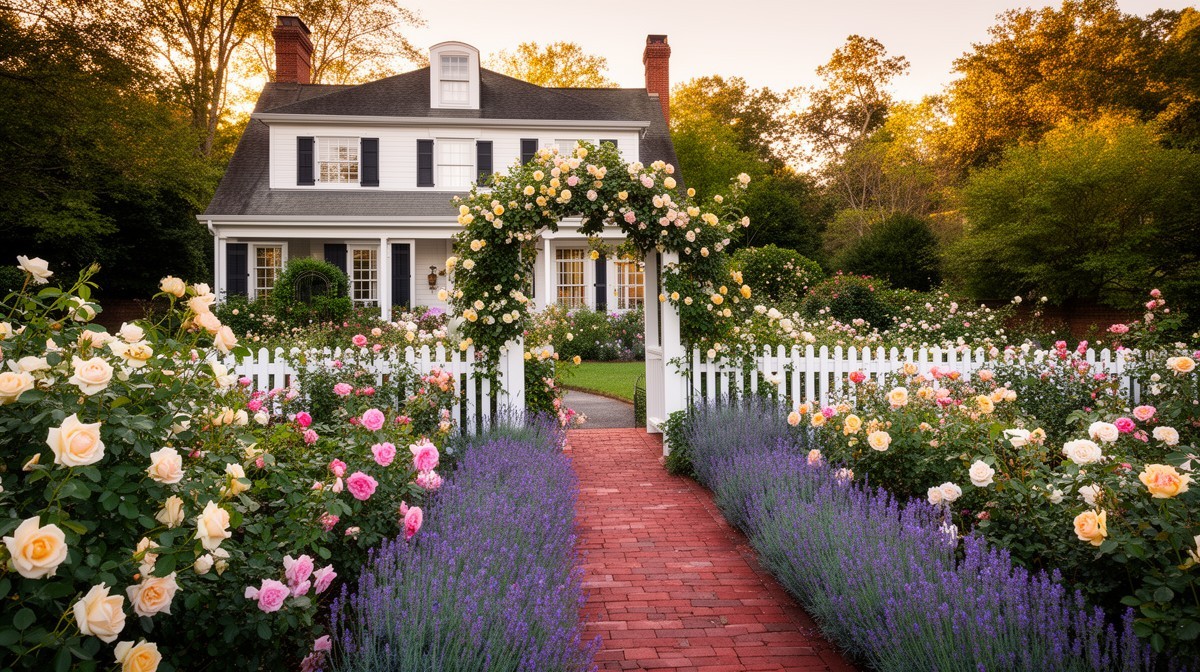
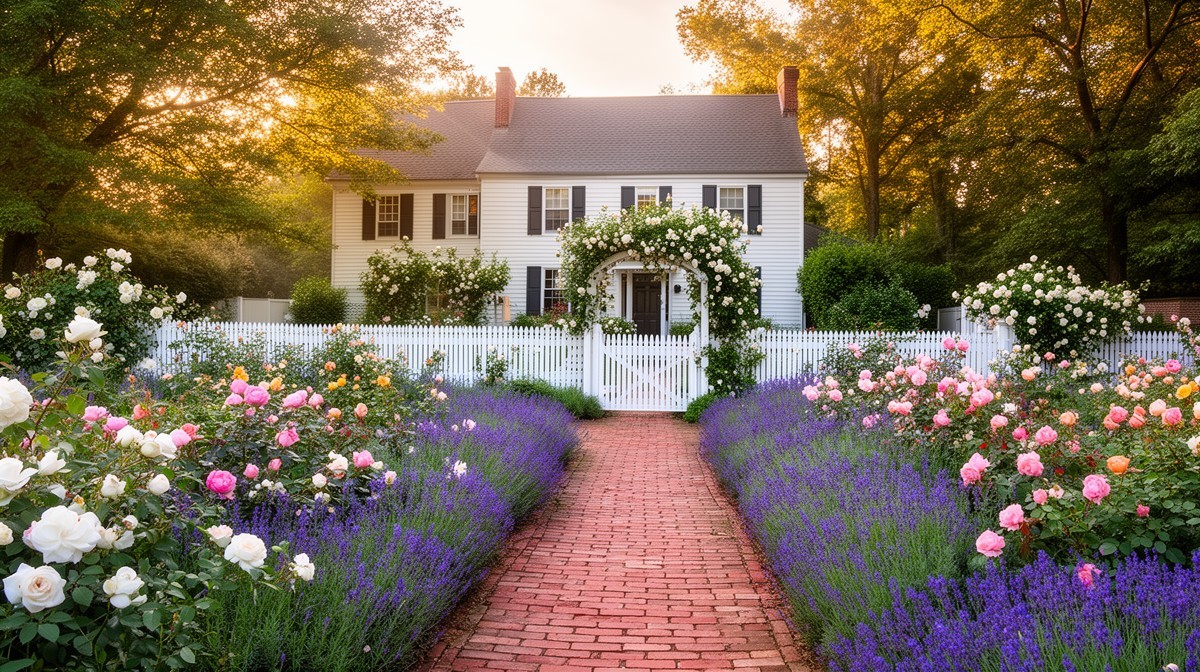
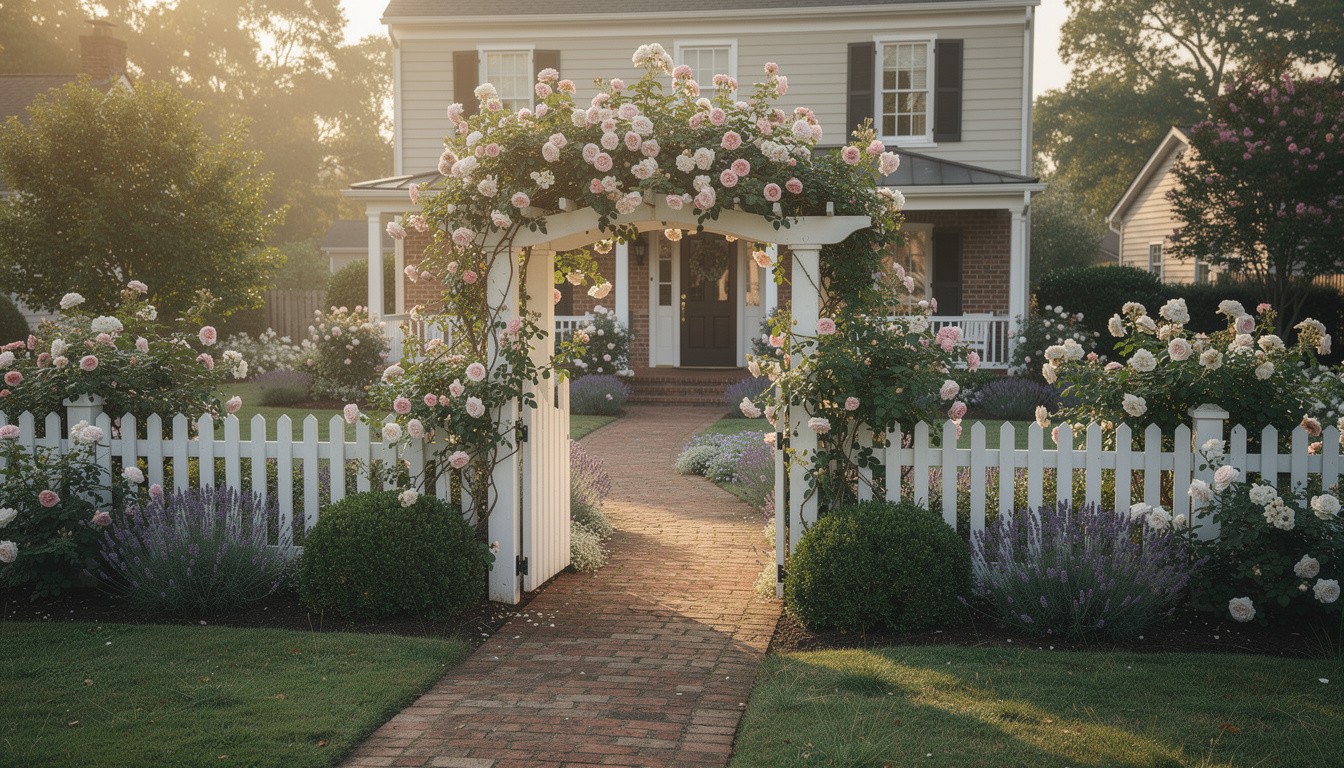
White Picket Cottage Entry with Rose-Covered Arbor
$10–20/sqftA white picket fence with a gated entry arch covered in white climbing roses frames a brick path to a classic Charlotte craftsman porch. Dense borders of roses, hydrangeas, and cottage perennials line both sides of the path. The design is quintessential Myers Park and Dilworth — white picket, rose arbor, and generous perennial planting in the tradition of Charlotte’s best cottage neighborhoods. Charlotte’s Zone 7b gives roses longer-lasting blooms than farther south, and the brick path adds a warm, historic character that suits the neighborhood context perfectly.
AI-generated image
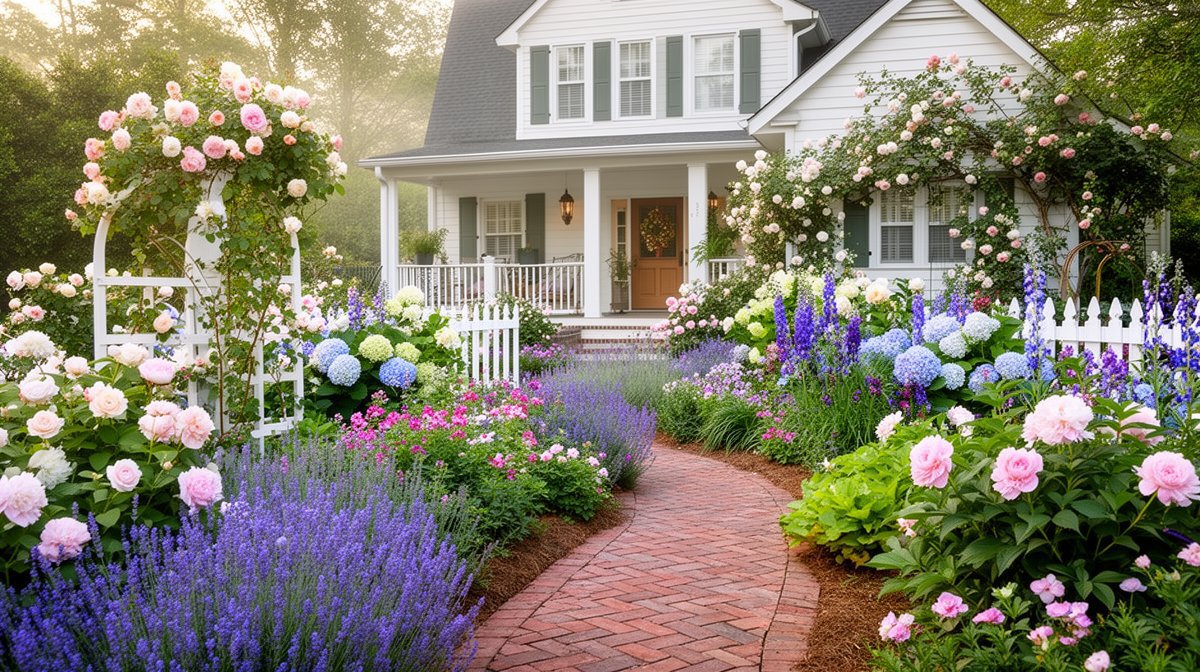
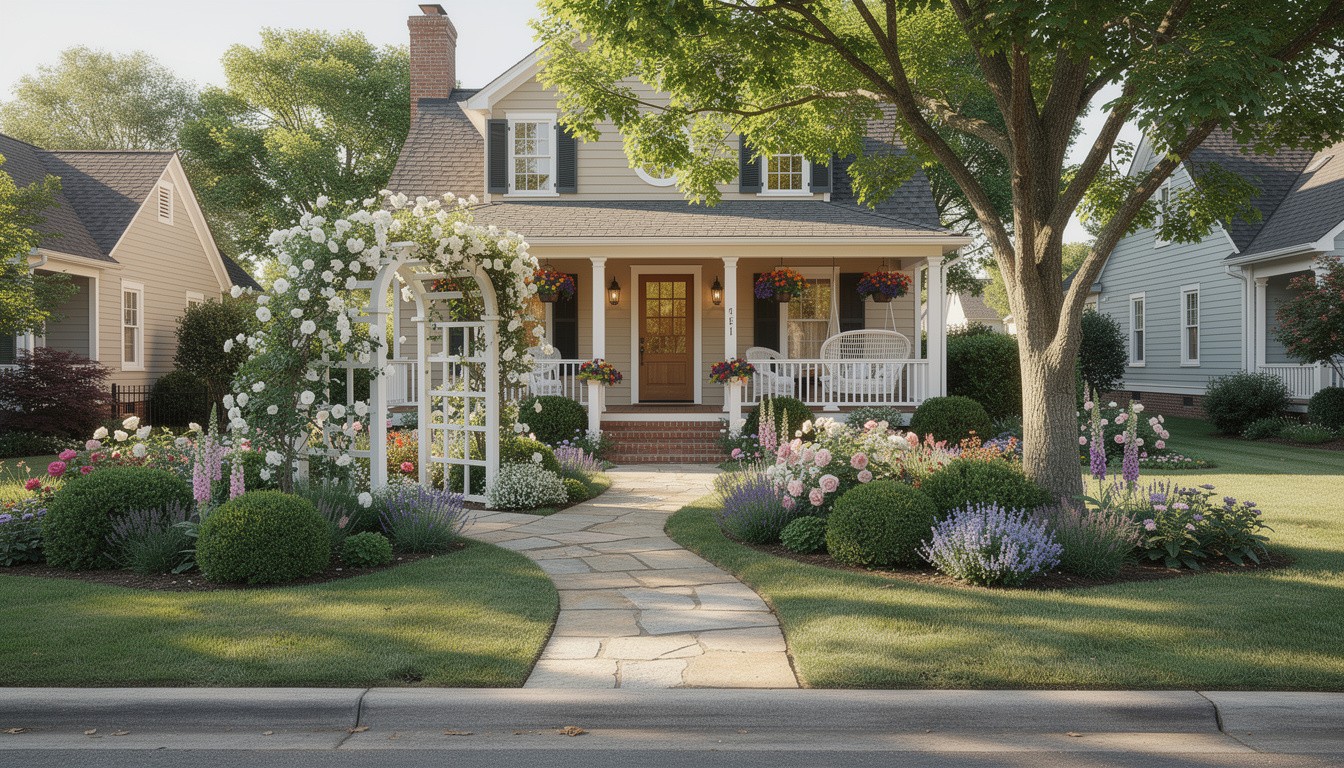
Stone Path Cottage with Rose Arbor and Porch
$12–24/sqftA wide flagstone path curves through lush mixed borders of roses, salvia, and cottage perennials under a mature shade tree, with a climbing rose arbor framing the front porch entry. The layered planting — taller shrub roses in back, mid-height perennials in the middle, low-growing cottage annuals at the path edge — gives Charlotte’s long spring season maximum display depth. Under the shade of an established tree, hellebores and astilbe anchor the shadier border edges while sun-loving roses claim the open gaps.
AI-generated image
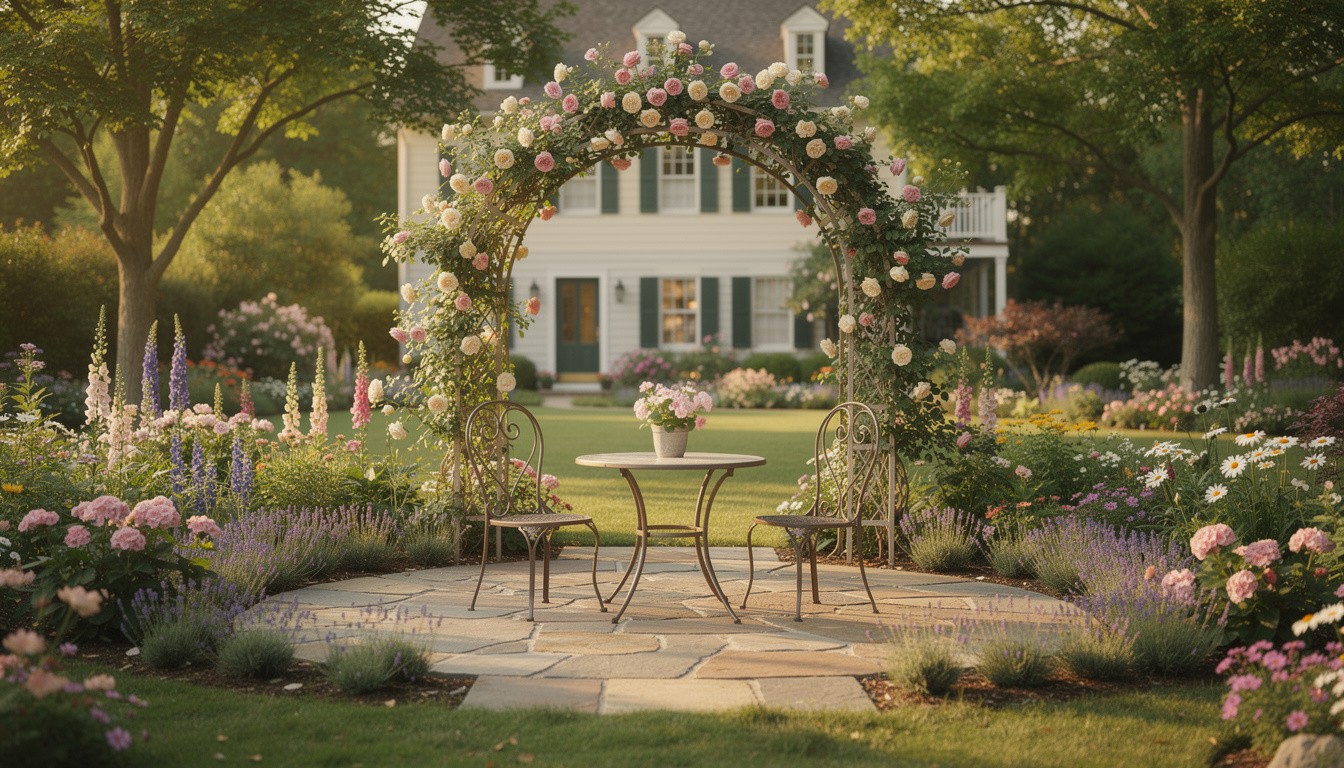
Rose Arch Garden Patio with Iron Seating
$18–38/sqftA circular stone patio at the heart of a backyard cottage garden is framed by a rose-covered metal arch entrance and surrounded by billowing borders of roses, lavender, and foxgloves. An ornate iron bistro table and chairs invite sitting at the center of the garden, framed by the arch and borders on all sides. Charlotte’s mild Zone 7b spring and fall make this garden room usable from March through November, and the rose arch provides a framing element that makes every sitting moment feel like being inside a painting.
AI-generated image
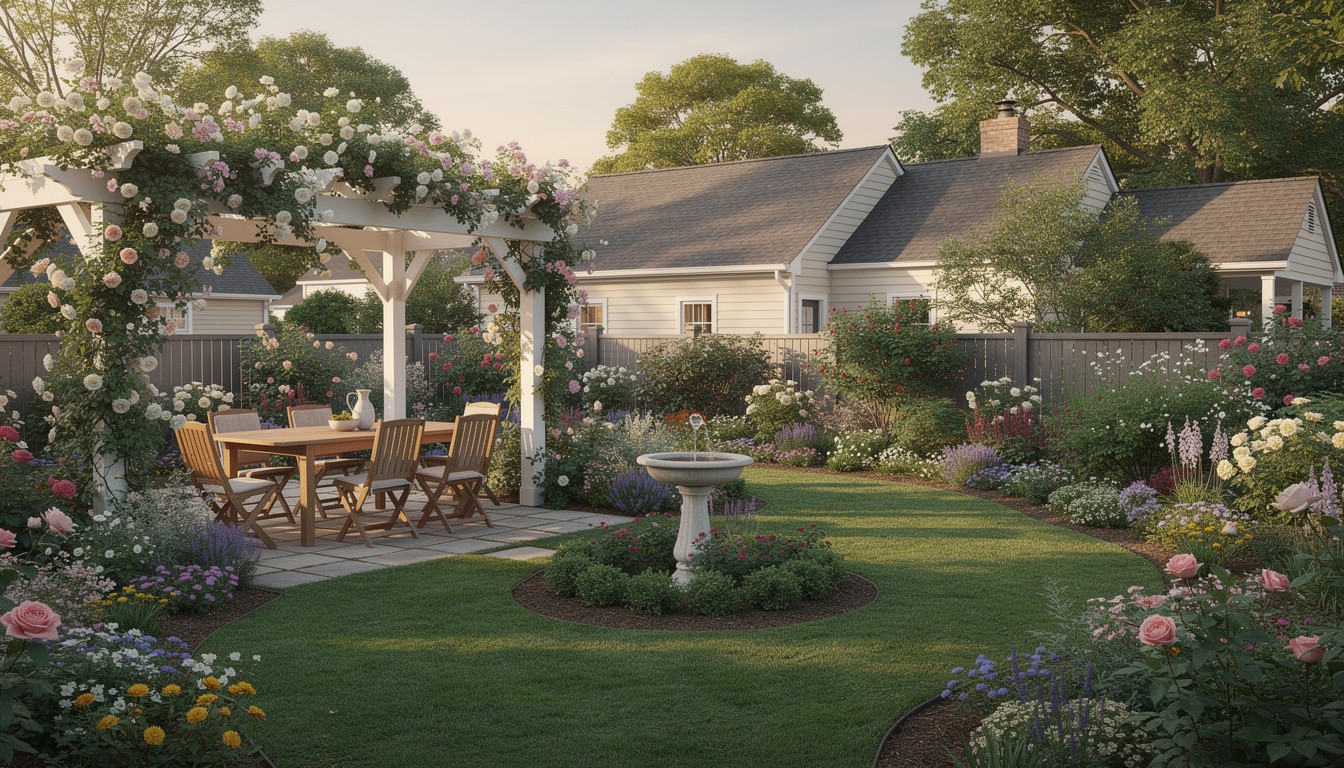
Pergola Dining Garden with Rose Borders and Birdbath
$22–45/sqftA white wood pergola creates a covered dining zone at the edge of a generous backyard cottage garden. Mixed rose borders and perennial plantings surround a central lawn panel, with the pergola and dining table anchoring one end and a birdbath serving as a focal point in the open area. The open layout gives Charlotte’s outdoor season a functional destination space — the pergola offers shade for summer dining while the surrounding rose and perennial borders deliver changing color through spring, summer, and fall.
See how a cottage/english garden looks on YOUR property
Upload a photo of your Charlotte yard and visualize your dream garden in seconds.
Try ProScapeAI Free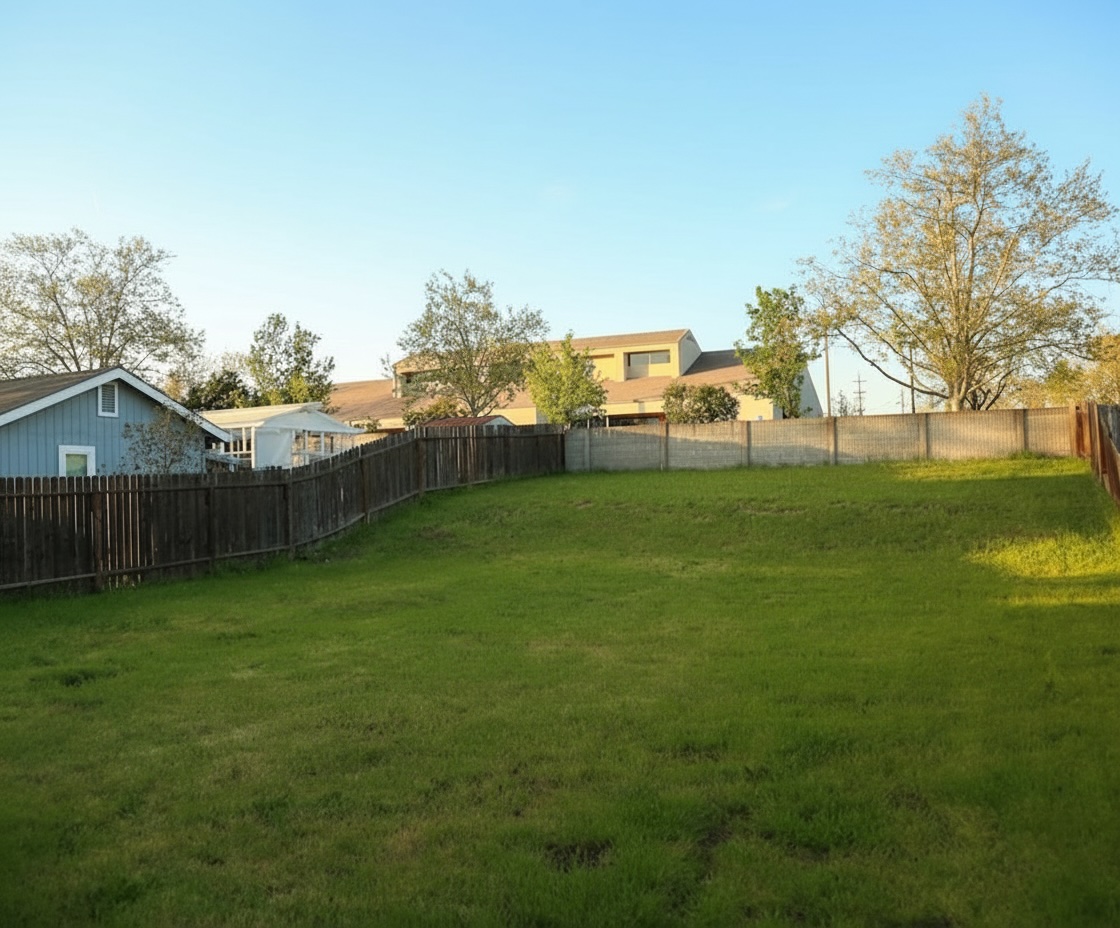
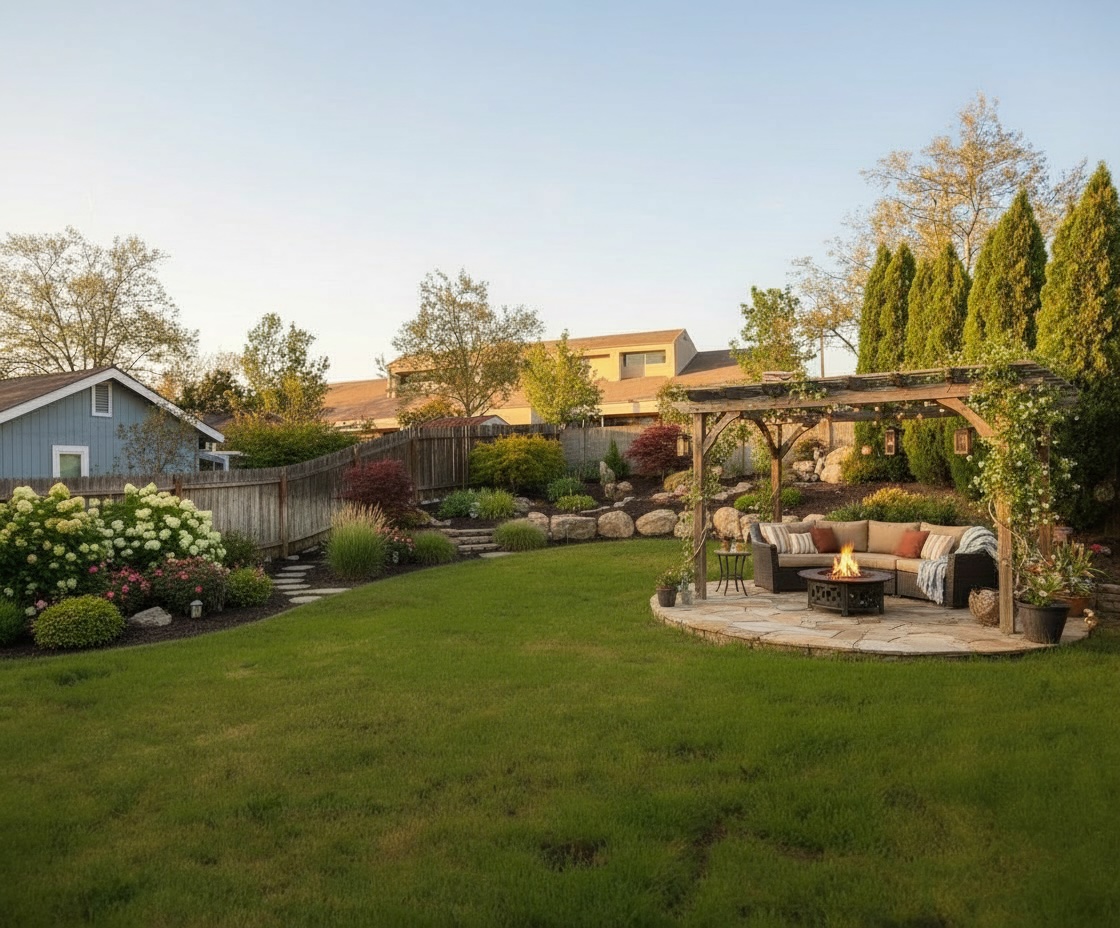
AI-generated image
Featured Trees & Shrubs for Cottage/English Gardens
Browse all 204 plants for Charlotte
American Elderberry
Sambucus canadensis
medium-sized at 10 feet, white blooms in spring. Attracts butterflies.

American Snowbell
Styrax americanus
medium-sized at 10 feet, white blooms in spring. Pollinator-friendly.

Carousel Mountain Laurel
Kalmia latifolia 'Carousel'
grows to 5 feet, multi blooms in spring. Evergreen year-round.

Drooping Leucothoe
Leucothoe fontanesiana
grows to 5 feet, white blooms in spring. Evergreen year-round.
Featured Grasses & Groundcovers for Cottage/English Gardens
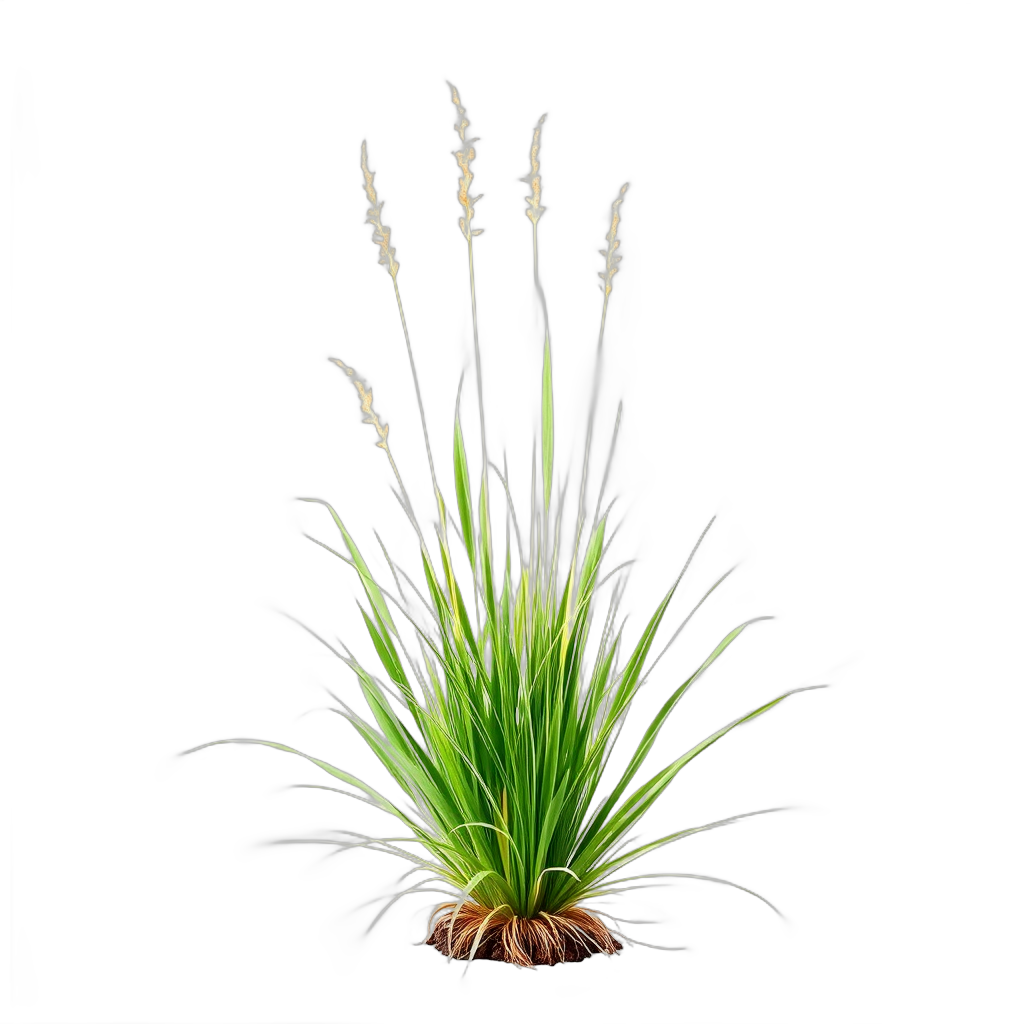
Northern Sea Oats
Chasmanthium latifolium
grows to 4 feet, blooms in fall. Bronze fall color.
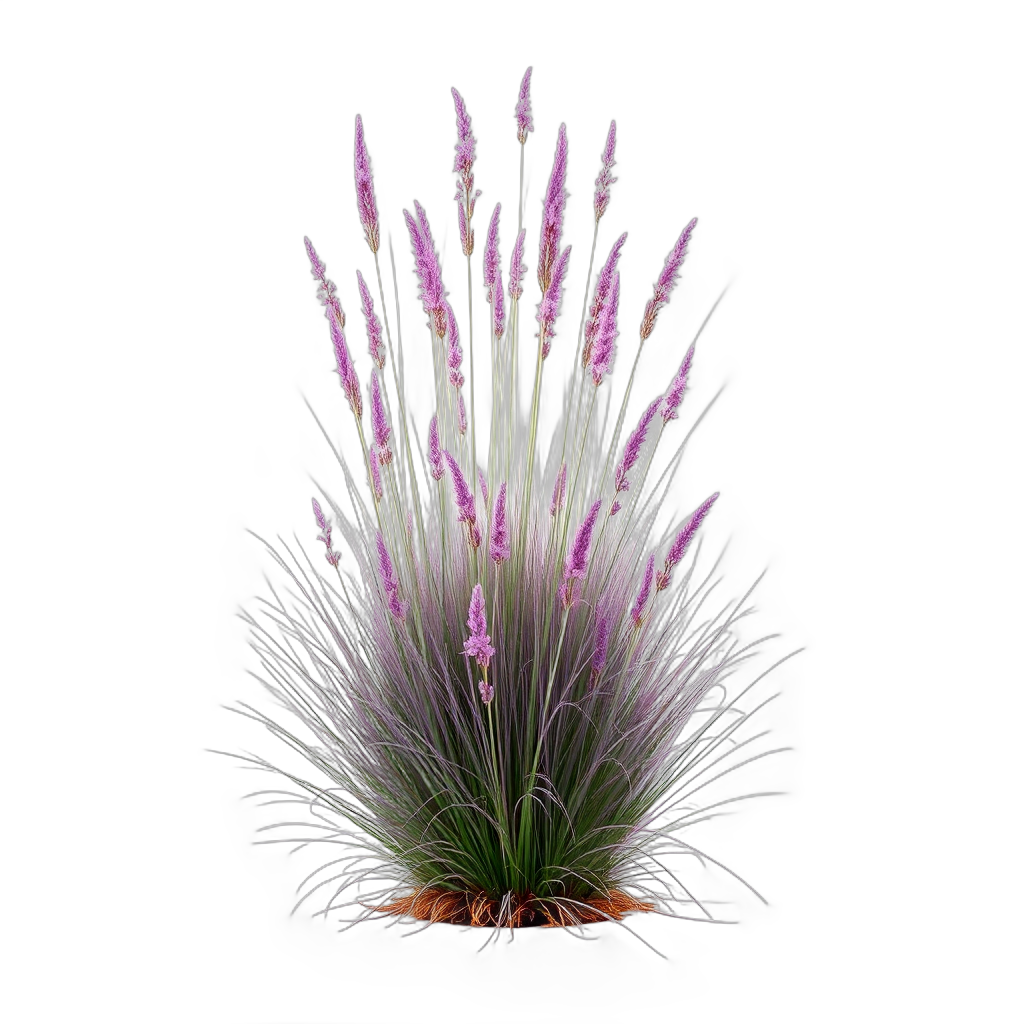
Purple Love Grass
Eragrostis spectabilis
low-growing ground cover, purple blooms in fall. Orange fall color.

Arrow Bamboo
Pseudosasa japonica
medium-sized at 15 feet, blooms in none. Evergreen year-round.

Black Bamboo
Phyllostachys nigra
reaches 25 feet tall, blooms in none. Evergreen year-round.
Featured Flowers & Perennials for Cottage/English Gardens
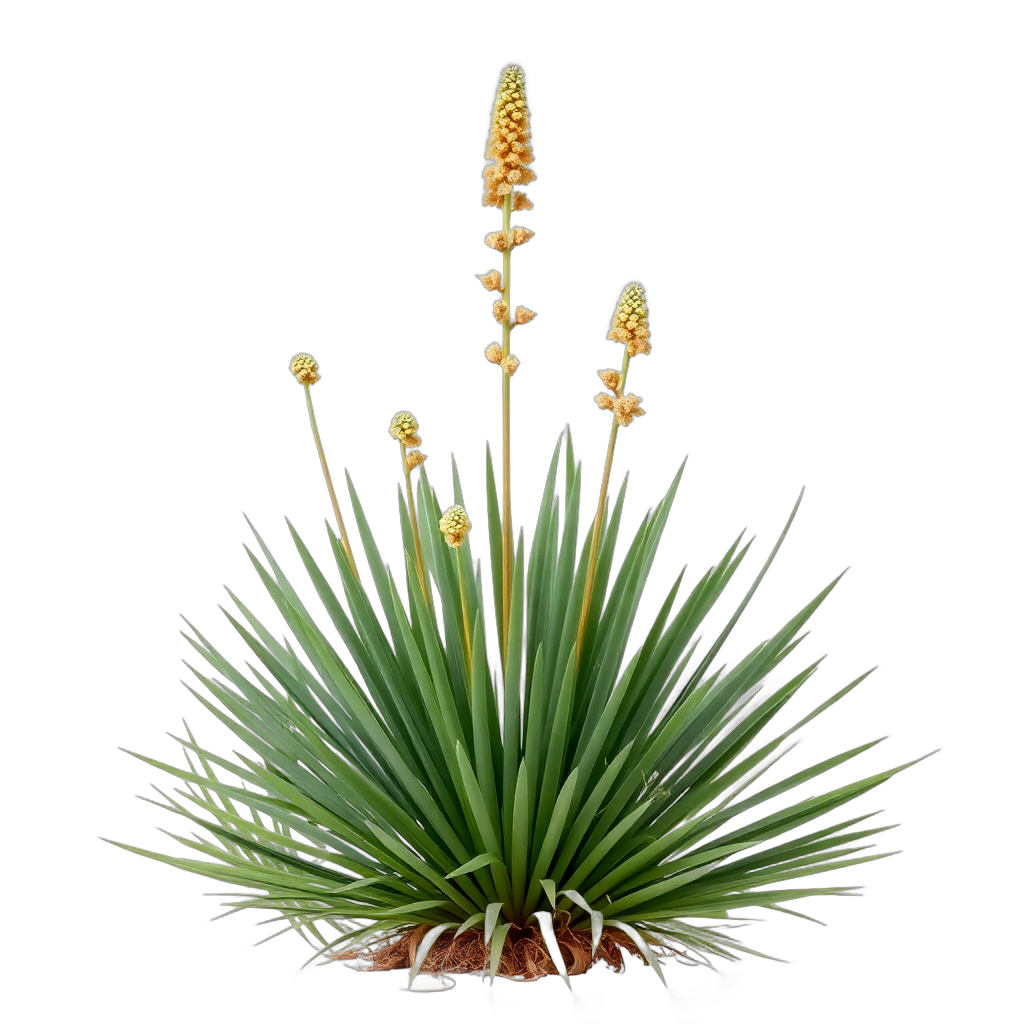
Adam's Needle
Yucca filamentosa
low-growing ground cover, white blooms in summer. Attracts hummingbirds.

Black Cohosh
Cimicifuga racemosa
grows to 5 feet, white blooms in summer. Attracts butterflies.

Coral Bean
Erythrina herbacea
grows to 5 feet, red blooms in spring. Attracts hummingbirds.
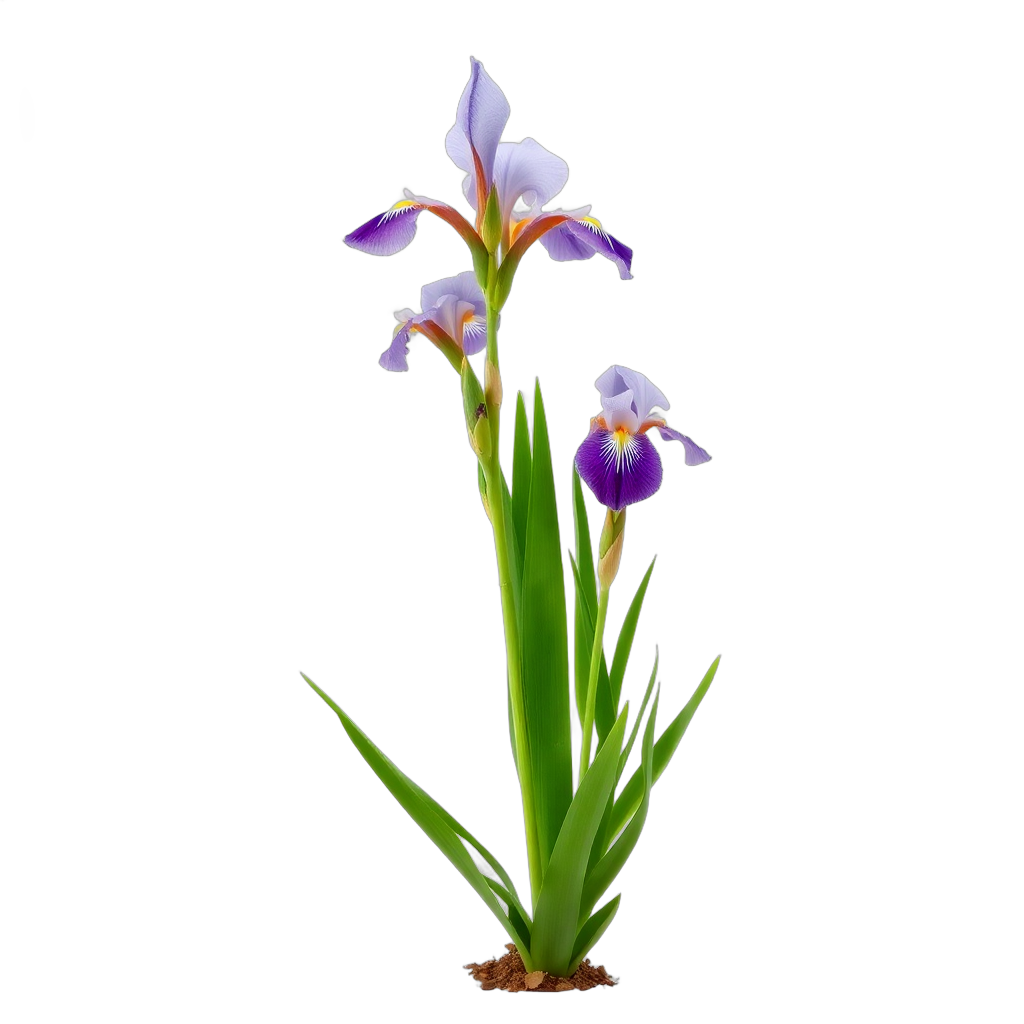
Crested Iris
Iris cristata
low-growing ground cover, blue blooms in spring. Attracts butterflies.
Zone and sun checks come from our database — confirm with your local nursery before you buy.
Bloom Calendar for Charlotte
spring
Coral Bean, Crested Iris, Southern Blue Flagsummer
Adam's Needle, Black Cohosh, False Aloefall
Northern Sea Oats, Purple Love Grasswinter
Limited bloomsDesign Tips for Charlotte (Zone 7b)
- Plant peonies in October for the best establishment — Charlotte’s Zone 7b provides just enough winter chill for reliable bloom, and fall planting gives roots time to settle before the critical spring growth flush
- Use loropetalum as a year-round cottage garden anchor — this semi-tropical Piedmont favorite provides burgundy foliage and fringy pink spring flowers that are distinctly Charlotte and don’t exist in English cottage gardens
- Amend red clay with pine bark fines before planting roses and peonies — both are sensitive to wet feet and reward the investment with dramatically better bloom in the amended beds
- Lean on native azaleas and dogwoods as the cottage garden’s structural layer — they flower simultaneously in early April for Charlotte’s most spectacular garden week and provide the dappled canopy that makes shade perennials possible
- Plant cottage borders in generous drifts rather than single specimens — Charlotte’s generous rainfall produces rapid fill-in growth and rewards bold planting more than in drier climates
- Mulch all cottage beds with pine straw at 3–4 inches — it’s the traditional Piedmont mulch, suppresses weeds through Charlotte’s long growing season, and maintains the soil acidity that roses and hydrangeas prefer
Where to Source Plants in Charlotte
Skip the big-box stores. These independent Charlotte nurseries specialize in the plants that make cottage/english gardens thrive in Zone 7b.
Transplant Nursery
Lavonia, GA (available at Charlotte plant sales)
Specialty native azalea nursery — suppliers of native Rhododendron species for Piedmont woodland cottage gardens
Reid’s Nursery
Pineville
Full-service independent nursery — strong cottage plant inventory, roses, hydrangeas, and landscape consultation
Pike Nurseries
Matthews and Huntersville
Regional nursery chain with strong cottage plant selection — reliable source for roses, hydrangeas, and perennial borders
Myers Park Hardware
Myers Park
Neighborhood garden center serving Myers Park and Eastover — seasonal cottage plants, bulbs, and garden supplies
Carolina Waterlily & Aquatic Nursery
Monroe
Rare aquatic and cottage perennials, water garden plants — unusual specialty plant material not found at conventional nurseries
Cottage/English Landscaping Costs in Charlotte
| Project Scope | Estimated Cost |
|---|---|
| White picket fence with rose arch gate and brick path | $6,000 – $14,000 |
| Full cottage front yard with flagstone path, rose arbor, and perennial borders | $9,000 – $20,000 |
| Backyard stone patio with rose arch and cottage border planting | $18,000 – $42,000 |
| Pergola dining garden with rose borders and birdbath | $20,000 – $48,000 |
| Piedmont clay soil amendment and raised bed installation | $800 – $2,500 |
| AI visualization with ProScapeAI | Free to start |
Estimates based on Charlotte, NC-area contractor rates as of 2026. Actual costs vary by site conditions, materials, and contractor.
Charlotte Climate & Growing Zone
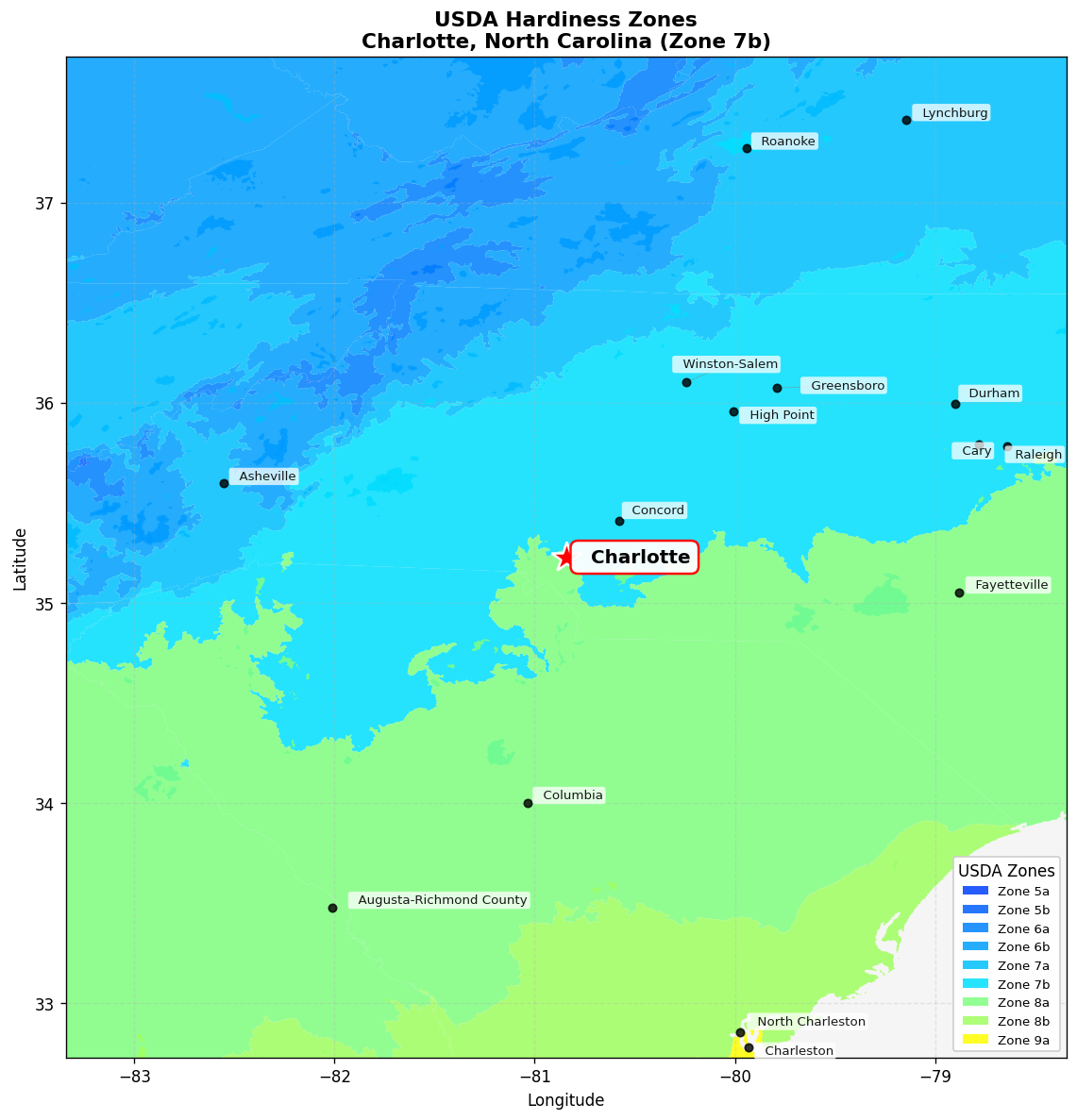
USDA Zone 7b
Hardiness zone for Charlotte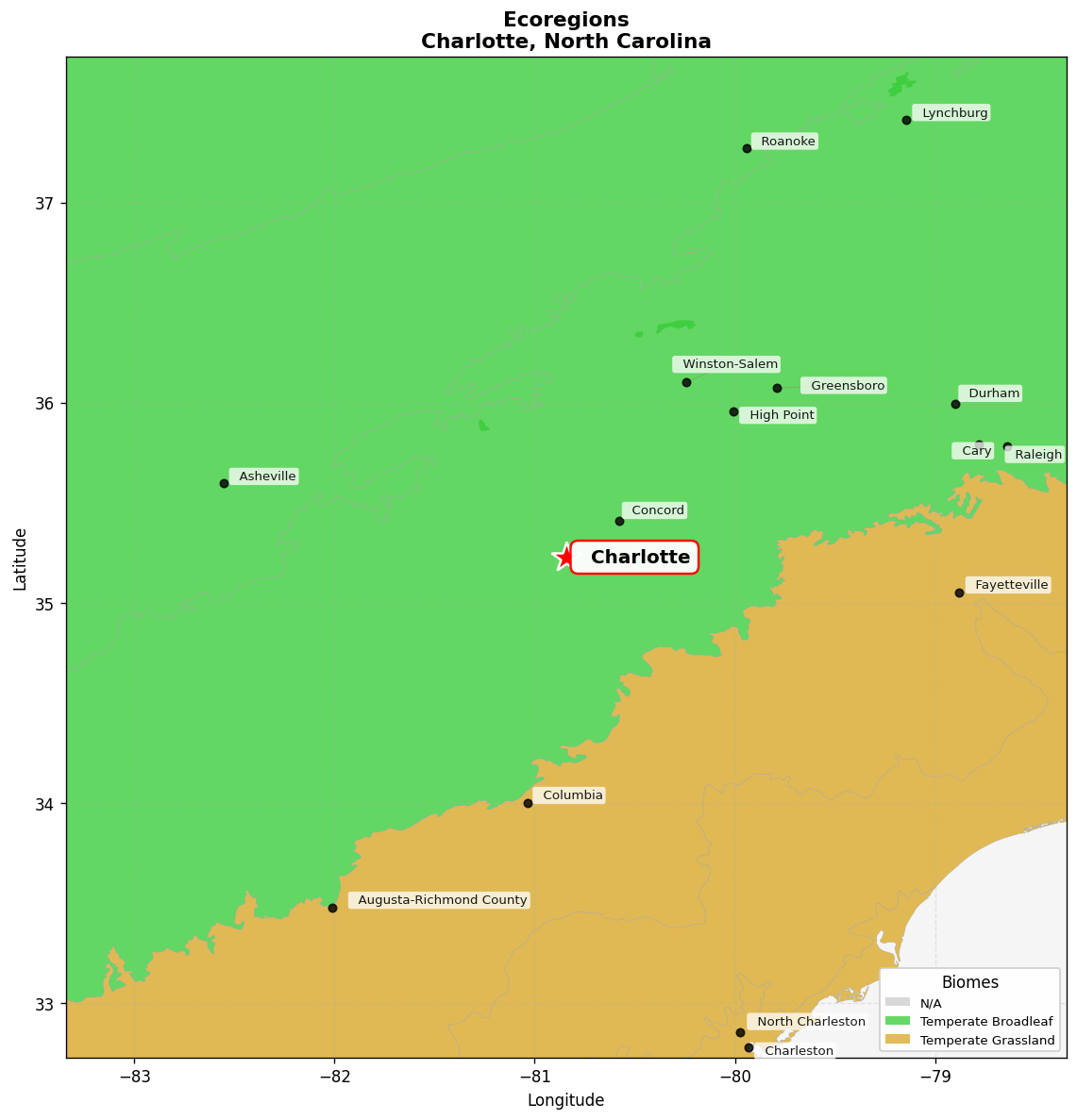
Appalachian Piedmont forests
Native ecoregionFrequently Asked Questions
Do peonies grow well in Charlotte’s Zone 7b?
Yes — Charlotte is near the southern edge of reliable peony territory, and Zone 7b provides the 300–500 chilling hours below 40°F that herbaceous peonies require to bloom. Most years, Charlotte receives adequate winter chill for good peony performance. Plant in full sun in well-amended, well-draining soil — red clay holds too much water for peonies unless amended or raised. 'Sarah Bernhardt', 'Festiva Maxima', and 'Bowl of Beauty' are reliable Charlotte performers. In unusually warm winters (increasingly common with climate change), bloom may be sparse — Itoh (intersectional) peonies are slightly more tolerant of marginal chilling.
How do I get blue hydrangeas in Charlotte’s soil?
Hydrangea flower color in bigleaf varieties (Hydrangea macrophylla) is determined by soil pH: acidic soil (pH below 6.0) produces blue flowers; alkaline soil (above 7.0) produces pink. Charlotte’s Piedmont clay tends toward slightly acidic, so blue flowers are achievable by maintaining soil pH at 5.5–6.0 with sulfur amendments and acidic fertilizers. Test soil pH before applying amendments — over-acidification causes nutrient deficiencies. White hydrangeas (Annabelle, Incrediball) and oakleaf hydrangea flower color is not pH-dependent.
What roses perform best in Charlotte’s Zone 7b cottage gardens?
Charlotte’s Zone 7b is excellent for roses — more reliable than Zone 8a farther south because the cooler winters provide good chilling and the humidity is somewhat lower than coastal areas. Top performers: Knock Out and Double Knock Out for low-maintenance shrub roses that bloom spring through fall; David Austin English roses ('Olivia Rose', 'Generous Gardener', 'Lady of Shalott') for fragrance and romantic form; climbing roses ('New Dawn', 'Blaze') for arbors and fences; and classic pinks like 'The Fairy' and 'Bonica' for cottage borders. Hybrid tea roses grow well here with standard care — more reliably than in hotter zones.
When should I plant a cottage garden in Charlotte?
Fall (October–November) is ideal for roses, shrubs, and woody perennials — Charlotte’s mild winters allow root establishment before summer heat. Spring (February–April) works well for herbaceous perennials, peonies, and annuals. For peonies specifically, October planting is strongly preferred — they need time to settle their eyes (growth buds) just 1–2 inches below the soil surface before spring. Hydrangeas establish well in both fall and early spring. Avoid summer planting across the board — Charlotte’s July–August heat and humidity create significant transplant stress.
How do I deal with Charlotte’s red clay soil in cottage beds?
Amendment is the most effective approach. Work 4–6 inches of compost and pine bark fines into the top 12 inches of clay before planting. For peonies and roses, build raised beds 12–18 inches above grade to ensure drainage — these plants are particularly sensitive to wet feet in heavy clay. Annual top-dressing with compost maintains organic matter levels. Avoid adding sand to clay — it creates a concrete-like mixture. Once beds are established with good organic content, Charlotte’s generous rainfall sustains cottage plants beautifully without significant supplemental irrigation.
How much does cottage garden installation cost in Charlotte?
Charlotte landscaping costs are comparable to other large Southeast metros. A front yard cottage transformation with picket fence, rose arbor, brick path, and perennial borders runs $8,000–18,000 for a typical 400–600 sqft front yard. A backyard hydrangea terrace with flagstone and cedar pergola runs $20,000–48,000. Annual maintenance for an established cottage garden runs $1,500–4,000/year. Soil amendment adds $800–2,000 upfront. Myers Park and Eastover landscape contractors often run 15–20% higher than general Charlotte market rates due to neighborhood premium.