4 Tropical Garden Ideas for Coral Springs, FL | Zone 10b Palms on the Everglades Edge
Native plants from the Everglades flooded grasslands (Zone 10b) — Tropical monsoon climate
Why Tropical/Lush Gardens in Coral Springs?
Coral Springs is a planned city, and it looks it. Coral Ridge Properties laid it out in the 1960s with strict landscaping, paint and roofing rules that the city still enforces, so the typical lot is a 1970s to 1990s concrete-block house with a tile roof, a screened pool cage out back and a lake or canal behind the fence in Ramblewood, Turtle Run, Cypress Run or Eagle Trace. A tropical garden suits that house stock better than any other style: palms sized to a single-story roofline, bold leaves against stucco, and dense green planting that turns a pool cage into a room instead of a cage.
The climate allows it, with one inland caveat. Coral Springs sits in USDA Zone 10b with a mean January low near 58°F and roughly 57 inches of rain a year, most of it falling May through October. But the city backs onto the Everglades on its western edge, and on still, clear winter nights cold air settles over the flat ground out there; the record low on the books is in the mid-20s °F. That is why Cocos nucifera 'Green Malayan' and Cyrtostachys renda belong close to the house or the pool cage, not out at the back lake edge, while Sabal palmetto, Coccothrinax argentata, Bismarckia nobilis and Wodyetia bifurcata shrug off the occasional cold night. Codiaeum variegatum 'Petra', Heliconia psittacorum 'Lady Di' and Alpinia zerumbet 'Variegata' may sulk after a cold front, then push new growth by April.
Western Broward ground is fine sand and pockets of old Everglades muck over limestone, with a pH that usually runs 7.0 to 8.0. There is no frost line to dig below, but there is a water table, and in the wet season it can sit only a few feet down in the lake communities. Mound tropical beds 8 to 12 inches, feed every palm with a controlled-release 8-2-12 palm fertilizer with magnesium, and expect Ixora coccinea 'Nora Grant' to need iron on the alkaline sand. Neoregelia 'Fireball' and Alcantarea imperialis are happier: they want sharp drainage and take their water through the cup.
Finally, the rules. Coral Springs limits landscape irrigation to two days a week: odd addresses on Wednesday and/or Saturday, even addresses on Thursday and/or Sunday, and only before 10 a.m. or after 4 p.m. Broward is also in Florida's High-Velocity Hurricane Zone, so choose wind-firm species, keep brittle trees away from the roof and the screen enclosure, and leave the Ficus benjamina hedge in the past; Clusia guttifera and Chrysobalanus icaco 'Red Tip' do the same job without the whitefly.
4 Tropical/Lush Design Ideas for Coral Springs

AI-generated image
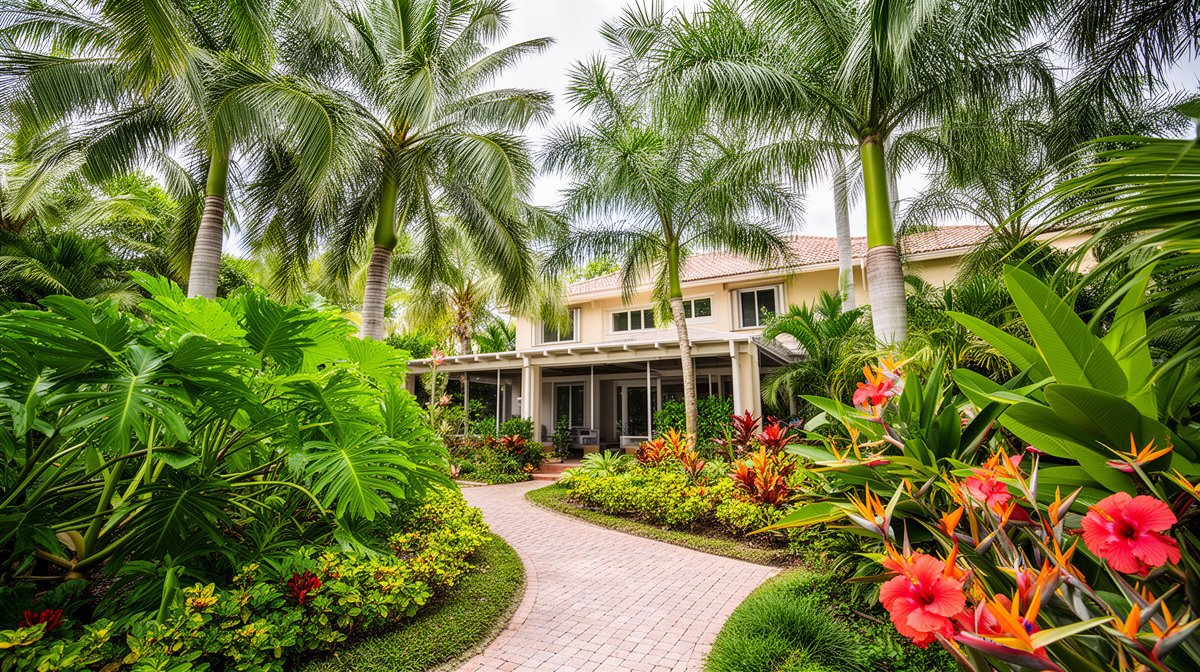
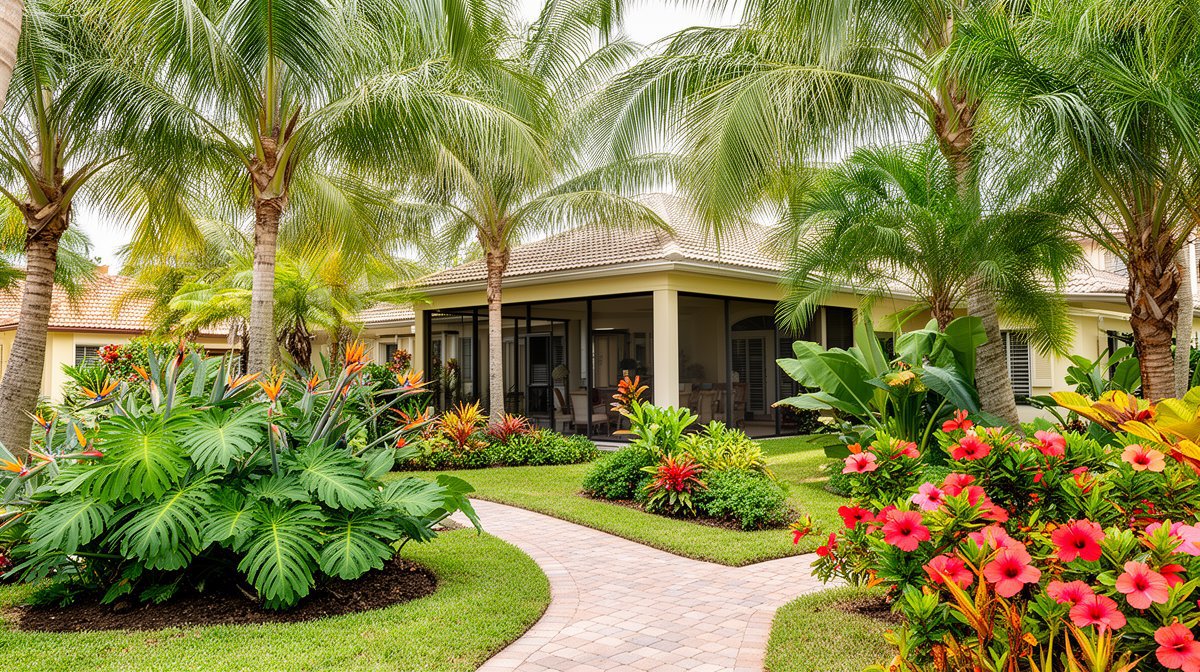
The Pool Cage Jungle
$18–40/sqftA screened pool enclosure behind a 1980s Turtle Run ranch is wrapped on three sides by a 6-foot-deep planted band outside the screen, so the view from the water is all leaf. Bismarckia nobilis anchors the sunny west corner where afternoon sun hits hardest, foxtail palms stand in a staggered group along the back screen, and crotons and red ti plants fill the low layer in solid blocks of color. Inside the cage, two large glazed pots of Alcantarea imperialis sit at the corners of a travertine deck.

AI-generated image
The Lakefront Native Palm Edge
$12–26/sqftThe back lawn of an Eagle Trace or Cypress Run house runs down to a retention lake, and the last 20 feet are replaced with a loose band of native palms and salt-tough shrubs that frames the water rather than hiding it. Sabal palmetto and silver thatch palms stand in odd-numbered clumps, coontie and cocoplum fill between them, and a shellrock path leads to a pair of chairs at the bank. Full sun all day, wind straight off the water, and every plant on the list has come through a Broward hurricane season standing.

AI-generated image
The Bromeliad Entry Court
$16–34/sqftUnder the filtered shade of an existing live oak, the front walk of a tile-roofed Maplewood house is rebuilt as a wide flagstone path through a ground layer of bromeliads and broad-leaf philodendron. A pair of Adonidia merrillii frames the front door, red ginger and heliconia fill the brighter side by the driveway, and a low clusia hedge gives the street edge the clean line the city's code culture expects. The shade matters, because bromeliads and gingers color up best out of the noon sun.

AI-generated image
The Sunset Bougainvillea Patio
$30–65/sqftA west-facing back patio, the one that bakes from 3 p.m. on, is turned into an evening room with a pergola covered in bougainvillea and a raised planter of Ixora and firebush along the outer edge. A single Cocos nucifera 'Green Malayan' leans over the patio close to the house wall, where it is sheltered from the cold air that pools over the open lawn on winter nights. A paver pad and a ceiling fan in the pergola finish the room, and the planting carries color twelve months a year.
See how a tropical/lush garden looks on YOUR property
Upload a photo of your Coral Springs yard and visualize your dream garden in seconds.
Try ProScapeAI Free

AI-generated image
Featured Trees & Shrubs for Tropical/Lush Gardens
Browse all 150 plants for Coral Springs
Bismarck Palm
Bismarckia nobilis
reaches 30 feet tall, blooms in summer. Pollinator-friendly.

Clustering Fishtail Palm
Caryota mitis
medium-sized at 15 feet, yellow blooms in summer. Pollinator-friendly.

Pygmy Date Palm
Phoenix roebelenii
grows to 6 feet, yellow blooms in spring. Pollinator-friendly.

Royal Palm
Roystonea regia
large shade tree reaching 50+ feet, white blooms in spring. Pollinator-friendly.
Featured Grasses & Groundcovers for Tropical/Lush Gardens
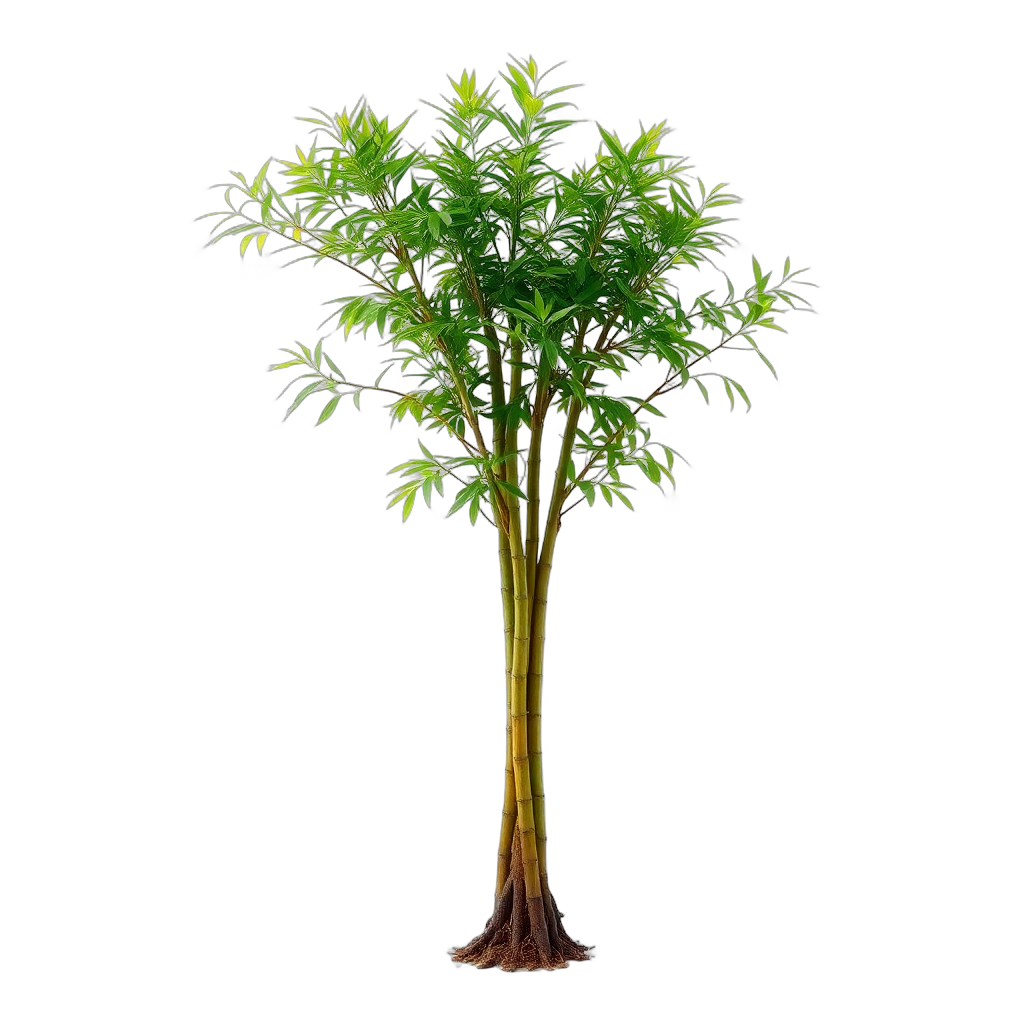
Anceps Bamboo
Yushania anceps
medium-sized at 12 feet, blooms in none. Evergreen year-round.
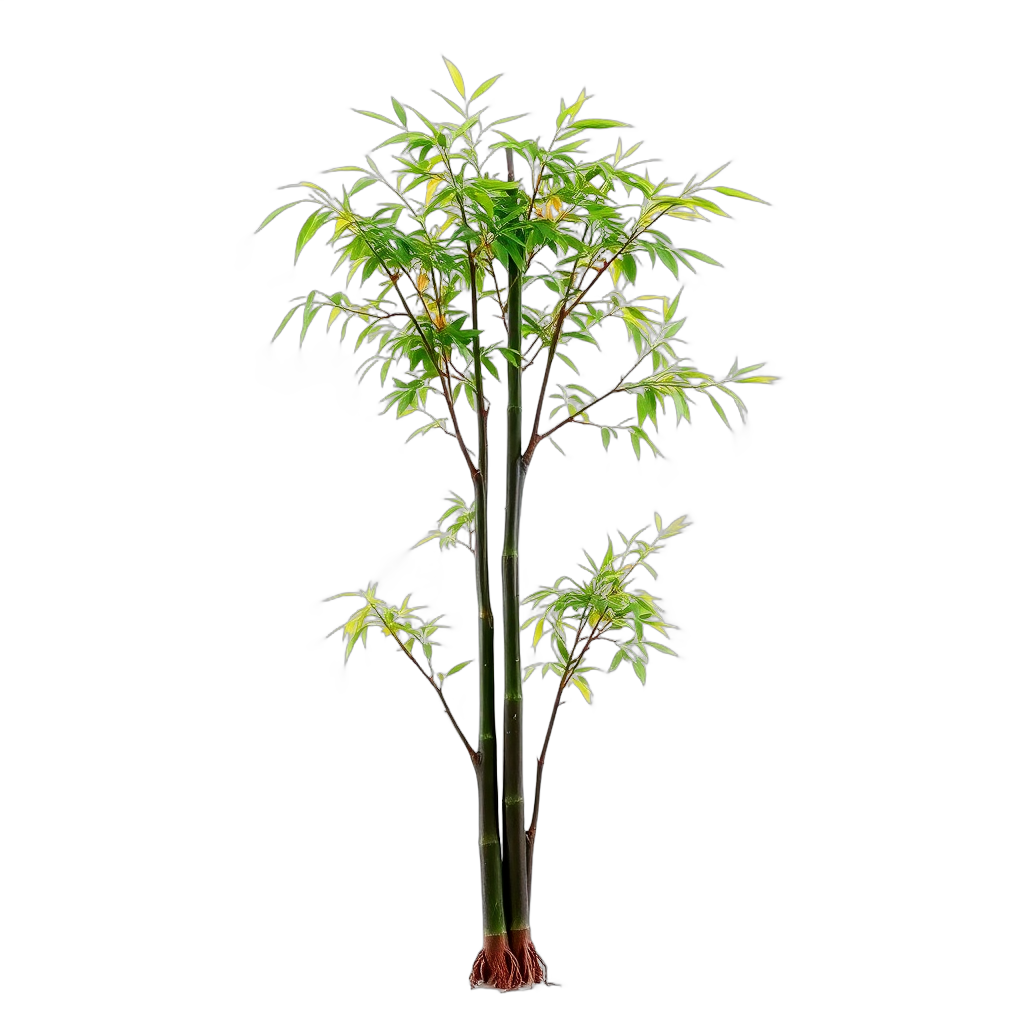
Black Bamboo
Phyllostachys nigra
reaches 25 feet tall, blooms in none. Evergreen year-round.
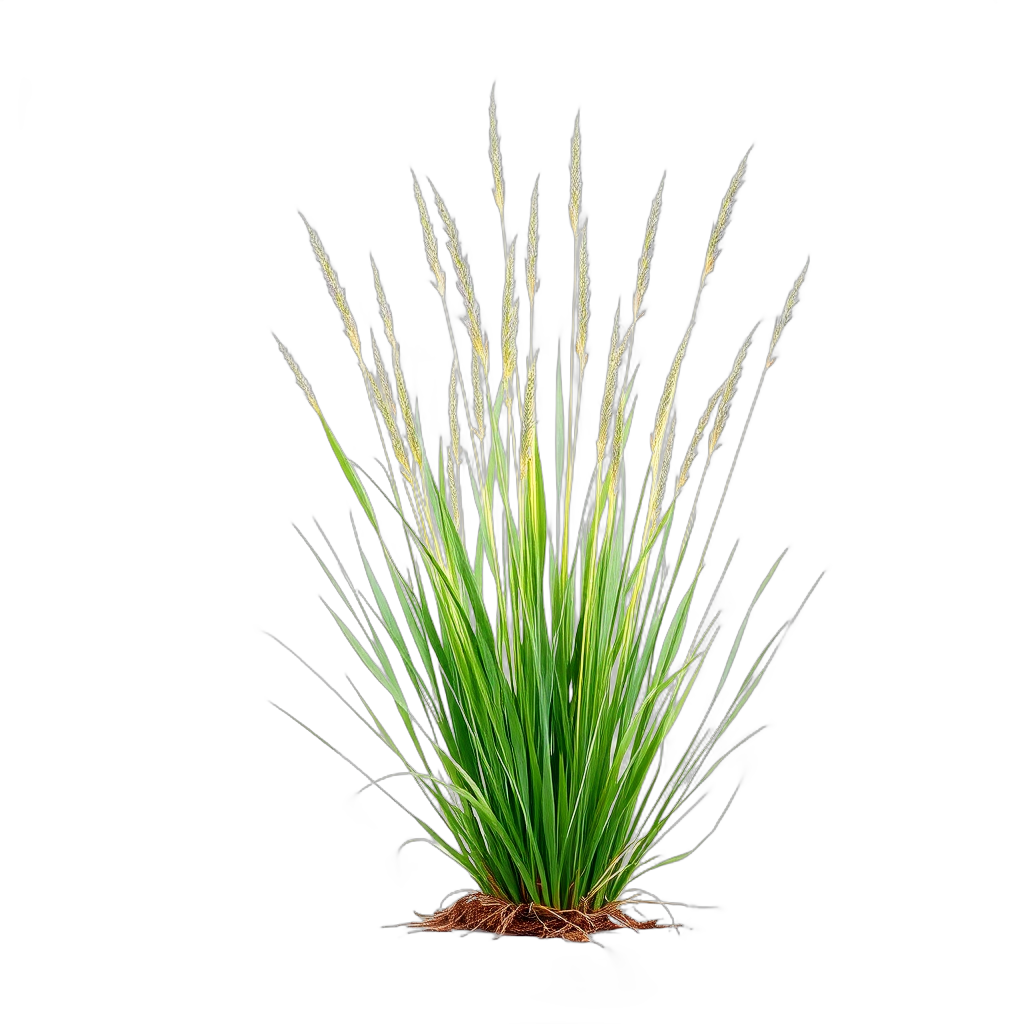
Blue Grama Grass
Bouteloua gracilis
low-growing ground cover, purple blooms in summer. Yellow fall color.
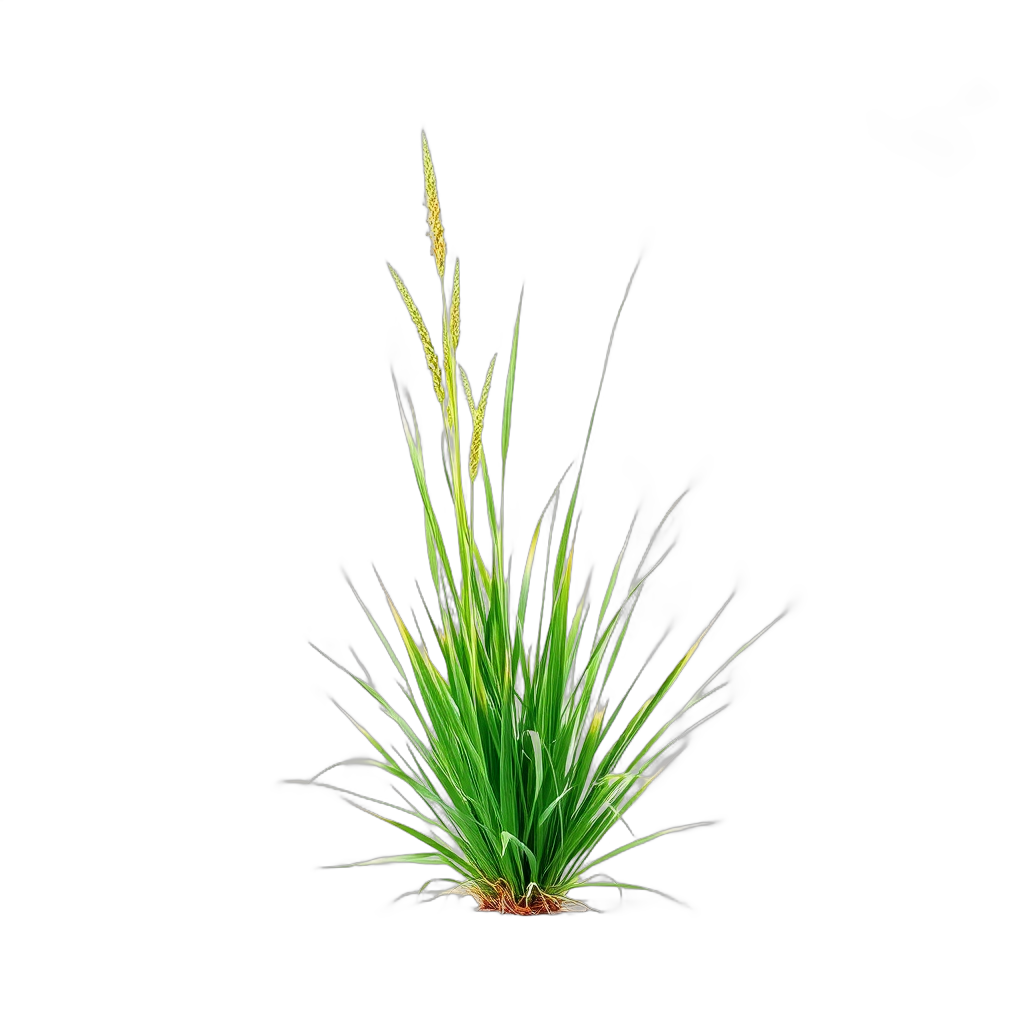
Bull Grass
Muhlenbergia emersleyi
grows to 4 feet, purple blooms in fall. Yellow fall color.
Featured Flowers & Perennials for Tropical/Lush Gardens

Canadian Waterweed
Elodea canadensis
grows to 3 feet, white blooms in spring. Evergreen year-round.

Common Cattail
Typha latifolia
grows to 5 feet, blooms in summer. Pollinator-friendly.

Common Duckweed
Lemna minor
low-growing ground cover, white blooms in summer. Evergreen year-round.

European Frogbit
Hydrocharis morsus-ranae
low-growing ground cover, white blooms in summer. Pollinator-friendly.
Zone and sun checks come from our database — confirm with your local nursery before you buy.
Bloom Calendar for Coral Springs
spring
Canadian Waterweed, Sweet Flag, African Daisysummer
Canadian Waterweed, Common Cattail, Common Duckweedfall
Canadian Waterweed, Pickerelweed, African Daisywinter
Limited bloomsDesign Tips for Coral Springs (Zone 10b)
- Mound every tropical bed 8 to 12 inches above grade; with about 57 inches of rain a year and a shallow wet-season water table in the lake communities, Alcantarea, Plumeria and crotons drown from below long before anything goes wrong above ground
- Plant cold-tender palms like Cocos nucifera 'Green Malayan' and Adonidia merrillii within 15 feet of the house or pool cage; cold air settles over the open lawns and lakes on the Everglades side of town on calm January nights
- Feed palms with a controlled-release 8-2-12 palm fertilizer with magnesium and leave yellowing older fronds on the tree; on pH 7.0 to 8.0 sand, nutrient deficiency kills more Coral Springs palms than cold does
- Put the beds on their own drip or micro-spray zone and set it to your address days (Wednesday/Saturday for odd numbers, Thursday/Sunday for even), running before 10 a.m.; overhead lawn rotors waste most of their water on a tropical bed
- Mass crotons and ti plants in blocks of five or more, Codiaeum 'Petra' or 'Mammy' in one sweep and Cordyline 'Red Sister' in another; one of each dotted through a bed reads as clutter against a stucco wall
- Choose wind-firm species for anything taller than the roof: Sabal palmetto, Coccothrinax argentata and Bismarckia nobilis stand through storms, while brittle trees near the screen enclosure turn into an insurance claim
- Draw the plan before you shop: the city and most HOAs review front-yard changes, and a dimensioned sketch with a plant list clears review far faster than a photo of plants already in the ground
Where to Source Plants in Coral Springs
Skip the big-box stores. These independent Coral Springs nurseries specialize in the plants that make tropical/lush gardens thrive in Zone 10b.
Nu Turf of Pompano Beach
Pompano Beach
Family owned and operated since 1973: palms, shade trees, exotic fruit trees, Florida natives, butterfly plants, plus sod, mulch, rock and soil
Flamingo Road Nursery
Davie
Large garden center with plants, 200+ fountains, pottery, boulders, mulch and rock, with delivery and installation
Living Color Garden Center
Griffin Road, Fort Lauderdale
Five acres of plants, pottery and fountains since 1990, with about 80% of plants grown at its sister nursery; strong on bougainvillea and tropicals
Tropical/Lush Landscaping Costs in Coral Springs
| Project Scope | Estimated Cost |
|---|---|
| Front-yard tropical refresh with mounded beds and drip (400–600 sqft) | $6,000 – $14,000 |
| Planted band around a screened pool enclosure | $10,000 – $25,000 |
| Specimen palm (foxtail or Bismarck), machine-set and braced | $800 – $3,000 each |
| Lake-edge native planting with shellrock path (800–1,200 sqft) | $9,000 – $28,000 |
| Engineered aluminum pergola with permit (HVHZ) | $9,000 – $22,000 |
| Full backyard: patio, pergola, pool-cage planting, palms | $40,000 – $120,000 |
| AI visualization (ProScapeAI) | Free to start |
Estimates based on Coral Springs, FL-area contractor rates as of 2026. Actual costs vary by site conditions, materials, and contractor.
Coral Springs Climate & Growing Zone
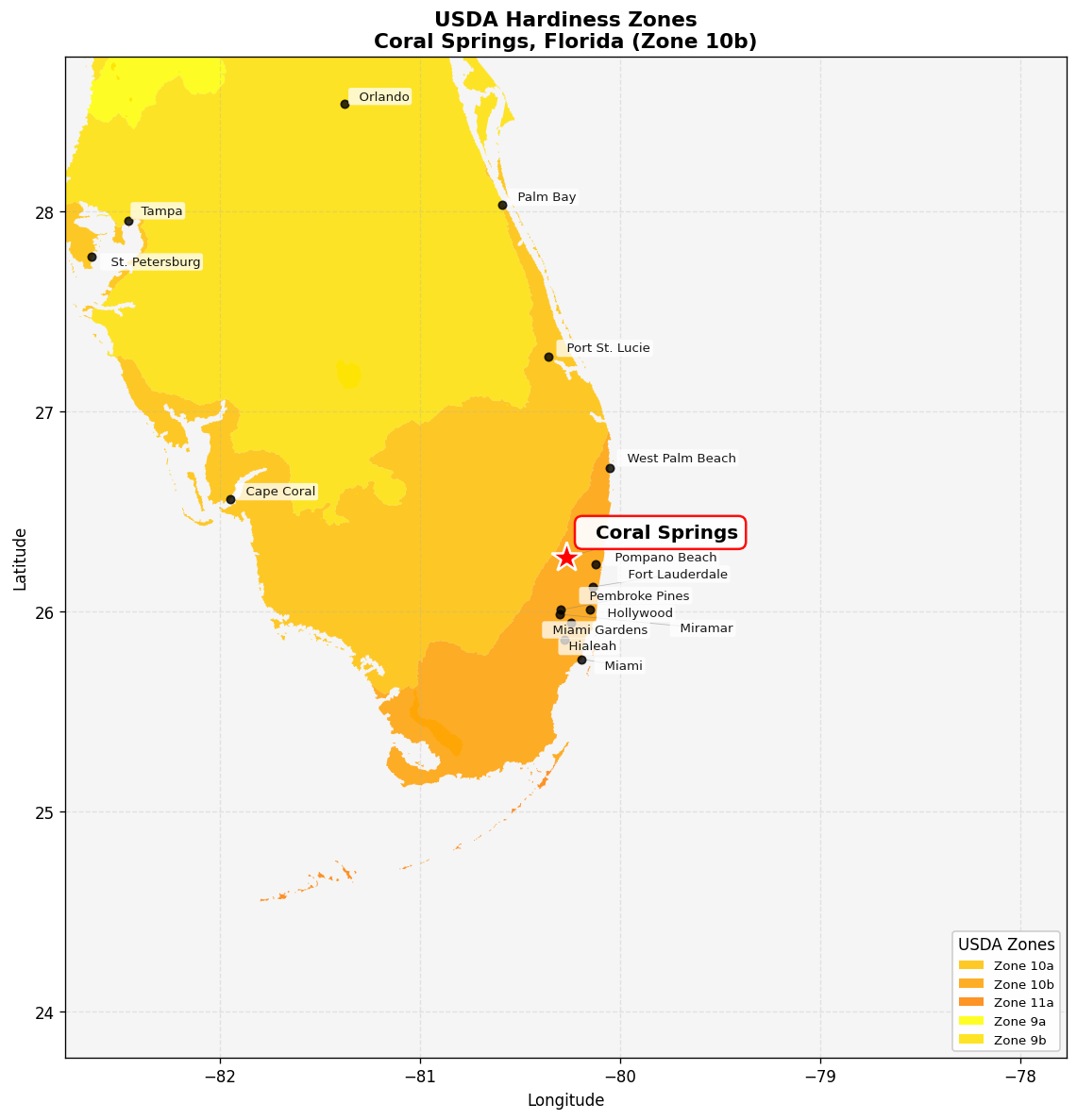
USDA Zone 10b
Hardiness zone for Coral Springs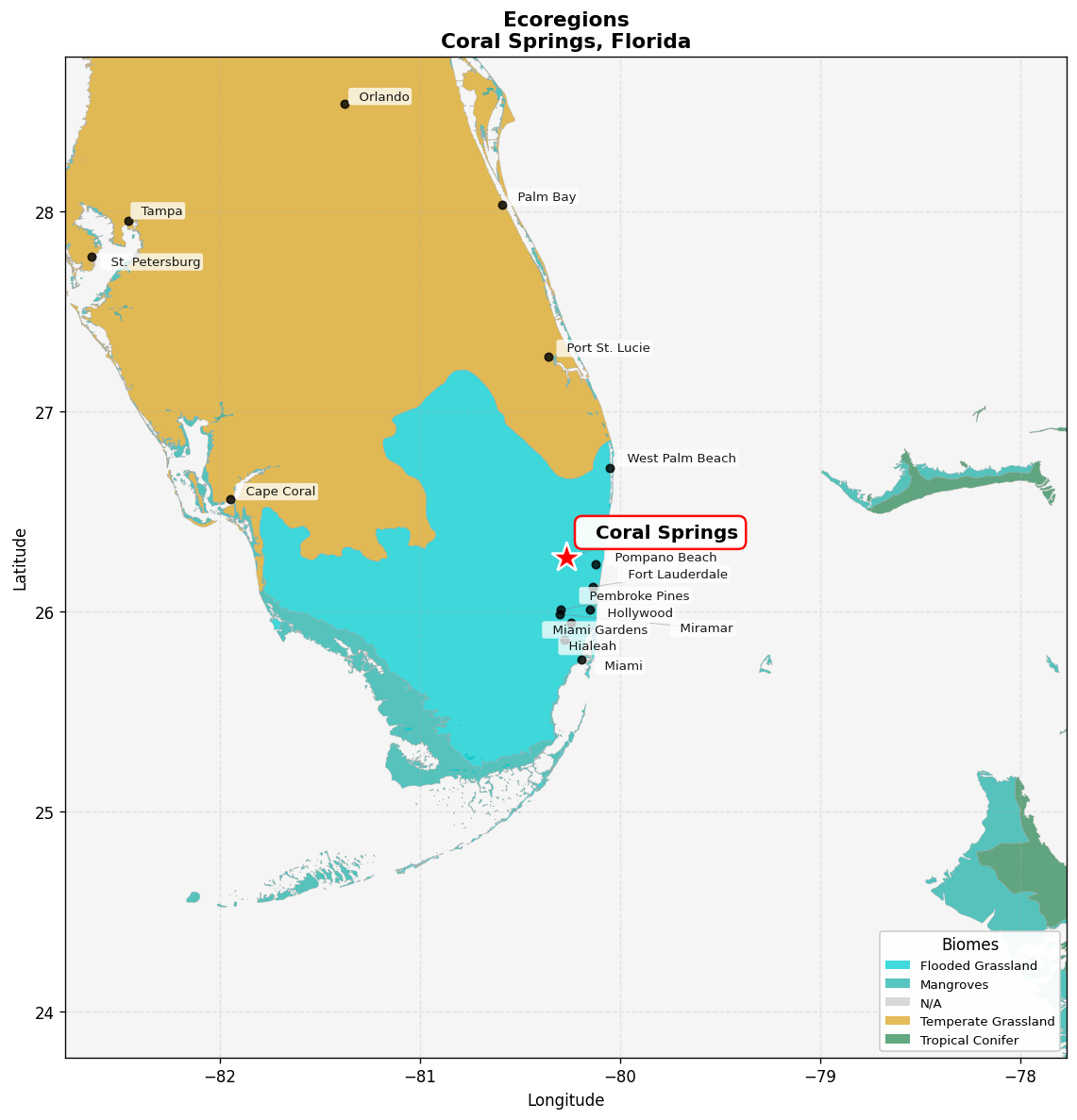
Everglades flooded grasslands
Native ecoregionFrequently Asked Questions
How much does a tropical garden cost in Coral Springs?
South Florida crews typically bill around $65–95 per hour, and palms sold by clear trunk height drive most of the budget. A front-yard tropical refresh across 400–600 sqft, with soil mounding, drip, Codiaeum variegatum 'Petra', Cordyline fruticosa 'Red Sister', bromeliads and mulch, usually runs $6,000–14,000. A field-grown Wodyetia bifurcata or Bismarckia nobilis set by machine adds roughly $800–3,000 each depending on size and access. A planted band around a pool enclosure lands around $10,000–25,000, and a full backyard with patio, pergola and planting commonly runs $40,000–120,000.
Will coconut palms survive in Coral Springs?
Usually, if you site them well. Coral Springs is Zone 10b with a mean January low near 58°F, but it sits on the Everglades edge, where cold air pools on calm winter nights and the record low is in the mid-20s °F. Cocos nucifera 'Green Malayan' planted close to the house, the pool cage or a wall gets the extra few degrees it needs. Out at the open lake edge, plant Sabal palmetto, Coccothrinax argentata or Bismarckia nobilis instead; they take the cold nights and the wind without fuss.
When should I install a tropical garden in Coral Springs?
May through July is the best window for palms and tropicals: the soil is warm, the wet season does much of the establishment watering, and root growth is fastest. October through March is fine for hardscape, shrubs and sod, but avoid setting cold-tender plants like Cocos nucifera, Heliconia psittacorum 'Lady Di' and Adonidia merrillii just before a January cold front. If you are craning in large palms, plan around the June 1 to November 30 hurricane season.
How often can I water a new tropical bed in Coral Springs?
The city limits landscape irrigation to two days a week: odd-numbered addresses on Wednesday and/or Saturday, even-numbered addresses on Thursday and/or Sunday, only before 10 a.m. or after 4 p.m. New plantings get a limited establishment allowance under the South Florida Water Management District rule. Put the beds on drip or micro-spray, separate from the lawn rotors, and ask the city about its Residential Irrigation Rebate Program, which has four rebate options for upgrading to a weather-based controller and efficient system.
Why are my palms and ixora turning yellow?
Almost always the alkaline sand, not a disease. Western Broward soil usually runs pH 7.0 to 8.0, which locks up iron and manganese. Ixora coccinea 'Nora Grant' shows yellow leaves with green veins and needs chelated iron. Palms show potassium deficiency as orange-spotted older fronds and manganese deficiency as frizzled new growth. Feed every palm with a controlled-release 8-2-12 palm fertilizer with magnesium several times a year, following UF/IFAS guidance, and do not cut off yellowing older fronds, because the palm is pulling potassium from them.
Does Coral Springs have rules about front-yard landscaping?
Yes, and the city is known for enforcing them. Coral Springs was planned with strict landscaping, paint and roofing standards, and many neighborhoods add HOA architectural review on top. Pergolas, fences and other structures need a building permit, and in Broward they must meet High-Velocity Hurricane Zone wind requirements. Florida Statute 373.185 stops an HOA from banning Florida-Friendly Landscaping outright, but plan approvals still matter, so submit a plan with a plant list before you buy material. The city also employs a city forester; ask before removing an existing shade tree.
What should I plant instead of a ficus hedge?
Ficus benjamina hedges have been hit hard across Broward by the ficus whitefly, and they also break up badly in hurricanes. Clusia guttifera gives the same dense green wall with much less trimming. Chrysobalanus icaco 'Red Tip' is a native cocoplum that holds a tidy 4–6 ft line, and Podocarpus macrophyllus takes a crisp shear for a taller screen along a pool cage.