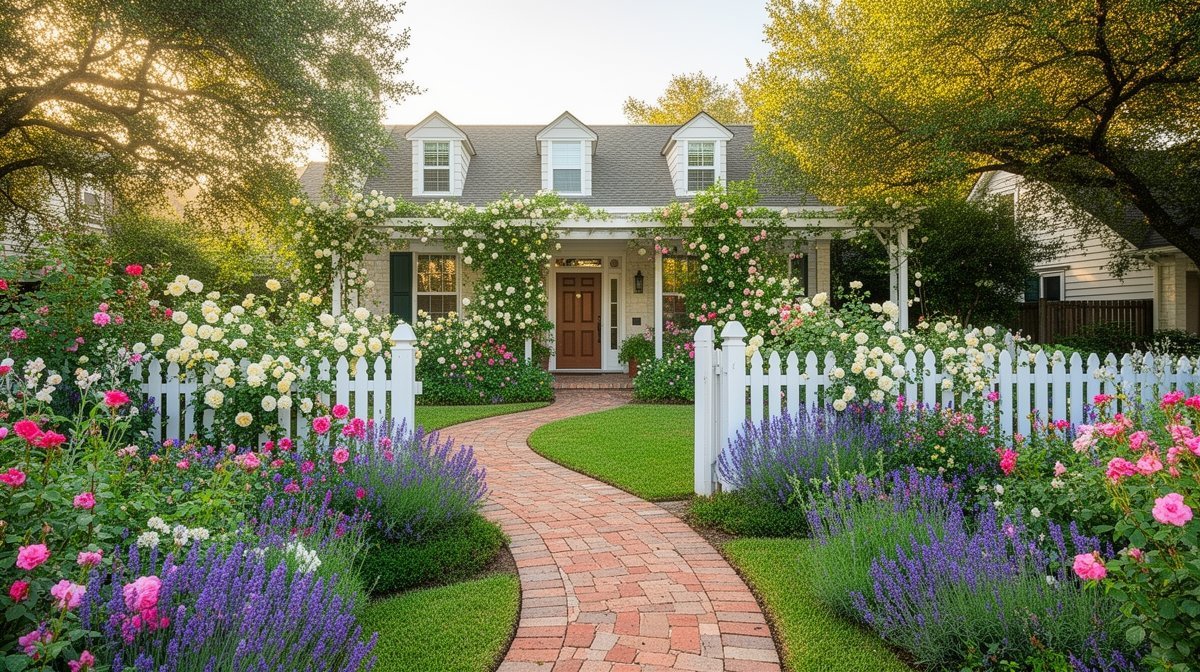
4 Cottage Garden Ideas for Corpus Christi, TX | Coastal Cottage Gardens in Zone 9b
Native plants from the Western Gulf coastal grasslands (Zone 9b) — Humid subtropical climate
Why Cottage/English Gardens in Corpus Christi?
Corpus Christi occupies a unique niche in American cottage gardening—the Western Gulf Coastal Grasslands ecoregion in Zone 9b, where salt-laden Gulf breezes, intense summer heat (July averages 93°F), and only 30 inches of annual rainfall create conditions that demand a distinctly Texan approach to cottage style. The traditional English cottage garden—with its moisture-loving foxgloves and delphiniums—requires substantial adaptation for Corpus Christi’s coastal semi-arid reality. But the adapted version is genuinely beautiful: drought-tough Texas perennials like lantana, Mexican sage, and rose mallow bloom with extraordinary abundance in the coastal heat, and the mild winters (rarely below 28°F) allow tropical accent plants to function as permanent landscape elements.
Corpus Christi’s cottage gardening is concentrated in neighborhoods like Flour Bluff, Calallen, and the historic King Estates, where older homes with established live oaks provide the canopy structure that cottage borders need. The live oaks of the Coastal Bend are particularly important—their wind-sculpted forms and salt-tolerant character make them the ideal cottage garden backdrop, providing shade that moderates the summer heat enough to allow moisture-sensitive cottage plants to establish and bloom in their shadow. The city’s consistent Gulf breeze also moderates summer temperatures in ways that weather data alone doesn’t capture.
Water is the central design constraint for Corpus Christi cottage gardens. Summer drought is common, water restrictions are periodic, and the region’s sandy coastal soils drain quickly—meaning every drop of irrigation water and rainfall leaves the root zone rapidly without improving soil moisture long-term. Successful cottage gardens here are built on compost-amended soil with deep mulch layers, planted with Texas-adapted cottage species that bloom heavily in spring and fall (the wet seasons) and rest in summer drought without dying back. The result is a two-season cottage spectacle—March through May and September through November—that the Gulf Coast’s mild winters bookend with a background of evergreen shrubs and tropical accents.
4 Cottage/English Design Ideas for Corpus Christi
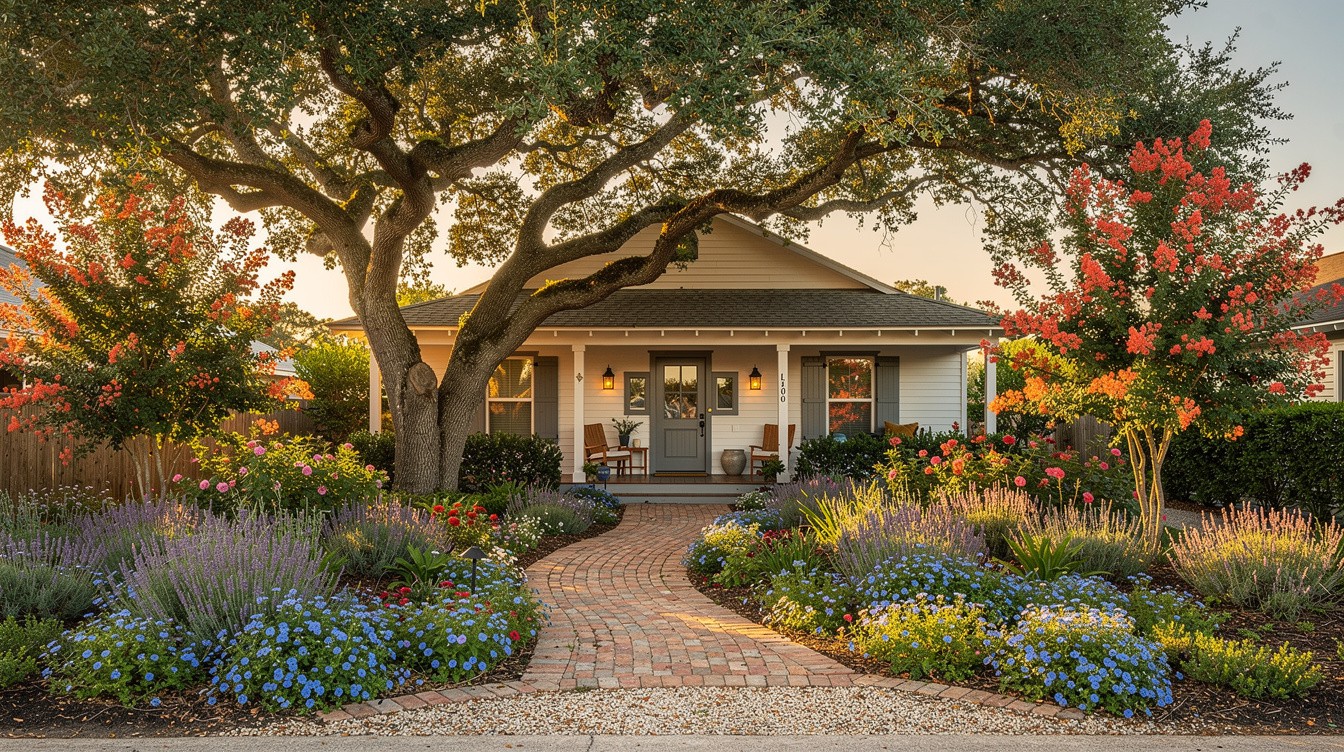
Gulf Coast Cottage Entry with Lantana and Live Oak
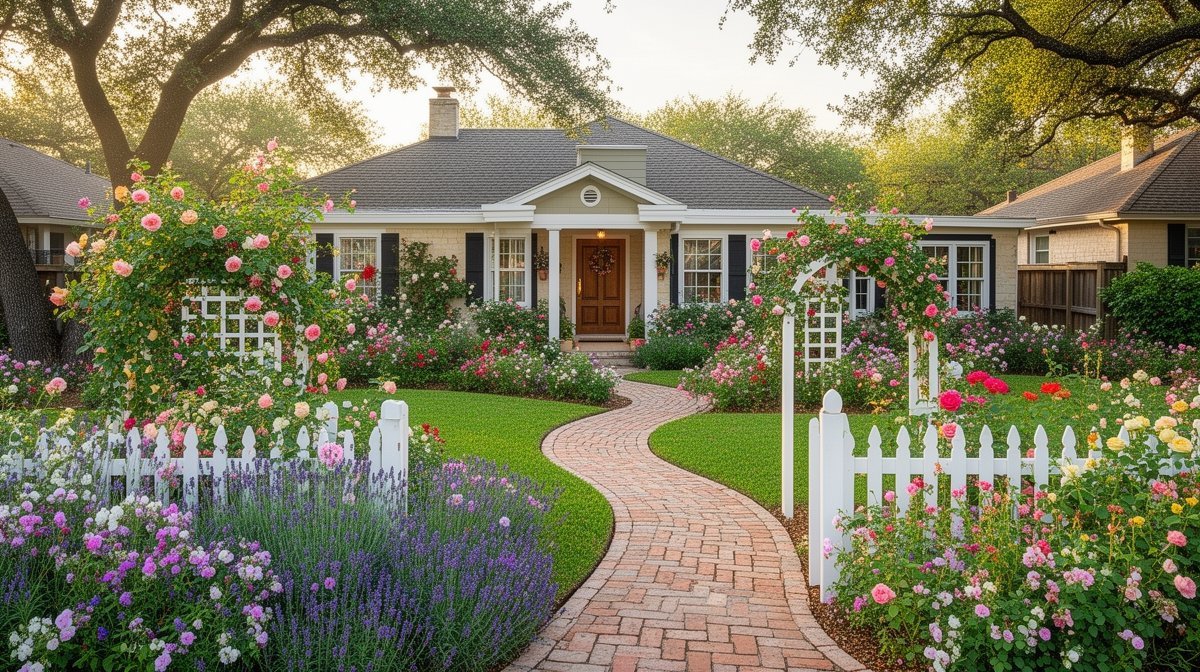
$8–18/sqftA live oak-shaded front yard features a crushed shell or brick path leading to the front porch, flanked by mass plantings of trailing lantana, plumbago, and Mexican sage that bloom from spring through fall with almost no supplemental irrigation once established. Coral-toned crape myrtles anchor the property corners, their vivid summer bloom visible from the street. The design channels the authentic Coastal Bend garden aesthetic—colorful, heat-adapted, and maintained by the reliable Gulf rains rather than an irrigation system.
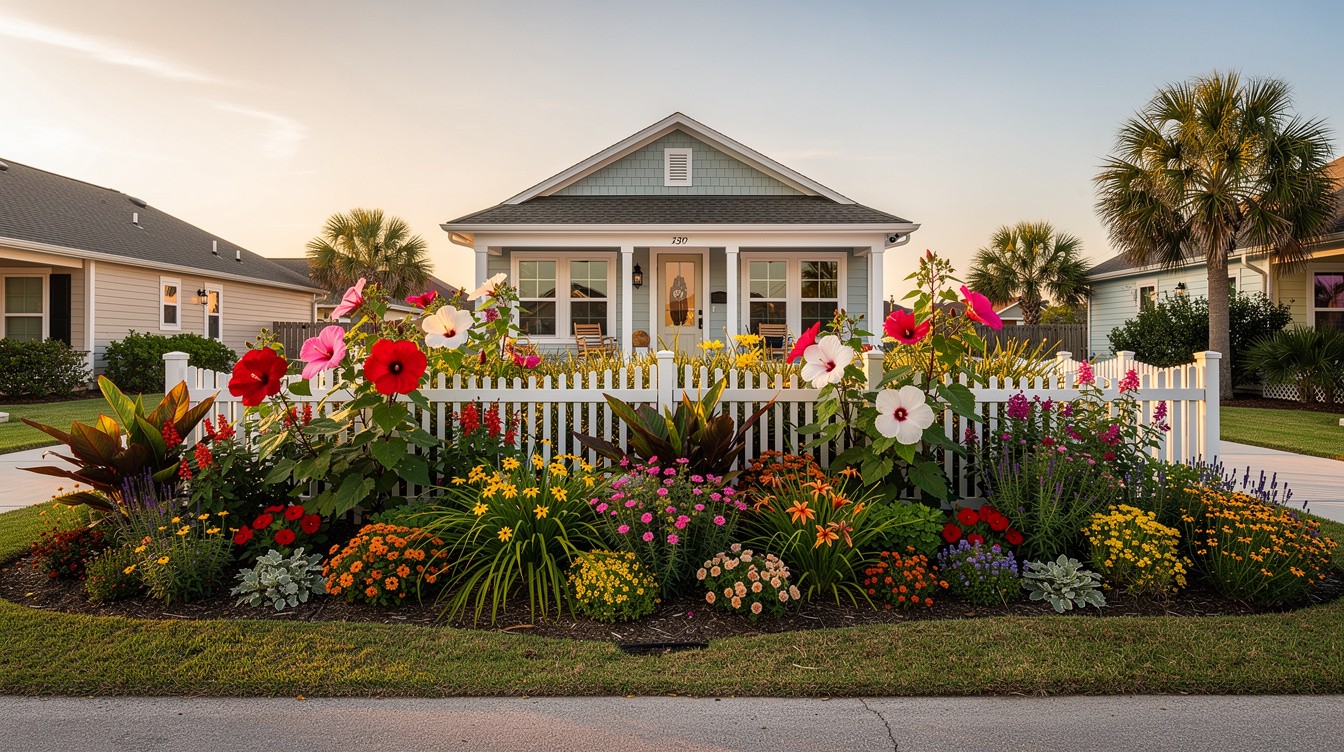
Cottage Border with Rose Mallow and Native Perennials
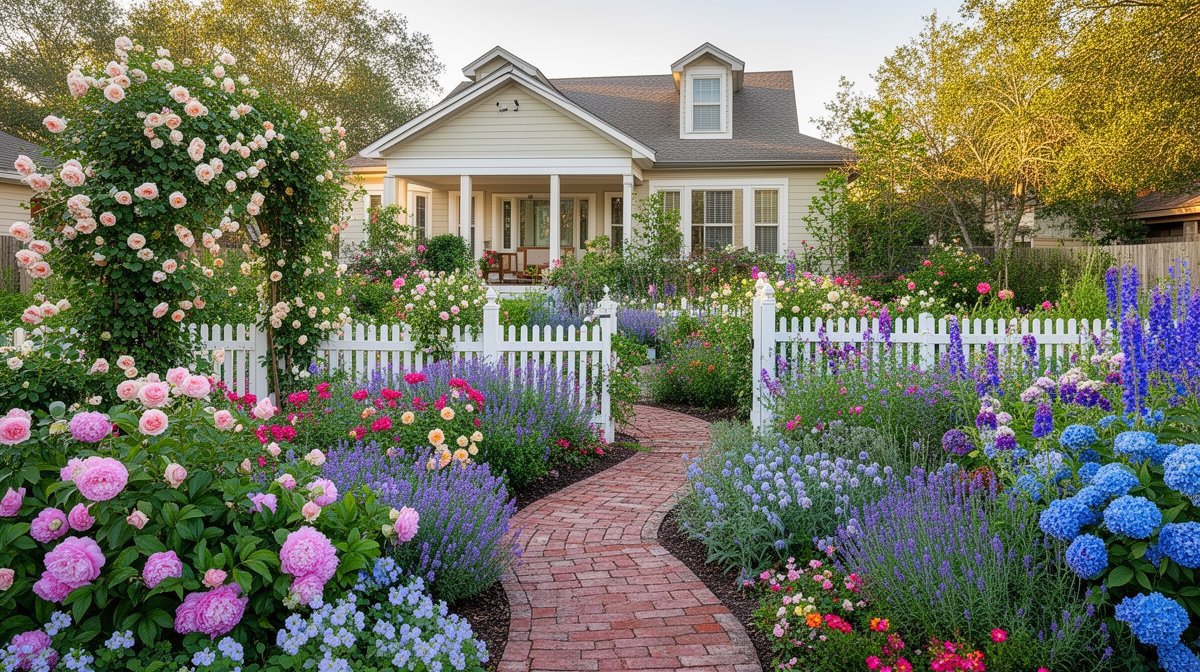
$10–20/sqftA wide cottage border along the front fence combines Gulf Coast natives—rose mallow (Hibiscus moscheutos), Turk’s cap, and native lantana—with tougher cottage perennials (daylilies, canna, and black-eyed Susan) that handle Corpus Christi’s salt air and summer drought without struggle. The combination blooms from April through November with vivid color, and the cottage-style informality—dense, slightly billowing, generously mixed—suits the coastal neighborhood aesthetic. Rose mallow’s enormous dinner-plate flowers in deep red, pink, and white are a signature summer accent that makes the border genuinely spectacular.
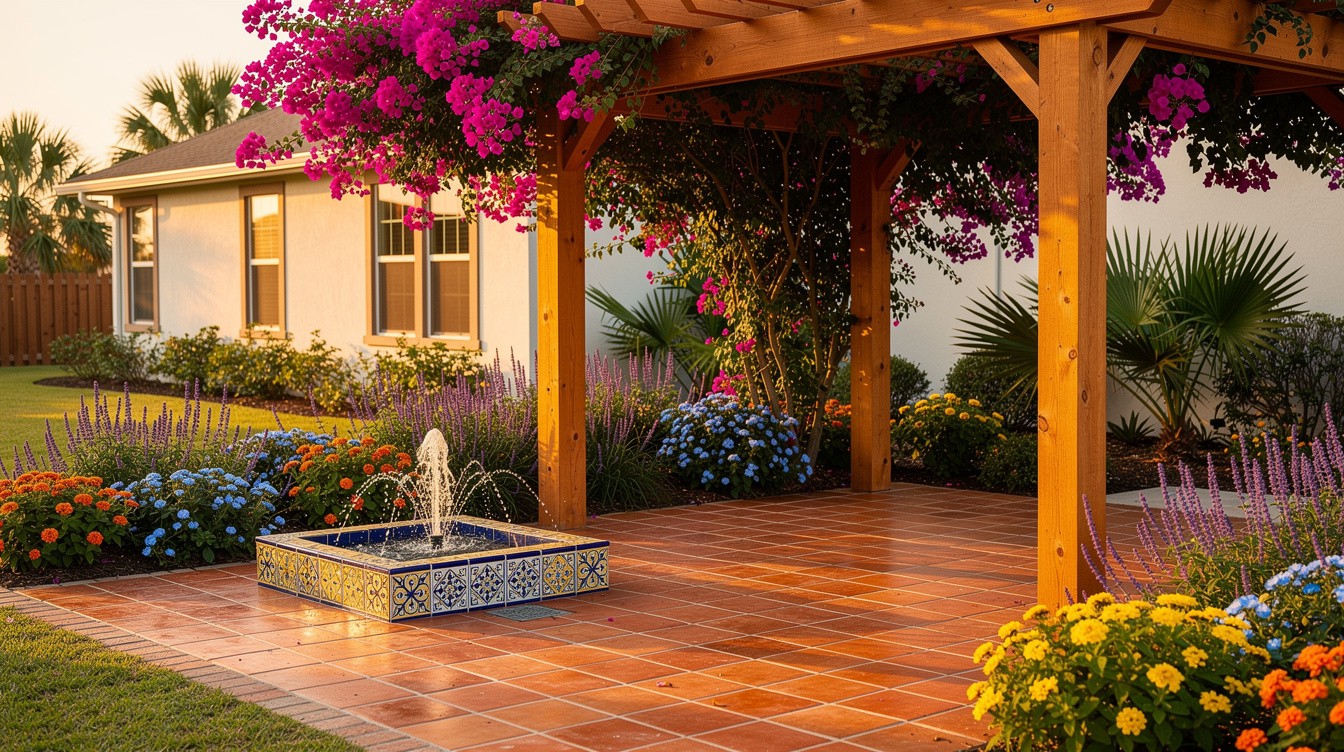
Saltillo Tile Patio with Cottage Border and Pergola
$16–35/sqftWarm Saltillo clay tile paving creates an outdoor patio anchored by a cedar pergola draped in bougainvillea, with cottage borders of lantana, plumbago, and Mexican sage wrapping the patio perimeter. A small splash fountain with Talavera tile adds the sound of water and the evaporative cooling effect that makes outdoor use genuinely comfortable through Corpus Christi’s long coastal fall. The warm terracotta tones of the Saltillo tile, the vivid magenta bougainvillea, and the Gulf-adapted planting create a distinctly coastal Texan cottage atmosphere.
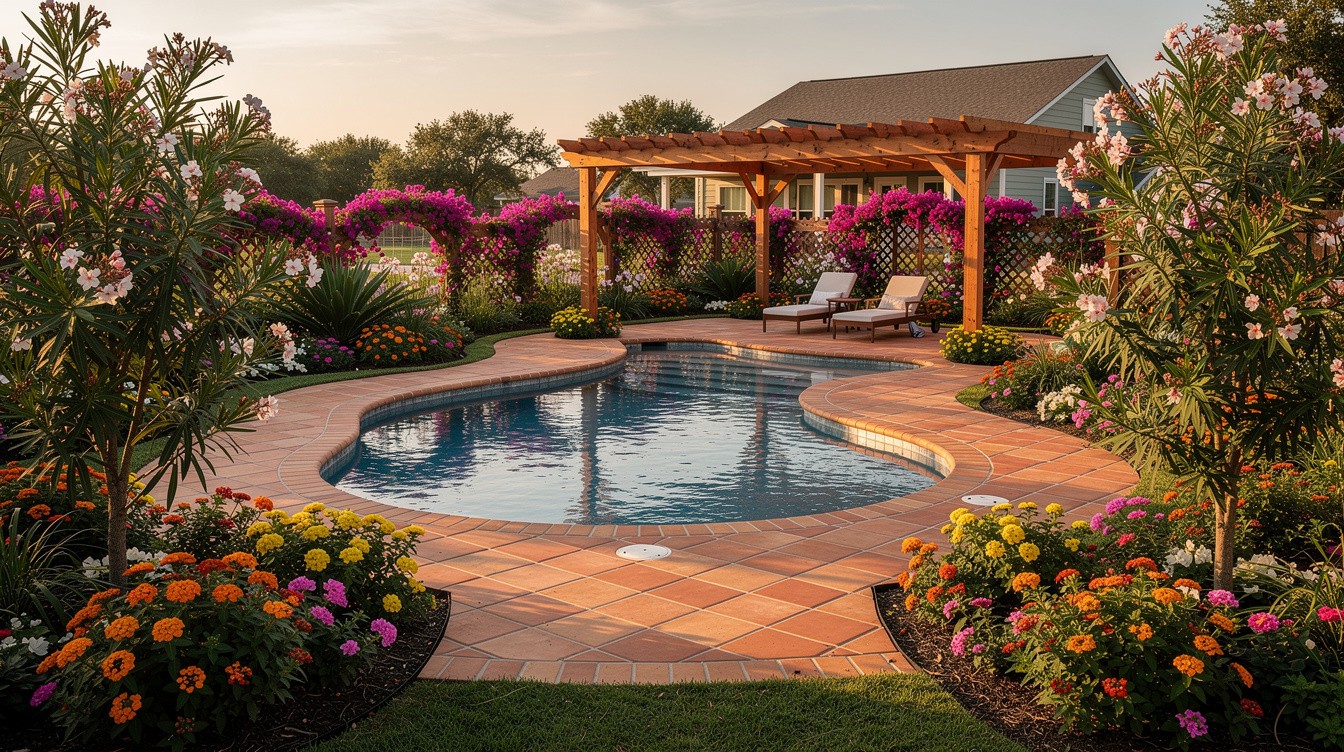
Cottage Garden with Swimming Pool and Tropical Borders
$28–60/sqftA freeform pool surrounded by Saltillo tile pool deck is embedded in a generous Gulf Coast cottage garden—lantana, bougainvillea, and oleander borders providing color and salt-wind protection around the pool—with a cedar pergola creating shade at one end. The design works with Corpus Christi’s extended warm season (pool use from March through November) and the Gulf Coast cottage tradition of bright, almost tropical color. Oleander—the Gulf Coast’s signature flowering shrub, extraordinarily salt and heat tolerant—anchors the corners and provides year-round evergreen structure.
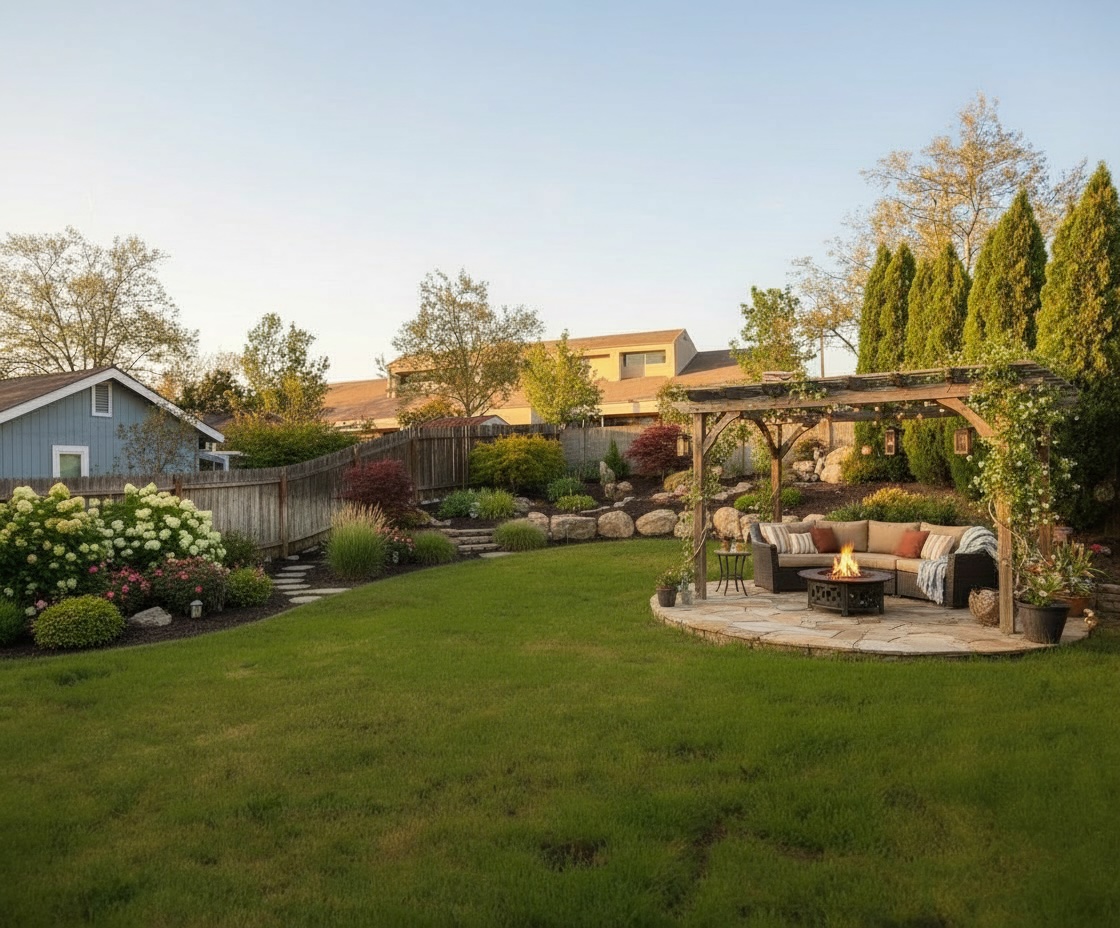
See how a cottage/english garden looks on YOUR property
Upload a photo of your Corpus Christi yard and visualize your dream garden in seconds.
Try ProScapeAI Free
Featured Trees & Shrubs for Cottage/English Gardens
Browse all 156 plants for Corpus Christi
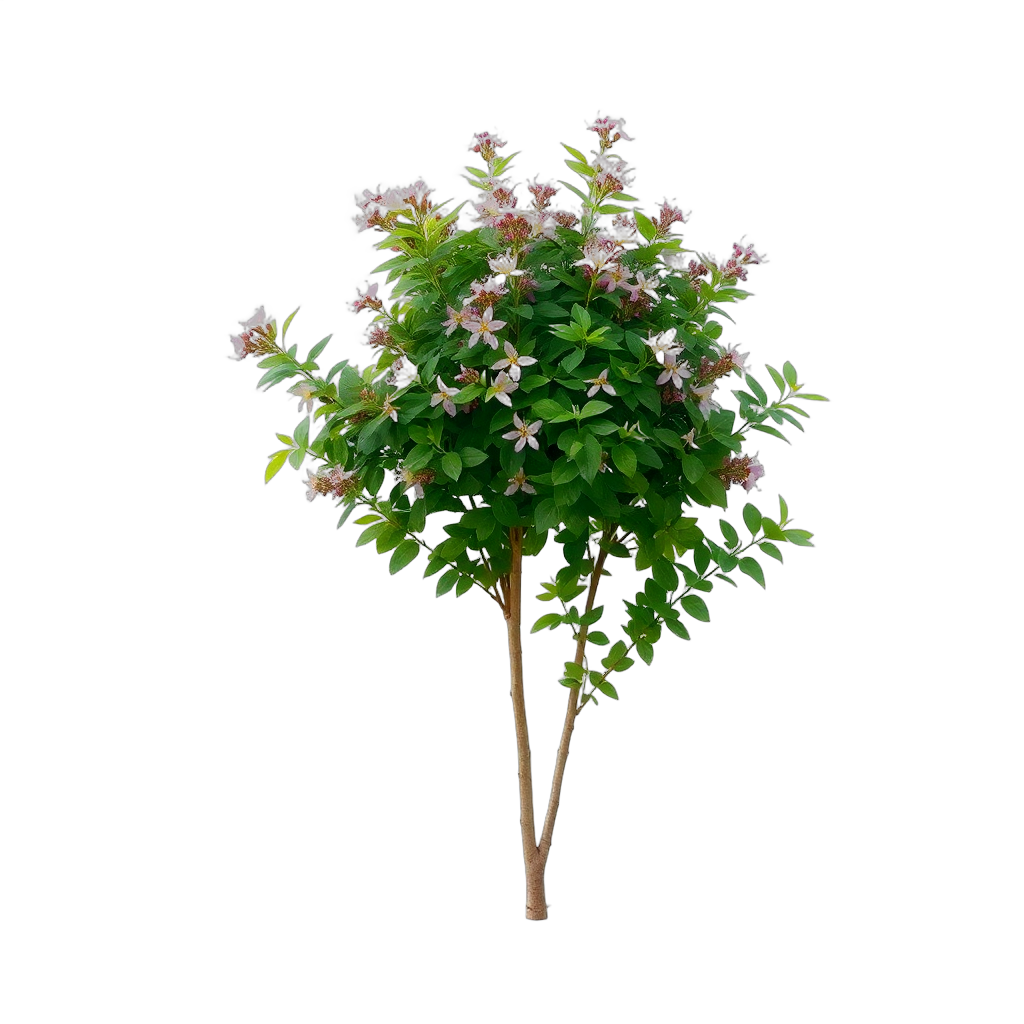
Ruby Spice Summersweet
Clethra alnifolia 'Ruby Spice'
grows to 5 feet, pink blooms in summer. Attracts butterflies.
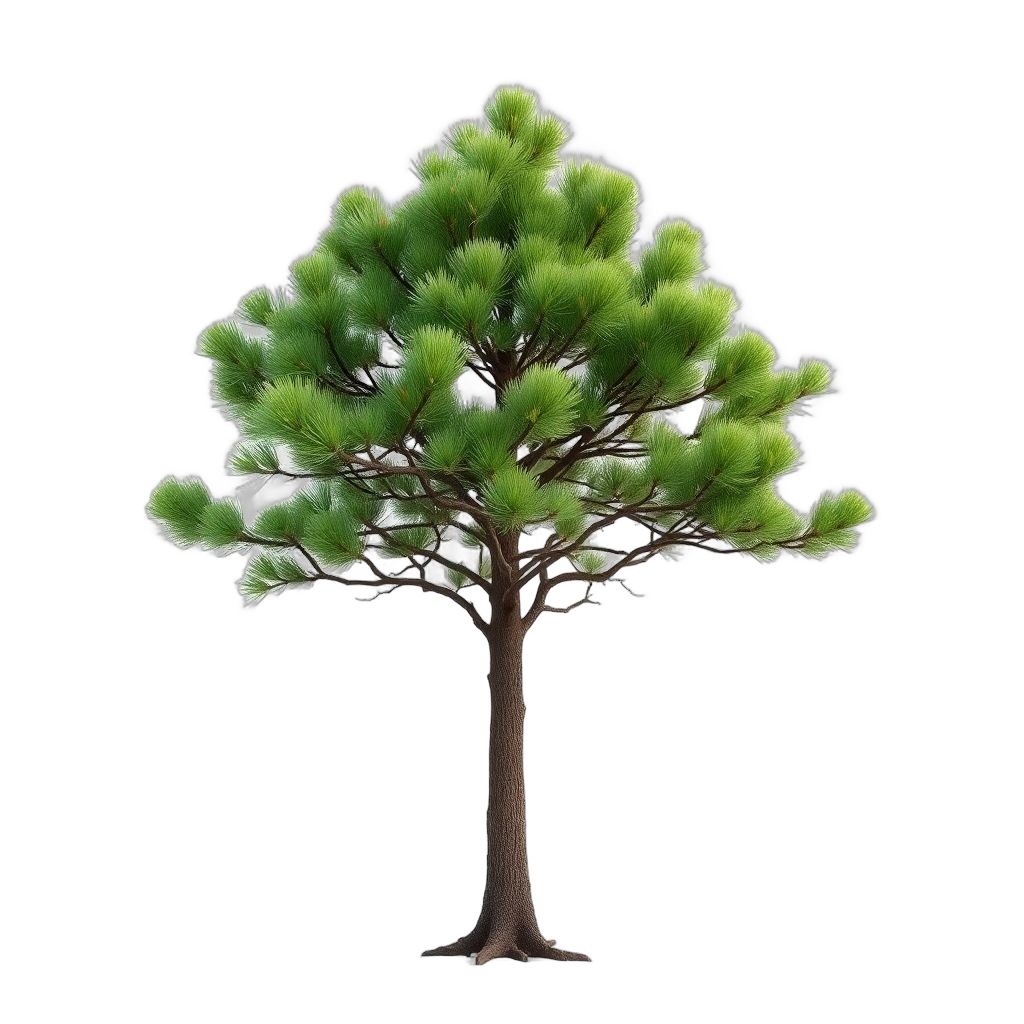
Summersweet
Clethra alnifolia
grows to 6 feet, white blooms in summer. Attracts butterflies.
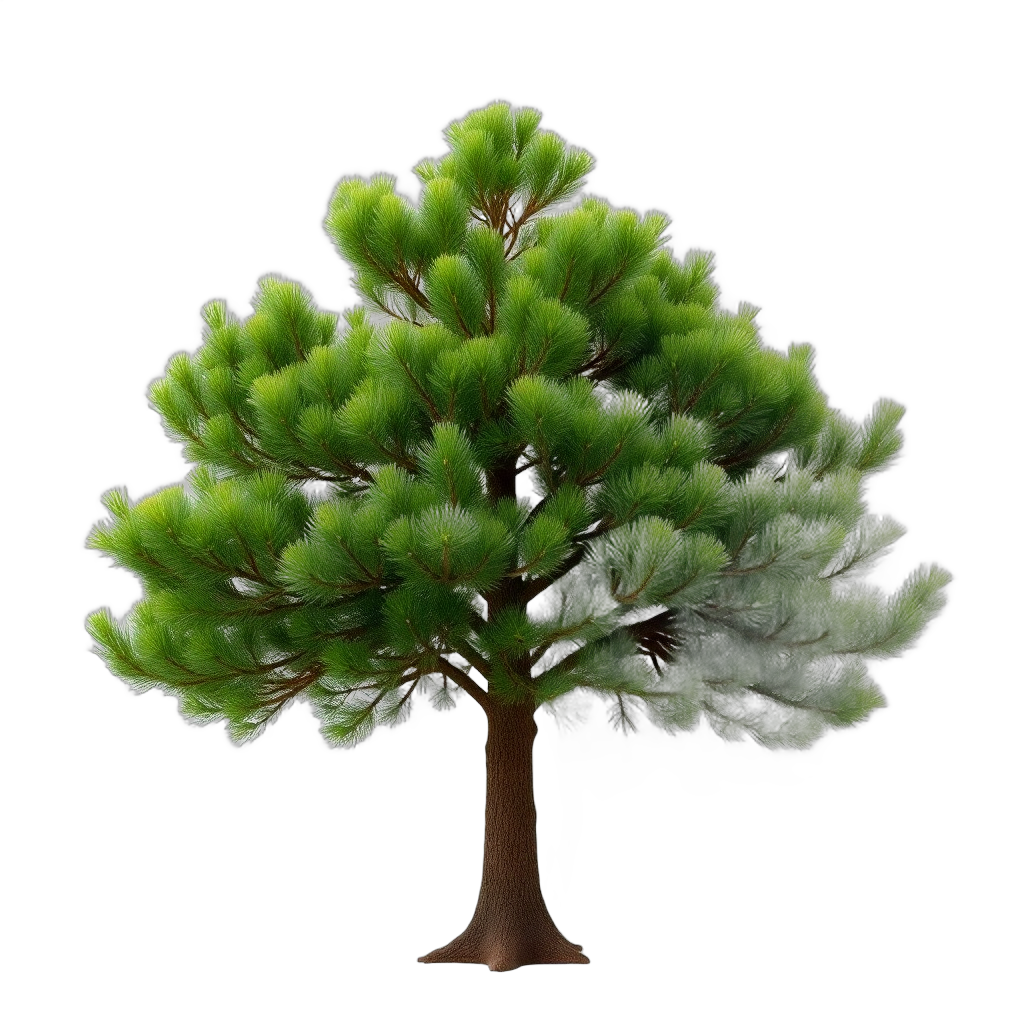
Longleaf Pine
Pinus palustris
large shade tree reaching 90+ feet, blooms in spring. Evergreen year-round.
Slash Pine
Pinus elliottii
large shade tree reaching 80+ feet, blooms in spring. Evergreen year-round.
Featured Grasses & Groundcovers for Cottage/English Gardens

Pink Muhly Grass
Muhlenbergia capillaris
grows to 3 feet, pink blooms in fall.
Featured Flowers & Perennials for Cottage/English Gardens

Papyrus
Cyperus papyrus
grows to 5 feet, blooms in summer. Pollinator-friendly.

Water Hyacinth
Eichhornia crassipes
low-growing ground cover, purple blooms in summer. Attracts butterflies.

Water Plantain
Alisma plantago-aquatica
low-growing ground cover, white blooms in summer. Attracts butterflies.

Arrow Arum
Peltandra virginica
low-growing ground cover, blooms in spring.
Zone and sun checks come from our database — confirm with your local nursery before you buy.
Bloom Calendar for Corpus Christi
spring
Longleaf Pine, Slash Pine, Sweet Acaciasummer
Ruby Spice Summersweet, Summersweet, Papyrusfall
Pink Muhly Grasswinter
Limited bloomsDesign Tips for Corpus Christi (Zone 9b)
- Use trailing lantana as your primary cottage ground-cover—it blooms from spring through fall with essentially no care, handles Corpus Christi’s drought and salt air equally well, and creates the billowing cottage border effect with none of the water demands of traditional cottage plants
- Install drip irrigation rather than spray heads from the start—Corpus Christi’s coastal wind makes spray irrigation inefficient, and drip delivers water directly to roots while reducing evaporation losses during the hot, windy summer months
- Plant oleander as your cottage border’s tall background structure—it’s the most reliable large flowering shrub for the Gulf Coast, providing evergreen privacy, spectacular summer bloom, and complete drought and salt tolerance once established
- Use crushed shell as path and bed mulch rather than bark—local oyster and clam shell reflects light, drains immediately, raises soil pH slightly (beneficial for many coastal cottage plants), and connects your garden to Corpus Christi’s coastal identity
- Add Mexican sage (Salvia leucantha) as a fall-blooming cottage accent—its velvety purple flower spikes bloom September through November, exactly when most cottage plants are winding down, providing a dramatic seasonal finale that makes the fall cottage garden as spectacular as spring
- Protect new plantings from Gulf winds with temporary burlap screens or windbreak netting for the first season—establishing root systems in salt-wind exposure is the main challenge for new plants, and even 30–60 days of wind protection during establishment makes a significant long-term difference
Where to Source Plants in Corpus Christi
Skip the big-box stores. These independent Corpus Christi nurseries specialize in the plants that make cottage/english gardens thrive in Zone 9b.
Gill Nursery
Multiple Corpus Christi locations
The largest and most respected nursery in the Corpus Christi area—comprehensive Gulf Coast plant inventory, landscape design services, and deep local expertise
Skipper’s Nursery and Garden Center
Northwest Corpus Christi
Local independent nursery with Gulf Coast-adapted cottage plants, seasonal color, and personalized service
H-E-B Garden Center
Multiple Corpus Christi locations
Convenient source for standard Gulf Coast cottage plants—lantana, plumbago, bougainvillea, and seasonal annuals at competitive prices
Lawndale Nursery
Port Aransas / North Padre Island area
Coastal-specialist nursery with highly salt-tolerant plant selections for properties near the water
Home Depot Garden Center
Multiple Corpus Christi locations
Comprehensive selection of cottage plants, landscape materials, and drip irrigation supplies at consistent pricing
Cottage/English Landscaping Costs in Corpus Christi
| Project Scope | Estimated Cost |
|---|---|
| Gulf Coast cottage front yard with shell path, lantana/plumbago borders | $5,500 – $14,000 |
| Cottage border with rose mallow and native perennials along fence line | $4,000 – $10,000 |
| Saltillo tile patio with cedar pergola, bougainvillea, and cottage borders | $14,000 – $32,000 |
| Pool with Saltillo coping, pergola, and Gulf Coast cottage garden | $36,000 – $82,000 |
| Soil amendment and deep mulch installation for coastal sandy soil | $800 – $2,200 |
| Annual cottage garden maintenance (mulching, pruning, seasonal color) | $1,000 – $2,500/year |
| AI visualization with ProScapeAI | Free to start |
Estimates based on Corpus Christi, TX-area contractor rates as of 2026. Actual costs vary by site conditions, materials, and contractor.
Corpus Christi Climate & Growing Zone
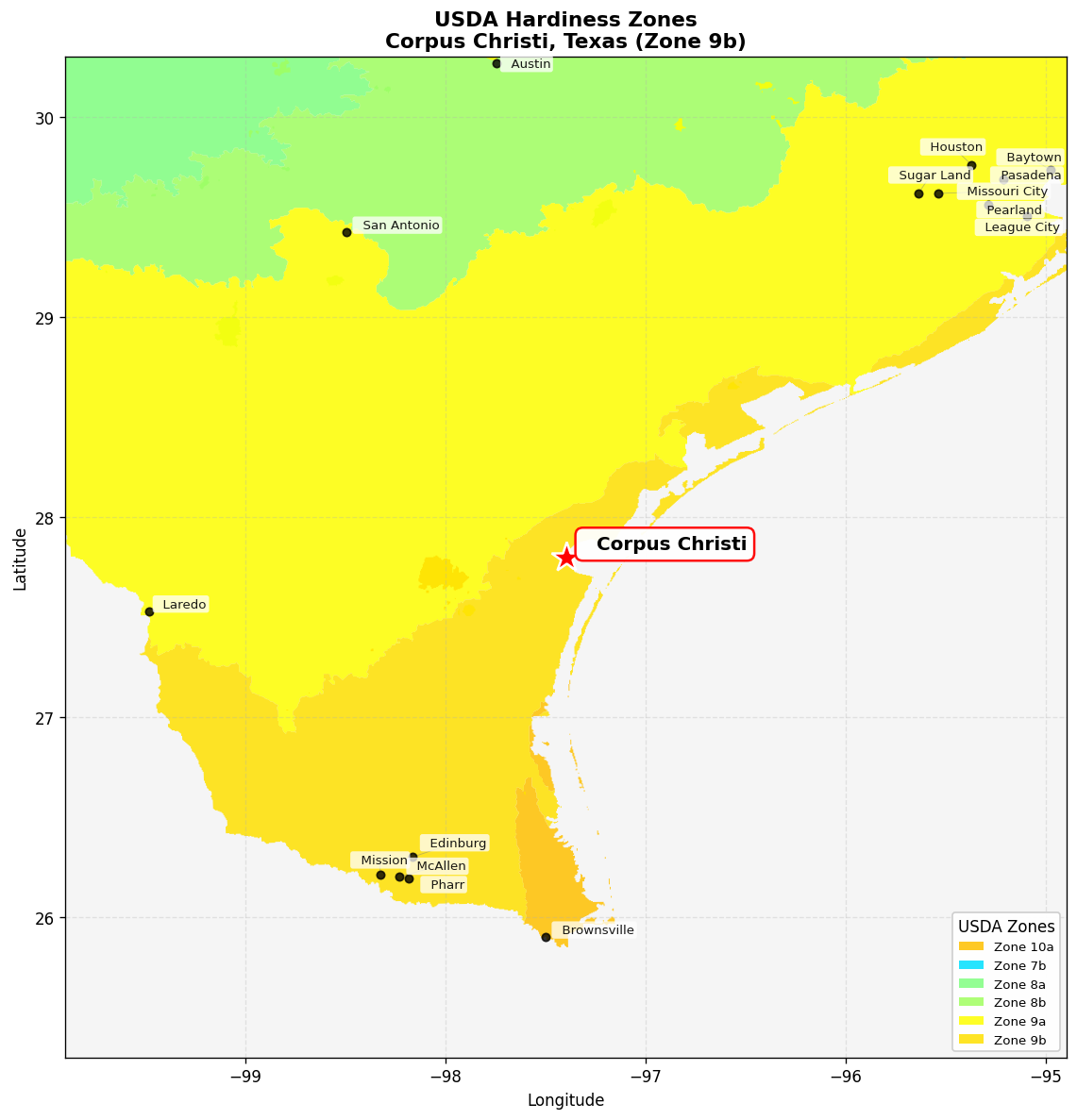
USDA Zone 9b
Hardiness zone for Corpus Christi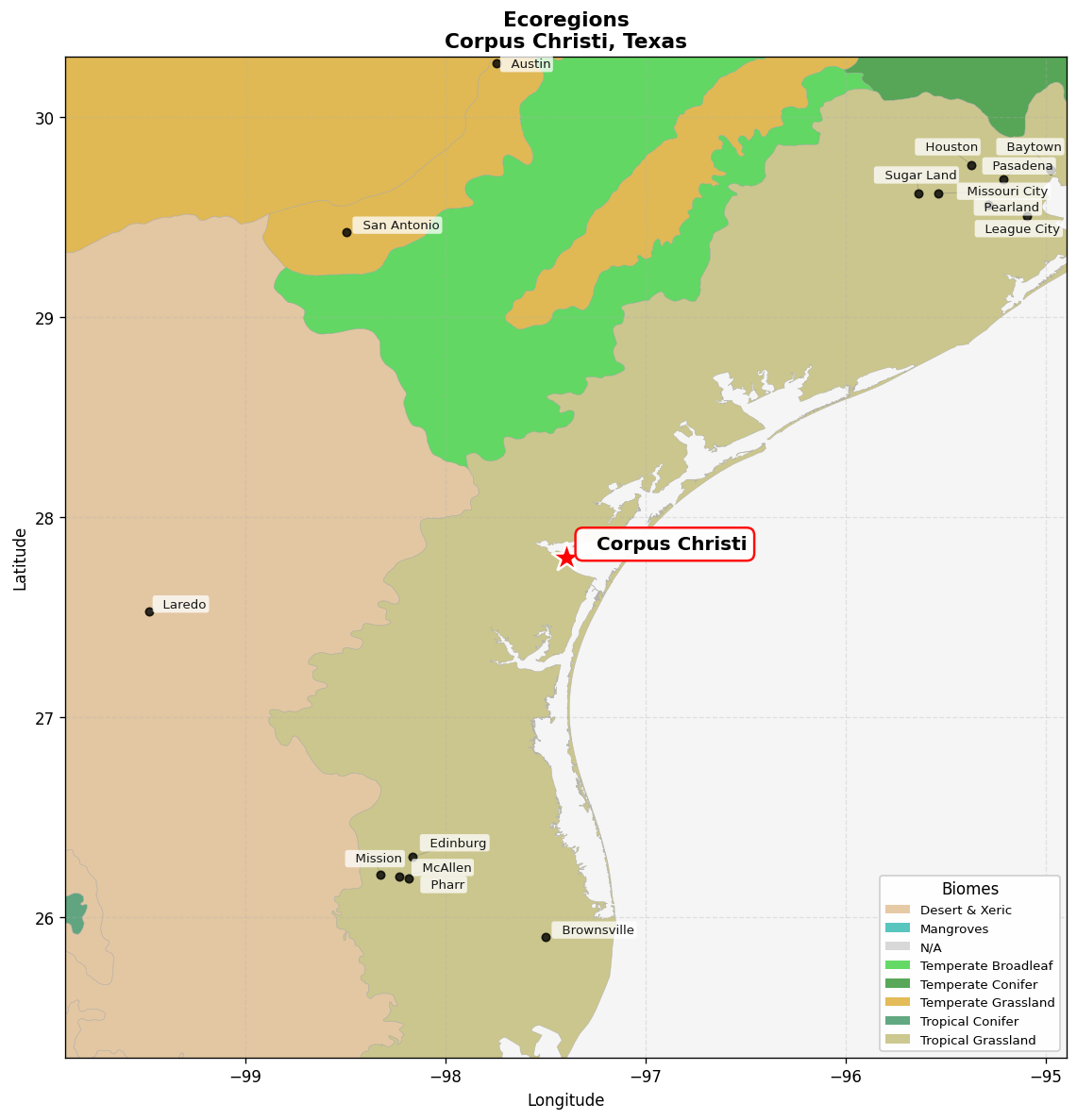
Western Gulf coastal grasslands
Native ecoregionFrequently Asked Questions
What cottage plants are most salt-tolerant for Corpus Christi’s Gulf Coast location?
Corpus Christi’s location near the Gulf means salt spray and salt-laden winds affect plants within several miles of the water. Best salt-tolerant cottage plants: lantana (highly salt-tolerant, blooms prolifically), bougainvillea (excellent salt and drought tolerance), oleander (one of the most salt-tolerant flowering shrubs in the world), plumbago (moderate salt tolerance, excellent Gulf Coast performer), turk’s cap (native, highly tolerant of coastal conditions), ornamental grasses like sea oats and Gulf muhly (native coastal grasses with exceptional salt tolerance), and crape myrtle (good salt tolerance when planted inland of the immediate shore zone). Avoid lavender, roses, and traditional English cottage plants near salt spray—they struggle without protection.
How do I plant a cottage garden in Corpus Christi’s summer heat?
Corpus Christi’s summer heat (95°F+ highs July–September) and frequent drought require a heat-first approach to cottage plant selection. Plant in fall (October–November) to allow root establishment before summer arrives. Mulch all beds 3–4 inches deep to retain soil moisture between rains and irrigation. Select plants rated for Zone 9b heat and drought: lantana, plumbago, Mexican sage, rose mallow, canna, and Gulf Coast natives all bloom prolifically in this climate’s natural rhythm. Irrigation is needed through summer drought periods but can be dramatically reduced in spring and fall when Gulf rain events provide regular moisture.
Does oleander work as a cottage garden plant in Corpus Christi?
Oleander is the defining flowering shrub of the Corpus Christi landscape and works beautifully as a cottage garden structure plant. It provides year-round evergreen foliage, spectacular summer bloom in pink, red, white, and yellow, and extraordinary tolerance of salt spray, drought, and summer heat. Oleander grows to 8–15 feet and serves well as privacy screening or cottage backdrop border. Important caution: all parts of the oleander plant are toxic if ingested, so it should not be used in gardens frequented by young children or pets who might chew foliage. Position it as background structure rather than path-edge planting.
When is the best planting season for a Corpus Christi cottage garden?
Fall (October–December) is ideal—Corpus Christi’s mild winters (rarely below 28°F) allow active root growth through December and January, establishing plants before the spring bloom season and before summer heat arrives. Spring planting (February–April) also works well for annuals and heat-loving tropical accents. Avoid planting in July–August when combined heat (95°F+) and occasional drought create severe transplant stress that requires intensive irrigation to overcome. Native and adapted perennials planted in fall in Zone 9b typically bloom their first spring with vigor that spring-planted specimens don’t achieve until their second year.
How much does a cottage garden installation cost in Corpus Christi?
Corpus Christi landscaping costs are below national average, reflecting lower labor costs compared to larger Texas metros like Houston and San Antonio. A Gulf Coast cottage front yard with crushed shell path, picket fence, and perennial borders typically costs $6,000–$14,000. A Saltillo tile patio with pergola and cottage borders runs $14,000–$32,000. A pool-and-cottage-garden combination ranges $35,000–$80,000. Annual maintenance for an established Gulf Coast cottage garden (mulching, pruning crape myrtles and oleanders, seasonal color swaps) runs $1,000–2,500/year.
What ground covers replace grass in a Corpus Christi cottage garden?
Lawn grass is high-maintenance in Corpus Christi’s hot, salt-wind climate. Best cottage-style ground cover alternatives: trailing lantana (blooms spring through fall, extremely tough), purple heart (Tradescantia pallida, vivid purple foliage, drought-tolerant), Asian jasmine (dense, evergreen ground cover under trees), liriope (tough border edging), and dichondra (soft green carpet for shade areas). Native coastal grasses like buffalo grass can also serve as low-input lawn replacement in full sun areas. Crushed shell paths and gravel mulch in heavily trafficked areas reduce the proportion of planted ground cover that needs irrigation.